
01 / 7
The name does not make every package the same purchase
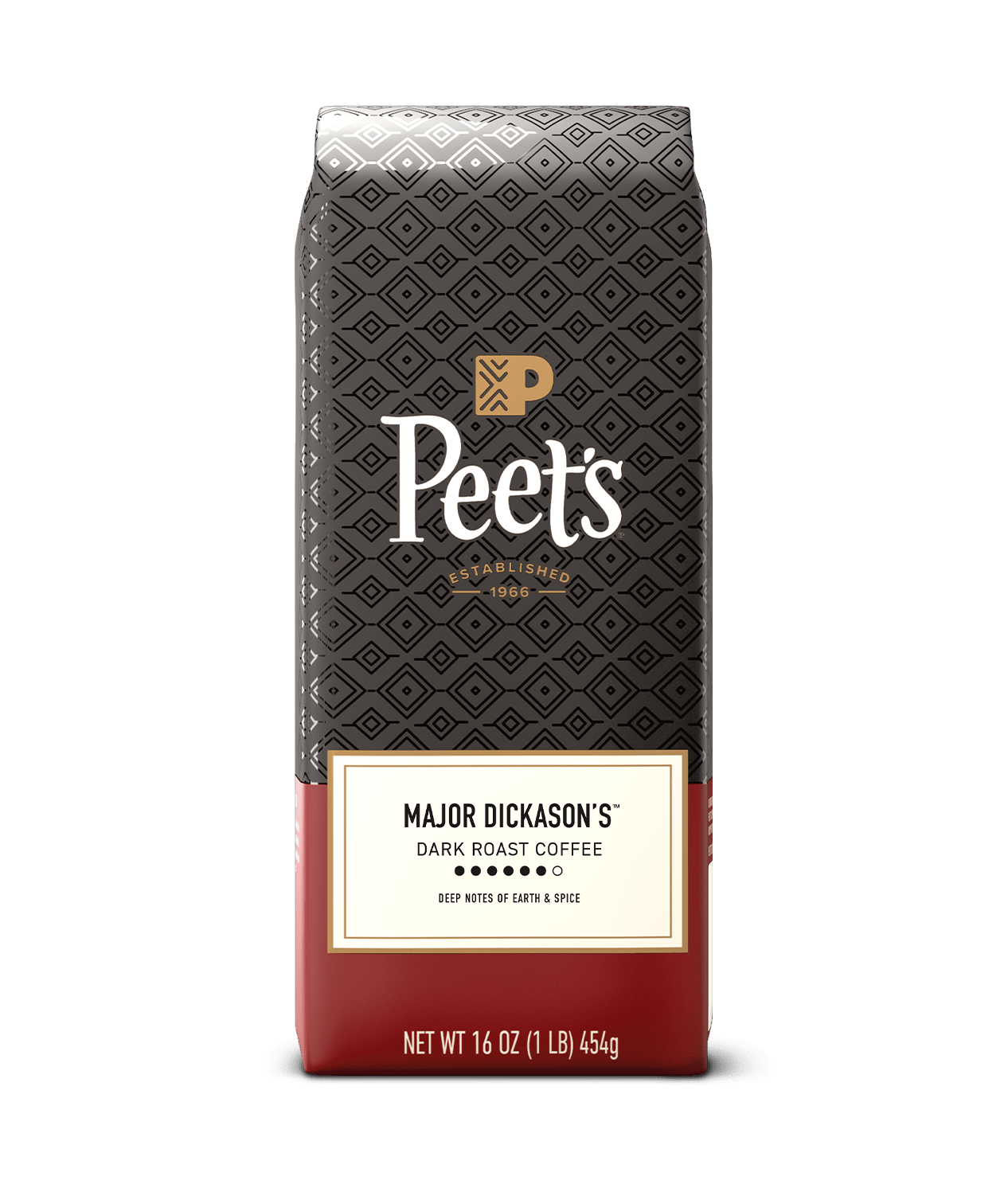
The checked Peet's direct page offered Major Dickason's with whole-bean and several grind choices. It separately linked pods, espresso capsules and a decaffeinated version. This review concerns the caffeinated whole-bean selection. Do not carry its price, brew advice or identity over to a similarly named pod or a different grind format. [1]
The listed origins and processes identify a blend rather than one permanent farm lot. A complete current list of varieties, component percentages and harvest dates was not established here. If those details are essential to you, a current documented single-origin coffee is a clearer buying route than making an assumption from a familiar blend name.
Make the package comparison explicit: coffee name, caffeine status, whole bean or ground, net mass, seller and date. Two bags can share a front label while asking you to make different commitments in storage, brewing flexibility and total coffee quantity. The most attractive price is meaningful only after those variables match.
02 / 7
Choose the dark direction without borrowing a tasting score
Peet's calls this a dark blend and supplies its own profile terms. Coffeedant has not brewed the coffee, rated its sweetness or measured its acidity. Our editorial judgment is that it is a relevant purchase to investigate for someone intentionally seeking a dark direction, rather than someone trying to preserve a light-roast flavor preference at a lower price. [1]
The first comparison should be in your everyday drink. If that is a press pot, make the same batch size with the same preparation as the previous coffee. If it is espresso with milk, keep the milk quantity and recipe reasonably fixed. Decide whether the coffee suits the drink, rather than whether its label resembles another popular bag.
Someone else's strongly positive or negative description may be a useful question, but it cannot determine your result. Different storage histories, grinders and brew methods can change the trial. This review therefore avoids turning online stars or individual complaints into a failure rate, sensory score or promise about the next bag.
03 / 7
Whole bean preserves the ability to adjust
Whole bean is the sensible format when you have a suitable grinder and want to change brew methods. A preground option can be useful for one established brewer, but its label is not proof that it matches every espresso basket or press routine. The roaster's grind choices should be treated as starting formats rather than a universal calibration. [1]
An espresso machine with a pressurized basket and one with an unpressurized basket can ask different things of the grind. Check your machine and basket before deciding that an espresso-labeled ground pack removes the need for an appropriate grinder. The Encore ESP manual is a concrete example of why adjustment and maintenance belong in the equipment side of this choice. [5]
If one household alternates espresso and filter, record the settings and the recipe after each switch. If repeatability is poor, investigate the dose and grinder routine before buying several coffees to chase the same outcome. The flexibility of whole beans has value only when the preparation is controlled enough to use it.
04 / 7
Press, filter and espresso need separate records
The product page foregrounds press and pour-over methods, and Peet's brew guides explain individual brewers. Those are suitable starting references for method selection, not evidence that one recipe is optimal for all Major Dickason's bags. We have no Coffeedant product-specific extraction or brew-temperature measurement. [1] [2]
For a press trial, keep dose, water amount, steeping routine and decanting comparable. For paper filter, hold batch size, paper and agitation steady for the first comparison. For espresso, use your basket's normal dose and measure beverage mass separately from shot time. That approach leaves you with a useful record when the next bag arrives.
If the drink is too intense for your preference, first identify whether concentration or roast direction is the issue you want to change. A ratio adjustment answers a concentration question. A different coffee may be the better answer when you simply prefer a lighter direction. Do not spend an entire large bag forcing a preference that the purchase was never meant to satisfy.
05 / 7
Treat the package you receive as the evidence
The direct listing describes roastery shipment and sealed packaging. That record does not establish the age, handling or storage of a bag from another seller. Check the actual date and package condition, especially when a low-priced pack is larger than your normal purchase. [1]
Stumptown's freshness guidance is included as an attributed comparison showing why sealed-package policy and opened-bag consumption are distinct. Its own direct-shipping guarantee does not apply to Peet's. We do not assign an exact peak day or a universal shelf-life cutoff to Major Dickason's from another roaster's policy. [3]
Choose a cool, dark storage location and a well-sealed container or bag. Keep it away from strong food odors and avoid creating a daily moisture cycle through repeated cold-storage handling. The source is attributed storage guidance; it is not a Coffeedant experiment on this particular coffee. [4]
06 / 7
A one-pound reference is useful only when mass is visible
The US direct listing displayed $21.95 for the 16 oz selection at this check. Availability text and purchase controls can depend on the selected grind and purchase mode; we do not make an in-stock or discounted-offer claim. Confirm the whole-bean selection and checkout total before relying on this record. [1]
Sixteen ounces is roughly 454 g. At that displayed price, an illustrative 18 g dose costs about $0.87 in beans before shipping, tax and waste. A 12 oz comparison has roughly 340 g, so comparing two sticker prices without their masses can misstate value. These are transparent mass calculations, not the roaster's serving-size or caffeine claim.
A 454 g bag provides about 22 complete 20 g doses before waste. At one daily dose that is about three weeks; at two it is about eleven days. Use your real consumption when comparing a retail bulk pack. Subscription frequency should follow that use, rather than dictate a quantity you must find a way to finish.
07 / 7
Change the buying reason, not just the brand
Forty-Six is the alternative when a current roast-date component selector is important. French Roast is the alternative when Stumptown's dark-roast route and small-versus-bulk choices suit your routine. Their full reviews make the distinctions traceable; we have not declared a comparative flavor winner. [6] [7]
A buyer who prefers less roast-forward coffee should compare a different roast direction rather than assume a price promotion makes this one appropriate. Big Trouble is covered separately for that reason. Choose the coffee because it suits the drink and the buying record, then decide which seller and pack make sense.
Our recommendation is to begin with the exact format you can brew and a quantity you can evaluate without rushing. Keep the package date, repeat the method and compare actual drinks made. The next order should reflect what that trial taught you about this coffee and your routine, not merely recognition of the name.
Evidence and limits
How this review was made
This is a research-led buying assessment. Product identity and sensory descriptors come from the named roaster; the interpretation of fit, consumption and costs is Coffeedant's editorial judgment. Other-roaster support articles are identified as attributed comparisons, never transferred shipping guarantees or product test results. We did not buy a bag, conduct a tasting, measure extraction or assign a sensory score.
Sources were checked on October 13, 2026. Package, roast date, blend components, price and seller stock can change. Verify the actual selection at purchase; dates and transparent calculations here document the assessment rather than promise a future offer.
Quick answers
Major Dickason's FAQ
Which Major Dickason's is reviewed?
The caffeinated US direct whole-bean selection. Pods, capsules, decaf and preground formats are separate purchases.
Has Coffeedant tasted it?
No. The profile terms are Peet's descriptors, and no sensory rating is assigned.
Is the direct bag the same size as every retail bag?
Do not assume that. The checked direct selection was 16 oz; read the mass on the actual pack.
Can I use it for espresso?
Whole beans can be dialed in with suitable equipment. No universal grind position or optimum espresso recipe is established here.
Is the $21.95 listing a current discount?
No discount claim is made. It is the dated displayed direct price, before shipping and tax.
How many brews are in a pound?
At an illustrative 20 g dose, about 22 complete brews before waste. Change the calculation for your actual dose.
Trace the claims
Sources
- Peet's Major Dickason's: current product record
Exact format, blend record, direct pack mass and dated displayed price; availability not guaranteed. Checked 2026-10-13.
- Peet's brew guides
Method-specific brewing framework. Checked 2026-10-13.
- Stumptown: freshness advice
Attributed policy comparison only; no Peet's shipping guarantee inferred. Checked 2026-10-13.
- Stumptown: storage advice
Attributed general storage context. Checked 2026-10-13.
- Baratza Encore ESP operations manual
Adjustment and cleaning limits of a separate grinder. Checked 2026-10-13.
- Counter Culture Forty-Six
Alternative dark-blend buying record. Checked 2026-10-13.
- Stumptown French Roast
Alternative pack and dark-roast direction, not comparative tasting results. Checked 2026-10-13.
The choice
Let the first bag earn the next order
Major Dickason's belongs on the shortlist for a buyer deliberately choosing a dark blend and comparing the bag actually being sold. The direct one-pound listing is a useful reference, but a grocery bag, bulk pack, preground version or pod is a different purchase. We would decide on format, date and consumption before comparing sticker prices.
Check Major Dickason's at the roaster