
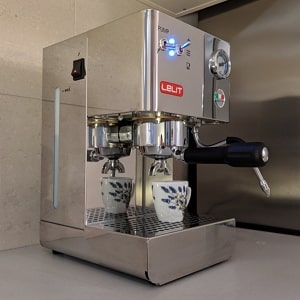
EU street pricing often ~€539 (sale) to €700+ (stock-dependent). NA availability varies—confirm voltage.
Lelit Glenda PL41PlusT
A narrow, stainless, 58 mm single-boiler with PID control, a brass 300 ml boiler, a front manometer, and real backflush support—built for stable home espresso and “one-pitcher-at-a-time” cappuccinos.
Overview
Glenda PL41PlusT is the “right fundamentals” compact single-boiler: 58 mm hardware, PID brew control, a front pressure gauge, a three-way solenoid for tidy pucks and proper backflushing, and a big 2.7 L tank. Expect stable shots with a repeatable cadence and clean, usable steam for one cappuccino at a time.
Pros
- PID control gives repeatable brew temperature (no surfing)
- Standard 58 mm ecosystem for baskets/tampers/bottomless PFs
- Front pressure gauge speeds up dialing and troubleshooting
- Three-way solenoid: drier pucks + supports detergent backflushing
- Large 2.7 L tank in a narrow stainless chassis
Cons
- Single-boiler sequencing slows multiple milk drinks back-to-back
- No built-in shot timer on the panel
- Basic UI (switches + small PID display)
- Regional stock can be inconsistent outside the EU
Features
- Single-boiler, dual-use (brew + steam)
- 0.3 L brass boiler
- PID temperature control (brew tuning in 1° steps)
- 58 mm portafilter and brew head
- Front pump-pressure manometer (extraction gauge)
- Three-way solenoid (clean endings + backflush support)
- Vibration pump
- 2.7 L removable reservoir (under cup tray)
- Articulated steam wand + lever tap
- Compact footprint: ~24 W × ~26.5 D × ~36 H cm • ~9 kg
Pricing
- EU: often ~€539 on sale to ~€700+ (inventory-dependent)
- UK: availability is sporadic; pricing often tracks EU levels once VAT/shipping are included
- North America: availability varies; confirm voltage/plug and what’s included (baskets + blind basket)
FAQs
- Does it support backflushing?
- Yes. The three-way solenoid on the brew circuit means water backflush daily and detergent backflush weekly are part of normal care.
- How’s the warm-up?
- The boiler reaches setpoint quickly, but the group still benefits from a few extra minutes of heat soak for tighter repeatability. Lock in the portafilter at power-on and run a short blank before shot one.
- Can it steam for cappuccinos?
- Yes—expect good “one pitcher at a time” steaming. For multiple lattes back-to-back, a heat exchanger or dual boiler will be faster.
- Why does 58 mm matter?
- It puts you into the standard accessory ecosystem (precision baskets, tampers, bottomless portafilters) without weird sizing compromises.
Who It Is For
- Home baristas who want 58 mm compatibility + PID control in a compact footprint
- People who mainly pull espresso and steam one milk drink per session
- Buyers who value a pressure gauge + clean, backflushable brew circuit
Who Should Avoid It
- Households doing multiple milk drinks back-to-back every morning
- Shoppers who want a built-in shot timer and richer on-screen workflow
- Anyone who wants HX/DB pace without temperature-mode switching
Model Notes
- Model code to anchor: PL41PlusT (the PID-equipped 58 mm Glenda variant).
- Buying checklist: confirm voltage, included baskets, and a blind basket for backflushing.
- Best routine: brew → steam → cooling flush → brew (single-boiler rhythm).
Takeaway
The Lelit Glenda PL41PlusT sits in the sweet spot between entry-level single boilers and prosumer heat exchangers. You get a 300 ml brass boiler, 58 mm portafilter, PID temperature control, a front extraction-pressure gauge, a proper three-way solenoid, and a 2.7 liter tank in a narrow stainless chassis. It brews with real stability when you set a cadence, and it steams one pitcher at a time with respectable pace for a home kitchen. If you want numeric brew control and the standard 58 mm ecosystem without jumping to an HX, Glenda delivers. The published spec from manuals and European retailers confirm brass 0.3 L boiler, PID, 58 mm group, manometer, three-way solenoid, and the 2.7 L reservoir.
Build
Materials and layout
Glenda is stainless on the outside and brass where it counts. The 300 ml boiler is brass and thermostatically stable under PID management. The brew path terminates in a 58 mm head, which puts you into the standard commercial ecosystem for baskets, tampers, and bottomless portafilters. The face is clean: rocker switches, a small PID display for temperature, and a front pump-pressure gauge that reads during extraction. Under the hood you get a three-way solenoid that vents the head after the shot, which is why your pucks knock out dry. These components are spelled out in the owner’s manual and retailer spec sheets.
At roughly 24 cm wide and about 9 kg, the chassis is narrow yet planted. Depth near 26–27 cm keeps it friendly on tight counters, while height around 36–37 cm leaves room for a small cup stack on top. Published dimensions vary slightly by listing format, but the numbers above are consistent across multiple sources.
Shop the essentials
The small upgrades that make a home coffee setup cleaner, smoother, and more enjoyable to use every day.

Cleaner & Descaler Tablets
Keeps your machine clean, helps prevent buildup, and protects long-term performance.
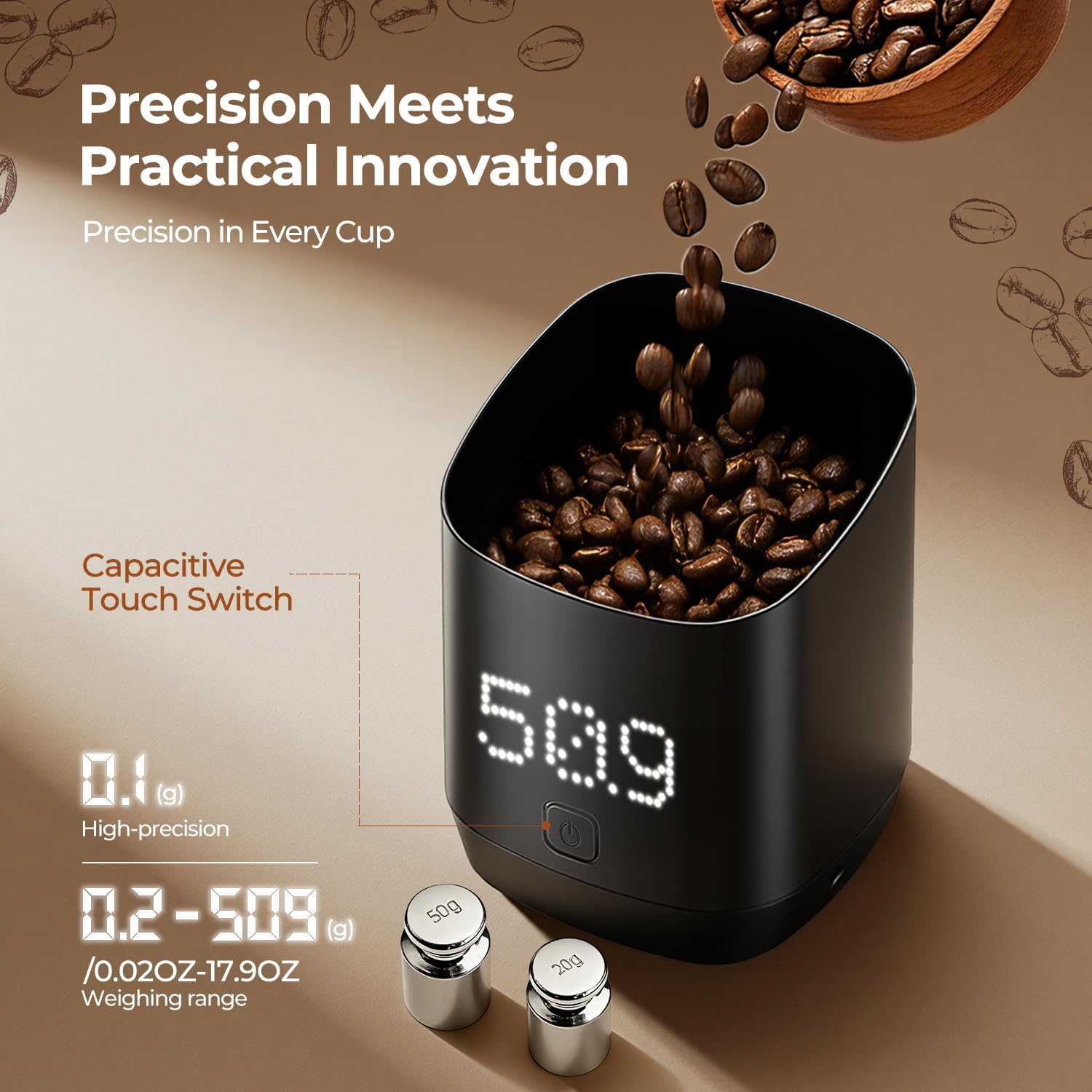
Digital Dosing Cup
Makes weighing beans faster and cleaner, with less mess around the grinder.
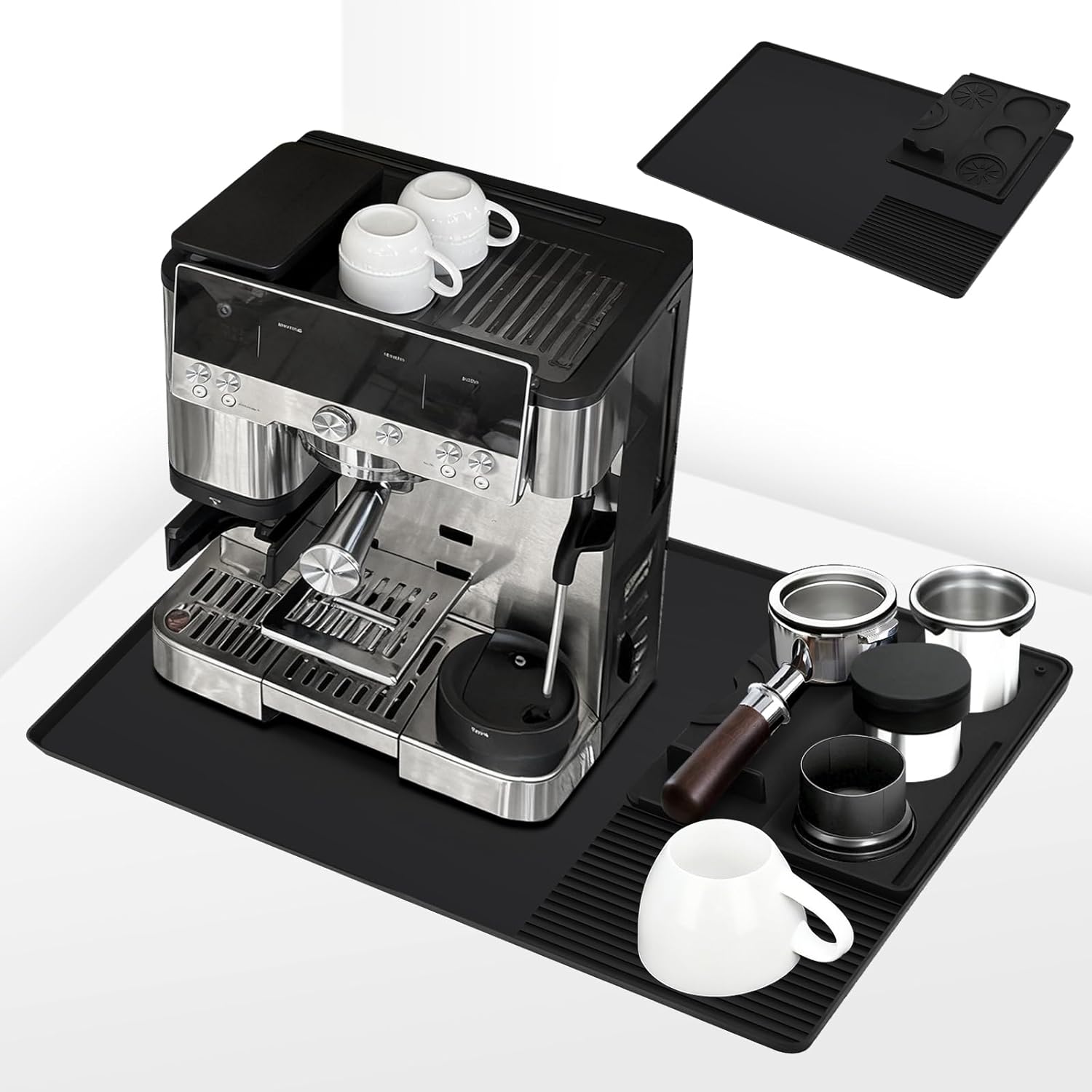
Silicone Mat
Protects your counter, catches spills, and gives your setup a cleaner working surface.

Vacuum Coffee Canister
Helps beans stay fresher longer by limiting air exposure after opening the bag.
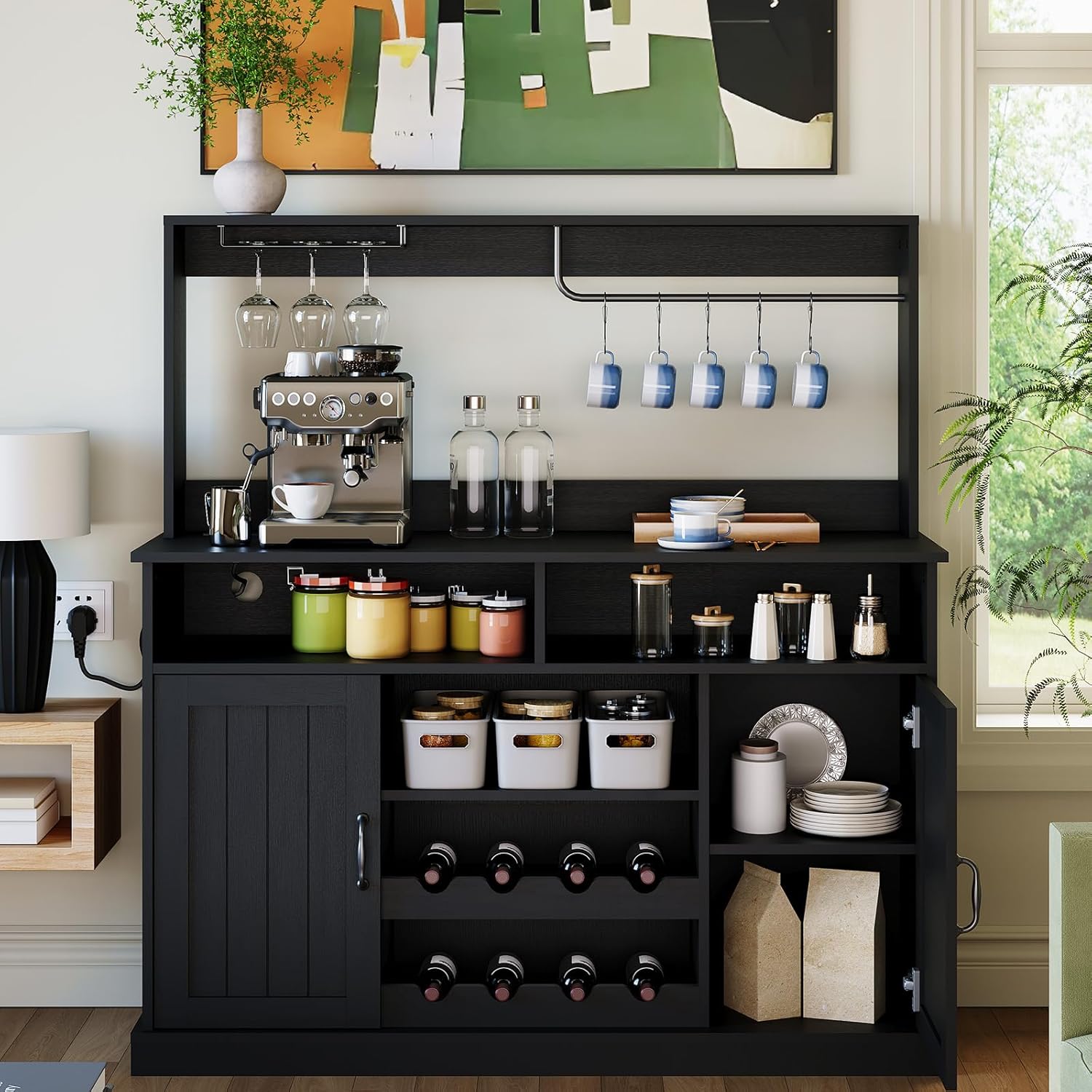
Farmhouse Coffee Bar Cabinet
Gives your machine, cups, beans, and accessories one dedicated home instead of cluttering the kitchen.
Boiler, group, and tank
The 0.3 L brass boiler is the right size for this class. It heats quickly, recovers between shots, and builds usable steam without feeling sluggish. The standard 58 mm group eliminates accessory headaches and opens the door to high-quality baskets early in ownership. The tank sits under the cup tray and holds about 2.7 liters, which dramatically reduces refill frequency compared with smaller single-boilers. These concrete specs are confirmed in the owner’s manual and detailed retailer pages.
Switchgear and ergonomics
Glenda uses metal toggle switches and a lever tap for steam, which is both tactile and durable. The wand is on a ball joint so you can set angles cleanly. The gauge is readable from the barista position, which is useful during early dialing sessions. Retailers call out the stainless switches, the articulated wand, and the pressure gauge as distinct features on PL41PlusT.
Workflow
Warm-up and readiness
A 300 ml brass boiler under PID control warms quickly for a boiler machine. A pragmatic routine looks like this. Lock the portafilter in at power-on. When the PID reaches your brew setpoint, run a short blank to heat the dispersion path and the cup. Let the group finish soaking while you grind. The warm-up numbers you see online range from optimistic five-minute claims to more grounded twenty-plus minute figures. In practice, brew water reaches target quickly, and a few extra minutes tighten shot-to-shot stability. The manufacturer materials and retailers emphasize the PID heat control and the larger 0.3 L boiler as the reason Glenda is quicker than older thermostat-only machines.
PID you actually use
Set a sensible temperature and leave it alone. Start around 93 °C for medium roasts. Step to 94–95 °C for medium-light espresso roasts. The PID removes the need for temperature surfing and gives you a repeatable baseline. Several listings confirm PID control is standard on the PL41PlusT trim, which is the defining difference between the PlusT and earlier Plus versions.
Brew–steam–brew cadence
Glenda is a single-boiler dual-use machine, so you alternate functions. Brew first. If you need milk, toggle to steam, purge the wand until steam is dry, then texture. When you are done, return to brew mode and run a brief cooling flush to pull the boiler back down to the coffee setpoint. The manual and seller pages show the shared wand and the lever tap strategy that make this sequence straightforward.
Pressure gauge and dialing
Use the front manometer as feedback, not as a trophy. On a healthy puck with a modern double basket, pressure will climb briskly toward your OPV ceiling and relax slightly as flow increases. If it spikes and the shot chokes, you are too fine or your distribution is off. If pressure hangs low and the shot gushes, grind tighter. The point of the gauge is to shorten the learning curve while you stabilize grind, dose, and prep. The presence of the extraction-pressure gauge is noted in multiple spec write-ups.
Espresso Performance
Consistency at a number
A small brass boiler and a 58 mm head behave predictably when you combine PID control with a steady cadence. Set brew temperature, keep your interval from blank-flush to pump start consistent, and the cup will follow. The three-way valve gives you clean finishes and keeps the head tidy over many shots. Multiple sources confirm brass 0.3 L boiler, PID, and three-way solenoid, which are the hardware reasons the machine behaves like this.
Baseline recipe and taste
A simple place to start is 18 g in and 36 g out in 25 to 30 seconds. On medium roasts, expect syrupy shots with chocolate and nut, with enough texture to carry macchiatos and cappuccinos. On medium-light espresso roasts, bump the setpoint one degree and give the puck a second to bloom before full flow. The PID removes the guesswork so you can make small, meaningful moves and taste them. The PID’s role and boiler details are cited by the product manual and spec pages.
Recovery between shots
The 300 ml boiler is sized for back-to-back espresso in a household setting. With a warm group and a steady workflow, you can pull two or three consecutive shots without drama. If you include milk in your routine, plan the classic brew–steam–brew rhythm, then keep the machine moving rather than letting it idle at steam for long stretches. The effect of the 0.3 L brass boiler on throughput is called out by sellers who focus on warm-up and recovery gains versus smaller 0.25 L platforms.
58 mm ecosystem advantages
The shift from Lelit’s smaller 57 mm format to a full 58 mm head matters in the long run. You can upgrade baskets immediately, use standard tampers, and choose from a larger pool of bottomless portafilters. Retail sources and community threads emphasize that PL41PlusT moves you into the 58 mm world while keeping the compact footprint.
Milk Steaming
Power and pace
A 0.3 L boiler is not a steam monster, yet it produces dry, usable steam for a single drink when you let it get to temperature. With a 12–20 ounce pitcher, plan on a short purge, an initial hiss of air to build microfoam, then a controlled roll to 60–65 °C. For a second drink, give it a moment to recover or brew the next shot and repeat the sequence. The articulated wand and lever tap make control easy. This one-drink rhythm matches what the specs promise.
Technique
- Purge until steam is dry so you are not injecting water.
- Keep aeration brief at the start, then settle into a rolling vortex.
- Cut steam at temperature, wipe and purge, then switch back to coffee and cooling-flush.
A small boiler rewards tidy technique and a consistent pitcher volume. The three-way solenoid keeps ends clean so you are not fighting drips while you move between phases.
Maintenance and Water
Daily and weekly care
Backflush with water at the end of a session. Run a detergent backflush weekly using the blind basket, because Glenda uses a three-way solenoid that vents to the tray. Keep the shower screen and gasket area clean with a quick wipe. Purge and wipe the wand after every steaming session. The owner’s manual and seller documents outline the same routine.
Water quality and descaling
Brass boilers scale if fed hard water. Keep hardness modest and descale on a cadence that matches your source. The 2.7 L tank simplifies mixed-water recipes if you build your own, and it makes bottled water easier to manage if you prefer a known profile. EU listings that highlight descaling warnings underline the point: stability comes from chemistry and routine as much as it does from hardware.
Parts and support
Exploded diagrams and parts are available through specialty retailers and technical support pages, which helps if you plan to keep the machine for the long haul. Stock can vary across markets, but the PL41 family is widely documented.
Real-World Workflow You Can Count On
- Warm-up
Lock in the portafilter. When the PID hits your setpoint, pull a short blank to heat the path and cup. Let the group finish soaking while you grind. This uses the PID and 0.3 L boiler as intended. - Pull the shot
Aim for 1:2 in 25–30 seconds as your baseline. Watch the gauge for a steady rise and slight settle. Adjust grind and prep, not pressure, to correct the curve you see. The manometer exists precisely for this feedback loop. - Steam a pitcher
Switch to steam, purge until dry, texture to 60–65 °C. The brass boiler supplies clean steam for one drink at a time. The lever tap and ball-joint wand make it easy to finish cleanly. - Return to brew
Switch back, run a cooling flush, then pull your next shot. The small boiler drops quickly to the coffee setpoint, which is why the brew–steam–brew rhythm works on this platform.
Competitive Set
Lelit Anna PL41TEM
Anna is the smaller sibling with a 57 mm group and a 0.25 L boiler, also with PID in the TEM trim. It warms fast and costs less, but you give up the 58 mm ecosystem and the larger boiler mass. If budget is tight and you do not care about 58 mm baskets, Anna keeps you in the family. The Anna PL41TEM spec confirms PID, manometer, and the smaller boiler.
Profitec GO
A compact single-boiler with a ring group, PID, a shot timer on the display, a pump-pressure gauge, and an accessible OPV for quick brew-pressure adjustment. Smaller 0.3–0.4 L brass brew boiler and very fast heat-up. If you want a timer and quicker access to pressure adjustments in a similar footprint, GO is a strong alternative. Official specs list the 0.3 L brass boiler, PID with shot timer, and fast heat-up.
Rancilio Silvia V6
A thermostat-controlled single-boiler with a 58 mm group and a 0.3 L brass boiler. Legendary for durability, but you give up PID unless you add it yourself, and you will surf temperature. Choose Silvia if you prefer the classic mechanical routine and plan to mod later. Specs confirm 0.3 L brass boiler and the single-boiler format.
Bezzera Hobby
Another compact single boiler with a 58 mm group and a 0.25 L boiler. No PID in many trims. Hobby warms quickly and steams small pitchers, but you lose numeric brew control on stock units. Bezzera’s page and retailer specs outline the 0.25 L boiler and 58 mm format.
Lelit Victoria PL91T
Still a single-boiler, but with Lelit’s control panel, menu-set preinfusion, and a compact stainless case. Same 58 mm universe and PID, plus a brighter UI and more features. If you want more convenience on screen and similar footprint, Victoria is the step up within Lelit’s line. Retailers and Lelit pages for Victoria cover the LCC PID interface and features.
Where Glenda fits: it is the value-oriented 58 mm single-boiler with a real PID and a slightly beefier boiler than minimal entries, designed for people who want fundamentals sorted without paying for heat-exchanger pace.
Testable Expectations and Benchmarks
- Warm-up window
Expect the PID to reach a common coffee setpoint quickly, with group heat soak improving over the next several minutes. Sources vary on exact times, but the machine’s 0.3 L boiler and PID are the reason the first shot arrives sooner than on thermostat-only designs. - Coffee temperature tuning
Start at 93 °C for medium roasts and move in single-degree steps. The point of the PID on this model is coarse but stable control, which is exactly what you need to dial consistently. PID presence is part of the PL41PlusT identity. - Steam cycle
From coffee to steam is a short climb on a 0.3 L boiler. Purge until steam is dry, texture a 150–200 ml pitcher, then cool back to coffee with a short flush. The brass boiler and lever tap are why this feels calm at home scale. - Pressure readout
Use the front gauge as a proxy for puck health while learning a new coffee. Consistent curves on the gauge usually correlate with stable flavor in the cup. The machine ships with the manometer for this reason.
Scores
- Build and materials: 8.4/10
Stainless case, brass 0.3 L boiler, 58 mm group, proper three-way solenoid, and a clean gauge on the face. It looks and feels like a tool that will survive real use. - Workflow and usability: 8.6/10
PID temperature control, straightforward toggles, clear pressure feedback, and a big 2.7 L tank. Warm-up to first good shot is quick for the format, and the single-boiler cadence is easy to memorize. - Espresso consistency: 8.6/10
A small brass boiler under PID with a 58 mm path and a three-way valve yields stable shots once you anchor your routine. The manometer accelerates dialing. - Milk steaming: 7.8/10
Clean, controlled steam for one drink at a time. It is not a café steamer, but it gets you silky microfoam on a 12–20 ounce pitcher with predictable pace. - Maintenance and serviceability: 8.2/10
Weekly detergent backflushing through a three-way solenoid, easy tank access, and available parts diagrams via specialty retailers. Water quality dictates descaling intervals. - Value: 8.7/10
In the EU, sale pricing around the mid-500s and typical street around the low-to-mid-700s make Glenda compelling against rivals that lack PID or 58 mm hardware. US availability is variable, yet even the higher 900-ish dollar listings remain competitive for a PID-equipped 58 mm single-boiler. - Overall rating: 8.6/10
A compact, 58 mm single-boiler that behaves like a proper tool. If you accept brew–steam–brew pacing, it rewards you with stable shots and tidy milk in a tight footprint.
Final Verdict
The Lelit Glenda PL41PlusT checks the boxes that matter for a serious home workflow. The boiler is brass and sized correctly for a home single-boiler at 0.3 liters. The group is the standard 58 mm, which keeps your accessory options wide. The PID gives you repeatable temperature control, which means you dial with intent rather than surfing a thermostat. The manometer gives you immediate feedback on puck resistance. The three-way solenoid keeps pucks dry and clean. The tank is larger than most peers at 2.7 liters, so refills are infrequent. The wand is articulated and capable, and the lever tap offers fine control in hand.
This is not a machine for running a breakfast bar. It is a compact, stable brewer that steams a single pitcher calmly and returns to coffee quickly when you cool it down. If your household is two or three drinks per session and you care about learning espresso on a predictable platform, Glenda is an easy recommendation. If you want a timer on the panel and faster external brew-pressure adjustment, Profitec GO leans modern. If you want the same 58 mm universe, a brighter UI, and menu preinfusion within Lelit’s ecosystem, Victoria PL91T sits one rung up. If you prefer the bare-metal ritual and plan to add PID later, Rancilio Silvia remains a durable classic. If you never steam, an espresso-only E61 single boiler will fit your use even better.
On the fundamentals that matter at home—temperature stability, 58 mm compatibility, honest steaming, and a footprint that fits real kitchens—the PL41PlusT does the job cleanly. The specifications and the price story line up with manuals and current EU listings, which is why the machine remains a smart buy in 2025 for anyone who wants to learn the craft without paying heat-exchanger money.
TL;DR
Lelit’s Glenda PL41PlusT is a stainless 58 mm single-boiler with a 0.3 L brass boiler, a PID for brew temperature, a front pressure gauge, a three-way solenoid, and a 2.7 L tank. It warms quickly for the format, pulls consistent shots when you keep a steady cadence, and steams one pitcher neatly. In the EU it often sells between the mid-€500s on sale and the low-€700s normally. If you want numeric control and the 58 mm ecosystem without paying for HX speed, this is the right kind of simple.
Pros
- 0.3 L brass boiler under PID control
- Standard 58 mm group and baskets
- Front pressure gauge shortens dialing
- Three-way solenoid yields dry pucks and cleaner backflushing
- Big 2.7 L tank in a narrow body
- Capable articulated steam wand for single drinks
Cons
- Single-boiler sequencing slows multi-drink milk service
- No built-in shot timer
- Modest display and basic UI
- Regional stock can be inconsistent outside the EU
Who It’s For
Home baristas who want a compact, metal-forward single-boiler with 58 mm hardware, numeric temperature control, and real steam for one or two milk drinks. If you value fundamentals, prefer learning on a stable platform, and do not need café-style throughput, Glenda belongs on your shortlist. If you want faster back-to-back milk service or more features on screen, cross-shop Profitec GO and Lelit Victoria, or step to a heat-exchanger when pace becomes the priority.
Variant and buying notes
- Naming: In some markets the PL41PlusT is labeled Glenda, in others you will see Gilda. The model code PL41PlusT is the anchor. Manuals and owner pages refer to the same machine.
- Dimensions and mass: Expect about 24 W × 26.5 D × 36 H cm and roughly 9 kg. Listings sometimes swap the order; use both Mutbex and price-comparison specs to cross-check.
- Power: Listings show roughly 1200–1250 W heating elements, in line with performance and recovery claims. Confirm voltage at purchase.
- Included accessories: Basket kits vary by retailer. Confirm that you receive single and double baskets plus a blind for cleaning.
- Consumables: The machine is designed for backflushing with detergent thanks to its three-way valve. Keep Cafetto-type cleaners on hand.
If you want a comparison grid that stacks Glenda against Profitec GO, Rancilio Silvia, and Lelit Victoria on heat-up, brew stability, steam time to 60 °C for a 150 ml latte, interface, and long-term service costs, I can map that out next.
We’ve categorized the best espresso machines for every kind of buyer
Find the right shortlist faster, whether you want convenience, a beginner-friendly setup, a smaller footprint, or better value at a given budget.
Best Superautomatic Espresso Machines
One-touch picks for speed and convenience.
Best Espresso Machines for Beginners
Easy-to-use machines with a smoother learning curve.
Best Small Espresso Machines
Compact machines for tighter kitchens and counters.
Best Espresso Machines With Built-In Grinder
All-in-one options with fewer extra pieces to buy.
Best Cheap Espresso Machines Under $500
Budget picks that still make sense for real espresso.
Best Prosumer Espresso Machines Under $1000
More serious machines with stronger value for the money.
Best Single Boiler Espresso Machines
Simple, space-saving picks for espresso-first routines.