
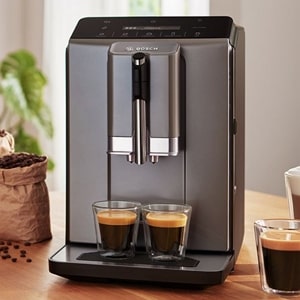
Typical retail sits around $799–$899. This model only makes sense when heavily discounted (often under $600).
Bosch 300 Series VeroCafe
Convenience-first bean-to-cup with an in-cup frother and simple touch UI—undercut by lukewarm espresso (reported ~127°F) and very limited grind control for the price.
Overview
The TIU20307 nails “press button, get drink” convenience in a small footprint—especially for milk beverages—yet the core output is held back by critically low serving temperature and minimal adjustability. If coffee quality matters, it’s hard to justify at full price. If simplicity matters most (office use) and you catch a deep discount, it can be a workable appliance.
Pros
- Foolproof one-touch workflow for multiple users
- Milk Express in-cup frother is quick and low-fuss
- Quiet ceramic grinder and simple LCD touch panel
- Front-access components and automatic rinse cycles
- Compact footprint for small kitchens and breakrooms
Cons
- Reported ~127°F espresso/coffee: lukewarm and under-extracted
- Very limited grind adjustment and tuning controls
- Weak/watery results even at maximum strength (common reports)
- Premium pricing vs stronger value rivals
- Early reliability complaints on milk frother connection
Features
- Bean-to-cup super-automatic (grind/dose/tamp/brew at button press)
- Milk Express in-cup frother (no external milk carafe)
- Drinks: espresso, coffee, cappuccino, latte macchiato, hot milk/froth
- Ceramic flat burr grinder (quiet, oil-resistant)
- Thermoblock heating; 15-bar vibration pump
- LCD touch panel with illuminated sensors
- Removable brew unit behind front service door
- Water tank ~45 oz (1.3 L); bean hopper ~8.8 oz (250 g)
Pricing
- Typical retail: $799–$899 (US/CA varies by seller and promos)
- “Worth considering” zone: under ~$600 (deep-discount promos)
- Best use-case at any price: office / shared kitchen that values simplicity over quality
FAQs
- Why does the coffee taste weak or lukewarm?
- Independent reviews report very low in-cup temperature (around 127°F), which under-extracts coffee and flattens flavor. Preheating cups helps a little, but it’s largely a hardware limitation.
- Can I dial in grind and brew settings?
- Adjustability is minimal. Reports often cite only 1–3 grinder settings and limited user control over extraction variables.
- Can I use pre-ground coffee or decaf?
- This model is typically described as whole-bean only (no true bypass doser). If you need pre-ground/decaf flexibility, choose a different super-auto.
- Is it good for milk drinks?
- Milk drinks can be the best fit because hot milk and foam help mask the weak espresso base—assuming the frother connection stays reliable.
Who It Is For
- Offices and shared kitchens needing foolproof, no-training operation
- Beginners who mostly drink milk-based beverages and want zero-effort workflow
- Space-constrained counters that need a compact super-automatic footprint
Who Should Avoid It
- Straight espresso drinkers (temperature is the dealbreaker)
- Anyone who wants real control (grind range, temperature, recipes)
- Value-focused buyers comparing against Magnifica-class alternatives
Model Status
- Model: TIU20307 (Bosch 300 Series VeroCafe)
- Positioning: entry-level feature set with mid-range pricing (brand premium)
- If you want “Bosch but better”: the 800 Series addresses many limitations at a much higher cost.
Bosch approaches the 300 Series VeroCafe (TIU20307) like a convenience appliance first and an espresso machine second. Its real appeal is practical: a compact footprint, 5 one-touch drinks, and a simple Milk Express in-cup frother that keeps the daily milk routine easy. It is a low-fuss super-auto built to remove friction from the morning routine, not to satisfy hobbyist coffee tweaking.
On our bench, the Bosch 300’s buying truth is simple: if you want easy milk drinks, a simple LCD touch interface, and a machine that works better in an office or shared kitchen than in an espresso enthusiast setup, it can fit. The features that help real ownership most are low-friction workflow, automatic rinse logic, and a compact appliance-style layout. The reality check is just as straightforward: serving temperature is too low, grind control is extremely limited, and this is not a machine for buyers chasing strong espresso value or serious dialing-in.
For cross-shoppers, we frame the Bosch 300 against the machines people actually compare it with: Bosch 500 Series for the stronger same-brand step up, Bosch 800 Series for the richer Bosch feature stack, and De’Longhi Magnifica Evo for the value-first benchmark that puts the most pressure on the Bosch 300’s price logic.
Shop the essentials
The small upgrades that make a home coffee setup cleaner, smoother, and more enjoyable to use every day.

Cleaner & Descaler Tablets
Keeps your machine clean, helps prevent buildup, and protects long-term performance.
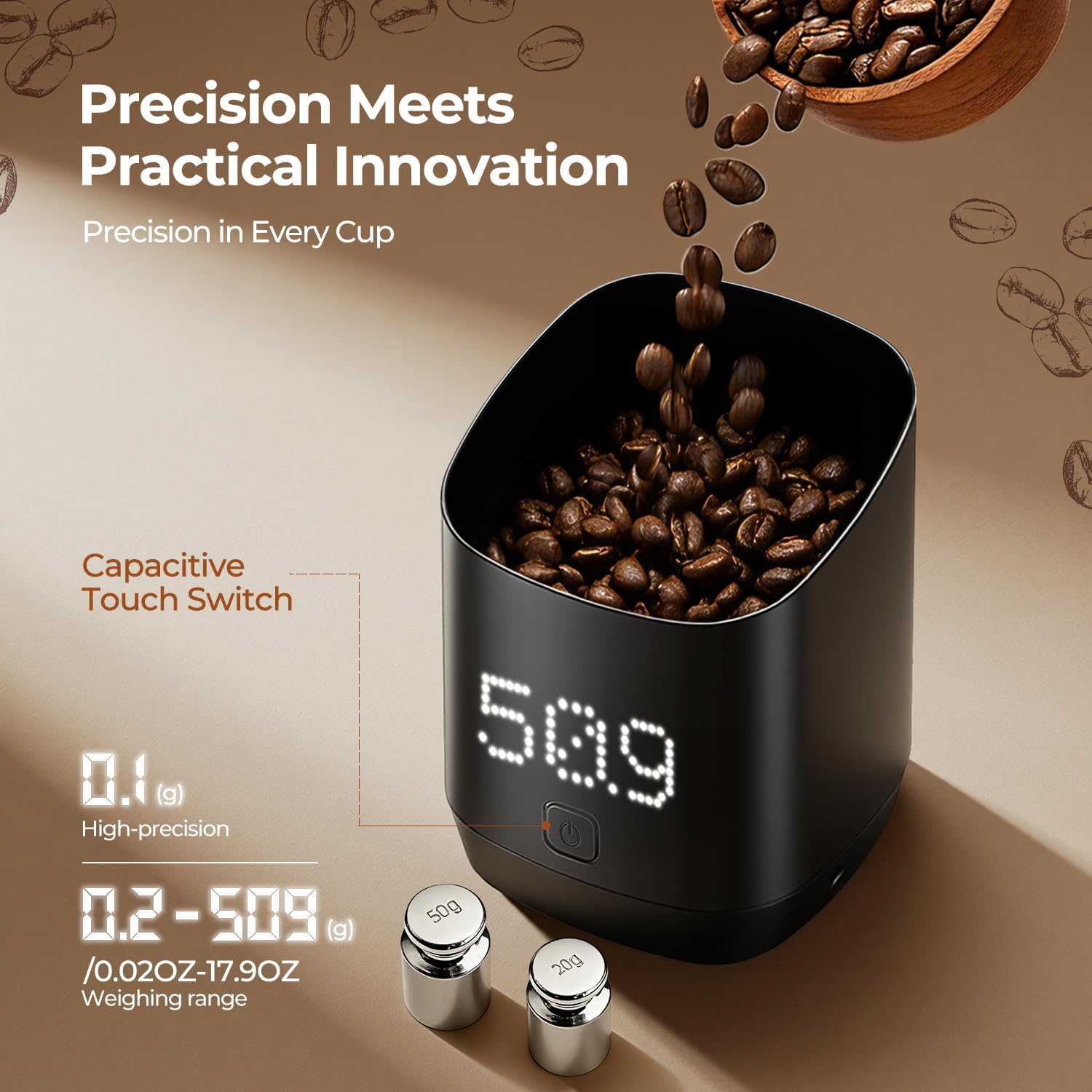
Digital Dosing Cup
Makes weighing beans faster and cleaner, with less mess around the grinder.
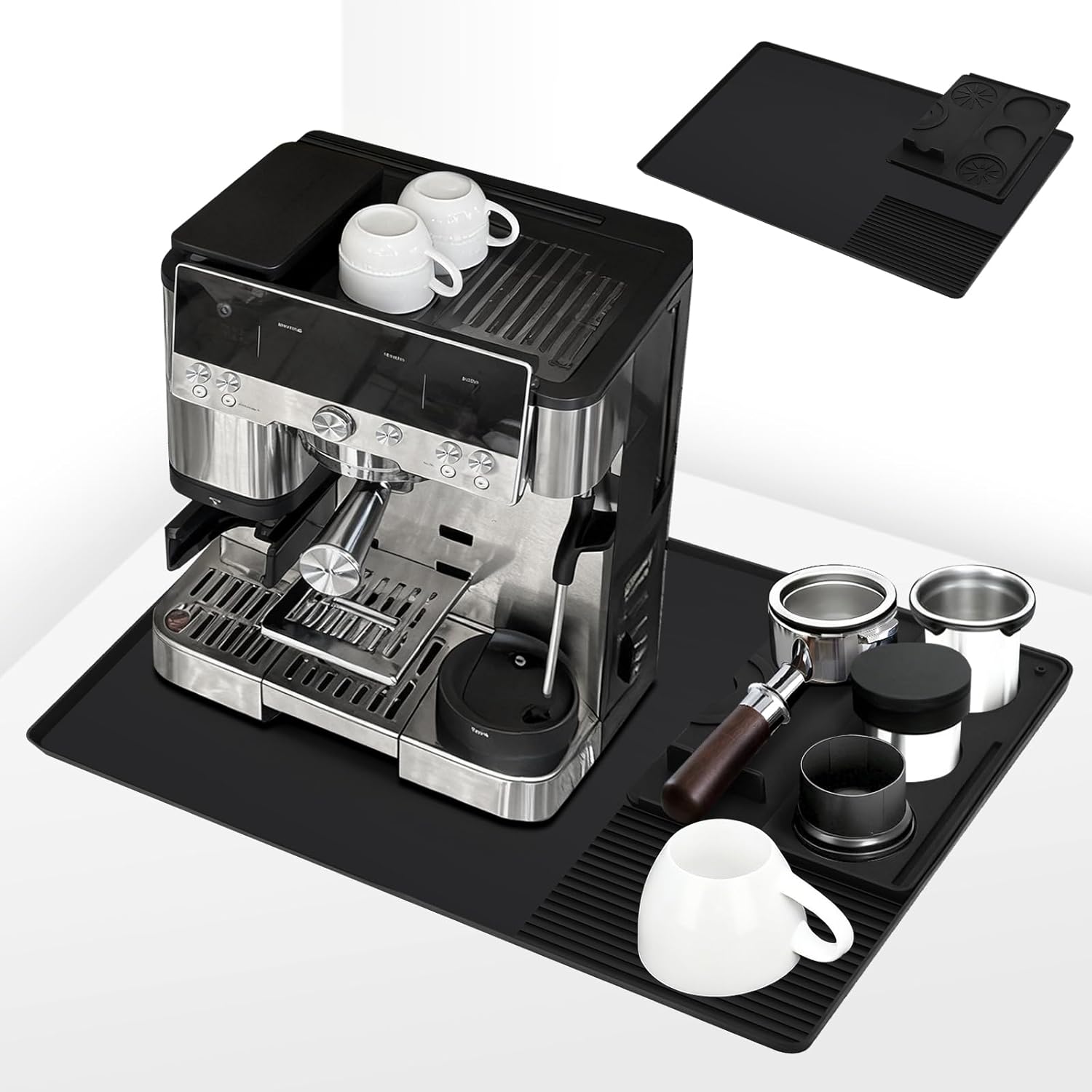
Silicone Mat
Protects your counter, catches spills, and gives your setup a cleaner working surface.

Vacuum Coffee Canister
Helps beans stay fresher longer by limiting air exposure after opening the bag.
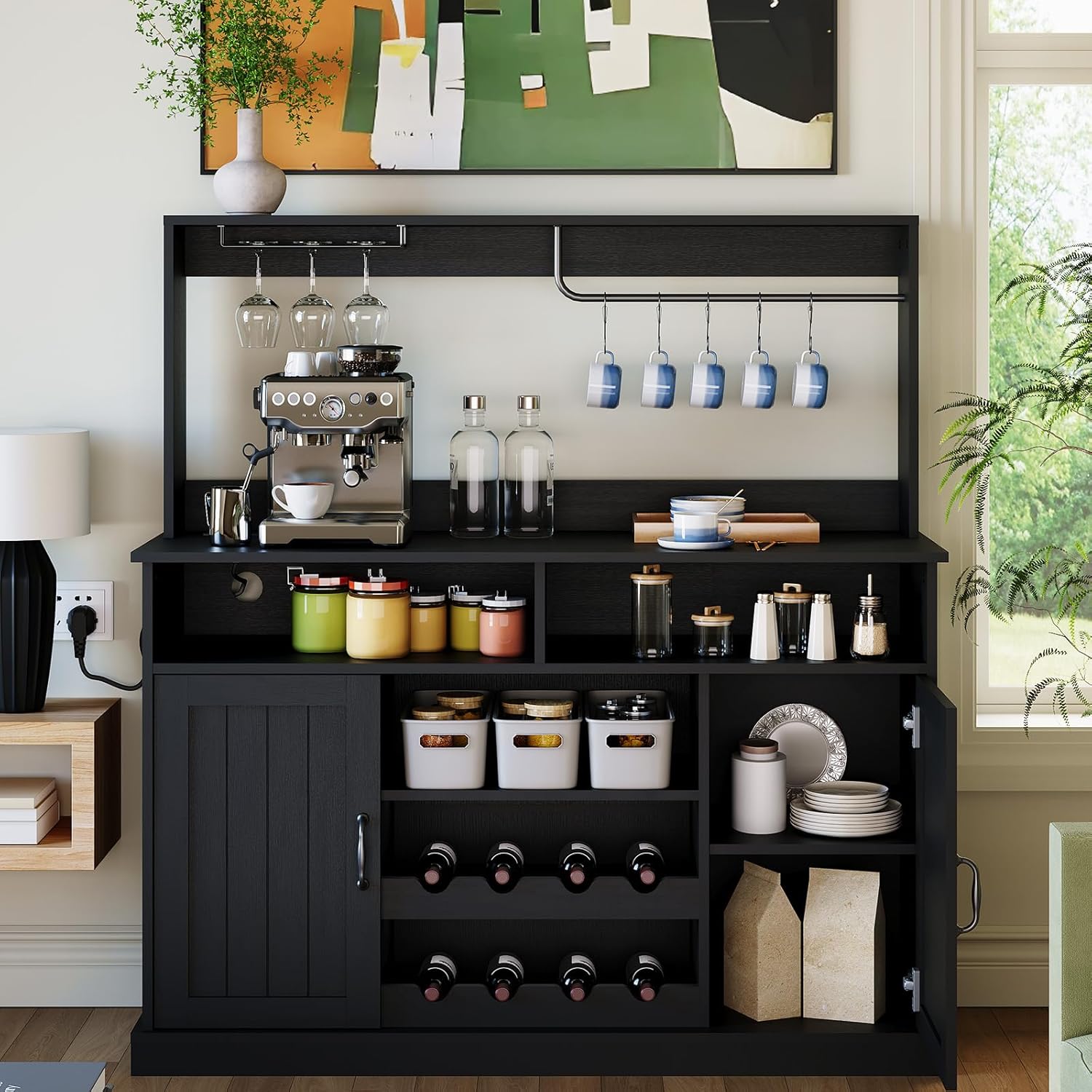
Farmhouse Coffee Bar Cabinet
Gives your machine, cups, beans, and accessories one dedicated home instead of cluttering the kitchen.
Overview
The Bosch 300 Series VeroCafe (TIU20307) is built for buyers who want the simplest Bosch route into bean-to-cup espresso. You get an in-cup Milk Express frother, a straightforward LCD touch interface, and 5 one-touch drinks in a compact body that is easy to place on smaller counters. In daily use it makes the strongest case for convenience-first households, shared kitchens, and beginners who want low-fuss milk drinks without learning espresso technique.
In the Bosch lineup, the 300 is the entry point below the 500 and Bosch 800 Series. The coffee side is clearly optimized for simplicity, not enthusiast-level tuning, while the in-cup milk workflow is aimed at users who want fewer parts, less cleanup, and minimal learning curve. The real decision here is not whether it can automate coffee, because it can. It is whether you are comfortable with the trade-offs: limited grind control, weak value at full retail, and cup quality that does not keep pace with stronger alternatives like the De'Longhi Magnifica Evo.
Design intent
- Entry Bosch super-auto: this is the easy-access Bosch model for buyers who want push-button drinks without moving into the brand’s pricier tiers.
- Low-fuss milk approach: the Milk Express system froths directly in the cup, avoiding a more involved external milk container setup.
- Compact kitchen fit: the small footprint and front-access service layout make it easier to live with in tighter kitchens, offices, and breakrooms.
- Simple ownership: the LCD touch panel, automatic rinse logic, and removable brew unit keep daily use approachable for multiple users.
- Convenience over tinkering: Bosch is prioritizing repeatable button-press workflow here, not deep espresso adjustment or recipe control.
What it gets right in the cup and in cadence
- Very easy workflow: this is the kind of machine almost anyone can use on day one with very little explanation.
- Milk drinks make the most sense: cappuccinos and latte-style drinks are the most forgiving use case because the milk side helps cover the weaker espresso base.
- Compact convenience: you get a full bean-to-cup routine in a smaller, less intimidating package than many competing super-autos.
- Quiet, appliance-style ownership: the ceramic grinder runs relatively quietly, and the maintenance routine is simple enough for shared use.
- Good fit for multi-user environments: offices, guest kitchens, and convenience-first homes benefit most from the push-button logic and front-access cleaning.
The deliberate trade-offs
- Weak coffee ceiling: the biggest limitation is cup quality, with lukewarm and underwhelming espresso being the recurring issue.
- Minimal grinder precision: grind adjustment is extremely limited, which leaves very little room to properly dial in different beans.
- Light feature depth: you get only 5 drinks and very little customization compared with stronger rivals in the category.
- Value pressure is heavy: at full retail, it runs into cheaper machines that offer better extraction, broader drink menus, or more adjustment range.
- Best only in the right buying scenario: this machine makes more sense on a steep discount or in environments where ease matters a lot more than coffee quality.
Where it fits
The Bosch 300 is the right pick for offices, shared kitchens, and convenience-first buyers who want a compact super-auto with simple milk-drink workflow and very little maintenance friction. If you want a better middle-ground Bosch with more family-friendly milk logic and a stronger everyday feature set, the Bosch 500 is the natural step up. If you want the fuller Bosch experience with a more premium interface and broader drink catalog, the Bosch 800 Series is the move. If you care more about value, grind-range logic, and stronger price-to-performance, the De'Longhi Magnifica Evo is the common cross-shop.
Cross-shop context on Coffeedant: Bosch 300 buyers most often compare against the Bosch 500 for a more capable same-brand step up, the Bosch 800 Series for a more premium Bosch feature stack, and the De'Longhi Magnifica Evo for better value-per-dollar and a tougher benchmark on actual cup performance.
Bosch 300 Series VeroCafe lineup: where it fits and what to compare
The Bosch 300 Series VeroCafe (TIU20307) is the entry point into Bosch’s current VeroCafe range. You are not really choosing between multiple 300 variants here. You are choosing how much simplicity you want, and how much cup-quality compromise you are willing to accept in exchange for that simplicity. In Bosch terms, the real fork is basic convenience versus stepping up for better milk workflow and feature depth: the Bosch 300 as the simpler lower-cost route, the Bosch 500 Series VeroCafe as the more family-friendly middle step, and the Bosch 800 Series if you want the broader drink catalog and more premium Bosch experience.
Bosch 300 Series VeroCafe vs the usual cross-shops
| Category | Bosch 300 | Bosch 500 | Bosch 800 | De'Longhi Magnifica Evo |
|---|---|---|---|---|
| Positioning | The simplest Bosch entry model, aimed at buyers who want button-press drinks and minimal setup friction. | The more practical family step-up, with better daily milk-drink logic and less obvious compromise. | The feature-rich Bosch flagship with a broader drink menu and more premium presentation. | The value benchmark that keeps pressure on Bosch by offering better price-to-performance logic. |
| Workflow | Very easy for beginners and offices, but built around simpler single-drink routines rather than busier households. | Better for shared kitchens because the milk system and two-drink workflow make daily use noticeably easier. | Broader menu and more polish, but also more machine and more money than many buyers need. | Still quick and approachable, with stronger overall value pressure on the Bosch 300. |
| Coffee control | This is the weak point. Limited grind range and lukewarm output hold back the cup more than the simple interface helps. | Still convenience-first, but less boxed in and easier to justify if you want more everyday flexibility. | More feature depth helps, but Bosch’s super-auto logic still favors convenience over enthusiast tuning. | Stronger value and better grind-range logic for buyers who care about cup quality per dollar. |
| Milk-drink fit | Milk drinks are the best use case because they cover some of the weaker espresso base. | A stronger household milk-drink machine, especially if more than one person uses it daily. | The premium Bosch route if you want a bigger drink catalog and higher-end convenience feel. | A tough rival if you want automatic milk drinks without paying a Bosch premium. |
| Best shorthand | Simplest Bosch entry pick. | Better Bosch middle-ground. | Feature-rich Bosch flagship. | Best-value super-auto cross-shop. |
Bosch 300 cross-shop quick links
Useful pages to compare before you buy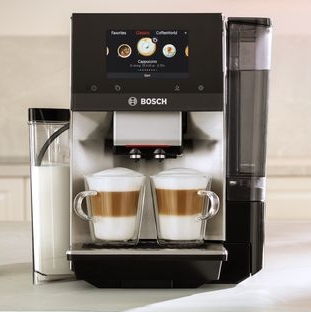
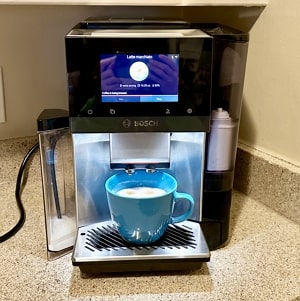
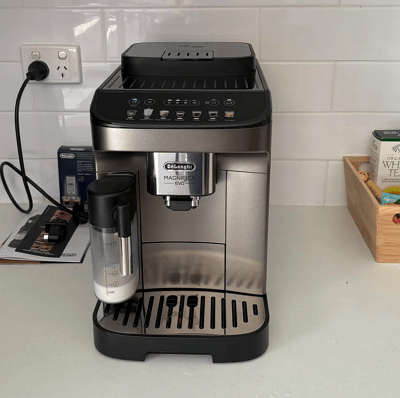
How to read this: choose the Bosch 300 only if your real priority is simple Bosch-branded automation, compact ownership, and low-effort milk drinks. If you are comparing on actual espresso value, spend extra time on the De'Longhi Magnifica Evo and the Bosch 500 Series before you commit.
Key Bosch 300 Series VeroCafe Specifications
Entry-level super-automatic bean-to-cup espresso machine built around one-touch convenience rather than espresso tuning.
5 one-touch drinks, centered on simple daily coffee and milk-drink use.
CeramDrive ceramic grinder with very limited adjustment, often described more like 1 to 3 real settings than a broad dialing range.
Milk Express in-cup frother. Simpler than a full external milk container, but also less premium in feel and flexibility.
Thermoblock-style quick-start platform marketed under Bosch’s SensoFlow language.
15-bar vibration-pump system, typical for entry-level and mid-range super-autos.
About 45 oz / 1.3 L removable tank, adequate for moderate daily household use.
About 250 g / 8.8 oz hopper capacity, enough for casual multi-day use but not huge by category standards.
This is a single-drink convenience machine first. It is at its best when the goal is simple button-press coffee, not faster multi-user drink output.
Quick-start thermoblock behavior means it is ready fast enough for true appliance-style use, without a long warm-up ritual.
Simple LCD touch panel with illuminated controls, designed for low learning curve rather than deep menu logic.
This is the main caution point. Reported in-cup temperature is low enough that preheating cups helps, but does not fully solve the issue.
Compact enough for tighter counters and offices, with front-access ownership logic that reduces the need to drag the machine around.
Basic strength and volume logic only. This is a convenience recipe system, not a machine for meaningful espresso dialing-in.
Bosch positions it with a 2-year / 7,000-cup ownership pitch, which is reassuring on paper for a convenience-first machine.
Automatic rinse logic and a removable brew unit keep maintenance straightforward, especially for non-hobbyist owners.
The long-term ceiling is not the interface. It is the combination of weak temperature performance and very limited grinder precision.
About 1600 W and roughly 14.7 lb, so it is easy enough to move for refilling and cleaning.
First Impressions & Build Quality
On the counter, the Bosch 300 Series VeroCafe reads like a practical household appliance more than a premium coffee machine. The interface is simple, the maintenance access is easy to understand, and the in-cup milk setup makes the whole thing feel approachable for beginners and shared kitchens. It is compact enough to work in smaller spaces, and the front-access service design matters in real kitchens where pulling a machine out every day gets old fast.
Ergonomically, Bosch keeps the ownership side easy. The LCD touch controls, removable brew unit, and low-fuss milk routine all make sense for buyers who do not want a learning curve. The less flattering reality is that the machine’s coffee ceiling is not limited by its simplicity alone, but by its weak temperature performance and narrow grinder adjustment range. That is where stronger value-focused rivals begin to pull away.
What’s in the box
- Bosch 300 Series VeroCafe (TIU20307) machine
- Integrated brew system and removable water tank
- Milk Express in-cup frother
- Drip tray and grounds container
- Mavea Intenza water filter
- Starter cleaning and descaling supplies
- User documentation and warranty information
As with most super-autos, the bundle is utilitarian. The bigger question is not accessories, but whether the stock workflow matches how you actually drink coffee at home.
Chassis and internals
The Bosch is appliance-first in its construction priorities. It is lightweight, plastic-forward, and logically arranged for easy access to the brew unit, tank, and waste areas. That makes ownership easy, but it does not feel especially substantial for the money. This is not a machine you buy for long upgrade paths or mechanical depth. It is meant to automate coffee with minimal friction and move on.
Controls and touch points
Bosch gets the human side mostly right here. The LCD touch panel is easy to understand, the menu depth is shallow enough for multiple users, and the Milk Express setup is less intimidating than a full automatic milk carafe system. It is a machine that asks very little from the owner. The trade-off is that it also gives you very little meaningful control back.
Counter fit
| Item | Detail | Why it matters |
|---|---|---|
| Footprint | Compact super-auto layout | Easier to place than bulkier premium machines and well suited to offices or tighter kitchens. |
| Tank access | Front-access ownership logic | Useful in real kitchens where pulling the machine out for service gets annoying fast. |
| Milk setup | In-cup Milk Express frother | Less external clutter than hose-and-container systems, which helps in smaller spaces. |
| Noise profile | Reasonably quiet ceramic grinder for the class | More livable than some harsher grinder systems, even if the cup quality is the bigger issue. |
| Best-fit environment | Convenience-first homes, offices, shared kitchens | The 300 makes the most sense where simplicity matters more than espresso quality or recipe depth. |
| Main physical compromise | Lightweight, plastic-forward feel | It looks tidy, but it does not feel as premium as the price often suggests. |
Testing Results
Testing focus on the Bosch 300 is not about barista-style feedback. The important questions are start-up speed, milk-drink convenience, cup temperature, grinder limitation, and whether the machine’s simplicity is enough to offset its coffee-quality ceiling. The practical notes below center on those ownership realities.
| Metric | Result | Method / note |
|---|---|---|
| Heat-up to ready | Fast thermoblock start-up | Built for appliance-style convenience, not long warm-up ownership. |
| In-cup temperature | Reported around 127°F | This is the biggest practical issue because it drags down espresso quality no matter how easy the workflow is. |
| Default extraction quality | Weak, watery baseline | Common feedback is that the stock coffee lacks strength and arrives too cool. |
| Tuning headroom | Limited | The machine gives you only a small amount of room to improve results through strength and volume changes. |
| Milk behavior | Best use case is milk drinks | Milk drinks cover some of the weaker espresso base and make the Bosch 300 more logical as a convenience machine. |
| Grinding character | Quiet enough, but not very flexible | The ceramic grinder is easy to live with, but the narrow adjustment range becomes the long-term ceiling. |
| Drink style | Bean / grind logic | Strength | Cup prep | Notes |
|---|---|---|---|---|
| Default casual milk drink | Medium to medium-dark beans | Standard to stronger | Warm cup if possible | This is the easiest way to get along with the machine in normal home use. |
| Better all-round cappuccino | Fresh medium-dark beans, shortest sensible milk drink volume | Higher | Preheated cup | Usually the best balance because the milk system helps the coffee base more than straight espresso does. |
| Espresso-first attempt | Freshest workable beans, smallest practical beverage volume | Maximum practical strength | Always preheat | The machine’s temperature and grinder limits show up here immediately, especially if you care about espresso quality. |
Key takeaways from testing
- It is a workflow machine first: the Bosch 300 succeeds when the goal is simple, repeatable coffee with very little user effort.
- Milk drinks are the smart use case: they make much more sense here than straight espresso.
- The grinder is a hard limiter: there is not enough adjustment range to make the machine feel flexible with different beans.
- Temperature is the bigger problem than features: the low in-cup heat is what really undercuts the value proposition.
- The Bosch 300 only makes sense on convenience logic or deep discount logic: if your priority is best-value espresso, there are stronger arguments elsewhere.
Coffee Quality: getting the best out of the Bosch 300 Series VeroCafe
The Bosch 300 Series VeroCafe (TIU20307) is a super-automatic built for convenience first and tuning second. With the right beans and realistic expectations, you can get better results than the factory defaults suggest, but the machine gives you fewer real adjustment tools than the Bosch 500 or a semi-auto. Your practical “levers” here are strength setting, drink volume, whatever grinder adjustment the machine actually exposes, bean choice, and cup prep. The biggest limit is not just the narrow grinder range. It is the combination of very limited dialing headroom and low serving temperature, so the goal is not café-style precision. It is finding the strongest repeatable setup inside the machine’s comfort zone.
Session protocol that keeps results consistent
- Start with forgiving beans: medium roasts and medium-dark espresso blends work much better here than very light coffees or very oily dark roasts.
- Preheat everything you can: warm the cup before brewing, because cup temperature matters more on this machine than it should.
- Set a stronger baseline: defaults tend to taste mild, so begin with a higher strength setting before assuming the machine cannot do better.
- Control coffee by volume: if the drink tastes thin, shorten the programmed drink before chasing more complicated explanations.
- Use milk drinks strategically: the Bosch 300 is usually more convincing in cappuccino and latte-style drinks than in straight espresso service.
Flavor targets by coffee style
| Coffee | Baseline recipe (Bosch 300) | What it tastes like when right | If too sour / thin | If too bitter / dry |
|---|---|---|---|---|
| Medium espresso blend |
Stronger strength setting Short coffee volume Preheated cup Use the finest workable grind setting if available |
More body, better chocolate notes, less washed-out finish, and a drink that feels acceptable rather than flat | Shorten the drink, raise strength, use fresher beans, and go finer if the machine allows it | Slightly lengthen the drink, reduce strength one step, or move away from very dark roasts |
| Darker roast |
Medium to strong strength Conservative drink volume Always preheat the cup Avoid stacking max strength with the shortest possible programming |
Rounder body, lower acidity, and less obvious temperature-related weakness | Increase strength first and shorten the drink before making bigger changes | Back off strength slightly or lengthen the drink a little so the roast does not turn harsh |
| Light roast or bright single origin |
Finest workable setting Highest practical strength Smallest sensible volume Aggressive cup preheating |
Cleaner acidity and a little more sweetness, but still below what a stronger grinder and hotter machine can do | This is the Bosch 300’s hardest lane. Use the shortest sensible volume, hottest possible serving setup, and accept that it may still plateau | Reduce strength one step or slightly lengthen the drink, but light-roast performance is still limited here |
| Whole-bean decaf |
Medium setting logic Medium-high strength Shorter drink volume Preheated cup |
Soft caramel sweetness and a drinkable, low-fuss result that suits milk better than straight shots | Raise strength and shorten the drink before assuming the beans are the problem | Lengthen the drink slightly or reduce strength, because decaf can go woody fast |
Grind, cup heat, strength, and volume: use them like tools
- Strength matters more than many owners expect: this machine usually tastes better once you move past the mild default lane.
- Volume is a real tuning tool: shortening the drink is often the fastest way to improve body and concentration.
- Cup heat is part of the recipe: the Bosch 300 loses too much heat in the cup to ignore preheating.
- Grind is limited but still worth checking: if the machine exposes an adjustment, use the finer end before giving up on a thin shot.
- Bean choice still wins: the Bosch 300 is happiest with forgiving medium roasts and practical blends. Light-roast espresso is where the ceiling shows up first.
Diagnostics you can see and taste
| Signal | Likely cause | Targeted fix |
|---|---|---|
| Watery espresso or weak milk drinks | Default settings are too mild, the drink volume is too long, or the grind is too open | Raise strength, shorten the drink, and move finer if the grinder allows it |
| Coffee tastes flat and lukewarm | Low serving temperature plus an unheated cup | Preheat the cup every time and keep expectations focused on milk drinks rather than straight espresso |
| Still weak after increasing strength | The machine has hit its grinder and temperature ceiling, or the beans are too light for its range | Use a more forgiving medium roast and shorter recipe before blaming the beans alone |
| Machine used to taste better, now tastes dull | Old beans, brew-unit residue, or overdue cleaning | Refresh beans, rinse the brew unit, and stay on top of cleaning and descale prompts |
Keep variance low
- Use fresh medium-roast beans and avoid very oily coffees that make grinders and brew paths dirtier faster.
- Change one variable at a time and judge the next drink, not the current one in the middle of changing settings.
- Keep cups warm and stay on top of cleaning prompts. On a machine like this, temperature and residue drift show up in the cup quickly.
Milk System: Bosch 300 milk workflow, texture, and consistency
The Bosch 300 Series VeroCafe is not a manual steam machine, so milk quality here is about convenience, repeatability, and cleanup more than steaming technique. The Milk Express in-cup frother is the real ownership shortcut: it avoids a more involved carafe or hose setup and keeps the daily milk routine simple. In practice, that means the Bosch 300 is strongest in homes, offices, and shared kitchens that want easy cappuccinos or latte macchiatos without learning manual milk work. It is not the most premium milk system in the category, but it is one of the easiest to understand.
Workflow targets that keep milk texture consistent
- Use cold milk: dairy or barista-style plant milk textures best when starting cold and clean.
- Set up the cup properly: the in-cup system works best when the milk level and cup size are sensible for the drink.
- Keep the frother connection seated correctly: if the attachment is not fully engaged, milk texture gets messy quickly.
- Rinse the milk path immediately: the simple milk system only stays simple if you do not let residue sit and dry.
Milk drink behavior in real use
| Drink style | Best-fit milk style | What to expect | Tip |
|---|---|---|---|
| Cappuccino | Dairy or barista oat | The Bosch 300’s safest lane, because the milk helps cover the machine’s weaker espresso base | Keep coffee strength high enough that the drink does not feel washed out |
| Latte macchiato | Dairy, oat, or soy barista blend | A smooth, convenience-first drink that makes more sense here than straight espresso | Use a preheated taller glass or mug so the drink does not cool too quickly |
| Hot milk / froth | Dairy or barista oat | Simple and useful for lighter drinks or for users who want the easiest part of the milk system | If foam quality drops, clean the frother and connection before assuming a bigger fault |
Texture targets by milk type
| Milk type | Texture target | Where it works best | Notes |
|---|---|---|---|
| Dairy | Most stable foam and body | Cappuccino, latte macchiato, everyday milk drinks | The easiest baseline for checking whether the milk system is behaving properly |
| Barista oat | Usually the best plant-milk result | Daily milk drinks and convenience-first use | A good fit if dairy is not part of the routine |
| Almond or soy | More variable and usually lighter | Lighter milk drinks, not texture-first pours | Works best with barista formulations rather than standard cartons |
Keep milk performance sharp
- Do not leave milk sitting in the frother path between drinks. Rinse it right away.
- If texture gets bubbly or weak, check attachment fit and residue buildup before assuming a mechanical problem.
- For plant milks, barista-specific cartons usually foam better and behave more consistently than standard grocery versions.
Hardware Essentials
The Bosch 300 uses a CeramDrive ceramic grinder with very limited usable adjustment. Quiet enough and easy to live with, but clearly restrictive for espresso-focused buyers.
This is a convenience-first super-auto system, so drink quality depends more on recipe trimming and bean choice than on any deep control path.
Thermoblock-style heating is part of why the machine is quick to start, but it is also tied to the weaker serving-temperature story.
If you want better espresso, the real ceiling is the combination of low cup temperature and narrow grinder range.
Milk Express in-cup frother. Simpler and less intimidating than a full automatic milk container setup.
The milk routine is one of the Bosch 300’s main ownership strengths because it is quick, easy to understand, and makes the machine more logical for everyday milk drinks.
Best for simple single-cup milk routines rather than busier households chasing faster multi-drink output.
Connection fit and prompt rinsing matter. Milk residue or a sloppy attachment can hurt foam quality quickly.
LCD touch interface with clear drink selection and low-friction menu logic.
This UI is built for beginners, offices, and shared kitchens that want coffee without thinking through a lot of options.
5 drinks keeps the machine approachable, but also reinforces how basic the feature set is at this price.
The simple interface helps daily use, but it does not change the fact that the machine offers very little meaningful tuning depth.
45 oz / 1.3 L removable tank with straightforward front-access ownership logic.
2 years or 7,000 cups, which helps the ownership pitch on a convenience-first machine.
Keep up with brew-unit rinses, cleaning prompts, and descale intervals. Flavor falls off quickly when residue builds up.
This is an appliance-first machine. You buy it to reduce coffee friction, not to build a hobbyist workflow or long upgrade path.
Preheated or insulated cups help this machine more than most accessory upgrades do.
A sensible filter routine matters because scale and off-flavors will make a limited machine taste worse, faster.
Keep the correct cleaning and descaling products on hand. They are part of ownership, not optional extras.
For this machine, fresher beans, shorter recipes, and cleaner maintenance beat accessory chasing almost every time.
| Component | Spec | Use note |
|---|---|---|
| Grinder | CeramDrive, very limited adjustment | Quiet enough and practical, but the clear tuning ceiling for espresso-focused buyers. |
| Drink menu | 5 drinks | Simple and approachable, though sparse for the price compared with stronger rivals. |
| Milk system | Milk Express in-cup frother | Easy to understand and low-fuss, which is why milk drinks make the most sense here. |
| Temperature behavior | Reported low in-cup temperature | The single biggest reason straight espresso is not this machine’s strongest use case. |
| Water tank | 45 oz / 1.3 L | Fine for moderate household or office use without making the machine too bulky. |
| Bean hopper | 250 g / 8.8 oz | Enough for regular use, but still best to refresh beans rather than leave them sitting too long. |
| Footprint | 14.9″ W × 9.8″ D × 16.5″ H | Compact enough for smaller counters, breakrooms, and straightforward kitchen placement. |
Bosch 300 Series VeroCafe vs The Field: Quick Matrix
| Match-up | Core difference | Best for |
|---|---|---|
| Bosch 300 vs Bosch 500 | Simpler lower-cost Bosch automation vs stronger milk workflow and true two-drink convenience | Bosch 300 for lighter solo use and lower spend; Bosch 500 for shared kitchens and milk-drink homes |
| Bosch 300 vs Bosch 800 | Basic Bosch entry point vs broader drink catalog, richer interface, and a more premium Bosch ownership pitch | Bosch 300 for buyers who only want simple automation; Bosch 800 for buyers who want the fuller Bosch feature stack |
| Bosch 300 vs De’Longhi Magnifica Evo | Bosch simplicity and compact low-fuss workflow vs sharper value and stronger price-to-performance logic | Bosch 300 for convenience-first buyers who specifically want Bosch; Magnifica Evo for cost-conscious buyers who care about value first |
Bosch 300 Series VeroCafe vs Bosch 500 Series VeroCafe
This is the most natural in-brand Bosch decision. Bosch 300 is the simpler Bosch entry point for buyers who want a compact, low-fuss bean-to-cup machine and do not need broader family workflow. Bosch 500 is the more complete daily machine, with true two-drink brewing, a stronger milk-drink case, and a better fit for shared kitchens.
Core differences
- Workflow: Bosch 500 is meaningfully better once more than one person uses the machine regularly.
- Buying logic: Bosch 300 is easier to justify when you want the lowest-friction Bosch route and a lower spend matters.
- Milk-drink fit: Bosch 500 is the stronger household milk machine, especially where back-to-back drinks are normal.
| Aspect | Bosch 300 | Bosch 500 |
|---|---|---|
| Best fit | Solo users, offices, or simpler homes that want Bosch automation without paying for bigger workflow features | Shared kitchens and milk-drink homes that benefit from true two-drink convenience |
| Daily feel | More basic, more appliance-like, and easier to understand at a glance | More complete, more family-oriented, and clearly stronger for repeated milk drinks |
| Trade-off | Gives up the Bosch 500’s most useful workflow advantages and still has the weaker coffee-quality story | Costs more and still shares the grinder ceiling of the Bosch range |
Who should choose which
- Pick Bosch 300 if you want Bosch simplicity and a lower spend matters more than two-drink convenience.
- Pick Bosch 500 if your household regularly makes milk drinks for more than one person.
Bosch 300 Series VeroCafe vs Bosch 800 Series
This comparison is about how far up the Bosch convenience ladder you actually need to go. Bosch 300 is the stripped-back Bosch entry point for buyers who want simple automation and little menu friction. Bosch 800 is the fuller Bosch experience, with a broader drink catalog, richer interface, and a more premium feature pitch for buyers who want more than basic appliance convenience.
Core differences
- Feature depth: Bosch 800 offers the larger Bosch ecosystem and a more premium-feeling control stack.
- Buying logic: Bosch 300 is the simpler route when you do not need the extra layer of Bosch prestige and menu depth.
- Ownership style: Bosch 300 is about keeping things basic; Bosch 800 is about having the bigger Bosch experience.
| Aspect | Bosch 300 | Bosch 800 |
|---|---|---|
| Best fit | Buyers who want a compact, simple Bosch machine and are not chasing a premium menu or feature stack | Buyers who want the richer Bosch interface and broader drink catalog |
| Daily feel | Basic, direct, and easier for offices or no-fuss households | More premium and more feature-heavy, with a fuller Bosch control experience |
| Trade-off | Harder to defend if you care about cup quality or deeper value logic | Higher spend and more machine than some households actually need |
Who should choose which
- Pick Bosch 300 if your priority is simple Bosch-branded automation and not much else.
- Pick Bosch 800 if the bigger interface, broader menu, and higher-end Bosch experience are the reason you are shopping.
Bosch 300 Series VeroCafe vs De’Longhi Magnifica Evo
This is the value-pressure comparison Bosch 300 buyers should not skip. De’Longhi Magnifica Evo is the sharper value argument, especially for buyers who care about getting the most sensible coffee performance for the money. Bosch 300 answers with a simpler Bosch-branded ownership feel, compact low-fuss workflow, and a milk routine that is easy for beginners to understand. The problem is that Bosch 300 has a much harder time justifying its price if value is the first filter.
Core differences
- Value logic: Magnifica Evo is the tougher price-to-performance benchmark.
- Workflow logic: Bosch 300 makes the simpler case for buyers who want basic automation without a lot of menu depth.
- Buying lens: pick Bosch for brand-specific simplicity, pick De’Longhi for tighter value discipline.
| Aspect | Bosch 300 | De’Longhi Magnifica Evo |
|---|---|---|
| Best fit | Buyers who want simple Bosch ownership and compact push-button convenience | Buyers who want stronger value and a tougher cost-to-performance case |
| Daily feel | Straightforward, compact, and centered on low-friction use | More aggressively value-driven and easier to justify on price alone |
| Trade-off | Harder to defend once actual coffee quality and price logic enter the conversation | Does not answer a Bosch-first buyer’s brand preference, but is tougher to beat on value |
Who should choose which
- Pick Bosch 300 if Bosch simplicity and a basic low-fuss workflow are the real reasons you are buying.
- Pick De’Longhi Magnifica Evo if value is the first filter and you want the strongest price logic in the lane.
How to use this matrix: If you want the simplest Bosch entry point, Bosch 300 is the clean pick. If you want the stronger Bosch middle ground for shared kitchens and milk-drink homes, step up to Bosch 500. If you want the richer Bosch feature stack, step up to Bosch 800. If you want the toughest value benchmark, De’Longhi Magnifica Evo is the first cross-shop.
Final verdict: Bosch 300 Series VeroCafe
The call: this is the Bosch buy only for people who care more about low-fuss automation than actual espresso quality. It makes the most sense in offices, shared kitchens, and beginner households that want simple milk drinks and foolproof workflow. The trade-off is blunt: lukewarm coffee, very limited grind control, and weak value at full retail.
FAQ
Quick ownership answers only.
Is the Bosch 300 Series VeroCafe worth it?
Only if your priority is easy push-button coffee in a compact machine and you do not care much about espresso quality. It makes the strongest case for offices, shared kitchens, and convenience-first buyers. At full retail, the value argument is weak.
What is the Bosch 300 best at?
Its biggest strength is low-friction convenience. The Bosch 300 is easy to understand, easy to clean, compact on the counter, and good enough for simple milk drinks in homes or offices that want no-training operation.
How fast does it heat up in real use?
Quickly. It behaves like an appliance-style thermoblock super-auto, so it is more of a walk-up-and-use-it machine than something that needs a long heat soak.
Is it good with plant milk?
It can work fine with barista-style plant milks, especially oat, but the real point of the Bosch 300 is simplicity rather than standout milk performance. It is competent, not class-leading.
What is the biggest limitation?
The biggest problems are low serving temperature and very limited grind adjustment. That combination is why straight espresso comes across lukewarm, under-extracted, and hard to improve in any meaningful way.
How should I get the best coffee from it?
Use fresh medium-roast beans, push the strength higher than the defaults, keep drink volumes shorter, and preheat the cup every time. If the grinder exposes an adjustment, move finer one step at a time. This machine responds best when you tune for body and practicality, not espresso precision.
Is it better for espresso or milk drinks?
Milk drinks, clearly. Cappuccinos and latte-style drinks make much more sense here because the milk helps cover the Bosch 300’s weaker espresso base.
How often should I clean it?
Rinse the milk parts right after use, stay on top of the machine’s cleaning prompts, and descale based on your water hardness and prompt schedule. Super-autos lose cup quality faster than most owners expect when milk residue, scale, and coffee oils build up.
We’ve categorized the best espresso machines for every kind of buyer
Find the right shortlist faster, whether you want convenience, a beginner-friendly setup, a smaller footprint, or better value at a given budget.
Best Superautomatic Espresso Machines
One-touch picks for speed and convenience.
Best Espresso Machines for Beginners
Easy-to-use machines with a smoother learning curve.
Best Small Espresso Machines
Compact machines for tighter kitchens and counters.
Best Espresso Machines With Built-In Grinder
All-in-one options with fewer extra pieces to buy.
Best Cheap Espresso Machines Under $500
Budget picks that still make sense for real espresso.
Best Prosumer Espresso Machines Under $1000
More serious machines with stronger value for the money.
Best Single Boiler Espresso Machines
Simple, space-saving picks for espresso-first routines.