
01 / 7
French Roast describes a roasting direction
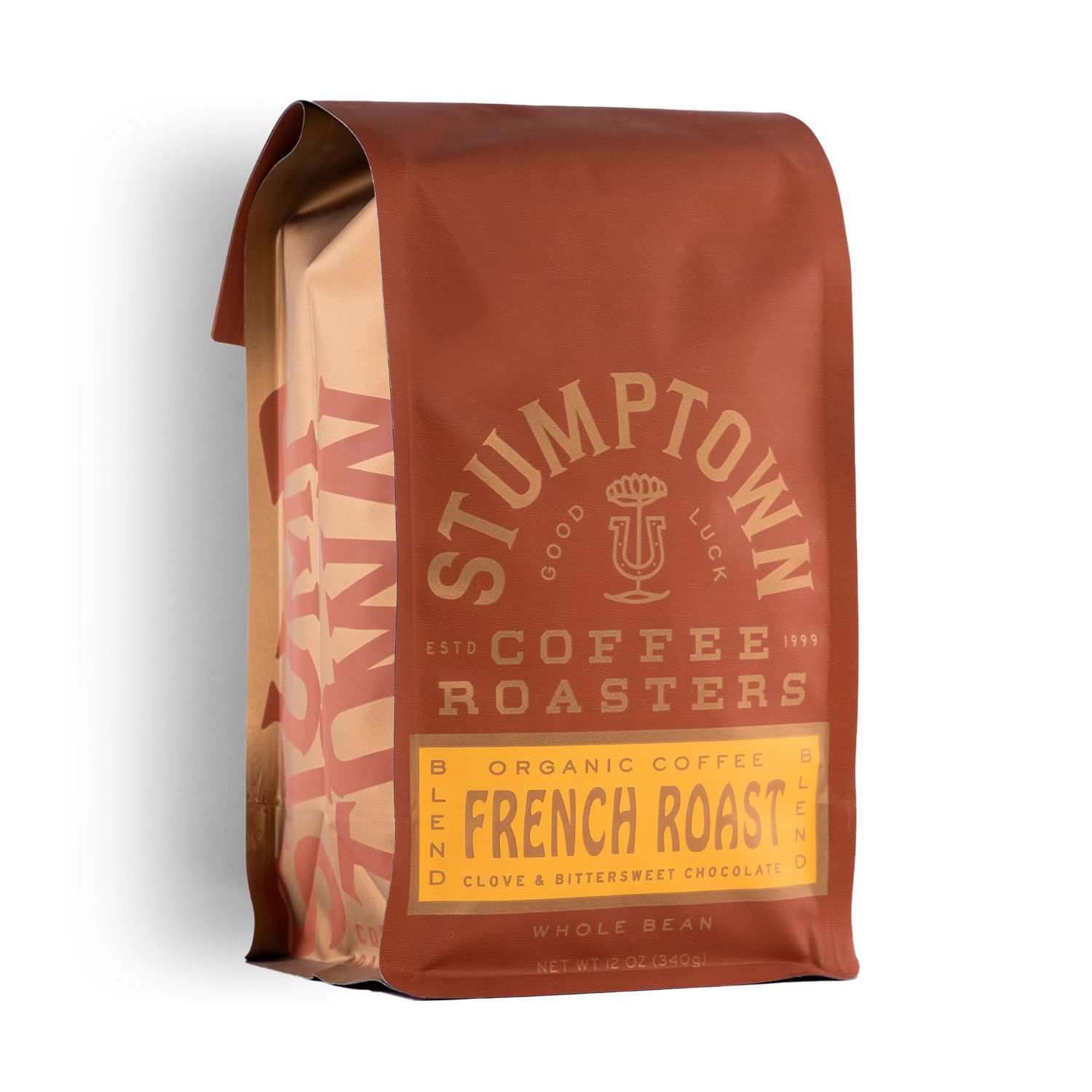
The name is a style designation on Stumptown's blend, not evidence that these beans were grown in France. The current story describes changing contributing coffees rather than a fixed farm or permanent variety list. Individual harvest dates and a complete current varietal breakdown were not verified here. Check the current listing and package if those details determine your purchase. [1]
The useful promise to investigate is the roaster's intended dark direction across changing ingredients. That is different from a guarantee that every batch will have the same extraction time or that a bag from a grocery shelf has the same storage history as a direct order. Keep the actual date and seller in the comparison.
Organic status is a separate buying criterion. It does not by itself establish that you will prefer the cup, that the beans are fresher, or that they suit a particular grinder. A good purchase can satisfy certification and flavor preferences together, but each needs its own evidence. [1]
02 / 7
Use the flavor brief to choose a trial
Stumptown supplies the tasting descriptors shown above and presents French Roast as a dark coffee. Coffeedant has not brewed it, assessed its bitterness or compared it blind with another blend. Our shortlist judgment concerns who should try this direction and how to make that trial informative. [1]
Begin in the drink that matters most to you. If that is drip coffee with breakfast, an espresso shot is not the deciding trial merely because it feels more technical. If the coffee must also work in milk, compare your normal milk quantity before changing the rest of the recipe. You may find a bag serves one job better than another.
Be precise about what you dislike. A cup that is too concentrated, a taste you associate with the roast, and a grind-related extraction problem are different reasons to change something. Start with one repeatable method so that the distinction remains visible. A dramatic grinder correction and a new recipe at the same time can obscure whether the profile was the right purchase.
03 / 7
A repeatable drip recipe is the useful starting tool
The product page places drip brewing in its method presentation, and Stumptown's brew-guide collection supplies brewer-specific instructions. Use those as a starting framework, not as proof of an optimum recipe for every home brewer. We have not established a product-specific ideal temperature or extraction percentage. [1] [4]
Record coffee mass, water mass, grind position and batch size. Use the same paper and pouring or machine routine for the first comparison. If the cup is unpleasantly strong, consider whether changing the ratio would answer that specific problem before assuming a different bean is required. If flow changes substantially, check grind and preparation separately.
For espresso use, keep the basket and grinder's normal constraints in view. A name associated with dark roasting does not supply a universal dial setting. Buy enough coffee to make a controlled trial, but do not order a large bag in the hope that dozens of unrecorded adjustments will eventually reveal the right recipe.
04 / 7
The roaster distinguishes a sealed bag from an opened one
Stumptown's current support advice recommends using opened coffee within three to four weeks and identifies printed roast and enjoy-by dates. It also publishes a separate sealed-package window and a direct-shipping policy. These are the roaster's recommendations and promises; they are not measured Coffeedant shelf-life results or a guarantee about a third-party seller. [2]
Use the more informative dates for the decision you are making. The roast date identifies the coffee's production history, and the opening date starts your household's handling history. An enjoy-by date does not tell you how the bag was stored before purchase or whether its final cups will match your preference.
Stumptown advises a cool, dark location and an airtight container, with a warning about repeatedly moving beans in and out of cold storage. A kitchen location that is convenient but exposed to heat, sunlight or strong odors can undermine the routine. Storage discipline is a reason to buy a manageable pack, rather than an invitation to keep the biggest possible bag. [3]
05 / 7
The five-pound option is a consumption decision
At the live check, the 12 oz selection displayed $20 and the listing offered a five-pound option. The purchase controls initially selected a subscription mode, so confirm the order mode and checkout conditions before relying on the displayed price. We do not claim a subscription discount or a verified five-pound total. [1]
A 12 oz package is roughly 340 g; a five-pound package is roughly 2,268 g. At an illustrative 20 g daily filter dose, those masses represent about 17 and 113 days before waste. At 80 g per day for a household, the larger package is about 28 days. These calculations explain why the same bulk bag can be reasonable for one home and poorly matched to another.
At $20 for 12 oz, an illustrative 20 g brew uses about $1.18 of beans before shipping, tax, water, milk and setup waste. Compare the complete order and the amount you expect to finish. A lower unit cost is not a saving when the bag outlasts your interest or preferred freshness.
06 / 7
Coffee oil care and machine scale are separate
The actual bean surface and your machine manual determine any restriction on beans in an integrated grinder. Do not infer that every French-roast bag is equally oily, and do not assume the category name alone makes it suitable for every automatic machine. Check before loading a hopper that is difficult to empty.
For a separate Encore ESP, Baratza's manual discusses cleaning when dark or oily coffee is used and explicitly keeps water away from the burrs. That is a useful ownership example rather than a recommendation that Stumptown requires an Encore ESP. [5]
If a machine needs descaling, complete its appropriate procedure for mineral deposits in the water path. If the grinder needs cleaning, follow its own instructions. One maintenance operation cannot stand in for the other, and a new coffee bag should not be used to diagnose neglected grinder care.
07 / 7
Compare the buying route as well as the roast
Forty-Six is the comparison when a roast-date component selector matters to you. Major Dickason's is the comparison when a different direct pack size and a familiar retail name matter. Their full reviews explain those buying questions; no Coffeedant side-by-side sensory winner has been established. [6] [7]
If your first French Roast bag suits drip brewing, finish that trial before ordering bulk. If it works only with a different milk or ratio than you usually use, decide whether changing the routine is actually desirable. The coffee should support a routine you want to repeat, rather than make the morning more complicated merely to justify the purchase.
Our reason to buy is therefore specific: you want a dark-roast drip option, can check the package history and will buy a size you can use. Our reason to pause is equally specific: you want a different flavor direction, cannot judge the bag's history, or are being pushed toward bulk before the first cup has answered the question.
Evidence and limits
How this review was made
This is a research-led buying assessment. Product identity and sensory descriptors come from the named roaster; the interpretation of fit, consumption and costs is Coffeedant's editorial judgment. Other-roaster support articles are identified as attributed comparisons, never transferred shipping guarantees or product test results. We did not buy a bag, conduct a tasting, measure extraction or assign a sensory score.
Sources were checked on October 13, 2026. Package, roast date, blend components, price and seller stock can change. Verify the actual selection at purchase; dates and transparent calculations here document the assessment rather than promise a future offer.
Quick answers
French Roast FAQ
Is French Roast grown in France?
No. Here the name denotes the roaster's blend and roasting direction, not a verified French coffee origin.
Has Coffeedant tasted this coffee?
No. All sensory descriptors are attributed to Stumptown; no tasting score is assigned.
How long should an opened bag last?
Stumptown recommends consuming opened coffee in three to four weeks. Your package history and preference still matter.
Should I buy the five-pound bag?
Calculate use first. At 20 g daily it is about 113 days before waste; at 80 g daily it is about 28 days.
Is the $20 price an offer guarantee?
No. It was the dated 12 oz selection displayed in the US listing; confirm purchase mode, shipping and tax.
Can I use it in an automatic espresso machine?
Check the exact machine's restrictions and the actual beans. This review does not verify universal integrated-grinder compatibility.
Trace the claims
Sources
- Stumptown French Roast: product and purchase controls
Identity, current pack choices, attributed roast/flavor brief and dated display price. Checked 2026-10-13.
- Stumptown: freshness advice
Opened-bag recommendation and distinction from direct-shipping policy. Checked 2026-10-13.
- Stumptown: storage advice
Cool, dark, airtight storage and repeated-freezer-use caveat. Checked 2026-10-13.
- Stumptown brew guide
Method-specific starting framework. Checked 2026-10-13.
- Baratza Encore ESP operations manual
Dry burr care and coffee-oil cleaning context. Checked 2026-10-13.
- Counter Culture Forty-Six
Different dark-roast buying route and component record. Checked 2026-10-13.
- Peet's Major Dickason's
Alternative direct pack and blend identity; not a comparative tasting. Checked 2026-10-13.
The choice
Let the first bag earn the next order
French Roast is worth shortlisting when you deliberately want a dark-roast daily coffee and the 12 oz trial fits your brewing routine. The five-pound option should follow a consumption calculation, not lead it. Check the actual roast date and purchase mode; the roaster's taste claims and storage advice do not constitute a Coffeedant tasting.
Check French Roast at the roaster