
Takeaway
Alexia EVO is Quick Mill’s compact, espresso-first single-boiler platform. You get an E61 group, a PID with an integrated shot timer, a 0.75 liter insulated brass-copper boiler treated with Quick Mill’s T.E.A. surface process, and a large 3 liter reservoir. The front manometer reads brew pressure during extraction, and the machine carries a no-burn steam wand for single-drink milk service. Add Quick Mill’s Flow Control Kit and the E61 becomes a manual profiling tool. The kit uses a stainless needle valve mounted on the group cap and a dedicated gauge that reads pressure at the puck. The core specs, dimensions, reservoir size, boiler volume, heating power, and the presence of the PID timer, T.E.A. coating, and no-burn wand come from current retailer listings and the manufacturer’s accessory page.
At-a-Glance Specs
- Type: Single boiler, dual-use
- Group: E61 thermosiphon with manual lever
- Boiler: 0.75 L, insulated, brass/copper construction with T.E.A. treatment
- Temperature control: PID with integrated shot timer
- Gauges: Pump pressure gauge on the face; flow-control kit adds a group-mounted gauge
- Pump: Ulka 52 W vibration pump with Quick Mill Pulsar noise reducer
- Steam/hot water: No-burn articulated wand, two-hole tip, non-compression valve
- Reservoir: 3.0 L BPA-free tank under a hinged top cover
- Power: 1400 W, 110 V in North America, 230 V in EU variants
- Dimensions and weight: about 9.5 in W, 17.5 in D, 15.9 in H, 38 lb, 58 mm portafilter
Key figures above are consolidated from Espresso Outlet, My Espresso Shop, Comiso Coffee, and the Quick Mill flow-control page.
Price and Availability
- United States: typical list near 1,550 dollars for Alexia EVO, flow-control hardware sold separately by Quick Mill and major dealers.
- United Kingdom: Coffee Italia UK has listed Alexia EVO around 1,023 to 1,199 pounds depending on promotions.
- European Union: Coffee Italia DE has posted prices around 1,190 to 1,289 euros when in stock.
Always confirm voltage, included baskets, and whether your shop will pre-install the flow-control kit before shipping. Quick Mill’s site positions the kit as a universal upgrade for its boiler-based E61 machines.
Build
Chassis, group, and boiler
Alexia EVO is stainless on the outside and metal where it counts internally. The case uses #304 stainless panels. The brew circuit centers on a commercial 58 mm E61 group with a thermosiphon loop, a mechanical lever, and a three-way solenoid for clean venting after the shot. The boiler is a 0.75 liter single circuit, fully insulated to reduce heat loss, and treated with T.E.A., a proprietary process Quick Mill applies to reduce metal leaching from wetted brass parts. These details are documented by US retailers selling current production.
The footprint is narrow and deep. Plan for roughly 9.5 inches wide, 17.5 inches deep, and around 15.9 inches tall. The machine weighs about 38 pounds, which is enough mass to stay planted when you lock in a double basket. Multiple listings publish the same figures.
Electronics and controls
The PID is the heart of daily use. It sets brew temperature in degree steps and doubles as a live shot timer that starts when you raise the lever. A single analog manometer on the face reports pump pressure during extraction. Alexia EVO’s PID-timer behavior, dual-purpose gauge, and overall control set are described consistently by specialist retailers.
Pump, dampening, and valves
Quick Mill fits an Ulka 52 W vibration pump with a Pulsar device in-line to reduce pulsation and perceived noise. The steam and hot-water valve is non-compression, which lasts longer and turns more easily than old-school compression valves. The wand is no-burn and ships with a two-hole tip that suits home-scale pitchers. These points show up across current dealer pages.
Reservoir, tray, and safety
The tank is large at 3 liters, which cuts refill frequency. There is a magnetic low-water sensor that protects the element by interrupting heat when the tank runs dry. The drip tray is generous at about 46 ounces in capacity, and the top cover is hinged so you refill the tank without removing the cup-warmer tray. Retailers and independent reviews underline the 3 liter tank, the magnetic sensor, and the hinged cover.
Shop the essentials
The small upgrades that make a home coffee setup cleaner, smoother, and more enjoyable to use every day.

Cleaner & Descaler Tablets
Keeps your machine clean, helps prevent buildup, and protects long-term performance.
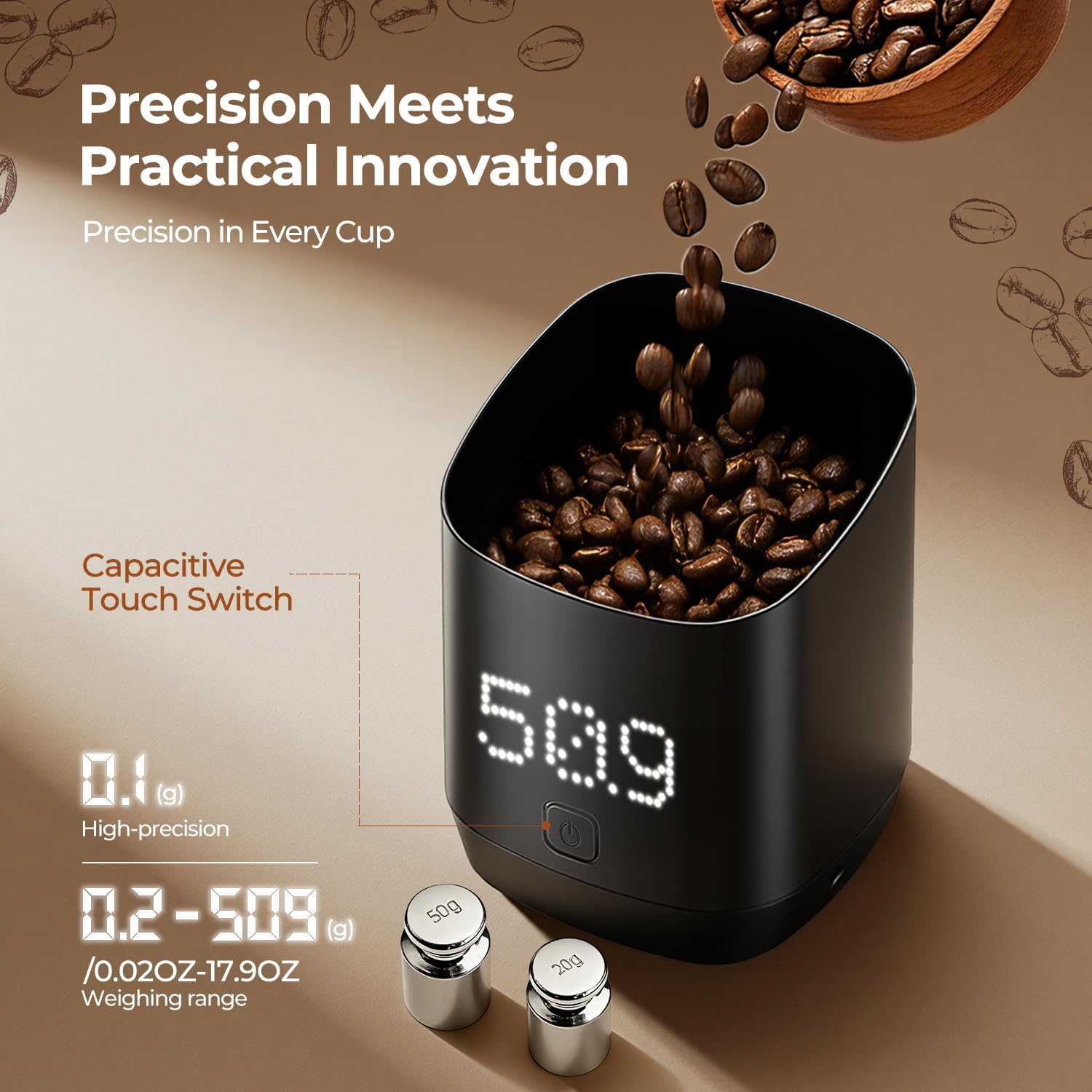
Digital Dosing Cup
Makes weighing beans faster and cleaner, with less mess around the grinder.
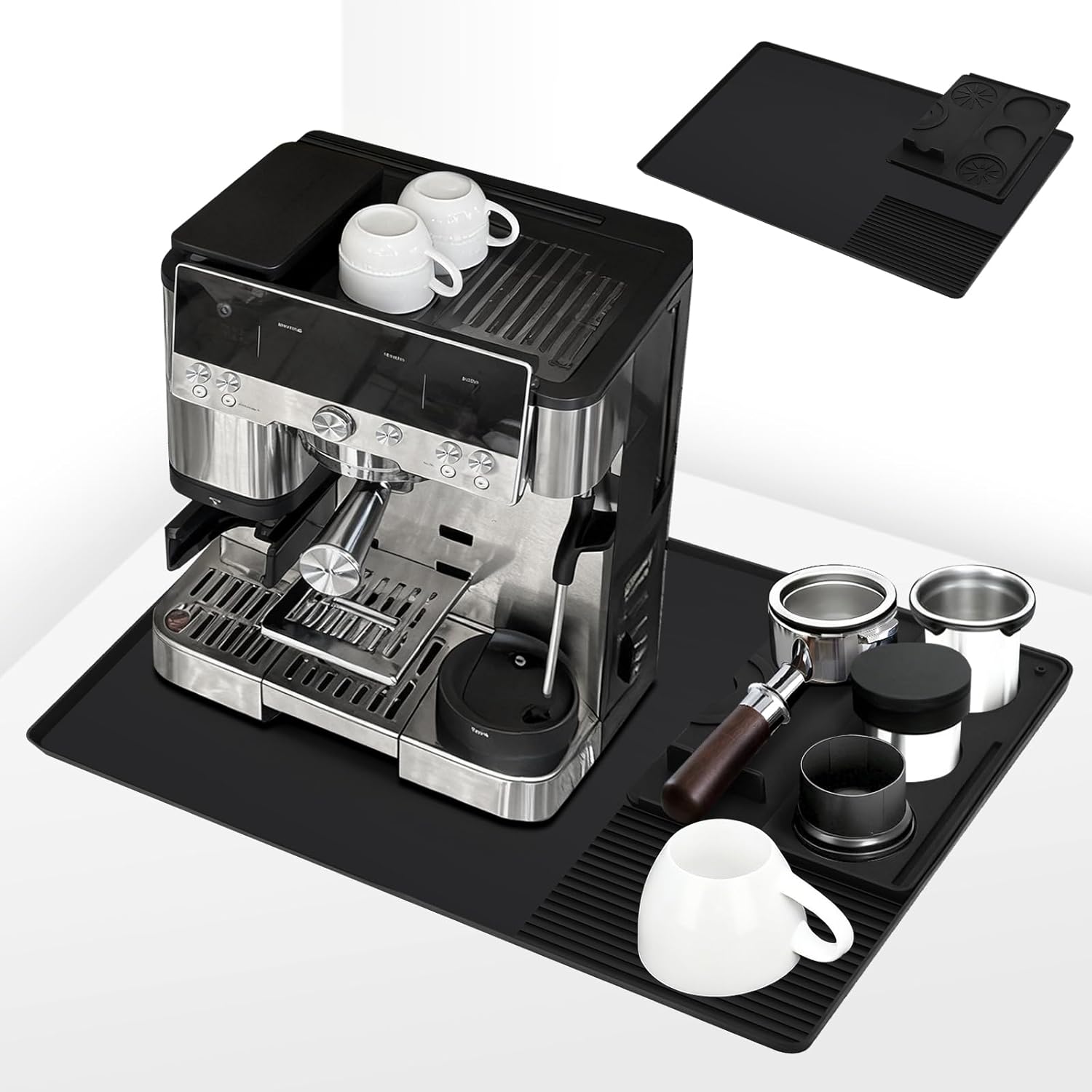
Silicone Mat
Protects your counter, catches spills, and gives your setup a cleaner working surface.

Vacuum Coffee Canister
Helps beans stay fresher longer by limiting air exposure after opening the bag.
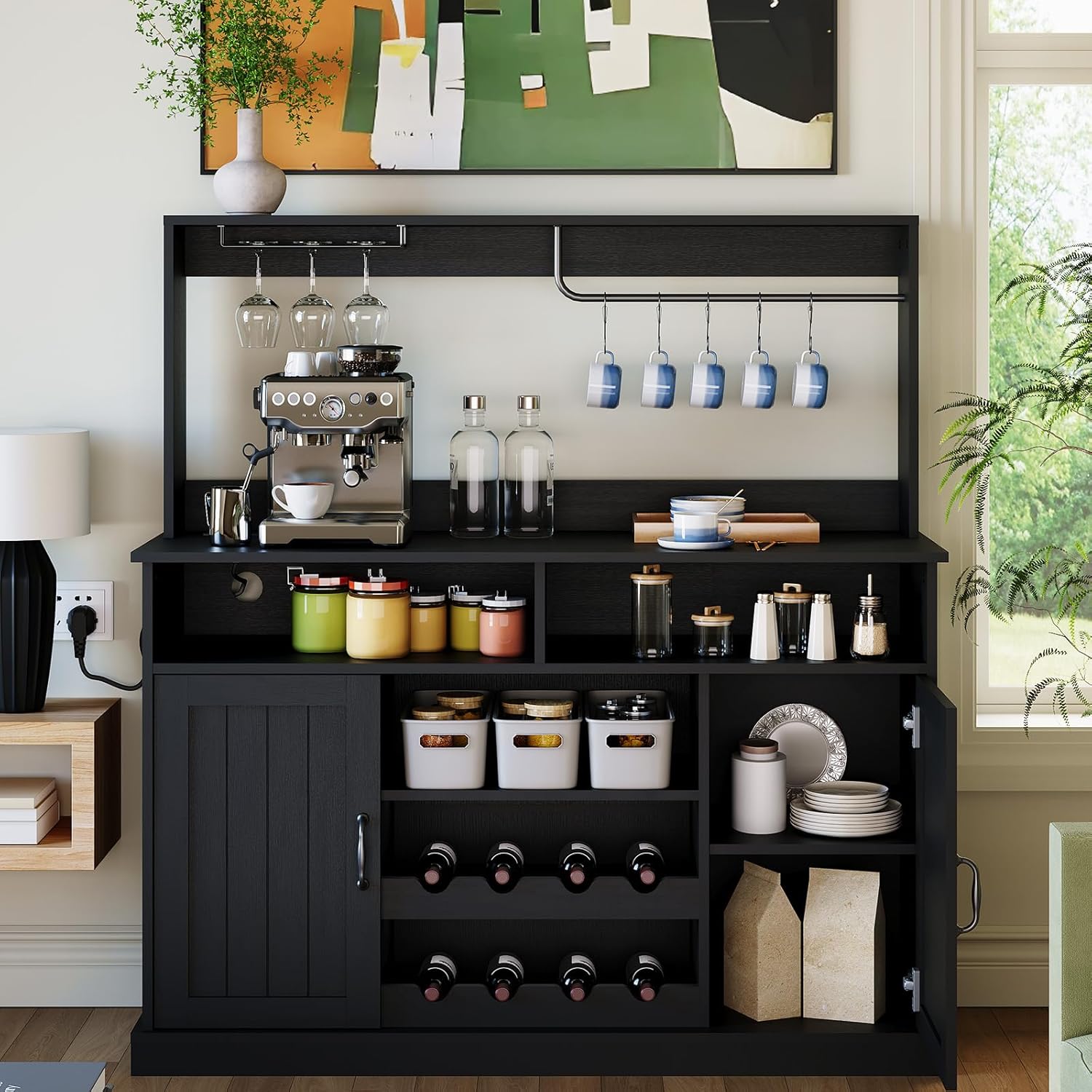
Farmhouse Coffee Bar Cabinet
Gives your machine, cups, beans, and accessories one dedicated home instead of cluttering the kitchen.
Flow Control hardware
Quick Mill’s Flow Control Kit mounts a stainless needle valve on the E61 cap and pairs it with a small gauge that reads pressure at the group. The valve regulates water debit through the group, so you can hold a low-flow preinfusion, ramp to a target, or taper flow near the end of the shot. Quick Mill’s accessory page and dealer write-ups explain the function and the inclusion of a stiffer preinfusion spring to keep behavior predictable while you modulate flow.
Workflow
Warm-up you can repeat
E61 groups reward a consistent warm-up routine. With Alexia EVO, power on with the portafilter locked in. As the PID reaches your brew setpoint, run a short blank shot to heat the dispersion path and your cup, then grind and prep while the group finishes soaking. Expect water at target quickly and the group metal settling behind it. Observers with Alexia EVO have reported that a thorough heat soak takes longer than the PID reaching setpoint, which aligns with the weight of an E61 group. A consistent pre-shot blank and a fixed time to first pull give you stable results without a stopwatch obsession.
PID and shot timer
Set a sensible brew temperature and leave it while you dial coffee. For medium roasts, start around 93 Celsius. For medium-light espresso roasts, 94 to 95 Celsius usually unlocks fruit and clarity without stripping body. The PID’s timer keeps your cadence honest and simplifies logging. The presence of the integrated shot timer on Alexia EVO is widely documented.
Brew–steam–brew cadence
This is dual-use. Brew first. Toggle steam, purge the wand until steam runs dry, then texture one pitcher. Return to brew and run a small cooling flush to bring the boiler back down to the coffee setpoint. Listings note the no-burn wand, the two-hole tip, and the single-drink rhythm; expect a quick transition up to steam and a short step back down with a brief flush.
Using flow control day to day
With the valve open, the machine behaves like a standard E61. Close the valve partially and you create manual preinfusion. Hold a slow trickle for 5 to 10 seconds to saturate dense pucks. Open smoothly to a mid-shot flow position that matches your grind, then taper flow slightly in the final third if you want more sweetness and less drying. Quick Mill’s kit description and dealer notes frame the valve as a simple, repeatable tool.
Espresso Performance
Temperature behavior in the cup
A small, insulated boiler under PID control is predictable at home volumes. Pick a brew setpoint, keep a stable time between your pre-shot blank and pump start, and the cup tracks your intent. Alexia EVO’s PID eliminates thermostat surf routines; the E61’s mechanical preinfusion calms the start of flow on medium-light espresso roasts. The combination of PID control, E61 hydraulics, and the timer is the reason dialing this machine feels straightforward for a single-boiler platform.
Pressure and flow
On a healthy puck with a modern precision basket you will see a quick rise toward your expansion-valve ceiling and a small settle as flow increases. Treat the gauge as feedback for distribution and grind rather than as a scoreboard. If you install flow control, the added group gauge becomes a direct indicator of what the puck is seeing, which is more useful when you run long preinfusions or declining-flow finishes. Quick Mill’s kit materials call out real-time pressure display at the group as part of the upgrade.
Baseline recipe and expected flavor
Start with 18 grams in and 36 grams out in 25 to 30 seconds. At 93 Celsius on a medium roast, expect syrupy texture, chocolate, and nut with clean finish. For medium-light roasts, use 94 to 95 Celsius and a slightly longer low-flow preinfusion if you have the kit installed. You will tend to see brighter citrus or stone fruit with the same 1:2 yield. The integrated shot timer simplifies holding the time window while you adjust grind and temperature in small steps.
Pace from shot to shot
The 0.75 liter boiler recovers quickly for two or three consecutive espressos. If you pause to steam, return to brew with a short cooling flush and keep your interval consistent. Dealers list the boiler size, the single-boiler layout, and the steam hardware plainly; those are the reasons the machine feels calm for home-scale sequences.
Milk Steaming
Power and feel
Alexia EVO steams one drink at a time cleanly. From coffee setpoint, toggle to steam, purge wet condensate, then texture a 150 to 200 ml pitcher to 60–65 Celsius. The two-hole tip gives you time to build microfoam and ride finish temperature without overshooting. The no-burn wand is easy to handle and wipes clean. These behaviors match the hardware described by retailers.
Technique that fits the boiler
- Purge until steam is dry to avoid injecting water.
- Keep aeration short, then set a tight roll.
- Cut steam at finish temperature, wipe and purge the wand, then switch back to coffee and run a short cooling flush.
You can repeat this for a second cup by keeping the sequence tight rather than idling long at steam. The single-boiler pace is predictable once you keep the order consistent.
Maintenance and Water
Daily and weekly care
The brew circuit vents with a three-way solenoid, which means detergent backflushing belongs in your weekly routine. End sessions with a water backflush and a quick wipe of the shower screen and gasket area. The large tray makes rinse cycles painless. Listing details cover the three-way behavior and the tray capacity.
Water quality, T.E.A. treatment, and descaling
T.E.A. treatment is a surface process on brass components. It does not remove the need for good water. Keep hardness modest, avoid scale, and descale only when necessary based on your source. Quick Mill’s own copy and retailer notes emphasize the role of the coating and the insulation; they are not a substitute for chemistry.
Flow-control upkeep
A needle valve and a small gauge are simple parts. Keep the cap area clean, avoid forcing the knob against its stops, and add a touch of food-safe lubricant on the threads if motion feels sticky months down the line. Quick Mill’s accessory page and dealer primers describe the kit components and their intended behavior.
Service access and parts
Alexia EVO gives you practical touches for service. The boiler has drains you can access without removing panels, which helps when shipping or storing the machine. The expansion valve is reachable from the top under the cup tray, so you can set your blind-basket pressure ceiling during initial setup. Retailers call out both details on the current EVO chassis.
Real-World Benchmarks You Can Repeat
- Dimensions and mass
Width about 9.5 inches, depth about 17.5 inches, height about 15.9 inches, weight about 38 pounds. These numbers appear consistently across current listings. - Boiler and reservoir
0.75 liter single boiler and a 3 liter reservoir with a magnetic low-water sensor. The figures and sensor behavior are spelled out by retailers and independent reviews. - PID with timer
Alexia EVO’s PID starts timing when you raise the lever, which keeps you in a steady 25–30 second window while you dial grind and yield. Dealers list the timer as a specific feature. - No-burn wand and two-hole tip
Expect controlled steam that suits 150–200 ml pitchers. Listings highlight the cool-touch wand and the supplied tip. - Flow control behavior
The needle valve lets you hold a low-flow preinfusion, ramp smoothly, or taper flow late. The kit’s gauge reads group pressure so you can link hand position to puck feedback. Quick Mill describes the function directly.
Competitive Set
ECM Classika PID + Flow Control
Another E61 single boiler with PID, stainless boiler, and an optional flow-control kit. Classika adds ECM’s Fast Heat Up routine that guides a short overheat-and-flush sequence at start-up, plus a large 2.8 liter tank and an accessible OPV. Choose Classika if you want a stainless boiler and ECM’s styling with a similar profiling path.
Bezzera Unica PID (MN)
E61 single boiler with a 0.5 liter copper boiler and PID. The interface is simple and the wand is capable for one pitcher. You give up the on-panel shot timer but keep degree-level control, and owners often add third-party flow-control valves to the E61. Retail and brand pages document the boiler size and PID ranges.
Profitec GO
Compact single boiler with a ring group, PID, front gauge, on-screen timer, and a tool-free OPV under the tray. Warm-up feels faster than an E61 chassis and pricing tends to be lower, though you trade away the heavy E61 group and the specific feel of mechanical preinfusion. Official specs highlight the timer, PID, and accessible OPV.
Lelit Victoria PL91T
Single boiler with 58 mm hardware, Lelit Control Center PID, and menu-set preinfusion. The UI is brighter and the footprint is tight. If regular milk and extra on-screen features appeal more than an E61 experience, Victoria competes strongly in this bracket. Retailer pages cover the LCC interface and features.
Quick Mill Carola EVO
Espresso-only E61 single boiler with PID and an on-screen timer. No steam hardware, smaller footprint, and the same TEA-coated insulated boiler philosophy. If milk is rare at home and you want the simplest bench, Carola EVO is the more focused sibling.
Where Alexia EVO fits: it is the E61 single boiler for people who want numeric control, a real reservoir, the option to steam one drink, and the headroom to explore manual profiling without moving to a dual boiler.
Scores
- Build and materials: 8.7/10
Stainless case, insulated 0.75 liter boiler with T.E.A. treatment, commercial 58 mm E61 group, and a clean manometer. The parts list reads like a long-term tool. ( - Workflow and usability: 8.8/10
PID with a shot timer, large 3 liter tank, hinged top cover, easy OPV access, and a quieted vibration pump with Pulsar. The daily cadence is simple to memorize. - Espresso consistency: 8.8/10
A small, insulated boiler under PID plus E61 hydraulics makes it easy to hold a routine. The face gauge helps with puck feedback, and flow control raises the ceiling for tricky coffees. - Milk steaming: 7.9/10
Dry steam for a single pitcher with a no-burn wand and a two-hole tip. Recovery is quick for home pacing. This is not a milk bar, it is honest single-drink steaming. - Maintenance and serviceability: 8.5/10
Weekly detergent backflushing through a three-way, boiler drains for shipping or storage, and accessible OPV adjustment. The platform is easy to keep clean if water quality is handled. - Value: 8.5/10
Around 1,550 dollars in the US, often close to 1,190 to 1,289 euros in the EU and roughly 1,023 to 1,199 pounds in the UK for an E61 single boiler with a PID timer and real steam. The flow-control kit is an extra but adds meaningful capability. - Overall rating: 8.7/10
A compact E61 single-boiler that behaves like a professional tool and welcomes flow-profiling without drama.
Final Verdict
Alexia EVO gets the fundamentals right and keeps the footprint friendly. The boiler is small, insulated, and held at temperature by a real PID. The group is a true E61 with mechanical lever dosing and a three-way valve for clean venting. The reservoir is large, and the machine gives you practical touches like a hinged cover for refills, an easy-access OPV, and drains for stress-free transport. The face gauge is where it should be, the pump is quieted by a Pulsar device, and the wand is cool-touch with a sensible two-hole tip.
The experience at the bar reflects that hardware list. You set a number on the PID, you anchor a repeatable warm-up, and you pull inside a fixed time window using the on-board timer. You steam one pitcher cleanly when you need milk, then you return to coffee with a short cooling flush. Add the Flow Control Kit and the E61 becomes a useful manual profiler. Long low-flow preinfusion for dense light roasts, smooth ramps for medium blends, gentle tapers for sweetness late in the shot. The small group-mounted gauge shows pressure at the puck, which is exactly the signal you need while you learn positions on the valve.
If your kitchen runs on straight espresso and the occasional cappuccino, this is the correct scale of machine. If you steam multiple drinks back to back every morning, a heat exchanger or a dual boiler will clear your queue faster. If you want a bright UI with a shot timer and faster warm-up in a tiny body, a modern single like Profitec GO hits that note at a lower price. If you never steam, Quick Mill’s Carola EVO gives you the same shot feel with less bulk. For the many home bars that want E61 tactility, degree-set brew temperature, a large tank, and the option to add a needle valve when they are ready, Alexia EVO lands cleanly. The features and numbers that drive that verdict are consistent across current dealer pages and Quick Mill’s own description of the flow-control system.
TL;DR
Quick Mill Alexia EVO is a compact E61 single-boiler with a 0.75 liter insulated T.E.A.-treated boiler, a PID that includes a shot timer, an articulated no-burn wand, a 3 liter tank, and a quieted vibration pump. Add Quick Mill’s Flow Control Kit and you can run low-flow preinfusions, smooth ramps, or gentle tapers from the group with a dedicated group gauge. It pulls stable shots, steams a single pitcher neatly, and fits real counters. US pricing sits near 1,550 dollars; UK and EU offers typically land around 1.02–1.2k pounds and 1.19–1.29k euros.
Pros
- True E61 group with mechanical lever and a PID that doubles as a shot timer
- Insulated 0.75 liter boiler with T.E.A. treatment and practical boiler drains
- Large 3 liter tank under a hinged top cover, magnetic low-water protection
- No-burn wand with a two-hole tip and a non-compression valve
- Flow control hardware available from Quick Mill, complete with group gauge
- Easy access to the expansion valve and a pump dampened with a Pulsar device
Cons
- Single-boiler sequencing slows multi-drink milk service
- Warm-up needs a little group heat-soak beyond the PID reaching setpoint
- Flow-control kit adds cost and modest maintenance attention
- One analog gauge on the face, no dedicated boiler-pressure needle
Who It Is For
Home baristas who want the feel of an E61, degree-level control, a simple interface, and the option to steam one drink without upsizing. If you enjoy learning coffees by shaping preinfusion and flow rather than scrolling menus, the Alexia EVO with Quick Mill’s Flow Control Kit hits the mark. If you need a fast milk queue every morning, look at a heat exchanger or a dual boiler. If you live on straight shots, consider the espresso-only Carola EVO for tighter footprint and fewer moving parts.
Buying notes and variants
- Model code and region: Current US listings show product ID 0970-A-CEVO around 1,550 dollars with 110 V power. EU and UK variants use 230 V and may ship with different baskets and tips.
- Dimensions: Plan for 9.5 × 17.5 × 15.9 inches and 38 pounds. Leave top clearance for the hinged cover.
- Reservoir and sensors: 3 liter tank, magnetic low-water cut-out, and a beeper on some stock.
- Flow Control Kit: Quick Mill’s kit includes the needle valve body, a group gauge, and springing to keep preinfusion behavior tidy during manual profiling. It mounts to any Quick Mill E61 with a boiler.
If you want a head-to-head grid that stacks Alexia EVO + Flow Control against ECM Classika PID + Flow Control, Bezzera Unica PID, and Profitec GO on warm-up, brew stability, steam time to 60 Celsius for a 150 ml latte, interface, and three-year ownership cost by region, say so and I will map it out.
We’ve categorized the best espresso machines for every kind of buyer
Find the right shortlist faster, whether you want convenience, a beginner-friendly setup, a smaller footprint, or better value at a given budget.
Best Superautomatic Espresso Machines
One-touch picks for speed and convenience.
Best Espresso Machines for Beginners
Easy-to-use machines with a smoother learning curve.
Best Small Espresso Machines
Compact machines for tighter kitchens and counters.
Best Espresso Machines With Built-In Grinder
All-in-one options with fewer extra pieces to buy.
Best Cheap Espresso Machines Under $500
Budget picks that still make sense for real espresso.
Best Prosumer Espresso Machines Under $1000
More serious machines with stronger value for the money.
Best Single Boiler Espresso Machines
Simple, space-saving picks for espresso-first routines.