
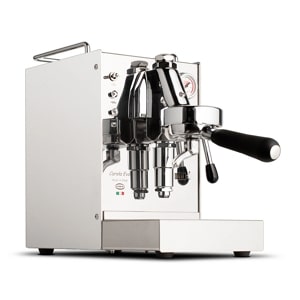
Espresso-only E61-style single boiler • PID + shot timer • Overall score: 8.6 / 10
Quick Mill Carola EVO
A compact, metal-first espresso tool: E61-style feel, degree-set PID brew control, and a clean on-screen shot timer—built specifically for straight shots and Americanos (no steam, no hot water).
Overview
Quick Mill Carola EVO is an espresso-only single boiler built around an E61-type thermosiphon group and a PID you’ll actually use. You get a 0.75 L insulated brass boiler, a front pressure gauge, and a display that shows brew temperature, shot time, and practical tank/tray prompts. The vibration pump is tuned with Quick Mill’s pulse dampener for a cleaner, quieter sound. If you drink straight shots and Americanos and want compact, repeatable brew control, this is the right kind of simple.
Pros
- PID brew control with built-in shot timer (no extra timer needed)
- E61-type group with stainless internal mushroom for cleaner long-term service
- Insulated 0.75 L brass boiler + compact chassis fits real counters
- Quieter vibe pump feel via Quick Mill pulsor (less “hammering”)
- Front pressure gauge gives useful puck feedback while dialing in
Cons
- No steam wand and no hot-water spout (espresso-only by design)
- OPV/pressure ceiling is a service/set-once adjustment, not a front knob
- Tank capacity is published inconsistently (~1.8 L vs 2.0 L)
- Narrow top/working area can feel tight with very large scales/cups
- E61 still benefits from heat soak patience for best consistency
Features
- Type: single boiler, espresso-only
- Group: E61-type thermosiphon (stainless internal mushroom)
- Boiler: 0.75 L insulated brass, PID-controlled
- Pump: vibration pump + Quick Mill pulse dampener
- Display: temperature, shot timer, standby, tank/tray prompts
- Gauge: front brew pressure gauge
- Reservoir: ~1.8 L factory listing (some retailers list 2.0 L)
- Power: 850 W heater (voltage varies by region)
- Size: 199 W × 389 D × 353 H mm
- Weight: 15 kg
- Missing: no steam wand, no hot-water spout
What’s in the box
What ships can vary by retailer/region. Verify the exact basket and accessory bundle at checkout.
Pricing
- Typical US listing: around $1,295 (varies by retailer and promos)
- EU range: roughly €1,049–€1,149 depending on finish/seller
- Best value case: straight espresso households who don’t want to pay for steam hardware they won’t use
FAQs
- Can it do milk drinks?
- Not onboard. It’s espresso-only—use a separate frother if milk is occasional, or choose a machine with steam if milk is regular.
- Is it “real E61”?
- It’s an E61-type thermosiphon group design with the familiar lever workflow and mechanical preinfusion chamber behavior.
- Do I still need a timer?
- No—the display includes a shot timer, so you can track time/pace without another device.
- What’s the point of espresso-only?
- You trade steam complexity for a smaller footprint and a cleaner, tighter “shots-first” workflow with PID control.
Who it is for
- Home baristas pulling a few shots per session (straight espresso / Americanos)
- People who want E61 feel + PID temperature control in the smallest credible footprint
- Anyone who wants a “tool-like” metal build and a clean interface (timer + gauge)
Who should avoid it
- Milk-forward households (no steam wand or hot-water spout)
- Users who want front-panel brew-pressure adjustments (service/set-once OPV is more typical here)
- People who want built-in profiling tools without opening the case
Daily workflow
- Warm up: park the portafilter locked in while the PID reaches setpoint.
- Short blank: brief flush to heat the dispersion path + cup.
- Pull: start the lever, use the on-screen shot timer, and target your usual ratio window.
- End of session: wipe screen area and water backflush; weekly detergent backflush with a blind basket.
Takeaway
Carola EVO is Quick Mill’s espresso-only single boiler. It keeps the footprint small, swaps the complexity of steam hardware for tighter brew control, and pairs an E61-type group with a PID you will actually use. The 0.75 liter insulated brass boiler is managed electronically, the front shows a pressure gauge, and the display gives you temperature, a shot timer, tank warnings, and standby control. It runs a quiet vibration pump with Quick Mill’s pulse dampener, and it draws from a roughly 1.8 to 2.0 liter tank depending on market listing. If you drink straight shots and Americanos and you want a metal-first build that behaves like a tool, Carola EVO is exactly that. These core details and dimensions are documented by Quick Mill and major retailers.
Build
Materials and layout
Carola EVO is metal where it counts. The boiler is an insulated 0.75 liter brass unit, controlled by a temperature probe and PID. The brew group is an E61-type thermosiphon with a stainless steel mushroom, which resists scale better than bare brass and makes long-term service cleaner. The face is tidy: a pressure gauge, a status display with temperature and timer, power and heating indicator lights, and a simple on-off lever. The chassis is stainless with the option of stainless or matte-black side panels depending on the finish you choose. All of these choices are spelled out on the factory page.
Shop the essentials
The small upgrades that make a home coffee setup cleaner, smoother, and more enjoyable to use every day.

Cleaner & Descaler Tablets
Keeps your machine clean, helps prevent buildup, and protects long-term performance.
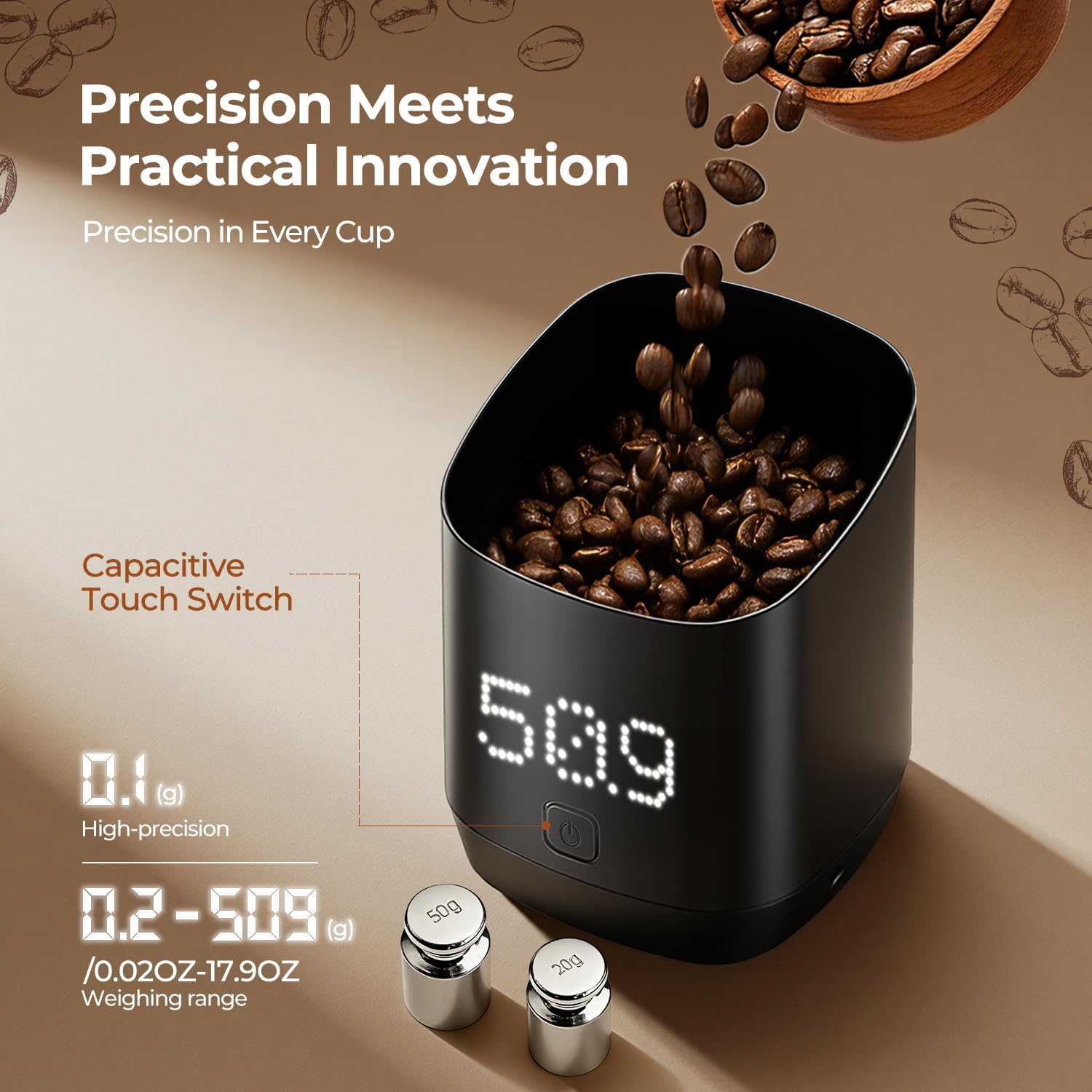
Digital Dosing Cup
Makes weighing beans faster and cleaner, with less mess around the grinder.
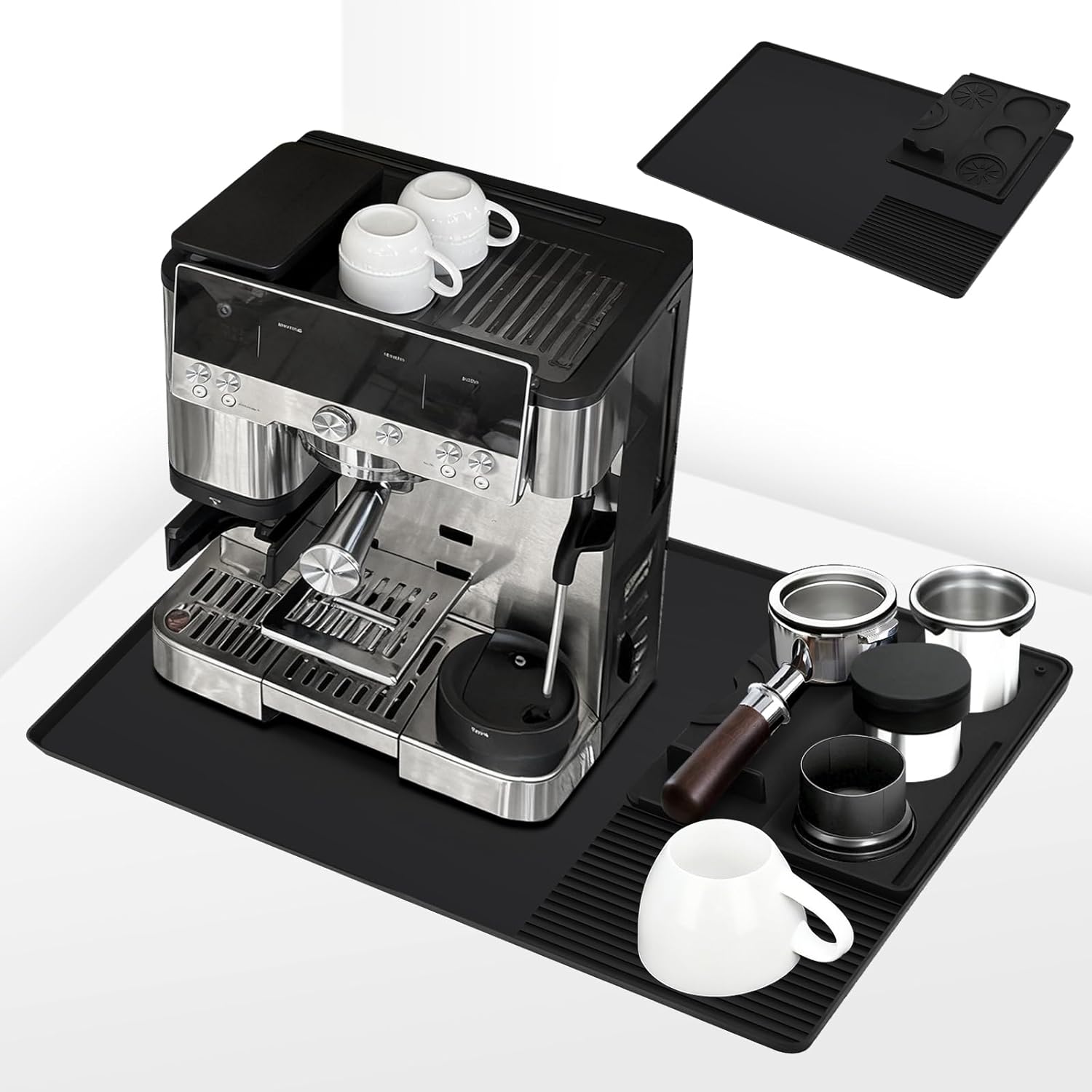
Silicone Mat
Protects your counter, catches spills, and gives your setup a cleaner working surface.

Vacuum Coffee Canister
Helps beans stay fresher longer by limiting air exposure after opening the bag.
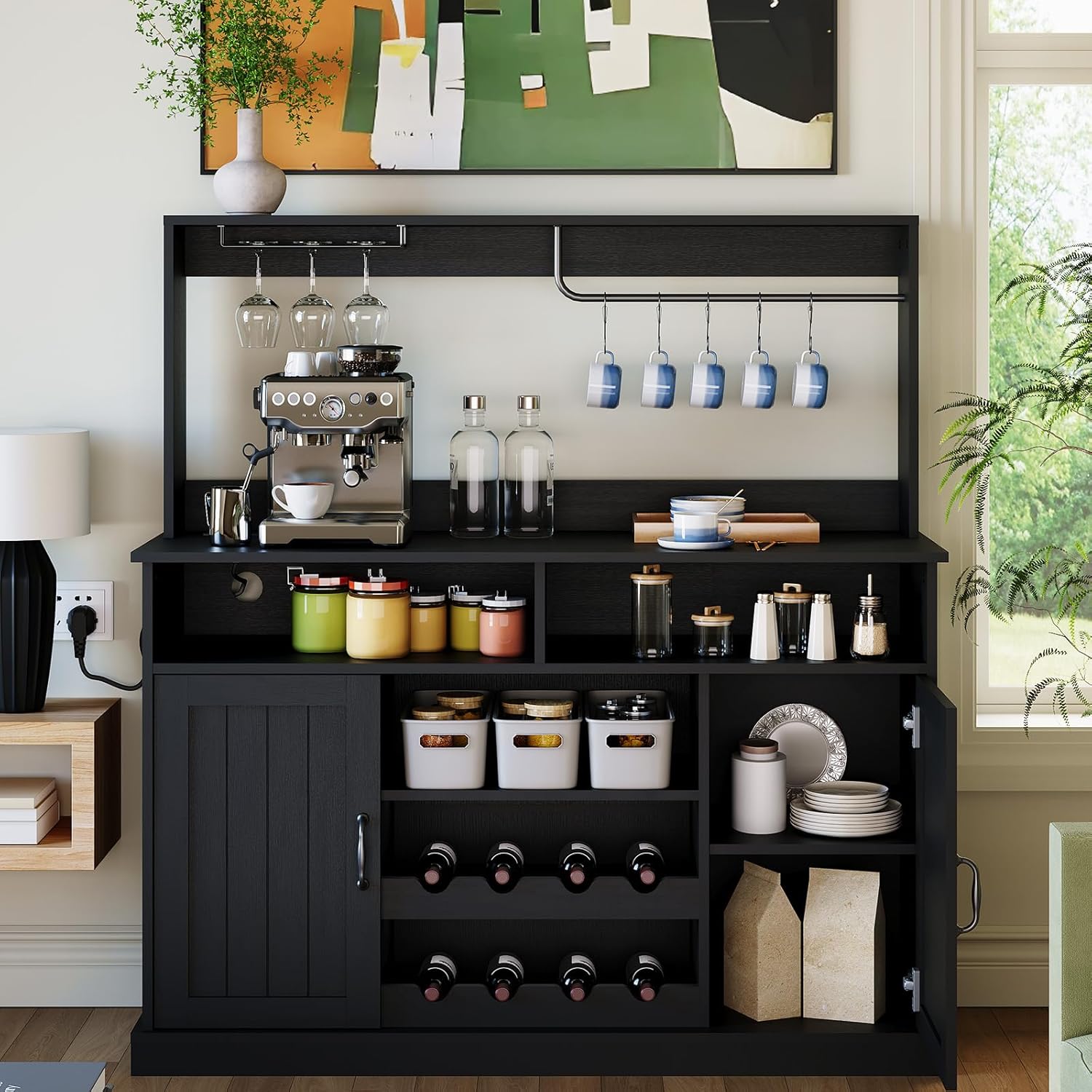
Farmhouse Coffee Bar Cabinet
Gives your machine, cups, beans, and accessories one dedicated home instead of cluttering the kitchen.
The machine feels substantial on the bench. Quick Mill publishes 199 mm wide, 389 mm deep, 353 mm tall, and 15 kg. That narrow width gives you room for a real grinder, a knock box, and scale on normal counters, which is the point of an espresso-only box.
Pump, dampening, and noise
The EVO uses a vibratory pump with Quick Mill’s in-line pulsor device to reduce hammering and cut noise. Chris’ Coffee calls out the quieter operation and the pump’s thermal protection. It is not silent, but the sound profile is a clean hum rather than a rattle.
Water path and reservoir
The tank lives under the cup tray. Quick Mill lists the reservoir at 1.8 liters, while several US retailers round up to 2.0 liters. That delta is common in published specs. Treat the factory number as the reference and the larger number as a practical fill level, and plan to refill once or twice a week in a two-shot-per-day household.
What is not here
There is no steam wand and no hot-water spout. The omission is intentional. Carola channels a small boiler and the E61 group entirely into espresso stability. Chris’ Coffee positions it directly to “espresso lovers” and notes the lack of steam. If you need milk on tap, look at a different chassis.
Workflow
Heat-up and heat-soak
An E61 group rewards patience, but Carola EVO makes the wait short by single-boiler standards. With an insulated 0.75 liter boiler and PID control, you reach setpoint quickly, then let the group finish soaking while you prep. Park the portafilter in the group during warm-up so the metal is hot. When the display shows your brew temperature, pull a brief blank to heat the dispersion path and cup. Quick Mill’s specs confirm the boiler size and PID management that enable this fast-to-ready feel.
Temperature control, shown simply
Set brew temperature on the PID in whole degrees and leave it. For most medium roasts, 93 Celsius is a strong start. For medium-light espresso roasts, try 94 to 95. The display counts your shot time, which keeps you honest about ratio and pace without adding another device to your bench. Quick Mill’s product copy lists PID, shot timer, standby, and alerts on this display.
Pressure feedback and OPV
The front gauge shows pump pressure during the shot, which is direct feedback on puck resistance. Use it to confirm healthy distribution and basket choice, not as a number to chase. If you want to hard-cap peak pressure, the machine’s expansion valve can be set during service, and many owners simply pick a sensible ceiling near nine to ten bar. Quick Mill notes the presence of the gauge and the PID’s sensor suite; retailers handle OPV set-once questions at install.
Routine that works day after day
- Warm up with the portafilter locked in.
- Run a short blank to heat the path and cup.
- Grind, prep, lock in.
- Raise the lever, watch the timer on the display, aim for your usual ratio.
- Purge, wipe the shower screen, and backflush with water at session end.
You do not surf thermostats, and you do not juggle steam. The appeal here is the clarity of a single task done well. The factory page is explicit about PID temperature control and shot timing, which define this routine.
Espresso Performance
Temperature behavior in the cup
Small brass boilers under PID control and a short water path are predictable. You set a number, you allow a little heat-soak, you pull inside a steady window. With the E61 mechanical preinfusion chamber, the puck sees a gentle rise before full pump pressure. That softer start reduces early channeling on medium-light roasts and tends to smooth out acidity without blunting it. The presence of PID control and the E61-type group are stated across manufacturer and retailer materials.
Pressure and flow feel
On a sound puck with a modern precision basket, expect a brisk climb toward your OPV ceiling and a slight relax as the puck opens. If you see a rapid spike then a stall, you are too fine or your distribution is uneven. If pressure lingers low and the shot gushes, grind tighter and confirm dose. The gauge is not a lab instrument, but it is a useful signal. Quick Mill specifies the gauge on the EVO and shows the brew-circuit sensor suite.
Taste profile you can expect
Use a simple baseline: 18 grams in, 36 grams out, 25 to 30 seconds. On a medium roast, Carola EVO pulls syrupy shots with chocolate, toasted nut, and enough tactile to carry milk if you add it separately. On a medium-light espresso roast, nudge temperature up a degree or two and keep preinfusion steady. You will get brighter citrus, stone fruit, and florals while preserving a coherent finish. The shot timer on the display makes it painless to hold time constant when you change temperature by small steps. The panel features are documented by Quick Mill.
Shot-to-shot pace
In a two-to-three-shot session, the 0.75 liter boiler keeps up easily. Recovery between pulls is quick, and the E61’s mass stays in the groove once it is warm. If you plan six or more shots in a row, give the group a short rinse between extractions to keep grinds off the screen and to cue the controller. Again, the design is set up for straight espresso pacing, not for café-style milk service. Factory specs on boiler size and controls are your anchor for these expectations.
Milk, Hot Water, and Workarounds
There is no steam wand and no dedicated hot-water tap. If milk drinks are occasional, you have two clean options that do not fight the machine’s design. You can heat milk on the stovetop and texture by hand with a small whisk or a manual frother, or you can use a compact standalone microfoam maker. If milk drinks dominate, this chassis is the wrong pick. Chris’ Coffee’s description is direct about the espresso-only intent.
Maintenance and Water
Daily care
Purge the group briefly after shots, wipe the gasket area, and backflush with water at the end of the session. The machine uses a three-way valve, so detergent backflushing weekly with a blind basket is part of normal care. The display can be set to provide reminders, which is the kind of small touch that keeps routines consistent. The factory page lists the display’s housekeeping prompts and the safety devices on the brew circuit.
Descale and protect the boiler
Brass boilers scale if you feed them hard water. Keep hardness in a friendly band and descale to match your source. The small tank makes water management simple. If you mix distilled plus a mineral concentrate, it is trivial to dose a fresh batch. If you use bottled water, pick one with known hardness and alkalinity. Espresso Outlet lists the T.E.A. treated brass boiler as fitted to the EVO, which is a protective surface treatment, not a license to ignore water quality.
Noise and durability checks
The vibration pump has over-temperature protection and is buffered by a pulsor. If you hear a sudden change in sound during fill, check the tank level first, then the intake line for kinks, and finally the tank filter. Retailer documentation notes the pump protections and the pulsor device.
Parts and service
Quick Mill publishes a global dealer network and provides detailed technical sheets to authorized sellers. US shops like Espresso Outlet and Chris’ Coffee list parts, accessories, and help topics. The platform is simple, which is good news for long-term service.
Real-World Workflow Tips
- Park the portafilter in the group during warm-up. Heat in the metal is free stability.
- Anchor a baseline brew temperature and change it slowly. Adjust in one-degree steps and use the timer to keep your shot window fixed while you taste.
- Treat the gauge as feedback. A quick rise with a mild settle is normal. Big swings usually mean a puck issue, not a machine issue.
- Clean as you go. A quick water backflush and a wiped screen at the end of the session prevents baked-on oils. The display’s reminders are worth enabling.
Competitive Set
ECM Puristika
Espresso-only E61 with PID and a front-mounted brew-pressure knob. Stainless boiler, movable glass tank, and a similar “shots first” philosophy. Puristika adds external pressure adjustment on the front panel and a stainless boiler, while Carola keeps a compact built-in tank and a traditional pressure gauge. Pricing is often a touch higher on Puristika in the US.
Bezzera Unica PID
E61 single boiler with PID and a steam wand. Unica handles occasional milk service without moving to a heat exchanger, at the cost of a larger case and more sequencing overhead. If you want an E61 feel and you sometimes steam, Unica splits the difference.
Profitec GO
Compact single boiler with PID, built-in shot timer, front gauge, and a tool-free OPV adjust under the cup tray. GO includes steam and a larger 2.8 L reservoir, but it uses a simpler ring group rather than a heavy E61. Choose GO if you value size and price and are happy with a ring group feel.
ECM Casa V
Single boiler with ring group, front gauge, and easy OPV access, but no PID. Casa V warms quickly and is beautifully finished. You will surf a thermostat rather than set a number, so it appeals to users who prefer a purely mechanical routine.
Quick Mill Pippa 4100
Quick Mill’s own compact single boiler with steam. Pippa gives you an external expansion valve to set brew pressure and a classic wand, but no PID in standard trims. Pick Pippa if milk drinks are regular and you can live without numeric brew temperature.
Where Carola EVO fits
Buy Carola EVO when you want E61 feel, degree-set brew temperature, a tidy timer, and the smallest credible footprint for straight espresso. Skip it if you need on-board steam or if you want to profile pressure actively without opening the case.
Scores
- Build and materials: 8.6/10
Insulated brass boiler, stainless chassis, E61-type group with stainless parts, clean front gauge, and a restrained footprint that still feels planted. The parts list and layout come straight from the factory page. - Workflow and usability: 9.0/10
PID for brew temperature, a simple shot timer on the display, quiet vibration pump with pulse dampening, and no steam sequence to juggle. You set the number, lock in your cadence, and pull. Chris’ Coffee and the factory page describe the same clean interface. - Espresso consistency: 8.8/10
Stable temperature at a setpoint, calm mechanical preinfusion from the E61-type group, and useful pressure feedback on the gauge. The machine rewards discipline with repeatable shots. - Milk capability: 4.5/10
None by design. The score reflects the absence of a wand, not a defect. If you want foam, add a separate device or choose a different platform. - Maintenance and serviceability: 8.4/10
Straightforward cleaning and weekly detergent backflushing, common parts, and strong retailer support. TEA-treated brass resists oxidation, but water quality still rules. - Value: 8.3/10
Around 1,295 dollars in the US and roughly 1,049 to 1,149 euros in the EU for an espresso-only E61 with PID and a timer is fair in this class. Sales can improve the picture in the UK and EU. - Overall rating: 8.6/10
A purpose-built espresso machine that keeps the job simple and does it right. If you want quick, consistent shots in a compact E61 package, it earns its counter space.
Final Verdict
Quick Mill Carola EVO is espresso without the extras. It uses an insulated 0.75 liter brass boiler, puts a real E61-type group on the front, and hands you a PID with a built-in shot timer. The gauge shows you what the puck is doing. The pump is quiet enough for early mornings, and the tank is large enough for a week of normal home use. There is no steam wand to distract you or complicate the casework, and the interface is the right kind of minimal.
If you live on straight espresso and Americanos, this machine is a clear pick. You set temperature, you set pressure once, and you let the E61 do what it does best. If you want to steam regularly or profile pressure at the lever, look at a single boiler with a wand or move to a heat exchanger or a dual boiler. For a compact, espresso-only brief, Carola EVO is a grounded, durable tool that puts your grinder and puck prep at center stage. The numbers and features behind this verdict line up with Quick Mill’s technical characteristics and current retailer listings.
TL;DR
Carola EVO is an espresso-only E61 single boiler with a 0.75 liter brass boiler, PID temperature control, a front pressure gauge, and a display that doubles as a shot timer. It warms quickly for an E61, is quiet for a vibration pump, and fits tight counters. If you do not need built-in steam and you want stable, repeatable shots, it belongs on your shortlist.
Pros
- PID brew control with on-screen shot timer
- E61-type group with stainless internal mushroom for cleaner service
- Insulated 0.75 liter brass boiler with compact footprint
- Quiet vibration pump with Quick Mill pulsor
- Clear pressure feedback and sensible safety devices on board
Cons
- No steam or hot-water service, espresso only by design
- Brew-pressure ceiling is a service adjustment rather than a front-panel knob
- Tank capacity is published inconsistently across listings
- Narrow case can feel tight for large scales or cups on the tray
Who It Is For
Home baristas who pull a few shots a day, want E61 feel and PID control, and prefer a small, quiet machine that stays out of the way. If milk drinks dominate or you need café-style pace, choose a platform with a wand or step to a heat exchanger. If you value straight-shot performance and a compact footprint, Carola EVO is the right kind of simple.
We’ve categorized the best espresso machines for every kind of buyer
Find the right shortlist faster, whether you want convenience, a beginner-friendly setup, a smaller footprint, or better value at a given budget.
Best Superautomatic Espresso Machines
One-touch picks for speed and convenience.
Best Espresso Machines for Beginners
Easy-to-use machines with a smoother learning curve.
Best Small Espresso Machines
Compact machines for tighter kitchens and counters.
Best Espresso Machines With Built-In Grinder
All-in-one options with fewer extra pieces to buy.
Best Cheap Espresso Machines Under $500
Budget picks that still make sense for real espresso.
Best Prosumer Espresso Machines Under $1000
More serious machines with stronger value for the money.
Best Single Boiler Espresso Machines
Simple, space-saving picks for espresso-first routines.