
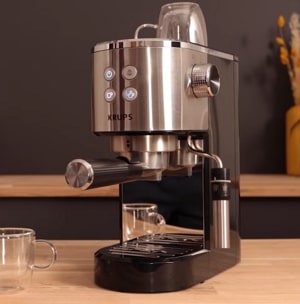
Typically £120–£160 (UK). Not sold in the US (220–240V only).
Krups Virtuoso XP442C40
When it works, this £120–160 compact machine pulls decent, pressurized-basket shots and froths legit microfoam fast—thanks to an automatic cool-flush between brew and steam. But widespread early failures (seals, pumps, descale faults) make it a risky buy versus the slightly pricier DeLonghi Dedica.
Overview
Compact thermoblock with fast switch from brew to steam, pressurized baskets for easy crema, and an honest manual wand for real foam. The catch: fixed-low brew temps and a worrying pattern of early failures. UK-only (no US distribution; 220–240V).
Pros
- Lowest-cost path to pump espresso in the UK
- Automatic cool-flush = quicker milk drink rounds
- Manual wand can make silky microfoam (with practice)
- ESE pod basket for fuss-free shots
- Tiny footprint; light and portable
Cons
- High early failure rates (seals, pump, descale system)
- Fixed, cooler brew temp (no PID or adjustment)
- Pressurized baskets cap quality; limited accessories
- Not sold in the US; 220–240V only
Features & Specs
- Thermoblock heating • ~40s to “ready”
- 15-bar vib pump (≈9-bar brew via OPV)
- 1.0 L removable tank • auto cool-flush between brew/steam
- Pressurized baskets (single/double) + ESE pod basket
- Approx. 51–53 mm portafilter • 80–90 mm max cup height (w/o tray)
- Fixed brew temp ≈ 90–92 °C • 1400 W • 220–240 V
- Dimensions: 280 × 143 × 285 mm • Weight: 3.3 kg
- 2-year warranty (limescale excluded; reliability concerns noted)
Dial-In QuickStart
- Use medium/dark roasts; pre-heat cups; run a quick blank shot.
- Double dose 14–18 g; 25–35 s target; 1:2 ratio as a baseline.
- Fast/sour → finer grind or +1–2 g dose. Slow/bitter → coarser or −1–2 g.
- Milk: purge → stretch to ~35–40 °C → whirlpool to 60–65 °C → purge & wipe.
Competitor Matchups
- DeLonghi Dedica EC685 (£150–200): 3 temp settings, better reliability; slightly slower milk. Easy pick at ~£30 more.
- Breville/Sage Bambino (£280–300): 3-second heat, PID temp, stronger steam—worth saving for if possible.
Pricing & Availability
- UK street price: typically £120–£160 (stock fluctuates).
- US: not available; importing is impractical (voltage/warranty/parts).
Who It’s For / Not For
The Krups Virtuoso is a “value-and-routine” super-automatic: the point isn’t endless espresso tinkering, it’s getting reliable bean-to-cup drinks with low friction day after day. Compared to the more “feature-theatre” machines in this category, Virtuoso tends to win when your priorities are simple workflow, repeatability, and a no-drama ownership loop (make drinks, rinse, empty tray, repeat).
In practical use, you’ll get the best results by treating Virtuoso like a systems machine: pick a forgiving bean, keep espresso volumes tight, use strength/aroma settings to build body, and make changes one lever at a time. This platform rewards consistency habits more than “dial it like a semi-auto” behavior.
Shop the essentials
The small upgrades that make a home coffee setup cleaner, smoother, and more enjoyable to use every day.

Cleaner & Descaler Tablets
Keeps your machine clean, helps prevent buildup, and protects long-term performance.
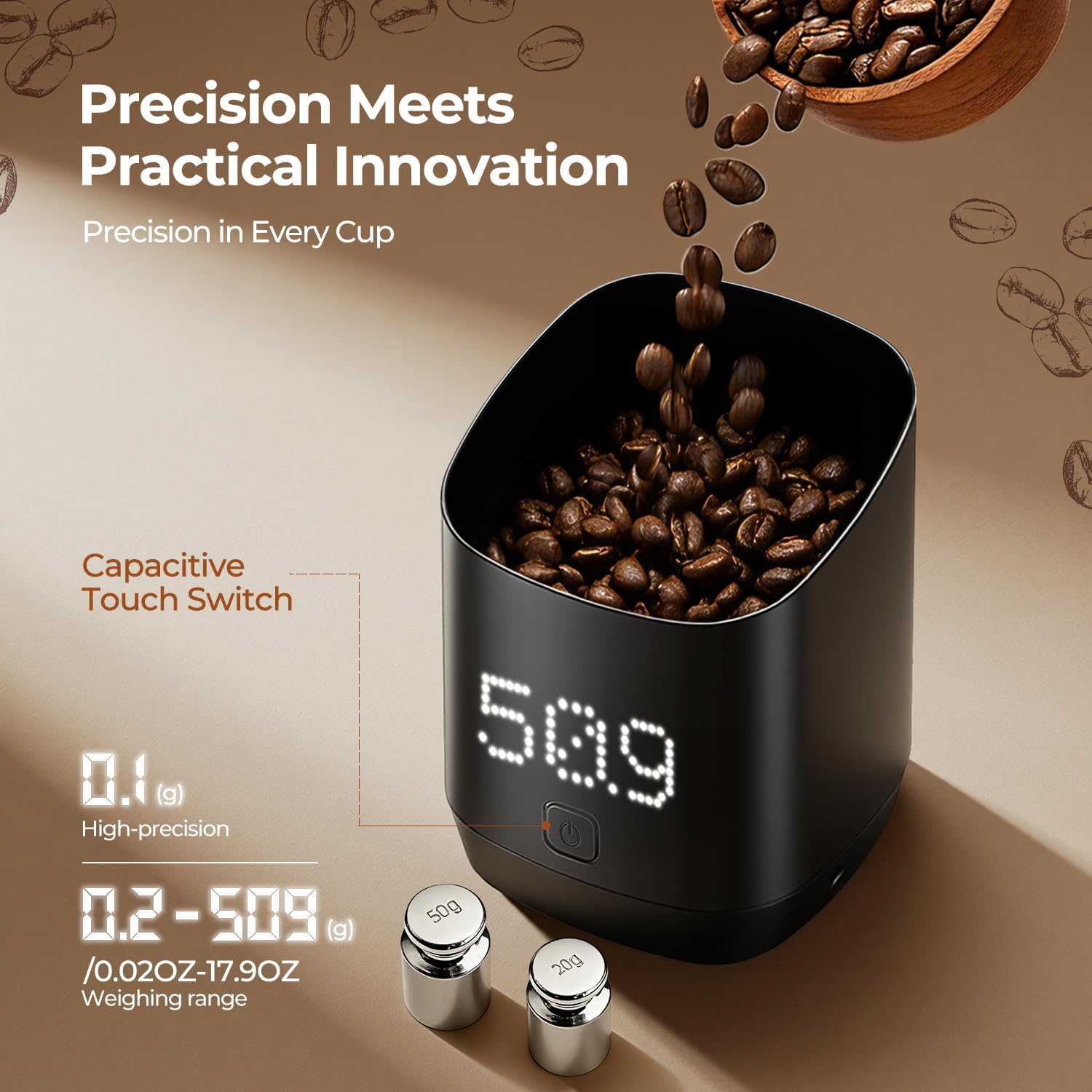
Digital Dosing Cup
Makes weighing beans faster and cleaner, with less mess around the grinder.
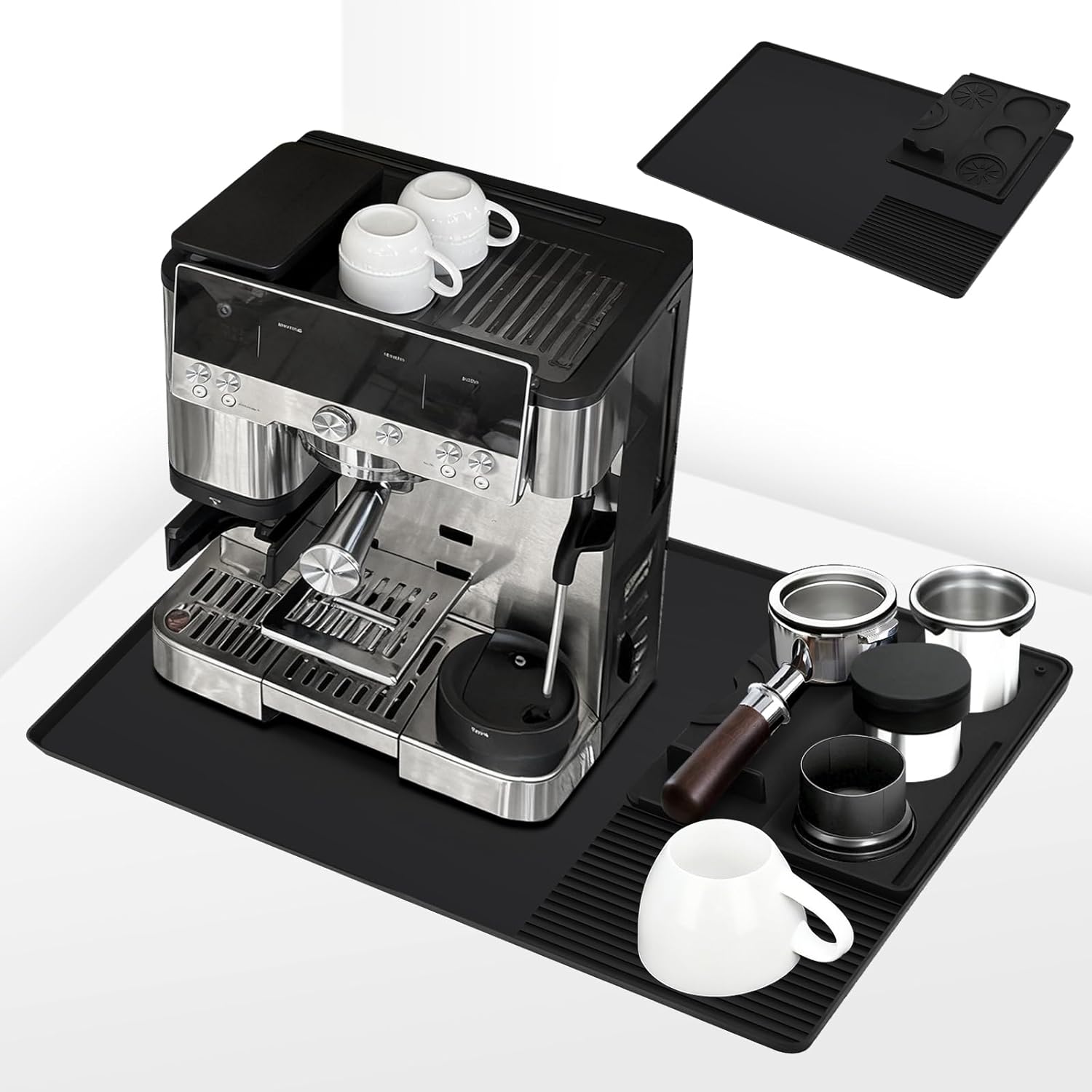
Silicone Mat
Protects your counter, catches spills, and gives your setup a cleaner working surface.

Vacuum Coffee Canister
Helps beans stay fresher longer by limiting air exposure after opening the bag.
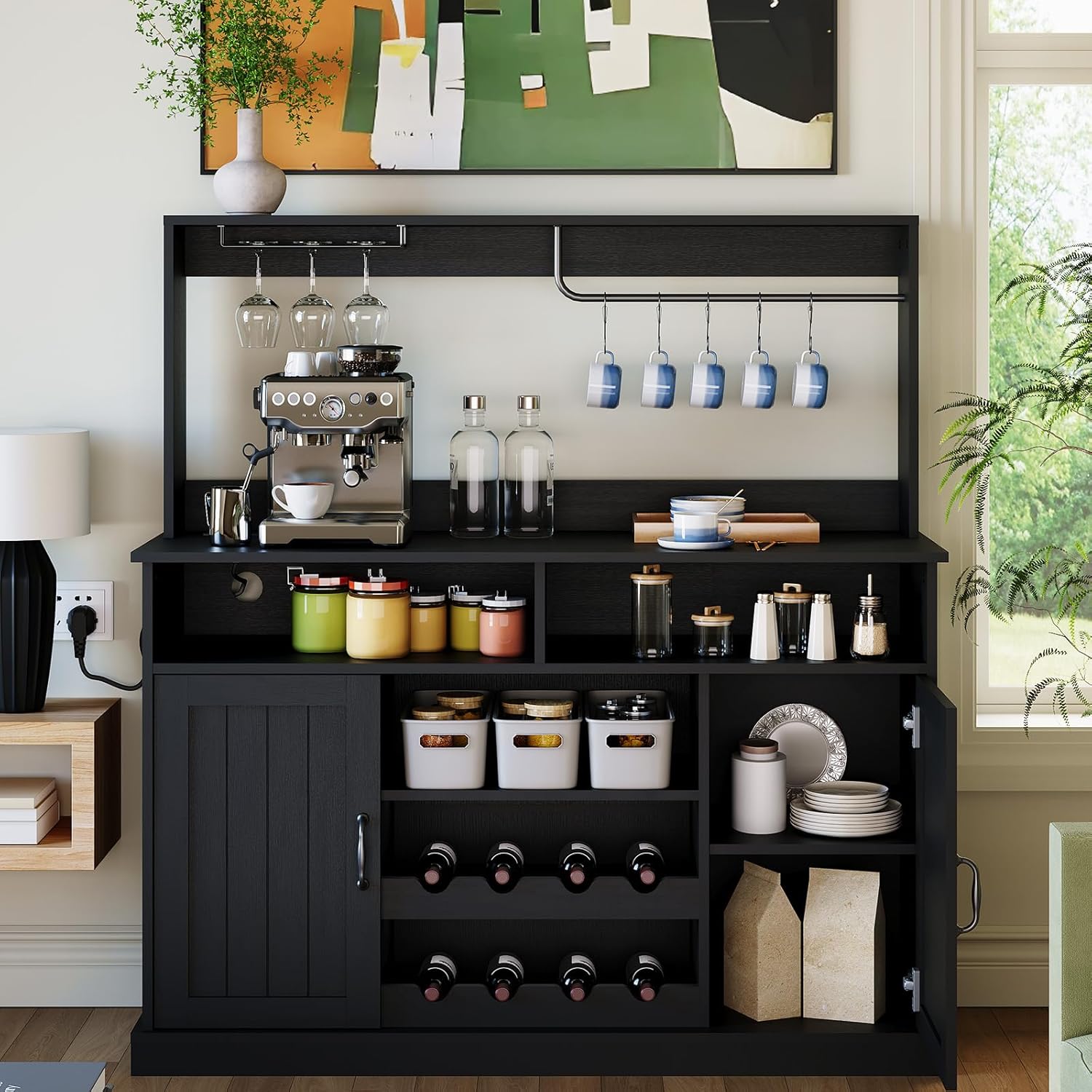
Farmhouse Coffee Bar Cabinet
Gives your machine, cups, beans, and accessories one dedicated home instead of cluttering the kitchen.
Milk drinks are usually Virtuoso’s comfort zone. If you live in cappuccinos and lattes, the machine’s automation can feel like the whole point of super-autos— especially in households where multiple people use the machine and nobody wants to learn “espresso technique.” The trade-off is that texture and milk heat are typically more “as programmed” than truly adjustable.
If you’re cross-shopping, Virtuoso is often weighed against machines people buy for clearer reasons: De’Longhi Dinamica Plus for stronger dial-in headroom and cup-first value, Philips 5400 LatteGo for the simplest milk-cleaning routine, and Jura E6 (or Jura E8) if premium refinement and espresso satisfaction per cup are the buying goal.
Overview
The Krups Virtuoso XP442C40 exists for a very specific buyer: someone in the UK who wants “real pump espresso” and a proper manual steam wand at a £120–£160 entry price, without turning coffee into an expensive hobby. It’s a compact thermoblock machine that heats in about 40 seconds, uses a 15-bar rated vibratory pump, and relies on pressurized baskets to produce thick crema even when your grind or tamp is not perfect.
The surprise strength is milk: the Virtuoso’s professional-style steam wand can make genuinely silky microfoam (latte-art capable) once you learn positioning and timing. And unlike many budget thermoblocks, it includes an automatic cooling/flush behavior between brew and steam modes, which makes back-to-back cappuccinos feel faster and less fiddly than some common rivals. The reality check is durability: ownership reports describe an unusually high rate of early failures (seals, pump issues, descaling faults), plus the platform runs on the cooler side with no temperature adjustment.
Design intent
- Budget “real espresso” entry: pump extraction and a thermoblock platform instead of steam-toy shortcuts.
- Beginner forgiveness: pressurized baskets create crema and stabilize flow when technique and grinders are imperfect.
- Manual wand, real learning: a proper steam wand (no training wheels) for people willing to practice microfoam.
- Milk-drink cadence: the brew→steam transition is helped by an automatic cooling/flush routine for faster repeat rounds.
- Flexibility: supports ground coffee and ESE pods (44 mm soft pods) for convenience without Nespresso lock-in.
What it gets right in the cup and in cadence
- Surprisingly good “budget espresso” output: when dialed, shots can look and feel richer than the price suggests (pressurized basket crema is the reason).
- Excellent milk foam potential: the wand can produce smooth, pourable microfoam once you learn the technique.
- Compact footprint: about 28 × 14.3 cm on the counter, easy for small kitchens and tight cabinet clearances.
- Low-friction basics: simple controls and programmable shot volumes help beginners get repeatable results quickly.
- ESE pod convenience: consistent dosing and fast workflow when you don’t want to fuss with grinders.
The deliberate trade-offs
- Reliability risk: a meaningful number of owners report early seal/pump/descale-system failures that can end the machine’s life quickly.
- Cooler temperature reality: thermoblock brewing is fixed (roughly ~90–92°C) with no user temperature setting, and many users describe drinks as not hot enough without cup preheating.
- Pressurized ceiling: you can make tasty drinks, but you’re not getting the upgrade path and clarity of non-pressurized dialing.
- Light-build feel: predominantly plastic construction and a “budget appliance” durability expectation.
- Region constraints: no practical US path (availability + 220–240V power + support/parts make importing a dead end).
Where it fits
The Krups Virtuoso XP442C40 is best for UK buyers on a hard budget who want pump espresso and are willing to treat it like a 2–3 year “starter appliance” rather than a long-term platform. It’s especially appealing if you care about manual milk learning and you make multiple cappuccinos in a row (the brew→steam workflow is a real convenience win). If you want a safer buy with better long-term confidence at a small price step, cross-shop the De’Longhi Dedica EC685. If you can stretch the budget for a real jump in temperature control, speed, and upgrade headroom, consider the Breville/Sage Bambino.
Cross-shop context on Coffeedant: Virtuoso buyers most commonly compare against the De’Longhi Dedica EC685 for better reliability and temperature options, and the Breville/Sage Bambino for a step-change upgrade in heat-up speed, temperature stability, and overall “buy once” satisfaction.
Krups Virtuoso lineup: which version to buy
The Krups Virtuoso XP442C40 is effectively a single-machine platform rather than a true multi-trim lineup. What creates confusion is model coding across retailers and regions: you’ll see XP442C40 (most common in the UK), occasional alternate codes like XP442C11 in some European listings, and a separate “Virtuoso+” variant (XP444GG0) that is often mistakenly grouped with the XP442 series. The key buying truth: you’re not choosing “better espresso” here — you’re mostly choosing price, warranty, and risk tolerance.
| Model code | What it is | Compared to XP442C40 | Typical price and note |
|---|---|---|---|
| XP442C40 Reference | Main UK code | The baseline Virtuoso: thermoblock (~40s heat-up), pressurized baskets, manual steam wand, ESE pod basket, and the brew→steam cooling/flush behavior that helps milk-drink cadence. | ~£120–£160 (often ~£138 on sale) • Buy new with a clear return window |
| XP442C11 | Alt market code | Commonly an alternate retailer/region identifier for the same basic platform. Treat it as “the same machine” unless the listing clearly states a different accessory set. | Varies by EU market • Verify warranty terms + included baskets before buying |
| XP444GG0 (Virtuoso+) | Different variant | Often listed alongside XP442 models, but it’s not the same code family. Only consider it if you’ve confirmed it’s genuinely the “Virtuoso+” you want (and not a mislabel), because feature sets can differ by listing. | Varies • Don’t pay extra unless the listing clearly names the added features you actually value |
How to read this: if you’re buying the Virtuoso, the best strategy is usually simple: buy the cheapest new unit you can find with a strong return policy and full warranty coverage. Given reliability concerns, refurbished units are hard to justify unless the discount is extreme and the warranty is real. If you want a safer “buy once” move, cross-shop the De’Longhi Dedica EC685 (small price step, better reliability/controls) or the Breville/Sage Bambino (big step up in temperature stability and overall experience).
Key Krups Virtuoso XP442C40 Specifications
| Item | Detail |
|---|---|
| Machine | Krups Virtuoso (XP442C40 • XP442C11 in some listings) |
| Machine type | Manual/semi-auto espresso maker (no built-in grinder) with pressurized baskets + manual steam wand |
| Heating system | Thermoblock (on-demand heating) |
| Rated power | 1400 W (220–240 V) |
| Pump pressure | 15 bar (rated) |
| Brewing temperature | ~90–92°C (non-adjustable) |
| Heat-up time | ~40 seconds to ready (typical) |
| Portafilter size | 51–53 mm class (size is inconsistently stated across listings; baskets are pressurized) |
| Included baskets | Single pressurized • Double pressurized • ESE pod basket (44 mm soft pods) |
| Shot programming | Programmable volume (single ~15–65 ml • double ~30–130 ml) |
| Milk system | Manual steam wand (professional-style tip/nozzle) |
| Brew → steam workflow | Automatic cooling/flush behavior between modes (helps back-to-back milk drinks) |
| Water tank | 1.0 L removable |
| Max cup height | ~80–90 mm without drip tray (varies by cup + spout clearance) |
| Dimensions | 280 W × 143 D × 285 H mm (≈28.0 × 14.3 × 28.5 cm) |
| Weight | 3.3 kg |
| Warranty | 2 years (limescale damage typically excluded) |
| Typical price | ~£120–£160 depending on stock and promos |
First Impressions & Build Quality
On the counter, the Virtuoso reads like a true budget espresso appliance: compact, light, and designed to look more premium than it feels. The footprint is genuinely small — about 28.0 × 14.3 cm — and at 3.3 kg it’s easy to move around, which is great for student housing, small flats, and tight counters.
Build expectations matter. Much of the chassis is plastic with stainless-look panels, and the included combo scoop/tamper is more “included accessory” than a useful tool. The portafilter handle is also plastic, and the whole platform feels closer to “entry appliance” than “buy-it-for-10-years hardware.”
Where it punches above its class is milk. The manual steam wand is a real, technique-driven wand — it can texture milk into silky microfoam (latte-art capable) once you learn the stretch + whirlpool phases. The brew-to-steam transition is also unusually efficient for the price because the machine manages a cooling/flush routine between modes, which helps when you’re making multiple cappuccinos back-to-back.
The trade-off is durability risk. If you’re buying this platform, the correct mindset is: test it hard early, keep your return window in mind, and don’t over-invest in upgrades until you’re confident your unit is a good one. If you want a safer reliability bet at a small price step, cross-shop the De’Longhi Dedica EC685.
What’s in the Box
- Main unit (Krups Virtuoso XP442-series)
- Portafilter (plastic handle)
- Pressurized single basket
- Pressurized double basket
- ESE pod basket (44 mm soft pods)
- Combined measuring spoon/tamper tool
- Instruction manual + quick start guide
Notably missing from most boxes: a milk pitcher, descaling solution, water-hardness test strip, and any non-pressurized baskets. For many users, the first practical upgrade is a proper tamper + a small milk pitcher.
Counter fit
| Item | Detail | Why it matters |
|---|---|---|
| Dimensions | 280 W × 143 D × 285 H mm (≈28.0 × 14.3 × 28.5 cm) | One of the easiest pump espresso machines to fit in small UK kitchens. |
| Weight | 3.3 kg | Easy to move/clean around, but also a cue that this is not heavy-duty hardware. |
| Water tank | 1.0 L removable | Fine for 1–3 drinks/day; heavy milk-drink homes will refill often. |
| Max cup height | ~80–90 mm without drip tray | Useful for taller cups, but measure your mugs to avoid surprises. |
| Milk system | Manual steam wand | High skill ceiling for microfoam; you trade convenience for control and better texture potential. |
| ESE pods | Yes (44 mm soft pods) | Convenient “no grinder needed” mode without proprietary pod lock-in. |
Testing Results
Results below reflect the practical outcomes on this platform: warm-up speed, extraction behavior with pressurized baskets, milk-texturing capability, and the real-world temperature limitations that show up in daily use.
| Metric | Result | Use note |
|---|---|---|
| Heat-up to ready | ~40 seconds | Fast enough for daily use; pulling a quick blank shot helps warm the path for your first “serious” espresso. |
| Brewing temperature | ~90–92°C (fixed) | Favors darker roasts; cup preheating matters if you’re temperature-sensitive. |
| Pressurized extraction behavior | Crema-heavy, forgiving | Looks impressive even with imperfect grind/tamp, but quality ceiling is lower than non-pressurized systems. |
| Brew → steam transition | ~12–20 seconds (typical) | Automatic cooling/flush helps make multiple milk drinks faster than many budget rivals. |
| Milk texturing time | ~45–60 seconds for ~200 ml | Not “powerful,” but capable of silky microfoam with correct technique (stretch early, then whirlpool). |
| Descaling cadence | ~Every 3 months (minimum) | More often in hard-water areas; the platform is scale-sensitive, so water strategy matters. |
Key takeaways from testing
- The Virtuoso can produce surprisingly satisfying espresso-style shots for the money — largely because pressurized baskets make it forgiving.
- The manual steam wand is the real win: it’s capable of silky, pourable microfoam once your technique is dialed.
- Temperature is a fixed constraint; if you want hot café-style drinks without cup preheating, you’ll likely prefer another machine.
- Reliability is the biggest risk factor: test early, keep returns simple, and avoid sinking big money into accessories until the unit proves itself.
- If you want a safer long-term buy, the De’Longhi Dedica EC685 is the most common “small step up,” and the Breville/Sage Bambino is the clear “save a little longer” upgrade lane.
Espresso Quality: getting the best out of the Krups Virtuoso XP442C40
The Virtuoso is a pressurized-basket machine, which is why it can look “shockingly good” for the price: the basket creates resistance for you and produces thick crema even when your grind/tamp aren’t perfect. The trade-off is a lower ceiling—this isn’t a precision espresso platform. Your results come mostly from five levers: coffee freshness, grind size, dose, shot volume/timing, and heat management (preheating cups and the group path). Treat the pressure gauge as a rough hint, not a scoreboard—focus on taste + time.
Session protocol that keeps results consistent
- Warm + flush: let the machine fully heat (~40s), then run a 5–10s blank shot to warm the thermoblock and group path. Use that hot water to preheat your cup.
- Keep the portafilter warm: lock it in while the machine heats (empty), then dry it before dosing. A cold portafilter = colder, weaker extraction.
- Pick “easy” coffee first: medium/dark espresso blends are the sweet spot. Very light roasts are the hardest here (fixed ~90–92°C brew temp).
- Change one lever at a time: adjust grind first, then dose, then volume (or timing), then tamp consistency.
- Don’t leave it locked in: remove the portafilter after brewing and rinse it—leaving it hot and locked in accelerates gasket wear and bakes residue.
Flavor targets by coffee style
| Coffee | Baseline recipe (Virtuoso) | What it tastes like when right | If too sour / thin | If too bitter / dry |
|---|---|---|---|---|
| Medium espresso blend |
Double basket • 16g dose • Medium-fine grind (table salt → slightly finer) Target 25–35s for a short double (keep volume tight) |
Chocolate/nut sweetness, decent body, crema that doesn’t vanish instantly | Grind finer or add +1g dose; shorten volume; preheat cup + run a blank shot first | Grind coarser or remove -1g dose; shorten volume (over-long pulls get woody fast) |
| Dark roast blend |
Double basket • 15g dose • Slightly coarser than medium roast baseline Target 25–30s and keep the drink short |
Heavier roast notes without harsh dryness | Shorten volume first; then try slightly finer grind if it still runs too fast | Go coarser and/or drop dose 1g; dark roasts turn dry quickly if you push long volumes |
| Light-to-medium single origin |
Double basket • 17–18g dose • Finest grind your grinder can do without choking Expect the machine to struggle; keep the yield very short |
Some brightness and sweetness, but usually less clarity than better temp-controlled machines | Preheat aggressively (cup + blank shot), tighten volume, go finer if flow is fast | Go a touch coarser and keep volume tight; long pulls go flat/woody fast |
| ESE pods (44mm) |
ESE basket • Pod seated flat • Brew a short single/double-style volume Let the pod do the dosing: don’t overthink tamping here |
Clean, consistent “espresso-like” shots with minimal fuss | Preheat cup + run a blank shot first; keep volume short (pods wash out when stretched) | Shorten volume; avoid re-running the same pod (second pull is almost always bitter) |
Dose, grind, volume, and heat: use them like tools
- Grind: the main lever. Too coarse = fast, watery espresso. Too fine = choking or harsh drips (and can clog pressurized baskets).
- Dose: your “body” lever when grind is close. Add/remove 1g at a time on doubles.
- Volume discipline: the fastest way to ruin flavor is pulling long, stretched espresso. Keep shots short; add hot water separately for an Americano.
- Heat management: because brew temp is fixed and many users want hotter cups, preheating is non-negotiable: blank shot + hot cup rinse.
- Tamp consistency: pressurized baskets forgive a lot, but an even, level tamp helps repeatability. A proper tamper beats the combo scoop tool.
Diagnostics you can see and taste
| Signal | Likely cause | Targeted fix |
|---|---|---|
| Watery espresso, fast flow | Grind too coarse, under-dosed, or shot volume too long | Grind finer, dose +1g, and keep the drink short; preheat cup on first shot |
| Slow drips, harsh dryness | Grind too fine, over-dosed, or basket restrictor partially clogged | Grind coarser and/or dose -1g; rinse and brush the basket outlet |
| Pressure gauge barely moves (“no pressure”) | Stale coffee, grind too coarse, or under-dose | Use fresher coffee, grind finer, dose correctly (14–18g double); don’t obsess over the gauge—confirm by taste + time |
| Lukewarm espresso | Thermoblock + heat loss to cup/portafilter | Blank shot + preheated cup + warm portafilter; brew immediately after locking in |
| Hissing/leaks around portafilter | Dirty rim, mis-seated basket, or gasket/seal issue | Clean the rim + re-seat basket; if it repeats, stop and use warranty (don’t “tighten harder”) |
Keep variance low
- Weigh your dose (even a cheap scale helps) and keep the same coffee for a few days while dialing in.
- Don’t chase crema—pressurized baskets create it. Chase taste and a repeatable 25–35s window.
- Use filtered water and descale on schedule—thermoblocks are scale-sensitive, and flow/temperature drift gets worse over time.
Milk System: Virtuoso steaming workflow, texture, and consistency
The Virtuoso’s surprise strength is the manual steam wand. It’s capable of genuinely silky microfoam (latte-art-friendly) if you learn the technique—but it won’t do the work for you. The workflow win is speed between modes: the machine’s automatic cooling/flush helps you go from brewing to steaming faster than many budget rivals when you’re making multiple milk drinks. Expect steaming to take about 45–60 seconds for ~200ml of cold milk: adequate pressure, not “power steam.”
Wand phase → texture outcome → best use case
| Phase | Texture outcome | Best for | Notes |
|---|---|---|---|
| Stretch (air in) | Foam creation (microbubbles) | Cappuccino, latte art base | Tip near the surface; add air only early (first ~5–12s), then stop aerating. |
| Texture (whirlpool) | Foam integrates into glossy milk | Latte, flat white texture | Tip slightly deeper; aim for a rolling whirlpool to “polish” the milk. |
| Finish (target temp) | Stable, pourable foam | All milk drinks | Stop at 60–65°C (too hot to hold). Overheating kills sweetness and stability. |
Milk volume and real-world timing
| Drink size | Milk volume | Target drink | Typical steam time* | Tip |
|---|---|---|---|---|
| Small | 120–170 ml | Cappuccino / small latte | ~35–50s | Use a smaller pitcher so you can control the whirlpool and avoid big bubbles. |
| Medium | 180–240 ml | Latte | ~45–60s | Stop aerating early; spend most of the time texturing/polishing. |
| Large | 250–320 ml | Big milk drink / two servings | ~60–80s | If it gets bubbly, you likely added air too long or didn’t achieve a whirlpool. |
*Timing varies by milk type, starting temperature, and technique. Whole milk is the easiest to learn on.
Technique: microfoam that stays consistent
- Purge first: run steam for 2–3 seconds to clear condensation.
- Stretch briefly: tip just under the surface; introduce air only until milk is hand-warm (~35–40°C).
- Texture (whirlpool): lower the tip slightly and angle the pitcher until you see a rolling vortex.
- Finish at 60–65°C: stop before scalding; immediately tap + swirl to integrate foam.
- Clean immediately: wipe wand with a damp cloth and purge again to clear milk from the nozzle.
Texture targets by drink
| Drink | How much air to add | Mouthfeel target | Notes |
|---|---|---|---|
| Cappuccino | More (but only early) | Thicker, “paint-like,” still glossy | Don’t add air the whole time—big bubbles come from over-aeration. |
| Latte | Less | Silky, pourable microfoam | Most of your time should be texturing (whirlpool), not stretching. |
| Flat white | Minimal | Very fine foam, tight texture | Great for showing off the wand’s ceiling once technique is solid. |
Keep milk performance sharp
- Always wipe + purge after steaming—dried milk is the #1 cause of sputtering and degraded foam.
- If steam performance drops, descale (hard water) and inspect the wand tip for blockage.
- If you’re choosing between machines for milk: Virtuoso can out-foam its price, but if you want a safer buy overall, cross-shop the De’Longhi Dedica EC685 or step up to the Breville/Sage Bambino.
Krups Virtuoso XP442C40 vs The Field: Quick Matrix
| Match-up | Core difference | Best for | Jump to section | Model page |
|---|---|---|---|---|
| Krups Virtuoso XP442C40 vs De’Longhi Dedica EC685 | Virtuoso: surprisingly good pressurized shots + strong manual wand for the money vs Dedica: better reliability + temperature settings + safer long-term buy | Virtuoso if you’re at the absolute lowest price and accept risk; Dedica if you want the smarter “buy once” entry machine | Open | Dedica EC685 |
| Krups Virtuoso XP442C40 vs Breville/Sage Bambino | Virtuoso: budget thermoblock + pressurized baskets vs Bambino: PID stability + ultra-fast heat + stronger steam + upgrade headroom | Virtuoso for disposable-price beginners; Bambino if you want a real “entry enthusiast” platform that rewards a grinder | Open | Bambino |
| Krups Virtuoso XP442C40 vs Breville/Sage Bambino Plus | Virtuoso: manual steaming + low price vs Bambino Plus: same fast, stable brew core plus easier milk workflow (auto milk support) | Virtuoso if you want to learn manual steaming on a budget; Bambino Plus if you want faster, more repeatable milk drinks | Open | Bambino Plus |
| Krups Virtuoso XP442C40 vs Gaggia Classic Pro | Virtuoso: beginner-friendly pressurized baskets vs Classic Pro: traditional 58mm workflow + non-pressurized espresso fundamentals + long-term serviceability | Virtuoso for lowest-cost “real espresso” dabbling; Classic Pro if you want a machine you can keep and grow into | Open | Gaggia Classic Pro |
Krups Virtuoso XP442C40 vs De’Longhi Dedica EC685
This is the most realistic cross-shop for UK buyers. The Virtuoso can surprise you with thick crema and legit microfoam for very little money, but the Dedica is the more dependable “live with it every day” option—especially if you value fewer headaches and more predictable ownership.
Core differences
- Reliability risk: Virtuoso ownership is a higher-variance gamble; Dedica is generally the safer pick at a small premium.
- Temperature control: Dedica gives you temperature settings; Virtuoso is fixed and often benefits from aggressive cup preheating.
- Milk workflow: Virtuoso’s manual wand can be excellent with practice; Dedica often leans more beginner-friendly but less “microfoam-forward.”
| Aspect | Krups Virtuoso XP442C40 | De’Longhi Dedica EC685 |
|---|---|---|
| Best fit | Lowest-cost entry espresso + manual steaming learners | Safer “buy once” entry machine |
| Daily feel | Simple, compact, fast to heat; more variability | More predictable ownership with better everyday control |
| Trade-off | Higher failure risk; fixed temp | Costs more; less “shock value” for the price |
Who should choose which
- Pick Virtuoso if you’re truly budget-capped and you’re okay treating it like a short-lifespan appliance if needed.
- Pick Dedica if you want a more reliable entry machine and the extra spend is tolerable.
Krups Virtuoso XP442C40 vs Breville/Sage Bambino
If you’re even slightly serious about espresso as a hobby, the Bambino is the “save a bit longer” move. The Virtuoso can make good-looking shots and nice milk foam, but the Bambino’s temperature stability, speed, and upgrade headroom make it a fundamentally stronger platform.
Core differences
- Heat-up speed: Bambino is dramatically faster and more “wake up and go.”
- Temperature stability: Bambino holds extraction temperature more consistently; Virtuoso runs cooler and is not adjustable.
- Upgrade path: Bambino rewards a good grinder and non-pressurized baskets; Virtuoso tops out sooner.
| Aspect | Krups Virtuoso XP442C40 | Breville/Sage Bambino |
|---|---|---|
| Best fit | Cheapest “real pump espresso” experimentation | Best entry platform for consistent espresso + growth |
| Daily feel | Simple and compact; can be finicky | Fast, stable, more consistent shot-to-shot |
| Trade-off | Limited ceiling + higher risk | Costs more |
Who should choose which
- Pick Virtuoso if you need the lowest price and you’re okay with pressurized-basket limitations.
- Pick Bambino if you want a meaningful step up in temperature control and long-term satisfaction.
Krups Virtuoso XP442C40 vs Breville/Sage Bambino Plus
This match-up is really about milk workflow. Virtuoso is the “learn the wand” budget play. Bambino Plus is for people who still want hands-on espresso, but prefer faster, more repeatable milk routines without a big learning curve.
Core differences
- Milk ease: Bambino Plus prioritizes repeatability; Virtuoso prioritizes price and manual technique.
- Overall platform: Bambino Plus shares the faster, more stable brew behavior of the Bambino line.
- Buying logic: if milk drinks are daily, the Plus model can feel like “time saved, frustration avoided.”
| Aspect | Krups Virtuoso XP442C40 | Breville/Sage Bambino Plus |
|---|---|---|
| Best fit | Manual wand learners on a strict budget | Milk-drink households who want repeatability and speed |
| Milk routine | Technique-driven; great when you nail it | More consistent daily milk workflow |
| Trade-off | Higher variance + more practice | Higher spend |
Who should choose which
- Pick Virtuoso if you want the lowest-cost way to learn manual microfoam and accept the risk.
- Pick Bambino Plus if you want milk drinks to be easy and repeatable day after day.
Krups Virtuoso XP442C40 vs Gaggia Classic Pro
These machines live in different mindsets. Virtuoso is “cheap entry espresso that can surprise you.” Classic Pro is “traditional espresso ownership”—more effort, more learning, more payoff, and a much stronger long-term service lane.
Core differences
- Basket style: Virtuoso leans on pressurized baskets; Classic Pro is a true 58mm platform built for non-pressurized extraction.
- Longevity: Classic Pro is designed to be serviced and kept; Virtuoso is closer to a disposable-appliance expectation for many owners.
- Skill curve: Virtuoso is easier out of the gate; Classic Pro rewards grinders, puck prep, and technique.
| Aspect | Krups Virtuoso XP442C40 | Gaggia Classic Pro |
|---|---|---|
| Best fit | Beginner experimentation at lowest cost | People who want traditional espresso fundamentals |
| Daily feel | Fast, simple, forgiving (pressurized) | More hands-on, more rewarding with a good grinder |
| Trade-off | Lower ceiling and higher ownership risk | More effort + higher cost |
Who should choose which
- Pick Virtuoso if you want the cheapest path to “real pump espresso” and are okay with compromises.
- Pick Classic Pro if you’re willing to learn and want a machine you can keep for years.
How to use this matrix: If you’re buying on the absolute lowest budget, Virtuoso can deliver surprisingly nice results when it behaves. If you want the safest entry buy, the decision usually shifts to Dedica (small premium, fewer headaches). If you want the biggest jump in daily experience and espresso stability, saving for Bambino/Bambino Plus is the clearest upgrade path.
In-Depth Analysis
The Virtuoso XP442C40 is the classic budget espresso paradox: when it works, it can produce genuinely satisfying pressurized-basket espresso and surprisingly good microfoam for the money—fast heat-up, compact footprint, and a manual steam wand that rewards practice. The catch is the ownership risk: many reported failures (seals, pump, descaling behavior) make this feel like a high-variance appliance, not a safe “buy once” machine.
1) Why it can taste better than it “should” (for the price)
The Virtuoso’s best-case results come from a simple combo: a thermoblock that gets you brewing quickly, pressurized baskets that create crema even with imperfect grind/tamp, and a manual wand that can produce silky foam when you learn the angles. The workflow is beginner-friendly on espresso and surprisingly “real” on milk.
- What you feel: fast start, simple buttons, “I made espresso” satisfaction.
- What it changes: beginners can get decent-looking shots without elite grinders.
- Where it shines: cappuccinos/lattes—milk covers thinness better than straight espresso.
2) The built-in ceiling: pressurized baskets + fixed temperature
Virtuoso’s espresso is defined by two constraints: pressurized baskets (helpful, but a quality cap) and a fixed brewing temperature that many users perceive as cooler than ideal. You can get “good enough” espresso, but it won’t behave like a higher-end, non-pressurized system with tight temperature control.
| Constraint | What it causes | How to work around it |
|---|---|---|
| Pressurized baskets | Crema looks great, but flavor clarity and texture have a lower ceiling | Use fresh medium/dark roasts; focus on timing and “short, strong” shots |
| Fixed brew temp | Lukewarm complaints; light roasts struggle more | Preheat cup + run a blank shot; favor medium/darker roasts |
| Small-ish portafilter ecosystem | Fewer premium accessory options vs 54/58mm platforms | Upgrade only the essentials (tamper, pitcher, scale) and avoid over-investing |
3) The unexpected strength: manual steam + faster back-to-back milk workflow
The steam wand is the Virtuoso’s “wow” feature for the price: it’s not a beginner panarello crutch—it's a manual wand that can create real microfoam with practice. The machine’s brew-to-steam transition includes a cooling/flush behavior that helps cadence for multiple milk drinks.
- Best-case: silky microfoam suitable for simple latte art.
- Reality: it’s slower than premium machines; technique matters a lot.
- Workflow win: it can feel faster for multiple cappuccinos than some budget rivals with clunkier mode switching.
4) Water + scale: the budget-machine failure multiplier
Thermoblock machines are sensitive to limescale. On a model with a shaky reliability record, water quality and on-time descaling matter even more. Treat descaling as mandatory maintenance, not a “nice to do later” task.
5) The buying truth: it’s a “cheap entry” machine, not a “safe ownership” machine
Virtuoso makes sense when your budget is hard-capped and you accept a “disposable appliance” mindset. If you want a safer purchase with better long-term odds, most buyers should treat the small price jump as worth it and cross-shop: De’Longhi Dedica EC685 or Breville/Sage Bambino.
| Expectation | What to plan for | Why it matters |
|---|---|---|
| Descaling + cleaning | Every ~2–3 months in hard-water areas (minimum quarterly) | Scale impacts flow and can accelerate failures on entry thermoblocks |
| Heat workaround | Preheat cups + blank shot before brewing | Fixed temp + small thermal mass = more heat loss than “hot coffee” buyers expect |
| Accessory discipline | Keep upgrades under ~£50–£60 total | Overspending on accessories defeats the point of a budget machine |
| Risk profile | High variance: great unit vs early failure | Plan for warranty use; keep packaging/receipts early on |
Editorial placement: surface the reliability warning early, keep the “steam wand is the surprise” note near Milk Performance, and repeat the “preheat cup + blank shot” workflow wherever temperature comes up.
Krups Virtuoso XP442C40 - frequently asked questions
Fast answers to the questions people ask before buying (or troubleshooting) the Virtuoso.
Is the Virtuoso XP442C40 a good beginner espresso machine?
It can be—because pressurized baskets make early success easier and the machine heats quickly. The downside is that the manual steam wand takes practice, and the model has a higher-than-comfortable rate of early failures. If you want a safer first machine, cross-shop De’Longhi Dedica EC685.
Why does my espresso taste not hot enough?
The Virtuoso uses a fixed-temperature thermoblock and can present drinks as cooler than café expectations. The best workaround is workflow: preheat the cup, run a quick blank shot before the first espresso, and brew immediately after locking the portafilter in. If “hot drinks” is non-negotiable, consider stepping up to a stronger platform like Breville/Sage Bambino.
Can I use ESE pods with the Virtuoso?
Yes—use the dedicated ESE basket. Pods can actually be a consistency win on a pressurized-basket machine because the dose and compression are standardized. If you want pod convenience but higher overall reliability, compare alternatives like the Dedica EC685 and use its pod-compatible setup.
My pressure gauge barely moves—what causes “no pressure”?
The usual causes are coffee/grind/dose issues (too coarse or under-dosed), a clogged pressurized basket restrictor, or stale coffee. Try: (1) clean the basket hole/restrictor, (2) dose properly, (3) grind finer or use fresher coffee, (4) run a blank shot to confirm strong water flow. If you also see leaks around the portafilter, it may be a gasket/seal issue.
How often should I descale?
Minimum every 3 months in moderate water, and closer to monthly in hard-water areas. Thermoblocks scale faster than many first-time owners expect. Use proper descaling solution (avoid vinegar) and complete full rinse cycles. If the descale indicator refuses to reset, it’s a known annoyance—keep descaling on schedule anyway.
Is it worth buying used or refurbished?
Usually no—because the biggest risk is early failure and hidden scale/leak history. If you do buy used, only do it with a strong return policy or a real warranty, and insist on a live test for leaks, pump priming, and stable steam performance.
What should I upgrade first?
A proper tamper and a milk pitcher. The included scoop/tamper combo is a bottleneck, and a real pitcher makes it much easier to learn good steaming. Keep total upgrades modest—if you’re about to spend big, you’re often better off upgrading the machine instead.
Used & Refurbished Buyer’s Guide
Used Virtuosos are risky because the biggest failure modes are often hidden (scale restriction, internal leaks, gasket wear, pump problems). If you still want to buy used, treat it like a condition inspection purchase: you need proof it runs cleanly, holds pressure without leaking, and steams without sputtering.
| Inspect | What to check | Pass criteria |
|---|---|---|
| Startup + pump prime | Run water through group head (no portafilter) for 10–15 seconds. | Strong, steady flow (not dribbles). Pump sounds consistent, not “running dry.” |
| Portafilter seal | Pull a double shot with coffee and watch around the group head. | No hissing/leaking around the portafilter; no puddles under the machine. |
| Pressure behavior | With proper dose, gauge should rise into an “espresso zone.” | Not stuck near zero (unless you clearly under-dose/too coarse). |
| Steam wand | Steam for 20–30 seconds; purge and check for blockage/sputter. | Steam is continuous after purge; no chronic “spit and stop.” |
| Leaks after heat | After brewing + steaming, inspect base and tray area. | Any moisture is contained to tray/drip paths; nothing under the chassis. |
| Descale behavior | Ask when it was last descaled and what was used; check for weak flow signs. | Credible maintenance history; no obvious scale symptoms (weak flow, struggling steam). |
| Accessories completeness | Confirm baskets (single/double/ESE), portafilter, and drip tray parts are included. | Missing baskets/parts should substantially reduce price (or be a deal breaker). |
| Return/warranty | Confirm written warranty coverage if “refurbished.” | At least 6–12 months coverage is ideal; otherwise the risk is rarely worth it. |
Accessories & Upgrades
The Virtuoso benefits from a few cheap, practical upgrades—but this is not a machine to “build a barista toolkit” around. Keep upgrades minimal. If your accessory cart is climbing, you’re usually better off stepping up to Bambino territory.
| Category | What to buy | Why it helps |
|---|---|---|
| Must-have | Proper tamper (match your basket size) + a basic knock box (optional) | More consistent puck compression and less mess vs the included scoop/tamper combo |
| Milk learning | Stainless milk pitcher (350–600 ml) + a thermometer strip (optional) | Makes microfoam practice easier; helps prevent overheating while learning |
| Water + descaling | Descaling solution and a filtered-water routine | Scale control is the cheapest way to preserve flow and steam performance |
| Consistency tool | Small digital scale (0.1 g resolution) | Helps keep dose and yield consistent even on a pressurized setup |
| Optional (only if you’ll upgrade later) | Entry burr grinder | Freshly ground coffee tastes better, but pressurized baskets don’t require elite grind precision |
Known Issues & Troubleshooting
- Water leaking around portafilter / puddles under machine: often a gasket/seal failure. Stop using, document, and pursue warranty/return. Re-tightening technique won’t fix a failing seal.
- No pressure / gauge barely moves: too-coarse grind, under-dose, stale coffee, or a clogged pressurized basket restrictor. Clean the basket, dose correctly, go finer, and test water flow with a blank shot.
- Pump sounds like it’s running but no water comes out: tank seating/airlock or internal flow restriction. Reseat tank and run a prime/blank shot. If it persists (especially after descaling), it’s often not a quick fix.
- Descale light won’t reset: a known frustration. Repeat the reset sequence, and make sure you ran full rinse cycles. If it never clears, keep descaling on schedule anyway.
- Espresso tastes lukewarm: preheat cup, run a blank shot, brew immediately after locking in, and favor medium/darker roasts.
- Steam wand sputters or blocks: purge first, wipe immediately after steaming, and clear milk residue. If steam stays weak, scale and blockage are common culprits.
Conclusion: Should You Buy the Krups Virtuoso XP442C40?
Who it’s for
- Strict-budget buyers who want real pump espresso (not steam-toy “espresso”).
- Small kitchens / compact counters (lightweight, easy to move).
- Milk-drink learners who want a manual wand experience without spending premium money.
- ESE pod users who want non-proprietary pod convenience.
- People who accept a “2–3 year appliance” mindset and will use warranty protection aggressively.
Who should avoid it
- Reliability-focused buyers who want low-risk ownership.
- Temperature-sensitive drinkers who want hotter cups without workarounds.
- Daily heavy users making multiple milk drinks every day.
- Enthusiasts who want non-pressurized dialing headroom and upgrade paths.
- Anyone considering spending heavily on accessories instead of stepping up to a better platform.
We’ve categorized the best espresso machines for every kind of buyer
Find the right shortlist faster, whether you want convenience, a beginner-friendly setup, a smaller footprint, or better value at a given budget.
Best Superautomatic Espresso Machines
One-touch picks for speed and convenience.
Best Espresso Machines for Beginners
Easy-to-use machines with a smoother learning curve.
Best Small Espresso Machines
Compact machines for tighter kitchens and counters.
Best Espresso Machines With Built-In Grinder
All-in-one options with fewer extra pieces to buy.
Best Cheap Espresso Machines Under $500
Budget picks that still make sense for real espresso.
Best Prosumer Espresso Machines Under $1000
More serious machines with stronger value for the money.
Best Single Boiler Espresso Machines
Simple, space-saving picks for espresso-first routines.