
Takeaway
Giotto Cronometro R is Rocket’s rotary-pump heat exchanger for people who want café cadence without noise or guesswork. It couples an insulated 1.8 liter copper boiler with PID boiler control, a built-in digital shot timer, and a rotary pump that runs off a 2.5 liter tank or a direct water line. The chassis is the classic faceted Giotto body. The internals are the Cronometro platform that adds insulated boilers and Rocket’s 9 mm boiler end plates for thermal stability. The profile in the cup is the familiar E61 signature with mechanical pre-infusion. On the bar you get strong, dry steam with quick recovery and a workflow that turns timing into a glance. Dimensions are 335 by 420 by 400 millimeters and weight is 27.8 kilograms. Power is listed at 1350 watts in both 230 and 115 volt markets.
At a glance
- Architecture. E61 group with integrated pre-infusion, heat-exchanger boiler, rotary pump, dual manometers, PID boiler control, and a front digital shot timer. Tank or plumbed water source via a simple switch.
- Boiler and power. 1.80 liter insulated copper boiler, 1350 W element listed for both 220–240 V and 115 V variants. 9 mm end plates are called out by Rocket for stability.
- Water. 2.5 liter reservoir in tank mode or direct water connection.
- Dimensions and mass. 335 W × 420 D × 400 H mm, 27.8 kg.
- Wands and valves. Stainless cool-touch steam wand listings are common across top dealers. Quick, ergonomic knobs with full wand articulation.
- Typical pricing, late 2025. USA 2800 to 3050 dollars depending on retailer and promos. UK 1829 to 1840 pounds. Australia 4595 to 4999 dollars AUD on frequent promos. Canada around 4150 dollars CAD. VAT and sales cycles move these numbers.
Body style note. Mozzafiato Cronometro R shares the platform with flat sides. Giotto Cronometro R is the angular, faceted body. Internals align across the pair. Pick by countertop fit and look.
Build and design
Rocket builds the Giotto to feel like a tidy bar station, not a showpiece that fears fingerprints. The casework is heavily polished stainless, the cup frame is rigid, and the fit is tight across seams. The faceted side panels are the identity piece. They add a bit of width compared to the Mozzafiato and give the machine a stance that matches the espresso it makes. The face is functional instead of busy. Boiler and pump gauges are large and readable. The E61 lever sits centered and confident. A small digital shot timer hides in plain sight and wakes when you raise the lever, then sleeps when you stop. Rocket’s own page calls out the timer and PID as standard across Cronometro, and the spec list matches that promise.
Under the skin is a classic HX layout done the Rocket way. The boiler is 1.80 liters in copper with insulation. Rocket calls out 9 mm boiler end plates in the Cronometro line to stiffen the thermal behavior and to keep temperature swings tight. Brew water rides the heat-exchanger tube through the steam boiler to the group. The pump is a rotary unit on quiet mounts. Rotary feels calmer under flow and it makes warm-up and extractions far less intrusive in small kitchens. The chassis supports both a tank and a plumbed water connection, controlled by a simple physical switch. These are the right choices for a machine that may start on a countertop and later live on a dedicated coffee station with a water line.
Rocket’s current E61 group is the familiar, heavy, thermosyphon-fed assembly with an integrated pre-infusion system. Whole Latte Love’s support notes spell it out plainly. The group uses a staged pre-infusion with a chamber and a mechanical piston that wets the puck before full pressure arrives. The pre-wetting keeps bottomless work calmer when your puck prep is honest. It is not a gimmick. It is a mechanical detail that makes routine home extractions less dramatic.
On size and mass the Giotto Cronometro R is a kitchen-friendly prosumer unit. It is 335 millimeters wide, 420 deep, and 400 tall. Weight is 27.8 kilograms. The numbers come directly from Rocket’s page and are repeated by dealers worldwide. That weight keeps the machine planted when you lock in. It still slides forward for cleaning without back strain.
Workflow
Warm-up and readiness
Heat-up to steam pressure happens quickly on paper. Consistent espresso demands a heat-soaked group and portafilter. Real-world retailer guidance puts practical warm-up around 15 to 20 minutes. Lock a portafilter during warm-up so the brass and steel rise together. If you plan a tasting session, give the casework extra minutes and your first shot will taste like your fourth. This is the same discipline that separates calm service from chaos in a café.
Shop the essentials
The small upgrades that make a home coffee setup cleaner, smoother, and more enjoyable to use every day.

Cleaner & Descaler Tablets
Keeps your machine clean, helps prevent buildup, and protects long-term performance.
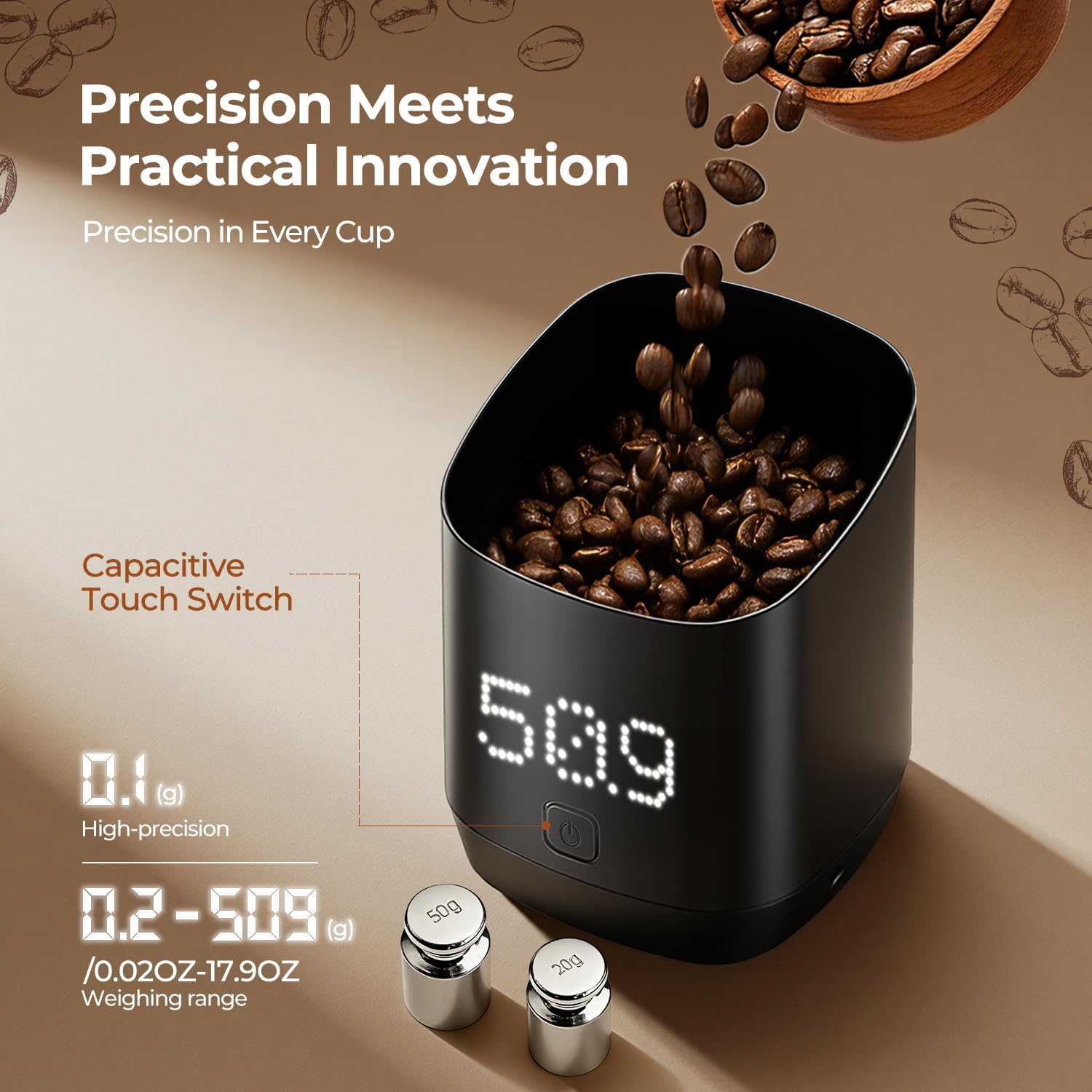
Digital Dosing Cup
Makes weighing beans faster and cleaner, with less mess around the grinder.
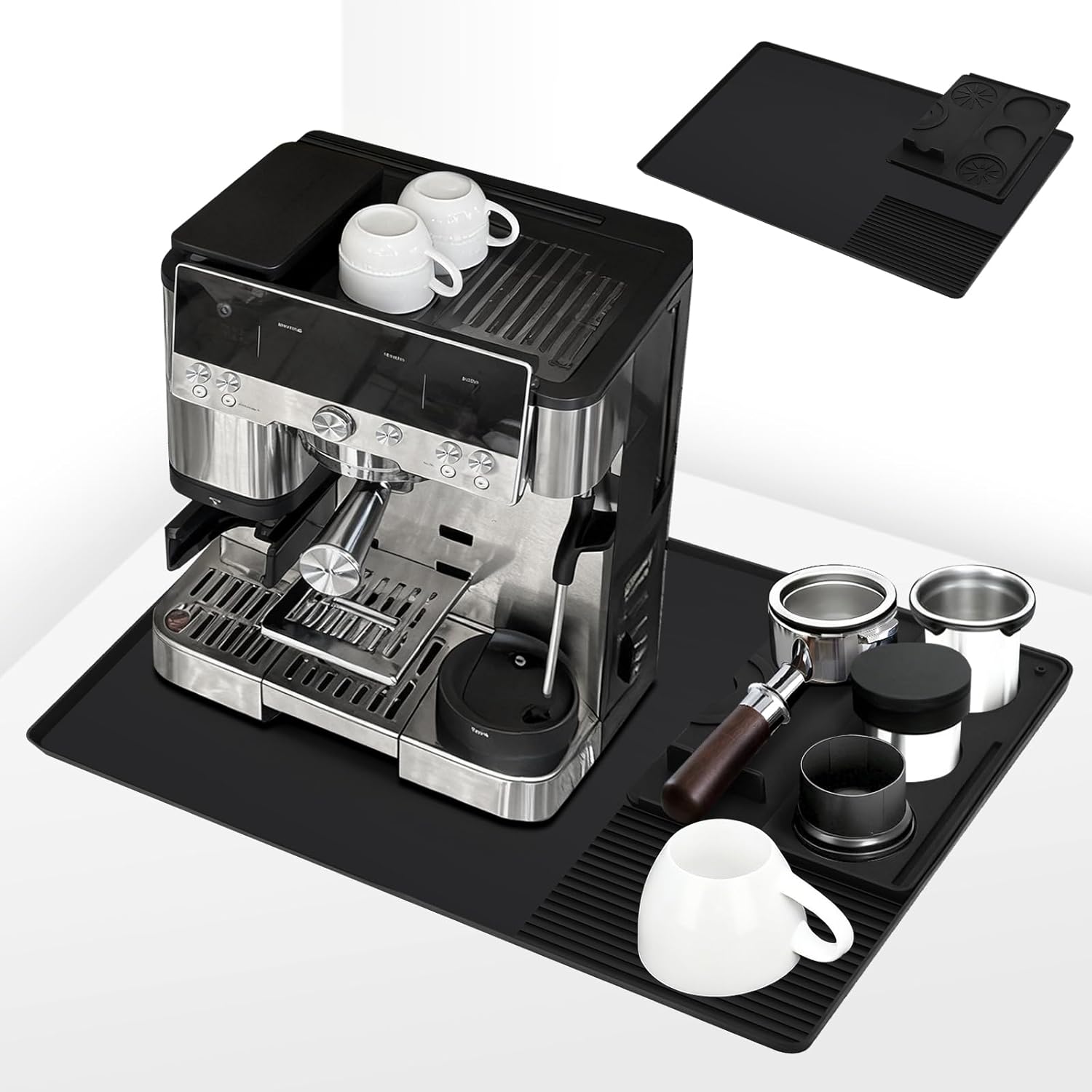
Silicone Mat
Protects your counter, catches spills, and gives your setup a cleaner working surface.

Vacuum Coffee Canister
Helps beans stay fresher longer by limiting air exposure after opening the bag.
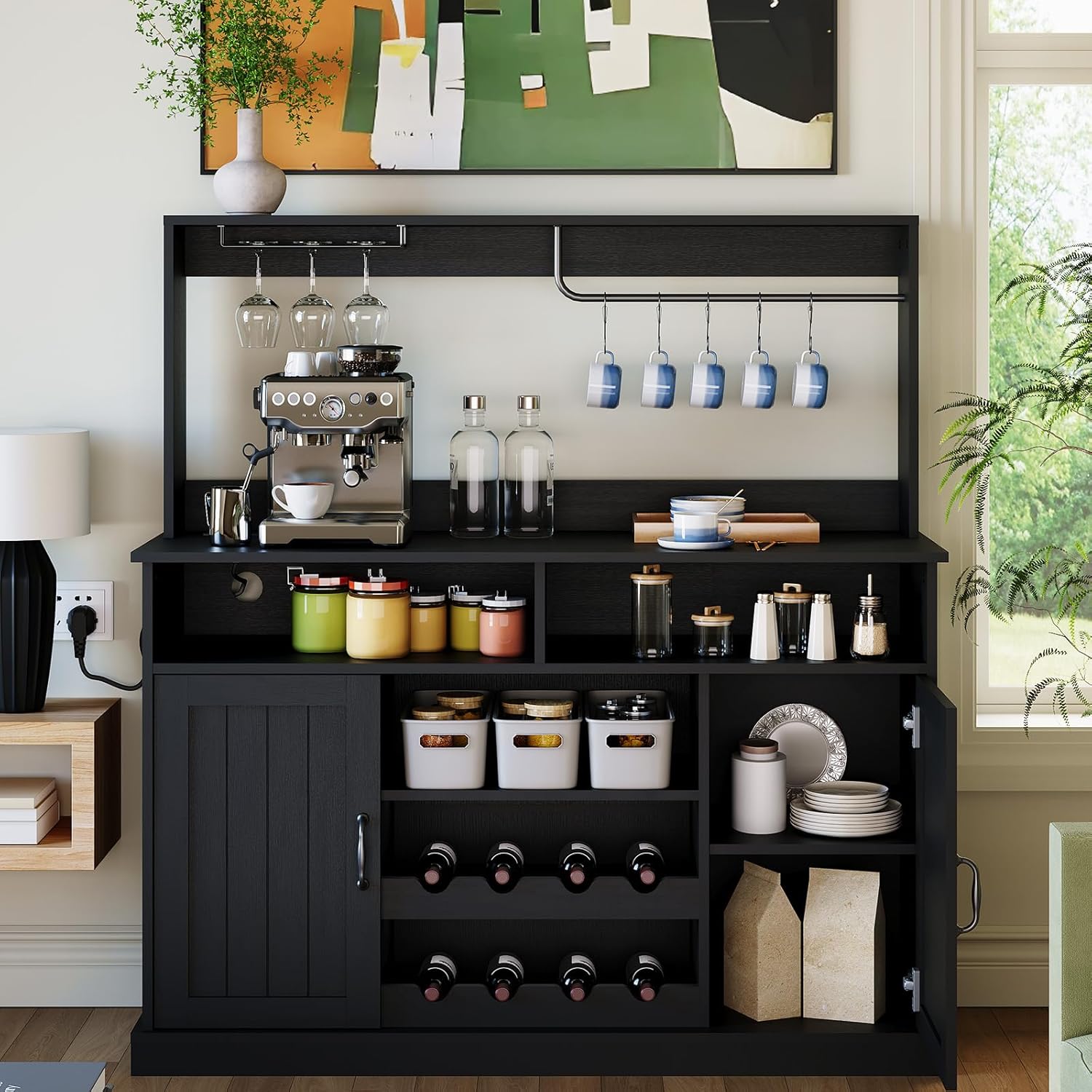
Farmhouse Coffee Bar Cabinet
Gives your machine, cups, beans, and accessories one dedicated home instead of cluttering the kitchen.
PID, pressure, and what the number controls
This is an HX machine, not a dual boiler with a brew PID. The PID manages the steam boiler temperature. That sets steam strength and the HX tube’s idle state which nudges the E61 group’s starting temperature. The objective is stability, not a chase for a particular brew digit on the face. Rocket’s own materials emphasize PID control, insulated boilers, and thick end plates as the way Cronometro holds a tight band. Treat the PID like a temperament dial for your week. Pick a sensible setpoint for your roast and milk volume and leave it there while you dial grind and ratio. Use the shot timer on every pull. Timing turns from a phone habit into a glance.
Cooling-flush done right
Every HX parks overheated water in the heat-exchanger during idle. The fix is short, repeatable, and boring in the best way. After a long pause, raise the lever and vent until the sputter smooths into a steady stream. Lower the lever, lock, and brew. On medium roasts this is quick. On dense light roasts add a beat. When you are pulling back-to-back shots you often skip the flush because the HX has not climbed. The boiler manometer guides the length. If the needle rests near the top of its cycle, add a second. If you just steamed and it is near the low point, go straight in. The PID tightens the band which makes that flush length more consistent day to day.
Tank or line at the same pace
Running tanked is painless. The reservoir is 2.5 liters and sits under the cup frame for fast cleaning. When you plumb in, the rotary pump earns its keep. Under flow you hear a quiet hum instead of a buzz. Pressure tracks smoothly, and the water-source switch makes the swap simple. Dealers and Rocket’s spec pages call out both water modes clearly and list the same boiler size and power across regions. That flexibility is why this model ages well. You can build the bar around it later without buying a new platform.
Ergonomics that move with you
Valve throws are short. Wand articulation is generous. The gauges are easy to read at a glance. The timer sits where your eyes already go. You can teach another person in your household to hit dose, yield, and time because the feedback is visible. Routine gets faster for everyone. That is how equipment pays you back.
Espresso performance
Stability you can count on
A good HX shot starts with a consistent starting state and a mapped flush. Cronometro gives you the tools to make consistency normal. Insulation and stout end plates keep the boiler on a tight loop. The rotary pump’s ramp feels gentle. The E61 mass and pre-infusion stage give you a predictable pour when distribution is honest. Once you build a short flush map for your roast style, the machine repeats. The support literature that calls out integrated pre-infusion and rotary quiet matches what you taste and hear. It is a steady platform, not a science fair.
Starting recipes that work
On a medium espresso blend, start with 18 grams in a standard 58 mm double basket. Distribute evenly and tamp level. After a long idle, perform the short flush until flow smooths, then lock and pull to 36 grams out in 27 to 31 seconds from pump on. Use the front timer. Keep dose and yield fixed while you move grind to center your time. For lighter roasts, extend the flush slightly, tighten grind, and run 1:2.2 in the low thirties. For darker roasts, keep the flush minimal and pull 1:1.9 while watching the finish. Those three tracks keep you in the machine’s comfort zone without ritual.
What the cup looks like when you are on target
The E61 profile is not a mystery. You get mid-range sweetness, rounded body, and a clean finish when you cut the tail at the right moment. Medium roasts show syrupy texture that carries into milk. Light roasts can be sweet and clear with a careful flush and a tight grind. The point here is predictable, drinkable espresso across blends and roast levels rather than edge-case clarity runs.
Milk steaming
Steam is why you still choose an HX for home. Giotto Cronometro R pairs an insulated 1.8 liter copper boiler with PID control, which holds a tight pressure band and delivers dry steam with quick recovery. The wand purges condensation cleanly. Stretch for six to eight seconds, then roll to temperature. Twelve-ounce pitchers are fast and calm. Sixteen-ounce pitchers for guests are doable in sequence. Raise the PID setpoint a hair for entertaining and bring it back down on straight-espresso days. Rocket and dealers call out the insulated boiler and PID for the Cronometro line, which is exactly the recipe you feel during service.
Wand hardware is practical. Multiple dealer pages specify a cool-touch wand, which makes wipe-and-purge cleanup safe and fast. Start with a two-hole tip while you learn the first eight seconds of air. Move to a higher-flow tip when your hands are consistent and you want throughput. The rotary pump means the machine stays quiet while you steam and brew together. Calm noise is not a trivial feature in an open kitchen.
Maintenance and reliability
Daily loop
Purge and wipe the steam wand after every pitcher. Water backflush at the end of the session. Detergent backflush weekly if you pull daily. Soak the screen and baskets on schedule. Replace the group gasket before it turns hard. Rocket’s user manuals and dealer resources for the Giotto and Mozzafiato platform cover these basics and keep new owners out of trouble. Regular cleaning is not a chore. It is the cheapest way to keep the machine at its best.
Water sets the service story
This machine will run tanked or plumbed. In tank mode, feed it filtered water with hardness and alkalinity in an espresso-safe band, or use a remineralized recipe that plays well with copper and brass. On a line, protect the machine with a softening cartridge that also stabilizes alkalinity. The PID and insulation do not change the chemistry. Prevent scale. Do not react to it later. Retail pages that talk about the plumb-in option and tank capacity are your cue to plan water the same day you plan counter space.
Access and parts
Rocket is a mainstream prosumer brand with wide dealer coverage. Support pages list parts diagrams for the Cronometro generation. The rotary pump, valves, thermostats, safety devices, and gauges are serviceable items most shops keep on hand. That footprint matters if you intend to keep the machine longer than your current grinder.
Programming and controls
Everything on the face earns its spot.
- PID boiler temperature. This sets the steam pressure band and the HX idle window. Use lower settings for dark roasts and straight shots. Pick a middle setting for everyday blends and routine milk. Bump it up a notch when you are entertaining or working very light roasts. Let the group follow any change before judging. Rocket’s page is explicit about PID control across Cronometro.
- Digital shot timer. The Cronometro timer appears when the pump engages and goes dark when it stops. Use it to lock time and yield. It is the smallest feature here and it drives the biggest consistency gain.
- E61 lever with integrated pre-infusion. The lever starts and stops the shot and uses the machine’s staged pre-infusion to wet the puck before full pressure arrives. Calmer extractions follow.
- Water-source switch. Tank today or direct water line tomorrow. That path is a physical switch, not a menu hidden in a screen.
- Brew-pressure baseline. The rotary pump and expansion valve should be set once to a sensible nine-bar baseline with a blind basket. Then leave it alone. Chasing pump pressure rarely fixes puck prep.
There is no app. There is no graph. You will make coffee, not slides.
Bench workflow: from unboxing to a calm service
1) Placement and water
Set the machine where the steam wand can swing and you can pull the portafilter straight. If you run tanked, rinse and fill the 2.5 liter reservoir and seat it fully. If you plan to plumb in, use a softening cartridge within spec and connect the braided line. Flip the water-source switch under the frame to match the setup. Multiple spec pages confirm the dimensions, weight, and water options so you can measure once and avoid surprises.
2) Warm-up
Lock an empty portafilter in the group. Power on. Expect practical readiness after 15 to 20 minutes for routine shots. Purge a quick burst on the wand as the boiler approaches pressure to clear condensation. If you are tasting across coffees, give the metal a few extra minutes to saturate. Your first shot will taste like the third.
3) PID baseline
Pick a middle setpoint and brew three shots at 18 g in, 36 g out, 27 to 31 seconds from pump on. Use the front timer instead of a phone. Keep dose and yield fixed while you walk grind into time. You are training the grinder and yourself more than the machine.
4) Light-roast path
Raise the PID one small step, extend the initial flush a beat after a full idle, tighten the grind, and run 1:2.2 in the low thirties. If astringency creeps in, cut the finish earlier and revisit grind.
5) Milk cadence
Pull your shot, purge a quick burst to clear condensation, stretch for six to eight seconds, roll to temperature, wipe, purge. For larger pitchers and guests, increase the boiler setpoint a notch the session before and let the group follow. The insulated boiler and PID are there to keep this pattern steady.
6) Cleaning loop
Water backflush at session end. Detergent backflush weekly for daily users. Soak the screen and baskets on schedule. Keep the reservoir clean if you run tanked, and change inline cartridges on time if you are plumbed. Rocket’s manuals and dealer resource pages make the tasks simple.
Competitive comparisons
ECM Technika V Profi PID
Technika V Profi PID is the closest rotary-pump HX peer. It also uses a PID-managed steam boiler, dual gauges, a rotary pump, and a switchable tank-to-line path. ECM highlights a stainless, insulated boiler and a tidy PID with timer. Technika is a clean alternative if you want stainless boiler construction in the same class. Choose by local support, PID interface, and your preference for casework shape.
Profitec Pro 500 PID
Pro 500 PID is a stainless-boiler HX with an external PID and an integrated shot timer on recent revisions. It runs a vibration pump and is tank only. You save money and lose rotary calm and plumbing. If you will never plumb in and you can live with a vibe pump, Pro 500 PID is a rational value. If you want rotary quiet and the option to hardline water, Giotto Cronometro R is the longer runway.
Quick Mill Andreja Premium Evo
Andreja is a vibe-pump HX with a brass boiler and a Sirai pressurestat on many trims. It delivers strong steam and a classic routine. It does not bring a rotary pump or a standard plumb-in path in several regions. If you like a pressostat-only face and you do not need plumbing, Andreja keeps cost down. If rotary quiet, PID control, and water flexibility are priorities, the Giotto R earns its premium.
Rocket Mozzafiato Cronometro R
This is the sister machine with flat side panels. Internals track one-to-one with the Giotto R. Boiler size, PID, shot timer, rotary pump, and water options are shared. Choose Mozzafiato for tighter width and a more minimal silhouette. Choose Giotto for the iconic angled panels and a slightly wider stance.
ECM Synchronika and Lelit Bianca V3
Both are dual boilers with independent brew PIDs. They remove the cooling-flush habit and unlock pressure-profiling in Bianca’s case. They win if you live at light roasts and want degree-led control. They cost more and add complexity. If your mornings are milk-forward and you value rotary quiet in an HX workflow, Cronometro R remains the sensible choice.
Real-world numbers and notes
- Boiler and power. 1.80 liter insulated copper HX. 1350 W at 220–240 V and at 115 V per Rocket’s spec.
- Group and pre-infusion. E61 with integrated pre-infusion called out by Whole Latte Love.
- Water path. Tank or direct water line via a physical source switch.
- Reservoir capacity. 2.5 liters documented across retailer spec sheets.
- Dimensions and mass. 335 × 420 × 400 mm. 27.8 kg.
- Insulation and stability. Cronometro line specifies insulated boilers and 9 mm end plates for temperature stability.
- Warm-up in practice. Retailers cite 15–20 minutes to a consistent state.
- Cool-touch wand. Multiple dealer pages list Rocket’s no-burn wand on Cronometro units.
- Price snapshots, late 2025. US 2800 to 3050 dollars depending on promos and add-ons. UK 1829 to 1840 pounds. AU 4595 to 4999 dollars AUD. Canada about 4150 dollars CAD.
Strengths
- Rotary pump with tank-to-line flexibility. Quiet operation and an easy path to hardline water when your bar grows.
- PID and insulated boiler. Tighter steam band and predictable HX behavior over long sessions.
- Digital shot timer on the face. Simple, always visible, and used every day to hold time and yield.
- Integrated pre-infusion in a proven E61 group. Calmer extractions when puck prep is honest.
- Compact prosumer footprint with readable gauges and cool-touch wand. Real usability on a real counter.
Trade-offs
- HX cadence remains. You will still perform a short cooling flush after long idle for sensitive straight shots. The PID tightens. It does not erase.
- Price over vibe-pump peers. Rotary hardware and plumbing support increase spend and mass.
- Copper boiler. Copper is standard in this class and steams beautifully. Buyers who prefer stainless on principle will look at ECM’s rotary HX sibling.
Scores
- Build quality: 9.1
- Temperature stability: 8.8
- Shot consistency: 8.9
- Steaming power: 9.2
- Workflow and ergonomics: 9.1
- Maintenance and serviceability: 8.9
- Value: 8.7
Total: 9.0
Verdict
Rocket’s Giotto Cronometro R is the sensible rotary-pump HX that a lot of kitchens actually need. It is quiet, fast, and predictable. The PID sets a steam-pressure band you can sit in for months. The insulated boiler and thick end plates keep that band tight. The E61 group gives you the lever feel and the integrated pre-infusion that help make bottomless work uneventful. The digital shot timer is the smallest feature that delivers the biggest consistency jump because it takes timing away from your phone and puts it right next to your hand. The water path is the long-term value. You can run tanked today and move to a plumbed installation later without swapping platforms. If you will never plumb in and you can live with a vibration pump, you can save money with a different HX. If you want rotary calm, an easy water upgrade, and the Cronometro control stack in a compact chassis with real steam, this machine earns its space.
Nothing about it is fussy. You warm up correctly. You map a small flush after idle. You protect it with appropriate water. Then you pull balanced shots and rip through milk with a wand that wipes clean in a second. That is the point.
TL;DR
Rotary-pump E61 heat exchanger with a 1.8 liter insulated copper boiler, PID boiler control, and a digital shot timer on the face. Runs from a 2.5 liter tank or a direct water line via a simple switch. Dimensions 335 by 420 by 400 mm and 27.8 kg. Typical late-2025 pricing sits around 2800 to 3050 dollars in the US, 1829 to 1840 pounds in the UK, 4595 to 4999 dollars AUD in Australia, and about 4150 dollars CAD in Canada. It is quiet, steams hard, and repeats shots once you map a short cooling flush after idle.
Pros
- Rotary pump calm with tank or plumbed operation
- PID-managed boiler with insulated construction for steadier HX behavior
- Front digital shot timer that improves daily consistency
- Strong steam and quick recovery from a 1.8 liter boiler
- Integrated pre-infusion in a proven E61 group
Cons
- Requires a brief cooling flush after long idle
- Costs more than vibration-pump HXs
- Copper boiler will not satisfy shoppers who want stainless everywhere
Who it is for
- Home baristas who want E61 lever feel with rotary quiet and a plumb-in path
- Milk-forward households that value strong steam and back-to-back capacity
- Buyers who prefer a simple, durable control stack with a PID and shot timer instead of a menu maze
- People who will actually use the flexibility of tank today and line tomorrow, not just talk about it
Glanceable specs
- Group. E61 with integrated pre-infusion and 58 mm portafilters.
- Boiler. 1.8 L insulated copper heat-exchanger. 9 mm end plates. 1350 W.
- Pump. Rotary, quiet operation, adjustable expansion valve.
- PID and timer. Boiler temperature control, ECO behavior, front digital shot timer that lights during brewing.
- Gauges. Boiler and pump pressure, large dials.
- Water. 2.5 L tank or direct water line via a physical switch.
- Size and weight. 335 × 420 × 400 mm. 27.8 kg.
- Typical price, late 2025. US 2800 to 3050 USD. UK 1829 to 1840 GBP. AU 4595 to 4999 AUD. Canada about 4150 CAD.
We’ve categorized the best espresso machines for every kind of buyer
Find the right shortlist faster, whether you want convenience, a beginner-friendly setup, a smaller footprint, or better value at a given budget.
Best Superautomatic Espresso Machines
One-touch picks for speed and convenience.
Best Espresso Machines for Beginners
Easy-to-use machines with a smoother learning curve.
Best Small Espresso Machines
Compact machines for tighter kitchens and counters.
Best Espresso Machines With Built-In Grinder
All-in-one options with fewer extra pieces to buy.
Best Cheap Espresso Machines Under $500
Budget picks that still make sense for real espresso.
Best Prosumer Espresso Machines Under $1000
More serious machines with stronger value for the money.
Best Single Boiler Espresso Machines
Simple, space-saving picks for espresso-first routines.