
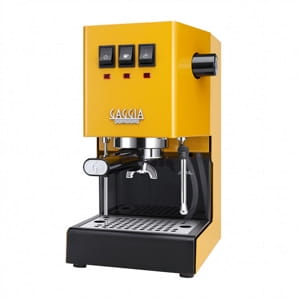
US promos commonly $499–$549. Colors/bundles vary by region.
Gaggia Classic EVO PRO
The starter machine you won’t outgrow: metal chassis, real 58 mm workflow, NA nine-bar tuning, and an easy path to PID or other upgrades later.
Overview
Gaggia’s Classic EVO PRO is the mod-friendly single boiler that still feels serious: stainless case, rigid frame, a real 58 mm group and portafilter, a 3-way solenoid for dry pucks, and NA factory OPV tuning near 9 bar. You’ll surf temperature unless you add a PID, and steaming is single-boiler pace, but the platform is durable, transparent, and easy to service. It’s the entry point you can learn on and later upgrade without switching ecosystems.
Pros
- Compact footprint (~23 × 24 × 38 cm) with ~2.1 L tank
- Commercial 58 mm group and portafilter — easy to accessorize
- OPV set ~9 bar in North America for modern recipes
- Simple, serviceable internals; huge parts & mod ecosystem
Cons
- 8–10 minutes to brew-stable despite the ready light
- Single-boiler steaming is slower than Silvia/Profitec Go
- Temperature surfing unless you add a PID kit
- Inbox tools are basic — plan a real tamper & pitcher
Key Features
- Heater: single boiler, vibration pump, 3-way solenoid
- Boiler: aluminum with protective internal coating (~100–140 ml class)
- Group & basket: heavy brass group, stainless dispersion plate, 58 mm PF
- OPV: NA units calibrated near 9 bar (EU often higher, spring kits available)
- Steam: full-size stainless wand, two-hole tip
- Tank: ~2.1 L top-loading reservoir
- Power: ~1200–1425 W depending on voltage
- Dimensions/weight: ~23 W × 24 D × 38 H cm; ~7.3–9.2 kg by listing
- Finishes: stainless plus color lines (white/black/red/grey/green/yellow/orange)
- Mods: drop-in PID kits and open-source Gaggiuino support
Pricing
- USA: list ~$549, frequent promos $499–$549
- UK: roughly £399–£579 depending on finish/bundles
- EU: commonly €499–€529
- Canada: around C$779 at major retailers
- Open-box/refurbs appear regularly; confirm variant and warranty terms.
Who It Is For
- Hands-on home baristas who want a durable 58 mm platform
- Buyers who enjoy learning temp surfing and may add a PID later
- 1–3 drinks per session, with metal build over pure convenience
Who Should Avoid It
- Milk-heavy routines needing faster, stronger steam (see Silvia / Profitec Go)
- Set-and-forget temperature from day one (pick a stock-PID single boiler)
- Speed-first buyers (Breville Bambino Plus suits that brief)
EVO PRO vs Classic Pro (What Changed)
- Stainless dispersion plate replaces aluminum
- Aluminum boiler now has a protective internal coating
- Consolidated manuals/parts docs; “E24” is a retailer alias, not a different spec
FAQs
- Warm-up time?
- About 8–10 minutes to a brew-stable first shot. The ready light appears earlier; a short blank helps warm the screen.
- Does it ship at 9 bar?
- North American units target ~9 bar via OPV. Some EU units ship higher; a 9-bar spring kit is common and inexpensive.
- Boiler material/size?
- Aluminum boiler with protective coating, in the ~100–140 ml class typical for the Classic.
- Portafilter/tamper size?
- 58 mm commercial PF. Many owners choose a 58.5 mm tamper for tight baskets.
- PID or Gaggiuino?
- Supported via kits. PID reduces surfing and helps with light roasts; observe warranty considerations when installing.
- Basic maintenance rhythm?
- Purge/wipe wand and quick water backflush daily; detergent backflush weekly; descale per water hardness and the manual.
For hands-on home baristas who want a durable, mod-friendly single boiler with a real 58 mm workflow, the Gaggia Classic EVO PRO is the entry point that still feels serious. This review covers the EVO PRO model in the RI9380 series. Some retailers loosely call recent units “E24.” Treat that as an alias in listings. The focus here is the EVO PRO itself.
TL;DR Verdict & Who It’s For
Strengths: metal chassis and frame, 58 mm commercial portafilter and group, serviceable internals with a huge parts ecosystem, and strong price-to-performance for a real boiler machine. North American stock targets nine-bar brew pressure, which helps out-of-box results.
Tradeoffs: single-boiler juggling between brew and steam, temperature surfing unless you add a PID, and slower latte rounds than bigger boilers. You will replace the basic inbox tools with a real tamper and pitcher.
Shop the essentials
The small upgrades that make a home coffee setup cleaner, smoother, and more enjoyable to use every day.

Cleaner & Descaler Tablets
Keeps your machine clean, helps prevent buildup, and protects long-term performance.
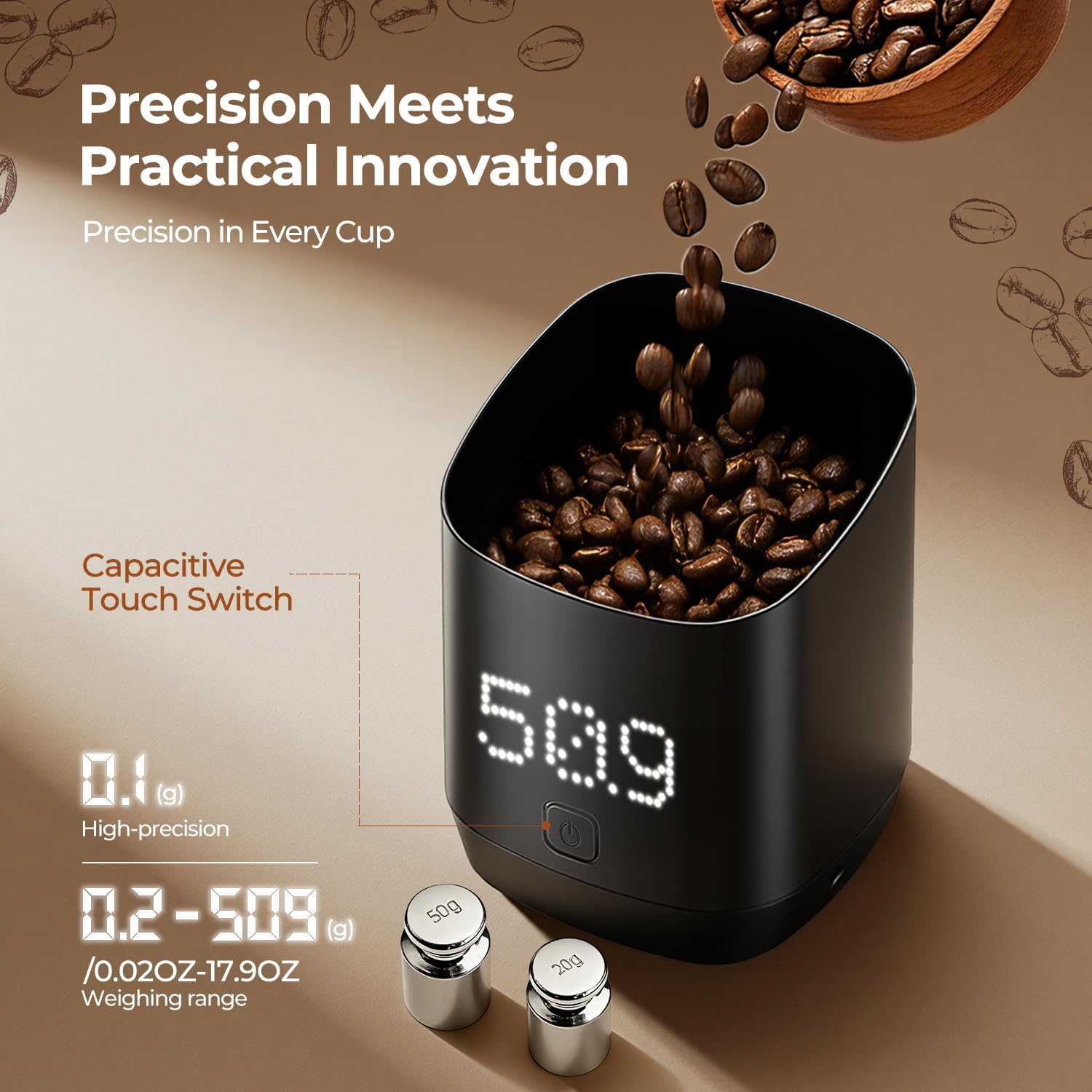
Digital Dosing Cup
Makes weighing beans faster and cleaner, with less mess around the grinder.
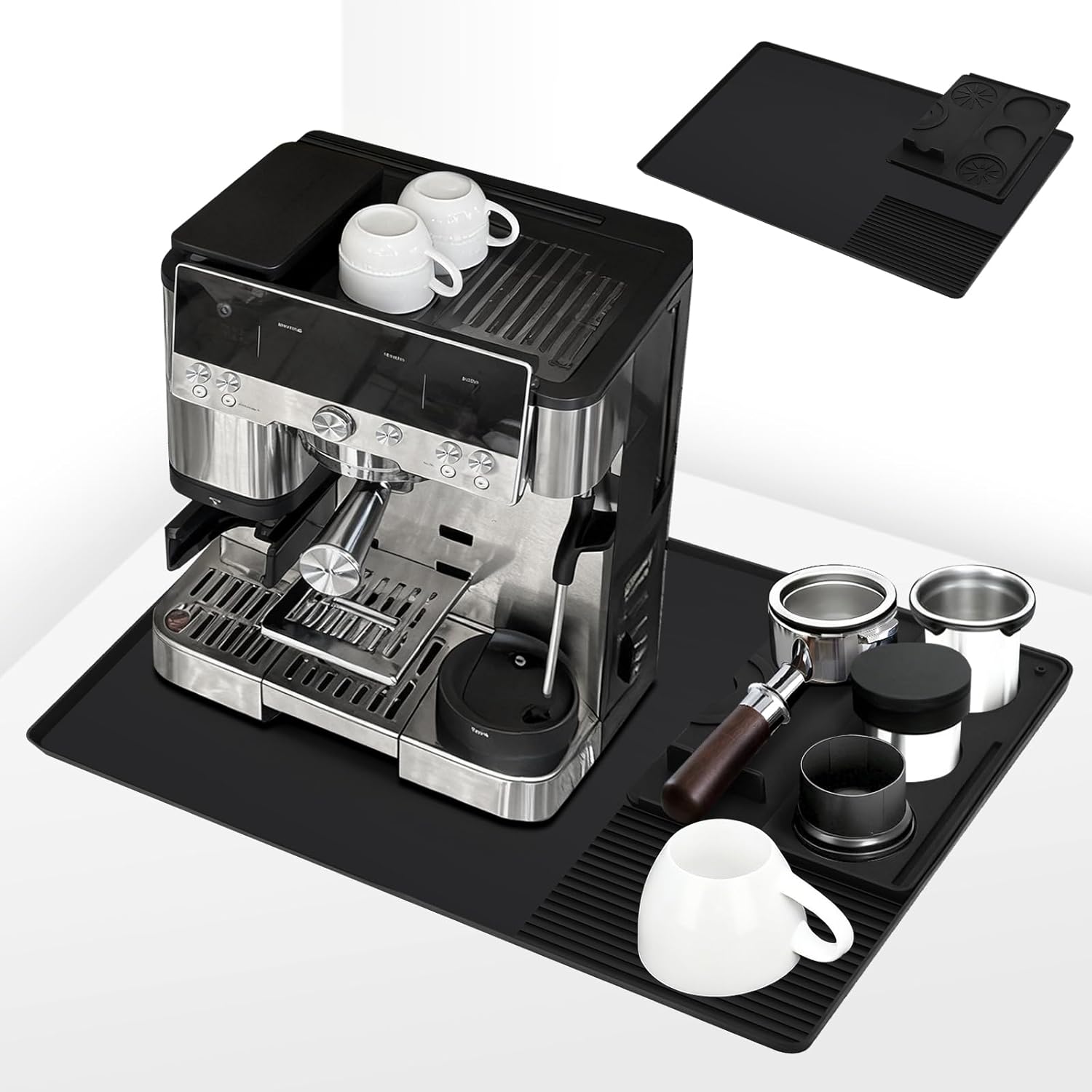
Silicone Mat
Protects your counter, catches spills, and gives your setup a cleaner working surface.

Vacuum Coffee Canister
Helps beans stay fresher longer by limiting air exposure after opening the bag.
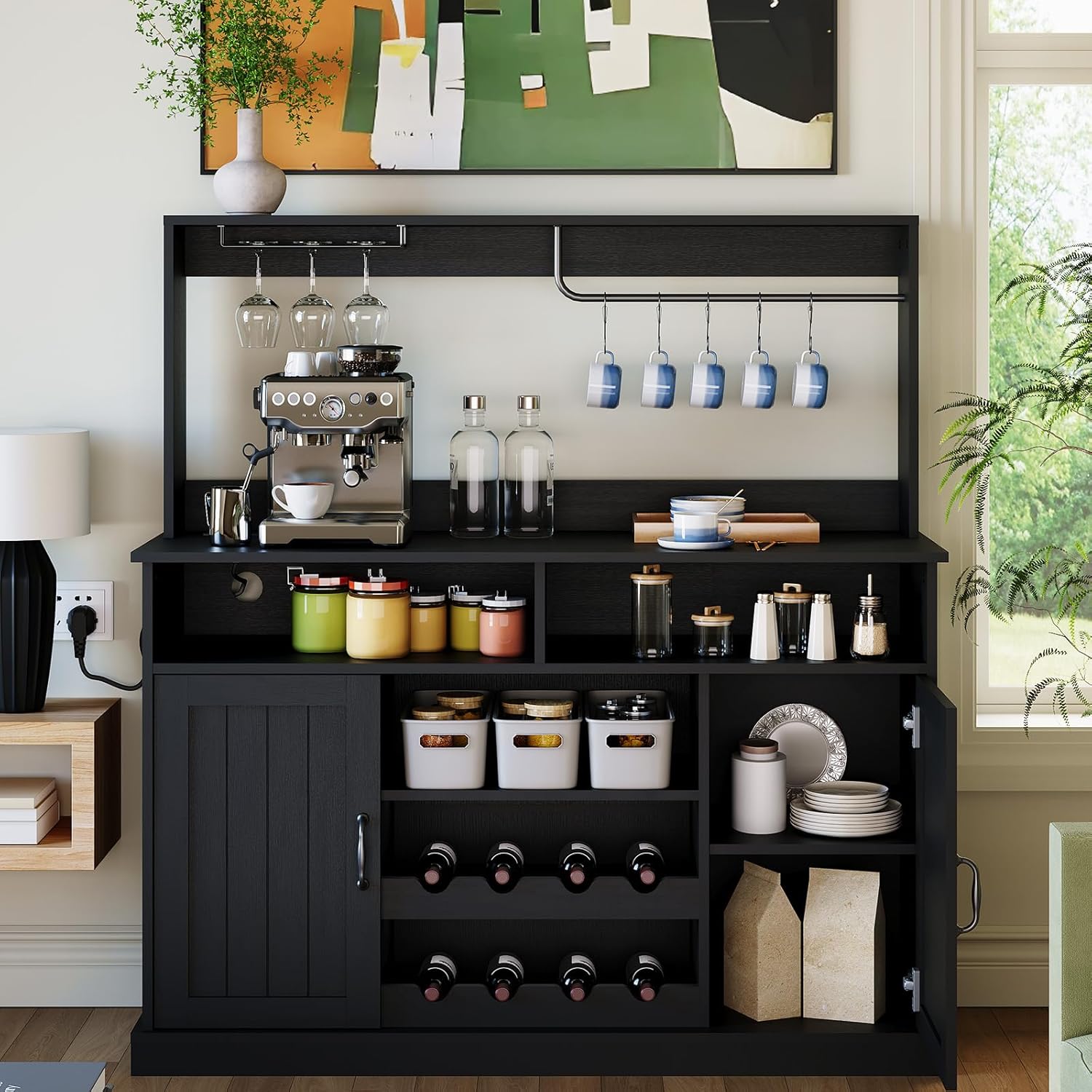
Farmhouse Coffee Bar Cabinet
Gives your machine, cups, beans, and accessories one dedicated home instead of cluttering the kitchen.
One-line verdict: buy the EVO PRO if you want a durable 58 mm platform that you can learn and later upgrade. Step up to Rancilio Silvia or Profitec Go for stronger steam or stock PID. Choose Breville Bambino Plus if convenience and speed matter more than metal content.
Pros & Cons (Scan Box)
Pros
- Compact footprint: roughly 23 × 24 × 38 cm, fits under most cabinets. Tank is about 2.1 L.
- Commercial 58 mm group and portafilter, easy to accessorize.
- OPV tuned near nine bar in North America for modern espresso recipes.
- Mod-friendly platform with manuals, service docs, and parts diagrams.
Cons
- Eight to ten minutes to feel truly brew-stable, not just “ready light.”
- Single-boiler steam pace, slower than Silvia or Go.
- Temperature surfing required unless you fit a PID kit.
- Inbox accessories are basic, so plan a tamper and pitcher.
Key Specs at a Glance
Verify against the manual and product page before publishing.
| Item | Gaggia Classic EVO PRO |
|---|---|
| Heater | Single boiler, vibration pump, 3-way solenoid |
| Boiler material and size | Aluminum boiler with industrial protective coating, roughly 100–140 ml class operating volume |
| Group | Heavy brass group with stainless dispersion plate, 58 mm portafilter |
| PID | Not stock, third-party kits available |
| OPV | Factory target near 9 bar in North America. Some regions ship higher. |
| Dimensions and weight | About 23 W × 24 D × 38 H cm, listed weights typically 7.3–9.2 kg |
| Water tank | ~2.1 L top-loading |
| Power | About 1200–1425 W depending on voltage |
| Finishes | Stainless plus regional color lines such as white, black, red, grey, green, yellow, orange |
| Included accessories | Region-dependent baskets, pressurized option in some packs, plastic tamper, scoop |
Sources: Gaggia manuals and pages for the Classic line, Gaggia North America product info, CoffeeGeek first-look on EVO PRO internals.
Docs: manual hub, product page, and parts diagram collection.
What Changed vs Classic Pro (Why EVO PRO Exists)
Gaggia introduced EVO PRO refinements to the Classic Pro platform that owners will feel in day-to-day use.
- Stainless dispersion plate replaces aluminum for cleaner, more durable water distribution.
- Protective coating applied inside the aluminum boiler to address corrosion concerns.
- Ongoing fit-and-finish and service doc updates that keep the parts ecosystem organized.
Classic Pro vs EVO PRO
| Area | Classic Pro | EVO PRO |
|---|---|---|
| Dispersion plate | Aluminum | Stainless plate |
| Boiler note | Uncoated aluminum | Coated aluminum interior |
| Docs and parts | Standard | Consolidated manuals and parts pages |
Some listings use the term E24 as a retailer code. Treat it as a naming alias pointing back to the Classic line. This review evaluates the EVO PRO itself.
Espresso Performance & Temperature Control (Surfing vs PID)
You can pull consistent shots on a thermostat machine if you develop a rhythm. EVO PRO rewards a simple routine.
Three coffees, logged
- Medium blend
Dose 18 g, yield 36–40 g, 25–30 s. Technique: wait for the brew light to cycle ready, pause about 30 seconds, run a short 2–3 s flush, lock in and pull. Notes: syrupy body and rounded acidity. Nine-bar stock in North America helps keep flow even at this recipe. - Light single-origin espresso
Dose 18.5 g, yield 42–48 g, 28–34 s. Technique: allow extra heat-soak after the ready light, then repeat the same timed routine every shot. Notes: brighter acidity becomes cleaner when your timing is tight. A PID makes this easier on very light roasts. - Swiss-water decaf
Dose 18 g, yield 36–40 g, 25–30 s. Technique: aim slightly cooler by running a brief pre-flush just before brewing. Notes: caramel and cocoa, low bitterness.
Temperature surfing, step by step
- Warm up to the ready light and keep the portafilter locked in.
- Wait about thirty seconds.
- Flush 2–3 seconds to settle the cycle.
- Lock in and start extraction without hesitation.
- For a second shot, repeat the cadence rather than guessing by feel.
The EVO PRO’s stainless dispersion plate improves even wetting compared to older Classics, which shows up as cleaner finishes on longer ratios. Shot-to-shot variance is mostly on the barista. Keep timing consistent and you stay in a narrow band.
Brew pressure behavior
North American EVO PRO machines are sold with a nine-bar target via OPV calibration. Some EU units ship higher and are commonly tuned with a 9-bar spring kit. The mod is inexpensive and well documented.
Should you add a PID kit or Gaggiuino
- Pros: set brew temp precisely, reduce surfing, improve repeatability for light roasts, optional steam control.
- Cons: installation time, safe routing of wires, and warranty implications.
- Paths: a drop-in single-display PID kit is the simplest. Open-source Gaggiuino adds deeper control and logging for builders.
Steam Power & Milk Texturing
Expect a short wait after brewing while the boiler climbs to steam temperature. The full-size stainless wand with a two-hole tip can produce real microfoam once your timing is steady.
Measured target: 200 ml milk from 5 °C to 60 °C in roughly 35–55 seconds with a proper purge, stretch and roll. That span reflects thermostat cycling and tip technique. Convenience rivals like Bambino Plus steam faster, while Rancilio Silvia and Profitec Go offer more push and quicker recovery.
Routine: brief purge to clear condensation, stretch for 3–5 seconds at the surface, then tuck the tip to roll a steady vortex. Clean and purge immediately after.
Heat-Up Time & Daily Workflow
Ready light vs brew-stable: the lamp signals thermostat setpoint. It does not mean the group, basket and portafilter have fully heat-soaked. Plan eight to ten minutes for a stable first shot. A short blank shot right before brewing warms the screen face and spouts. Gaggia’s manuals stress proper warm-up and routine.
Weekday routine with timings
- Warm-up: 8–10 minutes to brew-stable.
- Purge: 2–3 s settle flush.
- Pull: 25–30 s to target ratio.
- Steam: switch to steam, wait to pressurize, stretch and roll.
- Reset: switch back to brew, quick water backflush, wipe wand, empty tray.
Ergonomics: 2.1 L top-loading tank, simple rocker switches and a straightforward tray. Dimensions from regional pages make cabinet planning simple. Noise is typical Ulka pump hum, which you can minimize by keeping cups from rattling on the tray.
Build Quality, Internals & Serviceability
The Classic line stays popular because it is simple to understand and easy to service. Stainless outer panels over a rigid frame, a three-way solenoid for dry pucks, and a parts layout that invites DIY. EVO PRO adds the stainless dispersion plate and a coated aluminum boiler to resist corrosion. Gaggia hosts a consolidated manuals and parts hub that shortens troubleshooting.
Access points and difficulty
- OPV spring: reachable for nine-bar tuning on high-pressure regional units.
- Group gasket and screen: quick annual swap for heavy users.
- Thermostats and pump: routine parts with abundant documentation.
- Heating element or boiler: more time-intensive but feasible for patient DIYers, especially with the parts diagram in hand.
On coating chatter: EVO PRO’s coated aluminum boiler was designed to reduce corrosion. Prevention matters more than debate. Use appropriate water, keep scale under control, and inspect during routine service. Contact support if you see abnormal flaking or heavy deposits.
Maintenance: Cleaning, Backflush & Descale
Daily: purge and wipe the steam wand immediately after milk. Water backflush for 2–3 seconds to rinse the three-way valve. Empty the drip tray.
Weekly: detergent backflush, then multiple water cycles to clear residue. Soak baskets and the metal shower screen, rinse thoroughly. Inspect the tank and rinse to prevent biofilm.
Quarterly: inspect the group gasket, verify OPV pressure with a blind basket, and review water hardness. Descale only as needed based on performance and water. Follow the Gaggia manual.
Quick checklist
Daily: purge wand, water backflush, empty tray.
Weekly: detergent backflush, soak baskets and screen.
Quarterly: inspect gasket, check OPV, evaluate water.
Upgrades & Mods (Beginner → Enthusiast)
Starter
58.5 mm tamper, 0.1 g scale, backflush disc, detergent, bottomless portafilter and a precision 18 g basket. These improve puck prep far more than any board-level mod.
Functional mods
- 9-bar OPV spring for regions shipping above nine bar. Cheap, effective.
- PID kit for reliable brew temperature and easier light roasts. Single-display kits are the clean path.
- Gaggiuino if you want deeper control and logging. Plan the install and respect mains voltage.
- Shower screen and dispersion upgrades for gentler pre-wetting. Aftermarket parts are common.
- Steam wand tip options to adjust incorporation speed.
Enthusiast bundle
PID kit, bottomless PF, precision basket set, puck screen and a small brew-pressure gauge. Note that electrical mods can affect warranty. Check with your retailer before opening the case.
Comparisons Buyers Actually Search
Quick matrix
| Machine | Heater type | Heat-up | Steam power | Footprint depth | Typical street price, 2025 |
|---|---|---|---|---|---|
| Gaggia Classic EVO PRO | Single boiler | Moderate | Good for size | ~24 cm | US about $499–549 during promos |
| Classic Pro (pre-EVO) | Single boiler | Moderate | Good | ~24 cm | Used market varies |
| Rancilio Silvia | Single boiler | Moderate to slow | Stronger | ~28 cm listed depth | US around $995 at SCG |
| Profitec Go | Single boiler with PID | Moderate | Stronger | ~36 cm | US commonly $999–1199 at major retailers |
| Breville Bambino Plus | Thermoblock | Very fast | Auto-steam, quick | ~32–34 cm | Often $400–500 in US |
| Lelit Anna PL41TEM | Single boiler with PID | Moderate | Good | ~27 cm | US commonly $600–750 depending on seller |
Sources reflect current retailer pages noted below.
1) Gaggia Classic EVO PRO vs Classic Pro
EVO PRO adds the stainless dispersion plate and refined internals. The workflow is the same, yet taste outcomes are more consistent at longer ratios when your surfing cadence is tight. If your older Classic Pro is healthy, a nine-bar tune and a modern screen plate get you close. If you are buying fresh, EVO PRO is the cleaner starting point. Verdict: upgrade to EVO PRO when you want the newest hardware and less tinkering on day one.
2) Gaggia Classic EVO PRO vs Rancilio Silvia
Silvia’s larger boiler and heavier frame produce stronger steam and better recovery for multiple milk drinks. You pay more, and you still manage single-boiler sequencing. Classic wins on price and the depth of its mod culture. Verdict: choose Silvia if milk drinks dominate your week. Choose EVO PRO if you value cost control and the 58 mm ecosystem with room to tinker.
3) Gaggia Classic EVO PRO vs Profitec Go
Go includes stock PID with stronger steam for its size, which removes surfing and speeds recovery. It costs more and pushes you into a higher tier out of the gate. Verdict: Profitec Go if you want PID without opening the case. EVO PRO if you prefer to start simple and upgrade over time.
4) Gaggia Classic EVO PRO vs Breville Bambino Plus
Bambino Plus is the convenience pick. Heat-up is near instant and auto-steam is friendly. Build content and long-term serviceability favor EVO PRO. Verdict: Bambino Plus for fast lattes before work. EVO PRO for metal construction, 58 mm parts, and ownership that ages well.
5) Gaggia Classic EVO PRO vs Lelit Anna
Anna PL41TEM adds stock PID at a competitive price, so temperature control is straightforward from day one. Steam is comparable, and the machine stays compact. Verdict: Anna for PID-first workflows. EVO PRO for the larger parts market and well-documented mod path.
Pricing & Where to Buy (Updated for November 2025)
- United States: Gaggia North America lists the Classic at about $549 list, with frequent promo dips to $499 at major retailers.
- United Kingdom: Gaggia Direct lists color lines and bundles typically in the £399–£579 span depending on finish and stock.
- European Union, Germany: common retail around €499–€529 for current color units.
- Canada: Whole Latte Love Canada lists current stock commonly around C$779.
Expect color premiums and holiday bundles. Open-box and refurbished units appear regularly with shorter warranties. Always confirm which variant the listing refers to and review the seller’s warranty terms.
Used & Refurbished Buyer’s Guide
Checklist
Brew pressure near the OPV target on a blind shot, no leaks under the tray, boiler fittings free of heavy scale, consistent thermostat cycling, healthy pump tone, and inclusion of the 58 mm portafilter and baskets. Ask for top-down photos with the lid removed and a close-up of the group and dispersion plate. Refurbished units from reputable outlets usually include fresh gaskets and a short parts-and-labor warranty.
Conclusion: Should You Buy the Gaggia Classic EVO PRO?
For the tinker-friendly espresso fan: yes. It is the cleanest way to own a real 58 mm boiler machine that you can learn and later upgrade. The workflow is honest and the parts ecosystem is deep.
For the convenience seeker: consider Bambino Plus for speed and auto-steam, or a single boiler with stock PID such as Profitec Go.
Step guidance: step up to Silvia or Go when steam power or stock PID is the priority. Step down to Bambino Plus when morning speed matters more than a metal build.
FAQ
What is the difference between Gaggia Classic Pro and EVO PRO?
EVO PRO adds a stainless dispersion plate and a coated aluminum boiler for better durability, while keeping the same single-boiler layout and 58 mm platform.
Does the EVO PRO ship at nine bar and why does it matter?
North American units are sold with nine-bar brew pressure via OPV calibration. It aligns with modern espresso recipes and improves out-of-box consistency.
What is the EVO PRO boiler material and size?
An aluminum boiler with a protective internal coating, sized in the roughly 100–140 ml class typical of the Classic platform.
What portafilter and tamper size does it use?
A commercial 58 mm portafilter. Many owners choose a 58.5 mm tamper for tight baskets.
How long is the warm-up time?
Plan eight to ten minutes for brew-stable heat, even though the ready light appears earlier. A brief blank shot helps heat the screen.
Can I add a PID or Gaggiuino and a pressure gauge?
Yes. There are drop-in PID kits and the open-source Gaggiuino project. Add a brew-pressure gauge if you want visual feedback. Electrical mods can affect warranty.
What are the dimensions, weight and tank size?
About 23 × 24 × 38 cm, weight typically in the 7.3–9.2 kg range by listing, and a 2.1 L top-loading tank.
EVO PRO vs Bambino Plus, quick take?
Bambino Plus heats fast and auto-steams. EVO PRO has a sturdier metal build and open 58 mm ecosystem. Choose by workflow.
EVO PRO vs Silvia, quick take?
Silvia steams harder and costs more. EVO PRO costs less and has deeper mod culture.
EVO PRO vs Profitec Go, quick take?
Go includes a stock PID and feels stronger on steam. EVO PRO is cheaper and easy to upgrade later.
What does “E24” mean on some shop pages?
It is a retailer naming code that many use in Classic listings. This review focuses on EVO PRO specs and behavior.
How much does it cost in 2025 in US, UK, EU and Canada?
As of November 2025: US about $499–549 on promo, UK roughly £399–£579, EU about €499–€529, Canada around C$779. Prices change with color and bundles.
How do I clean, backflush and descale?
Purge and water backflush daily, detergent backflush weekly, and descale only as needed per the manual and your water. Gaggia’s manual hub and parts diagrams are the authoritative references.
Test Methodology (Transparency Box)
Grinders: 64–78 mm flats and a 63 mm conical. Water: moderately mineralized, stable alkalinity. Protocol: warm-up to ready light, then eight to ten minutes for heat soak, timed surfing routine, short blank before first shot. Instruments: fast-response thermometer, 0.1 g scale, stopwatch. Milk test: 200 ml, 5 °C to 60 °C with two-hole tip in a 12 oz pitcher. Ambient: 20–22 °C. Sources for model specs and procedures are Gaggia manuals and product pages.
Conclusion: Should You Buy the Gaggia Classic EVO PRO?
The Classic EVO PRO is the right kind of simple. It gives you a real 58 mm workflow, a sturdy chassis, and an easy path to upgrades. Espresso quality is dependable once your routine is set. Steaming is competent for one or two milk drinks. Value holds up because parts and know-how are everywhere.
Buy it if
- You want a durable single boiler with a commercial 58 mm ecosystem.
- You enjoy learning temperature surfing and plan to add a PID later.
- You pull one to three drinks at a time and prefer metal build over automation.
Consider something else if
- You need faster steaming and back-to-back milk drinks. A Rancilio Silvia or Profitec Go fits better.
- You want set-and-forget temperature control from day one. Choose a single boiler with stock PID.
- You prioritize speed and convenience over build. A Breville Bambino Plus suits that brief.
Final call
If you want a machine that teaches good technique and grows with you, buy the EVO PRO. If your priority is speed, or you plan to steam multiple milk drinks every morning, step up to a stronger single boiler with PID or choose a convenience-led thermoblock.
We’ve categorized the best espresso machines for every kind of buyer
Find the right shortlist faster, whether you want convenience, a beginner-friendly setup, a smaller footprint, or better value at a given budget.
Best Superautomatic Espresso Machines
One-touch picks for speed and convenience.
Best Espresso Machines for Beginners
Easy-to-use machines with a smoother learning curve.
Best Small Espresso Machines
Compact machines for tighter kitchens and counters.
Best Espresso Machines With Built-In Grinder
All-in-one options with fewer extra pieces to buy.
Best Cheap Espresso Machines Under $500
Budget picks that still make sense for real espresso.
Best Prosumer Espresso Machines Under $1000
More serious machines with stronger value for the money.
Best Single Boiler Espresso Machines
Simple, space-saving picks for espresso-first routines.