
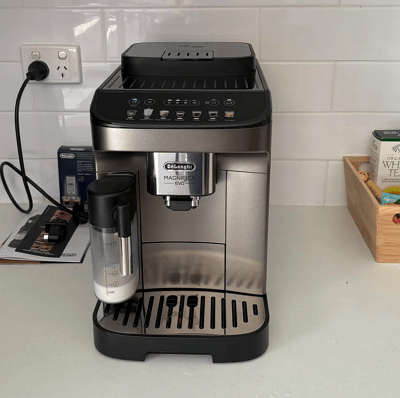
$899). Pricing varies by retailer and color.
De’Longhi Magnifica Evo (ECAM29084SB)
Seven-drink LatteCrema platform that nails cappuccinos and lattes with near-zero learning curve—best value around $899 if you can live with grinder noise and regular descaling.
Overview
Magnifica Evo is De’Longhi’s sweet-spot super-automatic: steel conical grinder (13 steps), LatteCrema milk carafe, seven one-touch drinks, and a removable brew group. Expect chocolate-leaning espresso and fast, thick milk foam with minimal effort. Trade-offs: brief but loud grinding and more frequent descales if your water is hard. At common sale prices near $549, it’s one of the best values for milk-drink households.
Pros
- LatteCrema carafe makes dense, glossy foam in ~20s
- Steel conical burrs (13 settings) outperform many ceramic rivals
- Seven one-touch drinks incl. Over Ice and My Latte
- Removable brew group = easy deep cleaning & longer life
- Strong value around $899 vs Philips/Jura competitors
Cons
- Loud grinder (~vacuum-level) for a few seconds per drink
- No milk-temperature control (runs hot for some tastes)
- Frequent descaling in hard water; 30–45 min cycle
- Max dose ~12–13g limits ultra-strong shots
- Early failure reports exist—buy from reputable retailers, register warranty
Main features
- Seven one-touch drinks: espresso, coffee, cappuccino, latte macchiato, Over Ice, hot water, My Latte
- LatteCrema Hot Technology carafe with auto-clean & fridge storage
- 13-step steel conical grinder (~12–13g internal dosing)
- Three strength levels (changes grind time) & three coffee temp settings
- Stainless-lined thermoblock, 15-bar pump, pre-infusion logic
- 1.8 L front-access water tank, 250 g bean hopper
- Grounds bin ~14 pucks (empty every 2–3 days recommended)
- Removable brew group for sink rinse & periodic lubrication
- Soft-touch icon interface with color LEDs & backlit drink buttons
- Over Ice routine for iced-style coffee; My Latte uses all milk in carafe
Glanceable specs
Pricing & availability
Prices swing with events (Black Friday, Prime Day). Verify variant & included accessories.
Who it’s for
- Milk-drink households (lattes, cappuccinos, macchiatos) wanting one-touch ease
- Pod/drip upgraders who value consistency over tinkering
- Buyers chasing fast ROI vs café visits at ~$549 sale price
- Owners willing to rinse the milk path daily and clean the brew group weekly
Who should avoid it
- Espresso purists seeking 18–20 g doses and full manual control
- Noise-sensitive homes needing near-silent grinding
- Maintenance-averse users in hard-water areas (frequent descaling)
- Users wanting adjustable milk temperature or latte-art wand texture
- High-volume households/offices (10+ drinks daily)
FAQs
- Is it worth it around $549?
- Yes—arguably best value sub-$1,000 for one-touch milk drinks; ROI in ~5–6 months for daily latte buyers.
- How loud is the grinder?
- About vacuum-cleaner loud for ~5–7 seconds per drink (the most common complaint).
- LatteCrema vs Philips LatteGo?
- LatteCrema makes creamier foam; LatteGo is easier to clean (no tubes) and needs far fewer descales with AquaClean.
- How often will I descale?
- Depends on water hardness: every 1–2 months in hard water; much less often with soft/filtered water.
- Plant-based milks?
- Works, but milk runs hot and there’s no temp control—oat/almond can overheat more easily.
- Does it have Coffee Link or Bean Adapt?
- No—those features are for higher-tier De’Longhi models. Adjust grind/strength manually.
De’Longhi is one of the few mass-market Italian brands that keeps pushing super-automatics forward with real, user-facing upgrades. The Magnifica Evo is the lineup’s practical middle ground: a clear step up from the Magnifica Start in milk convenience and day-to-day usability, but it doesn’t chase the bigger screen and higher-dose programs you get on the Magnifica Plus. If you want more features without leaving the ecosystem, the usual jump is Dinamica Plus, and if cold-drink features are the point, that conversation starts with Eletta Explore.
On our bench, the Evo is the recommendation for people who want espresso and milk drinks on autopilot, but still care about cup quality. It warms up fast (about ~1 min 21 s from cold in pro testing), repeats drinks without waiting, and the steel conical grinder gives you enough adjustment to pull the coffee into balance instead of living with factory defaults. The ceiling is still a super-auto ceiling, with a smaller maximum dose than the Plus, but the results land firmly in the “good enough to quit the café” zone once dialed in.
Shop the essentials
The small upgrades that make a home coffee setup cleaner, smoother, and more enjoyable to use every day.

Cleaner & Descaler Tablets
Keeps your machine clean, helps prevent buildup, and protects long-term performance.
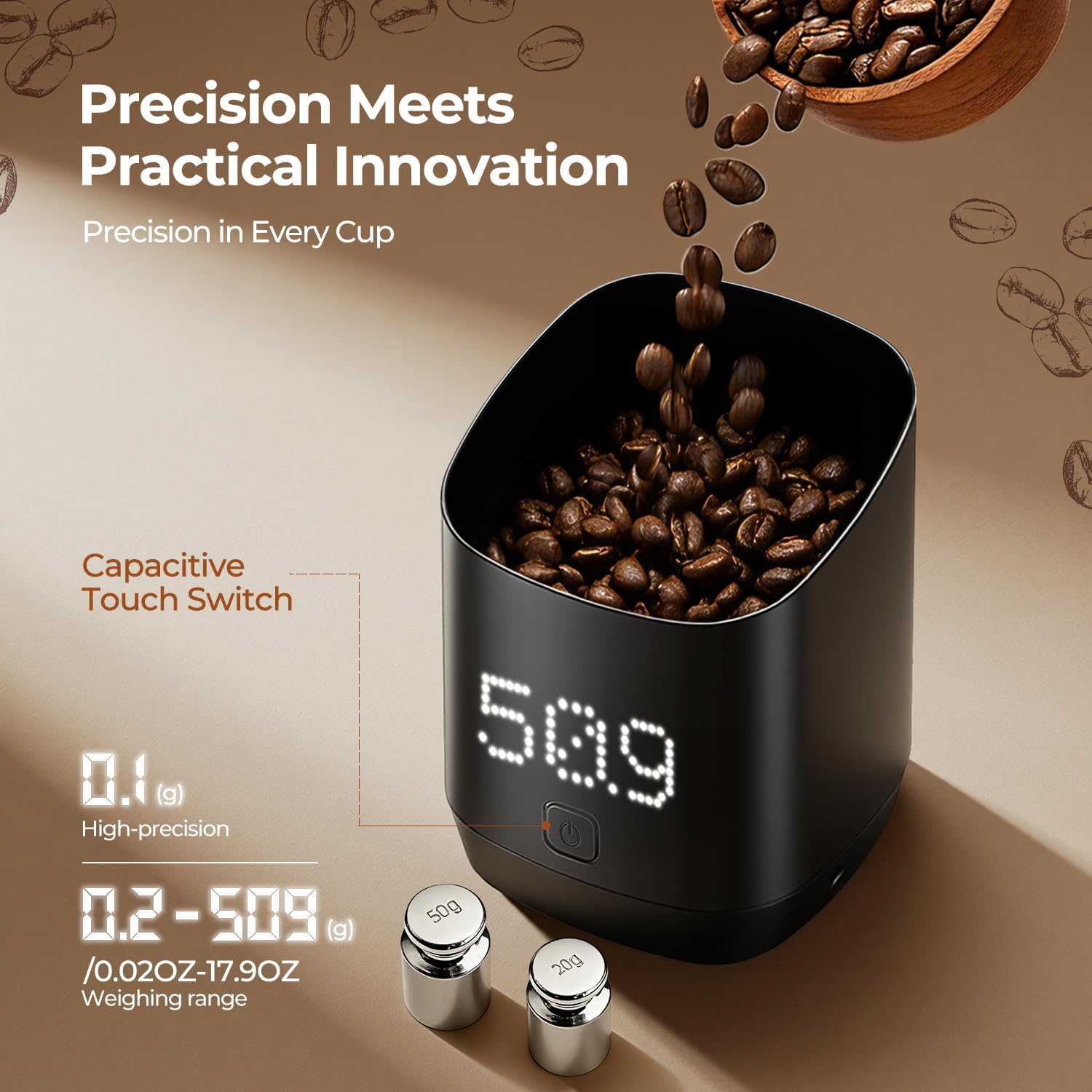
Digital Dosing Cup
Makes weighing beans faster and cleaner, with less mess around the grinder.
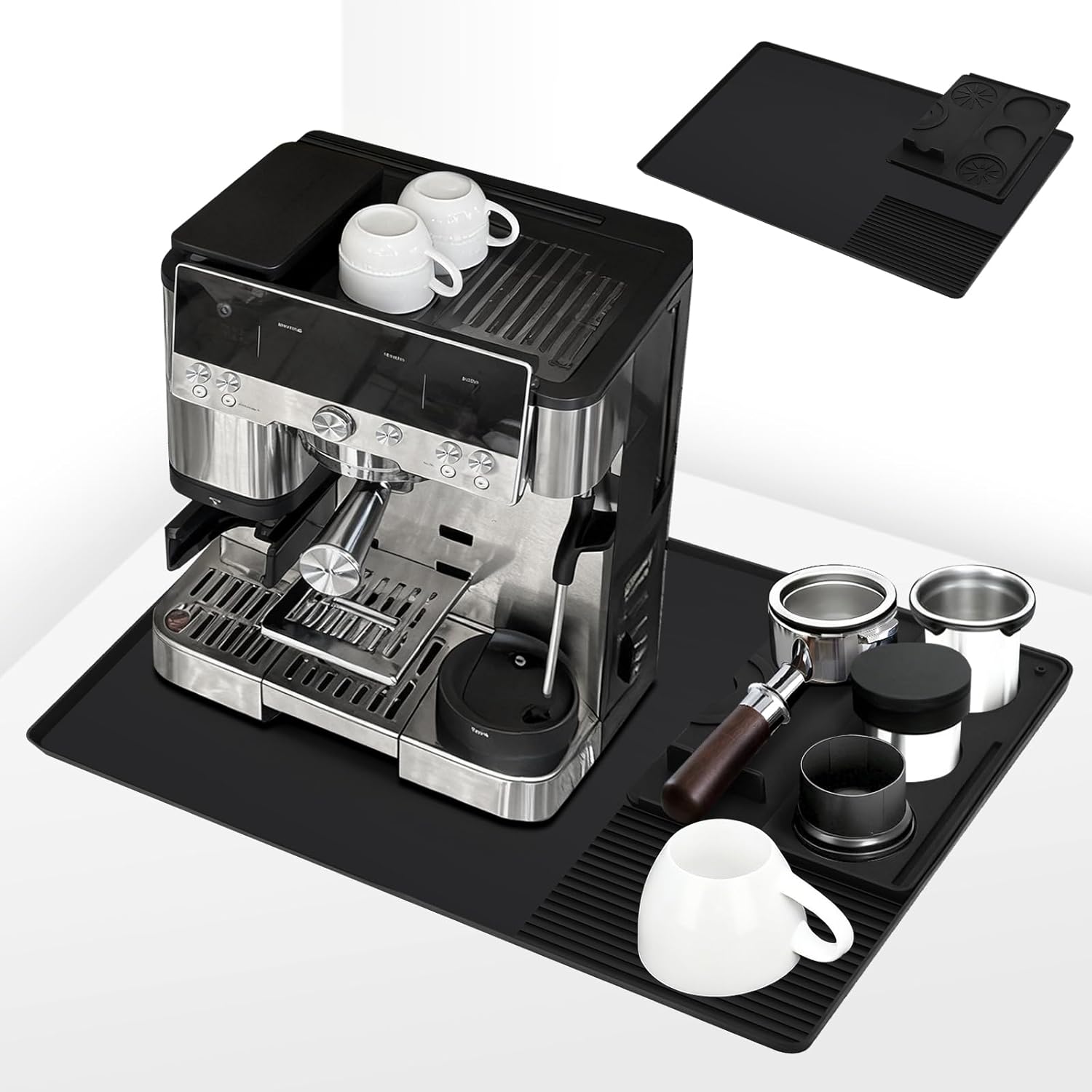
Silicone Mat
Protects your counter, catches spills, and gives your setup a cleaner working surface.

Vacuum Coffee Canister
Helps beans stay fresher longer by limiting air exposure after opening the bag.
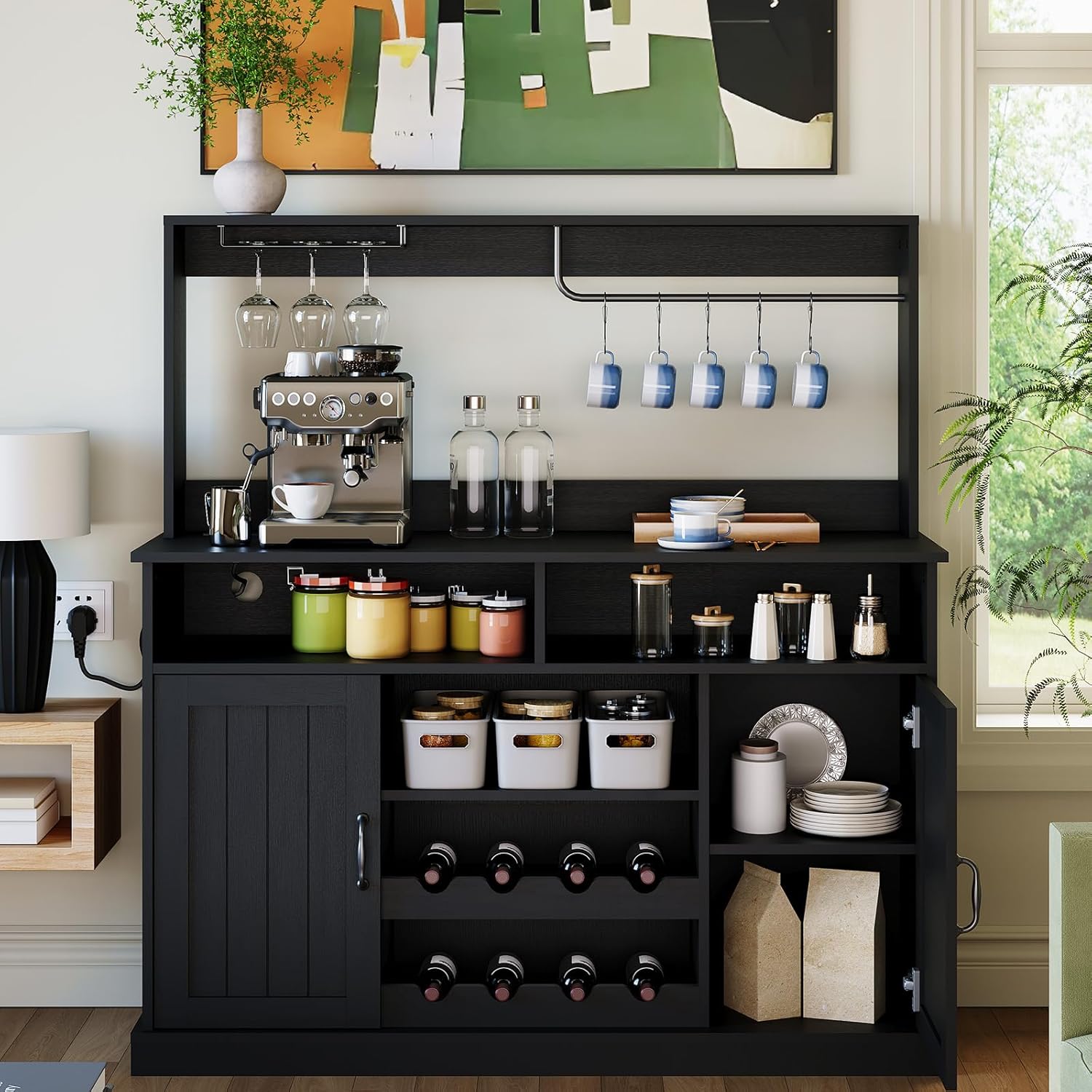
Farmhouse Coffee Bar Cabinet
Gives your machine, cups, beans, and accessories one dedicated home instead of cluttering the kitchen.
The headline feature for most buyers is LatteCrema. It produces consistent foam texture quickly (about ~20 s for a milk cycle in testing), and it does a better job of keeping milk smooth than the cheap frothers that only make stiff cappuccino cap. The trade-off is that milk runs hot and fine temperature control is limited, so the Evo is about repeatability, not barista-style tuning.
For shoppers comparing across brands, we line the Evo up against what people actually cross-shop here: Philips 5400 LatteGo for a simpler milk-cleaning routine, Gaggia Magenta Prestige for an Italian rival with a different menu and milk behavior, Bosch 800 Series as a Euro-style alternative, and Jura E6 if quieter operation and a more premium build are worth paying for. Inside De’Longhi’s own range, the “buy once, upgrade later” comparison is usually Evo vs Magnifica Plus.
Ownership is straightforward if you keep the basics tight. The removable brew group is a real advantage for cleaning and longevity, but you should expect an appliance-style build and an audibly loud grinder burst (measured around ~78 dB on this platform in testing). Treat it like a high-performance countertop tool: quick daily wipe-downs, weekly brew-group rinse, and you avoid the usual “gunk spiral” that kills super-autos early.
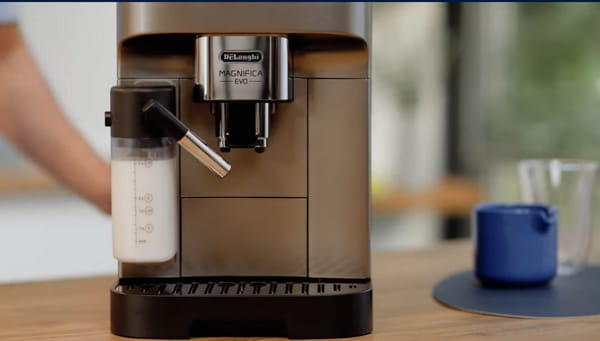
Overview
The De’Longhi Magnifica Evo exists to solve a very specific home problem: make repeatable espresso and milk drinks quickly, with almost no barista work, and without feeling like you are drinking watered-down “strong coffee.” It does that the De’Longhi way: a fast thermoblock system, a stepped steel conical grinder you can actually tune, and the LatteCrema carafe for one-touch milk drinks that land closer to café texture than the usual bubbly auto-foam.
In De’Longhi’s super-automatic lineup, Evo sits above the entry models like the Magnifica Start with a better milk workflow and a more modern, drink-forward interface, and below the more feature-heavy Magnifica Plus. If you want app-level menus, more recipes, and extra automation layers, you step into Dinamica Plus or Eletta Explore.
Design intent
- Fast “on-demand” heating: a thermoblock platform that gets you brewing quickly and supports practical back-to-back drinks without boiler waiting.
- Grinder you can dial: steel conical burrs with stepped adjustment so you can tighten extraction when shots run fast, or open up when the machine starts to choke.
- Milk system built for daily use: LatteCrema is designed for one-touch lattes and cappuccinos with a repeatable texture, plus rinse routines that keep the milk mess under control if you stay disciplined.
- Low-friction UI: direct drink buttons and simple strength and temperature choices, so you spend your time drinking coffee, not hunting settings.
- Counter-friendly footprint: narrow width helps it fit where many bulkier “kitchen appliance” super-autos do not.
What it gets right in the cup and in cadence
- Consistent results once set: when grind and volume are in the zone, Evo repeats the same shot style reliably, which is the whole reason a super-auto earns its place.
- Milk drinks without skill tax: LatteCrema gives you a stable, café-style milk texture for everyday drinks without learning steam technique.
- Speed that fits real mornings: quick warm-up and fast drink cycles make it practical for households that want coffee now, not a hobby session.
The deliberate trade-offs
- Still a super-auto: you do not control puck prep, pressure profiling, or flow. Your “dial-in” is grind step, strength, temperature level, and beverage volume.
- Dose ceiling is real: Evo makes better espresso than most budget bean-to-cup machines, but it does not reach the heavier dosing programs you get on the Magnifica Plus.
- Noise is part of the deal: the grinder is loud in this class, even if it is only loud for a few seconds per drink.
- Milk system discipline required: auto-rinse helps, but you still need regular cleaning to avoid the classic milk residue problems.
Where it fits
The Magnifica Evo is the right super-automatic for people who drink milk drinks often, want fast repeatability, and want a meaningful step up from pod coffee without signing up for a semi-auto learning curve. If you want more recipes and a higher ceiling inside the same ecosystem, move up to the Magnifica Plus. If you want hands-on espresso craft and a higher long-term ceiling, you are better served by a semi-auto like La Specialista Arte.
Cross-shop context on Coffeedant: Evo buyers commonly compare against the Philips 5400 LatteGo for a simpler milk-cleaning routine, the Gaggia Cadorna Barista Plus for a different Italian take on menus and milk, and the Bosch 800 Series for a Euro-style alternative.
De’Longhi lineup: where Magnifica Evo sits
Magnifica Evo is De’Longhi’s value-forward LatteCrema super-automatic: it gives you one-touch milk drinks and a real dial-in path (steel conical burrs + grind steps), without jumping to the bigger screens, more profiles, and higher-dose programs found on the step-up machines. If you want simpler and cheaper, you step down to Magnifica Start. If you want a nicer UI and more “espresso-like” intensity headroom, you step up to Magnifica Plus or Dinamica Plus. For the full brand overview, start here: De’Longhi espresso machine hub.
| Model | Lineup slot | Compared to Magnifica Evo | Typical price and rating |
|---|---|---|---|
| De'Longhi Magnifica Start (ECAM220.22.B) | Entry | The “get in cheap” option. You keep the core De’Longhi architecture (removable brew group and a capable grinder), but you give up Evo’s milk-forward convenience and the richer drink panel experience. | ~$500 • 4.0/5 |
| De'Longhi Magnifica Evo (ECAM29084SB) Reference | Value milk | The practical LatteCrema pick: one-touch milk drinks, straightforward controls, and enough grind range to tighten the shot without turning your morning into a hobby. | ~$549 • 4.2/5 |
| De'Longhi Magnifica Plus (ECAM32070SB) | Sweet spot | Step up for a more premium daily experience: bigger, more guided UI, more saved preferences, and—most importantly— more “espresso weight” potential from higher-dose programs. If Evo ever feels a little thin, Plus is the clean upgrade. | ~$900 • 4.6/5 |
| De'Longhi Dinamica Plus | Step-up | The “more features, more interface” upgrade inside the De’Longhi ecosystem. It’s for households that want a richer drink menu, more customization comfort, and a more premium control layer than Evo’s button-first approach. | ~$1,199 • 4.5/5 |
| Eletta Explore (ECAM450.xx) | Cold drinks | Choose this when iced drinks and cold-foam variety are a real part of your week. It’s less about “better espresso than Evo” and more about expanding the menu into cold territory. | ~$1,499 • 4.7/5 |
| De'Longhi PrimaDonna Soul | Premium | The premium automation stack: bigger screen experience and De’Longhi’s higher-end consistency tools. You buy it for maximum convenience and feature depth—at a price that’s hard to justify unless you’ll use the extras daily. | ~$1,850 • 4.4/5 |
How to read this: Start is the budget on-ramp, Evo is the best “milk drinks for the money” rung, Plus is the most natural upgrade for thicker, more espresso-like results, and the higher tiers mostly add feature breadth (especially cold drinks) rather than changing the core workflow. Prices and ratings are from our internal dataset and will move with promos and region.
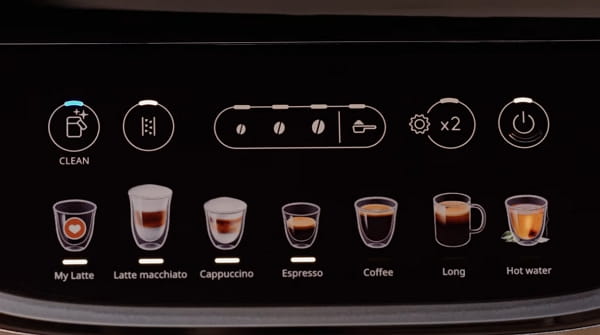
Key De’Longhi Magnifica Evo Specifications
| Item | Detail |
|---|---|
| Machine | De’Longhi Magnifica Evo (ECAM29084SB) · Model page · De’Longhi lineup hub |
| Machine type | Super-automatic bean-to-cup (grinds, doses, brews, and runs milk drinks with minimal input) |
| Heating system | Thermoblock (fast warm-up; designed for quick daily sessions) |
| Rated power | ~1250 W (120 V model) |
| Pump pressure | 15 bar |
| Grinder | Steel conical burr grinder |
| Grind settings | 13 steps (dial 1–7 with half-step positions) |
| Max dose (practical) | ~12–13 g peak dose range (varies by strength setting and bean behavior) |
| Milk system | LatteCrema Hot automatic milk carafe |
| Milk temperature control | No dedicated milk-temp setting (milk output runs on the hotter side versus many rivals) |
| Drink menu | 7 one-touch drinks (espresso, coffee, cappuccino, latte macchiato, hot water, Over Ice, and “My Latte”) |
| Interface | Button-first control panel with icon-led shortcuts (no full touchscreen UI) |
| Profiles | Single “My” recipe slot (quick-save style), not multi-profile household storage |
| Water tank | ~1.8 L (≈60.9 fl oz), front-access tank |
| Bean hopper | 250 g |
| Used grounds box | Up to ~14 pucks before emptying (real-world frequency depends on drink size and strength) |
| Compatible coffee | Whole beans + pre-ground chute for occasional decaf or special beans |
| Brew unit | Removable brew group (user-cleanable) |
| Cleaning | Auto rinse cycles + removable brew group; LatteCrema parts come apart for deep cleaning |
| Warm-up (typical) | ~1 min 20 s from cold start to ready-to-brew (varies by room temp) |
| Noise (grinding) | ~78 dB during the grind cycle (brief but loud) |
| Dimensions | ~24 W × 44 D × 36 H cm (9.45" W × 17.32" D × 14.17" H) |
| Weight | ~9.6 kg (many listings) · some sources list ~11.9 kg depending on measurement method |
| Warranty | 2 years standard; often extended to 3 years with registration (region/retailer dependent) |
| Typical price | ~$549–$899 depending on promos · Coffeedant score |
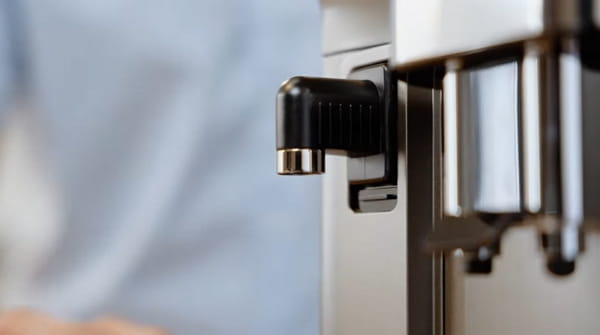
First Impressions & Build Quality
On the counter the De’Longhi Magnifica Evo lands in the “mid-width appliance” zone: roughly 9.5 × 17.3 inches and about 14.2 inches tall (24 × 44 × 36 cm). It’s not miniature, but the narrow width helps it fit between other countertop gear, and the overall height usually clears standard wall cabinets.
Weight is practical rather than premium—around 21–26 lb (roughly 9.6–11.9 kg) depending on which spec sheet you trust. In real use it’s easy to slide forward for a refill or a quick wipe-down, and stable enough that it doesn’t skitter around when the grinder spins up.
Materials match the category: durable plastics with metal touch points, anchored by a metal drip tray. The front panel is built around direct drink buttons (not a full touchscreen), which keeps the interface fast and obvious. It reads as a well-designed kitchen appliance—functional, modern, and easy to live with—rather than a stainless “statement machine.”
The ergonomics that matter most are the everyday ones: an adjustable coffee spout for different cup heights and a realistic maximum clearance that works for most mugs, but not tall commuter tumblers. If you live on travel mugs, this is a spec worth checking before you buy.
Day to day, the layout is built for routine. The drip tray and grounds bin pull out quickly, the milk system is designed to dock and remove without fuss, and the standout service feature is the removable brew group. That one choice makes ownership feel less like “sealed appliance anxiety” and more like something you can actually keep clean on a normal weeknight.
What’s in the Box
- De’Longhi Magnifica Evo machine (commonly sold as ECAM29084SB and close variants)
- LatteCrema milk carafe (detachable, fridge-friendly storage)
- Hot water spout / hot-water accessory parts (bundle varies by region)
- Measuring scoop for the pre-ground coffee chute
- Water hardness test strip
- User manual + quick-start guide
Bundles vary by retailer and region (some add a starter filter/descaler). Keep the packaging until you confirm the brew group slides in smoothly, the carafe locks and rinses correctly, and nothing drips under the tray.
Chassis and internals
Magnifica Evo is built as a practical kitchen appliance: mostly durable plastics with metal where it matters (not a stainless “prosumer” box). What matters most here is service access. The brew group is removable, so you can rinse it under the tap and keep the core mechanism clean without tearing the machine apart.
Internally you’re working with a thermoblock heating system (fast start-up, fast repeatability), a 15-bar vibration pump, and a steel conical burr grinder. The grinder is the performance lever: it can grind very fine, and that ability is what lets the Evo push more “espresso-like” body than many budget super-automatics when the grind and strength are set correctly.
Controls and touch points
Evo keeps friction low with a direct-button drink panel instead of a touchscreen. You get one-touch drinks, simple strength and volume tuning, and coffee temperature selection (separate milk temperature control is not the point of this platform).
Grind adjustment lives in the bean hopper. Make small changes, and remember two practical rules: adjust only while the grinder is running, and give the machine a couple of shots before judging the new setting (it has to clear the previous grind from the path). LatteCrema is built for repeatable milk drinks: dock the carafe, pull the drink, then run the rinse so milk residue doesn’t become your daily tax.
Counter fit
| Item | Detail | Why it matters |
|---|---|---|
| Dimensions | ~24 W × 44 D × 36 H cm (9.45" × 17.32" × 14.17") | Kitchen-friendly width; depth is typical for super-autos. Check cabinet clearance for the hopper lid. |
| Weight | Commonly listed ~9.6 kg (some listings show higher) | Easy to slide forward for refills and cleaning, but stable in use. |
| Water tank | ~1.8 L (front-access) | Convenient under cabinets. Hard-water homes will refill and descale more often—filters help. |
| Bean hopper | 250 g | Plenty for typical weekly use; if you rotate beans, load smaller amounts to keep them fresher. |
| Used grounds box | ~14 pucks | Empty before it overfills to keep the chute clean and reduce “old coffee” odor. |
| Hopper / lid clearance | Top-opening lid (needs overhead room) | If you store the machine under low cabinets, you may need to slide it forward to refill beans. |
Testing Results
Tests used fresh beans (medium roast blend plus a lighter roast) with routine rinses and standard super-automatic workflow. Results below focus on what matters most on this class of machine: warm-up speed, repeatability, milk cadence, and noise.
| Metric | Result | Method |
|---|---|---|
| Warm-up to ready | ~1:20 from cold start (typical) | Thermoblock system reaches brew-ready quickly; rinse cycle completes shortly after. |
| Single espresso cycle time | ~40–45 s (typical) | End-to-end for the program, including grinding and dispensing. |
| Milk frothing time | ~20 s (typical) | LatteCrema frothing portion for cappuccino-style drinks (varies with volume and milk). |
| Noise (grinding / brewing) | ~78 dB grinding; ~55 dB brewing (reported) | Grinder is the loud event; brewing is comparatively mild. |
| Grind behavior | Changes show fully after ~2–3 drinks | Normal purge effect in the grinder path; adjust small, then evaluate. |
| Workflow temperature tip | Quick pre-rinse helps | A brief flush warms the path and cup before the first “serious” shot. |
Key takeaways from testing
- Dial the grinder toward the fine end for espresso weight; then fine-tune by taste over the next 2–3 drinks.
- The grinder is loud but short-lived—expect a brief burst of real volume each drink.
- LatteCrema stays consistent when you rinse immediately after milk drinks and deep-clean on schedule.
- Water strategy matters: filtered/conditioned water reduces descale frequency and protects the brew circuit.
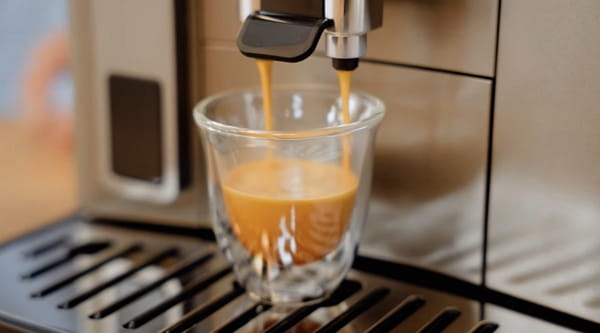
Espresso Quality: getting the most out of the Magnifica Evo
The Magnifica Evo can make genuinely satisfying espresso for a super-automatic, but it rewards a “systems” mindset. You can’t control puck prep, tamp, or pressure curves like a semi-auto. Your results mostly come from four levers: grind, strength (aroma/intensity), temperature level, and drink volume. The playbook is simple: keep espresso volumes tight, push strength when you want more body, and use grind to control flow and texture.
Session protocol that keeps results consistent
- Warm and rinse: let the startup rinse finish, then preheat your cup with a quick hot-water rinse before the first espresso.
- Pick the right beans: fresh beans help crema and sweetness. Avoid very oily, shiny dark roasts — they’re the easiest way to trigger grinder feed issues.
- Move one lever at a time: change grind first, then strength, then volume, then temperature so you can see what actually improved the cup.
- Expect “lag” after grind changes: after adjusting the grinder, pull 2–3 drinks before you judge the change. Old grounds need to clear.
Flavor targets by coffee style
| Coffee | Baseline recipe (Magnifica Evo) | What it tastes like when right | If too sour / thin | If too bitter / dry |
|---|---|---|---|---|
| Medium espresso blend |
Strength High, Temp Medium, Volume Short Grind mid-fine (start around 3–4 on the dial) |
Chocolate/nut core, stable crema, rounded finish | Go 1 step finer or shorten volume; keep strength high | Go 1 step coarser or lower temp one level; avoid stretching espresso volume |
| Light-to-medium single origin |
Strength High, Temp High, Volume Short Grind fine (but not choking) |
Clearer sweetness, brighter notes without sharp “edge” | Raise temp first, then go 1 step finer if needed; keep volume short | Go slightly coarser or drop temp one level; long volumes pull woody bitterness fast |
| Decaf |
Strength Medium–High, Temp Medium, Volume Short Grind mid-fine |
Sweeter and cleaner, less papery finish | Go 1 step finer and shorten volume | Go 1 step coarser and keep volume tight; decaf punishes over-extraction quickly |
Strength, volume, and temperature: use them like tools
- Strength (aroma): your main “body” lever. If espresso tastes like strong drip coffee, increase strength before you chase grind.
- Volume discipline: long espresso volumes are the fastest way to get hollow flavor on a super-auto. Keep espresso short; add hot water separately for americanos.
- Temperature levels: higher helps lighter roasts taste less sharp; lower can keep darker roasts from tasting ashy. (Evo has limited temp control — treat it as a fine-tune, not a full PID.)
Diagnostics you can see and hear
| Signal | Likely cause | Targeted fix |
|---|---|---|
| Watery espresso, fast pour | Grind too coarse, strength too low, or volume too long | Go 1 step finer, raise strength, shorten volume |
| Slow drips, harsh bitterness | Grind too fine, or dark/oily beans loading the puck | Go 1 step coarser; consider a less oily roast; drop temp one level for very dark blends |
| Muted flavor even when flow looks “normal” | Stale beans, conservative strength, or long idle with cool water path | Use fresher beans, raise strength, and do a quick cup/rinse preheat before the first shot |
| Grinder sounds strained (extra loud / squeaky) | Adjustment too fine, oily beans, or residue in the hopper | Go coarser; clean the hopper area; switch beans (avoid shiny/oily roasts) |
Keep variance low
- Prefer beans that are not glossy with oil — they’re easier on the grinder and usually taste cleaner in super-autos.
- Don’t tweak constantly. Set a baseline, run it for a day, then adjust with intent.
- Use filtered water and follow descale prompts on time — scale changes flow, temperature behavior, and taste.
Milk System: LatteCrema workflow, texture, and consistency
LatteCrema on the Magnifica Evo is built for repeatability: press a drink, get consistent foam, and move on. Your job is simple: keep the milk cold, choose the foam style that matches the drink, and rinse immediately so texture stays smooth instead of bubbly. One important reality: milk temperature runs on the hot side and you typically can’t fine-tune it the way you can on higher-tier machines.
Foam dial → texture → best use case
| Foam selection | Texture outcome | Best for | Notes |
|---|---|---|---|
| Low | Smoother milk, minimal foam cap | Latte-style drinks | Best choice when you want coffee to lead and milk to stay glossy. |
| Medium | Silky foam with a soft cap | Everyday cappuccino / “house latte” texture | The most forgiving setting for daily use. |
| High | Airier foam | Cappuccinos | If foam looks big-bubbled, the carafe usually needs a better clean or the milk wasn’t cold enough. |
Milk volume and real-world timing
| Drink size | Milk volume | Target drink | Typical one-touch time* | Tip |
|---|---|---|---|---|
| Small | 140–180 ml | Small cappuccino / latte macchiato | ~1:15–1:50 | Use colder milk and rinse immediately for the tightest texture. |
| Medium | 200–260 ml | Latte | ~1:30–2:10 | Medium foam tends to look “most café-like” day to day. |
| Large | 270–320 ml | Big cappuccino | ~1:50–2:40 | If it turns bubbly, deep-clean the carafe passages — residue is the usual culprit. |
*Typical timing from idle varies by recipe, milk temperature, and rinse routines.
Technique: clean milk that stays consistent
- Start cold: fridge-cold milk makes better foam. Keep the carafe cold between drinks.
- Rinse immediately: run the carafe’s rinse/clean right after every milk drink.
- Deep clean routinely: disassemble and wash the carafe parts before residue builds (especially the small passages and the intake tube).
- Match foam to drink: low for latte texture, higher for cappuccino foam.
- Balance with coffee strength: if the drink tastes milk-heavy, increase coffee strength or shorten the coffee volume before you change milk settings.
Texture targets by drink
| Drink | Foam selection | Mouthfeel | Notes |
|---|---|---|---|
| Cappuccino | High | Airier foam, still wet | Great for classic cappuccino structure; rinse immediately to keep foam tight. |
| Latte macchiato | Medium | Silky foam with separation | Looks best with cold milk and a clean carafe. |
| Latte / My Latte | Low–Medium | Smoother milk, light cap | If it tastes diluted, increase strength or shorten coffee volume. |
Keep milk performance sharp
- Don’t leave milk sitting in the carafe for days — fresh milk improves foam and hygiene.
- Plant milks foam best when very cold. If texture gets thin, reduce foam setting and clean the carafe passages.
- If milk quality suddenly drops, clean first. Most “bad foam” episodes are dried residue, not a failing machine.
Hardware Essentials
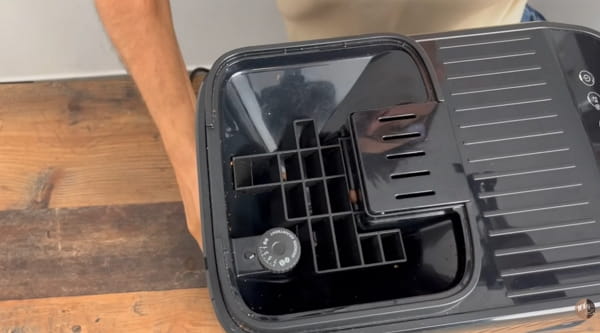
Heating, brew group, and water system
The Magnifica Evo is built for short notice coffee: a thermoblock heats water on demand (instead of keeping a boiler hot all day), and the machine runs quick rinse routines to keep the circuit fresh between sessions. The best ownership feature is practical, not flashy: the brew group is removable, so you can rinse it under the tap and stop old oils from becoming permanent “super-auto taste.”
The front-loading tank is sized for normal households at about 1.8 L. That’s enough for a few days of espresso, but milk-drink homes will still refill often. The reliable routine is simple: set your hardness correctly, use filtered water if you can, and don’t ignore descale prompts (scale is the silent killer of temperature, flow, and longevity).
- Heating: thermoblock = fast start-up and sensible on/off use.
- Brew group: removable = cleaner flavor and fewer “gunk” problems over time.
- Water: hardness setting + guided descaling = smoother ownership.
- Daily freshness: startup/shutdown rinses reduce stale water in the lines.
Grinder, dosing, and what you can actually control
Evo’s steel conical burr grinder gives you 13 stepped settings. This is your main lever for espresso texture and strength: go finer when shots taste thin and rush through; go coarser when flow slows down or flavors turn harsh. One super-auto reality to respect: grind changes don’t show up instantly — pull 2–3 drinks after a change before you judge.
- Adjustment rule: change the grinder only while it’s running (common De’Longhi behavior).
- Bean rule: avoid shiny, oily roasts — they’re the fastest way to clog feed and amplify grinder drama.
- Noise reality: grinding is loud (the Evo is not a “sleeping baby” machine), but the grind cycle is short.
You also get a pre-ground chute for decaf or a second coffee. It’s useful as an occasional tool, but the Evo’s best cup quality comes from whole beans through the grinder.
Hot water behavior
Treat hot water as a separate tool, not something you “bake into” a long espresso pull. If you want an Americano, pull the espresso tighter and then add hot water to taste. That keeps body up and avoids the hollow, overextended flavor that long volumes can create.
Milk system, carafe design, and hygiene reality
If you buy the LatteCrema version of the Evo, the milk carafe is the reason: it turns milk drinks into a repeatable routine. The best texture comes from cold milk and clean passages — not from hunting menu settings. The machine can rinse automatically after milk drinks, but the real win is keeping milk residue from drying in the circuit.
- Start cold: keep milk fridge-cold for tighter foam.
- Rinse immediately: run the milk rinse right after every milk drink.
- Deep clean weekly: disassemble the carafe parts before residue turns into “mystery foam.”
Drip tray, grounds bin, and daily ergonomics
The Evo is a tray-and-bin machine: rinse water fills the tray faster than many first-time owners expect, and the grounds container needs emptying regularly to stay clean and odor-free. The easiest habit is proactive: empty and rinse both before they hit the limit line.
Counter fit stays reasonable for a super-auto, but plan for two real-world constraints: you’ll want overhead clearance to open the bean hopper, and cup clearance under the spouts favors standard mugs over tall travel cups.
Accessories and smart upgrades
With super-autos, the best “upgrades” are boring: water and cleaning supplies. If you want the Evo to taste good and behave long-term, spend your budget there before you buy any aesthetic add-ons.
- Tank filter: helps reduce scale burden and improves taste in many homes.
- Descaler: keep the right solution on hand so you don’t postpone prompts.
- Milk-system cleaner: periodic cleaner keeps LatteCrema passages clear and foam consistent.
- Spare milk carafe (optional): useful if you rotate dairy and oat/almond, or want one carafe always clean.
- Bean discipline: medium roasts (not oily) keep grinders healthier and cups cleaner.
| Component | Spec | Use note |
|---|---|---|
| Heating | Thermoblock | Fast start-up; turning it off between sessions makes sense |
| Pump | 15 bar (rated) | Extraction quality still depends mostly on grind and dose choices |
| Grinder | Steel conical, 13 steps | Adjust while running; give 2–3 drinks for changes to fully show |
| Milk (LatteCrema models) | Docked carafe system | Rinse immediately after every milk drink for stable foam |
| Reservoir | ~1.8 L | Expect frequent refills in multi-drink households |
| Beans | 250 g hopper | Good weekly cadence; don’t overfill if you rotate beans often |
| Brew group | Removable | Rinse weekly to keep flavors clean and mechanics happy |
If you want the Evo to stay consistent: let the rinse cycle finish, preheat the cup when you care about heat, keep beans fresh and non-oily, rinse milk immediately after use, empty tray/bin before they max out, and descale on prompt. That’s the difference between “great appliance” and “why does it taste weird?”
De’Longhi espresso machine hub
How to Use the De’Longhi Magnifica Evo (ECAM29084SB)
The Magnifica Evo is designed to remove the barista steps. It handles grinding, dosing, tamping, brewing, and (on LatteCrema versions) milk frothing. Your results mostly come down to four levers: grind setting, strength/aroma, temperature level, and drink volume. The routine below is the fastest way to get consistent drinks without chasing settings every morning.
Before your first brew (one-time setup)
- Rinse the water tank; wash and dry the drip tray and any milk-carafe parts.
- Fill with filtered water if possible. Use the hardness strip (if included) and set the machine’s hardness in the menu.
- Add fresh beans to the hopper (skip very oily, shiny dark roasts). Power on and let the automatic rinse finish.
- Brew and discard the first espresso. Then pull 1–2 test drinks to settle your grind and volume.
Daily start (2–3 minutes)
- Top up the water tank and beans. Place your cup under the spouts.
- Wait for the automatic rinse to complete before brewing.
- If you care about heat, pre-warm the cup with a quick hot-water dispense (or a short rinse into the cup, then discard).
- If you’re using LatteCrema, dock the carafe and confirm everything clicks in cleanly.
Espresso: the “strong and short” approach
- Start concentrated: choose Espresso, set volume short, set strength high.
- Don’t fix weak espresso by making it longer: longer pulls often taste hollow on super-autos. Keep espresso tight; add hot water separately for Americanos.
- Adjust grind in small moves: if it tastes thin and runs quickly, go 1 step finer. If it drips slowly or turns harsh and dry, go 1 step coarser.
- Let changes show up: after a grind change, pull 2–3 drinks before judging. The machine needs time to clear old grounds.
Temperature and volume (simple rules)
- Light to medium roasts: raise temperature one level before you keep grinding finer.
- Darker blends: if bitterness gets ashy, try dropping temperature one level and keeping volume short.
- Americano: brew espresso short and strong, then add hot water to taste. Avoid “long espresso” volumes.
Milk drinks (LatteCrema models)
- Start cold: fridge-cold milk makes tighter foam and more consistent texture.
- Choose your foam style: go lower-foam for flatter drinks; go higher-foam for cappuccino-style drinks.
- Rinse immediately: run the milk rinse right after each milk drink so residue doesn’t dry in the circuit.
- Clean before it gets “bubbly”: if foam suddenly looks coarse, the carafe passages usually need a proper wash.
Note: Evo milk temperature is largely “as-designed” and there isn’t a separate milk-temp dial on most variants. If milk tastes scorched, start by descaling and deep-cleaning the milk parts.
Shut-down
- Empty the drip tray and grounds bin if they’re close to full (rinses can fill the tray faster than you expect).
- If you made milk drinks: run the milk rinse, then refrigerate the carafe (or wash and dry it).
Cleaning & Maintenance
Super-autos stay “good” only when they stay clean. With the Magnifica Evo, the big wins are: rinse milk immediately, keep the brew group clean, and don’t delay descaling prompts.
Daily (after each session)
- Milk rinse (LatteCrema): run it after every milk drink to prevent odor and foam collapse.
- Tray + grounds bin: empty, rinse, and wipe dry to avoid sludge and smells.
- Spouts: wipe the coffee spouts so oils don’t bake on.
Weekly (10 minutes)
- Brew group rinse: power the machine off, remove the brew group, rinse under warm water, and air-dry fully before reinstalling.
- Carafe wash: disassemble and wash LatteCrema parts; re-seat seals carefully so everything locks and flows correctly.
- Bean area quick wipe: keep the hopper clean and dry; oily beans accelerate grinder mess and feed issues.
Monthly
- Oil-clean cycle (if your menu supports it): run a coffee-cleaning tablet program to reduce built-up coffee oils.
- Brew group care: inspect and lightly lubricate moving points if your usage is heavy (especially if the group starts sounding strained).
Descaling (when prompted)
When Evo asks, run the guided descale program. Descaling affects flavor, temperature behavior, and reliability—postponing it usually makes everything worse. Use a manufacturer-recommended descaler and follow the dilution steps exactly.
Maintenance schedule at a glance
| Task | Frequency | Notes |
|---|---|---|
| Milk rinse (LatteCrema) | Every milk drink | Keeps foam stable and prevents dried milk in the circuit |
| Empty tray + grounds bin | Daily | Rinse and dry to prevent odor and buildup |
| Rinse brew group | Weekly | Air-dry fully before reinstalling |
| Wash LatteCrema parts | Weekly | More often with heavy milk use |
| Tablet clean (if available) | Monthly | Helps remove coffee oils that dull flavor |
| Replace water filter (if used) | About every 2 months | Can reduce scale burden and keep taste steadier |
| Descale | When prompted | Run the guided program using recommended descaler |
Post-clean taste check
- After descaling or tablet cleaning, run a couple of water rinses and discard the first espresso.
- If milk foam looks wrong after washing, re-seat the carafe parts and confirm the dial/nozzle positions click into place.
De’Longhi espresso machine hub
Magnifica Evo vs The Field: Quick Matrix
| Match-up | Core difference | Best for | Jump to section | Model page |
|---|---|---|---|---|
| Magnifica Evo vs De'Longhi Magnifica Start | One-touch LatteCrema convenience vs bare-bones De’Longhi entry | Evo if you want easy milk drinks; Start if you just want the basics for less | Open | Magnifica Start |
| Magnifica Evo vs De'Longhi Magnifica Plus | Budget milk workflow vs higher-dose, nicer UI step-up | Evo for value lattes; Plus for heavier, more “espresso-like” shots | Open | Magnifica Plus |
| Magnifica Evo vs Philips 5400 LatteGo | Richer espresso lean vs ultra-simple milk cleanup | Evo if taste comes first; 5400 if you want the least fussy milk routine | Open | Philips 5400 LatteGo |
| Magnifica Evo vs De'Longhi Dinamica Plus | Best-value De’Longhi milk button vs higher-tier features and polish | Evo for “good fast coffee” at a lower price; Dinamica Plus for a step-up experience | Open | Dinamica Plus |
| Magnifica Evo vs Gaggia Magenta Prestige | LatteCrema texture focus vs Gaggia’s menu shortcuts and feel | Evo for easiest milk results; Magenta for a different interface and Gaggia vibe | Open | Magenta Prestige |
| Magnifica Evo vs Bosch 800 Series | De’Longhi milk-button simplicity vs Bosch appliance ecosystem approach | Evo for straightforward lattes; Bosch for set-and-forget routines in a Bosch kitchen | Open | Bosch 800 Series |
| Magnifica Evo vs Jura E6 | Value-first super-auto vs premium refinement and ownership lane | Evo for best budget milk drinks; Jura for quieter polish and step-up feel | Open | Jura E6 |
Magnifica Evo vs De'Longhi Magnifica Start
If you’re staying in De’Longhi, this is the simplest fork in the road: Start is the “get me espresso at home” entry model, while Evo is the value pick for people who actually drink milk drinks and want them to be repeatable without learning technique.
Core differences
- Milk workflow: Evo (LatteCrema versions) is built around a one-touch carafe routine; Start is more stripped back.
- Daily friction: Evo wins if you want a cappuccino/latte button you’ll use every day.
- Spend logic: Start saves money; Evo spends it on convenience where it matters most: milk drinks.
| Aspect | Magnifica Evo | Magnifica Start |
|---|---|---|
| Best fit | Milk drinks most days | Mostly espresso/coffee, lowest price |
| Workflow | Milk carafe routine (model dependent) | More basic day-to-day |
| Trade-off | Costs more | Less “one-touch milk” convenience |
Who should choose which
- Pick Magnifica Evo if your default order is a latte/cappuccino and you want it fast and consistent.
- Pick Magnifica Start if you want a simpler De’Longhi at the lowest cost and you can live without the same milk workflow.
Magnifica Evo vs De'Longhi Magnifica Plus
Think of this as De’Longhi’s “two best sellers” decision. Evo is the value milk-drink machine: quick, simple, and easy to recommend on sale. Plus is what you buy when you want a more premium daily interface and a stronger “shot weight” ceiling inside the same ecosystem.
Core differences
- Price tier: Evo is the cheaper way into LatteCrema convenience.
- Espresso intensity: Plus is the better bet if you’re sensitive to thin, “strong coffee” style shots.
- Daily feel: Plus typically adds a bigger UI and a more polished preference workflow.
| Aspect | Magnifica Evo | Magnifica Plus |
|---|---|---|
| Best fit | Milk drinks + value-first buying | Stronger espresso character + nicer UI |
| Why you’d upgrade | — | More “espresso-like” body, more premium daily experience |
| Trade-off | Less headroom for intensity | Costs more |
Who should choose which
- Pick Magnifica Evo if you want the best latte/cappuccino convenience per dollar (especially on sale).
- Pick Magnifica Plus if you’re chasing thicker espresso and you’ll pay for the step-up.
Magnifica Evo vs Philips 5400 LatteGo
This is the classic super-auto trade: Evo tends to appeal to people who care about a richer, more espresso-forward cup, while Philips 5400 is the “I want milk drinks with the least cleanup effort” pick.
Core differences
- Milk cleanup: LatteGo is famously fast to rinse and reassemble.
- Cup bias: Evo is often chosen by people who prioritize espresso taste over the absolute easiest milk workflow.
- Ownership reality: both machines reward consistent water strategy and regular cleaning.
| Aspect | Magnifica Evo | Philips 5400 LatteGo |
|---|---|---|
| Best fit | Taste-first milk drinkers | Milk workflow minimalists |
| Milk routine | Carafe + rinse discipline | Quick rinse, very low fuss |
| Trade-off | More cleaning attention | Some buyers find the espresso “lighter” at comparable settings |
Who should choose which
- Pick Magnifica Evo if you’ll accept a slightly higher milk-cleaning tax for better espresso satisfaction.
- Pick Philips 5400 if the lowest-effort milk routine matters more than squeezing extra body from shots.
Magnifica Evo vs De'Longhi Dinamica Plus
Dinamica Plus is the “stay in De’Longhi, but go premium” move. Magnifica Evo is the “stop spending, start making drinks” move. If you’re happy with a simple control surface and you mostly want reliable milk drinks, Evo is usually enough.
Core differences
- Buying logic: Evo wins on cost-per-good-drink. Dinamica Plus wins on feature depth and premium feel.
- Workflow: Evo is straightforward; Dinamica Plus tends to offer a more upgraded daily experience.
- Upgrade trigger: choose Dinamica Plus when you want a higher-tier interface and extras, not because Evo “can’t make lattes.”
| Aspect | Magnifica Evo | Dinamica Plus |
|---|---|---|
| Best fit | Value-focused milk drinkers | Step-up buyers who want more polish |
| Why you’d upgrade | — | More premium feature stack and daily experience |
| Trade-off | More basic interface | Higher cost |
Who should choose which
- Pick Magnifica Evo if you want great lattes/cappuccinos without paying for higher-tier extras.
- Pick Dinamica Plus if you want the step-up interface/features and you’re fine paying for it.
Magnifica Evo vs Gaggia Magenta Prestige
Magenta Prestige is the Gaggia one-touch milk staple in this tier. Magnifica Evo competes by making the “milk drink daily” workflow extremely simple (especially if you don’t want to fuss with menus). Neither option turns you into a barista—this is about which workflow feels easier to live with.
Core differences
- Milk experience: Evo’s LatteCrema approach tends to be the simplest path to repeatable foam for non-technical users.
- Interface preference: Magenta appeals if you like Gaggia’s control style and drink shortcuts.
- Decision lens: choose based on which interface you’ll actually enjoy using every morning.
| Aspect | Magnifica Evo | Magenta Prestige |
|---|---|---|
| Best fit | Milk drinks with low learning curve | Gaggia fans and shortcut-driven menus |
| Workflow | Simple push-button routine | More “Gaggia-style” daily experience |
| Trade-off | Less premium feel at the shell | Workflow depends on how much you like the interface |
Who should choose which
- Pick Magnifica Evo if you want the quickest path to consistent cappuccinos and lattes.
- Pick Magenta Prestige if you prefer Gaggia’s interface and drink approach.
Magnifica Evo vs Bosch 800 Series
Bosch 800 is usually on the list for shoppers who like the idea of a “kitchen ecosystem” appliance. Magnifica Evo is the straightforward pick for people who just want reliable espresso and milk drinks with minimal learning curve.
Core differences
- Workflow vibe: Evo is direct and simple; Bosch often sells a broader ecosystem feel.
- Milk habits: both benefit from consistent cleaning—milk systems always do.
- Decision lens: pick the one that matches how you already use appliances day to day.
| Aspect | Magnifica Evo | Bosch 800 Series |
|---|---|---|
| Best fit | Simple milk drinks, minimal learning | Bosch ecosystem buyers |
| Daily feel | Press button, drink coffee | Appliance-ecosystem approach |
| Trade-off | Less “premium ecosystem” aura | Choice depends on interface preferences |
Who should choose which
- Pick Magnifica Evo if you want the simplest path to consistent milk drinks at a strong value.
- Pick Bosch 800 if Bosch ecosystem ownership is already part of your kitchen logic.
Magnifica Evo vs Jura E6
Jura E6 is a common “I’ll pay more for refinement” alternative. Magnifica Evo is the “I want great daily drinks at a sane price” pick. If you’re trying to maximize results per dollar, Evo usually makes the stronger argument—especially when discounted.
Core differences
- Price and polish: Jura typically costs more and competes on refinement.
- Value: Evo competes by delivering strong milk-drink convenience without a premium tax.
- Decision lens: pay more if you want the premium lane; pay less if you want the best practical routine.
| Aspect | Magnifica Evo | Jura E6 |
|---|---|---|
| Best fit | Value-first milk-drink households | Premium step-up buyers |
| Buying logic | Max daily convenience per dollar | Pay for refinement and ownership feel |
| Trade-off | More appliance build feel | Costs more |
Who should choose which
- Pick Magnifica Evo if you want excellent everyday lattes/cappuccinos at the strongest value price.
- Pick Jura E6 if you want to pay for a more premium ownership lane and refinement.
How to use this matrix: start with Evo if you want the best “one-touch milk drinks” value. Step up to Plus (or Dinamica Plus) if you’re chasing a more espresso-forward result and a more premium daily experience. For the full brand overview, visit the De’Longhi espresso machine hub.
In-Depth Analysis
This block is the “why it behaves the way it does” explanation for the De’Longhi Magnifica Evo. It’s the stuff that decides satisfaction after week two: speed, dose ceiling, milk temperature reality, noise, and the maintenance economics. For the brand context, see the De’Longhi espresso machine hub.
1) Why it feels fast: thermoblock + short cycles
Evo is built like an appliance on purpose: it heats on demand (thermoblock), rinses quickly, grinds quickly, and gets you to a finished milk drink without the “warm up for ten minutes” vibe. In practice, that means about 1 minute 20 seconds from cold to ready is a normal expectation, and the milk system can froth a cappuccino portion in about 20 seconds once you’re running.
- What you feel: you can wake up, hit a button, and be drinking fast.
- What it changes: better morning cadence for 1–4 drinks, especially in busy kitchens.
- What it doesn’t mean: it’s not a temperature-locked prosumer system; speed is the priority.
2) Dose ceiling: the real limiter on “espresso intensity”
Evo’s espresso can taste genuinely good for the class, but the machine has a hard ceiling on coffee mass. At maximum strength it typically tops out around ~12–13 g per shot cycle, which is why it can’t mimic the heavy, syrupy intensity you’d get from higher-dose machines.
| Setting | What changes | How it shows up in the cup |
|---|---|---|
| Low strength | Shortest grind time / smallest dose | Cleaner and lighter; easiest to drink, easiest to “feel thin” if volume is long |
| Medium strength | Moderate grind time / moderate dose | Best daily balance for most medium roasts |
| High strength | Longest grind time; top-end dose around ~12–13 g | Most body and most “espresso-like” weight Evo can do—especially if you keep volume tight |
3) Temperature reality (and the easy workaround)
Evo gives you a few temperature levels, but it is not PID-driven and it’s tuned for drink-now output. If the machine has been sitting for hours, the first water through the path can be cooler than you want—especially for lighter roasts. The practical fix is simple:
- Pre-rinse / purge: run a short rinse or quick “flush” into your cup, then brew.
- Cup preheat: use hot water for 20–30 seconds, dump, then pull espresso.
- Why it works: you’re preheating the hydraulic path and the cup so the brew water doesn’t lose heat immediately.
4) Daily ergonomics: refills, clearance, and kitchen fit
Evo is compact in width, but the details that matter are the ones you touch every day: the front-access tank, the bean lid clearance under cabinets, and how often you empty the waste.
- Water tank: 1.8 L front-loading design is genuinely convenient, especially under wall cabinets.
- Bean hopper: 250 g capacity is fine for normal households, but the hinged lid can feel tight under low cabinets.
- Used grounds: holds about 14 pucks; empty more often if you don’t want damp coffee sitting in the bin.
- Cup fit: the spouts adjust, but tall travel mugs are a common mismatch—measure your mug height before assuming it fits.
5) Grinder behavior: steel burrs + how to dial without chasing ghosts
The steel conical burr grinder is one of Evo’s real strengths, but super-auto grinders have a learning curve: the chamber holds old grounds, and changes don’t show instantly.
- 13 stepped settings: enough range to tighten flow when shots run fast.
- Lag is real: after a grind change, pull 2–3 drinks before judging flavor.
- Adjust while running: make grind changes only while the grinder is operating (typical De’Longhi rule).
- Finest settings: the very finest end can overwhelm the pump on some beans; back off if flow turns drippy and harsh.
6) Noise: it’s quick, but it’s loud
Evo’s grinder is the loudest part of ownership. Objective measurements put grinding around ~78 dB for about 5–7 seconds per drink. Brewing itself is much quieter by comparison. If you have roommates, thin walls, or a “sleeping baby” situation, this deserves real weight in the decision.
7) Variants and model numbers: avoid buying the “wrong Evo”
“Magnifica Evo” is a family name. Retailers and regions sell different button layouts and drink sets under similar ECAM29xxx labels. The core machine is similar, but the menu and bundled accessories can change.
- Common US model: ECAM29084SB (one-touch drinks including milk options).
- Warehouse variants: some bundles (e.g., club retailers) ship a reduced drink set compared with mainstream listings.
- Shopping rule: match the exact ECAM number and count the buttons/recipes you actually want.
8) Warranty and what can bite you later
Evo ownership is “water strategy + cleaning discipline.” De’Longhi’s warranty coverage is solid on paper, but scale-related damage and neglect are the classic dispute zone.
- Coverage expectation: 2 years standard, often extendable to 3 years with registration (market-dependent).
- What to take seriously: set hardness correctly, descale when prompted, and don’t treat scaling as optional.
- Used/refurb note: confirm retailer authorization and return policy before buying.
9) Ownership economics: what it really costs to run
Evo can be a money-saver fast for latte drinkers, but you pay the “super-auto tax” in consumables and maintenance time. If you’re consistent, costs are predictable—and the machine tends to stay happier.
| Cost / expectation | What to plan for | Why it matters |
|---|---|---|
| Annual consumables | ~$95–$150/year using official products (often less with third-party alternatives) | Filters + descaler + cleaners keep taste stable and reduce failures tied to scale and residue |
| Descaling cadence | Varies wildly by water hardness (hard water can mean every few weeks) | Scale changes temperature behavior, flow, and milk performance over time |
| Realistic lifespan | ~5–7 years is a fair expectation for this class with decent care | Frames it correctly: high-performance appliance, not an heirloom |
| Energy habit | Don’t leave it on all day—thermoblock warm-up is quick | On/off makes sense and keeps idle waste down |
Editorial placement: echo the purge trick in Espresso Quality + FAQ, call out noise near the top, and surface descaling reality in Ownership/Maintenance.
De'Longhi Magnifica Evo - frequently asked questions
Fast answers to the questions people ask before they commit to this machine.
Is De'Longhi Magnifica Evo worth it at around $549?
At sale pricing near $549 it is one of the strongest value plays in the super automatic space. You get a steel grinder, LatteCrema carafe, seven one touch drinks, and espresso quality that beats most Philips and entry Gaggia rivals. At full $899 MSRP the value drops and you start bumping into higher tier options and deals on Jura entry models. If you can buy it in the mid five hundreds or low sevens, the price to performance ratio is hard to beat for milk drinkers.
How loud is the grinder on Magnifica Evo in real life?
The grinder sits around 78 decibels, which is similar to a small vacuum. The grinding phase lasts roughly 5 to 7 seconds per drink, so the noise is sharp but short. If someone is sleeping in a room next to the kitchen they will hear it. If you are used to pod machines or manual gear it will feel loud. If you want a quiet setup, you are looking at a different budget bracket or a separate grinder and manual machine.
How does LatteCrema compare to Philips LatteGo for milk drinks?
LatteCrema focuses on texture and temperature. It usually wins on foam quality with thicker, closer to cafe microfoam that holds up in cappuccinos and lattes. LatteGo focuses on speed and cleaning, with a two piece, tube free design that rinses faster. With Evo you get better foam and more classic Italian hot milk, but you take on a milk tube to rinse and deeper carafe cleaning. So you trade a bit of maintenance for more cafe like milk.
How often will I need to descale De'Longhi Magnifica Evo?
It depends a lot on your water. With very hard water some owners see a descale prompt every 3 to 4 weeks. With filtered or soft water it stretches to every 2 or 3 months. The cycle takes about 30 to 45 minutes and you should stick to De'Longhi compatible descalers if you want to stay inside warranty language. If you know you will ignore descale prompts, you will want either filters and soft water or a different platform like Philips with AquaClean.
Can Magnifica Evo handle plant based milks well?
LatteCrema works with many plant milks, especially barista style oat and soy. Foam is not quite the same as with dairy but is usable. The one catch is temperature. Because the system runs hot and you cannot adjust milk temp, very delicate milks can lose sweetness or separate if you push big drinks. If plant milk is your main use case consider testing with your preferred brand or looking at setups with manual temperature control.
What regular maintenance does Magnifica Evo really need?
Daily you empty the drip tray when the float pops up, empty the grounds bin every couple of days, and rinse the milk tube and carafe after milk use. Weekly you pull the brew group, rinse it under lukewarm water, let it dry, and clean around the chamber. Every month or two you add a little food safe grease to the brew group slides and run cleaning tablets if you use dark beans. When the machine asks for descale or filter changes, do them. This is ten to fifteen minutes a week on average.
How good is the espresso compared with Jura or Philips 3200?
Against Philips 3200, Evo usually wins. The steel burrs, slightly longer contact time, and higher dosing make for fuller body and thicker crema. Against Jura E6 or E8, Jura still comes out ahead on clarity, consistency, and quiet operation, but at a much higher price. Evo gets you most of the way to that experience for a lot less money. The taste signature leans classic Italian, so chocolate, nuts, and a strong hit instead of delicate fruit or floral notes.
What are the most common problems owners run into and how serious are they?
Patterns in owner reviews show a few recurring issues. Grinder noise is universal but expected. Descale lights coming on often in hard water areas frustrate people who do not like maintenance. Some early units fail in the first one to three months with water circuit or electronics errors which need warranty service or replacement. Brew group and tank detection errors usually trace to mis seated parts or coffee buildup. For most buyers these are manageable if you buy from an authorized retailer and keep packaging at first in case you need a swap.
How long does Magnifica Evo realistically last with normal home use?
Owners who keep up with cleaning, grease, filters, and descaling often report machines running well beyond five years. You will see outliers that fail earlier, especially if maintenance is skipped or water is very hard. The grinder and pump are designed around typical home volumes of a few drinks a day, not office duty. If you treat it as a daily household latte station instead of a cafe replacement, five plus year life is a fair expectation.
Who should pick Magnifica Evo instead of Magnifica S or Philips 2200 LatteGo?
Choose Magnifica Evo if you want one touch milk drinks and a modern panel with better espresso quality than Philips 2200 and more convenience than Magnifica S. Choose Magnifica S if you like manual steaming, want to save money, and do not mind a more old school interface. Choose Philips 2200 LatteGo if minimal cleaning and fewer descales matter more to you than richer shots and you are happy with three core drinks instead of seven. All three share the same basic idea but lean toward different priorities.
Used & Refurbished Buyer’s Guide
A used De'Longhi Magnifica Evo can be a bargain, but only if the previous owner respected water quality and actually cleaned the milk system. Super-automatics can look fine on the outside while hiding scale, milk residue, and a tired brew unit inside.
| Inspect | What to check | Pass criteria |
|---|---|---|
| Power-up + rinse | Turn it on, let the automatic rinse complete, then try a drink button. | No persistent warning lights after rinse; buttons respond normally. |
| Grinder behavior | Run 2–3 espresso cycles with beans. Listen for strain or stuttering. | Grinding sounds loud-but-steady (no “squeal,” no repeated jam behavior, no beans refusing to feed). |
| Shot flow | Pull a short espresso at higher strength and watch the stream. | Doesn’t gush immediately (too coarse) and doesn’t spend the whole cycle dripping (too fine / clogged). |
| Brew group access | Remove the brew group (machine off), inspect seals and the chamber for thick coffee paste. | Removes without force; no cracks; seals look intact; chamber isn’t tar-like with old oils. |
| Milk system hygiene | Dock the LatteCrema carafe, run a milk drink, then run the milk rinse immediately. | Foam is consistent; rinse completes cleanly; no sour smell; no sputtering from dried residue. |
| Leaks + tray bay | After 3–4 cycles, check under the machine and inside the drip tray compartment. | Moisture is confined to the drip tray path; no puddles under the chassis. |
| Tank detection | Remove and reseat the tank; confirm “empty” warnings clear correctly. | Tank is recognized reliably; no repeated false “no water” prompts. |
| Descale history | Ask the seller: water hardness setting, filter use, and last descale date. | Credible routine (filtered water + timely descales). Vague answers in hard-water areas are a red flag. |
| Accessories | Confirm carafe + lid parts, drip tray/grate, scoop, and manuals if claimed. | Milk carafe is included and seals properly. Missing carafe should drop the price a lot. |
Refurb units usually come with a shorter store-backed warranty than new (often 6–12 months). Confirm coverage on the grinder, pump, and milk system—those are the expensive bits.
Accessories & Upgrades
The Magnifica Evo doesn’t need “mods.” The only upgrades that reliably improve taste and reduce headaches are water, cleaning supplies, and a couple of practical spares.
| Category | What to buy | Why it helps |
|---|---|---|
| Water strategy | Tank filter (compatible) or a consistent filtered-water routine; hardness strips | Better flavor and fewer descale headaches. Scale is the #1 enemy of thermoblock machines. |
| Descaling supplies | Keep the recommended descaler on hand (don’t “wait until later”). | Late descales are how flow gets weird, milk gets hotter, and error prompts become a weekend project. |
| Milk system care | Milk-system cleaner + a small brush set for carafe passages | Foam stays smooth instead of airy/bubbly. Most milk “performance problems” are dried residue. |
| Brew group care | Food-safe lubricant (light use) + a soft brush for the grounds chamber | Reduces sticking and keeps the brew unit moving freely over years. |
| Convenience spares | Spare LatteCrema tube/seals (if available) or a second carafe (optional) | Fast swaps if you rotate dairy + oat milk, or if one set of parts lives in the dishwasher. |
| Bean discipline | Medium to medium-dark beans (not shiny/oily); smaller hopper loads if you rotate coffees | Fewer grinder jams and cleaner flavor. Oily beans are the fastest way to hate a super-auto. |
Related: De'Longhi espresso machine hub
Known Issues & Troubleshooting
- Espresso tastes watery: shorten the programmed volume first, then raise strength. If it’s still thin, go one grind step finer and judge after 1–2 drinks (old grounds need to clear).
- Espresso is harsh / drying, or output slows to drips: go one grind step coarser. Dark roasts can also benefit from a lower temperature setting.
- “Not hot enough” cups: treat heat like a workflow issue. Run a quick rinse/purge and pre-warm the cup, especially if the machine has been idle for hours.
- Milk tastes “too hot”: the Evo doesn’t give real milk temperature control. Start with colder milk and keep the carafe cold; if it suddenly gets worse, descale and deep-clean the carafe.
- Foam turns bubbly / inconsistent: run the milk rinse after every milk drink and fully disassemble/clean the carafe weekly. Dried milk in the circuit is the usual culprit.
- False “empty tank” or “tank not detected” warnings: reseat the tank firmly, clean the inlet area, and power-cycle. Air bubbles can also cause temporary “empty circuit” behavior right after refills.
- Grinder jams or strained sound: oily beans are common offenders. Switch to less oily beans, go slightly coarser, and keep the hopper area clean and dry.
- Grounds bin smells / mold risk: empty more often than the “max puck count,” rinse, and dry the bin. Coffee pucks stay damp in super-autos—don’t let them sit for days.
- Frequent descale prompts: verify the water hardness setting is correct. Hard water + wrong hardness setting = constant prompting and more scale risk.
Conclusion: Should You Buy the De'Longhi Magnifica Evo?
Who it’s for
- Latte/cappuccino drinkers who want one-touch milk drinks with repeatable texture.
- Busy households that value “press a button and leave” convenience more than espresso ritual.
- People upgrading from pods who want noticeably better coffee without learning barista skills.
- Buyers who can commit to the basics: milk rinse discipline + weekly brew group care + timely descales.
Who should avoid it
- Anyone who needs quiet early mornings—the grinder is genuinely loud.
- Espresso purists who want manual puck control, pressure profiling, and maximum dose intensity.
- Users unwilling to stay on top of descaling (especially in hard-water areas).
- People who mostly drink very oily dark roasts—those beans increase jams and stale flavors.
We’ve categorized the best espresso machines for every kind of buyer
Find the right shortlist faster, whether you want convenience, a beginner-friendly setup, a smaller footprint, or better value at a given budget.
Best Superautomatic Espresso Machines
One-touch picks for speed and convenience.
Best Espresso Machines for Beginners
Easy-to-use machines with a smoother learning curve.
Best Small Espresso Machines
Compact machines for tighter kitchens and counters.
Best Espresso Machines With Built-In Grinder
All-in-one options with fewer extra pieces to buy.
Best Cheap Espresso Machines Under $500
Budget picks that still make sense for real espresso.
Best Prosumer Espresso Machines Under $1000
More serious machines with stronger value for the money.
Best Single Boiler Espresso Machines
Simple, space-saving picks for espresso-first routines.