
02Identity first
This is the available PL92T, not the new PL92T3
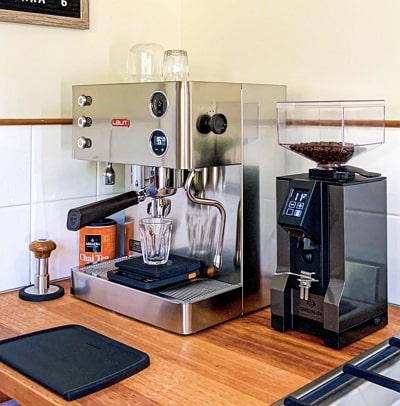
The most important fact in this Elizabeth review is printed on the model plate. The machine available from Lelit US and Clive for $1,799.95 on September 15, 2026 is the established Elizabeth PL92T, with PL92T-120 identifying the 120 V, 60 Hz Type B version. It uses a 300 ml brass coffee boiler, 600 ml stainless steam boiler and familiar button-led LCC system.
Elizabeth3 is PL92T3. Lelit’s global page now documents it as a separate generation with a redesigned 200 ml heated coffee group, new silent pump, three-hole steam tip and electronic Pagaia flow-control system. Pagaia supports two automatic profiles, user programs with up to five extraction steps and a freestyle mode. None of that hardware belongs to the PL92T scored here.
The PL92T3 page includes 120 V codes, which demonstrates an electrical configuration, not a confirmed United States launch, stock date or retail price. I found no reliable US offer to anchor those questions on the review date. That leaves a clean decision: buy PL92T because its current features and price solve today’s problem, or wait because Pagaia is central to what you want. Do not buy current stock while expecting a firmware transformation. Put the exact code on the invoice.
03First week
Set water, heat time and one simple recipe
Test source water and install the supplied treatment only if it matches the live instructions and local chemistry. A small reservoir cartridge has a finite capacity and does not make every hard water safe forever. Keep hardness records, replace treatment on schedule and avoid casual boiler descaling. Two-boiler mineral work is better prevented and, when necessary, handled under manufacturer or seller guidance.
Turn on both boilers and allow about 20 minutes before judging stability. The LCC may show readiness earlier; that means the sensor target has been reached, not that every gram of metal has fully equalized under every protocol. Lock the portafilter in loosely during warm-up and warm cups with a brief water routine that follows the manual rather than excessive flushing.
Start with the 14–18 g basket, a dose appropriate to its coffee, a roughly 1:2 yield and no elaborate preinfusion. Dial grind first. Then program one coffee button by time while continuing to weigh output. Once the basic recipe is repeatable, explore a short pump wetting and pause or the steam-pressure method. These are editorial starting steps, not Coffeedant taste results.
04Coffee performance
Choose a preinfusion mode before chasing a longer shot time
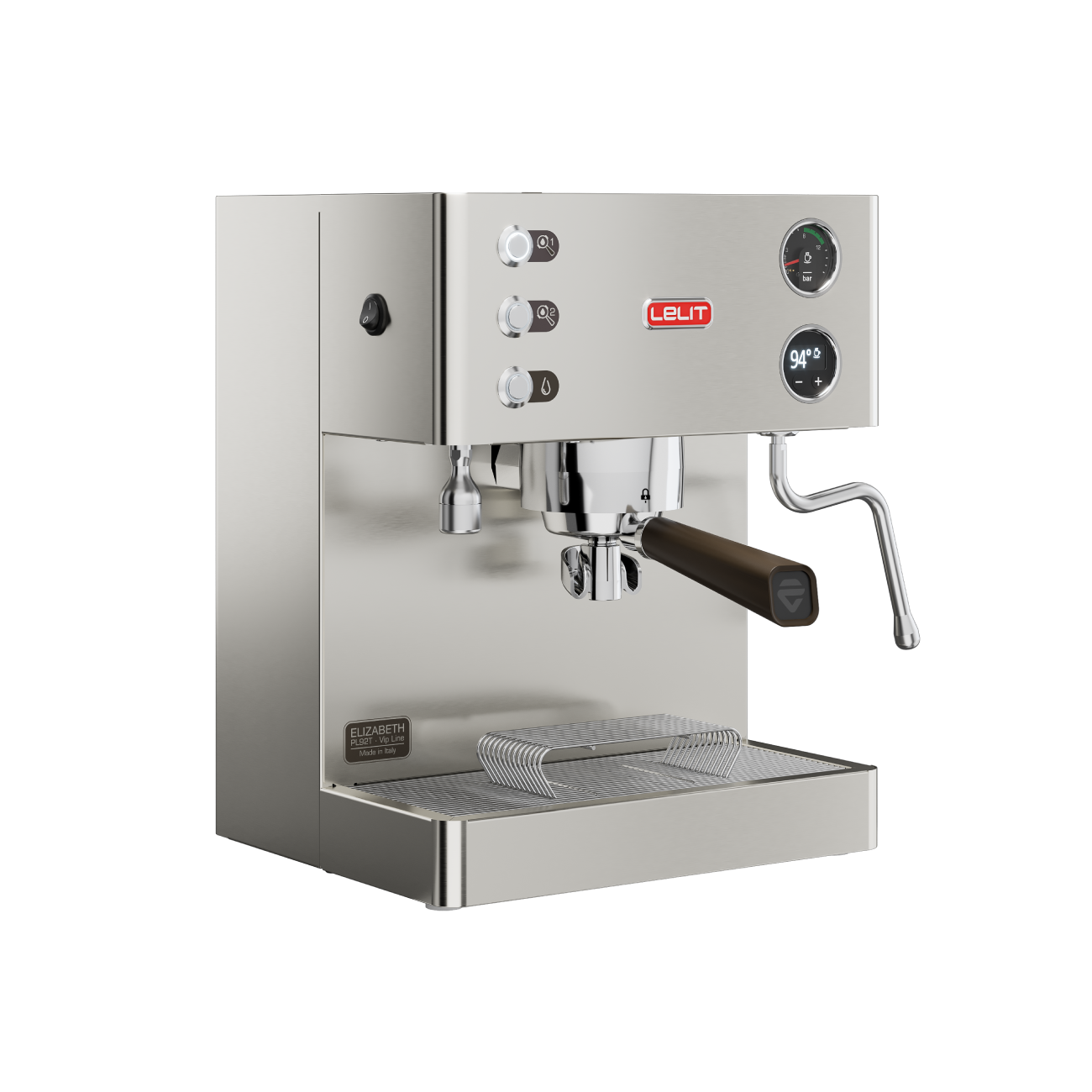
Elizabeth's most useful coffee feature is the ability to approach the first seconds of extraction in different ways. Steam-assisted preinfusion wets the coffee under low pressure from the steam system. Bloom preinfusion instead introduces water, pauses, then resumes pumping. They are different experiments, and the steam boiler's operating state matters. Check the extended guide and firmware before copying a button sequence. [source] [source]
Begin with one bean, a dose suited to the supplied basket and a weighed output. Use a simple recipe without adding a long pause, establish a grind that tastes reasonable, then compare one preinfusion change at the same dose and beverage mass. Record whether your timer includes wetting and soaking. A 35-second recipe with a pause cannot be judged against a 25-second continuous extraction by the clock alone.
Do not confuse the two programmable coffee buttons with gravimetric dosing. The PL92T stops on time; it cannot recognize that yesterday's grind now produces more liquid. Recheck the cup on a scale after changing beans, grind or preinfusion. The pressure gauge is useful context, but a particular needle position does not prove even extraction or a sweeter drink.
If the first shot differs from the second, repeat the same warm-up and flush routine before changing grind. Owner reports do not establish a universal pressure fault; persistent deviations need seller support. [source]
Espresso assessment
Espresso: deep programmed control, not live profiling
PL92T can set brew temperature, pump-on and pause behavior, preinfusion time and a timed dose for each coffee button. It cannot vary flow through a paddle during the shot, and time does not guarantee the same mass when coffee changes.
| Signal | What the evidence says | Buying consequence |
|---|---|---|
| Two preinfusion styles | The LCC supports pump-and-pause bloom behavior and steam-pressure-assisted wetting according to current guides and independent demonstrations. | Use one simple mode first; recipe complexity cannot compensate for poor grind and distribution. |
| Timed buttons | Official material says brewing time is programmable and the display shows extraction time. | Saved buttons improve repetition, but a scale remains the check on output. |
| Independent results | Kaffeemacher, CoffeeKev, Coffeeness and Lance Hedrick report strong espresso capability while noting warm-up and build tradeoffs. | The performance case is robust without claiming Coffeedant tasted it. |
05Steam performance
Make two flat whites without turning simultaneous steaming into a juggling act
The separate 600 ml steam boiler lets the PL92T brew while you texture milk. That removes the brew-to-steam temperature change of a single boiler; it does not remove dosing, tamping or cleaning. The established machine uses an insulated multidirectional wand with a two-hole tip. Its value is especially clear when the household repeats two milk drinks rather than making one occasional cappuccino. [source]
For the first few sessions, brew and steam consecutively even though the machine permits overlap. Find a stable pitcher position, add a little air early and then concentrate on a rolling milk surface. Once that movement is repeatable, begin steaming during extraction while keeping the scale and stop button in view. Close the steam valve before removing the pitcher, then wipe and purge promptly.
If a larger jug loses the rolling movement or steam pace drops, reduce the fill and let the boiler recover. The 600 ml specification is boiler capacity, not a promised continuous milk batch.
If you rarely steam, the original Profitec GO may cover the espresso requirement with a smaller station. If two milk drinks are the daily baseline, Elizabeth's separate steam circuit is a more meaningful upgrade than an extra menu option.
Milk assessment
Milk: compact dual-boiler speed is the point
Steam is immediately available once the second boiler is ready, and espresso can run at the same time. The anti-burn multidirectional wand avoids the single-boiler wait that defines cheaper upgrades.
| Signal | What the evidence says | Buying consequence |
|---|---|---|
| 600 ml boiler | Lelit specifies a separate AISI 316L steam and hot-water boiler. | Enough for a normal household sequence, with less reserve than larger prosumer machines. |
| Independent timing | CoffeeKev reports roughly 24–33 seconds for its milk protocol depending on steam setting. | Begin conservatively and adjust temperature or technique rather than assuming maximum power is best. |
| Direct comparison | Clive’s compact-machine comparison gives Silvia Pro X the steam-power edge while rating Elizabeth close behind. | Choose Silvia for raw reserve; choose Elizabeth for its broader preinfusion and button workflow. |
06Daily cadence
A repeatable two-person morning, from warm-up to an empty tray
- Before grinding: check tank level, clear the tray, heat the fitted portafilter and warm the cups. Use the same starting routine each morning.
- First drink: dry the basket, prepare the puck, start the chosen timed button and watch beverage mass. Add simultaneous steaming only when you can stop both jobs comfortably.
- Second drink: knock out and rinse the basket, dry it, prepare the second dose and repeat. There is no single-boiler steam-to-brew cooling step between the two.
- Finish: wipe and purge the wand, clean the group as directed, put milk away and empty rinse water before carrying a full tray.
The LCC can manage automatic purge, steam-boiler enablement and standby, but those settings should simplify an already understood routine. Extra flushing changes both thermal history and tray fill. Keep it consistent while diagnosing a recipe; reducing every flush to save water can change the experiment you thought you were repeating.
Elizabeth is strongest when one person wants shot experimentation and the household also needs milk drinks. For a more switch-led dual boiler with volumetric stopping, compare the North American Classic GT. For the established Lelit, check the PL92T model plate; the newer Elizabeth3 PL92T3 has a separate feature set.
Workflow assessment
Workflow: program the routine, then keep using the scale
A scheduled smart plug can start the machine ahead of use because PL92T has no built-in clock. Once warm, a shot button, live timer and simultaneous steam reduce attention without turning preparation automatic.
| Signal | What the evidence says | Buying consequence |
|---|---|---|
| Readiness disagreement | The machine signals usable readiness early; independent work recommends about 20 minutes for stronger thermal equilibrium. | Plan to the longer interval when consistency matters. |
| Reserve mode | The LCC warns of low water and can preserve completion of the current operation. | Helpful protection, not permission to ignore the 2.5 L rear tank. |
| Second drink | Separate boilers remove the steam-to-brew transition and buttons repeat shot time. | Dose preparation, grinder speed and compact steam reserve become the queue. |
07Ownership
Good internal access, modest tactile polish and a short base warranty
The base manufacturer warranty in North America is 12 months, non-transferable, for authorized consumer purchases used within the region. It excludes wear, corrosion, mishandling, unauthorized parts or work, irregular power, commercial use and other listed causes. Clive advertised a separate three-year parts-and-labor benefit with its current machine. A retailer promise does not rewrite Lelit’s warranty; read eligibility, water requirements, shipping and remote-diagnosis obligations for both.
Owner evidence is mixed in the useful way. Home-Barista’s long owner-experience thread contains setup discoveries, successful long use and repairs. Coffeetime owners share tuning and two-week through later impressions. Clive’s 56-review pool is largely positive about espresso, steam and value while containing specific pump, part and tank complaints. Reddit adds buying and successor anxiety. These pools explain likely chores and annoyances, not a failure percentage.
Protect both boilers through water planning, daily wand care, water-only group rinsing and the manual’s detergent backflush schedule. Do not routinely descale a dual boiler without the correct instructions. If an internal leak, erratic fill or electrical symptom appears, stop heating and use qualified support.
Build assessment
Build: serviceable does not mean indestructible
Lelit lists brushed stainless bodywork, brass brew boiler, stainless steam boiler and a 15.3 kg machine. Independent reviewers admire the compact use of space while criticizing sheet-metal feel, sharp edges, plastic knob or tamper and tank details.
| Signal | What the evidence says | Buying consequence |
|---|---|---|
| Parts and support | Clive hosts a 23-page parts diagram and a current support collection for PL92T; Lelit US offers authorized service after warranty. | Seller support can materially change the ownership experience. |
| Manufacturer warranty | Lelit North America publishes 12 months, non-transferable, for authorized consumer purchases used in-region. | Clive separately advertises three years on its eligible sale; read both live terms rather than combining them. |
| Owner patterns | Pools contain many satisfied long-use reports plus pump, valve, tank and leak repairs. | Plan maintenance and support, but do not infer a defect percentage. |
08Generation split
PL92T3 is a different machine, not a free firmware upgrade
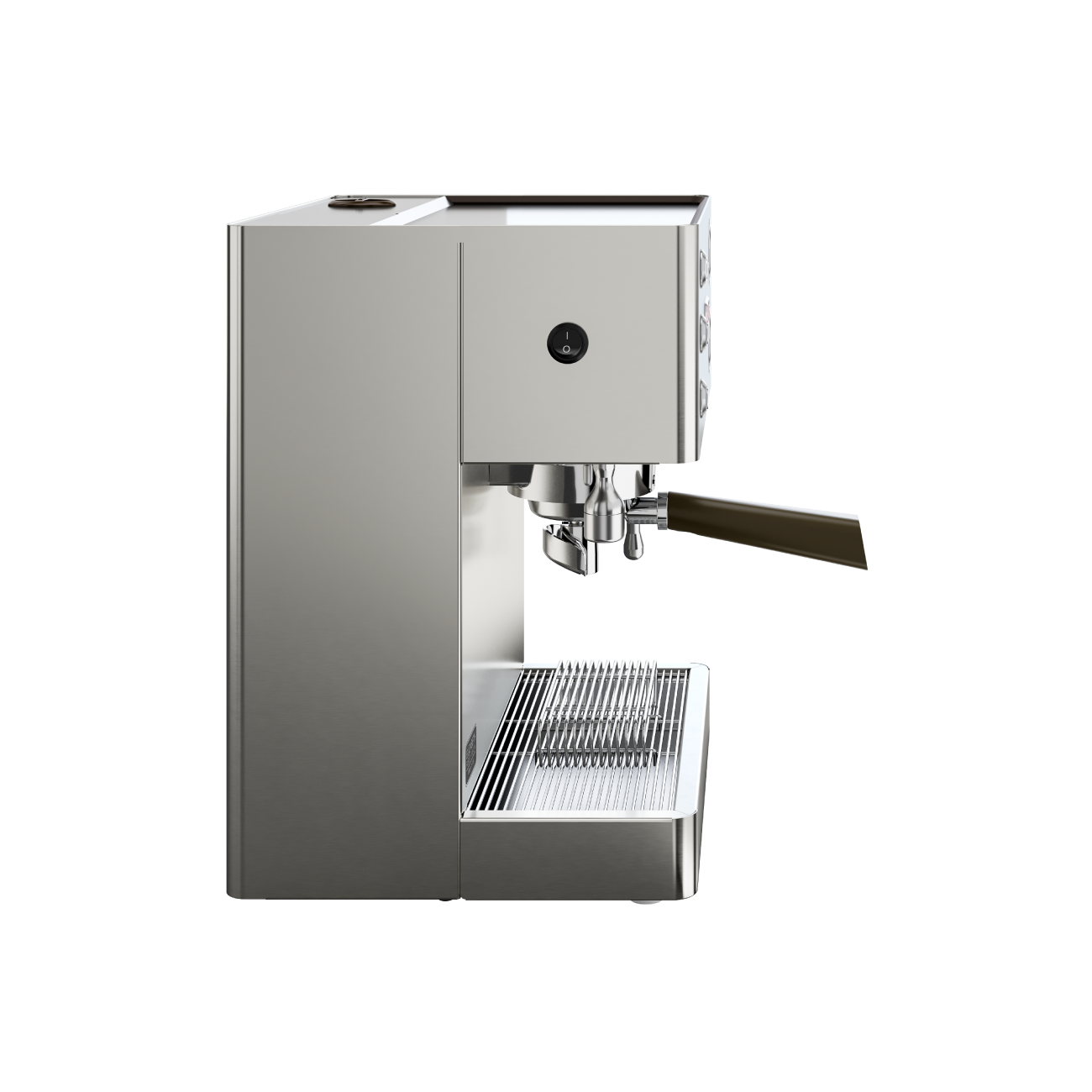
The PL92T reviewed here has timed buttons, LCC settings and two preinfusion approaches. It does not have Pagaia flow control, line-pressure preinfusion, plumbing or beverage weighing.
Lelit's separate Elizabeth3 PL92T3 record adds Pagaia, a new heated group, a 200 ml coffee boiler, programmable multistep profiles and a three-hole steam tip. Do not buy PL92T stock expecting those additions, and do not transfer PL92T3 recipes to the older controls.
Choose the established model when two-boiler milk service and its documented LCC controls already cover your routine. Verify the successor's regional stock, price, manual and support separately before making it a purchase comparison.
Features assessment
Features: keep PL92T and PL92T3 on separate scorecards
The current machine’s OLED LCC manages coffee and steam temperature, timed coffee buttons, preinfusion, automatic purge, standby, washing and steam-boiler disable. The gauge displays pump-side coffee pressure.
| Signal | What the evidence says | Buying consequence |
|---|---|---|
| Useful automation | Timed buttons and purge settings remove repeated inputs while the owner still grinds, tamps and verifies yield. | Good balance for a shared enthusiast household. |
| No live flow control | PL92T does not have Pagaia or a manual profiling lever. | Do not expect a software update to add PL92T3 hardware. |
| Separate successor | PL92T3 adds a new heated group, silent pump, electronic Pagaia, up to five programmed extraction steps, freestyle mode and other revisions. | Wait for confirmed US price and support if those exact features justify delay. |
09Price and alternatives
Buy the current machine only for its current strengths
At $1,799.95, PL92T competes with Rancilio Silvia Pro X, Breville Dual Boiler and newer compact dual boilers, while sitting well below Lelit Bianca and Linea Micra. Add an espresso grinder, scale, correct water and ordinary care products to every comparison.
The unpriced PL92T3 is not a valid numeric comparison yet. It may arrive above current Elizabeth, and PL92T stock may change, but neither result is established. The responsible decision uses today’s $1,799.95 offer and today’s PL92T features.
| Machine | Price position | The quick decision |
|---|---|---|
| Elizabeth PL92T | $1,799.95 US check | Choose for compact control depth and two-drink milk cadence. |
| Rancilio Silvia Pro X | Similar compact dual-boiler class | Choose for stronger steam and conventional build. |
| Breville Dual Boiler BES920XL | Similar or lower depending on live promotion | Choose for broad convenience and temperature control. |
| Lelit Bianca V3 | Higher prosumer tier | Choose for plumbing, rotary pump and manual flow. |
DetailsOpen the technical and workflow comparison
| Machine | Dimensions | Heating | Coffee setup | Milk workflow | Best fit |
|---|---|---|---|---|---|
| Elizabeth PL92T | 32 W × 38 D × 38 H cm official | 300 ml plus 600 ml dual boiler; plan about 20 minutes | 58 mm, PID, timed buttons and two preinfusion approaches | Simultaneous two-hole manual steam | Feature-focused couple or small household |
| Rancilio Silvia Pro X | Narrow, deep traditional steel case | Dual boiler with soft infusion | 58 mm, PID, manual shot stop | Strong simultaneous manual steam | Build and steam over programmable depth |
| Breville Dual Boiler BES920XL | Wider appliance body with front-fill option | Dual boiler with active group heating | 58 mm, programmable preinfusion and volumetric controls | Simultaneous manual steam | Workflow features over Italian styling |
| Lelit Bianca V3 | Larger E61 body with movable reservoir | E61 dual boiler, longer warm-up ritual | 58 mm manual paddle profiling | Larger dual-boiler steam system | Hands-on pressure and flow exploration |
Elizabeth3 PL92T3 is excluded because a confirmed US price and date were unavailable. Compare exact electrical versions, seller coverage and complete grinder-equipped station costs.
Value assessment
Value: a strong live offer beside an unpriced next generation
Lelit US and Clive both displayed $1,799.95 and add-to-cart controls for the established Elizabeth on the check date. Clive stated a separate three-year parts-and-labor offer, while Lelit’s manufacturer warranty is 12 months.
| Signal | What the evidence says | Buying consequence |
|---|---|---|
| Current PL92T price | $1,799.95 in live US direct and specialty listings on September 15, 2026. | An unusually complete machine below $2,000, before grinder and water care. |
| PL92T3 status | The global Lelit page gives specifications and 120 V codes but no confirmed US offer or price. | Do not invent a replacement date, discount expectation or US MSRP. |
| Direct rivals | Silvia Pro X emphasizes steam and build; Breville Dual Boiler emphasizes flexible preinfusion and convenience; Bianca adds flow control at greater cost. | Choose the feature set and support route, not the highest score in isolation. |
10Four routes
Choose the controls that fit your daily order
Espresso first
Profitec GO
Compare factory PID feedback when milk is occasional.
Read the GO reviewRancilio dual boiler
Silvia Pro X
Compare its steam reserve and simpler infusion routine.
Read the Pro X reviewProgrammable brewing
Breville Dual Boiler
Compare recipe flexibility and local appliance support.
Read the Dual Boiler reviewFlow and plumbing
Lelit Bianca V3
Compare manual paddle control and a rotary pump.
Read the Bianca review11Quick reference
Lelit Elizabeth PL92T FAQ
Is Lelit Elizabeth discontinued?
The PL92T was still available with add-to-cart controls from Lelit US and Clive on September 15, 2026. Lelit also lists the separate Elizabeth3 PL92T3. Regional stock can change, so “successor announced” is more accurate than assuming current PL92T is unavailable.
Will PL92T get Pagaia?
No hardware retrofit or update was documented. Pagaia belongs to the separate PL92T3 generation with a new pump, group and control system.
Does PL92T stop shots automatically?
Its buttons stop after programmed brew time. That is not measurement by volume or weight, so verify output on a scale when coffee or grind changes.
What is the real warm-up time?
The display indicates usable readiness earlier, while two independent reviewers point to about 20 minutes for stronger thermal equilibrium. Use the longer interval for comparative dialing.
Can Elizabeth make back-to-back lattes?
Yes. Separate boilers support simultaneous espresso and steam. The 600 ml steam boiler fits a normal home sequence, although larger machines retain more reserve for repeated large pitchers.
What warranty applies in the US?
Lelit publishes a 12-month non-transferable North American warranty for eligible authorized consumer purchases. Clive separately advertised three years for its sale. Read both sets of current terms.
What remains unknown?
PL92T3’s US sale date, price and mature independent evidence were unconfirmed. Neither PL92T nor PL92T3 has public population-level reliability data.
See the machine in use
An independent video perspective

Lance Hedrick · Third-party perspective
Dual Boiler? Look no Further
Published
A detailed independent PL92T review covering extraction controls, steaming and value. Results and cup judgments belong to the creator’s setup, not a Coffeedant test.
Watch on YouTube ↗Why I trust the verdict
What the evidence lets me say with confidence
I treated PL92T and PL92T3 as separate products, checked both official product pages plus the live Lelit US and Clive PL92T offers on September 15, 2026, and reconciled manuals, parts, warranty, five independent tests or comparisons and three owner pools. No US PL92T3 date or price is assumed. Coffeedant performed no physical test.
Check the evidence
Sources and further reading
- Lelit Elizabeth PL92T official product page
Current PL92T functions, variants, dimensions, boilers, accessories and 120 V code.
- Lelit US Elizabeth store page
$1,799.95 and add-to-cart state for current Elizabeth checked September 15, 2026.
- Lelit Elizabeth PL92T user manual
Current retailer-hosted manual and exact operating, LCC, safety and care guidance.
- Lelit North America warranty
Current 12-month, non-transferable coverage, authorized-purchase rules, claim process and exclusions.
- Lelit Elizabeth V2 parts diagram
Retailer-hosted 23-page assembly and parts reference; verify exact revision fit.
- Clive Coffee: Lelit Elizabeth product page
$1,799.95, current stock controls, specifications, support and separate three-year coverage statement checked September 15, 2026.
- Lelit Elizabeth3 PL92T3 official product page
Separate-generation identity, Pagaia modes, revised hardware and electrical codes; no confirmed US price/date used.
- Kaffeemacher: Lelit Elizabeth PL92T measured test
Purchased-machine heat, energy, temperature, preinfusion, build and workflow analysis, updated with successor context.
- Lance Hedrick: Dual Boiler? Look no Further
Detailed independent PL92T review and workflow demonstration; selected video.
- CoffeeKev: Lelit Elizabeth review
Independent 2026 hands-on measurements, controls, steam and Breville Dual Boiler comparison.
- Coffeeness: Lelit Elizabeth review
Independent review of control depth, compact boilers, milk and daily use.
- Clive Coffee compact espresso machine comparison
Direct retailer test comparing Elizabeth, Silvia Pro X and peers, including steam and maintenance.
- 1st-line Equipment: Elizabeth versus Silvia Pro
Direct specialist video comparison of exact dual-boiler workflows; retailer perspective noted.
- Home-Barista: Lelit Elizabeth owner experience
Long-running technical owner pool with setup, use, maintenance and repair reports.
- Coffeetime: Lelit Elizabeth two-week experience
Separate specialist forum owner pool; initial and follow-up observations are anecdotal.
- Clive Coffee Elizabeth owner review pool
56-review retailer pool on the check date, including long-use praise and specific repairs; self-selected.
- r/espresso Elizabeth buying and successor discussion
Broader community pool on alternatives and ownership priorities; not a controlled test.
- Lelit PL92T extended technical guide
Manufacturer-authored extended LCC guide, hosted by a retailer. Check firmware before applying advanced settings.
- Coffee Kev: Elizabeth hands-on review
Independent first-person account distinguishes steam-assisted and bloom preinfusion. Its observations are not Coffeedant testing.
- Elizabeth owners: everyday strengths and frustrations
Self-selected reports about tank access, controls and first-shot variation. Used as inspection questions, not universal faults or reliability rates.
The buying decision
Final verdict: PL92T is still excellent, if it is the generation you want
The established Elizabeth remains one of the strongest control packages around $1,800: two boilers, useful LCC automation, two preinfusion routes, timed buttons, a shot display and genuinely capable steam. Its casework and touch points are less luxurious than the specification list, but service documents and strong independent evidence make the value argument credible.
The generation choice must be explicit. PL92T3 adds hardware and Pagaia that PL92T will not gain, while its US date and price were unconfirmed. Buy today’s PL92T for today’s features, current availability and seller support. Wait if programmable multi-step flow is the reason you are shopping. Either path is sensible; pretending they are the same Elizabeth is not.
Search Amazon