
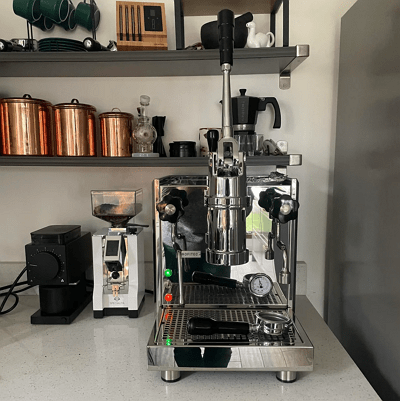
Spring lever “dipper” with hidden PID • Overall score: 8.8 / 10 • Built for long-term ownership
Profitec Pro 800
A reference-grade spring lever designed for sweetness, syrupy texture, and café-level steam—plus modern convenience via a discreet boiler PID and flexible tank/plumbed setup.
Overview
The Profitec Pro 800 is a serious spring lever “dipper” machine: brew water is drawn straight from the boiler into the group during the lever stroke. You get a huge 3.5 L copper boiler, a heavy 7.8 kg lever group for thermal stability, a discreet PID (hidden behind the drip tray) to tune boiler temperature, and tank-or-plumb flexibility. The payoff is quiet, syrupy, sweet espresso and authoritative steam—built to be serviced and kept for the long haul.
Pros
- Spring-lever profile yields sweet, syrupy, structured shots
- Huge 3.5 L copper boiler = powerful, dry steam with fast recovery
- Hidden PID + ECO mode for clean fascia + precise boiler control
- Tank or plumb-in, with drain provision for permanent installs
- Excellent included kit: 3 portafilters incl. bottomless + baskets
Cons
- Tall footprint with lever up (cabinet clearance required)
- Warm-up + lever cadence demand patience and routine
- No volumetrics, shot timer, or electronic preinfusion programming
- Lever seals/gaskets are wear parts (periodic replacement)
- Dipper temperature strategy is “coarse” (boiler temp shapes brew temp)
Features
- System: spring lever, dipper single-circuit with PID
- Boiler: 3.5 L copper
- Group: heavy lever group, 7.8 kg mass
- PID: behind drip tray; Celsius/Fahrenheit; ECO mode
- Water source: switchable 2.8 L tank or direct water line
- Pump behavior: vibration pump used only in tank mode (inactive when plumbed)
- Gauge: large boiler pressure gauge
- Drip tray: ~1.25 L capacity
- Steam/hot water: lever-style valves + quality wands
- Power: 230 V 1600 W or 115 V 1500 W
- Size (lever down): 339 × 505 × 492 mm
- Size (lever up): 339 × 593 × 740 mm
- Weight: 35.5 kg
What’s in the box
- 1-spout portafilter
- 2-spout portafilter
- Bottomless portafilter
- 7 g, 14 g, 21 g baskets
- Tamper + cleaning brush
- Metal hose for plumbing (1/8″ to 3/8″ BSPP) + drain container
- User manual
Pricing
- Positioning: premium spring lever class (built to be kept for decades)
- Value logic: you’re paying for lever flavor + big-boiler steam + serviceable longevity, not “features on a screen.”
- Shopping tip: measure cabinet clearance with the lever up before buying.
FAQs
- What makes it taste different from pump machines?
- The spring lever naturally produces a declining pressure profile—strong early flow, then a gentle taper—often giving sweeter, smoother shots with less harshness.
- Can I stop a shot once the spring is engaged?
- Not really. Once the spring takes over, you let it complete the stroke. Always wait for the lever to return fully vertical before removing the portafilter.
- Does it have a brew boiler?
- No—this is a dipper layout. Boiler temperature strongly influences brew temperature, so you manage coffee changes primarily with the PID setpoint + preinfusion habits.
- Tank or plumb-in?
- Both. In tank mode, the vibration pump assists fills; plumbed-in, line pressure handles prefill and the pump stays off during shots (very quiet).
Who it is for
- Lever traditionalists who want modern temperature control without a “techy” front panel
- Milk-forward home bars that need real steam power and fast recovery
- Enthusiasts who value serviceability, manuals/diagrams, and long parts support
- People who want quiet extractions and are happy to learn lever cadence
Who should avoid it
- Anyone wanting push-button volumetrics, shot timers, or automated preinfusion programming
- Kitchens with tight vertical space (lever-up height is substantial)
- Users who want espresso without learning a routine
- People who prefer quick “on-demand” warm-up over full heat soak
Daily workflow
- Heat soak: keep the portafilter locked in; allow full warm-up so group + piping equalize.
- Blank pull: run a short blank pull before the first shot to heat the path to the piston.
- Preinfuse: pull lever down to fill; hold briefly when first beads appear; release to let the spring run.
- Steam: purge, stretch, roll to temp. Big boiler makes back-to-back milk drinks easy.
- Care: keep wand clean; brush group cold; no blind-basket backflush on lever group.
Profitec builds machines with a clear priority order: durable parts, service access, and repeatable coffee mechanics. The Profitec Pro 800 is the brand’s statement spring lever, a dipper-style single-boiler layout with a very large copper boiler and a discreet PID for boiler temperature. You can run it from the internal tank or plumb it to a direct water line, so it fits both kitchen counters and permanent bar builds without turning into a plumbing project.
On our bench, the Pro 800 reads as a lever-first espresso machine that happens to have modern quality-of-life details. The sensory “wow” is the extraction itself: once you release the lever, the spring takes over and the machine goes calm. That declining-pressure lever curve is why the Pro 800 tends to produce syrupy body, rounded sweetness, and a smooth finish, especially on medium roasts and classic blends.
The reality check is workflow. This is a big, tall machine that wants cabinet clearance, a full warm-up, and a consistent cadence. It is also a dipper, so brew temperature is tied to boiler temperature and your pace, not a separate brew boiler with active management. If you want push-button repeatability and “set it and forget it” convenience, you are shopping in the wrong aisle.
Shop the essentials
The small upgrades that make a home coffee setup cleaner, smoother, and more enjoyable to use every day.

Cleaner & Descaler Tablets
Keeps your machine clean, helps prevent buildup, and protects long-term performance.
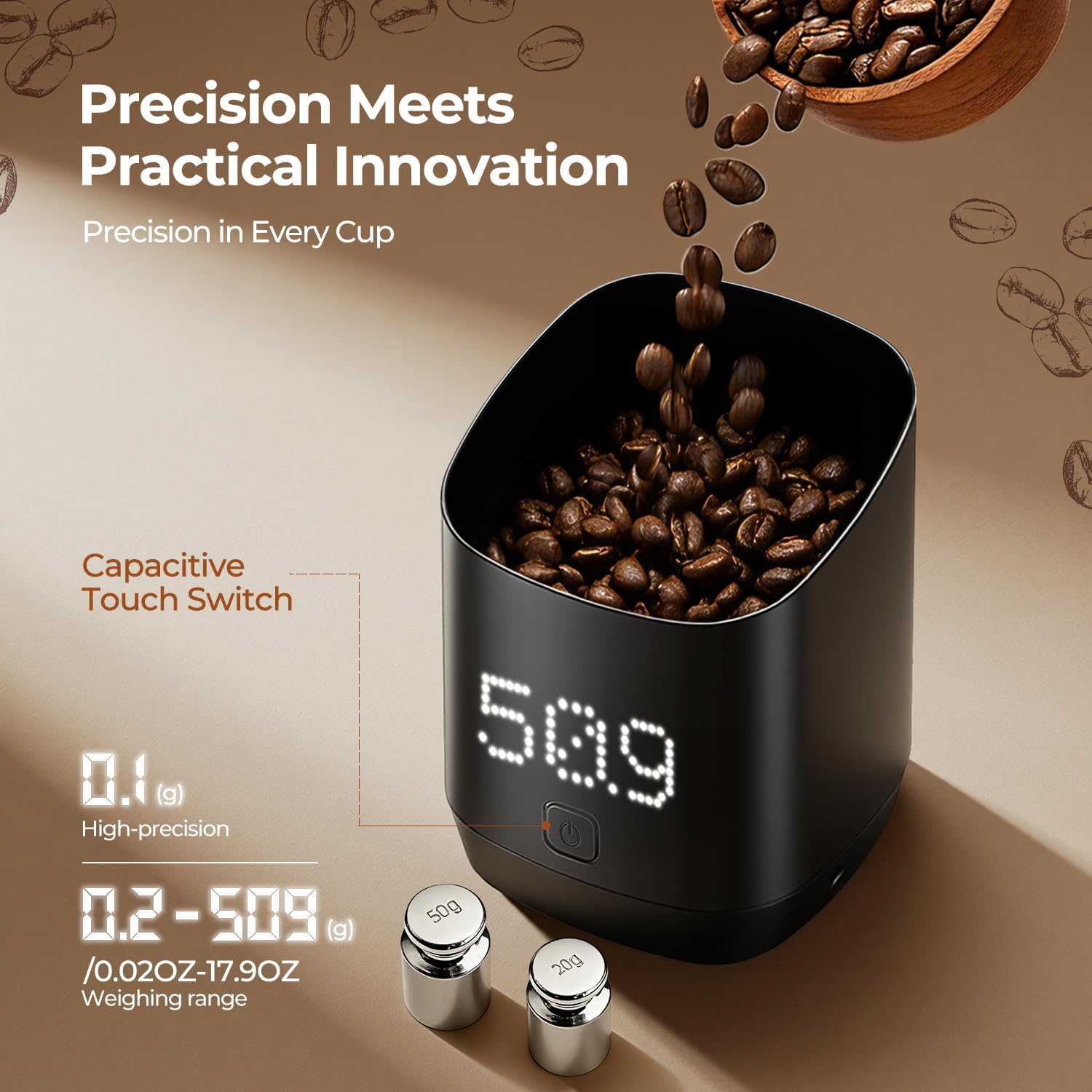
Digital Dosing Cup
Makes weighing beans faster and cleaner, with less mess around the grinder.
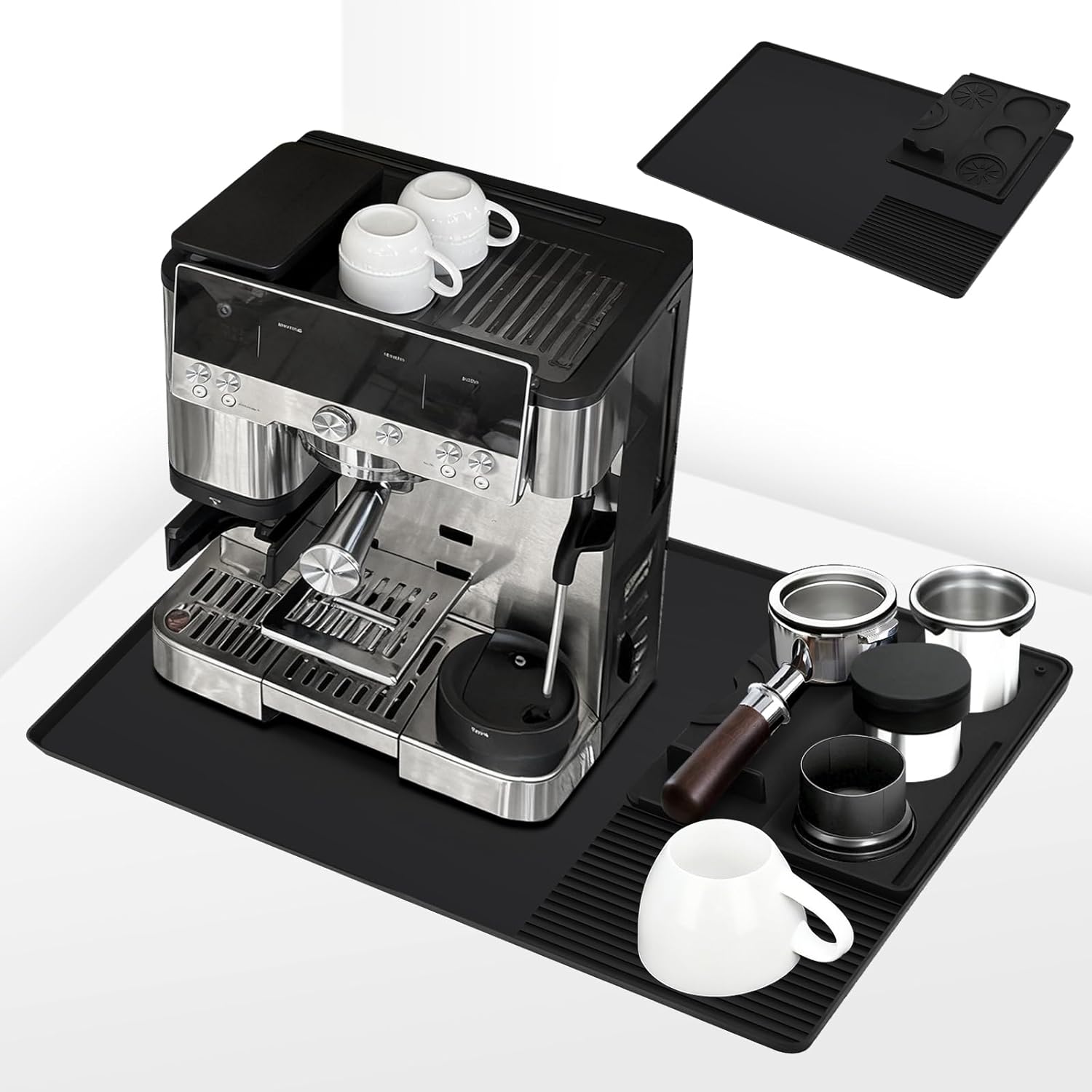
Silicone Mat
Protects your counter, catches spills, and gives your setup a cleaner working surface.

Vacuum Coffee Canister
Helps beans stay fresher longer by limiting air exposure after opening the bag.
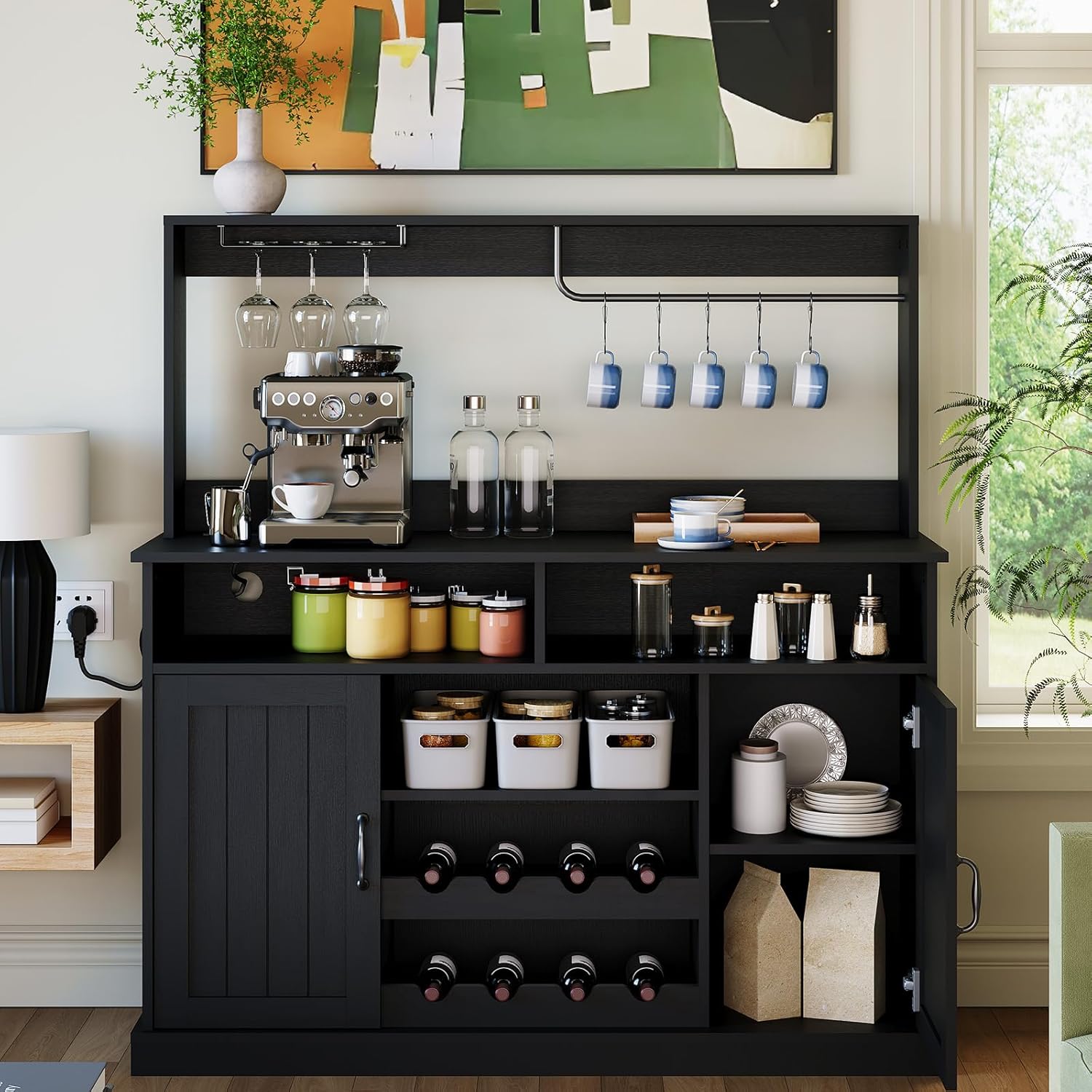
Farmhouse Coffee Bar Cabinet
Gives your machine, cups, beans, and accessories one dedicated home instead of cluttering the kitchen.
Milk is where the Pro 800 earns its keep for drink volume. The large boiler translates into dry, authoritative steam with recovery that feels café-speed for a home station. You get manual lever valves and a traditional steam wand, so you can texture for cappuccinos and lattes back to back without waiting. It is manual control throughout, with no auto-frothing shortcuts and no milk-temperature presets.
If you’re cross-shopping spring levers, we usually frame the Pro 800 against Londinium R24 for a more boutique lever experience, Bezzera Strega for a lever-adjacent alternative, La Pavoni Europiccola for compact classic lever ownership, and Flair 58 if you want lever profiling on a tighter budget and can live with a separate kettle workflow. Inside Profitec’s lineup, the “buying truth” is simple: choose Pro 800 for spring-lever taste and steam authority, or choose a pump machine like Profitec Pro 700 or Profitec Pro 600 if you want modern espresso control in a more conventional daily routine.
Overview
The Profitec Pro 800 exists to solve a different home espresso problem than most high-end pump machines: deliver the classic spring lever pressure curve with modern temperature control and real milk power, in a chassis that is built to be serviced long-term. You get a 3.5 L copper boiler, a very heavy 7.8 kg lever group, and a discreet PID tucked behind the drip tray so the front stays traditional. It can run from a tank or a direct water line, which makes it equally comfortable on a kitchen counter or in a permanent bar install.
The Pro 800’s brew engine is simple by design: a dipper layout that draws brew water directly from the boiler into the group during the lever stroke. There is no separate brew boiler and no pump-driven extraction. In tank mode, a vibration pump assists with boiler fill and group prefill. Once the lever is released, the spring handles the shot quietly and predictably. The “decision” here is not features versus features, it is lever taste and leverage-driven workflow versus pump-style convenience.
Design intent
- Spring lever flavor first: a declining pressure profile that emphasizes sweetness, body, and a smoother finish.
- Thermal stability through mass: the heavy group is designed to resist swing and keep shots steady once the machine is fully warm.
- Hidden precision, classic face: the PID sits behind the drip tray for boiler temperature control without turning the front panel into an electronics display.
- Station flexibility: switchable tank or plumb-in water supply, with provisions that suit permanent installs.
- Service-friendly ownership: traditional materials, accessible internals, and a platform meant to be maintained rather than replaced.
What it gets right in the cup and in cadence
- Lever-style shots that feel “finished”: thick texture, stable crema, and sweetness that plays especially well with medium roasts and classic blends.
- Quiet extractions: once the spring is engaged, the pour is calm compared with most pump machines.
- Real steam authority: the large boiler delivers dry, strong steam that supports back-to-back milk drinks without recovery anxiety.
- Repeatability through routine: once grind, dose, and preinfusion timing are consistent, the lever travel and spring curve repeat very well.
The deliberate trade-offs
- Space and clearance demands: it is tall with the lever up and heavy enough that you plan placement before delivery.
- Warm-up is non-negotiable: the boiler and group want time to fully heat-soak before the first serious shot.
- Dipper temperature realities: brew temperature is tied to boiler temperature and pacing, so you manage heat with setpoint and rhythm, not a dedicated brew boiler.
- Manual on purpose: no volumetrics, no shot timer, no automated preinfusion logic.
- Commitment once the spring runs: you do not “pause” a shot mid-extraction, and lever safety rules matter every session.
Where it fits
The Pro 800 is the right machine for home bars that want spring lever texture and serious steaming power in a serviceable platform, and for people who enjoy learning a repeatable lever cadence. If you want a more conventional daily routine with modern pump-machine controls, you will generally be happier in Profitec’s pump lineup like the Profitec Pro 700, Profitec Pro 600, or an HX workflow like the Profitec Pro 500 PID (and the more compact Profitec Pro 400 if budget and footprint matter more than dual-boiler flexibility).
Cross-shop context on Coffeedant: Pro 800 buyers commonly compare against the Londinium R24 for another premium spring lever lane, the Bezzera Strega for a lever alternative with a different workflow feel, the La Pavoni Europiccola for compact classic lever ownership, and manual levers like the Flair 58 or ROK EspressoGC if you want lever profiling at a lower cost and can accept more hands-on prep and separate-heating workflows.
Profitec lineup: which model to buy
The Profitec lineup is less about flashy features and more about choosing the right brew architecture for your day-to-day. The Pro 800 is the outlier because it is a true spring lever. Everything else in the range is a pump machine in different formats (single boiler, HX, or dual boiler). That means the decision is not “which one makes the best espresso,” it is which workflow and flavor signature fits how you actually drink coffee. For the full brand overview, start here: Profitec espresso machine hub.
| Model | Lineup slot | Compared to Pro 800 | Typical price and note |
|---|---|---|---|
| Profitec Pro 800 Reference | Spring lever flagship | The “buy the lever taste” option. A spring lever dipper layout with a big boiler, quiet extractions once the spring engages, and the flexibility to run from a tank or a direct water line. You choose it for texture, sweetness, and lever cadence, not automation. | Premium category pricing • Value is in lever flavor + steam authority, not feature count |
| Profitec Pro 700 | Dual boiler “daily driver” | Easier to run for repeatable daily espresso, especially if multiple people use the machine. You gain conventional pump workflow and modern control feel, and you give up the spring lever pressure curve and its signature cup texture. | High-end prosumer tier • Buy for modern control and routine consistency |
| Profitec Pro 600 | Dual boiler value lane | A more conventional path into dual-boiler espresso. You trade the Pro 800’s lever ritual and declining pressure profile for a more standard workflow that is easier to teach and repeat. | Strong “spec-per-dollar” category • Buy when you want dual boiler behavior without lever commitment |
| Profitec Pro 500 PID | HX speed + steam | Keeps the focus on milk drinks and daily momentum. You get a familiar pump workflow and strong steaming, but you lose the Pro 800’s quiet spring extraction and lever-style sweetness emphasis. | Mid-to-upper prosumer tier • Best for milk drink households that want simple, fast operation |
| Profitec Pro 400 | Compact HX | A smaller-footprint route to pump espresso and steaming. It is less of a statement machine, easier to place, and easier to live with day to day, but it does not deliver lever texture or lever quietness. | Value-oriented prosumer tier • Buy for footprint and practicality, not lever character |
| Profitec GO | Compact single boiler | The simplest route into Profitec build quality and manual espresso. You trade lever profiling and steam endurance for a lighter, simpler machine that is easier to justify on budget and space. | Entry prosumer tier • Best when you want compact espresso first, milk second |
How to read this: choose Pro 800 if you want spring lever texture, quiet extractions, and big steam, and you are willing to learn cadence. Choose a dual boiler (Pro 700 or Pro 600) if you want a more conventional routine and easier repeatability. Choose an HX (Pro 500 PID or Pro 400) if milk drinks dominate and you want a faster, simpler daily flow. Choose GO if you want compact, manual espresso without committing to a large machine.
Key Profitec Pro 800 Specifications
| Item | Detail |
|---|---|
| Machine | Profitec Pro 800 · Model page · Profitec lineup hub · Coffeedant rating |
| Machine type | Spring lever espresso machine (manual lever with spring-driven extraction) |
| Brew system | Dipper single-circuit layout (brew water is drawn directly from the boiler into the group during the lever stroke) |
| Boiler | 3.5 L copper boiler (large volume for stable heat and strong steam reserves) |
| Group | Heavy spring lever group (listed group mass: 7.8 kg) |
| Temperature control | PID control for boiler temperature (display and settings behind the drip tray) · ECO mode available |
| Water source | Switchable: 2.8 L reservoir or direct water line (user-selectable) |
| Pump behavior | Vibration pump assists only when using the tank (boiler fill and group prefill) · not used during extraction when plumbed |
| Drainage | Provision for direct drain connection (useful for permanent bar installs) |
| Pressure display | Large boiler pressure gauge (front panel) |
| Steam + hot water | Manual lever valves with traditional steam and hot water wands |
| Drip tray | Approx. 1.25 L capacity |
| Included in the box | Single-spout portafilter · double-spout portafilter · bottomless portafilter · 7 g / 14 g / 21 g baskets · tamper · brush · metal hose for plumbing · drain container · manual |
| Electrical | 230 V 1600 W (most regions) or 115 V 1500 W (North America) |
| Dimensions | 339 × 505 × 492 mm (body, lever down; no portafilter) · up to 339 × 593 × 740 mm with portafilter and lever up (clearance planning matters) |
| Weight | 35.5 kg |
| Warranty | Varies by region and retailer |
| Typical price | Premium spring-lever tier pricing (varies widely by region and stock) |
First Impressions & Build Quality
On the counter, the Profitec Pro 800 reads like a serious piece of espresso hardware, not an appliance. It is wide enough to feel substantial at 339 mm, deep at 505 mm, and it carries real mass at about 35.5 kg. The only dimension that can surprise people is vertical clearance: with the lever up, you are planning around roughly 740 mm of height. If you have cabinets or shelves above your station, measure first and be honest about how you want the machine to live day to day.
The machine feels planted because it is planted. The lever action is stable and controlled because the chassis does not shift when the spring loads and unloads. This matters more than people expect: a spring lever is a mechanical system, and the Pro 800 behaves like one that was built to stay put. You can move it for cleaning, but this is not a “slide it around” machine in the way compact pump machines are.
Materials are exactly what you want at this level: a stainless chassis wrapped around a 3.5 L copper boiler, traditional metal wands, and solid valve hardware. The current styling leans classic with practical upgrades, including lever-style steam and hot water valves and wood touch points (lever handle and knobs) that feel more like espresso equipment than kitchen decor. The overall impression is purposeful rather than flashy.
The design detail that tells you Profitec understands the buyer is the PID placement. Boiler temperature control is there when you need it, but the PID is hidden behind the drip tray, so the front remains clean and traditional. Access is simple: pull the tray, adjust the setpoint, and put it back. It’s one of the few “modern” features that genuinely improves ownership without changing what the machine is.
Ergonomics are built around lever workflow. The boiler pressure gauge is large and easy to read at a glance. The drip tray has real capacity (around 1.25 L), and the top panel lifts for direct access to the reservoir. If you want a permanent install, Profitec also makes that straightforward: you can switch between tank and plumb-in behind the tray, and there is provision for a drain connection so the station stays clean during heavier use.
The headline build takeaway is simple: the Pro 800 is built like a machine you maintain, not a machine you replace. It feels engineered around long service life, stable lever behavior, and predictable steaming. The trade-off is that it demands space, clearance, and a bit of respect when you work the spring.
What’s in the Box
- Profitec Pro 800 spring lever espresso machine
- Portafilters:
- Single-spout portafilter
- Double-spout portafilter
- Bottomless portafilter
- Filter baskets:
- 7 g single basket
- 14 g double basket
- 21 g triple basket
- Tamper
- Cleaning brush
- Plumbing parts (for direct water connection), including a metal supply hose
- Drain container (useful if you plan a waste line)
- User manual
Bundles can vary by retailer. Keep the packaging until you confirm the machine heats, fills, and holds pressure normally, and that the water source setting (tank or plumb-in) matches how you intend to run it.
Chassis and internals
The Pro 800 is built like traditional espresso equipment: stainless chassis, a large copper boiler, and a heavy spring lever group that anchors the whole experience. It is a dipper layout, meaning brew water is drawn directly from the boiler into the group during the lever stroke. There is no separate brew boiler and no pump-driven extraction cycle.
Internally, the “modern touch” is the boiler PID, paired with practical installation flexibility. The machine can run from the internal tank or a direct water line. In tank mode a vibration pump assists with boiler fill and group prefill. In plumbed mode, line pressure handles the fill behavior and the machine stays notably quiet during the shot once the spring is engaged.
Controls and touch points
Control is straightforward and tactile: you raise and lower the lever to load the group and start preinfusion, then the spring drives the extraction. Steam and hot water use lever-style valves with traditional wands, so you have fine control with simple, durable hardware. The front panel stays classic, with a large boiler pressure gauge that is easy to read mid-session.
Boiler temperature is managed through a PID hidden behind the drip tray. You pull the tray to access the display, set your boiler temperature, and leave the face clean. The same behind-the-tray area is where the machine’s tank vs plumb-in selection lives, which keeps the “setup” controls out of sight and out of the way.
Counter fit
| Item | Detail | Why it matters |
|---|---|---|
| Dimensions (lever down) | 339 × 505 × 492 mm (≈13.35" W × 19.9" D × 19.4" H) | Depth is the planning constraint on shallow counters. The body height is manageable, but the lever clearance is the real limiter. |
| Max clearance (lever up) | Up to ~740 mm (≈29.1") total height with lever up | Measure under cabinets and shelves. If you cannot run the lever freely, the machine will not be enjoyable to use. |
| Weight | ~35.5 kg (≈78 lb) | Very stable during lever action, but it is not a “slide it forward” machine. Place it where it will live. |
| Water tank | 2.8 L (removable) | Large enough for daily use without constant refills, and it supports running the machine without plumbing. |
| Boiler | 3.5 L copper boiler | Big steam reserves and stable behavior when you make multiple milk drinks back to back. |
| Drip tray | ~1.25 L capacity | Fewer trips to the sink during normal home use, and it pairs well with the machine’s optional drain provision. |
| Plumb-in + drain provision | Direct water connection supported; drain provision available | Useful for permanent bar stations and high drink volume, especially if you want a cleaner counter workflow. |
Testing Results
Tests used fresh beans (a medium roast and a lighter roast), a 58 mm workflow with consistent puck prep, and lever routines that match how owners actually use the Pro 800: full heat soak, a brief blank pull to warm the brew path, controlled preinfusion, then a full spring-driven extraction. Results below focus on what matters most on a spring lever: heat-up behavior, preinfusion feel, shot cadence, steaming performance, and the practical impact of tank vs plumb-in.
| Metric | Result | Method |
|---|---|---|
| Heat-up to usable steam | Typical lever-class warm-up, with better results after full heat soak | Boiler reaches pressure first; best espresso repeatability comes after the group and metalwork fully stabilize. |
| First-shot prep | 1 short blank pull recommended | Used to preheat the brew path through the group before the first real shot of the session. |
| Preinfusion window | Controlled by lever position and timing | Raised lever to fill the group, then held briefly until the puck is evenly wet before releasing the spring. |
| Shot cadence (classic doubles) | Most coffees land in a familiar 25–35 s window from first drops when dialed | Lever release begins spring extraction; time tracked from first visible drops for consistency. |
| Extraction noise | Very quiet once the spring is engaged | Tank mode may add pump sound during group fill; the pour itself remains calm compared with pump machines. |
| Milk steaming performance | Strong, dry steam with little “recovery anxiety” for back-to-back drinks | Textured multiple milk drinks in sequence, purging the wand before and after each cycle. |
| Tank vs plumb-in behavior | Tank uses vibration pump for fill; plumb-in relies on line pressure | Compared feel and noise during group prefill and general station convenience (refill vs fixed install). |
| Routine maintenance time | Daily wipe-down is fast; water quality drives long-term workload | No backflushing routine for the lever group. Focus stayed on cleaning the shower area cold, wand care, and drip tray hygiene. |
Key takeaways from testing
- The Pro 800’s spring lever profile reliably produces dense texture and rounded sweetness when your grind and puck prep are consistent.
- Full heat soak matters. The machine will work sooner, but the best shots show up once the heavy group is properly stabilized.
- Preinfusion is your main tuning lever on the machine. Small timing changes have a bigger impact than people expect.
- Steam is a major strength. The large boiler supports back-to-back milk drinks without the “one drink then wait” rhythm of smaller machines.
- Choose tank vs plumb-in based on station reality. Tank is flexible. Plumb-in is cleaner and can be even quieter in use.
- Water quality is not optional. A big copper boiler rewards soft, stable water and punishes neglect over time.
Espresso Quality: getting the best out of the Profitec Pro 800
The Profitec Pro 800 is a spring lever, which means espresso quality comes from mechanics and routine, not menus. Once you release the handle, the spring drives extraction with a declining pressure profile. That curve is the flavor advantage: it tends to build crema and body early, then eases pressure as the puck depletes, which protects sweetness and softens harsh edges. Your practical control points are five things you can actually repeat: grind, dose, boiler temperature (PID), preinfusion timing, and yield.
The Pro 800 is also a dipper. Brew water is drawn directly from the boiler into the group during the lever stroke, so boiler temperature and your pacing shape brew temperature. Treat the PID as your coarse thermal tool, and treat preinfusion timing as your fine control for flow and balance.
Session protocol that keeps results consistent
- Full heat soak: warm the machine properly, and keep the portafilter locked in while it heats. Levers reward patience.
- Preheat the brew path: run one short blank pull before the first shot to stabilize the group’s internal route to the piston.
- Start with a classic baseline: 18 g in, 36–40 g out, 25–35 seconds from first drops, then adjust with intent.
- Change one variable at a time: fix grind first, then preinfusion, then yield, then PID setpoint.
- Respect lever safety: do not remove the portafilter until the lever returns fully to its rest position.
Flavor targets by coffee style
| Coffee | Baseline recipe (Pro 800) | What it tastes like when right | If too sour / thin | If too bitter / dry |
|---|---|---|---|---|
| Medium espresso blend |
18 g in → 36–40 g out Preinfusion: 2–4 s after first beads PID: mid setpoint |
Chocolate and caramel core, syrupy body, sweet finish | Grind slightly finer or extend preinfusion by 1–2 s; if still sharp, raise PID a small step | Grind slightly coarser or shorten yield; if roast is darker, drop PID a small step |
| Dark roast blend |
18–19 g in → 32–36 g out Preinfusion: 1–3 s PID: lower-mid setpoint |
Dense texture without ashy bite, smooth finish | Shorten yield first, then go a touch finer; keep preinfusion modest so the start is not too aggressive | Go slightly coarser or reduce yield; lower PID a small step and avoid long ratios |
| Light roast or light-medium single origin |
18 g in → 40–45 g out Preinfusion: 4–6 s PID: higher setpoint |
Brighter sweetness with structure, clean finish for a lever | Increase PID slightly and extend preinfusion 1–2 s; if flow is fast, grind finer | Reduce PID slightly or shorten yield; keep preinfusion steady but do not over-hold until the puck washes out |
| Decaf (medium roast) |
18 g in → 36–40 g out Preinfusion: 2–4 s PID: mid setpoint |
Sweet and rounded with good body, minimal papery finish | Grind finer first; extend preinfusion slightly to stabilize flow | Shorten yield and drop PID slightly; decaf turns dry quickly if pushed too long |
Use the Pro 800’s tools like tools
- Preinfusion timing: your most effective lever for controlling the first part of the shot. Longer can help light roasts and reduce channeling. Too long can wash out the puck and flatten flavor.
- PID setpoint: your coarse temperature control on a dipper. Raise it for lighter roasts and longer ratios. Lower it for darker roasts and ristrettos.
- Yield discipline: levers can make long shots drinkable, but yield still matters. If a coffee finishes dry, shorten the yield before chasing exotic adjustments.
- Grind quality: spring levers reward tight grind control. If your grinder has large steps, you will feel it immediately in flow stability.
Diagnostics you can see and taste
| Signal | Likely cause | Targeted fix |
|---|---|---|
| Fast start, blonding early, thin body | Grind too coarse, under-dosed basket, or too short preinfusion for the puck | Grind finer, confirm dose matches the basket, add 1–2 s of preinfusion after first beads |
| Lever rises very slowly, output drips, bitter tail | Grind too fine or puck is choking under spring pressure | Go slightly coarser, reduce preinfusion time, and verify distribution and tamp are level |
| Sour front, sharp finish on light roasts | Too cool at the group or insufficient saturation before spring release | Raise PID slightly, extend preinfusion, and confirm full heat soak plus a blank pull before the first shot |
| Dry, woody finish on medium-dark coffees | Over-extraction from too long a yield or too hot a setpoint | Shorten yield first, then lower PID slightly; keep preinfusion modest |
| Inconsistent shot-to-shot flow | Inconsistent puck prep or inconsistent lever timing | Standardize dose and distribution, keep your preinfusion timing consistent, and keep session pacing steady |
Keep variance low
- Run a consistent warm-up routine. Most “mystery” lever inconsistency is actually thermal inconsistency.
- Choose one coffee for a week while you learn cadence. Levers punish constant bean switching.
- Use scale-controlled water. Large boilers are not forgiving about scale, and scale changes taste and performance.
Milk System: Pro 800 steaming workflow, texture, and consistency
The Pro 800’s milk system is traditional: a manual steam wand driven by a very large boiler. There is no auto-frothing, no preset milk temperature, and no foam program selection. The payoff is steam authority. You can texture milk for back-to-back drinks without the stop-and-wait recovery rhythm that smaller machines often demand. Consistency comes from simple habits: purge, correct tip depth, stable vortex, and immediate wipe-and-purge after every pitcher.
Steam approach → texture → best use case
| Approach | Texture outcome | Best for | Notes |
|---|---|---|---|
| Short stretch, long roll | Glossy microfoam, pourable | Latte art lattes | Introduce air early, then focus on a stable vortex. Do not keep stretching past the first few seconds. |
| Moderate stretch, controlled roll | More foam, still wet | Cappuccinos | Increase air slightly, then roll to integrate. Stop early if the pitcher starts to expand too fast. |
| Minimal stretch | Hot milk with light cap | Flat whites, milk-forward drinks | If drinks taste too milky, fix espresso concentration first. Do not chase it with overheated milk. |
Milk volume and real-world timing
| Pitcher size | Milk volume | Target drinks | Typical steam time* | Tip |
|---|---|---|---|---|
| 12 oz (350 ml) | 120–180 ml | 1 cappuccino or small latte | ~15–25 s | Use small, precise movements. With strong steam, a few millimeters of tip depth changes everything. |
| 20 oz (600 ml) | 200–320 ml | 1 large latte or 2 smaller milk drinks | ~25–40 s | Focus on a stable vortex. If foam gets bubbly, you stretched too long or your tip was too high. |
| 32 oz (950 ml) | 350–550 ml | Multiple milk drinks back to back | ~35–55 s | Start with cold milk. Purge longer before steaming to keep early water from thinning texture. |
*Typical timing varies by milk temperature, pitcher shape, tip geometry, and how aggressively the valve is opened.
Technique: clean steaming that stays consistent
- Purge first: clear condensation from the wand before you touch milk.
- Stretch early, then stop: add air in the first few seconds, then bury the tip slightly to roll and integrate.
- Keep the vortex stable: swirling milk is the goal. Screaming and splashing means the tip position is wrong.
- Stop at serving temperature: overheated milk tastes flat and hides espresso. Use touch or a thermometer, then shut steam cleanly.
- Wipe and purge immediately: this is the single biggest habit that keeps steam performance and hygiene strong.
Texture targets by drink
| Drink | Technique focus | Mouthfeel | Notes |
|---|---|---|---|
| Cappuccino | Moderate stretch, strong roll | Foam-forward but wet | Keep air addition controlled. The Pro 800 has enough steam to overdo foam quickly. |
| Latte | Short stretch, long roll | Glossy, pourable microfoam | Prioritize integration. If the surface looks dull, you stopped rolling too early. |
| Flat white | Minimal stretch | Silky with a thin cap | If texture is too thick, reduce air time, not steam power. Tip depth is the control. |
Keep milk performance sharp
- Cleanliness is performance. Wipe and purge every time, and keep the steam tip clear.
- If steam feels wet, purge longer before steaming and verify the machine is at stable pressure.
- If foam suddenly gets coarse, correct tip position first, then inspect the tip holes for blockage and clean as needed.
Hardware Essentials

Heating, lever group, and water system
The Pro 800 is built around a 3.5 L copper boiler feeding a dipper brew path. Dipper means brew water is drawn straight from the boiler into the group during the lever stroke. There is no separate brew boiler, and extraction is not pump-driven. Once you release the lever, the spring drives the shot with a declining pressure curve.
Water supply is genuinely flexible: you can run from the 2.8 L tank or plumb it to a direct water line. In tank mode a vibration pump assists with filling behavior. In plumbed mode, the machine relies on line pressure for that part of the workflow and stays notably calm once the spring is engaged.
- Boiler: large copper volume = stable heat and serious steam reserves for back-to-back milk drinks.
- Group: heavy spring lever group = stable extractions and the classic lever pressure curve.
- Water: tank or plumb-in = kitchen-friendly or permanent-bar friendly.
- Reality check: this machine rewards heat soak and consistent pacing more than quick on/off use.
Lever group, preinfusion, and what you actually control
The Pro 800’s control philosophy is simple: you control saturation, the spring controls extraction. Pulling the lever loads water into the group and begins puck wetting. Holding briefly gives you preinfusion time to reduce channeling and stabilize the first part of the shot. Releasing the lever starts the spring-driven pull, and the pressure naturally tapers as the spring relaxes.
- Primary controls: grind, dose, preinfusion timing, and yield.
- Temperature tool: boiler PID setpoint shapes brew temperature on a dipper system.
- Safety rule: do not remove the portafilter until the lever is fully returned to its rest position.
Temperature, PID behavior, and hot water use
Because this is a dipper, boiler temperature matters. Profitec’s solution is a PID hidden behind the drip tray. You are not managing a separate brew boiler, so the smart routine is practical: fully heat soak the group, run a short blank pull before the first shot, then keep your pacing consistent. If you want an Americano, treat hot water as a separate tool. Pull a normal lever shot, then add hot water to taste.
Tank vs plumb-in, plus drain planning
The behind-the-tray layout keeps the important installation choices out of sight. The machine can be switched between tank and plumb-in without looking like a plumbing project on the front panel. If you are building a permanent bar, plan your filtration and consider the drain option so your drip tray does not become the bottleneck in busy sessions.
- Tank mode: flexible placement, easy to move, pump assists fill behavior.
- Plumbed mode: cleaner station, less refilling, and a simpler daily rhythm if you make a lot of drinks.
- Drain option: useful for high volume. It reduces sink trips and keeps the bar cleaner.
Steam and hot water hardware
Steam is one of the Pro 800’s strongest ownership benefits. The large boiler produces dry, forceful steam with strong recovery, which is why the machine feels comfortable in milk-heavy households. You get manual control through lever-style valves and a traditional wand, so texture is on you, not a program.
- Steam power: excellent for multiple drinks in a row.
- Control: manual valve and wand geometry reward good technique and consistent habits.
- Hygiene: wipe and purge immediately after steaming to keep performance consistent.
Drip tray, reservoir access, and daily ergonomics
The Pro 800 is big, heavy, and stable, which is the point. The drip tray has real capacity (around 1.25 L), and the top panel lifts for straightforward access to the reservoir. The front gauge is easy to read mid-session. The one real planning constraint is clearance: with the lever up, you need overhead space.
If your station is under cabinets, measure first. Lever clearance is not a minor detail on a spring lever.
Accessories and smart upgrades
With a spring lever, the best upgrades are the unglamorous ones: water quality, spares, and a grinder that can hold tight adjustments. The machine already ships with a generous portafilter kit. Long-term ownership gets easier when you keep the right consumables on hand.
- Water strategy: scale-controlled water is the single biggest reliability and taste upgrade on a large copper boiler.
- Spare seals: keep a spare group gasket set so a small leak does not become downtime.
- Grinder quality: a lever is honest. A precise grinder makes the Pro 800 feel easier and more consistent.
- Basic tools: a scale and timer make lever dialing faster and less frustrating.
| Component | Spec | Use note |
|---|---|---|
| System | Spring lever, dipper single circuit | Preinfusion timing and pacing are your control points. The spring supplies the pressure curve. |
| Boiler | 3.5 L copper | Strong steam reserves and stable behavior when making multiple milk drinks. |
| Temperature control | PID (behind drip tray) | Controls boiler temperature, which influences brew temperature on a dipper layout. |
| Water source | 2.8 L tank or plumb-in | Choose based on station reality. Plumb-in is cleaner for high volume, tank is flexible for moves. |
| Steam | Manual wand and lever valves | Technique-driven microfoam. Purge, stretch briefly, roll to integrate, wipe and purge after. |
| Drip tray | ~1.25 L | Large for home use. Drain planning helps for busy bars. |
| Clearance | Lever-up height can reach ~740 mm | Measure under cabinets. Lever travel is not optional. |
| Weight | ~35.5 kg | Very stable during lever action. Place it where it will live. |
If you want the Pro 800 to stay consistent: heat soak fully, do a brief blank pull before the first shot, keep preinfusion timing consistent, use scale-controlled water, wipe and purge the wand immediately after milk, and treat seal replacements as normal maintenance, not a failure.
Related: Profitec Pro 800 review
How to Use the Profitec Pro 800
The Profitec Pro 800 is a spring lever, so the “espresso steps” are real steps. You grind, dose, prep the puck, control preinfusion with the lever, then the spring drives extraction with a declining pressure curve. Your results come down to five repeatable levers: grind, dose, PID boiler setpoint, preinfusion timing, and yield. The routine below is the fastest way to get consistent lever shots without fighting the machine.
Before your first brew (one-time setup)
- Remove packaging and protective films. Wipe the exterior and rinse the drip tray and reservoir.
- Choose your water source: tank for flexible placement or plumb-in for a permanent station. Set the selector to match.
- Fill with scale-controlled water. Avoid hard water. Large copper boilers are not forgiving about scale.
- Power on and let the boiler fill and heat. Confirm the gauge rises normally and there are no leaks at fittings, valves, or wands.
- Access the PID behind the drip tray and set a middle boiler temperature as a baseline. You will fine-tune later for roast style.
- Lock the portafilter into the group during warm-up so it heat soaks with the machine.
Daily start (set your station up for repeatability)
- Let the machine fully heat soak. Lever groups perform best when the metal is fully stable, not just when the boiler reaches pressure.
- Pull one short blank pull (empty basket) before the first shot to preheat the brew path through the group.
- Prep your dose and have a scale ready. Levers reward consistency more than guesswork.
- If you are in tank mode, confirm the reservoir is seated and topped up. If you are plumbed in, confirm filtration and line pressure are stable.
Espresso: the “heat, saturate, release” approach
- Start with a classic baseline: 18 g in, 36–40 g out, measured from first drops.
- Prep cleanly: distribute evenly and tamp level. Channeling shows up early on a spring lever.
- Prefill and preinfuse: lower the lever to draw water into the group. Watch for first beads at the bottom of the basket or spouts, then hold 2–6 seconds depending on the coffee.
- Release the spring: let go smoothly and keep hands clear. The spring runs the extraction and pressure naturally tapers as the spring relaxes.
- Stop by yield, not by luck: end the shot when you hit your target output. If the shot blonds early and tastes thin, grind finer or extend preinfusion slightly. If it drips slowly and tastes dry, grind coarser or shorten preinfusion.
- Safety rule: wait until the lever returns fully to its rest position before removing the portafilter.
Noise note: in tank mode you may hear the vibration pump during group fill. In plumb-in mode the machine relies on line pressure for that part of the cycle. Either way, the actual pour is quiet once the spring is engaged.
Milk drinks (manual steaming)
- Purge first: open steam briefly to clear condensation.
- Stretch early: introduce air for a few seconds, then sink the tip slightly to roll and integrate.
- Finish clean: stop at serving temperature, wipe the wand, and purge again immediately.
- Back-to-back drinks: the large boiler supports multiple milk drinks in a row. Your limiting factor is technique, not steam recovery.
Shut-down
- Knock out the puck, rinse the basket, and wipe the group area once the machine is safe to touch.
- Empty the drip tray as needed and wipe the tray bay dry.
- If you steamed milk, wipe and purge the wand again before you walk away.
- If you are stepping away for hours, use the machine’s ECO behavior if you rely on it. For lever ownership, heat cycling should match your actual use, not habit.
Cleaning & Maintenance
Lever machines stay great when owners treat water quality and simple hygiene as non-negotiable. The Pro 800 does not use pump-style backflushing routines, so your maintenance focus is different: keep the group clean when cool, keep the steam wand spotless, and keep scale out of the boiler with proper water.
Daily (after each session)
- Group area (when cool): brush away coffee residue and wipe the area clean. Avoid aggressive scrubbing on hot metal.
- Portafilter and baskets: rinse and wipe dry. Do not leave wet coffee oils to bake in overnight.
- Steam wand: wipe and purge after every milk drink. This is both hygiene and performance.
- Tray: empty, rinse, and dry to prevent odor and sludge buildup.
Weekly (10–20 minutes)
- Deep clean the portafilter and baskets: soak in espresso detergent, then rinse thoroughly and dry.
- Steam tip check: if steam behavior changes, remove the tip and clean the holes. Rinse and reinstall carefully.
- Tank users: rinse and dry the reservoir to prevent biofilm. Keep the fill area clean.
- Exterior wipe-down: use a damp cloth, then dry. Avoid harsh cleaners on wood touch points.
Descaling (only when truly needed)
With a large copper boiler, descaling is not a casual monthly ritual. The best strategy is prevention: use scale-controlled water so you rarely need aggressive chemical descale. If scale does build up, follow manufacturer guidance and do not treat “stronger acid” as a shortcut.
Maintenance schedule at a glance
| Task | Frequency | Notes |
|---|---|---|
| Wipe group area (when cool) | Daily | Brush and wipe to keep oils and grounds from baking on |
| Wipe and purge steam wand | Every milk drink | Prevents dried milk and keeps steam performance consistent |
| Empty and dry drip tray | Daily or as needed | Large tray helps, but do not let it sit full |
| Soak baskets and portafilter | Weekly | Rinse thoroughly afterward to avoid detergent taste |
| Clean steam tip holes | Weekly or when performance changes | Remove tip and clear holes if steam becomes uneven |
| Inspect group gasket and lever seals | Every 3–6 months | Replace if you see leakage or feel a loose seal at the group |
| Water system check (filtration/softening) | Ongoing | Good water reduces scale risk more than any cleaning routine |
| Descale | Only if needed | Prevention-first. Follow manufacturer guidance and avoid aggressive shortcuts |
Post-clean taste check
- After detergent soaks, rinse metal parts thoroughly and pull a blank shot to flush the brew path.
- If steaming feels wet, purge longer and confirm the machine is at stable pressure before steaming.
- If you notice group leaks, plan a gasket replacement rather than overtightening or forcing the lever.
Related: Read our full Profitec Pro 800 review
Profitec Pro 800 vs The Field: Quick Matrix
| Match-up | Core difference | Best for | Jump to section | Model page |
|---|---|---|---|---|
| Profitec Pro 800 vs Profitec Pro 700 | Spring lever “profiled by physics” vs dual-boiler pump workflow and convenience | Pro 800 for lever texture + quiet ritual; Pro 700 for faster, more repeatable pump-driven routine | Open | Profitec Pro 700 |
| Profitec Pro 800 vs Londinium R24 | Two premium spring levers with different “daily driver” design philosophies | Pro 800 if you want tank/plumb flexibility and a huge boiler; R24 if you want a spring lever in a more turnkey ownership lane | Open | Londinium R24 |
| Profitec Pro 800 vs Bezzera Strega | Traditional spring lever dipper vs “hybrid lever” behavior that leans closer to pump-machine convenience | Pro 800 for classic lever feel and steam authority; Strega if you want lever character with a more familiar, assisted workflow | Open | Bezzera Strega |
| Profitec Pro 800 vs ECM Synchronika II | Lever extraction with declining pressure vs E61 dual-boiler pump precision and “set-and-repeat” control | Pro 800 for lever sweetness and quiet pours; Synchronika if you want pump-driven control and the standard prosumer ecosystem | Open | ECM Synchronika II |
| Profitec Pro 800 vs La Pavoni Europiccola | Large spring lever with big boiler vs compact manual lever ritual | Pro 800 for consistency + serious steaming; Europiccola for small footprint and hands-on control | Open | La Pavoni Europiccola |
| Profitec Pro 800 vs Flair 58 | Full boiler lever station vs manual lever portability | Pro 800 for milk drinks and “espresso bar” ownership; Flair 58 for travel, small spaces, and budget-first lever espresso | Open | Flair 58 |
Profitec Pro 800 vs Profitec Pro 700
This is the “lever taste vs pump workflow” fork inside the same brand. Pro 800 is a spring lever that rewards cadence and puck prep with a naturally declining pressure profile. Pro 700 is a dual-boiler pump machine built for repeatability, faster back-to-back shots, and a more conventional prosumer routine.
Core differences
- Extraction feel: Pro 800’s spring lever creates the pressure curve; Pro 700 delivers pump pressure in a more linear, controllable way.
- Daily rhythm: Pro 700 is faster and more “press button, pull shot.” Pro 800 is quieter and more ritual-driven.
- Who gets annoyed: if you dislike preinfusion timing and lever pacing, you will be happier on a pump dual boiler.
| Aspect | Profitec Pro 800 | Profitec Pro 700 |
|---|---|---|
| Best fit | Lever lovers chasing syrupy texture and quiet pours | People who want a modern prosumer workflow and fast repeatability |
| Daily feel | Heat soak + lever timing, then spring-driven extraction | Pump-driven shots with the familiar dual-boiler routine |
| Trade-off | More technique required; overhead lever clearance matters | Less of the “lever signature” sweetness and texture |
Who should choose which
- Pick Pro 800 if you want the spring lever profile and you enjoy building repeatable technique.
- Pick Pro 700 if you want a classic prosumer control lane and you prioritize speed and convenience.
Profitec Pro 800 vs Londinium R24
This is a lever-to-lever decision. Both machines target the spring lever drinker who wants repeatable, sweet espresso with a calmer extraction experience than most pump machines. The real difference is design philosophy: Pro 800 leans classic and serviceable with a hidden PID and flexible water options, while R24 is commonly chosen by people who want a spring lever that feels more “daily-driver turnkey” in concept.
Core differences
- Ownership vibe: Pro 800 feels like traditional espresso equipment with a discreet modern temperature tool.
- Installation mindset: Pro 800 supports both tank and plumbed setups; R24 buyers often plan around a more fixed station mentality.
- Decision lens: pick based on the workflow you want to live with, not on chasing tiny spec differences.
| Aspect | Profitec Pro 800 | Londinium R24 |
|---|---|---|
| Best fit | Classic lever feel + big boiler steam + flexible setup | Spring lever fans who want a different “set it up and live with it” approach |
| Daily feel | Heat soak, lever preinfusion timing, spring extraction | Spring lever workflow with a different day-to-day emphasis |
| Trade-off | Tall clearance requirement; technique matters | Less flexibility if you want to switch between tank and plumbed ownership styles |
Who should choose which
- Pick Pro 800 if you want tank/plumb flexibility and a traditional, service-friendly platform.
- Pick R24 if your goal is simply “a premium spring lever daily driver” and its ownership approach matches your station.
Profitec Pro 800 vs Bezzera Strega
If you want lever character but you also want some of the familiarity of a pump machine’s workflow, Strega is the common alternative. Pro 800 stays more purely in the spring lever lane: you control saturation, then the spring runs the shot quietly and predictably.
Core differences
- Workflow feel: Pro 800 is lever-first; Strega often appeals to people who want lever flavor without fully committing to lever pacing.
- Learning curve: Pro 800 asks you to standardize preinfusion timing and technique; Strega can feel more familiar to pump-machine owners.
- Reason to choose: pick the one whose routine you will actually enjoy every morning.
| Aspect | Profitec Pro 800 | Bezzera Strega |
|---|---|---|
| Best fit | Purist spring lever fans who value quiet, sweet extractions | People who want lever character with a more assisted day-to-day feel |
| Daily feel | Lever preinfusion timing, then hands-off spring extraction | Lever-focused experience with a different convenience balance |
| Trade-off | Technique matters more | Less of the “pure spring lever” simplicity |
Who should choose which
- Pick Pro 800 if you want a classic spring lever platform with big-boiler steam and a clean aesthetic.
- Pick Strega if you want lever flavor but prefer a workflow that feels closer to pump-machine ownership.
Profitec Pro 800 vs ECM Synchronika II
This is a taste-and-ownership decision more than a “which is better” decision. Pro 800 is for people who specifically want the spring lever profile and the calm extraction experience. Synchronika II is for people who want the standard prosumer dual-boiler ecosystem: conventional workflow, familiar tools, and predictable repeatability.
Core differences
- Flavor signature: Pro 800 leans into lever sweetness and texture; Synchronika leans into pump-style clarity and control.
- Workflow: Pro 800 is timing and technique; Synchronika is setpoint-and-routine.
- Why people switch: lever lovers switch for the cup feel; pump lovers stay for convenience and familiarity.
| Aspect | Profitec Pro 800 | ECM Synchronika II |
|---|---|---|
| Best fit | Lever fans who want quiet, sweet extractions | Prosumer buyers who want pump precision and the E61 lane |
| Daily feel | Heat soak + lever preinfusion + spring pull | Dual-boiler workflow with conventional shot routines |
| Trade-off | Higher technique demand and lever clearance needs | Less of the lever “pressure curve magic” in the cup |
Who should choose which
- Pick Pro 800 if you want lever espresso as your daily driver and you enjoy the ritual.
- Pick Synchronika if you want a familiar prosumer platform with pump-driven consistency and standard accessories.
Profitec Pro 800 vs La Pavoni Europiccola
These two are both “lever machines,” but they are not the same experience. Pro 800 is a heavy spring lever with real steam reserves and a calmer extraction once the spring is released. Europiccola is compact, manual, and hands-on: you are the pressure profile, and the learning curve is part of the point.
Core differences
- Control: Pro 800 gives you spring consistency; Europiccola gives you direct manual pressure control.
- Capacity: Pro 800 is built for milk drinks and multiple rounds; Europiccola is built for small spaces and short sessions.
- Reason to buy: choose Europiccola for footprint and ritual; choose Pro 800 for leverage plus “real espresso station” capability.
| Aspect | Profitec Pro 800 | La Pavoni Europiccola |
|---|---|---|
| Best fit | People who want lever flavor with high capacity and stability | Small-kitchen lever fans who enjoy full manual control |
| Daily feel | Heat soak, preinfuse, release spring | Manual pressure management throughout the shot |
| Trade-off | Large and heavy | Higher “hands-on” learning curve and smaller capacity |
Who should choose which
- Pick Pro 800 if you want lever espresso plus the ability to steam and serve milk drinks without strain.
- Pick Europiccola if you need a compact lever and you like being the pressure profile.
Profitec Pro 800 vs Flair 58
This one is about what “lever espresso” means in your life. Flair 58 is a manual lever approach: excellent for small spaces and travel, but it is not a steam-and-serve espresso station. Pro 800 is a full machine with a large boiler, strong steam, and the mass to stay stable through real drink volume.
Core differences
- Station vs portable: Pro 800 lives on a counter and wants clearance; Flair can live in a drawer and travel.
- Milk drinks: Pro 800 does real steaming; Flair requires a separate milk solution.
- Workflow: Flair is fully manual and more “hands on.” Pro 800 is technique-driven but spring extraction makes the pour predictable.
| Aspect | Profitec Pro 800 | Flair 58 |
|---|---|---|
| Best fit | Home bars that want lever espresso plus milk-drink capability | Small spaces, travel, and budget-first lever espresso |
| Daily feel | Heat soak + lever preinfusion + spring pull + steam | Manual lever workflow without built-in steaming |
| Trade-off | Large footprint and weight | No integrated steam and more “manual everything” behavior |
Who should choose which
- Pick Pro 800 if you want a complete lever station that can handle milk drinks easily.
- Pick Flair 58 if you want great lever espresso in a smaller, simpler, more portable setup.
How to use this matrix: If you’re buying the Pro 800, you’re buying the spring lever profile and the quiet, technique-driven workflow. Cross-shopping usually comes down to one question: do you want lever character (Pro 800, R24, Strega, Pavoni, Flair), or do you want pump-machine convenience with the standard prosumer ecosystem (Pro 700, Synchronika)?
In-Depth Analysis
This block explains why the Profitec Pro 800 can feel like “endgame lever ownership” on the counter, and why it can still punish sloppy routine. The headline is simple: the Pro 800 delivers spring lever espresso with real stability (a big 3.5 L copper boiler and a heavy 7.8 kg lever group), plus a discreet PID for boiler temperature. The limits are also simple: it is a dipper system, it needs full heat soak, and the lever workflow demands respect.
1) Why it feels premium: mass, mechanics, and the quiet spring pull
The Pro 800 does not feel like a gadget. It feels like espresso equipment. Once the lever is released, the machine gets out of the way and the spring runs extraction quietly with a natural declining pressure curve. That combination is the core appeal: a calm pour, a predictable lever travel, and a cup that leans syrupy and sweet when your prep is right.
- What you feel: stable lever action, low noise during the pour, and a traditional “machine for decades” vibe.
- What it changes: fewer pump artifacts in the experience, a very consistent pressure curve shot to shot.
- What it doesn’t replace: you still need a capable grinder and consistent puck prep.
2) The real limiter: dipper temperature behavior (and why the PID matters)
The Pro 800 is a dipper machine, meaning brew water is drawn directly from the boiler into the group during the lever stroke. There is no separate brew boiler, so boiler temperature influences brew temperature. The hidden PID is not a gimmick here. It is the tool that makes roast switching and repeatable sessions realistic.
| Constraint | What it causes | How to work around it |
|---|---|---|
| Dipper system | Brew temperature tracks boiler behavior, not a dedicated brew boiler setpoint | Use the PID as a coarse tool, then standardize heat soak and a short blank pull before the first shot |
| Heat soak required | Early shots can taste sharp or thin if the group is not fully saturated with heat | Warm up fully with portafilter locked in. Run a brief blank pull to heat the internal path |
| Spring pull cannot be “paused” mid-shot | You commit once the spring engages | Use preinfusion timing to stabilize flow, then let the spring run and stop by yield |
| Grinder and puck prep matter more than on many pump machines | Channeling shows up early, and lever shots amplify prep mistakes | Prioritize a grinder with fine adjustment, level tamping, and consistent distribution |
3) Cup reality: why the Pro 800 tastes different than pump machines
The Pro 800’s best shots are not “pump espresso, but quieter.” The declining pressure curve tends to capture fast solubles early, then taper pressure as the puck depletes. In practice, that often produces a sweeter mid-palate and a smoother finish than a flat, pump-driven profile. Medium roasts and classic blends are the easiest lane. Light roasts are doable, but they demand better grind precision and more disciplined heat management.
- When it is right: syrupy texture, strong sweetness, and a calmer bitterness profile.
- When it is wrong: thin early gushers (too coarse or under-wet) or stalled drips (too fine or overpacked).
- Most useful control: preinfusion timing paired with a consistent yield target.
4) Steam power: the big boiler advantage is real
If you buy a lever and still want to live in cappuccinos and lattes, the Pro 800’s large copper boiler is a major reason it exists. Steam is strong, dry, and persistent. The machine does not feel like it is recovering after every pitcher. The trade-off is that you are doing manual steaming, not pressing an auto-froth button.
- Best-case: back-to-back milk drinks without “waiting for steam.”
- Ownership truth: wipe and purge immediately, every time, or milk residue will punish you.
5) Counter fit and ergonomics: clearance, weight, and station planning
The Pro 800 is large and heavy by design (about 35.5 kg). It stays planted during the lever stroke, but it also means you plan your station like a permanent appliance. The real “measure before you buy” constraint is vertical clearance. With the lever up, total height can reach roughly 740 mm, which can collide with wall cabinets.
- Footprint reality: it is not a slim machine. Plan depth and lever travel room.
- Drip management: a large tray helps, but a lever routine still benefits from a tidy station and a scale.
- Workflow comfort: you want elbow room. Crowded corners make lever ownership annoying fast.
6) Tank vs plumb-in: flexibility with one important behavioral difference
The Pro 800 can run from a reservoir or a direct water line, which is rare and genuinely useful in this lever category. The important behavior difference is simple: the vibration pump is used in tank mode to fill and assist group prefill, while plumb-in relies on line pressure for that part of the workflow. Once the spring is running the shot, the experience stays calm either way.
- Tank mode: flexible placement, but you maintain the tank and you may hear the pump during fill.
- Plumb-in: clean station potential, but water filtration becomes non-optional and drain planning matters.
- Decision lens: choose based on your station, not on chasing “better espresso.”
7) Maintenance economics: fewer gimmicks, more fundamentals
The Pro 800 is not “maintenance-free.” It is simply a machine where the maintenance is mechanical and predictable. You do not backflush the group like an E61 pump machine. Instead, you keep the group clean when cool, keep the wand spotless, and treat gaskets and seals as normal wear parts.
| Cost / expectation | What to plan for | Why it matters |
|---|---|---|
| Water conditioning | Testing, filtration, and softening appropriate to your supply | Prevents scale, preserves performance, and avoids expensive corrective service |
| Wear parts | Group gasket, lever seals, valve seals over long ownership | Small parts determine day-to-day feel and leak-free operation |
| Milk hygiene | Wipe and purge every time, plus periodic steam tip cleaning | Prevents clogged tips, sour smells, and inconsistent foam texture |
| Best “upgrade” | A serious grinder and a repeatable prep routine | Lever espresso rewards grind precision more than feature chasing |
8) The buying truth: who the Pro 800 is actually for
The Pro 800 is not a “features” machine. It is a cup-and-mechanics machine. If you want spring lever flavor with real steam reserves and long-service design, it makes sense. If you want fast, programmable convenience, you will fight it.
- Choose Pro 800 if you want a spring lever daily driver with serious steaming power and you enjoy building repeatable technique.
- Cross-shop a pump dual boiler like the Profitec Pro 700 if you want quicker routine and conventional workflow.
- Cross-shop other lever philosophies like Londinium R24 or Bezzera Strega if you are choosing between “lever styles,” not just brands.
- Consider the standard prosumer lane like ECM Synchronika II if you value pump control and the familiar ecosystem.
Editorial placement: surface dipper temperature behavior early (Overview + Espresso Quality), put the lever clearance note near specs, and keep the tank vs plumb-in behavior difference close to setup so buyers plan filtration and space correctly.
Profitec Pro 800 - frequently asked questions
Fast answers to what people ask before committing to the Profitec Pro 800.
Who is the Profitec Pro 800 actually for?
The Pro 800 is for people who want spring lever espresso as a daily ritual: quiet extractions, a natural declining pressure profile, and the “syrupy sweet” lever signature when your prep is clean. It also suits milk-drink homes because the large copper boiler delivers serious steam without recovery drama. If you want push-button convenience, quick warm-up, or programmable shot control, you will be happier on a pump machine.
Pro 800 vs Profitec Pro 700: lever ritual or pump convenience?
If you want the spring lever pressure curve and the quiet, mechanical feel of a lever pull, choose the Pro 800. If you want a more traditional workflow with repeatable pump-driven shots, easier back-to-back espresso cadence, and a more familiar “set-and-go” routine, cross-shop the Profitec Pro 700. The buying truth is simple: Pro 800 rewards technique and patience, Pro 700 rewards speed and repeatability.
Can the Pro 800 run from a water tank and a direct water line?
Yes. The Pro 800 can run from its internal tank or from a direct water line, and it is designed so you can switch modes. In tank mode, the vibration pump assists filling and group prefill. In plumbed mode, line pressure handles that part of the workflow, so the machine is calmer during the lever cycle. If you plumb in, plan proper filtration and a drain strategy if you want a truly low-fuss station.
How much counter and cabinet clearance do I need?
Plan for a big footprint and real vertical clearance. The Pro 800 is tall with the lever raised, so wall cabinets are the most common deal-breaker. Measure your space with the lever fully up, not just the body height. Also remember the machine is heavy, so it behaves best when it lives in one spot on a stable counter.
How long does the Pro 800 take to warm up properly?
A lever like this needs full heat soak, not just “boiler is hot.” Plan on a real warm-up so the group, portafilter, and internal water path are stable. A practical routine is to warm up with the portafilter locked in, then run a short blank pull before your first shot to heat the path to the piston. Once it is fully stable, the Pro 800 is very consistent.
What does the PID control on the Pro 800?
The PID controls boiler temperature, which on a dipper lever influences brew-water temperature and steam pressure. It is your “roast shift” tool: run a slightly higher setpoint when you want more heat and brightness (often helpful for lighter coffees), and a slightly lower setpoint when you want a rounder, softer profile for classic medium roasts. The key is to pair PID changes with a stable warm-up routine so you are not chasing drift.
Can I stop a shot mid-pull on a spring lever?
Not in the way people mean on pump machines. Once the spring engages, extraction is committed and you let the profile run. Your “control point” is before release: preinfusion timing, grind, and dose decide how the shot behaves. Safety rule: never remove the portafilter under pressure, and never force the lever if a puck chokes. Let the lever return, then adjust grind.
Is the Pro 800 good for milk drinks and back-to-back steaming?
Yes. The big copper boiler is one of the main reasons to choose this machine. Steam is strong, dry, and persistent, so you can texture milk for multiple drinks without waiting for recovery. The ownership reality is that you still have to steam well: purge before and after, wipe immediately, and keep the tip clean so performance stays consistent.
Does the Pro 800 need backflushing like an E61 machine?
No. Lever groups are maintained differently. You keep the group clean when it is cool, wipe it down, and treat gaskets and seals as normal wear parts. Do not use a blind basket for “backflushing” the lever group. Daily care is simple: rinse the portafilter, brush out coffee residue, and keep the drip area clean.
What water should I use (and should I descale a big copper boiler)?
Treat water as the real long-term maintenance plan. Use reasonably soft, scale-safe water and set up filtration that matches your supply, especially if you plumb in. Descaling is not a casual routine on machines like this because aggressive descaling on a heavily scaled boiler can create problems. The best strategy is prevention: correct hardness, consistent water, and a stable routine that keeps the machine healthy for years.
Used & Refurbished Buyer’s Guide
A used Profitec Pro 800 can be a smart buy because the platform is built like a long-term serviceable spring lever. The two hidden-condition risks are still the classics: water quality (scale in a big copper boiler) and seal wear (group and valve seals that harden when maintenance gets skipped). The good news: most problems show themselves quickly if you run a real heat-up test and watch the lever cycle.
| Inspect | What to check | Pass criteria |
|---|---|---|
| Heat-up + pressure behavior | Bring it to full operating temperature and let it sit hot for 10 minutes. Watch the boiler pressure gauge stability. | Stable pressure behavior, no constant venting from the safety valve, no repeated heating runaway. |
| PID + controls access | Confirm the boiler setpoint is adjustable and the display responds normally (behind the drip tray on this machine). | Buttons respond consistently, setpoint changes save, no error states or flicker behavior. |
| Tank and fill behavior (if tank mode) | Fill the reservoir, start the machine, and confirm it fills normally. Raise the lever and listen for normal prefill behavior. | Pump runs only when it should (filling/prefill), no constant hunting, no repeated “out of water” behavior with a seated tank. |
| Plumb-in readiness (if you care) | Inspect the inlet fittings, included hose, and any owner-installed adapters. Check for signs of leaks or overtightening. | Threads are clean, fittings are not rounded or cross-threaded, no crusty scale trails around connections. |
| Lever action and spring return | Cycle the lever slowly with the group hot (no coffee). Feel for binding, grinding, or uneven tension. | Lever travel is smooth, spring return is predictable, no “catching” or squeal that suggests neglected pivots. |
| Group sealing and leaks | Lock in a portafilter and run a blank lever pull. Watch around the group and portafilter rim. | No water spraying at the gasket line. A few drops to the tray is normal; persistent leakage is not. |
| Prefill and first-drip behavior | Raise the lever to prefill, then wait for first drips (with a blank basket is fine). Repeat twice. | Water enters the group consistently. First drips appear in a reasonable window and do not stall completely. |
| Steam power and valve feel | Open the steam valve fully, purge, then steam a pitcher of water for 15–20 seconds. | Strong, dry steam after purge. Valve movement feels controlled, no constant hiss at “closed.” |
| Hot water valve behavior | Dispense hot water briefly and confirm the valve closes cleanly. | No dripping after shutoff, no sputtering that persists after a short purge. |
| Scale and water history | Ask what water was used and whether the boiler was ever descaled. Inspect inside the tank area and fittings for scale traces. | Credible water routine (softened/treated). Heavy scale signs or vague “tap water, never touched it” is a red flag. |
| Accessories and completeness | Confirm portafilters, baskets, and any plumbing parts you need are included. | Core kit is present. Missing plumbing parts or baskets should reduce price meaningfully. |
| Shipping and handling reality | Inspect the chassis corners, lever, and group area for impact marks. Ask how it was transported. | No bent panels, no loose group mounting feel, no cracked trim or misaligned drip tray fit. |
Refurb units often carry a shorter store-backed warranty than new. Confirm coverage on the boiler electronics (PID/control board), valves, and group seals. Those are the parts that can turn a “deal” into a service bill.
Accessories & Upgrades
The Pro 800 is not a “mods” machine. The best upgrades are boring and effective: water control, workflow tools, and spare wear parts so the lever stays tight for years. If you want a bigger cup-quality jump, the real upgrade is almost always your grinder.
| Category | What to buy | Why it helps |
|---|---|---|
| Water strategy | Softened or properly conditioned water (filter system that matches your local supply) | Prevents scale, keeps temperature behavior stable, and protects a large copper boiler long-term. |
| Seal readiness | Spare group gasket and a basic seal kit (group and steam valve wear items) | Keeps downtime short. Levers run for decades when seals get replaced on schedule. |
| Lever workflow tools | Shot mirror + a small precision scale | Lets you see channeling early and repeat your yield when the spring profile changes flow through the shot. |
| Puck prep | WDT tool + dosing funnel (58 mm ecosystem) | Levers punish sloppy distribution. Clean prep reduces gushers and improves sweetness and structure. |
| Milk routine | A pitcher size that matches your drinks (small pitcher for cappuccinos, larger for two drinks) | The Pro 800 has real steam. The right pitcher makes it easier to land glossy microfoam instead of over-aerated foam. |
| Counter ergonomics | Heat-resistant mat or drip management (especially if plumbed with a drain) | Keeps the station clean. Levers invite more flushing and purging during heat management. |
| Grinder upgrade | High-uniformity espresso grinder with consistent fine adjustment | This is the biggest “taste upgrade” on a spring lever. The Pro 800 can only be as good as the grind and prep you feed it. |
Cross-shop links: Profitec Pro 700, Londinium R24, Bezzera Strega, ECM Synchronika II
Known Issues & Troubleshooting
- Shots run fast and taste thin: the group is not fully heat soaked, grind is too coarse, or preinfusion is too short. Fix: warm up longer with the portafilter locked in, do a short blank pull, go finer, and hold preinfusion until the puck is fully wet before release.
- Shots stall or the lever rises very slowly: grind is too fine or the dose is too high for that basket. Fix: go one notch coarser, reduce dose slightly, and avoid forcing the lever down on a choked puck.
- “Gusher” channeling at the start: uneven distribution or a puck that fractures during preinfusion. Fix: improve distribution (WDT helps), tamp level, and shorten preinfusion slightly if the puck is over-saturating and breaking.
- Espresso tastes harsh and dry: boiler setpoint is too hot for the coffee, or the shot is finishing too long. Fix: lower the boiler setpoint a touch, shorten yield, and keep a steady pace so the group temperature does not creep upward over a long session.
- Steam valve hisses when “closed”: a valve seal is worn or debris is caught on the seat. Fix: open/close the valve to flush, then plan a seal refresh if it persists.
- Weak steam or unstable pressure over time: water quality issues, scale, or a machine that is not reaching full heat soak. Fix: address water first, then evaluate with a proper warm-up. If scale is suspected, service is safer than aggressive DIY chemistry on an unknown boiler.
- Pump runs oddly in tank mode: tank not seated, low water, or air in the line. Fix: reseat tank, refill, then prime by running water from the hot-water tap until flow is steady.
- Leaks at the portafilter rim: group gasket wear or a portafilter not fully locked. Fix: lock in firmly when hot. If it still leaks, replace the gasket and inspect the basket rim for dents.
Conclusion: Should You Buy the Profitec Pro 800?
Who it’s for
- Lever traditionalists who want modern boiler temperature control without a techy front panel.
- Milk-forward home bars that need real steam power and fast recovery.
- People who want quiet extractions and love the spring lever pressure curve in the cup.
- Buyers who value long-term serviceability and “keep it for decades” build logic.
- Home stations where tank or plumb-in flexibility matters.
Who should avoid it
- Anyone wanting push-button volumetrics, shot timers, or automated preinfusion programming.
- Kitchens with tight vertical space. Lever-up clearance is substantial.
- People who want fast warm-up and a quick “one-minute espresso” routine.
- Users who dislike hands-on puck prep and the cadence learning curve.
- Anyone unwilling to treat water as part of ownership.
We’ve categorized the best espresso machines for every kind of buyer
Find the right shortlist faster, whether you want convenience, a beginner-friendly setup, a smaller footprint, or better value at a given budget.
Best Superautomatic Espresso Machines
One-touch picks for speed and convenience.
Best Espresso Machines for Beginners
Easy-to-use machines with a smoother learning curve.
Best Small Espresso Machines
Compact machines for tighter kitchens and counters.
Best Espresso Machines With Built-In Grinder
All-in-one options with fewer extra pieces to buy.
Best Cheap Espresso Machines Under $500
Budget picks that still make sense for real espresso.
Best Prosumer Espresso Machines Under $1000
More serious machines with stronger value for the money.
Best Single Boiler Espresso Machines
Simple, space-saving picks for espresso-first routines.