
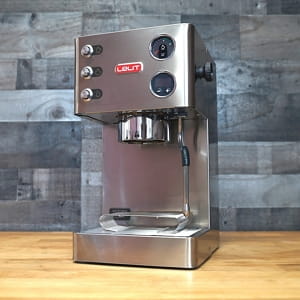
UK: typically £759.95 • EU promos around €799 • US: about $999 (bundles vary).
Lelit Victoria PL91T
Victoria is the “small machine that behaves like a bigger one”: a compact stainless single-boiler with a true 58 mm ecosystem, Lelit’s LCC PID control, menu-set preinfusion, and a front panel you’ll actually use. *Shot-time display can be countdown or chronometer depending on LCC firmware.
Overview
Lelit Victoria PL91T is the cleanest expression of “compact, controlled single boiler” in the VIP line: a 300 ml brass boiler, a proper 58 mm LELIT58 group, LCC PID for brew and steam temperatures, programmable preinfusion, a backlit brew-pressure gauge, and a multidirectional anti-burn wand that handles steam + hot water. Warm-up is quick for a boiler machine, and the LCC makes mode changes and temperatures obvious, so you’re running a routine, not a ritual.
Pros
- 58 mm LELIT58 ecosystem (baskets, tampers, bottomless)
- LCC PID for brew + adjustable steam temperature
- Programmable preinfusion in the menu
- Backlit brew-pressure gauge + clear mode prompts
- Hot water via the wand (Americanos, rinses)
- 3-way solenoid for dry pucks & proper backflushing
Cons
- OPV adjustment is internal (remove panels)
- Single-boiler sequencing limits multi-drink milk pace
- Shot-time display varies by LCC firmware (countdown vs chronometer)
- Published dimensions/weight vary by listing revision
Features & Specs
- Type: Single boiler, dual use (brew then steam then back to brew)
- Boiler: 300 ml brass • ~1200 W (120 V or 230 V by market)
- Group: LELIT58 commercial group • 58 mm portafilter
- Control: LCC PID (brew temp), steam temp, programmable preinfusion, standby timer, cleaning cycle
- Pump/valves: Vibe pump • 3-way solenoid (dry pucks)
- Gauge: Backlit brew-pressure manometer
- Wand: Multidirectional anti-burn • steam + hot water
- Water: 2.5 L top-loading reservoir • low-water alert + reserve behavior
- Shot time: Countdown or chronometer depending on LCC firmware
- Size/Weight: ~23 W × 38 D × 38 H cm • ~9.2–11.3 kg (listing-dependent)
Workflow & Dial-In
- Warm up: Lock the portafilter in while heating; do a short rinse to warm the path and cup.
- Setpoints: Choose brew temp; set steam temp; enable preinfusion (start ~2–4 s on lighter roasts).
- Pull: Let the LCC give you extraction time feedback (countdown/chronometer depends on firmware).
- Steam: Switch to steam, wait for prompt, purge to dry steam, texture one pitcher.
- Return: Switch back to coffee and do a brief cooling flush to drop to brew temp quickly.
- OPV: Set internally once (blind basket + front gauge) to ~9–10 bar, then stop fiddling.
Steaming & Hot Water
Victoria’s steam is “one drink cleanly” rather than “host a brunch.” Purge generously, aerate briefly, then roll to finish temperature. The anti-burn wand is genuinely nice for positioning and cleanup. For Americanos and rinses, you can pull hot water from the same wand in water mode.
Maintenance & Water
- Daily: Water backflush after sessions; wipe + purge the wand every steam use; empty drip tray before it rides high.
- Weekly: Detergent backflush using the LCC washing cycle + blind basket.
- Scale: Brass boiler means water matters. Keep hardness in a friendly range and descale on a schedule that matches your source.
- Parts: Gaskets, OPV, wand parts and common service items are widely available through Lelit parts houses.
Comparisons
- Profitec GO: 58 mm, PID + built-in shot timer, front gauge, external OPV. Simpler pressure setup; no menu preinfusion.
- ECM Casa V: Lovely build, ring group, front gauge, accessible expansion valve; no PID, no menu preinfusion.
- Bezzera Hobby: Sturdy compact single with 58 mm feel; usually no PID—Victoria wins on control and clarity.
- Ascaso Steel UNO PID: Thermoblock speed + PID + preinfusion; different thermal feel and maintenance profile vs small brass boiler.
- Lelit Elizabeth PL92T: Dual boiler sibling with more milk headroom; higher price, more “serve drinks” capability.
Pricing & Availability (Nov 2025)
- UK: typically £759.95 at specialty retailers (stock rotates by colorway).
- EU: recent promoted pricing around €799 with periodic sales; list pricing varies by market.
- US: generally around $999 at US retailers; bundles and warranty terms vary.
- Tip: Buying outside your region? Confirm voltage (120 V vs 230 V) and what accessories are included for your SKU.
FAQs
- PID?
- Yes. LCC runs PID brew temp control and lets you set steam temperature too.
- Preinfusion?
- Yes. Menu-set, pump-managed preinfusion (timed wetting).
- Portafilter size?
- 58 mm LELIT58 group and portafilter, compatible with the broader 58 mm ecosystem.
- OPV access?
- Internal. You remove panels to set it once (blind basket + front gauge), then you’re done.
- Shot timer?
- On-screen time feedback exists, but display style varies by LCC firmware (countdown vs chronometer).
- Hot water spout?
- No separate spout. Hot water is delivered via the multidirectional wand in water mode.
- Back-to-back milk drinks?
- One pitcher comfortably. For multiple milk drinks, you’ll wait for recovery or move to an HX/dual boiler.
Takeaway
Victoria sits in Lelit’s VIP line as the “small machine that behaves like a bigger one.” It is a single-boiler platform with a 300 ml brass boiler, a 58 mm commercial group and portafilter, Lelit's LCC control system with PID temperature control, a programmable preinfusion routine, a backlit brew-pressure gauge, and a multidirectional wand that handles steam and hot water. Warm-up is quick for a boiler machine, and the LCC makes temperature and mode changes transparent. If you want a compact stainless chassis with digital control and you are fine with the classic single-boiler rhythm of brew then steam then back to brew, Victoria is the cleanest expression of that idea in its price band. The core specification comes directly from Lelit’s manual and product page.
At-a-Glance Specs
- Type: Single boiler, dual use
- Boiler: 300 ml brass
- Group and portafilter: LELIT58 commercial group, 58 mm
- Controls: LCC PID for brew temp and steam temp, programmable preinfusion, standby timer, cleaning cycle
- Display functions: Temperatures, low-water alert, and extraction time display or countdown depending on LCC firmware
- Pump and valves: Vibration pump, three-way solenoid for dry pucks
- Gauge: Backlit brew-pressure manometer
- Wand: Multidirectional, anti-burn; dispenses steam and hot water
- Water tank: 2.5 L reservoir
- Power: 1200 W at 120 V or 230 V versions by market
- Dimensions and weight: Lelit lists 23 x 38 x 38 cm and 11.3 kg; the user manual shows 22.5 x 27 x 38 cm and 9.2 kg. The difference reflects measurement conventions and revisions.
Price and Availability
- United Kingdom: typically £759.95 at specialty retailers like Bella Barista, stock rotating by colorway.
- European Union: recent promoted pricing around €799 at Coffee Friend with periodic sales; list pricing varies by market.
- United States: generally around $999 at US retailers such as Seattle Coffee Gear and Espresso Coffee Shop USA, with occasional bundles and regional warranty differences.
If you are buying outside your home region, confirm voltage and the included accessories for your SKU. Lelit's own materials and several retailers document 120 V and 230 V variants.
Shop the essentials
The small upgrades that make a home coffee setup cleaner, smoother, and more enjoyable to use every day.

Cleaner & Descaler Tablets
Keeps your machine clean, helps prevent buildup, and protects long-term performance.
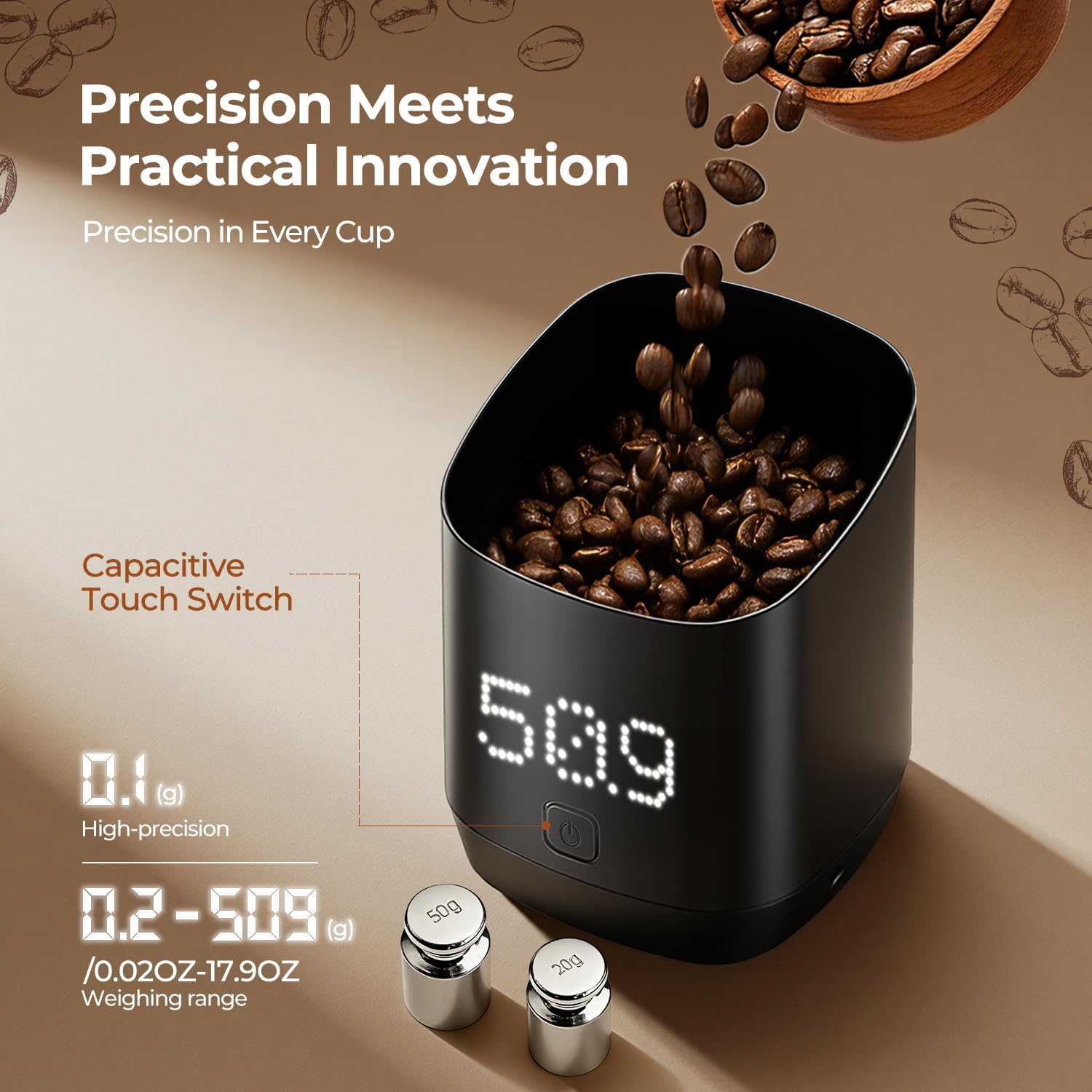
Digital Dosing Cup
Makes weighing beans faster and cleaner, with less mess around the grinder.
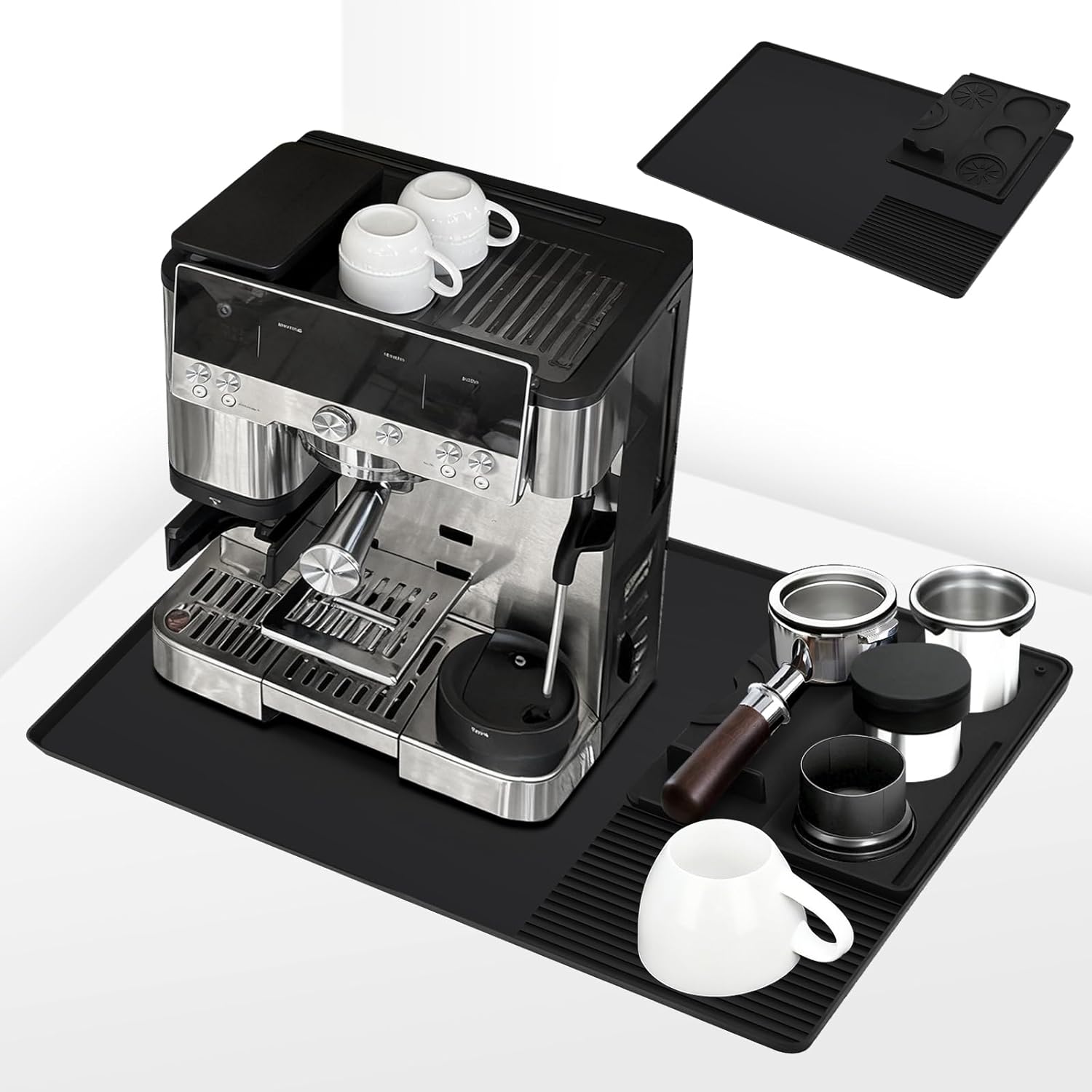
Silicone Mat
Protects your counter, catches spills, and gives your setup a cleaner working surface.

Vacuum Coffee Canister
Helps beans stay fresher longer by limiting air exposure after opening the bag.
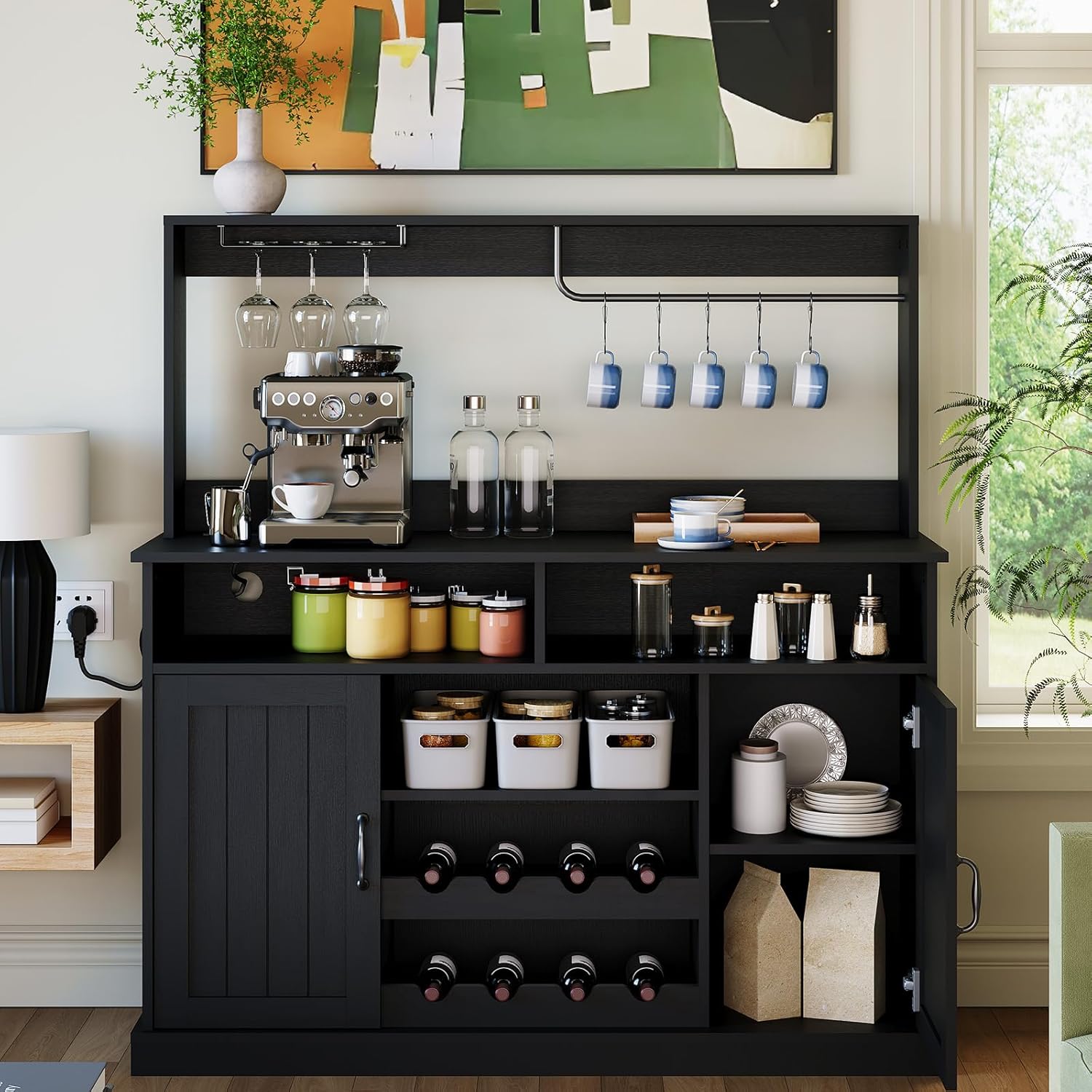
Farmhouse Coffee Bar Cabinet
Gives your machine, cups, beans, and accessories one dedicated home instead of cluttering the kitchen.
Build
Materials and layout
Victoria is a stainless box with real metal where it matters. Inside is a 300 ml brass boiler paired to a compact ring-type 58 mm brew group. The front panel gives you an OLED LCC screen, backlit rocker switches, and a backlit brew-pressure manometer. The wand is on a ball joint, and it handles both steam and hot water. The tank loads from the top and carries a published 2.5 L capacity, with on-screen low-water warnings. These elements are spelled out in Lelit’s manual and reiterated across serious retailer spec sheets.
Lelit’s current product page emphasizes the LELIT58 group, the manometer, and the anti-burn wand, which are the hardware choices that make the machine feel “prosumer” despite the small footprint.
Controls and information
The LCC is the brain. You set brew temperature in single-degree steps, set steam temperature, enable or disable preinfusion, run the automatic backflush routine, and configure standby. The display reports status and temperatures and, depending on firmware, shows either a countdown set by the user or a chronometer-style shot time during extraction. Lelit and multiple retailers document both preinfusion and the timer behavior in recent LCC updates.
Weight and footprint
Expect a very compact case that still plants firmly when you lock in a 58 mm portafilter. Published numbers vary slightly by source and revision, which is normal across Lelit's line; plan for roughly 23 cm wide and 38 cm tall, with depth between 27 and 38 cm depending on whether a listing includes the portafilter’s reach. Cross-checking Lelit’s page and the manual is the safe move when you are measuring a tight counter run.
Workflow
Warm-up and readiness
A small brass boiler under PID control reaches brew-ready quickly. Lock the portafilter in during warm-up so you are heating metal and not just water. The LCC shows temperature rise, signals when you are at setpoint, and makes mode changes visible as you switch from coffee to steam and back. The manual covers the start-up sequence and the LCC’s prompts.
Temperature control and preinfusion
This is where Victoria stands out from many compact singles. Instead of thermostat surfing, you pick a brew setpoint on the LCC. If you work lighter roasts, nudge brew temperature up a degree or two. If you prefer classic medium roasts, set a baseline and leave it. Preinfusion is programmable in the LCC. On Victoria it is a controlled pump wetting, not line-pressure soak, but it still calms puck start-up and reduces early channeling on finicky coffees. Lelit's support and retailer pages explicitly document PID, steam-temperature control, and user-set preinfusion.
A practical daily cadence
- Heat with the portafilter locked in. 2) Run a short blank rinse to warm the dispersion path and cup. 3) Grind, prep, and lock in. 4) Start the shot and let the LCC count for you. 5) If you are steaming, press steam, wait for the prompt, purge, then texture. 6) Return to coffee mode and run a short cooling flush so the boiler drops to brew temperature promptly. The LCC’s mode prompts and cleaning cycle make this rhythm very easy to learn.
Pump pressure and OPV
Brew pressure is governed by an adjustable over-pressure valve. On Victoria, OPV access is internal. You remove panels to reach the brass valve, then set pump pressure against a blind basket and the front gauge. Clive Coffee’s step-by-step guide matches what owners share: small quarter-turn adjustments with the machine fully heat-soaked. You do this once, then leave it alone.
Espresso Performance
Stability and control
The combination of a compact brass boiler, short water path, and PID control produces predictable in-shot temperature in a home context. You will not have the heavy thermal mass of an E61, yet you get reliable behavior at your setpoint, and shot-to-shot variance stays tight when you keep your cadence steady. Lelit's materials and retailer documentation make the control set and expected readiness explicit.
Flavor expectations
Start with 18 g in and 36 g out in 25 to 30 seconds. On medium roasts you should see classic syrupy shots with chocolate and nut. With medium-light espresso roasts, preinfusion plus a one or two degree higher brew setpoint tends to lift fruit and florals while keeping body intact. Because the LCC shows or times your extraction depending on firmware, standardizing your ratio and time is straightforward and repeatable. Retailers and Lelit describe both preinfusion and extraction-time display functions on current LCC builds.
Shot timer, countdown, and firmware
If you have read conflicting claims about “shot timer” on Victoria, here is the reality. Early LCC versions showed a countdown you could set. A later LCC update switched to a chronometer readout. Some retailers and owner posts still reference the earlier countdown behavior. Either way, you have an on-screen extraction time reference without buying a separate timer. Coffee Friend, Bella Barista, and Lelit update notes collectively reflect the countdown and chronometer changes.
Pressure and flow feel
Victoria ships with a backlit brew-pressure manometer. Use it as feedback rather than a goal. On fresh medium roasts, a nine to ten bar ceiling set at the OPV gives you a sensible starting point. As the puck opens, expect the gauge to relax slightly. Puck prep matters more than chasing tenths on the dial. Lelit's photos and copy emphasize the brew manometer and the “green” optimal range indicator printed on the dial.
Milk Steaming
Power and pace
A 300 ml boiler is not built for café-style milk service, yet Victoria’s steam is clean and usable for one drink at a time. From brew to steam is a short hop. Let the LCC confirm readiness, purge to dry steam, then texture a 150 to 200 ml pitcher to 60–65 C at a comfortable pace. The anti-burn wand hardware makes positioning and cleanup simple. Lelit's product page and retailer specs confirm the steam-and-hot-water wand and highlight the LCC steam temperature setting.
Technique on a small boiler
Purge generously at the start. Aerate briefly with the tip near the surface, then set a steady roll and ride the finish temperature. After steaming, wipe and purge the wand, switch back to coffee mode, and run a short cooling flush so your next shot does not ride steam heat. Lelit’s manuals and help pages outline the brew, steam, hot-water sequence and the prompts you will see in the LCC.
Maintenance and Water
Daily and weekly care
Backflush with water after sessions, wipe and purge the wand every time you steam, and empty the tray before it rides high. Run the LCC’s washing cycle with detergent weekly using the blind basket. The three-way solenoid is why your pucks knock out dry and why detergent backflushing is part of normal care. Lelit’s user manual and retailer help pages contain the routines.
Descaling and water quality
Small brass boilers scale if you feed them hard water. Keep hardness in a friendly range and descale on a schedule that matches your source. The manual documents first fill, safe rinses, low-water behavior, and safeguards like “reserve mode,” which allows you to complete a shot if the tank goes empty mid-extraction. Lelit’s LCC notes explain that reserve-mode behavior and the newer shot-time view.
Service and parts
Exploded diagrams and spares for Victoria are widely available from Lelit-focused parts houses and regional service partners. OPV adjustment guides and wand parts are common support topics. Clive Coffee’s help center provides a clear OPV procedure for this machine if you plan to lock brew pressure to a specific ceiling.
What Stands Out
- PID and preinfusion in a compact boiler machine
Victoria gives you degree-level brew control, adjustable steam temperature, and menu-set preinfusion. That combination of controls is why the machine exists. You are not surfing a thermostat. You are choosing a setpoint and a preinfusion time, then holding a steady rhythm. Lelit documents all three functions directly. - True 58 mm ecosystem
Many compact singles step down to smaller baskets. Victoria runs the LELIT58 group and ships with a 58 mm portafilter, so you can use the same precision baskets and tampers common to larger prosumer machines. Lelit’s product page, Bella Barista, and other retailers are clear about this. - On-screen extraction time
Depending on firmware you will see a countdown or a chronometer during the shot. Either way, you have time feedback baked into the front panel, which speeds up dialing and repetition. Lelit’s LCC update notes and retailer copy cover the change. - Hot water via the wand
You do not get a separate hot-water spout. Instead the anti-burn wand doubles for steam and hot water, and the LCC exposes a “water” mode with temperature display. Some retailer spec tables label “Hot water supply: No,” but Lelit’s own copy and several EU sellers list hot water via the wand. Treat the manufacturer and detailed EU listings as the tie-breakers here.
Competitive Set
Profitec GO
A compact single boiler with full PID, a built-in shot timer, a front gauge, and an externally accessible OPV. Boiler is 0.3 L brass. Heat-up is quick and the workflow is as simple as compact singles get. GO lacks a dedicated hot-water function but wins on tool-free pressure adjustment and the clearest timer implementation in this class.
ECM Casa V
Stainless boiler single with a ring group, front gauge, and an easily accessible expansion valve. No PID. You run a consistent cadence to land brew temperature. Casa V warms quickly for a boiler machine and is beautifully built, but it gives up Victoria’s LCC control and preinfusion.
Bezzera Hobby
Compact single with a small brass boiler and a commercial-style 58 mm group. No PID in common trims, strong steam for its size, and very sturdy. Pricing in the EU can favor Hobby, but you lose Victoria’s digital control and menu preinfusion.
Ascaso Steel UNO PID
Thermoblock with PID, programmable preinfusion, and external OPV. It moves very quickly from cold to brew and recovers fast, with a different feel at the group and a distinct maintenance profile. Choose UNO if you want thermoblock speed with numeric control rather than a small brass boiler.
Lelit Elizabeth PL92T
Dual-boiler big sibling to Victoria with more steam power and independent brew and steam control. If milk drinks dominate, Elizabeth lifts capacity and pace, but it sits at a higher price.
Where Victoria fits
Victoria is for people who want compact size, real 58 mm hardware, PID control, and menu-set preinfusion in a single-boiler workflow. It gives you the tools to be precise without stepping up to a heat-exchanger or dual boiler.
Real-World Workflow Tips
- Anchor a simple routine. Warm fully, run a short rinse to heat the path and cup, then pull with the same cadence. PID does the heavy lifting, cadence keeps your taste consistent.
- Use preinfusion deliberately. Start with a short 2–4 second wetting on medium-light roasts. If you see early channeling in a bottomless portafilter, add a second or two. LCC makes this a one-button change.
- Set pump pressure once. Use a blind basket and the front gauge. Adjust the OPV internally in quarter turns with the machine fully heat-soaked. Check again after a week and then stop fiddling.
- Treat steam like a sprint. Purge, texture one pitcher, then cool back to brew with a short flush. The LCC steam temperature setting can tailor the ramp to your preference.
Scores
- Build and materials: 8.6/10
Stainless case, brass boiler, 58 mm group, backlit manometer, and a tidy panel in a compact frame. Published dimensions and weight vary by source, but the real-world footprint is small and stable. - Workflow and usability: 9.0/10
PID control, menu preinfusion, adjustable steam temperature, visible mode prompts, and some form of shot-time display make daily use easy. The only knock is internal OPV access. - Espresso consistency: 8.8/10
With a setpoint and preinfusion, Victoria is steady across roasts. The 58 mm ecosystem means easy upgrades to precision baskets and tampers when you want tighter flow. - Milk steaming: 7.7/10
Clean, controllable steam for single drinks and quick return to brew. Physics limits back-to-back pitchers, but the LCC helps you time the ramp and recovery. - Maintenance and serviceability: 8.2/10
Clear manual, proper three-way valve for detergent backflushing, common parts, and straightforward OPV procedure. Water quality remains the long-term variable to manage. - Value: 8.5/10
At roughly £760 in the UK, €799 on EU promos, and about $999 in the US, Victoria brings PID, preinfusion, hot-water capability via the wand, and 58 mm hardware into a compact package. Regional deals on rivals can shift the calculus, but the feature-to-price ratio is strong.
Final Verdict
The Lelit Victoria PL91T is the compact single-boiler for people who want real control instead of rituals. It heats quickly, lets you set brew and steam temperatures from the front panel, offers a simple and effective preinfusion, shows or times your shot depending on firmware, and works within the reliable rhythm of a single-boiler routine. You get a true 58 mm platform, so baskets, tampers, and bottomless portafilters are the same ecosystem used on larger prosumer machines. You do not get the simultaneous brew-and-steam pace of a heat-exchanger or dual boiler, and you will need a screwdriver the first time you set the OPV. Once that is done, the machine behaves like a tidy tool you can run on autopilot.
If your household runs a few straight espressos and a cappuccino or two, Victoria makes sense. If milk drinks dominate or you want more headroom for back-to-back pitchers, step to Lelit Elizabeth or a good HX. If you value compact size, 58 mm hardware, and the clarity that a well-implemented PID and menu preinfusion bring to dialing in, Victoria belongs on the shortlist. The features and numbers behind this verdict come straight from Lelit’s own materials and current retailers.
TL;DR
A compact stainless single-boiler with a 300 ml brass boiler, 58 mm group, LCC PID control, programmable preinfusion, a backlit brew gauge, and a multidirectional anti-burn wand for steam and hot water. It warms quickly, steams one drink neatly, and returns to brew with a short cooling flush. If you want small size with real temperature control and preinfusion in the menu, Victoria delivers.
Pros
- PID brew control with degree-level adjustment in LCC
- Programmable preinfusion and adjustable steam temperature
- Backlit brew-pressure gauge and clear mode prompts
- True 58 mm ecosystem for baskets, tampers, and bottomless portafilters
- Hot water via the multidirectional anti-burn wand
- Compact footprint with a 2.5 L reservoir and quick warm-up
Cons
- OPV adjustment requires removing panels
- Single-boiler sequencing limits multi-drink milk service
- LCC time display varies by firmware, which confuses spec sheets
- Published dimensions and weight differ between manual and product page listings
Who It Is For
Home baristas who want compact size and full digital control in a boiler machine. If you make one to three drinks per session, prefer 58 mm hardware, and want preinfusion and temperature set from the front panel instead of a surf routine, the Victoria PL91T is an easy machine to live with. If you regularly serve multiple milk drinks or expect simultaneous brew and steam, you will be happier with a heat-exchanger or a dual boiler.
We’ve categorized the best espresso machines for every kind of buyer
Find the right shortlist faster, whether you want convenience, a beginner-friendly setup, a smaller footprint, or better value at a given budget.
Best Superautomatic Espresso Machines
One-touch picks for speed and convenience.
Best Espresso Machines for Beginners
Easy-to-use machines with a smoother learning curve.
Best Small Espresso Machines
Compact machines for tighter kitchens and counters.
Best Espresso Machines With Built-In Grinder
All-in-one options with fewer extra pieces to buy.
Best Cheap Espresso Machines Under $500
Budget picks that still make sense for real espresso.
Best Prosumer Espresso Machines Under $1000
More serious machines with stronger value for the money.
Best Single Boiler Espresso Machines
Simple, space-saving picks for espresso-first routines.