
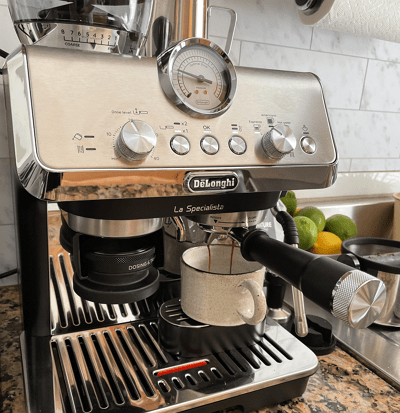
De’Longhi La Specialista Arte
A compact all-in-one that keeps the parts of home espresso that actually teach you something. The temperature control is meaningful, the included kit helps tidy the workflow, and the manual wand can make real microfoam. The grinder step spacing and 51 mm platform are the main limits, not the cup potential.
Pros
- Three brew temperatures and simple pre-infusion that genuinely affect the shot
- Manual MyLatte Art wand can produce proper microfoam
- Useful barista kit with funnel, tamper, mat or stand, and pitcher
- Compact footprint with quick warm-up and straightforward controls
- Honest value as a one-box skill-building machine
Cons
- Many SKUs still have only 8 grinder steps
- Plastic dosing guide feels functional, not premium
- 51 mm ecosystem is narrower than 58 mm
- Thermoblock speed comes with less thermal authority than prosumer boilers
Features
- Integrated conical burr grinder
- Three brew-temperature profiles
- Basic pre-infusion: off, ~1 s, ~2 s
- Manual MyLatte Art steam wand
- 51 mm portafilter with single-wall baskets
- Thermoblock heating + 15-bar rated pump
- 1.7 L tank listed by De’Longhi AU (some retailers show 1.5 L)
- Approx. size/weight: 28.5 W × 40 D × 36.5 H cm, ~13 kg
- Drinks: Espresso, Long Black, Hot Water
- Starter kit: funnel, tamper, mat or stand, milk jug, baskets, cleaning tools
Pricing
- UK: often ~£349 on promo
- EU: common listings around €469
- US: Arte stock leans to third-party sellers while many retailers push the newer Arte Evo
- Regional step count, included kit, and trim naming can vary more than the core espresso platform
FAQs
- Is the La Specialista Arte worth it?
- Yes if you want a compact one-box machine that teaches real espresso and milk technique without throwing you into prosumer complexity.
- Can it do light roasts?
- It can, but the hottest profile, longer pre-infusion, and careful grind work matter more on 8-step units.
- Does the wand make real microfoam?
- Yes. The manual MyLatte Art wand is one of the stronger reasons to buy Arte over more automated beginner boxes.
- What is the main limitation?
- The integrated grinder step spacing is the first ceiling most owners hit, especially with lighter coffees.
- Portafilter size?
- 51 mm. Accessories exist, but the ecosystem is narrower than 58 mm.
- How fast does it heat up?
- Fast for home use, though the first shot improves when the portafilter is locked in during warm-up.
Great Fit
- New home baristas who want a compact machine that teaches real technique
- Milk-forward homes that want a manual wand and quick warm-up
- Buyers who value tidy workflow and a useful included starter kit
Bad Fit
- Users who want 58 mm accessories and modular upgrade freedom
- Light-roast obsessives who need finer grinder steps
- Buyers who want a more automated all-in-one with more guidance built in
Arte vs Arte Evo
- Arte is the stripped-back original that focuses on hot espresso and milk workflow.
- Arte Evo is the newer trim with some UI tweaks and cold-drink marketing layered on top of a similar core concept.
- Shopping tip: do not treat Arte Evo as a completely different espresso platform. The bigger question is whether you want simple manual workflow or more assistance.
De'Longhi is strongest when it keeps things practical, and the La Specialista Arte is the stripped-back version of that idea: a compact all-in-one espresso machine built to teach repeatable home workflow without burying the user under automation, screens, or café cosplay. It is a one-box platform that rewards better puck prep, better milk technique, and better recipe discipline.
On our bench, Arte’s buying truth is simple: if you want quick heat-up, a genuinely useful starter kit, and enough control to shape the cup with three brew-temperature settings and basic pre-infusion, it makes a lot of sense. The reality check is just as straightforward: the integrated grinder is the ceiling, especially on common 8-step versions, the platform is still thermoblock-based, and the 51 mm ecosystem is narrower than the 58 mm world. Treated as a skill-building all-in-one, it works. Treated as a prosumer machine substitute, it does not.
For cross-shoppers, we generally frame La Specialista Arte against the machines people actually buy instead: Breville Barista Express Impress for assisted workflow, Breville Barista Pro for faster, more grinder-flexible all-in-one competition, Gaggia Classic Pro plus grinder for the modular 58 mm route, and La Specialista Prestigio or La Specialista Arte Evo when buyers want a different trim level inside the same general De’Longhi lane.
Overview
The De'Longhi La Specialista Arte is built for home baristas who want a compact all-in-one that teaches real espresso habits without turning the process into a menu-driven appliance. You get an integrated conical burr grinder, three brew-temperature settings, and basic user-adjustable pre-infusion, which together make dialing-in more predictable than most beginner all-in-ones with fixed brewing behavior. In daily use it rewards tidy puck prep, heats quickly thanks to the thermoblock platform, and delivers steam that is genuinely capable for flat whites and cappuccinos once you learn the wand.
In the La Specialista lineup, the Arte is the stripped-back manual choice that sits below the more assisted De'Longhi La Specialista Prestigio. The brew side is optimized for skill-building rather than convenience theatre, while the manual MyLatte Art wand gives you proper milk control instead of automatic frothing. The decision in this price tier is less about whether it can make good espresso, and more about what ownership style you want: one compact box with real hands-on control, or a modular grinder-plus-machine setup with a longer upgrade runway.
Shop the essentials
The small upgrades that make a home coffee setup cleaner, smoother, and more enjoyable to use every day.

Cleaner & Descaler Tablets
Keeps your machine clean, helps prevent buildup, and protects long-term performance.
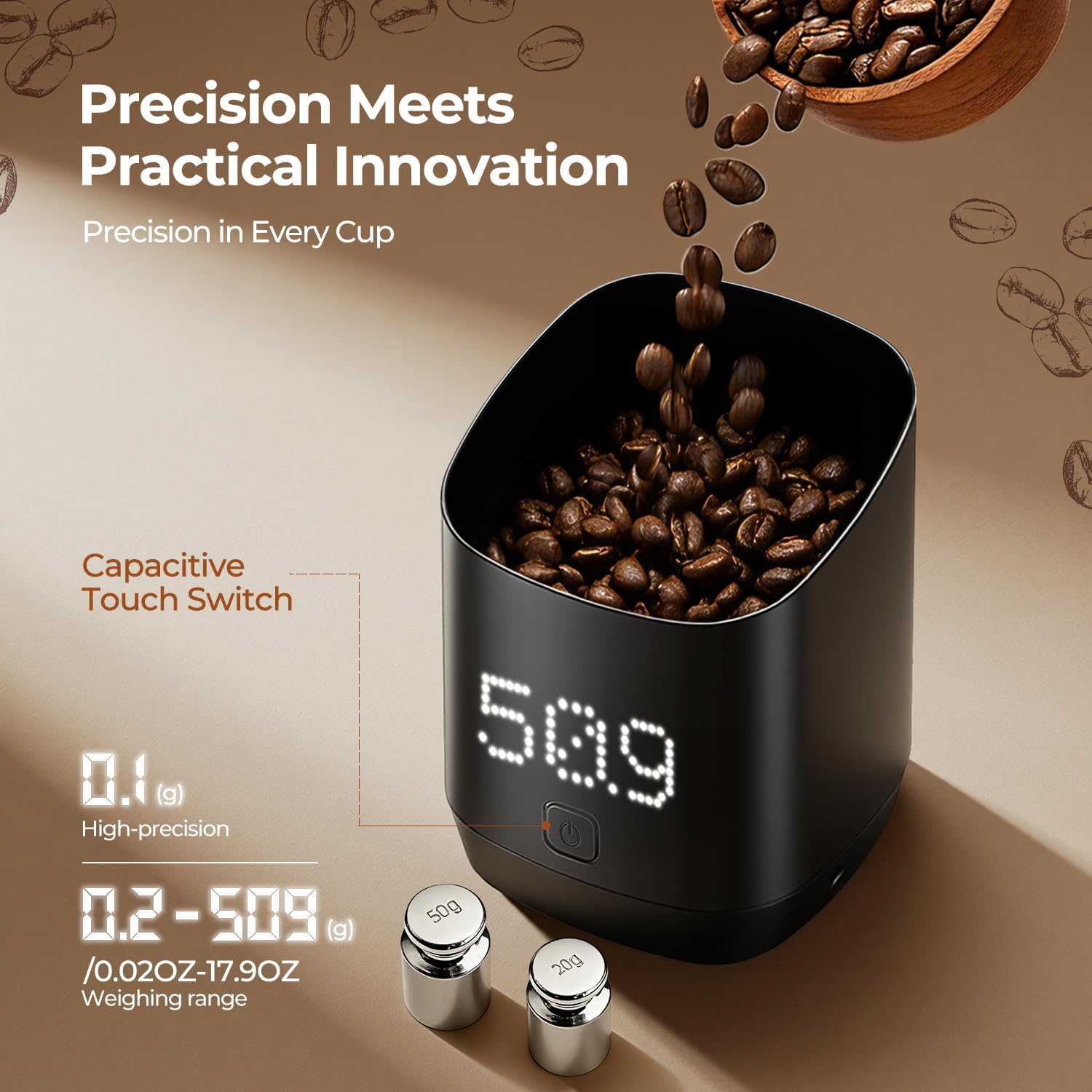
Digital Dosing Cup
Makes weighing beans faster and cleaner, with less mess around the grinder.
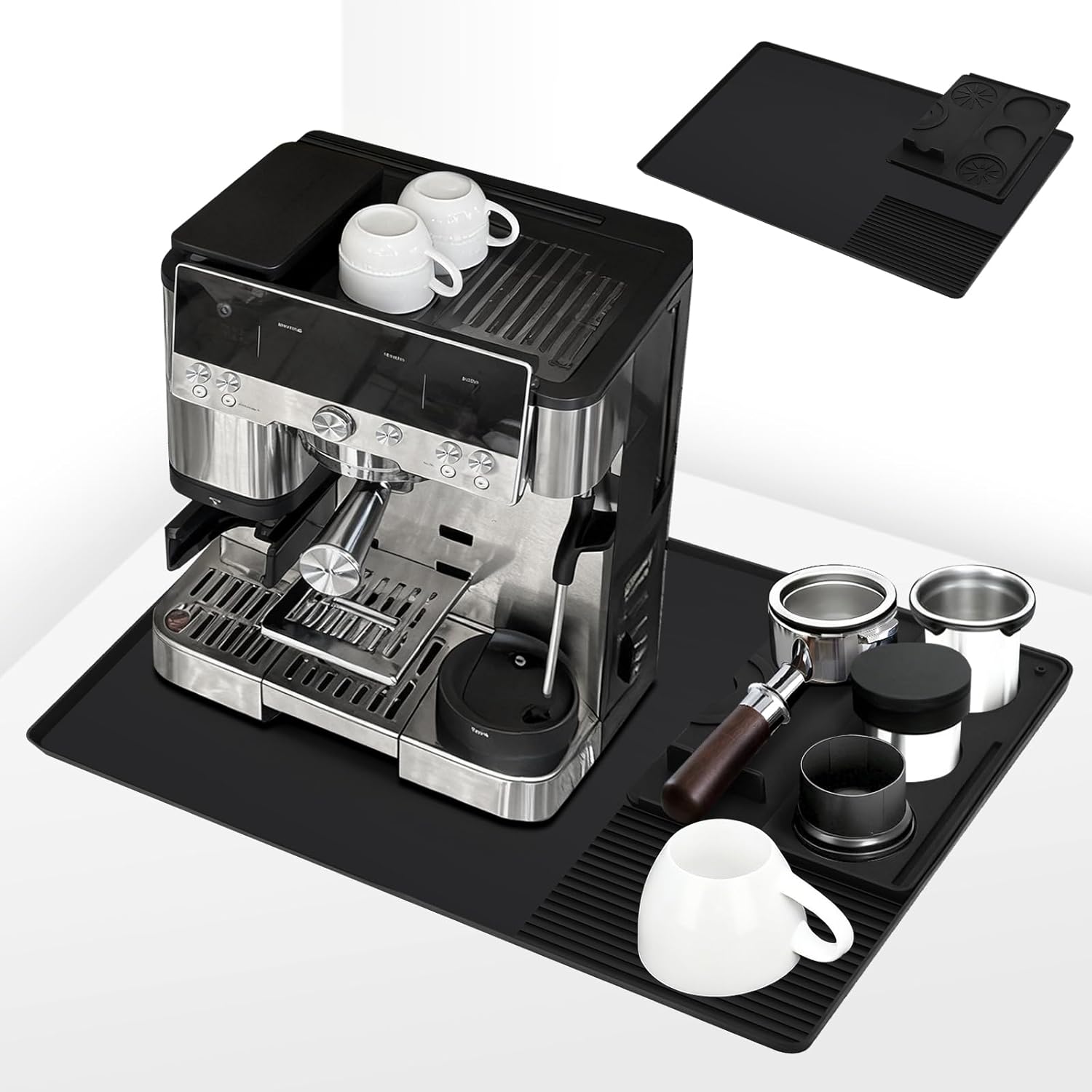
Silicone Mat
Protects your counter, catches spills, and gives your setup a cleaner working surface.

Vacuum Coffee Canister
Helps beans stay fresher longer by limiting air exposure after opening the bag.
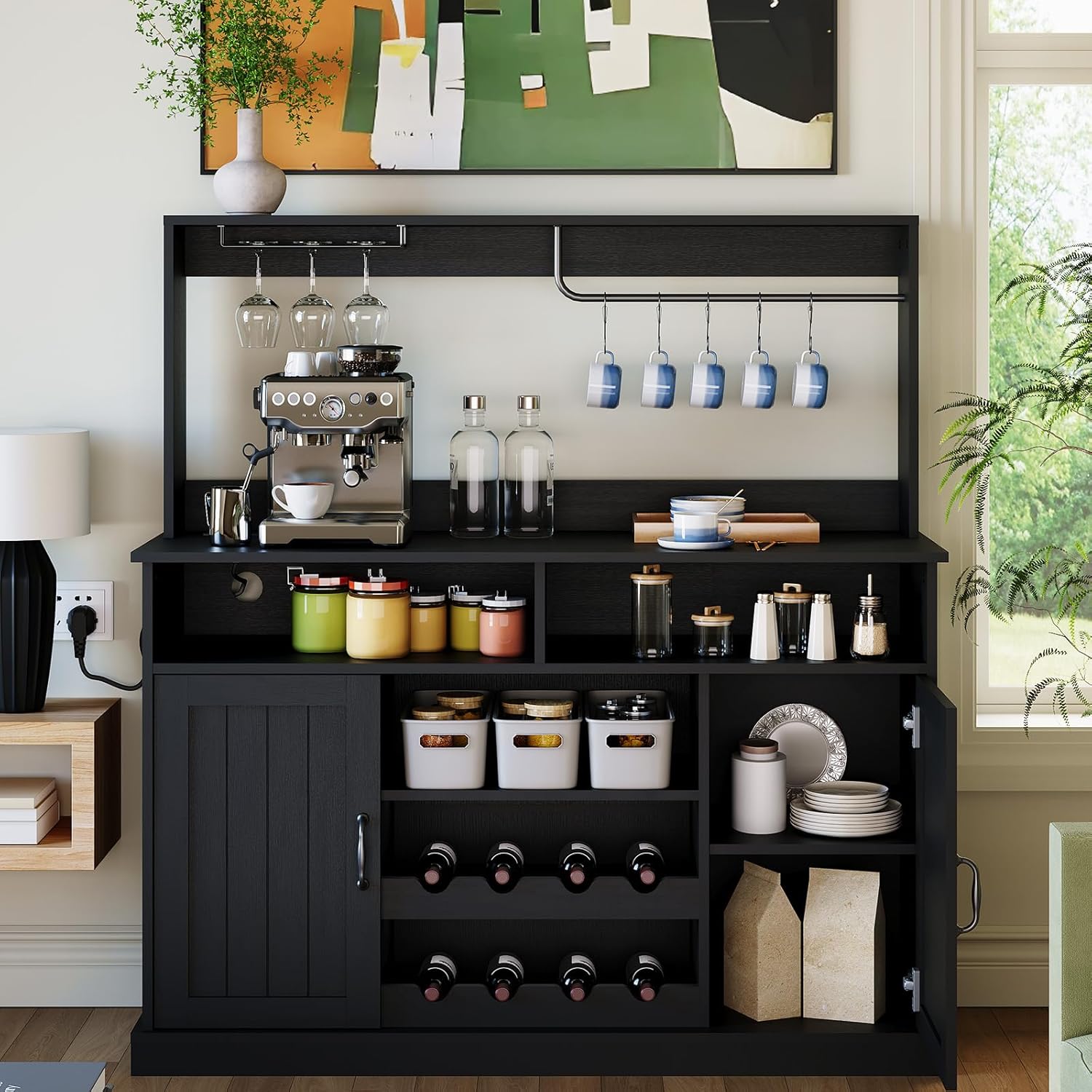
Farmhouse Coffee Bar Cabinet
Gives your machine, cups, beans, and accessories one dedicated home instead of cluttering the kitchen.
Design intent
- Skill-first all-in-one: grinder, temperature control, and manual steaming keep the workflow real without making the machine intimidating.
- Predictable dialing-in: three brew temperatures and basic pre-infusion give you enough control to correct sour or bitter shots.
- Cleaner early ownership: the dosing funnel, tamping stand or mat, and included pitcher reduce mess and help beginners stay consistent.
- Small-footprint espresso station: compact chassis, integrated grinder, and simple front controls make sense on tight kitchen counters.
- Manual milk training: the MyLatte Art wand teaches proper stretching and rolling instead of one-touch foam shortcuts.
What it gets right in the cup and in cadence
- Fast, low-friction workflow: the thermoblock gets you to first drink quickly, and the panel stays simple enough for sleepy mornings.
- Better control than most beginner boxes: temperature choice and pre-infusion actually change the cup when you use them properly.
- Milk drinks make sense here: steam power is strong enough for 1 to 2 drinks at a time without the wand feeling toy-like.
- Useful feedback while learning: because the machine does less for you, small changes in grind, dose, and ratio are easier to taste and learn from.
The deliberate trade-offs
- Integrated grinder limits the ceiling: many units have only 8 grind steps, which can feel coarse when you are threading lighter roasts.
- Thermoblock character: warm-up is quick, but you do not get the thermal mass or shot-to-shot authority of a good dual boiler.
- 51 mm ecosystem: accessories exist, but you are not shopping in the wide-open 58 mm world.
- Plastic kit parts show the price point: the dosing guide is useful, but it does not feel premium in the hand.
Where it fits
The La Specialista Arte is the right pick for home baristas who want one machine that can grind, brew, and steam properly without taking over the counter or overwhelming the workflow. If you want a more assisted all-in-one experience, look at the Breville Barista Express Impress or the De'Longhi La Specialista Prestigio. If you want better grinder flexibility and a more standard ecosystem, a separate-machine route like the Gaggia Classic Pro plus grinder is the more modular path.
Cross-shop context on Coffeedant: La Specialista Arte buyers most often compare against the Barista Express Impress for assisted workflow, the Barista Pro for faster thermocoil-style convenience and more grinder flexibility, the Gaggia Classic Pro plus grinder for a modular 58 mm route, and the La Specialista Arte Evo when buyers want the same compact idea with newer trim.
De'Longhi La Specialista lineup: which version to buy
The De'Longhi La Specialista Arte is the stripped-back manual model in the current La Specialista family. You are not choosing a different espresso philosophy so much as a different amount of built-in assistance: Arte for the cleanest manual workflow, Arte Evo for a similar platform with newer trim, and La Specialista Prestigio if you want more guided help at the machine.
Arte vs Arte Evo vs Prestigio
| Category | Arte | Arte Evo | Prestigio |
|---|---|---|---|
| Core idea | Manual-first all-in-one with the controls that matter and very little fluff. | A very similar compact all-in-one with newer trim and more cold-drink lifestyle positioning. | A more guided La Specialista route with extra built-in help and less repetition. |
| Daily workflow | Best for learning grind, dose, tamp, and steaming properly. | Similar day-to-day rhythm to Arte, with minor trim updates rather than a new espresso platform. | Cleaner and more assisted for buyers who want less manual friction. |
| Espresso control | Three temperatures and basic pre-infusion give you a real taste of cause and effect. | Comparable espresso control, with the same broad strengths and limits. | Better if you want more machine-led help rather than a stripped-back learning path. |
| Milk drinks | Strong fit for cappuccino and flat white homes that want a manual wand. | Still mainly a hot-drink machine, even if cold features get more of the marketing. | The easier choice for buyers who want more assistance around the drink routine. |
| Who it suits best | Buyers who want the cleanest one-box skill-builder. | Buyers who like the Arte concept but want the newer retail trim. | Buyers who want a La Specialista that feels more guided from day one. |
| Best shorthand | Manual all-in-one trainer. | Updated Arte trim. | Assisted La Specialista workflow. |
La Specialista routes
Use these as shopping shortcuts, not as proof that the espresso hardware is radically different.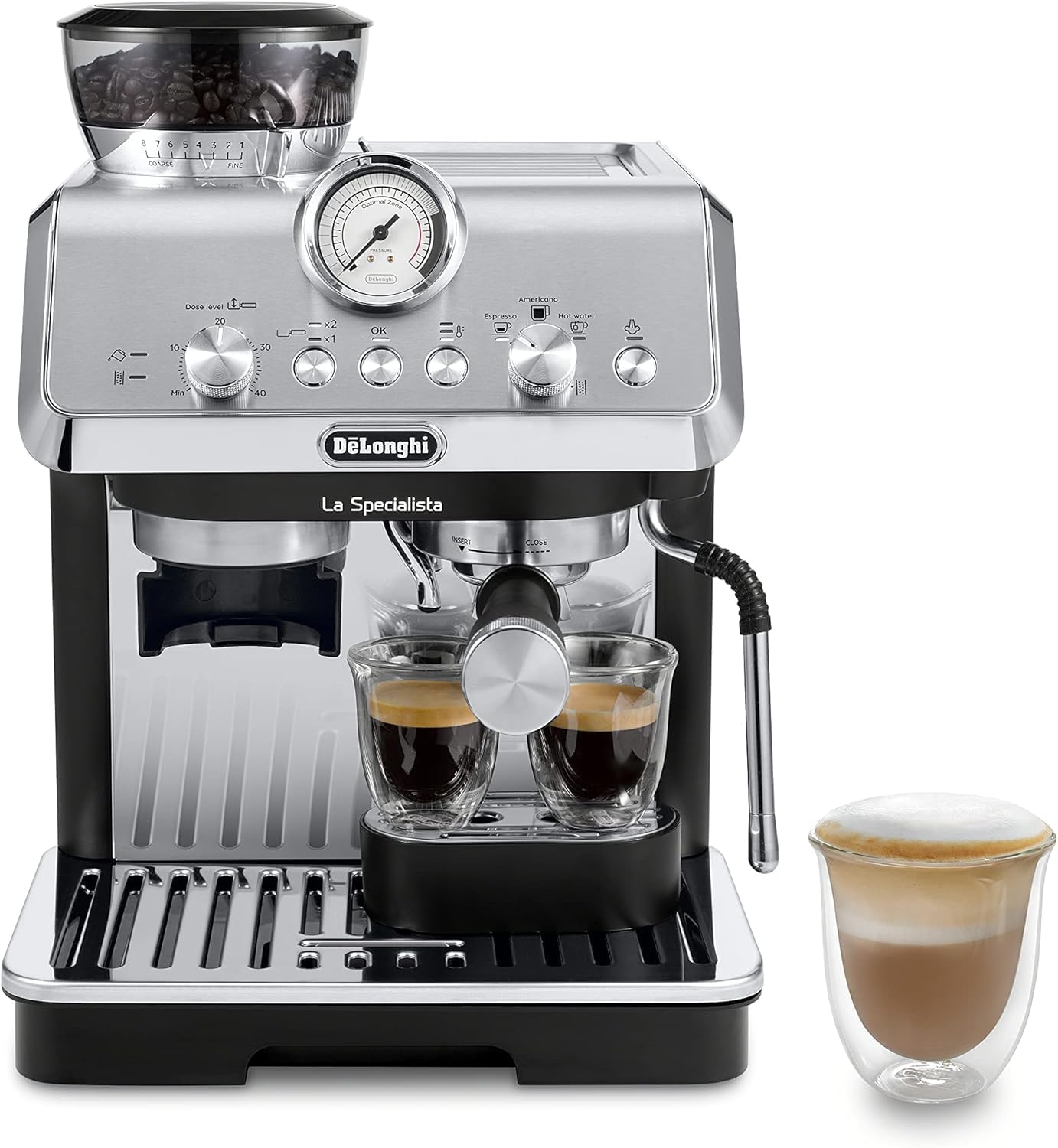


How to read this: buy Arte if you want the cleanest manual workflow and the most honest skill-building. Choose Prestigio if you want more built-in guidance. Treat Arte Evo as a trim update, not as a completely different espresso machine. If what you really want is grinder freedom and a wider ecosystem, compare all three against a separate-grinder route instead.
Key De'Longhi La Specialista Arte Specifications
Semi-automatic all-in-one with an integrated conical burr grinder and manual steam wand.
Single thermoblock brew platform built for fast warm-up and compact packaging.
Three brew-temperature settings that roughly span the low-90s to mid-90s Celsius lane.
Basic user-selectable pre-infusion: off, about 1 second, or about 2 seconds.
Integrated conical burr grinder. Many markets list 8 steps; some UK listings show 15.
51 mm with single-wall baskets and doses up to about 20 g.
15-bar rated consumer pump system.
Typically listed at 1.7 L, though some retailers show 1.5 L by region.
Espresso, Long Black, and Hot Water from the front dial and shot buttons.
Manual MyLatte Art wand capable of proper microfoam in 6 to 12 oz pitchers.
Ready quickly, though first-shot quality improves when the portafilter heats in place and you purge briefly before brewing.
About 28.5 cm wide, 36.5 cm tall, and 40 cm deep with hopper installed.
Simple front panel: drink selector, X1/X2 buttons, temperature button, grind adjustment, and dose control.
Dosing funnel, 51 mm tamper, tamp mat or stand, milk jug, baskets, and cleaning tools.
Set the machine for your water hardness and descale by actual need. Thermoblocks still punish bad water.
Daily wand purge and wipe, basket rinse, chute brushing, then periodic grinder clean-out and descaling when prompted.
51 mm is workable and upgradeable, but it is not as open or standardized as 58 mm.
Always confirm grinder step count, kit contents, and whether your market now stocks Arte or the newer Arte Evo trim.
First Impressions & Build Quality
On the counter, the La Specialista Arte reads like a compact home espresso station, not a tiny café machine. The body is tidy, the controls are deliberately simple, and the integrated grinder keeps the footprint manageable for smaller kitchens. At about 28.5 cm wide and about 36.5 cm tall, it fits where many all-in-ones start to feel bulky, though the rear tank still needs a little room to access comfortably.
Ergonomically, it is a straightforward semi-auto: simple face, clear drink selection, and a workflow that makes sense from day one. The locking dosing funnel and tamping stand or mat are the under-rated ownership features here, because they keep the prep cleaner and help newer users tamp more squarely. The grinder step ladder is the main compromise, not the general layout.
What’s in the Box
- De'Longhi La Specialista Arte espresso machine
- 51 mm portafilter with single-wall baskets
- Locking dosing funnel
- 51 mm tamper
- Tamping mat or tamping stand
- Milk jug and basic cleaning tools
Bundles vary by retailer and region. If you care about a bottomless portafilter or extra baskets, plan those as add-ons later rather than day-one necessities.
Chassis and internals
The design is consumer-focused where it matters for convenience: thermoblock heating, an integrated grinder, and a compact shell that gets you from off to brewing quickly. Longevity is mostly about water management, basic cleaning, and not letting coffee oils build up in the grinder and chute. This is not a prosumer machine hidden in a lifestyle body. It is a tidy home platform that makes sense when used within its lane.
Controls and touch points
The Arte is control-forward without turning into a touchscreen appliance. Three brew temperatures, simple pre-infusion choices, X1 and X2 shot buttons, and the manual wand give you enough control to taste cause and effect without slowing the routine down. That is the appeal. The machine stays out of your way.
Counter fit
| Item | Detail | Why it matters |
|---|---|---|
| Width | About 28.5 cm | Compact enough for tight counters and easier to pair with overhead cabinets. |
| Height | About 36.5 cm | Usually clears wall cabinets more easily than taller all-in-ones. |
| Depth | About 40 cm | The grinder is built in, but you still need honest front-to-back counter depth. |
| Warm-up reality | Fast machine-ready, better after portafilter heat-up | First-shot quality improves when the group, basket, and portafilter are not starting cold. |
| Tank access | Rear-loading reservoir | If the machine lives under cabinets, leave enough room so refills are not annoying. |
| Accessory ecosystem | 51 mm standard | Usable and upgradeable, but not as broad as the 58 mm aftermarket world. |
Testing Results
Tests used disciplined warm-up habits, multiple roast styles, and simple recipes that map to what Arte owners actually do with the machine. Results below focus on warm-up behavior, grinder-step management, milk cadence, and copyable shot settings that make the platform feel easier rather than more mysterious.
| Metric | Result | Method |
|---|---|---|
| Warm-up to brew-ready | Within a few minutes | Portafilter locked in during warm-up, then brief purge before first shot. |
| First-shot stability | Better after basket and group are warmed | Simple thermoblock discipline matters more than waiting forever. |
| Grind adjustment reality | 8 steps on many SKUs, 15 on some UK units | Bridge large step gaps with small dose and ratio moves when needed. |
| Pre-infusion range | Off, about 1 s, about 2 s | Longer setting suits fresh medium roasts and fast early flow. |
| Milk cadence | Comfortable for 1 to 2 drinks at a time | 6 to 12 oz pitchers suit the wand and steam pace best. |
| Workflow character | Fast, compact, low-menu routine | Simple controls and useful included tools reduce early friction. |
| Coffee | Dose | Yield | Time | Brew temp | Pre-infusion | Notes |
|---|---|---|---|---|---|---|
| Medium blend | 17 to 18 g | 34 to 36 g | 27 to 32 s | Middle profile | 2 s | Balanced sweetness, easiest daily recipe |
| Light roast | 17.5 to 18 g | 38 to 40 g | 30 to 34 s | Hottest profile | 2 s | Needs patient grind work on 8-step units |
| Dark blend | 17 to 18 g | 30 to 32 g | 24 to 28 s | Coolest profile | Off to 1 s | Shorter ratio keeps bitterness and roast harshness down |
Key takeaways from testing
- It is a workflow machine: Arte wins by being quick, compact, and easy to repeat once your routine is tidy.
- The temperature button matters: the three brew profiles are not decorative and can rescue both dark and lighter coffees.
- Pre-infusion is simple but useful: the short puck-wetting phase smooths fast starts and helps calmer extractions.
- The grinder is the ceiling: espresso quality is better than most entry all-in-ones, but step spacing is the limit you feel first.
- The included kit genuinely helps: funnel, tamper, and mat reduce mess and make new users more consistent right away.
Espresso Quality: getting the best out of the De'Longhi La Specialista Arte
The De'Longhi La Specialista Arte is a semi-automatic built to teach repeatability, not to automate the hard parts away. With tidy puck prep and a sensible recipe, it delivers sweet, balanced espresso through a mix of tools that matter at this level: an integrated conical burr grinder, three brew-temperature settings, and basic user-adjustable pre-infusion. Your real levers are the same ones that matter on any machine: grind, dose, yield, time, brew temperature, and pre-infusion.
Session protocol that keeps results consistent
- Warm the metal, not just the water path: lock in a dry portafilter and basket during warm-up, then run a short purge before the first shot.
- Start with the middle profile: use the mid brew-temperature setting for medium roasts, then move hotter for light roasts or cooler for darker blends.
- Set a baseline: start around 17–18 g in and 34–36 g out for medium roasts, then keep yield steady while you adjust grind.
- Change one variable at a time: adjust grind first, then brew temperature or pre-infusion, then dose only if basket fill is clearly off.
- Respect the step ladder: if your unit has the common 8-step grinder, use small dose and ratio moves to bridge the gap when one click feels too big.
Flavor targets by coffee style
| Coffee | Baseline recipe (La Specialista Arte) | What it tastes like when right | If too sour / thin | If too bitter / dry |
|---|---|---|---|---|
| Medium espresso blend |
Dose 17–18 g → Yield 34–36 g in 27–32 s Brew temp middle profile · Pre-infusion ~2 s |
Rounded sweetness, chocolate weight, steady crema, calm finish | Go finer or tighten yield slightly; move to the hotter profile if it still tastes underdone | Go coarser or shorten yield slightly; move to the cooler profile for darker blends |
| Light roast espresso |
Dose 17.5–18 g → Yield 38–40 g in 30–34 s Brew temp hot profile · Pre-infusion ~2 s |
Brighter acidity with cleaner edges, more clarity, less chalky sharpness | Go finer, push yield slightly, or raise puck resistance with a small dose increase | Go coarser, reduce yield, or shorten the shot rather than chasing a colder profile too early |
| Dark blend / decaf |
Dose 17–18 g → Yield 30–34 g in 24–30 s Brew temp cool profile · Pre-infusion off to ~1 s |
Caramel sweetness, fuller body, controlled bitterness, shorter finish | Go finer and keep ratio shorter; avoid running long if the coffee is fragile | Go coarser, drop temp if needed, and keep the shot in the shorter 1:1.7–1:2 lane |
Brew temperature and pre-infusion: use them like tools
- Brew temperature: use the middle profile for most medium blends, the hot profile for lighter coffees, and the cool profile for darker roasts that get sharp or bitter easily.
- Pre-infusion: use ~2 seconds as the default for most fresh medium roasts and most fresh espresso; shorten it or switch it off for darker coffees that start slow or taste heavy.
- Grinder reality: on 8-step units, one click is a real move. Taste and ratio matter more than obsessing over perfect stopwatch symmetry.
- Volume discipline: fix flavor by adjusting grind and ratio before you start inventing problems the machine does not actually have.
Diagnostics you can see and taste
| Signal | Likely cause | Targeted fix |
|---|---|---|
| Fast shot, pale crema, thin body | Grind too coarse, under-dosed basket, or weak puck prep | Go finer; verify dose; distribute more evenly; keep pre-infusion around 2 s for medium roasts |
| Slow drips, bitter finish, heavy dryness | Grind too fine, overfilled basket, or too much puck resistance for the coffee | Go coarser; reduce dose slightly if needed; shorten yield; use the cooler profile for darker coffees |
| Spritzing or early blonding | Channeling from uneven prep or a messy basket rim | Improve distribution, tamp level, clean the rim, and keep the funnel routine tidy |
| First shot tastes worse than the next one | Portafilter and basket were not properly heated | Lock in the portafilter during warm-up and run a short purge before brewing |
| One grind step is too fast, the next is too slow | You are between clicks on the integrated grinder | Bridge the gap with a small dose move or a slight ratio change instead of chasing the grinder forever |
Keep variance low
- Use the same puck routine every time: clean basket, even grounds, level tamp, and dry rim.
- Log dose, yield, time, brew profile, and pre-infusion. This machine teaches faster when you keep notes.
- Brush the chute and grinder area regularly. Integrated grinders drift faster when coffee oils and fines build up.
- Keep water sane. Bad water hurts both taste and thermoblock longevity.
Milk System: La Specialista Arte steaming workflow, texture, and consistency
The La Specialista Arte uses a manual MyLatte Art wand, and that is the right choice for a machine like this. It will not steam like a big dual boiler, but it is strong enough to make proper microfoam for the drinks this machine is actually meant to serve. In practice, that means a clean routine for 1–2 milk drinks at a time, especially in 6–12 oz pitchers. The skill here is timing your stretch early, then letting the roll do the work.
Technique targets that make latte art texture repeatable
- Purge briefly: clear condensation, then start steaming right away. Long purges waste momentum.
- Stretch for 5–7 seconds: tip near the surface, add air early, then stop before the foam gets coarse.
- Roll to finish: sink the tip slightly and build a stable whirlpool until the milk reaches 55–60°C.
- Wipe and purge: clean the wand immediately and purge again to keep the tip sharp and hygienic.
Milk volume and real-world timing
| Milk volume | Target drink | Typical steam time | Tip |
|---|---|---|---|
| 180–220 ml (from ~5°C) | 6–8 oz cappuccino / flat white | 25–35 s to ~58–60°C | Best lane for this wand. Stretch early, then roll hard and stop before the pitcher gets too hot. |
| 250–350 ml | 10–12 oz latte | 35–50 s | Keep stretch shorter than you think. Bigger pitchers punish over-aeration quickly. |
Texture targets by drink
| Drink | Milk volume | Target texture | Notes |
|---|---|---|---|
| Cappuccino | 150–220 ml | Glossy microfoam with a little more lift | Use the full stretch window, then roll tightly so the foam stays wet and pourable. |
| Latte | 250–320 ml | Paint-like microfoam, low visible bubbles | Shorter stretch, more rolling. Keep the finish smooth rather than fluffy. |
| Flat white | 160–220 ml | Low-foam, high-gloss texture | Very short stretch, then roll and stop a little cooler for sweetness. |
Keep milk performance sharp
- Do not let milk residue bake onto the wand. Wipe and purge every single time.
- If texture turns bubbly, the usual cause is stretching too long, not weak steam.
- Stick to smaller pitchers. This wand feels best when you work inside the machine’s natural volume range.
Hardware Essentials
Arte uses a single thermoblock brew platform built around quick warm-up and a compact footprint.
You trade big thermal mass for speed and convenience. Good routine matters more than long idle warm-up.
Three brew-temperature settings give you simple, usable control over roast style.
Basic pre-infusion with off, ~1 s, and ~2 s options helps calm early flow.
Use scale-safe water and the machine’s hardness setting. Thermoblocks stay happiest when you do not feed them bad minerals.
Integrated conical burr grinder built for one-box workflow rather than endless micro-adjustment.
Many markets list 8 steps; some UK listings show 15. That detail changes how easy light roasts feel.
Use grind first, then bridge gaps with small dose and ratio changes when one click is too large.
The locking dosing funnel and direct dosing path are small but real quality-of-life wins.
Brush the chute and burr area regularly. Integrated grinders lose consistency fast when oily fines build up.
La Specialista Arte is a 51 mm machine with single-wall baskets.
Bottomless portafilters, baskets, tampers, and distribution tools exist, but the ecosystem is narrower than 58 mm.
Smaller baskets punish sloppy prep quickly. Good distribution and a level tamp matter a lot here.
The manual MyLatte Art wand is the right kind of simple: real control without auto-frothing gimmicks.
Best results come with smaller pitchers and early, controlled stretching. This wand rewards technique more than brute force.
0.1 g scale. Still the fastest upgrade for consistency on this machine.
51 mm tamper that fits your basket properly. The stock one is usable, but fit matters.
Fine-needle distribution tool helps calm channeling, especially on the smaller basket format.
Worth considering once your routine is stable and you want better visual feedback on puck prep.
Use a filter or mineral plan that keeps the thermoblock in a scale-safe range without flattening taste.
| Component | Spec | Use note |
|---|---|---|
| Heating | Thermoblock | Fast and convenient, but first-shot quality improves when the portafilter heats in place. |
| Control | 3 brew-temperature profiles | Use cooler for darker blends, hotter for lighter coffees, middle for everyday medium roasts. |
| Pre-wet | Off, ~1 s, ~2 s | Simple, repeatable puck wetting that helps calm early flow. |
| Grinder | Integrated conical burrs | Many units use 8 steps, so dose and ratio tweaks help bridge large grind moves. |
| Portafilter | 51 mm | Smaller ecosystem than 58 mm, but workable and upgradeable. |
| Steam wand | Manual MyLatte Art wand | Capable of real microfoam when used with small pitchers and short, controlled stretching. |
| Pump | 15-bar rated consumer system | The label matters less than grind, puck prep, and recipe control. |
De'Longhi La Specialista Arte vs The Field: Quick Matrix
| Match-up | Core difference | Best for |
|---|---|---|
| La Specialista Arte vs Barista Express Impress | Manual-first workflow and simpler control set vs assisted tamping and more guided all-in-one routines | Arte for skill-building and cleaner simplicity; Impress for faster day-one repeatability |
| La Specialista Arte vs Barista Pro | Lower-friction value and simple temperature/pre-infusion tools vs faster-feeling premium all-in-one workflow and stronger grinder flexibility | Arte for value and honest manual learning; Pro for buyers who want a more polished all-in-one feel |
| La Specialista Arte vs Gaggia Classic Pro + grinder | Integrated all-in-one convenience vs separate-machine modular path with a 58 mm ecosystem | Arte for one-box convenience; Gaggia route for long-term upgrade runway |
| La Specialista Arte vs La Specialista Prestigio | Stripped-back manual trainer vs more assisted La Specialista ownership | Arte for hands-on practice; Prestigio for buyers who want more structure and less repetition |
| La Specialista Arte vs La Specialista Arte Evo | Original manual-first Arte trim vs updated Evo trim with newer positioning and cold-drink marketing | Arte if priced right and you only care about hot drinks; Evo if you want the newer retail trim |
De'Longhi La Specialista Arte vs Barista Express Impress
This is one of the clearest “how much help do you want?” decisions in the all-in-one tier. Barista Express Impress adds assisted tamping and a more managed workflow. La Specialista Arte stays more manual, simpler on the counter, and more honest about teaching real prep habits.
Core differences
- Workflow help: Impress gives you assisted tamping and a tidier day-one routine.
- Skill-building: Arte leaves more of the shot-making process in your hands.
- Buying logic: choose Arte if you want to learn the motions properly; choose Impress if you want the machine to flatten the learning curve.
| Aspect | La Specialista Arte | Barista Express Impress |
|---|---|---|
| Best fit | Buyers who want a simple, manual-first all-in-one that teaches real habits | Buyers who want all-in-one convenience with more workflow assistance |
| Daily feel | Simple controls, manual tamping, real wand work | Cleaner counters and more guided day-one repetition |
| Trade-off | More manual repetition and less built-in hand-holding | Less stripped-back and less “learn by doing” than Arte |
Who should choose which
- Pick La Specialista Arte if you want to build real technique and keep the machine simple.
- Pick Barista Express Impress if you want a faster learning curve and a more assisted all-in-one routine.
De'Longhi La Specialista Arte vs Barista Pro
This is a smart all-in-one comparison because both machines target buyers who want one box, quick heat-up, and real milk drinks. Barista Pro feels more polished and often gives you more grinder flexibility. La Specialista Arte answers with lower-friction value, a useful starter kit, and a stripped-back manual workflow.
Core differences
- Workflow polish: Barista Pro feels a step more premium and refined in daily use.
- Value logic: Arte is often the cheaper path into a real all-in-one setup.
- Buying logic: choose Barista Pro if you want the more polished ownership feel; choose Arte if you want simpler controls and a stronger value case.
| Aspect | La Specialista Arte | Barista Pro |
|---|---|---|
| Best fit | Value-minded buyers who still want manual steaming and real espresso workflow | Buyers who want a faster-feeling, more polished all-in-one experience |
| Daily feel | Tidy, minimal panel and useful included kit | More polished feedback loop and stronger “premium appliance” finish |
| Trade-off | Integrated grinder step spacing is the main ceiling | Usually costs more and feels less stripped-back |
Who should choose which
- Pick La Specialista Arte if you want the more affordable, simpler skill-building all-in-one.
- Pick Barista Pro if you want better all-in-one refinement and do not mind paying for it.
De'Longhi La Specialista Arte vs Gaggia Classic Pro + grinder
This is the cleanest philosophical split in the price band. La Specialista Arte is for buyers who want one machine that can grind, brew, and steam without taking over the counter. Gaggia Classic Pro plus a separate grinder is the modular route, with a 58 mm ecosystem and a longer upgrade path.
Core differences
- Platform: Arte is integrated; Gaggia plus grinder is modular from day one.
- Ecosystem: Gaggia opens the door to the broader 58 mm tool and basket world.
- Buying logic: choose Arte for neat one-box ownership; choose the Gaggia route if you already know you want separate gear later.
| Aspect | La Specialista Arte | Gaggia Classic Pro + grinder |
|---|---|---|
| Best fit | Buyers who want a compact one-box espresso station with less purchasing friction | Buyers who want a modular setup and a longer-term upgrade runway |
| Daily feel | Everything in one footprint, simple setup, quick learning loop | More boxes and more flexibility, with a standard prosumer accessory lane |
| Trade-off | Smaller 51 mm ecosystem and integrated grinder ceiling | Requires more counter space and more buying decisions from day one |
Who should choose which
- Pick La Specialista Arte if you want the cleanest path to making real drinks in one machine.
- Pick Gaggia Classic Pro + grinder if you want a modular platform and know you will keep upgrading over time.
De'Longhi La Specialista Arte vs La Specialista Prestigio
This is the internal De’Longhi comparison that matters if you already like the La Specialista idea. La Specialista Arte is the stripped-back version for buyers who want to do the work themselves. La Specialista Prestigio adds a more assisted, more structured ownership experience.
Core differences
- Workflow style: Arte is manual-first; Prestigio is more managed and convenience-led.
- Learning curve: Arte teaches more through repetition; Prestigio reduces more of that friction.
- Buying logic: choose Arte if you want the cleaner skill-building machine; choose Prestigio if you want more built-in help.
| Aspect | La Specialista Arte | La Specialista Prestigio |
|---|---|---|
| Best fit | Buyers who want the cleanest manual La Specialista workflow | Buyers who want a La Specialista with more structure and less manual repetition |
| Daily feel | Simple, stripped-back, real wand practice | More guided ownership with a little less day-one guesswork |
| Trade-off | Less built-in assistance | Less of the manual-first purity that makes Arte appealing |
Who should choose which
- Pick La Specialista Arte if you want to learn technique and keep the interface clean.
- Pick La Specialista Prestigio if you want the same family idea with more built-in guidance.
De'Longhi La Specialista Arte vs La Specialista Arte Evo
This one is less about a different espresso philosophy and more about how De’Longhi refreshed the platform. La Specialista Arte is the original stripped-back hot-drink machine. La Specialista Arte Evo updates the retail trim and adds cold-drink marketing, but the hot-espresso logic remains broadly similar.
Core differences
- Platform idea: both are compact all-in-ones built around manual steaming and integrated grinding.
- Retail positioning: Evo is the newer trim that replaced Arte in more markets.
- Buying logic: pick on price, availability, and whether you care about the newer trim more than the original hot-drink-first value case.
| Aspect | La Specialista Arte | La Specialista Arte Evo |
|---|---|---|
| Best fit | Buyers who find the original at the right price and only care about hot drinks | Buyers who want the currently sold trim in markets where Arte has largely shifted out |
| Daily feel | Manual-first, simple, skill-building | Broadly similar, with newer trim and more marketing around extra modes |
| Trade-off | Older market position and patchier availability | The “cold” extras matter less than the core hot-espresso workflow |
Who should choose which
- Pick La Specialista Arte if you find it at a good price and want the cleanest manual version.
- Pick La Specialista Arte Evo if you want the newer retail trim and that is what your region actually stocks.
How to use this matrix: If you want a compact one-box machine that teaches real technique with minimal UI clutter, La Specialista Arte is the clean pick. If you want more workflow assistance, look at Barista Express Impress or La Specialista Prestigio. If you want a modular 58 mm route and a longer upgrade runway, the Gaggia Classic Pro plus grinder is the more open-ended path.
Final verdict: De'Longhi La Specialista Arte
The call: this is the sweet-spot buy for people who want a compact one-box machine that teaches real espresso habits, makes proper microfoam, and keeps the workflow simple, without pushing them into separate-grinder complexity or a more automated La Specialista trim.
FAQ
Quick ownership answers only.
Is the De'Longhi La Specialista Arte worth it?
Yes if you want a compact all-in-one that teaches real espresso technique, gives you usable brew-temperature control, and makes proper microfoam without a complicated interface. It is strongest for buyers who want one machine to grind, brew, and steam cleanly at home.
What is the warm-up time in real use?
It reaches brew-ready status within a few minutes, but the first shot improves when the portafilter and basket are locked in during warm-up and you run a short purge before brewing.
How should I use the three brew-temperature settings?
Use the middle profile for most medium roasts, the hottest profile for lighter coffees that taste tight or sour, and the coolest profile for darker blends that become bitter easily. They are simple controls, but they genuinely change the cup.
What does the pre-infusion setting actually help with?
It gently wets the puck before full flow. Around two seconds is a good default for fresh medium roasts because it calms the first seconds of the shot and makes fast starts less messy. Darker coffees often prefer shorter pre-infusion or none at all.
Can it handle back-to-back espresso and milk drinks?
Yes, within its lane. It is comfortable for a couple of home drinks in a row, especially milk drinks in smaller pitchers, but it is still a compact thermoblock machine rather than a big prosumer dual boiler.
Is the integrated grinder good enough?
Good enough for the audience this machine is aimed at, yes. The main limitation is step spacing on many units, not basic shot quality. If you regularly drink light roasts and want finer control, that is when a separate grinder starts making more sense.
What water should I use in the La Specialista Arte?
Use scale-safe water and set the machine’s water-hardness setting correctly. Good water protects the thermoblock, keeps the steam path healthier, and reduces how often you need to descale.
How often should I clean it?
Purge and wipe the steam wand after every milk session, rinse baskets daily, brush the grinder chute and funnel regularly, and descale according to your water hardness and the machine’s cleaning prompts.
La Specialista Arte is De’Longhi’s most stripped-back La Specialista. It keeps the pieces that matter for learning espresso at home and deletes the automation that gets in the way. You get a compact body with an integrated burr grinder, three brew-temperature settings, a simple pre-infusion control, the “MyLatte Art” manual steam wand, and a full barista kit in the box. The water path is thermoblock-based, the pump is 15 bar, and the tank lives at the back. In the cup, Arte is capable when you respect dose, grind, and tamp. In daily use, the dosing funnel and tamping mat are more useful than any shiny touchscreen. It is not a café rig and it does not pretend to be one. It is a tidy, well-priced trainer that can deliver sweet, consistent shots and real microfoam once you map your beans.
At a glance
- Architecture. Single-thermoblock brew system with a 15-bar pump and three brew-temperature settings under De’Longhi’s “Active Temperature Control.”
- Grinder. Built-in conical burrs with region-dependent steps. Many official pages list 8 settings; some UK listings show 15. Plan around 8 steps in most markets.
- Pre-infusion. Basic, user-adjustable pre-infusion with three levels including off.
- Portafilter. 51 mm with single-wall baskets. The kit targets “professional tasting” extractions up to a 20 g dose.
- Milk. Manual “MyLatte Art” steam wand for real microfoam.
- Controls. Recipe selector dial for Espresso, Long Black, and Hot Water; X1/X2 buttons; temperature button; grind and dose adjustment.
- Capacity and size. 1.7 L tank; 285 W × 365 H × 400 D mm; ~13 kg; 1400 W. Some retailers list slightly different dimensions and 1.5 L tanks.
- What’s in the box. Barista kit: dosing funnel, 51 mm tamper, tamping mat or stand, milk jug, baskets, and cleaning tools. Contents vary a little by region.
- Typical pricing, late 2025. UK commonly £349 on promo; EU stores around €469; US distribution has largely shifted to the Arte Evo while Arte appears from third-party sellers. Always check region and trim.
Build and design
Footprint and layout
Arte is small enough for tight counters. The hopper sits low, the controls are simple, and the cup tray is honest stainless. The reservoir lifts out from the rear and the drip tray has a deep well. De’Longhi’s AU spec page gives us the real numbers: 285 mm wide, 365 mm tall, and 400 mm deep with the hopper, 1.7 liter tank, 1400 W input, and a 15-bar pump. The brew path is thermoblock, which is how this chassis heats so quickly.
Burrs and steps
The grinder is conical and integrated. Here is the nuance: Arte ships with different step counts by region. Many official pages and retailers specify 8 grind settings. Several UK pages show 15 steps for EC9155 variants. The body and burrs look the same; the detents are likely firmware or region SKU differences. Day to day, that means some buyers get finer micro-adjustment than others. If your unit has 8 steps and you often wish for half-clicks, you can bridge the gap with dose and ratio.
Barista kit that actually helps
You get a 51 mm tamper, a dosing funnel that locks to the portafilter, a tamping mat or stand, a milk jug, single and double baskets, and basic cleaning tools. This is not fluff. The funnel keeps the counter clean, the stand stabilizes tamping, and the pitcher size matches the steam power. Retail kits vary slightly by market, but the theme is the same.
Controls with just enough structure
A selector dial chooses Espresso, Long Black, or Hot Water. The X1/X2 buttons control shot size per basket and the temperature button cycles your brew-temp profile. That is it. There is no touch panel. There is no automated tamping. You drive, the machine stays out of your way, and you still get a clear path to repeatable shots.
Workflow
Heat-up and readiness
Thermoblocks come to operating temperature quickly, but you still need to stabilize the group and portafilter. Lock the empty portafilter during warm-up so metal masses rise together. Purge the group for a second before the first shot to replace idle water. This is not a long warm-up machine. It is meant to be on, purged, and brewing within a few minutes, which tracks with the thermoblock spec.
Grind, dose, and tamp on a short step ladder
The built-in grinder doses directly through the funnel. If your unit has 8 steps, one click is a big move. Start with a medium roast at the middle setting, then use the front dose control to top up or trim grams until the basket is level before tamp. The included tamper fits the 51 mm basket cleanly. Use the tamping mat or stand to keep your angle honest. If you are used to 58 mm baskets and precision baskets, remember that this platform is smaller and more sensitive to channeling from sloppy prep.
Temperature profiles that actually matter
Arte offers three brew-temperature profiles that correspond roughly to 92, 94, and 96 Celsius at the thermoblock. Pick the middle for medium roasts. Move to the hotter profile for lean, light roasts. Drop to the coolest for darker blends that taste sharp when pushed. You set this with the temperature button on the face, and the machine holds it under “Active Temperature Control.”
Pre-infusion tuning
Pre-infusion is basic but useful. You can select off, about one second, or about two seconds. On smaller baskets and a compact thermoblock, that gentle wetting keeps early spurts at bay and evens out fast extractions. Set two seconds for fresh medium roasts as a default, then reduce it if you see sluggish starts at finer grinds. The adjustment is a simple button combo in the built-in menu.
Recipes on day one
Program your own volumes or use a scale. For a medium blend, run 17 to 18 g in, 34 to 36 g out, 27 to 32 seconds from pump on including pre-infusion. If you are on the 8-step grinder and shots run fast at your lowest setting, nudge dose up a gram or two to increase puck resistance, then retest. For light roasts, use the hottest profile, keep pre-infusion on, tighten grind one click, and run 1:2.2 in roughly 30 to 34 seconds. For dark roasts, drop to the coolest profile, reduce pre-infusion, and target 1:1.8 with a shorter pull to keep bitterness down. The dial offers Long Black and Hot Water, which saves motion for Americanos.
A note on the plastic dosing guide
De’Longhi’s dosing and tamping guide keeps grounds off your counter and reduces waste. The idea is good. The execution is plastic. Reviewers of the related Arte Evo have called the guide effective but flimsy. Arte’s guide tracks the same story. Keep it, use it, replace it later if you move to a bottomless portafilter and precision baskets.
Espresso performance
The cup when you are on target
With a healthy puck and a sane temperature profile, Arte produces balanced shots with mid-range sweetness and consistent crema. You do not have lever-group thermal mass here, so the three-position temperature control is doing real work. Pre-infusion at one or two seconds smooths the first drops and hides slight tamp and distribution errors. On a bottomless portafilter you will see fewer angry spurts once you dial pre-infusion in.
What the 8 vs 15 steps mean
More grinder steps give you finer control. On the 8-step units you will sometimes straddle perfect. The fix is a tight routine: lock dose, pulse the grinder briefly if you need a half step, and move ratio slightly rather than chasing grind forever. The machine is capable; the grind ladder is just shorter than what prosumer separates give you. UK buyers who land the 15-step version have an easier time threading light roasts.
Light-roast reality
Arte can pull light roasts but needs the hot profile, a clean pre-infusion, and patience with grind. If you live at Nordic roasts and 1:2.3 recipes, there are dual-boilers and temp-surfing single-boilers that give you more control. In its lane, Arte does credible work and rewards careful prep.
Pressure and flow feel
The pump is 15 bar spec like most consumer machines. What you taste is governed more by grind, puck resistance, and temperature profile than by the headline number. Use your scale and timing. Treat the front panel lights as state, not as truth.
Milk steaming
Wand behavior
The “MyLatte Art” wand is manual, not automatic. That is the correct choice for learning. Purge briefly, bury the tip near the surface to stretch for 5 to 7 seconds, then ride the roll to about 55 to 60 Celsius. The wand has enough power for 6 to 12 ounce pitchers with short, predictable steaming times. De’Longhi’s own instructions show correct tip positioning and vortex behavior.
Texture and latte art
You can make proper microfoam on Arte. The kit pitcher helps because the size matches the steam rate. If you have been fighting big bubbles on an entry single-boiler, this will feel like an upgrade. The smaller 51 mm shots play nicely with 150 to 200 ml pours. Expect glossy cappuccino foam and reliable flat white texture once you can hold the roll without gulping air.
Americano and tea service
The hot water outlet sits next to the group and the dial has a dedicated position. Program your water volume or babysit the stop. Long Blacks are simple on this panel, which matters on busy mornings.
Maintenance and reliability
Daily loop
Purge and wipe the steam wand after every pitcher. Knock spent pucks promptly and rinse baskets. Brush the chute and the funnel after grinding lighter roasts that shed chaff. Keep the drip tray empty. De’Longhi’s cleaning guidance is straightforward: avoid solvents and harsh abrasives, and clean parts in warm water.
Descale cadence
Descale frequency depends on water hardness. Arte ships with a hardness strip in many regions and a descaling program in firmware. Program the hardness, then follow the light. Use the manufacturer’s descaler or a known equivalent that will not attack aluminum and brass. Expect more frequent cycles if you sit above 150 ppm as CaCO₃.
Grinder cleaning
Pop the hopper empty, run the grinder briefly to clear the chute, then brush burrs and funnel. A deeper burr clean every few bags of coffee keeps grind uniform. There are many community videos showing safe burr access on the EC9155. You do not need to void a warranty to clear coffee oils.
Backflushing
Arte is not a commercial E61 with a three-way valve designed for aggressive detergent backflushing. Follow De’Longhi’s program for cleaning cycles rather than improvising. When in doubt, check the support portal for your exact SKU; De’Longhi’s pages focus on descaling and basic hygiene for Arte.
Parts and accessories
The 51 mm ecosystem is smaller than 58 mm, but third-party bottomless portafilters and precision baskets exist for La Specialista. If you want to visualize channels and polish your prep, that is a worthwhile upgrade.
Competitive comparisons
Breville/Sage Barista Express Impress
Barista Express Impress adds assisted tamping and a smart dosing algorithm on a similar all-in-one footprint. You lose De’Longhi’s three-step temperature profile and Arte’s simple pre-infusion menu, and you gain a tamping arm that shortens the learning curve. If you want cleaner counters and faster repeatability on day one, the Impress is strong. If you want to develop manual skills with a real wand and keep the machine simple, Arte makes more sense.
Breville/Sage Barista Pro
Barista Pro heats fast and offers more grinder steps with a livelier screen interface. Milk power is similar on small pitchers. The Barista Pro’s grinder range and feedback loop often make light roasts easier. Arte answers with the dosing funnel kit and a lower street price in many markets.
Gaggia Classic Pro plus a separate grinder
A Classic Pro with a capable grinder is a different philosophy. You will buy two boxes and wield more control from the grinder. Milk power is similar. The total spend can match Arte if you choose a value grinder. If you prefer modular gear and a standard 58 mm ecosystem, Classic plus grinder is the long runway. If you want one box with a tidy kit that teaches fundamentals, Arte is simpler.
De’Longhi La Specialista Prestigio and Maestro
Prestigio adds built-in tamping and more digital structure. Maestro adds more automation and cold extraction on newer “with Cold Brew” trims. Those machines remove some friction but also remove the hands-on practice that makes you better. Arte is the choice when you value manual wand work and a clean, minimal panel.
De’Longhi La Specialista Arte Evo
Evo is the successor with a “cold brew” mode and a few UI changes. Reviews praise the ergonomics but call the cold brew feature weak. If cold extraction tempts you, read the fine print and plan to use Evo as a hot-espresso machine first. Arte owners are not missing anything essential for hot drinks.
Real-world specs and pricing
- Heating and pump. Thermoblock system with a 15-bar rated pump.
- Temperature. Three brew-temperature profiles, roughly 92 to 96 C.
- Pre-infusion. Off, ~1 s, ~2 s.
- Grinder. Conical burrs with 8 steps on many SKUs; some UK listings show 15.
- Portafilter. 51 mm with single-wall baskets, up to a 20 g dose.
- Water. 1.7 L tank per AU spec; some retailers list 1.5 L.
- Dimensions and mass. 285 W × 365 H × 400 D mm with hopper; about 13 kg; 1400 W.
- Controls. Espresso, Long Black, Hot Water; X1/X2 buttons; temperature button; manual steam.
- Street price, late 2025. UK often £349 on promo; EU seen near €469; US availability has shifted toward Arte Evo.
Strengths
- Compact, integrated package with a useful barista kit. The funnel and mat clean up the workflow and help consistency early on.
- Three-step temperature control and simple pre-infusion. Real levers for taste on a small platform.
- Manual steam wand that makes proper microfoam. You learn real texture, not “foam on command.”
- Fast heat-up and straightforward panel. Espresso, Long Black, or hot water without a menu maze.
- Healthy accessory ecosystem for 51 mm. Bottomless portafilters and baskets are available if you want to level up.
Trade-offs
- Grinder steps vary by region. Eight steps can feel coarse. UK units showing fifteen steps have an easier time with light roasts.
- Plastic dosing guide feels flimsy. It works, but it is not heirloom hardware.
- Thermoblock limits. You get speed and compactness, not the thermal mass or shot-to-shot stability of a good dual-boiler.
- 51 mm format. Fully supported, yet not as open as 58 mm for baskets and tools.
Scores
- Build quality: 8.2
- Grinder quality: 7.8
- Temperature stability: 7.9
- Shot consistency: 8.0
- Steaming power: 8.1
- Workflow and ergonomics: 8.6
- Maintenance and serviceability: 8.2
- Value: 8.5
Overall: 8.2
Verdict
La Specialista Arte does not pretend to be a café machine. It is a compact, thoughtful trainer that gives you the controls that matter and a kit that cleans up the bench. The thermoblock heats quickly, the three-step temperature control is meaningful, and the basic pre-infusion keeps the first seconds of the pour calm. The manual wand makes real microfoam on 6 to 12 ounce pitchers. The integrated grinder is the main fork in the road. On 8-step units you will sometimes wish for half-clicks. On 15-step units you will land shots faster. Both are workable with honest tamping, small dose moves, and ratio tweaks.
If you want a quiet bar with rotary pumps and a 58 mm ecosystem, you are shopping in another aisle. If you need a one-box machine that teaches real skills, pulls balanced shots, and steams glossy milk without a big footprint or a complex UI, Arte earns its space. It is the right kind of simple.
TL;DR
De’Longhi’s La Specialista Arte is a compact all-in-one with a built-in conical burr grinder, a 51 mm portafilter, three brew-temperature settings, basic pre-infusion, and a manual steam wand. Expect 1.7 L tank capacity, 15-bar pump, thermoblock heating, and a barista kit that includes a dosing funnel, tamper, mat or stand, milk jug, and baskets. Most regions list 8 grinder steps; some UK listings show 15. UK promo pricing often lands around £349, EU listings near €469, while US availability has shifted to the newer Arte Evo. The machine rewards careful prep and gives beginners real tools to get better.
Pros
- Three-step brew temperature control and simple pre-infusion
- Useful barista kit with funnel, tamper, mat, and pitcher
- Manual wand that can produce real microfoam
- Small footprint and quick heat-up
- Honest price for an all-in-one package
Cons
- 8 grinder steps on many SKUs can feel coarse for light roasts
- Plastic dosing guide is functional but flimsy
- 51 mm format is less open than 58 mm for accessories
- Thermoblock architecture trades thermal mass for speed
Who it is for
- New home baristas who want to learn real technique on a compact one-box machine
- Milk-forward households that want a manual wand and quick heat-up
- Buyers who value a clean workflow and a kit that reduces mess from day one
- Anyone who prefers simple controls over menu-heavy panels and is fine with a 51 mm platform
Glanceable specs
- Heating. Thermoblock with “Active Temperature Control”
- Pump. 15 bar rated
- Temperature profiles. 3, roughly 92 to 96 C
- Pre-infusion. Off, ~1 s, ~2 s
- Grinder. Conical burrs; 8 steps on many SKUs, 15 on some UK listings
- Portafilter. 51 mm; single-wall baskets to ~20 g
- Water tank. 1.7 L listed by De’Longhi AU; some retailers show 1.5 L
- Size and weight. 285 W × 365 H × 400 D mm; ~13 kg; 1400 W
- Recipes. Espresso, Long Black, Hot Water
- In the box. Dosing funnel, 51 mm tamper, tamp mat or stand, milk jug, baskets, cleaning tools
- Typical price, late 2025. UK near £349 on promo; EU around €469; US market focus has shifted to the Arte Evo variant
De'Longhi La Specialista Arte: quick answers
Who is La Specialista Arte best suited for?
Arte is best for new home baristas and milk forward households that want to learn real technique on a compact one box setup. You get an integrated grinder, a 51 mm portafilter with single wall baskets, three brew temperature settings, and a manual steam wand that can produce proper microfoam. It favors people who like to tinker a little and use a scale, not those who want a push button super automatic.
Is La Specialista Arte good for light roast espresso?
It can handle light roasts but it is not the easiest machine for them. On units with 8 grinder steps you sometimes sit between settings. Use the hottest temperature profile, the longest pre infusion option, a slightly higher dose, and keep ratios around 1 to 2.2 with a 30 to 34 second shot time. If you drink mostly Nordic style light roasts and want very fine control, a separate grinder plus a classic single or dual boiler will serve you better.
How does La Specialista Arte compare to La Specialista Arte Evo?
Arte Evo is the successor with UI tweaks and a cold brew mode. The core espresso hardware is similar: integrated conical burrs, thermoblock heating, 15 bar pump, manual steam wand, and a 51 mm portafilter. Evo adds marketing friendly cold extraction but most reviewers find the hot espresso performance is what matters. If you care about clean, compact espresso workflow and do not need a branded cold brew button, the original Arte still makes a lot of sense.
How much space does La Specialista Arte need on the counter?
De'Longhi lists the Arte at about 285 mm wide, 365 mm tall, and 400 mm deep with the hopper in place. In practice it fits on standard 60 cm deep counters and under most overhead cabinets, though you still need a bit of clearance to access the bean hopper and lift out the rear water tank. It is smaller than many all in ones like the Barista Express or larger La Specialista models.
What comes in the box with La Specialista Arte?
The standard kit includes a 51 mm portafilter with single and double baskets, a metal tamper, a locking dosing funnel, a tamping mat or stand, a stainless milk jug, and basic cleaning tools. Some details change slightly by region but the idea stays the same. You get a full starter barista kit that lets you go from unboxing to real espresso and milk drinks without buying extra accessories on day one.
What are the main trade offs with La Specialista Arte?
The big wins are the compact footprint, real temperature control, simple pre infusion, and a manual wand that can make true microfoam. The trade offs are the thermoblock architecture, the 51 mm format, and the limited grinder step count on many SKUs. You get speed and simplicity but not the thermal mass or micro step grind control of prosumer machines. For most home users who want to improve their skills without going fully deep into gear, that is a fair trade.
We’ve categorized the best espresso machines for every kind of buyer
Find the right shortlist faster, whether you want convenience, a beginner-friendly setup, a smaller footprint, or better value at a given budget.
Best Superautomatic Espresso Machines
One-touch picks for speed and convenience.
Best Espresso Machines for Beginners
Easy-to-use machines with a smoother learning curve.
Best Small Espresso Machines
Compact machines for tighter kitchens and counters.
Best Espresso Machines With Built-In Grinder
All-in-one options with fewer extra pieces to buy.
Best Cheap Espresso Machines Under $500
Budget picks that still make sense for real espresso.
Best Prosumer Espresso Machines Under $1000
More serious machines with stronger value for the money.
Best Single Boiler Espresso Machines
Simple, space-saving picks for espresso-first routines.