
Before the shortlist
Decide what the coffee has to do before choosing the bag
A dark-roast recommendation is useful only after the drink is clear. A straight espresso, a large latte and a breakfast press pot ask you to notice different things. Begin with the drink that accounts for most of your weekly use. A coffee can be an excellent purchase for that job without being the right experiment for every brewer on the counter.
Then choose the size of the trial. A familiar brand does not remove the need to inspect the roast date, whole-bean or ground format, seller and net mass. The first bag should be large enough to make several repeatable drinks and small enough to finish while you are still interested in the comparison. Bulk and subscriptions become useful after that answer exists.
The shortlist below prioritizes three different buying reasons. Forty-Six offers a darker espresso-and-milk brief with a roast-date component record. French Roast makes the small-versus-bulk decision explicit for a daily drip routine. Major Dickason's is useful when the exact direct bag is being compared with several retail formats. These are editorial choices from the published records, not a blind tasting podium. [1] [2] [3]
Before the shortlist
The inclusion rules are narrow enough to make the list useful
Each pick had to be an identifiable whole-bean coffee in a current US roaster record, be classified as dark by its roaster, have enough published purchase and method information to explain a distinct buying reason, and have a full Coffeedant review that documents the limits. All three are blends. This guide does not establish that they outrank every dark-roast coffee sold in the United States.
Big Trouble was not added as a fourth dark pick because its checked listing uses a medium-dark category. It appears as an alternative when a buyer wants a different direction. Hologram is also a different profile, already covered in its own review. A longer list that quietly broadens the roast category would be less useful than three clearly bounded options. [4]
We excluded capsules, pods, decaf formats and preground packs from the primary comparison because they change the brewing or caffeine-status decision. We also excluded any claim that these beans are suitable for every automatic machine. Hopper compatibility requires the exact machine's instructions and the actual bag's condition. A product name or roast designation cannot establish that for us.
Three distinct buying reasons
Quick comparison
| Coffee | Best buying reason | Dated reference price | Pause if |
|---|---|---|---|
| Counter Culture Forty-Six | A milk-first espresso routine and a roast-date component record | $20 / 12 oz | You require fixed ingredients or your machine excludes the actual beans |
| Stumptown French Roast | Daily drip coffee with a small-bag trial before bulk | $20 / 12 oz selection | A five-pound bag would exceed your realistic consumption |
| Peet's Major Dickason's | Comparing an exact direct whole-bean pack with retail alternatives | $21.95 / 16 oz direct | You want a fixed single-origin lot or cannot verify format and mass |
Read the full review
Match a coffee to the job
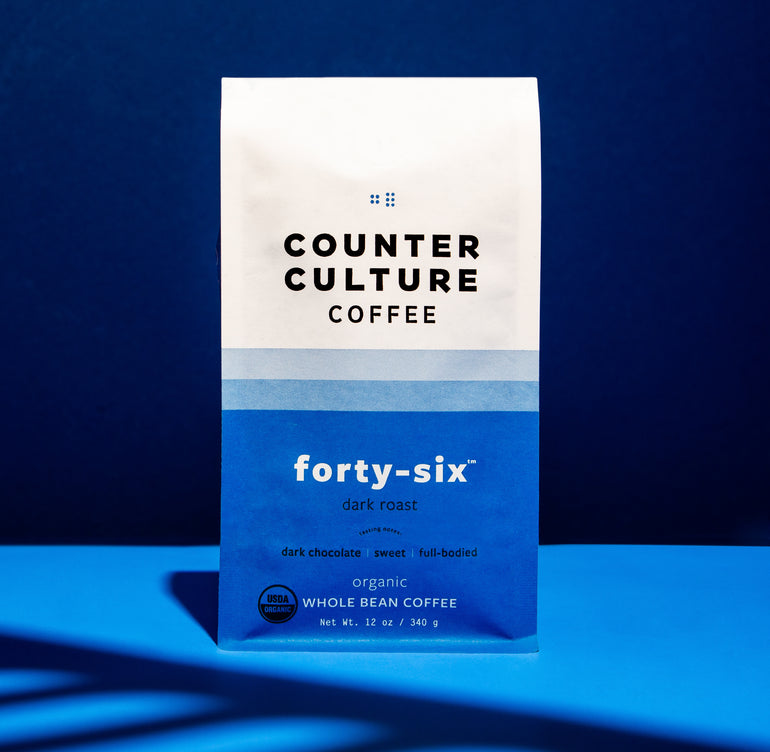
A milk-first espresso routine and a roast-date component record
Counter Culture Forty-Six
Roaster notes: dark chocolate, sweet, full-bodied.
The current exact proportions require a correctly matched date record
Think twice: You require fixed ingredients or your machine excludes the actual beans.
Image: Counter Culture Coffee. Official product identification photograph.
Read the full review →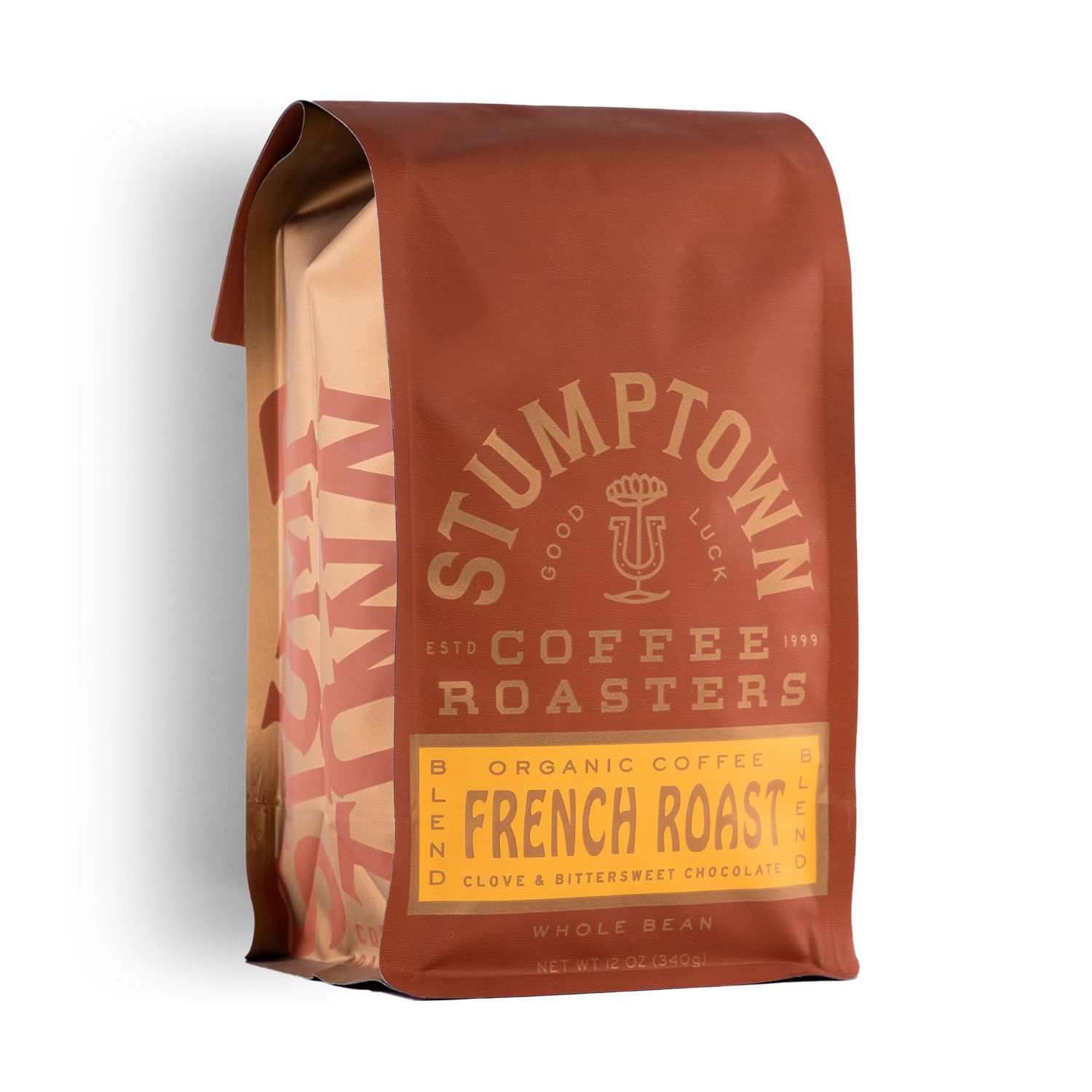
Daily drip coffee with a small-bag trial before bulk
Stumptown French Roast
Roaster notes: clove, bittersweet chocolate, toasted marshmallow.
The size and subscription controls matter as much as the roast name
Think twice: A five-pound bag would exceed your realistic consumption.
Image: Stumptown Coffee Roasters. Official product identification photograph.
Read the full review →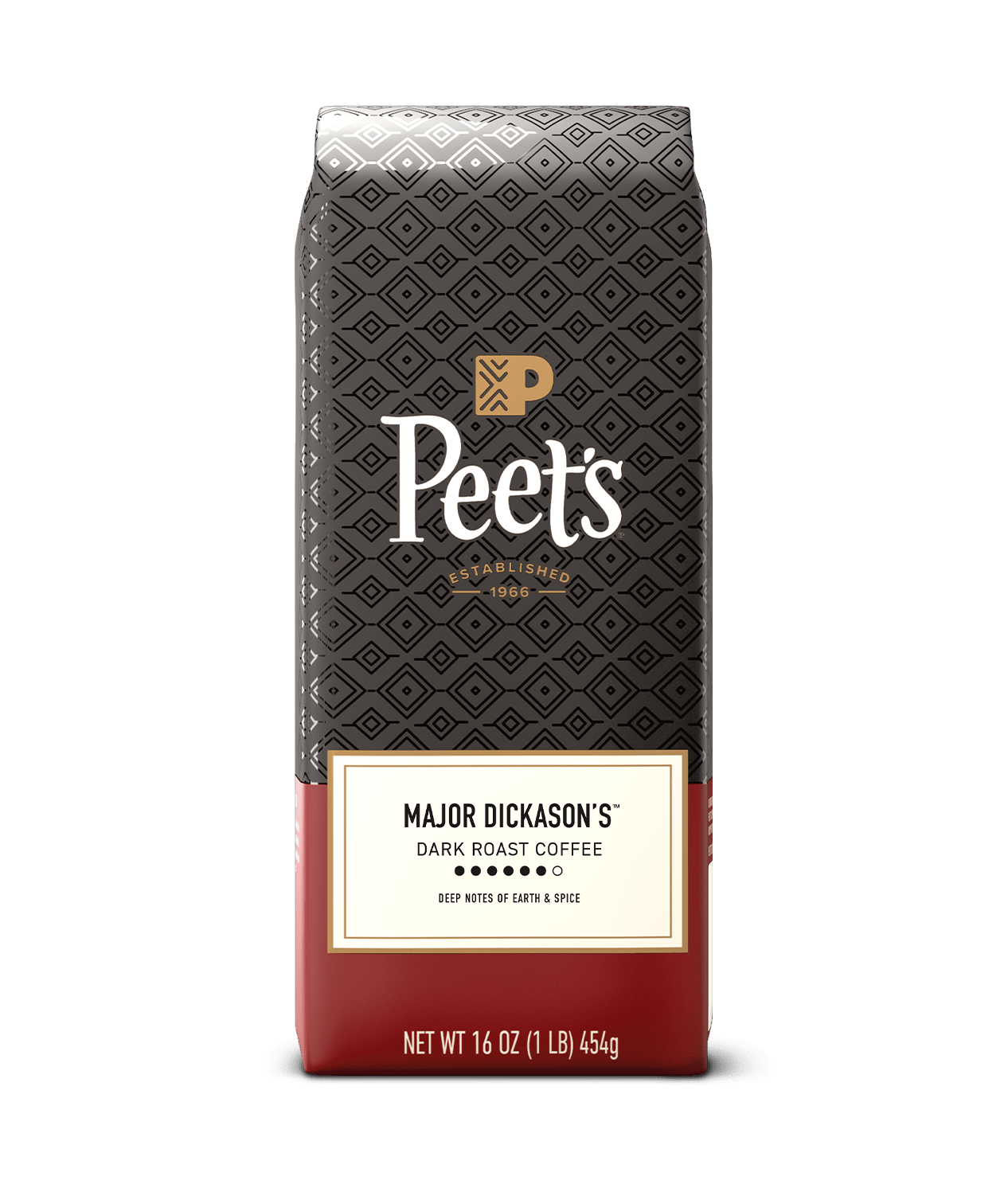
Comparing an exact direct whole-bean pack with retail alternatives
Peet's Major Dickason's
Roaster profile: earth and spice.
A familiar name appears across several formats and pack sizes
Think twice: You want a fixed single-origin lot or cannot verify format and mass.
Image: Peet's Coffee. Official product identification photograph.
Read the full review →The order and the routine
Detailed comparison
| Buying factor | Counter Culture Forty-Six | Stumptown French Roast | Peet's Major Dickason's |
|---|---|---|---|
| Roaster flavor brief | Roaster notes: dark chocolate, sweet, full-bodied | Roaster notes: clove, bittersweet chocolate, toasted marshmallow | Roaster profile: earth and spice |
| Pack choices | 12 oz, 24 oz, 5 lb | 12 oz, 5 lb | 16 oz direct; other sellers' sizes require verification |
| Record to inspect | Match the bag's roast date to the blend selector | Printed roast and enjoy-by dates; check purchase mode | Check whole bean, caffeine status, pack mass and package date |
| Brewing brief | Espresso and milk are part of the roaster's brief | Drip is the method foregrounded on the product page | Press and pour-over are highlighted; espresso needs its own trial |
| Illustrative bean cost | About $1.06 per illustrative 18 g dose | About $1.06 per illustrative 18 g dose | About $0.87 per illustrative 18 g dose |
| Main tradeoff | The current exact proportions require a correctly matched date record | The size and subscription controls matter as much as the roast name | A familiar name appears across several formats and pack sizes |
Make the choice repeatable
For espresso with milk, start with the coffee-and-milk job
Forty-Six is the first pick to investigate when the main job is espresso with milk and a changing component record is valuable. That selection follows Counter Culture's published espresso-and-milk positioning. It does not establish that the coffee wins a latte tasting or that the same recipe works in every basket. The full review explains how to connect a roast date to the record before treating a component list as current. [1]
Use your ordinary milk quantity in the trial. A small cappuccino and a very large latte can make the same shot serve different jobs. If the coffee seems muted in the larger drink, identify the beverage ratio before spending the rest of the bag on extreme grind changes. Milk volume is part of the buying decision, not an irrelevant finishing detail.
Keep the first espresso comparison controlled. Use a dose your basket accepts, weigh the beverage separately from its time and change one variable at a time. A matching stopwatch number is a record of the procedure, not proof of a matching cup. If your grinder's step size is the limiting factor, another coffee purchase may simply conceal that problem until the following bag.
Pause this pick when you need fixed ingredients or when the machine's bean restrictions cannot be checked against the bag. Choose a smaller trial rather than assume that a darker label guarantees a particular surface-oil condition or easy integrated-grinder ownership. There is no universal automatic-machine recommendation in this shortlist.
Make the choice repeatable
For daily drip, match the purchase to consumption
French Roast is the drip-first choice to investigate here because Stumptown foregrounds that method in the product presentation and offers a clearly visible small-versus-bulk route. The name is a roasting direction, not a claim that the coffee was grown in France. The full review keeps that identity separate from the changing contributing coffees. [2]
Use one method-specific recipe for the initial bag and write down dose, water, grind position and batch size. Keep the paper and agitation routine consistent. If the cup is too concentrated, a ratio change asks a clearer question than replacing both the brewer and the coffee at once. If the roast direction is the part you dislike, a different coffee may be the more honest answer.
The five-pound choice should follow the household's real consumption. Roughly 2,268 g at 20 g each day is about 113 days before waste; at 80 g each day it is about 28 days. The same package therefore makes very different demands on two kitchens. Stumptown's opened-bag guidance is a useful reason to make that calculation before treating bulk as a bargain. [5]
Pause this pick when a large pack would linger or the selected purchase mode is unclear. The checked page initially presented subscription controls alongside the displayed price. This guide records the observation without promising a subscription saving, free shipping or a current bulk total. Confirm the selection and checkout terms for the order you actually intend.
Make the choice repeatable
For direct-versus-retail value, compare the exact Major Dickason's pack
Major Dickason's is the pick to investigate when you recognize the coffee and are comparing a direct whole-bean bag with a retail alternative. The direct record is a useful reference because it makes format and pack mass visible, but the name also appears on pods, capsules, decaf and preground products. Those are separate purchases. [3]
Write down the net coffee mass before comparing stickers. A 12 oz bag is about 340 g and a 16 oz bag is about 454 g. A larger price can buy a lower cost per gram, while a bulk pack can still be wrong for your consumption. The table's per-dose calculations show the arithmetic rather than borrowing an unspecified serving size from a label.
Date and seller still matter. A direct roastery description does not establish the history of a bag already on a grocery shelf. Check the actual date, package condition and format. If a retail bag lacks the information you need, that uncertainty belongs in the buying decision even when the front brand is familiar.
Pause this pick if a fixed origin and full lot documentation are your main goal. The record supports a blend identity; it does not establish permanent component percentages or a complete variety list. Buy a current documented single-origin coffee for that requirement instead of expecting an established blend name to do a different job.
Make the choice repeatable
Use the transparent dose calculation, then add the real order costs
The displayed US reference prices were checked on October 13, 2026: Forty-Six and French Roast at $20 for their 12 oz selections, and Major Dickason's at $21.95 for the direct 16 oz selection. They are observations, not verified promotions or future offers. Purchase mode, format, seller stock, shipping and tax require current confirmation. [1] [2] [3]
The calculation is price divided by package grams, multiplied by an illustrative 18 g dose. That yields about $1.06 for each $20/12 oz selection and about $0.87 for $21.95/16 oz. It does not count failed dialing-in shots, water, milk, power, equipment or shipping. The numbers are not a caffeine comparison or a guarantee of how many drinks your method will make.
For a filter routine using 20 g, use that mass instead. If the household changes dose frequently, count the total grams used each week rather than inventing a serving count. That record will also make the delivery interval easier to set. A subscription should be fitted to use after the coffee suits you, not used to force a bag size before the first trial.
Do not choose only from per-dose cost. A slightly higher unit price can be good value when the package and profile are right and you finish the coffee. A cheaper large bag can cost more per enjoyable drink if you lose interest or discard much of it. The useful comparison is the complete order you expect to use.
Make the choice repeatable
Keep package policy, shipping policy and opened-bag use separate
Stumptown recommends consuming its opened coffee in three to four weeks and separately describes its sealed-package and direct-shipping policies. Those are attributed roaster statements. They are not Coffeedant shelf-life tests, and its shipping guarantee does not apply to Counter Culture, Peet's or an unrelated retailer. The actual bag's history remains the evidence for your order. [5]
Record both roast date and opening date. One concerns production and the other your handling. An enjoy-by date can be useful labeling without answering when the coffee was opened, how it was stored or which point in that window suits your palate. This guide does not assign a universal peak day to any of the blends.
A cool, dark location and a well-sealed bag or container are practical starting choices. Stumptown also warns about moisture introduced by repeatedly moving coffee in and out of cold storage and about absorbing surrounding odors. Its advice is cited as guidance, not a blanket experiment on every coffee here. [6]
Storage equipment cannot make an unsuitable bulk purchase automatically sensible. If a bag would spend months open at your usual dose, change the order size first. If several people share the bag, make sealing and date tracking part of the shared routine rather than leave each person to infer what happened.
Make the choice repeatable
Check the grinder and automatic-machine restrictions before loading a hopper
Do not assume that all coffees called dark have the same surface oil or that any one of them is suitable for every integrated grinder. Check the exact appliance manual and inspect the bag. If the manufacturer restricts oily or flavored beans, the route through that machine must satisfy those restrictions independently of this guide.
Baratza's Encore ESP manual offers a useful example for a separate grinder: coffee-oil cleaning is discussed for dark or oily coffee, while metal burrs must stay dry. Its washable removable containers are not permission to wash the burrs. That distinction matters when a coffee purchase changes the cleaning workload. [7]
An espresso-machine descale addresses mineral deposits in its water path. It cannot clean coffee residue in a separate grinder or replace the grinder's dry-care procedure. Keep the maintenance jobs separate, and use only the products and sequence specified for each appliance.
Before buying a new grinder to solve a new bag, establish a repeatable recipe. Record the setting, dry mass and beverage or water mass, then make a controlled change. If switching from filter to espresso creates an unreliable result, examine the return-to-setting routine and retained coffee separately. A stronger taste preference does not remove the need for appropriate adjustment.
Make the choice repeatable
A first-week plan that leaves you with an answer
Begin with one new bag. Retain the packaging, note the roast and opening dates and make the drink you use most. Keep the first comparison simple enough that another household member can repeat it. A tasting notebook is useful when it records your recipe and preference; it need not pretend to be a laboratory protocol.
After two or three controlled drinks, decide which question remains. If the coffee seems too concentrated, investigate ratio. If the flow is very different, investigate grind and preparation. If the roast direction is simply wrong for your preference, compare a different direction rather than making increasingly extreme adjustments to defend the purchase.
Use a second brewing method only if you actually need the bag to cover it. A coffee that serves your daily espresso well can be a good dedicated purchase even when another bag is preferred for occasional filter. If one bag must satisfy several drinkers, include their normal drinks in the decision before subscribing.
At the end of the small bag, write one reason for the next order. Repeat the same size to confirm the result, move larger because consumption supports it, or change direction because you prefer something else. That reason is more useful than a generic best label that cannot explain who the purchase was meant to serve.
Make the choice repeatable
When a medium-dark or fruit-led coffee is the better decision
Do not treat the three dark picks as the only acceptable coffees for espresso or milk. Big Trouble is included in the surrounding review library as a medium-dark alternative, and Hologram is a different documented blend direction. They are excluded from the primary dark category so that the shortlist remains clear. [4]
If the dark trial needs heavy sweetness or an unfamiliar milk routine before you enjoy it, decide whether that is a change you want. A different coffee may cost less in unwanted experimentation even when its sticker price is higher. The objective is a repeatable drink, not loyalty to a roast category.
If fixed lot information, unusually specific varieties or a changing single-origin exploration is the goal, look for a current roaster listing that actually provides it. The three blends here are recommendations for different purchasing routines. They cannot satisfy an origin requirement merely because their brand names are established.
The final choice follows the original job: Forty-Six for investigating the milk-first espresso brief and dated component record, French Roast for a drip routine with sensible pack size, or Major Dickason's for an exact-format direct-versus-retail comparison. Read the full review, inspect the current order and let a manageable first bag earn the next purchase.
Evidence and limits
How these picks were selected
This is a research-led buying guide. Exact product identity, roast classification and purchase details come from the named roasters. The best-for labels are Coffeedant editorial judgments about distinct buying jobs. We have not conducted a tasting, bought a bag, measured caffeine or verified universal machine compatibility. The price calculations use the stated pack mass and an illustrative 18 g dose, with shipping, tax and waste excluded.
The shortlist is deliberately limited to three current documented whole-bean blends with full Coffeedant reviews. It is not an exhaustive market ranking. Each linked review records its own source limits. Follow the current seller selection and exact appliance instructions before buying or loading a hopper.
Quick answers
Dark-roast coffee FAQ
Did Coffeedant taste these coffees side by side?
No. These are research-led best-for picks from current roaster records, buying criteria and relevant equipment guidance. No sensory winner or numerical score is claimed.
Which is the best dark roast for espresso with milk?
Forty-Six is the first option to investigate here because the roaster explicitly positions it for espresso and milk. That is a buying fit judgment, not a universal taste result.
Are all three suitable for a superautomatic?
No universal suitability is established. Check the exact machine's bean restrictions and the condition of the actual bag before loading its hopper.
Does French Roast mean the coffee comes from France?
No. It is the blend's roasting/style name; it does not establish French coffee origin.
Why is Big Trouble outside the main shortlist?
Its checked roaster record calls it medium-dark. It is a useful alternative rather than an extra pick that quietly changes the dark-roast criterion.
Are these prices live offers?
They are dated US listing observations checked October 13, 2026. No discount, future price or guaranteed stock is claimed.
Does darker roast mean a measured caffeine advantage?
This guide has no product-specific caffeine measurements. Roast color alone does not establish the caffeine quantity in your drink.
Should I begin with a bulk bag?
Begin with a manageable trial unless you already know the exact coffee and consumption rate. Calculate how many days the pack represents at your actual dose.
Trace the claims
Sources
- Counter Culture Forty-Six ↗
Current roast category, date selector and espresso/milk buying brief. Checked October 13, 2026.
- Stumptown French Roast ↗
Current dark blend, method presentation and pack controls. Checked October 13, 2026.
- Peet's Major Dickason's ↗
Direct whole-bean reference and format/pack distinctions. Checked October 13, 2026.
- Counter Culture Big Trouble ↗
Medium-dark alternative, excluded from the primary dark category. Checked October 13, 2026.
- Stumptown freshness advice ↗
Attributed opened-bag guidance; shipping promises stay roaster-specific. Checked October 13, 2026.
- Stumptown storage advice ↗
Attributed storage and repeated-freezer-handling context. Checked October 13, 2026.
- Baratza Encore ESP operations manual ↗
Separate-grinder dry-burr and coffee-oil care. Checked October 13, 2026.
Your next useful purchase
Buy for the drink and the bag you will finish
Investigate Forty-Six for a milk-first espresso brief and dated component record, French Roast for a drip routine with sensible pack size, or Major Dickason's for an exact-format direct-versus-retail comparison. Start small, keep the recipe repeatable and let your own bag answer the taste question.
Explore all coffee bean reviews →