
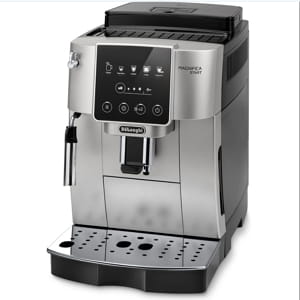
Typical street: $500–$650 (manual frother ECAM22022B). Auto-milk variants cost more.
De’Longhi Magnifica Start
Convenience first: a compact, one-touch super-automatic with durable steel burrs, a removable brew group, and simple controls. It makes good espresso with dialing, but build feels budget and the grinder is loud.
Overview
Magnifica Start delivers consistent, one-touch espresso in a tiny footprint with a durable steel burr grinder and easy cleaning. Expect very good shots after dialing, acceptable manual steaming, and frequent rinses that keep the internals tidy. Trade-offs: loud grinder, plastic feel, small tank for busy homes, and a basic button UI.
Pros
- Steel conical burrs with 13 steps; consistent grinds for this class
- Removable brew group simplifies weekly cleaning
- Fast warm-up (≈30–45 s) and compact 24 cm width
- Dishwasher-safe parts; automatic rinse on start/stop
- Good espresso once dialed; Americano mode on select SKUs
Cons
- Loud grinder (shrill tone); not baby-sleep friendly
- Plastic-forward build and steam tip feel budget
- Small 1.8 L tank + rinse cycles = frequent refills
- Button UI lacks display; sensitive to accidental touches
- Manual frother learning curve (auto-milk is a different model)
Features & Specs
- Grinder: steel conical, 13 steps (adjust only while grinding)
- Brew group: removable ECAM unit (≈7.5–10 g dose)
- Heating: thermoblock • Pump: 15 bar nominal
- Drinks: Espresso, Coffee/Lungo, Americano (varies by SKU), 2× shot
- Milk: manual panarello wand (auto-milk on ECAM22080 variants)
- Water tank: 1.8 L (side-mounted) • Hopper: 250 g
- Controls: soft-touch panel; 3 temp & 3 strength levels
- Size/weight: ~240 W × 440 D × 350–360 H mm, ~8.9 kg
- Materials: plastic housing with stainless accents
Day-one setup & dialing
- Prime & heat: set water hardness, run a few rinses. Warmup is ~30–45 s.
- Start point: grind setting 3–4, strength 2/3, temp mid, espresso volume ~30–40 ml.
- Adjust grind while grinding: turn the dial only during the grind to avoid damage.
- Taste & tweak: if weak → finer (or strength up); if bitter/slow → coarser or reduce volume.
- Milk (manual): purge; stretch briefly; roll to 58–60 °C in a 12 oz pitcher (120–180 ml milk).
FAQs
- Is the grinder loud?
- Yes—brief (5–7 s) but notably loud and high-pitched compared with many rivals.
- Americano mode?
- Available on select variants (e.g., ECAM220.22/220.30). Check your exact SKU.
- Auto-milk option?
- Yes—Magnifica Start LatteCrema (e.g., ECAM22080) adds an automatic carafe and easier milk workflow.
- Pre-ground chute?
- Exists, but use sparingly—only one scoop or it can overflow the brew path.
Maintenance & known gotchas
Who it’s for / who should avoid
Pricing notes
- Manual frother ECAM22022B: typically $500–$650 depending on promos.
- LatteCrema variants: often $650–$800 with automatic milk carafe.
- Value sweet spot is usually below ~$550; above that, compare features/build vs rivals.
The De'Longhi Magnifica Start ECAM22022B delivers genuinely good espresso at the push of a button, but its loud grinder and plastic construction expose the compromises made to hit the $500-650 price point. This super-automatic espresso machine makes excellent sense for beginners prioritizing convenience, yet it faces fierce competition from better-built alternatives at similar prices. After analyzing technical specifications, expert reviews, and hundreds of user experiences, the machine emerges as competent but not exceptional—a workhorse that gets the job done while leaving room for disappointment about what could have been.
The Magnifica Start replaces De'Longhi's aging Magnifica S with updated aesthetics and a modern soft-touch interface. Made in Romania, it targets first-time espresso machine buyers who want café-quality drinks without barista skills. The machine grinds fresh beans, tamps automatically, brews under pressure, and even includes a steam wand for milk drinks—all in a compact 24cm-wide footprint that fits smaller kitchens. It sounds like the perfect entry-level solution, and in many ways it is. But the devil lives in the details.
What you get for $600: Steel burrs in a plastic shell
The technical specifications reveal a machine built on sound fundamentals wrapped in cost-cutting materials. The steel conical burr grinder with 13 adjustment settings represents the machine's best feature, offering superior durability and particle distribution compared to the ceramic grinders found in competitors like Philips. These burrs will outlast the machine itself, easily handling 20,000+ cups before showing wear.
Shop the essentials
The small upgrades that make a home coffee setup cleaner, smoother, and more enjoyable to use every day.

Cleaner & Descaler Tablets
Keeps your machine clean, helps prevent buildup, and protects long-term performance.
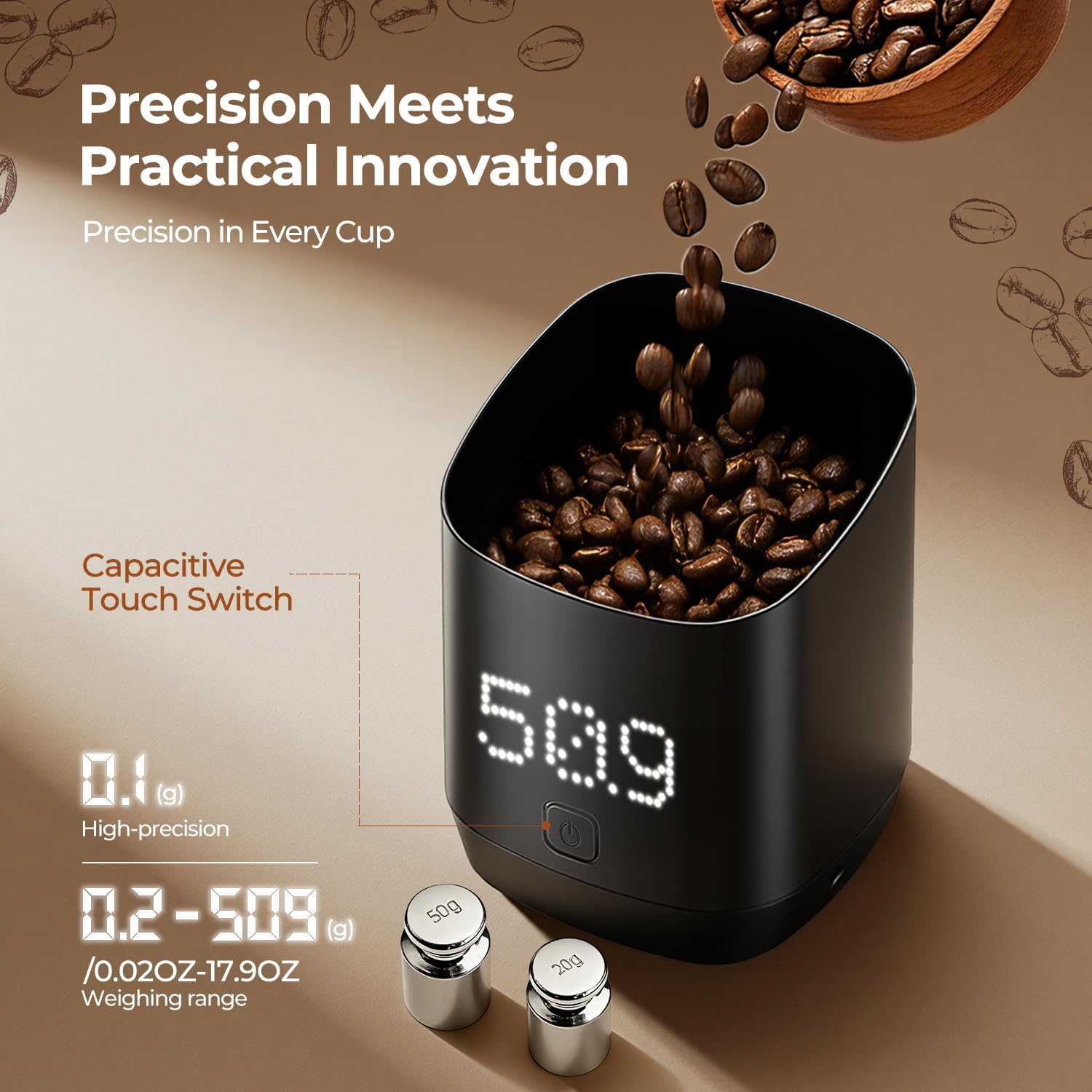
Digital Dosing Cup
Makes weighing beans faster and cleaner, with less mess around the grinder.
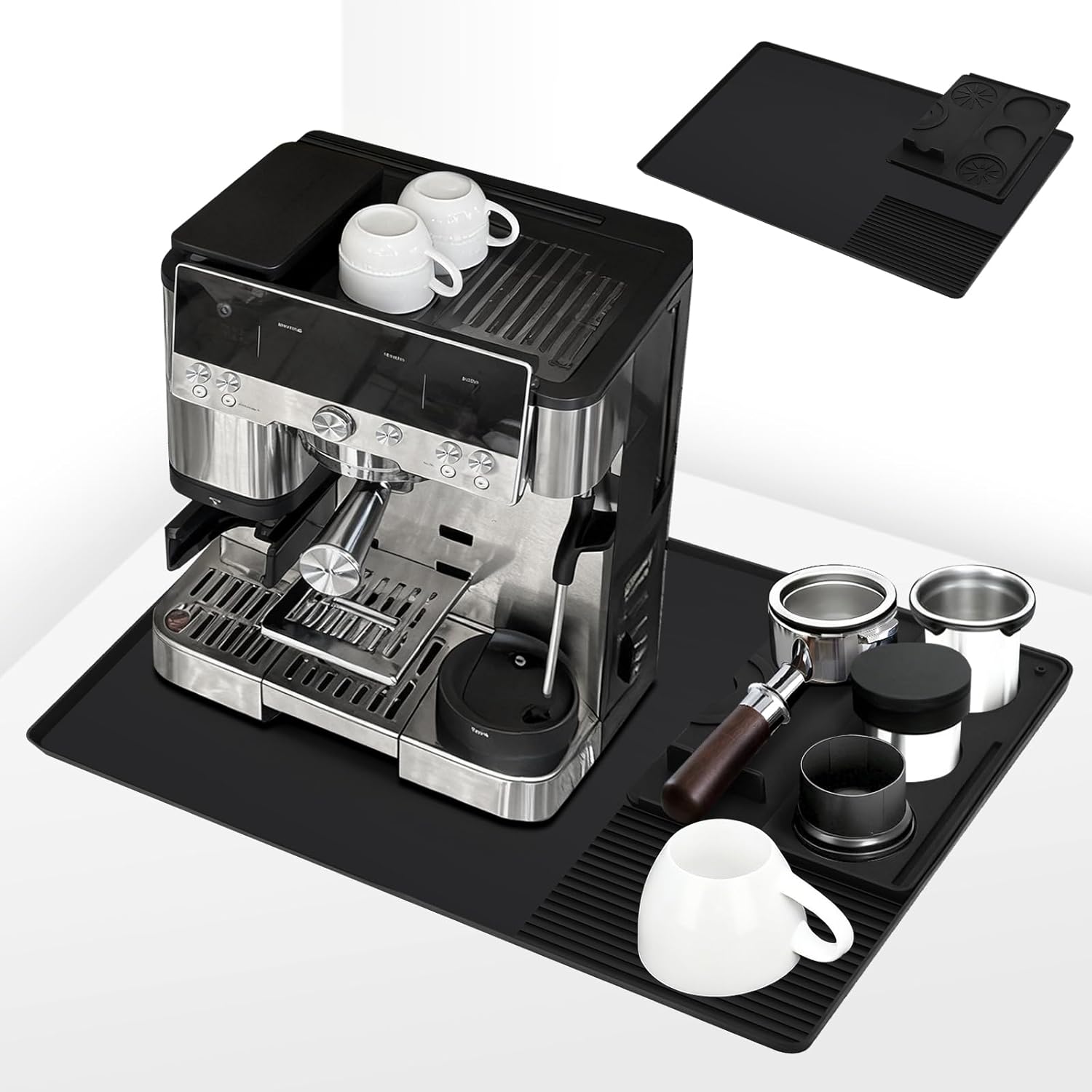
Silicone Mat
Protects your counter, catches spills, and gives your setup a cleaner working surface.

Vacuum Coffee Canister
Helps beans stay fresher longer by limiting air exposure after opening the bag.
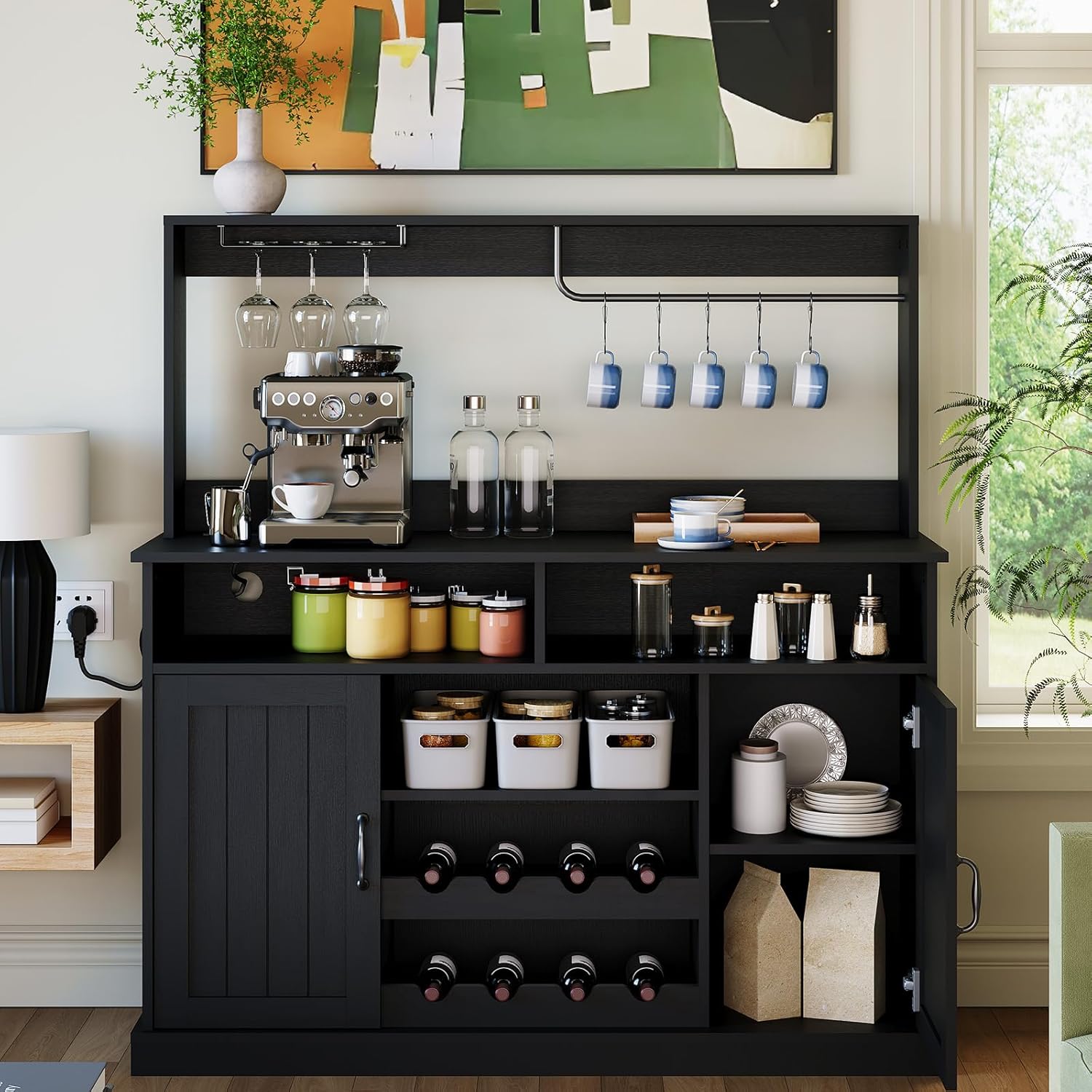
Farmhouse Coffee Bar Cabinet
Gives your machine, cups, beans, and accessories one dedicated home instead of cluttering the kitchen.
A 15-bar pump powers a thermoblock heating system that reaches brewing temperature in 30-45 seconds—impressively quick for morning routines. The 1.8-liter side-mounted water tank removes easily for refilling, though its modest capacity requires daily attention in multi-person households. The 250-gram bean hopper holds about a week's worth of beans for moderate users, feeding the grinder that doses 7.5-10 grams depending on your chosen intensity level.
The removable brew group—a hallmark of De'Longhi's ECAM series—makes maintenance straightforward. You simply slide out the entire brewing unit from behind the water tank, rinse under running water, and reinsert. This beats machines with sealed brew groups that require professional servicing, though it adds a weekly cleaning task to your routine. The brew group's maximum dose capacity of approximately 10 grams limits you compared to premium models that handle 14-15 grams, but it proves adequate for most home users.
Build quality disappoints at this price. The housing consists almost entirely of glossy black plastic with silver accents attempting to suggest premium materials that aren't actually there. Multiple expert reviewers and users noted the machine "doesn't feel cheap" despite the plastic construction, but the caveat matters—it's a budget machine that looks budget. The steam wand tip is plastic, raising durability concerns. Nothing feels flimsy or likely to break immediately, but the Magnifica Start lacks the heft and substance of competitors like the Breville Barista Express, which incorporates significantly more metal at a similar price point.
Measuring 24 x 44 x 35-36 cm and weighing 8.9 kg, the machine claims one of the smallest footprints in the super-automatic category. At just 43cm tall, it genuinely fits under cabinets that would block larger machines. This compact design comes at a cost: the drip tray fills rapidly (especially with automatic rinse cycles on startup/shutdown), and you'll empty the 14-serving grounds container twice weekly with regular use.
The grinder that works brilliantly but sounds terrible
The Magnifica Start's grinder delivers the good, the bad, and the genuinely unpleasant. On the positive side, grind quality and consistency impressed reviewers, with the steel burrs producing uniform particles that extract well. The 13 settings span fine to coarse, though experts universally report the finest two settings overwhelm the pump (water barely flows) and the coarsest three produce weak, under-extracted coffee. The usable range of settings 3-8 provides enough adjustment for most beans and preferences.
Then comes the noise. Expert measurements recorded 75.9 decibels during grinding—louder than the predecessor Magnifica S at 71.1 dB and louder than most competitors. Worse than the volume, reviewers described a "high-pitched," "shrill," "unpleasant" sound that makes early morning use problematic. Coffeeness.de, which has reviewed espresso machines for over a decade, bluntly stated the machine "would NOT pass the 'sleeping baby' test." Multiple users confirmed: "The grinder is very loud... as long as you're never trying to make coffee while everyone else is sleeping, it's fine though."
The grinding takes 5-7 seconds per dose, so the noise doesn't last long. But it's loud enough to wake household members through closed doors. If you live alone or have a separate kitchen space, this won't matter. For apartment dwellers or those with light-sleeping family members, the grinder represents the machine's biggest practical flaw.
One critical operational note: you must adjust grind settings only while the grinder is running, a safety feature that prevents damage. Attempting to turn the grind dial while the machine is idle can damage the burrs. The manual explains this, but it's counterintuitive enough that many users make the mistake initially.
Espresso quality that exceeds expectations (with caveats)
The Magnifica Start produces espresso that punches above its price class—with proper setup. Out of the box, default settings disappointed multiple reviewers, producing shots described as "too long," "weak," and "bitter." But after dialing in, the machine delivered results that impressed even experienced coffee drinkers.
Tom's Coffee Corner, a professional coffee equipment reviewer, recommended these settings for optimal extraction: third finest grind setting, double shot mode, 1.4 oz (40ml) volume, strength level 2 of 3, and factory temperature. Home Coffee Expert suggested third finest grind, maximum strength, highest temperature, and 30g output. The common thread: you must spend time experimenting to find your optimal settings. This isn't plug-and-play despite being advertised as such.
With proper dialing in, the espresso shows excellent crema formation (especially with beans containing 20%+ robusta), above-average body for a super-automatic, and well-balanced flavor. It approaches actual espresso without quite reaching it—the 10-gram maximum dose and automated brew group can't match the precision of a skilled barista with a manual machine. But compared to coffee shop drinks, multiple users reported satisfaction: "tastes better than Starbucks," "comparable to coffee shops," "best espresso I've tried at home."
Temperature runs slightly cool according to expert consensus. Coffee emerges at approximately 155-157°F, which some users found perfect while others wanted hotter. Experts recommend running a rinse cycle before brewing your first espresso (press the 2x button for 3 seconds) to flush cooler water from the lines and replace it with hot water. The machine offers three temperature settings, though adjusting requires navigating the button-based menu without a display screen.
The three available drink modes—Espresso, Coffee (lungo), and Americano—produce varying results. Espresso mode works best, while multiple users reported the regular Coffee mode produces drinks "too weak" or "too watery." The Americano function properly brews concentrated espresso then adds hot water, mimicking café technique, though it's only available on certain model variants (ECAM220.22, 220.30). Some models include Doppio+ mode with pre-infusion for stronger shots.
Pressure profiling and temperature stability can't match semi-automatic machines with PID control. The thermoblock heating system maintains adequate temperature for extraction, but it lacks the precision of dual-boiler designs. For the super-automatic category and price point, performance meets or exceeds expectations. For coffee purists accustomed to manual machines, it represents acceptable convenience rather than optimal extraction.
Milk frothing: Manual skills required (or buy the other version)
The ECAM22022B uses a traditional manual panarello-style steam wand that requires hands-on technique. This marks a critical distinction: De'Longhi offers the Magnifica Start in two configurations. The manual frother version (ECAM22022B, typically $500-650) requires you to learn steaming and frothing skills. The automatic LatteCrema version (ECAM22080B/SB, typically $650-800) includes a milk carafe that froths automatically.
Expert consensus strongly favors the automatic version. Coffeeness.de stated flatly: "There is no reason to buy the manual milk frother De'Longhi Magnifica Start" when the LatteCrema version exists. The manual wand takes practice to master, with users reporting "took me a couple tries to figure out" and "learning curve" experiences. The panarello attachment (a plastic sleeve that aerates milk) makes it easier than traditional single-hole wands but still requires technique for microfoam.
For the LatteCrema automatic system (on other model variants), reviewers praised the results. Tom's Coffee Corner noted it "textures the milk creamier than does the Philips LatteGo, albeit not as good as with a traditional espresso machine." The foam quality was "good but not as dense as manual steaming"—adequate for home use but not barista-level microfoam. The automatic carafe includes level markers for different drinks, refrigerates conveniently, and disassembles for dishwasher cleaning.
Milk temperature trends lukewarm—another consistent finding. Multiple reviewers noted milk drinks weren't as hot as some users prefer, though adequate for most. The machine does properly heat milk, just not to scalding temperatures some expect from café drinks.
Steam power proves decent for a super-automatic. The manual wand takes 2-3 minutes total including heating time and frothing. The automatic LatteCrema system operates concurrently with espresso brewing, producing milk-based drinks in approximately 1-2 minutes total. Both systems rinse automatically after use, preventing milk residue buildup, though you must still disassemble and deep clean components weekly.
Interface simplicity that becomes limitation
The soft-touch control panel features clear icons for three drink types, aroma strength indicators, and settings access—all without a display screen. This button-only interface divides users. Beginners appreciated the simplicity: "about as intuitive as it gets," "clearly labeled and simple to use." The angled front panel puts controls at a comfortable angle, and illuminated icons show status at a glance.
But the lack of a display screen limits functionality. Adjusting cup volumes requires holding the drink button until your desired volume flows, then releasing (with approximately 1-second anticipation for lag). Changing temperature, water hardness, and other settings requires memorizing button combinations from the manual. Users accustomed to touchscreens or rotary dials found this frustrating.
The buttons are overly sensitive—a repeated complaint. Tom's Coffee Corner noted: "I have brushed up against them accidentally many times, and started a drink when I didn't want to. That's annoying." The soft-touch buttons activate with minimal pressure, leading to unintended brewing cycles.
Programming drink volumes and strengths takes initial effort but provides adequate customization once set. You get three coffee strength levels, three temperature settings, and adjustable volumes for each drink type. This proves sufficient for most users but limited compared to competitors offering more granular control or multiple user profiles. The lack of scheduling features, app connectivity, or automatic shutoff customization further separates this from premium models.
One practical limitation: the maximum cup height clearance is approximately 5.5 inches (14 cm). Tall travel mugs won't fit, requiring you to brew into a smaller cup then transfer—an annoying workflow if you regularly use large mugs.
Maintenance demands regular attention but not expertise
The Magnifica Start's maintenance requirements fall squarely in the middle ground: not as carefree as some super-automatics claim, but far simpler than semi-automatic machines. The removable brew group represents the key advantage. Once weekly, you remove the brew group from behind the water tank, rinse under running water (no soap), and reinsert. This 5-minute task prevents coffee oil buildup and keeps extraction quality consistent.
De'Longhi designed the brew group with a unique quirk: part of it remains inside the machine when you remove it, unlike some competitors where the entire unit comes out. This means you must also wipe inside the machine compartment more thoroughly than usual, though it doesn't affect functionality.
Daily tasks include emptying the drip tray and grounds container when the machine prompts. The drip tray fills quickly because the machine automatically rinses on startup and shutdown—a nice feature for cleanliness that creates more frequent emptying. The grounds container holds 14 servings, adequate for 1-2 people but requiring every-other-day emptying for heavy users.
Descaling frequency depends on water hardness. The machine includes a test strip to measure your water, with four programmable hardness levels that adjust the descaling reminder. Without a water filter, expect descaling every 2-3 months. With the optional De'Longhi water filter installed (sold separately, $10-15, lasts 2 months), you can extend intervals significantly—the filter reportedly handles 5,000 cups before descaling becomes necessary.
The descaling process takes approximately 45 minutes including multiple rinse cycles, and you cannot interrupt it once started. You must use De'Longhi-branded descaling solution; using third-party descalers may void the warranty. The proprietary requirement adds to lifetime costs but De'Longhi justifies it as protecting internal components.
All removable parts except the brew group are dishwasher-safe: drip tray, water tank, grounds container, milk frother components. This simplifies weekly deep cleaning. The manual steam wand version requires you to wipe the steam tip after each milk drink to prevent residue—a quick task but easy to forget.
Common user error warning: Using more than one scoop of pre-ground coffee in the bypass chute causes grounds overflow into the brew group, requiring partial disassembly to clean. Multiple users made this mistake. The machine includes a bypass for pre-ground coffee, but experts universally recommend against using it—fresh grinding is essential for optimal flavor.
What users praise and what drives them crazy
Analyzing 100+ verified purchase reviews across Best Buy, Amazon, and specialty coffee forums reveals clear patterns. The #1 praised feature is ease of use, with beginners consistently amazed at how simple espresso-making becomes. "Didn't know you needed until you tried it," one reviewer explained. "Takes the guesswork out of making espresso," noted another. First-time espresso machine buyers overwhelmingly loved the convenience and consistent results.
Coffee quality exceeded expectations for most users. Reviews repeatedly mentioned "way better than my previous machine," "tastes better than Starbucks," "comparable to coffee shops." The rich crema production and well-balanced flavor won over users who initially doubted an automatic machine could match manual brewing. Several noted the machine paid for itself within months by eliminating daily café trips—at $5 per drink, the $600 machine breaks even after 120 drinks, roughly 2-3 months for daily users.
Users praised the compact footprint for small kitchens, the steel burr grinder for consistency, and the easy cleaning with dishwasher-safe parts. Several long-time De'Longhi owners specifically upgraded from older models and noted the Magnifica Start improved upon its predecessors in extraction quality and user interface.
But the complaints matter. Noise dominates negative feedback—it's mentioned in nearly every critical review. Users who described themselves as noise-sensitive or living in apartments specifically called out the grinder as "extremely loud," "unpleasant," and disruptive. This single issue accounted for more dissatisfaction than any other factor.
Plastic construction disappointed users who expected more premium materials at $500-650. "Giant piece of plastic" appeared in multiple reviews, with users feeling the machine should incorporate more metal for the price. The plastic doesn't affect functionality, but it affects perception of value and quality.
The small 1.8L water tank frustrated multi-person households. Daily refills become necessary for couples who each drink 2-3 cups daily, especially accounting for the automatic rinse cycles that consume water. Some users specifically cited this as a reason they'd choose a different machine if buying again.
Manual milk frothing learning curve generated mixed reactions. Some users embraced the challenge and became proficient. Others struggled and wished they'd purchased the automatic LatteCrema version. "The manual frother took me a bit to get used to... I like my coffee very hot" summed up the experience—it's learnable but requires practice and doesn't heat milk to everyone's preferred temperature.
Among the roughly 20% of users who wouldn't recommend the machine, reasons clustered around: too noisy for their environment, plastic construction not worth the price, water tank too small for their household, or manual frother too frustrating. Notably, very few users complained about the core functionality—the espresso quality, reliability, or brewing performance. Complaints focused on peripheral experiences rather than fundamental coffee-making ability.
Longevity reports remain limited given the model's relative newness (launched 2022-2023), but De'Longhi's broader Magnifica line has a strong reputation for 7-10 year lifespans with proper maintenance. Early reliability appears good with few reports of manufacturing defects beyond occasional water level sensor issues.
Known issues and when things go wrong
The Magnifica Start shows fewer endemic problems than many competitors, but specific issues appear repeatedly in user reports and forums. Water level sensor malfunctions represent the most common defect—the machine incorrectly reports an empty tank when full. This typically results from mineral buildup on sensor contacts or a stuck float mechanism. Running a descaling cycle or cleaning the tank's float sensor usually resolves it.
The steam wand auto-timeout confuses first-time users but isn't a defect. After 1-1.5 minutes of continuous steam, the machine automatically stops with loud beeping and flashing lights. This safety feature prevents overheating, but the manual doesn't explain it clearly, leading users to believe something has broken.
Grounds container sensors occasionally fail to detect when the container is full, allowing overflow if you don't manually check. The machine relies on counting brewing cycles rather than physically sensing grounds level, so the counter can lose sync if you remove the container while the machine operates.
Some machines shipped with incorrect button label alignments on the control panel—a quality control issue rather than functional problem, but annoying nonetheless. De'Longhi's customer service reportedly addressed these cases with replacements.
Initial setup confusion generated complaints about the instruction manual. Multiple users called it "awful," "puzzling," and "useless," recommending instead the expanded 22-page manual available online or De'Longhi's YouTube setup videos. The included quick-start guide provides bare minimum information, assuming users will reference the full manual.
For long-term ownership concerns, common failure points in the broader Magnifica series include: O-rings requiring replacement after 5-7 years ($15-30 parts), water pumps eventually failing with extended use (year 5+, $50-100 repair), and brew group gaskets needing periodic replacement. The steel grinder burrs should outlast the machine. Seals and gaskets represent normal wear items that need refreshing but don't require professional installation—reasonably handy users handle these repairs at home.
Warranty coverage is 1-2 years depending on where you purchase. Best Buy and other major retailers honor the manufacturer warranty. Extended warranties are available for purchase. Users report mixed experiences with De'Longhi customer service—some found them responsive and helpful, others struggled to reach support. The 30-day return windows at major retailers provide important protection for identifying early defects.
Price and what else $600 buys you
At the typical $500-650 price point, the Magnifica Start faces brutal competition. Best Buy and Target list it at $599.95 for the black manual frother version (ECAM22022B), with the silver variant sometimes commanding $50 more. The automatic LatteCrema version (ECAM22080B) costs $730-800. Amazon pricing fluctuates with promotions, occasionally dropping below $550.
For total cost of ownership, budget $120-180 annually for maintenance supplies including: water filters ($60-90/year for 6 filters), descaling solution ($30-50/year for 4-6 descale cycles without filter), and cleaning tablets ($30-40/year). Over five years, expect $1,100-1,550 total investment including the machine and supplies. Using water filters increases annual costs but dramatically extends machine lifespan by preventing scale buildup in the thermoblock and brew group.
The competition offers compelling alternatives
The Breville Barista Express at $550-700 delivers better build quality with significantly more metal construction, superior temperature control via PID, a pressure gauge for monitoring extraction, and 25 grind settings versus De'Longhi's 13. But it's a fundamentally different machine—a semi-automatic requiring hands-on barista skills. You manually dose, tamp, and control extraction timing. For enthusiasts wanting to learn espresso craft, the Breville offers better coffee potential and a superior platform for developing skills. For convenience seekers, it's more work than the De'Longhi's push-button automation.
The Philips 3200 Series ($500-600 on sale from $800 MSRP) competes directly as another super-automatic. It offers the LatteGo milk system with genuinely easy 15-second cleanup, quieter operation than De'Longhi, a touchscreen interface, and the excellent AquaClean filter system that extends to 5,000 cups before descaling. The tradeoff: a ceramic grinder (less durable than steel) and only 12 grind settings. Multiple expert reviews favor the Philips for milk drinks and overall convenience, though De'Longhi edges ahead slightly on espresso quality.
The Gaggia Classic Pro ($449-499) represents the budget enthusiast choice—a semi-automatic with a commercial-grade 58mm portafilter, Italian construction, and excellent upgrade potential. But it includes no grinder, requiring a separate $150-250 investment in something like the Baratza Encore. Total cost approaches $650-750, and you need to develop barista skills. For users willing to learn and already owning a quality grinder, Gaggia delivers the best pure espresso quality in this price range.
Within De'Longhi's own lineup, the Magnifica Start essentially replaces the older Magnifica S with updated aesthetics and interface at a lower price point. The internal components—grinder, brew group, pump—are nearly identical. The Magnifica Evo ($100-150 more) adds an angled display and potentially automatic milk systems. The Magnifica Plus ($700-900) includes color touchscreens, 18 drink recipes, and multiple user profiles. The Start represents De'Longhi's value entry point—adequate for basic needs but lacking the features that justify premium pricing.
The price-to-feature ratio places the Magnifica Start in an awkward position. Below $550 on sale, it represents solid value as an entry-level super-automatic with integrated steel burr grinder. At full $600+ pricing, competitors offer either better build quality (Breville) or better convenience features (Philips). The sweet spot is $500-550, where the combination of automation, steel grinder, and De'Longhi reliability makes sense for first-time buyers prioritizing convenience.
Who should buy this, who should keep looking
The Magnifica Start makes excellent sense for first-time espresso machine buyers wanting café drinks at home without learning barista skills. If you're converting from coffee shop visits, live in a smaller space, and prioritize convenience over customization, this machine delivers on its core promise. The steel burr grinder, removable brew group, and consistent extraction justify the investment for users making 1-3 drinks daily.
Busy professionals seeking quick morning coffee particularly benefit from the 30-45 second warmup and one-touch operation. The machine consistently produces good espresso without requiring the 10-15 minutes of manual grinding, dosing, tamping, and temperature management that semi-automatics demand. You press a button, walk away, and return to ready espresso with minimal cleanup. This time savings compounds over months and years.
Budget-conscious enthusiasts in the $500-600 range find this machine adequate if they understand super-automatic limitations. You won't achieve the extraction precision of manual machines, but you'll get consistent, satisfying results that exceed most coffee shop standards. The 13 grind settings and three strength levels provide enough adjustment for experimentation without overwhelming beginners.
But specific users should avoid this machine. Noise-sensitive households where early morning coffee-making would wake family members need quieter options—the 75.9-decibel grinder genuinely disrupts sleep through closed doors. Apartments with thin walls face similar issues. Consider the Philips 3200 Series for notably quieter operation, or schedule coffee for times when noise won't matter.
Coffee purists wanting full manual control, pressure profiling, and optimal extraction should choose semi-automatic machines instead. The Breville Barista Express or Gaggia Classic Pro offer the precision and learning platform serious enthusiasts desire. Super-automatics fundamentally compromise extraction quality for convenience—a worthwhile tradeoff for some users, unacceptable for others.
Heavy users or multi-person households making 4+ drinks daily will find the 1.8L water tank frustratingly small, requiring constant refilling. Those valuing premium aesthetics will dislike the plastic construction. Buyers wanting automatic milk frothing should either purchase the LatteCrema version (ECAM22080B) for $150 more or choose the Philips 3200 Series with LatteGo.
The manual frother version specifically suits users willing to learn milk steaming technique or primarily drinking straight espresso. If lattes and cappuccinos dominate your routine, pay the premium for automatic milk systems—they're worth it.
Setup and learning curve considerations
Out-of-box setup takes 20-45 minutes depending on thoroughness. De'Longhi ships the machine well-protected in double-boxed packaging with fitted polystyrene. Initial steps include: installing and filling the water tank, adding beans to the hopper, testing water hardness with the included strip, programming hardness level, and running 4+ rinse cycles. The actual assembly is straightforward—most parts snap into place intuitively.
The included instruction manual underwhelms, leading most users to find the full 22-page manual online or watch De'Longhi's YouTube setup videos. This extra research step frustrates buyers expecting clear documentation, but the online resources provide adequate guidance. Setting up water hardness correctly matters significantly for descaling intervals and machine longevity.
The learning curve spans 1-2 weeks of experimentation to dial in optimal settings. Default configurations reliably disappointed reviewers, producing weak or bitter shots. You must test different grind settings (recommended starting point: setting 3-4), adjust strength levels, modify temperature, and program drink volumes to match your preferences and bean characteristics. This process requires making 10-20 test shots, but once dialed in, the machine consistently replicates your settings.
For manual milk frothing, expect 5-10 practice attempts before producing acceptable microfoam. The panarello attachment makes it easier than traditional wands but still requires technique—positioning the wand correctly, achieving rolling milk, and stopping at the right temperature. YouTube tutorials help significantly. Users unwilling to invest practice time should avoid the manual version.
The soft-touch interface proves intuitive for basic operations but confusing for advanced settings. Adjusting drink volumes requires holding the button until your desired volume flows, then releasing with roughly 1-second anticipation. Accessing temperature settings, water hardness, and other parameters requires button combinations you'll reference from the manual periodically.
One critical technique: grind adjustments must happen while the grinder runs. Turn the grind dial during an active grinding cycle, not while the machine sits idle. This counterintuitive requirement protects burrs from damage but catches nearly every new user at least once. The manual explains it, but it's easily overlooked.
The bottom line: Capable but compromised
The De'Longhi Magnifica Start ECAM22022B succeeds at its primary mission—making decent espresso automatically for users who don't want to become baristas. The steel conical burr grinder delivers consistent grinds, the 15-bar pump extracts proper espresso, and the removable brew group simplifies maintenance. With proper setup, it produces espresso that satisfies most users and exceeds coffee shop standards at a fraction of the cost per cup. Over months and years, it pays for itself while delivering consistent morning routines without fuss.
But the compromises show. The loud, unpleasant grinder noise represents a genuine quality-of-life issue for many households. The plastic construction feels budget despite the $600 price tag. The small water tank requires constant attention. The manual milk frother demands skills development. These aren't deal-breakers for everyone, but they're legitimate disappointments that competitors address better at similar prices.
The machine occupies an uncomfortable middle position in 2025's competitive market. It's good enough to satisfy most first-time buyers but not exceptional enough to command enthusiasm from experts. The Breville Barista Express delivers better build quality and espresso potential for learners. The Philips 3200 offers better convenience features and quieter operation. Within De'Longhi's lineup, the LatteCrema automatic version makes more sense despite costing $150 more.
If you can buy the Magnifica Start on sale below $550, it represents solid value as an entry-level super-automatic. At full retail above $600, competitors offer better overall packages. The steel burr grinder and De'Longhi's proven reliability provide some future-proofing, but you'll always wonder if spending a bit more or choosing differently would have been smarter.
For the right user—noise-tolerant, space-constrained, convenience-focused, first-time buyer on a budget—this machine accomplishes its goals admirably. It makes good espresso without expertise, cleans up easily, and should last 5-7+ years with proper maintenance. Just know what you're getting: capable convenience wrapped in compromise, rather than the confident excellence the price might promise.
We’ve categorized the best espresso machines for every kind of buyer
Find the right shortlist faster, whether you want convenience, a beginner-friendly setup, a smaller footprint, or better value at a given budget.
Best Superautomatic Espresso Machines
One-touch picks for speed and convenience.
Best Espresso Machines for Beginners
Easy-to-use machines with a smoother learning curve.
Best Small Espresso Machines
Compact machines for tighter kitchens and counters.
Best Espresso Machines With Built-In Grinder
All-in-one options with fewer extra pieces to buy.
Best Cheap Espresso Machines Under $500
Budget picks that still make sense for real espresso.
Best Prosumer Espresso Machines Under $1000
More serious machines with stronger value for the money.
Best Single Boiler Espresso Machines
Simple, space-saving picks for espresso-first routines.