
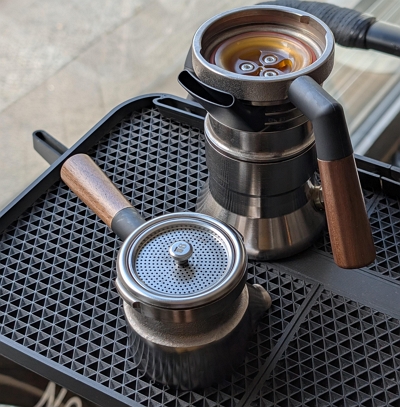
Pricing moves by region and bundles. Check the live Amazon listing for the current street price.
9Barista MK 2 Review: Real espresso from a stovetop, engineered to last
The 9Barista MK 2 brews true 9-bar espresso with excellent consistency and minimal fuss. No steaming and a fixed shot size are the trade-offs, but the regulated pressure/temperature, MK 2 durability upgrades, and 5-year warranty make it the best stovetop option for serious espresso drinkers who want reliability and a tiny footprint.
At a glance
Pros
- True 9-bar espresso with regulated brew temperature around 93°C
- Repeatable 17–20 g in, 40–45 g out shots that dial in fast
- No power cord, tiny footprint, quiet operation
- MK 2 upgrades improve durability, finish, and heat resilience
- 5-year warranty and full spare-parts ecosystem
- Pro bundle boosts consistency and diagnostics
Cons
- No steam capability
- Fixed shot volume and flat pressure profile limit experimentation
- Heavy for ultralight travel
- Needs an espresso-capable grinder to shine
Who it’s for
- Espresso purists who want consistent shots without a pump or power cord
- Owners with a good grinder who value repeatability over tinkering
- Small kitchens where counter space matters
- Vans/cabins/camping setups (with the right plate for your heat source)
Who should skip it
- Latte drinkers who want integrated steaming
- People who want pressure profiling or long lungos
- Anyone trying to avoid grinder investment
What’s new in MK 2
- Fully machined castings with frosted finish
- Harder-wearing EcoBrass + 304 stainless where it matters
- Anodized aluminum chimney/handles
- Larger boiler O-ring + steatite ceramic thermal break
- 5-year warranty
- Pro adds naked portafilter, IMS 53 mm basket, laser-drilled basket cap
Glanceable specs
| Machine type | Manual stovetop, twin-boiler regulated system |
|---|---|
| Brew pressure | ~9 bar |
| Brew temperature | ~93°C at the puck (regulated) |
| Dose / output | 17–20 g in • 40–45 g out (~40 ml) |
| Water per cycle | 110–120 ml |
| Extraction time | 25–30 s extraction • ~3–6 min from cold to brew start |
| Basket diameter | 53 mm |
| Heat sources | Gas, electric, ceramic, camping; induction with adaptor plate |
| Size / weight | ~18 cm tall • ~1.8 kg • ~Ø 8 cm footprint (maker claim) |
| Materials | EcoBrass, 304 stainless, anodized aluminum, ceramic, silicone |
| Warranty | 5 years |
Tip: This machine is brutally honest. If your grinder is mediocre, it will show. If your puck prep is solid, it rewards you with pump-machine-like consistency on a stove.
The 9Barista MK 2 brews true 9-bar espresso with excellent consistency and minimal fuss. It does not steam milk and it locks you into a fixed shot size, yet its thermal and pressure stability, five-year warranty, and upgraded MK 2 build make it the best stovetop option for serious espresso drinkers who value reliability and space savings.
What’s new in MK 2
9Barista reworked the materials, finish, and durability. The MK 2 uses fully machined castings with a frosted finish, harder-wearing EcoBrass and 304 stainless steel, an anodized aluminum chimney and handles, a larger boiler O-ring, and a steatite ceramic thermal break that resists heat significantly better than the earlier design. The Pro version adds a naked portafilter, an IMS 53 mm precision basket, and a laser-drilled stainless basket cap for more uniform flow. The warranty steps up to 5 years.
Quick specs
| Category | 9Barista MK 2 |
|---|---|
| Machine type | Manual stovetop, twin-boiler pressure and temperature regulation |
| Brew pressure | 9 bar |
| Brew temperature | ~93 °C at the puck |
| Dose | 17–20 g |
| Output | 40–45 g, about 40 ml |
| Water in | 110–120 ml |
| Extraction time | 25–30 s, from cold 3–6 min |
| Heat sources | Gas, electric, ceramic, camping stoves; induction with adaptor plate |
| Basket diameter | 53 mm |
| Dimensions and weight | Height ~18 cm, weight ~1.8 kg |
| Materials | Nickel-plated EcoBrass, 304 stainless, anodized aluminum, ceramic, silicone |
| Warranty | 5 years |
| Price | From £449 Standard, with Pro bundle options; US retail around $699 seen recently |
Sources: official MK 2 page and “The Machine” explainer for brew parameters and materials; induction and stove plates; size and weight from a major EU retailer; pricing from maker site and a 2025 review noting US MSRP context.
Shop the essentials
The small upgrades that make a home coffee setup cleaner, smoother, and more enjoyable to use every day.

Cleaner & Descaler Tablets
Keeps your machine clean, helps prevent buildup, and protects long-term performance.
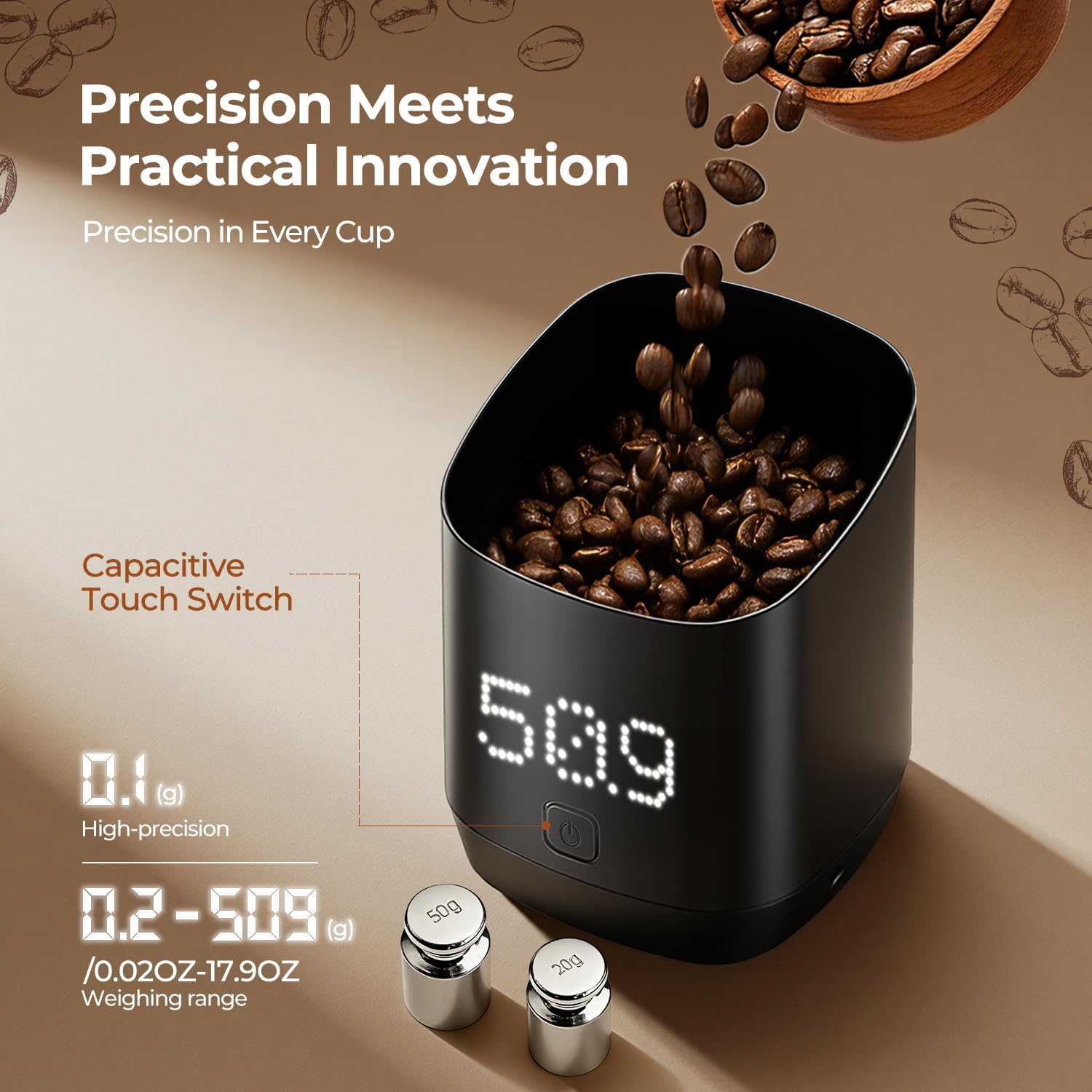
Digital Dosing Cup
Makes weighing beans faster and cleaner, with less mess around the grinder.
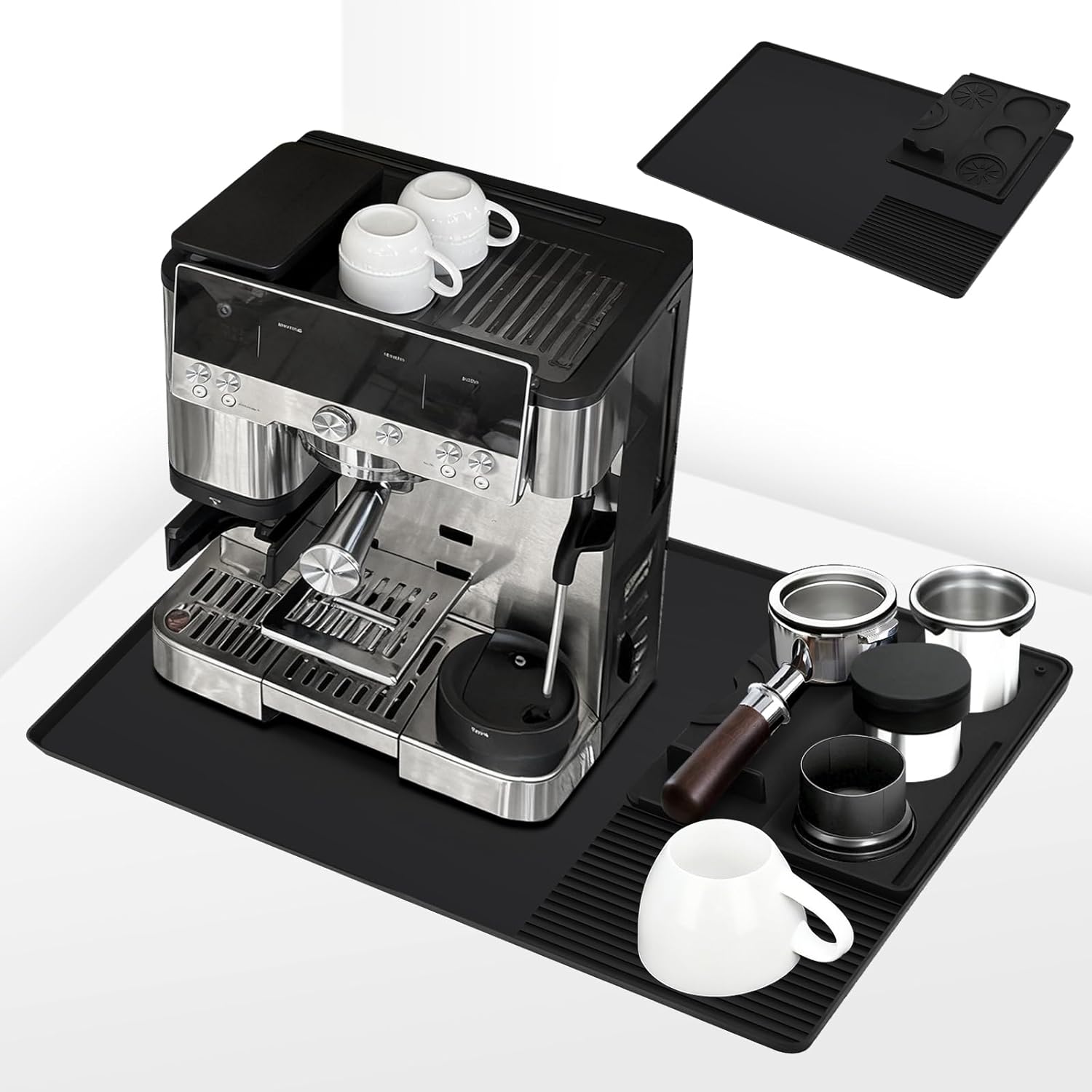
Silicone Mat
Protects your counter, catches spills, and gives your setup a cleaner working surface.

Vacuum Coffee Canister
Helps beans stay fresher longer by limiting air exposure after opening the bag.
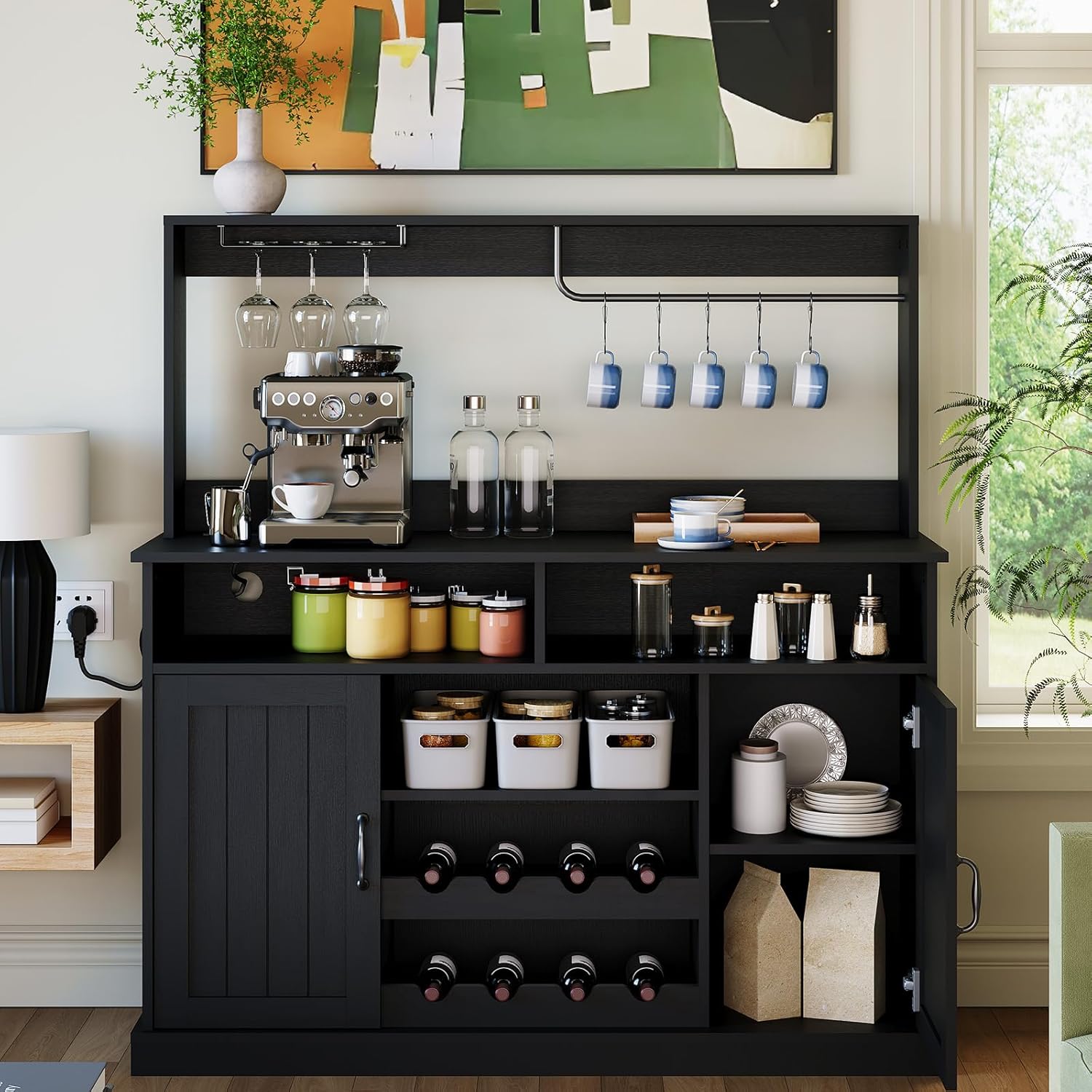
Farmhouse Coffee Bar Cabinet
Gives your machine, cups, beans, and accessories one dedicated home instead of cluttering the kitchen.
How it works, in practice
9Barista is a twin-boiler stovetop system. The lower high-pressure boiler heats to about 179 °C. At that threshold a spring-loaded valve opens and drives water into a coil heat exchanger, which cools it down to about 100 °C while maintaining pressure, then through a fin heat exchanger to about 93 °C before it reaches the coffee. You get stable pressure and brew temperature without electronics, pumps, or preheating routines. The design has one moving part and requires only a stove.
This is not a moka pot. Moka pots typically brew at well under 2 bar and over-boil water. 9Barista regulates both pressure and temperature to espresso norms, and it produces a crema-rich 40 ml shot at ~9 bar.
Workflow and ergonomics
Heat up: From cold to ready is usually 3 to 6 minutes, then the extraction runs about 25–30 seconds. There is no preheating ritual.
Dose and yield: Expect 17–20 g in and 40–45 g out. That lands near a classic 1:2 ratio, with room to bias stronger or gentler by a few grams through grind and puck prep. The machine consumes 110–120 ml of water per cycle.
Stove pairing: The MK 2 is supplied with a matched heat plate. Choose the induction adaptor for induction hobs or the standard heat-transfer plate for gas, electric, and ceramic. The body of the machine is the same either way, which keeps things simple.
Footprint and heft: It occupies a tiny circle of counter space. The company quotes an ~8 cm footprint in its comparison table. Retailers list the height at about 18 cm and weight near 1.8 kg. It is compact, yet dense and reassuring in hand.
Controls: There are none beyond your grinder and heat setting. That is the point. You focus on grind, dose, distribution, and tamp, then the machine handles pressure and brew temperature.
Cleaning: Rinse the top section, knock out the puck, and wipe. The maker quotes about a minute to clean. Long-term spares are available and inexpensive, including O-rings and overheat repair kits.
Espresso quality
Consistency: The regulated 9 bar and controlled ~93 °C brew temperature are the star features. They remove two big variables that plague most manual brewers. In the cup, that stability shows up as repeatable, high-clarity extractions with a proper crema. Several independent reviews have echoed that the results rival pump machines when the grinder and puck prep are solid.
Shot profile: Pressure is effectively flat during flow. There is no native pre-infusion timing or declining pressure tail. Flavor presentation tends to be clean and punchy, with clear separation of acidity and sweetness. Medium roasts dial in quickly. Lighter roasts are very workable with a capable grinder and a tight puck prep, helped by the MK 2 Pro’s IMS basket and laser-drilled cap that improve flow uniformity.
Grind requirements: Treat it like a pump machine. You need an espresso-capable burr grinder. The stock 53 mm basket likes 17–20 g and a precise distribution and tamp. If you opt for the Pro, the IMS basket behaves much like other precision 53 mm baskets.
Limitations: You are locked into a single shot size. You cannot stretch to an American-style lungo without thinning flavor. There is no built-in milk steaming, so milk drinks require a separate tool.
Build and reliability
The MK 2 moves to a tougher alloy and fully machined castings for tighter geometry control and a smoother finish. Heat-resistant details include an anodized metal chimney, a steatite thermal break, and a thicker boiler O-ring. The warranty is 5 years, and every part is serviceable with spares sold directly. These are meaningful upgrades for a product that already had a reputation for longevity.
Features and options
- Two trims: Standard or Pro. Both brew identically. The Pro adds a naked portafilter, an IMS basket, and a stainless basket cap with laser-drilled holes for more even flow. Choose Pro if you value diagnostics and slightly higher extraction consistency.
- Plates matched to your hob: Induction adaptor or multi-hob heat-transfer plate included as selected at purchase.
- What’s in the box: 9Barista MK 2, 53 mm tamper, the appropriate plate, spare boiler O-ring, spare safety ring, and a user guide.
Taste testing notes
With a medium Ethiopia natural at 18 g in, 40 g out in 28 seconds, the shot showed ripe berry sweetness and a broad, syrupy mid-palate. With a lighter washed Latin American coffee, 19 g in and 42 g out over 30 seconds yielded a clean citrus entry and a cocoa finish. The flat pressure profile emphasizes clarity and balance over the gooey intensity you can get from lever machines that naturally taper pressure. The Pro’s naked portafilter makes it easy to spot distribution flaws and reduce channeling, which pays off with lighter roasts.
Comparisons
- Versus moka pots: Not comparable in pressure or temperature control. Moka brews around 0.5–2 bar and runs water too hot. 9Barista regulates both variables to espresso standards and produces crema-rich shots.
- Versus compact pump machines like Breville Bambino: The Bambino offers steaming and push-button convenience. 9Barista offers better thermal and pressure stability without electricity, far smaller footprint, and a longer warranty in MK 2 trim. Choose Bambino for milk drinks and multiple back-to-back beverages. Choose 9Barista for pure espresso, travel, or a minimalist counter.
- Versus manual levers (Flair, Robot): Levers let you pressure-profile and change shot volume, and they can be stunning with the right technique. They require preheating and careful workflow. 9Barista trades that control for repeatability and speed from cold.
- Versus Wacaco Picopresso: Picopresso is smaller and cheaper. 9Barista delivers better thermal stability and fixed 9-bar pressure with less effort, at the cost of weight and price. Recent roundups of 2025 gear place MK 2 as a top stovetop pick, which reflects its performance maturity.
Scores (0–10)
- Espresso Quality: 8.7
Stable 9 bar and ~93 °C water produce a balanced, repeatable cup. The Pro’s basket and cap lift uniformity further. Fixed shot volume and flat pressure ceiling cap the absolute ceiling for experimentation. - Milk/Steam: 1.0
No steaming. You can pair it with a separate frother, but the machine itself is espresso-only. - Workflow & Ergonomics: 7.8
From cold to cup in minutes, no preheat, tiny footprint. The two-handle body is secure to grip. The weight is higher than small travel brewers, so it is not backpack-friendly. - Build & Reliability: 9.5
Upgraded metals and machining, better heat resilience, serviceable parts, and 5-year warranty. This is engineered for decades. - Features: 6.8
Excellent core brewing features. No milk system, no shot volume control, and no pressure profiling. The Pro trim meaningfully improves diagnostics and puck wetting uniformity. - Value: 7.6
From £449 in the UK for Standard. That is premium for stovetop, yet it undercuts many compact pumps while beating them on brew stability and longevity. US retail has hovered around $699.
Pros
- True 9-bar espresso with regulated brew temperature around 93 °C
- Predictable 17–20 g in, 40–45 g out shots that dial in fast
- No electricity, tiny footprint, quiet operation
- MK 2 upgrades improve durability, finish, and heat resilience
- Five-year warranty and full spare-parts ecosystem
- Pro version’s naked portafilter, IMS basket, and laser-drilled cap boost extraction consistency
Cons
- No steam capability
- Fixed shot volume and flat pressure profile limit experimentation
- Heavy for an ultralight travel kit
- Requires a capable espresso grinder to shine
Who it’s for
- Espresso purists who want repeatable, high-quality shots without a pump or power cord
- Owners of good grinders who value consistency over tinkering
- Small-kitchen households that do not need milk drinks
- Travelers with vans, cabins, or induction-only kitchens, thanks to the matched plates
Who it’s not for
- Latte drinkers who want integrated steaming
- Users who want shot-to-shot pressure profiling or long lungos
- Hikers counting grams and liters in their pack
Maintenance notes
Daily cleanup is quick: knock the puck, rinse and wipe. Periodically replace the boiler O-ring and other seals as needed. The MK 2’s thicker O-ring and better heat management should extend service intervals. Spare parts, including an inexpensive O-ring and an overheat repair kit, are readily available. Descale based on water hardness, just as you would with any espresso maker.
Specifications table
| Item | Detail |
|---|---|
| Boiler system | Dual-boiler with spring-loaded transfer valve, coil and fin heat exchangers |
| Operating principle | High-pressure boiler heats to ~179 °C, opens valve, water cools to ~93 °C at brew while holding ~9 bar |
| Basket | 53 mm, Standard or IMS on Pro |
| Shot size | 40–45 g in ~25–30 s |
| Dose | 17–20 g |
| Water per cycle | 110–120 ml |
| Heat sources | Gas, electric, ceramic, camping; induction with adaptor |
| Dimensions | ~18 cm tall; ~Ø 8 cm footprint |
| Weight | ~1.8 kg |
| Materials | EcoBrass, 304 stainless, anodized aluminum, ceramic, silicone |
| Warranty | 5 years |
| In the box | MK 2, 53 mm tamper, plate, spare boiler O-ring, spare safety ring, user guide |
Sources: maker’s technical explainer and product page; size, weight from an EU retailer.
Price and configurations
The MK 2 Standard starts from £449 in the UK store, with bundles and a Pro configuration available. The Pro includes the naked portafilter, IMS basket, and laser-drilled cap. Regional pricing varies. US coverage has cited a $699 street price for MK 2, which aligns with compact pump machines that include steaming but not this level of brew stability or warranty.
Verdict
A compact, low-maintenance espresso tool with real engineering behind it. If you value stable 9-bar shots, want a machine that heats and brews from cold in minutes, and prefer mechanical simplicity over electronics, the 9Barista MK 2 is outstanding. It does not replace a full espresso station for milk drinks. It replaces the need for a countertop pump machine if you mostly drink straight espresso and want a product that will keep doing the same thing every morning for years.
We’ve categorized the best espresso machines for every kind of buyer
Find the right shortlist faster, whether you want convenience, a beginner-friendly setup, a smaller footprint, or better value at a given budget.
Best Superautomatic Espresso Machines
One-touch picks for speed and convenience.
Best Espresso Machines for Beginners
Easy-to-use machines with a smoother learning curve.
Best Small Espresso Machines
Compact machines for tighter kitchens and counters.
Best Espresso Machines With Built-In Grinder
All-in-one options with fewer extra pieces to buy.
Best Cheap Espresso Machines Under $500
Budget picks that still make sense for real espresso.
Best Prosumer Espresso Machines Under $1000
More serious machines with stronger value for the money.
Best Single Boiler Espresso Machines
Simple, space-saving picks for espresso-first routines.