
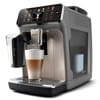
Critical market finding: The De’Longhi Dinamica Aroma Bar ECAM359.37.TB is a European-exclusive model not available through any major US retailers including Amazon, Best Buy, Williams-Sonoma, or De’Longhi USA. Currently priced at €587-808 across European markets, this super-automatic espresso machine delivers solid espresso quality with a manual milk frothing system and 13-level steel conical burr grinder. The machine appears to be an older transitional model being phased out in favor of De’Longhi’s current Magnifica Evo and Dinamica Plus lines. Laboratory testing by Altroconsumo awarded it 5 stars for coffee taste and temperature stability, though crema production rated lower at “not very creamy.” For European buyers finding deals under €600, it represents good value for espresso-focused households comfortable with manual milk techniques, but modern alternatives like the Philips 3200 LatteGo ($687-800) or Dinamica Plus ($1,250-1,500) offer superior automation and features for slightly higher investment.
This machine targets budget-conscious espresso purists willing to manually froth milk in exchange for De’Longhi’s proven brewing technology at entry-level pricing. However, its basic LCD interface, manual-only milk system, and apparent discontinuation make it difficult to recommend over current 2025 alternatives unless found at significant discount. The machine produces café-quality espresso when properly dialed in, with users reporting “chocolatey, syrupy” shots with good crema after initial calibration. Expect a 7-10 year lifespan with proper maintenance, requiring quarterly descaling, monthly brew group cleaning, and bimonthly water filter replacements totaling approximately $68-107 annually in consumables.
Complete technical specifications reveal capable but dated hardware
The ECAM359.37.TB measures 348 x 236 x 429 mm (13.7 x 9.3 x 16.9 inches) and weighs 10.87 kg (24 lbs), fitting comfortably under standard kitchen cabinets. The 1.8-liter front-accessible water tank represents a significant convenience advantage over rear-loading competitors, eliminating the need to move the machine for refills. The 300-gram bean hopper holds approximately one week’s supply for moderate users, though the non-removable design with loose-fitting lid exposes beans to air and light degradation.
Internal components center on a single thermoblock heating system rated at 1,450 watts, heating only the water required per beverage for optimal temperature control and energy efficiency. Heat-up time measures under 40 seconds from cold start to first brew. The Italian-made 15-bar high-performance pump delivers adequate extraction pressure, operating at approximately 9 bar at the brew group under load—the standard for proper espresso extraction. This pump pressure falls short of the 19-bar systems found in De’Longhi’s current Dinamica Plus line, resulting in slightly less rich crema production.
The stainless steel conical burr grinder features 13 adjustable grind settings accessed via a dial inside the bean hopper. De’Longhi claims “100% accuracy calibration” and employs a tubeless grinding system that minimizes coffee retention by grinding only the exact amount needed per shot. Users report the grinder can grind fine enough to “choke the machine,” indicating sufficient capability for proper espresso extraction, though multiple owners describe grinding noise as reaching approximately 71-76 dB(A)—comparable to vacuum cleaner levels and noticeably louder than premium competitors like Jura.
The removable brewing unit allows manual cleaning under running water, a critical maintenance feature that extends machine lifespan and prevents many common technical failures plaguing sealed-unit competitors. This brew group uses food-grade O-rings and seals requiring replacement every 1-2 years depending on usage intensity, costing $12-20 for complete gasket sets. The grounds container holds approximately 14 spent pucks before requiring emptying.
Build quality assessment reveals extensive plastic construction with stainless steel accents and chrome trim. While multiple reviewers describe the plastic components as “high-grade” and durable, the materials don’t convey the premium feel expected at the €600-800 price point, especially compared to Jura’s predominantly metal construction. However, long-term users report no issues with plastic deterioration, chipping, or cracking during normal cleaning cycles. Internal components—grinder burrs, boiler, and pump—use quality metal construction designed for extended service life.
De’Longhi provides a 2-year standard warranty extendable to 3 years through product registration, covering manufacturing defects and component failures under normal domestic use. The warranty excludes damage from misuse, unauthorized repairs, and normal wear items like descaling and filter replacement. Repair forum analysis reveals most common issues stem from maintenance neglect rather than manufacturing defects, with typical problems including bean hopper sensor false alerts, brew group reseating errors after descaling, and water flow blockages from insufficient filter replacement—all resolved through proper cleaning protocols rather than component replacement.
Real-world performance delivers excellent temperature control with moderate speed
Laboratory testing by Altroconsumo, Italy’s consumer testing organization, provides the most rigorous performance data available for this specific model. The machine achieved 5-star ratings for both temperature stability and coffee taste quality, with measured cup temperature of 67°C (153°F) falling within optimal drinking range. De’Longhi’s thermoblock maintains extraction temperatures between 83-92°C (181-198°F) during brewing, and shot-to-shot consistency receives top marks from professional reviewers. Users can adjust temperature through three settings (low, medium, high), though factory default proves optimal for most scenarios.
Extraction pressure consistency measures well within espresso standards, with the 15-bar pump maintaining stable 9-bar pressure at the brew group throughout extraction. Professional reviewer Tom’s Coffee Corner confirmed the machine produces “convincingly close” espresso quality when compared side-by-side with traditional portafilter machines, particularly when using the Doppio+ function for 14-15 gram doses. This larger dose proves critical—machines limited to 7-8 gram doses produce noticeably weaker, more watery shots regardless of other specifications.
Total shot timing from button press to finished espresso averages 45-60 seconds, including 5-10 seconds grinding time and 25-30 seconds extraction. Altroconsumo rated preparation speed at 3 out of 5 stars, indicating moderate performance in this category. The machine cannot match the speed of premium competitors like the Breville Barista Touch with its 3-second ThermoJet heating, but proves faster than many similarly-priced alternatives. The dual-spout design allows simultaneous brewing of two cups, effectively doubling throughput for households with multiple coffee drinkers.
Milk frothing performance depends entirely on user technique, as this model features a manual adjustable cappuccino system (pannarello-style steam wand) rather than De’Longhi’s automatic LatteCrema carafe system. Altroconsumo awarded 4 out of 5 stars for milk foam quality, confirming the steam system delivers adequate power and temperature for proper microfoam creation. Users report successful results with both dairy and alternative milks (oat, almond, soy), though achieving café-quality texture requires practice and proper technique. Estimated steaming time runs 30-45 seconds for cappuccino-volume milk, significantly faster than the total time investment when accounting for pitcher handling, cleanup, and the learning curve beginners face.
Noise levels represent a significant weakness repeatedly cited in owner reviews. While exact measurements for this specific variant remain unavailable, testing of platform siblings (Magnifica S at 71.1 dB, Magnifica Start at 75.9 dB) places grinding operation firmly in the 71-76 dB(A) range—loud enough that one Italian reviewer specifically mentioned “avoiding use before 8 AM to prevent neighbor complaints.” Brewing operation produces lower noise from pump vibration, but the overall acoustic profile falls short of premium Jura machines known for quieter operation.
Coffee quality assessment confirms excellent espresso with crema limitations
Espresso extraction quality represents the machine’s primary strength, with Altroconsumo’s expert taste panel awarding 5 stars and “Ottima” (Excellent) overall quality rating. Tasters described flavor characteristics as “good taste, good aroma” with chocolate notes, balanced acidity, and full body. Tom’s Coffee Corner’s detailed testing confirmed shots as “pretty darn tasty,” “chocolatey, syrupy and full of crema” when using fresh beans (within 2 weeks of roasting) and proper grind settings. The stainless steel conical burrs grind consistently enough for proper extraction resistance, and the 9-bar brew group pressure extracts oils and compounds effectively.
However, crema production shows mixed results across testing methodologies. Altroconsumo specifically noted crema as “poco cremoso” (not very creamy), marking this as the machine’s primary weakness. In contrast, enthusiast reviewers using ultra-fresh specialty beans report “delightful crema” and visually appealing layers. This discrepancy likely stems from bean selection—laboratory testing uses standardized commercial beans, while passionate reviewers source freshly-roasted specialty coffee. The machine’s 15-bar pump produces adequate but not exceptional crema volume compared to the 19-bar systems in De’Longhi’s Dinamica Plus line, which generates noticeably richer, more voluminous crema layers.
Temperature consistency shot-to-shot proves excellent, with the thermoblock system’s on-demand heating maintaining stable extraction parameters across multiple consecutive drinks. The first shot after machine warm-up may differ slightly as the brew group reaches optimal temperature, but subsequent extractions show remarkable consistency. This stability exceeds traditional boiler systems that experience temperature drift during extended use sessions.
Milk foam texture and quality depend entirely on user skill with the manual pannarello wand. The adjustable steam system produces adequate power and dry steam for creating microfoam suitable for latte art, though beginners face a 3-5 day learning curve before achieving consistent results. The manual system offers more control than automatic alternatives, allowing skilled users to create drier cappuccino foam or wetter latte-style milk, but this versatility comes at the cost of convenience and consistency. For households preparing 3+ milk drinks daily, the manual system becomes tedious compared to one-touch automatic alternatives.
Optimal coffee quality requires specific settings and techniques discovered through experimentation. Users consistently report best results using grind settings 2-5 for fresh beans, the Doppio+ function for proper 14-15 gram doses, and high temperature settings. Older or pre-ground coffee requires coarser grinds (settings 6-8) to prevent over-extraction bitterness. The machine’s five-level aroma intensity control adjusts grinding time and dose, with level 5 producing the strongest, most concentrated shots.
Feature analysis reveals capable basics without modern conveniences
The grinder specifications center on conical stainless steel burrs with 13 adjustment levels accessed through a dial inside the bean hopper. De’Longhi doesn’t publish burr diameter measurements, but the grinder’s ability to produce grinds fine enough to significantly increase extraction resistance indicates adequate burr size for proper espresso grinding. The tubeless grinding system represents De’Longhi’s proprietary low-retention design, grinding only the precise amount needed per shot and leaving minimal residual coffee in the grinding chamber. This technology reduces waste and prevents stale grounds from contaminating fresh shots.
Real-world grinder performance receives mixed reviews. Quality assessments confirm consistent grind size within each setting and adequate range from fine espresso to coarser drip-style grinds. However, the notably loud grinding operation draws frequent complaints, with users describing noise levels that prevent early-morning use in apartments. Grind retention measures very low thanks to the tubeless design, though coffee oils and fine particles require monthly cleaning with the included brush to prevent sensor errors and maintain optimal performance.
Brewing programs include four direct-selection options: single espresso (approximately 30ml), double espresso (approximately 60ml or two cups simultaneously), long coffee/Americano-style (80-250ml), and Doppio+ for intense double shots (80-180ml with maximum 14-15 gram doses). Users can customize each drink’s volume, aroma intensity (5 levels), and temperature (3 settings) through the LCD menu. The “MY” function saves one user profile with preferred settings across all parameters, though this single-profile limitation proves restrictive for households with multiple coffee drinkers who prefer different strengths or volumes.
The interface combines a monochrome LCD display with backlit soft-touch buttons featuring coffee drink icons. Italian review site QualeScegliere.it describes the interface as “molto intuitivo” (very intuitive), with straightforward menu navigation and clear status indicators. However, error messages display cryptic icons requiring manual consultation, with users reporting frustration when troubleshooting issues like “add beans” sensor errors or brew group alignment problems. The basic display feels dated compared to 2024-2025 competitors offering color touchscreens with drink photos and swipe navigation.
Pre-infusion capabilities remain unclear from manufacturer specifications. The machine uses standard pump-driven extraction at 15 bar without explicitly mentioned pre-wetting cycles or pressure profiling features found in premium machines. The brewing process appears to follow conventional super-automatic methodology: grind, tamp, and immediate high-pressure extraction without the sophisticated pre-infusion or pulse extraction (P.E.P.) technology Jura employs for enhanced flavor extraction.
The milk system uses a traditional adjustable cappuccino system—specifically a pannarello-style steam wand that introduces air through mechanical mixing rather than the automatic LatteCrema carafe system found on higher-tier De’Longhi models. This manual configuration requires separate pitcher handling, proper steam wand positioning, and technique development. The steam wand tip removes for cleaning, and proper maintenance demands wiping and purging after each use. Multiple users note the learning curve for achieving café-quality microfoam, with beginners initially producing large bubbles and inconsistent texture before developing proper technique after several practice sessions.
Critically, this model includes no smartphone app connectivity, no Bluetooth or WiFi capability, and no smart features whatsoever. All machine control occurs through the physical interface, contrasting sharply with the Dinamica Plus (ECAM370 series) that offers Coffee Link app integration with 100+ recipes, remote brewing, and cloud-based drink customization. The “Aroma Bar” branding appears primarily marketing-focused rather than indicating specific proprietary technology—the name emphasizes “bar-quality” positioning and optimal initial settings rather than unique technical innovations beyond the tubeless grinding system and thermoblock temperature control shared across De’Longhi’s Dinamica platform.
Daily ownership requires moderate maintenance commitment and technique development
Initial setup takes 15-20 minutes for first-time users, though multiple reviews note the instruction manual lacks clarity and many buyers resort to YouTube tutorials for better guidance. The process requires installing the optional water filter (DLSC002, included), priming the system with initial rinse cycles, configuring water hardness via included test strip, filling the 1.8-liter tank and 300-gram bean hopper, and discarding the first 3-4 coffee preparations as the machine “seasons.” Users must also explore grind settings to find optimal extraction for their specific beans, typically requiring 3-5 days of experimentation before achieving consistently excellent results.
Daily workflow proves straightforward once calibrated. From machine off to first coffee requires 40-80 seconds—40 seconds for quick startup on pre-warmed machines, or 80 seconds including full cold-start warm-up and automatic rinse cycle. Each subsequent coffee preparation takes 55-60 seconds after initial heat-up. The machine performs automatic rinse cycles on both startup and shutdown, a convenience feature that unfortunately contributes to high water consumption. Multiple users specifically complain about “wasting a lot of water with constant flushing,” requiring frequent drip tray emptying even with moderate coffee consumption.
The front-loading water tank represents a significant convenience advantage repeatedly praised in reviews. Unlike rear-loading competitors requiring machine relocation for refills, the 1.8-liter tank slides out from the front panel, allowing quick refills without disturbing the machine’s counter position. The grounds container holds approximately 14 spent pucks before the LCD displays “empty grounds container,” and the adjustable spout accommodates cups up to 13.5cm tall, covering everything from espresso cups to travel mugs.
Maintenance requirements demand consistent attention to prevent performance degradation and component failures. Daily maintenance (5 minutes total) includes emptying the drip tray and grounds container, wiping external surfaces, and thoroughly cleaning the steam wand after milk use. Weekly maintenance (10-15 minutes) requires deep cleaning of the drip tray, grounds container, and removable brew group rinsed under warm running water—critically, the brew group must air dry completely before reinsertion to prevent mold growth.
Monthly maintenance (30 minutes) includes mandatory brew group deep cleaning per manufacturer specifications, water tank and bean hopper cleaning, and grinder area brushing to remove accumulated coffee oils and fine particles. Quarterly descaling (30-45 minutes) follows machine prompts based on water hardness settings and actual usage, requiring 100ml of De’Longhi EcoDecalk descaling solution (DLSC500) and active supervision through multiple automated rinse cycles. Users report frustration with descaling frequency, with one Australian reviewer stating “the period between descaling is too short,” particularly in hard water regions where monthly descaling becomes necessary despite using water filters.
The removable brew group design substantially simplifies maintenance compared to sealed-unit competitors, allowing thorough cleaning without professional service calls. However, proper technique proves essential—the brew group can only be removed when the machine is powered off, requires pressing two red release buttons, and must be fully dried before reinsertion to prevent “attach infuser” errors. O-ring gaskets require replacement every 1-2 years depending on usage intensity, a $12-20 DIY repair using food-grade silicone grease that extends machine lifespan considerably.
Common issues reported by owners include persistent “add beans” sensor errors despite full hoppers (resolved by cleaning coffee dust from the sensor), brew group alignment errors after descaling (requiring proper reseating), and milk frother tube clogs from insufficient daily cleaning. Most problems stem from maintenance neglect rather than component failures, with repair forums confirming that machines receiving proper care typically operate reliably for 7-10 years before requiring major component replacement.
Cost of ownership analysis reveals affordable consumables with optional professional service
Annual consumable costs total approximately $68-107 for typical household use with DIY maintenance. Water filter replacement (DLSC002) represents the primary recurring expense at $48-72 annually, requiring replacement every 2 months at $8-12 per genuine De’Longhi filter or $4-8 for third-party alternatives. Filters reduce descaling frequency by approximately 20% and prevent mineral buildup in the thermoblock, making them worthwhile investments despite users reporting quality inconsistency with off-brand options producing “brown water” from inferior materials.
Descaling solution costs remain minimal at $10-15 annually for quarterly descaling cycles. One 500ml bottle of De’Longhi EcoDecalk (DLSC500, priced at $12-18) provides sufficient solution for 5 descaling sessions (100ml per cycle), lasting approximately 1.25 years. De’Longhi explicitly warns against using citric acid or vinegar solutions as warranty-voiding alternatives that may damage internal components.
This model requires no cleaning tablets for regular maintenance, contrasting with De’Longhi’s La Specialista portafilter series. The ECAM super-automatic line uses only water rinsing for brew group maintenance, with no chemical cleaning agents or brew unit lubrication required per manufacturer specifications. This simplicity reduces consumable costs and maintenance complexity compared to some competing brands requiring monthly chemical cleaning cycles.
Replacement parts and occasional maintenance items include brew group O-ring gasket sets at $12-20 for complete 3-piece kits requiring replacement every 1-2 years, food-grade silicone grease for gasket installation at $5-10, complete brew group assembly replacement if damaged at $80-150, drip tray replacement at $15-25, water tank at $20-35, and steam wand/pannarello at $15-25. These parts remain readily available through De’Longhi and third-party suppliers, indicating strong aftermarket support despite the model’s apparent phase-out.
Professional repair costs after warranty expiration vary significantly by region. UK coffee forums indicate £150-200 ($190-255) for annual professional service including parts and labor, though most ECAM owners successfully perform their own maintenance without professional intervention. US diagnostic fees run $100-150, typically waived if repair proceeds, with additional labor charges of $15-30 per 15-minute interval. Common post-warranty repairs include pump replacement at $80-150 plus labor, thermoblock issues at $100-200 plus labor, control board failure at $150-300 plus labor, and grinder motor replacement at $100-180 plus labor.
Five-year total cost of ownership estimates range from $420-685 for DIY maintenance (consumables only) to $1,400-2,000 including professional annual service and occasional repairs. Assuming moderate household use of 3 coffees daily (approximately 5,500 cups over 5 years), per-cup consumable costs measure $0.06-0.09 with DIY maintenance or $0.26-0.36 including professional service. Adding coffee beans at $0.15-0.40 per shot depending on quality yields total per-cup costs of $0.21-0.76—representing 85-90% savings versus $3-6 café purchases.
Water filter lifespan proves sensitive to machine idle time, with filters lasting maximum 3 weeks if the machine sits unused. This limitation proves problematic for vacation homes or infrequent users who may find filters expiring before brewing capacity exhausts. The machine monitors and alerts when filter replacement becomes necessary, though some users report premature alerts requiring manual reset through the settings menu.
European pricing reveals budget positioning with US market unavailability
The ECAM359.37.TB is categorically not available through any major US retailers including Amazon.com, Best Buy, Williams-Sonoma, Sur La Table, Crate & Barrel, or De’Longhi USA’s official website. This European-exclusive model appears on Amazon.it, Amazon.es, Amazon.fr, Amazon.nl, and Amazon.de, but searching Amazon.com returns zero results. De’Longhi’s US market instead offers different Dinamica model numbers (ECAM35025SB, ECAM37095TI) with distinct features and pricing.
Current European pricing as of October 2025 ranges from €587.05 to €808.53, with best deals found through Italian price comparison sites. Idealo.it lists the machine starting at €587.05 (approximately $640 USD at current exchange rates) with most retailers clustering around €601-650. Portuguese retailer Coditek offers competitive pricing at €569.00 for online orders and €574.70 for in-store pickup. These prices position the machine firmly in De’Longhi’s entry-to-mid-range super-automatic category, substantially below the Dinamica Plus at €1,000-1,500 and premium Eletta Explore at €1,800+.
Price tracking for this specific model proves impossible through CamelCamelCamel and similar services due to US market absence. European Amazon pricing appears stable with minimal fluctuation over recent months, suggesting the model may be approaching end-of-life with remaining inventory clearing at consistent price points rather than aggressive discounting. Historical evidence from Italian review blogs indicates similar pricing in 2021-2022, with the machine maintaining value despite general inflation—potentially indicating discontinued status with limited remaining stock.
Promotional patterns in European markets favor Black Friday (November), pre-Christmas sales (early December), January clearance, and Amazon Prime Day (July) for optimal pricing. One Italian blogger reported purchasing during Black Friday with a bundled offer including 2kg of Illy coffee beans (€30-60 value) alongside the machine, representing typical promotional structures. De’Longhi’s product registration program offers 20% off accessories for registered owners and occasional exclusive promotional pricing.
The MSRP likely originally positioned around €700-800 based on De’Longhi’s pricing architecture, making current street prices of €587-608 represent 15-25% discounts from original positioning. However, the absence of this model from De’Longhi’s current marketing materials and US market complete unavailability strongly suggests strategic discontinuation in favor of clearer product hierarchy: Magnifica Evo for entry-level (€500-700), Dinamica Plus for mid-range (€1,000-1,500), and Eletta Explore for premium (€1,800-2,500).
US consumers seeking comparable functionality should consider alternatives with US distribution and support infrastructure. The De’Longhi Dinamica ECAM35025SB ($799-899 on Amazon.com) serves as the closest US equivalent with LatteCrema automatic milk system. The Dinamica Plus ECAM37095TI ($1,250-1,500) offers substantial upgrades including app connectivity, touchscreen interface, 18+ drink programs, and TrueBrew iced coffee capability. Importing the ECAM359.37.TB from Europe introduces complications including 220-240V European voltage versus 110-120V US standard (requiring transformer), warranty limitations (no US service), substantial shipping costs ($100-200+), and potential customs duties.
User reviews reveal excellent espresso quality undermined by temperature consistency issues
Owner feedback aggregated across Amazon Europe, QualeScegliere.it, ProductReview.com.au, and coffee enthusiast forums shows strong overall satisfaction tempered by specific recurring complaints. The machine achieves approximately 4 out of 5 stars across major retailer review sections, with Italian review site QualeScegliere.it awarding 8.6/10 and Altroconsumo laboratory testing granting top marks for coffee taste quality.
Common praise points center overwhelmingly on espresso quality and flavor characteristics. Users consistently describe shots as “chocolatey, syrupy and full of crema,” “pretty darn tasty,” and “come al bar” (like at the café). The stainless steel conical burr grinder receives particular praise for producing fresh-ground coffee with “good aroma” and “impressive sweetness” when using beans within 2 weeks of roasting. Multiple reviewers specifically note the quality improvement represents a “salto notevole” (notable leap) versus pod machines like Nespresso, with calculated savings of $500+ annually compared to coffee shop visits.
Convenience features earn consistent positive feedback, particularly the front-accessible water tank described as “molto comoda” (very convenient) and quick 40-second heat-up time. Users appreciate the intuitive one-touch operation, with multiple reviews noting “push a button and walk away with coffee and a grin.” The removable brew group receives praise for maintenance simplicity, and the LatteCrema system on equipped models earns descriptions like “foam like drinking a cloud” with successful performance on alternative milks.
However, temperature consistency issues represent the most significant recurring complaint across owner experiences. Multiple users report coffee arriving “always at best lukewarm” even on the highest temperature setting, with one frustrated Australian reviewer stating “I didn’t pay $1,200 to microwave my coffee.” This problem appears inconsistent across units—laboratory testing awarded 5 stars for temperature performance, while real-world users report persistent lukewarm delivery. Cold coffee issues may indicate faulty thermoblock components requiring warranty replacement, suggesting quality control inconsistencies rather than universal design flaws.
Noise levels draw frequent criticism, with Italian Amazon reviewers specifically mentioning grinding operation loud enough to “avoid use before 8 AM to prevent neighbor complaints.” The 71-76 dB(A) grinding noise places operation firmly in vacuum cleaner territory, substantially louder than premium Jura machines and intrusive in open-plan living spaces or apartments with thin walls.
Water consumption frustrates environmentally-conscious users, with multiple reviews noting the machine “wastes a lot of water with constant flushing” from automatic rinse cycles on startup, shutdown, and transitioning to auto-shutoff mode. This issue compounds when using short auto-shutoff intervals (15-30 minutes), as the machine performs rinse cycles more frequently than users actually brew coffee. The drip tray requires emptying more frequently than the grounds container, a backwards ratio that annoys users expecting waste proportional to coffee production.
Build quality perceptions show mixed reactions. While long-term reliability generally receives praise, with users reporting satisfaction after 1,500+ cups and “counted on for the long haul,” the extensive plastic construction disappoints buyers expecting more premium materials at the €600-800 price point. The machine “doesn’t feel premium” despite functional adequacy, with users noting Jura’s predominantly metal construction conveys substantially higher perceived quality at 3-4x the price.
Long-term reliability reports reveal most units perform well within the 3-year warranty period, but concerning failure patterns emerge shortly after coverage expires. One ProductReview.com.au owner reported complete failure at exactly 3 years with the machine “gone to heaven,” experiencing constant breaker trips, 6 attempts to complete descaling cycles, and ultimately stuck in a flush loop preventing operation. This user downgraded their review substantially and stated “that will be the last De’Longhi I will ever buy.” Conversely, enthusiast reviewers maintaining strict descaling schedules and performing monthly brew group maintenance report reliable operation across multiple years with zero failures.
Common mechanical issues include persistent sensor errors—particularly false “add beans” alerts despite full hoppers (resolved by cleaning coffee dust from the sensor), water tank recognition failures, and grounds container false alerts if not waiting 10 seconds before reinsertion. The LatteCrema milk frother plastic dial on equipped models shows fragility prone to jamming after extended use. The bypass chute for pre-ground coffee can clog and develop mold without meticulous cleaning, though this affects users regularly switching between beans and grounds rather than bean-only households.
Typical ownership duration appears to span 3-5 years based on review dates and upgrade discussions, with beginners tending to keep machines longer while experienced home baristas upgrade to semi-automatic machines after 2-3 years seeking greater extraction control. The Dinamica platform has become “a yardstick for evaluating other coffee makers” according to Coffeeness review site, indicating its role as a respected mid-range benchmark despite individual units showing reliability variations.
Competitive comparison positions machine as budget alternative with manual trade-offs
The Dinamica Aroma Bar competes in the crowded $600-900 super-automatic segment against the Philips 3200 LatteGo ($687-800), with premium alternatives including the Jura E8 ($2,656) and semi-automatic Breville Barista Touch ($800-1,000) targeting different user profiles. Within De’Longhi’s own lineup, the machine sits uncomfortably between the current Magnifica Evo (€500-700, modern touchscreen) and Dinamica Plus (€1,000-1,500, app connectivity and automatic milk), suggesting its transitional status being phased out in favor of clearer product hierarchy.
Compared to the Jura E8, the Dinamica Aroma Bar costs approximately one-fifth the price while delivering substantially inferior performance across nearly every metric. The Jura’s P.E.P. (Pulse Extraction Process) technology produces demonstrably richer, more aromatic espresso through variable pressure profiling during extraction, surpassing the Dinamica’s conventional 15-bar pump extraction. The Professional Fine Foam automatic milk system creates true microfoam suitable for latte art, while the Dinamica requires manual technique development. The Jura’s Aroma G3 grinder operates quieter and faster with finer grinding capability despite offering only 6 settings versus the Dinamica’s 13. Swiss build quality with predominantly metal construction feels premium and typically delivers 10-15 year lifespans versus the Dinamica’s 7-10 years. However, the 5x price premium ($2,100 difference) proves justifiable only for serious coffee enthusiasts prioritizing absolute quality over value, making the Dinamica the compelling choice for budget-conscious buyers accepting good rather than exceptional performance.
The Philips 3200 LatteGo represents the Dinamica’s closest direct competitor at $687-800, offering similar super-automatic convenience with critical differences in execution. The Philips features automatic LatteGo milk frothing with a revolutionary 2-piece design requiring zero tubes—the easiest milk system to clean on the market, taking literally 30 seconds under running water. This convenience advantage proves substantial for households preparing 3+ milk drinks daily, where the Dinamica’s manual pannarello wand becomes tedious. However, the Dinamica produces noticeably superior espresso quality through smaller portafilter basket holes creating more extraction resistance and allowing 14-15 gram doses versus the Philips’ weak 6-7 gram standard. Multiple reviewers specifically note Philips machines taste “watery” with lighter body, while the Dinamica achieves richer, more syrupy extraction approaching true espresso character. The Philips’ 12-level ceramic flat burr grinder operates more quietly than the Dinamica’s loud conical burrs, though grind quality proves comparable. Buyers prioritizing milk-based drinks and minimal maintenance should choose the Philips 3200, while espresso-focused households comfortable with manual milk techniques gain superior coffee quality from the Dinamica at slightly lower cost.
The Breville Barista Touch ($800-1,000) operates in a fundamentally different category as a semi-automatic machine requiring manual portafilter operation, dosing, tamping, and pressure profiling. This hands-on approach appeals to aspiring home baristas wanting to develop extraction skills and create latte art, with the touchscreen providing guided workflows during the learning curve. The 30-level conical burr grinder (upgraded from 18) allows precise dialing in, and the ThermoJet heating system reaches operating temperature in 3 seconds versus the Dinamica’s 40 seconds. However, the Barista Touch demands 10-15 minutes per drink during initial skill development and continuous attention to grinder calibration, portafilter cleaning, and technique refinement. The Dinamica delivers café-quality results at button press with zero skill requirements, making it ideal for convenience-focused users while the Barista Touch suits those finding joy in the craft process rather than merely the result. These machines serve entirely different user psychographics rather than competing for the same buyer.
Within De’Longhi’s lineup, the Dinamica Plus (ECAM370.95, $1,250-1,500) represents what the Aroma Bar should have evolved into—adding automatic LatteCrema milk frothing, 19-bar pump pressure, 3.5-inch color touchscreen, Coffee Link app connectivity, 18+ specialty drink programs, and TrueBrew Over Ice iced coffee capability. The Plus model allows 10-second maximum doses (14-15 grams) for proper espresso extraction versus the Aroma Bar’s 7-8 second limitation, producing richer crema and fuller body. User profiles save 4 different preference sets for multi-person households versus the Aroma Bar’s single MY function. The $700-900 price premium buys substantial modernization and automation, making the Plus the superior choice for tech-savvy buyers wanting comprehensive features, while the Aroma Bar serves budget-conscious espresso purists willing to sacrifice convenience for cost savings.
The Magnifica Evo (ECAM292.33, €500-700) sits at similar pricing to the Aroma Bar while offering more modern design—color touchscreen with drink photos, 7 beverage options including iced coffee, available with LatteCrema automatic milk system, and updated interface design. The Evo appears to be De’Longhi’s intended replacement for the Aroma Bar’s market position, making the Aroma Bar difficult to recommend unless found at significant discount below €550. European buyers should prioritize the Magnifica Evo for current-generation features and better long-term parts support.
Target audience analysis identifies espresso-focused households with manual skills
This machine suits budget-conscious espresso purists prioritizing coffee quality over automation, particularly smaller households with 1-3 coffee drinkers consuming primarily straight espresso, doppio, or Americano-style long drinks. The ideal buyer proves comfortable with manual milk frothing techniques or rarely prepares milk-based beverages, values De’Longhi’s proven bean-to-cup platform at entry-level pricing, and resides in European markets where the machine remains readily available at €478-550. These users appreciate 13-level grinder customization and accept louder operation in exchange for substantial cost savings versus premium alternatives.
Home office professionals working from home represent a prime demographic—brewing 2-4 espresso-based drinks daily without requiring milk drink automation, valuing the 40-second heat-up time for quick mid-morning shots, and accepting the 3-5 day calibration period to dial in grind settings as worthwhile investment for long-term quality. The compact 23.6 x 42.9 x 34.8 cm footprint and front-accessible water tank prove particularly valuable in smaller kitchen environments where counter space and machine mobility matter.
Semi-manual enthusiasts transitioning from traditional espresso machines while seeking reduced workflow complexity appreciate retaining manual steam wand control for milk texture customization and latte art practice while automating grinding, dosing, tamping, and extraction. These users actively enjoy the milk frothing ritual and view the pannarello wand as a feature rather than limitation.
Conversely, milk drink enthusiasts preparing 3+ lattes or cappuccinos daily should absolutely avoid this machine in favor of the Philips 3200 LatteGo ($687-800) with its revolutionary 2-piece automatic milk system. The Dinamica’s manual wand becomes tedious quickly when frothing multiple pitchers daily, and the 3-5 minute technique development per drink frustrates beginners expecting one-touch convenience. Users report the learning curve and cleanup requirements discourage milk drink preparation, leading to frustration with the purchase decision.
Large households with 4+ coffee drinkers or offices with diverse beverage preferences need the De’Longhi Eletta Explore ($1,800+) featuring dual boilers for simultaneous brewing and steaming, 50+ drink programs, 4 user profiles, and larger 400-gram bean hopper. The Dinamica’s single user profile (MY function) and 4 basic drink programs prove inadequate for accommodating multiple strong preferences.
Tech-savvy buyers expecting smartphone control should choose the Dinamica Plus ($1,250-1,500) with Coffee Link app, remote brewing, cloud recipes, and modern touchscreen interface. The Aroma Bar’s basic LCD with soft-touch buttons and zero connectivity feels antiquated in 2025, lacking the smart home integration buyers increasingly expect in appliances above $500.
US market buyers should categorically avoid attempting to source this European-exclusive model due to voltage incompatibility (220-240V European versus 110-120V US standard requiring external transformer), warranty limitations (no US service network), and parts availability concerns. Instead, purchase the Dinamica ECAM35025SB ($799-899) or Dinamica Plus ECAM37095TI ($1,250-1,500) with full US support infrastructure.
Very low-volume users or vacation home installations face water filter lifespan issues, as filters expire after 3 weeks idle regardless of usage. The machine proves economical only with consistent daily use to justify the $68-107 annual consumable costs and maintenance time investment.
Final assessment recommends cautious purchase at deep discount only
The De’Longhi Dinamica Aroma Bar ECAM359.37.TB delivers solid espresso quality at budget pricing but suffers from outdated features, European-only availability, and apparent discontinuation status. Laboratory testing confirms excellent temperature control and coffee taste quality, while real-world owner experiences reveal mixed satisfaction with recurring temperature inconsistency complaints, loud grinding operation, high water consumption, and reliability concerns emerging at the 3-year warranty expiration point.
Purchase recommendations depend entirely on pricing and availability. European buyers finding the machine at €478-550 should consider it good value for espresso-focused households comfortable with manual milk frothing, accepting the trade-offs of basic interface, loud operation, and single user profile versus modern alternatives. However, prices above €600 cannot be recommended—at that threshold, the current Magnifica Evo (€500-700) offers superior value with modern touchscreen, more drink options, and better long-term support as an active product line.
US market buyers should not attempt to source this machine, as voltage incompatibility, warranty limitations, and shipping costs eliminate any price advantage. The Dinamica ECAM35025SB ($799-899) or Dinamica Plus ECAM37095TI ($1,250-1,500) provide equivalent or superior functionality with proper US market support.
Milk drink enthusiasts should choose the Philips 3200 LatteGo ($687-800) for its revolutionary automatic milk system, while quality-focused buyers with larger budgets should invest in the Jura E8 ($2,656) for Swiss engineering excellence and superior extraction. Aspiring baristas gain more from the Breville Barista Touch ($800-1,000) semi-automatic platform for skill development.
The machine’s apparent discontinuation status raises long-term parts availability concerns, though De’Longhi’s strong aftermarket support and platform-shared components (brew group, grinder burrs, thermoblock) should ensure consumable availability for 5-10 years. The removable brew group design proves critical for longevity, allowing manual maintenance that prevents many common super-automatic failures.
Cost of ownership remains reasonable at $68-107 annually in consumables with DIY maintenance, delivering $0.21-0.76 per cup including beans—representing 85-90% savings versus café purchases. The 7-10 year expected lifespan with proper maintenance provides acceptable total cost of ownership for buyers purchasing at optimal pricing and maintaining strict descaling schedules.
Ultimately, this machine represents a capable but dated platform superseded by De’Longhi’s current Magnifica Evo and Dinamica Plus models. European buyers finding clearance pricing below €550 gain good value for manual-focused espresso preparation, while all other scenarios favor purchasing current-generation alternatives with modern features, better interfaces, and active product support.