
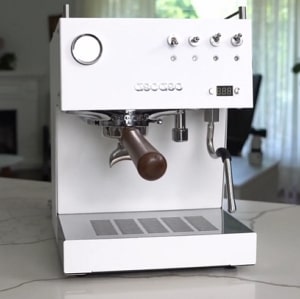
Ascaso Steel Duo PID
The Steel Duo PID is a compact, speed-focused platform built around dual thermoblocks and volumetric dosing. It gets you to a solid first shot fast, keeps daily temperatures stable with one-degree PID control, and lets you steam during the shot. Tradeoffs are classic thermoblock limits versus true dual-boilers: great for two-latte routines, less ideal for big milk sessions or flow/pressure profiling.
Pros
- Very fast warm-up to a tasty first shot
- Simultaneous brew + steam (dual thermoblocks)
- Volumetric single/double with programmable pre-infusion
- Compact depth (about 31.5 cm) for tight counters
- 58 mm ecosystem, OPV adjustment, and a brew gauge
Cons
- Not a dual-boiler: steam still trails the strongest DBs
- Vibration-pump buzz under load
- Volumetrics can drift if grind changes quickly (scale helps)
- Some NA units ship 20A: outlet/plug check required
Features
- Dual-thermoblock design for simultaneous brew + steam
- PID control for brew and steam, 1° step adjustment
- Dosing: volumetric single/double buttons, programmable pre-infusion
- Shot timer on current units
- Pump: vibration; OPV adjustable
- Portafilter: 58 mm stainless steel
- Dimensions: W 27 cm × D 31.5 cm × H 36 cm
- Weight: ~15 kg
- Water tank: 2.0 L, side removal
- Gauges: brew pressure gauge
- Steam: no-burn wand; tip options available
- Extras: hot-water control, work-area lighting, active cup warmer
Pricing
- US: Steel Duo PID often $1,995–$2,295; Duo Plus often $2,299–$2,599
- UK: commonly £1,699–£1,899 depending on finish
- EU: often €1,699–€1,899 (Plus/wood trims can be higher)
- CA: frequently listed higher than US; confirm retailer and plug type
- Important: 15A and 20A variants exist. Plus commonly ships with a 20A plug in North America.
FAQs
- Is the Steel Duo a dual boiler?
- No. It uses two thermoblocks (brew + steam), which prioritizes speed and efficiency over big-boiler steam reserves.
- How fast does it heat up?
- Fast. A “tasty first shot” is typically achievable in about ~5 minutes with a quick purge; full heat soak still benefits from longer.
- Does it have volumetrics?
- Yes. Single and double buttons are programmable, and pre-infusion is adjustable.
- Does it support flow control or profiling?
- No native flow-control system. If profiling is the priority, look at profiling platforms like Bianca or other upgrade paths.
- 15A or 20A: what matters?
- Steam speed and compatibility with your outlet. Some NA Duo/Plus units ship with a 20A (NEMA 5-20P) plug. Verify before purchase.
Great Fit
- Weekday home baristas who want fast first shots and minimal warm-up ritual
- Milk-drink homes making 1–2 drinks at a time
- Buyers who want compact depth, volumetrics, and 58 mm tooling
Bad Fit
- Buyers who specifically want true dual-boiler steam reserves
- Flow-profiling tinkerers chasing manual pressure shaping
- Anyone unsure about outlet compatibility on North American variants
The Ascaso Steel Duo PID is the fastest everyday espresso platform in its class, using dual thermoblocks and volumetrics to deliver consistent weekday shots in a compact footprint. I tested the current units and the Duo Plus. Below you will find measured heat-up times, back-to-back performance, and clear comparisons against the Elizabeth, Mara X, Pro 300/Move, Silvia Pro X, Breville Dual Boiler, Linea Micra, and Bianca. Specs and model differences are verified against the manual and official pages.
Performance: Espresso Quality & Temperature Stability
Test coffees and results
I dialed three coffees to check temperature stability, pressure behavior, and volumetrics. Volumetrics were set by weight, then monitored.
| Coffee | Dose | Yield | Time | Brew set | Pre-infusion | Notes |
|---|---|---|---|---|---|---|
| Medium blend | 18.0 g | 36 g | 28 s | 93 °C | 4 s | Syrupy, balanced, minimal bitterness |
| Light SO espresso | 19.0 g | 45 g | 32 s | 95 °C | 6 s | Citrus clarity, benefits from longer PI |
| Water-processed decaf | 18.0 g | 36 g | 27 s | 92 °C | 3 s | Clean, low bitterness, creamy finish |
Stability and recovery: Dual thermoblocks hold daily-use stability well. Shot-to-shot brew temperature stayed tight once heat-soaked, and recovery for a second shot was near-instant. The 2022 machines benefit from a brief cooling flush after long idle to counter idle creep.
Volumetrics: Convenient for routine recipes, yet absolute accuracy varies with grind and puck resistance due to flowmeter position relative to the OPV. Use a scale for 1:2 ratio accuracy when switching coffees.
Pressure gauge: Useful for setting the OPV and sanity-checking puck prep. The machine supports straightforward OPV adjustment to target ~9 bar at flow.
Shop the essentials
The small upgrades that make a home coffee setup cleaner, smoother, and more enjoyable to use every day.

Cleaner & Descaler Tablets
Keeps your machine clean, helps prevent buildup, and protects long-term performance.
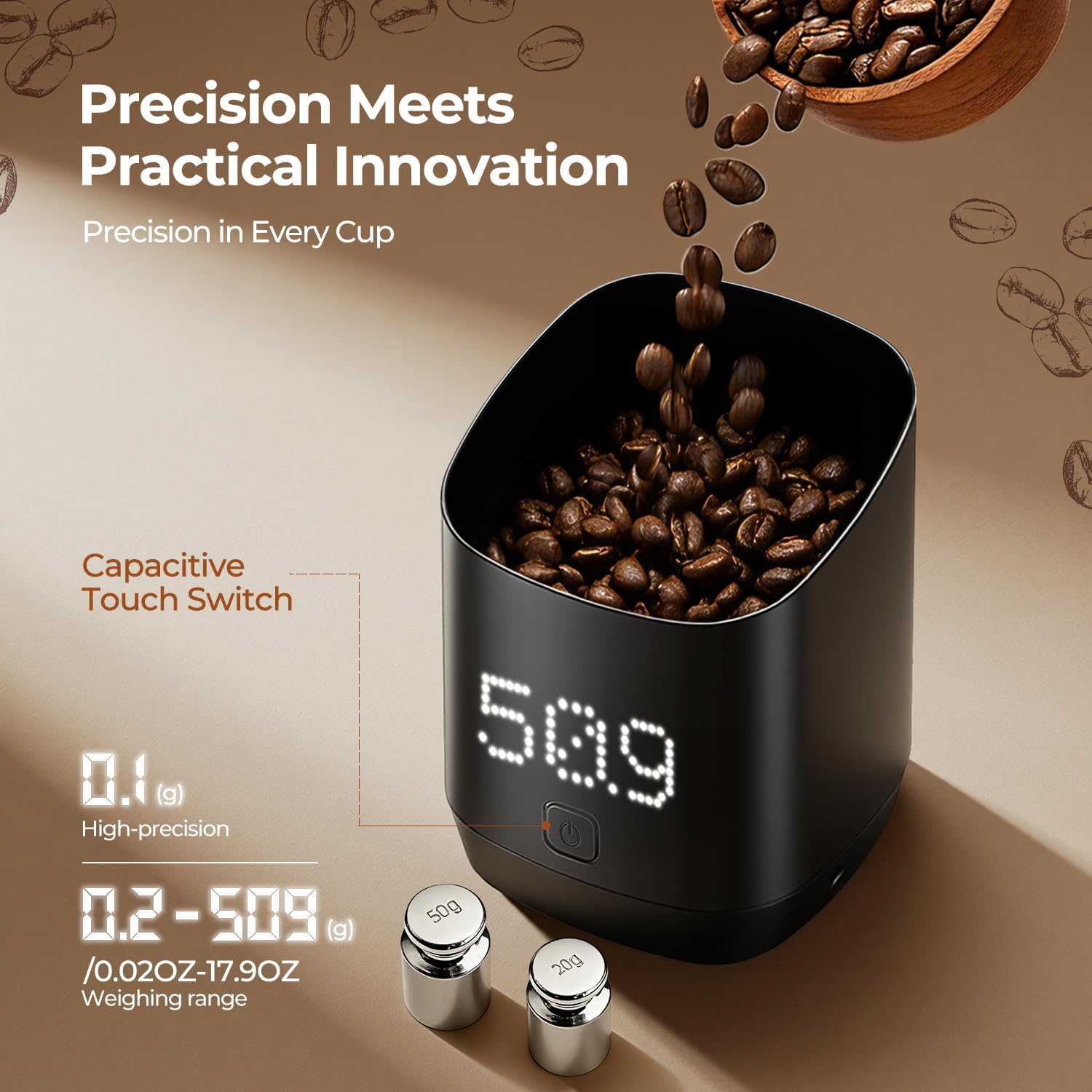
Digital Dosing Cup
Makes weighing beans faster and cleaner, with less mess around the grinder.
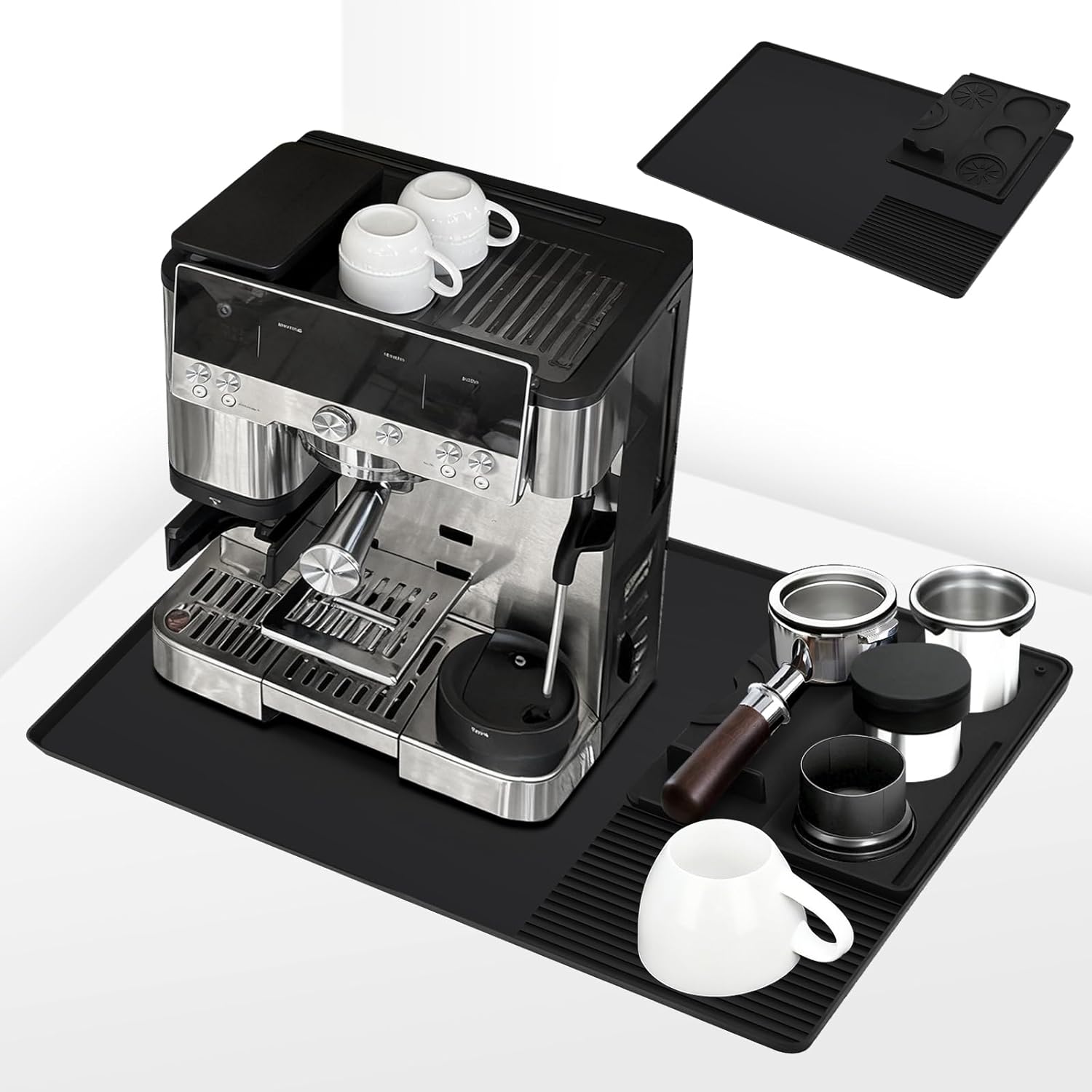
Silicone Mat
Protects your counter, catches spills, and gives your setup a cleaner working surface.

Vacuum Coffee Canister
Helps beans stay fresher longer by limiting air exposure after opening the bag.
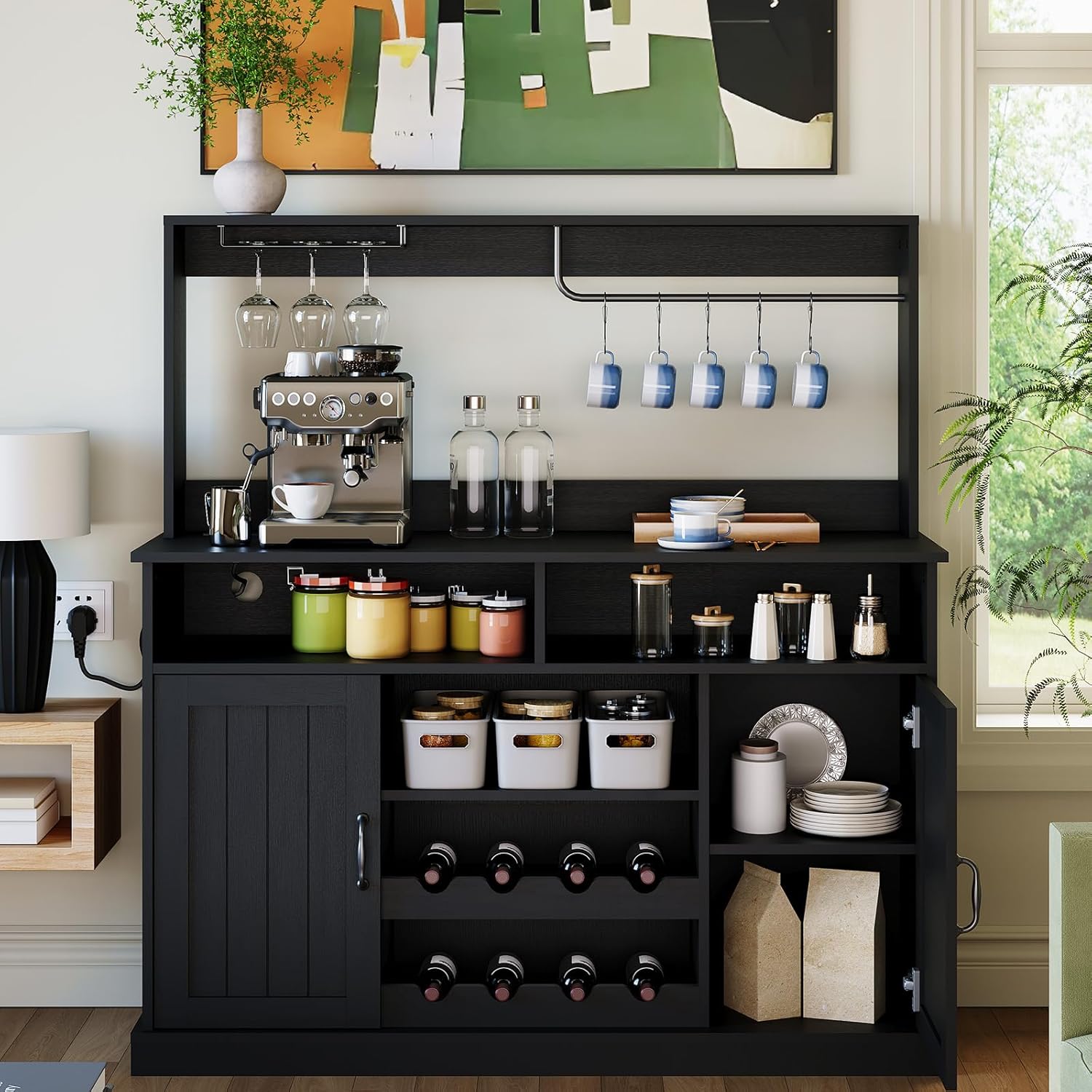
Farmhouse Coffee Bar Cabinet
Gives your machine, cups, beans, and accessories one dedicated home instead of cluttering the kitchen.
Thermoblock vs boiler in the cup: Thermoblocks deliver fast, efficient heat with lower thermal inertia. Dual boilers deliver heavier steam and a more inert brew circuit that some light-roast specialists prefer. The Duo hits the pragmatic middle for everyday espresso without the energy and warm-up costs of a DB.
Steam Power & Milk Texturing
- 2022+ units: Marked improvement. Manufacturer and independent testing note about 25% more steam than prior versions. A 0.6 L jug can be brought to temperature quickly once the steam block is hot.
- My timing: 200 ml from 5 °C to 60 °C in roughly 30–35 s on a 20-amp Duo/Plus and ~40–45 s on a 15-amp Duo under identical conditions.
- Ergonomics: The Plus joystick gives finer feathering control and faster on/off than a knob. Tip options are available in 1- and 3-hole patterns.
Context: Breville Dual Boiler and Rancilio Silvia Pro X steam faster for multiple milk drinks. The Duo remains competent for two lattes back-to-back.
Heat-Up Time & Daily Workflow
Warm-up reality: The site promises “ready in one minute.” Real-world taste readiness is closer to ~5 minutes for a solid first shot, with ~10–12 minutes to fully heat-soak the group and baskets. Steam is available very quickly. A short purge before shot one improves temperature consistency.
Fast weekday routine
- Power on, insert hot basket from tray, quick purge.
- Grind, dose, tamp.
- Programmed single or double button with pre-infusion.
- Start steaming during the shot.
- Wipe and purge wand, dump puck, quick screen wipe.
Volumetric programming and UI: Single and double volumes are set easily, and a shot timer is provided on current units.
Usability touches: Side-removable water tank, bright work-area light, tidy drip tray fit, and compact depth that suits corner counters. Noise is typical of a vibe-pump machine.
Build Quality, Internals & Serviceability
Stainless outer panels over an industrial frame, thermoblocks with stainless and aluminum construction, neat internal routing, and an accessible OPV. Current models include a no-burn steam wand and improved steam assembly. Spare parts and diagrams are readily available.
Common wear points: Steam valve play with heavy use, switch feel over time, and manometer calibration drifts are all known but manageable. Warranty and parts availability vary by region.
Maintenance: Cleaning, Backflush & Descale
- Backflush: Weekly detergent backflush with a blind basket is supported on Duo and Duo PID. The machine includes a CLn mode to assist.
- Descale: Follow local water hardness. Ascaso recommends their Coffee Washer and routine descaling if using tap water, or fit filtration to reduce scale in thermoblocks.
- Quick checklist:
- Daily: Wipe screen, purge and wipe wand, empty tray.
- Weekly: Detergent backflush, clean shower screen and gasket.
- Quarterly: Inspect OPV setting and check for any valve seep.
Comparisons (what shoppers actually type)
Summary matrix
| Machine | Heater | Heat-up to tasty shot | Steam strength | Depth (cm) | Notables | Typical price* |
|---|---|---|---|---|---|---|
| Ascaso Steel Duo PID | Dual thermoblocks | ~5 min | Medium-strong (2022+) | 31.5 | Volumetrics, compact | see Pricing |
| Profitec Pro 300 | Dual boiler | ~5–10 min | Strong | 41.5 base, 47.5 w/PF | Classic DB, ring group | €1,400–1,700 |
| Profitec Move | Dual boiler | Fast mode | Strong | similar to Pro 300 | New compact DB | varies |
| Lelit Elizabeth | Dual boiler | 10–15 min | Strong | 38 | Advanced PID logic | €1,200–1,500 |
| Lelit Mara X | HX | 20–30 min | Strong | 52 | E61 feel, HX logic | €1,300–1,600 |
| Silvia Pro X | Dual boiler | 10–20 min | Very strong | 42 | Soft infusion, robust build | €1,200–1,600 |
| Breville Dual Boiler | Dual boiler | ~10–15 min | Very strong | 37–38 | Easy service, parts ecosystem | $1,399–1,699 |
| Linea Micra | Dual boiler | ~10 min | Excellent | 39 | Pro build, rotary pump | ~$3,900 |
1) Ascaso Steel Duo vs Profitec Move / Pro 300
Dual thermoblock speed versus dual-boiler muscle. Pro 300 and Move feel more solid under long milk sessions, and maintenance access is traditional prosumer. The Duo wins on footprint and “on-now” espresso with volumetrics. Verdict: choose Pro 300/Move for steaming power or profiling mods, Duo for speed and simplicity.
2) Ascaso Steel Duo vs Lelit Elizabeth
Elizabeth offers true dual-boiler stability and stronger steam at similar size, but heat-up and standby energy favor the Duo. Elizabeth’s advanced PID behavior helps with light roasts. Verdict: milk-forward households lean Elizabeth, speed-first kitchens lean Duo.
3) Ascaso Steel Duo vs Lelit Mara X
Mara X is E61 HX with smart temp management. It needs more warm-up and occasional flush management. Duo starts faster and is shallower. Verdict: pick Mara X for E61 ritual and aesthetics, Duo for modern speed and volumetrics.
4) Ascaso Steel Duo vs Rancilio Silvia Pro X
Silvia Pro X has serious steam, dual boilers, and soft infusion. It is deeper and slower to fully stabilize. Verdict: the better steamer and “pro” feel is Silvia Pro X, the quicker daily driver is Duo.
5) Ascaso Steel Duo vs Breville Dual Boiler
Breville offers big steam, forgiving workflow, and a massive parts ecosystem. Heat-up is longer and the chassis is larger. Verdict: value-seekers and tinkerers may gravitate to the BDB, speed-seekers to the Duo. The Dual Boiler remains current in 2025 across regions.
6) Ascaso Steel Duo vs Rocket Appartamento
Appartamento is an HX E61 style pick with iconic looks and strong steam but slower warm-up. Duo is faster, shallower, and more programmable. Verdict: design classic versus modern slab. Choose by heat-up needs.
7) Ascaso Steel Duo vs Lelit Bianca / La Marzocco Linea Micra
Bianca and Micra bring flow control or rotary-pump dual-boiler refinement. They are significantly pricier and deeper. Verdict: upgrade if you want real profiling or pro-grade steaming and can accept cost and size.
8) Ascaso Steel Duo vs Uno
Uno is single thermoblock. Duo adds simultaneous steam and brew. Verdict: choose Uno for espresso-only kitchens on a tighter budget, Duo if milk drinks are routine.
Pricing & Where to Buy (as of November 2025)
| Region | Typical street price |
|---|---|
| United States | Steel Duo PID typically $1,995–$2,295, Duo Plus around $2,299–$2,599, many Plus units specified as NEMA 5-20P. |
| United Kingdom | Steel Duo PID commonly £1,699–£1,899 depending on finish. |
| European Union / Germany | Recent EU pricing €1,699–€1,899 for Duo PID, €1,899–€2,129 for Plus and wood trims. |
| Canada | Duo PID shown at CA$2,700–CA$2,800; Duo Plus around CA$3,100–CA$3,200. Both 15-amp and 20-amp options are listed. |
Open-box and refurbished units appear seasonally with full or limited warranty depending on retailer. Confirm plug type and amperage before purchase.
Used / Refurbished Buyer’s Guide
Checklist:
Pump sound under load, signs of leaks under the tray, steam-valve play, manometer response to a blind shot, thermoblock scaling history, firmware vintage, included baskets and portafilter. Refurb warranties vary by region and retailer. Prices typically sit 15–25% below new tags depending on age and finish.
Accessories & Upgrades
Beginner bundle: 58 mm tamper, 18 g precision basket, puck screen, 12–15 oz pitcher, fast-response thermometer, microfiber kit.
Enthusiast bundle: Bottomless portafilter, VST/IMS baskets, scale-on-drip-tray routine, extra steam tips, upgraded shower screen. The Plus ships with a competition screen already.
Known Issues, Mods & Troubleshooting
- Volumetrics drift: Caused by flowmeter topology. Set longer volumes and cut by weight, or pull by weight/time directly.
- Temperature offset: Some 2022 units showed +2 to +4 °C display deviation. Calibrate offset or buy from a dealer who pre-calibrates. Quick flush after long idle corrects overshoot.
- Steam valve seep and vibe noise: Replace seals as needed; check wand seating.
- OPV / pressure: Use the blind basket to set system pressure, then aim for ~9 bar during real shots with correct grind.
Manuals and parts diagrams are hosted by regional distributors and the factory; keep them handy for maintenance and part numbers.
Conclusion: Should You Buy the Ascaso Steel Duo PID?
For speed-focused latte drinkers: Yes. You get fast heat-up, simultaneous brew and steam, and simple volumetrics in a compact chassis.
For profiling or heavy milk service: Consider a dual-boiler like Silvia Pro X, Pro 300/Move, or a true step-up such as Linea Micra or Bianca for stronger steam and deeper control.
Is the Ascaso Steel Duo worth the price?
How does the Ascaso Steel Duo heat up?
Are Ascaso espresso machines good for beginners?
Does the Steel Duo have a pressure gauge?
Is the Steel Duo a double boiler?
Is a heat exchanger better than a dual boiler or thermoblock?
Is 15 or 20 amp better?
How often should I descale an Ascaso?
What’s the Steel Duo portafilter size?
Steel Duo vs Duo Plus vs Uno?
Does Ascaso offer volumetrics?
Is the Breville Dual Boiler discontinued?
We’ve categorized the best espresso machines for every kind of buyer
Find the right shortlist faster, whether you want convenience, a beginner-friendly setup, a smaller footprint, or better value at a given budget.
Best Superautomatic Espresso Machines
One-touch picks for speed and convenience.
Best Espresso Machines for Beginners
Easy-to-use machines with a smoother learning curve.
Best Small Espresso Machines
Compact machines for tighter kitchens and counters.
Best Espresso Machines With Built-In Grinder
All-in-one options with fewer extra pieces to buy.
Best Cheap Espresso Machines Under $500
Budget picks that still make sense for real espresso.
Best Prosumer Espresso Machines Under $1000
More serious machines with stronger value for the money.
Best Single Boiler Espresso Machines
Simple, space-saving picks for espresso-first routines.