
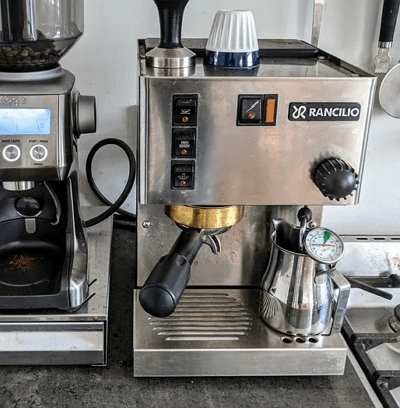
About $995 USD (2025 typical). Regional pricing and bundles vary; check live listing.
Rancilio Silvia V6
The benchmark first serious home machine: metal build, 58 mm workflow, and a clear upgrade path through baskets, wands, and PID kits.
Overview
The Rancilio Silvia V6 remains the benchmark “first serious” machine for home baristas who value longevity, metal build, and a real 58 mm workflow. Expect classic espresso once the brass boiler and group are heat soaked. Without a PID you will surf temperature for consistency; a PID kit or stepping to Silvia Pro X tightens control, especially for lighter roasts. Steam is solid for a single boiler. Pricing in 2025 centers around $995 in the US, with an accessory and parts ecosystem that keeps ownership straightforward.
Pros
- Stainless chassis with long parts life and service ecosystem.
- 58 mm portafilter compatibility and 2 L reservoir.
- Solid steaming for a single boiler once you learn the rhythm.
- Clear upgrade path: baskets, bottomless PF, PID kits, wand tips.
Cons
- Single-boiler cadence slows milk rounds.
- Temperature surfing needed without PID.
- Heat soak adds time beyond the ready light for best taste.
- No stock shot timer or brew gauge; EU “E” variants auto-off.
Features
- Single-boiler system with vibration pump and three-way solenoid
- 0.3 L brass boiler, 58 mm commercial-size group
- Stainless outer panels over steel frame
- 2.0 L top-loading water tank
- No stock PID or shot timer; popular for PID kits
- Compact footprint: 235 × 290 × 340 mm
- Approx. 14 kg weight
- Rich parts support and diagrams for long-term service
Pricing
- United States: around $995 USD for Silvia V6 (2025 typical).
- Regional pricing varies; bundles and wands/tips change value by market.
- Consider Silvia Pro X if you need stock PID, soft infusion, and stronger steaming.
FAQs
- Does Silvia V6 include a PID?
- No. Temperature control is thermostat-based; many owners add a PID kit for tighter control.
- Heat-up time?
- Wait beyond the ready light. Plan a proper heat soak of group and brass boiler before your first shot.
- Portafilter size?
- 58 mm commercial size; wide accessory ecosystem.
- Is there native pre-infusion?
- No native pre-infusion on V6. Manual techniques (brief on/off) can simulate a short pre-wet.
- How does it compare to Gaggia Classic Pro, Profitec Go, Bambino Plus, Silvia Pro X?
- Classic Pro is cheaper but usually needs mods for PID. Profitec Go steams stronger. Bambino Plus is faster and automates steaming. Pro X adds PID, soft infusion, a gauge, and stronger steam.
- What about auto-off?
- EU “E” variants include auto-off by design, a minor convenience tradeoff.
Who It Is For
- Home baristas who want a compact, metal-bodied single boiler with a 58 mm workflow.
- Owners who value parts support and plan incremental upgrades (baskets, wands, PID).
- Drinkers making one to three drinks at a time who enjoy hands-on technique.
Who Should Avoid It
- Milk-forward households needing back-to-back lattes.
- Users who want hands-off temperature control without modding (consider Silvia Pro X).
- Shoppers prioritizing ultra-fast heat-up and automated steaming (consider Bambino Plus).
Tech Specifications
- Item
- Rancilio Silvia V6 (a.k.a. Silvia M V6)
- Heating system
- Single boiler, vibration pump, three-way solenoid
- Boiler material & volume
- Brass, 0.3 L
- Group & PF
- 58 mm commercial portafilter
- Water tank
- 2.0 L top-loading
- Dimensions & weight
- 235 × 290 × 340 mm; ~14 kg
Rancilio has kept the Silvia relevant for decades by sticking to the basics that actually age well: a tough stainless chassis, a real 58 mm portafilter workflow, and a simple single-boiler layout that’s easy to service and easy to understand. The Silvia V6 (often listed as Silvia M V6, with EU “E” variants adding auto-off behavior) is still the classic “first serious espresso machine” because it rewards technique and lasts long enough to justify learning it.
On our bench, Silvia is a craft-first machine, not a convenience-first one. You can make genuinely satisfying, traditional espresso with excellent body and structure—but only if you treat heat like part of the ritual: a proper heat-soak, a consistent routine, and (on the stock thermostat version) some form of temperature surfing. If you want the Silvia feel with less guesswork, a PID upgrade is the common “quality of life” move that makes shot-to-shot results easier, especially when you’re pushing lighter coffees.
The platform’s long-term appeal is the ecosystem. Silvia has a huge support trail: parts availability, diagrams, and an enormous 58 mm accessory lane (precision baskets, bottomless portafilters, shower screens, steam tips). It’s the opposite of a disposable appliance—Silvia is built to be maintained, improved, and kept.
Shop the essentials
The small upgrades that make a home coffee setup cleaner, smoother, and more enjoyable to use every day.

Cleaner & Descaler Tablets
Keeps your machine clean, helps prevent buildup, and protects long-term performance.
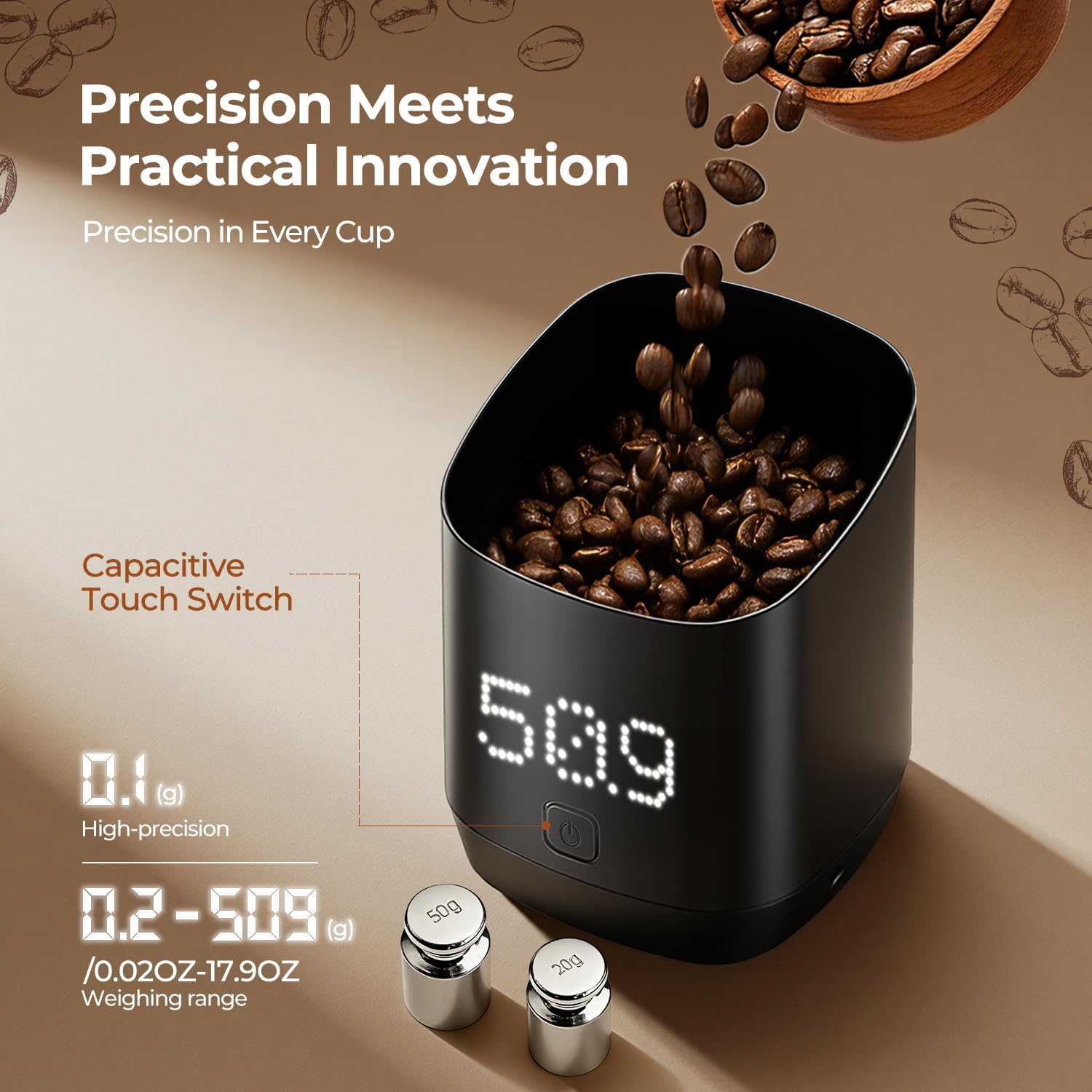
Digital Dosing Cup
Makes weighing beans faster and cleaner, with less mess around the grinder.
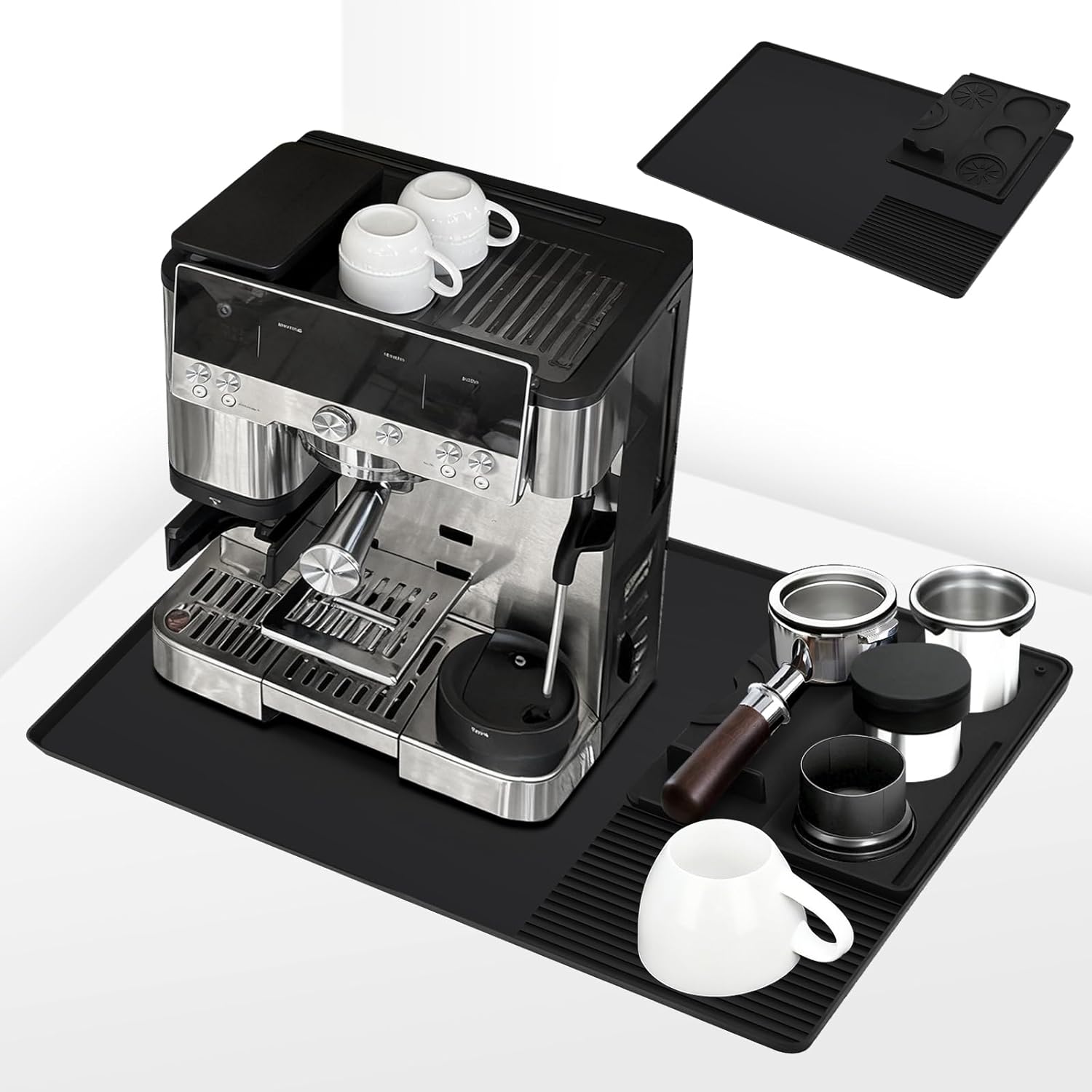
Silicone Mat
Protects your counter, catches spills, and gives your setup a cleaner working surface.

Vacuum Coffee Canister
Helps beans stay fresher longer by limiting air exposure after opening the bag.
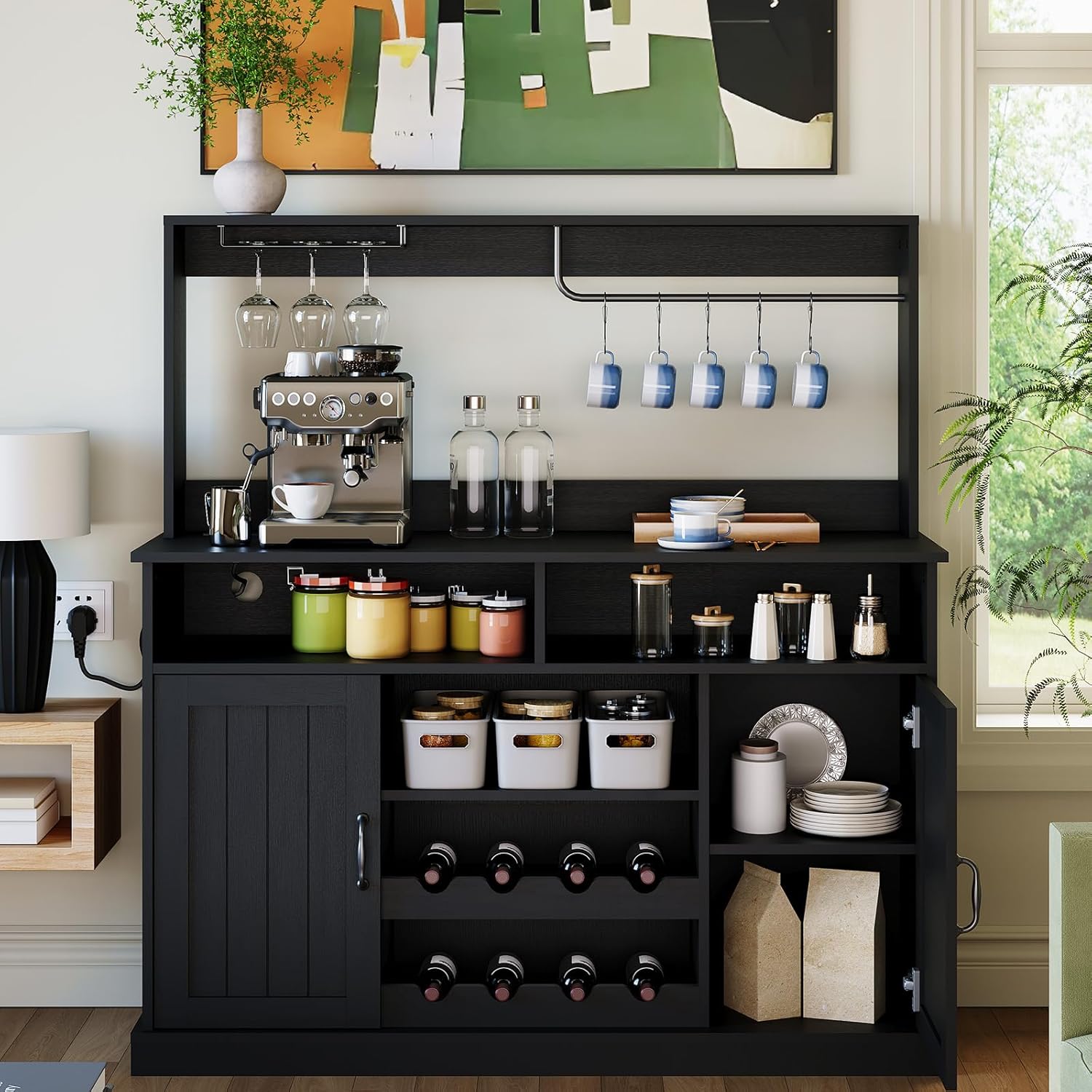
Farmhouse Coffee Bar Cabinet
Gives your machine, cups, beans, and accessories one dedicated home instead of cluttering the kitchen.
Milk is where the single-boiler truth shows up. Steam power is strong for the class once the boiler is at steam temperature, and microfoam is very achievable with practice, but you’re still running a brew-or-steam cadence. For one or two milk drinks, it’s a learnable rhythm. For repeated lattes in a row, it’s slower than dual-boiler machines by design.
For shoppers cross-shopping the “serious starter” category, Silvia usually sits between value and refinement: Gaggia Classic Evo Pro if you want the cheaper on-ramp into 58 mm, Profitec Go if you want stock PID stability in a single-boiler footprint, Breville Bambino Plus if speed and convenience matter more than “metal tank” longevity, and the Rancilio Silvia Pro X if your home is milk-forward and you’re ready for dual-boiler stability instead of single-boiler pacing.
Overview
The Rancilio Silvia V6 exists to solve a different home problem than most entry machines: deliver a real 58 mm espresso workflow with metal build, long parts support, and a high ceiling for learning. Silvia isn’t trying to automate espresso for you — it’s a compact, durable single-boiler platform that rewards good prep and a consistent heat routine. The “Silvia effect” is simple: once you learn its cadence, it can taste far more serious than its price and simplicity suggest.
Under the hood, the V6 stays true to the classic formula: a single 0.3 L brass boiler, a vibration pump, and a traditional brew group. That design choice defines the ownership experience. You can brew or steam (not both at once), and without a built-in PID you’ll lean on heat-soak + temperature surfing for repeatable shots. The upside is longevity and serviceability; the trade-off is that the machine asks you to care about timing the way prosumer machines often don’t.
Design intent
- Durable, serviceable foundation: stainless bodywork, widely available parts, and a platform that most techs know how to work on.
- Real 58 mm ecosystem: baskets, tampers, bottomless portafilters, and precision upgrades fit the standard prosumer lane.
- Single-boiler simplicity: fewer systems to fail — but you must manage brew vs steam mode as part of the routine.
- Technique-forward learning: rewards puck prep, grind quality, and a consistent temperature routine more than menu settings.
- Incremental evolution: V6 updates keep the platform current (finishes, energy logic in some regions) without changing the core Silvia DNA.
What it gets right in the cup and in cadence
- Classic espresso character: with proper heat-soak, Silvia produces structured, traditional shots with satisfying body and a clean finish.
- Strong steam for the class: once up to steam temp, milk texturing is learnable and effective for 1–2 drinks at a time.
- Stable, “serious” workflow feel: 58 mm hardware and sturdy controls make the routine feel like a real espresso setup, not a toy.
- Upgrade runway: a PID kit, better baskets, and a bottomless portafilter can meaningfully tighten consistency without replacing the machine.
The deliberate trade-offs
- Single-boiler pacing: brew/steam switching slows back-to-back milk rounds compared with dual boiler or HX machines.
- Temperature management is on you (stock): without PID, consistency comes from surfing and a repeatable routine, not set-and-forget control.
- Heat-up vs heat-soak reality: the machine may be “ready,” but the group and portafilter need time to fully stabilize for best taste.
- Feature minimalism: no built-in shot timer or brew-pressure gauge — you’re expected to learn by taste, time, and observation.
Where it fits
Silvia V6 is the right machine for home baristas who want a durable, serviceable, 58 mm platform and enjoy learning technique. If you want easier, PID-stable temperature control out of the box in a single-boiler footprint, the Profitec Go is often the cleaner “precision-first” alternative. If your routine is milk-forward and you want faster back-to-back cappuccinos with less mode-switching, stepping up to the Silvia Pro X (dual boiler) usually makes more sense than trying to force a single boiler to act like one.
Cross-shop context on Coffeedant: Silvia buyers commonly compare against the Gaggia Classic Evo Pro for a cheaper 58 mm on-ramp, the Profitec Go for stock PID stability and quick heat-up, and the Breville Bambino Plus for modern speed and convenience over all-metal longevity.
Rancilio Silvia lineup: which version to buy
The Rancilio Silvia family looks confusing because the names overlap, but the buying decision is straightforward once you separate the classic single-boiler Silvia from the Silvia Pro / Pro X platform. The single-boiler Silvia (V6 / “M V6”, plus the EU “E” energy variant) is the durable, technique-forward 58 mm on-ramp. Silvia Pro and Pro X are a different machine class: dual boilers with PID-style stability and faster milk cadence.
| Model | Lineup slot | Compared to Silvia V6 | Typical price and note |
|---|---|---|---|
| Rancilio Silvia V6 (a.k.a. Silvia “M” V6) Reference | Classic value | The “first serious machine” baseline: single boiler, full 58 mm workflow, metal build, and a huge parts/accessory ecosystem. The trade is cadence: you manage brew vs steam and (stock) consistency comes from heat-soak + surfing rather than set-and-forget temperature control. | ~US $995 • Best pick if you want durable 58 mm craft and don’t mind a single-boiler rhythm |
| Rancilio Silvia “E” (EU energy / auto-off variant) | Region variant | Fundamentally the same Silvia in the cup, but with auto-off behavior to meet EU energy rules. It’s not a performance upgrade; it’s a convenience/expectation note if you like leaving a machine idling. | Varies by region/finish • Buy if it’s your market’s standard Silvia and you’re fine with auto-off |
| Rancilio Silvia Pro | Milk cadence upgrade | Steps into the “serious daily milk” lane with a dual-boiler + PID-style stability workflow. The big difference is speed and repeatability: no surfing, and milk rounds don’t require mode-switch waiting the way the V6 does. | Market dependent • Buy when you want dual-boiler stability but don’t need every Pro X extra |
| Rancilio Silvia Pro X | Premium platform | A different class of machine: dual boilers, more stable temperature behavior, stronger milk cadence, and modern control features (including soft-infusion logic on this platform). If your house is milk-forward or you’re chasing easier precision, Pro X is the “stop fighting the single boiler” move. | ~US $2,195 • Paying for dual-boiler stability, faster milk rounds, and convenience — not a minor tweak |
How to read this: Silvia V6 (M V6) is the classic 58 mm, long-life “learn the craft” pick. Silvia “E” is essentially the same machine with region energy behavior. Silvia Pro / Pro X are the upgrade path when your priority shifts to repeatable temperature control and faster milk-drink cadence — especially for back-to-back cappuccinos.
Key Rancilio Silvia V6 Specifications
| Item | Detail |
|---|---|
| Machine | Rancilio Silvia V6 (a.k.a. Silvia “M” V6) · Review / model page |
| Machine type | Semi-automatic espresso machine (manual 58 mm workflow; brew then steam single-boiler cadence) |
| Heating system | Single boiler, 0.3 L brass (requires heat-soak beyond “ready” light for best stability) |
| PID (temperature control) | Not stock on Silvia V6 (temperature surfing for consistency; PID kits are a common upgrade) |
| Pre-infusion | Not stock on Silvia V6 |
| Pump type | Vibration pump |
| Portafilter | 58 mm (broad accessory ecosystem: baskets, bottomless PFs, shower screens, etc.) |
| Water tank | 2.0 L removable reservoir |
| Rated power | 950–1150 W (region-dependent) |
| Dimensions | 235 × 290 × 340 mm (W × D × H) |
| Weight | 14 kg |
| Steam performance | Strong for a single boiler once you learn the rhythm (brew/steam switching required) |
| Built-in shot timer / brew gauge | No stock shot timer or brew pressure gauge |
| Finish options | Inox + limited colors (Black / White / Sage Green vary by market and availability) |
| Notable variant | EU “E” versions include auto-off behavior (energy conformity feature) |
| Typical price | US street price commonly around ~$995 (varies by region, finish, and promos) |
First Impressions & Build Quality
On the counter, the Rancilio Silvia V6 looks and feels like a “real espresso machine” in the old-school sense: stainless panels, dense hardware, and a layout that assumes you’re doing a true 58 mm workflow. It’s compact for the prosumer-leaning class at roughly 235 × 290 × 340 mm (W × D × H), and it generally slides under standard upper cabinets without drama. Depth is the main planning constraint (especially if you keep a grinder beside it), but the footprint is still very kitchen-friendly.
The weight tells you what you’re buying: about 14 kg of metal-and-brass stability. It doesn’t scoot around when you lock in a portafilter, and it has that “long-term appliance” feel that’s hard to fake. This is one of the reasons Silvia remains the benchmark first serious machine: parts availability and serviceability are excellent, and the internals are straightforward for shops (and careful owners) to maintain over years, not just months.
The build story is also where expectations should be set on workflow. Silvia V6 is a single-boiler machine with a 0.3 L brass boiler, so it rewards patience: the “ready” light is not the same as fully heat-soaked stability. If you want the best first shot, you give the group, portafilter, and basket time to warm up, then work in a predictable rhythm (or add a PID kit to simplify temperature consistency).
Ergonomics are classic and durable: simple switches, a traditional steam knob, and a sturdy wand that can produce glossy microfoam once you learn the timing of the boiler changeover. The trade-off is cadence—this is a brew-then-steam routine, not “brew and steam at the same time.” If your household is milk-round heavy, the Silvia feels slower than dual-boiler alternatives, but it’s still very capable for one or two drinks at a time.
Daily ownership is practical. The 2.0 L reservoir is generous for a machine this size, access is straightforward, and the platform’s simplicity is a long-term advantage: fewer layers of electronics, easy gasket/shower-screen maintenance, and a service ecosystem that’s been tested for decades. Silvia isn’t trying to impress you with screens or automation—its “premium” is the metal build, the 58 mm compatibility, and the fact that it can be kept running (and tasting good) for a very long time.
What’s in the Box
- Rancilio Silvia V6 espresso machine
- 58 mm portafilter (commercial-standard size)
- Filter baskets (commonly single + double; basket mix varies by retailer bundle)
- Removable water reservoir (2.0 L)
- Drip tray + grate
- User manual + safety/warranty information
Bundles vary by retailer and region. Confirm what’s included (basket set, tamper, blind basket, etc.) before you buy—Silvia is often sold as a “core machine” and assumes you already have (or will add) a grinder and accessories.
Chassis and internals
The Silvia V6 is built like a classic, serviceable espresso machine: a stainless chassis over a sturdy frame, a compact 0.3 L brass boiler, and a reliable vibration pump. The “buying truth” is that this is a real 58 mm platform—durable, repairable, and designed to last—rather than a feature-heavy appliance.
The trade-off is workflow: it’s a single-boiler machine, so you brew or steam, not both at once. For consistent espresso without mods, you’ll rely on temperature surfing (learning the thermostat cycle) and giving the machine time to heat-soak beyond the ready light for best taste.
Controls and touch points
Silvia’s controls are simple, sturdy, and intentionally old-school: straightforward switches for power/brew/steam, plus a classic steam knob and wand. What you don’t get is modern feedback—no stock shot timer, no brew pressure gauge, and no built-in PID on the V6. If you want “set-and-forget” temperature stability (especially for light roasts), a PID kit is the common quality-of-life upgrade.
The other big reality is upstream: Silvia assumes an external grinder and real puck prep. The machine will reward good distribution and consistent dosing, but it won’t “auto-correct” sloppy prep the way some higher-automation platforms can.
Counter fit
| Item | Detail | Why it matters |
|---|---|---|
| Dimensions | 235 W × 290 D × 340 H mm (≈9.25 × 11.42 × 13.39 in) | Compact “serious machine” footprint; depth is the main planning constraint on tight counters. |
| Weight | 14 kg (≈30.9 lb) | Stable lock-in and sturdier feel than most entry machines; not something that slides around during use. |
| Water tank | 2.0 L (removable) | Generous for the size; fine for daily home use without constant refills. |
| Portafilter | 58 mm | Huge accessory ecosystem (precision baskets, bottomless PF, tampers, etc.). |
| Heating system | Single boiler, 0.3 L brass | Great espresso potential with technique, but milk rounds slow down because you switch modes. |
| Grinder | External grinder required | Silvia’s results are grinder-driven—budget for a capable grinder if you want the machine to shine. |
Testing Results
Tests used three coffees and a consistent 58 mm puck-prep workflow. The goal wasn’t “press a button” performance—it was repeatability: heat-soak behavior, thermostat surfing consistency, and what the Silvia does well (classic espresso texture) versus where it asks more of the user (mode switching and temperature management).
| Metric | Result | Method |
|---|---|---|
| Warm-up / stability reality | Ready light ≠ best shot temperature (heat-soak improves results) | Allow extra time for the group and portafilter to fully heat; use a brief purge to trigger a predictable cycle. |
| Espresso (medium blend) | 18 g in → 36 g out in ~28–30 s (repeatable with surfing) | Surfing routine: purge to trigger heat, wait a consistent interval, then pull at a stable point in the cycle. |
| Espresso (light single origin) | 18 g in → 38–40 g out in ~32–35 s (more sensitive) | Best with tight temp control and slower cadence; clarity improves when the machine is truly heat-soaked. |
| Espresso (decaf) | 18 g in → 34 g out in ~27–29 s (forgiving) | Decaf was the easiest to keep consistent via a repeatable surfing window. |
| Milk steaming (single-boiler) | Learnable and effective once at steam temp | Switch to steam, purge, then texture; slower cadence than dual boilers, but capable of glossy microfoam with practice. |
Key takeaways from testing
- Silvia V6 can produce clean, classic espresso, but it rewards heat-soak + repeatable technique.
- Temperature surfing is the stock reality; a PID kit is the big quality-of-life upgrade for consistency (especially light roasts).
- The single-boiler cadence is the main trade-off: brew first, then steam—milk rounds take planning.
- Silvia is a 58 mm ecosystem machine: baskets, bottomless PFs, and simple upgrades have a clear, practical payoff.
- Budget like a barista setup: an external grinder is not optional if you want Silvia to perform like the “first serious machine” it’s known as.
Espresso Quality: getting the best out of the Rancilio Silvia V6
The Rancilio Silvia V6 is a classic “first serious” semi-auto: it gives you a real 58 mm workflow, a durable metal build, and espresso that can be legitimately excellent — but only if your grinder, puck prep, and temperature routine are consistent. Unlike a super-automatic, Silvia doesn’t automate the hard parts. There’s no built-in shot timer, no brew pressure gauge, and (stock) no PID. Your results come from four practical levers: grind, dose/yield (ratio), brew temperature control (surfing vs PID), and shot time. The playbook is simple: fully heat-soak the machine, use a repeatable temperature routine, dial grind to hit a balanced extraction, and keep your workflow steady shot to shot.
Session protocol that keeps results consistent
- Heat-soak beyond the “ready” light: lock the portafilter in and give the group time to come to equilibrium. First-shot quality depends on it.
- Pre-warm the system: run a short flush to warm the group, portafilter, and cup before you pull a “real” shot.
- Pick forgiving beans first: medium roasts and espresso blends are easiest on thermostat machines. Light single origins demand a tighter temp window.
- Move one lever at a time: change grind first, then yield/ratio, then temperature routine (surf timing or PID setpoint), then dose.
- Respect the single-boiler cadence: shot-to-shot recovery is fine with a brief pause, but light roasts often improve with slightly slower pacing.
Flavor targets by coffee style
| Coffee | Baseline recipe (Silvia V6) | What it tastes like when right | If too sour / thin | If too bitter / dry |
|---|---|---|---|---|
| Medium espresso blend |
Dose 18 g → Yield 36 g (1:2), 28–30 s Surfing: pull at a consistent point in the heat cycle (or use PID if installed) |
Chocolate/nut core, clean finish, structured body | Grind finer or increase yield slightly (1:2.1–1:2.2); confirm full heat-soak and repeatable surf timing | Grind coarser or shorten yield (1:1.8–1:1.9); avoid long shots and slow drips |
| Dark roast blend |
Dose 18 g → Yield 34–36 g, 25–30 s Keep the shot tight; avoid “long” extractions |
Heavier roast notes without harsh bite; thick crema | Grind a touch finer and keep yield controlled; make sure you’re not pulling too cold (inconsistent surfing) | Shorten yield first; then coarsen grind if needed. Dark roasts go ashy and drying when over-pulled |
| Light single origin |
Dose 18 g → Yield 38–40 g (1:2.1–1:2.2), 32–35 s Temp control matters: heat-soak fully; consider PID if light roasts are your daily lane |
Brighter sweetness and better clarity when temperature control is tight | Confirm hotter/steadier brew temp (surf timing or PID), grind finer, and avoid rushing back-to-back shots | Coarsen slightly and keep the ratio from stretching too far; long shots can turn woody/flat quickly |
| Decaf (often forgiving) |
Dose 18 g → Yield 34 g, 27–29 s Keep workflow consistent; decaf rewards repeatable prep |
Syrupy body with a clean finish when the shot is not stretched | Grind finer or increase yield slightly; confirm full heat-soak to prevent “watery” first shots | Shorten yield and avoid slow drips; decaf can taste dry when over-extracted |
Grind, ratio, and temperature: use them like tools
- Grind: the main extraction lever. Fast/sour = finer; slow/harsh = coarser.
- Yield (ratio): the “flavor steering” lever. Shorter = more intensity; longer = more clarity (until it turns thin/bitter).
- Temperature control: without PID, temperature surfing is the repeatability skill. With PID, it becomes set-and-forget stability.
- Time: use it as a diagnostic, not a goal. If you change grind, time will move — taste decides whether that’s good.
- Pre-wet (optional): a brief manual pump start/stop can help some coffees, but keep it consistent if you use it.
Diagnostics you can see and taste
| Signal | Likely cause | Targeted fix |
|---|---|---|
| Sour, thin espresso | Under-extraction: grind too coarse, shot too short, or brew too cool (poor heat-soak / inconsistent surfing) | Grind finer, increase yield slightly, and tighten your heat-soak + surfing timing (or add PID for easier stability) |
| Harsh bitterness / dry finish | Over-extraction: grind too fine, shot too long, or slow drips concentrating bitter compounds | Coarsen grind or shorten yield; avoid “saving” a choking shot by running it longer |
| Spraying / channeling on bottomless | Uneven distribution, clumps, or inconsistent tamp | Improve distribution (WDT if you use it), tamp level, and keep dose consistent |
| First shot tastes worse than the next | Not fully heat-soaked group/portafilter | Give the machine more time and do a warm-up flush; keep the portafilter locked in |
| Shots vary even when grind didn’t change | Inconsistent puck prep or temperature routine | Use a scale, keep your surf timing consistent, and slow down the cadence for light roasts |
Keep variance low
- Use a scale and a timer — Silvia rewards “boring consistency.”
- Don’t change coffees every day if you want stable dialing and fast mornings.
- Use good water and keep the group clean; oils and scale both change taste and behavior over time.
Milk System: Silvia V6 steam wand workflow, texture, and cadence
On Silvia, milk is not a one-touch program — it’s a manual steam-wand workflow. The machine can make genuinely good microfoam once you learn the rhythm, but it’s still a single boiler: you brew or steam, not both. That means the “milk-drink cadence” is slower than dual-boiler machines, and you’ll build a habit: pull espresso first, switch to steam, texture milk, then purge and reset.
Workflow step → texture outcome → best use case
| Step | Texture outcome | Best for | Notes |
|---|---|---|---|
| Steam-ready + purge | Drier, more controllable steam | Any milk drink | Purge condensation before you start to avoid watery foam and sputter. |
| Short stretch (introduce air) | Silky foam base | Lattes / cappuccinos | Most beginners over-aerate — keep it brief, then transition to rolling. |
| Rolling texture (whirlpool) | Glossy microfoam | Latte art-ready milk | Good rolling fixes big bubbles; aim for a smooth “wet paint” look. |
| Purge + wipe immediately | Cleaner wand, better consistency | Always | This is the hygiene habit that prevents baked-on milk and valve issues. |
Milk volume and real-world timing
| Drink size | Milk volume | Target drink | Typical steam time* | Tip |
|---|---|---|---|---|
| Small | 120–170 ml | Cappuccino | ~30–60 s | Use cold milk and a small pitcher; stretch briefly, then roll. |
| Medium | 180–240 ml | Latte | ~45–75 s | Wait for true steam readiness; purge first so steam is dry and consistent. |
| Large | 250–320 ml | Big milk drink | ~60–100 s | Single-boiler reality: large volumes take longer and require better rolling technique. |
*Timing varies by milk temperature, pitcher shape, steam-tip style, and how long you let the boiler fully reach steam conditions.
Technique: clean steam that stays consistent
- Start cold: fridge-cold milk gives you more time and a tighter texture window.
- Purge first: clear condensation before the pitcher. This prevents watery foam and sputter.
- Stretch briefly: introduce air for just a moment, then transition into a rolling vortex to polish texture.
- Stop at your target: when the pitcher is hot to the touch and the milk is glossy, stop — over-steaming makes dry foam.
- Purge + wipe immediately: this is the difference between “always good steam” and “mystery crust” over time.
Texture targets by drink
| Drink | Steam goal | Mouthfeel | Notes |
|---|---|---|---|
| Cappuccino | More aeration, still glossy | Foam-forward but smooth | Stretch slightly longer than a latte, then roll to eliminate big bubbles. |
| Latte | Minimal aeration, high polish | Silky microfoam | Best “Silvia lane” once your rolling technique is consistent. |
| Flat white | Very minimal aeration | Velvety, tight foam | Short stretch + strong rolling. Over-aeration is the common failure mode. |
Keep milk performance sharp
- Purge and wipe every time — milk residue is the #1 cause of inconsistent steam behavior and hygiene issues.
- If steaming feels weak, confirm you’re truly at steam-ready temperature and that the tip holes are clear.
- Tip upgrades can be a cheap workflow improvement, but the real “upgrade” is repeatable technique.
Hardware Essentials

Heating, group, and water system
The Silvia V6 is a classic prosumer-style layout in a small chassis: a 0.3 L brass single boiler controlled by thermostats, a 58 mm group workflow, and a 2.0 L removable reservoir. The ownership reality is simple: the machine can make excellent espresso, but best results come after a real heat-soak — the “ready” light is not the same thing as brew-stable metal.
Water quality matters more than people want to admit. If your water is hard, scale will change temperature behavior and flow over time. Use good water, and descale only when it’s actually needed (and per the manufacturer’s guidance), because aggressive descaling habits can create problems too.
- Heating: single boiler = classic rhythm (brew or steam), with heat-soak for best first-shot quality.
- Temperature control: stock thermostats = consistent only with a repeatable routine; PID kits make this easier.
- Water: good water strategy = fewer scale headaches and steadier performance long term.
Grinder, dosing, and what you can actually control
Silvia is a semi-auto: there’s no built-in grinder, and your cup quality is dominated by the grinder you pair with it. The good news is you get “real espresso” control: grind size, dose, yield (ratio), and time — plus puck prep and tamp consistency. This is why Silvia is a benchmark learner machine: you’re not locked into automation limits.
- Baseline target: start around a 1:2 ratio (e.g., 18 g in → 36 g out) in ~25–35 seconds, then tune by taste.
- Consistency tools: a small scale and a shot timer (phone is fine) do more for results than most “upgrades.”
- 58 mm ecosystem: baskets, bottomless portafilters, and tampers are widely available and easy to upgrade over time.
Temperature and hot water behavior
On the stock Silvia V6, temperature stability is a skill: you’ll either temperature-surf (timing your shot within the thermostat cycle) or install a PID kit to automate stability. The practical heat hack is the same either way: fully heat-soak, then do a short warm-up flush and preheat your cup.
For Americanos, keep espresso concentrated and add hot water separately. Avoid stretching the shot into a long pull — it’s the fastest path to hollow flavor.
Milk system: steam wand, technique, and hygiene reality
Silvia’s milk system is simple and durable: a classic steam wand and a strong-enough single-boiler steam experience once you learn the timing. The trade-off is cadence: you must switch the machine to steam mode, wait for steam readiness, then texture — so milk rounds are slower than dual-boiler machines.
- Purge first: clear condensation before you steam so milk doesn’t get watery.
- Clean immediately: wipe the wand and purge after every drink so residue doesn’t bake on.
- Learn the rhythm: Silvia can do glossy microfoam, but it’s technique-driven — not an automatic milk program.
Drip tray, ergonomics, and daily workflow
Silvia is compact for a “serious” machine and built like equipment: stainless panels, heavy feel, and simple controls that last. Daily ergonomics are classic semi-auto: you’ll manage the drip tray, knock puck waste (knock box recommended), and do quick cleaning habits like group flushes and wand purges.
Counter fit is friendly (about 235 × 290 × 340 mm), but it’s dense at around 14 kg. Plan space for your grinder — Silvia is only half the footprint story.
Accessories and smart upgrades
The best “upgrades” on Silvia are the ones that improve repeatability and workflow — not aesthetics. If you want better espresso with less guesswork, spend on grinder quality, a scale, and temperature control before anything else.
- PID kit: the biggest quality-of-life upgrade (reduces surfing and tightens repeatability).
- Bottomless portafilter + precision basket: faster feedback, more even extraction when your prep is solid.
- Scale + timer: keeps dose/yield consistent; makes dialing in faster and less random.
- Steam tips: inexpensive way to change steaming feel (workflow/learning preference).
- Water strategy: stable water = stable machine (and fewer scale problems).
| Component | Spec | Use note |
|---|---|---|
| Heating | Single boiler, 0.3 L brass | Heat-soak matters; brew/steam are separate modes (classic single-boiler cadence) |
| Temperature control | Thermostat stock (PID optional via kits) | Surfing improves repeatability; PID turns it into “set and forget” |
| Pump | Vibration pump + OPV | Pressure is largely “set”; consistency depends on grind and puck prep more than hardware |
| Portafilter | 58 mm | Huge accessory ecosystem; baskets and portafilters are easy to upgrade |
| Reservoir | 2.0 L removable | Generous for size; water quality strategy matters for scale management |
| Steam wand | Manual | Learnable microfoam; purge/wipe immediately to keep it clean and consistent |
| Dimensions | 235 × 290 × 340 mm | Compact machine footprint — but remember to budget counter space for a grinder |
| Weight | ~14 kg | Stable “equipment” feel; not a lightweight appliance |
If you want Silvia V6 to stay consistent: give it real heat-soak time, use a repeatable surfing routine (or add a PID), weigh dose and yield, purge and wipe the steam wand every time, and keep water quality under control. That’s the difference between “classic, clean espresso” and “why is this different every morning?”
Related: Rancilio Silvia V6 review
How to Use the Rancilio Silvia V6
The Rancilio Silvia V6 is the opposite of a super-auto: it’s a classic semi-automatic workflow with a real 58 mm routine. You control the inputs (grind, dose, yield, time, prep), and the machine rewards repeatability—especially once you respect two realities: heat-soak matters, and without a PID you’ll use a simple temperature-surf routine for consistency. The routine below is the fastest way to get stable shots and good milk texture without turning mornings into a science project.
Before your first brew (one-time setup)
- Rinse and wash the reservoir, drip tray, portafilter, and baskets. Wipe the machine down and remove any packing materials.
- Fill the 2.0 L reservoir with filtered / scale-safe water. Good water is the #1 reliability and taste multiplier on single-boiler machines.
- Prime the system: with the portafilter removed, run the brew switch until water flows steadily from the group (no sputtering).
- Run a few blank flushes to clean manufacturing residue (group + hot water path), then discard the water.
- Set your grinder baseline: start with a typical espresso grind and plan to dial by taste/time/yield, not by “settings.”
Daily start (10–20 minutes, mostly passive)
- Heat-soak: turn the machine on and give it real time. The “ready” light is not the same as a fully heated group + portafilter.
- Lock the portafilter in while heating so the basket and metal stabilize too.
- Just before brewing, do a short warming flush to preheat the group path and your cup (then discard).
- Weigh your dose, prep the puck, and keep your workflow repeatable (same basket, same dose, same routine).
Espresso: the “repeatable Silvia” approach (Surfing vs PID)
- Start with a simple target: aim around 1:2 (e.g., 18 g in → 36 g out) in roughly 25–35 s, then adjust by taste.
- Heat matters: if the first shot is sour/thin, your most common fix is more heat-soak and a better warm-up flush—especially on lighter roasts.
- If you’re stock (no PID): use a basic surfing routine: run a brief flush to trigger a heat cycle, then wait a consistent interval and pull your shot. Keep the timing the same and adjust from there.
- If you have PID: set brew temperature and focus on grind/dose/yield. PID doesn’t make the shot “better” by magic—it makes it repeatable with less ritual.
- Adjust the grinder first: if it runs fast and tastes thin → finer. If it chokes/drips or tastes harsh/dry → coarser. Change one variable at a time.
Note: Silvia is brutally honest. If you’re getting inconsistent shots, it’s usually heat-soak + puck prep + grinder consistency—not the machine “being temperamental.”
Milk drinks (single-boiler rhythm)
- Pull espresso first: brew, then switch to steam mode (single boilers don’t brew and steam at the same time).
- Wait for steam-ready: give the boiler time to reach steaming temperature.
- Purge the wand: always purge condensation before steaming so milk doesn’t get watered down.
- Steam with intent: for ~200 ml milk, texture to ~60 °C (140 °F) and aim for glossy microfoam—Silvia can do it once you learn the timing.
- Clean immediately: wipe the wand and purge again after steaming so residue doesn’t bake on.
Workflow note: after steaming, switch back to brew mode and run a small flush to help the boiler recover toward brew temperature before your next shot.
Shut-down (30–60 seconds)
- Knock out the puck, rinse the basket and portafilter, and wipe the group area if needed.
- Run a short group flush to clear coffee oils from the shower screen path.
- If you steamed milk: wipe + purge the wand (again) so nothing dries inside.
- Empty the drip tray if it’s getting full and keep the area dry.
Cleaning & Maintenance
Silvia stays “great” when you keep oils and milk residue from turning into buildup. The big wins are: daily wand hygiene, regular backflushing, and scale prevention through water strategy.
Daily (after each session)
- Group flush: run a short flush to keep the shower area clean.
- Portafilter/basket rinse: rinse and wipe dry so oils don’t go rancid.
- Steam wand (if used): wipe immediately and purge after every milk drink.
- Drip tray: empty/rinse as needed and keep the bay dry.
Weekly (10–15 minutes)
- Detergent backflush: use a blind basket + espresso machine detergent (per detergent instructions), then flush clean with multiple rinse cycles.
- Shower screen + basket soak: soak metal parts in cleaner as needed, rinse thoroughly, and reinstall.
- Quick wipe-down: keep the reservoir area and drip tray bay clean and dry.
Descaling (when water strategy isn’t enough)
If you use scale-safe water, you may rarely need to descale. If you’re on hard water, scale will slowly change heat behavior and flow. Follow the manufacturer’s guidance for descaling frequency and procedure, and avoid over-descaling (it’s not a weekly “cleaning” step).
Maintenance schedule at a glance
| Task | Frequency | Notes |
|---|---|---|
| Wipe + purge steam wand | Every milk drink | Prevents baked-on milk and keeps steam performance consistent |
| Group flush + rinse portafilter | Daily | Reduces oil buildup and keeps flavors cleaner |
| Detergent backflush | Weekly (or every ~10–20 shots) | Use a blind basket + detergent; rinse thoroughly afterward |
| Inspect/clean shower screen | Monthly–quarterly | More often if you see channeling, heavy oil buildup, or inconsistent flow |
| Inspect group gasket | Quarterly | Replace when leaking or when the portafilter starts locking too far right |
| Descale | As needed | Frequency depends on water; scale-safe water reduces or eliminates the need |
Post-clean taste check
- After detergent backflushing, run multiple clean-water cycles and discard the next shot if you detect cleaner taste.
- If steaming seems weak or sputtery, purge longer (condensation) and confirm the wand tip is clean and not partially clogged.
Related: Read our full Rancilio Silvia V6 review
Rancilio Silvia V6 vs The Field: Quick Matrix
| Match-up | Core difference | Best for | Jump to section | Model page |
|---|---|---|---|---|
| Rancilio Silvia V6 vs Gaggia Classic Pro | Heavier “forever machine” feel + strong steaming once learned vs cheaper entry 58 mm platform with big mod community | Silvia for longevity/build feel; Classic Pro if budget is the driver and you plan to mod | Open | Gaggia Classic Pro |
| Rancilio Silvia V6 vs Profitec GO | Classic single-boiler + temperature surfing vs single-boiler with PID stability + brew gauge / easier light-roast control | GO if you want set-and-forget temp control; Silvia if you want the classic platform and mod-friendly longevity | Open | Profitec GO |
| Rancilio Silvia V6 vs Breville Bambino Plus | Metal, serviceable 58 mm workflow vs ThermoJet speed + convenience (quick heat, auto-steam) | Bambino Plus for fast daily convenience; Silvia for long-term ownership and craft workflow | Open | Bambino Plus (BES500) |
| Rancilio Silvia V6 vs Lelit Anna | 58 mm ecosystem + huge parts trail vs compact single-boiler alternative (often PID-equipped trims) | Silvia if you want the broadest accessory/parts runway; Anna if you want a smaller footprint and PID-forward trims | Open | Lelit Anna |
| Rancilio Silvia V6 vs Rancilio Silvia Pro X | Single-boiler cadence + surfing (unless modded) vs dual boilers + PID + stronger steam + milk-drink speed | Pro X for milk-forward homes and stability-first buyers; Silvia V6 for the classic “first serious” learning path | Open | Silvia Pro X |
Rancilio Silvia V6 vs Gaggia Classic Pro
These are the two “classic first serious” manual espresso machines: metal builds, real workflow, and big community knowledge. The difference is feel and long-game ownership. Silvia tends to feel more substantial and has a deep parts ecosystem, while the Classic Pro is the cheaper on-ramp and often the value move if you already know you’ll mod.
Core differences
- Build + longevity feel: Silvia is the “heavier, more substantial” experience on the counter.
- Price logic: Classic Pro is typically the cheaper entry point; both have strong communities.
- Consistency path: both benefit from surfing or PID; Silvia owners often lean into heat-soak + rhythm.
| Aspect | Rancilio Silvia V6 | Gaggia Classic Pro |
|---|---|---|
| Best fit | Longevity-first buyers who enjoy craft workflow | Budget-first buyers who want 58 mm basics and mod runway |
| Daily feel | More “serious machine” cadence and heat-soak culture | Simpler, cheaper on-ramp with big community support |
| Trade-off | Single-boiler pace; surfing without PID | Also single-boiler pace; may need mods to hit “premium” consistency |
Who should choose which
- Pick Silvia V6 if you want a durable, serviceable classic and don’t mind learning the rhythm.
- Pick Classic Pro if budget is the driver and you want the most common “starter mod platform.”
Rancilio Silvia V6 vs Profitec GO
This is the “classic platform vs modern single-boiler-with-PID” decision. Silvia is rewarding and durable, but asks you to temperature-surf without a PID. GO is the cleaner daily experience if your priority is stable temperature behavior (especially for lighter coffees) without modding.
Core differences
- Temperature control: GO’s PID is the quality-of-life win; Silvia without PID is a surfing machine.
- Daily feedback: GO’s gauge/controls make dialing feel more “visible.”
- Platform vibe: Silvia is the classic long-haul workhorse with a big ecosystem.
| Aspect | Rancilio Silvia V6 | Profitec GO |
|---|---|---|
| Best fit | Craft-first learners who like the classic workflow | Set-and-forget buyers who want PID stability |
| Daily feel | Heat-soak + surfing cadence | More predictable dial-in, especially for light roasts |
| Trade-off | No stock shot timer/gauge; surfing without PID | Costs more than entry machines; less “classic” Rancilio ecosystem feel |
Who should choose which
- Pick Profitec GO if you want temperature stability without adding a PID kit.
- Pick Silvia V6 if you want the classic, durable platform and you enjoy learning technique (or plan to add PID later).
Rancilio Silvia V6 vs Breville Bambino Plus
Bambino Plus is about speed and convenience: fast heat, quick daily coffee, and auto-steam. Silvia is about “real espresso machine ownership”: metal durability, serviceability, and a 58 mm workflow that scales with accessories and technique.
Core differences
- Speed: Bambino Plus wins for “I want coffee now.”
- Ownership horizon: Silvia is built for long-term serviceability and a deeper classic ecosystem.
- Milk workflow: Bambino Plus is easier day-to-day; Silvia can steam well once you learn single-boiler rhythm.
| Aspect | Rancilio Silvia V6 | Breville Bambino Plus |
|---|---|---|
| Best fit | Craft learners who want longevity and 58 mm ecosystem depth | Convenience-first users who want fast heat and easy milk |
| Daily feel | Heat-soak + single-boiler cadence | Quick start, modern convenience |
| Trade-off | Slower lattes; surfing without PID | Less “forever machine” service ecosystem feel than classic metal prosumer platforms |
Who should choose which
- Pick Bambino Plus if speed and easy milk are your top priorities.
- Pick Silvia V6 if you want a durable platform that rewards technique and upgrades over time.
Rancilio Silvia V6 vs Lelit Anna
Both are compact single-boilers aimed at people who want real control without jumping to a big prosumer footprint. Anna can be compelling in PID-forward trims and tighter counter setups, but Silvia’s advantage is the 58 mm ecosystem and the long-running parts trail.
Core differences
- Ecosystem: Silvia’s 58 mm compatibility is the accessory “easy mode.”
- Footprint: Anna is a common pick when space is the constraint.
- Long-term: Silvia’s resale/parts story is unusually strong for a single-boiler classic.
| Aspect | Rancilio Silvia V6 | Lelit Anna |
|---|---|---|
| Best fit | People who want the broadest accessory + service runway | People who want compact ownership and PID-forward trims |
| Daily feel | Classic, durable, technique-rewarding workflow | Compact single-boiler alternative with different ergonomics |
| Trade-off | Surfing without PID (stock) | Accessory ecosystem can be less universal than 58 mm platforms |
Who should choose which
- Pick Silvia V6 if you want the safest long-term platform story.
- Pick Anna if you need compactness and like the value proposition of PID-equipped variants.
Rancilio Silvia V6 vs Silvia Pro X
Same brand name, different class. Pro X is the “I want the Silvia vibe, but I also want dual-boiler stability and faster milk rounds” upgrade. Silvia V6 is the classic single-boiler craft machine that rewards technique (and optional PID kits).
Core differences
- Milk cadence: Pro X crushes “make multiple lattes” speed; Silvia V6 is slower single-boiler pacing.
- Temperature stability: Pro X PID dual boilers remove surfing entirely.
- Budget + footprint: Pro X costs more and takes more space; V6 stays compact and classic.
| Aspect | Rancilio Silvia V6 | Rancilio Silvia Pro X |
|---|---|---|
| Best fit | Learn-and-grow owners who enjoy craft | Milk-forward homes and stability-first buyers |
| Daily feel | Single-boiler ritual and pacing | Dual-boiler convenience + stronger steam |
| Trade-off | Slower for milk rounds; surfing without PID | Bigger, pricier, more “serious machine” ownership |
Who should choose which
- Pick Silvia Pro X if you routinely make milk drinks or want stability without mods.
- Pick Silvia V6 if you want the classic “first serious” machine and you enjoy the craft path.
How to use this matrix: If you want the classic “first serious” platform and you enjoy craft workflow (and eventual upgrades), Silvia V6 still makes sense. If you want stable temperature without surfing, Profitec GO is the simplest daily experience. If you make a lot of milk drinks (or want stability + cadence), Silvia Pro X is the “pay once, solve it” step-up.
In-Depth Analysis
This block explains why the Rancilio Silvia V6 still holds its reputation as the classic “first serious” machine — and why it can frustrate buyers who want speed, automation, or push-button consistency. The headline is simple: you’re buying metal longevity + a real 58 mm workflow, and you’re accepting single-boiler cadence plus temperature surfing unless you add a PID.
1) Why it feels premium: metal build + real espresso workflow
Silvia’s premium feeling isn’t a screen or an app — it’s the physical platform: stainless panels, a compact brass boiler, and a 58 mm ecosystem that behaves like “real espresso” gear (proper baskets, bottomless portafilters, distribution tools, etc.). It’s the kind of machine you can own for years, service locally, and keep improving with accessories and technique.
- What you feel: solid switches/knob, stable chassis, classic café-style workflow.
- What it changes: you can learn espresso fundamentals without being locked into proprietary parts.
- What it doesn’t do: fast lattes for a crowd or “always perfect” temperature control without effort.
2) The real limiter (stock): thermostat temperature control + heat-soak reality
Silvia V6 ships without PID, so the boiler temperature is controlled by a thermostat that cycles on/off around a target. That’s why “ready light” does not equal “brew stable.” For best shots, you typically give the group and portafilter time to heat-soak, then use a repeatable temperature surfing rhythm to hit a consistent brew window.
| Constraint | What it causes | How to work around it |
|---|---|---|
| No PID (stock V6) | Shot-to-shot temperature drift; light roasts are harder to repeat | Heat-soak + surfing rhythm, or add a PID kit for “set-and-forget” stability |
| “Ready” light ≠ stable metal | First shot can taste flat/sour if the group isn’t fully warm | Wait longer, warm cups/portafilter, and do a short flush to nudge a heat cycle |
| Small brass boiler (0.3 L) | Recovery time matters; pacing helps, especially for light coffees | Slow down between shots; avoid rapid back-to-back pulls without a brief restabilize |
| No stock shot timer / gauge | Less “visible” feedback while learning | Use a scale + timer (phone is fine); learn by yield/time and taste |
3) Single-boiler cadence: brew or steam, not both
Silvia is a single-boiler machine: it brews at espresso temperature, then heats higher for steam. That’s why milk rounds are slower. The upside is that, once you learn the timing, steam power is genuinely strong for the class — it just requires a practiced cadence: pull the shot, flip to steam, texture milk, then purge and return to brew range.
- Best for: 1–2 milk drinks at a time, once you know the sequence.
- Hard mode: back-to-back lattes for multiple people.
- Upgrade logic: if milk drinks are your daily reality, Pro X (dual boiler) is the “solve it” move.
4) Grinder pairing matters more than “machine specs”
Silvia’s ceiling is high, but it’s only reachable with a capable grinder. Because this is a real 58 mm workflow, your grinder, puck prep, and dose/yield discipline decide most of the quality.
| Priority | Why it matters | Best practice |
|---|---|---|
| Espresso-capable grinder | Controls flow and extraction more than the machine does | Buy the best grinder you can; use a scale and aim for repeatable ratios |
| 58 mm basics | Tools and baskets are widely available and meaningful | Precision basket + good tamper + bottomless PF (optional) for feedback |
| Water + cleanliness | Scale and oils change taste and stability over time | Use good water, backflush on schedule, keep the shower screen clean |
5) Serviceability is the silent superpower
Silvia’s long-running platform is supported by parts diagrams, common wear items (gaskets/valves), and widespread service familiarity. This is one of the reasons it keeps its resale value: it’s fixable.
- Common wear items: group gasket, shower screen, steam valve seals, pump/OPV related maintenance.
- Owner-friendly: basic cleaning, gasket swaps, and routine checks are straightforward with care.
- Long-game value: “repairable” usually beats “replaceable” over a decade.
6) Maintenance economics: simple, but you must backflush
Silvia ownership is not complicated, but it’s real espresso ownership: you should backflush, clean the shower screen, and keep scale under control with proper water. This is the difference between “tastes great for years” and “why is this bitter and inconsistent?”
| Cost / expectation | What to plan for | Why it matters |
|---|---|---|
| Backflush cleaner | Detergent backflush weekly (typical) | Removes oils that ruin taste and stress valves over time |
| Water strategy | Scale-managed water or filtered water plan | Protects boiler and stabilizes temperature behavior |
| Wear items | Gasket/screen replacements as needed | Prevents leaks and keeps extractions even |
| Biggest QOL upgrade | PID kit (optional) | Removes surfing and tightens repeatability, especially for light roasts |
7) The buying truth: when Silvia V6 is the right call
Silvia V6 is still the classic “first serious” machine because it’s durable, 58 mm, serviceable, and rewarding. But it’s only the right call if you enjoy (or at least tolerate) a manual workflow and a learning curve.
Editorial placement: make the single-boiler cadence and no PID (stock) truth obvious early, then show the upgrade path (PID + baskets + bottomless PF) as the “learn and grow” story that keeps Silvia relevant.
Rancilio Silvia V6 - frequently asked questions
Fast answers to the questions people ask before they commit to a Silvia V6 / Silvia M V6 (and when to step up to Pro X).
Is the Rancilio Silvia V6 still worth it in 2025/2026?
Yes — if you want a durable, serviceable machine with a real 58 mm workflow and you enjoy learning technique. It’s less compelling if your priority is speed or push-button consistency without a PID. Silvia is the “craft + longevity” buy, not the “fastest latte” buy.
Do I need a PID on the Silvia V6?
You don’t need it, but it’s the biggest quality-of-life upgrade. Stock Silvia V6 uses a thermostat, so you’ll temperature surf for consistency. A PID makes temperature control simpler and improves repeatability, especially for light roasts and shot-to-shot stability.
How long does the Silvia need to warm up?
The machine can show “ready” before the group and portafilter are truly heat-soaked. For best taste, plan on extra time for the metal to stabilize (many owners warm cups/portafilter and do a short flush to help). Silvia rewards patience more than fast “ready light” expectations.
Is Silvia good for milk drinks?
It can steam very well for a single boiler once you learn the rhythm, but it’s slower than dual-boiler machines: you brew, then switch to steam, then cool back down for the next shot. If you make multiple lattes daily (or for several people), consider a dual-boiler like Silvia Pro X instead.
Silvia V6 vs Profitec GO: which is easier?
Profitec GO is easier because it brings PID stability and more “visible” feedback out of the box. Silvia V6 can match great results, but you’ll either temperature surf or add a PID kit. Choose GO for convenience; choose Silvia for classic platform feel and long-term serviceability culture.
What grinder should I pair with Silvia?
An espresso-capable grinder matters more than the machine. Silvia has a high ceiling, but only if your grinder can make fine, consistent adjustments. If your shots are sour/fast or bitter/choked, the grinder and puck prep are usually the first place to fix — not the machine.
What’s a simple temperature surfing routine that works?
A common approach is: let the machine fully heat-soak, do a short flush to trigger a heating cycle, then wait a consistent interval and brew. Keep your timing repeatable and change only one variable at a time. A PID kit removes this “timing game,” but surfing can be very effective once learned.
What maintenance does Silvia require (backflush, descale, etc.)?
Silvia is classic espresso maintenance: daily wipe/purge, weekly detergent backflush (plus rinse cycles), periodic shower screen and basket soaking, and scale management via good water. Consistent cleaning keeps taste stable and helps valves and seals last longer.
What’s the deal with Silvia “E” versions and auto-off?
Some EU “E” variants include an automatic shutoff behavior to meet energy regulations. It’s not a performance issue, but it can be a convenience tradeoff if you like leaving the machine idling during long sessions.
Should I buy Silvia Pro X instead?
If your home is milk-forward or you want temperature stability without surfing/mods, Pro X is the stronger match. It’s dual-boiler with PID and faster cadence. Silvia V6 is the better choice when you want the classic learning platform and a lower buy-in.
Used & Refurbished Buyer’s Guide
A used Rancilio Silvia can be an excellent buy because the platform is serviceable and parts are widely available. The two “hidden condition” risks are: scale (water/boiler health) and leaks (steam valve, group gasket, fittings). The good news: these machines are straightforward to evaluate with a basic checklist.
| Inspect | What to check | Pass criteria |
|---|---|---|
| Power + heat | Power on and confirm the boiler heats normally; watch for tripped breakers or odd smells. | Heats consistently; no repeated power faults. |
| Pump sound | Pull water through the group and listen under load (portafilter locked in with coffee or blind basket test). | Vibration pump sounds steady, not “dry squeal” or irregular stuttering. |
| Leaks (group + underside) | After brewing and steaming, check under the drip tray and under the machine for pooling. | No puddles under chassis; minor gasket seep can be fixable but should reduce price. |
| Group gasket | Lock in the portafilter; feel for a firm seal and look for water spraying around the rim. | Dry around the portafilter; gasket is not brittle/cracked. |
| Steam valve | Steam for 15–30 seconds, then close the knob. Watch for continued hissing or dripping from the wand. | Valve seals cleanly without persistent seep. |
| Temperature behavior | Pull two shots with a brief pause; note whether behavior is wildly inconsistent. | Normal cycling is expected; extreme instability can indicate scale or sensor issues. |
| Scale indicators | Ask about water used. Look for chalky deposits, slow flow, or frequent “weak heat” symptoms. | Credible water routine; no obvious heavy scale signs. |
| Portafilter + baskets | Confirm it includes the 58 mm portafilter and usable baskets. | Correct fit and no damaged ears/baskets. |
| Service history | Ask if gaskets/valves were replaced and whether it was backflushed regularly. | Basic upkeep story is believable; “never cleaned” should drop the price. |
Used Silvias are often a smart buy because common issues are fixable (gaskets/valves), but severe scale and chronic leaks can become a bigger project. Confirm voltage/region compatibility and whether the unit is a V6/M V6 or an older generation.
Accessories & Upgrades
Silvia is a classic “learn and grow” platform. The best upgrades are the ones that improve temperature control, give you better feedback, and tighten workflow consistency.
| Category | What to buy | Why it helps |
|---|---|---|
| Temperature control | PID kit (aftermarket) | Eliminates surfing and tightens shot-to-shot repeatability; biggest quality-of-life upgrade. |
| Feedback + consistency | Precision scale + timer | Lets you dial by ratio (e.g., 1:2) and time without guessing; crucial since Silvia has no built-in timer. |
| 58 mm workflow | Precision basket + quality tamper | Improves extraction evenness and repeatability. (A great basket won’t fix a bad grinder, but it helps.) |
| Learning tool | Bottomless portafilter (optional) | Faster feedback on channeling and puck prep; speeds up your learning curve. |
| Milk workflow | Good milk pitcher + thermometer (optional) + tip options | Makes milk texturing more repeatable while you learn Silvia’s steam cadence. |
| Maintenance | Blind basket + espresso detergent + spare group gasket | Backflushing keeps taste clean and valves healthy; a spare gasket avoids downtime. |
| Water strategy | Scale-managed water plan | Protects the boiler and stabilizes heat behavior long-term. |
Related: Rancilio Silvia V6 review
Known Issues & Troubleshooting
- Inconsistent shots day to day: usually heat-soak and surfing timing. Give the machine more warm-up time, use a consistent surf routine, and avoid rushing the first shot.
- Light roasts taste sour/flat: small single boiler + temperature variance. Heat-soak longer, tighten your surf timing, and consider a PID if you want easier light-roast stability.
- Milk rounds are slow: normal single-boiler behavior. Brew first, then steam, then purge and recover. If you make multiple lattes daily, a dual-boiler machine is the real fix.
- Steam wand drips after steaming: often a steam valve seal issue. Sometimes cleaning helps; persistent seep usually means service/rebuild.
- Portafilter leaks at the group: group gasket is worn or dirty. Clean the group and replace the gasket if it’s old/brittle.
- Flow slows or tastes “old”: oils and scale. Backflush with detergent weekly (typical) and follow a sensible water strategy to reduce scale.
- EU “E” auto-off annoyance: expected behavior on some variants; it’s a convenience tradeoff, not a brewing defect.
Conclusion: Should You Buy the Rancilio Silvia V6?
Who it’s for
- People who want a durable, serviceable espresso machine with a real 58 mm workflow.
- Home baristas who enjoy craft and don’t mind learning temperature timing (or adding PID later).
- Buyers who value long-term parts support and “keep it for years” ownership.
- Anyone who wants a clear upgrade path: baskets, bottomless PF, PID kit, wand tips.
Who should avoid it
- Milk-forward households making multiple lattes back-to-back (single-boiler cadence will feel slow).
- Buyers who want PID stability, shot timers, and “modern features” without modding.
- People who want fast warm-up and minimal ritual.
- Anyone who doesn’t want to think about puck prep, grind quality, and workflow timing.
We’ve categorized the best espresso machines for every kind of buyer
Find the right shortlist faster, whether you want convenience, a beginner-friendly setup, a smaller footprint, or better value at a given budget.
Best Superautomatic Espresso Machines
One-touch picks for speed and convenience.
Best Espresso Machines for Beginners
Easy-to-use machines with a smoother learning curve.
Best Small Espresso Machines
Compact machines for tighter kitchens and counters.
Best Espresso Machines With Built-In Grinder
All-in-one options with fewer extra pieces to buy.
Best Cheap Espresso Machines Under $500
Budget picks that still make sense for real espresso.
Best Prosumer Espresso Machines Under $1000
More serious machines with stronger value for the money.
Best Single Boiler Espresso Machines
Simple, space-saving picks for espresso-first routines.