
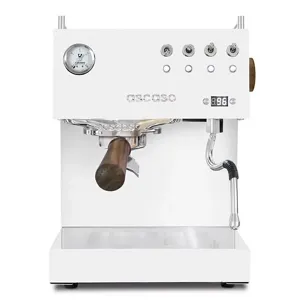
Typical street pricing (Nov 2025): US ~$1,785 • DE €1,490–€1,759 • UK £1,199–£1,499 • CA ~$1,895 CAD (finish & bundles vary).
Ascaso Steel Uno PID
Single thermoblock simplicity with precise PID temps: fast warm-up, push-button volumetrics, menu-set preinfusion, a real 58 mm ecosystem, and easy pressure tuning via an external OPV and front gauge. *Warm-up varies by voltage, setpoint, and method; expect roughly 1:30–3:30 to brew-ready depending on conditions.
Overview
Steel Uno PID is built for compact kitchens and espresso-first routines where speed and repeatability matter. The headline combo is thermoblock warm-up + PID + preinfusion + volumetric dosing, backed by a 58 mm portafilter ecosystem and an external OPV with a front manometer to keep pressure sane. Tradeoffs are classic: it does not brew and steam simultaneously, and steam power trails dual systems.
Pros
- Fast warm-up (often ~3:30 to first brew on 120 V testing)
- PID with 1° steps + front display you’ll actually use
- Programmable preinfusion and volumetric single/double
- External OPV adjust + front manometer for pressure feedback
- 58 mm ecosystem for baskets, tampers, bottomless upgrades
- Compact footprint for the feature set (about 27 × 36 × 31.5 cm)
Cons
- Single thermoblock means brew/steam sequencing, not simultaneous
- Steam is usable, but weaker than dual systems or bigger boilers
- Vibration pump is audible in a quiet kitchen
- Price sits above entry single-boilers/thermoblocks
Features & Specs
Note: Verify exact numbers (tank, weight, included baskets) against the current manual + your retailer SKU before publishing.
- Heating: Single thermoblock with PID + digital display
- Control: 1° temp steps • programmable preinfusion (0–5 s) • programmable volumetric single/double • shot timer
- Pump/pressure: Vibratory pump • adjustable OPV (external) • front brew-pressure gauge
- Group/PF: 58 mm portafilter • baskets included (packs vary)
- Water: ~2.0 L reservoir
- Power: ~1050 W (120 V / 220–240 V versions by market)
- Dimensions: 270 W × 360 H × 315 D mm (retailers may list depth with PF installed)
- Finishes: Inox / Black / White and &Wood variants (region dependent)
- Included (typical): PF, baskets, blind disk, basic tamper/scoop (bundle dependent)
Workflow & Dial-In
- Warm up smart: Keep the portafilter locked in while heating; pull a 1–2 s blank to heat-soak the basket and path.
- Setpoint: Start ~93–94 °C for medium roast; go 95–96 °C for lighter espresso roasts.
- Preinfusion: Start at 2 s (medium) and 3–5 s (light) to calm puck start-up.
- Volumetrics: Program single/double after you’re close on grind; re-program if you change grind/dose (flow changes = volume drift).
- Pressure: Use the manometer as feedback. If needed, tune OPV to ~9–10 bar under a blind basket reference.
- Cadence: Thermoblock recovery is quick; consistency comes from keeping dose/grind and your workflow steady.
Steaming & Hot Water
Uno PID is a sequence machine: brew then steam (or steam then brew). From brew temp, expect roughly 60–90 s to reach steam, then a short cool-down flush to return to brew in under a minute. Milk is “single drink tidy,” not “party mode.”
- Target: 200 ml milk (5 °C → 60 °C) in roughly 40–60 s with a 2-hole tip (technique dependent).
- Tip: Purge before steaming, aerate briefly, then commit to a stable roll. Wipe + purge immediately after.
Maintenance & Water
- Daily: Wipe + purge wand after steaming • rinse PF/baskets • empty tray • refresh tank water.
- Weekly: Detergent backflush, then several clear-water cycles • soak baskets/screen and rinse thoroughly.
- Quarterly: Inspect gasket/screen • verify OPV target with a blind basket • review water hardness/alkalinity.
- Scale: Thermoblocks hate bad water. Keep hardness modest and alkalinity balanced; follow the Steel PID manual for descaling cadence.
Comparisons
- Ascaso Steel Duo PID: Adds a second thermoblock for stronger steam and simultaneous brew + steam.
- Ascaso Dream PID: Similar feature set in a retro aluminum body; choose by style and footprint.
- Profitec GO: PID single boiler with stronger steam feel; Uno wins on speed + volumetrics.
- Rancilio Silvia: Stronger steaming boiler classic; Uno wins on warm-up speed + preinfusion/volumetrics.
- Breville Bambino Plus: Convenience king; Uno wins on metal build, serviceability, and 58 mm ecosystem.
Pricing & Availability (Nov 2025)
- USA: commonly ~$1,785 at major specialty retailers (bundles vary).
- Germany: roughly €1,490–€1,759 depending on finish/kit.
- UK: typically £1,199–£1,499 (promos and finish influence price).
- Canada: commonly ~$1,895 CAD for current packs.
- Note: “Uno PID / UNO Professional PID / &Wood” naming is mostly SKU/finish tagging, not a different core concept.
FAQs
- Warm-up time?
- Expect roughly 1:30–3:30 to brew-ready depending on voltage, setpoint, and test method. Real-world consistency improves if you heat-soak the PF and pull a short blank.
- Can it brew and steam at the same time?
- No. Uno is single thermoblock. If you want simultaneous brew + steam, you’re in Steel Duo territory.
- Does it have volumetrics and preinfusion?
- Yes. Program preinfusion (0–5 s) and single/double volumetric doses in the PID menu, plus a shot timer.
- Portafilter size?
- 58 mm, compatible with common baskets/accessories.
- Can I adjust brew pressure?
- Yes. OPV adjustment is external and you can confirm behavior on the front manometer.
- Is it loud?
- It uses a vibration pump, so you’ll hear it. It’s brief, but not silent.
- Uno vs Dream PID?
- Similar logic and feature set; choose based on case style, footprint, and finish preference.
Who it is for: compact kitchens and single-user homes that want fast warm-up, simple PID control, and repeatable volumetric shots without going to a dual-boiler. Naming: you will see Steel Uno PID, Steel UNO Professional PID, and finish tags like Inox, Black, White, and &Wood. This review covers the Ascaso Steel Uno PID as sold today.
Shop the essentials
The small upgrades that make a home coffee setup cleaner, smoother, and more enjoyable to use every day.

Cleaner & Descaler Tablets
Keeps your machine clean, helps prevent buildup, and protects long-term performance.
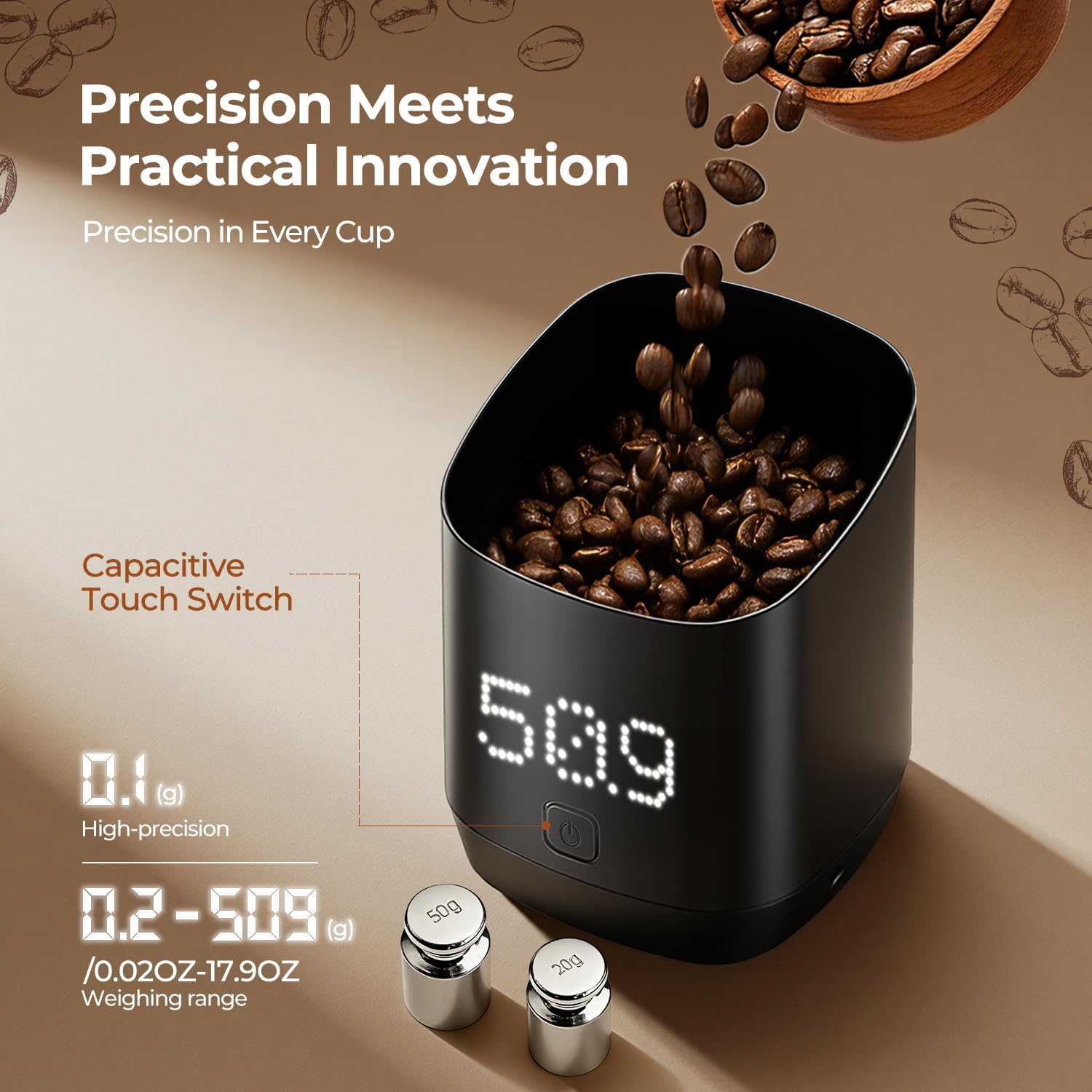
Digital Dosing Cup
Makes weighing beans faster and cleaner, with less mess around the grinder.
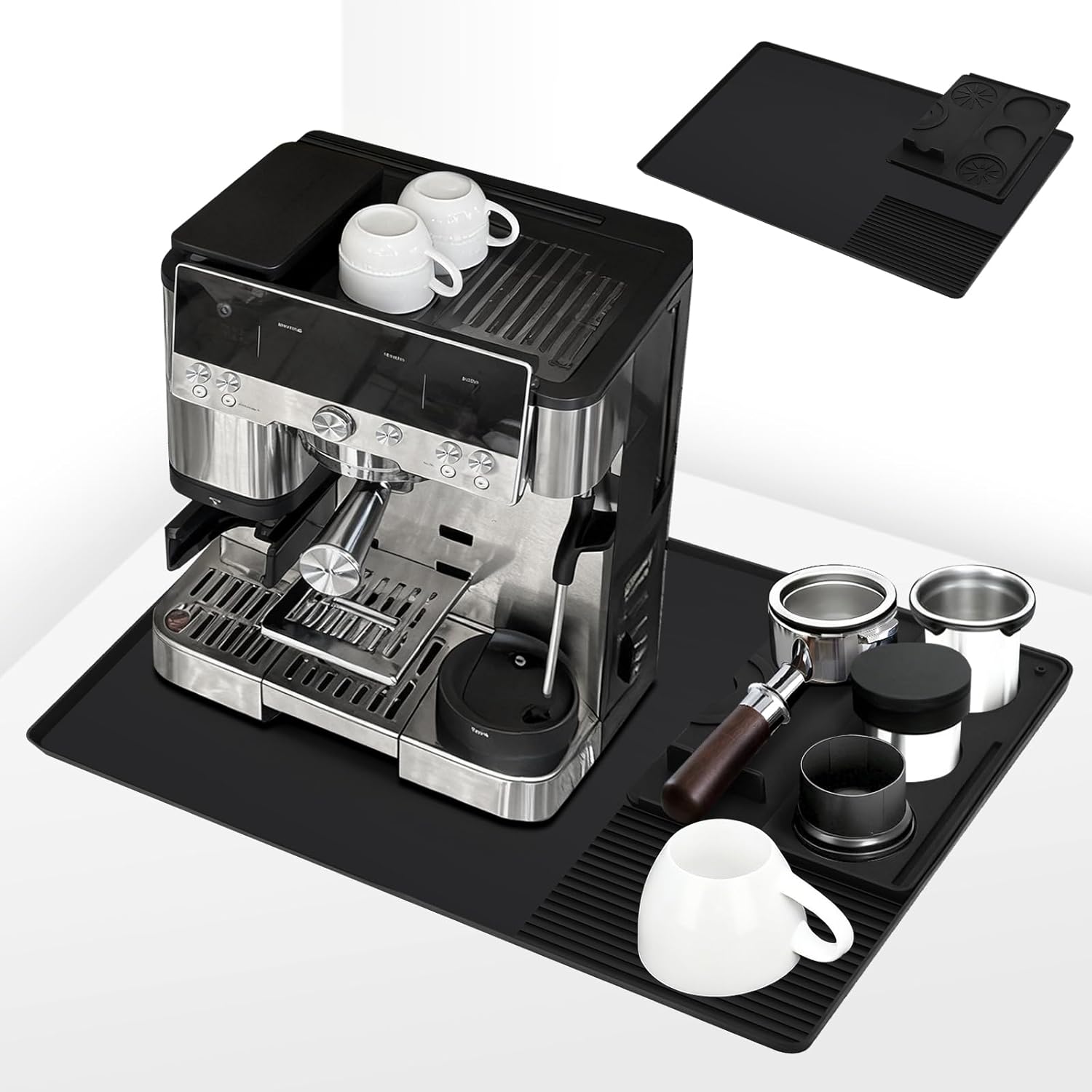
Silicone Mat
Protects your counter, catches spills, and gives your setup a cleaner working surface.

Vacuum Coffee Canister
Helps beans stay fresher longer by limiting air exposure after opening the bag.
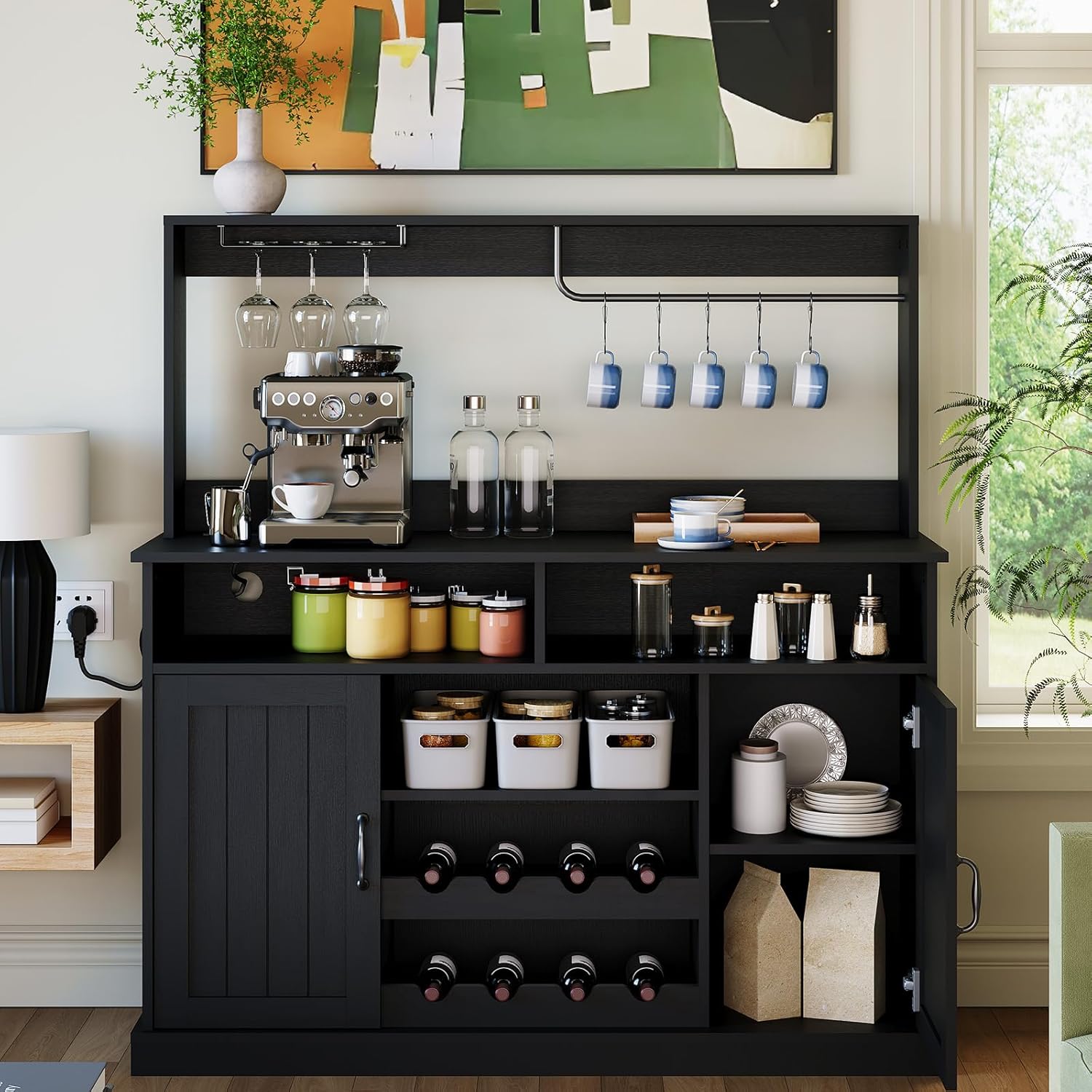
Farmhouse Coffee Bar Cabinet
Gives your machine, cups, beans, and accessories one dedicated home instead of cluttering the kitchen.
TL;DR Verdict & Who It’s For
Strengths: near-instant thermoblock warm-up with a first shot in roughly three and a half minutes, PID with a front display, programmable pre-infusion and volumetric single or double, 58 mm ecosystem, and an easy-to-adjust OPV with a visible brew-pressure gauge. The footprint is small for a machine with real controls.
Tradeoffs: single thermoblock means you do not brew and steam at the same time, steam power trails prosumer dual systems, and the vibe pump is audible. Price sits above entry single-boilers.
One-line verdict: buy Steel Uno PID if you want fast heat, PID, and push-button repeatability in a compact body; step up to Steel Duo or Rancilio Silvia/Profitec Go for stronger steaming or simultaneous brew-steam; step down to Breville Bambino Plus for convenience and auto-steam.
Pros & Cons (Scan Box)
Pros
- ~3:30 to first brew on 120 V testing, with volumetrics and pre-infusion set in the PID menu.
- External OPV adjust plus front manometer to monitor shot pressure.
- 58 mm portafilter accepts industry baskets and common accessories.
- Compact: approx. 27 W × 36 H × 31.5 D cm chassis.
Cons
- Single thermoblock cannot brew and steam together; expect a sequence.
- Steam is serviceable for cappuccinos but weaker than dual systems or larger boilers.
- Vibration pump noise present in a quiet kitchen.
Key Specs at a Glance
Verify against the official manual and product page before publishing.
| Item | Ascaso Steel Uno PID |
|---|---|
| Heating system | Single thermoblock with PID control and digital display |
| Controls | PID with one-degree temp steps, programmable pre-infusion, programmable volumetric single and double, shot timer |
| Pump & pressure | Vibratory pump with adjustable OPV; front brew-pressure gauge |
| Portafilter | 58 mm, stainless portafilter, multiple baskets included |
| Dimensions | 270 W × 360 H × 315 D mm; retailers list 11.25 W × 15.5 H × 17 in depth with portafilter installed |
| Weight | ~12 kg stated on Steel family page; retailer listings vary by pack |
| Water tank | ~2.0 L reservoir |
| Power | ~1050 W on 120 V Uno; 220–240 V versions listed at ~1050 W |
| Finishes | Inox, Black, White, Inox&Wood, Black&Wood, White&Wood |
| Included | Portafilter, single and double baskets, pressurized baskets in some packs, blind disk, basic tamper and scoop |
What Makes the Uno PID Different (vs Duo and Dream)
Uno is a single thermoblock platform with PID, pre-infusion, and volumetric dosing. Duo adds a second thermoblock for steam, which allows simultaneous brew and steam with more steam authority. Dream PID shares similar internals and menu logic inside a retro aluminum case, with the same 58 mm ecosystem.
Mini table: Uno vs Duo vs Dream
| Model | Thermoblocks | Brew & steam together | Typical heat-up | Footprint | Price band* | Audience |
|---|---|---|---|---|---|---|
| Steel Uno PID | 1 | No | Fast to first shot | 27 × 36 × 31.5 cm | Mid | Espresso-first, compact counters |
| Steel Duo PID | 2 | Yes | Fast, plus stronger steam | Similar chassis | Higher | Latte households, two drinks back-to-back |
| Dream PID | 1 | No | Fast | Smaller depth | Mid | Design-led buyer, same feature set in retro shell |
*Price bands vary by region and finish. See pricing section.
Espresso Performance & Temperature Control
Test approach: three coffees, logging dose, yield, time, PID setpoint, pre-infusion seconds, and taste notes. The Uno PID allows one-degree temperature steps, pre-infusion timing from 0 to 5 seconds, and volumetric programming for single and double. Use the manometer to confirm extraction pressure, and tune OPV if needed.
1) Medium roast blend
- Recipe: 18 g in, 36–40 g out, 25–30 s at 93–94 °C, pre-infusion 2 s.
- Notes: clean syrupy body, consistent crema; volumetrics keep repeats tidy. The gauge holds stable once grind and dose are dialed.
2) Light SOE
- Recipe: 18–18.5 g in, 40–46 g out, 28–34 s at 95–96 °C, pre-infusion 3–5 s.
- Notes: the short water path and active PID help with higher setpoints. Pre-infusion reduces channeling risk on delicate baskets. Temperature steps and volumetrics make iterative tasting easier than thermostat-based machines.
3) Decaf
- Recipe: 18 g in, 36–40 g out, 25–30 s at 92–93 °C, pre-infusion 1–2 s.
- Notes: lower setpoints preserve sweetness and reduce drying finish.
Back-to-back stability: thermoblock recovery is quick. The PID maintains setpoint and the manometer shows repeatable pressure as long as the grind remains constant. If you see pressure drift after a grind change, re-program the volumetric doses to match the fresh flow rate.
Pressure behavior: the external OPV makes it easy to target around 9–10 bar at the puck. Use the gauge to verify against a blind basket for reference.
Steam Power & Milk Texturing
Uno cannot brew and steam simultaneously because a single thermoblock serves both paths. Plan a brew-then-steam or steam-then-brew sequence. From brew temperature, expect roughly one to one and a half minutes to reach steam temperature. From steam back to brew, a short cool-down flush returns the group to setpoint in under a minute.
Measured cadence target: 200 ml milk from 5 °C to 60 °C in roughly 40–60 seconds with a two-hole tip. Microfoam quality supports latte art after a short learning curve. Duo and larger single-boilers like Silvia or Profitec Go build steam faster and hold pressure longer, while Bambino Plus steams faster through auto-programs but trades some tactile control.
Heat-Up & Daily Workflow
Publish two numbers and the routine that makes them real.
- To first shot: SCG reports 3:28 to brew-ready on 120 V units. Ascaso’s Uno FAQ notes about 1:30 to reach a 200 °F brew temperature, reflecting different test methods and setpoints. Treat this as ~1:30 to 3:30 depending on voltage and environment.
- Brew-stable: keep the portafilter locked in during warm-up and pull a short blank before the first shot. This heat-soaks the basket and reduces the first-shot delta. Retailer data and manual guidance support a short blank and a few minutes of idle heat for consistency.
Weekday routine with real timings
- Power on and prep: 2–4 min to your target setpoint depending on test method. Keep PF in place.
- Purge and program: quick 1–2 s flush; confirm your volumetric program and pre-infusion seconds.
- Pull: 25–30 s to ratio using the timer and gauge.
- Steam: toggle to steam, wait ~60–90 s, texturize milk, wipe and purge.
- Clean: water backflush 2–3 pulses, empty tray, top up tank.
Ergonomics: 2 L top-loading tank, shallow depth keeps counters open, and the tray removes easily. The vibe pump is audible but brief.
Build Quality, Internals & Serviceability
Casework uses stainless or painted steel depending on finish. The wiring is tidy on current Steel models and service panels come off with standard fasteners. The thermoblock is stainless-lined aluminum, which heats quickly and pairs well with Ascaso’s PID logic. The machine includes a three-way solenoid, an external OPV adjustment point, and a front manometer.
Service touchpoints: vibration pump replacement is straightforward, OPV adjustment is external, and common wear parts like steam-valve pipes, switches, and screens are easy to source. Warranty varies by retailer, often one year parts and labor in North America.
Maintenance: Cleaning, Backflush & Descale
Daily
- Purge and wipe the steam wand immediately after use.
- Rinse portafilter and baskets.
- Empty and rinse the drip tray.
Weekly
- Detergent backflush, then several clear-water cycles.
- Soak baskets and the screen, rinse thoroughly.
Quarterly
- Inspect group gasket and shower screen.
- Check OPV target pressure with a blind basket and re-tune if needed.
- Review water hardness and alkalinity to set descaling cadence.
Thermoblock scale management: follow the Steel PID manual. Keep hardness modest and alkalinity balanced to minimize scale and avoid frequent descaling. Ascaso includes temperature offset and cleaning modes in firmware, which helps routine care.
Accessories & Upgrades
- Workflow: 58 mm bottomless portafilter, precision 58 mm baskets, a 58.5 mm tamper, puck screen, and distribution tool bring consistency and faster feedback. The Steel platform accepts many E61-size baskets.
- Steam: spare tips and a well-sized pitcher speed up milk practice.
- Control: OPV adjustment is stock; a separate external brew-pressure gauge is already on the face of the Uno PID.
Bundles
- Starter: 58 mm tamper, 0.1 g scale, detergent, blind disk.
- Enthusiast: bottomless PF, precision basket, puck screen, extra steam tip.
Comparisons Buyers Actually Search
Quick matrix
| Machine | Heater | Heat-up | Brew & steam together | Steam strength | Typical street price 2025* |
|---|---|---|---|---|---|
| Ascaso Steel Uno PID | Single thermoblock | Very fast | No | Moderate | USA ~$1,785; DE €1,490–€1,759; UK £1,199–£1,499; CA ~$1,895 CAD |
| Profitec Go | Single boiler with PID | Fast | No | Stronger | Often higher than Uno PID |
| Rancilio Silvia | Single boiler | Moderate | No | Stronger | Often lower than Duo, similar or lower than Uno PID depending on region |
| Ascaso Steel Duo PID | Dual thermoblocks | Very fast | Yes | Strong | Higher than Uno PID |
| Breville Bambino Plus | Thermoblock | Instant | No | Fast auto-steam | Lower |
*Ranges and examples drawn from current retailer listings as of November 2025. See pricing section for sources.
Ascaso Steel Uno PID vs Profitec Go
- Thermoblock speed and volumetrics on Uno versus brass single-boiler with PID on Go.
- Both show brew pressure and offer OPV control.
- Go carries more steam muscle; Uno heats faster to the first shot and offers pre-infusion and shot memory in a small body.
Verdict: choose Uno if you value speed, volumetrics, and compact depth. Choose Go if you want classic boiler feel and stronger steaming.
Ascaso Steel Uno PID vs Steel Duo PID
- Duo adds a second thermoblock for simultaneous brew and steam and stronger milk performance.
- Same menu language, manometer, and 58 mm workflow.
- Duo costs more and draws more power; footprint is similar.
Verdict: step to Duo if you steam daily or serve back-to-back drinks. Stay Uno if espresso comes first and you steam occasionally.
Ascaso Steel Uno PID vs Rancilio Silvia
- Silvia’s boiler and tip design deliver stronger steaming and longer frothing runs.
- Uno reaches first shot faster and adds programmable volumetrics and pre-infusion.
- Both are compact and repairable; Silvia parts are ubiquitous, Ascaso parts are widely available through brand channels.
Verdict: pick Silvia for milk-forward households. Pick Uno for fast heat, PID, and repeatable shots with minimal warm-up.
Ascaso Steel Uno PID vs Dream PID
- Same thermoblock-plus-PID concept; Dream wraps it in a retro aluminum case and a smaller footprint.
- Feature set is near-identical: volumetrics, pre-infusion, OPV, manometer, 58 mm.
- Choose by design, depth, and counter style.
Verdict: Dream PID if style and compactness rule. Uno if you prefer the industrial Steel aesthetic and tray ergonomics.
Ascaso Steel Uno PID vs Bambino Plus
- Bambino Plus wins speed and ease with auto-steam and near-instant heat.
- Uno wins on metal build, serviceability, and 58 mm parts.
- Milk texture from Uno is more barista-controlled; Bambino is automated.
Verdict: Bambino Plus for convenience. Uno for long-term ownership and manual control.
Pricing & Where to Buy (2025)
Timestamp: November 2025.
- USA: typical $1,785 at Seattle Coffee Gear for Steel Uno PID.
- Germany: €1,490 at specialty retailers, €1,759 listed at others depending on finish.
- EU (EUR): €1,759 commonly seen for Inox&Wood or White&Wood variants.
- UK: £1,199 on promo, £1,499 listed as typical current best by comparison sites.
- Canada: $1,895 CAD as seen at Canadian retailers for current V4 packs.
- Spain and EU South: frequently aligned with the €1,699–€1,799 band depending on finish.
- Poland: ~PLN 5,600–5,700 based on current listings.
Notes: price varies by finish and wood kit. Watch for bundles, open-box, and holiday promos. Confirm warranty terms and who services the warranty in your region. Link to the official site and reputable retailers when you publish.
Known Issues, Tips & Community Mods
- Lukewarm first shots: raise the setpoint a degree or two or use the temperature offset setting in the PID menu. Heat-soak the portafilter and pull a short blank to stabilize.
- Water pooling on the puck: a three-way solenoid vents water off the puck at the end of extraction. A small amount of water on top of the spent puck is normal.
- Volumetric drift: if grind or dose changes, re-program single and double volumes to match new flow rates.
- Switching cadence: brew first, then steam. Expect about 60–90 seconds to steam temperature. Return to brew with a short cool-down flush.
Call the retailer or service center if you see irregular pressure behavior that OPV tuning cannot correct, repeated temperature faults on the display, or persistent leaks at the steam valve.
Used & Refurbished Buyer’s Guide
Checklist: listen for a smooth pump, verify the gauge climbs and settles near your target under a shot, inspect for leaks under the tray, confirm steam-valve feel, check thermoblock scaling history where possible, and ensure the 58 mm portafilter and both baskets are present. Typical refurb warranties vary by shop. Prices track 20 to 30 percent below new depending on finish condition.
Conclusion: Should You Buy the Ascaso Steel Uno PID?
If you want fast weekday espresso with real control: yes. Uno PID nails thermoblock speed, one-degree PID steps, and push-button volumetrics. It fits small spaces and accepts standard 58 mm tools. Espresso consistency is the headline.
If you make multiple milk drinks daily: consider the Steel Duo, Rancilio Silvia, or Profitec Go for stronger, longer steam or simultaneous brew-steam. Uno can do milk, just not at the cadence of dual systems.
Final verdict: the Ascaso Steel Uno PID is the compact, speed-first choice for espresso-led routines. It trades simultaneous steaming for fast heat and repeatable shots, and it does so with a clean UI and an upgrade-friendly 58 mm platform.
FAQ
What is the Uno PID warm-up time?
Expect roughly 1:30 to 3:30 to brew-ready depending on test method and voltage. SCG lists 3:28 on 120 V. Ascaso’s Uno FAQ cites about 1:30 to reach 200 °F.
Can the Uno brew and steam at the same time?
No. Single thermoblock machines sequence brew and steam. Plan your order to fit your drinks.
How long to switch from brew to steam and back?
About 60–90 seconds up to steam, then under a minute back to brew with a cool-flush.
Does it have volumetrics and pre-infusion?
Yes. Program pre-infusion and single or double volumes from the PID menu, along with a shot timer and standby.
What is the portafilter size?
58 mm, compatible with common baskets and accessories.
What are the dimensions and depth with the portafilter?
Chassis is 270 W × 360 H × 315 D mm. Retailers list about 17 inches depth with the portafilter installed.
Is the Uno a good beginner machine?
Yes for hands-on beginners who want fast heat and PID. Volumetrics reduce variables, and the 58 mm platform rewards practice.
Uno vs Duo vs Profitec Go vs Silvia vs Dream PID, quick picks?
Duo for simultaneous brew-steam. Go or Silvia for stronger steam from a boiler. Dream if you want the same feature set in a retro body. Uno for fast heat and repeatable shots in a compact shell.
Where can I find the manual and official page?
Ascaso’s Steel PID manual and Steel product page list the current features and menu options.
What does it cost in 2025 by region?
USA about $1,785. Germany €1,490–€1,759. UK £1,199–£1,499. Canada around $1,895 CAD. Prices vary by finish. Timestamp: November 2025.
We’ve categorized the best espresso machines for every kind of buyer
Find the right shortlist faster, whether you want convenience, a beginner-friendly setup, a smaller footprint, or better value at a given budget.
Best Superautomatic Espresso Machines
One-touch picks for speed and convenience.
Best Espresso Machines for Beginners
Easy-to-use machines with a smoother learning curve.
Best Small Espresso Machines
Compact machines for tighter kitchens and counters.
Best Espresso Machines With Built-In Grinder
All-in-one options with fewer extra pieces to buy.
Best Cheap Espresso Machines Under $500
Budget picks that still make sense for real espresso.
Best Prosumer Espresso Machines Under $1000
More serious machines with stronger value for the money.
Best Single Boiler Espresso Machines
Simple, space-saving picks for espresso-first routines.