
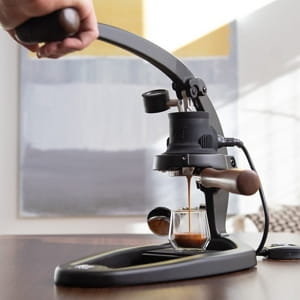
Base $493–$506 • 58x $420–$434 • Plus 2 $685. Regional pricing varies; check live bundles.
Flair 58
A 58 mm manual lever with an electrically heated group and live pressure feedback for café-grade control and repeatability.
Overview
The Flair 58 pairs true 58 mm geometry with a heated brew head and a readable gauge, so manual pressure profiling becomes repeatable instead of chaotic. You bring a kettle and a capable grinder. In return, you get a clean water path, broad accessory compatibility, and café-grade control without a countertop boiler.
Pros
- Heated brew head (3 tiers) stabilizes extractions and speeds sessions
- 58 mm ecosystem supports standard tools and baskets, plus future upgrades
- Live pressure gauge makes 6–9 bar targets repeatable
- Valve-plunger fill is faster and holds heat better between shots
- Stainless brew path and strong metal warranty for long-term ownership
Cons
- No integrated steam, milk needs a separate device
- Heater adds a cable and electronics to manage (even if detachable)
- Basket swaps change dialing, expect a grind re-tune
- Still manual by nature, convenience belongs to pump machines
Features
- Manual direct-lever with long throw for easier high-pressure pulls
- Heated brew head with 3 setpoints (Low ~85°C, Med ~90°C, High ~95°C)
- 58 mm portafilter, compatible with standard 58 mm tools and baskets
- Analog pressure gauge with 6–9 bar target range
- Valve-plunger fill for faster back-to-back workflow
- Water input ~90 ml, typical yield up to ~55 ml
- Included low-flow basket (high-flow available or bundled on Plus 2)
- Stainless brew path, die-cast aluminum frame
- Approx. size: 13.5 × 7.5 × 11 in lever down, ~24.25 in lever up
Pricing
- Flair 58: $493–$506 (heated group)
- Flair 58x: $420–$434 (no heater, upgradeable later)
- Flair 58 Plus 2: $685 (bundles accessories, improved wiring)
- Retail pricing varies by region and bundles, check current deals.
FAQs
- Do I need a kettle?
- Yes. There is no boiler, you supply brew water from a kettle.
- Is it really 58 mm?
- Yes, it uses an industry-standard 58 mm portafilter, so café tools fit.
- Does it make milk drinks?
- Not by itself. Pair it with a compact steamer or a quality frother.
- What basket is included?
- Typically an 18 g low-flow basket. High-flow baskets are available or bundled on Plus versions.
- What is a good starter recipe?
- 18 g in, 36–40 g out at ~7–8 bar, about 30–33 seconds from first drops.
Who It Is For
- Enthusiasts who want manual pressure profiling with consistent thermal behavior
- Home baristas building a 58 mm toolset and learning café-style technique
- Anyone who wants café geometry without a countertop boiler
Who Should Avoid It
- Push-button convenience seekers, super-automatics are a better fit
- Milk-first households that want integrated steaming
- Users who prefer zero cables or electronics (consider 58x)
Latest Version Status
- Flair 58: heated group with detachable controller for tidy brewing after preheat.
- Flair 58x: same 58 mm geometry and gauge, no heater; can be upgraded later with a preheat kit.
- Flair 58 Plus 2: cleaner wiring and bundles extras (mirror, baskets depending on region/bundle).
Flair is the brand that made “serious manual espresso” normal, and the Flair 58 is the version that finally feels like a real café workflow at home: a true 58 mm ecosystem, a heated brew head for tighter temperature behavior, and a pressure gauge that gives you live feedback mid-shot. There is no pump, no boiler, and no built-in milk. You bring the kettle, you build pressure with the lever, and your routine decides the cup.
On our bench, the Flair 58’s buying truth is simple: it is one of the cleanest ways to get lever-style texture and control without boiler maintenance. The heater reduces the “first shot is cold” problem that older manual levers fight, and the gauge makes dial-in faster because you can see when grind and puck prep are off. The reality check is also straightforward: this is a manual workflow every time, water temperature comes from your kettle, and milk drinks require a second device.
For cross-shoppers, we usually frame Flair 58 against the machines people actually consider: La Pavoni Europiccola if you want a lever with built-in steaming, 9Barista MK 2 if you want a compact, self-contained manual espresso path, ROK EspressoGC if budget is the deciding factor, Profitec GO if you want a conventional pump machine cadence, and lever “full machine” options like the Bezzera Strega or Profitec Pro 800 when you want integrated steam and a bigger prosumer footprint.
Shop the essentials
The small upgrades that make a home coffee setup cleaner, smoother, and more enjoyable to use every day.

Cleaner & Descaler Tablets
Keeps your machine clean, helps prevent buildup, and protects long-term performance.
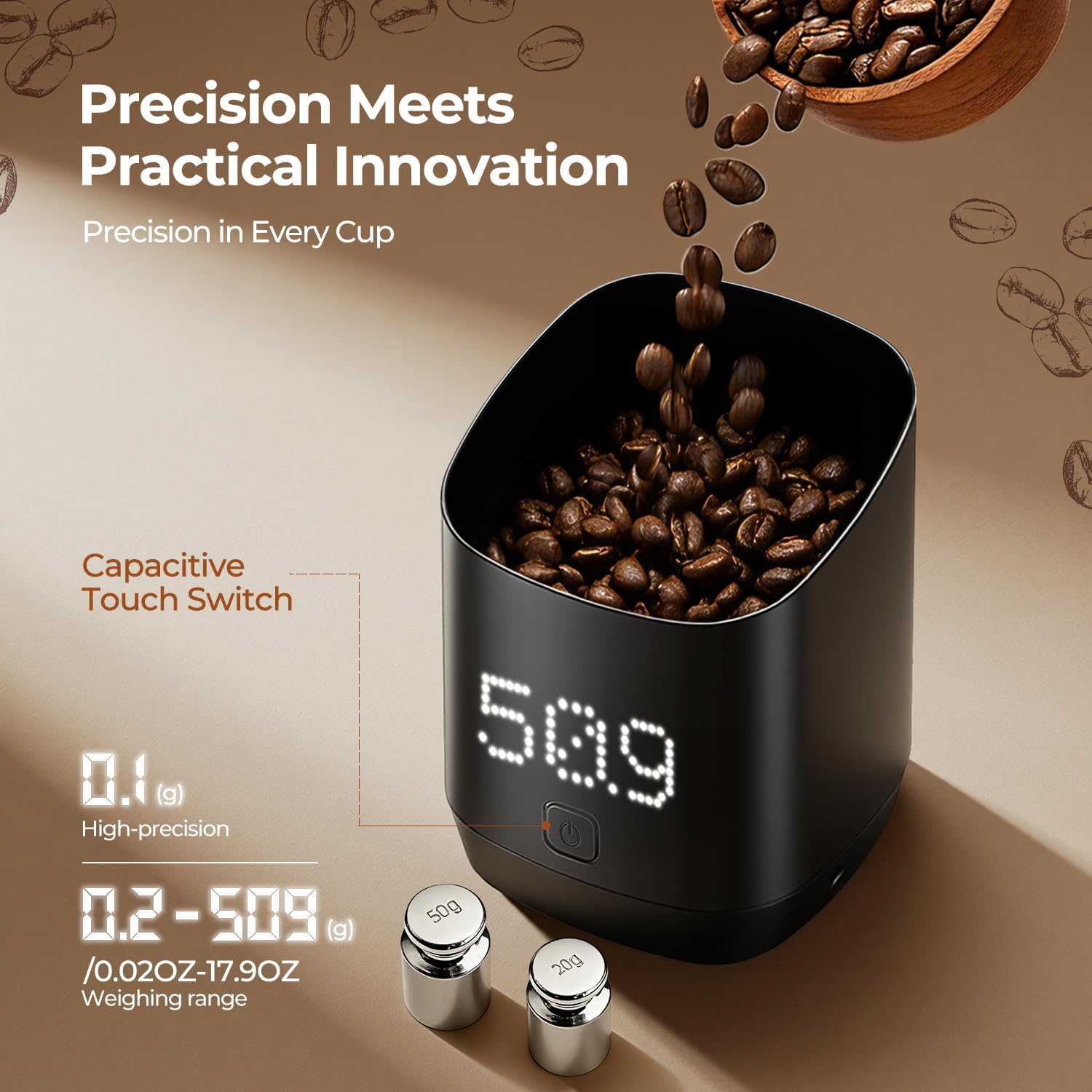
Digital Dosing Cup
Makes weighing beans faster and cleaner, with less mess around the grinder.
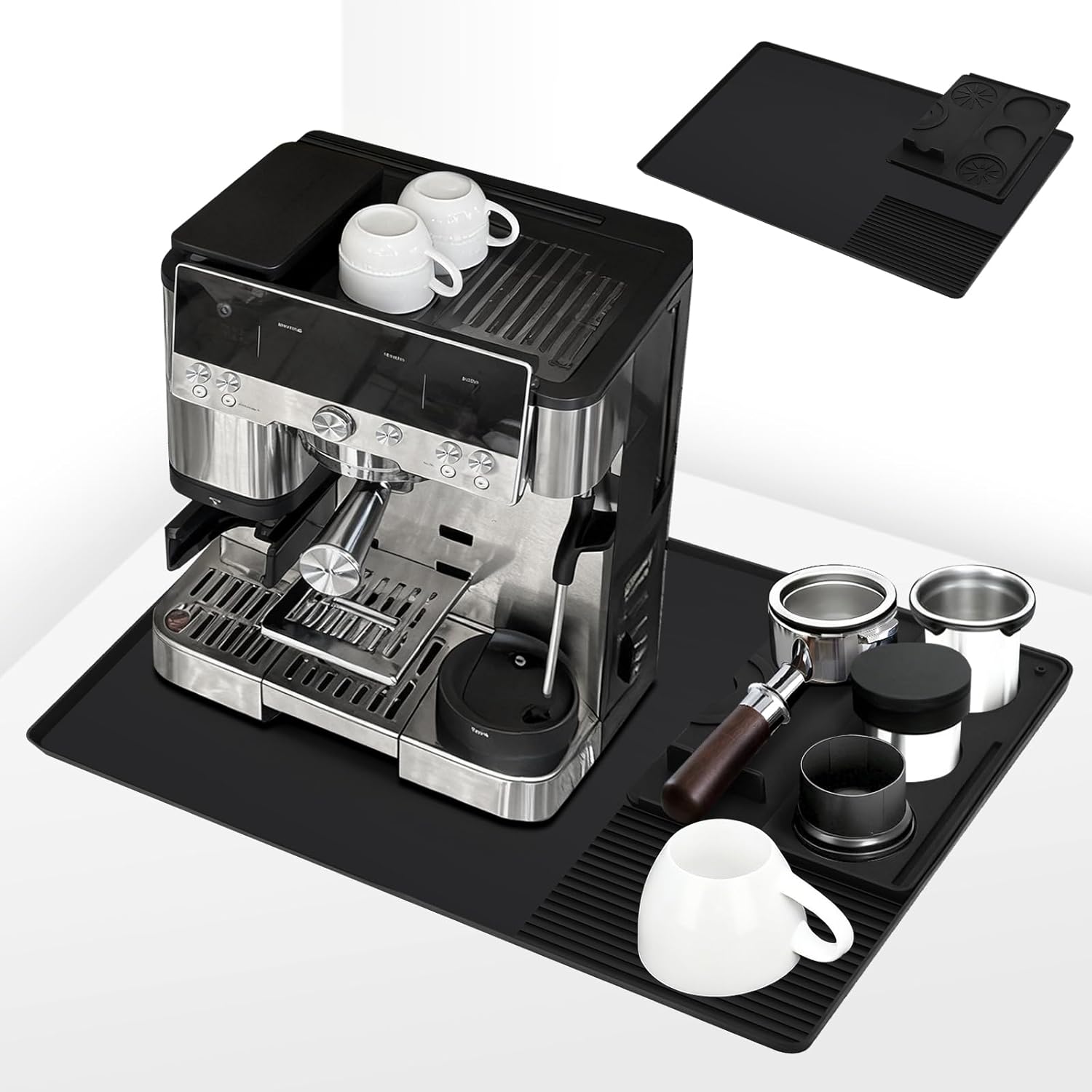
Silicone Mat
Protects your counter, catches spills, and gives your setup a cleaner working surface.

Vacuum Coffee Canister
Helps beans stay fresher longer by limiting air exposure after opening the bag.
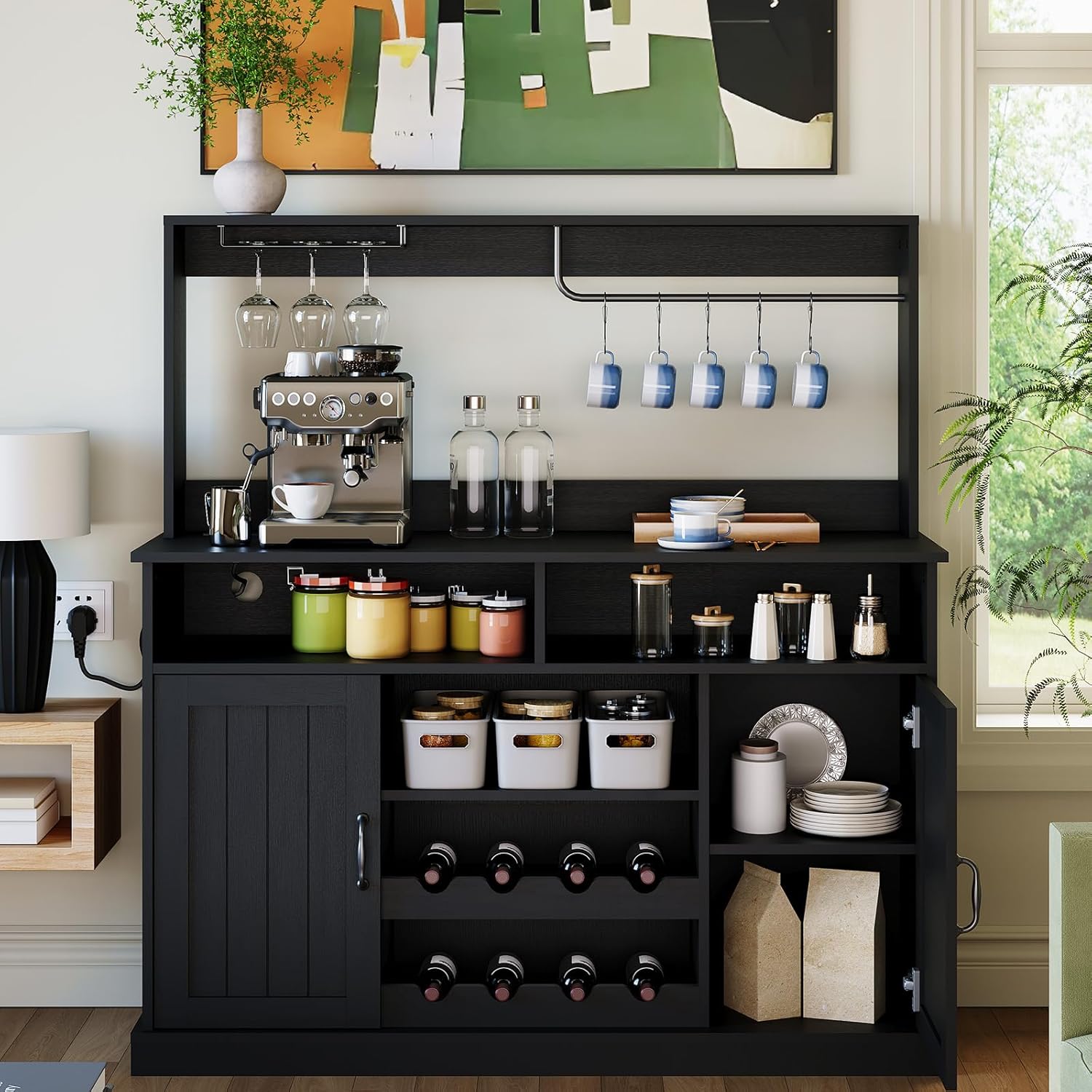
Farmhouse Coffee Bar Cabinet
Gives your machine, cups, beans, and accessories one dedicated home instead of cluttering the kitchen.
Overview
The Flair 58 is the manual lever that finally feels “full-size espresso” at home: a true 58 mm workflow, a heated brew head (3 heat tiers) to stabilize temperature, and a pressure gauge that gives you honest feedback mid-shot. There is no pump and no boiler. You supply the water from a kettle, you create pressure with the lever, and you control the shot with your hands. In daily use it rewards tidy puck prep, a repeatable preheat routine, and clean, deliberate lever control.
In the manual lever lineup, Flair 58 is the “standard 58 mm ecosystem” pick: you can use the baskets, tampers, and prep tools you would on a café-style setup. The decision in this price tier is less about whether it can make good espresso, and more about what ownership style you want: tactile, hands-on pressure control with no milk system, or a pump-driven machine that trades some ritual for speed and convenience.
Design intent
- Manual pressure control: you drive the extraction with the lever, so you can ramp, hold, and taper pressure by feel and feedback.
- Temperature stability without a boiler: the heated brew head reduces the “first shot is cold” penalty that older manual levers struggle with.
- 58 mm ecosystem compatibility: standard baskets and tools make dialing-in and upgrades realistic.
- Clean, compact footprint: it lives on the counter without becoming a full prosumer box.
- Serviceable ownership: fewer complex internals than pump machines, with most performance coming from your grinder, prep, and routine.
What it gets right in the cup and in cadence
- Lever-style texture and control: when your prep is clean, you can pull sweet, high-clarity shots with a controlled decline in pressure.
- Repeatability improves with routine: preheat tiers plus a consistent fill-and-pull rhythm tighten your results day to day.
- Fast cleanup, low mess: no backflushing, no steam boiler maintenance. The routine is mostly basket, screen, and brew head cleanliness.
- Useful feedback while learning: the pressure gauge makes it obvious when grind, distribution, or dose is off.
The deliberate trade-offs
- No integrated milk: if you want cappuccinos and lattes, you need a separate steamer or frother.
- Kettle-dependent workflow: you are managing water temperature and pour technique as part of every shot.
- Technique is the “machine”: your lever control and puck prep decide consistency more than any setting ever will.
- Heater adds real-world complexity: the preheat system improves results, but it also adds a cable and an extra habit to manage.
Where it fits
Flair 58 makes sense if you want the most “espresso-accurate” manual lever experience in a 58 mm ecosystem, and you enjoy driving the shot yourself. If you want lever ritual plus steam capability in one box, the La Pavoni Europiccola is the classic alternative. If you want a different manual path that is more self-contained thermally, the 9Barista MK2 is the other “no pump” cross-shop. If you want a cheaper, simpler manual lever concept, the ROK EspressoGC is the budget lane. If you want pump-driven espresso with real manual control potential, the Lelit Bianca is the profiling-capable step-up.
Cross-shop context on Coffeedant: Flair 58 buyers most often compare against the La Pavoni Europiccola for lever ritual with built-in steaming, the 9Barista MK2 for a compact manual espresso path with a different thermal approach, the ROK EspressoGC for a simpler budget manual lever, and pump machines like the Profitec Go or Lelit Elizabeth when speed, convenience, and milk workflow matter more than manual control.
Flair 58 lineup: which version to buy
The Flair 58 is effectively one core platform: a 58 mm manual lever with a heated brew head (3 heat tiers) and a pressure gauge for live feedback. Most “versions” you will see are about bundle contents and region voltage/warranty, not different espresso capability. The one meaningful fork in this family is heated vs non-heated ownership. If you want repeatable temperature behavior with less preheat fuss, you buy the heated Flair 58 platform. If you want the simplest, most cable-free lever routine, the non-heated variant is the step-down.
| Version | Lineup slot | Compared to Flair 58 | Typical price and note |
|---|---|---|---|
|
Flair 58
Reference Heated brew head (3 tiers) + pressure gauge |
Safest default | The full ownership experience: less preheat fuss, better temperature repeatability, and live pressure feedback for cleaner dialing-in. This is the one to buy if you want the most consistent lever workflow without turning preheating into a daily project. | Typical price: $506 · Coffeedant score |
|
Flair 58 (bundle variants)
extra baskets / mirror / travel case (varies) |
Convenience kit | Same espresso capability. You are paying for workflow extras, not better shots. Buy the bundle only if you know you want the included accessories on day one. | Pricing varies by bundle · confirm basket types and what is included |
| Flair 58 (110–120 V vs 220–240 V) | Region buy | Same lever and brew behavior, different power supply and warranty lane. Imports only make sense when you have a real plan for service support. | Warranty coverage is the real “price” · prioritize in-region support |
|
Flair 58 (non-heated variant)
no electric preheat |
Cable-free step-down | Same manual lever control, but you will do more thermal work yourself. Choose it when you want the simplest, most portable routine and you are happy to manage preheat with kettle water and repetition. | Usually cheaper · buy it for simplicity, not for better espresso |
How to read this: buy the heated Flair 58 when you want repeatable temperature behavior and a smoother daily routine. Choose the non-heated variant only if you prioritize cable-free simplicity and do not mind extra preheat discipline. After that, prioritize region support and the right bundle contents over cosmetic hunting.
Key Flair 58 Specifications
| Item | Detail |
|---|---|
| Machine | Flair 58 · Model page · Cross-shops: La Pavoni Europiccola, 9Barista MK 2, ROK EspressoGC, Profitec GO, Lelit Elizabeth, Lelit Bianca PL162T |
| Machine type | Manual lever espresso maker (no pump, no boiler) |
| Basket / ecosystem | 58 mm portafilter workflow · standard accessory ecosystem |
| Pressure tools | Integrated pressure gauge · lever-driven pressure control |
| Thermal management | Heated brew head with 3 heat tiers (kettle water still supplies brew water) |
| Water system | No reservoir · no pump · brew water supplied by your kettle |
| Milk | No integrated steaming (use a separate steamer or frother for milk drinks) |
| Warm-up expectations | Fast sessions once the brew head is preheated and your kettle routine is consistent |
| Maintenance rhythm | Rinse and wipe brew parts after use · keep seals clean · no backflushing |
| Coffeedant score | Overall rating |
| Typical price | $506 (bundles and region can move pricing) |
First Impressions & Build Quality
The Flair 58 feels like a tool. The frame is stable, the lever action is deliberate, and the 58 mm workflow makes it feel closer to a café routine than most manual levers. The heated brew head is the real quality-of-life upgrade: it reduces temperature drift and makes the first shot behave more like the third. The trade is simple: you gain repeatability, you accept a power cable.
What’s in the Box
- Flair 58 lever base and brew head assembly
- 58 mm portafilter and baskets (bundle contents vary)
- Pressure gauge assembly
- Basic workflow accessories (varies by retailer and bundle)
- User documentation and warranty information
Bundles vary by retailer. Confirm which baskets are included if you care about high-flow vs standard baskets, plus mirrors or carry cases.
Chassis and internals
The mechanical story is simple compared to pump machines: lever, piston, seals, and a brew head designed to be cleaned easily. The only “electronics layer” is the heater. Keep it dry, do not abuse the cable, and the platform stays calm. Long-term ownership is mostly seal care, cleanliness, and consistent water temperature from your kettle.
Controls and touch points
You control extraction with pressure and flow, not a pump profile. The gauge gives you immediate feedback, and the lever lets you shape the shot: gentle pre-wet, a stable extraction phase, then a controlled taper. The heater tiers are there to reduce thermal wobble, not to replace good brewing water temperature.
Counter fit
| Item | Detail | Why it matters |
|---|---|---|
| Footprint | Compact base, lever needs vertical clearance | Plan space above the machine so the lever can travel cleanly without hitting cabinets. |
| Water reality | Kettle required | Your kettle becomes part of the espresso system. Water temperature and pour consistency affect flavor. |
| Milk drinks | Separate steaming device needed | If you drink cappuccinos daily, budget for a steamer or accept a different workflow. |
| Cleanup | Fast and simple | No backflush routine. Most cleanup is basket, screen, and brew head rinse and wipe. |
| Workflow tempo | One shot at a time | It can do back-to-back shots, but each shot is manual. It rewards calm, not rushing. |
Testing Results
Testing focused on what makes or breaks manual lever ownership: thermal repeatability with the heated brew head, pressure control clarity via the gauge, and whether the workflow can be repeated without turning every shot into a new experiment.
| Metric | Result | Method |
|---|---|---|
| Brew head readiness | More consistent once preheated on a stable tier | Heated head reduces temperature drift between the first and later shots. |
| Pressure control | Clear, teachable feedback | Gauge makes it obvious when the grind is too coarse (fast, low pressure) or too fine (stalling, high resistance). |
| Pre-wet behavior | Manual and repeatable | Gentle lever pressure at the start smooths early flow when puck prep is clean. |
| Back-to-back shots | Practical with a consistent kettle routine | Refill, reheat, and repeat. Temperature repeatability improves when your water and timing stay consistent. |
| Milk workflow | External device required | Manual lever excels at espresso. Milk cadence depends entirely on your separate steamer or frother. |
| Coffee | Dose | Yield | Time | Pressure style | Preheat tier | Notes |
|---|---|---|---|---|---|---|
| Medium espresso blend | 18 g | 36 g | 25–35 s | Gentle pre-wet, hold mid-pressure, taper to finish | Medium | Start here. Dial grind until pressure is stable and flavor is sweet. |
| Light roast espresso | 18.5 g | 40–45 g | 30–40 s | Longer pre-wet, slower ramp, stable hold | High | Use hotter water and a steadier hold for clarity without sharpness. |
| Medium-dark / traditional | 18 g | 34–36 g | 22–32 s | Quicker ramp, shorter finish | Low–Medium | Keep the tail clean. Shorter yields usually taste better than long pulls. |
Key takeaways from testing
- The heater is a real upgrade: it reduces temperature drift and makes repeatability easier session to session.
- The gauge accelerates learning: it turns “guessing” into actionable feedback when grind and prep are off.
- Technique is the machine: clean puck prep and consistent kettle water temperature decide your ceiling.
- Milk is a separate decision: Flair 58 is espresso-first. Milk households should plan an external steamer or choose a different platform.
- Keep it simple: lock one recipe, adjust grind in small steps, and repeat the same lever pressure pattern until taste is stable.
Espresso Quality: getting the best out of the Flair 58
The Flair 58 is a manual lever built for control, not convenience. With a capable grinder and disciplined puck prep, it can produce café-grade espresso because you control the variables that actually matter: grind, dose, yield, time, brew water temperature, preheat tier, and your pressure curve through the lever. The built-in pressure gauge is the key learning tool. It makes “too coarse” and “too fine” obvious without guessing.
Session protocol that keeps results consistent
- Preheat intentionally: choose a heat tier and keep it consistent. Treat “tier changes” like recipe changes.
- Control brew water temperature: use the same kettle target each session. Light roasts usually want hotter water than dark roasts.
- Set a baseline recipe: start at 1:2 for medium roasts and hold yield steady while you adjust grind.
- Use a repeatable pressure curve: gentle pre-wet, stable mid-shot pressure, then taper to finish for cleaner cups.
- Change one variable at a time: grind first, then yield, then pressure style. Only then adjust preheat tier or water temperature.
Flavor targets by coffee style
| Coffee | Baseline recipe (Flair 58) | What it tastes like when right | If too sour / thin | If too bitter / dry |
|---|---|---|---|---|
| Medium espresso blend |
Dose 18 g → Yield 36 g in 25–35 s Water 94–96°C · Preheat Medium · Gentle pre-wet, then stable hold |
Rounded sweetness, syrupy body, clean finish | Go finer or increase hold pressure slightly; keep yield fixed | Go coarser or shorten yield; taper earlier on the finish |
| Light single-origin espresso |
Dose 18.5 g → Yield 40–45 g in 30–45 s Water 96–98°C · Preheat High · Longer pre-wet, slower ramp |
Clear sweetness, brighter acidity without bite, higher clarity | Go finer, extend yield slightly (within taste), or raise water temp a touch | Go coarser, shorten yield, and avoid “crushing” late-shot pressure |
| Medium-dark / traditional |
Dose 18 g → Yield 34–36 g in 22–32 s Water 92–94°C · Preheat Low–Medium · Faster ramp, shorter finish |
Heavy body, lower acidity, cocoa finish without ash | Go finer and keep the shot short; do not chase long yields | Go coarser, reduce water temp slightly, and taper earlier |
Pressure curve and preheat tier: use them like tools
- Pre-wet: start gentle. A controlled pre-wet reduces early channeling and calms fast blonding.
- Hold phase: steady pressure is usually better than “spiking” early and fading hard.
- Taper: ease off near the end to keep the finish clean. This is where levers earn their clarity.
- Preheat tier: keep it consistent. Change one tier only when you have locked grind and yield.
- Volume discipline: fix taste with grind, ratio, and pressure curve before you chase new water targets.
Diagnostics you can see and taste
| Signal | Likely cause | Targeted fix |
|---|---|---|
| Fast shot, low pressure, thin body | Grind too coarse, under-dosed basket, weak distribution | Go finer; verify dose; improve distribution and level tamp; slow the initial ramp |
| Stalling, high pressure, drips, harsh dryness | Grind too fine, overdosed basket, or too aggressive pressure early | Go coarser or reduce dose slightly; use a gentler ramp; shorten yield |
| Spritzing, sudden blonding early | Channeling from uneven puck prep or rim gaps | Improve distribution; tamp level; clean basket rim; use a longer gentle pre-wet |
| “Good yesterday, weird today” | Water temperature drift, preheat tier changed, beans aged, grinder drift | Return to baseline: same tier, same water target, purge stale grinds, adjust one variable only |
Keep variance low
- Use a consistent puck routine (WDT if needed, level tamp, dry basket). Manual levers amplify prep mistakes.
- Log dose, yield, time, water temperature, and preheat tier. Small changes stack quickly.
- Use water that tastes good and stays scale-safe for your kettle and any milk device you add later.
Milk Options: how to add cappuccinos and lattes to a Flair 58 workflow
The Flair 58 has no integrated steam. If you drink milk drinks often, milk is a separate equipment decision. The clean approach is to choose a milk tool that matches your frequency: daily latte households need real steam, occasional milk drinkers can use a high-quality foamer.
Milk device choices that actually make sense
| Option | Best for | What you give up |
|---|---|---|
| Standalone steamer (electric or stovetop) | Daily cappuccinos and lattes, real microfoam, repeatable texture | More counter space and another cleaning routine |
| High-end foamer (NanoFoamer-style) | Occasional milk drinks, fast workflow, low mess | No true steam power, texture depends on milk temperature control |
| Auto frother | Push-button milk with minimal skill | Usually thicker foam and less latte-art texture |
Technique targets for café-style texture (when using real steam)
- Purge briefly: clear condensation, then start immediately.
- Stretch 2–5 seconds: add air early, then stop before bubbles get coarse.
- Roll to finish: build a stable vortex to polish texture, finish around 60–65°C.
- Wipe and purge: clean the wand right away and purge again to keep the tip holes sharp.
Milk troubleshooting you can actually fix
| Problem | Most likely cause | Fix |
|---|---|---|
| Bubbly foam | Too much stretch or milk too warm to start | Start colder; shorten stretch; prioritize rolling earlier |
| Flat milk | Not enough air early or lost the roll | Add a touch more stretch early; reposition tip to reestablish vortex |
| Off flavors | Milk residue or old milk in the device | Clean immediately after use; do not let milk dry in passages |
Hardware Essentials
Heating, brew head, and water system
Flair 58 has no boiler and no pump. Your kettle supplies brew water. The machine’s advantage is the heated brew head with multiple tiers, which reduces temperature drop and makes the first shot behave more like the third. Your real temperature control is a combination of preheat tier, kettle temperature, and workflow timing.
- Daily win: tighter thermal behavior than non-heated manual levers, with fewer preheat gymnastics.
- Water discipline: good-tasting water improves the cup and keeps kettles and steam devices cleaner over time.
Pressure, gauge, and what you can actually control
Pressure is lever-driven, not pump-driven. That means you can shape extraction: pre-wet gently, build to a stable hold, then taper. The pressure gauge turns lever technique into feedback you can repeat.
- Best practice: stabilize taste with grind and yield first, then refine with pressure curve.
- Do not chase “numbers” first: use the gauge to diagnose, then confirm with taste and flow.
58 mm workflow and accessory ecosystem
This is the big reason Flair 58 is different from smaller manual levers. Standard baskets and tools make upgrades easy, and they make your prep routine directly transferable to pump machines later.
Milk hardware (external)
There is no built-in steam. If milk drinks matter, pair the Flair 58 with a standalone steamer for real microfoam, or a high-end foamer if you want speed and low mess.
Accessories that actually improve results
- Espresso grinder: your ceiling is mostly the grinder. A lever will expose grind quality fast.
- Scale (0.1 g): locks dose and yield so you can diagnose changes cleanly.
- 58.5 mm tamper: helps edge seal and level tamping.
- WDT tool (0.3–0.4 mm): reduces channeling and improves shot repeatability.
- Thermometer or kettle control: keeps water temperature consistent for light roasts.
- Milk tool (if needed): a real steamer for daily lattes, or a quality foamer for occasional milk drinks.
Flair 58 vs The Field: Quick Matrix
| Match-up | Core difference | Best for | Jump to section | Model page |
|---|---|---|---|---|
| Flair 58 vs La Pavoni Europiccola | 58 mm manual lever with kettle workflow vs boiler lever with built-in steaming and classic Pavoni ritual | Flair for espresso-first control and low maintenance; Europiccola for lever ritual + milk capability in one box | Open | La Pavoni Europiccola |
| Flair 58 vs 9Barista MK 2 | Pressure-and-lever driven profiling by hand vs a compact, self-contained stovetop espresso path with fixed system behavior | Flair for live control and 58 mm tools; 9Barista for compact simplicity with fewer knobs to chase | Open | 9Barista MK 2 |
| Flair 58 vs ROK EspressoGC | Heated 58 mm lever repeatability + gauge feedback vs budget manual lever with more thermal and consistency trade-offs | Flair for consistency and learning speed; ROK for lowest-cost manual lever ownership | Open | ROK EspressoGC |
| Flair 58 vs Bezzera Strega | Kettle-fed manual lever control vs a full lever machine with boiler-based steaming and a more traditional prosumer footprint | Strega for lever espresso plus real steam in one chassis; Flair for compact espresso-first workflow | Open | Bezzera Strega |
| Flair 58 vs Profitec Pro 800 | Manual lever profiling with kettle water vs premium spring lever ownership with built-in boiler steam and higher-end footprint | Pro 800 for “forever lever” ownership and milk capability; Flair for the most control-per-dollar and minimal maintenance | Open | Profitec Pro 800 |
| Flair 58 vs Profitec GO | Manual lever skill and pressure shaping vs pump-driven single boiler convenience with a standard semi-auto workflow | Profitec GO for speed and simpler daily cadence; Flair for espresso control and quiet ownership | Open | Profitec GO |
Flair 58 vs La Pavoni Europiccola
This is “espresso-first lever control” versus “classic lever with steam.” Flair 58 gives you 58 mm tools, a heated brew head, and a gauge so you can shape pressure and chase repeatability with a kettle-fed workflow. La Pavoni Europiccola gives you the old-school lever ritual with a boiler and built-in steaming, traded for more temperature attention and classic Pavoni ownership habits.
Core differences
- Milk capability: Europiccola steams, Flair 58 does not.
- Thermal routine: Flair stabilizes via heated head + kettle; Europiccola is boiler-driven and asks more from your temperature habits.
- Workflow feel: Flair is “clean and repeatable”; Europiccola is “ritual and craft.”
- Buying logic: choose Europiccola for one-box lever + milk, choose Flair for espresso control and easier cleanup.
| Aspect | Flair 58 | La Pavoni Europiccola |
|---|---|---|
| Espresso control | Manual pressure shaping with gauge feedback | Lever control, but more temperature attention and classic boiler behavior |
| Milk drinks | Requires separate steamer or foamer | Built-in steaming and hot water capability |
| Best for | Espresso-first homes that want modern 58 mm prep | Lever lovers who want cappuccinos from a single machine |
Who should choose which
- Pick the Flair 58 if espresso control and a clean daily routine matter more than having steam built in.
- Pick the Europiccola if you want a true lever ritual with integrated steaming and accept the extra attention it demands.
Flair 58 vs 9Barista MK 2
This is control versus containment. Flair 58 is a 58 mm lever where you shape pressure and flow live, with a heated head and gauge feedback. 9Barista MK 2 is the compact “all-in-one” path: a self-contained workflow that trades lever profiling freedom for a simpler, more bounded routine.
Core differences
- Control layer: Flair lets you shape the shot; 9Barista keeps behavior more fixed and repeatable once you learn it.
- Workflow: Flair is kettle + lever; 9Barista is a self-contained cycle with fewer moving parts in the routine.
- Buying logic: choose Flair when you want to drive the extraction, choose 9Barista when you want compact simplicity.
| Aspect | Flair 58 | 9Barista MK 2 |
|---|---|---|
| Shot control | Manual pressure profiling by hand with gauge feedback | More bounded extraction behavior with a set cycle feel |
| Counter workflow | Kettle-driven, one shot at a time | Compact, self-contained routine |
| Best for | Enthusiasts who want 58 mm tools and live control | Minimalist owners who want excellent espresso in a compact system |
Who should choose which
- Pick the Flair 58 if you want to actively control pressure and shape extractions, especially across different coffees.
- Pick the 9Barista MK 2 if compact simplicity and a bounded routine matter more than live profiling control.
Flair 58 vs ROK EspressoGC
This is “buy once, tune once” versus “budget manual lever.” Flair 58 earns its price with the heated head and pressure gauge, which improves repeatability and speeds learning. ROK EspressoGC is the cheaper entry into manual espresso, traded for more thermal and consistency work on the user side.
Core differences
- Repeatability: Flair’s heated head helps the first shot behave more like later shots.
- Feedback: the Flair gauge makes diagnosing grind and prep mistakes faster.
- Buying logic: choose ROK for lowest-cost manual ownership, choose Flair for the best manual lever workflow in a 58 mm ecosystem.
| Aspect | Flair 58 | ROK EspressoGC |
|---|---|---|
| Thermal management | Heated head tiers reduce preheat fuss | More user-driven preheat and workflow sensitivity |
| Learning speed | Gauge feedback accelerates dial-in | More “taste only” learning and more variability shot to shot |
| Best for | Buyers who want repeatable espresso and standard 58 mm tools | Budget buyers willing to trade consistency for lower cost |
Who should choose which
- Pick the Flair 58 if you want the most repeatable manual lever experience and you value the 58 mm ecosystem.
- Pick the ROK EspressoGC if price is the deciding factor and you accept more variability and more preheat work.
Flair 58 vs Bezzera Strega
This is manual lever minimalism versus “full lever machine” ownership. Bezzera Strega is for buyers who want a lever experience with an integrated boiler and real steam workflow, in a traditional prosumer chassis. Flair 58 stays espresso-first and compact, with a kettle routine and very low maintenance overhead.
Core differences
- Milk drinks: Strega supports real steaming in one box; Flair requires a separate device.
- Footprint: Strega is a counter machine with warm-up reality; Flair is compact and “no boiler to maintain.”
- Buying logic: choose Strega for lever + milk as a daily routine, choose Flair for espresso-first control and simplicity.
| Aspect | Flair 58 | Bezzera Strega |
|---|---|---|
| Ownership style | Manual kettle lever, low maintenance | Full lever machine ownership with warm-up and boiler routines |
| Milk workflow | External steamer required | Integrated steam capability |
| Best for | Espresso-focused enthusiasts and small counters | Lever lovers who want cappuccinos without separate gear |
Who should choose which
- Pick the Flair 58 if you want manual control with minimal maintenance and you do not need built-in steam.
- Pick the Bezzera Strega if you want a lever machine that can run espresso and steam as a single daily workflow.
Flair 58 vs Profitec Pro 800
This match-up is about how deep you want to go into lever ownership. Profitec Pro 800 is the premium spring lever lane: built-in steaming, a larger footprint, and a “buy it for the long haul” prosumer approach. Flair 58 is the control-per-dollar answer: modern 58 mm workflow, heated head tiers, and live feedback without committing to a full boiler machine lifestyle.
Core differences
- Platform scale: Pro 800 is a full prosumer lever machine; Flair is a compact espresso tool.
- Milk workflow: Pro 800 steams; Flair requires separate milk gear.
- Buying logic: choose Pro 800 for long-term lever + milk ownership, choose Flair for minimal maintenance and maximum control per dollar.
| Aspect | Flair 58 | Profitec Pro 800 |
|---|---|---|
| Daily workflow | Kettle + lever, quick cleanup | Warm-up, full machine cadence, traditional prosumer ownership |
| Milk drinks | External device | Integrated steam workflow |
| Best for | Espresso-first control without boiler maintenance | Lever enthusiasts who want a premium one-machine solution |
Who should choose which
- Pick the Flair 58 if you want the manual lever experience with the least ownership overhead.
- Pick the Profitec Pro 800 if you want premium spring lever ownership with real steaming built in.
Flair 58 vs Profitec GO
This is hands-on control versus speed and convenience. Profitec GO is a classic pump-driven single boiler: standard semi-auto workflow, faster sessions, and a simpler path to milk drinks. Flair 58 is espresso-first: you do more by hand, but you gain pressure shaping and a quiet, low-maintenance routine.
Core differences
- Convenience: GO is faster and more “normal espresso machine” day to day.
- Control: Flair gives you manual pressure shaping and lever-style texture.
- Milk drinks: GO can steam, with single-boiler sequencing; Flair needs separate milk gear.
- Buying logic: choose GO for speed and integrated workflow, choose Flair for espresso control and simplicity.
| Aspect | Flair 58 | Profitec GO |
|---|---|---|
| Workflow | Kettle + lever, manual every shot | Pump-driven semi-auto routine |
| Milk drinks | External device | Integrated steaming (single-boiler sequencing) |
| Best for | Espresso-first owners who want live control | Buyers who want speed and a conventional machine cadence |
Who should choose which
- Pick the Flair 58 if espresso control and lever texture are your priorities and you are fine with a kettle workflow.
- Pick the Profitec GO if you want a faster, simpler daily routine and you want milk drinks from one machine.
How to use this matrix: If you want espresso-first control with the least maintenance overhead, Flair 58 is the pick. If you want a one-box lever with steaming, Europiccola is the classic entry and Strega is the bigger lever lane. If you want premium spring lever ownership, Pro 800 is the long-term move. If you want a conventional machine cadence with integrated milk, Profitec GO is the cleaner daily workflow.
In-Depth Analysis
The Flair 58 is the manual lever that behaves like a real 58 mm espresso station: standard baskets and tools, a pressure gauge for live feedback, and a heated brew head that reduces temperature drift. The trade is simple. You give up pump convenience and built-in milk. You gain direct control over the pressure curve, fast cleanup, and a platform that is mechanically simple to own.
1) Why it works for real home routines: 58 mm workflow, lever control, low maintenance
Flair 58 works because it keeps the “espresso engine” honest. You control the extraction with your hands, and the gauge shows you what the puck is doing. The heated head handles the part that makes many manual levers frustrating, which is thermal drift between shots and across roast levels.
- What you feel: lever texture, clean finishes, and a calmer path to repeatability once your routine is trained.
- What it changes: you can pre-wet gently, ramp pressure deliberately, then taper to keep the tail clean.
- What it does not do: speed, automation, or one-box milk drinks.
2) The tools that matter: preheat tier, kettle temperature, and the pressure curve
On Flair 58, “settings” are real-world habits. Preheat tier and kettle temperature decide brew temperature behavior. The pressure curve and the gauge decide how cleanly you extract. If you lock those down, the machine becomes repeatable fast.
| Tool | What it solves | How to use it well |
|---|---|---|
| Heated head (tiers) | First shot runs colder than later shots, light roasts tasting tight | Keep one tier as your baseline. Go up for light roasts, down for darker coffees, but change one tier at a time |
| Kettle temperature | Inconsistent flavor from session to session | Use the same water target every time. Light coffees usually need hotter water than darker blends |
| Gauge + pressure curve | Guesswork during dial-in, messy starts and channeling | Pre-wet gently, ramp to a stable hold, then taper to finish. Use the gauge to diagnose coarse vs fine quickly |
3) Espresso stability: what repeatability looks like on a manual lever
Manual levers are brutally honest. If your puck prep is uneven, Flair will show it. If your prep is clean and your water and preheat are consistent, it will reward you with lever-style texture and a clean tapering finish.
- Consistency wins: lock dose and yield, then adjust grind. Use the gauge to confirm whether flow resistance matches your target.
- Shot character: high clarity and sweetness when you avoid spiking pressure early and you keep the finish controlled.
- What breaks consistency: changing preheat tier, changing kettle temperature, or rushing the fill and pre-wet step.
4) Milk performance: separate decision, separate workflow
Flair 58 does not steam. If milk drinks matter, you need a second device. For daily lattes, a standalone steamer is the cleanest option. For occasional milk drinks, a high-quality foamer can be enough. This is not a weakness, it is the product category.
5) Warm-up reality: “ready” means your head is hot, not that your water is perfect
The heater stabilizes the brew head, but the brew water still comes from your kettle. For consistent first shots, your routine should look the same every time: same tier, same water target, same fill timing, same pre-wet approach. When the routine is consistent, the machine becomes consistent.
6) Water and scale: protect taste and the gear around the Flair
Flair itself is not a boiler scale machine. Your kettle is. If you add a standalone steamer later, that becomes a scale risk too. Use water that tastes good and stays scale-safe for appliances, then keep it consistent.
- Taste first: if water tastes flat or chalky, espresso will taste flat or chalky.
- Kettle protection: scale buildup changes heating behavior and makes temperature control less predictable.
- If you add steam later: treat water discipline as part of your milk workflow, not an optional add-on.
7) Serviceability and ownership: simple parts, predictable wear
Flair 58 ownership is mostly cleanliness and seal care. You do not backflush. You do not descale a boiler. Wear parts are predictable, and problems usually show up as leakage, rough lever action, or pressure behavior that does not match your grind.
- Normal wear: piston and seal wear over time, especially if you run it dry or leave coffee oils to bake on.
- Best habit: rinse and wipe brew parts after use, keep the basket and screen clean, keep seals lightly lubricated as recommended.
- Failure mode: most issues are mechanical and visible, not hidden electronics problems.
8) Cross-shop logic: where it sits against what people actually compare
Flair 58 wins when you want 58 mm manual control with a cleaner thermal story than most levers. If your priorities shift to milk-in-one-box, compact “self-contained” espresso, or premium lever ownership, the better answer shifts.
| If you want... | Cross-shop | Why |
|---|---|---|
| Lever espresso plus built-in steaming | La Pavoni Europiccola | Classic lever ritual with steam in one machine, traded for more temperature attention |
| Compact, self-contained manual espresso | 9Barista MK 2 | Different thermal approach with a bounded routine and a very small footprint |
| Lowest-cost manual lever entry | ROK EspressoGC | Cheaper entry, with more variability and more user-driven thermal work |
| Lever machine plus steam, bigger prosumer lane | Bezzera Strega | Integrated steaming and full-machine cadence, with footprint and warm-up reality |
| Premium spring lever ownership | Profitec Pro 800 | High-end lever platform with built-in steam and a “buy it for the long haul” build |
| Conventional machine cadence and integrated milk | Profitec GO | Pump-driven workflow for speed and simplicity, traded for less live pressure control |
Editorial placement: keep pressure curve guidance near Espresso, milk device guidance near Milk Options, and water policy near Maintenance.
Flair 58 - frequently asked questions
Fast answers to the questions people ask before they commit to a manual lever routine.
Is the Flair 58 worth it?
Yes if you want espresso-first control in a standard 58 mm ecosystem. The heated brew head and pressure gauge make repeatability realistic, and cleanup is fast because there is no pump or boiler to maintain. If you need built-in milk steaming, cross-shop a lever machine with steam like the La Pavoni Europiccola.
Do I need the heated brew head?
If you care about temperature repeatability and light-roast performance, yes. The heater reduces the “first shot is cold” problem and makes it easier to keep results consistent. If you want cable-free simplicity and accept more preheat work, the non-heated variant can make sense.
Can I make cappuccinos and lattes with a Flair 58?
Yes, but you need a separate milk device. For daily milk drinks, a standalone steamer is the cleanest path. For occasional milk drinks, a quality foamer can be enough.
What pressure should I aim for on the gauge?
Start with a gentle pre-wet, then hold a stable mid-shot pressure that matches your grind and taste goals, then taper to finish. Use the gauge as feedback, not as a scoreboard. If pressure is low and the shot is fast, grind finer. If pressure spikes and it stalls, grind coarser or reduce dose slightly.
What grinder do I need for a Flair 58?
A real espresso-capable grinder. Manual levers expose grind quality quickly. If shots are inconsistent, the grinder and puck prep are usually the limiting factors before the lever is.
How much maintenance does it need?
Mostly cleaning and seal care. Rinse and wipe brew parts after use, keep the basket and screen clean, and maintain seals as recommended. There is no backflush routine and no boiler descaling on the machine itself.
Used & Refurbished Buyer’s Guide
A used Flair 58 can be a strong buy because the platform is mechanically simple and most problems are visible. The main risks are abused seals, rough lever action, and heater or gauge issues (if you buy the heated version). The good news is that basic checks are fast and do not require tearing the machine apart.
| Inspect | What to check | Pass criteria |
|---|---|---|
| Lever smoothness | Cycle the lever through its range with no coffee. | Smooth motion without grinding, sticking, or sideways play. |
| Seal condition | Check for cracking, swelling, or coffee oil buildup on sealing surfaces. | Seals look clean and intact, no obvious tearing or deformation. |
| Pressure gauge behavior | Pressurize with water and a blank setup (or during a test shot). | Gauge responds smoothly and returns reliably, no obvious sticking. |
| Heater function (heated models) | Confirm the head warms on all tiers and the cable connection is stable. | Heat tiers work, no intermittent power or loose connector behavior. |
| Portafilter and baskets | Confirm you are getting the included 58 mm workflow parts. | Portafilter, baskets, and any included accessories match the listing. |
| Frame and fasteners | Check for bent frame, stripped threads, or missing hardware. | Stable frame and tight joints, no wobble on the counter. |
| Cleanliness | Inspect for rancid coffee oils and dried residue. | Normal use marks are fine, but heavy baked-on residue signals neglect. |
Refurb units should include a store-backed warranty and fresh seals where needed. Ask what was replaced and what was tested.
Accessories & Upgrades
Flair 58 upgrades are about repeatability, not cosmetics. Spend on the tools that reduce variance: measurement, puck prep, and kettle temperature control. If milk drinks are part of your life, treat the milk device as a first-class purchase, not an afterthought.
| Category | What to buy | Why it helps |
|---|---|---|
| Measurement | 0.1 g espresso scale + simple timer | Locks dose and yield so you can evaluate grind and pressure changes cleanly |
| Puck prep | WDT tool (0.3–0.4 mm) + 58.5 mm flat tamper | Reduces channeling, improves repeatability, especially with modern high-clarity grinders |
| Kettle control | Temperature-controlled kettle (or a reliable thermometer routine) | Stabilizes brew water temperature so your preheat tier adjustments actually mean something |
| Baskets | Precision baskets matched to your dose | More consistent flow and a clearer dial-in lane |
| Milk workflow | Standalone steamer (daily milk) or high-end foamer (occasional milk) | Turns Flair into a full drink station without compromising espresso control |
| Ownership spares | Spare seals and basic lubrication (as recommended) | Cheap insurance for smooth lever action and consistent sealing |
Known Issues & Troubleshooting
- Fast shot with low pressure: grind is too coarse, dose is low, or distribution is uneven. Go finer, verify dose, and improve puck prep before changing tiers.
- Stalling at high pressure: grind is too fine, dose is too high, or you are ramping pressure too aggressively. Go coarser and use a gentler ramp and pre-wet.
- Inconsistent first shot: preheat tier or kettle temperature is drifting. Lock both down and repeat the same fill timing.
- Leaking or messy sealing: seals are dirty, dry, or worn. Clean mating surfaces and service seals as recommended.
- Heater not behaving (heated models): check the connection and confirm the tier selection. Persistent issues should be handled as an electrical service problem.
Conclusion: Should You Buy the Flair 58?
Who it’s for
- Espresso-first home baristas who want manual control and lever texture.
- Owners who enjoy a repeatable ritual and do not want boiler maintenance.
- People who want a true 58 mm ecosystem in a compact footprint.
- Anyone who is willing to take puck prep and kettle temperature seriously.
Who should avoid it
- Milk-drink households that want one-box steaming and speed.
- Buyers who hate manual workflow and want push-button convenience.
- Anyone without an espresso-capable grinder.
- People who want “set and forget” results without learning a routine.
We’ve categorized the best espresso machines for every kind of buyer
Find the right shortlist faster, whether you want convenience, a beginner-friendly setup, a smaller footprint, or better value at a given budget.
Best Superautomatic Espresso Machines
One-touch picks for speed and convenience.
Best Espresso Machines for Beginners
Easy-to-use machines with a smoother learning curve.
Best Small Espresso Machines
Compact machines for tighter kitchens and counters.
Best Espresso Machines With Built-In Grinder
All-in-one options with fewer extra pieces to buy.
Best Cheap Espresso Machines Under $500
Budget picks that still make sense for real espresso.
Best Prosumer Espresso Machines Under $1000
More serious machines with stronger value for the money.
Best Single Boiler Espresso Machines
Simple, space-saving picks for espresso-first routines.