
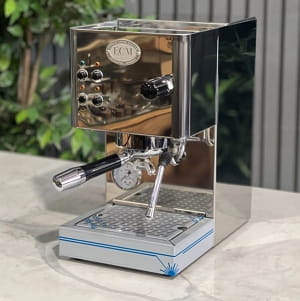
US: typically $899–$1,049 • EU/UK: often €700–€900 (stock & promos vary).
ECM Casa V
A compact stainless single boiler that heats fast, lets you set brew pressure via an easy-access OPV, and delivers classic shots—no screens, just solid mechanics.
Overview
Casa V keeps it classic: 0.4 L insulated brass boiler, ring brew group, front pump gauge, and an adjustable OPV reachable under the cup tray. Brew-ready in ~5–7 min, steam in ~1 min. No PID, no timer, and the wand doubles as hot water—perfect if you prefer a mechanical, repeatable routine over menus.
Pros
- Compact stainless chassis with insulated brass boiler
- Front gauge + easy-access OPV for DIY brew-pressure set
- Quick warm-up; steam ready about a minute after switch
- 58 mm ecosystem for baskets and tools
- Big 2.8 L tank in a narrow case
Cons
- No PID or shot timer (thermostat surfing needed)
- Shared wand for steam & hot water—no separate spout
- Single boiler pace for multiple milk drinks
- Some listings show 0.3 L boiler; most are 0.4 L
Features & Specs
- Type: Single boiler, dual use
- Boiler: ~0.4 L brass, insulated (some listings show 0.3 L)
- Group: Ring group • 58 mm portafilter
- Pump: Vibration • front pump-pressure gauge
- Pressure control: Adjustable OPV under cup tray
- Tank: ~2.8 L removable (top-fill)
- Wand: Multidirectional; also dispenses hot water
- Power: ~1200 W (region dependent)
- Heat-up: Brew-ready ~5–7 min • Steam ~1 min
- Size/Weight: 210 W × 370 D × 380 H mm • ~14 kg
Workflow & Dial-In
- Warm-up: Park the portafilter in the group; run a short blank flush before the first shot.
- Surfing: No PID—pull at a consistent point in the thermostat cycle after a brief rinse.
- OPV set: Use a blind basket and the front gauge; cap start-of-shot around 9–10 bar, then leave it.
- Brew-to-steam: Brew first, switch to steam, purge, texture; then cool back to brew with a short flush.
- Starting recipe: 18 g in → 36 g out in 25–30 s; adjust grind before anything else.
Steaming & Hot Water
Expect calm, dry steam suitable for a 150–200 ml pitcher. Purge after the steam light, add air for a few seconds, then roll to finish. Open the same wand valve in brew mode for hot water (Americanos/rinses).
Maintenance & Water
- Daily: Water backflush at session end; wipe & purge wand every use.
- Weekly: Detergent backflush (3-way valve equipped).
- Scale: Use soft/filtered water; descale on a schedule matched to your water.
Comparisons
- Profitec GO: Adds PID + shot timer; better if you want numeric control.
- Bezzera Hobby: Punchy single boiler; Casa V offers larger 0.4 L boiler and very tidy footprint.
- Rancilio Silvia V6: Heavier, longer warm-up; Casa V heats faster and has easy-access OPV.
- Gaggia Classic Pro: Budget workhorse/mod platform; Casa V is more refined stock.
- Ascaso Steel UNO PID: Thermoblock + PID; faster to temperature, different feel/maintenance.
Pricing & Availability (Nov 2025)
- United States: often under $1,000; some listings ~$1,049.
- EU/UK: broadly €700–€900 (region & promos vary).
- Note: sold in both 110 V and 230 V—confirm voltage/plug.
FAQs
- PID?
- No. Casa V is thermostat-controlled; surf for consistency.
- Shot timer?
- No—use a scale/timer or smartphone.
- OPV access?
- Yes—under the cup tray; set with a blind basket + front gauge.
- Hot water?
- Via the steam wand in brew mode (shared wand).
ECM builds machines that feel like tools, and the Casa V is the compact entry point that still respects proper habits: a stainless single-boiler workflow with a 58 mm ecosystem, a front pressure gauge for honest feedback, and a routine that rewards clean puck prep over menu surfing.
On our bench, Casa V’s buying truth is simple: it is a mechanical daily driver. You set a sane brew-pressure baseline, warm it up properly, and then you dial in the real variables: grind, dose, yield, and puck prep. The reality check is equally straightforward: it is not PID-led, and milk drinks are single-boiler sequencing (brew first, then steam, then cool back down).
Shop the essentials
The small upgrades that make a home coffee setup cleaner, smoother, and more enjoyable to use every day.

Cleaner & Descaler Tablets
Keeps your machine clean, helps prevent buildup, and protects long-term performance.
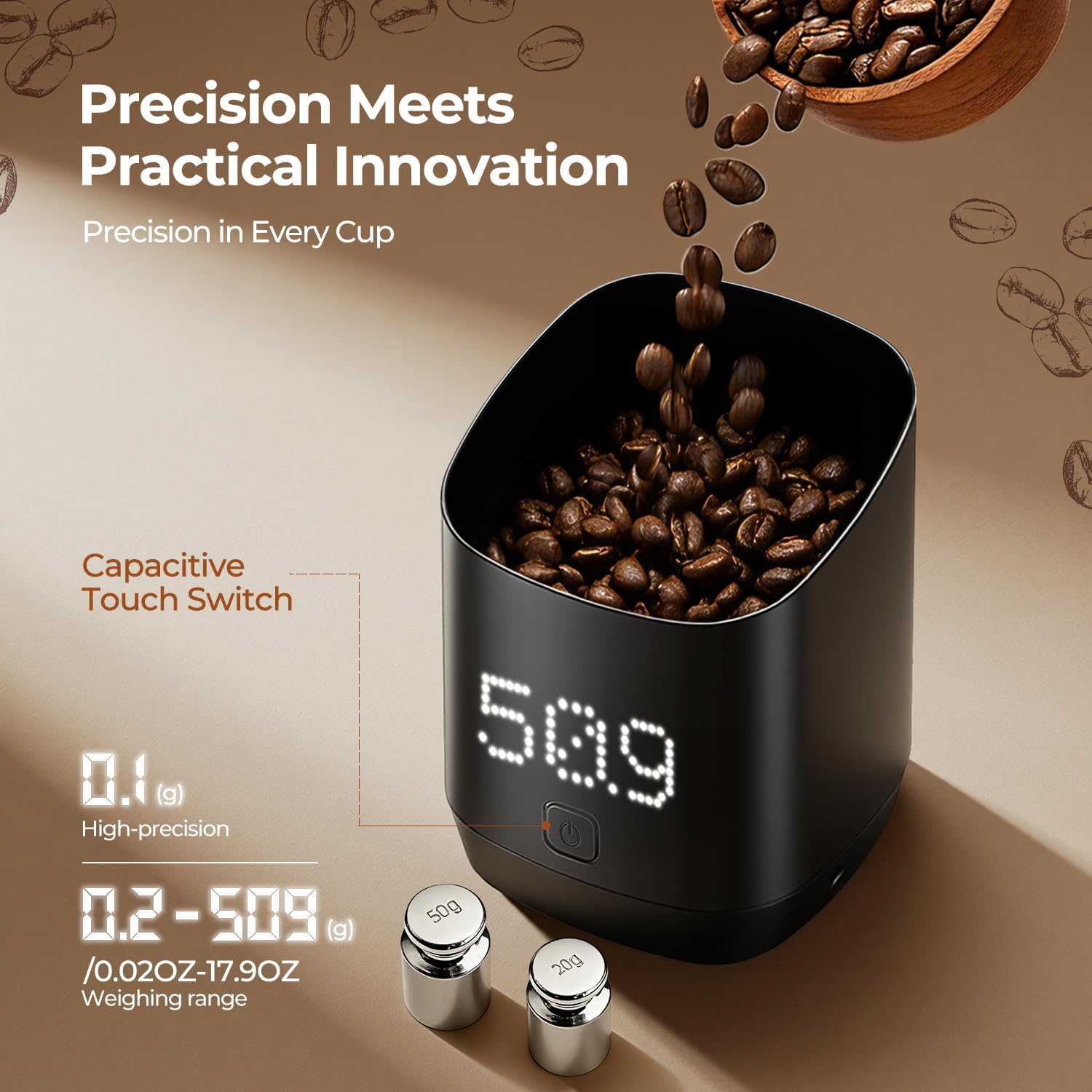
Digital Dosing Cup
Makes weighing beans faster and cleaner, with less mess around the grinder.
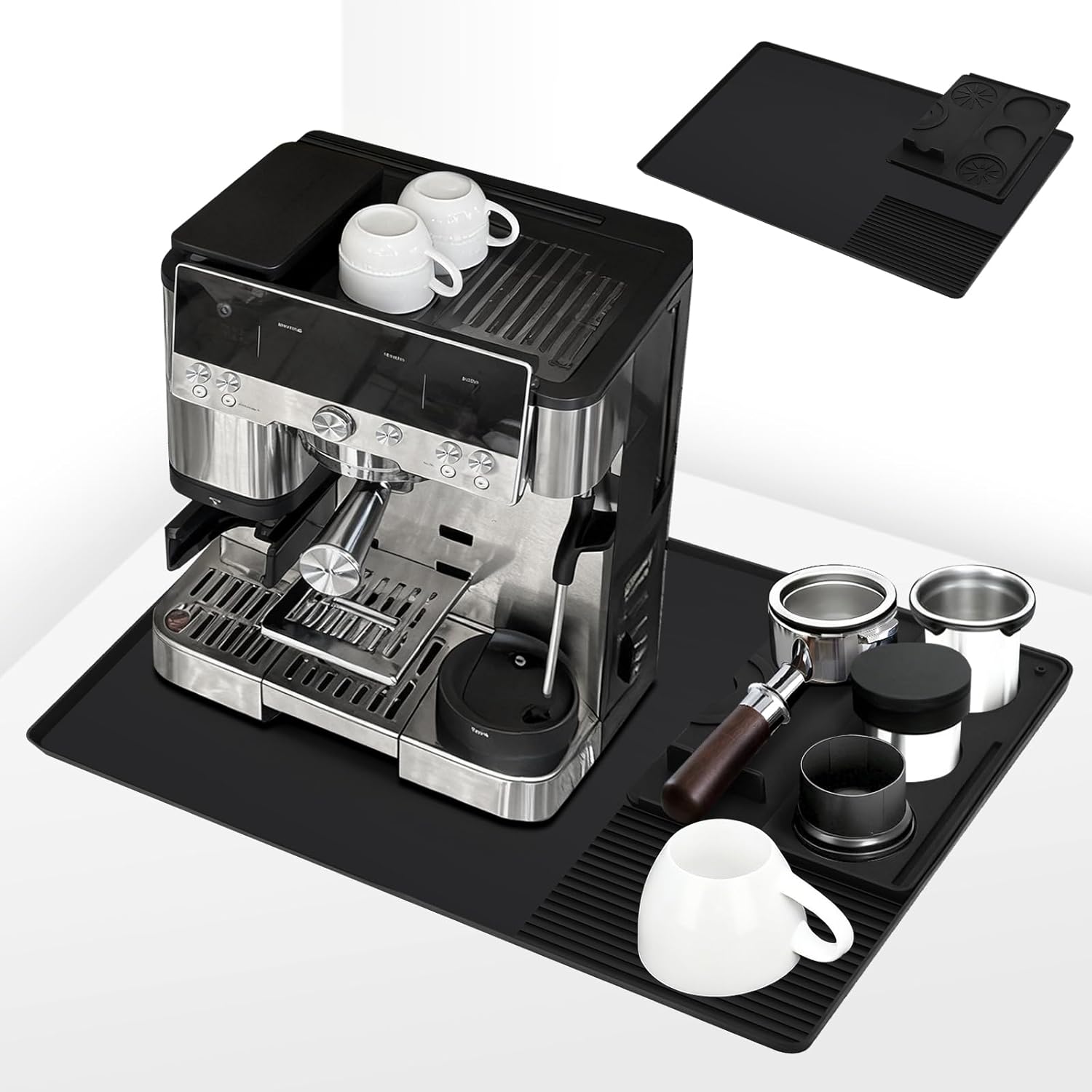
Silicone Mat
Protects your counter, catches spills, and gives your setup a cleaner working surface.

Vacuum Coffee Canister
Helps beans stay fresher longer by limiting air exposure after opening the bag.
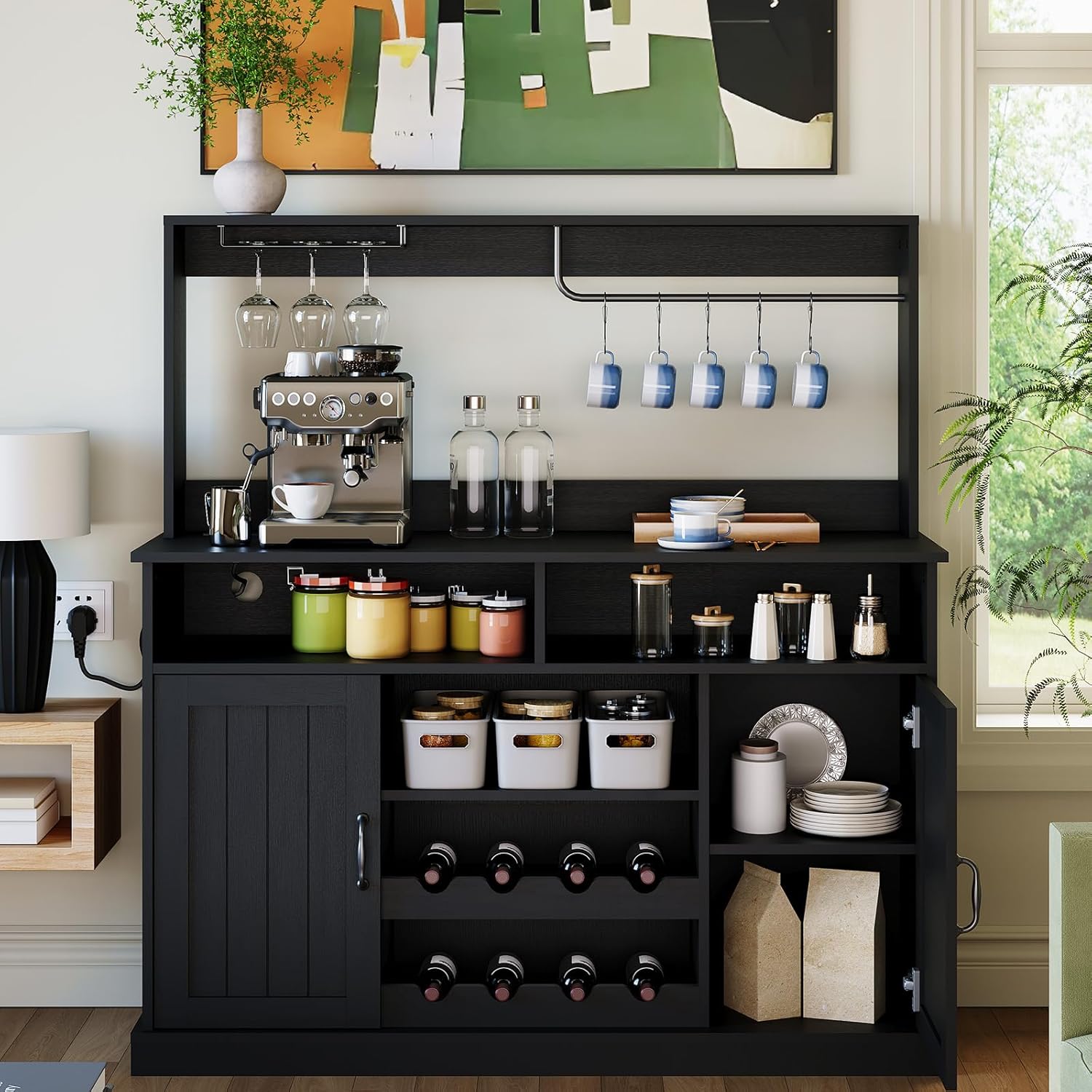
Farmhouse Coffee Bar Cabinet
Gives your machine, cups, beans, and accessories one dedicated home instead of cluttering the kitchen.
For cross-shoppers, we usually frame Casa V against machines that answer different priorities: the Profitec GO if you want PID-led single-boiler repeatability, the Rancilio Silvia V6 if you want the classic single-boiler benchmark ecosystem, and the Gaggia Classic EVO PRO if budget and mod runway matter more than premium finish. If you are espresso-only and never steam, the ECM Puristika is the cleaner ECM lane.
Overview
The ECM Casa V is a compact, stainless, single-boiler machine built for espresso-first owners who want a clean, mechanical workflow. You get a classic 58 mm setup, a front gauge for quick feedback, and an easy-access OPV that makes brew-pressure setting realistic without turning ownership into a full teardown. It skips the modern dashboard: no PID and no shot timer, so temperature management is routine-based and thermostat surfing is part of the deal.
In the ECM lineup, Casa V is the “no screens, solid mechanics” entry point below machines like the ECM Classika PID + Flow Control (more temperature control and upgrade runway) and alongside espresso-only picks like the ECM Puristika (no steam, simpler espresso focus). For milk work, Casa V is a classic single-boiler reality: you sequence brew then steam, and it uses a shared wand for steam and hot water. If you want the ECM look with easier milk cadence, a heat-exchanger step like the ECM Mechanika Slim PID is the typical jump.
Design intent
- Mechanical ownership first: compact stainless chassis and a straightforward single-boiler layout built to be lived with, not navigated.
- Brew-pressure you can actually set: easy-access OPV plus a front gauge for quick dial-in feedback.
- 58 mm workflow: standard baskets and tools, so your prep routine and upgrades stay normal and effective.
- Fast, simple daily sessions: switch-based controls and a small-footprint routine that does not demand menus.
- Serviceable platform: fewer electronics, more conventional parts logic, and predictable wear items over time.
What it gets right in the cup and in cadence
- Classic espresso feel: clean, traditional shots when your grinder and puck prep are disciplined.
- Pressure feedback without fuss: the front gauge helps you spot “too coarse” and “too fine” faster than taste alone.
- Compact daily driver: small footprint, quick to get into a routine, and easy to keep tidy.
- DIY-friendly ownership: brew-pressure adjustment is a real advantage at this level if you like to set-and-hold your baseline.
The deliberate trade-offs
- No PID or shot timer: temperature management is habit-based, and thermostat surfing is part of dialing in.
- Single boiler sequencing: espresso and steam share one boiler, so milk drinks take more steps and more patience.
- Shared steam and hot water wand: no separate spout, so workflow is a little more manual.
- Vibration-pump character: normal noise for the class, louder than rotary-pump machines.
Where it fits
ECM Casa V makes sense if you want a compact single boiler with a premium stainless feel, a front gauge, and an ownership style that stays mechanical and serviceable. If you want more temperature control and a more “set-and-repeat” espresso lane, the Profitec GO and Lelit Anna PL41TEM are common alternatives. If you want the classic single-boiler prosumer ritual with heavier brand history, the Rancilio Silvia V6 is the usual cross-shop. If you want a cheaper entry into the category, the Gaggia Classic EVO PRO is where most people start.
Cross-shop context on Coffeedant: Casa V buyers most often compare against the Profitec GO for a more temperature-managed single-boiler experience, the Rancilio Silvia V6 for classic single-boiler prosumer ownership, the Lelit Anna PL41TEM for PID value, and the ECM Classika PID + Flow Control when they want to stay in the ECM family but move up in control and upgrade runway.
ECM Casa V lineup: which version to buy
The ECM Casa V is effectively a one-platform machine. You are not choosing different espresso capability, you are choosing region voltage/warranty and sometimes a retailer bundle. The buying fork inside ECM is not “Casa V colorways.” It is single boiler convenience vs more control: Casa V (mechanical single boiler) versus an ECM step-up like the ECM Classika PID + Flow Control (more temperature control and upgrade runway), or an espresso-only sibling like the ECM Puristika (no steaming, simpler espresso focus).
| Version | Lineup slot | Compared to Casa V | Typical price and note |
|---|---|---|---|
|
ECM Casa V
Reference Single boiler · front gauge · easy-access OPV |
Safest default | The point of the machine: compact stainless build, classic 58 mm workflow, and real DIY-friendly brew-pressure adjustment. No PID and no shot timer, so you run it by routine and thermostat cadence. | Typical price: $899.95 · Coffeedant score |
| EU/UK 230V vs US 110–120V | Region buy | Same espresso capability, different electrical and warranty lane. Imports only make sense when you have a real plan for voltage and service support. | Warranty coverage is the real “price” • avoid casual imports |
| Open-box / refurbished | Value lane | Same machine, better buy if it comes with a real warranty and fresh wear parts. Prioritize a reputable seller over chasing the lowest price. | Pricing varies • confirm warranty term and included accessories |
| Bundle variants (tools / baskets) | Convenience kit | Bundles change convenience, not cup potential. Buy the bundle only if you would purchase the included accessories anyway. | Pricing varies by retailer • confirm baskets and tamper quality |
How to read this: buy Casa V in your region from a seller that supports parts and warranty. After that, spend your energy on grinder quality and water discipline, not on hunting “special” trims that do not change the espresso engine.
Key ECM Casa V Specifications
| Item | Detail |
|---|---|
| Machine | ECM Casa V · Model page · Cross-shops: Profitec GO, Rancilio Silvia V6, Lelit Anna, Gaggia Classic EVO PRO, ECM Puristika, ECM Classika PID + Flow Control, ECM Mechanika Slim PID |
| Machine type | Semi-automatic single boiler (dual-use brew + steam) |
| Group / portafilter | Ring brew group · 58 mm ecosystem |
| Boiler | Approx. 0.4 L brass boiler (insulated in many listings) · single-boiler dual-use workflow |
| Pump | Vibration pump |
| Pressure tools | Front pump-pressure gauge · easy-access OPV/expansion valve under the cup tray for brew-pressure setting |
| Steam / hot water | Single multi-directional wand used for steam and hot water (no separate hot-water spout) |
| Water reservoir | Approx. 2.8 L reservoir |
| Dimensions / weight | Approx. 210 × 370 × 380 mm (W × D × H) · approx. 14 kg |
| Warm-up (typical) | Brew-ready in about 5–7 minutes · steam-ready in about ~1 minute after switching modes |
| Coffeedant score | Overall rating |
| Typical price | $899.95 |
First Impressions & Build Quality
The Casa V reads like a small tool, not a gadget. Stainless panels, tight tolerances, and a classic face that stays out of your way. The two user-facing details that actually matter are the front gauge and the easy-access OPV. That combo makes brew-pressure setting practical for normal owners, not just people who like removing covers.
What’s in the Box
- ECM Casa V espresso machine
- 58 mm portafilter (typically double spout)
- Filter baskets (commonly single and double)
- Blind basket (often included for cleaning routines)
- Basic tamper (quality varies) and a cleaning brush
- User documentation and warranty information
Bundles vary by retailer and region. Confirm inclusions if you are buying open-box or refurbished.
Chassis and internals
This is a conventional single-boiler platform with familiar parts logic: vibration pump, straightforward plumbing, and standard 58 mm wear items. Long-term ownership is mostly water management and simple maintenance. If you keep scale under control and keep the group clean, the machine stays predictable.
Controls and touch points
Casa V is intentionally minimal. There is no PID and no shot timer, so you learn its thermostat cadence and run a repeatable routine. The gauge makes diagnosis faster, and the OPV access makes it easy to set a sane brew-pressure baseline and leave it there.
Counter fit
| Item | Detail | Why it matters |
|---|---|---|
| Width | About 210 mm | Small footprint for a 58 mm machine. Leaves room for a grinder. |
| Height | About 380 mm | Check cabinet clearance for cup tray access and easy water refills. |
| Depth | About 370 mm | Plan space behind the machine for cord routing and cleaning access. |
| Weight | About 14 kg | Stable on the counter without feeling like a tank. |
| Noise profile | Vibration pump | Normal pump note for the category. Tray and cup rattle can make it sound louder. |
| Milk workflow | Single boiler sequencing | Espresso first, then steam. Fine for occasional milk drinks, slower for back-to-back lattes. |
| Water reality | ~2.8 L reservoir | Your water plan decides taste and maintenance costs over time. |
Testing Results
Testing focused on what makes (or breaks) a single-boiler routine: warm-up behavior, thermostat cadence, baseline shot repeatability, and whether steam is usable for real “one milk drink at a time” home sessions.
| Metric | Result | Use note |
|---|---|---|
| Warm-up to brew-ready (typical) | ~5–7 minutes | For better first-shot consistency, let the portafilter heat in place and run a brief warming flush. |
| Steam readiness after switching | ~1 minute (typical) | Single boiler means sequencing. Steam one pitcher, then return to brew mode and do a short cooling flush. |
| Brew-pressure setting | Easy-access OPV under cup tray | Set a sane baseline once, then dial by taste with grind and yield. Do not chase pressure before puck prep. |
| Baseline espresso target | 18 g in → 36 g out in 27–32 s (starting point) | Hold dose and yield steady, adjust grind to land time, then fine-tune for flavor. |
| Milk reality | Best for 1 milk drink at a time | Purge for dry steam, stretch briefly, then roll. Expect recovery pauses if you do multiple drinks. |
| Drink | Starting point | When to change it |
|---|---|---|
| Espresso (medium blend) | 18 g in → 36 g out · 27–32 s · thermostat-timed routine | If thin: grind finer. If sharp: shorten yield and keep timing consistent. |
| Light roast espresso | 18.5 g in → 40–45 g out · low-30s | If sour: tighten grind and keep yield steady. If dry: cut the tail earlier. |
| Cappuccino / Latte (occasional) | Brew first → switch to steam → purge → stretch briefly → roll | If bubbly: stretch less and start colder. If flat: stretch slightly more early, then roll cleanly. |
Key takeaways from testing
- It is an espresso-first single boiler: compact, fast to brew-ready, and best when milk is occasional rather than constant.
- The gauge + OPV access matter: pressure setting is practical, and feedback is clear while dialing in.
- No PID means routine wins: run it the same way every session and it stays predictable.
- Steam is capable but sequenced: one pitcher is fine, back-to-back milk drinks take patience.
Espresso Quality: getting the best out of the ECM Casa V
The ECM Casa V is a single-boiler machine that rewards repeatable habits, not button-driven precision. You do not get a PID or a shot timer. What you do get is a very “honest” espresso platform with a front gauge and an easy-access OPV, so you can set a sane brew-pressure baseline and focus on the variables that actually move taste: grind, dose, yield, time, and (because it is thermostat-controlled) your temperature timing.
Session protocol that keeps results consistent
- Warm the group properly: lock the portafilter in during heat-up and run a short warming flush before your first shot.
- Choose a repeatable “brew moment”: pick one point in the thermostat cycle and stick to it. Consistency beats guessing.
- Set one baseline recipe: start at a 1:2 ratio for medium roasts and hold yield steady while you adjust grind.
- Change one variable at a time: grind first, then yield. Only then adjust your brew timing routine for temperature.
- Use the gauge as feedback: low, fast shots usually mean too coarse. High, stalling shots usually mean too fine or overdosed.
Flavor targets by coffee style
| Coffee | Baseline recipe (Casa V) | What it tastes like when right | If too sour / thin | If too bitter / dry |
|---|---|---|---|---|
| Medium espresso blend |
Dose 18 g → Yield 36 g in 27–32 s Brew with a consistent thermostat-timed routine |
Round chocolate, steady sweetness, clean finish | Go finer or tighten yield slightly; confirm your brew timing is not too cool | Go coarser or shorten yield; avoid brewing “too hot” after long idle without a brief stabilizing flush |
| Light roast espresso |
Dose 18.5 g → Yield 40–45 g in 30–40 s Use a slightly hotter, consistent brew timing routine |
Clear sweetness, brighter acidity without bite | Go finer, keep yield steady, and verify you are not under-heating the brew moment | Go coarser or cut the tail earlier; do not push long yields when it tastes drying |
| Decaf |
Dose 18 g → Yield 36–40 g in 26–32 s Keep the brew moment consistent and avoid long pulls |
Caramel sweetness, softer finish, less bite | Go finer and keep yield closer to 1:2; decaf often needs tighter flow | Go coarser or shorten yield; decaf turns dry quickly when over-extracted |
Temperature timing and brew pressure: use them like tools
- Temperature timing: this is your “PID.” Pick a repeatable routine and keep it the same across sessions.
- OPV baseline: set brew pressure once using the easy-access OPV, then stop chasing pressure and dial by taste.
- Gauge literacy: low pressure with fast flow usually means too coarse. High pressure with drips usually means too fine or overdosed.
- Volume discipline: fix taste with grind and ratio before you chase new routines.
Diagnostics you can see and taste
| Signal | Likely cause | Targeted fix |
|---|---|---|
| Fast shot, low gauge reading, thin body | Grind too coarse, under-dosed basket, weak distribution | Go finer; verify dose; improve distribution and level tamp |
| Slow drips, high gauge reading, harsh dryness | Grind too fine, overdosed basket, puck choking | Go coarser; reduce dose slightly; shorten yield |
| Spritzing or sudden blonding early | Channeling from uneven prep or rim gaps | Improve distribution; tamp level; clean basket rim and shower area |
| “Good yesterday, weird today” | Thermostat timing changed, idle time changed, beans aged, grinder drift | Return to baseline recipe and brew timing; purge stale grinds; adjust one variable only |
Keep variance low
- Use a consistent puck routine (WDT if needed, level tamp, dry basket). This machine rewards discipline.
- Log dose, yield, time, and your brew timing routine. Repeatability is how you get “PID-like” results without a PID.
- Keep water in a sane range (roughly 40–80 ppm hardness with balanced alkalinity) to protect taste and reduce scale-driven drift.
Milk System: Casa V steaming workflow, texture, and consistency
The ECM Casa V is a single-boiler machine, so milk is a sequence, not a parallel workflow. You pull espresso first, then switch to steam, purge for dry steam, texture one pitcher, and then cool the boiler back down before brewing again. It is a solid “one milk drink at a time” routine, not a back-to-back latte machine.
Technique targets that make latte texture repeatable
- Switch to steam and wait: give the boiler time to reach steam readiness, then purge briefly to clear condensation.
- Stretch briefly: add air early for a few seconds, then stop adding air before bubbles get coarse.
- Roll to finish: build a stable vortex and finish around 60–65°C for sweetness.
- Wipe and purge: wipe immediately, then purge again. This is non-negotiable for hygiene and performance.
- Return to brew mode and cool down: after steaming, run water through the wand until the boiler returns to brew range.
Milk volume and real-world timing
| Milk volume | Target drink | Typical steam time | Tip |
|---|---|---|---|
| 180–220 ml (from cold) | 6–8 oz cappuccino / flat white | 30–55 s (technique dependent) | Start colder, stretch briefly, then roll. Single-boiler steam rewards patience. |
| 250–350 ml | 10–14 oz latte | 45–75 s | If it feels slow, do one pitcher per heat-up and keep purges short. |
Texture targets by drink
| Drink | Milk volume | Target texture | Notes |
|---|---|---|---|
| Cappuccino | 150–220 ml | Glossy microfoam, slightly more lift | Stretch a touch longer, then roll tight to avoid dry foam. |
| Latte | 250–350 ml | Paint-like microfoam, minimal bubbles | Shorter stretch, more rolling. Do not chase “big steam,” chase control. |
| Flat white | 160–220 ml | Low-foam, high gloss | Very short stretch, finish closer to 60°C for sweetness. |
Keep milk performance sharp
- Wipe and purge every time. Milk residue bakes on fast and kills texture.
- Keep purges short. Long purges waste pressure and slow the pitcher.
- Plan your sequence: espresso first, then steam, then cool down before the next shot.
Hardware Essentials
Boiler, heating, and water system
Casa V is a single-boiler design, so the boiler does double duty for brewing and steaming. The practical result is straightforward: espresso-first performance with a sequenced milk workflow. Water quality still decides taste and longevity, especially on single boilers where scale can show up as slower recovery and drifting results.
- Daily win: compact, simple heat-up, and easy routine once your timing is trained.
- Water discipline: treat water as an ingredient and a maintenance plan, not an afterthought.
Pump pressure, OPV access, and what you can actually control
Casa V uses a vibration pump with a front pump-pressure gauge, plus an easy-access OPV under the cup tray. That combination matters because it makes pressure setting practical. Set a sane baseline once, then dial shots by grind, ratio, and taste.
- Best practice: set OPV, then stop chasing pressure. Recipe and prep do the real work.
- Gauge as diagnosis: use it to confirm “too coarse” vs “too fine,” then adjust grind before anything else.
Group, baskets, and 58 mm ecosystem
Casa V runs a standard 58 mm workflow, so baskets, tampers, WDT tools, and bottomless portafilters are easy upgrades. This platform rewards clean distribution and level tamping more than most new owners expect.
Steam and hot water hardware
The machine uses a shared wand for steam and hot water. It is functional and simple, but it reinforces the single-boiler rhythm: brew first, steam second, then cool down before brewing again.
Accessories that actually improve results
- Espresso scale (0.1 g): your fastest consistency upgrade.
- 58.5 mm tamper: improves level tamping and edge seal.
- WDT tool (0.3–0.4 mm): reduces channeling with modern grinders.
- Precision basket (18 g or 20 g): tighter geometry improves repeatability.
- Milk pitcher + thermometer: until your texture and temperature timing is locked in.
- Water plan: hardness test plus filtration or remineralized water in a scale-safe range.
| Component | Spec | Use note |
|---|---|---|
| Platform | Single boiler · 58 mm | Run a repeatable temperature timing routine, then dial with grind and yield. |
| Pressure tools | Front gauge + easy-access OPV | Set a sane baseline once, then focus on puck prep and recipe. |
| Pump | Vibration pump | Normal sound profile for the class. Control rattle to reduce perceived noise. |
| Milk workflow | Single boiler sequencing | Best for occasional milk drinks, slower for repeated lattes. |
| Steam / hot water | Shared wand | Wipe and purge every time. Cool down after steaming before brewing again. |
| Water | Tank machine | Water quality decides taste and scale risk over time. |
ECM Casa V vs The Field: Quick Matrix
| Match-up | Core difference | Best for | Jump to section | Model page |
|---|---|---|---|---|
| Casa V vs Profitec GO | Mechanical simplicity with gauge + easy OPV access vs PID-led precision with a built-in shot timer | Casa V for “no screens” ownership; GO for temperature-managed repeatability | Open | Profitec GO |
| Casa V vs Rancilio Silvia V6 | Compact ECM footprint with gauge + easy brew-pressure setting vs the classic 58 mm benchmark with a huge service ecosystem | Casa V for compact tool-first daily use; Silvia for long-haul community support and upgrades | Open | Rancilio Silvia V6 |
| Casa V vs Lelit Anna PL41TEM | 58 mm + gauge and ECM stainless feel vs PID value with a smaller 57 mm ecosystem | Casa V for 58 mm accessory runway; Anna for compact PID value | Open | Lelit Anna PL41TEM |
| Casa V vs Gaggia Classic EVO PRO | Premium out-of-box finish + gauge and easy OPV vs budget 58 mm platform with a strong mod path | Casa V for “set a baseline and brew”; Gaggia for budget buyers who like upgrades | Open | Gaggia Classic EVO PRO |
| Casa V vs ECM Puristika | Single boiler with steam capability vs espresso-only E61 with PID and no steam or hot-water service | Casa V for occasional milk drinks; Puristika for espresso-only households | Open | ECM Puristika |
| Casa V vs ECM Classika PID + Flow Control | Simple mechanical single boiler vs E61 espresso-first single boiler with PID, shot timer, and optional flow profiling | Casa V for minimal ownership; Classika for control and upgrade runway | Open | ECM Classika PID + Flow Control |
ECM Casa V vs Profitec GO
This is the cleanest “how do you like to drive” split in compact single boilers. Casa V is mechanical and simple: no PID, no timer, just a compact stainless chassis with a front gauge and easy-access OPV so you can set brew pressure without a full teardown. Profitec GO is number-driven: true PID control and a built-in shot timer make daily repeatability easier. Both still live in single-boiler reality for milk drinks, so you sequence brew then steam.
Core differences
- Control style: GO is PID-led; Casa V is routine-led thermostat control.
- Feedback: both give you useful visibility, but Casa V’s gauge + OPV access is the “set and hold” advantage.
- Daily friction: GO is easier for new owners who want temperatures and timing on display.
| Aspect | ECM Casa V | Profitec GO |
|---|---|---|
| Best fit | Owners who want “no screens” and a simple mechanical routine | Owners who want PID repeatability and a built-in shot timer |
| Daily feel | Set brew pressure once, then dial by grind, yield, and timing routine | Set temps on the PID, time on the display, repeat more easily session to session |
| Trade-off | No PID or timer, so consistency is habit-driven | No hot-water tap and still single-boiler sequencing for milk |
Who should choose which
- Pick Casa V if you want a compact stainless machine with mechanical simplicity and practical brew-pressure setting.
- Pick Profitec GO if you want PID-led temperature control and a timer to reduce guesswork.
ECM Casa V vs Rancilio Silvia V6
Both are “real espresso” single boilers with long service lives when water is sane and maintenance is steady. Casa V wins on compactness and practical ownership touches like the front gauge and easy-access OPV. Silvia V6 is the benchmark first serious machine with a huge parts and community ecosystem and a well-known upgrade path. The big shared truth: without PID, both reward routine and temperature surfing discipline.
Core differences
- Ownership feel: Casa V is “compact ECM tool”; Silvia is “classic benchmark platform.”
- Pressure setting: Casa V makes brew-pressure adjustment easier for normal owners.
- Upgrade runway: Silvia’s ecosystem and long history make upgrades and service straightforward.
| Aspect | ECM Casa V | Rancilio Silvia V6 |
|---|---|---|
| Best fit | Small counters, simple routine, easy pressure baseline | Owners who want a proven platform with a deep service and upgrade ecosystem |
| Daily feel | Gauge-led feedback, “set pressure then dial by taste” | Classic single-boiler ritual with a long-haul ownership reputation |
| Trade-off | No PID or timer | Single-boiler milk cadence is slower, and temperature surfing is part of the workflow |
Who should choose which
- Pick Casa V if compact footprint and practical pressure setting are your priorities.
- Pick Silvia V6 if you want the classic benchmark with the broadest long-term support lane.
ECM Casa V vs Lelit Anna PL41TEM
This match-up is about how much you value PID control versus a 58 mm accessory ecosystem and a mechanical, gauge-led workflow. Lelit Anna PL41TEM is compact PID value and a great teacher of real espresso technique, but it uses a 57 mm ecosystem that is smaller than standard 58 mm. Casa V trades PID for stainless build feel, a front gauge, and easy brew-pressure setting via OPV access.
Core differences
- Temperature management: Anna’s PID reduces surfing; Casa V is routine-led.
- Accessory runway: Casa V runs standard 58 mm; Anna’s 57 mm ecosystem takes more searching.
- Buying logic: choose Anna for PID value, choose Casa V for 58 mm compatibility and mechanical simplicity.
| Aspect | ECM Casa V | Lelit Anna PL41TEM |
|---|---|---|
| Best fit | Owners who want 58 mm tools and a simple mechanical routine | Budget-conscious buyers who want PID control in a compact box |
| Daily feel | Gauge feedback and “set pressure then dial by taste” | More temperature repeatability thanks to PID once warmed |
| Trade-off | No PID or timer | 57 mm ecosystem is smaller than 58 mm |
Who should choose which
- Pick Casa V if you want 58 mm compatibility and a mechanical ownership style.
- Pick Lelit Anna PL41TEM if PID control and price are the priority and you are fine with a smaller accessory ecosystem.
ECM Casa V vs Gaggia Classic EVO PRO
This is “buy a nicer tool now” versus “buy a platform and grow it.” Gaggia Classic EVO PRO is the starter machine you will not outgrow because it has a real 58 mm workflow and an easy upgrade path. Casa V is the more premium out-of-box experience: stainless feel, gauge feedback, and easy OPV access for brew-pressure setting. Both are single boilers, so neither is a fast multi-latte machine.
Core differences
- Price tier: Gaggia is the value entry; Casa V is the premium compact single-boiler lane.
- Ownership style: Gaggia rewards mods; Casa V rewards a clean mechanical routine with better out-of-box refinement.
- Buying logic: buy Gaggia for budget and upgrades, buy Casa V when you want the nicer daily tool now.
| Aspect | ECM Casa V | Gaggia Classic EVO PRO |
|---|---|---|
| Best fit | Owners who want a premium-feeling compact machine with gauge feedback | Budget buyers who want 58 mm and a strong upgrade path |
| Daily feel | Set pressure baseline, run a disciplined routine, keep it simple | Great starter workflow with lots of room to improve via upgrades |
| Trade-off | No PID or timer | Warm-up to brew-stable is longer than many owners expect |
Who should choose which
- Pick Casa V if you want the more refined out-of-box experience and a gauge-led routine.
- Pick Gaggia Classic EVO PRO if budget matters and you like the idea of upgrading over time.
ECM Casa V vs ECM Puristika
Same brand, very different intent. Casa V is a compact stainless single boiler that can brew and steam (sequenced) and keeps ownership simple. ECM Puristika is espresso-only: an E61 platform with a PID you actually use, a front pump-pressure gauge, and an external reservoir, traded for no steam or hot-water service. If you never make milk drinks, Puristika is the cleaner espresso-first answer. If you want any milk capability at all, Casa V is the practical pick.
Core differences
- Milk reality: Puristika has none. Casa V can steam, but it is a single-boiler sequence.
- Control layer: Puristika brings PID control (and a timer in many listings); Casa V stays mechanical.
- Platform feel: Puristika is E61 and rewards heat soak; Casa V is faster and simpler day to day.
| Aspect | ECM Casa V | ECM Puristika |
|---|---|---|
| Best fit | Espresso-first owners who still want occasional milk capability | Espresso-only households who want E61 feel with PID repeatability |
| Daily feel | Simple mechanics, gauge feedback, minimal UI | E61 ritual with PID and a clearer “set and repeat” temperature lane |
| Trade-off | No PID or timer | No steam or hot-water service |
Who should choose which
- Pick Casa V if you want the option to steam milk sometimes and keep ownership simple.
- Pick Puristika if you only drink espresso and you want E61 + PID repeatability.
ECM Casa V vs ECM Classika PID + Flow Control
This is the ECM “stay simple” versus “move up in control” decision. Casa V is the compact mechanical single boiler: quick heat-up, no screens, and a practical brew-pressure baseline via easy OPV access. ECM Classika PID + Flow Control is espresso-first E61 with precise PID temperature, a built-in shot timer, a front pressure gauge, and optional flow profiling via ECM’s flow profile valve. Both are still single-boiler machines, so multi-milk-drink service remains sequenced.
Core differences
- Control and repeatability: Classika brings PID and timer; Casa V is routine-led.
- Platform: Classika is E61 and benefits from heat soak; Casa V is simpler and faster to live with.
- Upgrade runway: Classika has optional flow profiling. Casa V is intentionally minimal.
| Aspect | ECM Casa V | ECM Classika PID + Flow Control |
|---|---|---|
| Best fit | Buyers who want mechanical simplicity at a lower buy-in | Espresso-first owners who want PID precision and optional flow profiling |
| Daily feel | No screens, fast routine, gauge feedback | E61 ritual with clear temperature control and “glanceable” feedback |
| Trade-off | No PID or timer | Higher price and E61 warm-up habits |
Who should choose which
- Pick Casa V if you want compact simplicity and you are happy to drive consistency with routine.
- Pick Classika PID + Flow Control if you want tighter temperature control and a clear upgrade runway inside ECM.
How to use this matrix: If you want a compact stainless single boiler with gauge feedback and a mechanical workflow, Casa V is the clean pick. If you want PID-led repeatability, Profitec GO and Lelit Anna PL41TEM are the direct alternatives. If you want the budget 58 mm platform and an upgrade path, Gaggia Classic EVO PRO is the value lane. If you are espresso-only, Puristika is the cleaner ECM answer. If you want to stay in ECM and move up in control, Classika PID + Flow Control is the step-up.
In-Depth Analysis
The ECM Casa V is a compact stainless single-boiler built around solid mechanics, not a screen. The two features that matter in real ownership are the front pressure gauge and the easy-access OPV, which lets you set a sensible brew-pressure baseline without turning the machine into a teardown project. The trade-offs are the honest ones: no PID, no shot timer, and single-boiler sequencing for milk drinks.
1) Why it works for real home routines: compact, mechanical, and easy to “set right”
Casa V is a good daily machine because it is not asking you to manage menus. You warm it up, you run a consistent brew-timing routine, and you dial with grind and yield. Once brew pressure is set via the OPV, the machine stops being mysterious and starts being repeatable.
- What you feel: a compact stainless tool that behaves predictably when your habits are consistent.
- What it changes: easy brew-pressure baseline setting, plus gauge feedback that speeds up dial-in.
- What it does not do: PID-led temperature precision or fast multi-latte service.
2) The three tools that matter: warm-up, brew timing, and a pressure baseline
With a thermostat-controlled single boiler, the “control layer” is your routine. Warm-up stabilizes the group and portafilter. Brew timing keeps temperature behavior consistent. The OPV sets your pressure ceiling so you are not chasing weird extractions.
| Tool | What it solves | How to use it well |
|---|---|---|
| Full warm-up | Reduces “first shot is off” behavior | Lock the portafilter in during heat-up and run a short warming flush before the first shot |
| Repeatable brew timing | Stabilizes thermostat variability | Pick one consistent “brew moment” in your routine and repeat it session to session |
| OPV pressure baseline + gauge | Prevents over-pressure chaos and speeds diagnosis | Set pressure once, then dial by grind and yield while using the gauge as feedback |
3) Espresso consistency: what to expect in practice
Casa V can pull sweet, classic espresso when your grinder is capable and your puck prep is clean. Because there is no PID, day-to-day consistency is mostly about holding dose and yield steady, dialing grind, and keeping your warm-up and brew timing routine the same.
- Shot character: classic body and sweetness on medium roasts, with a clean lane for milk drinks.
- Consistency win: gauge feedback + pressure baseline makes it easier to stay in a sane extraction range.
- Where single boilers bite: inconsistent brew timing and under-heated portafilters.
4) Milk performance: functional, but sequenced
Casa V can steam milk, but it is single-boiler reality: brew first, switch to steam, steam one pitcher, then cool down to brew again. If you make one cappuccino a day, it is a fine routine. If you want back-to-back lattes, a larger steam system is a better fit.
5) Warm-up reality: “ready” vs truly stable
Like most compact single boilers, the machine can feel ready before the group and portafilter are fully heat-soaked. The practical fix is simple: lock in the portafilter during warm-up and run a short flush before your first shot. That one habit tightens your first-cup repeatability.
6) Water and scale: taste insurance plus machine protection
Water quality decides long-term ownership costs. Scale shows up as slower recovery, drifting results, and valve issues. If your water is hard, fix the water first with filtration or treated water, then keep a steady maintenance rhythm.
- Target idea: water that tastes good and is scale-safe for espresso machines.
- Routine: test hardness, pick a plan, and stick to it.
- Milk note: scale hits the steam and hot-water path too, not just espresso flow.
7) Serviceability and ownership: simple wear parts, predictable chores
Casa V stays serviceable because it is not electronics-heavy. Most problems are normal wear items and water issues, not mystery failures. If you stay ahead of gaskets, keep the shower area clean, and use sane water, the machine stays stable.
- Normal wear: group gasket, shower screen, steam tip cleanliness, and valve seals.
- Pressure sanity: OPV access makes it easy to keep brew pressure in a healthy lane.
- Practical advice: buy from a seller that supports parts and warranty in your region.
8) Cross-shop logic: where it fits against what people actually buy
Casa V wins when you want a compact stainless single boiler with gauge feedback and a mechanical workflow. If you want more temperature control or faster milk cadence, the better answer changes.
| If you want... | Cross-shop | Why |
|---|---|---|
| PID-led single-boiler repeatability | Profitec GO | PID temperature control and built-in shot timing reduce surfing and make daily repeatability easier |
| The classic single-boiler benchmark ecosystem | Rancilio Silvia V6 | Huge community support and a well-known long-term service and upgrade lane |
| Compact PID value (smaller accessory ecosystem) | Lelit Anna PL41TEM | Compact PID value, traded for a smaller accessory lane than standard 58 mm |
| Budget 58 mm platform with a mod path | Gaggia Classic EVO PRO | Value entry into 58 mm with strong upgrade potential over time |
| Espresso-only ECM ownership | ECM Puristika | Espresso-first focus with no steam or hot-water service, for households that never need milk |
| More ECM control and upgrade runway | ECM Classika PID + Flow Control | PID precision plus an upgrade lane, traded for higher cost and more ritual |
Editorial placement: keep pressure baseline and gauge literacy near Espresso Performance, place milk sequencing near Milk, and put water and scale near Maintenance so readers tie taste and longevity to water discipline.
ECM Casa V - frequently asked questions
Fast answers to the questions people ask before they commit to a compact single-boiler routine.
Is the ECM Casa V worth it?
Yes if you want a compact stainless single boiler with a simple mechanical workflow and useful feedback. The front gauge and easy OPV access make it easier to set a sane brew-pressure baseline, then dial in by grind and yield. If you want PID-led temperature precision, cross-shop the Profitec GO.
Does the Casa V have a PID or shot timer?
No. It is thermostat-controlled, so consistency comes from warm-up discipline, repeatable brew timing, and a stable recipe. A scale and a simple timer are the quickest upgrades for repeatability.
What is the advantage of the pressure gauge and OPV access?
The gauge gives live feedback during extraction, and the easy-access OPV lets you set brew pressure once without a full teardown. After that, you dial in with grind and yield instead of chasing pressure.
Is the Casa V good for milk drinks?
It can steam milk, but it is a single-boiler sequence: brew first, then steam, then cool down before brewing again. It is best for occasional milk drinks rather than repeated lattes back to back.
Can I plumb it in?
Casa V is a reservoir machine. Plan a water strategy you can repeat, because water quality decides taste and scale risk.
How often should I clean and backflush?
Build three rhythms: quick water backflushes to keep the group clean, detergent backflushes on a schedule that matches usage, and wipe and purge the wand after every milk session. Replace the group gasket when you see drips or when it stiffens.
Do I need to descale?
Only when needed. Use scale-safe water, test hardness, and monitor performance. Fix the water first, then descale only when symptoms and your water plan justify it.
Is it noisy?
It uses a vibration pump, so it is louder than rotary-pump machines. The biggest practical improvement is reducing tray and cup rattle and using a mat if your counter resonates.
Used & Refurbished Buyer’s Guide
A used ECM Casa V can be a strong buy because the platform is mechanical and serviceable. The two risks to take seriously are scale (restricted flow, valve issues, temperature weirdness) and neglected maintenance (dirty group, worn gaskets, leaky valves). The good news is that most red flags show up quickly in a basic heat-up, brew, and steam test.
| Inspect | What to check | Pass criteria |
|---|---|---|
| Heat-up behavior | Power on, let it heat, run a short flush, then pull a shot. | Normal heat-up, stable behavior, no repeated tripping or erratic cycling signs. |
| Grouphead sealing | Lock in portafilter, run a brief flush, inspect the rim for drips. | No steady drip around the gasket area. Minor wear is normal, but constant leakage needs parts. |
| Extraction feedback | Pull a shot and watch gauge behavior and flow. | Pressure rises smoothly and the shot behaves normally once dialed. No wild surging. |
| Steam and wand function | Switch to steam, purge briefly, steam water for 5 to 8 seconds, then close the valve. | Steam is reasonably dry after purge and the valve closes without persistent dripping. |
| Hot water function | Run hot water briefly through the wand. | Normal flow, no heavy sputter beyond initial purge. |
| Scale history | Ask what water was used and whether hardness was tested. | A credible water story. Hard tap water with no plan is a pricing lever, not a bonus. |
| Pump sound | Listen during flush and shot. | Normal vibration-pump tone, not stalling, not grinding. |
| Accessories | Confirm portafilter, baskets, drip tray, reservoir parts, manuals. | Complete kit, or the price reflects replacements. |
Refurb units should include a store-backed warranty and fresh wear parts where needed (group gasket, shower screen, valve seals as applicable).
Accessories & Upgrades
Casa V is a 58 mm workflow machine. Spend on tools that make prep measurable and repeatable, and protect the boiler with good water. Convenience upgrades come after fundamentals.
| Category | What to buy | Why it helps |
|---|---|---|
| Grinder | A capable espresso grinder (stepless or fine-stepped) | Biggest jump in flavor and repeatability. The machine can only extract what the grind allows. |
| Shot control | Scale (0.1 g) + a simple shot timer | Locks dose and yield and makes thermostat-timed brewing repeatable. |
| 58 mm prep | 58.5 mm tamper + optional WDT tool | Reduces channeling and stabilizes extractions, especially with modern grinders. |
| Baskets | Precision basket matched to your dose (optional) | Tighter geometry improves repeatability and gives you a clearer dial-in lane. |
| Cleaning | Blind basket + espresso detergent + group brush | Keeps the group tasting clean and prevents oil buildup that flattens flavor. |
| Water strategy | Hardness test + filtration or treated water plan | Prevents scale and protects valves and boiler performance. |
| Milk tools | Milk pitcher + thermometer (until your timing is locked) | Helps you hit repeatable texture on a single-boiler steam sequence. |
| Wear parts | Spare group gasket and shower screen | Cheap insurance. Replacing these restores sealing and improves dispersion consistency. |
Related comparisons: Profitec GO · Rancilio Silvia V6 · Gaggia Classic EVO PRO
Known Issues & Troubleshooting
- Inconsistent shots day to day: warm-up and brew timing drift. Lock the portafilter in during heat-up, run a short flush, and repeat your brew timing routine.
- Fast shot and low gauge reading: grind is too coarse or puck prep is weak. Go finer and improve distribution and tamping.
- High gauge reading and drips: grind too fine, overdosed basket, or puck choking. Go coarser, reduce dose slightly, and shorten yield.
- Steam feels wet or weak: purge briefly first. If it persists, verify water hardness and consider scale symptoms.
- Steam wand drips after closing: valve seals or seat wear, sometimes scale. Address sooner rather than later.
- Grouphead leaks at the rim: group gasket is worn or dirty. Replace gasket and clean mating surfaces.
- Pump sounds louder than expected: vibration pump resonance plus tray or cup rattle. Reduce rattles and use a mat if needed.
Conclusion: Should You Buy the ECM Casa V?
Who it’s for
- Home baristas who want a compact stainless single boiler with a mechanical workflow.
- Buyers who like gauge feedback and the ability to set brew pressure via an easy-access OPV.
- Espresso-first routines with occasional milk drinks.
- Owners willing to manage water quality and keep the group and wand clean.
Who should avoid it
- Anyone who wants PID-style brew temperature management and a built-in shot timer.
- Milk-forward households that need repeated lattes with minimal waiting.
- People with hard water and no plan to filter or treat it.
- Buyers who want a feature-heavy UI instead of routine-driven control.
We’ve categorized the best espresso machines for every kind of buyer
Find the right shortlist faster, whether you want convenience, a beginner-friendly setup, a smaller footprint, or better value at a given budget.
Best Superautomatic Espresso Machines
One-touch picks for speed and convenience.
Best Espresso Machines for Beginners
Easy-to-use machines with a smoother learning curve.
Best Small Espresso Machines
Compact machines for tighter kitchens and counters.
Best Espresso Machines With Built-In Grinder
All-in-one options with fewer extra pieces to buy.
Best Cheap Espresso Machines Under $500
Budget picks that still make sense for real espresso.
Best Prosumer Espresso Machines Under $1000
More serious machines with stronger value for the money.
Best Single Boiler Espresso Machines
Simple, space-saving picks for espresso-first routines.