
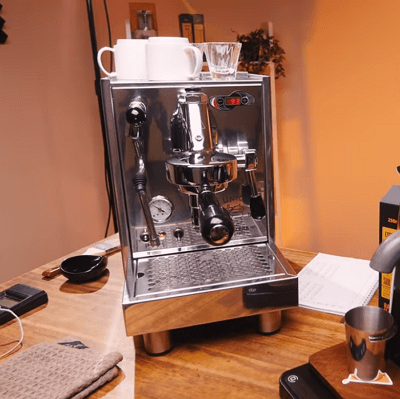
EU typical €1,049–€1,199 • UK £949–£999 • US often around $1,389 (region/bundles vary).
Bezzera Unica PID (MN)
A compact, metal-first E61 single boiler done right: real PID control, a front coffee-pressure gauge, manual lever dosing, and a big 3 L tank—built for clean espresso and one milk drink at a time.
Overview
Unica PID (MN) is the “classic E61 single boiler with modern temperature control” play: simple interface, strong materials, and shot-first behavior. Expect excellent straight espresso once heat-soaked, plus capable steam for one milk drink at a time—at the cost of single-boiler sequencing and no built-in timer.
Pros
- Real PID control with separate coffee & steam programs
- True E61 thermosiphon group with mechanical preinfusion feel
- Front coffee-pressure gauge for live extraction feedback
- 3-way solenoid supports proper detergent backflushing
- Oversized 3.0 L tank reduces refill frequency
Cons
- Single-boiler cadence: no simultaneous brew + steam
- E61 still benefits from extra heat soak beyond “PID ready”
- No built-in shot timer (use scale/timer)
- OPV adjustment is internal rather than tool-free from the top
Features
- Single boiler, dual-use (brew + steam), manual lever dosing (MN)
- Boiler: 0.5 L copper
- Group: E61 thermosiphon
- PID ranges: coffee 80–100 °C; steam 105–120 °C
- Pump: vibration
- 3-way solenoid on brew circuit (dry pucks, backflush support)
- Front coffee-pressure manometer
- Steam/hot-water wand on ball joint with lever tap
- Water tank: 3.0 L removable reservoir
- Body: AISI 304 stainless steel
- Approx. size/weight: 250 W × 425 D × 375 H mm; ~18.5 kg
Pricing
- EU typical: €1,049–€1,199
- UK typical: £949–£999
- US typical: ~$1,389 (availability/bundles vary)
- Tip: confirm voltage/plug and what accessories/baskets are included for your region.
FAQs
- Can it brew and steam at the same time?
- No—this is a single-boiler dual-use machine. You alternate brew → steam → cool back to brew.
- Does it support backflushing?
- Yes. The brew circuit has a three-way solenoid, so weekly detergent backflush is part of normal care.
- What does the front gauge show?
- It reads coffee/pump pressure at the group during extraction—use it as feedback for puck prep, grind, and OPV ceiling.
- Is warm-up fast?
- The boiler reaches setpoint quickly, but the E61 group benefits from extra heat soak for best shot-to-shot repeatability.
Who It Is For
- Espresso-first home baristas who want E61 feel + true PID control
- People who like a simple, mechanical workflow (lever start/stop + gauge feedback)
- Homes that steam occasionally (one pitcher at a time) rather than running latte rounds
Who Should Avoid It
- Milk-heavy households needing back-to-back steaming
- Buyers who want an on-panel shot timer and “modern UI” features
- Profiling tinkerers who want native flow/pressure control (choose a profiling platform)
Model Notes
- MN = manual lever dosing (pump on/off at the lever).
- Factory brew pressure is often ~10–11 bar under blind on vibe-pump machines; many owners set OPV to ~9 bar once and leave it.
- Best results come from a consistent brew–steam–brew cadence and good water to protect the copper boiler.
Bezzera is one of the brands that still builds machines like tools, and the Unica PID (MN) is the “classic espresso craft” version of that idea: a compact E61 single-boiler machine with a real PID and a front coffee-pressure gauge. It’s designed for repeatable espresso sessions (and the occasional milk drink) without turning the workflow into a touchscreen project.
On our bench, Unica’s buying truth is simple: you’re paying for E61 feel, clear, practical control (PID + pressure gauge), and an ownership style that rewards consistency. The reality check is equally straightforward: it’s a single-boiler dual-use machine, so you will brew → steam → cool back to brew when you make milk drinks, and E61 warm-up/heat-soak habits still matter.
For cross-shoppers, we usually frame Unica against machines people actually consider in this lane: ECM Classika PID for a similar “E61 single boiler + PID” idea with a different build/feature emphasis, Profitec GO if you want faster warm-up and modern usability in a compact single-boiler, and a dual-boiler step-up if you need back-to-back milk drinks with less waiting.
Shop the essentials
The small upgrades that make a home coffee setup cleaner, smoother, and more enjoyable to use every day.

Cleaner & Descaler Tablets
Keeps your machine clean, helps prevent buildup, and protects long-term performance.
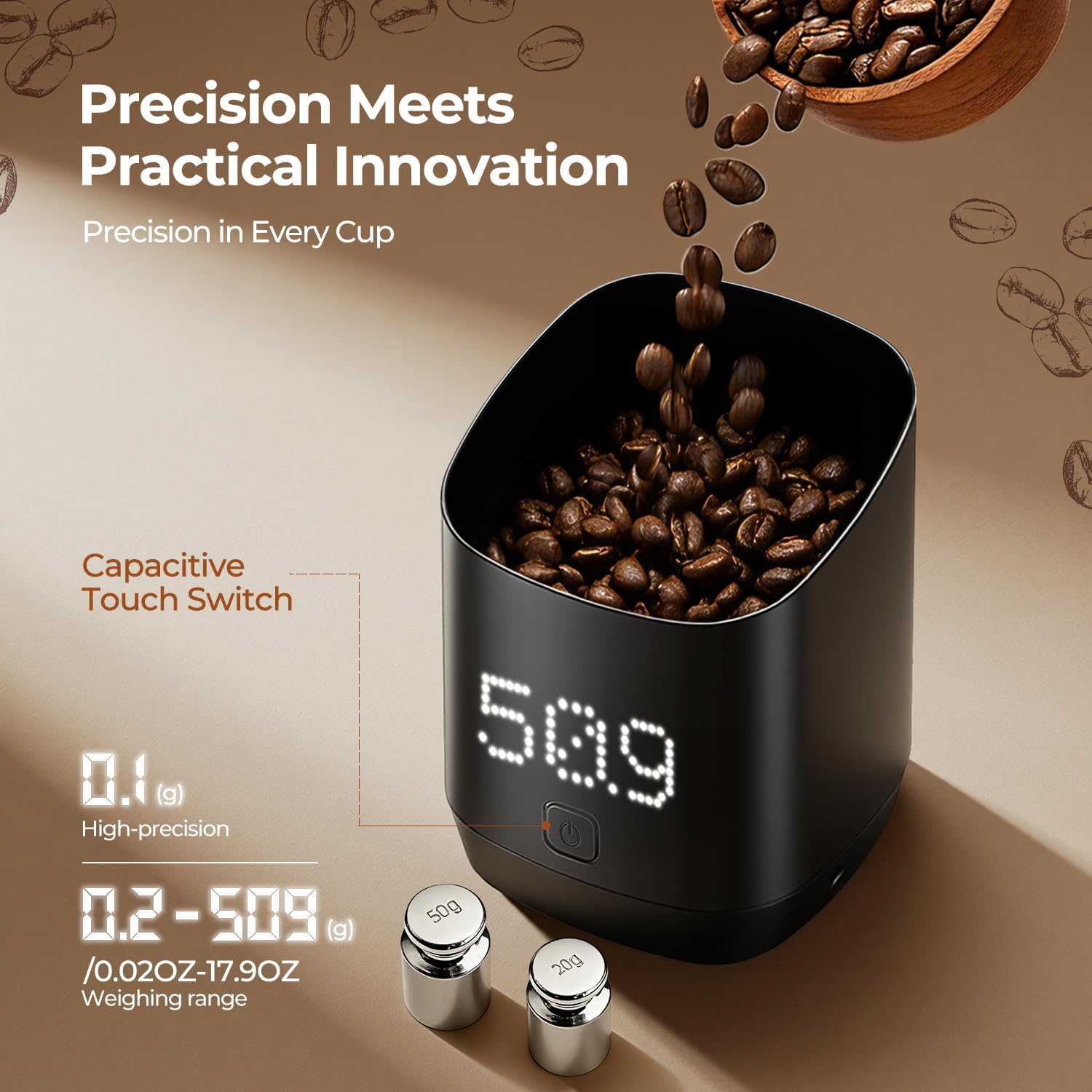
Digital Dosing Cup
Makes weighing beans faster and cleaner, with less mess around the grinder.
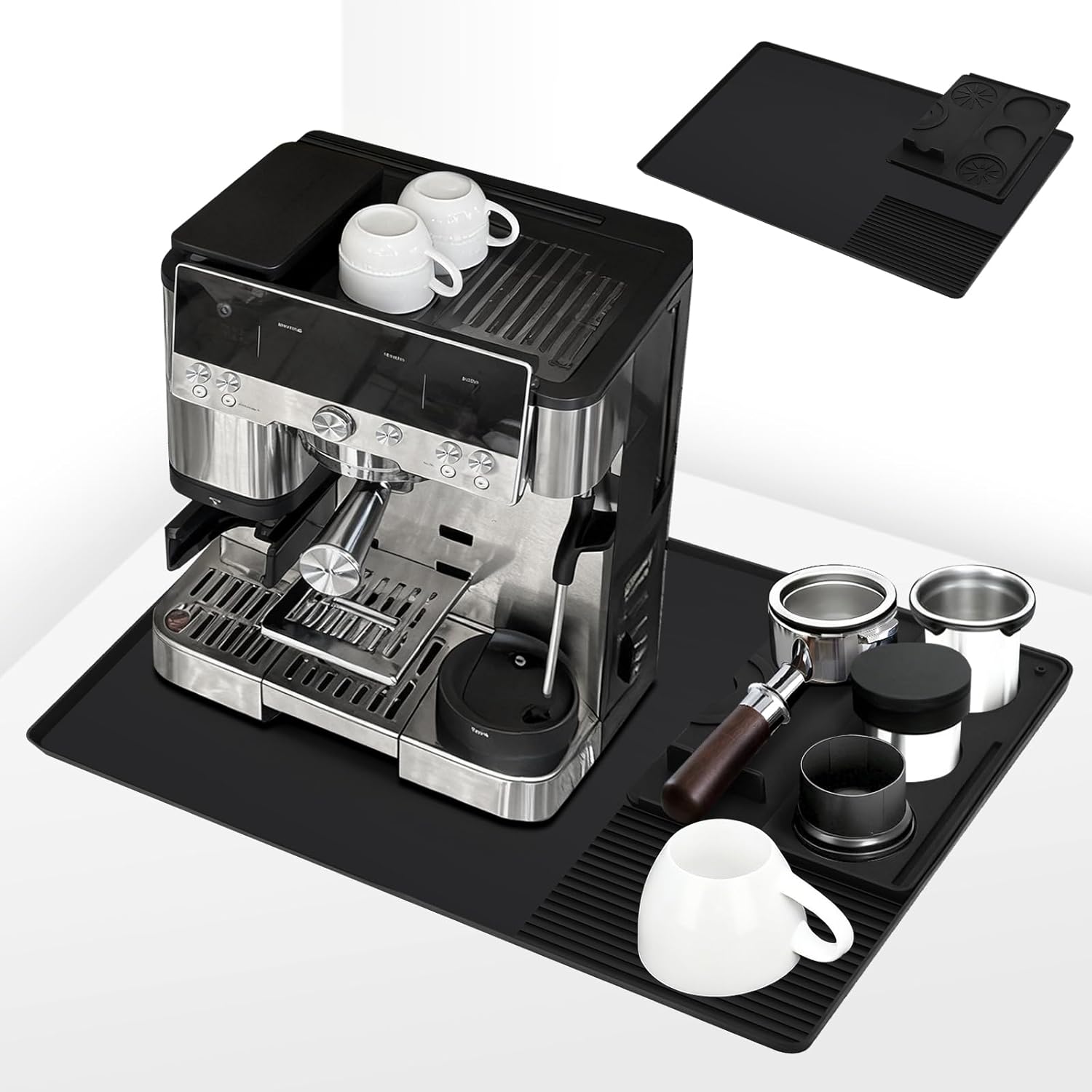
Silicone Mat
Protects your counter, catches spills, and gives your setup a cleaner working surface.

Vacuum Coffee Canister
Helps beans stay fresher longer by limiting air exposure after opening the bag.
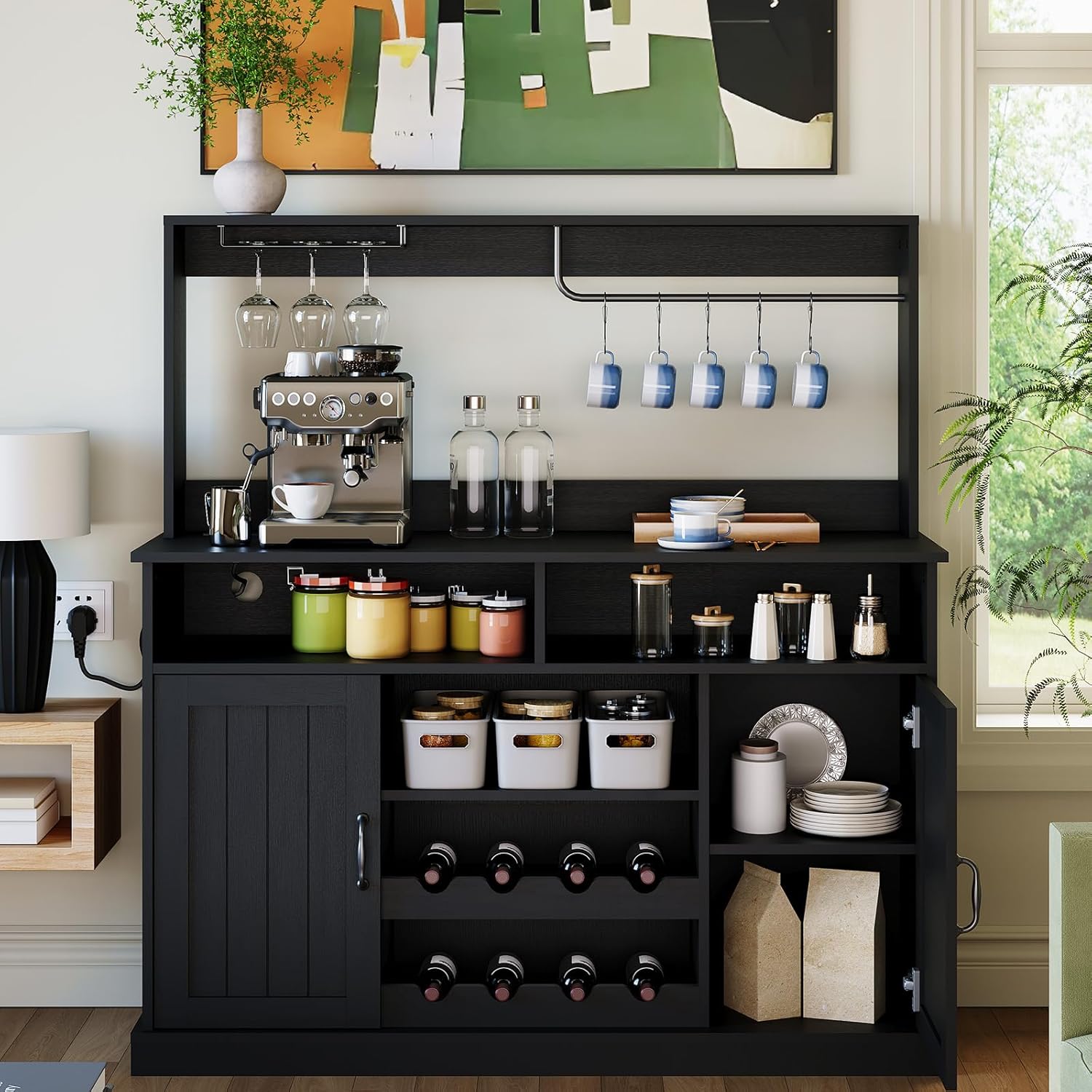
Farmhouse Coffee Bar Cabinet
Gives your machine, cups, beans, and accessories one dedicated home instead of cluttering the kitchen.
Overview
The Bezzera Unica PID is the “espresso-first” way into classic E61 ownership without buying a bigger heat-exchanger or dual-boiler box. It’s a compact single boiler machine built around a 0.5 L copper boiler, a PID controller (brew + steam modes), a vibration pump, and a genuinely useful piece of feedback for learning: a front coffee-pressure gauge. The result is a machine that rewards repeatable habits—dose, grind, puck prep, and shot timing—while the PID helps keep your temperature behavior steady once you’ve warmed the E61 group properly.
In the Bezzera lineup, Unica PID is the “compact E61 single-boiler with real PID control” slot. If you want a similar single-boiler concept with a more modern, non-E61 workflow, the Profitec GO is the common alternative. If you want a more feature-rich E61 single-boiler lane (including a different control/utility philosophy), the ECM Classika PID is the classic cross-shop. If you want a smaller/cheaper Bezzera with the brand’s heated-group approach instead of E61 tradition, the Bezzera BZ09 is the usual step-down.
Design intent
- Classic E61 feel in a compact chassis: lever actuation, mechanical pre-infusion character, and a 58 mm café-style workflow.
- Real PID control (without a feature circus): brew/steam setpoint control so you’re not guessing boiler behavior every morning.
- Feedback that helps you learn: the coffee-pressure gauge makes it easier to connect puck prep + grind to what the machine is doing during extraction.
- Usability hardware that matters: lever-operated steam control and a ball-joint steam wand for fast positioning.
- Reservoir practicality: a larger tank than many compact E61s, built for normal day-to-day refills rather than constant topping up.
What it gets right in the cup and in cadence
- Classic E61 texture with more temperature calm: once the group is properly warmed, the PID helps keep your “same recipe, same result” loop tighter.
- Better dialing intuition: the pressure gauge gives you a visual clue when a shot is too tight, too fast, or drifting.
- Compact counter fit: the footprint stays reasonable for an E61 machine, while still feeling like real prosumer hardware.
- Dryer workflow details: a 3-way solenoid means cleaner stop/relief behavior and less mess than basic valve-only machines.
The deliberate trade-offs
- Single-boiler reality: espresso and steaming share one boiler—milk drinks are totally doable, but you will live in “brew → steam → recover” sequencing.
- E61 warm-up still matters: PID does not remove the need to properly heat-soak the group for best repeatability.
- Not a dashboard machine: you get the coffee-pressure gauge, but you’re still mostly steering by taste, flow, and routine rather than layers of on-screen telemetry.
- Reservoir-only ownership: water quality discipline (and periodic maintenance) is part of keeping taste clean and performance stable.
Where it fits
Unica PID makes sense if you want a compact E61 with real PID control and a pressure gauge, and you’re happy living in a single-boiler rhythm. If you want a smaller, modern “PID single boiler” that heats quickly and keeps the workflow simpler, the Profitec GO is the obvious alternative. If you want a compact non-E61 single-boiler PID platform with a different ergonomics package, the Lelit Victoria is the common pick. If you want a minimalist, espresso-only single-boiler concept in a different Italian style, the Quick Mill Carola EVO is the other machine people detour toward. If you want to stay in the E61 single-boiler lane but with a different “feature ceiling,” the ECM Classika PID is the frequent cross-shop.
Cross-shop context on Coffeedant: Unica PID buyers most often compare against the ECM Classika PID for another E61 single-boiler PID lane, the Profitec GO for a smaller modern PID single-boiler workflow, the Lelit Victoria for compact non-E61 PID value, and the Quick Mill Carola EVO when they want a stripped-down espresso-only single-boiler concept.
Bezzera Unica PID lineup: which version to buy
The Bezzera Unica PID (MN) is the “classic E61 single boiler with modern temperature control” play: a compact stainless chassis, a 0.5 L copper boiler under PID, a front coffee-pressure gauge, and a manual lever that starts/stops the pump. Most “versions” you’ll see are about region/voltage and bundle accessories, not different espresso capability.
The one naming detail that matters: MN is Bezzera’s manual lever variant (manual start/stop). If you want a machine that feels mechanical and direct (lever + gauge + PID), this is the trim most people mean when they say “Unica PID.”
| Version | Lineup slot | Compared to MN | Typical price and note |
|---|---|---|---|
|
Bezzera Unica PID (MN)
Reference E61 single boiler · PID + coffee-pressure gauge |
Safest default | Manual lever dosing, true E61 thermosiphon feel, and simple “setpoint + routine” ownership. The front manometer is real feedback at the puck (use it for grind/puck sanity checks, not ego). |
EU typical: €1,049–€1,199 UK typical: £949–£999 US typical: ~$1,389 (availability/bundles vary) |
| EU/UK 230V vs US 110–120V | Region buy | Same espresso capability, different electrical + warranty lane. Prioritize local support and parts availability over “cheap import” logic. | Warranty + service are the real “price” · confirm plug/voltage before purchase |
| Retailer bundles (accessories) | Value choice | Espresso doesn’t change, but your first month does. Some bundles include a tank-mount resin softener and full basket set—worth having if your water isn’t already dialed. | Compare inclusions: baskets, blind, softener, tamper, etc. · bundles can swing “real cost” |
| Cosmetic handle/knob kits | Style swap | Aesthetics and touch-feel changes (wood/metal), not better extraction. Do this after you’ve confirmed water, grinder, and workflow. | Optional · buy for feel/looks, not “performance” |
How to read this: buy the Unica PID (MN) from the best support lane you can (region/warranty), then treat bundles as a “workflow value” decision—especially if they include a water softener and a complete basket set.
Key Bezzera Unica PID (MN) Specifications
| Item | Detail |
|---|---|
| Machine | Bezzera Unica PID (MN) · Model page · Cross-shops: ECM Classika PID, Profitec GO, Lelit Victoria, Quick Mill Carola EVO |
| Machine type | Semi-automatic single boiler (dual-use brew + steam) · manual lever start/stop (MN) |
| Group / portafilter | E61 thermosiphon with mechanical pre-infusion character · 58 mm ecosystem |
| Boiler + control | 0.5 L copper boiler · PID with separate programs: coffee 80–100 °C · steam 105–120 °C |
| Pump | Vibration pump |
| Gauges | Front coffee-pressure manometer (pump pressure at the group) · no boiler-pressure gauge |
| Valves | 3-way solenoid on brew circuit (dry pucks, proper detergent backflush support) |
| Steam / hot water | Single wand delivers steam + hot water · ball joint · lever tap · two-hole tip on many configurations |
| Water reservoir | 3.0 L removable reservoir (oversized for the class) |
| Dimensions / weight | Published: 250 × 425 × 375 mm · about 18.5 kg |
| Coffeedant score | Overall rating |
| Typical price | EU €1,049–€1,199 · UK £949–£999 · US ~$1,389 (region/bundles vary) |
| Power (by region) | Varies by voltage/market · confirm wattage on your local listing and warranty lane |
First Impressions & Build Quality
The Unica PID (MN) feels like a tool: polished AISI 304 stainless outside, a compact 0.5 L copper boiler inside, and a front panel that prioritizes the two things you actually use: PID setpoint and coffee-pressure feedback. There’s no feature sprawl and no screen theater—just clean, mechanical ownership.
What’s in the Box
- Bezzera Unica PID (MN) machine
- 58 mm split spouted portafilter
- Baskets: single, double, and blind (as shipped in your region/bundle)
- Basic accessories (typical: tamper, scoop, cup grate)
- Tank-mount resin softener (common inclusion and genuinely useful if your water isn’t already conditioned)
Bundles vary by retailer and region. Confirm basket set + softener inclusion if you’re buying open-box or refurbished.
Chassis and internals
Under the hood, the ownership story is simple: PID stability on a small copper boiler and the familiar E61 thermosiphon feel. The 3-way solenoid makes the machine “proper maintenance capable” (detergent backflushes), and the wand does steam and hot water through a lever tap—fast control, clear feedback.
Controls and touch points
You set coffee temperature directly on the PID, switch to steam setpoint when needed, then cool back to brew with a short flush. The front manometer reads coffee pressure at the group during extraction—use it as sanity feedback while dialing grind and puck prep.
Counter fit
| Item | Detail | Why it matters |
|---|---|---|
| Width | 250 mm | Compact for a true E61; easy fit in smaller espresso corners. |
| Height | 375 mm | Check cabinet clearance for cup tray access and top-fill habits. |
| Depth | 425 mm | Plan room for cords and for comfortable lever + wand movement. |
| Weight | ~18.5 kg | Stable on the counter; not a “lift it daily” machine. |
| Noise profile | Vibration pump | Expect an audible pump note—normal for the class. |
| Water reality | 3.0 L reservoir only | No plumb-in. Water quality + refill discipline set your maintenance calendar. |
Testing Results
Testing focused on the “real Unica” questions: how quickly it gets to a useful first shot, how stable the PID behavior feels in the cup, what the coffee-pressure gauge tells you during dialing-in, and how cleanly it handles the single-boiler brew→steam→brew loop.
| Metric | Result | Use note |
|---|---|---|
| Warm-up reality | Boiler hits PID setpoint quickly; E61 group benefits from extra heat soak | Treat “PID ready” as early readiness. For best repeatability, let the group metal settle, lock in the portafilter during warm-up, and run a short blank rinse before the first shot. |
| PID programs | Coffee: 80–100 °C · Steam: 105–120 °C | Stay mid-band to start, then move in 1 °C steps. Coffee setpoint changes are the cleanest way to tune taste on this machine. |
| Baseline espresso target | 18 g in → 36 g out in 25–30 s · coffee temp ~93 °C (starting point) | Hold dose + yield steady, then adjust grind. Use the gauge as feedback (not a goal) while you tune flow. |
| Brew pressure ceiling (common out of box) | ~10–11 bar under blind on many units | If you’re a 9-bar person, set OPV once (internal access), then stop fussing. After that, taste is grind + puck prep + recipe. |
| Brew→steam→brew cadence | Efficient for single drinks; no simultaneous brew + steam | Steam one pitcher neatly, then cool back to brew with a short flush. Your routine matters more than the raw number. |
| Gauge usefulness | Live extraction feedback at the puck | Spiky pressure + stalled flow = too fine / poor distribution. Low pressure + gusher = too coarse. Use it to speed up dialing-in, not to chase “pretty numbers.” |
| Drink | Starting point | When to change it |
|---|---|---|
| Espresso (medium blend) | 18 g in → 36 g out · 25–30 s · ~93 °C | If thin/fast: grind finer. If dry/harsh: grind slightly coarser or drop 1 °C. |
| Light roast espresso | 18 g → 38–40 g · high-20s/low-30s · ~94–95 °C | If sour: go finer and/or +1 °C. If astringent: cut the tail earlier (stop by weight sooner). |
| Dark roast espresso | 18 g → 34–36 g · mid-20s · ~91–92 °C | If bitter: shorten yield. If muddy: coarsen slightly and keep the finish clean. |
| Cappuccino / Latte (single drink) | Switch to steam program (upper range) · purge water from wand · texture one pitcher | If bubbly: start colder and stretch less. If flat: stretch a touch more early, then roll cleanly to temp. |
| Americano / hot water | Use hot water through the wand, then add espresso | If water sputters, purge briefly first. For taste, keep espresso strong and don’t over-dilute. |
Key takeaways from testing
- PID is the real upgrade: degree-level coffee and steam setpoints in a compact E61 format makes dialing-in straightforward.
- Heat soak still matters: the boiler reaches setpoint quickly, but the E61 group rewards patience for tight repeatability.
- Gauge = faster dialing: it’s a practical feedback tool while you tune grind and puck prep.
- Single-boiler truth: it steams one milk drink neatly, but entertaining with multiple back-to-back milk drinks is HX/dual-boiler territory.
Espresso Quality: getting the best out of the Bezzera Unica PID
The Bezzera Unica PID is a compact, “classic-prosumer” setup: an E61 group on a single-boiler dual-use platform, upgraded with a real PID and a front coffee-pressure gauge. You don’t get dual-boiler convenience, but you do get the controls that matter for repeatable espresso: grind, dose, yield, puck prep, plus PID brew temperature. The gauge is your sanity-check tool, not a gadget—use it to confirm “normal” behavior while you dial by taste.
Session protocol that keeps results consistent
- Warm up like an E61: give the group time to saturate; lock the portafilter in during heat-up.
- Start with a baseline: pick one recipe (ex: 18 g in → 36 g out) and hold it steady while you adjust grind.
- Use PID like a finishing tool: set a sensible brew temp, then move in small steps when the roast demands it.
- Watch the pressure gauge once, not constantly: confirm you’re in a normal lane (often ~8–10 bar at the puck, depending on setup), then dial by taste.
- Change one variable at a time: grind first, then yield, then temperature. Don’t “stack” changes.
Flavor targets by coffee style
| Coffee | Baseline recipe (Unica PID) | What it tastes like when right | If too sour / thin | If too bitter / dry |
|---|---|---|---|---|
| Medium espresso blend |
18 g in → 36 g out in ~27–32 s PID: mid-range brew temp (your “default”) |
Round chocolate, steady sweetness, clean finish | Go finer; keep yield steady; bump PID up slightly if the roast is dense | Go coarser or shorten yield; lower PID a touch if roast is dark |
| Light roast espresso |
18 g in → 40 g out in ~30–36 s PID: slightly higher than your baseline |
Clear sweetness, brighter acidity without bite | Finer grind; hold yield; consider a small PID increase | Cut the tail earlier (shorten yield); coarsen slightly if it turns astringent |
| Medium-dark / “Italian” style |
18 g in → 34 g out in ~25–30 s PID: slightly lower than baseline |
Heavy body, syrupy crema, low acidity | Finer grind; avoid stretching yield | Shorten yield; coarsen slightly; lower PID a touch if it tastes scorched |
Puck prep matters more than chasing numbers
- Distribution first: level the bed before tamping; avoid side-loading the basket.
- Consistent tamp: flat and repeatable beats “hard.”
- Dry basket routine: wipe the basket if it’s wet from a flush.
- Stop on yield: once grind is close, use the scale as your “shot stop.”
Diagnostics you can see (and taste)
| Signal | Likely cause | Targeted fix |
|---|---|---|
| Sour, thin, fast shot | Grind too coarse, under-dosed, or brew temp too low | Go finer; confirm dose; raise PID slightly (small steps) |
| Harsh, dry, bitter finish | Grind too fine, too much yield, or brew temp too high for the roast | Coarsen slightly or shorten yield; lower PID a touch if roast is dark |
| Gauge spikes high and flow chokes | Grind too fine / puck too tight / channel-risk prep | Coarsen 1 step; improve distribution; avoid overdosing the basket |
| “Good yesterday, weird today” | Bean age, grinder drift, or inconsistent temp/yield habits | Return to baseline recipe; purge stale grinds; adjust one variable only |
Milk Steaming: Unica PID steam power, texture, and single-boiler sequencing
The Unica PID can steam capably for one milk drink at a time, but it’s still a single-boiler dual-use machine. That means you alternate: brew → switch to steam → steam → cool back down. The PID helps by giving you predictable steam setpoints; your job is to purge properly and keep your routine consistent.
Steaming routine that stays repeatable
- Switch to steam mode: let the PID drive the boiler up to the steam setpoint.
- Purge water first: open the wand briefly to clear condensation so you start with drier steam.
- Stretch early, briefly: add air for a few seconds, then stop adding air and polish texture with a roll.
- Roll to finish: keep a stable vortex until serving temperature.
- Wipe and purge: wipe the wand immediately, then purge again (non-negotiable).
- Back to brew: switch back to coffee mode and flush until temps stabilize before pulling another shot.
Milk troubleshooting you can actually fix
| Problem | Most likely cause | Fix |
|---|---|---|
| Big bubbles / airy foam | Stretch too long or milk started too warm | Start colder; shorten stretch; transition to rolling earlier |
| Thin, flat milk | Not enough air early, or you lost the vortex | Add a touch more stretch at the start; reposition tip to reestablish a roll |
| Watery steam / weak power | Condensation in the wand or boiler not fully at steam temp | Purge longer; give steam mode a bit more time to settle before you start |
| Milk tastes “cooked” | Overheated milk | Stop earlier; use a thermometer until your timing is locked in |
Hardware Essentials
Boiler, heating, and water system
Unica is a single-boiler dual-use design built around a 0.5 L copper boiler and an E61 thermosiphon group. The PID is the real usability upgrade: you set a brew temperature target in coffee mode, then switch to a steam setpoint when you need milk. Water is reservoir-fed (no plumb-in lane), with a large tank that supports day-to-day rhythm.
- Daily win: predictable temperature control for espresso without “guessing by flush.”
- Reality check: milk drinks require sequencing (brew → steam → cool back down).
- Water discipline: good water is your cheapest reliability upgrade—scale is the slow killer on compact boilers.
Pump pressure, valves, and the coffee-pressure gauge
Unica uses a vibration pump and a front coffee-pressure gauge to make extraction behavior visible. The gauge isn’t a promise of “better espresso by numbers”—it’s a diagnostic tool: it tells you when you’re choking (too fine / too tight), running too freely (too coarse), or operating in a normal lane.
- Best practice: make big changes with grind and yield; use PID temperature as a finishing lever.
- Pressure note: if shots taste off, fix prep and grind first before you think about internal pressure tweaks.
E61 group, baskets, and 58 mm ecosystem
The E61 group gives you the familiar lever workflow and access to the 58 mm ecosystem: precision baskets, bottomless portafilters, better tampers, and tools that actually improve repeatability when your grinder is up to the job.
Steam wand hardware
Steaming is “classic prosumer”: purge for dry steam, stretch briefly, then roll to polish texture. Many configurations ship with a two-hole tip, which is a good match for a compact single boiler—enough power to texture well without feeling chaotic.
Accessories that actually improve results
- Grinder upgrade: a capable espresso grinder matters more than any machine accessory.
- Scale + timer: lock dose and yield so your dial-in has a stable reference.
- Backflush kit: blind basket + espresso detergent on a schedule keeps the group tasting clean.
- Water plan: hardness test + filtration/treatment strategy to keep scale under control.
- Milk basics: a good pitcher and (until muscle memory is real) a thermometer.
| Component | Spec | Use note |
|---|---|---|
| Platform | E61 · single boiler dual-use · 58 mm | Let the group heat soak, then use grind/yield + PID temp for consistent espresso. |
| Boiler control | PID (coffee + steam modes) | Coffee mode for espresso stability; steam mode for one milk drink at a time (sequencing required). |
| Pump | Vibration pump | Normal sound profile for the class; focus on puck prep, not noise. |
| Instrumentation | Coffee-pressure gauge | Use as a diagnostic: choking vs free-flow vs “normal lane,” then dial by taste. |
| Steam | Traditional wand (often two-hole tip) | Purge for dry steam; wipe and purge after every pitcher for hygiene and consistency. |
| Water | Reservoir-fed (large tank, no plumb-in) | Your water quality plan decides scale risk and long-term maintenance cost. |
Bezzera Unica PID vs The Field: Quick Matrix
| Match-up | Core difference | Best for | Jump to section | Model page |
|---|---|---|---|---|
| Unica PID vs ECM Classika PID | Value-forward E61 single boiler with a coffee-pressure gauge vs premium-finish E61 single boiler with a “polish-first” ownership vibe | Unica for “tools that matter” value; Classika for buyers who prioritize premium finish and brand feel | Open | ECM Classika PID |
| Unica PID vs Profitec GO | Classic E61 heat-soak workflow vs compact PID single-boiler that’s faster and simpler (but not E61) | Unica for E61 feel and workflow; GO for fastest “serious espresso” ownership in small spaces | Open | Profitec GO |
| Unica PID vs Lelit Victoria | E61 + pressure gauge + classic lever rhythm vs modern compact single boiler with a more appliance-like daily flow | Unica for traditional workflow and diagnostics; Victoria for compact convenience and “set-and-repeat” simplicity | Open | Lelit Victoria |
| Unica PID vs Rancilio Silvia | PID-controlled E61 with a gauge vs iconic single-boiler workhorse that often asks for more temp-surf attention (unless PID-modded) | Unica for easier repeatability out of the box; Silvia for tinkerers and “classic tank” buyers | Open | Rancilio Silvia |
| Unica PID vs Lelit Mara X | Single-boiler espresso-first workflow with brew-temp control vs HX milk-power machine built for faster cappuccino cadence | Unica for espresso-first routines; Mara X for milk-first households who want easier back-to-back service | Open | Lelit Mara X |
Bezzera Unica PID vs ECM Classika PID
This is the closest “same-lane” match-up: E61 + single boiler + PID, built for people who want real espresso craft in a compact footprint. The split is ownership vibe and what you want on the front panel.
Unica PID leans tool-first value: classic lever workflow plus a coffee-pressure gauge that helps you sanity-check extraction behavior while you dial by taste. ECM Classika PID leans premium feel: fit/finish and brand polish are a bigger part of the buying story, even if the daily workflow is broadly similar.
Core differences
- Ownership vibe: Unica is “practical tool”; Classika is “premium object.”
- Diagnostics: Unica’s coffee-pressure gauge gives you a quick visual check during dialing-in.
- Daily reality: both are single-boiler machines, so milk drinks mean sequencing (brew → steam → cool back down).
- Buying logic: choose Unica when value + useful instrumentation matters; choose Classika when finish and brand feel are part of the point.
| Aspect | Bezzera Unica PID | ECM Classika PID |
|---|---|---|
| Core lane | E61 single boiler with PID + coffee-pressure gauge | E61 single boiler with PID (premium finish focus) |
| Daily feel | Value-forward “tools that matter” ownership | Polish-first ownership with premium build feel |
| Best for | People who want E61 + PID repeatability with practical diagnostics | People who want an E61 single-boiler that feels as premium as it looks |
Who should choose which
- Pick the Unica PID if you want the E61 single-boiler lane with PID control and a front-panel gauge that actually helps you dial in.
- Pick the ECM Classika PID if premium finish and the ECM ownership vibe are a core part of what you’re paying for.
Bezzera Unica PID vs Profitec GO
This is “classic prosumer” versus “compact modern.” Unica PID is about the E61 experience: lever actuation, full heat soak, and a traditional workflow that rewards repeatable habits. Profitec GO is about doing serious espresso in a simpler, faster daily rhythm—PID control, compact footprint, and fewer E61-specific warm-up rituals.
Core differences
- Group style: Unica is E61 (heat-soak, classic lever feel). GO is not E61 (faster, simpler warm-up behavior).
- Daily cadence: both are single-boiler workflows, so milk drinks are sequenced—but GO tends to feel “quicker to live with.”
- Why people pick Unica: they want the traditional E61 experience and a more “prosumer corner” feel.
- Why people pick GO: they want real espresso performance with minimal fuss and minimal footprint.
| Aspect | Bezzera Unica PID | Profitec GO |
|---|---|---|
| Workflow feel | Classic E61 “espresso station” ritual | Compact PID simplicity (less ritual) |
| Warm-up reality | E61 heat soak matters for first-shot consistency | Typically faster “ready-to-brew” daily behavior |
| Best for | People who want the E61 experience and don’t mind heat-soak habits | People who want strong espresso quality with the least daily friction |
Who should choose which
- Pick the Unica PID if you want the classic E61 lever workflow and the “prosumer tool” experience.
- Pick the Profitec GO if you want great espresso with a simpler daily routine and a smaller footprint.
Bezzera Unica PID vs Lelit Victoria
This is “classic lever E61” versus “compact modern single boiler.” Unica PID is for buyers who want the E61 feel, the heat-soak discipline, and a front-panel coffee-pressure gauge that makes dialing-in more readable. Lelit Victoria is for buyers who want a smaller, more appliance-like daily workflow without chasing the “E61 experience” specifically.
Core differences
- Workflow style: Unica is traditional and ritual-friendly; Victoria is compact and convenience-forward.
- What you’re paying for: Unica’s value is “classic feel + practical diagnostics.” Victoria’s value is “small footprint + modern usability.”
- Milk reality: both are single-boiler lanes, so milk drinks mean sequencing—not café-style simultaneous brew/steam.
| Aspect | Bezzera Unica PID | Lelit Victoria |
|---|---|---|
| Core appeal | E61 tradition + gauge + “espresso station” feel | Compact modern daily driver with simple repeatability |
| Warm-up habits | E61 heat soak is part of first-shot consistency | Typically less “ritual” than E61 ownership |
| Best for | People who want classic workflow and like the feel of café-style hardware | People who want strong espresso in a compact, straightforward routine |
Who should choose which
- Pick the Unica PID if you want the E61 experience and a gauge that helps you see what’s happening while you dial by taste.
- Pick the Lelit Victoria if you want compact modern usability and don’t specifically need an E61 lever workflow.
Bezzera Unica PID vs Rancilio Silvia
This is “classic prosumer control” versus “iconic workhorse.” Silvia is famous because it’s tough, simple, and teaches real espresso habits. Unica PID takes that seriousness and makes it easier to repeat: E61 workflow, PID temperature control, and a gauge that helps you understand what the machine is doing.
Core differences
- Repeatability: Unica’s PID makes brew temperature behavior easier to hold steady without “temperature surfing.”
- Workflow feel: Unica is E61 lever ownership; Silvia is a more straightforward “classic box” workflow.
- Who enjoys which: Silvia is for tinkerers and purists; Unica is for buyers who want craft with fewer daily variables.
| Aspect | Bezzera Unica PID | Rancilio Silvia |
|---|---|---|
| Temperature control | PID-led repeatability for espresso dialing-in | Often more “attention-based” unless upgraded/modded |
| Workflow character | E61 lever feel + gauge as a dial-in sanity check | Iconic single-boiler workhorse simplicity |
| Best for | People who want classic workflow with easier consistency | Budget-focused craft buyers who enjoy the learning curve |
Who should choose which
- Pick the Unica PID if you want a more repeatable espresso routine with the E61 workflow and useful front-panel feedback.
- Pick the Silvia if you want the classic “learn espresso the hard (but honest) way” machine and you’re fine managing more variables.
Bezzera Unica PID vs Lelit Mara X
This is the “milk upgrade” comparison. Unica PID is an espresso-first single-boiler: excellent shot repeatability with PID control, but milk drinks require sequencing. Lelit Mara X is an HX built for milk cadence—faster back-to-back cappuccinos and less waiting when guests show up.
Core differences
- Milk cadence: Mara X is calmer for entertaining and multiple milk drinks; Unica is one-drink-at-a-time sequencing.
- Why people buy Unica: espresso-first routine, classic E61 feel, and straightforward brew control.
- Why people buy Mara X: milk power + HX workflow designed to reduce the “flush dance.”
- Buying logic: if milk drinks are daily and frequent, Mara X is the lifestyle fit; if espresso is the point, Unica is the cleaner lane.
| Aspect | Bezzera Unica PID | Lelit Mara X |
|---|---|---|
| Milk workflow | Single-boiler sequencing (brew → steam → cool) | HX milk cadence (faster back-to-back service) |
| Espresso control | PID-led brew repeatability | HX espresso lane (different temp-management philosophy) |
| Best for | Espresso-first homes who only steam occasionally | Milk-first homes who want fast cappuccino routines |
Who should choose which
- Pick the Unica PID if espresso is your daily priority and you only do milk drinks occasionally (or one at a time).
- Pick the Mara X if milk drinks are frequent and you want a calmer, faster entertaining cadence.
How to use this matrix: If you want a compact “classic prosumer” espresso machine with real repeatability tools (PID + gauge), Unica PID is the practical pick. If you want the premium finish version of the same lane, cross-shop Classika PID. If you want the fastest compact daily-driver, GO and Victoria are the convenience lanes. If you want milk-first cadence for guests, Mara X is the upgrade path.
In-Depth Analysis
The Bezzera Unica PID (MN) is the “classic E61 single boiler with modern temperature control” play: a compact, metal-forward machine built around a 0.5 L copper boiler, an E61 thermosiphon group, and a real PID with separate coffee and steam programs. The front coffee-pressure gauge is the tell: this machine wants you watching extraction behavior (flow + pressure) and building repeatable habits, not navigating menus.
The trade-off is honest single-boiler life: you alternate brew → steam → cool back to brew. If you mostly drink straight espresso (or one milk drink at a time), Unica’s workflow feels calm and “tool-like.” If you do back-to-back lattes every morning, the waiting and cooling steps matter more than the PID does.
1) Why it works in real kitchens: “E61 feel, modern temperature brain”
Unica lands because it pairs the E61 ownership vibe (lever actuation, mechanical pre-infusion character, 58 mm ecosystem) with temperature control that is actually simple: set a coffee temp, set a steam temp, and drive the machine the same way every day.
- What you feel: classic E61 engagement with modern setpoint control.
- What it changes: you can tune coffee taste in small steps without surfing thermostats.
- What it does not do: simultaneous brew + steam, or “milk drinks at party pace.”
2) Core controls that actually matter: PID + coffee-pressure gauge + lever dosing
The control set is intentionally readable. You have a PID (coffee program and steam program), and a coffee-pressure manometer that shows pump pressure at the group during extraction. The MN manual lever dosing means you start and stop the shot with the lever—simple, consistent, and habit-driven.
| Control | What it solves | How to use it well |
|---|---|---|
| PID (coffee program) | Stable brew temperature target on a small boiler | Pick a daily setpoint, then adjust one degree at a time only after grind + yield are stable |
| PID (steam program) | Predictable steam readiness without guessing | Switch to steam, wait for setpoint, purge condensation, steam one pitcher, then switch back |
| Coffee-pressure gauge | Live feedback when shots stall or gush | Use it as diagnostics (puck prep + grind), not as a number to “win” |
3) Espresso consistency: what to expect in practice
With an E61 group, consistency is a two-part story: the boiler can hit setpoint quickly, but the group benefits from real heat soak. Once the group is properly warm, Unica can deliver sweet, classic espresso texture with repeatable behavior—especially if you hold dose and yield steady and adjust grind first.
- Shot character: classic E61 body and mouthfeel, especially strong in medium roasts.
- Consistency win: use the coffee-pressure gauge to spot puck issues early (stall vs gush).
- Common mistake: treating “PID says ready” as “group is fully heat soaked.”
4) Milk strategy: capable, but one drink at a time
Unica’s 0.5 L boiler is not a café steamer and it does not pretend to be. The upside is controllable, clean steam for a single pitcher when you run the sequence correctly: go to steam program, let it climb, purge to dry steam, texture, then return to coffee program and cool back down with a short flush.
5) Warm-up reality: ready to brew vs ready to be consistent
The small boiler warms quickly, but the E61 group is a big thermal mass. For best first-shot repeatability, treat warm-up like this: lock the portafilter in at power-on, let the PID settle at coffee temp, then run a short blank rinse to stabilize the path and warm your cup. If you give the group a bit more time, shot-to-shot stability tightens.
6) Water and scale: copper boiler = water discipline matters
Copper and scale are not friends. The PID does not prevent scale—good water does. The upside of Unica’s 3.0 L tank is that it makes a consistent water plan easier: fewer refills, and more room for controlled recipes (treated, filtered, or known-hardness water).
- Target idea: water that tastes good and is scale-safe for espresso machines.
- Routine: test hardness, choose a plan, then stick to it (this matters more than any “descale heroics”).
- Bonus: stable water protects valves, the wand path, and pressure behavior over time.
7) Serviceability and ownership: E61 chores + sensible wear parts
Unica is built to be owned for years. It has a 3-way solenoid (so it supports proper backflushing), and common parts (OPV assemblies, manometers, gaskets, wand components) are standard service items. Keep up with cleaning rhythms and the machine stays predictable.
- Normal wear: group gasket + shower screen, valve seals, steam tip cleanliness.
- Pressure sanity: set OPV once (many owners target ~9 bar under blind) and stop tinkering.
- Practical advice: buy in your region for parts + support, and keep water under control.
8) Cross-shop logic: where it sits against what people actually buy
Unica wins for buyers who want true E61 feel plus simple PID control in a compact body. If you want faster warm-up (non-E61 groups), a built-in shot timer, or a different milk cadence, the answer can shift.
| If you want... | Cross-shop | Why |
|---|---|---|
| Another E61 single-boiler with PID, plus more panel info | ECM Classika PID | Similar lane with a different chassis/feature emphasis |
| Smaller single-boiler with PID + built-in timer, faster warm-up group | Profitec GO | Ring group warms faster; timer + easy access OPV appeal to “modern usability” buyers |
| Compact single-boiler 58 mm with strong usability UI | Lelit Victoria | Digital control emphasis in a small footprint (different group feel than E61) |
| Classic single-boiler + steam wand at lower buy-in | Rancilio Silvia | Simple, durable platform; more “hands-on temperature attention” depending on version |
| Espresso-only E61 with PID and no steam hardware | Quick Mill Carola EVO | If you never steam, removing milk hardware makes the workflow simpler |
Editorial placement: keep warm-up + gauge logic near Espresso, sequencing + steam hygiene near Milk Steaming, and water/scale near Maintenance.
Bezzera Unica PID - frequently asked questions
Fast answers to the questions people ask before committing to an E61 single-boiler routine.
Is the Bezzera Unica PID worth it?
Yes if you want classic E61 feel with real PID control and you mostly drink straight espresso (or one milk drink at a time). It rewards heat-soak discipline and repeatable puck prep, and the front coffee-pressure gauge is genuinely useful for dialing in. If you need back-to-back milk drinks without waiting, a dual-boiler is the cleaner fit.
Can it brew and steam at the same time?
No. Unica is a single-boiler dual-use machine. You alternate: brew → switch to steam → steam one pitcher → cool back to brew.
What does the front gauge show?
It’s a coffee-pressure gauge that reads pump pressure at the group during extraction. Use it as feedback: stalls/spikes usually mean too fine or uneven distribution; low pressure with fast flow usually means too coarse or under-dosed.
Does it support backflushing?
Yes. The brew circuit has a three-way solenoid, so water backflushes after sessions and weekly detergent backflushes are part of normal care.
Is warm-up “fast” on the Unica?
The small boiler reaches setpoint quickly, but the E61 group benefits from extra heat soak for the best shot-to-shot repeatability. Lock in the portafilter during warm-up and do a short blank rinse before the first shot.
Can I plumb it in?
Unica is a reservoir-first machine with a 3.0 L removable tank. Plan a repeatable water-quality strategy and refill routine.
What grinder do I need?
A real espresso grinder. Unica’s E61/58 mm lane and pressure feedback will expose grinder limitations quickly. If shots feel inconsistent, the grinder is often the bottleneck before the machine is.
Used & Refurbished Buyer’s Guide
A used Bezzera Unica PID can be a strong buy because it’s serviceable, parts are common, and the design is meant to live a long time. The two risks to take seriously are scale (flow restriction, valve issues, temperature weirdness) and neglected cleaning (dirty group, worn gaskets, drippy valves). The good news: most red flags show up quickly in a basic heat-up, brew, and steam test.
| Inspect | What to check | Pass criteria |
|---|---|---|
| PID + program switching | Confirm coffee program holds steady and steam program climbs normally. Verify buttons/controls are responsive. | Stable temp behavior, no error behavior, no wild overshoot that repeats every cycle. |
| Grouphead leaks | Lock in the portafilter, run a brief flush, inspect the group seal area. | No steady drip from the gasket area; normal “post-shot” moisture is fine. |
| Pressure gauge behavior | Pull a shot (or run blind briefly) and watch gauge response. | Gauge rises smoothly with pump start; no stuck needle; reads plausibly under load. |
| Backflush capability | Run a short water backflush with a blind basket. | Clean three-way release, normal discharge into drip tray, no persistent sputter or odd noises. |
| Steam wand + lever tap | Switch to steam, purge, then steam water for 5–8 seconds. Check closure. | Dry steam after purge, lever closes cleanly, no constant dripping afterward. |
| Steam → brew cooldown | After steaming, switch back to coffee and run a short cooling flush. | Machine returns to brew behavior without violent sputtering or persistent overheating symptoms. |
| Pump sound | Run the pump through flush + a shot. | Normal vibration-pump tone; no stalling or extreme pitch changes under light load. |
| Scale history | Ask what water was used and whether there was a filtration/treatment plan. | Credible water story. Hard tap water with no plan = price it like a scale-risk machine. |
| Accessories | Confirm portafilter, baskets, drip tray, tank, manuals. | Complete kit, or price reflects replacements you will need. |
Refurb units should include a store-backed warranty and ideally fresh wear parts (group gasket, shower screen, and any valve seals as needed).
Accessories & Upgrades
Unica is a semi-auto E61. Your upgrades are the tools that make puck prep repeatable and water safe. Spend on fundamentals first, then buy convenience tools that reduce mistakes.
| Category | What to buy | Why it helps |
|---|---|---|
| Grinder | A capable espresso grinder (stepless or fine-stepped) | Biggest jump in cup quality and repeatability. Unica’s gauge will show grinder drift fast. |
| Shot control | Scale (0.1 g) + a simple shot timer | Locks dose and yield. Unica is manual dosing—timing discipline matters. |
| 58 mm prep | Proper 58 mm tamper + optional WDT tool | Reduces channeling and stabilizes pressure behavior on the gauge. |
| Diagnostics | Bottomless portafilter (optional) | Makes distribution issues obvious so you can fix puck prep instead of chasing settings. |
| Backflush kit | Blind basket + espresso detergent | Three-way solenoid means real backflushing—use it to keep flavor clean. |
| Water strategy | Hardness test + filtration or treated water plan | Protects the copper boiler and valves; reduces scale risk dramatically. |
| Milk tools | Small milk pitcher (for 150–200 ml) + thermometer (until timing is learned) | Unica shines at one-drink steaming—right-size tools make it easier. |
| Wear parts | Spare group gasket and shower screen | Cheap insurance. Replacing restores sealing and improves consistency. |
Known Issues & Troubleshooting
- “PID says ready, but first shot is off”: the E61 group needs more heat soak. Warm longer with portafilter locked in.
- Gauge spikes and the shot stalls: grind too fine or uneven puck prep. Improve distribution, then go slightly coarser.
- Low pressure + fast gush: grind too coarse, under-dosed, or channeling. Tighten grind and clean up puck prep.
- Wet steam / weak power: you didn’t purge condensation or you switched too early. Purge longer and let steam setpoint fully stabilize.
- Wand drips after closing: worn seals or scale preventing a clean seal. Address sooner; it tends to get worse.
- Grouphead leaks at the rim: group gasket worn or dirty. Replace gasket, clean mating surfaces, confirm proper lock-in.
- Slow flow on flush and shots: scale risk or clogging. Verify water hardness and correct water strategy first.
Conclusion: Should You Buy the Bezzera Unica PID?
Who it’s for
- Home baristas who want true E61 feel with simple PID temperature control.
- Mostly-espresso households, or milk drinkers who only need one drink at a time.
- People who value a coffee-pressure gauge for dialing and diagnostics.
- Owners willing to take water seriously and keep up with backflushing and wand hygiene.
Who should avoid it
- Anyone who needs back-to-back milk drinks with minimal waiting (single-boiler sequencing will annoy you).
- Buyers who want a built-in shot timer and automation on the panel.
- People who hate E61 warm-up/heat-soak reality and want instant consistency.
- Hard-water users with no plan to filter or treat water.
We’ve categorized the best espresso machines for every kind of buyer
Find the right shortlist faster, whether you want convenience, a beginner-friendly setup, a smaller footprint, or better value at a given budget.
Best Superautomatic Espresso Machines
One-touch picks for speed and convenience.
Best Espresso Machines for Beginners
Easy-to-use machines with a smoother learning curve.
Best Small Espresso Machines
Compact machines for tighter kitchens and counters.
Best Espresso Machines With Built-In Grinder
All-in-one options with fewer extra pieces to buy.
Best Cheap Espresso Machines Under $500
Budget picks that still make sense for real espresso.
Best Prosumer Espresso Machines Under $1000
More serious machines with stronger value for the money.
Best Single Boiler Espresso Machines
Simple, space-saving picks for espresso-first routines.