
Pricing varies by region and promos. Confirm current bundles and warranty with the seller.
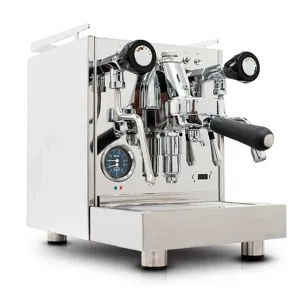
Quick Mill QM67 Evo
A compact E61 dual boiler that keeps the fundamentals tight: stable brew temps, predictable steam, and a PID shot timer that stops you from guessing.
Overview
The QM67 Evo is a compact E61 dual boiler with the right kind of honesty. It runs a vibratory pump from a 3 L tank, uses two small insulated boilers controlled by PID, and adds a built-in shot timer that pushes you toward repeatability. No plumbing option. No native flow control. You’re buying it for stable temperature management, predictable steaming, and service-friendly ownership.
Pros
- True dual-boiler stability in a compact E61 footprint
- PID with built-in shot timer keeps dialing consistent
- Eco modes reduce idle heat and “forgot to turn it off” risk
- Dual gauge feedback for brew and steam sanity checks
- 3 L tank with hinged access and low-water protection
Cons
- Tank-only, no plumb-in option
- No native flow control (profiling is a later add-on)
- Vibe pump feel and noise vs rotary platforms
- Small steam boiler needs smart temp settings for big hosting sessions
Features
- E61 group with lever actuation and natural pre-infusion
- Dual insulated boilers with independent PID control
- Integrated shot timer on the PID display
- Dual pressure gauge (brew + steam)
- Eco modes: steam off after idle, full shutdown after longer idle
- 3 L tank under a hinged cup tray section
- Low-water sensing to protect pump/boilers
- Accessible brew pressure adjustment (expansion valve under cup tray)
- No app, no touchscreen: set temps, pull shots, repeat
Glanceable specs
- Format: Compact E61 dual boiler, tank-only
- Boilers: Brew ~0.75–0.8 L, Steam ~1.0 L (insulated; batch specs vary)
- Pump: Vibratory (Ulka)
- Reservoir: 3.0 L with hinged top access
- Controls: Dual PID + shot timer, offsets, eco modes
- Gauges: Dual manometer (brew + steam)
- Dimensions: about 16.25″ H × 11.25″ W × 17.75″ D
- Weight: about 50 lb
- Limitations: Not plumbable; no native flow-control paddle
Workflow
- Heat soak the E61 group (lock a portafilter in during warm-up)
- Run brew boiler first; enable steam boiler when you need milk
- Use the timer to standardize your dialing and stop “guessing shots”
- Use eco mode to match your home routine and reduce idle heat
- For entertaining: raise steam temp slightly, then reset after
Starting recipes
- Medium roast: 18 g in → 36 g out, 27–31 s (use the timer; adjust grind first)
- Light roast: raise brew temp slightly; aim 1:2.1–1:2.3, keep tail clean
- Milk drinks: use Double-like intensity by tightening ratio rather than dragging a long shot
Milk steaming notes
- Ideal for 1–2 milk drinks back-to-back without drama
- Use 2-hole tip for control (learning / smaller pitchers)
- Use 4-hole tip for speed (larger pitchers / guests)
- Bump steam temperature for hosting, then lower for daily comfort
Who it is for
- People who want E61 feel with dual-boiler temperature stability
- Home bars with limited counter space
- Anyone who values a built-in timer and simple repeatability
- Tank users who want fast refills and easy access
Who should avoid it
- Buyers who require plumb-in and drain
- Profiling-first users who want a factory flow-control paddle
- Anyone who only wants rotary pump feel and silence
Pricing
- Market pricing varies widely by region, VAT, and promos. Compare shipping and warranty length, not just list price.
- When comparing E61 dual boilers, check whether flow control is included or optional and whether you’ll ever need plumbing.
Takeaway
The QM67 Evo is the most straightforward way to get dual-boiler stability and E61 feel without going big on footprint or budget. It runs a vibratory pump from a 3 liter tank, pairs two small insulated boilers with a clear PID and built-in shot timer, and uses a dual manometer for boiler and brew feedback. There is no plumbing option and no native flow control. What you do get is clean temperature management, predictable steaming, and a service layout that invites long-term ownership. In the crowded prosumer field, this is the quiet professional that gets the fundamentals right and stays out of your way.
At a glance
- Format: Dual boiler E61 with lever actuation. Vibratory pump. Tank-only water feed. Not plumbable.
- Boilers and power: Brew boiler about 0.75 to 0.8 L and steam boiler about 1.0 L. Typical elements 800 W brew and 1100 to 1400 W steam. Insulated. Specs vary slightly by batch.
- Boiler material: Current US listings call out stainless steel boilers, with Quick Mill’s TEA protective treatment noted by some retailers on copper components in the line. Verify with your dealer.
- Reservoir: 3 L with hinged cup-tray access and low-water sensor.
- Controls: Dual PID with integrated shot timer, programmable offsets, eco modes to shut down steam after 60 minutes and both boilers after 120 minutes. Expansion valve access under the cup tray.
- Gauges: Dual manometer for brew and steam pressures.
- Dimensions and mass: About 16.25 in H x 11.25 in W x 17.75 in D, roughly 50 lb.
- Typical pricing: United States about 2,495 USD. EU commonly around 1,900 to 2,100 EUR depending on seller. UK retailers list in the low-two-thousands GBP. Australia around mid-three-thousands AUD. Street numbers move with promos.
Build and design
Quick Mill keeps the QM67 Evo on the compact side for a true dual boiler. The shell is stainless with tidy seams and the usual mirror finish. Inside are two small, insulated boilers sized for home use that heat quickly and recover predictably. Current US importers describe these as stainless steel units, and several dealers highlight added protective treatments across the line that reduce metallic leaching and keep internals clean over time. If boiler metallurgy matters to you, ask your retailer which production run you are getting. The machine’s behavior is the same either way because the volumes and control logic are unchanged.
The group is a classic E61. That means a heavy, chrome-plated brass assembly heated by thermosyphon. Give it time to heat soak, keep a portafilter locked in, and you get reliable thermal mass at the handle. The lever actuation is smooth and the brew cam has the familiar mechanical feel that many of us prefer when teaching puck prep. There is a dual manometer on the face. The upper segment reports steam pressure and the lower reads brew pressure at the group. Accuracy is good enough to diagnose grind, distribution, and channeling without chasing decimals.
Shop the essentials
The small upgrades that make a home coffee setup cleaner, smoother, and more enjoyable to use every day.

Cleaner & Descaler Tablets
Keeps your machine clean, helps prevent buildup, and protects long-term performance.
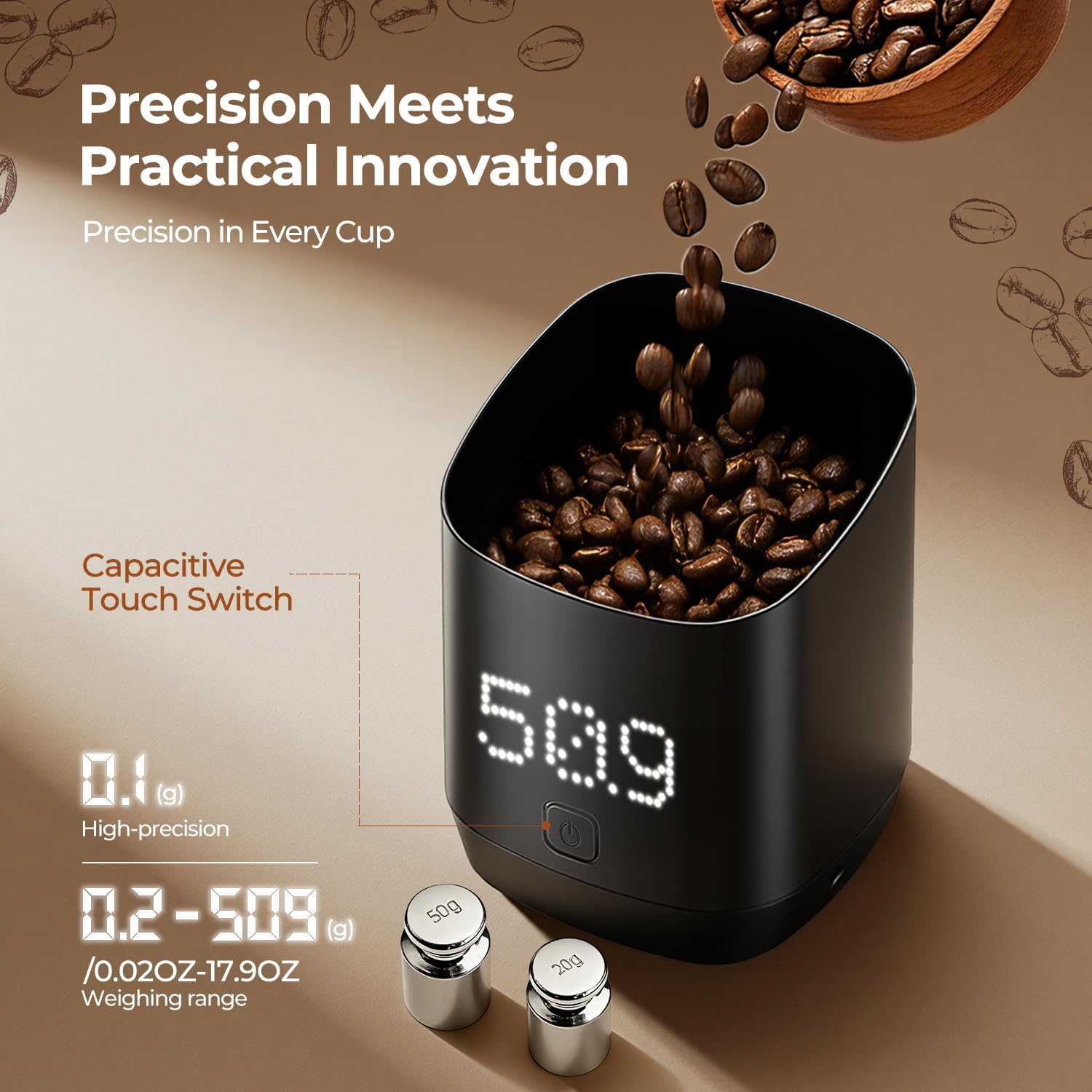
Digital Dosing Cup
Makes weighing beans faster and cleaner, with less mess around the grinder.
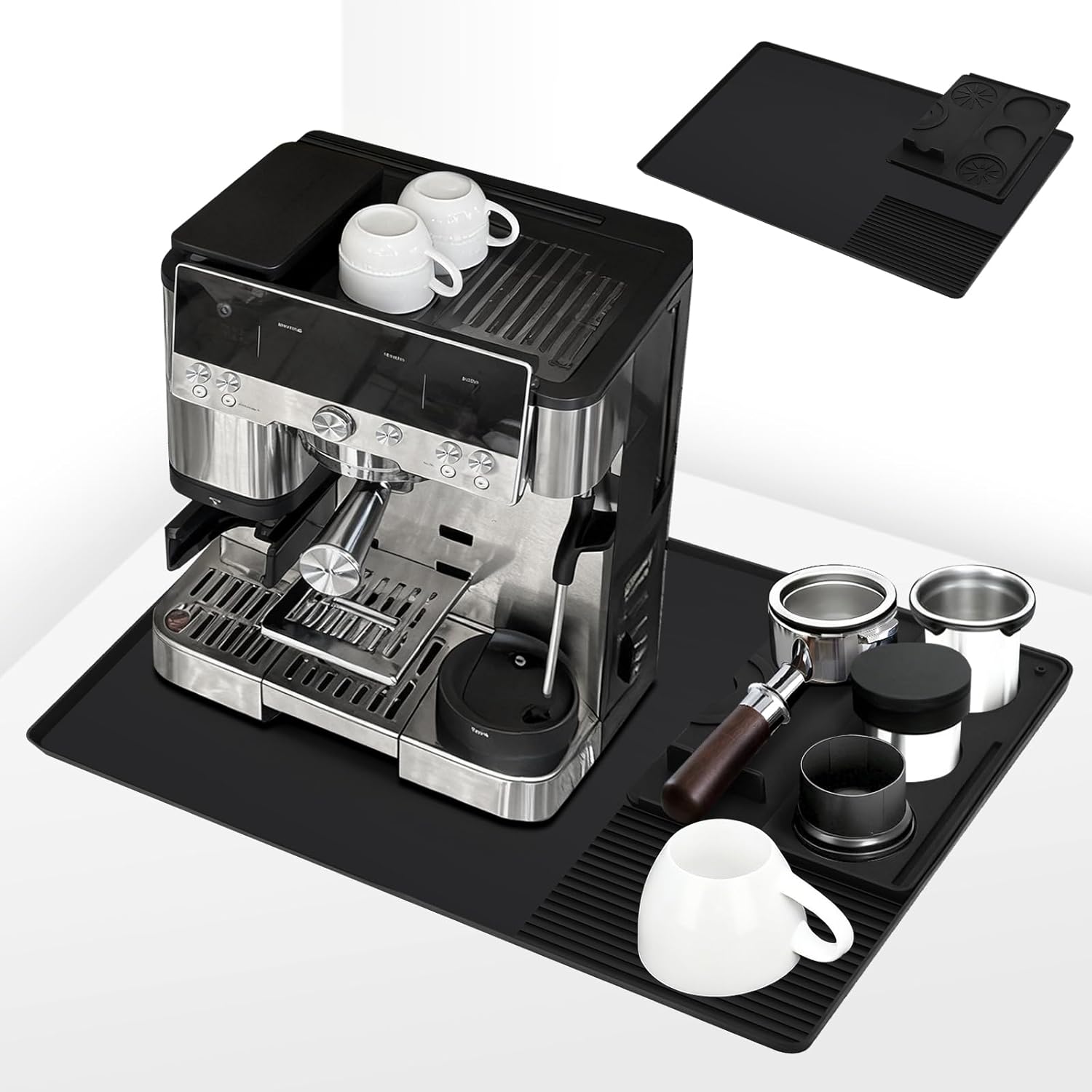
Silicone Mat
Protects your counter, catches spills, and gives your setup a cleaner working surface.

Vacuum Coffee Canister
Helps beans stay fresher longer by limiting air exposure after opening the bag.
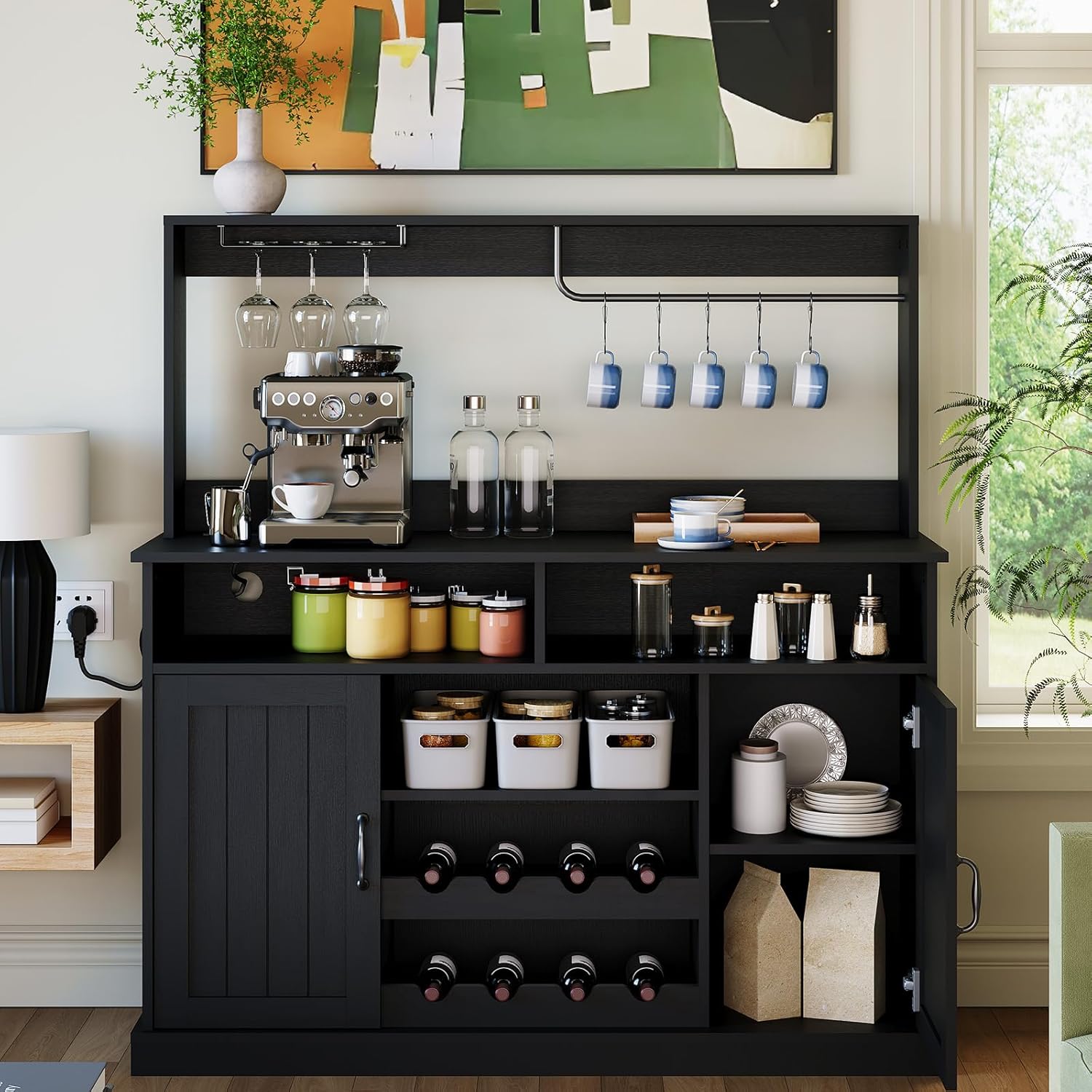
Farmhouse Coffee Bar Cabinet
Gives your machine, cups, beans, and accessories one dedicated home instead of cluttering the kitchen.
Power routing is simple. Each boiler has its own switch. The PID is the anchor. It shows both boiler temps with an integrated shot timer, and it supports a few practical energy settings that matter in a home. You can have the steam boiler drop after sixty idle minutes to keep the case cooler. You can have both boilers shut off after two hours if you forget to power down. Those two behaviors reduce casual heat soak in small kitchens and extend gasket life. They also make safety a default for busy households.
Water is by reservoir only. The 3 liter tank sits beneath a hinged section of the cup tray, which means you refill from above without removing cups or lifting a full tray. There is a low-water alert, and the machine stops the pump before you run the boilers dry. If you want direct plumbing and drain, this is not your machine. If you prefer the flexibility of tank use, the implementation here is clean and quick.
What you will not find are gimmicks. No app. No multi-page touchscreen. You control temperature, you see pressure, you time your shots. The machine is honest about what it is built to do. That tends to age well because the parts are standard and the learning transfers to any café E61 you will ever touch.
Workflow
Warm-up and heat soak
It behaves like a proper E61 dual boiler which is to say you must heat soak the group. Plan your morning. Power the brew boiler first. Keep a portafilter locked in and let the thermosyphon do its work. Enable the eco logic that suits your routine so you are not running both boilers all day. Once the group is hot, the PID keeps brew temps within a tight band and the machine finds a steady rhythm for back-to-back shots. The small boiler volumes help recovery because you are not heating a massive mass for each correction.
Controls you actually use
The PID here is the right kind of simple. You can change brew and steam temperature. You can set offsets. The shot timer is built in, visible, and requires no extra gear. That timer changes behavior over the first week because you begin to taste time rather than guess at it. The eco modes are set in the same control stack. There are no hidden button chords or cryptic codes beyond standard PID parameters, and most people will set it once and leave it.
Reservoir cadence and pump behavior
Tank-only is a constraint that will either suit you or not. For many homes it is a win. The hinged lid reduces friction and the low-water alert prevents dry firing. The pump is an Ulka 52 watt vibratory unit. It is well behaved in this chassis. You feel the gentle thrum in the shot, not the rattle of a cheap install. You also retain easy access to the expansion valve for brew pressure adjustment, placed under the cup tray where a screwdriver or coin can reach it in seconds.
Ergonomics on a small deck
The case is 11.25 inches wide and under 18 inches deep. That matters for narrow counters and galley kitchens. The steam wand clears pitchers easily and the hot water outlet is direct without splash drama. The drip tray is wide for the footprint and comes out straight without snagging. The face layout is conservative, which is a compliment here. It keeps the gauge readable from a standing position and keeps the PID away from steam blasts.
Espresso performance
Classic medium roasts
Set the brew boiler around 92 to 94 Celsius and work a clean 1:2 ratio. The E61’s soft preinfusion and the vibratory pump’s pressure ramp are forgiving when you are calibrating a new coffee. The integrated timer is your backstop. Consistency comes quickly once you commit to a dose, distribution routine, and a grind window. The dual manometer lets you check brew pressure while you adjust the expansion valve, and because the access point is under the cup tray you are not tearing the case apart to make a half-bar change.
Light roasts
The QM67 Evo does not ship with a flow control paddle. You can still pull clean, sweet shots on light roasts, but you will rely on a slightly higher brew temperature and longer puck wetting from the E61’s natural preinfusion rather than a needle valve. If you know that you want to shape flow, add an E61 profiling kit later. The machine’s platform takes the upgrade cleanly. Out of the box, your best tool is the timer. Write the curve you prefer in seconds rather than pump position and you will develop repeatable profiles by time and taste.
Repeatability and recovery
Two small boilers managed by PID give you a friendly pattern for morning sessions. Pull a shot, steam a small pitcher, wipe, purge, and you are back at target without drama. If you are entertaining and running a few milk drinks in a row, bump steam temperature a notch to keep pressure where you want it, then bring it back down for daily use. The machine’s eco logic prevents accidental all-day idling after a busy brunch.
Milk steaming
The service boiler sits around 1.0 liter and is insulated. That is the right size for a home machine that must be fast enough for a couple of back-to-back drinks without turning the case into a heater. Out of the box you get a two-hole tip and a four-hole tip. The two-hole gives beginners the longer window needed to texture without overheating. The four-hole is the move for people who steam 12 to 20 ounces and want speed. The PID lets you tune steam temperature. Expect to run a notch higher for larger pitchers and drop slightly when you are making single cappuccinos where precision is more important than velocity.
The wand is stainless and the valve is smooth. Purge before and after steaming, wipe immediately, and you will not fight baked milk. The dual gauge keeps steam pressure visible so you know when to start the next pitcher. The small service boiler paired with insulation gives a surprisingly quick rebound for its size which is why the machine works for small gatherings without feeling like a compromise.
Maintenance and reliability
The maintenance cadence is classic prosumer E61. Water backflush daily on heavy use days. Detergent backflush weekly. Keep the lever cam lubricated on a calendar, not on a whim. Replace the group gasket before it goes hard. The top tray lifts to reveal the reservoir and the expansion valve so you can do most routine work without removing panels. When you do need to open the case, the shell comes off cleanly. Retailer support hubs also publish service articles on panel removal and fill-solenoid cleaning which shortens downtime if you ever need to clear a clog.
Electrical protection is sensible. There is a resettable high-limit cutout to protect the elements, and the machine watches the tank level to prevent running the pump dry. The small boilers and insulation reduce heat load on internals which tends to extend life for plastics and nearby wiring. None of that replaces water care. Use softened or appropriately remineralized water. The QM67 Evo is a tank-only design, so plan on a filter cartridge in the reservoir and regular changes. That one habit is the difference between a machine that runs for a decade and one that scales itself to death.
Spare parts availability for Quick Mill is solid in North America and Europe. Knobs, wands, pumps, and PIDs are all standard service items carried by the usual suspects. The vibratory pump is a consumable at multi-year intervals. It is affordable and easy to replace. Keep the machine clean inside and out, keep the cup tray vents clear, and the QM67 Evo will be easy to own.
Programming and control
You will live on three settings. Brew temperature. Steam temperature. Shot time. The PID offers programmable offset differentials which let you match displayed brew temperature to what a Scace device would read at the puck. The factory offsets are calibrated and should not be changed casually. The timer starts when you lift the lever. That is the behavior you want because you can stop looking at a phone and develop muscle memory. The eco modes are practical and live in the same menu. Together these controls cover almost everything you need day to day.
There is no multi-profile logic and there is no plumb-in option. If you want app-based recipes and logged curves, you are shopping in a different philosophy. If you know you want a manual flow paddle, you can add a third-party kit to the E61 when you are ready. The platform is cooperative with those upgrades, which protects your investment if your tastes change.
Competitive comparisons
Lelit Elizabeth v3
Similar footprint and price class with dual boilers and strong steaming for size. Elizabeth is not an E61, which is the point for some buyers. It heats faster and offers clever preinfusion modes at the solenoid. QM67 Evo answers with the classic E61 lever feel, a bigger service boiler, and a more café-familiar workflow. If you want compact speed and programmable preinfusion without an E61, Elizabeth is a sharp tool. If you want the E61 ritual, the QM67 Evo is the match.
Profitec Pro 300
Another compact dual boiler. The Pro 300 is lighter, heats fast, and has a smaller steam boiler. It is not an E61, which makes it responsive and efficient but different at the handle. The QM67 Evo’s E61 and dual gauges give a more traditional vibe and more steam headroom. Decide whether you value heat-up speed or the E61’s thermal mass and feel.
Rancilio Silvia Pro X
Dual boiler in a familiar shell with a vibe pump and no E61. It adds preinfusion control and a strong service network. It steams well for size and heats fast. The QM67 Evo’s E61 group and dual gauges appeal to baristas who want café muscle memory at home. If you run all tank and want even tighter vertical space, the Silvia Pro X fits where an E61 box will not.
ECM Synchronika
Bigger case, heavier build, rotary pump, and direct-plumb capability. With ECM’s optional flow control kit you can shape shots at the group. It costs more and takes more space. If you need plumbing, a rotary pump, and a larger steam boiler, the Synchronika is an upgrade path. If you want to stay small and tank-only while keeping dual-boiler stability, the QM67 Evo makes more sense.
Lelit Bianca PL162T
Ships with a true needle-valve paddle and firmware-based low-flow modes. It is a better light-roast profiler out of the box and has a movable reservoir. It also costs more. If you love to ride the shot by feel, Bianca is the natural pick. If your priority is simple dual-boiler stability in a compact case and you do not need a paddle, the QM67 Evo is a cleaner buy.
Real-world numbers and observations
- Boiler volumes and materials. Expect roughly 0.75 to 0.8 L on brew and about 1.0 L on steam. Retailers list stainless steel insulated boilers on current US units, with TEA-treated internals across the Quick Mill line noted elsewhere. Different import batches explain why you see copper vs stainless claims online. The behavior is the same on taste and recovery.
- Dimensions and mass. 16.25 in tall, 11.25 in wide, 17.75 in deep. About 50 lb. The footprint is smaller than many E61 dual boilers which makes it a fit for narrow counters.
- Pump and pressure tuning. Ulka 52 W vibratory pump with user-adjustable expansion valve under the cup tray. Use the lower manometer segment to verify brew pressure while adjusting with the backflush disc in place.
- Reservoir workflow. 3 L tank accessed through a hinged cup tray lid, with low-water sensing and automatic protection. If you want line pressure, choose a different platform. If you want convenience and easy water management, this design is faster than lifting cups and trays.
- Power reality. Typical US units run about 800 W on the brew boiler and 1100 to 1400 W on steam. You are fine on a 15 A circuit. Do not plug into power strips. Keep the case on a dedicated outlet.
- Price by region. United States is steady around 2,495 USD at major retailers. EU sellers often land around 1,900 to 2,100 EUR. UK sellers list a little over two thousand GBP before promos. Australia tends to sit around mid-three-thousands AUD. Always check shipping and VAT to compare apples to apples.
Bench use: dial-in and day-to-day
This is the routine that makes the QM67 Evo feel automatic.
- Water and warm-up. Fill the 3 L tank with softened or properly remineralized water. Switch on the brew boiler. Leave a portafilter locked in. When the PID is at setpoint, give the group a quick purge to equalize. Turn on the steam boiler as you prep milk. If you are running a one-or-two drink morning, you can wait to heat the steam boiler until the first shot is in motion.
- Set brew temperature. Start around 93 Celsius for medium roasts. Go warmer for light roasts. The factory brew offset is calibrated against a Scace and should be left alone unless you are measuring. The goal is repeatability. Pick a number and build taste memories around it.
- Prep, time, and taste. Use the timer. Dose by scale, distribute cleanly, tamp level, and pull to a target time and ratio. Adjust grind. Leave brew pressure alone until your pucks are even and your flow is centered bottomless. Then use the expansion valve to set your preferred target on the gauge while locked against the blank.
- Milk. Start on the two-hole tip if you are still learning. Stretch for a second or two, then roll. Move to the four-hole tip once you are comfortable and want speed or larger pitchers. Raise steam temperature a notch for two drinks at once, then bring it back down.
- Clean as you go. Purge the wand, wipe, and purge again. Water backflush at the end of a session. Detergent backflush every week if you are pulling daily. Keep the cup tray vents clear, and vacuum stray grinds out of the tray slots so they do not wick moisture into the case.
Where the QM67 Evo excels
- Compact true dual-boiler. Many E61 boxes with two boilers stretch deeper and wider. The QM67 Evo stays trim yet gives you independent temperature control and genuine steam power. That combination is the value proposition.
- Useful PID and timer. The integrated shot timer is not a novelty. It turns your workflow into a repeatable cadence and helps you calibrate a grinder quickly. The PID offsets and eco modes round out the control set without turning the machine into a project.
- Service friendliness. Top-tray access to the expansion valve, a reservoir lid that hinges, and a shell that comes off without a fight keep maintenance friction low. That is what you want for a machine you plan to keep.
Clear trade-offs
- Tank-only. If you need direct plumb and drain, pick a rotary-pump platform. Quick Mill’s own Vetrano 2B Evo or ECM’s Synchronika are the natural steps up. The QM67 Evo is built for people who prefer the simplicity of a reservoir.
- No stock flow control. You can add a kit if you want to profile light roasts with manual flow ramps. Many owners never do. Decide early so you are not relearning puck prep months later.
- Vibratory pump feel. A good vibe pump is quiet enough at home and is easy to replace, but rotary-pump lovers will notice the difference. If your kitchen is extremely noise-sensitive, audition both styles.
Scores
- Build quality: 8.8
- Temperature stability: 8.9
- Shot consistency: 9.0
- Steaming power: 8.6
- Workflow and ergonomics: 9.0
- Programmability and control: 8.6
- Maintenance and serviceability: 9.0
- Value: 9.0
Total: 8.9
Verdict
The Quick Mill QM67 Evo is the adult in the compact dual-boiler room. It is not trying to be everything. It is not chasing trends. It delivers the core package that matters for daily espresso at a high level. E61 feel. Dual-boiler stability. A PID you actually use. A shot timer that makes you better. Reliable steaming for one to two drinks at a time. A reservoir you can fill in seconds. If plumbing and profiling are your non-negotiables, step up a class. For everyone else, this is the machine that keeps your routine sharp and your coffee sweet without eating your counter or your budget.
TL;DR
Compact dual-boiler E61 with a vibratory pump and a clean PID plus timer. Tank-only, no stock flow control, and that is fine for most homes. Stable heat, honest steaming, simple service. Priced right.
Pros
- True dual-boiler temperature control in a narrow case
- Integrated PID with shot timer and practical eco modes
- Easy reservoir access and low-water protection
- Dual gauges and accessible brew pressure adjustment
- Predictable steaming with included 2-hole and 4-hole tips
Cons
- Tank-only design, not plumbable
- No native flow control for light-roast profiling
- Vibratory pump feel and noise may not satisfy rotary-pump fans
- Small service boiler means smart temperature management when steaming many back-to-back pitchers
Who it is for
- Home baristas who want E61 ritual, dual-boiler stability, and a small footprint
- Prosumers moving up from a heat exchanger who value a built-in shot timer
- Espresso-first drinkers who make one or two milk drinks at a time
- Households that prefer the flexibility of a reservoir over the commitment of a plumbed install
Glanceable specs
- Group: E61, lever actuation, thermosyphon heated
- Pump: Ulka 52 W vibratory, expansion valve accessible under cup tray
- Boilers: Brew about 0.75 to 0.8 L, Steam about 1.0 L, insulated, PID control on both
- Boiler material: Often listed as stainless steel on current US imports, with TEA-treated internals noted by some sellers across the line
- Controls: Dual PID with integrated shot timer, offsets, eco modes
- Gauges: Dual manometer for steam and brew pressure
- Water: 3 L reservoir, hinged access, low-water sensor
- Dimensions and mass: About 16.25 in H x 11.25 in W x 17.75 in D, around 50 lb
- Power: 110 V, 15 A, typical 800 W brew, 1100 to 1400 W steam
- Included: Two portafilters, backflush disc, 2-hole and 4-hole steam tips, 58 mm metal tamper
- Notable limitations: Not plumbable, no stock flow paddle
Market notes and variants
US pricing sits near 2,495 USD with periodic promotions. EU retailers often list around 1,900 to 2,100 EUR depending on VAT and warranty. UK stores tend to show a low-two-thousands GBP list that moves with exchange rates and seasonal sales. Australia runs mid-three-thousands AUD. When you compare, factor in shipping, VAT, and warranty length, since those drive effective out-the-door cost.
The closest sibling in Quick Mill’s range with plumbing and a rotary pump is the Vetrano 2B Evo, which shares the brand’s control DNA but adds the install options many cafés and workshop bars require. If you are tank-only now and could see a future line install, weigh the Vetrano 2B Evo at purchase so you do not pay the upgrade tax later. If you plan to stay tank, the QM67 Evo is the leaner long-term partner.
Setup checklist
- Place the machine with lever and wand clearance.
- Fill the 3 L tank with softened or properly remineralized water.
- Switch on the brew boiler first. Heat soak with a portafilter locked in.
- Set brew to 93 Celsius for medium roasts and adjust with taste.
- Enable the eco mode that fits your routine.
- Confirm brew pressure at the gauge with the backflush disc installed. Adjust the expansion valve under the tray if needed.
- Start on the two-hole steam tip while you learn. Move to four-hole when you want speed.
- Backflush with water daily on heavy-use weeks. Detergent backflush weekly. Lubricate the lever cam on schedule.
We’ve categorized the best espresso machines for every kind of buyer
Find the right shortlist faster, whether you want convenience, a beginner-friendly setup, a smaller footprint, or better value at a given budget.
Best Superautomatic Espresso Machines
One-touch picks for speed and convenience.
Best Espresso Machines for Beginners
Easy-to-use machines with a smoother learning curve.
Best Small Espresso Machines
Compact machines for tighter kitchens and counters.
Best Espresso Machines With Built-In Grinder
All-in-one options with fewer extra pieces to buy.
Best Cheap Espresso Machines Under $500
Budget picks that still make sense for real espresso.
Best Prosumer Espresso Machines Under $1000
More serious machines with stronger value for the money.
Best Single Boiler Espresso Machines
Simple, space-saving picks for espresso-first routines.