
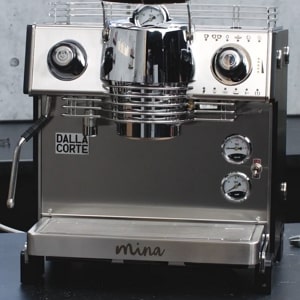
Coffeedant score: 9.3 / 10 • Plumb-in only • Five-stage flow profiling (0–12 g/s)
Dalla Corte Mina
Mina makes grams-per-second flow profiling a repeatable tool: build a five-stage curve by lever feel or in the app, save it, and the machine enforces it with a precise flow meter—plus real café-grade steam in a compact single-group body.
Overview
Dalla Corte Mina is a plumb-in-only, multi-boiler single group built around Digital Flow Regulation (DFR). You set a five-stage water-delivery curve in grams per second (lever or app), save it, and Mina repeats it with high accuracy—backed by volumetric stops and a serious 3.0 L steam boiler.
Pros
- True five-stage flow profiling in g/s, saved and repeatable
- Saturated-group temperature response that shows up quickly in-cup
- Volumetric dosing tied to an accurate flow meter for reliable stops
- Commercial-grade, dry steam from a 3.0 L service boiler
- App diagrams help recipe development and training without “toy” vibes
Cons
- Plumb-in only (no internal tank): install + filtration required
- 54 mm basket ecosystem on common 110 V retail builds (not 58 mm)
- Premium pricing in GS3 / Slayer territory
- Profiling power can tempt over-tweaking—needs discipline
Features
- Type: multi-boiler single group, saturated brew path
- Boilers: 0.5 L group boiler + 3.0 L service boiler (independent PID)
- Flow profiling: 5 stages, 0–12 g/s (lever or Mina App)
- Volumetrics: high-accuracy flow meter (auto dosing + manual modes)
- App: Bluetooth LE, profile diagrams, save/recall recipes
- Water: fixed water line + hot-water outlet (no reservoir)
- Size/weight: 385 W × 385 H × 410 D mm, ~33 kg
- Power: up to 2850 W (230/240 V) • up to 1440 W (115 V)
- Baskets: 54 mm on common retail 110 V builds
- Options: DC System modules (GCS, MCS, OCS) optional
What to confirm before buying
- Voltage: 115 V vs 230/240 V availability in your market
- Basket/portafilter standard: 54 mm (common 110 V retail builds)
- Install needs: shutoff valve, regulator, filtration, and drain planning
- Finish package: colors/trim vary (wood, metal, glass, matte/gloss)
Pricing
- USA (late-2025 examples): commonly listed around ~$11,650 (110 V colorways)
- UK: from ~£6,999 (ex VAT)
- EU: widely ~€5,300–€9,100 depending on finish/seller
- Note: pricing swings by finish, importer, and stock—verify current listings and voltage.
FAQs
- Do I need the app to use Mina?
- No. You can run profiles from the group lever. The app is best for building, saving, and recalling recipes cleanly.
- What does “grams per second” do for taste?
- It lets you define puck wetting, bulk extraction, and the tail with flow as the control variable—then repeat it reliably.
- Is it really plumb-in only?
- Yes—no internal tank. Plan proper filtration, a regulator, and a clean install.
- Is 54 mm a problem?
- Not inherently, but it’s a different accessory universe than 58 mm. Confirm basket options you want before committing.
Who it is for
- Prosumers who truly use profiles and want repeatable g/s control
- Small cafés, carts, and tasting bars needing big steam in a compact single group
- Roasters/trainers who want to save and repeat curves for comparative tasting
Who should avoid it
- Anyone who can’t (or won’t) do a plumb-in install
- Buyers who prefer “set-and-forget” with no profiling learning curve
- Shoppers who need standard 58 mm compatibility everywhere
Day-one workflow
- Install right: filtration + regulator + stable line pressure.
- Warm and purge: saturated group comes up quickly; give baskets/portafilter a few extra minutes.
- Build a baseline: a short low-flow wetting stage, a mid/high-flow plateau, and a softened tail.
- Save the winner: store the profile, then let volumetrics stop shots at your house ratio.
- Clean cadence: water backflush daily; detergent backflush on schedule to keep the flow path precise.
Takeaway
Mina is the single-group platform that made flow profiling a first-class control variable rather than an aftermarket trick. It is a compact multi-boiler with a saturated 0.5 L group boiler and a 3.0 L service boiler, plumb-in only, and built around Dalla Corte’s patented Digital Flow Regulation. You define water delivery in grams per second across five stages with a lever on the group or in the app. The machine then repeats that profile with a lab-grade flow meter and a volumetric brain. Steam capacity is real, the chassis is dense and quiet, and the app saves and recalls recipes in plain language. There is nothing toy-like here. Mina is a precise instrument for cafés that want a flexible single group, prosumers who actually use profiles, and small bars that need commercial steam in a small footprint.
At a glance
- Format: Multi-boiler single group, saturated brew path, manual lever and app control for flow profiling in five stages. Plumb-in only.
- Boilers: 0.5 L dedicated brew group boiler, 3.0 L service boiler, independent PID control.
- Flow profiling: Five programmable stages, 0 to 12 g/s range with stage indicators, set by lever or Mina App. Valve opening adjustable with 0.01 mm precision.
- App: Bluetooth LE Mina App for creating, saving, and recalling profiles with interactive diagrams.
- Volumetrics: Automatic dosing via high-accuracy flow meter, manual or auto modes.
- Dimensions and mass: 385 W x 385 H x 410 D mm, 33 kg.
- Power: Max 2850 W at 230/240 V, 1440 W at 115 V.
- Water: Fixed water connection and hot-water outlet included. No internal tank.
- Basket system: 54 mm portafilter standard on retail 110 V units.
- Ecosystem: Optional DC System modules GCS grinder control, MCS automatic milk, OCS online control.
- Typical pricing by market: USA commonly lists near 11,650 USD for 110 V colorways at specialty retailers. UK retail from about £6,999 ex VAT. EU listings vary roughly 5,300 to 9,100 EUR depending on finish and seller. AU pricing varies widely by importer. Always verify current stock and voltage.
Build and design
Dalla Corte designs commercial machines first, then scales them. Mina inherits that approach. The body is steel with tight casework, the frame is rigid, and the internal layout centers a saturated brew group and a dedicated 0.5 L brew boiler under PID. The 3.0 L service boiler lives beside it and delivers the dry steam you expect from a serious café head, not a hobbyist box. The footprint is compact on paper at 385 x 385 x 410 mm, but the stance is purposeful and the 33 kg mass keeps the chassis planted when you lock in a portafilter.
Plumbing is standard. There is no internal reservoir and the spec is explicit about the fixed water connection. That makes Mina a better install for permanent bars or prosumer kitchens that are already plumbed or are willing to do the work once. You gain stability, cleaner maintenance, and the ability to pair the machine with inline filtration that preserves flavor and protects the boilers.
Shop the essentials
The small upgrades that make a home coffee setup cleaner, smoother, and more enjoyable to use every day.

Cleaner & Descaler Tablets
Keeps your machine clean, helps prevent buildup, and protects long-term performance.
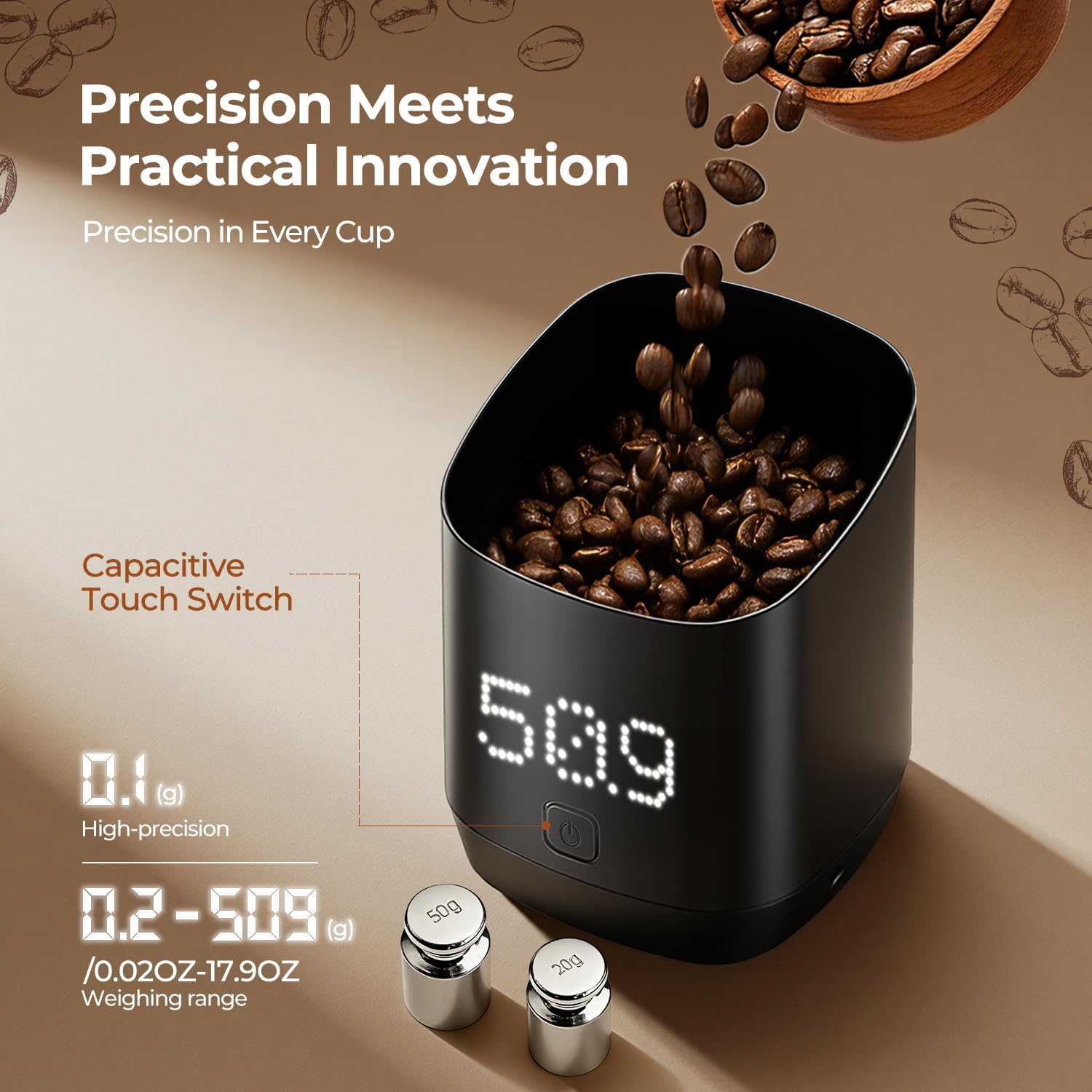
Digital Dosing Cup
Makes weighing beans faster and cleaner, with less mess around the grinder.
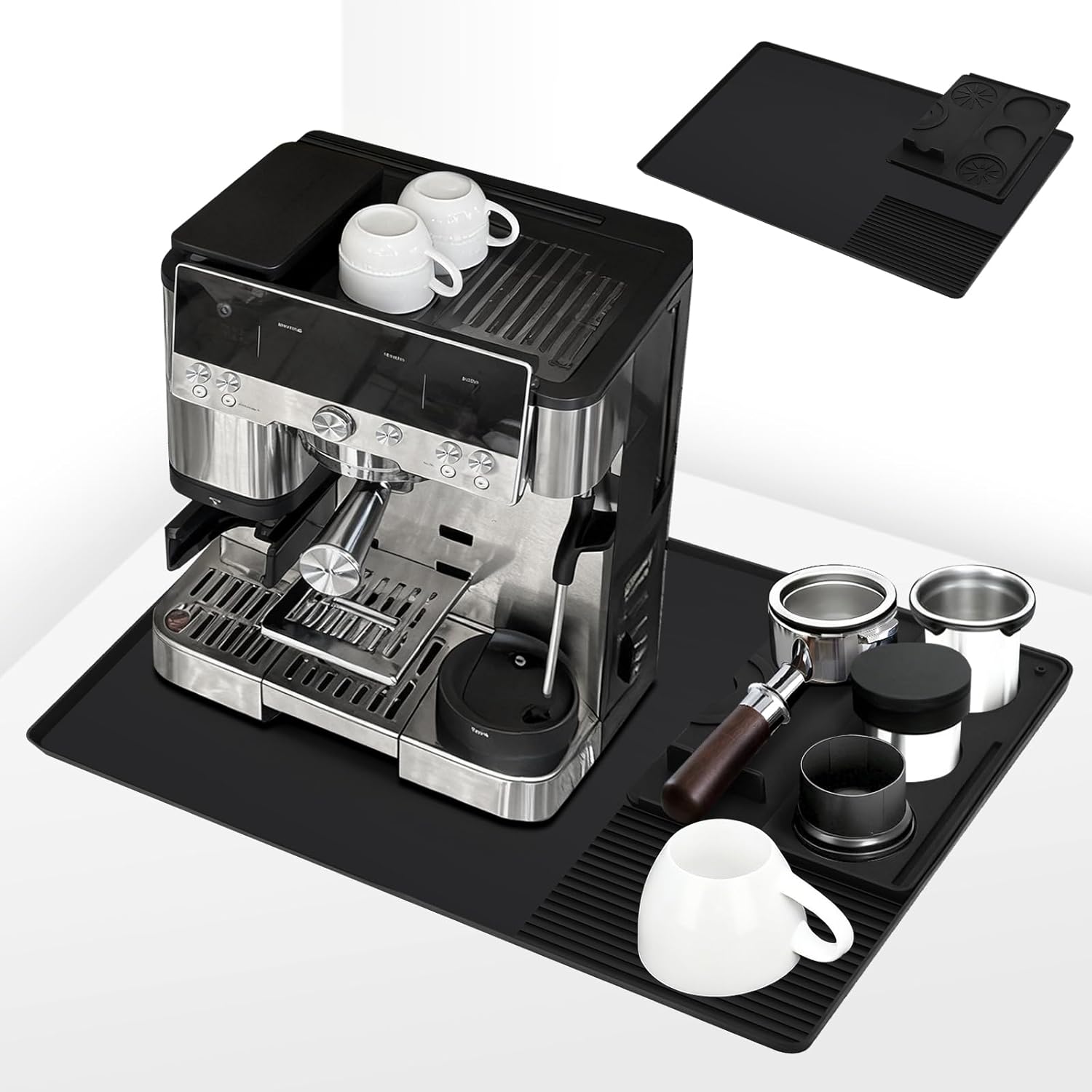
Silicone Mat
Protects your counter, catches spills, and gives your setup a cleaner working surface.

Vacuum Coffee Canister
Helps beans stay fresher longer by limiting air exposure after opening the bag.
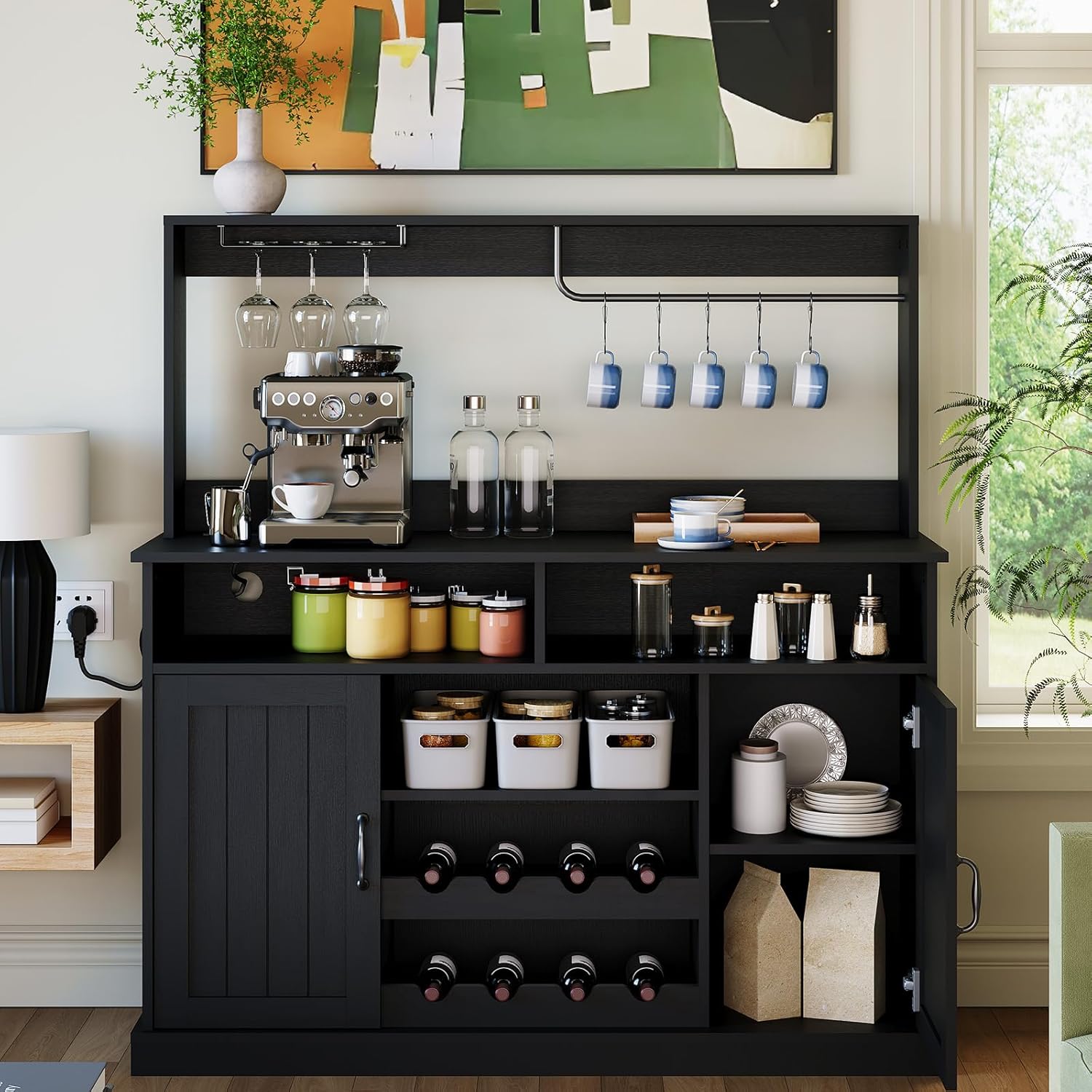
Farmhouse Coffee Bar Cabinet
Gives your machine, cups, beans, and accessories one dedicated home instead of cluttering the kitchen.
The group lever is the calling card. It is a stout yoke on the right shoulder that toggles through five flow stages you define. A column of LEDs tracks the active stage live. If you prefer screens, the Mina App mirrors those stages and lets you time each one in seconds and set the grams-per-second target numerically. You can build from the handle by feel or from the phone by numbers. On a bar shift, the lever is faster. When you are developing a new coffee, the app’s diagrams make iteration tidy.
Dalla Corte’s ecosystem work shows up here. Mina exposes hooks to DC System modules. GCS can talk to DC One or DC Two grinders and nudge grind automatically when extraction drifts. MCS can turn a special auto steam arm into repeatable milk foam by temperature and recipe. These are optional, not mandatory, but they push Mina toward small bars that want single-group flexibility without losing control over quality.
Finish and customization are deep. Dealers offer wood, glass, metal, gloss or matte, and many colors. This matters for prosumer kitchens that treat the machine as furniture and for bars that want brand alignment. It does not change how Mina extracts, but it helps the machine live in real spaces.
Workflow
Heat-up and readiness
With a saturated brew path and a small brew boiler, Mina reaches a shot-ready state quickly. The brew temperature you set is delivered to the puck with minimal lag. Give the portafilter, baskets, and case a few extra minutes when you plan a longer session or tasting flights. The practical rhythm is simple. Power on, purge, prep, pull. The multi-boiler design keeps brew and steam temperature independent in a way that feels like a compact café group rather than a home dual boiler.
Defining stages
The lever and the app speak the same grammar: grams per second, seconds per stage, five stages total. On the lever you drag through stages by feel and watch the LED stack. In the app you drag a timeline and type 2.5 g/s, 6.0 g/s, 9.0 g/s, and so on. You can build the same curve both ways. Once you like the taste, save it. Mina stores and repeats recipes, and because the machine reads flow in grams per second with its own flow meter and not a rough pump proxy, the repeatability is very high.
Manual vs automatic
You can run Mina two ways. Manual uses the lever to ride the shot in real time. Automatic uses the app’s recipe to run the five stages with volumetric stop. The choice is not either-or. Many owners develop with the lever for a day, then capture the curve in the app and hand repetition off to the controller for service. The flow meter is accurate enough that automatic dosing by water mass is credible without a scale, which makes repetition simpler on a bar with multiple hands.
Volumetrics that act like a tool
The volumetric stop is set from the control knob or in the app. Program once at your house ratio and Mina will end shots reliably at the target. It shortens the grind-calibration loop and removes human timing error for teams. You can always cancel and run manual if a puck looks off under a bottomless.
Ergonomics
The machine is compact front to back, but plan real depth for a straight portafilter pull. The wand has full range for 12 to 20 ounce pitchers and the hot-water outlet is clean, with mixed water that avoids the sputter some small machines suffer. The face shows three gauges on many retail builds: steam pressure, pump pressure, and brew. Live feedback is easy to read at a glance.
Espresso performance
Saturated-group behavior
Temperature changes matter in 1 °C steps and you taste them on the next pass. That is the advantage of a dedicated 0.5 L brew boiler tied to the group. You do not juggle offsets or chase soak time as a rule of life. Dose honestly, distribute cleanly, and build your flavor with temperature and flow instead of luck.
Flow profiling in practice
Dalla Corte’s own guidance frames flow as grams per second because that is what the puck sees. Open the lever to a gentle flow for wetting, step to a mid-flow plateau for bulk extraction, then soften the tail. That basic three-act approach is friendly to medium roasts. For dense light roasts, extend the low-flow phase, hold a lower plateau, and keep the finish controlled to reduce astringency. Mina’s range covers 0 to 12 g/s, and the system can hold each stage for a timed window. Once saved, the machine repeats the behavior without drama.
A few working profiles to anchor taste:
- House medium, syrupy. 2.5 g/s for 7 s, 8.0 g/s for 18 s, 5.0 g/s for 5 s. 1:2 in 26 to 30 s from pump on.
- Nordic light, clean. 2.0 g/s for 12 s, 6.0 g/s for 22 s, 4.0 g/s for 6 s. 1:2.2 in 32 to 36 s.
- Chocolate-heavy milk base. 3.0 g/s for 6 s, 9.0 g/s for 18 s, 6.0 g/s for 6 s. 1:1.8 in 25 to 28 s.
These are starting points. The point is that you are moving water, not guessing. Dalla Corte’s own articles spell out the same logic, tying 5 g/s wetting to acidity control and using staged flow to manage body and clarity.
Why grams per second matters
Most “pressure profiling” rigs chase pump pressure because that is easy to measure. Mina controls and displays flow instead, which maps more directly to puck physics. If flow is controlled and measured tightly, you prevent early fines migration, you tame the initial ramp into the coffee, and you keep the tail from turning bitter. The taste gains are consistent across burr sets once puck prep is honest. Dalla Corte’s DFR can change valve opening in 0.01 mm steps internally and the app tracks flow as a number rather than an abstract “low to high.” That is why a profile drawn in the app can be handed to a new barista and produce the same flavor.
Pressure is still a baseline
You can adjust brew pressure at the pump, but on Mina it is a set-once baseline rather than the star of the show. Set 9 bar on a blind disc and leave it unless a coffee forces your hand. Spend your time on flow, temperature, and dose. It is a calmer way to work and it fits the way the machine is engineered.
Milk steaming
The 3.0 L service boiler is the reason Mina can sit in small cafés and not flinch. You get dry, stable steam and fast recovery between pitchers. A two-hole tip gives new users time to texture. A higher-flow tip supports 12 to 20 ounce pitchers at pace for service. The boiler setpoint is PID-controlled, and dealers note that steam quality is exceptionally dry, which helps you finish glossy milk without big surf. In daily life this means you can pull an espresso, steam a cappuccino pitcher, wipe, purge, and be back at pressure without feeling like you are waiting on the machine.
If you fit the optional MCS auto steam arm, you can program milk recipes by temperature and foam level, then run consistent milk for teams or events. The core machine does not need it to produce great milk, but in busy service it removes variation.
Maintenance and reliability
Daily loop
Backflush with water at session end, wipe and purge the wand, and clean the dispersion screen when the bottomless shows you a mess. Mina includes an automatic cleaning program, which is worth using weekly if you pull daily. Volumetrics require a clean flow path to stay precise, so do not skip detergent backflush on a schedule.
Water is the decider
Plumb-in machines live or die by water. Install a regulator and proper filtration at the wall. Match your recipe to Dalla Corte’s spec to prevent scale and corrosion. Stainless components forgive more than copper, but scale is indifferent to marketing. If your profiles suddenly taste thin or your volumes drift, audit water and cleanliness before you blame firmware.
Service and parts
Dalla Corte has a global footprint, and Mina’s parts stream is established through specialty dealers in the US, UK, EU, and APAC. The mechanicals are accessible for trained techs and the layout is rational, which matters when you own a plumb-in machine. The machine is heavy enough that a good install spot should be chosen once and left there.
Programming and control
Your control stack is simple and deep in the right places.
- Temperature. Set brew and steam independently by degree. The saturated group makes small changes meaningful on the next shot.
- Flow profile. Five stages, each defined by time and grams per second. Build by lever or app. Save profiles for specific coffees and swap them cleanly.
- Volumetric stop. Program single and double. Keep a house ratio and stop human mistakes on mornings when not everyone is awake.
- Scheduling and stats. The app covers on/off windows and keeps a recipe list with diagrams, which is helpful for repeatability and training.
- Ecosystem. Optional GCS connects Mina to DC One or DC Two grinders. If shot time drifts, the grinder bumps burr gap automatically to bring you back. Optional MCS adds repeatable milk. These are commercial tools and they behave that way.
Bench workflow: the way to run Mina from day one
1) Install properly
Plumb the machine with a shutoff, regulator, and filtration. Confirm pressure at the wall. Keep the drain clean and accessible. This one step eliminates 80 percent of the headaches people blame on machines.
2) Heat and settle
Power on, purge the group and wands, and give the portafilter time to match group metal. Load baskets warm. You are not chasing long heat soaks. The saturated brew path closes the gap quickly.
3) Build a baseline profile
Start with a medium roast. In the app set Stage 1 to 2.5 g/s for 8 s, Stage 2 to 8.0 g/s for 16 s, Stage 3 to 5.0 g/s for 6 s, and leave Stages 4 and 5 at 0 s. Save it as “House A.” Pull a 1:2 in the high 20s seconds. Adjust grind. Taste. Save the version you like.
4) Capture a light-roast profile
Duplicate House A. Reduce Stage 2 to 6.0 g/s, extend Stage 1 to 12 s, and add a 4.0 g/s Stage 3 for 6 s to soften the finish. Raise brew temperature 1 °C. Label it “Light B.” Pull three shots with fixed dose and ratio. Pick the winner.
5) Put volumetrics to work
Program your single and double stop volumes for the house ratio. In service, volumetrics and a saved profile will keep guests inside a tight window while you watch puck prep.
6) Milk routine
Run the factory steam setpoint for daily cappuccinos with a two-hole tip. Switch to a higher-flow tip and raise setpoint when entertaining. If you fit MCS, save a dairy recipe and one for your preferred plant milk.
7) Cleaning cadence
Water backflush daily, detergent backflush weekly for daily users. Purge and wipe immediately after steaming. The automatic cleaning program is a gift. Use it.
Competitive comparisons
La Marzocco GS3 MP and AV
GS3 is the saturated-group reference in this size. AV adds volumetrics; MP gives you a manual paddle with a different feel than Mina’s five-stage flow approach. Steam power is strong on both. GS3 does not offer native grams-per-second stage control or app-stored flow recipes. Choose GS3 for the LM ecosystem, larger chassis, and either AV volumetrics or MP hand control. Choose Mina if you want flow defined in g/s with five stages you can save and repeat.
Slayer Single Group
Slayer uses a patented needle-valve center position for restricted-flow pre-brew with a three-position paddle. It is tactile and loved for sweetness, but it does not store multi-stage grams-per-second recipes the way Mina does. Slayer is also plumb-first and heavy. Pick Slayer if you value its center-position feel and want to ride shots. Pick Mina if you want to define a five-stage flow curve numerically and make it repeat.
Rocket R Nine One
R Nine One brings a saturated group with a gear pump. It writes and replays pressure curves with a paddle and touchscreen. That is pressure over time, not grams-per-second flow. Rocket is superb for pressure-profiling workflows. Mina is the clean answer for flow-profiling workflows with volumetric stops driven by a high-accuracy flow meter. The better pick is the one that matches how you think.
Decent DE1
Decent is a tablet-centric lab with tight control of pressure, flow, and temperature and complete shot logging. It is peerless for data and teaching. Mina wins on steam power, traditional ergonomics, and a simpler, stand-alone workflow. If you want an instrument you can hand to a team without a tablet, Mina is calmer. If you want total telemetry, Decent is the reference.
La Marzocco Linea Mini
Mini is compact, saturated, and now supports Brew-by-Weight with LM’s scale. It does not natively profile flow in five stages. Mini is brilliant for saturated stability and app scheduling in tight spaces. Mina is for people who want flow profiling as muscle memory backed by a recipe list.
Dalla Corte Studio and Studio Aqua
Studio is the smaller DC home line with a reservoir option. It does not carry Mina’s DFR feature set. If you need a tank and want DC’s temperature behavior, Studio is the entry point. If you need profiling in grams per second and commercial steam in a single group, Mina is the answer.
Real-world numbers and observations
- Boilers and materials. 0.5 L saturated group boiler and 3.0 L steam boiler, independent PID control.
- Power and voltage. Max 2850 W at 230/240 V, 1440 W at 115 V. Connected loads listed for both 50/60 Hz variants.
- Footprint and mass. 385 x 385 x 410 mm, 33 kg. Plan depth with a straight portafilter pull and hose slack.
- Water. Fixed water connection only. Hot-water outlet included.
- Flow control. Lever or app, five stages, 0 to 12 g/s, with LED stage indicators and 0.01 mm internal valve precision.
- Volumetrics. Flow meter provides automatic dosing and reliable stops.
- Basket system. 54 mm on common retail 110 V builds.
- Price reality, late 2025. US specialty retail lists near 11,650 USD for 110 V colorways. UK listings from £6,999 ex VAT. EU widely between roughly 5,300 and 9,100 EUR based on finish and seller. Verify stock, finish, and voltage before committing.
Where Mina excels
- True flow-profiling as a first-class control. Grams per second in five stages, saved and repeatable. The machine measures and enforces what you set.
- Saturated-group stability. One-degree changes show up in the cup on the next shot.
- Serious steam in a compact frame. 3.0 L service boiler with dry steam and fast recovery.
- App that helps rather than distracts. Clear profile diagrams, Bluetooth pairing, recipe storage, and volumetric integration.
- Ecosystem options for teams. GCS grinder control and MCS automatic steam available if your use case demands them.
Clear trade-offs
- Plumb-in only. No internal reservoir. Installation is a real project, not an afterthought.
- 54 mm ecosystem. Excellent baskets exist, but compatibility is different from the common 58 mm universe.
- Price. Mina sits in the “serious tool” tier with GS3, Slayer, and pressure-profilers. The spend is real.
- Learning curve. Flow stages are powerful, which tempts tinkering. The discipline is to build two or three profiles and stop.
Verdict
Mina is the cleanest execution of grams-per-second flow profiling in a single group that still feels like a traditional espresso machine. The saturated brew path makes temperature simple. The lever makes stages tangible. The app makes profiles legible and repeatable. The volumetrics and the flow meter take human timing out of the equation when you want them to. The 3.0 L service boiler gives you café-grade steam without a café footprint. It is plumb-in only, it uses 54 mm hardware, and it lives at a premium price, but none of that is fluff. If your north star is shaping water delivery to the puck and repeating that behavior for weeks on a coffee, Mina is the right tool.
We’ve categorized the best espresso machines for every kind of buyer
Find the right shortlist faster, whether you want convenience, a beginner-friendly setup, a smaller footprint, or better value at a given budget.
Best Superautomatic Espresso Machines
One-touch picks for speed and convenience.
Best Espresso Machines for Beginners
Easy-to-use machines with a smoother learning curve.
Best Small Espresso Machines
Compact machines for tighter kitchens and counters.
Best Espresso Machines With Built-In Grinder
All-in-one options with fewer extra pieces to buy.
Best Cheap Espresso Machines Under $500
Budget picks that still make sense for real espresso.
Best Prosumer Espresso Machines Under $1000
More serious machines with stronger value for the money.
Best Single Boiler Espresso Machines
Simple, space-saving picks for espresso-first routines.