
Takeaway
Rubino is Quick Mill’s small, honest heat-exchanger for people who want café milk power and E61-style workflow without a huge footprint or a big bill. You get a 1.8 liter insulated copper boiler, a vibration pump with Quick Mill’s pulsor noise-reduction system, cool-touch wands, and a 3 liter reservoir inside a clean stainless chassis. Controls stay simple, reliability is high, and the cup quality tracks your puck prep. If you want PID toys and a screen, look at the Rubino Plus. If you want a compact HX that behaves like a tool and steams like a grown-up, Rubino earns the counter space.
At a glance
- Format: E61-style single group heat-exchanger, reservoir only. Insulated 1.8 liter copper boiler. Vibration pump with Quick Mill pulsor. Cool-touch steam and hot-water wands.
- Water: 3 liter tank with low-water sensor and auto protection. No direct plumb.
- Controls and readouts: Main power, brew lever, steam and water valves, boiler pressure gauge, low-water indicator. Base Rubino has a single boiler gauge. Some retailer editions add a second pump gauge.
- Dimensions and mass: 265 W x 452 D x 358 H mm, about 19.5 to 20 kg. Plan depth for a straight portafilter pull.
- Power: About 1500 W. 115 V 60 Hz or 220–230 V 50/60 Hz variants.
- Typical pricing by region: USA often 2,699 to 2,990 USD at specialty retailers. UK often 1,099 to 1,190 GBP depending on edition and promo. EU 1,290 to 1,549 EUR with VAT. Australia commonly around 3,150 AUD for stainless or color trims.
Build and design
Rubino wears stainless. Panels mate cleanly and the stance is compact, 26.5 by 45.2 by 35.8 cm, so it slots under standard cabinets and leaves room for a grinder. Under the skin sits an insulated copper HX boiler rated at 1.8 liters. Copper and insulation are a good pairing for HX stability and energy discipline. The brew group is Quick Mill’s E61-style assembly with a stainless mushroom, which keeps the wet end tidy over years of backflushing. Wands are multidirectional and cool to the touch, which keeps clean-up fast and fewer sleeves scorched.
Quick Mill’s little extra is the pulsor on the vibration pump. It reduces pressure ripple and cuts pump harshness. The company claims a 30 percent reduction in noise compared to a bare vibe pump, and in practice the sound is less buzz and more muted hum. You still know it is a vibe platform, you just do not announce every shot to the room.
The face stays analog. Power, brew lever, valves, a boiler gauge, and indicator lights. If you want a PID, an OLED shot timer, programmable pre-infusion, and a dual gauge, Quick Mill sells that as the Rubino Plus on the same footprint. On the standard Rubino, some dealers offer special editions with a second gauge or wood accents, but the factory spec is single gauge for boiler pressure.
The reservoir is the right kind of big for a small machine. Three liters with a capacitive or magnetic sensor depending on batch and market, and an auto stop that protects the heater when the tank runs dry. You refill from the top by lifting the cup tray. There is no plumb-in option, which keeps install simple but means your water discipline decides long-term health.
Workflow
Heat-up and first pull
It follows the classic HX rhythm. Power on, let the boiler come to pressure, give the group and portafilter a few extra minutes to heat soak, then do a short cooling flush to dump overheated HX water before the first shot. Quick Mill’s insulation helps the case stay reasonable, and once you map your routine to the boiler gauge you stop guessing. The machine reaches a usable state inside a standard morning window and settles fully while you grind and prep.
Flushing made simple
With HX platforms, predictability is about repeatable flushing. On Rubino, listen for the hiss to steady, count two to four seconds into a hot rinse until the sputter evens, lock in, and pull. Lighter roasts like a touch more flush. Darker roasts tolerate less. The point is not ceremony, it is consistency. Use the first shot of a session to calibrate and stick to the same steps every morning.
Shop the essentials
The small upgrades that make a home coffee setup cleaner, smoother, and more enjoyable to use every day.

Cleaner & Descaler Tablets
Keeps your machine clean, helps prevent buildup, and protects long-term performance.
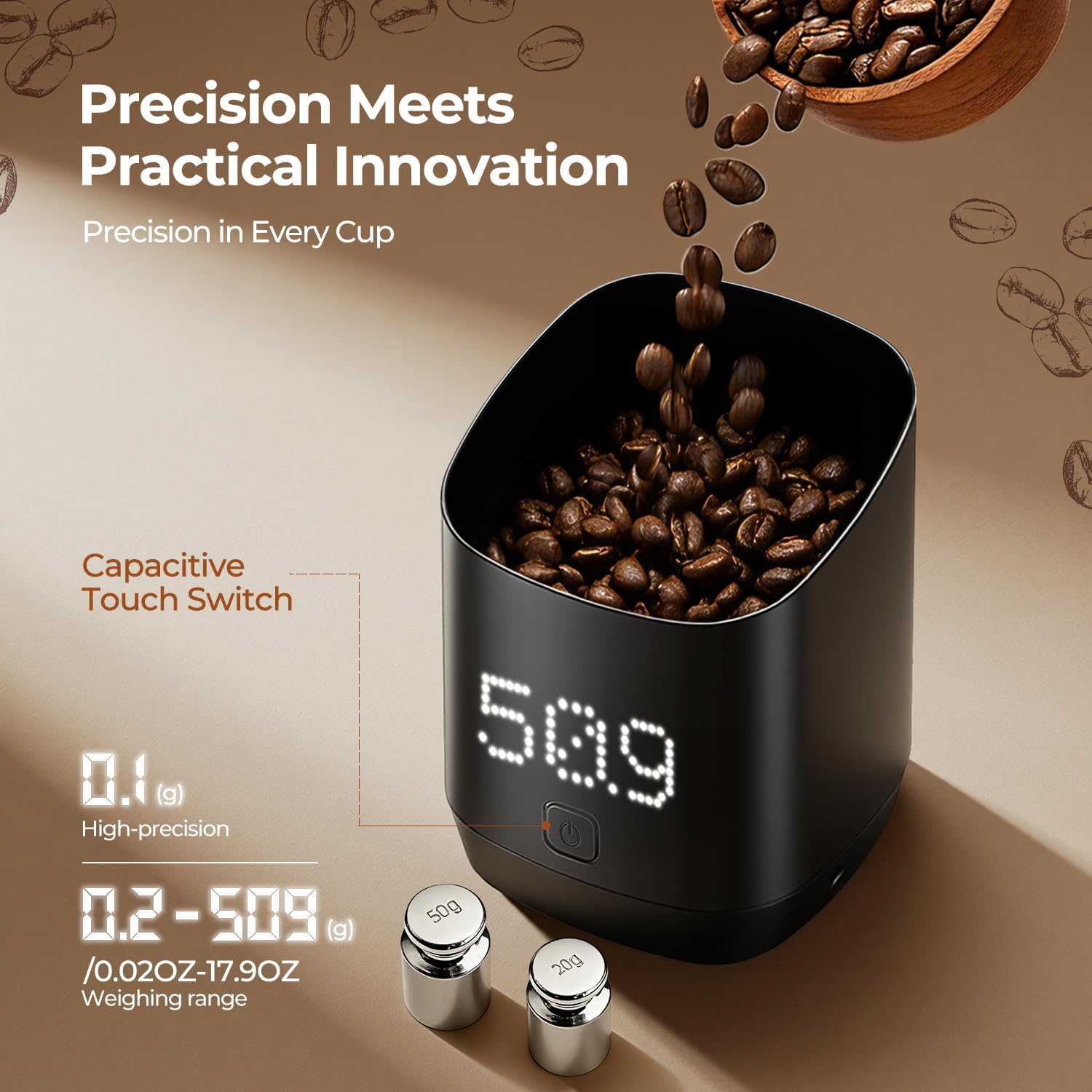
Digital Dosing Cup
Makes weighing beans faster and cleaner, with less mess around the grinder.
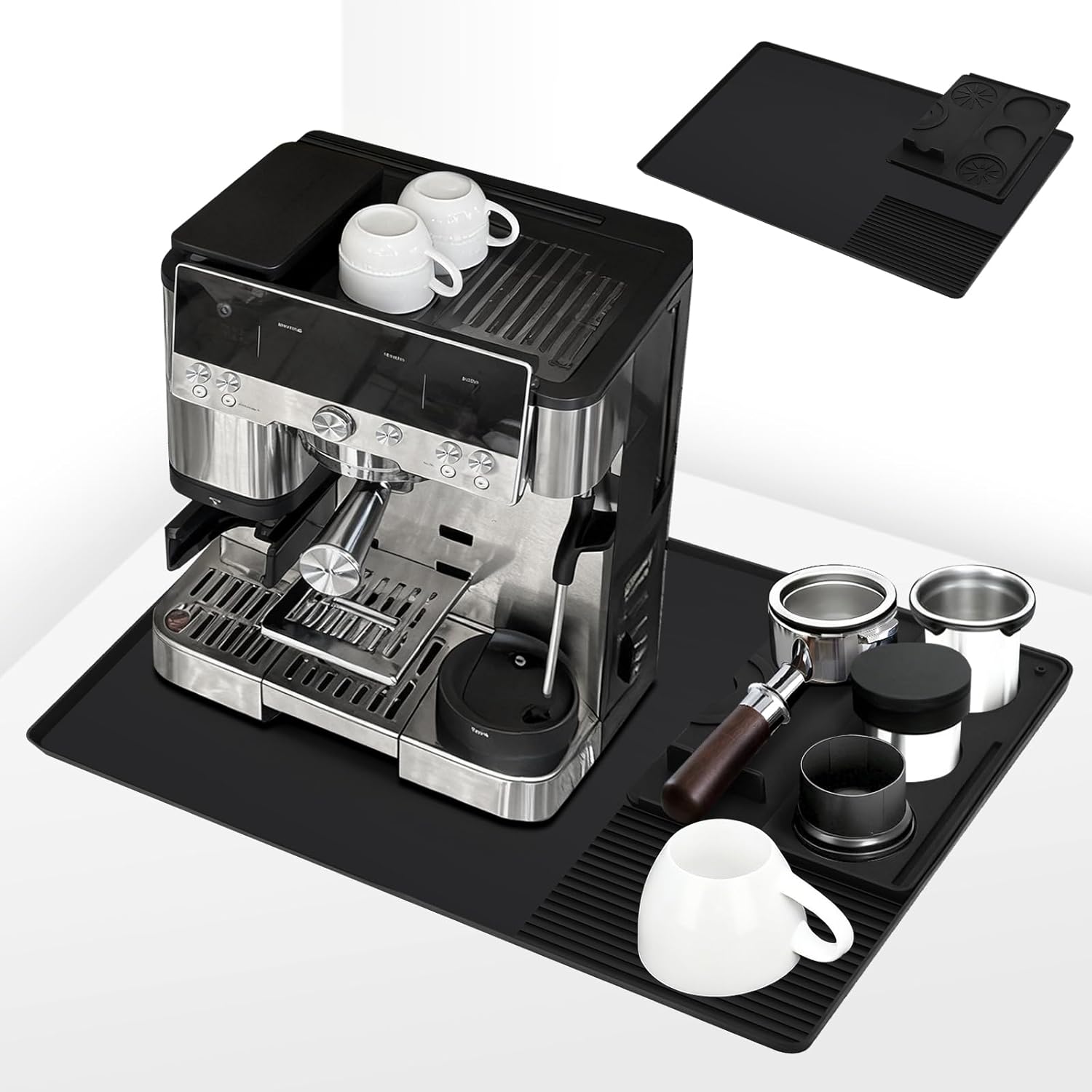
Silicone Mat
Protects your counter, catches spills, and gives your setup a cleaner working surface.

Vacuum Coffee Canister
Helps beans stay fresher longer by limiting air exposure after opening the bag.
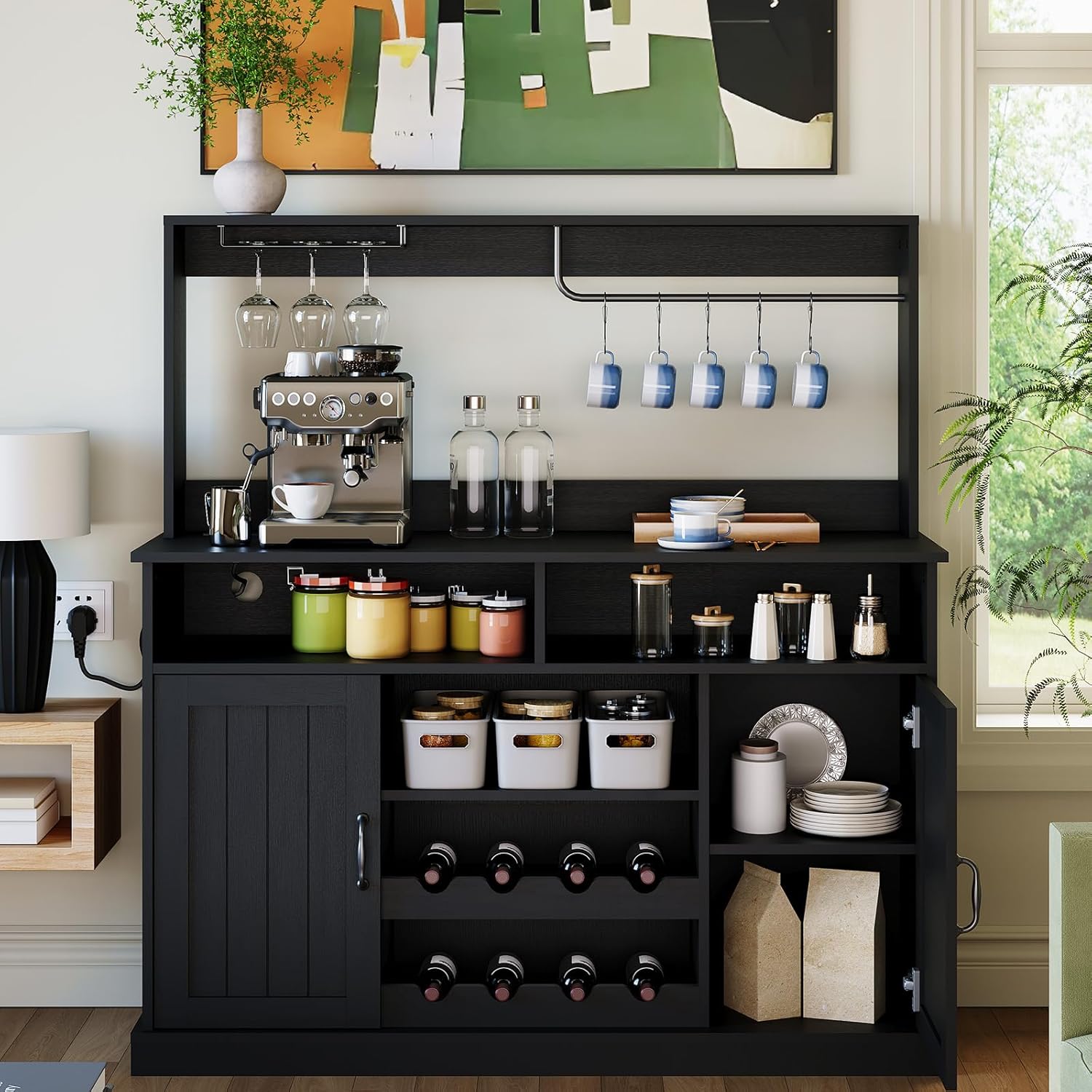
Farmhouse Coffee Bar Cabinet
Gives your machine, cups, beans, and accessories one dedicated home instead of cluttering the kitchen.
Noise and feel
The vibe pump with pulsor changes the character of the sound and the pressure ramp. You still get the familiar gradual rise into the puck that makes E61 pre-infusion predictable, just with less chatter from the pump. That softer onset plays nicely with medium roasts and standard basket doses.
Ergonomics
At 26.5 cm wide the machine leaves grinder elbow room. The lever arc is short, the wands swing freely, and the drip tray clears for quick rinses. The weight near 20 kg means the chassis stays planted when you lock a portafilter. Dimensions vary a hair by retailer measurements but land in the same neighborhood: 265 W x 452 D x about 345 to 360 H mm.
Tank management
Three liters is generous for a compact box, so you are not lifting the tray every two shots. The low-water sensor is conservative, which is what you want with an HX. When the light trips, refill rather than pushing your luck. If your household runs milk rounds, keep a small funnel near the machine and you will never be caught dry.
Espresso performance
Temperature behavior
HX machines earn their reputation on milk power and speed, not micro-degree brew control. That is fine as long as the behavior is repeatable. Rubino’s insulated copper boiler gives you a stable boiler pressure window and predictable flush mass from cold and between shots. Treat the boiler gauge as your traffic light. When it sits in your normal band, your flush count is the same. When it drifts high after a long idle, add a second to your flush. When you are in heavy back-to-back service, you can pull with little or no flush. This is how HX machines behave when they are happy.
Pre-infusion and ramp
E61-style mechanics give you a gentle pre-infusion before full pump pressure. The vibe pump ramp with the pulsor softens the start even more. That helps newer users hit consistent 1:2 ratios without punishing channeling for small prep mistakes. It does not cure sloppy distribution. It gives you a little cushion while you develop muscle memory.
Pressure basics
Set your expansion valve once with a blind disc to a sensible 9 bar and then leave it. Base Rubino models read boiler pressure on the face and not brew pressure, so use a backflush gauge or a portafilter gauge when you set OPV. Some dealer editions add a second gauge for pump pressure if you want that visibility all the time. Keep dose, grind, and yield steady while you diagnose, and you will taste the machine settle into a rhythm.
Starting recipes
On a medium roast, think simple. Dose 18 g in a standard 58 mm basket, aim for 36 g out in 27 to 31 seconds from pump on. Do a two to four second cooling flush before the first shot of the session, purge and wipe, then pull. For a lighter roast, extend the flush slightly, raise your brew ratio a touch to 1:2.2, and keep an eye on the finish so you avoid astringency. Darker roasts take less flush and a shorter ratio, 1:1.7 to 1:1.9, to keep the body without bitterness.
What it tastes like when it is right
Rubino produces classic HX espresso. Medium roasts come out sweet and dense with a clean finish. In milk, the shots hold shape rather than disappearing. On lighter roasts, get your flush right and you will find clarity without a sandpaper tail. On espresso-first days you will not miss a PID. On tasting days, move in bigger steps and use time and ratio for control rather than chasing a degree setting you do not have. That is the healthy mindset for this platform.
Milk steaming
This is the point of choosing an HX. A 1.8 liter insulated boiler paired with cool-touch wands gives you fast texture and good recovery shot after shot. Two-hole tips are kind to new hands. Four-hole tips speed up 12 to 20 ounce pitchers when guests show up. The boiler has the reserve to keep pressure steady through two pitchers without sagging into a stall. That is something smaller dual boilers cannot always claim. Quick Mill’s spec sheet and several retailers call out the dry steam and the compact footprint together for a reason. You are getting café-adjacent steaming from a body that still fits a home bar.
Daily cadence feels right. Pull the shot, stretch briefly, roll the pitcher, wipe and purge, then you are back at pressure. If your mornings are milk-heavy, give the machine a couple of extra minutes of idle after power-on so the HX path and group are fully stable before the first latte. That habit removes minor timing games from the first round.
Maintenance and reliability
Daily loop
Purge and wipe the wand right after steaming so milk never bakes. Backflush with water at session end. Keep the dispersion screen clean; a weekly soak in espresso detergent makes the next week easier. The blind disc holder found on other Quick Mill models is not the headline here, but the large tray and easy top access for tank refills keep the chores light. The boiler gauge is a quick health check every time you walk by.
Water decides the story
Rubino is tank only. Use filtered and softened water that hits espresso-safe hardness and alkalinity. Quick Mill builds in low-water sensing and auto protection, but that does not save you from scale. If your shop water is hard, run a cartridge in the tank or remineralize to a known recipe. The copper boiler is insulated and the group has a stainless mushroom, which helps with cleanup and long-term appearance, but scale is indifferent to materials.
Serviceability and parts
The platform is popular in the EU, UK, and Australia, which means parts streams and documentation are healthy. The pump is a common Ulka style with Quick Mill’s pulsor in line. The pressostat and safety stack are standard. If you need a gauge, valve, or wand years down the road, several EU retailers stock them. If you want a pump gauge later, some regions offer kits or special editions that add that second dial.
Standby and protection
Current factory pages list a standby function, boiler safety, vacuum valve, resettable thermostat, pump thermal protection, and a low water lockout. That is the right set of safeties for a home HX and keeps tuition cheap for new owners.
Programming and control
Rubino is analog by design. There is no PID on the base model. You get a boiler gauge, valves, a lever, and lights. Boiler pressure and the sound of the flush become your feedback. If you want on-machine temperature readouts, programmable pre-infusion, and an OLED shot timer, the Rubino Plus exists for that buyer with the same footprint and a dual gauge. It also adds an actual PID that governs steam temperature on an HX, a rare convenience for this class. If your workflow is milk-forward and you want to fine-tune steaming power while leaving everything else alone, the Plus is worth the premium.
Competitive comparisons
Lelit MaraX PL62X
MaraX is an HX with clever thermostatic logic that manages brew temperature at the group to reduce flush dependence. It is the easiest HX for beginners. Rubino answers with a more traditional layout, stronger steam feel, and the Quick Mill pulsor for quieter vibe-pump behavior. Choose MaraX if you want automation that flattens the flush learning curve. Choose Rubino if you prefer classic HX control and a slightly more muscular steam experience in a compact body.
Rocket Appartamento
The style icon of compact HX machines. Appartamento brings a 1.8 liter copper boiler and the Rocket fit and finish, but it lacks Rubino’s pulsor and sticks to the classic vibe-pump sound. Both are tank-only and live in the same footprint class. If finish options and brand aesthetic come first, Rocket is fun. If you value lower noise and Quick Mill’s cool-touch wands with a similar cup, Rubino is the practical choice.
Profitec Pro 400
Pro 400 is an HX with a three-position temperature switch, a published flush map, and a pre-infusion toggle. It is a great on-ramp for people who fear HX voodoo. Rubino is simpler and more analog, with the pulsor to calm the pump and a slightly different feel at the handle. Pick Pro 400 if you want presets and a dual gauge on a compact body. Pick Rubino if you want Quick Mill’s quieter vibe-pump sound and a classic face.
ECM Mechanika VI Slim
Another narrow HX with premium casework. In many markets ECM mirrors Profitec’s convenience features. The choice here is price, dealer support, and which face you want to stare at. Rubino generally prices lower than the prettiest ECM trims and keeps noise in check with the pulsor.
Quick Mill Rubino Plus
Same chassis with upgraded brains. You get PID temperature control, an OLED display with shot timer and status, programmable pre-infusion and eco mode, and a dual gauge for boiler and pump pressures. If you want those features, do not try to turn the base Rubino into a Plus. Buy the Plus. If you do not need them and you like analog, the base Rubino saves money and still steams hard.
Real-world numbers and observations
- Boiler and type. 1.8 liter insulated copper HX with pressostat control. Good steam reserve for 12 to 20 ounce pitchers.
- Pump and sound. Vibration pump with Quick Mill pulsor. Quieter and smoother ramp than a bare pump.
- Water. 3 liter reservoir, low-water sensor, auto stop to protect the heater. Tank only.
- Size and mass. Roughly 265 W x 452 D x 358 H mm, 19.5 to 20 kg. Clear depth for a straight portafilter pull.
- Gauges. Base model has boiler gauge only. Some retailer editions add a pump gauge or a combined dial. Verify before you buy.
- Regional pricing, late 2025. USA 2,699 to 2,990 USD. UK 1,099 to 1,190 GBP. EU 1,290 to 1,549 EUR with VAT. Australia about 3,150 AUD. Promotions and finishes shift these numbers.
Bench workflow: the way to run Rubino from day one
- Water and warm-up. Fill the tank with filtered, softened water. Power on. Give the machine a real warm-up so the group and portafilter match the boiler state. A quick blank pull and a purge clear false pressure.
- Cooling flush. Listen for the hiss at the group after idle. Flush until it evens out. On a cold start that will be a few seconds. Between shots it may be a quick blip.
- Baseline espresso. Dose 18 g, distribute cleanly, tamp level. Pull to 36 g in 27 to 31 seconds. Adjust grind, not pressure. Keep the routine tight so taste maps cleanly to your changes.
- Light-roast path. Extend the cooling flush slightly and raise your yield to 1:2.2. Keep time in the low 30s. The goal is clarity without astringency.
- Milk cadence. Start with a two-hole tip while learning texture. For guests, fit a higher-flow tip and lean on the 1.8 liter steam reserve.
- Daily care. Purge and wipe the wand immediately. Water backflush at session end. Detergent backflush weekly if you pull daily. Log your water recipe and stick to it.
Where Rubino excels
- Steam power in a small body. The insulated 1.8 liter HX keeps pressure stable through multiple pitchers.
- Lower noise for a vibe pump. The pulsor calms pressure ripple and the audible signature.
- Clean, durable wet end. E61-style group with a stainless mushroom and cool-touch wands lives well over time.
- Simple, friendly interface. No screens to distract you. A boiler gauge, valves, and a lever that do what they should.
Clear trade-offs
- No PID on the base model. You manage brew behavior with flush timing rather than degree buttons.
- Reservoir only. No direct plumb. Your water discipline matters more.
- Single gauge on most units. If you want live brew pressure, you either add a gauge or choose a retailer edition or the Rubino Plus.
Scores
- Build quality: 8.8
- Temperature stability: 8.4
- Shot consistency: 8.4
- Steaming power: 8.9
- Workflow and ergonomics: 8.6
- Maintenance and serviceability: 8.6
- Value: 8.9
Total: 8.6
Verdict
Quick Mill Rubino is the compact HX that behaves like a tool. It is strong where it should be strong and simple where simplicity pays off. The insulated copper boiler produces steady steam, the E61-style group stays predictable with a modest flush routine, and the pulsor keeps the vibe pump from sounding like a shop vac. You give up a PID and fancy screens on the base model. You gain a small, reliable workhorse that makes sweet espresso and fast milk on a deep counter diet of three liters at a time. If your wish list includes on-machine temperature control, a shot timer, and pre-infusion programming, buy the Rubino Plus on the same chassis. If you want a calm, compact heat-exchanger that just works, Rubino is the keeper.
TL;DR
Compact stainless HX with a 1.8 liter insulated copper boiler, E61-style group, cool-touch wands, and a vibration pump that runs quieter thanks to Quick Mill’s pulsor. Three liter tank, single boiler gauge, no PID on the base model. Strong steam, predictable espresso once you learn a short flush routine, and an ownership story that rewards clean water and simple maintenance. Rubino Plus adds PID, OLED, programmable pre-infusion, a shot timer, and a dual gauge if you want more controls.
Pros
- Compact footprint with real steam headroom
- Quieter vibe-pump behavior with pulsor
- E61-style group with stainless mushroom and cool-touch wands
- Simple, durable control stack with clear boiler feedback
- Fair pricing against other compact HX machines
Cons
- No PID or on-machine temperature readout on the base model
- Reservoir only, so water care is on you
- Single gauge on most units, so no live brew pressure unless you buy a special edition or the Plus
Who it is for
- Home baristas who want a compact HX that steams like a café machine
- Milk-forward households that still care about clean espresso
- Buyers who prefer analog controls over screens and apps
- People who value lower pump noise and a tidy stainless build in a small footprint
Glanceable specs
- Group: E61-style Quick Mill group with stainless mushroom
- Boiler: 1.8 liter insulated copper heat-exchanger
- Pump: Vibration with Quick Mill pulsor noise reduction
- Water: 3 liter reservoir with low-water sensing, tank only
- Gauges: Boiler pressure on base model, some editions add pump pressure
- Dimensions and mass: 265 W x 452 D x 358 H mm, about 19.5–20 kg
- Electrical: 1500 W, 115 V 60 Hz or 220–230 V 50/60 Hz
- Wands: Multidirectional cool-touch steam and hot water
- Safety: Pressostat, vacuum valve, safety valve, resettable thermostat, pump thermal protection, standby function
We’ve categorized the best espresso machines for every kind of buyer
Find the right shortlist faster, whether you want convenience, a beginner-friendly setup, a smaller footprint, or better value at a given budget.
Best Superautomatic Espresso Machines
One-touch picks for speed and convenience.
Best Espresso Machines for Beginners
Easy-to-use machines with a smoother learning curve.
Best Small Espresso Machines
Compact machines for tighter kitchens and counters.
Best Espresso Machines With Built-In Grinder
All-in-one options with fewer extra pieces to buy.
Best Cheap Espresso Machines Under $500
Budget picks that still make sense for real espresso.
Best Prosumer Espresso Machines Under $1000
More serious machines with stronger value for the money.
Best Single Boiler Espresso Machines
Simple, space-saving picks for espresso-first routines.