
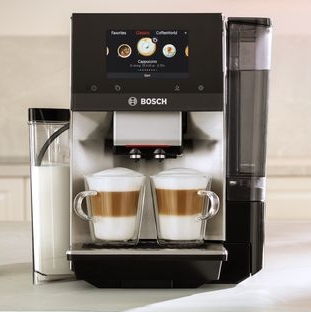
Current listed price $989.
Bosch 500 Series VeroCafe (TPU40109)
Overview
Time-saving, family-friendly super-auto with genuine two-drink brewing and a plant-milk-loving external hose. Coffee quality needs tweaks out of the box and the 6-step grinder limits light roasts, but the Bosch earns its keep in busy homes that care more about fast back-to-back milk drinks than café-style dialing.
Pros
- True double-cup: two lattes or cappuccinos simultaneously
- Plant-milk friendly Milk Express Plus with easy cleaning
- Compact 9.5″ width with full front-access service
- Simple TFT touchscreen with 9 drinks and low menu friction
- Bosch brand consistency plus 2-year warranty
Cons
- Still pricey versus DeLonghi Magnifica Evo
- Only 6 grind settings, so light roasts are hard to nail
- Factory defaults under-extract and need tweaking
- No app, user profiles, or deep customization
- Grinder is noticeably loud and the glossy finish shows fingerprints
Features & Specs
- 9 one-touch drinks and true double-cup brewing
- CeramDrive ceramic grinder, 6 grind steps, 270 g hopper
- External Milk Express Plus hose with auto purge
- 64 oz / 1.9 L removable water tank with front access
- 15-bar vibration pump and thermoblock heating
- Brew temperature adjustment via service menu
- TFT color touchscreen with strength and volume programming
- Spout height 2.5″–5.5″
- Dimensions: 14.75″H × 9.5″W × 16.625″D
- Power: 1600 W • 120 V • about 15.2 lb
- Warranty: 2 years parts and labor or 7,000 cups
Pricing & Lineup
- Bosch 500 (TPU40109) – 9 drinks, double-cup, 6 grind steps, external hose, current link price $989
- Bosch 300 (TPU30109) – 4 drinks, 5 grind steps, smaller tank, no double-cup
- Bosch 800 (TPU60309) – 35+ drinks, cold brew, app support, bigger tank, integrated carafe
- DeLonghi Magnifica Evo – stronger value play with wider grind adjustment
FAQs
- Beginner-friendly?
- Yes to operate, but you’ll still need to tweak grind, strength, and temperature for the best cup.
- Pods or capsules?
- No. Whole beans or pre-ground coffee via bypass only.
- Descale how often?
- Depends on water hardness. Roughly every 2 months in hard water or every 3–4 months in softer water.
- Is double-cup real?
- Yes. It grinds fresh for both and prepares two drinks in one cycle.
- Noise level?
- The grinder is noticeable, especially compared with some rivals, though brewing is calmer than grinding.
Who It’s For / Not For
Bosch approaches the 500 Series VeroCafe (TPU40109) like a busy-household coffee machine first and an espresso hobby platform second. Its real appeal is practical: true double-cup brewing, a compact 9.5-inch width, and an external milk system that is notably friendly with dairy and plant milks. It is a convenience-first super-auto built to remove friction from the morning routine.
On our bench, the Bosch 500’s buying truth is simple: if you want fast milk-drink workflow, a simple TFT touchscreen, and a machine that makes more sense in a shared kitchen than in a hobbyist setup, it is a strong fit. The two features that materially help real home use are true two-drink convenience and the Milk Express Plus external hose. The reality check is equally straightforward: the 6-step ceramic grinder limits espresso precision, factory recipes need tweaking, and this is not a machine for buyers chasing deep manual control.
For cross-shoppers, we frame the Bosch 500 against the machines people actually compare it with: Bosch 300 Series for the simpler lower-cost Bosch route, Bosch 800 Series for the richer Bosch feature stack, and De’Longhi Magnifica Evo for the value-first benchmark that puts the most pressure on the Bosch 500’s price logic.
Overview
The Bosch 500 Series VeroCafe (TPU40109) is built for busy homes that want fast, low-fuss coffee with real milk-drink convenience. You get true double-cup brewing, an external Milk Express Plus hose that works well with dairy and plant milks, and a TFT touchscreen that keeps everyday use simple. In daily use it rewards convenience-first buyers, fits smaller counters well, and makes the strongest case in households that want two cappuccinos or lattes without back-to-back waiting.
Shop the essentials
The small upgrades that make a home coffee setup cleaner, smoother, and more enjoyable to use every day.

Cleaner & Descaler Tablets
Keeps your machine clean, helps prevent buildup, and protects long-term performance.
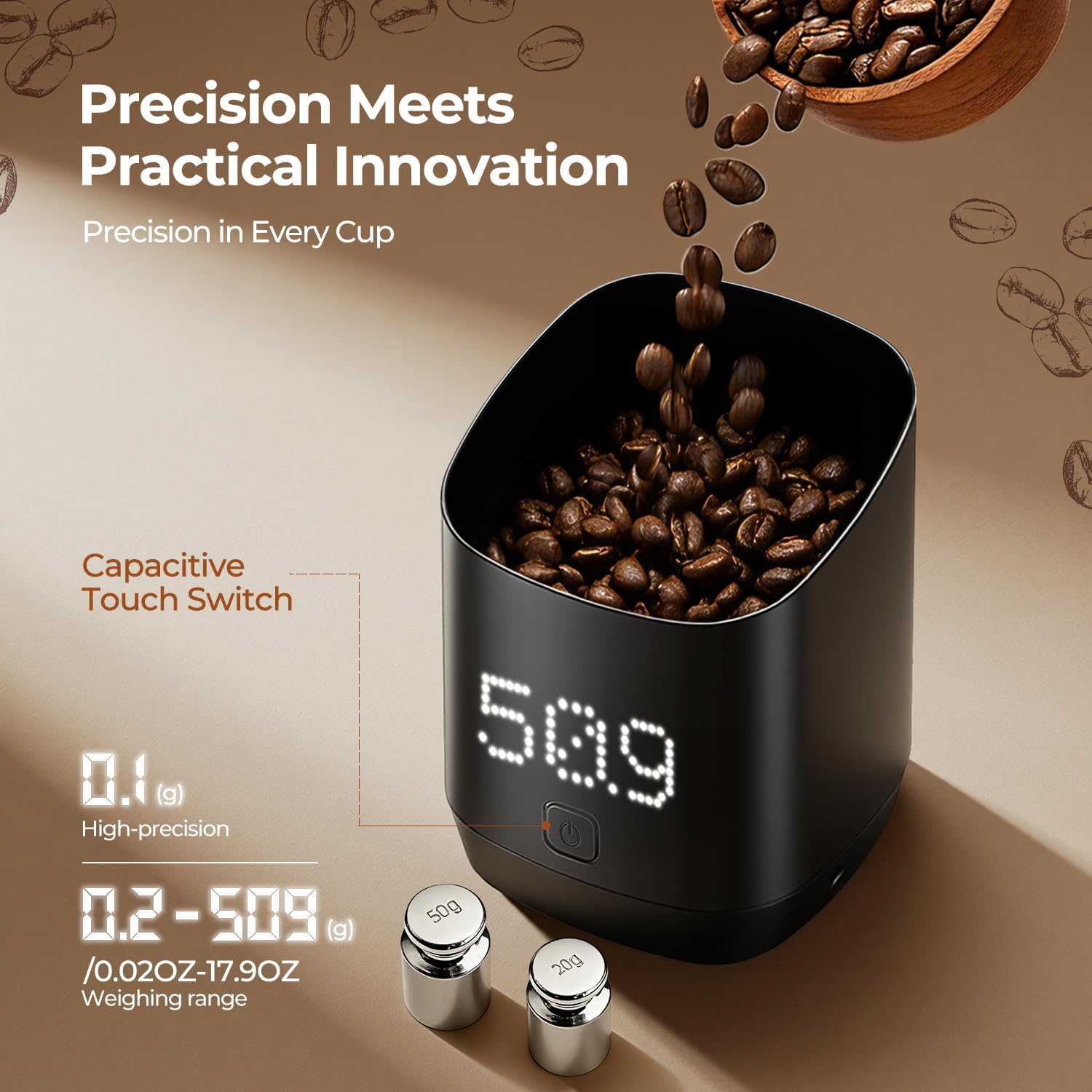
Digital Dosing Cup
Makes weighing beans faster and cleaner, with less mess around the grinder.
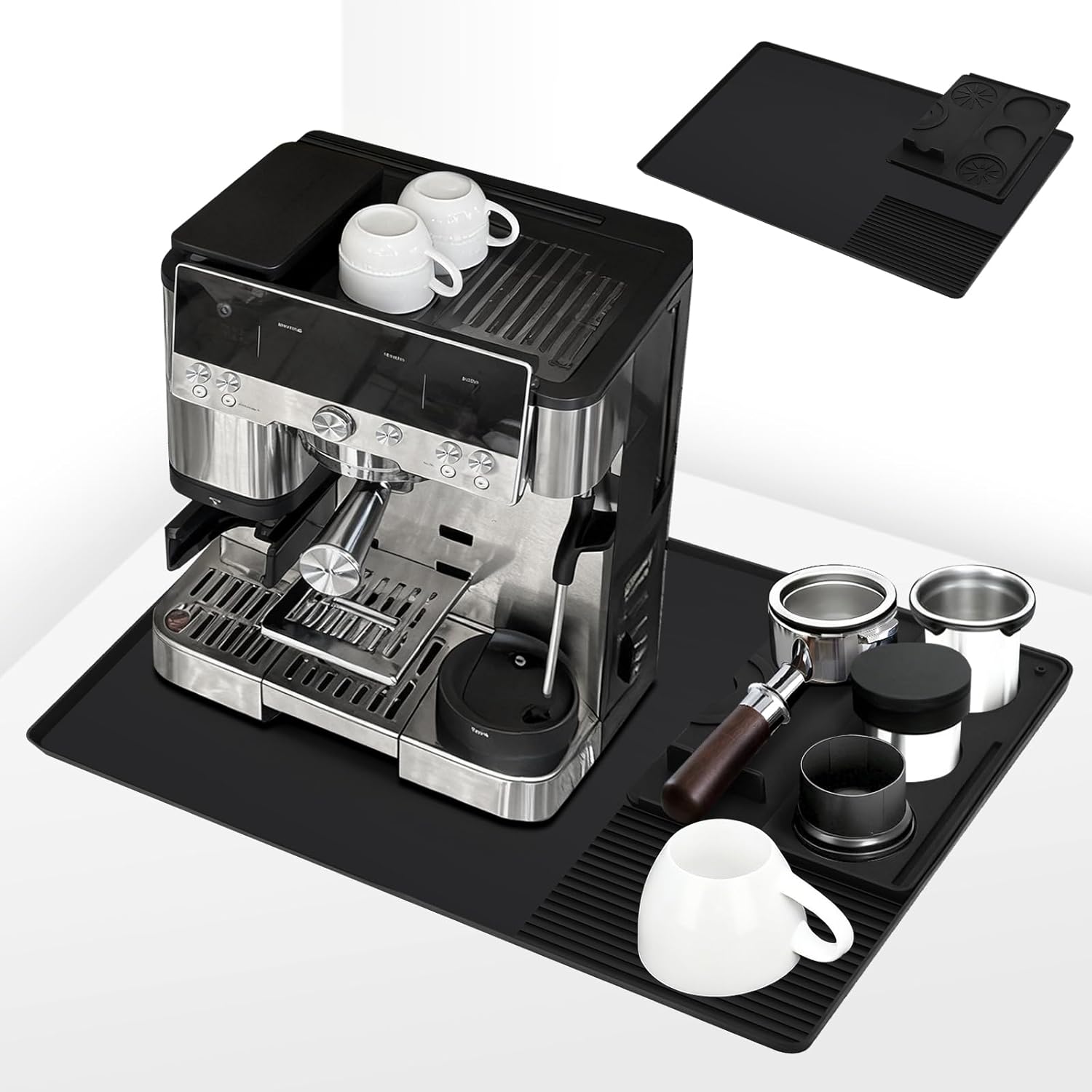
Silicone Mat
Protects your counter, catches spills, and gives your setup a cleaner working surface.

Vacuum Coffee Canister
Helps beans stay fresher longer by limiting air exposure after opening the bag.
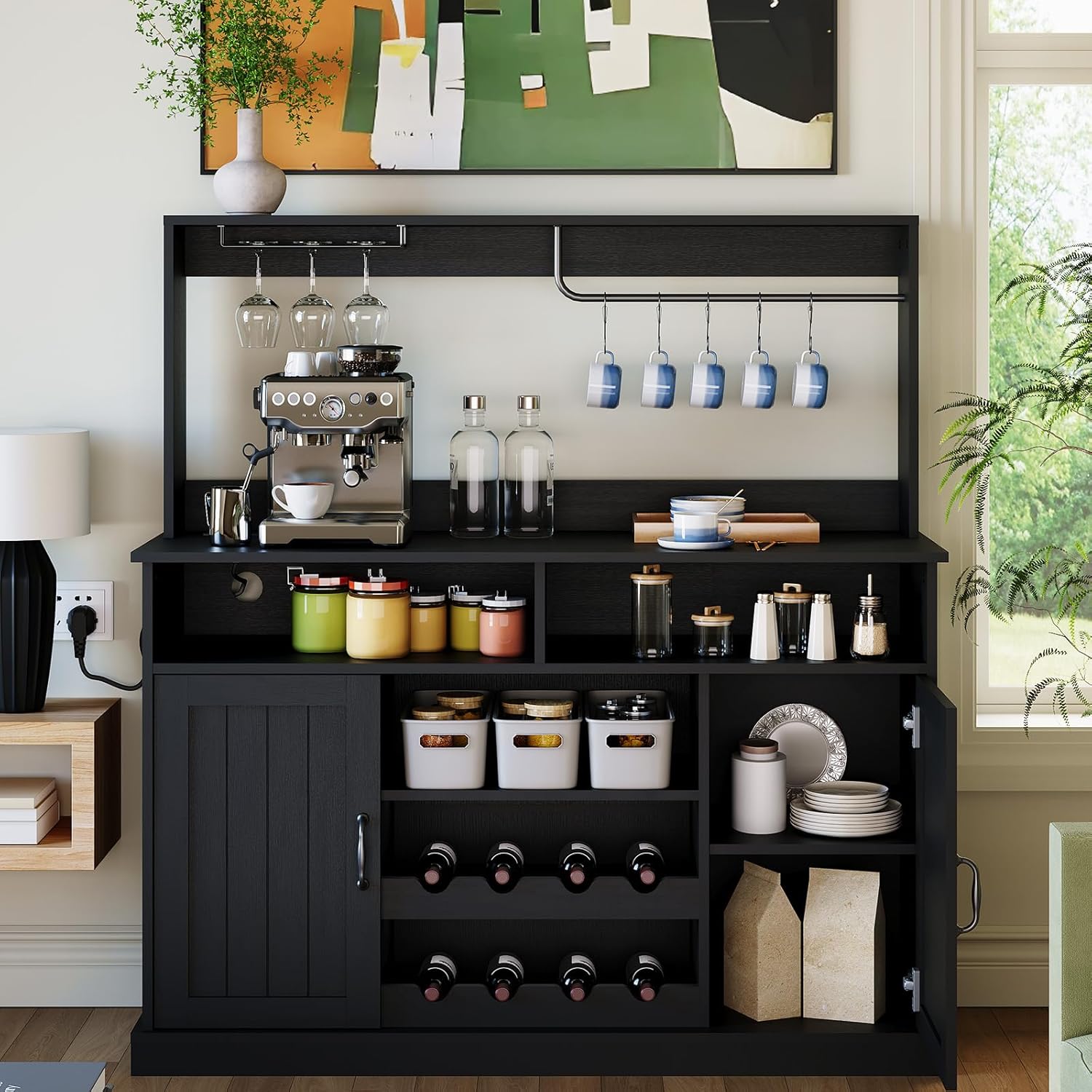
Farmhouse Coffee Bar Cabinet
Gives your machine, cups, beans, and accessories one dedicated home instead of cluttering the kitchen.
In the Bosch lineup, the 500 is the practical middle step between the simpler Bosch 300 Series VeroCafe and the more feature-heavy Bosch 800 Series. The coffee side is optimized for ease, not hobbyist-level tuning, while the milk system and double-cup logic are clearly aimed at family routines. The decision in this tier is less about whether it can make convenient milk drinks, and more about what ownership style you want: easy, compact, and quick, or something with better grind control, more customization, and stronger value pressure from rivals like the De'Longhi Magnifica Evo.
Design intent
- Workflow-first super-auto: true double-cup brewing is the headline feature, built for homes making two drinks at a time.
- Family-friendly milk system: the Milk Express Plus hose handles dairy and plant milks with less cleanup drama than fussier systems.
- Compact kitchen fit: the narrow 9.5-inch width and front-access service layout make it easier to live with on tighter counters.
- Simple ownership: the TFT touchscreen and 9 one-touch drinks keep the machine approachable for multiple users.
- Convenience over tinkering: Bosch is prioritizing repeatable push-button drinks, not enthusiast-grade espresso adjustment.
What it gets right in the cup and in cadence
- Two-drink efficiency: making two milk drinks in one cycle is the feature that most clearly improves daily use.
- Plant-milk friendliness: the external hose system is one of the more practical setups for oat, almond, and soy.
- Clean household workflow: simple drink selection, easy hose routing, and front-access maintenance reduce friction for shared kitchens.
- Compact convenience: it delivers a full-featured super-auto experience without the bulky footprint many rivals require.
- Easy learning curve: new users can get consistent drinks quickly without having to understand manual espresso technique.
The deliberate trade-offs
- Limited grinder precision: the 6-step grinder is the clear limiter if you care about tighter espresso dialing-in.
- Defaults need adjustment: out-of-box recipes can taste weaker than they should until you push grind, strength, and temperature settings.
- No deep smart ecosystem: there is no app, no user-profile depth, and no enthusiast-style customization path.
- Super-auto noise profile: the grinder is more noticeable than some competing machines.
- Value pressure is real: convenience is strong here, but value-focused buyers will still compare hard against lower-priced alternatives.
Where it fits
The Bosch 500 is the right pick for families, shared kitchens, and milk-drink households that want a compact super-auto with genuine two-drink speed and low-friction cleanup. If you want a simpler Bosch entry point, look at the Bosch 300 Series VeroCafe. If you want a bigger drink menu and a more premium Bosch feature stack, the Bosch 800 Series is the step up. If you care more about value and grind-range logic than Bosch-specific workflow, the De'Longhi Magnifica Evo is the common cross-shop.
Cross-shop context on Coffeedant: Bosch 500 buyers most often compare against the Bosch 300 Series for a simpler lower-cost Bosch route, the Bosch 800 Series for a bigger interface and broader drink catalog, and the De'Longhi Magnifica Evo for stronger value-per-dollar and a tougher price-to-performance benchmark.
Bosch 500 Series VeroCafe lineup: which version to buy
The Bosch 500 Series VeroCafe (TPU40109) sits in the practical middle of Bosch’s current VeroCafe range. You are not choosing between colorways or different brew engines here, you are choosing how much convenience, menu depth, and drink flexibility you actually need. In Bosch terms, the real fork is simpler everyday automation versus richer feature sets: the Bosch 300 Series VeroCafe as the simpler lower-cost route, the 500 as the family-friendly sweet spot, and the Bosch 800 Series if you want the bigger interface and broader drink catalog.
Bosch 500 Series VeroCafe vs the usual cross-shops
| Category | Bosch 500 | Bosch 300 | Bosch 800 | De'Longhi Magnifica Evo |
|---|---|---|---|---|
| Positioning | The Bosch sweet spot for families that want true two-drink workflow without jumping to flagship pricing. | Simpler Bosch entry point for lower-effort, lower-expectation use. | The interface-first Bosch step-up with a broader drink catalog and a more premium feature pitch. | The value benchmark in this lane, with stronger grind logic and a lower price ceiling. |
| Workflow | True double-cup brewing makes two milk drinks in one cycle, which is the biggest reason to buy it. | Best for solo users or simpler routines that do not need simultaneous drinks. | Broader menu and smarter interface, but more machine than many homes actually need. | Still fast and easy, though it is more value-led than Bosch-styled. |
| Coffee control | Convenience-first. Six grind steps are enough for acceptable tuning, not enthusiast control. | Even less appealing for buyers who care about drink temperature or dialing range. | More drinks and interface polish, but the same core grinder limitation still matters. | Stronger grind range and better value logic for buyers who care about cup quality per dollar. |
| Milk-drink fit | Excellent for shared cappuccino and latte use, especially with plant milks. | Works, but is less compelling for busier households. | Premium-feature version for buyers who want Bosch convenience at a higher budget. | A very strong milk-drink rival if you are price-sensitive. |
| Best shorthand | Family workflow pick. | Simpler Bosch entry model. | Feature-rich Bosch flagship. | Best-value super-auto cross-shop. |
Bosch 500 cross-shop quick links
Useful pages to compare before you buy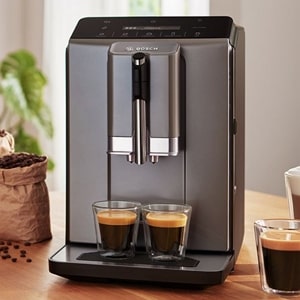
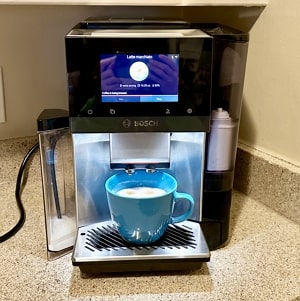
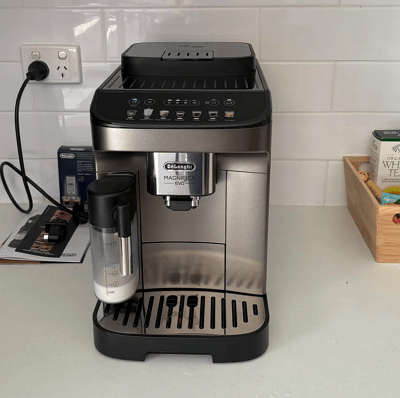
How to read this: choose the Bosch 500 if your real priority is two-drink convenience, compact size, and low-friction milk handling. If you are comparing on espresso value instead of family workflow, spend extra time on the De'Longhi Magnifica Evo before you commit.
Key Bosch 500 Series VeroCafe Specifications
Super-automatic bean-to-cup espresso machine built around one-touch drinks and household convenience.
9 one-touch drinks with true double-cup support for two complete beverages in one cycle.
CeramDrive ceramic grinder with 6 grind settings. Quiet enough in tone, but limited in dial-in precision.
Milk Express Plus external hose system with auto purge. One of the better plant-milk-friendly setups in this class.
Thermoblock platform with quick start behavior and no prosumer-style warm-up ritual.
15-bar vibration-pump system, typical for this category.
64 oz / 1.9 L removable tank with front-access ownership advantages.
270 g hopper capacity, sensible for multi-user daily use.
This is the Bosch 500’s defining feature. It can prepare two milk drinks in one cycle instead of forcing a second run.
About 43 seconds to ready, which makes it much more “walk up and use it” than semi-auto machines.
TFT touchscreen with strength and volume programming, designed for multi-user clarity rather than deep tinkering.
Brew temperature is adjustable through the service menu, though not with the same visibility or precision as prosumer PID machines.
Spout height range is roughly 2.5″ to 5.5″, which covers small espresso cups through taller milk-drink glasses.
About 14.75″ H × 9.5″ W × 16.625″ D. Narrow enough for tighter counters and easier to place than many large super-autos.
2 years parts and labor or 7,000 cups, which is reassuring for a convenience-first household machine.
The external hose and front-access layout help daily cleaning feel less annoying than some integrated milk systems.
The six-step grinder is the long-term ceiling. That matters more than the touchscreen once you start chasing better espresso.
1600 W, 120 V North America model, and about 15.2 lb, so it is manageable to move for cleaning or refilling.
First Impressions & Build Quality
On the counter, the Bosch 500 Series VeroCafe reads like a polished household appliance, not a compact commercial tool. The form factor is narrow, the interface is inviting, and the whole machine is clearly designed to reduce intimidation for shared kitchens. At about 9.5 inches wide and about 14.75 inches tall, it is easier to place than many larger super-autos, and the front-access service design is a real practical win in tighter spaces.
Ergonomically, it is very much a convenience-first machine. The TFT touchscreen and the external milk hose make day-to-day interaction easy, especially if multiple people use the same machine. The less glamorous reality is that the machine’s cup-quality ceiling is not decided by the interface or the milk hose, but by the 6-step ceramic grinder, which is where more value-focused rivals start to push back.
What’s in the box
- Bosch 500 Series VeroCafe (TPU40109) machine
- Integrated brew system and removable water tank
- External Milk Express Plus hose assembly
- Drip tray and grounds container
- User documentation and warranty information
Super-auto bundles are usually simpler than semi-auto kits. The real question here is not accessories, but whether the machine’s stock workflow already fits your household.
Chassis and internals
The Bosch is more appliance-like than prosumer in its construction priorities. Fit and finish are tidy, the front-access layout is genuinely useful, and the machine feels logically organized for everyday ownership. The trade-off is that this is not the kind of platform you buy for deep mechanical tinkering or a long upgrade path. It is meant to be used, cleaned, and kept moving.
Controls and touch points
Bosch gets the human side right here. The TFT screen is easy to understand, the menu depth is restrained, and drink selection makes sense for people who do not want to think about espresso theory before coffee. The Milk Express Plus hose is also a strong ownership choice because it keeps milk handling simple and works unusually well with alternative milks.
Counter fit
| Item | Detail | Why it matters |
|---|---|---|
| Width | About 9.5 inches | One of the easier super-autos to place on tighter counters. |
| Height | About 14.75 inches | Generally cabinet-friendly without the refill drama of taller machines. |
| Depth | About 16.625 inches | Still needs proper front and side breathing room, but does not sprawl like larger premium units. |
| Tank access | Front-access ownership logic | Useful in real kitchens where pulling the machine out is annoying. |
| Noise profile | Noticeable grinder noise | The grinder is one of the more obvious compromises in everyday use. |
| Best-fit environment | Shared kitchens and milk-drink households | The two-drink workflow matters most where more than one person regularly uses the machine. |
Testing Results
Testing focus on the Bosch 500 is different from a semi-auto review. The important questions are not puck feedback or brew-pressure behavior, but start-up speed, two-drink cadence, milk handling, grinder limitation, and whether the machine improves when you push beyond the default recipes. The practical notes below center on those ownership realities.
| Metric | Result | Method / note |
|---|---|---|
| Heat-up to ready | About 43 seconds | Thermoblock behavior with convenience-first startup expectations. |
| Default extraction quality | Under-extracted baseline, around 16.8% extraction | Factory settings favor ease over the strongest coffee result. |
| Tuned extraction quality | Can improve toward about 19% extraction | Needs finer grind, stronger drink settings, and higher temperature adjustment. |
| Double-drink workflow | True two-drink strength | The defining feature for families and shared kitchens. |
| Milk behavior | Strong with dairy and plant milks | External hose system is one of the better practical setups in this price lane. |
| Grinding noise | Roughly 75 to 78 dB | Noticeable in normal home use and louder than some buyers may expect. |
| Brewing / milk cycle noise | Roughly 68 to 74 dB | Calmer than grinding, but still appliance-like rather than quiet-luxury. |
| Drink style | Grind | Strength | Temp | Notes |
|---|---|---|---|---|
| Default casual milk drink | Middle setting | Standard | Default | Fast and convenient, but not where the machine tastes its best. |
| Better all-round cappuccino | One step finer | Stronger | Higher | Usually the best balance for households wanting more punch without overthinking it. |
| Espresso-first attempt | Finest workable setting | Highest practical strength | Higher | The grinder ceiling shows up here first, especially with lighter roasts. |
Key takeaways from testing
- It is a workflow machine first: the two-drink capability changes daily use more than any spec-sheet bullet point.
- The milk system is a real strength: especially for homes using oat, almond, or soy regularly.
- The grinder is the limiter: six steps are enough for acceptable tuning, but not enough for buyers chasing espresso precision.
- Defaults are safe, not optimal: the machine tastes better when you deliberately push grind, strength, and temperature upward.
- The Bosch 500 makes sense on convenience logic: if your priority is best-value espresso, there are stronger arguments elsewhere.
Coffee Quality: getting the best out of the Bosch 500 Series VeroCafe
The Bosch 500 Series VeroCafe (TPU40109) is a super-automatic built for convenience first and tuning second. With the right beans and a deliberate setup, it can make noticeably better coffee than the factory defaults suggest, but your adjustment range is narrower than on a semi-auto. Your real “levers” are the ones that matter on this kind of machine: grind setting, strength setting, drink volume, brew temperature, and bean choice. The biggest limiter is the 6-step ceramic grinder, so the goal is not perfect café-style dialing, but finding the strongest repeatable setup inside the machine’s comfort zone.
Session protocol that keeps results consistent
- Start with realistic beans: medium roasts and cleaner espresso blends work better here than very light or oily dark roasts.
- Set a stronger baseline: factory defaults tend to run mild, so begin with a higher strength setting before assuming the machine cannot do better.
- Adjust grind one step at a time: move finer only after the machine has run at least one more drink, because changes on super-autos are not always immediate.
- Control coffee by volume: if the drink tastes thin, shorten the programmed volume before you start chasing bigger changes elsewhere.
- Use temperature intentionally: push the brew temp higher for tighter, lighter coffees and back off slightly for darker roasts that turn bitter fast.
Flavor targets by coffee style
| Coffee | Baseline recipe (Bosch 500) | What it tastes like when right | If too sour / thin | If too bitter / dry |
|---|---|---|---|---|
| Medium espresso blend |
Grind middle-to-fine Strength high Temp medium-high Keep coffee volume on the shorter side for espresso-style drinks |
Balanced chocolate, fuller body, less washed-out finish | Go finer, shorten drink volume, raise temp one step, or increase strength | Go coarser, lower temp slightly, or reduce strength if the roast is darker |
| Darker roast |
Grind middle Strength medium to high Temp medium Avoid very short, over-concentrated programming |
Round body, lower acidity, controlled bitterness | Increase strength first, then go one click finer if needed | Go coarser, lower temp, and avoid max-strength plus short-volume stacking |
| Light roast or bright single origin |
Grind finest workable setting Strength high Temp high Keep volume conservative |
Cleaner acidity and better sweetness, but still less clarity than a semi-auto setup | This is the machine’s hardest lane. Use the finest setting, highest temp, shortest sensible volume, and accept that it may still plateau | Back off one grind step or reduce strength, because the grinder range is narrow and can tip quickly |
| Decaf |
Grind middle Strength medium-high Temp medium Shorter coffee volumes usually work best |
Soft caramel sweetness and a cleaner finish than the defaults | Increase strength and shorten the drink before making major grind changes | Go coarser or reduce temp slightly. Decaf gets woody quickly when pushed too far |
Grind, temperature, strength, and volume: use them like tools
- Grind first: if coffee is thin, pale, or obviously underpowered, move one step finer before you chase complicated explanations.
- Volume is a real tuning tool: shortening the drink often improves body and concentration faster than anything else.
- Strength matters more than many owners expect: this machine often tastes better once you push beyond the default strength lane.
- Temperature is the cleanup adjustment: use higher heat for lighter coffees and lower heat for darker coffees that dry out fast.
- Bean choice still wins: the Bosch 500 is happiest with medium roasts and forgiving blends. Light-roast espresso is where the grinder ceiling shows up first.
Diagnostics you can see and taste
| Signal | Likely cause | Targeted fix |
|---|---|---|
| Watery espresso or weak milk drinks | Default settings are too mild, grind is too coarse, or volume is too long | Raise strength, go finer, and shorten the programmed coffee volume |
| Harsh finish with a darker roast | Temperature too high, grind too fine, or recipe too concentrated | Go one step coarser, lower temp, or slightly lengthen the drink |
| Still weak after increasing strength | The grinder setting is still too open or the beans are too light for the machine’s range | Go finer and use a more forgiving medium roast before blaming the machine entirely |
| Machine used to taste better, now tastes dull | Old beans, grinder residue, or maintenance drift | Refresh beans, run cleaning cycles, and check whether residue buildup is muting the cup |
Keep variance low
- Use fresh medium-roast beans and avoid very oily coffees that make grinders and brew paths dirtier faster.
- Change one setting at a time and give the machine a drink cycle before judging the result.
- Keep water sensible and stay on top of cleaning prompts. Super-autos drift in flavor when residue builds up.
Milk System: Bosch 500 milk workflow, texture, and consistency
The Bosch 500 Series VeroCafe is not a manual steam machine, so milk quality here is about consistency, convenience, and cleanup more than pitcher technique. The Milk Express Plus external hose is the real ownership win: it is easier to route into a milk jug, friendlier with plant milks than many integrated systems, and simpler to rinse after use. In practice, that means the Bosch 500 is strongest in households that want repeatable cappuccinos and lattes without learning manual steaming.
Workflow targets that keep milk texture consistent
- Use cold milk: dairy or barista-style plant milk textures better when you start cold and clean.
- Keep the hose fully seated: half-submerged or kinked hose routing is one of the easiest ways to make milk behavior inconsistent.
- Run the rinse logic every time: the convenience of an external hose only pays off if you do not let residue sit in the line.
- Choose the drink around the milk you use: barista oat and dairy usually foam better than thinner almond or soy formulas.
Milk drink behavior in real use
| Drink style | Best-fit milk style | What to expect | Tip |
|---|---|---|---|
| Cappuccino | Dairy or barista oat | Best all-round Bosch 500 milk result, with enough body and foam for a convincing café-style home drink | Use colder milk and keep the coffee strength up so the drink does not feel washed out |
| Latte | Dairy, oat, or soy barista blend | Smoothest convenience drink on the machine, though less textured than good manual steaming | Shorten the coffee slightly if the drink tastes too milk-heavy |
| Two-drink milk cycle | Dairy or barista oat | This is the Bosch 500’s signature move: two milk drinks in one cycle without restarting the whole workflow | Great for couples or shared kitchens. This feature matters more in real life than most spec-sheet bullets |
Texture targets by milk type
| Milk type | Texture target | Where it works best | Notes |
|---|---|---|---|
| Dairy | Most consistent foam and body | Cappuccino, latte, flat-white-style drinks | The easiest baseline for judging whether the machine is behaving properly |
| Barista oat | Usually the best plant-milk result | Daily milk drinks and shared-household use | One of the Bosch 500’s real strengths versus fussier systems |
| Almond or soy | More variable and usually lighter | Lighter milk drinks, not texture-first pours | Works, but choose barista formulations when possible |
Keep milk performance sharp
- Do not leave milk sitting in the hose between drinks. Rinse it right away.
- If texture gets weaker, check residue in the milk path before assuming something is mechanically wrong.
- For plant milks, barista-specific cartons usually foam better and clog less than standard grocery versions.
Hardware Essentials
The Bosch 500 uses a CeramDrive ceramic grinder with 6 grind settings. Durable and easy to live with, but the clear limit on espresso precision.
This is a convenience-first super-auto system, so coffee quality depends more on programming and bean choice than on manual technique.
Thermoblock heating is part of why the machine is fast to start and easy to use casually.
If you want deeper espresso tuning, the grinder range is the first ceiling you will hit.
Milk Express Plus external hose system. One of the Bosch 500’s real ownership strengths.
The hose setup is easy to route, easy to rinse, and noticeably friendlier with plant milks than many integrated milk systems.
Especially useful in shared kitchens where the machine regularly makes two milk drinks in one session.
Residue in the milk path hurts results faster than most owners expect, so rinse discipline matters.
TFT touchscreen with clear drink selection and approachable menu logic.
This UI is built for multiple users who want coffee without thinking about espresso theory first thing in the morning.
9 drinks is enough to feel complete without turning the machine into an option maze.
The two-drink workflow is the feature that changes real ownership most, especially for milk-drink homes.
64 oz / 1.9 L removable tank with practical front-access ownership logic.
2 years or 7,000 cups, which matters because this machine is sold on everyday ease.
Keep up with milk rinses, cleaning prompts, and descale intervals. Super-auto flavor falls off when residue builds up.
This is an appliance-first machine. You buy it to reduce coffee friction, not to build a long hobbyist upgrade path.
A sensible filter routine matters more here than aftermarket accessories.
A dedicated cold milk jug or bottle makes the external hose system easier to use day to day.
Keep the correct cleaning and descaling products on hand. They are part of ownership, not optional extras.
For this machine, better beans and cleaner maintenance beat accessory chasing almost every time.
| Component | Spec | Use note |
|---|---|---|
| Grinder | CeramDrive, 6 settings | Practical and durable, but the clear tuning ceiling for espresso-focused buyers. |
| Drink menu | 9 drinks | Enough variety for shared kitchens without making the interface feel bloated. |
| Milk system | Milk Express Plus external hose | Easy to clean and one of the better plant-milk-friendly systems in this class. |
| Double-cup | True two-drink workflow | The single feature that most changes everyday ownership value. |
| Water tank | 64 oz / 1.9 L | Good household capacity without making the machine feel oversized. |
| Bean hopper | 270 g | Enough for regular use, though still worth refreshing beans rather than storing them too long. |
| Footprint | 14.75″ H × 9.5″ W × 16.625″ D | One of the easier super-autos to fit into smaller kitchens. |
Bosch 500 Series VeroCafe vs The Field: Quick Matrix
| Match-up | Core difference | Best for |
|---|---|---|
| Bosch 500 vs Bosch 300 | True two-drink workflow and broader everyday convenience vs simpler lower-cost Bosch automation | Bosch 500 for shared kitchens and milk-drink homes; Bosch 300 for lighter solo use and lower spend |
| Bosch 500 vs Bosch 800 | Practical mid-tier Bosch sweet spot vs bigger drink catalog, richer interface, and higher budget lane | Bosch 500 for value inside the Bosch lineup; Bosch 800 for buyers who want the fuller Bosch feature stack |
| Bosch 500 vs De’Longhi Magnifica Evo | True double-drink milk workflow and Bosch ownership feel vs sharper value and stronger price-to-performance logic | Bosch 500 for family milk-drink routines; Magnifica Evo for cost-conscious buyers who care about value first |
Bosch 500 Series VeroCafe vs Bosch 300 Series VeroCafe
This is the most natural in-brand Bosch decision. Bosch 500 is the stronger family-workflow machine, with true double-cup brewing, broader everyday usefulness, and a more compelling milk-drink case. Bosch 300 is the simpler, lower-cost Bosch route for buyers who want the Bosch feel without paying for features they may never use.
Core differences
- Workflow: Bosch 500 is meaningfully better for two-drink households because the two-drink logic changes real mornings.
- Buying logic: Bosch 300 is the easier buy for lighter use; Bosch 500 is the better fit when convenience is shared across multiple people.
- Milk-drink fit: Bosch 500 makes more sense when cappuccinos and lattes are part of the daily routine.
| Aspect | Bosch 500 | Bosch 300 |
|---|---|---|
| Best fit | Shared kitchens and milk-drink households that benefit from two-drink convenience | Solo users or simpler homes that want Bosch automation without paying for more workflow |
| Daily feel | More complete, more family-oriented, and clearly stronger for repeated milk drinks | Simpler and easier to justify when your coffee needs are narrower |
| Trade-off | Costs more and still shares the grinder ceiling of the range | Gives up the Bosch 500’s most useful family feature set |
Who should choose which
- Pick Bosch 500 if your household regularly makes milk drinks for more than one person.
- Pick Bosch 300 if you want Bosch simplicity and a lower spend matters more than two-drink convenience.
Bosch 500 Series VeroCafe vs Bosch 800 Series
This comparison is about how far up the Bosch convenience ladder you really need to go. Bosch 500 is the practical middle, where you get the most useful Bosch daily features without drifting too far into flagship spend. Bosch 800 is the richer Bosch experience, with a bigger drink catalog and a more premium feature pitch for buyers who want a fuller interface-led machine.
Core differences
- Feature depth: Bosch 800 offers the larger Bosch ecosystem and a more premium-feeling menu stack.
- Buying logic: Bosch 500 is the smarter Bosch value point for many households.
- Ownership style: Bosch 500 is about practical daily use; Bosch 800 is about having the bigger Bosch experience.
| Aspect | Bosch 500 | Bosch 800 |
|---|---|---|
| Best fit | Buyers who want the Bosch sweet spot for family workflow without overpaying for extra layers | Buyers who want the richer Bosch interface and broader drink menu |
| Daily feel | Balanced, practical, and clearly designed around real milk-drink routines | More premium and more feature-heavy, with a fuller Bosch control experience |
| Trade-off | Less feature prestige than the flagship | Higher spend and more machine than some households actually need |
Who should choose which
- Pick Bosch 500 if you want the Bosch lineup’s strongest everyday value point for real milk-drink homes.
- Pick Bosch 800 if the bigger interface, broader menu, and higher-end Bosch experience are the reason you are shopping.
Bosch 500 Series VeroCafe vs De’Longhi Magnifica Evo
This is the value-pressure comparison Bosch 500 buyers should not skip. De’Longhi Magnifica Evo is the sharper value argument, especially for buyers who care about getting the most sensible coffee performance for the money. Bosch 500 answers with a better family-workflow story, true two-drink convenience, and a milk system that is especially easy to live with if your home drinks a lot of lattes and cappuccinos.
Core differences
- Value logic: Magnifica Evo is the tougher price-to-performance benchmark.
- Workflow logic: Bosch 500 makes the stronger case when two-drink milk routines are the point of the machine.
- Buying lens: pick Bosch for household convenience, pick De’Longhi for tighter value discipline.
| Aspect | Bosch 500 | De’Longhi Magnifica Evo |
|---|---|---|
| Best fit | Milk-drink households that genuinely benefit from two-drink convenience and easy milk handling | Buyers who want stronger value and a tougher cost-to-performance case |
| Daily feel | Family-friendly, compact, and centered on workflow ease | More aggressively value-driven and easier to justify on price alone |
| Trade-off | Harder to defend if you do not specifically need its family workflow strengths | Does not answer the Bosch 500’s two-drink convenience case as cleanly |
Who should choose which
- Pick Bosch 500 if the machine’s family workflow and plant-milk-friendly hose are the real reasons you are buying.
- Pick De’Longhi Magnifica Evo if value is the first filter and you want the strongest price logic in the lane.
How to use this matrix: If you want Bosch’s strongest family-workflow sweet spot, Bosch 500 is the clean pick. If you want the simpler lower-cost Bosch route, step down to Bosch 300. If you want the richer Bosch feature stack, step up to Bosch 800. If you want the toughest value benchmark, De’Longhi Magnifica Evo is the first cross-shop.
Final verdict: Bosch 500 Series VeroCafe
The call: this is the sweet-spot Bosch buy for households that want genuine two-drink convenience, easy milk handling, and compact super-auto ownership without stepping into the Bosch 800’s higher-budget lane. The trade-off is simple: you are buying workflow and ease, not best-in-class espresso tuning.
FAQ
Quick ownership answers only.
Is the Bosch 500 Series VeroCafe worth it?
Yes if your priority is fast, easy milk-drink workflow in a compact machine. The Bosch 500 makes the strongest case in shared kitchens that actually benefit from two drinks in one cycle. If your priority is best-value espresso quality, the argument gets weaker.
What is the Bosch 500 best at?
Its biggest strength is true two-drink convenience. The Bosch 500 is built for homes that want to make two cappuccinos or lattes quickly, with low-friction cleanup and a simple interface.
How fast does it heat up in real use?
Very quickly. It is a thermoblock-based super-auto, so it behaves like a walk-up-and-use-it appliance rather than a semi-automatic that needs a long heat soak.
Is it good with plant milk?
Yes. The external Milk Express Plus hose is one of the Bosch 500’s real strengths, especially with barista-style oat milk. It is easier to manage and clean than many fussier integrated milk systems.
What is the biggest limitation?
The 6-step ceramic grinder is the main ceiling. It gives you enough range to improve on the defaults, but not the kind of precision that espresso-focused buyers or stronger value rivals may offer.
How should I get the best coffee from it?
Use fresh medium-roast beans, push the strength higher than the defaults, keep drink volumes a little shorter, and move the grinder finer one step at a time if the coffee tastes thin. This machine responds best when you tune for body and balance, not for light-roast precision.
Can it really make two milk drinks well?
Yes. That is the single feature that most clearly changes real-life ownership. If two people regularly want lattes or cappuccinos, the Bosch 500 makes much more sense than machines that force a full second cycle.
How often should I clean it?
Rinse the milk system right after use, stay on top of the machine’s cleaning prompts, and descale based on your water hardness and prompt schedule. Super-autos lose cup quality faster than people expect when milk residue and coffee oils build up.
We’ve categorized the best espresso machines for every kind of buyer
Find the right shortlist faster, whether you want convenience, a beginner-friendly setup, a smaller footprint, or better value at a given budget.
Best Superautomatic Espresso Machines
One-touch picks for speed and convenience.
Best Espresso Machines for Beginners
Easy-to-use machines with a smoother learning curve.
Best Small Espresso Machines
Compact machines for tighter kitchens and counters.
Best Espresso Machines With Built-In Grinder
All-in-one options with fewer extra pieces to buy.
Best Cheap Espresso Machines Under $500
Budget picks that still make sense for real espresso.
Best Prosumer Espresso Machines Under $1000
More serious machines with stronger value for the money.
Best Single Boiler Espresso Machines
Simple, space-saving picks for espresso-first routines.