
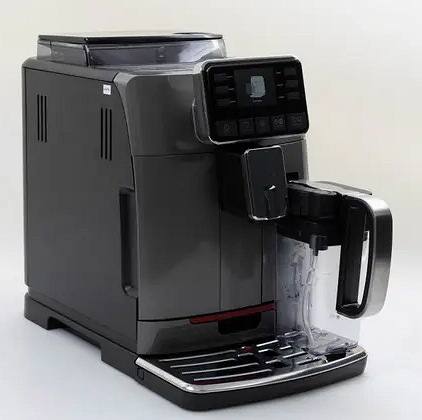
Made in Italy. Great milk drinks and profiles, but it only stays “Prestige” if you keep the carafe and milk path clean.
Affiliate disclosure: Coffeedant is funded by affiliate links that may earn a commission at no extra cost to you.
Gaggia Cadorna Prestige
Four profiles, 14 one-touch drinks, and an integrated carafe that can produce genuinely silky foam. It’s fast, compact, and easy to keep running thanks to the removable brew group, but milk performance depends on your cleaning discipline.
At a glance
Overview
Cadorna Prestige is the “value-premium” Gaggia: big menu, real household profiles, and a milk carafe that can produce silky foam that feels a tier above the price. The machine is compact and quick to heat, and the removable brew group makes ownership easier. The trade-offs are exactly what you would expect here: no PID or dual boiler, only three temperature steps, and the milk path needs weekly cleaning or performance drops.
Pros
- Excellent microfoam from an integrated carafe
- Four true user profiles for households
- Removable brew group for sink cleaning
- Ceramic flat burrs preserve aromatics
- Tall cup clearance in a compact footprint
Cons
- Milk system demands weekly cleaning; carafe is a wear item
- No PID or dual boilers; limited temperature control
- Grind changes require a tool and running grinder
- Oily beans can clog the grinder and risk warranty issues
Who it is for
- Milk-drink households that want one-touch foam and saved profiles.
- Families who like a removable brew group and clear maintenance prompts.
- People replacing daily cafe runs and watching total cost of ownership.
- Small counters that still need tall cup clearance (up to ~6.1").
Who should avoid it
- Anyone who will not disassemble and wash the carafe weekly.
- Latte-art purists who want a manual steam wand.
- Users demanding PID-level temperature control or dual boilers.
- Dark, oily-bean fans (not a good match for ceramic grinders).
Main features
- 14 one-touch drinks; 4 user profiles with per-drink saves.
- Integrated milk carafe (0.6 L) with automated quick-clean after milk drinks.
- Ceramic flat-burr grinder (10 steps) and Optiaroma dose range ~6.5–11.5 g.
- Automatic pre-infusion; 15-bar pump with about 9-bar brew behavior.
- Single Quick Heat thermoblock with three temperature steps.
- Removable brew group; bypass chute for pre-ground or decaf.
- 1.5 L front-access tank; 300 g hopper; roughly a 10-puck grounds bin.
- Up to ~6.1" cup height; compact footprint for the feature set.
Cleaning reality check
This machine is great when the milk path is clean, and noticeably worse when it isn’t. Treat the milk carafe like a “weekly ritual,” not a someday task.
- Daily: run the carafe quick-rinse after milk drinks, wipe the intake and spout.
- Weekly: disassemble the carafe and wash thoroughly (warm water + mild soap).
- On schedule: descale when prompted and keep the brew group rinsed.
Quick specs
- Tank: 1.5 L
- Hopper: 300 g
- Grinder: ceramic flat burrs, 10 steps
- Cup height: up to ~6.1"
- Brew group: removable
- Milk: integrated carafe
The Gaggia Cadorna Prestige delivers exceptional value at $1,099-1,300 with features typically found on $2,000+ machines—including 4 user profiles, 14 one-touch beverages, and a self-cleaning integrated milk carafe that produces café-quality microfoam. This 100% Italian-made super-automatic positions itself as the thinking person's alternative to premium brands like Jura, offering 60% of the quality at half the cost. But there's a catch: this machine demands disciplined maintenance and punishes neglect with frequent failures around the 8-12 month mark.
Shop the essentials
The small upgrades that make a home coffee setup cleaner, smoother, and more enjoyable to use every day.

Cleaner & Descaler Tablets
Keeps your machine clean, helps prevent buildup, and protects long-term performance.
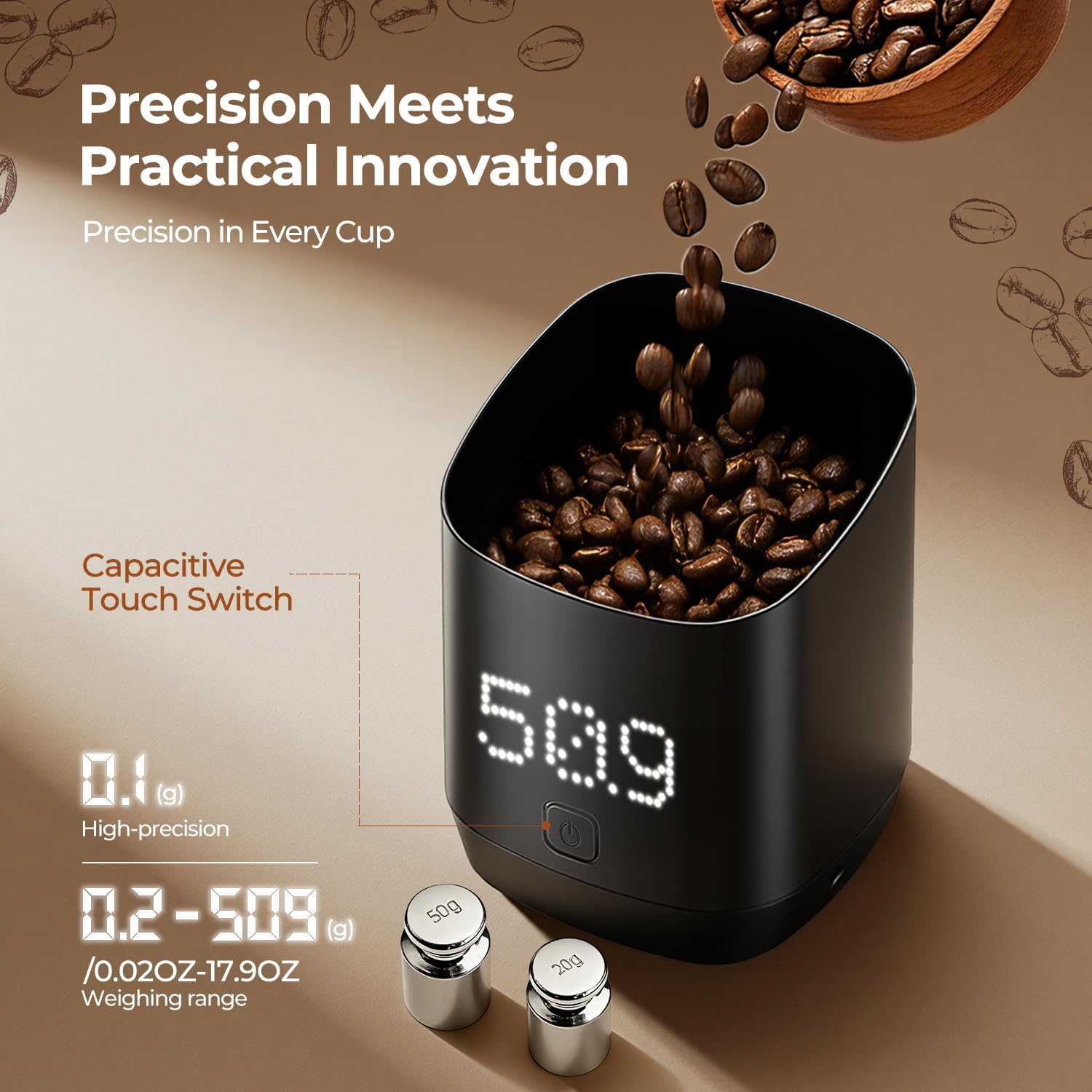
Digital Dosing Cup
Makes weighing beans faster and cleaner, with less mess around the grinder.
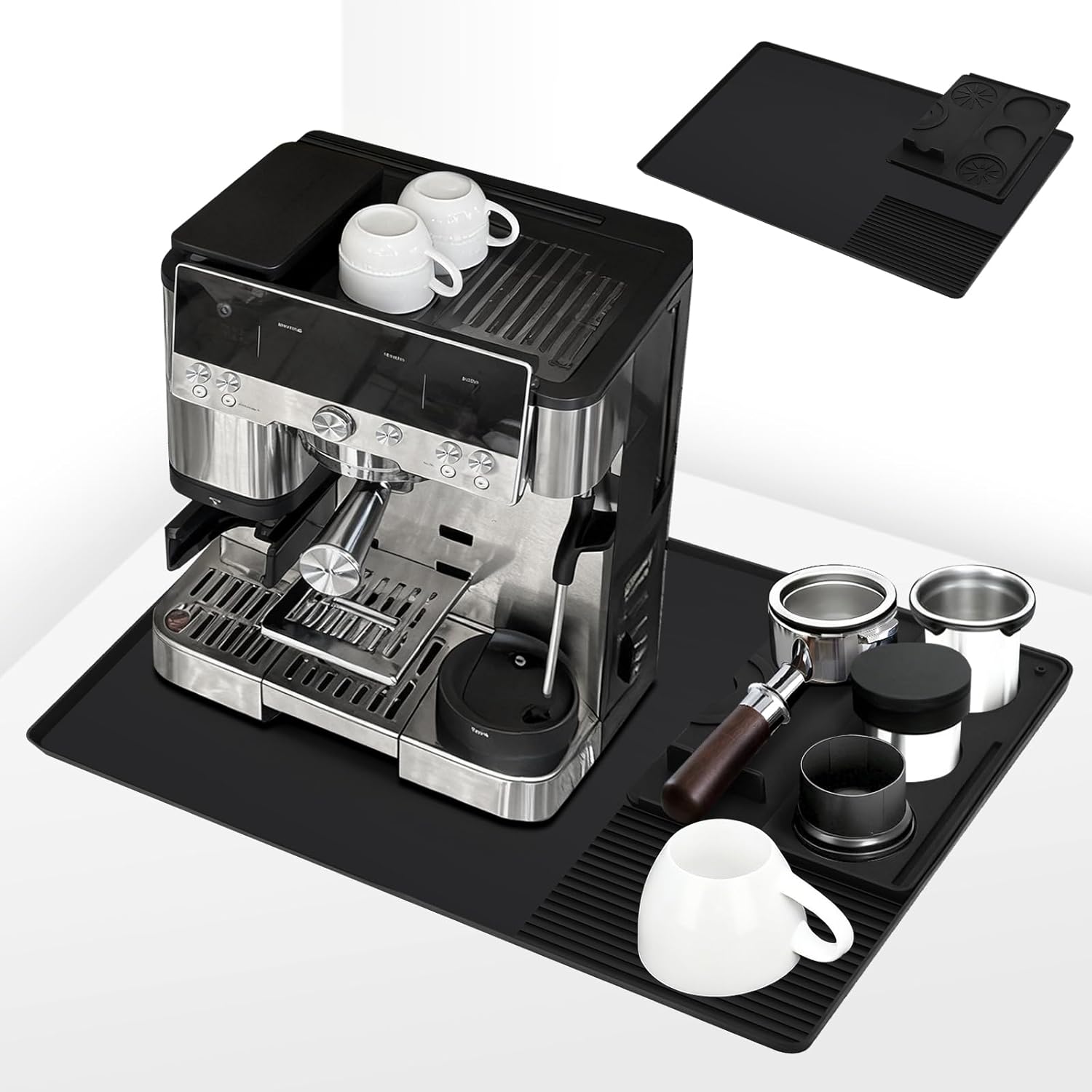
Silicone Mat
Protects your counter, catches spills, and gives your setup a cleaner working surface.

Vacuum Coffee Canister
Helps beans stay fresher longer by limiting air exposure after opening the bag.
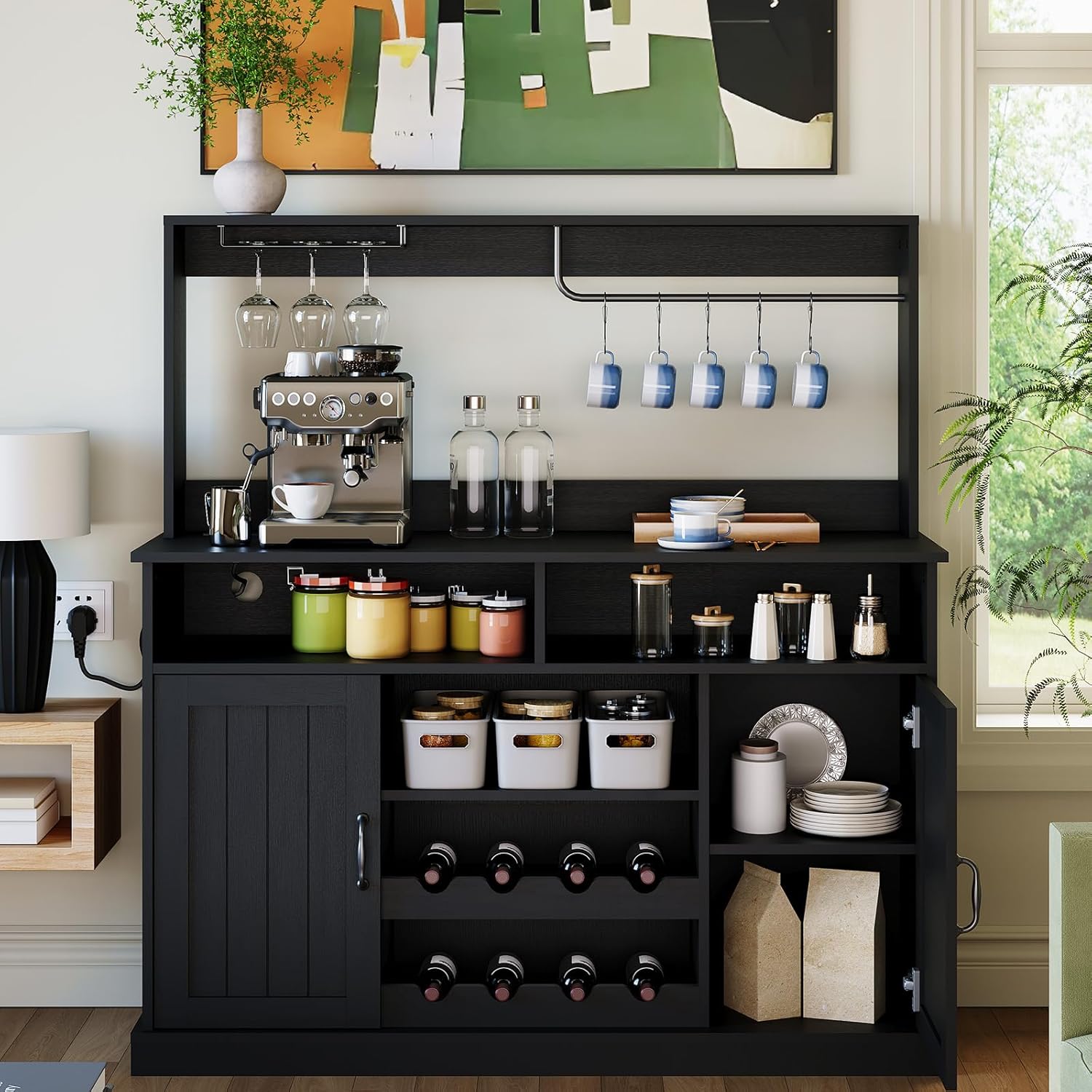
Farmhouse Coffee Bar Cabinet
Gives your machine, cups, beans, and accessories one dedicated home instead of cluttering the kitchen.
Why this matters now: The super-automatic espresso market has exploded with options ranging from $600 budget machines to $4,000 luxury models, making it difficult to identify genuine value. The Cadorna Prestige occupies a strategic "value premium" position, delivering professional-grade components—ceramic flat burr grinder, pre-infusion technology, stainless-steel-lined thermoblock—at mid-range pricing. For households replacing $5-7 daily café visits, the machine pays for itself in 4-6 months while saving $1,600-2,500 annually.
The backstory: Gaggia pioneered commercial espresso machines in Milan in 1947, and the Cadorna line represents their modern push into the competitive home super-automatic market. Released around 2020, the Prestige sits atop the Cadorna family hierarchy, distinguishing itself from the Barista Plus (manual steam wand), Cadorna Milk (CappinCup system), and Style (basic Pannarello) models through its integrated automatic milk carafe and expanded beverage menu. The machine competes directly against DeLonghi's Dinamica Plus and Philips's 5400 series while undercutting Jura's E8 by nearly $1,000.
The critical context: This is fundamentally a machine for milk drink enthusiasts willing to invest 5-10 minutes daily in maintenance. User reviews reveal a stark divide between satisfied long-term owners who meticulously clean the milk carafe after each use and frustrated buyers experiencing grinder motor failures, power button malfunctions, and inconsistent frothing. The machine's Italian engineering philosophy mirrors a sports car: exceptional performance when properly maintained, but temperamental when neglected.
Technical foundation: Italian engineering meets practical limitations
The Cadorna Prestige builds around a single Quick Heat thermoblock featuring lightweight aluminum construction with stainless steel lining, reaching brewing temperature in approximately 60 seconds from cold start. This design choice prioritizes speed and energy efficiency over the temperature stability of dual-boiler systems found on the Gaggia Babila ($1,700+) or pressure-profiling capabilities of true premium machines. Critically, the machine lacks PID temperature control, relying instead on a traditional bi-metal thermostat with three manual temperature settings—a significant limitation for espresso purists who demand precise thermal management.
The 15-bar Ulka vibration pump delivers standard 9-bar extraction pressure with automatic pre-infusion—a brief low-pressure pre-wetting phase that allows grounds to bloom before full extraction begins. This feature, uncommon in sub-$1,500 machines, enhances crema development and body. However, the single thermoblock architecture requires sequential heating when switching between brewing and steaming functions, making back-to-back drinks slower than dual-boiler competitors.
Physical specifications reveal thoughtful space optimization: 15 inches tall, 10.2 inches wide, 17.3 inches deep, weighing 20.5 pounds. The machine accommodates cups up to 6.1 inches tall with the sliding espresso tray extended—a critical advantage over the Jura E8's 4.4-inch maximum clearance, enabling travel mug compatibility. The 1.5-liter front-access water reservoir and 300-gram bean hopper (approximately 10.6 ounces) suit household use of 2-5 daily drinks but require frequent refilling for office environments or large families.
The standout component is the 100% ceramic flat burr grinder with 10 adjustable settings. Ceramic burrs offer multiple advantages over stainless steel: they prevent heat buildup during grinding (preserving volatile aromatic compounds), operate more quietly, resist dulling longer, and eliminate metallic taste transfer. The grinder doses 6.5-11.5 grams per brew through Gaggia's "Optiaroma" system, which provides five aroma strength selections by controlling coffee quantity rather than just grind size. This dual-axis control (grind fineness + dose amount) enables nuanced customization.
However, grinder adjustment presents practical frustration: modifications require inserting the included dual-purpose scoop/key tool while the grinder runs—an awkward procedure compared to external dial systems on the Gaggia Babila (15 settings with simple knob) or DeLonghi Dinamica Plus (13 settings). The manufacturer strictly warns against oily, dark-roasted, caramelized, or flavored beans, which clog the ceramic burrs and void warranty coverage. Multiple user reports confirm grinder motor failures around 8 months when incompatible beans are used.
The removable brew group enables thorough maintenance—a significant advantage over sealed systems. Constructed from aluminum with stainless steel lining, it handles automatic dosing, tamping, and extraction before ejecting spent pucks into a 10-puck capacity grounds container. Daily rinsing under tap water (no soap) maintains optimal function, while monthly deep cleaning with Gaggia-branded tablets prevents oil buildup. The brew group requires food-safe lubricant application to internal tracks every six months to prevent mechanical binding.
The integrated milk carafe: convenience delivered with maintenance demands
The Cadorna Prestige's defining feature is its 0.6-liter integrated automatic milk carafe that eliminates the external milk container requirement plaguing the Jura E8 (requires separate $60 purchase). The patented swing-over dispensing arm pivots directly over the cup, eliminating the need to reposition vessels between coffee and milk dispensing—a genuine one-touch operation. The system froths milk twice to remove large bubbles and create the dense, silky microfoam essential for authentic Italian cappuccinos and layered latte macchiatos.
Professional reviews consistently praise milk quality: Coffeeness describes it as "wonderfully silky," Home Coffee Expert notes "impressively creamy milk-based beverages," and Black Ink Coffee Company confirms it "passes the latte macchiato test" by properly layering milk first, then espresso. The system achieves this consistency because milk never enters the machine's internal circuits—all frothing occurs within the removable carafe, preventing cross-contamination and simplifying sanitization.
The carafe stores in the refrigerator between uses, maintaining milk freshness for multiple drinks throughout the day. The system recommends whole milk at 5°C (41°F) with minimum 3% protein and 3.5% fat content for optimal results. Semi-skimmed cow's milk, some lactose-free varieties, and soy drinks work with varying success, but sweetened milks accelerate buildup and should be avoided. Alternative plant-based milks (oat, almond) function but may require volume adjustments due to different protein structures.
Temperature control represents a significant limitation: the system uses time-based heating rather than thermal sensing, producing approximately 50-70°F temperature rise regardless of starting milk temperature. With cold refrigerated milk, ending temperatures typically reach only 125-135°F—noticeably cooler than café standards and insufficient for some preferences. The machine provides no user adjustment for milk temperature, unlike competitors offering customizable steam duration. Users report setting all beverage temperatures to maximum and pre-warming milk slightly (or microwaving 10 seconds) to achieve hotter results.
The automatic Quick Clean cycle triggers after every milk beverage, running hot water through the circuit to purge residue. While convenient, this feature doesn't replace manual cleaning. The manufacturer mandates weekly disassembly of all carafe components for hand-washing with dish soap and warm water—a 5-10 minute task essential to preventing performance degradation. Monthly deep cleaning with Urnex Rinza or Gaggia-approved milk cleaning powder maintains steam flow and prevents clogging.
Critical warranty exclusion: milk carafes are explicitly NOT covered by Gaggia's warranty, classified as normal wear items requiring user maintenance. Multiple ProductReview.com.au users report inconsistent frothing after 8-12 months despite regular cleaning, with replacement carafes costing $40-80. This represents the machine's highest maintenance liability—users who skip weekly disassembly routinely experience milk system failures that void warranty claims.
The Prestige offers no manual steam wand option for latte art enthusiasts or those preferring hands-on milk texturing control. Buyers wanting traditional steaming capability must choose the Cadorna Barista Plus ($819, commercial-style steam wand) or Style (basic Pannarello wand) instead, sacrificing automatic convenience and losing 8 pre-programmed milk beverages.
User interface excellence: where Gaggia outshines premium competitors
The Cadorna Prestige features a full-color TFT display surrounded by backlit tactile buttons—not a touchscreen, but designed for intuitive navigation without the fingerprint accumulation and cleaning burden of capacitive screens. Home Coffee Expert describes it as "one of the most impressive user interfaces on automatic espresso machines," while Coffeeness praises the "clear drink icons and uncluttered information display."
The interface supports 17 languages and displays real-time status indicators for water level, bean supply, grounds container capacity, drip tray fullness, and cleaning prompts. Alert pop-ups guide users through maintenance procedures with step-by-step instructions for descaling, brew group cleaning, and milk circuit deep cleaning. The system tracks water usage and automatically calculates descaling schedules based on hardness settings input during initial setup.
The 4 user profile system represents the Cadorna Prestige's most significant competitive advantage over similarly-priced alternatives. Each profile (indicated by colored heart icons) stores unlimited customized beverages with individual settings for coffee volume (adjustable in 10ml increments), milk volume, aroma strength (5 levels), temperature (3 settings), and grind size. Programming is intuitive: select a beverage, customize parameters, press the heart icon, and assign to a profile. Thereafter, accessing that profile instantly recalls all saved preferences without manual adjustment.
This functionality proves transformative for households where one member prefers strong double espressos while another wants large, mild cappuccinos—each person simply selects their profile before brewing. By contrast, the DeLonghi Dinamica Plus offers only 3 profiles, the Philips 3200 provides basic settings without true profiles, and the Jura E8 requires app connectivity for comparable personalization (adding $60 for the Smart Connect device plus ongoing app dependency).
The 14 pre-programmed beverages include: Ristretto, Espresso, Espresso Lungo, Coffee, Americano, Cappuccino, Cappuccino XL, Café au Lait, Café Cortado, Latte Macchiato, Latte Macchiato XL, Flat White, Frothed Milk (for hot chocolate), and Hot Water. Newer "Over Ice" models add a 15th option: specially brewed iced coffee with lower temperature and slower extraction for sweeter flavor over ice. This beverage count exceeds the Gaggia Barista Plus (6 drinks) and matches premium competitors like the Jura E8 (17 drinks, though with different selections).
The bypass doser accepts pre-ground coffee via the included measuring scoop, enabling decaf or single-origin experimentation without emptying the bean hopper. However, users report this feature clogs easily with too-fine grinds and doesn't work with certain drinks (Flat White, 2x functions). The dual-coffee-spout system brews two cups simultaneously for most beverages, though not when using the bypass doser.
Navigation remains button-based rather than touchscreen, which some reviewers describe as "dated" compared to the DeLonghi Dinamica Plus's 3.5-inch capacitive touchscreen or Philips 5400's modern interface. Yet the tactile feedback and backlit buttons enable early-morning operation without fumbling, and the system never suffers from touchscreen lag or calibration drift common in aging touchscreen appliances.
Setup, operation, and real-world performance data
Initial configuration requires approximately 10 minutes: test water hardness with the included strip, install and prime the Brita Intenza+ water filter, fill the bean hopper, set language and hardness level, and run the automatic priming cycle to purge air from internal circuits. Gaggia includes a food-safe brew group lubricant in the box; applying a small amount to the water reservoir inlet's inner diameter (per Whole Latte Love's recommendation) significantly eases tank removal and insertion.
Heat-up time from cold start to ready-to-brew: approximately 60 seconds—competitive with single-boiler machines but slower than dual-thermoblock competitors like the DeLonghi Dinamica Plus or Gaggia Babila. From power-on to first sip requires less than 2 minutes total: 60 seconds heating, followed by 30-45 seconds for grinding, tamping, pre-infusion, and extraction.
Shot timing breaks down as follows: the ceramic grinder activates and doses coffee into the brew group, the brew group moves audibly from "home" to "work" position with characteristic whirring, automatic tamping occurs at exact pressure, pre-infusion pauses briefly (few seconds) to allow grounds blooming, then main extraction proceeds at 15-bar pump pressure delivering 9-bar brewing pressure. Espresso volume defaults to approximately 1.4 ounces (40ml), coffee to 4 ounces (120ml), both customizable in 10ml increments up to Americano sizes.
Extraction temperature varies across three settings without specific degree readouts—users describe even the medium setting as producing "warm drinks," with the high setting ideal for Americanos and those preferring hotter coffee. Multiple reviews note the machine "runs very hot" compared to competing super-automatics, an advantage for thermal stability but requiring cup preheating to prevent ceramic mugs from "sapping heat" from shots. The lack of PID control means temperature fluctuates slightly between cycles depending on boiler recovery time, but variations remain within acceptable range for super-automatic expectations.
Crema production earns consistent praise: reviewers note "impeccable crema layer," "rich crema even on first shot" (rare for super-automatics requiring warm-up), and "cohesive though bit thin" compared to manual machines. The pre-infusion feature contributes to superior crema development versus budget super-automatics lacking this capability. The slide-out espresso tray positions cups at optimal height to prevent crema disruption during extraction.
Espresso flavor profile is described as "rich and chocolatey," "well-extracted," and "top-quality" by professional reviewers, though with the caveat that super-automatics "produce consistent good shots but never a great one" (Home-Barista community consensus). The ceramic grinder preserves aromatic compounds better than heat-generating steel burrs, and the pre-infusion enhances body. Users switching from Saeco machines report significantly better flavor extraction and 75-80% bean efficiency improvement—extracting comparable strength and volume using fewer grounds.
However, lungo-style coffee (extended water volume with same coffee dose) can lack body compared to Americanos (espresso plus hot water added afterward). One user notes inconsistent results over time, suggesting the machine "never capable of rivaling local coffee shops," though this represents a minority opinion among otherwise satisfied reviewers. Fresh, non-oily beans prove critical—performance degrades noticeably with old or improper beans.
Milk foam quality represents the machine's strongest performance area when properly maintained: "wonderfully silky," "beautifully layered," "perfectly textured microfoam," suitable for authentic latte macchiatos with proper stratification (milk dispensed first, then espresso creates layers through density difference). The double-frothing process removes all large bubbles, creating the dense, stable microfoam essential for flat whites and cortados. Professional barista reviews confirm foam quality rivals dedicated steam wands when using whole milk at correct temperature.
Yet this excellence depends entirely on maintenance discipline. Users neglecting weekly carafe disassembly report "good weeks and bad weeks," "milk frothing inconsistency," and "never sure if I will get froth or not." The system's reliance on time-based heating rather than thermal sensing means starting milk temperature dramatically affects results—room-temperature shelf-stable milk produces different outcomes than refrigerated milk, requiring volume/duration adjustment.
Noise levels generate conflicting reports: some users praise "surprisingly quiet" ceramic grinder operation suitable for early mornings without disturbing sleeping household members, while others describe the machine as "noisy." This variance likely reflects acoustic sensitivity differences, grinder age (new ceramic burrs run quieter), and comparison context (quiet versus Nespresso, loud versus manual lever machines). The Philips 5400's "SilentBrew" technology advertises 40% quieter operation than conventional super-automatics, suggesting the Cadorna Prestige produces standard noise levels for the category.
Maintenance requirements and total cost of ownership analysis
The Gaggia Cadorna Prestige demands above-average maintenance commitment for a super-automatic, creating the primary divide between satisfied long-term owners and frustrated buyers. As one insightful Amazon UK reviewer explained: "The Gaggia is from Italy and much like an Italian sports car—it'll outperform just about anything else you can buy but only for so long if it isn't properly maintained."
Daily tasks (5-10 minutes): empty and rinse drip tray and grounds container; thoroughly disassemble and hand-wash all milk carafe components with dish soap and warm water (non-negotiable for performance); run the automatic Quick Clean milk circuit rinse after each milk beverage; ideally rinse the removable brew group under cold tap water (no soap/detergent).
Weekly tasks (15-20 minutes): remove and thoroughly rinse brew group; deep clean all milk carafe components with pipe brushes; clean drip tray and grounds drawer with soap; wipe machine exterior and internal chambers.
Monthly tasks (30-45 minutes): deep clean milk circuit using Urnex Rinza or Gaggia-approved milk cleaning powder (automated cycle with step-by-step display guidance); clean brew group with Gaggia coffee cleaning tablets (automated cycle); general component inspection.
Every 6 months: apply food-safe lubricant to brew group internal tracks and o-rings; replace water filter; descale per machine prompts (frequency varies significantly by water hardness).
Descaling schedule depends critically on water hardness and filter usage. Without water filter: Hardness 1 (soft, up to 7°dH) every 6 months/240 liters; Hardness 2 (medium, 7-14°dH) every 3 months/120 liters; Hardness 3 (hard, 15-21°dH) every 6 weeks/60 liters; Hardness 4 (very hard, over 21°dH) every 4 weeks/30 liters. With water filter installed, these intervals approximately double. Gaggia voids warranty if non-branded descaling solutions are used, explicitly prohibiting vinegar or descalers containing mineral acids (sulfuric, hydrochloric, sulfamic acid).
Annual maintenance supply costs breakdown:
Conservative estimate (soft water, minimal use): Water filters $52 (4 filters @ $13 each, quarterly replacement); Descaling solution $26 (2 cycles @ $13 per 250ml bottle); Cleaning tablets $26 (2 boxes @ $13, 12 tablets annually for monthly cleaning); Milk cleaner $15 (1-2 Urnex Rinza containers); Brew group lubricant $15 (semi-annual application). Total: approximately $134/year.
Moderate estimate (medium hardness, average use): Water filters $56; Descaling $40 (3 cycles); Cleaning tablets $26; Milk cleaner $20; Lubricant $20. Total: approximately $162/year.
High estimate (hard water, frequent use): Water filters $60; Descaling $60 (4 cycles); Cleaning tablets $26; Milk cleaner $30; Lubricant $25; Occasional parts replacement (gaskets, o-rings) $25. Total: approximately $226/year.
These costs substantially exceed basic super-automatics with minimal maintenance requirements but remain far below luxury machine supply expenses. The Jura E8 requires $25 CLEARYL Smart filters (versus $13 Intenza+), $21 cleaning tablets for 6 tablets (versus $13 for 10 Gaggia tablets), and $20 descaler for 3 uses (versus $13 per Gaggia cycle). Additionally, Jura buyers must purchase the separate milk container ($60) and Smart Connect device ($60) for functionality included standard on the Cadorna Prestige—an immediate $120 additional investment.
Return on investment calculation: Daily café latte at $5.50 × 365 days = $2,007.50 annually. Gaggia total cost: $1,300 machine + $162 annual maintenance + $300 beans (estimated $15/pound, 20 pounds annually for moderate use) = $1,762 first year, $462 subsequent years. Payback period: approximately 6-7 months. Five-year total cost of ownership: $1,300 + ($162 × 5) + ($300 × 5) = $3,610, versus $10,037.50 for café purchases—a $6,427.50 savings over five years excluding labor time for machine operation and maintenance.
However, this calculation assumes no repairs. The machine's expected lifespan of 15,000 brew cycles translates to 8+ years at 5 drinks daily, but user reports reveal troubling failure patterns around 8-12 months: grinder motor failures requiring warranty replacement at 8 months, power button malfunctions at 12 months, and milk system degradation approaching one year. ProductReview.com.au aggregates 22 reviews at 2.5 out of 5 stars—concerning for reliability, though U.S. customers purchasing through Whole Latte Love (with superior 2-year warranty and service support) report notably better experiences.
How the Cadorna Prestige compares to Gaggia siblings
The Cadorna line comprises four distinct models targeting different user preferences and budgets. The Cadorna Prestige ($1,049-1,300) sits at the top with 14 beverages, integrated automatic milk carafe, and 4 user profiles. The Cadorna Barista Plus ($818-1,199) sacrifices 8 milk beverages and automatic convenience for a commercial-style manual steam wand enabling latte art, while retaining the same ceramic grinder, 4 profiles, and full-color TFT display. The Cadorna Milk (mid-range pricing) uses the "CappinCup" external carafe system and offers only 10 beverage options. The Cadorna Style (entry-level) features a basic Pannarello steam wand and just 6 drink options.
For $200-280 less, the Barista Plus appeals to home baristas wanting hands-on control over milk texturing and latte art capability. However, this requires traditional steaming skills—learning curve, practice, technique development—and eliminates one-touch convenience for non-expert household members. The Prestige's automatic milk carafe produces consistently excellent microfoam regardless of operator skill, making it dramatically more family-friendly. Households where 70-95% of drinks are milk-based clearly benefit from Prestige's automation; espresso purists or latte art enthusiasts should choose Barista Plus.
The premium target worth considering is the Gaggia Babila ($1,700+), which justifies its $400-500 price increase over the Prestige with meaningful hardware improvements: dual thermoblocks (enabling simultaneous brewing and steaming), 15 grind settings with external dial (versus 10 settings requiring tool adjustment while grinding), adjustable pre-infusion, manual flow control, and both automatic milk carafe plus manual steam wand. The Babila positions itself for coffee geeks wanting granular control while maintaining convenience.
Yet the Babila suffers critical drawbacks: no user profiles (only basic memo function), black-and-white display (versus Prestige's full-color TFT), and only 8 pre-programmed drinks (versus 14). For families where multiple users have distinct preferences, the Prestige's 4 comprehensive profiles provide substantially more practical value than Babila's hardware superiority. Expert review consensus: "Gaggia Babila is the winner for those who want great looks and option to choose from a wider array of grinds. The Gaggia Cadorna Prestige is a worthy option for those who appreciate 'grab and go' machines with no hassle to maintain it."
Within the Cadorna line, the Prestige represents optimal value: the small premium over Barista Plus buys automatic milk convenience and 8 additional beverages critical for household variety, while the substantial savings versus Babila sacrifices hardware refinement most users won't utilize. The Prestige hits the sweet spot of features, usability, and cost.
Competitive positioning against DeLonghi, Jura, and Philips
The DeLonghi Dinamica Plus (ECAM 370.95, $1,170-1,700) represents the Cadorna Prestige's most direct competitor, earning professional reviewer acclaim as the "gold standard mid-range super-automatic." Head-to-head comparison reveals strategic trade-offs: DeLonghi offers dual thermoblocks (faster back-to-back drinks), 3.5-inch full-color touchscreen (versus Gaggia's button interface), Coffee Link app connectivity (remote brewing, recipe sharing, brew tracking), TrueBrew Over Ice function (dedicated iced coffee technology), and 19-bar pump pressure (versus 15-bar). The Dinamica Plus standard 2-year warranty (versus Gaggia's 1-year) adds significant peace of mind.
However, the Cadorna Prestige counters with 4 user profiles (versus 3 on Dinamica Plus), 6.1-inch maximum cup height (versus 5.3-inch—critical for travel mugs), ceramic flat burr grinder (versus stainless steel conical—quieter, cooler, better aroma preservation), 14 beverage options including Café Cortado and Café au Lait (different selection than DeLonghi's 16), and Made in Italy (versus Romanian/Chinese manufacturing). The Gaggia typically prices $100-200 less than DeLonghi while delivering comparable core performance.
Espresso quality favors Gaggia according to taste tests: the ceramic grinder preserves more aromatic compounds, and Italian extraction philosophy prioritizes authentic espresso character. Milk foam quality effectively ties—both systems produce excellent microfoam, though DeLonghi's LatteCrema receives marginally more praise in professional reviews. Technology and features decisively favor DeLonghi with app connectivity, touchscreen, and dual boilers. Value proposition favors Gaggia for buyers prioritizing coffee quality over technology.
Professional review site zkelectronics.com scores them Gaggia 82/100 versus DeLonghi 84/100—remarkably close, with choice depending on priorities. Choose DeLonghi if you value cutting-edge technology, iced coffee capability, and longer warranty. Choose Gaggia if you prioritize espresso quality, taller cup clearance, family-friendly profiles, and better value.
The Jura E8 ($2,099-2,656) occupies a different price tier entirely, costing 60-100% more than the Cadorna Prestige ($1,000-1,400 premium). This dramatic price gap buys Swiss engineering excellence: Aroma G3 conical burr grinder (though only 6 settings versus Gaggia's 10), P.E.P. (Pulse Extraction Process) for superior espresso quality, 17 pre-programmed drinks, larger 5-16g dose range (versus 6.5-11.5g), premium build materials, 2-year warranty, and renowned 15+ year longevity.
Yet the Jura suffers practical limitations: maximum cup height of only 4.4 inches (versus 6.1 inches on Gaggia—eliminates travel mug use), Fine Foam G2 frother requires separate milk container (not included, $60 additional purchase), and no built-in user profiles (requires $60 J.O.E. app and Smart Connect device for comparable functionality). Total Jura investment including milk container and Smart Connect: $2,219-2,776 versus $1,099-1,300 for Gaggia—nearly double.
Professional reviewers universally acknowledge the Jura E8 produces superior espresso quality thanks to P.E.P. technology and can achieve longer operational lifespan (15+ years versus 8-10 years). However, review site Coffeeness concludes: "Between the Gaggia Cadorna Prestige and the JURA E8, the Cadorna Prestige really succeeds at presenting itself as the higher value option." Choose Jura if money is secondary to quality and longevity; choose Gaggia if you want excellent quality at reasonable cost with practical family-friendly features (profiles, tall cups, integrated milk).
The Philips 3200 LatteGo ($600-700) undercuts the Cadorna Prestige by $400-600, positioning as a budget super-automatic for buyers prioritizing simplicity over features. The 3200 offers only 5 pre-programmed drinks (versus 14), 12 grind settings (surprisingly more than Gaggia's 10), basic 3-level customization (versus comprehensive profiles), and 2-part dishwasher-safe milk system (easiest cleaning in the category). Professional reviews praise it as "great value" and "extremely easy to use."
However, the Philips suffers from basic button interface (no color display), lightweight budget plastic construction (versus Gaggia's more substantial feel), no user profiles (just basic saved settings), and limited drink variety. Coffeeness review concludes: "For a little bit more money you can get the Gaggia Cadorna Prestige, which we think is significantly better." The 3200 suits first-time super-automatic buyers or those wanting set-and-forget simplicity. The Cadorna Prestige justifies its premium for households wanting variety, customization, and build quality.
The Philips 5400 LatteGo ($1,000-1,100) competes directly at near-identical pricing with upgraded features: full-color touchscreen (versus button interface), 12 beverages, 4 user profiles (matching Gaggia), SilentBrew technology (40% quieter operation), and sleeker chrome-accented design. The 5400's 14.6-inch depth (versus 17.3 inches) suits tighter countertop spaces, and its 2-year standard warranty (versus 1-year) adds security.
This matchup represents the closest competitive battle. Gaggia wins on drink variety (14 versus 12 options including Cortado and Café au Lait), grinder quality (ceramic versus steel), and arguably espresso extraction philosophy. Philips wins on noise level, touchscreen interface, shallower footprint, and warranty length. At similar pricing, this becomes a subjective choice: choose Philips for modern design and quiet operation; choose Gaggia for traditional interface, superior grinder, and slightly better espresso quality.
User experience patterns: when discipline pays off and neglect destroys
Real-world ownership reports reveal stark bifurcation between maintenance-conscious users reporting multi-year satisfaction and neglectful owners experiencing rapid deterioration. ProductReview.com.au's aggregate 2.5/5 stars from 22 reviews paints a concerning reliability picture, yet deeper analysis shows most negative reviews correlate with admitted maintenance lapses or unrealistic expectations.
Positive long-term experiences share common traits: daily milk carafe disassembly and hand-washing, weekly brew group rinsing, monthly deep cleaning with branded products, use of dry medium-roast beans (not oily dark roasts), and regular descaling per machine prompts. One representative reviewer states: "I have had this machine for almost a year now and so far never had an issue. I definitely recommend washing all the parts of the milk carafe... by hand." Another notes: "The machine still works fine... we disassemble the frother and clean it thoroughly in a sink of warm but not hot water after each use. We are fussy with cleaning anyway."
These disciplined owners report café-quality coffee consistently, reliable milk frothing, minimal mechanical issues, and expectations of 10+ year lifespan. One user switching from a 7-year Saeco reports significantly better flavor extraction, 75-80% bean efficiency improvement (same volume using fewer grounds), and amazing customizability. The subset of buyers treating the machine as equipment requiring active maintenance achieve excellent outcomes.
Negative experiences cluster around predictable failure modes: grinder motor malfunctions (Error 2) at 8 months, power button failures at 12 months, and milk frothing inconsistency after 6-12 months. One user documents: "Purchased my coffee machine in July 2022, at first it was producing cafe-quality coffee, if not better. Moving on 12 months I struggle to get this to turn on some mornings, the power button just will not work." Another reports: "Broke down after 8 months—Error 2... They were very good and installed a new Grinder Motor under warranty. A new Grinder Motor after 8 months—are my beans really hard?"
Critical context: warranty service covered the grinder replacement, suggesting manufacturing inconsistency rather than universal design flaw. However, the 8-12 month failure window appears frequently enough to indicate quality control concerns. Users also report "milk frothing inconsistency—I'm never sure if I will get froth or not" despite regular cleaning, pointing to potential design limitations in the carafe system's durability.
Service experience varies dramatically by geography and purchase channel. U.S. customers buying through Whole Latte Love consistently praise responsive support, comprehensive troubleshooting guidance, and the 2-year warranty (versus 1-year standard). Australian customers report frustrations with limited service centers (25-minute drives, no appointment scheduling) and several-month wait times for repairs. This creates a critical purchasing recommendation: buy through authorized dealers with strong service programs rather than mass-market channels.
Common technical issues include grinder jamming (E01 error code, usually from oily beans or incorrect adjustment procedures), flow/pressure problems (requiring descaling and flow meter cleaning), milk system failures (inadequate cleaning buildup), brew unit stuck errors (E03/E04, requiring lubrication and reset), and sensor malfunctions ("empty grounds drawer" won't clear, "bean hopper lid open" false readings). Most issues prove user-serviceable with proper troubleshooting, but the machine's error codes lack comprehensive documentation in the manual—Error 2 (grinder motor failure) doesn't appear at all, requiring online research.
The maintenance burden represents the machine's most consistent criticism. Reviews describe cleaning as "laborious," "way too much work," and "requires excessive maintenance" compared to competing brands. One user switching from a 15-year Saeco that "churned out great coffee for years" with minimal service found the Gaggia "a bit fussy requiring a lot more TLC than my old Seaco."
This positions the Cadorna Prestige as fundamentally not a set-and-forget appliance but rather a performance tool requiring active stewardship. The insightful Amazon UK reviewer's sports car analogy proves apt: exceptional performance when properly maintained, temperamental when neglected, and unsuitable for owners wanting appliance-level reliability.
Target audience definition and who should avoid this machine
The Gaggia Cadorna Prestige thrives with busy professionals and families (2-4 members) making 2-8 drinks daily who value café-quality beverages at home but lack barista skills or time for manual preparation. The 4 user profiles transform household coffee service—one member programs strong double espressos, another saves large mild cappuccinos, a third prefers flat whites, guests use the default profile. Each person simply selects their heart-icon profile before pressing start; the machine recalls all preferences without manual adjustment.
Milk drink enthusiasts represent the core target: households where 70-95% of consumption involves cappuccinos, lattes, flat whites, macchiatos, or cortados. The integrated automatic milk carafe produces consistently superior microfoam regardless of operator skill, eliminating the 6-12 month learning curve required for manual steaming technique. One-touch operation from cup positioning through coffee and milk dispensing (no cup movement required) creates genuine convenience.
Home office workers and small offices (5-10 drinks daily) benefit from fast 60-second heat-up, quiet ceramic grinder operation, and professional appearance. The machine handles moderate volume reliably when maintained, though daily drip tray and grounds container emptying becomes necessary above 8 drinks. The small bean hopper (300g) requires frequent refilling for high-volume environments but suits typical household consumption.
Upgraders from single-serve machines (Nespresso, Keurig, pod systems) find the Cadorna Prestige transformative without overwhelming complexity. The intuitive color TFT display, one-touch operation, and pre-programmed beverages eliminate intimidation factor while delivering dramatically superior flavor from fresh-ground beans. Cost analysis proves compelling: Nespresso capsules at $0.80-1.00 per serving versus whole beans at approximately $0.30-0.50 per drink.
Design-conscious consumers appreciate the modern anthracite finish, full-color display, and compact 10.2-inch width fitting standard countertop spaces. The machine delivers Jura-inspired aesthetics at half the cost, with premium visual presence despite plastic construction. Alternative colorways available through specialty retailers include Zebrano wood grain, architectural white marble, and dark chocolate—unique aesthetics unavailable from competitors.
Budget-conscious coffee enthusiasts ($1,000-1,500 available) find exceptional value: the machine delivers features typically found on $2,000+ models (user profiles, pre-infusion, ceramic grinder, automatic milk system) at mid-range pricing. Professional review site Black Ink Coffee Company rates it 4.4/5, noting "excellent choice for novice AND experienced coffee enthusiasts."
However, the machine fundamentally misdirects certain buyer profiles. Espresso purists and coffee geeks seeking "god shots" and granular control over every parameter should avoid super-automatics entirely—the Home-Barista community consensus states these machines "produce consistent good shots but never a great one." Manual machines like the Gaggia Classic Evo Pro ($500-600) plus quality grinder enable dramatically better peak performance for those willing to develop technique.
Latte art enthusiasts require manual steam wand control unavailable on the Prestige model (choose the Cadorna Barista Plus instead). The automatic milk carafe produces excellent microfoam for drinking but eliminates the hands-on texturing control necessary for pouring hearts, rosettas, and tulips. Budget-constrained buyers with less than $800 available should consider the Philips 3200 LatteGo ($600-700) or DeLonghi Magnifica Start—the Cadorna Prestige doesn't justify its premium for those prioritizing lowest possible cost.
Dark roast and oily bean devotees face fundamental incompatibility: the ceramic grinder and bypass doser clog with shiny, oily beans, causing permanent damage and voiding warranty. The manufacturer explicitly warns against oily, dark-roasted, caramelized, or flavored beans. Users committed to French roasts, Italian roasts, or flavored varieties must choose machines designed for these bean types (though most super-automatics share similar limitations).
Commercial and high-volume users (15+ drinks daily) exceed the machine's design parameters. The small water tank (1.5L/50.7 fl oz) and grounds container (10 pucks) require constant emptying, the 1-year warranty proves insufficient for business use, and the maintenance burden becomes unsustainable at commercial volumes. True commercial equipment (La Marzocco, Nuova Simonelli) costs substantially more but delivers appropriate durability and capacity.
Those seeking longest possible warranty should note the 1-year standard (extendable to 2 years through Whole Latte Love) falls short of DeLonghi's standard 2-year coverage or Jura's premium support. Super-automatics contain numerous moving parts (pumps, thermoblocks, grinders, brew groups, sensors) creating higher failure probability than simple appliances—warranty length matters significantly for risk management.
App connectivity seekers requiring smartphone integration for remote brewing, recipe sharing, brew tracking, and firmware updates should choose the DeLonghi Dinamica Plus instead. The Cadorna Prestige offers no wireless connectivity, no app compatibility, and no cloud features—it's a traditional appliance requiring physical presence for operation. Tech-forward users prioritizing smart home integration will find it frustratingly analog.
Bottom line: the thinking person's super-automatic with Italian demands
The Gaggia Cadorna Prestige occupies a strategic "value premium" position in the crowded super-automatic market, delivering $2,000+ machine features—4 comprehensive user profiles, 14 one-touch beverages, ceramic flat burr grinder, pre-infusion technology, integrated self-cleaning milk carafe—at $1,099-1,300 mid-range pricing. It democratizes café-quality espresso and milk drinks for households lacking barista skills or willingness to develop manual technique, with genuine one-touch convenience from cup placement through finished beverage delivery.
The machine excels decisively in three competitive dimensions: milk drink quality (integrated carafe produces consistently excellent microfoam rivaling manual steam wands for drinking texture), family-friendliness (4 user profiles accommodate diverse preferences more elegantly than any competitor under $1,500), and espresso extraction (ceramic grinder and pre-infusion deliver authentically Italian character at this price point). The full-color TFT display and intuitive interface match or exceed luxury machines costing twice as much, while 6.1-inch maximum cup height enables travel mug compatibility impossible with the Jura E8.
Yet this performance demands reciprocal commitment from owners: daily milk carafe disassembly and hand-washing (5-10 minutes), weekly brew group maintenance, monthly deep cleaning cycles, semi-annual lubrication, and religious adherence to Gaggia-branded cleaning products (warranty requirement). The machine punishes neglect with milk system degradation, grinder failures, and the concerning 8-12 month failure window evidenced by multiple user reports. This is fundamentally Italian sports car philosophy applied to kitchen appliances—exceptional capability requiring active stewardship.
Purchase recommendation strongly depends on buying channel: acquire through Whole Latte Love ($1,099 with 2-year warranty, free shipping, authorized repair center, superior support) rather than Amazon or mass-market retailers offering only 1-year coverage with limited service assistance. The extended warranty and expert support infrastructure prove essential given super-automatic complexity and maintenance demands.
The Cadorna Prestige makes most sense for households of 2-4 members making 2-8 drinks daily where 70-95% of consumption involves milk-based beverages (cappuccinos, lattes, flat whites), at least one member enthusiastically embraces maintenance responsibilities, and budget constraints preclude $2,000+ luxury machines but allow mid-range investment. It rewards users who read manuals thoroughly, follow maintenance schedules religiously, and view the machine as equipment requiring care rather than a self-sufficient appliance.
Skip this machine if you want set-and-forget operation, refuse daily cleaning tasks, prioritize manual control and latte art capability, use exclusively dark oily beans, need commercial-volume capacity, require longest possible warranty, or seek smartphone app connectivity. In these scenarios, alternatives serve better: Philips 3200 for simplicity, Gaggia Barista Plus for manual control, DeLonghi Dinamica Plus for technology features, Jura E8 for ultimate quality regardless of cost.
At $1,099 through Whole Latte Love with 2-year warranty, the Cadorna Prestige represents the strongest value proposition in the $1,000-1,500 super-automatic segment for maintenance-conscious buyers prioritizing milk drink quality, family customization, and authentic Italian espresso extraction. It delivers 60% of premium machine quality at 50% of the cost—compelling economics for the right owner willing to uphold their end of the Italian performance bargain.
Gaggia Cadorna Prestige — FAQ
Is the milk carafe included and tube-free?
Yes. The integrated 0.6 L carafe is included and froths in the carafe itself—no milk runs through internal tubes. It auto-rinses after use, but you must disassemble and hand-wash weekly for consistent foam.
How many profiles and drinks does it offer?
Four user profiles and 14 one-touch beverages; newer “Over Ice” variants add a dedicated iced program.
Does it have a removable brew group?
Yes. Open the side door, press the latch, remove, rinse under warm water (no soap), dry and reinsert. Lubricate rails every 6 months.
What are the tank, hopper and waste capacities?
1.5 L front-access water tank, 300 g bean hopper and roughly a 10-puck grounds container.
Is there PID or dual-boiler heating?
No. It uses a single Quick Heat thermoblock with three temperature settings. Brewing and steaming are sequential.
How hot is the milk? Can I adjust it?
Milk heating is time-based. Expect roughly 125–135 °F with cold milk. Set beverage temperature to “High,” pre-warm cups and keep the spout close to the drink for the best result.
Which beans are safe to use?
Dry medium roasts are ideal. Avoid oily dark roasts and flavored beans—they can clog the ceramic grinder and void warranty.
Can it brew two coffees at once?
Yes for most black-coffee drinks via the dual spouts. The bypass doser is single-cup only.
What are the dimensions and cup clearance?
Approx. 15" H × 10.2" W × 17.3" D; up to ~6.1" cup height with the sliding tray.
Any warranty or maintenance caveats I should know?
The milk carafe is considered a wear item and often isn’t covered. Follow daily rinses and weekly disassembly cleaning; use approved descalers and filters to keep warranty intact.
We’ve categorized the best espresso machines for every kind of buyer
Find the right shortlist faster, whether you want convenience, a beginner-friendly setup, a smaller footprint, or better value at a given budget.
Best Superautomatic Espresso Machines
One-touch picks for speed and convenience.
Best Espresso Machines for Beginners
Easy-to-use machines with a smoother learning curve.
Best Small Espresso Machines
Compact machines for tighter kitchens and counters.
Best Espresso Machines With Built-In Grinder
All-in-one options with fewer extra pieces to buy.
Best Cheap Espresso Machines Under $500
Budget picks that still make sense for real espresso.
Best Prosumer Espresso Machines Under $1000
More serious machines with stronger value for the money.
Best Single Boiler Espresso Machines
Simple, space-saving picks for espresso-first routines.