
Buyer's guide
Best Espresso Machines for Beginners
A beginner espresso machine should remove friction, not create more of it. These are the machines that make the most sense for normal home users who want better coffee without turning every morning into a training exercise.
Quick answer
If you want the safest single recommendation, buy the Breville Bambino Plus. It heats fast, keeps the workflow simple, and removes one of the hardest early skills with automatic milk texturing. It is the easiest true manual machine here to live with every day.
If price matters most, start with the Gaggia Espresso Evolution. If you want one box with a built-in grinder and less mess, go straight to the Breville Barista Express Impress. And if you know you do not actually want to learn manual espresso at all, the honest beginner pick is the De'Longhi Magnifica Evo.
Comparison table
| Machine | Best for | Type | Price |
|---|---|---|---|
| Breville Bambino Plus | Best overall | Manual espresso machine | $449 |
| Gaggia Espresso Evolution | Best budget | Manual espresso machine | $249.95 |
| De'Longhi Dedica EC685 | Best for tiny kitchens | Compact manual espresso machine | $899.95 |
| Breville Barista Express Impress | Best all-in-one | Manual espresso machine with grinder | $899.95 |
| Gaggia Classic EVO PRO | Best upgrade path | 58 mm single-boiler manual | $549 |
| Lelit Anna PL41TEM | Best step-up single boiler | PID single-boiler manual | $699 |
| De'Longhi Magnifica Evo | Best no-learning-curve pick | Superautomatic espresso machine | $549 |
The shortlist
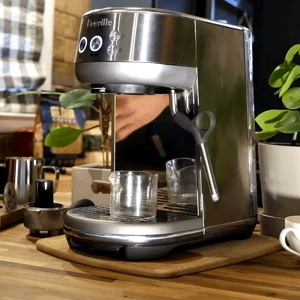
#1 · Best overall
Breville Bambino Plus
The Bambino Plus is the beginner machine I would put in the most kitchens. It gets to a usable brewing state fast, it does not make you learn temperature surfing on day one, and the automatic steam wand removes one of the hardest early skills from the morning routine. That matters because most new owners are not trying to become café techs. They want a machine that can pull a decent shot before work and still make a latte on the weekend without turning every drink into a project.
Shop the essentials
The small upgrades that make a home coffee setup cleaner, smoother, and more enjoyable to use every day.

Cleaner & Descaler Tablets
Keeps your machine clean, helps prevent buildup, and protects long-term performance.
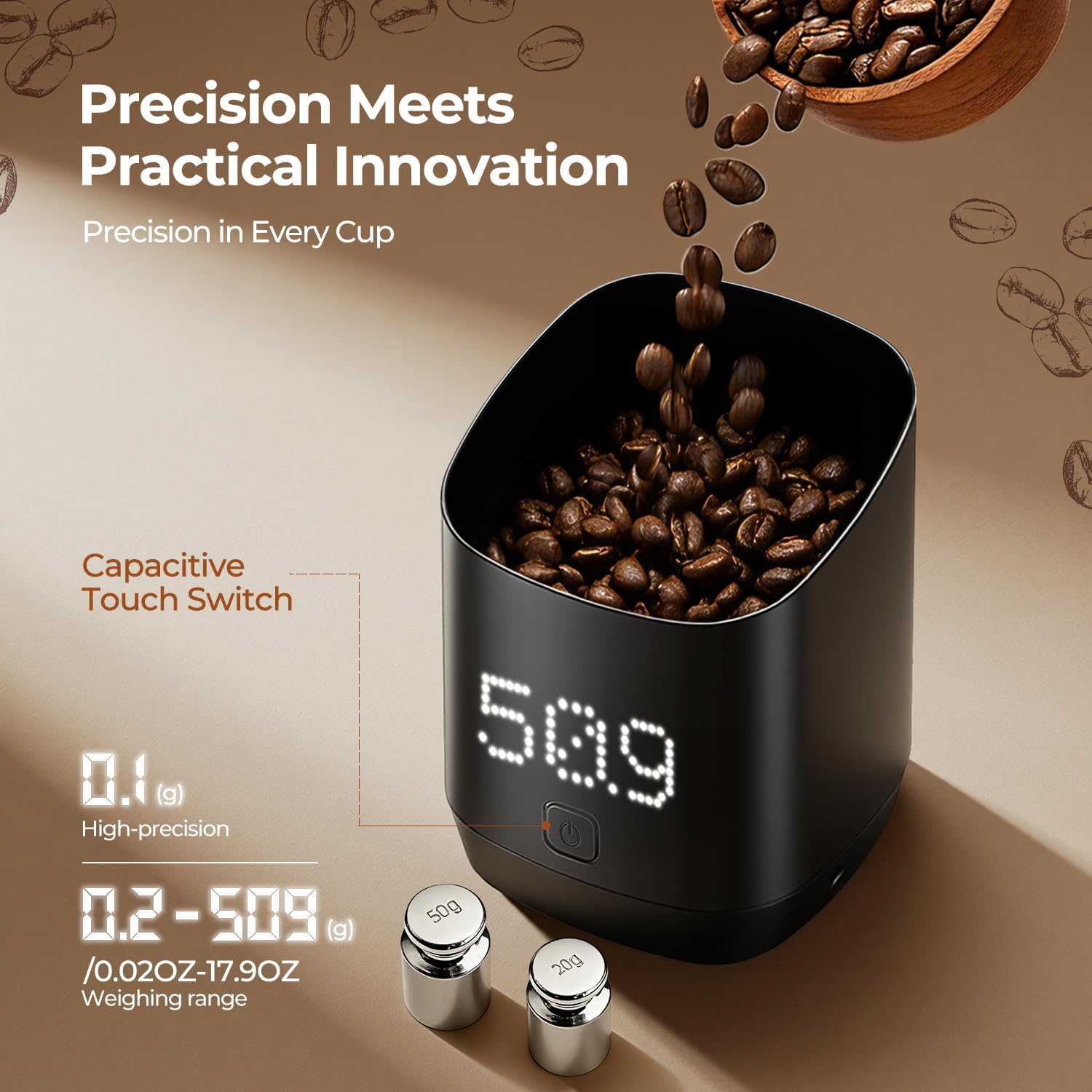
Digital Dosing Cup
Makes weighing beans faster and cleaner, with less mess around the grinder.
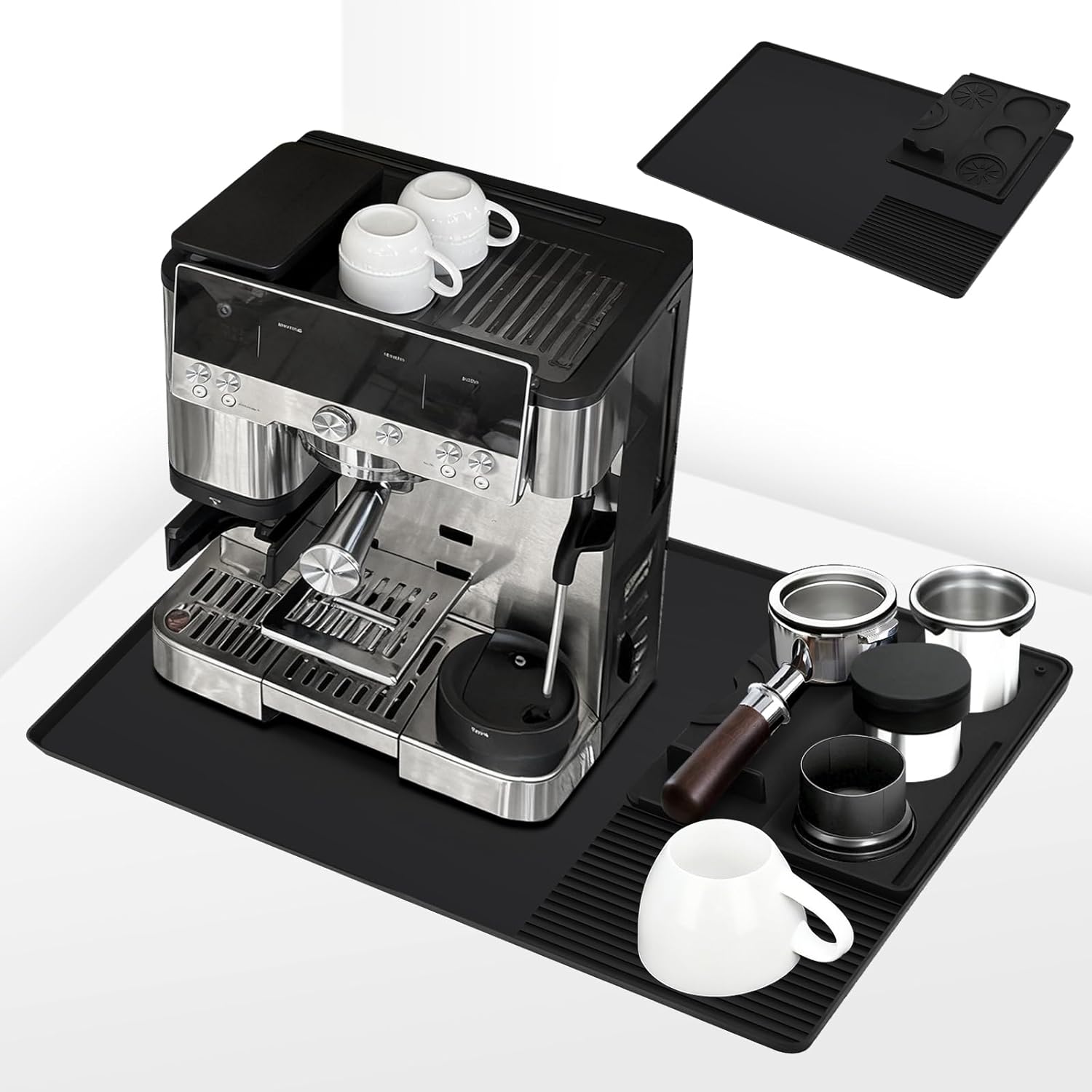
Silicone Mat
Protects your counter, catches spills, and gives your setup a cleaner working surface.

Vacuum Coffee Canister
Helps beans stay fresher longer by limiting air exposure after opening the bag.
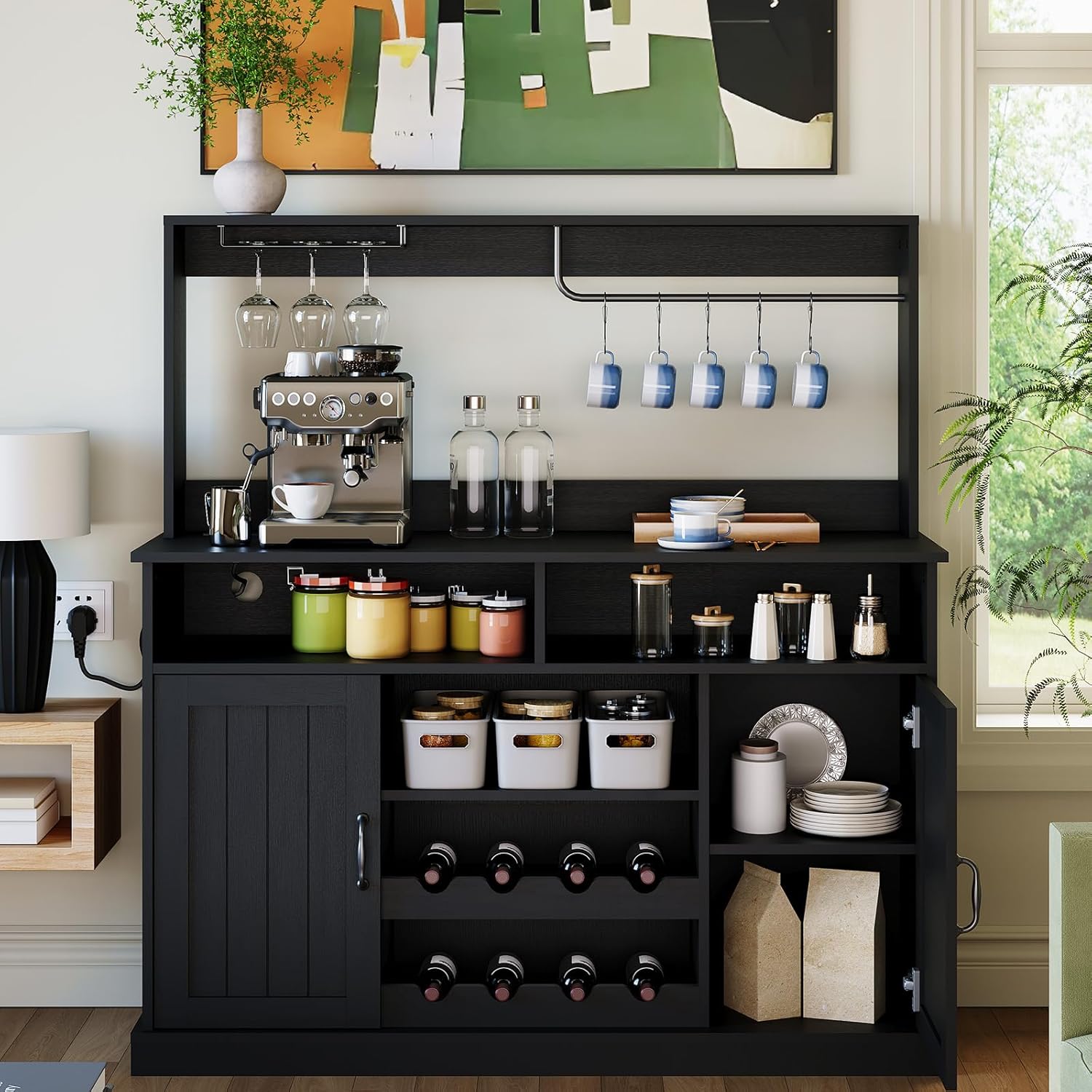
Farmhouse Coffee Bar Cabinet
Gives your machine, cups, beans, and accessories one dedicated home instead of cluttering the kitchen.
What makes the Bambino Plus good is not that it is the most powerful or most upgradeable machine here. It is that it removes friction. Pair it with a capable espresso grinder and it gives you a cleaner runway into real espresso than most classic single-boiler machines. The trade-off is long-term ceiling. The machine is light, the overall feel is appliance-like rather than heirloom, and very light roasts will show the limits sooner. For medium and medium-dark beans, though, it is still the safest first recommendation.
What I like
- Fast warm-up and low morning friction
- Automatic milk texturing is genuinely helpful
- Easy first step into real espresso
Watch-outs
- Needs a real grinder to shine
- Lower long-term ceiling than heavier single boilers
#2 · Best budget pick
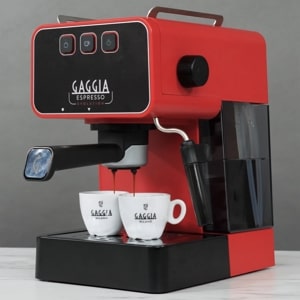
Gaggia Espresso Evolution
The Gaggia Espresso Evolution makes sense when the budget is tight but you still want something more serious than a pod machine. Its big value is that it does not force you to be perfect immediately. You can start with the forgiving stock setup, get used to dose, yield, and milk workflow, and then grow into better coffee as your grinder and habits improve. That is a much healthier beginner path than buying a machine that only works well after three accessories and a week of frustration.
It is still a budget machine, so the compromises are real. The build is more appliance than metal workhorse, the steam power is modest, and you do not get the cleaner dry-puck behavior of more serious single boilers. But under this price ceiling, that is acceptable. What you are buying is a machine that lets you learn the basic rhythm of espresso without punishing you too hard for being new, and that is exactly what a beginner machine should do.
What I like
- Very approachable entry price
- Forgiving first-machine behavior
- Clear path from easy setup to better results
Watch-outs
- Limited steam power
- Not a forever machine for heavy enthusiasts
#3 · Best for tiny kitchens
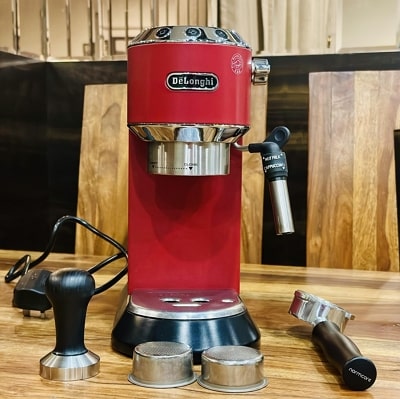
De'Longhi Dedica EC685
The Dedica is the machine for people whose real limitation is not ambition but counter space. It is narrow, quick to heat, easy to tuck into a small apartment kitchen, and much less intimidating than a full-size single boiler. That alone makes it a smart beginner option for buyers who would otherwise delay espresso entirely. A machine you can actually fit, fill, and live with beats a better one that never gets bought.
You do need to understand its ceiling. In stock form it leans on convenience more than depth, and that means the best shots are not as open or precise as what you get from stronger manual platforms. Steam is fine for a small cappuccino or latte but not especially forceful. That said, the Dedica is not trying to be a prosumer bargain. It is trying to be a compact, approachable first espresso machine, and on that brief it still makes sense for the right kitchen.
What I like
- Very slim footprint
- Fast startup and simple controls
- Easy fit for apartments and small counters
Watch-outs
- Limited steam authority
- Not the best platform for deep espresso nerding
#4 · Best all-in-one for beginners
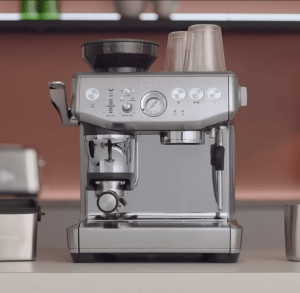
Breville Barista Express Impress
The Barista Express Impress is what I would recommend to the beginner who knows they want a grinder built in and does not want the kitchen chaos that usually comes with learning espresso. The assisted puck system smooths out two of the messiest early steps, dosing and tamping, and that changes the ownership experience more than spec-sheet purists like to admit. A machine that gets used every day is more valuable than a theoretically better setup that overwhelms the person using it.
Its main strength is convenience without going fully automatic. You still learn what grind changes do, you still steam milk yourself, and you still feel like you are making espresso rather than pressing a drink icon and walking away. The limits are the usual all-in-one ones: the grinder is good, not magical, and advanced tinkerers will eventually want more freedom. For a first serious home setup, though, it is one of the cleanest bridges between beginner ease and real barista workflow.
What I like
- Built-in grinder keeps the setup simple
- Assisted tamping reduces early mistakes
- Good middle ground between learning and convenience
Watch-outs
- Integrated grinder caps long-term flexibility
- Not the cheapest way into espresso
#5 · Best upgrade-path machine
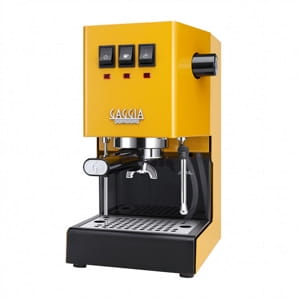
Gaggia Classic EVO PRO
The Gaggia Classic EVO PRO is not the gentlest machine here, but it may be the smartest buy for the beginner who already knows they want to get serious. The 58 mm workflow, metal-heavy construction, and broad accessory ecosystem mean you are learning on a platform that still makes sense once your technique improves. That matters because a lot of first machines feel disposable the moment you buy a better grinder. This one does not.
The reason it is not my universal first pick is simple: it asks more from the owner. Warm-up needs patience, milk workflow is slower than thermoblock machines, and it leaves more room for beginner mistakes. But if your mindset is, 'I want to learn properly and I do not want to replace the machine in a year,' this is where the conversation gets serious. It is the starter machine for people who want a hobby, not just a better morning drink.
What I like
- Excellent 58 mm accessory and upgrade ecosystem
- Feels more durable than most starter machines
- Teaches transferable espresso habits
Watch-outs
- Steeper learning curve than Bambino-style machines
- Single-boiler milk routine takes patience

#6 · Best step-up beginner single boiler
Lelit Anna PL41TEM
The Lelit Anna PL41TEM is the machine for the buyer who has already done enough reading to know they care about temperature control, pressure feedback, and repeatability. In practical terms, it gives a beginner clearer information. You can see more of what the machine is doing, make a change, and understand why the shot improved or got worse. That is a big step up from entry machines that leave new owners guessing.
What keeps Anna beginner-friendly is that it stays compact and fairly approachable in daily use. It does not feel like a giant prosumer box taking over the kitchen, and it does not demand a dozen aftermarket mods before it behaves. The drawbacks are real but manageable: the 57 mm ecosystem is smaller than the standard 58 mm world, and single-boiler milk workflow is still single-boiler milk workflow. But for the beginner who wants to learn with a bit more precision, Anna is a very smart move.
What I like
- PID control makes learning more transparent
- Compact footprint for a serious single boiler
- More repeatable than many entry-level machines
Watch-outs
- 57 mm accessory ecosystem is smaller
- Not ideal for back-to-back milk drinks
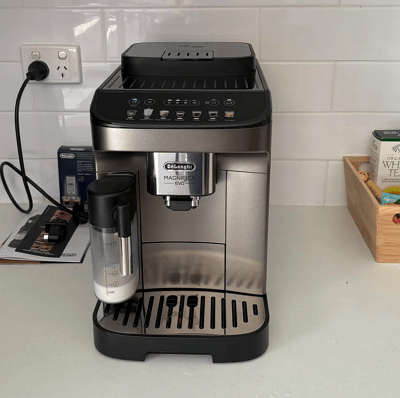
#7 · Best if you do not want to learn manual espresso
De'Longhi Magnifica Evo
Not every beginner should buy a manual espresso machine. Some people do not want to learn puck prep, milk texturing, or grinder adjustment beyond a basic dial. They just want stronger, fresher coffee than pods or drip can give them. For that buyer, the Magnifica Evo is a legitimate beginner recommendation. It handles grinding, dosing, brewing, and milk workflow with much less friction than a manual setup, and that means it often delivers more satisfaction to normal households than a supposedly better enthusiast machine.
The important thing is to buy it for the right reason. This is not the machine for learning barista skills or chasing nuanced light-roast shots. It is the machine for getting easy espresso-style drinks with consistent results and minimal effort. If your real goal is convenience first and espresso education second, this is the more honest purchase. A beginner machine should match the person, not the internet’s idea of who they should become.
What I like
- Very low learning curve
- One-touch milk drinks suit busy households
- Fresh-bean convenience is a huge upgrade from pods
Watch-outs
- Does not teach manual espresso skills
- Straight-shot ceiling is lower than manual machines
How to choose your first espresso machine
The first decision is not budget. It is how much of the process you actually want to do yourself. Some beginners want to learn grind, dose, tamp, extraction, and milk texture. Others just want stronger coffee at home with less effort than a café run. Those are different buyers, and they should not buy the same machine.
If you want to learn manual espresso without getting punished every morning, start with a machine that is fast to heat, forgiving with medium-roast beans, and not too slow on milk. If you already know you like gear and want a machine you can grow into, then a Classic-style or Anna-style platform makes more sense. And if convenience is the whole point, buy a superautomatic and skip the identity crisis.
The right beginner machine is the one that keeps you making coffee. That matters more than buying the most serious thing the internet tells you to respect.
Three beginner mistakes to avoid
Buying too much machine too early. A more demanding machine is not automatically a better first machine. If warm-up time, flushing, and steam management already sound annoying, listen to that.
Ignoring the grinder question. A beginner espresso machine without a capable grinder often becomes a blame magnet. If you are buying a manual machine without a grinder built in, budget for the grinder too.
Shopping for prestige instead of routine. The best beginner setup is the one that fits your kitchen, your patience, and the drinks you actually make. A machine that looks serious but slows you down can be the wrong buy.
FAQ
What makes an espresso machine beginner-friendly?
A good beginner machine removes one or two hard variables without making the coffee feel like an afterthought. Fast warm-up, clear controls, forgiving baskets or assisted workflow, and milk steaming that does not punish small mistakes all matter more than flashy spec-sheet claims.
Should beginners buy a machine with a built-in grinder?
Sometimes, yes. A built-in grinder keeps the setup simpler and lowers the barrier to daily use. The downside is long-term flexibility. Separate grinders usually give you better range and easier upgrades, but an all-in-one can be the smarter first purchase when convenience is the difference between using the machine and abandoning it.
Is a superautomatic a good beginner espresso machine?
Yes, if your real goal is easy espresso drinks at home rather than learning barista skills. A superautomatic is often the right beginner choice for busy households, milk-drink drinkers, or anyone moving up from pods who wants fresh beans without a manual workflow.
What is the biggest mistake beginners make when buying an espresso machine?
Buying for internet prestige instead of real use. A machine that looks serious but slows you down every morning can be the wrong beginner choice. Match the machine to your patience, counter space, drink habits, and willingness to learn. That usually leads to better coffee and less buyer's remorse.
We’ve categorized the best espresso machines for every kind of buyer
Find the right shortlist faster, whether you want convenience, a beginner-friendly setup, a smaller footprint, or better value at a given budget.
Best Superautomatic Espresso Machines
One-touch picks for speed and convenience.
Best Espresso Machines for Beginners
Easy-to-use machines with a smoother learning curve.
Best Small Espresso Machines
Compact machines for tighter kitchens and counters.
Best Espresso Machines With Built-In Grinder
All-in-one options with fewer extra pieces to buy.
Best Cheap Espresso Machines Under $500
Budget picks that still make sense for real espresso.
Best Prosumer Espresso Machines Under $1000
More serious machines with stronger value for the money.
Best Single Boiler Espresso Machines
Simple, space-saving picks for espresso-first routines.