
Selection method
Selection method: start with the milk drink
Milk changes the buying problem. A small cappuccino leaves more room for a coffee’s fruit or floral direction; a large latte can make a subtle espresso harder to distinguish. We selected four current US whole-bean products whose roaster documentation gives a credible reason to try them with milk, cream or a milk drink. We checked exact identity, brew advice, price where the direct page exposed it, and the full Coffeedant review for each. This is a use-case shortlist, not a sensory ranking. [1] [2] [3] [4]
Onyx Monarch has the clearest large-milk-drink design claim. Eye of the Tiger gives an exact espresso starting ratio for a brighter small drink. Equator Blend is a cream-and-sugar house coffee whose published extraction evidence is strongest for filter. Trapper Creek is the decaf choice, with Stumptown’s explicit milk positioning. We did not turn a roaster’s flavor notes into Coffeedant tasting results, and we did not infer that any coffee is universally better with dairy than oat milk. [1] [2] [3] [4]
The practical test for a reader is to buy one small whole-bean bag, note its roast date, make the same drink at a repeatable coffee dose and milk volume, and record personal preference. Our best-for labels tell you why a first bag is defensible; they cannot predict your cup.
Selection method
Keep espresso dose, yield and milk volume distinct
A roaster’s filter ratio is not an espresso shot recipe. Equator specifies 18 g of Eye of the Tiger to about 46 g finished espresso. Stumptown lists an espresso starting dose near 19.5 g for Trapper Creek. Follow basket capacity, dial the grind against the actual bag and record beverage yield. Milk should be measured separately if you want to compare two coffees fairly. [2] [4]
Equator Blend’s 1:15 drip, French press and V60 starts help a coffee-with-cream routine. The checkout offers an espresso grind, but the product page does not give a similarly precise portafilter target. Calling it a guaranteed latte winner would hide that gap. Onyx describes Monarch’s use in larger milk drinks; that is a roaster product-positioning claim, not Coffeedant’s measured performance. [1] [3]
Changing both coffee and milk quantity at once makes a useful comparison difficult. For a first trial, choose the drink you actually make every morning, keep the milk or alternative and cup size stable, then adjust one espresso variable at a time. A coffee that appeals in a 150 ml cappuccino need not be the one you prefer in a 350 ml latte.
Four distinct use cases
Quick comparison
| Coffee | Best for | 12 oz base price | Think twice if |
|---|---|---|---|
| Onyx Coffee Lab Monarch | Large, chocolate-led latte | Check current selector | You want a low-fruit, traditional dark roast |
| Equator Coffees Eye of the Tiger Espresso | Small, bright cappuccino | $19.50 | You want a fixed blend or a heavy, low-acid latte |
| Equator Coffees Equator Blend | Cream-and-sugar filter routine | $18.50 | Your main need is a roaster-specified portafilter recipe |
| Stumptown Coffee Roasters Trapper Creek Decaf | Decaf cappuccino | $20 | You need regular caffeine or a fixed component-origin panel |
Exact bags, specific reasons
The four picks

Large, chocolate-led latte
Onyx Coffee Lab Monarch
Evidence: Onyx explicitly designs Monarch for milk, including larger drinks.
Tradeoff: Its dark chocolate and berry brief may not suit someone avoiding fruit.
Skip if: You want a low-fruit, traditional dark roast.
Image: Onyx Coffee Lab. Official bag-identification image; not a Coffeedant tasting photo.
Read the full review →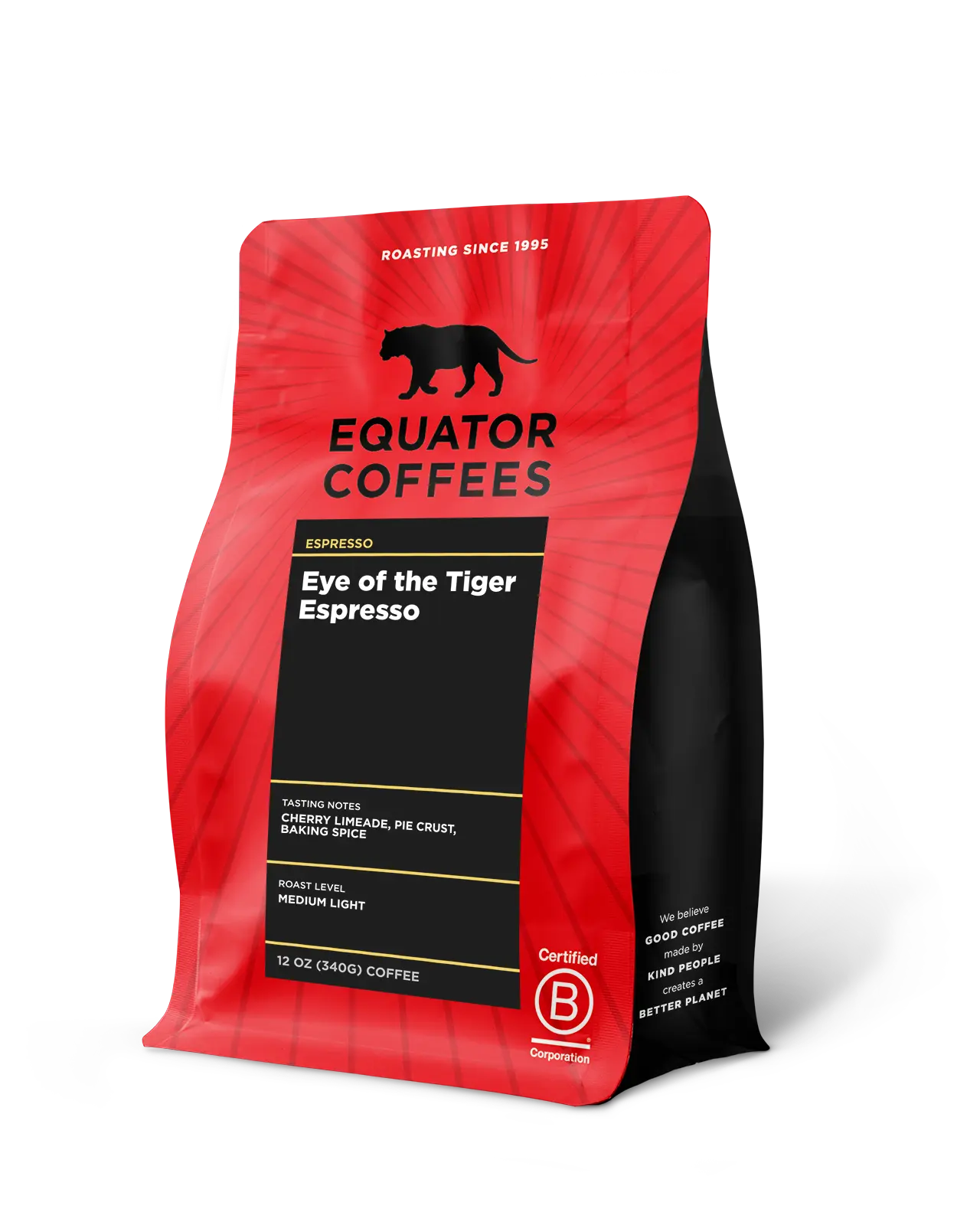
Small, bright cappuccino
Equator Coffees Eye of the Tiger Espresso
Evidence: Equator gives an 18 g to 46 g espresso start.
Tradeoff: A lighter seasonal profile may recede in a very large milk drink.
Skip if: You want a fixed blend or a heavy, low-acid latte.
Image: Equator Coffees. Official bag-identification image; not a Coffeedant tasting photo.
Read the full review →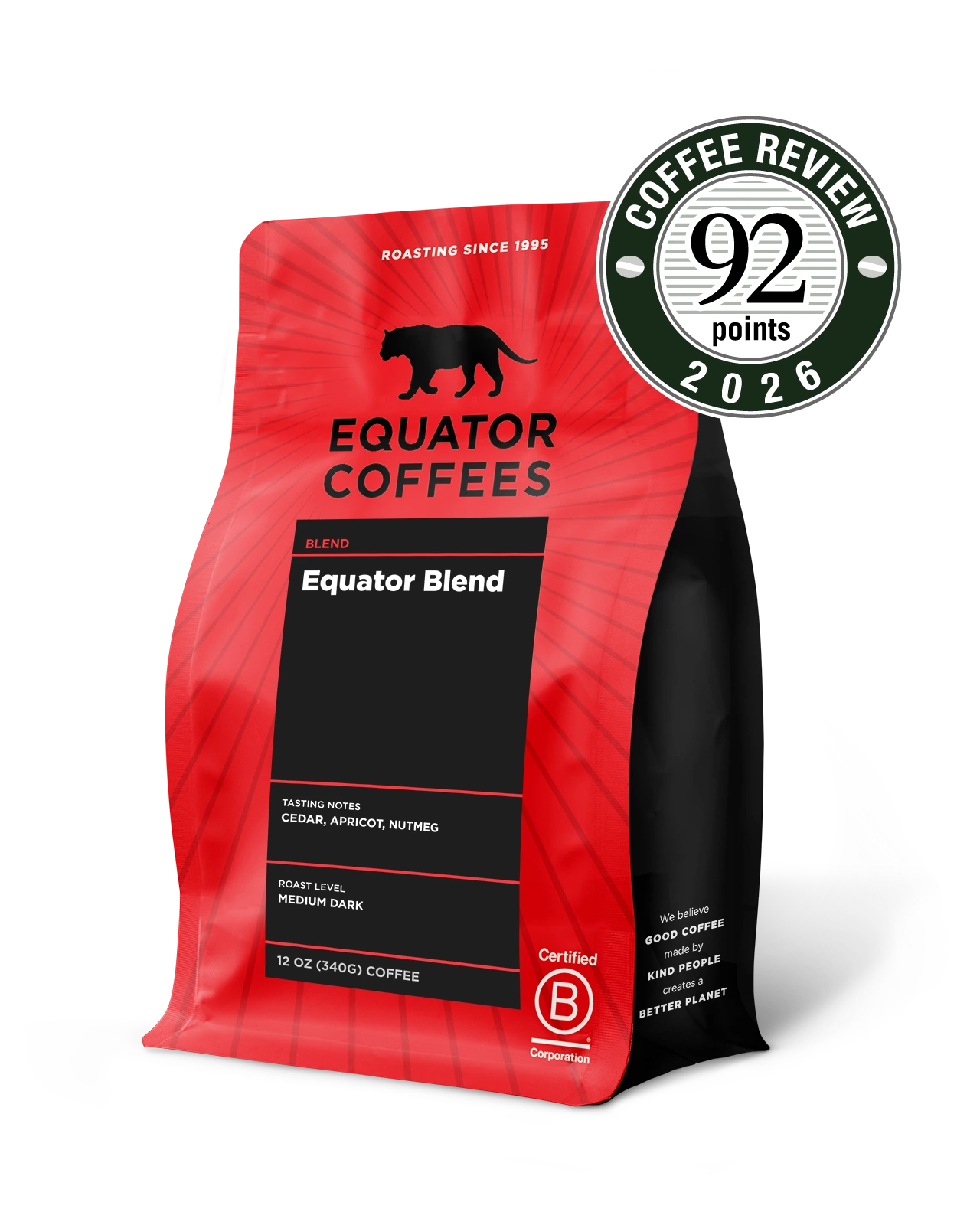
Cream-and-sugar filter routine
Equator Coffees Equator Blend
Evidence: Equator explicitly positions this medium-dark blend for cream and sugar.
Tradeoff: Its published recipes are for filter, not a specific espresso shot.
Skip if: Your main need is a roaster-specified portafilter recipe.
Image: Equator Coffees. Official bag-identification image; not a Coffeedant tasting photo.
Read the full review →
Decaf cappuccino
Stumptown Coffee Roasters Trapper Creek Decaf
Evidence: Stumptown says its decaf holds up in milk and gives an espresso starting dose.
Tradeoff: Citrus and fruit cues may be less familiar in milk than cocoa-led blends.
Skip if: You need regular caffeine or a fixed component-origin panel.
Image: Stumptown Coffee Roasters. Official bag-identification image; not a Coffeedant tasting photo.
Read the full review →Match evidence to drink size
Detailed comparison
| Factor | Monarch | Eye of the Tiger Espresso | Equator Blend | Trapper Creek Decaf |
|---|---|---|---|---|
| Best role | Large, chocolate-led latte | Small, bright cappuccino | Cream-and-sugar filter routine | Decaf cappuccino |
| Published brew evidence | Onyx explicitly designs Monarch for milk, including larger drinks | Equator gives an 18 g to 46 g espresso start | Equator explicitly positions this medium-dark blend for cream and sugar | Stumptown says its decaf holds up in milk and gives an espresso starting dose |
| 12 oz price | Check current selector; US direct, Oct 16 | $19.50; US direct, Oct 16 | $18.50; US direct, Oct 16 | $20; US direct, Oct 16 |
| Main limit | Its dark chocolate and berry brief may not suit someone avoiding fruit | A lighter seasonal profile may recede in a very large milk drink | Its published recipes are for filter, not a specific espresso shot | Citrus and fruit cues may be less familiar in milk than cocoa-led blends |
Make a repeatable choice
Read flavor notes as attributed signals
Onyx describes Monarch with dark chocolate and fruit. Equator’s current Eye of the Tiger page names cherry cola, gingersnap and chocolate; its seasonal Costa Rica and Rwanda components can change. Equator Blend lists cedar, apricot, marzipan, milk chocolate and nutmeg. Stumptown’s Trapper Creek has its own citrus and cocoa direction. These are roaster descriptions, not flavors we tasted or a promise that a particular milk choice will emphasize one note. [1] [2] [3] [4]
If your goal is a familiar cocoa-forward large latte, Monarch gives the most direct documented product brief here. For a smaller drink where brightness is welcome, Eye of the Tiger has a distinct case. A buyer who dislikes fruit cues can use those descriptions to avoid a poor first match; a darker roast label alone cannot prove that a finished cup has no fruit or acidity.
Independent reviews and owner posts can reveal alternative impressions, but their bags, dates, grinders and milk ratios vary. We use them in the linked full reviews as bounded context. No cross-product controlled tasting supports a numeric winner, so this guide assigns no sensory score.
Make a repeatable choice
A milk drink can still be a decaf decision
Trapper Creek belongs here because Stumptown explicitly says it carries its character through milk and publishes both drip and espresso directions. It is a decaf coffee processed by Swiss Water, not a zero-caffeine guarantee. The linked full review covers the process, current 12 oz option and uncertainty around changing components. [4]
If you want half-caff, Counter Culture Even Keel is a separately reviewed 50/50 regular-and-decaf blend. That bean mix does not establish exactly half the caffeine in every brewed cup, and its checked page is inconsistent about whether to call the roast medium or medium-dark. It was therefore not substituted for the clearly decaf pick. [5]
A shared grinder can retain some grounds when a household switches between regular and decaf. Purge and clean according to the grinder’s instructions if the distinction matters to your routine. Do not interpret this shortlist as a measured caffeine comparison.
Make a repeatable choice
The delivered bag matters more than a hero photo
Choose whole beans when you have a suitable grinder and inspect the “Roasted On” or equivalent date on arrival. Product photography identifies a bag but may show an older design or flavor panel. Eye of the Tiger and Equator Blend are recurring products with changing component records. A past review, owner post or bag image cannot identify the next shipment’s precise lot. [2] [3] [6]
A 12 oz bag contains roughly 340 g. At 18 g per espresso attempt that is about nineteen theoretical doses before dial-in waste. Large packs are useful only when your household consumes them before the freshness you enjoy declines. Keep opened beans sealed, dry and away from heat and odors; Stumptown advises against repeatedly freezing and thawing an opened bag. [7]
A café drink bought on the same day as a roaster’s online listing may be brewed from a different roast batch. Record the exact seller and bag before drawing conclusions about value or consistency.
Make a repeatable choice
Compare 12 oz US prices with the right drink in mind
The roaster-direct US 12 oz base prices checked October 16, 2026 were $19.50 for Eye of the Tiger, $18.50 for Equator Blend and $20 for Trapper Creek. Onyx Monarch’s current page did not expose a reliable price in the accessible selector; check the selected 12 oz variant and cart before comparing its cost. These are bag prices, not delivered totals. Tax, shipping, subscriptions, discounts and stock can change. [1] [2] [3] [4]
A dollar difference between two 12 oz bags is a weak reason to buy the coffee with the wrong brew evidence. If you make a large latte daily, a bag explicitly designed for milk may be a more useful experiment than a brighter coffee that needs a smaller drink to show its stated character. If you mostly make batch coffee and add cream, Equator Blend’s filter recipes are more directly relevant than an espresso-only selling point.
Milk, waste during dialing, filters, water and equipment all contribute to a finished drink cost. Do not use a bean-only per-dose calculation as a café-price comparison. Buy the small bag first; a bulk price per ounce only matters once you know the coffee and your use rate.
Evidence and limits
How this guide was made
This is a research-led US shortlist based on exact current roaster listings, stated milk or cream use, brew directions, whole-bean availability and dated price where accessible. Full reviews discuss independent sample reports and owner anecdotes with their limits. Coffeedant did not taste, brew, measure or rank these coffees by sensory quality.
Listed prices were checked October 16, 2026 and exclude tax, shipping, subscription terms and future offers. Onyx’s current selector price could not be verified in the accessible page. Check the delivered bag’s roast date and current product panel before buying again. Affiliate links or seller offers do not determine these best-for labels.
Quick answers
Milk-drink bean FAQ
Which bean is most directly designed for a large latte?
Onyx positions Monarch for milk drinks, including larger ones. That is the roaster’s use claim; Coffeedant has not tested it.
Can I use Equator Blend in an espresso machine?
The page offers espresso grind but its precise published recipes are for filter methods. Dial whole beans to your machine rather than copying its 1:15 filter ratio.
Which pick has a stated espresso recipe?
Equator gives Eye of the Tiger an 18 g to 46 g espresso starting point. Stumptown gives Trapper Creek an espresso starting dose near 19.5 g.
Is Trapper Creek caffeine free?
No decaf should be assumed caffeine free. Stumptown names Swiss Water processing, but this guide does not measure residual caffeine.
Will oat milk taste the same as dairy?
That is unverified. Milk type, amount, temperature and coffee extraction can change the result. Hold those variables steady when comparing bags.
Should I buy a 2 lb or 5 lb bag immediately?
A 12 oz whole-bean trial gives a lower-risk way to check roast date, recipe and personal preference before committing to bulk.
Are these Coffeedant tasting scores?
No. The selection is research-led, and all flavor notes are attributed to roasters or identified outside reports.
Trace the claims
Sources
- Onyx Coffee Lab: Monarch ↗
Exact coffee and stated milk-drink role. Checked October 16, 2026.
- Equator Coffees: Eye of the Tiger Espresso ↗
Current seasonal identity, notes, shot starting point and US direct offer. Checked October 16, 2026.
- Equator Coffees: Equator Blend ↗
Current component panel, filter recipes, cream-and-sugar positioning and US direct offer. Checked October 16, 2026.
- Stumptown Coffee Roasters: Trapper Creek Decaf ↗
Decaf process, milk positioning, brew advice and direct offer. Checked October 16, 2026.
- Counter Culture Coffee: Even Keel ↗
Half-caff alternative and roast-description discrepancy. Checked October 16, 2026.
- Counter Culture Coffee: coffee freshness ↗
Roast-date and storage context. Checked October 16, 2026.
- Stumptown: whole-bean storage ↗
Storage and freezer context. Checked October 16, 2026.
- The Kitchn: Equator coffee sample ↗
Older independent sample, bounded to its own bag. Checked October 16, 2026.
The useful first bag
Match the coffee to the drink you already make
Start with 12 oz, keep your milk volume and coffee recipe steady, and let the delivered bag decide whether a larger order or a different flavor direction is worthwhile.
Explore all bean reviews →