
Best Espresso Machines (2026): pick the machine that fits your routine
Most people searching “best espresso machine” are not hunting for the fanciest box. You’re trying to avoid the two classic regrets: buying a machine that is too fussy to use every morning, or buying one that is too limited once you learn the basics.
Here’s the truth a lot of “top 10” lists skip: espresso is a workflow. If your machine matches your drinks and your pace, you get café-level results. If it doesn’t, you get sour shots, weak steam, messy cleanup, and a counter appliance you quietly stop using.
This guide is built around the pain points that actually decide whether you’ll love your setup: milk drink speed (single boiler vs HX vs dual boiler), heat-up time, how forgiving the machine is while you learn, parts and service reality, and how much grinder you really need. We’ll tell you what to buy, and also what you are signing up for on day 30.
Use this page two ways: (1) start with the Top Picks if you want a fast answer, or (2) jump straight to the hub that matches your kitchen, budget, and drink style.
Detailed product slips
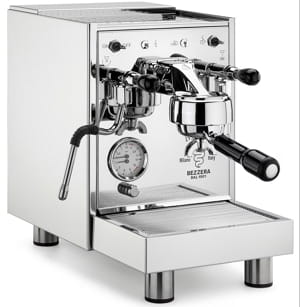
Bezzera BZ13 PID
200–300 word overview
The Bezzera BZ13 PID is the “milk-first prosumer” choice for people who want real café steam in a body that does not demand an E61 heat-soak lifestyle.
It’s an HX machine, but it behaves more predictably than classic HX builds because the boiler is PID-managed and the Bezzera BZ group is electrically heated.
In practical terms: you can turn it on, let it come up, and get into a consistent brew window faster than a traditional E61 heat exchanger, especially if your routine
is two cappuccinos before work, not a three-hour espresso session.
Where it shines is cadence. The 1.5 L copper boiler provides steady steam pressure and fast recovery for back-to-back milk drinks, so you are not waiting between
pitchers or fighting a thin steam phase. The BZ group also tends to be less fussy about idle temperature drift, which means fewer “flush games” than older HX designs.
Still, it’s an HX. If the machine sits hot for a long time, a small cooling flush helps you land the first shot where you want it, and that’s simply part of the platform.
Buy the BZ13 PID if your priority is milk drinks, speed, and compact prosumer build quality. Skip it if you want true dual-boiler independence, plumb-in convenience,
or you plan to chase light-roast precision with tight brew-temperature control and profiling from day one.
At a glance
- Best for: Daily cappuccinos, compact prosumer bars, fast warm-up without long heat-soak habits.
- Main trade-off: HX management. Tiny cooling flush after long idle still helps.
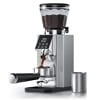
- What to budget next: A real espresso grinder (this machine will expose weak grinding fast).
- Pros: Heated group improves readiness and stability.
- Pros: PID makes HX behavior more predictable.
- Cons: Tank-only ownership means water discipline matters.
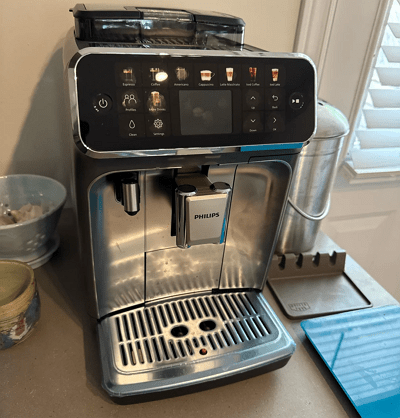
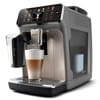
Philips 5400 LatteGo (EP54xx)
200–300 word overview
The Philips 5400 LatteGo is one of the most “real-life friendly” super-automatics because it prioritizes the thing that kills ownership:
milk cleanup. LatteGo is tube-free and breaks down into a simple two-piece carafe, which means you can rinse it in seconds and actually keep it clean
without treating your coffee routine like a lab experiment.
It’s also a strong family machine. Four user profiles and a big menu of one-touch drinks reduce daily friction in shared kitchens, and the removable brew group
makes weekly maintenance approachable instead of intimidating.
In cup terms, you should expect consistent, drinkable espresso-based beverages with minimal effort, not the last 10 percent of clarity and texture you can pull
from a semi-automatic setup. The ceramic grinder is durable and quiet, but it works in macro steps. That’s fine for medium roasts and milk drinks, and it is exactly
where super-automatics earn their reputation. Very light roasts and super tight espresso tuning are not the platform’s happy place, because you cannot micro-adjust
grind and puck prep the way you can on a manual machine.
Buy the 5400 LatteGo if you want one-touch lattes and cappuccinos, fast cleanup, and predictable results. Skip it if your definition of “best espresso” is
dialing in 18 g to the tenth, chasing extraction yield, and pouring microfoam with a wand. For convenience-first homes, this is one of the smartest daily drivers.
At a glance
- Best for: Convenience-first homes, milk drinks, shared kitchens.
- Main trade-off: Limited fine-tuning for very light roasts.
- Ownership tip: Keep the brew group clean and follow filter schedules to avoid flavor drift.
- Pros: LatteGo is the easiest milk system to clean.
- Pros: Profiles reduce “who changed my settings” drama.
- Cons: No true barista microfoam and limited grind micro-steps.
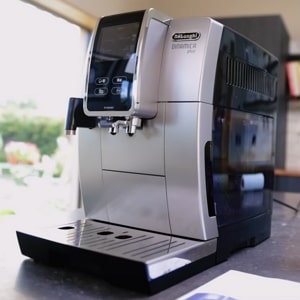
De’Longhi Dinamica Plus
200–300 word overview
The De’Longhi Dinamica Plus is the super-automatic that finally feels like it understands espresso instead of just producing “espresso-ish” coffee.
The key difference is that it can grind fine enough to build real pressure and actually choke if you push it too far, which is a good sign.
That ability, paired with a fast, quiet routine, makes it a strong bridge for former pod users who want better coffee without turning mornings into a hobby.
Where it earns its reputation is milk variety. LatteCrema is not a wand, but it is a better system than the usual one-texture foam most bean-to-cup machines deliver.
Three distinct textures give you more control over cappuccino versus latte style drinks, and the workflow stays clean and repeatable.
For busy households, the “press button, get drink, rinse” rhythm matters more than a spec sheet, and this machine is built around that reality.
The trade-offs are exactly what you expect from a convenience platform at this price. The chassis is more tool than showpiece and it is plastic-heavy compared to prosumer
stainless machines. App experiences can be hit-or-miss, so treat the touchscreen and on-machine interface as the real control center.
You also give up the micro-adjustability and feedback loop of a semi-automatic setup. You cannot fix channeling with better distribution because you are not doing puck prep.
Buy it if your goal is consistent espresso-based drinks with minimal effort and genuinely good milk results. Skip it if you want to tinker with pressure, flow, puck prep,
and steam technique. For “best super-automatic under serious use,” it’s a top-tier pick.
At a glance
- Best for: Busy homes that want cappuccinos and lattes without learning barista technique.
- Main trade-off: Less control and less tactile feedback than semi-automatic setups.
- Ownership tip: Stay strict on cleaning cycles. Supers punish neglect more than manual machines.
- Pros: Espresso can be truly dialed “tight” for a super-auto.
- Pros: Milk textures are meaningfully different.
- Cons: App is not the reason to buy it.
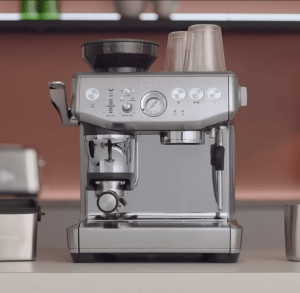
Breville Barista Express Impress
200–300 word overview
The Breville Barista Express Impress is built for the most common “best espresso machine” buyer profile: you want real espresso at home, but you do not want to spend the
first month wasting beans while you learn dosing, tamping, and the basic cause-and-effect loop of extraction.
Its Impress Puck System is not a gimmick. It’s a consistency tool that reduces channeling and compresses the learning curve, which is exactly what multi-user households need.
One person can pull a shot, the next person can pull one, and you do not end up with a grinder setting war and a counter full of knocked-over accessories.
Mechanically, it’s still a Breville all-in-one: 54 mm workflow, integrated grinder, and a thermoblock-driven heat system that favors speed and convenience over big-boiler
“steam forever” power. The upside is that it gets you into espresso quickly and keeps early results stable enough that you can learn taste-based dialing instead of
panic-adjusting everything at once. The assisted tamp at a consistent force helps a lot because tamp inconsistency is one of the sneakiest beginner failure points.
The limits show up when you want to entertain or chase higher-end techniques. Steam is workable, but it’s not designed for multiple pitchers back to back.
The built-in grinder is convenient but not as flexible as a dedicated espresso grinder if you start chasing very light roasts or ultra-fine adjustments.
Buy the Express Impress if you want repeatable home espresso with minimal fuss and a clean, guided workflow. Skip it if you’re a control perfectionist who wants full
freedom for WDT experiments, pressure play, or rapid milk-drink production.
At a glance
- Best for: “I want café-quality without the learning tax” households.
- Main trade-off: Not a high-throughput milk machine and limited upgrade path vs separate grinder + machine.
- Ownership tip: Keep the grinder clean and dose consistently. The system works best when you let it be consistent.
- Pros: Assisted tamping makes channeling rare.
- Pros: Dosing settles into tight consistency after a few shots.
- Cons: Slower for repeated milk rounds.
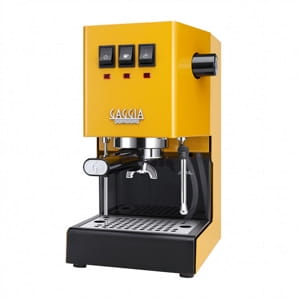
Gaggia Classic EVO PRO
200–300 word overview
The Gaggia Classic EVO PRO is the “starter machine you won’t outgrow” because it is a real 58 mm espresso platform with a strong parts ecosystem and a community that
has basically turned it into the small-block V8 of home espresso. The chassis is compact, the workflow is honest, and the 3-way solenoid means you get dry pucks and
clean knockouts instead of soupy mess. If you want to learn espresso properly, this machine gives you feedback you can actually improve with.
The real value is long-term. You can run it stock and learn temperature surfing, or you can add upgrades later like PID control, better baskets, a bottomless portafilter,
and a more refined steam tip. That upgrade path matters because espresso skill grows, and machines that cannot grow with you tend to get replaced, not loved.
With the Classic, you can move up in capability without replacing the entire machine.
The trade-offs are the normal single-boiler realities. The “ready” light does not mean brew-stable. Give it time to warm the group and portafilter properly if you want
repeatable shots. Steaming is also sequential and slower than higher-end single boilers or HX and dual boiler machines. If your household is milk-heavy and time-sensitive,
you’ll feel that.
Buy the Gaggia Classic EVO PRO if you want a durable 58 mm foundation, you like hands-on learning, and you want an upgrade path. Skip it if you need fast, powerful
steaming for multiple drinks in a row or you want set-and-forget temperature from day one.
At a glance
- Best for: Hands-on baristas, tinkerers, long-term owners who want a 58 mm ecosystem.
- Main trade-off: Warm-up discipline and slower milk workflow.
- What to budget next: Grinder first, then PID if you want tighter temperature control.
- Pros: Accessory ecosystem is huge.
- Pros: Mod path can turn it into a monster over time.
- Cons: Needs patience for heat stability.
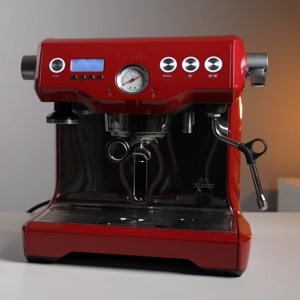
Breville Dual Boiler (BES920)
200–300 word overview
The Breville Dual Boiler (BES920) is the value outlier in home espresso because it gives you real dual-boiler architecture and serious temperature control without the
typical prosumer price tax. It is built for the workflow that actually matters in milk-drink homes: brew at a stable temperature while steaming at the same time,
with fast recovery and no mode switching. That alone changes the daily feel of the machine.
The triple PID control is the practical win. Instead of “good enough most of the time,” you get a repeatable baseline that makes dialing in more about coffee and grind,
not about guessing what the machine is doing today. It also means you can run different roast levels and tweak temperature intentionally, rather than surfing.
Add programmable pre-infusion and a 58 mm platform, and you have a machine that can genuinely reward skill growth.
The honest downside is that it exposes everything you do wrong. Poor distribution, inconsistent dosing, or a mediocre grinder will show up immediately as blonding,
channeling, or harshness. You cannot hide behind pressurized baskets here. Budget for a real espresso grinder, and accept that your first two weeks are about learning,
not perfection.
Buy the BES920 if you want dual-boiler performance and you are willing to pair it with a capable grinder. Skip it if you want an all-in-one appliance that “makes espresso”
without a learning curve. For people who want café-level capability per dollar, it is one of the smartest buys in the category.
At a glance
- Best for: Milk-drink homes, hobbyists who want real control, value buyers who still want serious hardware.
- Main trade-off: You must bring a grinder and decent puck prep.
- Ownership tip: Use good water and stay on cleaning routines. It’s precision hardware and likes discipline.
- Pros: Stable temps and fast milk cadence.
- Pros: Great platform for improving technique.
- Cons: Learning curve is real.
Profitec Pro 700
200–300 word overview
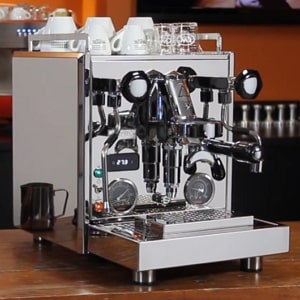
The Profitec Pro 700 is what happens when classic E61 prosumer design gets paired with the modern things people actually want: rotary-pump calm, strong steam, and
plumbing flexibility that can turn a home counter into a proper bar layout. This is a dual-boiler machine that feels built for long-term ownership. The chassis is heavy,
the internals are serviceable, and the whole vibe is “buy once, maintain it, keep it for a decade.”
In daily use, the rotary pump is the first upgrade you feel. It is quieter and smoother than vibe-pump machines, which matters in real homes. Steam power is the next.
If you make milk drinks often, the Pro 700 keeps pace and recovers fast, so you can actually host people without turning your kitchen into a bottleneck.
Dual boilers also mean you can keep brew temperature stable while steaming. That stability is what makes espresso taste consistent when you are not in perfect conditions.
The trade-offs are mostly lifestyle. E61 groups still benefit from a proper heat soak if you want long-session stability, and the machine is physically deep.
You need to measure your counter, think about cup clearance, and plan your workflow space. Flow profiling is not “installed by default,” so if you buy this primarily for
light-roast profiling, you’ll likely add a flow-control kit.
Buy the Pro 700 if you want a premium, quiet, dual-boiler platform you can plumb in later and live with for years. Skip it if you want compact, fast-on convenience
or you cannot accommodate the footprint and warm-up habits of an E61 machine.
At a glance
- Best for: Serious home bars, frequent milk drinks, owners planning plumb-in.
- Main trade-off: Size and E61 warm-up habits.
- Upgrade path: Flow-control kit if profiling is a goal.
- Pros: Quiet rotary pump and strong steam.
- Pros: Built for long-term serviceability.
- Cons: Needs space and heat soak for best results.
ECM Synchronika II
200–300 word overview
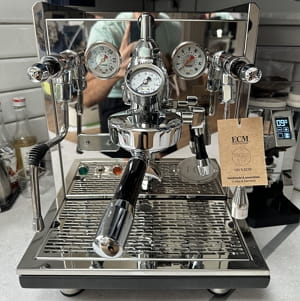
The ECM Synchronika II is the “premium E61 done right” machine: dual stainless boilers, quiet rotary pump, and an OLED control layer that makes ownership feel modern
instead of ritualistic. It is aimed at people who like the tactile feel and serviceability of E61 hardware, but who also want scheduling, eco modes, and centralized control
so the machine works around your routine instead of demanding one.
In cup terms, the Synchronika II is about repeatability and headroom. Dual boilers stabilize brew temperature while keeping steam ready, so milk drinks become fast and
predictable. Steam pressure is strong, and recovery is quick enough that the machine stays composed through multiple drinks. Stainless boilers also tend to be a practical
plus for long-term maintenance, especially when paired with good water and consistent cleaning.
The upgrade story is also clean. If you want to explore profiling, the platform supports a native flow-control path, but it does not force that complexity on you.
That matters because most people want consistent espresso first and “profiling experiments” later. The downside is physical. This is a large, heavy machine that needs a
stable counter and thoughtful placement. Like most E61 builds, it still rewards a proper heat soak for long sessions, even if warm-start features help you get moving faster.
Buy the Synchronika II if you want a long-term, premium dual-boiler E61 with quiet operation and modern controls. Skip it if your priority is compact size, low warm-up habits,
or if you want paddle-based flow profiling installed from day one.
At a glance
- Best for: Premium home bars, frequent milk drinks, owners who want E61 feel plus modern controls.
- Main trade-off: Size, weight, and the “E61 still likes heat soak” reality.
- Ownership tip: Plan your water strategy first. Premium machines stay premium when scale stays out.
- Pros: Quiet rotary pump and strong steam.
- Pros: OLED settings improve daily usability.
- Cons: Needs space and a stable counter.
Best Espresso Machines (2026): real picks, real workflow
If you’re searching for the best espresso machine, you’re usually searching for the best daily routine. Great espresso is a system: grinder + machine + water + a repeatable workflow. This page is built to make the decision fast, without hiding the trade-offs.
Quick navigation: Espresso Machine Finder · Small espresso machines · Coffee machines hub
Best overall espresso machine: Lelit Elizabeth
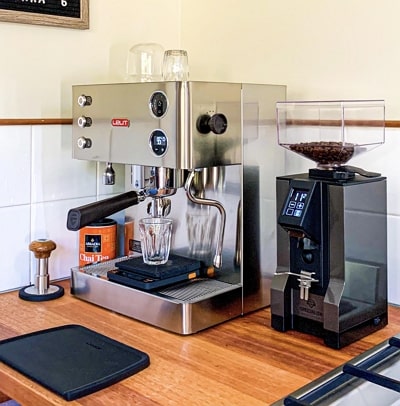
If you want cafe-level espresso at home and you make milk drinks most days, the fastest path to “this feels easy” is a compact dual boiler. Elizabeth is the one that keeps the routine tight without forcing an E61 warm-up lifestyle.
Typical price: $1,439.96 (varies by region and promos)
Lelit Elizabeth (PL92T)
Compact dual boiler that makes espresso-and-milk routines calm, fast, and repeatable.
Category scores
Takeaway
Compact dual boiler with independent PID, programmable pre-infusion, and real steam power for fast, repeatable service.
Pros
- Excellent temperature stability after warm-up
- Independent PID on brew and steam
Cons
- Plastic steam-knob wear shows up in owner reports
- No factory flow-control kit (ring group)
Quick picks: the best espresso machines right now
These are the best home espresso machines across the realities people actually live with: budget ceilings, counter space, milk-drink speed, and how hands-on you want to be. Affiliate links may earn a commission at no extra cost to you. Prices can change.
| Category | Machine | Type | Typical price | Why it wins | Main trade-off | Links |
|---|
Start with your drinks, not the machine. Match the platform to your routine. Super-automatic for speed and cleanliness. Semi-automatic for higher cup potential and hands-on control. Dual boiler or heat exchanger for frequent milk drinks. Single boiler or thermoblock for light use and small spaces. A good grinder is non-negotiable.
Tip: plan the full setup. Water, grinder, scale, pitcher, and a simple distribution tool matter as much as the chassis.
Tap the ⓘ icon to open details. Tap ✕ or outside to close.
-
Ignoring grinder budget allocation. Weak burrs cause channeling and flat flavor even on an expensive machine.
Why it matters: Your grinder drives shot quality more than boiler stability or pump pressure. Uneven particles give bitter and sour at once.
Budget rule: allocate ~40% to grinding. On a €1,000 setup, think €600 machine + €400 grinder, not €900 + €100 blade grinder.
Example: A €600 machine with a Baratza Sette 270 will out-extract a €1,200 machine with a €100 freebie grinder.
- Expecting café milk from a small single boiler. Steam power sets your latte ceiling.
- Overbuying for weekend use. Big boilers add cost, size, and warm-up time without improving two shots a week.
-
Overlooking water quality impact. Scale kills thermostats, valves, and flow meters.
Hard vs soft: >180 ppm hardness accelerates scale and temperature drift. <40 ppm can under-extract and mute flavor.
Target: 80–120 ppm total hardness, 40–70 ppm calcium hardness. Test with a TDS meter or aquarium strips.
Plan: budget ~€150 for filtration if you are out of range and ~€40 per year for cartridges.
-
Trusting Amazon reviews without context. Pressurized baskets can fake crema and mislead “perfect shot” claims.
What happens: dual-wall baskets add back-pressure and foam even with stale pre-ground, masking poor extraction.
What to read for: extraction time, grind adjustments, puck prep, and temperature management.
Reality check: non-pressurized baskets at ~9 bar through ~18 g at ~93 °C tell the real story.
-
Buying features you will never use. Useful on paper, dead weight in practice.
Cup warmers: tops rarely exceed ~45 °C. Preheat cups with hot water instead.
Pressure gauges: helpful early, rarely consulted once you dial by time and taste.
Built-in grinders: convenient now, limited upgrade path later.
- Chasing features without serviceability. Easy parts and clear access reduce downtime.
- Underestimating workflow. Slow heat or awkward wands make you use the machine less.
Tap the ⓘ icon to open details. Tap ✕ or outside to close.
-
Control preference: manual vs semi-automatic vs super-automatic.
Manual: you own grind, dose, tamp, and timing. Expect ~2 weeks of inconsistency while muscle memory builds.
Semi-automatic: machine stabilizes temp and pressure while you handle puck prep. Clear feedback loop.
Super-automatic: push button to espresso in ~40 s. Minimal adjustability, maximum convenience.
-
Heat-up speed needs: how fast you want 93 °C.
Thermoblock: ~3 s to temp.
Single boiler: ~30–45 s.
Dual boiler: ~8–15 min to full stability. Consider a smart plug for scheduled warm-up.
-
Milk routine: none, daily, or back-to-back service.
No milk: skip the wand and save ~€150–€300.
Daily milk: sustained steam >1.0 bar.
Multiple drinks: heat exchanger or dual boiler; single boilers need ~60–90 s between modes.
- Drink profile: how many shots per day and how many back to back. Heavy milk use favors dual boiler or heat exchanger.
- Grinder quality: burr size, adjustment precision, and retention.
- Temperature control: PID for setpoint stability. Flow control or preinfusion for light roasts.
- Steam performance: boiler size, tip design, and recovery time.
- Warm-up and speed: ThermoJet and thermoblocks heat fast. E61 groups need more time.
- Footprint and power: check width, height, and circuit limits.
- Maintenance path: filters, backflush routine, descaling policy, and access to parts.
- Support network: parts availability and warranty coverage in your region.
- Total cost: budget for grinder, pitcher, scale, baskets, and filters.
Real five-year ownership costs
Sticker price is roughly 60% of total cost. Filters, descaling, wear parts, electricity, and beans do the rest.
Tap the ⓘ icon to open details. Tap ✕ or outside to close.
-
Machine: €600–€2,000 depending on features and brand.
Higher prices follow dual boilers, PID control, and stronger steam. Serviceability matters as much as specs.
- Grinder: €250–€800 for a proper match.
-
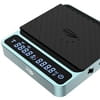
Scale: €45 for 0.1 g precision.
Weigh dose and yield to keep ratios consistent and reduce waste.
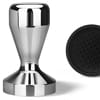
- Calibrated tamper: €35. Milk pitcher: €25.
-
Distribution tool: €20.
Reduces clumps, evens density, and minimizes channeling.
-
Cleaning supplies: ~€30.
Backflush detergent and descaler keep valves clear and taste clean.
- Beans: €30 monthly ≈ €360 per year.
-
Water filter system: from €150 installed.
Target 80–120 ppm total hardness and 40–70 ppm calcium hardness.
- Descaling solution: €20.
-
Year one total: €1,535–€4,285.
Driven by machine and grinder tier. Accessories and water treatment are low-cost but essential.
- Beans: €360/yr. Filter cartridges: €40. Descaling: €40.
- Gaskets: €25. Shower screen: €15. Cleaning tablets: €20.
-
Electricity: ~€28 for two daily shots.
Varies by boiler type, ambient temperature, and tariff.
-
Total annual operating cost: €528 ≈ €0.72/shot.
€528 ÷ 730 shots based on two shots daily.
- Café baseline: €4.50 latte × 365 = €1,642/yr.
-
Breakeven timelines: 11 mo low, 18 mo mid, 31 mo high.
Compares café spend (€1,642/yr) to home operating (€528/yr) against initial outlay.
-
After breakeven: ~€1,114 saved yearly; ~€3,000 over five years even on high-end.
€1,642 − €528 = €1,114/yr savings; compounded over five years after payback.
Technical specifications that actually affect your shots
Boiler system + temperature control define workflow, consistency, and maintenance more than headline bar ratings.
Tap the ⓘ icon to open details. Tap ✕ or outside to close.
-
Thermoblock: speed first, shorter lifespan.
3–40 s heat-up depending on power. ±2–4 °C stability. No simultaneous brew/steam. Expect ~3–5 years before element/scale issues. Choose for speed and tight spaces.
-
Single boiler: budget efficiency for solo users.
3–5 min heat-up. With PID, ~±1 °C stability. Brew, then switch to steam. Lifespan ~8–12 years with proper descaling.
-
Heat exchanger: classic café workflow.
8–15 min heat-up. ~±2 °C stability managed via cooling flushes. Brew and steam simultaneously. Lifespan ~15–20 years.
-
Dual boiler: precision and throughput.
10–15 min heat-up. ~±0.5 °C stability with dual PIDs. Independent brew/steam with no workflow compromises. Lifespan ~15–25 years with maintenance.
-
Portafilter 51–54 mm: compact, limited upgrades.
Holds ~14–18 g. Fewer aftermarket baskets and pro parts. Good for small footprints and occasional use.
-
Portafilter 57–58 mm: commercial ecosystem.
Holds ~16–22 g. Broad aftermarket from IMS/VST, bottomless PFs, standardized gaskets and screens. Best for long-term upgrade paths.
-
Pump pressure: 9 bar at the puck matters, not “15-bar” on the box.
Box ratings are peak at the pump outlet. Seek factory 9-bar or user-adjustable OPV to avoid over-extraction and astringency.
-
Thermostat control: budget, learn temperature surfing.
±5 °C swings as the element cycles. Time shots in the stable window. Works best with darker roasts.
-
PID control: consistent results shot to shot.
~±1 °C stability by modulating power continuously. Adds ~€100–€200 but removes surfing and helps light roasts.
-
Dual PID: independent brew and steam precision.
~±0.5 °C on both circuits. Costs ~€300–€500 over basic PID. Ideal for rotating roast levels and milk drink tuning.
Sustainability: buy once, maintain properly
Longevity and parts access lower cost per shot and reduce waste far more than marketing buzzwords.
Tap the ⓘ icon to open details. Tap ✕ or outside to close.
-
Thermoblock consumer units: 3–5 year lifespan.
End-of-life often means full replacement. Limited parts availability creates 8–12 kg e-waste every cycle.
-
Single boiler brass/steel: 10–15 years with service.
Annual gaskets, valves every 3–5 years, elements every 8–10. Good parts ecosystem keeps repairs economical.
-
E61 commercial builds: 20+ years, generational durability.
Standardized parts across brands keep repair costs low and waste minimal. Replace wear items on schedule.
-
E-waste math: long-lived machines generate far less waste.
Replacing a consumer unit every 3 years can total 50–80 kg of landfill over 20 years vs ~2 kg of components on a serviceable commercial unit.
-
Pods vs whole bean: waste gap is dramatic.
Aluminum capsules contribute ~39,000 tons to landfill yearly. ~29% recycling rate, 200–500 years to decompose. One daily user ≈ 2.6 kg/month waste.
-
Compostable pods caveat: need industrial facilities.
Break down in 90–180 days only in industrial compost. ~28% of communities offer collection; others still hit landfill.
-
Whole bean path: grounds compost easily at home.
~18 g compostable grounds per cup and increasingly recyclable or refillable packaging. Avoids ~31 kg/year landfill vs daily pod use.
Brand reliability from ownership data
Failure rates within the first three years reflect component choices and QA. Service ecosystems matter.
Tap the ⓘ icon to open details. Tap ✕ or outside to close.
-
Rancilio: 3.2% failures in 3 years.
Typical issues: pump seals, solenoids. Parts easy to source; repairs rarely exceed ~€150. Commercial DNA in home chassis.
-
ECM: 3.8% issues; robust construction.
Conservative component ratings; strong EU/NA service network. Typical turnaround under two weeks.
-
Profitec: 4.1% issues; quiet rotary pumps.
Similar to ECM given shared manufacturing. Rotary pumps favored for reliability and noise.
-
Lelit: 6.4% issues; strong value.
Italian production keeps costs down with acceptable quality. Service networks growing.
-
Gaggia: 7.1% issues; DIY-heavy community.
Some failures tied to user mods. Affordable and mod-friendly, which can skew stats.
-
Breville/Sage: 8.9% issues; broad ownership base.
Two-year warranties cover most problems; CS generally responsive. Stats reflect volume at lower price points.
-
DeLonghi: 11.2% issues; pumps and boards.
Targets casual users; maintenance gaps inflate failures. Parts coverage varies by region.
-
Saeco: 12.8% issues; complexity in supers.
Super-automatic mechanisms add failure points; their espresso-first models fare better.
-
Generic/unbranded: 14.3% issues; poor parts support.
Initial savings vanish when you cannot source components 14 months in.
-
Years 1–2: pump failures dominate (€80–€150).
Symptoms: reduced pressure, inconsistent flow, loud operation. Prevention: regular descaling to reduce pump stress.
-
Years 3–5: gaskets & solenoids (€40–€80).
Leaks, wet pucks sticking to the screen, flow irregularities. Replace group head gaskets annually before leaks start.
-
Year 5+: heating elements & control boards (€120–€300).
No heat or erratic temp control. Use filtered water to avoid scale and a surge protector to reduce electrical stress.
Your learning timeline: realistic expectations
Technique compounds. Consistency first, speed later. Trust taste over timers once you have baseline control.
Tap the ⓘ icon to open details. Tap ✕ or outside to close.
-
Week 1–2: inconsistency is normal.
Expect sour shots when too coarse, bitter when too fine, channeling with poor distribution, weak shots when under-dosed.
Hold grind, tamp level, and distribution consistent; time shots and taste changes.
-
Month 1: repeatable fundamentals.
1:2 ratio in ~25–30 s with consistent texture. Temperature surfing becomes muscle memory if needed.
Shift attention to taste-based diagnosis instead of chasing exact seconds.
-
Month 3: taste diagnosis clicks.
Sour vs bitter is obvious. Adjust grind by taste. A balanced 28 s shot beats a thin 25 s shot.
Begin refining milk stretching, texturing, and pouring if you steam.
-
Month 6: know your grinder limits.
Light high-altitude roasts expose inconsistency, retention, and clumping. Plan €300–€800 for meaningful grinder upgrades.
Explore origins, processes, and profiles to learn what your setup handles best.
-
Year 1: ROI and confidence.
~€1,114 saved vs café. You can diagnose by taste and produce café-quality drinks reliably.
Now chase seasonal single-origins and competition coffees with intention.
Match quiz: Your machine in 90 seconds
Morning timeline
Under three minutes available means super-automatic or fast thermoblock systems. You need something that reaches temperature before you finish getting dressed. The Bambino Plus or similar thermoblocks hit brewing temp in under five seconds.
Five to ten minutes available opens traditional semi-automatic options. Single boilers warm up in this window, and you have time to grind, dose, distribute, and tamp properly while the machine heats.
Coffee as the morning ritual means manual lever machines become viable. You're not rushing. The process is meditation, not caffeine delivery. Heat-up time stops mattering when you're spending 15 minutes on your morning routine anyway.
Counter space
Under 20cm available limits you to compact machines like the DeLonghi Dedica or Breville Bambino. These machines sacrifice some features for footprint, but they fit where standard machines can't.
Between 20 and 35cm available accommodates standard footprint machines, which represents most models between €500 and €1,500. You have access to the full market.
Dedicated coffee stations remove size constraints entirely. You can prioritize features over footprint, choosing dual boilers or machines with larger water reservoirs and drip trays.
Daily drink pattern
Espresso only means single boilers provide sufficient performance. You're not waiting for steam, so the boiler transition time becomes irrelevant. Spend your budget on brew temperature stability and quality components rather than steam power.
One to two milk drinks daily works with heat exchangers or machines with fast steam recovery. You'll wait 30 to 60 seconds between drinks on a single boiler, but that's manageable for typical home use.
Three or more milk drinks daily requires dual boiler systems or you'll spend half your morning waiting for the boiler to switch modes. The workflow improvement justifies the cost increase when you're making multiple back-to-back drinks regularly.
Control preference
Just wanting coffee without fuss points toward PID-controlled single boilers. Avoid E61 groups that require cooling flushes and temperature management. Choose thermoblock or brass boiler with digital temperature control instead.
Moderate tinkering tolerance works well with adjustable PID systems and grind-by-weight setups. You want some ability to optimize but not complete manual control over every variable.
Optimization obsession requires pressure profiling and flow control. You want to experiment with pre-infusion timing, declining pressure curves, and other extraction techniques that basic machines can't attempt.
Budget reality
Under €600 gets you the Bambino Plus for speed and convenience or the Gaggia Classic Pro for traditional workflow and upgrade potential. Both represent legitimate entry points without significant compromise.
Between €600 and €1,200 includes the Barista Express for integrated grinding or the Silvia Pro X for commercial components in a home footprint. This range offers the best value proposition for most buyers.
Between €1,200 and €2,000 brings the Profitec Pro 300 for rotary pump quiet operation, the Rocket Appartamento for heat exchanger design, or the Breville Dual Boiler for digital control. These machines provide prosumer performance without commercial pricing.
Over €2,000 enters territory where you're buying commercial components, global service networks, or cutting-edge technology like the Decent's pressure profiling software.
Ready to choose?
Browse machines organized by what matters to you. Speed priority covers three-second heat, automatic milk, and thermoblock systems. Traditional workflow includes E61 groups, manual control, and brass boiler construction. Small footprint features machines under 20cm wide with full extraction capability. Budget champions stay under €600 without extraction compromises. Investment grade means 15-plus year lifespan with commercial components.
Get matched to specific models through the complete equipment quiz. Twelve questions produce three machine recommendations with appropriate grinder pairings. Chat with the barista team for real-time advice from certified professionals. Compare your shortlist with side-by-side specifications and owner sentiment data.
Learn proper technique through the espresso fundamentals guide covering grind, dose, distribution, and extraction timing. The milk steaming tutorial explains temperature control, texture technique, and latte art basics. Follow the maintenance schedule with daily, weekly, and monthly tasks for maximum longevity.