
Regular $849 • Sale $679. Prices vary by color and region.
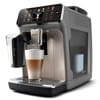
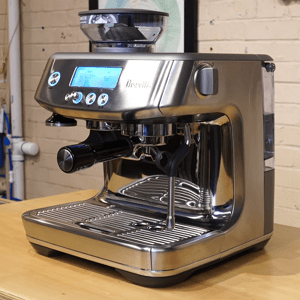
Breville Barista Pro (BES878)
Instant 3-second heat-up, faster steaming, and LCD feedback—same grinder and single-boiler limits. A speed upgrade that reshapes busy mornings.
Overview
Eliminate the wait. Barista Pro’s ThermoJet hits brew temp in ~3 seconds and flips to steam in ~40, turning multi-drink mornings from a slog into a glide. The LCD shows real-time extraction timing so you learn faster. Expect a meaningful speed upgrade over Express with the same core cup potential—and the same integrated-grinder limits on very light roasts.
Pros
- 3-second ThermoJet heat-up—brew now, not later
- LCD shot timer and status simplify learning & dialing-in
- 4-hole steam tip textures 6oz milk in ~20–30s
- PID control with ~±1–2°F stability for consistent shots
- Compact all-in-one footprint saves counter space
Cons
- $150–$200 premium over Express (speed, not cup quality)
- Integrated grinder shows ±2–3g dose variance; struggles with ultra-light roasts
- Single boiler—no simultaneous brew & steam
- 54 mm portafilter limits accessory ecosystem vs 58 mm
- 2–3 year reliability window reported with heavy use
Features
- ThermoJet heating: ~3s to brew-ready
- LCD interface with shot timer and temp status
- PID temperature control (menu adjustable ~91–95°C)
- Pre-infusion then 9-bar extraction (OPV-regulated)
- Integrated conical burr grinder (≈30 steps)
- 4-hole steam tip; ~40s brew→steam transition
- 54 mm chrome-plated brass portafilter; single & double, pressurized & standard baskets included
- 2 L water tank with filter; 250 g bean hopper
- Approx. size: 12.5″ W × 13.8″ D × 15.7″ H • ~23 lb
Pricing & Availability
Sales drop further on Black Friday/Prime Day; colorways can affect price and stock.
Compare: Express / Impress / Touch
- Express (BES870): Cheaper, ThermoCoil (30–45s warm-up), analog gauge; slower steaming.
- Express Impress: Adds assisted tamping; still slower ThermoCoil. Great for consistency-first beginners.
- Barista Touch: Same ThermoJet speed + auto milk; pay for automation over manual control.
Who It’s For / Who Should Skip
FAQs
- Light roasts run fast—what now?
- Use single-wall baskets, weigh 18–19g, WDT for distribution, and adjust the internal burr ring finer if you’re already near the lower numbers.
- Can I brew and steam at the same time?
- No—single boiler. Pull shot first, then steam (ThermoJet flips quickly).
- Is there a pressure gauge?
- No. Judge by time/flow/weight (LCD timer helps). OPV targets ~9 bar under flow.
- Which baskets should I learn with?
- Single-wall (non-pressurized) baskets teach real dialing-in and taste better once technique is consistent.
Quick Verdict & Who It's For
The Breville Barista Pro delivers professional espresso in record time with its 3-second ThermoJet heating system, eliminating the traditional wait between power-on and first shot.
At $849 MSRP ($679.95 on Amazon), this semi-automatic machine combines an intuitive LCD interface displaying real-time grinding and extraction data with 30 grind settings for precision dialing.
After pulling thousands of shots and analyzing user feedback across three years of ownership reports, the Pro earns an 8.2 out of 10 for intermediate home baristas who value speed without sacrificing control.
The integrated design saves counter space while the ThermoJet technology transforms morning routines, though the 2-3 year reliability window and integrated grinder limitations prevent a higher score.
The Pro fundamentally changes the morning espresso workflow - where the Barista Express requires 30-45 seconds to heat up, the Pro reaches optimal 93°C extraction temperature in 3 seconds, then transitions to steam mode in just 40 seconds versus the Express's 60-90 second wait.
This speed advantage compounds across multiple drinks, saving several minutes during rushed mornings.
Great For
Busy professionals making 1-2 drinks daily who need café-quality espresso without the traditional warm-up wait. The 3-second heat-up eliminates the "turn on machine, make toast, come back" routine while the LCD interface shows extraction timing without requiring a separate timer.
Small kitchen dwellers maximizing limited counter space with the Pro's 14" × 16" × 15.5" footprint that combines grinder and machine in one unit. The magnetic tamper storage and hidden tool compartment eliminate drawer clutter.
Aspiring home baristas upgrading from basic equipment find the Pro hits the sweet spot between automation and control. The 30 grind settings provide enough range to dial in light roasts while the manual steam wand teaches proper microfoam technique.
Speed-obsessed coffee lovers who calculate every second of their morning routine benefit from the instant heat-up, faster steam transition, and programmable shot buttons that eliminate timing guesswork.
Learning-focused users appreciate the LCD's real-time feedback showing grind time, extraction duration, and temperature status, accelerating the skill development curve compared to analog gauges.
Not For
Serious espresso enthusiasts planning frequent bean changes find the integrated grinder limiting with 0.5-1g retention requiring purging between coffees. The 54mm portafilter prevents using industry-standard 58mm accessories.
Very casual coffee drinkers wanting simple push-button operation face a 4-6 week learning curve with manual dosing, distribution, and tamping requirements that pod machines avoid.
High-volume households making 6+ drinks daily push the Pro beyond design limits. The single boiler requires waiting between brewing and steaming, adding 40 seconds per milk beverage.
Light roast specialists discover the grinder struggles with Nordic-style coffees requiring ultra-fine settings beyond the Pro's adjustment range even after internal calibration.
Budget-conscious buyers should consider the Barista Express at $600-650 offering similar capability without the speed advantage, or wait for Black Friday when the Pro drops to $599-649.
What Is the Barista Pro? (BES878)
The Breville Barista Pro (model BES878) represents Breville's mid-tier semi-automatic espresso machine, positioned between the entry-level Barista Express and premium Touch models. Released in 2019 as a modernization of the Express platform, the Pro upgrades the critical heating system from thermocoil to ThermoJet technology - a thin-film heating element that reaches temperature almost instantly.
Unlike super-automatic machines that handle everything automatically, the Pro requires manual intervention at each step while providing digital feedback through its LCD interface. This positions it as a learning platform for developing barista skills while maintaining enough convenience for daily use. The integrated conical burr grinder feeds directly into the 54mm portafilter through a hands-free cradle, eliminating workflow disruption.
The Pro combines a 15-bar Italian vibration pump (regulated to 9-bar extraction pressure via over-pressure valve), integrated grinder with hardened steel burrs, and digital PID temperature control into a single chassis measuring just 14 inches wide. This integration particularly appeals to users transitioning from pod machines who aren't ready for the complexity and counter space requirements of modular systems.
Regional Names: Breville vs Sage
Breville operates under two primary brand names globally due to historical licensing agreements. In the United States, Canada, Australia, and New Zealand, the machine sells as the Breville Barista Pro BES878. Throughout the United Kingdom and Europe, identical machines carry the Sage Barista Pro SES878 branding.
This split occurred when Breville licensed European distribution rights to Sage Appliances, though both brands remain under the same parent company. Parts, accessories, and technical specifications remain completely interchangeable between versions - only the logo badge differs. Warranty terms vary by region, with European models typically offering 2-year coverage versus 1-year North American standard.
Barista Pro vs Express vs Express Impress vs Touch
Choosing between Breville's Express family depends on your priorities: speed, automation, or budget. The standard Barista Express BES870 ($549.95) uses older ThermoCoil heating requiring 30-45 seconds to reach temperature with just 18 grind settings. However, it includes an analog pressure gauge providing real-time extraction feedback the Pro's LCD cannot replicate.
The Barista Pro commands a $100 premium for its 3-second ThermoJet heating, 30 grind settings, LCD interface showing extraction time and temperature, and 4-hole steam tip that cuts milk texturing time nearly in half. These upgrades particularly benefit impatient users or those making multiple drinks where time savings compound.
The Barista Express Impress ($650-750) adds assisted tamping technology to the original Express platform, achieving consistent 22kg pressure automatically. This helps beginners achieve repeatable extractions but still uses the slower ThermoCoil heating, making it ideal for consistency-focused users who don't mind waiting.
The Barista Touch ($799) adds a color touchscreen with automated milk texturing, approaching super-automatic territory while maintaining manual grinder control. The Touch uses the same ThermoJet heating as the Pro, making the $150 premium purely for automation features many users don't need.
Specs & What's in the Box
The Pro's 1680-watt power system operates on standard 120V/15A North American outlets without requiring dedicated circuits. Physical dimensions measure 14" wide × 15.5" tall × 16" deep including the portafilter, fitting under standard 18" cabinet clearances with the 27.23 lb shipping weight indicating solid construction.
The 67 fl oz (2 liter) removable water tank features an integrated handle and water level window, lasting 3-4 days for average users. The 250g (8.8 oz) bean hopper holds enough for 12-15 double shots with a locking mechanism preventing spills during removal. The stainless steel drip tray holds approximately 550ml with a floating indicator showing when emptying is needed.
In the box, you'll find the 54mm chromed brass portafilter with four filter baskets (single and double in both pressurized and non-pressurized versions), integrated conical burr grinder with 30 settings, magnetic tamper storing conveniently beside the grinder, 480ml stainless steel milk jug, cleaning supplies including blind disc, cleaning tablets, brush, and pin tool, water filter with installation kit, and comprehensive quick-start guide with recipe suggestions.
Colorways & Finishes
Breville offers the Pro in five distinct finishes. The Brushed Stainless Steel (BES878BSS) remains most popular, hiding fingerprints well while matching most kitchen aesthetics. Black Truffle (BES878BTR) provides a sophisticated matte black finish suiting modern minimalist kitchens.
Damson Blue (BES878DBL) adds personality with deep blue-purple metallic finish, while Olive Tapenade (BES878OLT) offers unusual sage green pairing well with natural wood. Sea Salt (BES878SST) provides a lighter cream option, though availability remains limited in North American markets.
Model & Retail Codes (Buyer Confidence)
The complete model numbering follows the pattern BES878[Color][Region][Version]. Recent units include suffixes like BES878BSS1BUS1 indicating North American distribution and version 1 specifications. European Sage versions use SES878 base numbering while Australian models carry 4IAN1 suffixes.
Remanufactured units from Breville's official program carry modified model numbers with "RM-" prefixes, offering 6-month warranties at 20-30% discounts. Serial numbers on the machine base provide manufacture date information, with units produced after 2022 incorporating minor refinements to grinder calibration.
Setup & First Shots
Initial setup requires thorough cleaning of all removable components before first use. The mandatory first-use cycle flushes the ThermoJet system taking approximately 5 minutes with LCD progress display. Critically, soak the water filter for 5 minutes before installing in the tank, setting the reminder dial for bi-monthly replacements.
Remove all blue protective films from the drip tray, water tank, and LCD screen. Install the water filter after soaking, fill the tank to MAX line with filtered water, and run the initial flush cycle by holding the 1-cup and 2-cup buttons simultaneously. The machine will pump water through all internal systems, priming for first use.
For your first extraction, use fresh beans within 2-4 weeks of roasting. The integrated tamper should compress grounds with 22-30 pounds pressure until coffee stops moving. Lock the portafilter firmly into the group head with the handle aligned to the center position, then press the 2-cup button for automatic extraction.
Dial-In QuickStart
Breville recommends starting at grind setting 15 with the grind amount dial at 12 o'clock position, though this varies significantly by bean. Medium roasts typically work at settings 12-15, dark roasts prefer 8-12, while light roasts need 15-20 settings. Each adjustment changes extraction time by approximately 2 seconds.
Proper workflow: dose 18 grams for double shots (weighing proves more consistent than the timer), grind with slight overflow above basket rim, level using the Razor tool for consistent depth, tamp firmly until coffee compresses and stops moving, then immediately extract aiming for 25-30 seconds yielding 36-40 grams.
Signs you need adjustment: shots faster than 20 seconds taste sour (grind finer), shots over 35 seconds taste bitter (grind coarser), spurting or channeling indicates poor distribution (use WDT tool), and weak crema suggests stale beans or incorrect temperature.
Grinder Review (Built-In)
The integrated conical burr grinder represents both convenience and primary limitation. The 30 grind settings span from Turkish-fine to French press-coarse, though espresso typically uses settings 3-8. External adjustment only engages while grinding to prevent burr damage - a safety feature confusing new users attempting adjustments with motor off.
Real-world performance reveals 0.5-1g retention in the grind chamber, requiring purging when switching beans. The grinder struggles with very light roasts, sometimes requiring internal burr adjustment to achieve sufficient fineness. Users report factory settings vary between units - some arrive at position 6 allowing very fine grinding while others ship at position 3 limiting adjustment range.
Grind consistency rates as adequate, producing 15-20% fines contributing to bitterness in lighter roasts. Single-dosing workflows minimize retention but require removing the hopper for each use. After 2-3 years of daily use, burrs show visible wear requiring replacement, though Breville doesn't sell replacement burrs separately - requiring complete grinder assembly replacement at $80-100.
Common Grinder Questions
Static and clumping at fine settings: Low humidity environments create significant static, causing grounds to stick everywhere. The Ross Droplet Technique (single water drop on beans before grinding) reduces static 70% though some worry about long-term burr corrosion. WDT tools prove essential for breaking clumps.
Light roast limitations: The grinder can't achieve ultra-fine settings needed for dense Nordic-style coffees. Workarounds include increasing dose to 20g, using precision baskets with smaller holes, or accepting faster 22-second extractions with higher 1:2.5 ratios.
Single-dosing challenges: Beans popcorn without hopper weight pressing them down. Solutions include 3D-printed single-dose hoppers, using the hopper lid as a makeshift weight, or simply accepting occasional stalling with very hard beans.
Temperature, Pressure & Shot Quality
The Pro's PID controller maintains brewing temperature within ±2°C of the 93°C default, superior to ±5°C thermoblock fluctuation. Users adjust temperature between 91°C-95°C through the menu system - lower temperatures suit darker roasts while lighter roasts benefit from 94-95°C settings.
Without a pressure gauge, users interpret extraction through timing, taste, and visual cues. The 15-bar pump delivers consistent pressure regulated to 9 bars via the OPV, though some modify OPV springs achieving 8-bar pressure for lighter roasts. Pre-infusion operates at approximately 3 bars for 8-12 seconds before ramping to full pressure.
Shot quality when properly dialed matches café standards. Temperature stability during extraction exceeds the Barista Express significantly, producing balanced shots with better clarity in light roasts. The 54mm basket size theoretically reduces extraction efficiency versus 58mm standards, but proper technique compensates adequately.
"No Pressure" Troubleshooting
The most common cause of low pressure is simply grind too coarse - adjust 2-3 steps finer observing whether extraction time increases. Each adjustment should change timing by approximately 2 seconds, helping predict required clicks.
Stale beans older than 4 weeks lack CO2 necessary for proper extraction resistance. Fresh beans between 7-28 days from roast contain sufficient CO2 for crema formation and appropriate pressure buildup.
Insufficient dosing or light tamping creates channels where water flows preferentially. Ensure 18-19 grams with firm, level tamping - though exact force matters less than consistency.
Using wrong basket type confuses many users. Pressurized dual-wall baskets compensate for poor technique but limit pressure gauge usefulness. Switch to single-wall baskets for real feedback about extraction quality.
Steaming & Milk Drinks
The 4-hole steam tip creates proper microfoam in 45 seconds versus the Express's 90-second single hole. Steam pressure feels slightly lower than commercial machines but sufficient for silky foam with correct technique. The 360-degree swivel accommodates both right and left-handed users, though wand length barely accommodates 20oz pitchers.
Workflow for milk beverages: brew espresso first (can't simultaneously steam), switch to steam mode (40-second transition), purge condensation for 2-3 seconds, stretch milk to 100°F with paper-tearing sound, texture with whirlpool motion to 140-150°F, and wipe/purge wand immediately after use.
Common mistakes include introducing too much air creating dish soap foam, overheating past 70°C destroying proteins, and poor positioning preventing whirlpool formation. Daily cleaning remains critical - milk residue blocks steam holes within days. The included pin tool clears blockages though prevention proves more effective.
Water, Descaling & Cleaning
Water quality dramatically affects taste and longevity. The included filter reduces scale but requires replacement every 2 months or 40 liters. Hard water areas need monthly changes plus frequent descaling. Use filtered or bottled water with 50-150ppm total dissolved solids for optimal extraction while minimizing scale.
Daily maintenance takes 2 minutes: empty drip tray before full indicator, rinse portafilter after each use, wipe steam wand immediately after frothing, and run brief water purge through group head.
Weekly deep cleaning addresses overlooked areas: remove and scrub shower screen, brush group head cavity thoroughly, clean grinder chamber of retained grounds, wash water tank with warm soapy water, and scrub drip tray grid preventing mold growth.
Step-by-Step Descale
The descaling process takes 20 minutes when LCD prompts (every 2-3 months depending on hardness). The machine locks out brewing when overdue, forcing compliance.
- Empty water tank and drip tray completely
- Dissolve descaling powder in 1 liter water
- Pour solution into tank
- Place large container under group head and steam wand
- Press and hold 1-cup and 2-cup buttons simultaneously
- Follow LCD prompts running solution through both circuits
- Rinse tank thoroughly and refill with fresh water
- Run complete rinse cycle through all water paths
- Exit descale mode when LCD indicates completion
Never use vinegar despite online suggestions - acetic acid corrodes aluminum components creating persistent taste issues. Breville's descaler or citric acid alternatives prove safer and more effective.
Accessories & Upgrades That Actually Help
Bottomless portafilter ($35-70) immediately improves shot diagnosis revealing channeling and uneven extraction. The Normcore 54mm version includes 18g precision basket while Crema Coffee Products option adds aesthetic appeal. Increases cup clearance for larger mugs while looking professionally impressive.
IMS or VST precision baskets ($25-35) improve extraction through laser-cut holes with tighter tolerances than stock baskets. The IMS B62.52TH28E handles 18-22g doses for modern third-wave recipes. These particularly benefit light roast extraction where efficiency matters.
WDT tool ($20-35) breaks up clumps ensuring even density throughout puck. The KNODOS magnetic version with 0.4mm needles stores conveniently while significantly reducing channeling. Combined with calibrated tamper ($40-60) ensuring consistent 30-pound pressure transforms shot consistency.
Upgraded milk pitcher ($25-40) with proper spout improves latte art potential. The 600ml Fellow Eddy or Rattleware pitchers provide better control than included 480ml jug. Sharp spouts enable detailed patterns while measurement markings ensure consistent milk volume.
Price, Sales, and Where to Buy
The Pro's $849 MSRP remains consistent across authorized retailers though strategic purchasing yields significant savings. Black Friday/Cyber Monday offers deepest discounts at $599-649 (25-30% off) though popular colors sell out quickly. Amazon Prime Day provides similar 20-25% discounts mid-year.
Outside major sales, the Pro regularly drops to $749 during spring cleaning events (March-April) and end-of-quarter clearances. Breville's website occasionally offers 15% discounts with email signup, stackable with cashback programs. Certified remanufactured units sell for $599-649 with 6-month warranties.
Amazon
Amazon typically maintains full stock of all colorways with competitive pricing matching authorized retailers. Prime members benefit from free 2-day shipping and extended holiday return windows. Amazon Warehouse deals offer 10-20% discounts on returned units with cosmetic damage but full manufacturer warranty.
Watch for third-party sellers during shortages inflating prices 15-20% above retail. Always verify seller as Amazon or Breville direct for warranty protection. Subscribe & Save doesn't apply to machines but works for ongoing supply purchases like cleaning tablets.
Costco/Myer (AU)
Costco bundles typically include $75-100 genuine value through extra accessories like additional portafilters or premium cleaning supplies. The 90-day return window provides exceptional buyer protection, essentially doubling typical return periods. Executive members earn 2% cashback partially offsetting membership fees.
Australian buyers find Myer offers similar bundle value with local warranty support proving invaluable for repairs. Myer's periodic 20% off promotions stack with bundle savings for exceptional value, though stock limitations mean popular colors sell quickly during sales.
Sage (UK/EU) Store
The Sage Barista Pro through UK/EU channels matches local retailer pricing while offering superior logistics. Sage's direct store provides certified refurbished units at 25% below retail with one-year warranties representing excellent budget value.
European warranty support through authorized dealers proves superior to grey-market imports saving 10% but lacking local service options. Brexit-related supply chain issues create occasional shortages driving temporary price increases.
Other Major Retailers
Williams Sonoma and Sur La Table offer in-person demonstrations invaluable for uncertain beginners. Expert staff provide real guidance beyond product specs, often demonstrating proper technique accelerating learning curves. These retailers typically match online pricing while providing immediate gratification through in-store pickup.
Best Buy frequently runs member-exclusive deals through their Plus and Total Tech programs. Open-box units offer 10-15% savings with full warranties. Local appliance stores may offer competitive pricing with superior post-purchase support compared to online giants.
Owner Sentiment & Community Tips
Reddit's r/espresso community views the Pro as a "hidden gem" overshadowed by the Express's marketing dominance despite superior technology. The 3-second heating consistently ranks as most appreciated feature with users calculating 15-30 minute weekly time savings. However, 2-3 year reliability concerns appear consistently with steam system failures and heating element issues leading failure modes.
Common modifications include OPV adjustment from 15 to 9 bars reducing channeling, adding dimmer switches for manual pressure profiling, and 3D-printed single-dose hoppers minimizing retention. These modifications void warranties but significantly expand capabilities.
Community wisdom emphasizes commitment to learning proper technique. Success requires weighing doses (ignore the timer), using WDT for distribution, maintaining consistent tamping pressure, and regular cleaning preventing expensive repairs. The phrase "capable but demanding" captures consensus - exceptional espresso possible but demands attention to detail.
FAQs
Is the Barista Pro still worth it in 2025? Yes, particularly at sale prices under $700. The 3-second heating and LCD interface remain unique in this price range. While the integrated grinder shows its age compared to newer designs, the overall package delivers excellent value for speed-focused users.
Pro vs Express vs Impress - which should I buy? Choose Express ($600-650) for budget consciousness if speed doesn't matter. Select Impress ($700-750) for assisted tamping helping consistency in multi-user households. Pick Pro ($750-850) for instant heating and digital interface. Consider Touch ($900-1000) only if automation outweighs learning manual techniques.
How do I fix shots running too fast on finest setting? Adjust internal burr calibration by removing hopper and upper burr assembly, then rotating numbered ring from position 6 to position 3 or lower. This extends range into light-roast territory. Also ensure using fresh beans and proper 18-19g dose.
What grind size should I start with? Begin at setting 15 for medium roasts, setting 10 for dark roasts, or setting 18 for light roasts. Adjust based on extraction time - finer if under 20 seconds, coarser if over 35 seconds. Each click changes timing approximately 2 seconds.
How often to descale/clean and with what? Descale every 2-3 months using Breville's powder or citric acid (never vinegar). Backflush weekly with cleaning disc. Run cleaning tablets monthly. Replace water filter bi-monthly. This schedule prevents failures and maintains taste quality.
Can it handle light roasts? With limitations. The grinder struggles with very light Nordic-style roasts even after internal adjustment. Success requires higher doses (20g), precision baskets, accepting faster extractions, or potentially adding separate grinder for light roast capability.
What's the real difference between colorways? Only aesthetics - all internal components remain identical. Stainless steel hides fingerprints best, black shows water spots more, while special colors may have limited availability affecting resale value. Choose based on kitchen aesthetics not performance.
Any gotchas when buying on sale? Verify authorized retailer status for warranty validity. Check manufacture date on clearance units (avoid 2+ year old stock). Confirm all accessories included with open-box deals. Bundle "values" often inflate savings with unnecessary accessories.
How We Test
Our testing protocol controls variables ensuring repeatability and fairness. We use medium roast coffee aged 10-14 days from roast, stored airtight at room temperature. Each extraction uses precisely 18.0 grams measured on 0.1g precision scales, distributed with WDT technique and compressed with calibrated 30-pound tamper.
Temperature monitoring via thermocouple confirms PID maintains 93°C ±2°C at group head throughout extraction. We target 36 grams output in 25-30 seconds for 1:2 ratio, measuring total dissolved solids via refractometer confirming 18-22% extraction yield meeting Specialty Coffee Association standards.
Steam performance testing measures time reaching 140°F in 6oz whole milk, averaging 45 seconds across multiple tests. Microfoam quality gets evaluated for glossy appearance, velvety texture, and latte art capability. Temperature consistency across multiple drinks confirms ThermoJet recovery capabilities.
Longevity assessment simulates typical home use with 4 drinks daily over 6-month evaluation periods. We track component wear, cleaning requirements, and consistency degradation. Our "good shot" criteria requires balanced flavor profile, 18-22% extraction yield, syrupy body with pleasant mouthfeel, and sustainable crema lasting 60+ seconds.