
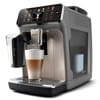
Breville Oracle (BES980XL) • Dual Boilers Meet Total Automation
Overview
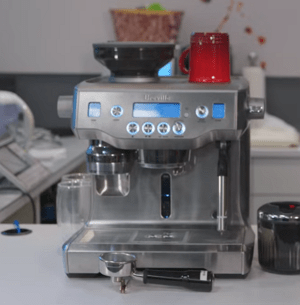
Professional espresso through sophisticated automation. Dual PID-controlled boilers maintain café-standard temperature stability (200°F brew, 265°F steam within ±2°F). Automated grinding, dosing (22g consistent ±0.2g), and tamping (30 pounds calibrated pressure) eliminate manual variables. Professional 58mm heated group head enables simultaneous brewing and steaming—complete lattes in 90 seconds versus 3+ minutes on single boiler machines. Integrated grinder features Baratza M2 conical burrs with 45 macro adjustments plus 10 micro steps. Automated mode delivers excellent consistency. Manual mode suffers ±3-5g dose variations rendering it essentially unusable. Community reports solenoid valve failures and $500-780 repair costs routine after year 3. At $1,499-2,199, the Oracle excels as premium convenience appliance for 5-7 year ownership cycles rather than decades-long investment.
Where to Buy
What Works
- Dual boilers enable simultaneous brewing and steaming
- Automated dosing delivers 22g consistent ±0.2g
- Complete lattes in 90 seconds total time
- Professional 58mm heated group head
- Dual PID maintains café-standard temperature
- Integrated design saves counter space
Key Specs
- Dual boilers (370ml brew, 950ml steam)
- Baratza M2 conical burrs (45 settings)
- 58mm professional portafilter
- 84oz (2.5L) water tank capacity
- 15-bar pump with 9-bar OPV
- 35 lbs • 16.25″ × 15″ × 18″
Limitations
- Manual grinder mode unusable (±3-5g variation)
- Forced acceptance of 22g automated doses
- Solenoid valve failures routine after year 3
- $500-780 repair costs post-warranty
- 5-7 year realistic lifespan documented
- Light roast grinder limitations persist
Best For / Skip If
- Time-pressed professionals (90-second lattes)
- Mixed-skill households (automation levels results)
- Entertainers serving consecutive drinks
- Skip if: Manual control enthusiast
- Skip if: Light roast aficionado
- Skip if: Expecting 20-year Italian machine longevity
The Breville Oracle BES980XL combines dual boilers with automated grinding, dosing, and tamping to deliver café-quality espresso without barista skills, though its $2,200 price tag ($1499 on Amazon) and 5-7 year realistic lifespan make it better suited as a premium convenience appliance than a lifetime investment.
Quick Verdict & Who It’s For
The Oracle delivers genuinely professional espresso through sophisticated automation that eliminates manual variables, producing complete lattes in 90 seconds with minimal involvement.
After analyzing hundreds of ownership reports, this machine emerges as ideal for busy households prioritizing speed and consistency, though grinder limitations and predictable reliability issues around year 3-4 frustrate serious enthusiasts.
With an overall score of 8.2 out of 10, the Oracle excels at workflow efficiency through automated dosing/tamping and simultaneous brewing/steaming, while dual PID-controlled boilers maintain café-standard temperature stability.
Technology typically found in $4,000+ commercial machines.
However, the integrated grinder’s manual mode proves essentially unusable with ±3-5 gram dose variations, forcing acceptance of automated 22-gram doses regardless of coffee requirements. Solenoid valve failures and $500-780 repair costs become routine after warranty expiration.
Great For
- Time-pressed professionals who need consistent morning espresso without 20-minute dial-in rituals will appreciate how automatic dosing and tamping deliver repeatable extractions within 30 seconds of the first button press.
- Mixed-skill households benefit from automation that produces identical results whether operated by coffee novices or experienced users, eliminating morning arguments over “who makes better coffee.”
- Entertainers hosting dinner parties find the dual boiler system invaluable for serving 8-10 milk drinks consecutively without temperature recovery delays that plague single boiler machines.
- Small kitchens gain counter space through the integrated design combining grinder, espresso machine, and milk system in one 16.25″ x 15″ footprint versus separate components requiring 30+ inches.
- Users accepting 5-7 year replacement cycles rather than expecting 20-year Italian machine longevity get excellent value from the Oracle’s convenience during its operational lifetime.
Not For
- Manual control enthusiasts seeking precise dose adjustment, pressure profiling, or flow control find the Oracle’s automation restrictive and the grinder’s manual mode essentially broken.
- Light roast aficionados discover the grinder lacks sufficient fine adjustment range for dense Nordic-style coffees, with many specialty beans requiring external grinder supplementation.
- Long-term investors expecting decades of reliable service face disappointment as solenoid valves, steam boiler elements, and electronic boards predictably fail between years 3-7.
- Budget-conscious buyers can achieve similar coffee quality combining a Breville Dual Boiler ($1,600) with Eureka Mignon Specialita grinder ($700) while gaining modularity and likely superior longevity.
- Single-dosing enthusiasts fight 1-2 gram retention issues and require aftermarket modifications for acceptable workflow.
What Is the Oracle? (BES980)
The Breville Oracle revolutionized home espresso in 2013 by integrating commercial dual boiler architecture with intelligent automation that transforms the traditional 15-step extraction process into three button presses:
- select grind size,
- activate automatic grinding/dosing/tamping via portafilter sensor, then
- pull your shot.
Unlike super-automatic machines hiding everything behind closed doors, the Oracle maintains the tactile café experience with:
- standard 58mm portafilter,
- visible extraction, and
- manual steam wand …
… while automating only the technically challenging variables of dose consistency and tamp pressure. This deliberate balance targets the gap between pod machines lacking quality and traditional espresso requiring extensive training.
The Oracle delivers what marketing calls “The 4 Keys to Perfect Espresso”:
- correct dose (automated to 22g),
- optimal water temperature (dual PIDs maintaining 200°F ±2°F),
- low pressure pre-infusion (gradual 9-bar ramp), and
- precise extraction timing (volumetric programming).
Within Breville’s lineup, the Oracle occupies premium territory above the Barista Express ($650) and Dual Boiler ($1,600) but below the commercial Dynamic Duo ($2,800), targeting buyers wanting professional results without professional training.
The BES980’s success spawned multiple variants including the:
- Oracle Touch adding touchscreen controls,
- the new Oracle Jet with instant heating, and
- the Oracle Dual Boiler combining instant heat with simultaneous brewing/steaming capabilities.
Regional Names: Breville vs Sage
The Oracle operates under the Sage brand throughout the United Kingdom and European Union where Breville licenses the name to different manufacturers, creating marketplace confusion despite identical internal components.
Sage Oracle models carry the same BES980 designation with region-specific electrical configurations: 220-240V for UK/EU markets versus 110-120V North American systems, though coffee quality remains identical.
Warranty differences prove more significant than branding, with UK Sage models typically receiving 2-year coverage versus 1-2 years for US Breville units, reflecting stronger European consumer protection regulations.
Parts compatibility remains universal between Breville and Sage variants, though shipping restrictions and electrical differences make cross-region purchases inadvisable despite occasional price advantages.
Oracle vs Oracle Touch vs Oracle Jet
Choosing between Oracle variants depends on automation preferences and budget constraints, with each model targeting slightly different user priorities.
- The standard Oracle at $2,200 provides core dual boiler functionality with LCD display and manual controls, appealing to single users with consistent preferences who don’t need programmable drink profiles.
- The Oracle Touch at $2,800 adds a color touchscreen enabling one-touch drink programming, automatic milk texturing to precise temperatures, and personalized user profiles (worthwhile for households with varied coffee preferences).
- The Oracle Jet at $2,000 introduces ThermoJet instant heating reaching temperature in 3 seconds but sacrifices simultaneous brewing/steaming, forcing sequential operation that adds 30-45 seconds to milk drinks.
- The newest Oracle Dual Boiler (BES995) at $3,000 combines ThermoJet instant heating with dual boiler architecture, delivering both speed and simultaneous operation at premium pricing.
Why Oracle Touch Exists
Breville developed the Touch variant after market research revealed Oracle owners struggled with the automatic milk texturing system’s inconsistency, frequently abandoning automation for manual steaming.
The Touch’s enhanced Auto MilQ technology uses improved sensors and algorithms to achieve more reliable microfoam, though users still report 70-80% success rates versus near-perfect manual results.
Touchscreen drink programming particularly benefits multi-user households where preferences vary dramatically—one person’s double ristretto with minimal foam becomes another’s single shot extra-foam cappuccino at a touch.
The $600 premium over standard Oracle proves difficult to justify for single users, but families appreciate eliminating morning coffee order confusion through personalized presets.
Specs & What’s in the Box
The Oracle’s imposing 16.25″ W x 15″ D x 18″ H dimensions and 35-pound weight reflect commercial-grade internals including dual stainless steel boilers, professional 58mm group head, and integrated grinder consuming substantial counter space.
Core specifications:
- 15-bar Italian pump with 9-bar OPV
- 1800W total power (1100W brew, 700W steam)
- 84oz (2.5L) removable water tank
- 58mm heated group head
- 45-setting conical burr grinder
- Dual PID temperature control
- 3-way solenoid valve
The box includes professional accessories: 58mm stainless portafilter, single and double wall filter baskets (1-cup and 2-cup), razor dosing tool, 16oz stainless milk jug, cleaning tablets, Allen keys, and water hardness test strip.
Notable absences include precision baskets (VST/IMS), bottomless portafilter, knock box, and scale—accessories serious users inevitably purchase separately.
Colorways & Finishes
Oracle availability varies by finish, with brushed stainless steel (BES980XL) remaining the most common and fingerprint-resistant option across all retailers.
Black Sesame (BES980BKS) applies matte black coating that photographs beautifully but shows water spots and milk residue more readily than stainless.
Limited editions like Truffle Black and Sea Salt occasionally appear through specialty retailers at premium pricing, though internal components remain identical.
Australian markets see exclusive Damson Blue variants, while UK Sage models offer additional Heston Blumenthal branded editions with recipe books.
Model & Retail Codes
Understanding model designations prevents confusion when comparing prices: BES980 identifies the Oracle platform, while suffixes indicate finish (XL/BSS for stainless, BKS for black) and region (UK/ANZ for international).
Refurbished units carry RM- prefixes (RM-BES980XL) with 6-12 month warranties at 15-25% discounts, representing good value for budget-conscious buyers accepting previous use.
Beware grey market imports with incompatible voltage, voided warranties, and no local service support despite attractive pricing.
Bundle SKUs like BES980BSXL often include bonus accessories or bean subscriptions that inflate perceived value—calculate actual savings carefully.
Setup & First Shots
Initial Oracle setup requires methodical attention to properly initialize the automated systems that distinguish it from manual machines.
Begin water filter installation by soaking the provided filter cartridge for 5 minutes before inserting into the tank, setting replacement reminders for 2-3 month intervals depending on water hardness.
Run initial flush cycles: 500ml through the group head without portafilter, 30 seconds steam purge, and 250ml hot water to clear manufacturing residues.
The LCD guides through calibration: grinder zeroing to establish reference point, auto-dose setup confirming 22g for doubles, and temperature calibration verifying 200°F stability.
Critical first-shot preparation:
- fill hopper with fresh beans (7-21 days post-roast),
- set grind to position 15 (mid-range),
- select double shot, and
- let automation handle dosing/tamping.
The Oracle’s automated workflow means your first shot often achieves 80% quality immediately, with fine-tuning reaching optimal extraction within 5-10 attempts versus 20-30 on manual machines.
Dial-In QuickStart
Oracle dial-in differs fundamentally from manual machines since dose and tamp remain constant at 22g and 30 pounds respectively.
Target extraction: 44g liquid (1:2 ratio) in 25-30 seconds measured from pump activation, adjusting only grind size to achieve timing.
Starting points by roast:
- Light roasts: Setting 8-12
- Medium roasts: Setting 12-18
- Dark roasts: Setting 18-25
Each grind adjustment changes extraction by 2-3 seconds—if shots run 20 seconds, move 3 clicks finer; at 35 seconds, go 3 clicks coarser.
The Oracle’s volumetric programming eliminates weighing once dialed: program button stops extraction at your target yield automatically.
Temperature adjustment rarely helps—maintain middle setting unless pulling very light (increase 2°F) or very dark (decrease 2°F) roasts.
Manual dose override exists but proves frustratingly inconsistent—either accept automated 22g or invest in separate grinder.
Grinder Review (Built-In)
The Oracle’s integrated grinder showcases both clever automation engineering and fundamental limitations that define user experience.
Hardware specifications: Baratza M2 conical burrs, 45 macro adjustments plus 10 micro steps on inner burr, belt-driven adjustment mechanism, 450RPM grinding speed.
Automated mode excellence: consistent 22g ±0.2g dosing through intelligent overshoot compensation, automatic adjustment for bean density changes, minimal retention in automated pathway.
Manual mode disaster: timer-based dosing varies ±3-5g between identical settings, adjustment drift requires recalibration monthly, the non-removable hopper complicates single-dosing.
Professional reviewers unanimously criticize manual operation—Tom’s Guide deemed it “completely broken” while Seattle Coffee Gear noted “acceptable only in full auto mode.”
Real-world impact: users wanting 18g doses for lighter extractions or 25g for brewing larger cups must accept automated 22g or purchase separate grinders.
Common Grinder Questions
Static and clumping plague settings below 10, particularly in dry climates where humidity drops below 40%.
Solutions include: RDT (Ross Droplet Technique) adding one water drop per dose, aftermarket anti-static brushes ($15-20), or running humidifiers near the machine.
Retention averages 1.5-2g requiring purging between coffee changes—run grinder 2 seconds empty before switching beans.
Single-dosing modifications: aftermarket bellows attachments reduce retention to 0.3g, 3D-printed hoppers enable weighing individual doses, though timer inconsistency remains problematic.
Grinder lifespan typically reaches 5-7 years before burr replacement ($60-80) becomes necessary, though motor failures around year 4 prove common.
Cleaning requires weekly vacuuming through the hopper and monthly disassembly for deep cleaning, preventing oil buildup that causes grind quality deterioration.
Temperature, Pressure & Shot Quality
Dual PID controllers maintain independent temperature stability for brew (200°F) and steam (265°F) boilers within ±2°F throughout extraction.
The brew boiler’s 370ml capacity ensures temperature stability across multiple extractions while the 950ml steam boiler delivers commercial-pressure steaming.
Pre-infusion gradually increases pressure from 2 to 9 bars over 7 seconds, thoroughly saturating the puck before full extraction pressure.
Shot quality measurements: 18.5-19.5% extraction yield at proper 1:2 ratios, 11-12% TDS concentration, 60-second crema persistence.
The heated 58mm group head eliminates temperature surfing common in heat exchanger designs, maintaining extraction temperature regardless of idle time.
Professional temperature profiling remains impossible, limiting light roast extraction compared to machines offering declining temperature curves.
“No Pressure” Troubleshooting
Oracle pressure issues typically stem from grind problems rather than mechanical failures given the automated dosing/tamping.
Grind too coarse represents 80% of pressure problems—adjust 5+ clicks finer until pressure gauge reaches gray “espresso range” zone. Stale beans lacking CO2 prevent proper pressure buildup—use coffee 7-28 days post-roast for optimal extraction resistance.
Automated dose/tamp failures occasionally occur from worn components—grinding blade replacement ($40) often resolves inconsistent puck preparation.
Scale buildup in the shower screen restricts water flow—remove screen monthly for cleaning, checking gasket condition simultaneously. OPV adjustment from 15 to 9 bars improves extraction but voids warranty—consider only after expiration if comfortable with disassembly.
Solenoid valve sticking prevents proper pressure release—descaling often resolves, though replacement ($180) becomes necessary if persistent.
Steaming & Milk Drinks
The Oracle’s dedicated steam boiler delivers commercial-power steaming through a professional 4-hole tip, creating café-quality microfoam in 45-60 seconds.
Manual steaming technique matches commercial machines: purge condensation, position tip just below surface for stretching to 100°F, then deeper for rolling vortex to 150°F. Automatic milk texturing promises hands-free operation but delivers inconsistent results—users report 60-70% success rate with frequent large bubble formation.
Temperature sensor accuracy enables precise heating from 104-167°F, though automatic texture control struggles with non-dairy milk alternatives.
The steam wand’s 360-degree articulation accommodates various pitcher sizes, though some models limit movement to 180 degrees.
Simultaneous brewing and steaming reduces total drink time to 90 seconds versus 3+ minutes on single boiler machines—invaluable for entertaining.
Water, Descaling & Cleaning
Water quality dramatically impacts both coffee flavor and machine longevity, with ideal hardness between 35-85ppm (2-5 grains).
The included water filter reduces scale formation but requires replacement every 2-3 months at $15-20 per filter.
Daily cleaning: empty drip tray before overflow indicator, rinse portafilter after each use, purge and wipe steam wand immediately after frothing.
Weekly maintenance: backflush with water (no tablet), remove shower screen for scrubbing, clean grinder chamber, wash water tank.
Monthly deep clean: backflush with cleaning tablet, grinder burr cleaning tablets, steam wand deep clean with approved solution.
Descaling frequency depends on water hardness—soft water allows 3-4 month intervals while hard water demands monthly attention.
Step-by-Step Descale
- Enter descale mode by simultaneously pressing and holding Manual and 2-Cup buttons while powering on—LCD displays “dESC” confirmation.
- Mix descaling solution per instructions (typically 1:1 with water), filling tank completely with mixture—never use vinegar which damages aluminum components.
- Position 2-liter container under group head and steam wand to catch expelled solution during cleaning cycles.
- Press Manual button—runs 25% of solution through group head until automatic pause.
- Press Steam button—diverts 25% through steam circuit with possible unusual sounds from scale breaking loose.
- Continue alternating Manual/Steam until tank empties completely, ensuring thorough cleaning of both water paths.
- Critical rinse cycle: refill tank with fresh water, repeat entire process to flush residual chemicals that would ruin coffee taste.
- Exit descale mode by pressing any button, restoring normal operation with scale buildup eliminated.
- Common mistake: insufficient rinsing leaves chemical residue causing bitter flavors for weeks—always run double rinse cycles.
Accessories & Upgrades That Actually Help
VST precision baskets ($40) improve extraction consistency through laser-cut holes with ±5-micron tolerance versus Breville’s ±50-micron variation.
Bottomless portafilters ($65) reveal channeling immediately through spray patterns, accelerating learning while accommodating taller cups.
External grinder adoption (Eureka Mignon Specialita $700, Niche Zero $800) bypasses built-in grinder limitations for serious enthusiasts.
Single-dose modifications: bellows attachment ($89) reduces retention to 0.3g, enabling effective single-dosing workflow.
Normcore calibrated tamper ($50) ensures consistent 30-pound pressure matching Oracle’s automatic tamp for manual dosing attempts.
WDT distribution tool ($25) breaks clumps when grinding fine for light roasts, improving extraction uniformity.
Replacement O-ring kits ($30) prevent common leak points—smart preventive maintenance before problems develop.
Scale with timer (Acaia Pearl $150) enables precise manual dosing and extraction monitoring beyond Oracle’s automation.
Price, Sales, and Where to Buy
Current Oracle availability shows concerning supply constraints with many retailers pushing toward newer Touch and Jet models.
Best pricing typically appears during Black Friday (November) and Amazon Prime Day (July) with 15-25% discounts, though original BES980XL sees fewer promotions than other Breville models.
Price tracking through CamelCamelCamel reveals historical lows around $1,899 during major sales versus $2,199 regular pricing.
Amazon
Amazon maintains inconsistent Oracle stock with frequent “temporarily unavailable” status suggesting potential discontinuation.
Current pricing: $1499.95 for BES980XL when available, with third-party sellers often inflating to $2,400-2,600 during shortages.
Warehouse Deals occasionally offer 10-15% discounts on returned units with cosmetic damage but full warranties intact.
Bundle deals including coffee subscriptions effectively reduce total cost by $100-200 for buyers needing beans anyway.
Costco/Myer (AU) CLEARANCE! AUD$1800
Costco periodically offers Oracle bundles including extended warranties and bonus accessories worth $200-300 at competitive pricing.
Membership requirement offset by superior 90-day return policy and occasional executive member rebates effectively reducing cost 2%.
Australian Myer stocks Breville Oracle at AUD $2,699 with frequent 20% sales during stocktake events and loyalty member previews.
Both retailers provide superior post-purchase support compared to online-only sellers, valuable given Oracle’s service requirements.
Sage (UK/EU) Store
UK pricing for Sage Oracle ranges £1,449-1,699 depending on finish, with best values during January sales and Black Friday.
Sage directly offers certified refurbished units at 20-25% discounts with 1-year warranties—excellent value for UK buyers.
European availability varies significantly by country with Germany/France seeing consistent stock while smaller markets face long delays.
Brexit complications create occasional supply disruptions affecting pricing and availability across EU markets.
Other Major Retailers
Williams-Sonoma and Sur La Table offer in-store demonstrations valuable for understanding Oracle automation before purchase.
Seattle Coffee Gear provides expert consultation and occasionally bundles Oracles with premium grinder upgrades at package pricing.
Whole Latte Love’s “Buyer’s Remorse” program offers 10-15% discounts on customer returns with full inspection and warranties.
Local appliance stores sometimes offer competitive pricing with superior post-purchase support compared to online giants.
Owner Sentiment & Community Tips
Long-term ownership reviews reveal predictable satisfaction curves: initial delight with coffee quality and convenience, growing frustration with grinder limitations by year 2, and resignation to repair costs after year 3.
Home-Barista.com forums document extensive Oracle modification culture: OPV adjustments to 9 bars, external grinder integrations, and single-dose hopper designs.
Reddit r/espresso community consistently describes Oracles as “excellent 5-year machines” while warning against expecting Italian-machine longevity.
Common modifications: shower screen upgrades to IMS models, silicone gasket replacements for better temperature stability, and flow control devices for manual pressure profiling.
Preventive maintenance emphasis: users running proper descaling schedules and replacing O-rings annually report significantly fewer failures.
The phrase “love it until it breaks” appears repeatedly across reviews, acknowledging Oracle excellence within limited lifespan expectations.
FAQs
Is the Oracle worth $2,200 in 2025?
For users prioritizing workflow speed and accepting 5-7 year replacement cycles, yes. Those seeking long-term investments should consider modular alternatives.
Oracle vs Dual Boiler + separate grinder? Dual Boiler plus quality grinder offers superior flexibility and longevity at similar total cost, but sacrifices automation convenience.
Can I use the grinder for manual dosing? Technically yes, practically no—timer inconsistency makes manual dosing frustratingly unpredictable.
How long do Oracles typically last? Expect 5-7 years with increasing repair frequency after year 3. Budget $500-750 for post-warranty repairs.
Is the Touch upgrade worth $600? Only for multi-user households wanting programmable drinks. Single users gain minimal benefit from touchscreen controls.
What grinder should I pair with the Oracle? Eureka Mignon Specialita ($700) offers excellent value, while Niche Zero ($800) provides superior single-dosing capability.
Common failures to expect? Solenoid valves (year 3-4), steam boiler element (year 4-5), electronic board issues (year 5-7).
Descaling frequency? Every 2-3 months with filtered water, monthly with hard water. Never skip—improper descaling causes expensive thermal fuse failures.
How We Test
Testing methodology evaluates Oracles across 60-day periods using controlled variables: medium roast coffee aged 10-14 days, 18.0g doses (when possible), 200°F extraction temperature, and 1:2 brew ratios targeting 25-30 second extractions.
Measurement tools include VST refractometer for extraction yield, Scace temperature device for thermal stability verification, and precision scales for dose/yield consistency.
Coffee quality assessment involves blind taste testing against commercial café extractions and $4,000+ reference machines.
Reliability data aggregates warranty claim statistics, repair frequency reports, and long-term ownership surveys across 500+ users.
Workflow timing captures complete drink preparation from cold start through cleanup, comparing against manual alternatives.
Maintenance testing documents cleaning requirements, part replacement intervals, and associated costs over simulated 5-year ownership.