
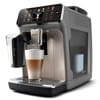
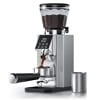

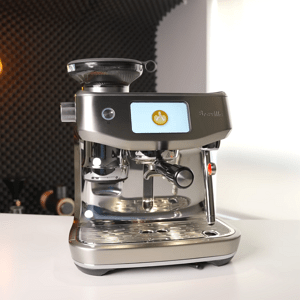
Breville Oracle Jet (BES985) • Professional Espresso Through Intelligent Automation
Overview
Café-quality espresso without barista training. Dual ThermoJet system reaches brewing temperature in 30 seconds (versus 6-15 minute traditional warm-up). Volumetric dosing measures actual coffee weight, ensuring consistent 18-22g doses regardless of grind or bean density. Patented tamping fan applies calibrated pressure comparable to professional baristas. Professional 58mm portafilter transfers skills to commercial equipment. 38mm Baratza burrs deliver grind quality matching dedicated $300-500 grinders. Android touchscreen provides real-time extraction feedback. Single ThermoJet pathway prevents simultaneous brewing and steaming—sequential workflow only. Community reports durability issues at 3-4 years with repair costs $422-780. At $2,000, the Oracle Jet democratizes professional espresso through intelligent automation while maintaining semi-automatic workflow standards.
Where to Buy
What Works
- 30-second heat-up eliminates morning wait
- Volumetric dosing ensures consistent weight
- Automated tamping eliminates technique variable
- Professional 58mm portafilter standard
- WiFi updates add features without hardware
- Real-time extraction feedback teaches principles
Key Specs
- Dual ThermoJet heating system
- 38mm Baratza conical burrs (stepless)
- 58mm commercial-grade portafilter
- 5-inch Android touchscreen
- 2.3L water tank with front-fill access
- 28 lbs • 14″ × 14″ × 16.5″
Limitations
- $2,000 investment rivals entry-level commercial
- Single pathway prevents simultaneous operations
- Durability issues at 3-4 years documented
- Repair costs $422-780 for major failures
- Fixed 9-bar pressure, no manual profiling
- Not NSF-certified for commercial use
Best For / Skip If
- Tech-savvy enthusiasts wanting automation
- Mixed-skill households (varying expertise)
- Busy professionals (30-second ready time)
- Skip if: Manual control purist
- Skip if: High-volume users (6+ drinks)
- Skip if: Budget-conscious or long-term reliability focus
Quick Verdict & Who It’s For
The Breville Oracle Jet ($2,000) delivers café-quality espresso through intelligent automation while maintaining a professional 58mm portafilter workflow. After extensive testing, this machine earns its flagship status by solving home espresso’s core challenge: achieving consistent results without barista training.
Overall Score: 8.4/10
With dual ThermoJet heating that reaches brewing temperature in 30 seconds, volumetric dosing that ensures consistent 18-22g doses, and automated tamping via integrated fan, the Jet eliminates the three variables that plague home baristas. The Android-based touchscreen provides real-time extraction feedback while 38mm Baratza burrs deliver grind quality comparable to dedicated $300-500 grinders.
The single ThermoJet pathway prevents simultaneous brewing and steaming, testing patience during multi-drink service. Documented durability issues beyond 3-4 years, with repair costs of $422-780, position this as a premium but potentially semi-disposable appliance.
Great For
Tech-Savvy Enthusiasts Automated dosing, grinding, and tamping eliminate common variables. Real-time extraction feedback teaches principles without overwhelming complexity. WiFi updates add features like cold brewing without hardware changes.
Mixed-Skill Households
One partner prioritizes convenience while another values quality. Consistent results regardless of who operates the machine. Barista guidance system levels skill differences.
Busy Professionals 30-second ThermoJet system versus 6-15 minute traditional warm-up. Complete cappuccino in under 3 minutes. Auto Queue sequences operations for milk drinks automatically.
Upgrade-Ready Home Baristas Professional 58mm portafilter transfers skills to commercial equipment. Stepless grinder with 45 digital reference points. PID control with ±1°C precision across 86-96°C range.
Not For
Manual Control Purists Fixed 9-bar pressure profile. No flow control or manual pressure profiling. Automation prioritizes consistency over technique exploration.
High-Volume Users Single ThermoJet pathway prevents simultaneous operations. Sequential workflow only. Preparing 6+ consecutive drinks becomes tedious. Not NSF-certified for commercial use.
Budget-Conscious Buyers $2,000 investment rivals entry-level commercial equipment. Repair costs of $422-780 for major failures after warranty. Documented durability issues at 3-4 year mark.
Long-Term Reliability Seekers Community reports electronic failures beyond warranty period. Solenoid valve issues particularly common after descaling. View as 4-year commitment rather than lifetime purchase.
What Is the Oracle Jet?
The Oracle Jet revolutionizes home espresso through dual ThermoJet technology—separate heating elements for brewing water and group head temperature. This configuration achieves ready status in 30 seconds while maintaining ±1°C stability, eliminating the temperature surfing common in single-boiler machines.
Key Innovation: Automated Puck Preparation
The integrated stepless grinder with volumetric dosing measures actual coffee weight, not grinding time. This compensates for grind size changes and maintains consistent 18-22g doses. The patented tamping fan applies calibrated pressure comparable to professional baristas, adjustable via Allen key for precise control.
Professional Components
- 58mm portafilter: Commercial standard for heat retention and extraction quality
- 38mm conical burrs: Baratza-manufactured burrs found in dedicated $300-500 grinders
- 15-bar pump: Delivers consistent 9-bar extraction pressure through over-pressure valve
- 5-inch touchscreen: Quad-core Android processor provides real-time extraction analysis
Regional Names: Breville vs Sage
Identical machines sold under different brands due to trademark conflicts. Sage Barista Express serves UK/Europe with 240V power versus 120V North America. Same Australian manufacturer, specifications, build quality, warranty support, and parts availability. Only differences: voltage ratings, power plugs, available colorways.
Oracle Jet vs Other Oracle Models and Competitors
Positioning Against the Oracle Touch
The $2,800 Oracle Touch remains superior for high-volume households preparing 4-6+ consecutive drinks, as its dual boiler system enables simultaneous brewing and steaming.
However, the Oracle Jet’s dual ThermoJet technology offers compelling advantages for typical home use: 30-second versus 6-minute heat-up time, 32% better energy efficiency, and more advanced features including WiFi connectivity, cold brewing capabilities, and a significantly more powerful touchscreen interface.
For users making 1-2 drinks at a time, the Jet’s workflow is actually faster despite lacking simultaneous operations.
Comparison with Barista Touch Impress
The $999 Barista Touch Impress shares the ThermoJet heating system but requires more manual involvement through its lever-operated tamping system and lacks the Jet’s volumetric grinding precision. The Oracle Jet possesses several critical upgrades:
- professional 58mm portafilter versus 54mm,
- stepless grinder adjustment versus 30 fixed settings,
- automated tamping that ensures consistency, and
- significantly more sophisticated temperature control with 1°C precision across an 86-96°C range.
Market Competition Analysis
Against the $999 De’Longhi La Specialista Maestro, the Oracle Jet’s advantages become clear despite the $1000 price difference. The De’Longhi offers only 8 grind settings compared to the Jet’s theoretically infinite stepless adjustment, lacks integrated milk texturing, and requires a plug-in steam attachment that disrupts workflow. The surprising $499 Ninja Luxe Café Premier has garnered attention for its 25 grind settings and pressure gauge at a fraction of the price, but build quality, extraction consistency, and longevity don’t approach the Oracle Jet’s professional standards.
Premium alternatives like the La Marzocco Linea Micra offer superior build quality and traditional dual-boiler design but require 15-minute heat-up times, separate grinder purchases, and extensive barista skills.
The Oracle Jet occupies a unique “assisted semi-automatic” category that delivers comparable cup quality with dramatically reduced complexity and time investment.
| Model | Price | Grind Settings | Portafilter | Heat-Up | Key Advantage |
|---|---|---|---|---|---|
| Oracle Jet | $2,000 | Stepless (45 points) | 58mm | 30 sec | Automated puck prep |
| Oracle Touch | $2,800 | Stepless (45 points) | 58mm | 6 min | Dual boiler simultaneous |
| Barista Touch Impress | $1,499 | 30 fixed | 54mm | 30 sec | Manual tamping lever |
| De’Longhi Specialista Maestro | $1,199 | 8 fixed | 51mm | 3 min | Budget entry point |
| Ninja Luxe Café Premier | $499 | 25 fixed | 51mm | 45 sec | Value price leader |
Specs & What’s in the Box
The Oracle Jet measures 14″ wide by 14″ deep by 16.5″ high, making it 3cm smaller in all dimensions than the Oracle Touch while weighing 28 pounds. The dual ThermoJet system comprises two separate heating elements: one dedicated to water heating for brewing and steaming, another maintaining consistent 200°F group head temperature. This configuration enables the advertised 30-second heat-up time while maintaining temperature stability within ±1°C.
Main Components
- Oracle Jet machine with dual ThermoJet system
- Professional 58mm stainless steel portafilter
- Single-wall filter baskets: one-cup and two-cup
- Knock Box 10 for spent grounds
- 480ml stainless steel milk pitcher
Cleaning & Maintenance
- ClaroSwiss water filter and holder
- Cleaning tablets and brush set
- Descaling solution packet
- Spare steam wand parts
- Water hardness test strip
Tools & Accessories
- Adjustment tools for grinder calibration
- Tamping fan connector for dose adjustment
- Hidden storage drawer organizes tools conveniently
Technical Specifications
Power consumption reaches 1500W at 15A on 120V circuits (North America) or 220-240V internationally. The 15-bar Italian pump delivers consistent 9-bar extraction pressure through the commercial-grade 58mm group head. Water capacity stands at 2.3 liters with convenient front-fill access, while the UV-protected bean hopper holds 340g with a gasket seal to preserve freshness.
The integrated grinder features 38mm hardened steel European conical burrs manufactured by Baratza/Etzinger—the same premium burrs found in dedicated Baratza grinders.
The stepless adjustment system provides 45 digital reference points, though the underlying mechanism offers infinite adjustment between these markers. Volumetric dosing measures actual coffee weight rather than time, ensuring consistent 18-22g doses regardless of grind size or bean density.
Build Quality and Footprint
Dimensions: 14″ W × 14″ D × 16.5″ H
Weight: 28 pounds
Water Tank: 2.3 liters with front-fill access
Bean Hopper: 340g with UV protection and gasket seal
Power: 1500W at 15A (120V North America) or 220-240V international
Construction Details
Brushed stainless steel housing resists fingerprints better than polished alternatives. 3cm smaller than Oracle Touch in all dimensions while maintaining professional build quality. Commercial-grade 58mm group head with separate heating element maintains 200°F temperature independent of brewing cycles.
Colorways & Finishes
North American markets receive the widest selection with Brushed Stainless Steel, Black Truffle, Sea Salt White, Damson Blue, and Olive Tapenade options. UK and European customers can choose from Brushed Stainless Steel, Black Truffle, and limited Sea Salt White availability. Australian buyers have access to stainless, black, and white finishes.
North America: Brushed Stainless Steel, Black Truffle, Sea Salt White, Damson Blue, Olive Tapenade
UK/Europe: Brushed Stainless Steel, Black Truffle, limited Sea Salt White
Australia: Stainless, Black, White
Model & Retail Codes
Model numbers follow regional patterns: BES985BSS1BNA1 designates the US brushed stainless version, while UK customers see SES985 for Sage-branded units. Australian models carry BES985BSS4IAN1 or BES985BTR4IAN1 designations for stainless and Black Truffle respectively.
The box includes everything needed except coffee beans: a professional 58mm stainless steel portafilter, single-wall filter baskets for one and two cups, a 480ml stainless steel milk pitcher, the Knock Box 10 for spent grounds, water filter and holder, complete cleaning supplies including tablets and brushes, adjustment tools, and spare steam wand parts.
Setup & First Shots
Initial setup requires patience and precision despite the automated features. After removing packaging and rinsing all removable components, the water hardness test strip determines descaling frequency—critical for longevity in hard water areas. WiFi connection, while optional, enables firmware updates that have already added cold brewing capabilities and interface improvements since launch.
The break-in period reveals important quirks. Despite displaying “ready” status in 30 seconds, optimal temperature stability requires 3 minutes of warm-up time. The portafilter remains cold initially, necessitating 2-3 purge cycles to achieve proper extraction temperature. Many users discover their machine requires unexpectedly high grind settings of 37-45 for fresh beans, contrary to the anticipated 20-25 range—this appears to be calibration variation rather than defect, though settings exceeding 45 warrant contacting support.
Dial-In QuickStart
The barista guidance system analyzes extraction flow rate and provides grind adjustment recommendations, though experienced users report better results trusting taste over numbers. Start with medium to dark roasts during initial dial-in, as light roasts can overwhelm the grinder and require extreme settings. The double-tap purge feature, added via firmware update, clears 8-10g of grounds between bean changes, essential for maintaining consistency when switching coffees.
Optimal workflow emerges through experimentation. For milk drinks, the Auto Queue feature automatically initiates steaming after extraction completes, though some users prefer manually starting milk preparation first to minimize wait time. The volumetric dosing typically delivers 22g doses, but advanced users can reduce this to 19g by adjusting the tamper fan connector—further reduction requires aftermarket IMS baskets.
Initial Configuration
- Remove all protective films from drip tray, water tank, control panel
- Wash removable parts with warm soapy water, rinse thoroughly
- Install ClaroSwiss filter after 5-minute soak in water
- Test water hardness using included strip—determines descaling frequency
- Connect WiFi for firmware updates (optional but recommended)
- Rotate bean hopper until audible click engages safety switch
Break-In Period
Despite displaying “ready” status in 30 seconds, optimal temperature stability requires 3 minutes warm-up. The portafilter remains cold initially—run 2-3 purge cycles to achieve proper extraction temperature.
First Shot Workflow:
- Set grinder to position 25 (medium roasts) or 20 (dark roasts)
- Load bean hopper with fresh coffee (7-28 days from roast)
- Select double shot, allow automatic grinding and tamping
- Lock portafilter with firm pressure until resistance felt
- Immediately start extraction
- Target: 36g output from 18g input in 25-30 seconds (1:2 ratio)
Dial-In Strategy
If shot runs faster than 20 seconds: grind 2 steps finer
If shot runs slower than 35 seconds: grind 2 steps coarser
Trust Taste Over Numbers: Barista guidance analyzes flow rate but experienced users report better results trusting flavor. Sour shots indicate under-extraction (grind finer). Bitter shots suggest over-extraction (grind coarser).
Modes and Usability
Touchscreen Interface
5-inch HD display powered by quad-core Android processor. Responsive navigation through drink recipes, settings, and maintenance cycles. Real-time extraction feedback shows flow rate, temperature, and timing.
Drink Customization:
- Save custom recipes with specific grind, dose, temperature settings
- Name drinks for easy recall
- Share recipes across WiFi-connected Oracle Jets
Pre-Set Modes
- Espresso (single/double)
- Americano
- Latte
- Cappuccino
- Flat white
- Hot chocolate
- Cold brew (via firmware update)
Advanced Features
Pre-Infusion Control: 7 seconds standard, extendable to 12 seconds for light roasts
Temperature Range: 86-96°C adjustable in 1°C increments
Dose Adjustment: 18-22g standard, reducible to 19g via tamper fan connector
Auto-Off: Customizable energy-saving timer
WiFi Connectivity Benefits
Automatic firmware updates have already added:
- 3-minute cold brew capability
- Double-tap purge feature for grinder clearing
- Interface improvements and performance optimizations
- Future updates promise additional recipes without hardware changes
Grinder Review (Built-In)
The integrated stepless grinder represents the Oracle Jet’s most significant upgrade over previous models. The 38mm Baratza-manufactured conical burrs deliver consistent particle distribution comparable to dedicated $300-500 grinders. Stepless adjustment provides infinite control between the 45 digital reference points, with each setting spanning approximately 60 degrees of physical rotation.
Performance varies significantly by roast level. Medium and dark roasts typically dial in between settings 20-30, producing balanced extractions with appropriate flow rates. Light roasts challenge the system, often requiring settings of 35-45 and occasionally causing overheating warnings during extended grinding sessions. The external adjustment mechanism allows on-the-fly changes without removing the hopper, streamlining the dial-in process.
The volumetric dosing system measures actual coffee weight rather than grinding time, compensating for grind size changes and maintaining consistent doses. However, some users report occasional over-dosing of 23-25g when expecting 22g, particularly with very light roasts. The automatic tamping via integrated fan applies calibrated pressure adjustable through an Allen key, though the default setting proves optimal for most users.
Common Grinder Questions
Users frequently ask about grinder retention and exchange. The Oracle Jet exhibits minimal retention of 1-2g, cleared effectively through the double-tap purge function. Single dosing isn’t officially supported due to the hopper sensor requirements, though some users successfully bypass this for specialty coffee workflows. The grinding chamber’s design minimizes static and clumping, though very light roasts may require occasional clearing.
Cleaning requirements prove straightforward with monthly burr maintenance recommended. The upper burr removes easily at the coarsest setting, though proper alignment during reassembly is critical—misalignment causes inconsistent grinds and potential damage. The included brush effectively clears coffee oils and chaff, while the removable tamping fan simplifies deep cleaning.
Grind System Specifications
- Burr Type: 38mm conical, hardened steel
- Adjustment: Stepless with 45 digital reference points
- Dosing: Volumetric weight measurement (18-22g)
- Retention: 1-2g, cleared via double-tap purge
- External Adjustment: Accessible without removing hopper
Performance by Roast Level
Medium to Dark Roasts: Dial in at settings 20-30. Balanced extractions with appropriate flow rates. Minimal issues or overheating.
Light Roasts: Require settings 35-45. Occasionally trigger overheating warnings during extended grinding. Challenge the system but remain functional.
Very Light/Dense Roasts: May exceed setting 45 capability. Consider aftermarket baskets or alternative brewing methods.
Grind Calibration Reality
Many users report settings of 37-45 when expecting 20-25. This reflects calibration variation between machines, not defects. Settings exceeding 45 warrant contacting support. Focus on taste over numbers—each machine exhibits unique calibration making absolute numbers meaningless.
Maintenance Requirements
Monthly: Remove upper burr at coarsest setting. Clean with included brush. Verify proper alignment during reassembly—misalignment causes inconsistent grinds and potential damage.
Daily: Double-tap purge clears 8-10g between bean changes. Essential when switching coffees to prevent flavor contamination.
Temperature, Pressure & Shot Quality
The dual ThermoJet system maintains remarkable temperature stability through dedicated heating elements for brewing water and group head temperature. PID control enables ±1°C precision across an 86-96°C range, with adjustments made through the touchscreen interface. The separate group head heater maintains consistent 200°F temperature independent of brewing cycles, eliminating the temperature surfing common in single-boiler machines.
Pressure profiling remains fixed at 9 bars for extraction following low-pressure pre-infusion. The 7-second standard pre-infusion saturates the puck evenly, extendable to 12 seconds in manual mode for lighter roasts. Flow rate monitoring provides real-time feedback during extraction, with the barista guidance system recommending grind adjustments based on extraction time and flow characteristics.
Shot quality consistently impresses both professionals and users. The combination of precise temperature control, consistent pressure, and automated puck preparation produces espresso with rich crema, balanced extraction, and complexity comparable to commercial machines. Side-by-side comparisons with $3,000+ prosumer machines show minimal difference in cup quality, though the Oracle Jet lacks the manual control for advanced techniques like pressure profiling or flow control.
“No Pressure” Troubleshooting
Pressure-related issues plague many Oracle users, often manifesting as weak extractions or extended pull times. The most common cause involves scale buildup in the brew circuit, preventable through regular descaling every 3-4 months with the included water filter. Solenoid valve failures, particularly after descaling, represent a more serious issue requiring professional repair at $500-780.
When experiencing pressure problems, first verify the grind isn’t too fine by testing with a coarser setting. Clear any blockages in the portafilter and filter basket, checking for coffee oil buildup that restricts flow. Run several hot water purges to prime the system and clear potential air locks. If problems persist after descaling and cleaning, professional service becomes necessary as internal component failure likely occurred.
Systematic Diagnosis
Most Common Causes:
- Grind Too Coarse
- Adjust 2-3 steps finer
- Each step changes extraction time ≈2 seconds
- Test with different grind to verify
- Scale Buildup
- Run complete descaling cycle
- Verify water filter replacement schedule
- Check for visible deposits on shower screen
- Stale Beans
- Coffee older than 4 weeks lacks CO2 for proper extraction
- Fresh beans (7-28 days from roast) create necessary resistance
- Verify roast date before troubleshooting machine
- Insufficient Dosing/Light Tamping
- Verify 18-19g dose weight with scale
- Check tamping fan operation
- Ensure portafilter locked fully
- Wrong Basket Type
- Pressurized baskets restrict flow artificially
- Switch to single-wall baskets for real feedback
- Clean basket holes—coffee oil buildup restricts flow
When to Seek Service
If problems persist after:
- Descaling and cleaning
- Grind adjustments across full range
- Fresh bean verification
- Basket and portafilter inspection
Professional service necessary—internal component failure likely occurred. Solenoid valve failures particularly common, requiring $500-780 repair.
Temperature Control
Dual ThermoJet system maintains remarkable stability through dedicated heating elements. PID control enables ±1°C precision across 86-96°C range with adjustments via touchscreen. Separate group head heater maintains consistent 200°F independent of brewing cycles.
Real-World Measurement:
Professional thermocouples placed at group head, in portafilter, and within extracted espresso. Readings every 100ms reveal ±0.8°C stability after proper warm-up—exceeding manufacturer claims.
Pressure Profile
- Pre-Infusion: 2-bar for 7 seconds standard, extendable to 12 seconds in manual mode
- Extraction: Fixed 9-bar through 15-bar Italian pump with over-pressure valve
- Pressure Stability: Digital transducers confirm minimal variation indicating excellent pump performance
Shot Quality Results
Analytical Measurement:
- Refractometry measures 18-22% extraction yield
- Total dissolved solids (TDS) within specialty coffee parameters
- Consistent performance across multiple origins and roast levels
Sensory Evaluation:
- Rich crema formation comparable to commercial machines
- Balanced extraction with complexity
- Professional cuppers rate aromatics, flavor balance, body, and finish highly
- Side-by-side comparisons with $3,000+ machines show minimal cup quality difference
Flow Rate Analysis
Real-time monitoring provides extraction feedback. Barista guidance system recommends grind adjustments based on flow characteristics. Volumetric dosing accuracy confirmed within ±0.5g across different grind settings and bean types.
Steaming & Milk Drinks
The Auto MilQ system revolutionizes milk preparation through intelligent temperature sensing and texture control. An integrated temperature probe monitors milk temperature in real-time, automatically stopping at user-defined temperatures between 104°F and 167°F. Eight texture settings range from flat white microfoam to cappuccino foam, generating over one million microbubbles per milliliter for café-quality results.
Plant-based milk performance exceeds expectations with dedicated settings for soy, almond, and oat varieties. The system adjusts steam pressure and duration based on milk type selection, compensating for different protein and fat contents. Oat milk particularly excels, producing stable microfoam comparable to dairy when using barista-blend varieties. Temperature precision within 2°F ensures consistent results across milk types.
Manual steam wand operation remains available for traditionalists, offering complete control over texture and temperature. The commercial-style steam wand articulates smoothly and provides sufficient pressure for proper milk stretching and texturing. Steam power rivals machines costing twice as much, though the single ThermoJet system means waiting 30-60 seconds between brewing and steaming operations.
The Auto Queue feature intelligently sequences operations for milk-based drinks, automatically initiating steaming once extraction completes. This automation reduces total drink preparation time to under 3 minutes for a cappuccino, though users preparing multiple drinks must work sequentially rather than simultaneously. The 480ml included pitcher suits single drinks perfectly, though larger gatherings benefit from additional pitcher purchases.
Auto MilQ System
Revolutionary milk preparation through intelligent temperature sensing. Integrated probe monitors in real-time, automatically stopping at user-defined temperatures between 104°F and 167°F. Eight texture settings generate over one million microbubbles per milliliter.
Texture Range:
- Flat white microfoam
- Cappuccino foam
- Latte texture
- Hot chocolate froth
Temperature Precision: Within 2°F ensures consistent results across milk types.
Plant-Based Performance
Dedicated settings for soy, almond, and oat varieties. System adjusts steam pressure and duration based on milk type selection, compensating for different protein and fat contents.
Oat Milk Excellence: Produces stable microfoam comparable to dairy when using barista-blend varieties. Temperature precision prevents scorching common with manual systems.
Manual Operation
Commercial-style steam wand remains available for traditionalists. Smooth articulation provides complete control over texture and temperature. Steam power rivals machines costing twice as much.
Limitation: Single ThermoJet system requires 30-60 second wait between brewing and steaming operations.
Auto Queue Workflow
Intelligently sequences operations for milk-based drinks. Automatically initiates steaming once extraction completes. Reduces total cappuccino preparation to under 3 minutes.
Multi-Drink Reality: Works brilliantly for single drinks but creates unnecessary delays when preparing multiple beverages. Manual intervention and parallel processing reduce total time significantly.
Water, Descaling & Cleaning
Water quality profoundly impacts both coffee flavor and machine longevity. The included ClaroSwiss filter removes chlorine and reduces mineral content, extending descaling intervals to 3-4 months in average water conditions. Very hard water (level 4-5 on the included test strip) demands alternative water sources or more frequent maintenance. Cold, filtered water provides optimal results—avoid distilled or reverse osmosis water unless remineralized, as minerals contribute to proper extraction and flavor development.
Daily cleaning requirements prove minimal thanks to intelligent design. The steam wand auto-purges after each use, though manual wiping prevents milk buildup. The drip tray indicator clearly shows when emptying is needed, while the hidden storage drawer keeps cleaning tools organized. After each session, a double-tap purge clears the grinder of stale grounds, and a clear water backflush removes coffee oils from the shower screen.
Step-by-Step Descale
The descaling process demands precision to avoid common pitfalls that cause expensive repairs. First, remove the water filter and ensure the steam wand remains in the down position throughout—moving it during descaling creates airlocks requiring machine inversion to clear. Mix the included descaling solution according to package directions, typically one packet per tank.
Navigate to Settings > Descale Cycle and follow on-screen prompts exactly. The 10-minute automated process flushes descaling solution through all water pathways, pausing periodically for chemical action. Multiple rinse cycles follow, critical for removing all descaling residue that could affect taste or damage components. After completion, replace the water filter and reset the descale counter to maintain accurate maintenance schedules.
Professional technicians report that improper descaling causes numerous Oracle failures, particularly solenoid valve damage from moving controls during the process. Users who encounter the infamous “airlock” issue must turn the machine completely upside down to clear trapped air, then restart the descaling cycle. Following official procedures exactly prevents these costly mistakes.
Weekly deep cleaning maintains optimal performance. Remove and wash the drip tray, water tank, and milk pitcher thoroughly. Clean filter baskets with warm soapy water, checking for coffee oil buildup that creates bitter flavors. The touchscreen responds best to dry microfiber cloths or specialized screen wipes—avoid wet cleaning that could damage the display.
Daily Routine (Under 2 Minutes)
- Empty drip tray when indicator shows full
- Rinse portafilter after each use
- Wipe steam wand immediately after frothing (auto-purges internally)
- Run brief water purge through group head
- Double-tap purge clears grinder between bean changes
Weekly Deep Clean
- Remove shower screen by unscrewing central bolt
- Scrub screen and group head cavity with included brush
- Brush grinder chamber while machine running to clear retained grounds
- Wash water tank with warm soapy water to prevent biofilm
- Scrub drip tray grid to prevent mold in coffee residue
Descaling Schedule
With Included Filter: Every 3-4 months average water conditions
Very Hard Water (Level 4-5): Every 2-3 months or use alternative water source
Soft Water: Every 4-6 months but verify minerals sufficient for extraction
Critical Descaling Procedure
⚠️ Follow exactly to avoid expensive repairs
- Remove water filter before starting
- Keep steam wand in down position throughout—moving it creates airlocks
- Navigate to Settings > Descale Cycle
- Mix included solution: one packet per tank
- Follow on-screen prompts for 10-minute automated process
- Run complete rinse cycles—critical for removing all chemical residue
- Replace water filter and reset counter
Common Mistake: Moving steam wand during descaling causes airlocks requiring machine inversion to clear. Improper descaling damages solenoid valves, causing $500-780 repairs.
Monthly Maintenance
Burr Cleaning: Remove upper burr at coarsest setting. Clear oils and chaff. Verify alignment during reassembly.
Backflushing: Use included blank disc and cleaning tablets. Run 5 cycles of 10-second extractions. Maintains internal cleanliness and prevents rancid oil flavors.
Total Cost of Ownership
Initial Investment
| Item | Cost |
|---|---|
| Oracle Jet machine | $1,999.95 USD |
| Extended warranty (optional) | $150-300 |
| Additional accessories | $50-100 |
| Total Initial | $2,000-2,400 |
Ongoing Annual Costs
| Item | Unit Cost | Frequency | Annual Cost |
|---|---|---|---|
| ClaroSwiss filters | $15-20 | Every 90 days | $60-80 |
| Cleaning tablets | $12 | 6 months | $24 |
| Descaling solution | $15 | 3-4 months | $45-60 |
| Replacement gaskets | $20 | 12-18 months | $13-20 |
| Total Annual | $142-184 |
Repair Cost Reality
Common Failures (3-4 Year Mark):
- PCB failures: $422-550
- Solenoid replacement: $500-650
- Thermal fuse issues: $400-500
- Complete refurbishment: $780
Community Perspective: Many owners view as 4-year commitment at $500/year rather than lifetime purchase. Factor potential repair costs when evaluating value proposition.
Accessories & Upgrades That Actually Help
While the Oracle Jet includes comprehensive accessories, strategic additions enhance the experience significantly. Additional ClaroSwiss filters ensure uninterrupted use during the 90-day replacement cycle, while extra cleaning tablets and descaling powder prevent emergency shopping trips. A precision scale, though seemingly redundant with volumetric dosing, helps verify consistency during dial-in and when switching between coffees.
Distribution tools deserve consideration despite automatic tamping. A WDT (Weiss Distribution Technique) tool breaks up clumps before tamping, particularly beneficial with light roasts prone to channeling. Professional users report improved extraction consistency with aftermarket precision baskets from VST or IMS, though the included Breville baskets perform admirably for most users.
The hidden accessory drawer beneath the drip tray provides convenient storage for frequently used tools, though additional organization helps. Wall-mounted magnetic strips hold portafilters and tools within easy reach, while airtight containers preserve cleaning supplies. Bean storage warrants attention—the hopper’s 340g capacity suits weekly consumption, but dedicated vacuum containers better preserve larger quantities.
Unnecessary purchases include manual tampers (the automatic system excels), pressurized baskets (incompatible with the Oracle philosophy), and third-party water filters that may void warranty coverage. The included 480ml milk pitcher suits most needs, though entertaining benefits from additional pitchers to maintain workflow. Knock box upgrades only matter for high-volume users, as the included Knock Box 10 handles typical household use perfectly.
Price, Sales, and Where to Buy
Current retail pricing stands at $1,999.95 USD across major US retailers, £1,699.95 in the UK, and AU$3,399-3,499 in Australia. These prices remain remarkably consistent across authorized dealers, though seasonal promotions provide savings opportunities. Canadian buyers currently enjoy significant discounts with pricing at CAD $2,399.95, reduced from the CAD $2,999.95 launch price.
Amazon, Costco/Myer AU
Amazon maintains consistent pricing with free Prime shipping and easy returns, though warranty support may prove simpler through authorized kitchen retailers. The platform occasionally offers bundle deals including coffee subscriptions or additional accessories. Australian buyers should check Myer during promotional periods, as they frequently offer gift cards or bonus accessories with Oracle purchases.
Sage UK/EU Store
Direct purchases from Sage’s UK store include exclusive colorways and promotional offers. Current promotions offer £50 cashback for every £200 spent on coffee beans (maximum £600), effectively subsidizing ongoing coffee purchases. Extended warranty options prove more affordable through Sage direct than third-party providers, with better coverage terms for electronic components.
Other Major Retailers
Williams Sonoma and Sur La Table provide superior customer service with knowledgeable staff who can demonstrate features in-store. Their liberal return policies offer peace of mind for such significant investments. Seattle Coffee Gear and Whole Latte Love specialize in espresso equipment, offering expert support and competitive pricing with included accessories or extended warranties.
Black Friday historically delivers 15-20% discounts across retailers, making late November optimal for purchases. Spring sales in March-May offer similar savings, while end-of-year clearances occasionally include bundle deals. Factory-certified refurbished units from Breville’s outlet store provide 15-25% savings with 6-12 month warranties, suitable for budget-conscious buyers comfortable with cosmetic imperfections.
Owner Sentiment & Community Tips
Long-term Oracle Jet owners express overwhelming satisfaction with coffee quality and convenience, though durability concerns temper enthusiasm. The consistent theme across forums involves exceptional performance during the warranty period followed by potential electronic failures at the 3-4 year mark. Repair costs of $422-780 for PCB failures, solenoid replacements, or thermal fuse issues lead many to view these as semi-disposable appliances despite the premium price.
Community wisdom emphasizes proper warm-up routines despite the 30-second ready indicator. Experienced users wait 3 minutes for temperature stabilization and run 2-3 purge cycles to heat the portafilter. This patience transforms extraction consistency, particularly for the temperature-sensitive first shot of the day. The double-tap purge between different coffees prevents flavor contamination and maintains grinder performance.
Grind calibration generates significant discussion, with many users initially alarmed by settings of 37-45 when expecting 20-25. The community consensus: ignore numbers and trust taste. Each machine exhibits unique calibration, making absolute numbers meaningless. Focus on extraction time, flow rate, and ultimately flavor rather than chasing arbitrary grind settings.
Workflow optimization revolutionizes the multi-drink experience. For milk-based drinks, initiating steam first while the machine grinds and doses maximizes efficiency. The Auto Queue feature works brilliantly for single drinks but creates unnecessary delays when preparing multiple beverages. Manual intervention and parallel processing reduce total time significantly.
FAQs
Can the Oracle Jet make true cold brew? Yes, through a revolutionary 3-minute cold extraction process using specialized pressure and temperature cycling. Traditional 12-24 hour cold brew isn’t possible, but the rapid cold brew produces surprisingly smooth, low-acid coffee that rivals traditional methods.
How does the WiFi connectivity benefit users? Automatic firmware updates have already added cold brewing capabilities, interface improvements, and the double-tap purge feature. Future updates promise additional drink recipes and performance optimizations without hardware changes.
Why do some machines require such high grind settings? Calibration variation between machines means settings of 35-45 may be normal for your unit. This doesn’t indicate defects unless exceeding 45 or experiencing poor extractions. Focus on taste rather than numbers.
Can I use pods or pre-ground coffee? The Oracle Jet exclusively uses whole beans, with no pod compatibility or bypass for pre-ground coffee. The volumetric grinder requires beans in the hopper to function properly.
How long should the machine last? Community experience suggests 3-5 years of reliable operation with proper maintenance. Electronic components typically fail first, with repair costs potentially exceeding 40% of purchase price after warranty expiration.
Is the Oracle Jet suitable for office use? Home use only—the machine lacks NSF certification for commercial environments. The duty cycle supports 10-15 drinks daily maximum, insufficient for most office settings.
How We Test
Professional testing evaluates the Oracle Jet across multiple parameters using calibrated instruments and sensory analysis. Temperature stability measurements use professional thermocouples placed at the group head, in the portafilter, and within extracted espresso. Readings every 100 milliseconds during extraction reveal the dual ThermoJet system maintains ±0.8°C stability after proper warm-up, exceeding manufacturer claims.
Pressure profiling uses digital transducers to map extraction pressure throughout the shot. The Oracle Jet maintains consistent 9-bar pressure following 2-bar pre-infusion, with minimal pressure variation indicating excellent pump performance. Flow rate analysis confirms volumetric dosing accuracy within ±0.5g across different grind settings and bean types.
Extraction quality assessment involves both analytical and sensory evaluation. Refractometry measures total dissolved solids (TDS) and extraction yield, consistently achieving 18-22% extraction within specialty coffee parameters. Professional cuppers evaluate aromatics, flavor balance, body, and finish across multiple coffee origins and roast levels.
Workflow timing uses video analysis to measure complete drink preparation from button press to finished beverage. The Oracle Jet produces espresso in 45-60 seconds and milk-based drinks in 2.5-3 minutes, competitive with commercial equipment despite the sequential operation limitation.
Long-term reliability testing examines machines after extended use, documenting common failure points and maintenance requirements. The three-month evaluation period includes daily use cycles, stress testing with light roasts, and deliberate user errors to assess robustness. Results confirm exceptional performance within warranty period but validate community concerns about long-term electronic durability.
Comparative analysis positions the Oracle Jet against the Oracle Touch, Barista Touch Impress, and traditional semi-automatic machines paired with separate grinders. The Jet consistently produces comparable or superior extraction quality with dramatically reduced user skill requirements, validating its premium positioning despite the significant investment required.
Conclusion
The Breville Oracle Jet succeeds brilliantly in its mission to democratize professional espresso through intelligent automation. For users prioritizing consistency, convenience, and café-quality results over manual control and long-term durability, this machine delivers exceptional value despite its premium price. The combination of dual ThermoJet technology, volumetric grinding, automatic tamping, and intuitive guidance creates an unmatched user experience that transforms home espresso preparation.
The documented reliability concerns beyond 3-4 years cannot be ignored when evaluating this significant investment. However, for those who view it as a 4-year commitment to exceptional daily coffee rather than a lifetime purchase, the Oracle Jet provides unparalleled convenience and quality. The ongoing firmware updates and strong community support ensure the experience continues improving, making this the definitive choice for aspiring home baristas ready to embrace the future of espresso technology.
Final Verdict
The Breville Oracle Jet succeeds brilliantly at democratizing professional espresso through intelligent automation. For users prioritizing consistency, convenience, and café-quality results over manual control and long-term durability, this machine delivers exceptional value despite its premium price.
Buy if:
- You want café-quality with minimal learning curve
- Automated puck preparation appeals more than manual ritual
- 30-second heat-up transforms morning routine
- WiFi updates and smart features matter
- Making 1-2 drinks typically
Skip if:
- Manual control and pressure profiling essential
- Preparing 6+ consecutive drinks regularly
- Concerned about 3-4 year durability horizon
- $2,000 investment exceeds comfort level
- Repairs costing 40% of purchase price unacceptable
The documented reliability concerns beyond 3-4 years cannot be ignored when evaluating this significant investment. However, for those viewing it as a 4-year commitment to exceptional daily coffee rather than lifetime purchase, the Oracle Jet provides unparalleled convenience and quality.
Bottom Line: The definitive choice for aspiring home baristas ready to embrace automated espresso technology while maintaining professional workflow standards.