
Bottom line: The 2025 Flair Classic is a smarter, more complete version of the original manual lever. It now ships with an integrated pressure gauge and two portafilters, which lowers the learning curve without sacrificing control. The brew path remains simple and serviceable. There is no built-in heating or steam. You supply the kettle, the grinder, and the technique. At 149 USD, the Classic now sets the baseline for credible, tactile espresso at home.
What Changed In 2025
Flair relaunched the Classic for Holiday 2025 with an all-metal frame, an integrated pressure gauge, and two portafilters in the box. The kit covers both convenience and control: a Flow-Control portafilter for forgiving extraction when you lack an espresso grinder, and a Bottomless 2-in-1 for full manual dialing once you do. The list price is 149 USD.
Design, Materials, and Build
The Classic’s frame is metal, the brew path is compact, and the stand has enough leverage for a steady 6 to 9 bar pull. The chassis uses cast aluminum for the base and post, with stainless steel in the brewing components. The piston is polyacetal, seals are silicone, and the overall feel is sturdier than the price implies. This mix of metals and engineered polymer keeps weight to about 5 lb while resisting corrosion in the wet path.
The assembled footprint is about 12.5 x 6.25 x 10 inches. The updated Classic is still easy to store and move. That portability remains a signature feature of Flair’s design language.
Warranty: The Classic carries a three-year warranty on the press stand and brew cylinder. The rest of the components follow standard parts coverage. Keep your proof of purchase and note the serial if present on your unit.
In the Box and Variants
There are two current configurations.
Classic Solo includes:
- Lever assembly and base
- Bottomless 2-in-1 portafilter
- Flow-Control portafilter
- Integrated pressure gauge and stem
- Stainless dispersion screen
- Thin brew cylinder
- Dosing cup that doubles as a basic tamp
- Dosing funnel, drip tray, bolt and hex wrench, brew guide
Classic with Pressure Kit adds:
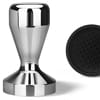
- Stainless steel tamper
- Stainless steel pressure gauge kit
- Carrying case
- No Flow-Control portafilter in this bundle
The menus above matter. The Solo kit gives beginners the flow-control training wheels plus the open basket for growth. The Pressure Kit variant pivots toward a more traditional workflow, packing the metal tamper and case. If travel is a priority, the Pressure Kit’s case is useful. If you are still between grinders, the Solo bundle’s Flow-Control path is the better on-ramp.
Core Specs
- Brew format: Flair 40 mm basket
- Dose: 12 to 18 g
- Water capacity: 60 ml
- Typical yield: up to about 40–45 ml
- Pressure target: 6 to 9 bar
- Weight: about 5 lb for Solo, about 6 lb with Pressure Kit
- Case size: roughly 12.5 x 9 x 3.35 inches for Pressure Kit version
Two details help with speed and consistency. The included thin brew cylinder heats quickly. The preheat cap lets you charge the cylinder with boiling water for thirty to forty-five seconds when you want higher brew temperatures.
Workflow: From Assembly To Shot
Setup and Preheat
Assembly is straightforward. Bolt the base to the post, drop in the drip tray, and separate the brew head into piston, cylinder, screen, and portafilter. If you plan to brew with lighter roasts or want maximum sweetness, use the preheat cap and charge the cylinder with freshly boiled water for about 30–45 seconds, then dump and load.
Portafilter Choices
The included Flow-Control portafilter is a pressurized basket with a restricted exit. It builds pressure in the chamber, which means it can work with coarser grinds and even pre-ground coffee. The removable spout helps with cleaning and replacement if buildup occurs. The Bottomless 2-in-1 is a standard, non-pressurized path. It demands an espresso-capable burr grinder, rewards puck prep, and reveals extraction quality in the cup and visually at the basket.
Pressure Gauge Use
The integrated gauge adds a simple target: brew in the Espresso Zone, roughly 6–9 bar. Pre-infuse by easing the lever until the needle just lifts, wait for the first drops, then press steadily to your target. Keep the needle in the zone for the core of the shot. Use the gauge as practical feedback, not as a rigid profile.
Time Targets
Aim for about 20–25 seconds at pressure once flow begins. Older guidance focused on total flow time at a certain lever force. The modern gauge makes “time at pressure” easier to repeat. You can reconcile both approaches by using the gauge to reach pressure quickly, holding steady for about 20–25 seconds, and using total shot time as a secondary check when dialing in.
Cleanup
Lift the lever, pull the brew head off the base by the silicone sleeve, separate, knock out the puck, and rinse. Do not use soap. Do not dishwash any parts. Remove and rinse the Flow-Control spout as needed. A quick water-only pull helps keep the path clear.
Espresso Performance
What To Expect With Flow-Control
Flow-Control is friendly. The Classic holds back flow until the chamber builds pressure, which produces crema and syrupy texture even when your grind is not perfect. Expect rounded flavor and modest acidity on medium roasts. Use this mode for casual brewing or when borrowing a non-espresso grinder. The gauge prevents gross errors by showing when you are below or above the zone.
What To Expect Bottomless
Switch to the Bottomless 2-in-1 once you have a capable burr grinder. The 40 mm basket likes tidy puck prep. Even distribution and a light tamp stabilize resistance. The sweet spot for many coffees is 14–16 g in with about 28–36 g out in 25–35 seconds at 6–8 bar after pre-infusion, adjusting grind to taste. The smaller diameter increases puck depth relative to a 58 mm basket, which often yields dense, chocolate-forward body at comparable recipes. Flair’s 12–18 g specification provides real range, and the Classic’s brew path is sensitive enough to reward an extra half gram when you are near target.
Temperature Considerations
The thin cylinder helps the Classic heat quickly. For medium roasts, a brief preheat or even no preheat can land you in a balanced zone if your kettle is at a rolling boil. For light roasts, preheat the cylinder and screen. The cap method is simple and repeatable.
Repeatability
The gauge shortens the learning curve, preserves good shots by keeping you on pressure, and exposes mistakes in grind or distribution. This is a meaningful upgrade over earlier Classics that relied on feel or the optional Pressure Kit.
Taste Outcomes
With fresh coffee and a dialed grinder, the Classic produces full-bodied, sweet shots with good structure. Expect clarity to improve as you refine puck prep and lighten your ratio. The 40 mm geometry emphasizes contact time, which supports syrupy mouthfeel and chocolate-heavy balance on medium roasts. Light roasts demand heat discipline and fine grind control, and the gauge helps you maintain pressure without stalling or over-pressing. Users who value a modern, high-clarity profile will find more headroom in Flair’s 58 mm platform. The Classic’s best shots are competitive with far pricier machines when judged on body, sweetness, and crema.
Milk And Steaming
The Classic does not steam. Pair it with a standalone frother or an induction-based steamer if milk drinks are a daily habit. This keeps the Classic focused on extraction quality and portability. If integrated steam is a requirement, a different product class is appropriate.
Comparisons
Classic vs NEO Flex
The NEO Flex is the budget pathway. It uses a polymer frame, a thin cylinder, and often includes a Flow-Control basket with a gauge. The Classic steps up to an all-metal frame and now includes both baskets plus a gauge in the base package. If you want the lightest kit for occasional espresso or travel, the Flex is attractive. If you want a sturdier stand, a more complete kit, and the longevity of a metal frame, the Classic is the clear choice.
Classic vs PRO 3
The Flair PRO 3 uses a 46 mm portafilter, a refined brew head, and a pressure gauge with a marked zone. It targets richer flow and greater thermal buffering with its accessories and geometry. It costs more, but it offers more headroom for advanced puck prep and roast versatility. Choose the PRO 3 if you are already confident with manual espresso and want higher extraction potential without the size of the 58. Choose the Classic for value, teaching, and portability.
Classic vs Flair 58
The Flair 58 is a 58 mm ecosystem, including baskets and accessories that mirror commercial standards. If you want maximum compatibility with café tools, easier puck prep across a wider surface, and a path that scales to light roasts with fewer compromises, the 58 is the future-proof choice. The Classic counters with size, price, and packability.
Daily Use Notes
- Grinder reality: The Bottomless 2-in-1 needs a genuine espresso grinder. The Flow-Control basket can work with coarser grinds or pre-ground coffee, yet quality improves with fresh beans.
- Tool sizing: The Classic’s tamper size is unique. The basket is 40 mm and the tamper is 39 mm. If you buy third-party tools, match the 39 mm diameter.
- Case logistics: The current Solo kit does not include the case. The Pressure Kit version adds it. Confirm your bundle before purchase.
- Force and safety: Do not yank the lever. Anything above 12 bar is unsafe. The gauge reduces risk by visualizing force.
Specifications
| Item | Spec |
|---|---|
| Machine type | Manual direct lever, unheated brew group |
| Portafilter | 40 mm, Bottomless 2-in-1 and Flow-Control included in Solo |
| Dose | 12–18 g |
| Water capacity | 60 ml |
| Typical yield | Up to 40–45 ml |
| Pressure target | 6–9 bar, gauge integrated |
| Assembled size | ~12.5 x 6.25 x 10 in |
| Weight | ~5 lb Solo, ~6 lb with Pressure Kit |
| Case | Included with Pressure Kit variant |
| Frame | All-metal stand, stainless brew components, polyacetal piston |
| Warranty | 3 years on press stand and brew cylinder |
| Price | 149 USD list at time of review |
Scoring
Espresso Quality: 8.3/10
The Classic’s 40 mm format, simple brew path, and pressure feedback deliver dense, sweet shots with consistent structure. You surrender some headroom on very light roasts compared with 58 mm gear. The integrated gauge narrows variance from day one.
Milk/Steam: 2.0/10
No steam system. This is a dedicated espresso tool. External steaming is the plan.
Workflow & Ergonomics: 8.6/10
Setup is fast, the lever action is controlled, and cleanup is simple. The gauge reduces guesswork. The thin cylinder and preheat cap support predictable temperature management. Tool sizing is non-standard, which asks a bit more attention when buying accessories.
Build & Reliability: 8.2/10
Metal frame, stainless brew parts, and a straightforward assembly give confidence. The warranty coverage on the stand and cylinder is a positive indicator. Treat seals and the piston with normal care and the Classic stands up well to daily use.
Features: 8.0/10
Two portafilters, an integrated gauge, thin cylinder, preheat cap, and a complete tool set at this price is strong. There is no heat or steam and the basket diameter is proprietary by design.
Value: 9.4/10
At 149 USD with the gauge and both baskets, the Classic defines entry-price capability. It teaches real espresso quickly and stays relevant as your grinder and technique improve.
Overall: 8.1/10
Pros
- Integrated pressure gauge with a clear 6–9 bar target improves consistency
- Two portafilters in the base kit, flow-control for convenience and bottomless for growth
- All-metal frame, stainless brew path, quick-heating thin cylinder
- Compact footprint and simple teardown
- Strong value with a useful three-year warranty on core parts
Cons
- No built-in steam, separate solution required
- Proprietary 40 mm basket limits third-party tool options, tamper is 39 mm
- Light roasts demand careful preheat and grinder precision
- Case included only with the Pressure Kit configuration
Who It Is For
- Learners who want pressure feedback and a forgiving on-ramp, then full control as skills grow
- Minimalists and travelers who value compact, metal-framed gear
- Bargain hunters who still expect true espresso performance
Who It Is Not For
- Users who want push-button convenience or integrated steaming
- Buyers who plan to live forever on pre-ground coffee without the Flow-Control basket
- Café-style multi-drink sessions, where a heated group and steam would be more efficient
Maintenance Notes
- Rinse parts with water only after each shot. No soap and no dishwasher.
- Remove and rinse the Flow-Control spout regularly. Use the spare if buildup appears.
- Occasionally run a water-only pull to flush the head.
- Keep the piston and seals clean and lightly lubricated as needed.
- Use the dosing cup to reset the piston to the top after cleaning.
Buying Guidance
Decide up front whether you need the case and metal tamper. If yes, the Pressure Kit bundle is tidy. If you are still sorting out a grinder or want the most forgiving start, the Solo kit’s inclusion of both portafilters is the smarter first purchase. Confirm the current box contents at checkout, because Flair’s bundles can change by region or retailer.
Verdict
The updated Flair Classic earns its name. It teaches pressure-aware espresso and rewards careful puck prep, all inside a compact frame that lives easily on a counter or in a bag. The integrated gauge closes the gap between intuition and consistency. The dual-portafilter package widens the path from training wheels to full control. You trade convenience features like heat and steam for price, portability, and mechanical simplicity. That trade is sound. If your goal is to learn and enjoy honest espresso without a large budget or a large footprint, the Classic is the reference answer at its price.