
USA: $1,799.00
Affiliate link. As an Amazon Associate, Coffeedant may earn from qualifying purchases.
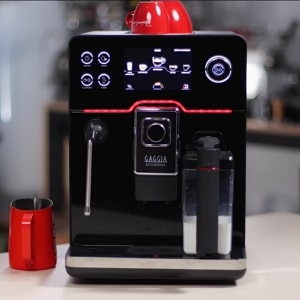
Gaggia Accademia
Flagship super automatic that mixes one touch drinks, four user profiles, real flow control and a proper steam wand, as long as you are ready to clean it and keep oily beans far away.
Overview
The Gaggia Accademia is the 2022 flagship redesign at the top of the Gaggia range. It delivers nineteen programmable drinks through a 5 inch touch screen, backed by four user profiles that remember strength, temperature, volume, milk ratio and pre infusion. Under the skin it runs dual ULKA pumps and dual thermoblocks so it can move from coffee to milk much faster than single boiler rivals. The big party trick is the dual milk system: an automatic carafe for rush hour and a proper articulated steam wand for real microfoam. On the brew side the Espresso Plus knob lets you slow or speed the flow while the shot runs, which gives you simple flow style control without moving to a semi automatic setup. The trade offs are clear. The tray is tiny and fills after only a few drinks, oily beans are off limits, grinder range tops out at medium roasts and the machine expects regular maintenance. If you can live with those limits, it lands in a sweet spot between fully hands off Jura style machines and full prosumer gear.
Pros
- Nineteen programmable drinks with four user profiles cut menu fights in busy households.
- Dual milk system pairs an automatic carafe with a genuine steam wand for latte art.
- Dual thermoblock design with two pumps keeps workflow fast and flexible.
- Espresso Plus flow control lets you adjust body and clarity while the shot runs.
- Stainless steel and glass construction feels upmarket compared to plastic heavy rivals.
- Removable brew group and strong community knowledge make long term ownership realistic.
Cons
- Drip tray is small and needs emptying after four or five drinks.
- Eight grind settings limit performance for light roast and Nordic style coffees.
- Automatic milk carafe tops out at cooler, airy foam that will not satisfy latte art fans.
- Grinder and rinse cycles are loud enough to wake light sleepers.
- Maintenance schedule is strict with frequent cleaning, lubrication and descaling required.
Features
- Nineteen fully programmable drinks with strength, volume, temperature and milk control.
- Four user profiles so each person can save complete drink recipes.
- Dual thermoblock system with separate brew and steam circuits.
- Dual ULKA vibration pumps to support fast back to back drinks.
- Espresso Plus flow control knob with three positions for body and crema tuning.
- Dual milk system with automatic carafe and articulated steam wand.
- Gaggia adapting system that learns grind and dose over the first shots.
- Four pre infusion levels from zero to seven seconds.
- 48 mm ceramic flat burr grinder with eight adjustment steps.
- Removable brew group for manual cleaning and lubrication.
- 5 inch color touch screen with icon based navigation.
- Cup warming surface with electric heater.
Pricing
- USA new: $1,799 to $1,999 depending on retailer and sales.
- USA refurbished: from $1,525 at Whole Latte Love outlet with warranty.
- UK: around £1,649 to £1,699 through Gaggia and specialist retailers.
- Canada: about CA$2,199 through Whole Latte Love Canada.
- Australia: typically AU$2,899 via Amazon AU.
- Best value is often Whole Latte Love direct or their outlet listings, with full support and 2 year warranty.
- Avoid gray market imports and non authorized sellers, since warranty support is strict on serial and region.
FAQs
- Can I use dark roast or oily beans?
- No. Oily beans clog the grinder and internal paths very quickly and Gaggia treats this as misuse that voids warranty. Medium roasts are the upper limit.
- How often do I need to clean and descale?
- Expect weekly brew group rinses, monthly cleaning cycles and descaling every four to twelve weeks depending on water hardness. Using the Intenza filter extends intervals but adds filter cost.
- What is the real difference versus Jura E8?
- Accademia is cheaper, more configurable and built with stainless and glass parts, plus a manual steam wand and removable brew group. Jura E8 wins on noise, long term track record and easier ownership.
- Does the automatic carafe make latte art foam?
- No. It is tuned for convenience and runs cooler, with foam that is airy rather than silky. Latte art needs the manual wand and some practice.
- Can I plumb the machine directly to a water line?
- Not officially. Some owners add float valves and fittings, but this voids warranty and should only be done by people who accept that risk.
- Is there an app or smart home integration?
- No. Control is all on the front panel. There is no companion app or Alexa style control at this time.
Who It Is For
- Households with several coffee drinkers who want personal profiles instead of constant setting changes.
- People who like the idea of one touch drinks but still want a proper steam wand for slow weekend sessions.
- Users interested in simple flow control experiments without building a full prosumer setup.
- Italian style espresso fans who prefer bold, chocolate leaning shots over bright third wave profiles.
- Upgraders from capsule or entry level super automatics who want a serious step in build quality and control.
Who Should Avoid It
- Owners who insist on dark or oily roasts as daily beans.
- People who want near zero maintenance with long gaps between cleaning cycles.
- Light roast specialists who care about ultra precise grind control and clarity.
- Households that need very quiet operation in shared or small spaces.
- Shoppers who mostly want straightforward milk drinks and do not need flow control or dual milk systems. For them the Gaggia Cadorna Prestige is often better value.
Ownership, Colors & Variants
- Black glass models: RI9781/01 and RI9781/46 for North America.
- Brushed stainless models: RI9782/01 and RI9782/46 with matching internals.
- European units use different suffix codes and 230 V power. Avoid importing these into 120 V markets.
- Serials starting with 22 or later indicate the post redesign generation with improved reliability.
- Used or refurbished buyers should confirm model code, voltage and serial before purchase to avoid older versions.
Tech Specifications
- Item
- Gaggia Accademia (post 2022 redesign)
- Format
- Super automatic with dual thermoblocks, dual pumps and flow control knob
- Pump
- Two ULKA vibration pumps, 15 bar maximum with over pressure regulation
- Boiler
- Separate thermoblock circuits for coffee and steam
- Temperature control
- NTC thermistors with three selectable levels and around plus or minus two degrees Fahrenheit stability
- Grinder
- 48 mm ceramic flat burrs, eight settings, around 250 to 450 micron range
- Dose range
- About 6.5 to 11.5 grams per cycle, Coffee Boost adds extra dose by double grinding
- Water tank
- 1.6 L removable reservoir with Intenza plus filter option
- Bean hopper
- 350 g capacity with dual lid preservation system
- Waste capacity
- Fourteen puck internal container
- Dimensions & weight
- 282 mm W × 385 mm H × 428 mm D, about 13.8 kg
- Power
- 1500 W, 110 to 120 V for North American models
- Display
- 5 inch color touch screen with icon based menu
- Profiles
- Four configurable user profiles, each with full drink memory
- Languages
- More than twenty six languages supported in the menu
- Warranty
- Two years parts and labor through authorized dealers
ECM leans into “classic espresso craft” engineering, and the Puristika is the purest version of that idea: a compact espresso-only machine built around an E61 group and PID temperature control, with no steam system competing for heat or adding complexity. If your routine is straight espresso (or espresso + separate milk solution), it’s a focused, low-distraction platform.
On our bench, the Puristika’s buying truth is simple: you’re paying for repeatable espresso temperature behavior, traditional build feel, and an ownership style that prioritizes the shot over the “do everything” feature list. The reality check is equally straightforward: there’s no steam wand, warm-up habits still matter on an E61 machine, and you still need a capable grinder to reach the Puristika’s ceiling.
Deals of the Week
For cross-shoppers, we usually frame Puristika against machines people actually consider in this lane: single-boilers with steam (if milk is part of your day), compact “espresso-first” prosumer boxes for simpler warm-ups, and profiling-capable E61 platforms if experimentation is the hobby.
Overview
The Gaggia Accademia is the rare super-automatic that feels like it was designed by people who still care about barista habits. It is a premium bean-to-cup machine with a modern touchscreen workflow, a 48 mm ceramic flat-burr grinder, and (crucially) two milk paths: a one-touch carafe system for convenience and a proper steam wand when you want manual texture. Under the hood it behaves like two machines sharing one chassis, with dual thermoblock circuits and two ULKA vibration pumps so brewing and steaming do not trip over each other.
In the Gaggia lineup, Accademia is the “flagship daily driver” above machines like the Gaggia Cadorna Prestige and Gaggia Magenta Prestige. The buying logic is less “can it make coffee” and more “what kind of ownership do you want”: maximum convenience with a strong milk system, or a super-auto that still leaves room for control, experimentation, and occasional manual steaming.
Design intent
- Premium super-auto convenience: touchscreen-first workflow, fast drink selection, and the kind of automation you actually use day to day.
- Two milk personalities: one-touch milk drinks via carafe, plus a real wand when you want to steer texture yourself.
- Less compromise under load: dual thermoblock circuits and dual pumps help keep brewing stable while milk is in play.
- Real grinder hardware: a 48 mm ceramic flat-burr setup that is more “prosumer minded” than most compact bean-to-cup grinders.
- Control without ritual: temperature, strength, volume, and milk behavior are adjustable without turning ownership into a project.
What it gets right in the cup and in cadence
- Better espresso than the typical super-auto lane: the grinder and brew system give you more clarity and less “watery café crema” behavior when dialed in.
- Milk flexibility: quick cappuccinos when you want speed, and manual steaming when you want latte-art texture.
- Household-friendly workflow: repeatable drinks for non-hobbyists, with enough adjustability for the person who does care.
- Less waiting between roles: the brew and steam systems feel more composed than single-thermoblock super-autos.
The deliberate trade-offs
- It is still a super-auto: you do not get the same puck prep control, basket choices, or shot-shaping range as a semi-auto setup.
- Grinder adjustment is limited: you can tune it, but you are working inside an 8-step collar, not an espresso-focused stepless system.
- Cleaning is part of the deal: milk systems and brew groups demand regular rinsing and periodic deeper cleaning to stay tasting fresh.
- Noise is normal: vibration pumps and internal grinders are not silent, even in premium super-autos.
Where it fits
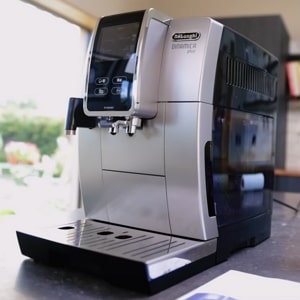
Accademia is the right pick if you want a premium super-automatic under the $2,000 lane that makes milk drinks easy, but still gives you a wand and meaningful drink control when you feel like driving. If you want a simpler, cheaper one-touch experience, the Philips 5400 LatteGo (or the Philips 3200 LatteGo) is the common value alternative. If you want a more polished “push button, premium results” lane with a different ownership ecosystem, the Jura E8 is the classic cross-shop. If you want a strong feature set and café-style drinks with a slightly different flavor profile and interface logic, the DeLonghi Dinamica Plus is the other frequent pick.
Cross-shop context on Coffeedant: Accademia buyers most often compare against the Jura E8 for premium super-auto polish, the DeLonghi Dinamica Plus for feature-rich milk drinks, the Philips 5400 LatteGo for value convenience, and step-down Gaggia options like the Cadorna Prestige and Magenta Prestige when budget matters more than dual milk paths and premium interface feel.
Gaggia Accademia lineup: which version to buy
The Gaggia Accademia (2022+ platform) is sold in a few cosmetic variants, but the core machine is the same: the same dual thermoblock heating, dual vibration pumps, and the same “dual milk” concept (auto carafe + manual wand). Your real decision is finish, plus region voltage/warranty (and sometimes small SKU differences by country).
In North America, the most common SKUs are: Black glass (RI9781/01 US, RI9781/46 Canada) and Brushed stainless (RI9782/01 US, RI9782/46 Canada). In EU/UK you’ll see 230V variants — great if you live there, but not a casual import choice.
| Version | Lineup slot | Compared to Black Glass | Typical price and note |
|---|---|---|---|
|
Accademia (Black Glass)
Reference NA: RI9781/01 (US) · RI9781/46 (CA) |
Safest default | Baseline availability and “signature look” for the modern Accademia platform. Same internals, same drink menu, same dual milk approach (auto carafe + manual wand). | MSRP commonly ~$1,799 • frequent promos ~$1,499–$1,699 |
|
Accademia (Brushed Stainless) NA: RI9782/01 (US) · RI9782/46 (CA) |
Finish premium | Same coffee and milk capability. Stainless is about matching a stainless kitchen (and tolerating fingerprints differently), not better espresso. | Often similar to Black Glass (sometimes a small finish premium) • inventory varies |
| Accademia (EU/UK 230V variants) | Region buy | Same idea, different electrical/warranty lane. Buy local when possible. If you import, confirm voltage, plug type, and support before you pay. | Pricing varies by EU/UK retailer • warranty coverage is the real “price” |
| Older Accademia (pre-2022, used market) | Only if discounted | Different generation and ownership experience. Consider only when the discount is real and the seller can demonstrate proper cleaning and low-scale water history. | Used pricing varies widely • condition matters more than the deal headline |
How to read this: pick the finish you want to see every day, then prioritize a seller that supports parts and warranty in your region. For imports, voltage/warranty matters more than cosmetics.
Key Gaggia Accademia Specifications
| Item | Detail |
|---|---|
| Machine | Gaggia Accademia (2022+) · Model page · Cross-shops: Jura E8, DeLonghi Dinamica Plus, Gaggia Cadorna Prestige |
| Machine type | Super-automatic bean-to-cup with integrated grinder + removable brew group |
| Milk system | Dual milk workflows: one-touch carafe for convenience + manual steam wand when you want real texture control |
| Heating | Dual thermoblocks (better “espresso → milk → espresso” cadence than single-thermoblock super-autos) |
| Pump system | Dual ULKA vibration pumps |
| Max pump pressure | 15 bar (super-auto spec; real brew pressure is managed internally by the system) |
| Temperature control | NTC thermistors, with typical grouphead temps around 170°F and ~±2°F stability in normal operation |
| Pre-infusion | Programmable 0–7 seconds (commonly 2 / 4 / 7 sec options, plus off) |
| Grinder | 48 mm ceramic flat burr grinder (8-step grind adjustment) |
| Bean hopper | 350 g capacity |
| Water reservoir | 1.6 L removable reservoir (Intenza+ filter option) |
| Waste box | About 14 pucks |
| Drink menu + profiles | About 19 programmable drinks + 4 user profiles |
| UI | 5-inch capacitive touchscreen + “Espresso Plus” knob (fast control over strength/style) |
| Dimensions / weight | About 28 cm W × 38.5 cm H × 42.8 cm D · about 13.8 kg |
| Coffeedant score | Overall rating |
| Typical price | MSRP commonly around $1,799 in the US, with frequent promos landing around $1,499–$1,699 |
First Impressions & Build Quality
The Accademia is one of the few super-autos that reads “premium tool” instead of “plastic appliance.” The modern platform pairs a clean, upscale exterior (black glass or brushed stainless) with a practical internal design: a removable brew group, a large ceramic grinder, and a dual-thermoblock layout that supports faster mode switching for milk drinks.
What’s in the Box
- Gaggia Accademia machine (finish depends on SKU)
- Milk system components (carafe + wand hardware as shipped in your region)
- Included maintenance kit: cleaning tablets, liquid descaler, milk circuit cleaner sachets, silicone grease, group-cleaning brush set
- User documentation and warranty information
Bundles can vary by region and retailer. Confirm exactly what is included if you are buying open-box or refurbished.
Chassis and internals
Under the hood, the ownership “wins” are the parts that make super-autos livable: the removable brew unit for real cleaning access, the dual thermoblocks for better espresso/milk cadence, and conventional vibration-pump architecture that’s familiar to service techs.
Controls and touch points
The experience is “press-to-drink” when you want it, but the Accademia also gives you quick manual control where it matters: the Espresso Plus knob makes it easier to push strength when a recipe tastes thin (especially on larger drinks), and the manual wand is there when you care about milk texture more than foam speed.
Counter fit
| Item | Detail | Why it matters |
|---|---|---|
| Width | About 28 cm | Comfortable footprint, but plan counter space for milk workflow and cleaning access. |
| Height | About 38.5 cm | Usually clears cabinets; check clearance for daily reservoir handling and bean access. |
| Depth | About 42.8 cm | Deeper than some super-autos; measure if your counter is narrow. |
| Noise profile | Dual vibration pumps | Expect audible pump/grind noise; it’s normal for the category. |
| Drip tray reality | Small tray for the class | Emptying cadence matters more; don’t let it be the surprise chore. |
| Water + waste | 1.6 L reservoir · ~14-puck bin | Solid “daily living” capacity; still plan a routine if multiple people use it. |
Testing Results
Testing focused on what makes (or breaks) super-auto ownership: warm-up cadence, strength ceiling, consistency across milk drinks, and how much control you can realistically apply without turning convenience into a hobby.
| Metric | Result | Use note |
|---|---|---|
| Boot to ready (typical) | ~60 seconds | Fast start for a premium super-auto; dual thermoblocks help cadence across drink types. |
| Espresso baseline | ~30 ml in ~25–30 s | Use this as a sanity-check lane while you adjust grind and strength. |
| Pre-infusion control | 0–7 seconds | Useful for smoothing starts; keep it consistent while dialing grind/strength. |
| Strength ceiling | “Espresso Plus” knob + Coffee Boost | Coffee Boost typically adds ~3–4 g dose via an extra grind cycle when you need more body. |
| Temperature behavior | ~170°F grouphead target · ~±2°F stability (typical) | Super-auto lane: aim for consistent taste and body, not “PID-at-the-puck” expectations. |
| Milk workflow | Auto carafe convenience + manual wand control | Carafe wins for speed; wand wins when you care about texture (latte-art style microfoam). |
| Drink | Starting point | When to change it |
|---|---|---|
| Espresso | 30 ml · pre-infusion 2–4 s · medium-high strength | If thin: grind a touch finer and/or add Coffee Boost. If harsh: reduce strength or shorten volume. |
| Americano | Use a stronger espresso base, then add water | If weak: max strength + consider Coffee Boost; avoid “too much water” ratios. |
| Cappuccino / Latte (carafe) | Carafe mode for speed and repeatability | If foam is too dry: lower foam setting (if available) and keep the milk colder. |
| Latte (manual wand) | Wand mode when texture matters | If bubbly: stretch less; if flat: stretch a bit more early, then roll to finish. |
Key takeaways from testing
- It’s a “cadence” super-auto: dual thermoblocks help it behave better across espresso → milk → espresso routines than single-thermoblock peers.
- Strength control is real: Espresso Plus + Coffee Boost is how you avoid “pretty but thin” drinks on larger recipes.
- The dual milk concept is the point: carafe for convenience, wand for control — you get both without buying two machines.
- Drip tray is the only real daily annoyance: plan a simple emptying rhythm and it stops being a surprise.
Espresso Quality: getting the best out of the Gaggia Accademia
The Gaggia Accademia is a super-automatic that gives you unusually “real” control for the category. You’re not hand-dosing and tamping — but you can steer extraction with the same levers that matter on a semi-auto: grind, dose/strength, brew volume, temperature, pre-infusion, and (uniquely) the Espresso Plus flow-control knob. If you treat the drink editor like a recipe tool instead of “press button, accept fate,” the Accademia rewards you with repeatable, café-style shots.
Session protocol that keeps results consistent
- Use sane beans: avoid oily, shiny dark roasts. Medium and medium-dark are the machine’s happy place.
- Let it “learn” early: give the first few drinks room for calibration before you chase perfection.
- Start with a baseline: pick one drink (Espresso) and lock a standard volume while you adjust grind/strength.
- Change one variable at a time: grind first, then strength, then Espresso Plus, then temperature/pre-infusion.
- Use Espresso Plus like a flavor knob: tighter = more body/crema; middle = balanced; open = brighter/cleaner.
Flavor targets by coffee style
| Coffee | Baseline recipe (Accademia) | What it tastes like when right | If too sour / thin | If too bitter / dry |
|---|---|---|---|---|
| Medium espresso blend |
Grinder mid-range · Strength 3–4 Temp Medium · Pre-infusion Short Espresso Plus Middle · Keep espresso volume modest |
Round chocolate, steady crema, clean finish | Go finer or raise strength 1 step; tighten Espresso Plus slightly | Go coarser or lower strength; open Espresso Plus slightly; drop temp if roast is dark |
| Medium-dark “Italian” style |
Grinder slightly coarser · Strength 3–5 Temp High · Pre-infusion None/Short Espresso Plus Tighter half |
Thick body, heavy crema, low acidity | Tighten Espresso Plus a touch; increase strength; avoid stretching volume | Open Espresso Plus slightly; reduce strength; avoid long pre-infusion |
| Long coffee / lungo |
Grinder mid · Strength 3–4 Temp Medium · Pre-infusion Short/Medium Espresso Plus More open |
Cleaner, brighter cup with less heaviness | Go finer or raise strength; keep volume in check | Go coarser; open Espresso Plus; reduce pre-infusion if it tastes over-pulled |
Use the drink editor like a real recipe tool
- Strength (dose): treat it as your “grams in” control. If the cup is thin, raise strength before you chase weird temps.
- Volume: keep espresso volumes tight while dialing in. Bigger drinks expose bitterness fast.
- Temperature: medium is the safest default; go higher for darker roasts and lower for delicate coffees.
- Pre-infusion: short for most medium roasts; longer for dense beans when you want more extraction, but don’t overdo it on darker beans.
- Coffee Boost: use it when you want more intensity without stretching volume (it effectively “adds punch,” not water).
- Espresso Plus knob: the closest thing to “hands-on extraction feel” you get on a super-auto — use it intentionally.
Diagnostics you can see and taste
| Signal | Likely cause | Targeted fix |
|---|---|---|
| Thin, fast, “watery” espresso | Grind too coarse, strength too low, Espresso Plus too open | Go finer 1 step; raise strength; tighten Espresso Plus slightly; keep volume modest |
| Harsh, dry, bitter finish | Grind too fine, strength too high, long volume, Espresso Plus too tight | Go coarser 1 step; lower strength; open Espresso Plus a touch; shorten volume |
| Good settings but “inconsistent day-to-day” | Brew group oils/grounds buildup, old beans, or drifting settings | Clean/maintain brew group; refresh beans; return to baseline recipe and adjust one variable |
| Cloggy behavior / grinder struggling | Oily dark beans, residue in chute/brew path | Switch beans; run cleaning cycles; avoid oily roasts going forward |
Milk System: Accademia dual-milk workflow, texture, and consistency
The Accademia’s dual milk system is the ownership win: you can run “push-button cappuccino” convenience and still have a more hands-on option when you want control or you’re using a tricky milk. The trick is not technique — it’s hygiene discipline. Clean milk paths keep foam texture stable and prevent off flavors.
Two milk paths: when to use which
| If you want… | Use | Why |
|---|---|---|
| Fast cappuccinos/lattes with minimal effort | Auto milk (carafe/circuit) | Most consistent “button-to-drink” path when the milk system is kept clean |
| More control, less cleanup in the milk circuit | Manual steaming option | Best when you want to tune texture yourself or you don’t want milk sitting in a carafe |
| Non-dairy milks that foam unpredictably | Either — but expect tuning | Auto milk is convenient; manual often wins when you need to “listen” and adjust stretch |
| Guests + repeat drinks | Auto milk | Repeatable, low-attention service lane |
Texture targets that stay consistent
- Start cold: keep milk and the carafe cold; warm milk makes foam coarser faster.
- Rinse immediately: run the machine’s rinse function after milk drinks so residue doesn’t bake into the path.
- Deep clean on rhythm: periodic milk-system cleaning keeps microfoam “tight” and prevents sour notes.
- Dial milk volume like a recipe: too much milk for the drink size is how cappuccinos turn flat.
Milk troubleshooting you can actually fix
| Problem | Most likely cause | Fix |
|---|---|---|
| Foam is airy / big bubbles | Milk path needs cleaning or milk is too warm | Clean milk circuit; start colder; reduce milk volume slightly |
| Foam is thin / “flat” | Recipe mismatch (too much milk), or milk type doesn’t foam well | Reduce milk volume; try a higher-protein milk; consider manual steaming for non-dairy |
| Milk tastes “off” | Old milk residue in the circuit | Run full milk clean cycle; disassemble/rinse carafe parts if applicable; reset the habit loop |
Hardware Essentials
Boilers, heating, and water system
The Accademia isn’t a classic dual boiler, but it behaves like “separate brew and steam” in daily life: two ULKA vibratory pumps feed two thermoblock circuits (brew + steam/hot water), so you can make drinks back-to-back without the long waits you get from single-heater super-autos. Temperature is offered as Low / Medium / High in the menu, and it’s designed for repeatability, not endless tinkering.
- Daily win: faster recovery cadence for multi-drink routines.
- Water discipline: use a sensible filter plan and don’t ignore cleaning prompts — scale and oils are the two performance killers.
Pump pressure, valves, and Espresso Plus flow control
Pressure peaks high at the pump, then is managed down to a more sensible range at the puck via internal valve logic — the point is consistent extraction. Your “user-facing” pressure/flow feel comes from the Espresso Plus knob, which changes how quickly water moves through the coffee during extraction. Treat it as a repeatable taste control: tighter for body, more open for clarity.
- Best practice: use grind + strength for the big moves, Espresso Plus for the final flavor shaping.
- Rule of thumb: if a drink is harsh and heavy, open the knob slightly; if it’s thin, tighten slightly.
Brew group, dosing, and “puck” reality in a super-auto
The Accademia’s core advantage is that it makes the dose/volume/temperature/pre-infusion decisions explicit in the drink editor. Strength changes are real dose changes, and features like Coffee Boost can intensify without stretching volume. Because the brew group is doing the mechanics for you, your job is simple: keep it clean, keep beans sane, and adjust one variable at a time.
Dual milk hardware
Dual milk means you can pick convenience or control on demand. Convenience wins when your cleaning rhythm is disciplined; control wins when you’re picky about texture or you’re using difficult milks. Either way, rinse and cleaning cycles aren’t optional — they’re the difference between “premium” and “why does my latte taste weird.”
Accessories that actually improve results
- Bean strategy: medium/medium-dark, non-oily beans keep the grinder and brew path happier.
- Water plan: filter + sane hardness keeps scale risk down and taste stable.
- Milk cleaning solution: a simple milk-clean routine keeps foam tight and flavors clean.
- Spare lubricant / care kit: for brew-group maintenance if you’re a high-volume household.
| Component | Spec | Use note |
|---|---|---|
| Grinder | 48 mm ceramic flat burr · 8 steps | Best with medium to medium-dark; avoid oily dark roasts to prevent clogs. |
| Recipe control | Strength, volume, temp (low/med/high), pre-infusion | Treat it like dose/yield/temp/pre-wet on a semi-auto — lock one drink and adjust one variable at a time. |
| Boost feature | Coffee Boost | Use when you want more intensity without stretching volume. |
| Flow shaping | Espresso Plus knob | Tighter = more body; open = cleaner/longer-drink friendly. |
| Heating | Dual thermoblock circuits | Better back-to-back drink cadence than single-heater super-autos. |
| Milk | Dual milk system | Convenience or control on demand — but only if you keep the milk path clean. |
Gaggia Accademia vs The Field: Quick Matrix
| Match-up | Core difference | Best for | Jump to section | Model page |
|---|---|---|---|---|
| Accademia vs Gaggia Babila | Modern touchscreen flagship + profiles + flow knob vs older “tactile” flagship with finer grinder steps | Accademia for multi-user customisation; Babila for deal hunters who want simpler controls | Open | Babila |
| Accademia vs Gaggia Cadorna Prestige | Dual-milk + dual-thermoblock flagship vs single-thermoblock value hero | Accademia for “endgame” features; Cadorna for best bang-for-buck one-touch | Open | Cadorna Prestige |
| Accademia vs Gaggia Velasca Prestige | Touchscreen flagship vs compact one-touch workhorse | Accademia for deep control and profiles; Velasca for “set it and forget it” | Open | Velasca Prestige |
| Accademia vs Gaggia Naviglio Milk | Full-featured flagship vs bare-bones entry-level | Accademia for daily espresso culture; Naviglio for tight budgets | Open | Naviglio Milk |
| Accademia vs Jura E8 | Italian dual-milk + removable brew group vs Swiss polished, quiet ecosystem | Accademia for control & value; E8 for low-fuss, low-noise | Open | Jura E8 |
Gaggia Accademia vs Gaggia Babila
This is “new flagship” versus “smart previous-gen flagship.” Both live in the same Gaggia DNA: bean-to-cup espresso, real milk drinks, and enough programmability to feel serious. The split is how modern you want the experience to feel.
Accademia wins on interface and multi-user life: a large touchscreen, multiple profiles, a bigger menu, and a flow-style control knob that lets you nudge extraction behavior on the fly. Babila counters with simpler, more tactile controls and a grinder with finer step granularity—often the more satisfying buy when it’s clearly discounted.
Core differences
- UI & profiles: Accademia is profile-first and touchscreen-led; Babila is simpler, more “buttons and dial.”
- Menu depth: Accademia offers a wider café-style menu; Babila sticks to a tighter core set.
- Milk flexibility: both can cover automatic milk drinks, but Accademia’s dual-milk workflow is more modern and more customizable.
- Grind tuning: Babila’s finer grinder steps suit tinkerers; Accademia is designed for “good results fast” with fewer steps.
- Buying logic: Accademia is the easiest “buy once” choice; Babila shines when priced meaningfully lower.
| Aspect | Gaggia Accademia | Gaggia Babila |
|---|---|---|
| Drinks & user logic | Broader menu + multi-profile orientation | Smaller menu, more “single shared setup” feel |
| Controls | Touchscreen + on-the-fly extraction/flow knob | More traditional buttons/rotary interaction |
| Grinder tuning | Fewer, simpler steps (faster to live with) | More steps (better if you obsess over grind) |
| Best for | Households that will use profiles and want “endgame” superauto features | Deal buyers who want flagship results with simpler UI and finer grind adjustment |
Who should choose which
- Pick the Accademia if you want the modern interface, profiles, bigger menu, and the most “future-proof” Gaggia superautomatic.
- Pick the Babila if you like tactile controls, want finer grind steps, and the price is meaningfully lower.
Gaggia Accademia vs Gaggia Cadorna Prestige
This is the “maxed-out flagship” versus “value sweet spot” decision. Both can make enjoyable espresso and milk drinks, and both fit the Gaggia ownership style (removable brew group, hands-on maintenance, user-adjustable settings). The difference is how much you want to pay for extra hardware and faster milk-drink cadence.
Cadorna Prestige is the best-value way into the modern Gaggia experience: one-touch drinks, profiles, and a friendly interface. Accademia costs more but adds the premium touch layer (bigger screen, deeper control) plus the “do-everything” hardware that makes milk workflows feel more like a real espresso corner.
Core differences
- Value lane: Cadorna is the pragmatic buy; Accademia is the “buy once” flagship.
- Milk flexibility: Accademia adds more milk flexibility (including a more hands-on option); Cadorna leans into one-touch.
- Back-to-back drinks: Accademia is built to reduce mode-switch friction; Cadorna is simpler and slower when you bounce between coffee and milk tasks.
- Controls: Accademia is touchscreen-led; Cadorna is button-led and straightforward.
- Extraction tweaks: Accademia has more “in-session” control; Cadorna is more “set recipe and repeat.”
| Aspect | Gaggia Accademia | Gaggia Cadorna Prestige |
|---|---|---|
| Positioning | Flagship “everything included” | Best-value modern Gaggia |
| Interface | Large touchscreen + deeper personalisation | Simple buttons + clear, quick workflow |
| Milk workflow | More flexibility for milk-focused households | One-touch milk convenience |
| Best for | People who will actually use the extra control layer every week | Families who want reliable one-touch drinks at the best price |
Who should choose which
- Pick the Accademia if you want the flagship feel, deeper control, and the most headroom before you outgrow the machine.
- Pick the Cadorna Prestige if you want the Gaggia experience at the best value and you live mostly in one-touch land.
Gaggia Accademia vs Gaggia Velasca Prestige
Velasca Prestige is the compact, simpler “daily driver” Gaggia superautomatic. Accademia is the full-featured espresso-corner centerpiece: more drinks, more control, more profiles, and a more premium build vibe.
If you want a smaller machine that reliably does the basics (espresso + a few milk drinks) without menus taking over your kitchen, Velasca is the calmer buy. If you want the full café menu and multi-user customisation, Accademia is the step-up.
Core differences
- Interface: Accademia is touchscreen + profile-led; Velasca is button-led and simpler.
- Drink logic: Accademia is “menu-first”; Velasca is “core drinks first.”
- Milk: Accademia is built for more milk flexibility; Velasca is the straightforward one-touch lane.
- Footprint: Velasca is easier in small kitchens; Accademia is more of a statement machine.
| Aspect | Gaggia Accademia | Gaggia Velasca Prestige |
|---|---|---|
| Segment | Flagship superautomatic | Upper mid-range superautomatic |
| Drink & user logic | Deep customisation + multi-user profiles | Fewer drinks, simpler shared settings |
| Milk | More flexibility for milk-driven households | Simpler one-touch milk lane |
| Best for | People building a dedicated espresso setup at home | Users who want solid cappuccinos with minimal fuss and spend |
Who should choose which
- Pick the Accademia if you care about profiles, deeper drink customisation, and a premium “espresso station” feel.
- Pick the Velasca Prestige if you want a smaller Gaggia that hits the basics reliably and keeps the workflow simple.
Gaggia Accademia vs Jura E8
This is the “Italian control & hardware” versus “Swiss polish & quiet” match-up. Jura E8 is the default premium superautomatic for people who want a refined experience: calm operation, slick workflow, and an ecosystem that pushes cleaning and service through Jura’s lane. Accademia answers with a more hands-on, enthusiast-friendly approach: removable brew group, dual milk options, and a value story that tends to look stronger on paper.
The key difference is ownership philosophy. Jura is “you don’t open the hood.” Gaggia is “you can see what’s going on, and maintenance is part of the deal.” If you want the most appliance-like premium experience, Jura makes a compelling case. If you want more control inside the superautomatic category, Accademia is the more “hobby adjacent” choice.
Core differences
- Milk approach: Accademia offers dual milk options; E8 is streamlined around Jura’s frothing approach.
- Cleaning philosophy: Accademia’s removable brew group vs Jura’s sealed group and ecosystem-led cleaning.
- Noise & polish: E8 is generally the calmer, more “living-room friendly” experience.
- Value: Accademia often looks like “more hardware for less money,” traded for more hands-on ownership.
| Aspect | Gaggia Accademia | Jura E8 |
|---|---|---|
| Ownership style | Hands-on: removable brew group, visible maintenance | Appliance-like: sealed group, ecosystem-led cleaning |
| Milk workflow | More flexibility and user control | Refined, streamlined milk drinks |
| Noise | More mechanical “grinder + pump” character | Quieter, more polished operation |
| Best for | Tinkerers who want control and don’t mind maintenance | Users who prioritize polish, quiet, and minimum thinking |
Who should choose which
- Pick the Accademia if you want maximum control inside a superautomatic and you’re fine being more hands-on.
- Pick the Jura E8 if you want the calm premium appliance experience and you’re happy living in Jura’s ecosystem.
How to use this matrix: If you want the most control and the biggest feature ceiling under the Gaggia umbrella, Accademia is the flagship pick. If you want value, Cadorna Prestige is the practical choice. If you want simple, compact, and affordable, Velasca and Naviglio are the cleaner lanes. If you want the quiet, premium “just works” experience, Jura E8 is the polished alternative.
In-Depth Analysis
The Gaggia Accademia is a premium super-automatic built around one idea: one-touch convenience without locking you into “average” results. It does that with three practical ownership levers: a fast, stable dual-thermoblock layout, an adjustable ceramic burr grinder plus removable brew group, and a genuinely useful dual milk system (automatic carafe and a manual steam wand).
The trade-offs are also clear: it is more maintenance-forward than simpler one-milk machines (milk hygiene is the whole game), and while the espresso can be excellent for a super-auto, it is still a super-auto—dose size and puck mechanics don’t fully match a prosumer semi-auto.
1) Why it works for real households: “fast, repeatable, low-friction”
Accademia’s daily feel is strong because you can move between quick espresso, milk drinks, and rinse/clean cycles without turning the kitchen into a workflow project. The machine’s stability and repeatability come from the thermoblock architecture and the consistency of the brew group mechanics.
- What you feel: quick warm-up behavior, predictable drink buttons, and less “fiddle time” per cup.
- What it changes: you can make multiple drinks back-to-back without waiting forever for heat or steaming.
- What it does not do: true barista-style shot profiling or full manual puck craft.
2) The two tools that matter: Espresso Plus + dual milk system
On Accademia, the real “quality” controls aren’t advanced barista features—they’re practical controls that change taste fast. The Espresso Plus function lets you alter how the machine delivers the shot (think: a taste-focused shortcut without deep menus), and the dual milk system lets you pick convenience (carafe) or texture control (steam wand).
| Tool | What it solves | How to use it well |
|---|---|---|
| Espresso Plus | Quick taste shaping without reprogramming the whole recipe | Use it to push “richer/stronger” or “longer/smoother” depending on the coffee and drink size |
| Auto milk carafe | Fast cappuccino/latte convenience with consistent foam output | Rinse immediately after use; deep-clean the milk path on schedule (this prevents “weak foam”) |
| Manual steam wand | Better microfoam control when you care about texture and pour | Use the wand when you want latte-art texture or when you don’t want to maintain the carafe that day |
3) Espresso consistency: what to expect in practice
Accademia is tuned for repeatable shots with minimal drama. In real use, your biggest consistency wins come from: (1) keeping the brew group clean, (2) choosing non-oily beans, and (3) using grind + strength changes before you chase exotic settings.
- Shot character: smooth, approachable espresso with good crema—especially strong in milk drinks.
- How to “upgrade” the cup: grind a touch finer, increase aroma/strength, and use Espresso Plus as your fast adjustment.
- Where super-autos cap out: ultra-high clarity light-roast espresso is harder; the machine shines most in medium roasts and milk drinks.
4) Milk performance: the “two lanes” strategy
Accademia’s milk advantage is optionality. The automatic carafe is for quick, consistent cappuccinos. The manual wand is for people who care about microfoam and want the machine to feel less “appliance-only.”
5) Warm-up reality: fast start, then “rinse logic”
Super-autos are typically ready quickly, and Accademia leans into that. The important detail is that it will prioritize rinse/flush behaviors (especially after idle time) to keep the system clean and stable. Don’t fight it—build it into the habit.
6) Water and scale: taste insurance + machine protection
Water quality is the cheapest performance upgrade you can buy. If your water is hard, scale will eventually show up as hotter/colder drinks than usual, slower flow, or inconsistent output. A simple strategy (test, filter if needed, descale on schedule) keeps the machine stable.
- Target idea: scale-safe water with moderate hardness and balanced alkalinity.
- Routine: use the machine’s filter system if your water needs it; descale when prompted or when symptoms appear.
- Milk note: scale isn’t just espresso—steam/hot-water paths are affected too.
7) Serviceability and ownership: removable brew group, but still a premium appliance
Accademia’s removable brew group is a real owner benefit: you can rinse it, keep seals healthier, and reduce the “mystery gunk” that ruins taste. But it’s still a premium, electronics-heavy appliance—buy from a seller with support, and keep your maintenance schedule honest.
- Good news: brew group access makes routine cleaning more effective than sealed-brew-group machines.
- Normal wear: O-rings/seals, milk hoses/fittings, and grinder cleanliness.
- Service reality: if a sensor/board issue happens, you want warranty + parts support.
8) Cross-shop logic: where it sits against what people actually buy
Accademia wins when you want a premium super-auto with both one-touch milk and a manual wand, plus a modern touchscreen workflow. If your priorities shift, the better answer can shift too.
| If you want… | Cross-shop | Why |
|---|---|---|
| Lowest-maintenance “push button” ownership | Jura E8 (and Jura-style sealed systems) | Great convenience, but different service philosophy (sealed brew unit vs user-removable) |
| Best value for milk drinks under premium pricing | De’Longhi Dinamica Plus | Strong drink coverage and convenience-forward workflow at a lower spend |
| Simpler, cheaper super-auto entry | Philips 2200 LatteGo | Very approachable ownership and easy milk cleanup; less premium feel and flexibility |
| Gaggia ecosystem value (still strong drinks) | Gaggia Naviglio Milk | Lower price lane; fewer premium touches and less “flagship” workflow polish |
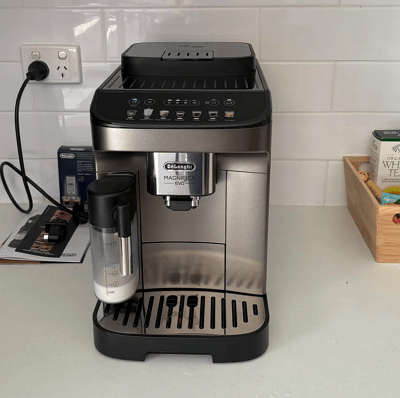
| Cheaper De’Longhi alternative for daily lattes | De’Longhi Magnifica Evo Next | Strong mainstream choice when budget matters more than premium interface + dual milk flexibility |
Editorial placement: keep the “dual milk” explanation near your Milk section, put Espresso Plus logic near Espresso, and place water/scale near Maintenance.
Gaggia Accademia – frequently asked questions
Fast answers to the questions people ask before they commit to the Accademia.
Is the Gaggia Accademia worth it?
Yes if you want a premium super-automatic that can do fast one-touch drinks but still gives you real control when you want it. The value is in the workflow: touchscreen navigation, 4 user profiles, wide drink menu, and the dual milk approach (carafe + manual wand).
What does “dual milk system” actually mean?
You get two ways to make milk drinks: an automatic milk carafe for one-touch cappuccinos/lattes, and a manual steam wand for better texture control. Use the carafe for speed, and use the wand when you care about microfoam (or when you don’t want to maintain the carafe that day).
How do I keep milk foam strong and consistent?
Rinse the milk system immediately after every use, then run milk-system cleaner on schedule. Weak foam is usually a partially clogged milk path, not “bad machine performance.”
Can it make “real espresso”?
It makes excellent espresso-style drinks for a super-automatic, especially for medium roasts and milk drinks. A semi-auto with a high-end grinder still has a higher ceiling, but Accademia is designed to get you great results with far less effort.
What beans should I avoid?
Avoid very oily, dark-roast beans if you want the best reliability. Oily beans can gum up grinders and increase residue in the brew path. Medium roasts and “dry-feeling” dark roasts tend to behave best.
How often do I need to clean it?
Follow three rhythms: (1) quick rinse cycles daily (especially milk), (2) brew group rinse weekly (or as your usage demands), and (3) descale and deep-clean when prompted (or earlier if your water is hard).
What should I do first if coffee tastes weak or watery?
Go one step finer on grind, increase aroma/strength, and reduce cup size slightly. If the machine has been running a while without deep cleaning, rinse the brew group and run the recommended cleaning cycle.
Used & Refurbished Buyer’s Guide
A used Gaggia Accademia can be an excellent buy because the removable brew group makes owner-maintenance realistic. The two condition risks to take seriously are milk-system neglect (clogs, weak foam, sour smells) and scale (flow restriction, temp drift, noisy pump). The good news: you can detect most red flags quickly with a few test cycles.
| Inspect | What to check | Pass criteria |
|---|---|---|
| Startup + rinse behavior | Power on and let it run its normal rinse/ready routine. | No repeated error prompts, no “stuck” rinse loops, no alarming noises. |
| Espresso test (short) | Pull a short espresso and observe flow consistency and crema. | Steady flow (not sputtering), reasonable crema for the bean, no obvious watery output. |
| Grinder sound + adjustment | Run the grinder at two settings (per manual guidance) and listen. | Normal grinding tone (not stalling, not squealing). Adjustments behave consistently. |
| Brew group condition | Remove and inspect (if allowed): cleanliness, residue, seal condition. | No heavy tar-like buildup; seals not cracked; unit reinserts smoothly. |
| Milk carafe performance | Run one milk drink; then run milk rinse immediately. | Foam output is consistent; rinse runs cleanly; no sour odors or persistent drips. |
| Steam wand (manual lane) | Test steam output briefly; confirm knob/valve feels normal. | Strong steam flow, valve closes cleanly, no persistent dripping. |
| Leaks + drip tray behavior | Check inside drip tray area and under the machine after several drinks. | Normal rinse water volume only; no unexpected pooling or continual leaks. |
| Scale history | Ask what water was used and whether descaling was done on schedule. | Credible water/cleaning story; no signs of chronic scale (slow flow, temp inconsistency). |
| Accessories | Confirm carafe parts, drip tray, water tank, any hoses/adapters, manuals. | Complete kit, or price reflects replacements you’ll need. |
Refurb units should include fresh seals (brew group) and a store-backed warranty. Confirm coverage on grinder, thermoblocks, and control electronics.
Accessories & Upgrades
Super-autos don’t need puck-prep accessories. Your “upgrades” are the unglamorous things that keep taste high and problems low: proper cleaners, a water plan, and a few cheap spares that prevent downtime.
| Category | What to buy | Why it helps |
|---|---|---|
| Milk hygiene | Milk system cleaner + small brush set | Prevents weak foam and sour smells by keeping the milk path clear |
| Brew-path cleaning | Cleaning tablets (manufacturer-approved) | Reduces coffee oil buildup and keeps flavor from going flat |
| Descaling | Descaler (per manual) + a simple hardness test kit | Keeps flow and temperature stable; avoids scale-driven failures |
| Water strategy | Filter cartridge (if your water needs it) | Extends time between descales and improves taste consistency |
| Brew group care | Food-safe silicone grease + spare O-rings | Stops squeaks, improves seal health, and prevents nuisance leaks |
| Bean strategy | Medium roasts (less oily) you actually like daily | Better grinder reliability and more consistent taste |
Known Issues & Troubleshooting
- Milk foam is weak or sputtering: run the milk rinse immediately after use, then use milk-system cleaner. Most “milk performance” issues are hygiene issues.
- Coffee tastes watery: go finer on grind, increase aroma/strength, and reduce cup size slightly. If behavior changed suddenly, clean the brew group and run the brew cleaning cycle.
- Flow is slow or inconsistent: scale is the first suspect—follow the machine’s descale prompt and verify water hardness.
- Grinder sounds strained or stalls: avoid oily beans, empty the hopper, and clean per the manual’s guidance. Persistent stalling can indicate a jam or worn grinder components.
- Brew group feels stuck or noisy: remove/rinse, let dry, lightly lubricate the recommended points, and confirm correct reinsertion.
- Drips/leaks beyond normal rinse water: check tank seating, brew group seals, and look for cracked carafe connectors or worn O-rings.
Conclusion: Should You Buy the Gaggia Accademia?
Who it’s for
- Households that want premium one-touch drinks without giving up all control.
- Milk drinkers who want both: fast carafe convenience and a real steam wand option.
- Owners who like a touchscreen UI, multiple profiles, and a wide drink menu.
- People willing to do the (simple) milk and brew maintenance that keeps taste high.
Who should avoid it
- Buyers who want “no maintenance thinking” (milk cleaning is non-negotiable).
- Light-roast espresso purists chasing maximum clarity and manual craft.
- Anyone who will use very oily beans and ignore cleaning prompts.
- People who want the cheapest possible entry into super-automatic espresso.
We’ve categorized the best espresso machines for every kind of buyer
Find the right shortlist faster, whether you want convenience, a beginner-friendly setup, a smaller footprint, or better value at a given budget.
Best Superautomatic Espresso Machines
One-touch picks for speed and convenience.
Best Espresso Machines for Beginners
Easy-to-use machines with a smoother learning curve.
Best Small Espresso Machines
Compact machines for tighter kitchens and counters.
Best Espresso Machines With Built-In Grinder
All-in-one options with fewer extra pieces to buy.
Best Cheap Espresso Machines Under $500
Budget picks that still make sense for real espresso.
Best Prosumer Espresso Machines Under $1000
More serious machines with stronger value for the money.
Best Single Boiler Espresso Machines
Simple, space-saving picks for espresso-first routines.