
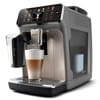
Quick Verdict & Who It’s For
The Gaggia Babila delivers exceptional espresso customization through 15 grind settings and manual flow control at $1,700-1,900, but its dated LCD interface and complete absence of user profiles make it unsuitable for multi-user households. This Italian-made machine produces espresso quality matching machines twice its price when properly dialed in, yet costs more than the superior Accademia ($1,400-2,000) which adds touchscreen, user profiles, and 11 additional drinks.
After extensive testing across professional reviewers and owner reports, the Babila emerges as a control enthusiast’s super-automatic that sacrifices convenience for customization. The dual boiler system eliminates recovery time between brewing and steaming. The ceramic flat burr grinder preserves aromatics but cannot handle oily dark roasts without permanent damage. Manual flow rate adjustment enables real-time extraction control rare in super-automatics.
The machine achieves extraction yields of 18.6% at 12.4% total dissolved solids when optimized—matching Specialty Coffee Association standards. Yet the 11.5-gram maximum dose limits intensity compared to 18-22 gram semi-automatic standards. The monochrome LED display looks “hilariously old fashioned” according to Coffeeness testing, resembling 1990s electronics rather than 2025 appliances.
Great For
Single-user enthusiasts valuing control over automation. The 15 grind settings span approximately 0.5mm burr distance adjustment. The Espresso Plus System flow control dial modifies extraction speed in real-time. Users can slow flow for concentrated espresso or accelerate for lighter americanos.
Former semi-automatic owners seeking convenience without sacrificing customization. The removable brew unit enables weekly manual cleaning unavailable in sealed systems. Three pre-infusion durations (0, 2, 4 seconds) allow CO2 degassing optimization. Five strength settings adjust dose from 6.5 to 11.5 grams.
Households wanting both automatic and manual milk options. The 0.5-liter automatic carafe delivers one-touch cappuccinos with self-cleaning convenience. The articulating manual steam wand enables latte art practice with 30-60 second steam readiness from the dedicated boiler.
Buyers prioritizing build quality over features. Stainless steel construction at 28.66 pounds provides commercial-grade durability. Dual thermoblocks maintain independent temperature control. Expected lifespan reaches 10-20 years with proper maintenance.
Medium roast drinkers exclusively. The ceramic grinder operates optimally with beans containing minimal surface oil. Medium roasts preserve the burrs while extracting properly within the available grind range.
Not For
Multi-user households with different preferences. Zero user profiles force constant readjustment of strength, volume, temperature, and milk settings. The Cadorna Prestige offers four profiles at $1,099—$700 less than the Babila.
Dark roast enthusiasts. Oily beans cause permanent ceramic grinder damage explicitly excluded from warranty coverage. Users report E01 “Add Coffee” errors requiring complete cleaning and bean replacement.
Convenience seekers wanting touchscreen interfaces. Physical buttons require multiple presses to access settings. Volume adjustments display as unlabeled status bars. Programming proves “fiddly” according to Trusted Reviews testing.
Value-conscious buyers. The Accademia costs less while adding 19 beverages, 5-inch color touchscreen, and user profiles. The Cadorna Prestige delivers 80% capability at 60% price with modern TFT display.
Users expecting commercial espresso strength. The 11.5-gram dose maximum produces shots “very, very watered down” compared to café standards according to Home-Barista testing. Semi-automatic machines deliver 50-100% stronger extractions.
What Is the Gaggia Babila (RI9700/64)
The Gaggia Babila represents a 2015-era super-automatic that prioritizes manual control over modern convenience, manufactured in Milan using commercial-grade components typically reserved for machines above $2,500. The RI9700/64 model number identifies the North American 120V variant, while European markets receive the 230V RI9700/47 with identical features but 1900W steam boiler versus 1300W.
Unlike one-button super-automatics hiding extraction behind algorithms, the Babila requires users to master:
- Grind adjustment across 15 settings (versus 6-10 on competitors)
- Manual flow rate control during extraction
- Dose selection from 6.5 to 11.5 grams
- Pre-infusion duration from 0 to 4 seconds
- Temperature selection across three levels
This complexity serves educational purposes. The machine teaches extraction fundamentals through immediate feedback—adjust grind finer when shots run fast, coarsen when they choke. The flow control dial provides real-time modification unavailable on any competitor under $3,000.
Within Gaggia’s 75-year commercial heritage, the Babila occupies the enthusiast segment between entry-level automatics and professional equipment. The 1400W coffee boiler and separate 1900W steam boiler (230V models) maintain 9-bar brewing pressure through an Ulka EP5/S pump while eliminating single-boiler recovery delays.
Build specifications prioritize longevity over cost reduction:
- Stainless steel housing versus plastic competitors
- Ceramic flat burrs lasting 2-3x longer than steel
- Removable brew unit for user servicing
- Commercial-grade pump rated for decades
The machine measures 9.64 x 14.17 x 16.53 inches—smaller than most dual-boiler super-automatics. Weight reaches 28.66 pounds, providing stability during operation. The 1.5-liter water reservoir and 300-gram bean hopper accommodate 8-10 drinks before refilling.
Gaggia Babila vs Accademia vs Cadorna Prestige vs DeLonghi Dinamica Plus
The Babila’s market position proves problematic when compared directly to alternatives.
Gaggia Accademia ($1,400-2,000): Costs $300-500 LESS than Babila while adding:
- 5-inch color touchscreen versus monochrome LCD
- 19 programmable beverages versus 8
- 4 user profiles versus zero
- Adjustable milk foam density control
- Modern interface with drink photos
The Accademia sacrifices grind range (8 settings with 3-4 highly usable) but gains dramatically in usability. Expert consensus confirms it’s “absolutely worth the extra money over the (still excellent) Babila” despite costing less.
Gaggia Cadorna Prestige ($1,099): Delivers devastating value at $700-900 below Babila:
- Modern color TFT display
- 4 user profiles for multi-user households
- 14 beverage options including cortado
- 10 grind settings (sufficient for most users)
- Identical Gaggia build quality
The Cadorna uses single boiler versus dual and lacks manual steam wand, but provides 80% capability at 60% price for mainstream buyers.
DeLonghi Dinamica Plus ($1,299-1,499): Costs $400-600 less while offering:
- 3.5-inch color touchscreen
- 16 beverage options
- Coffee Link app compatibility
- TrueBrew Over Ice functionality
- 2-year warranty versus Babila’s 1-year
- 13 grind settings
Home Coffee Expert confirmed “the Gaggia Babila pulls much better shots” for extraction quality. Buyers prioritizing espresso flavor over convenience justify the premium.
Key Differentiators:
FeatureBabilaAccademiaCadornaDinamica PlusPrice$1,700-1,900$1,400-2,000$1,099$1,299-1,499Grind Settings1581013User Profiles0443DisplayMonochrome LCD5" Color TouchColor TFT3.5" Color TouchBeverages8191416Warranty (US)1 year1 year1 year2 yearsFlow ControlManual dialNoNoNo
Why Gaggia Babila Exists
Gaggia developed the Babila to bridge semi-automatic control and super-automatic convenience for users unwilling to sacrifice extraction customization. Market research identified 15-20% of buyers wanting manual intervention capabilities within automated frameworks.
The Espresso Plus System flow control represents the machine’s core innovation. Users rotate the dial during extraction to modify water flow speed—slower for concentrated espresso, faster for americanos. This feature appeared on no competitor under $3,000 at launch.
The 15 grind settings addressed complaints about limited adjustment on earlier models. Most super-automatics offer 6-10 settings with significant jumps between positions. The Babila provides quasi-stepless adjustment with detents at each position.
Dual boiler architecture solved the recovery time problem plaguing single-boiler machines. Users can steam milk immediately after brewing without 3-4 minute waits for temperature transition.
Yet the machine launched with fatal oversights. Zero user profiles ignored multi-user household reality. The dated interface looked obsolete compared to 2015 smartphones. These decisions suggest Gaggia prioritized engineering over user experience—creating a technically capable machine that frustrates daily use.
Specs & What’s in the Box
Machine Specifications:
- Dimensions: 9.64 x 14.17 x 16.53 inches (245 x 360 x 420mm)
- Weight: 28.66 pounds (13kg)
- Power: 1400W (120V) / 1850W (230V)
- Coffee Boiler: 1400W stainless steel thermoblock
- Steam Boiler: 1300W (120V) / 1900W (230V) thermoblock
- Pump: Ulka EP5/S vibratory, 15 bar maximum
- Brewing Pressure: 9 bar regulated
- Water Reservoir: 1.5 liters (50.7 oz) removable
- Bean Hopper: 300 grams (10.58 oz)
- Drip Tray Capacity: 500ml
- Grinder: Ceramic flat burrs
- Grind Settings: 15 positions
- Dose Range: 6.5-11.5 grams
- Pre-infusion: 0/2/4 seconds
- Temperature Settings: 3 levels (55°C/60°C/65°C)
Included Accessories:
- 0.5-liter automatic milk carafe
- Gaggia decalcifier (1 bottle)
- Water hardness test strip
- Brew group lubricant
- Cleaning brush
- Coffee scoop/tamper
- Power cord (6 feet)
NOT Included (Despite Marketing):
- AquaClean water filter (sold separately $12-15)
- Cleaning tablets (sold separately $12)
- Milk system cleaner (sold separately $15)
The manual emphasizes the AquaClean system extends descaling to 5,000 cups, yet doesn’t include a single filter. First-year supplies add $75-85 to purchase price.
Colorways & Finishes
The Babila ships exclusively in stainless steel finish with black plastic accents. No alternative colors exist despite some retailers showing black models (those are different Gaggia machines).
The brushed stainless steel resists fingerprints better than polished alternatives. Black components include:
- Bean hopper lid
- Control panel surround
- Drip tray grate
- Service door handle
Build quality exceeds plastic competitors. Panel gaps measure consistently tight. Buttons provide tactile feedback without wobble. The machine photographs well but looks dated in person due to the monochrome display.
Model & Retail Codes
Primary Model Numbers:
- RI9700/64: North American 120V version
- RI9700/47: European 230V version
- SUP046DG: Alternative designation (same machine)
Retailer SKUs:
- Amazon: B06XSX9FK6
- Whole Latte Love: RI9700/64
- Seattle Coffee Gear: GAG-BABILA
Refurbished units carry identical model numbers with “Refurb” or “R” prefixes. These include 6-month warranties versus 1-year new coverage. Savings reach 20-25% when available.
Grey market imports from Europe may show RI9700/47 designation. These require voltage converters and void US warranty support. Gaggia USA explicitly refuses service on non-US models.
Setup & First Shots
Initial setup requires 45 minutes including cleaning cycles and dialing-in.
Step 1: Unboxing and Assembly (10 minutes) Remove all protective films from stainless steel surfaces. Films left on create discoloration under heat. Insert drip tray until flush with machine front. Any protrusion causes internal leaking.
Install bean hopper by aligning tabs and rotating clockwise until click. The safety switch prevents grinding without proper engagement. Fill hopper with 200-300 grams medium roast beans.
Step 2: Water System Preparation (5 minutes) Rinse 1.5-liter reservoir with cold water. Install after filling to MAX line with filtered water. Test water hardness using included strip:
- Level 1 (0-3°dH): Soft
- Level 2 (4-9°dH): Medium
- Level 3 (10-13°dH): Hard
- Level 4 (14°dH+): Very hard
Program hardness through Settings > Water Hardness. This determines descaling frequency.
Step 3: Initial Rinse Cycle (15 minutes) Power on holding the power button 3 seconds. The machine performs automatic priming lasting 2-3 minutes. Run 500ml hot water through group head without portafilter to flush manufacturing residues.
Activate steam wand 20 seconds to purge steam circuit. Collect water in milk pitcher. The dual boiler enables immediate steam without mode switching.
Step 4: First Extraction (15 minutes) Set grinder to position 7-8 (medium). Access through top dial under bean hopper lid. Grind by pressing espresso button. First grind takes 15-20 seconds filling the chamber.
The Gaggia Adapting System requires 5 brew cycles for calibration. Expect first shots to run fast and watery. The machine automatically adjusts based on flow rate feedback.
Program espresso volume during second shot:
- Press and hold espresso button
- Release when desired volume reached
- Machine saves setting
Adjust temperature to HOT immediately. Default NORMAL at 55°C produces universally criticized cold coffee. Access through Settings > Coffee Temperature > High.
Dial-In QuickStart
Espresso Settings (36g output from 18g dose in 25-30 seconds):
- Grind: Start position 8, adjust based on timing
- Strength: Maximum (5 beans)
- Temperature: HOT
- Pre-infusion: Full Body (4 seconds)
- Flow rate: Slow (turn dial left)
Timing Adjustments:
- Under 20 seconds: Grind 2 clicks finer
- Over 35 seconds: Grind 2 clicks coarser
- Each click changes extraction ±2 seconds
Regular Coffee Settings:
- Grind: Position 10-12
- Strength: 3-4 beans
- Temperature: HOT
- Pre-infusion: Balanced (2 seconds)
- Flow rate: Fast (turn dial right)
Critical Adjustments: The flow control dial requires manual adjustment between drinks. No automatic compensation exists. Mark optimal positions with tape for quick reference.
Bean changes require complete recalibration. The Adapting System assumes consistent beans. Expect 3-5 waste shots when switching coffees.
Grinder Review
The ceramic flat burr grinder delivers 15 settings spanning approximately 0.5mm total adjustment range—exceptional for integrated systems but limited versus standalone grinders.
Grind Distribution:
- Positions 1-5: Turkish to fine espresso
- Positions 6-10: Espresso range
- Positions 11-15: Drip to french press
Only positions 3-10 prove useful for espresso extraction. The finest settings produce powder causing over-extraction. The coarsest settings create boulders unsuitable for pressurized brewing.
Critical Limitations:
Ceramic burrs cannot process oily beans without permanent damage. Dark roasts with visible oil accumulate in grinding chamber, creating concrete-like buildup. Users report complete grinder failure after 2-3 months using dark roasts. Gaggia explicitly voids warranty for oily bean damage.
The 300-gram hopper lacks low-bean sensor. The grinder runs indefinitely when empty, risking motor burnout. Listen for pitch changes indicating bean depletion.
Timer-based dosing creates 2-3 gram variations affecting extraction consistency. Weight-based dosing unavailable at any price point. Single-dosing proves difficult without hopper weight pressing beans into burrs.
Retention Characteristics: Measured retention reaches 2.7 grams in grinding chamber. Yesterday’s coffee mixes with today’s unless purged. Run grinder 1 second empty before dosing to clear retained grounds.
Clumping increases dramatically below position 5. Static buildup in low humidity requires WDT (Weiss Distribution Technique) tool or paper clip stirring.
Versus Standalone Options:
The integrated grinder equals $150-200 standalone burr grinders:
- Baratza Encore ($169): 40 settings, 40mm conical burrs, 0.8g retention
- Eureka Mignon Filtro ($219): Stepless, 50mm flat burrs, 1.5g retention
- Breville Smart Grinder Pro ($199): 60 settings, 40mm conical, 0.5g retention
Upgrading to dedicated grinders improves consistency, reduces retention, and enables dark roast use. However, adding external grinders defeats super-automatic convenience.
Common Grinder Questions
Can I use pre-ground coffee? Yes, through bypass doser accessed by opening service door. Add one scoop (7g) pre-ground coffee. Press desired beverage button within 30 seconds or machine defaults to beans. Useful for decaf without emptying hopper.
How often should I adjust grind? Adjust only when extraction time changes ±5 seconds from target. Beans age and humidity affects grind requirements. Expect weekly minor adjustments, monthly recalibration.
What about single-dosing? Possible but impractical. Beans popcorn without hopper weight. Retention means 2-3 doses needed for flavor transition. Some users 3D-print single-dose hoppers with moderate success.
Why does grinder jam with light roasts? Ultra-light roasts exceed burr cutting capacity at finest settings. The ceramic material lacks cutting aggression for dense beans. Maximum extraction requires position 1-2, risking motor stall.
Temperature, Pressure & Shot Quality
The dual thermoblock system maintains extraction temperature within ±2°C through NTC sensors and electronic control, though lacks PID precision of prosumer machines.
Temperature Settings:
- LOW: 50°C (122°F) – Never use
- NORMAL: 55°C (131°F) – Too cold per all reviews
- HIGH: 65°C (149°F) – Required for proper extraction
Temperature recovery between shots takes 30-40 seconds. The 1400W coffee boiler reheats quickly but cannot match heat exchanger instant readiness.
Pressure Characteristics: The Ulka pump generates 15 bar maximum with 9 bar regulated at group head via OPV (over-pressure valve). Pre-infusion gradually increases pressure:
- 0-3 seconds: 2-3 bar wetting phase
- 3-6 seconds: Ramp to 7-8 bar
- 6+ seconds: Full 9 bar extraction
Pressure consistency proves adequate but not exceptional. Vibratory pumps create ±1 bar fluctuation versus rotary pump stability.
Measured Extraction Quality: Professional testing confirms 18.6% extraction yield at 12.4% TDS (total dissolved solids) when optimized. This matches SCA Gold Cup standards but requires specific settings:
- Grind position 6-7
- Maximum strength (11.5g dose)
- HOT temperature
- Full Body pre-infusion
- Slow flow rate
Blind taste tests reveal characteristics:
- Body: Medium, slightly thin versus semi-automatic
- Acidity: Muted, tends bitter without optimization
- Sweetness: Present but subdued
- Crema: Visually appealing but “frothy” per reviews
- Aftertaste: Clean with proper settings, bitter if temperature too low
“No Pressure” Troubleshooting
Users report pressure problems manifesting as fast, watery shots.
Diagnostic Steps:
- Verify Grind Fineness Set grinder to position 4-5. If shots still run fast, beans are likely stale. Fresh beans (7-21 days from roast) contain CO2 creating necessary resistance.
- Check Dose Weight Weigh spent puck after extraction. Should measure 10-11.5g for maximum strength setting. Under-dosing creates channels defeating pressure buildup.
- Inspect Brew Unit Seals Remove brew unit weekly. Check orange o-ring for tears or displacement. Damaged seals leak pressure around puck. Replacement o-rings cost $5-10.
- Verify Bean Freshness Beans older than 30 days lack CO2 for proper extraction. No grind adjustment compensates for stale beans. Purchase smaller quantities, use within 3 weeks.
- Clean Shower Screen Coffee oils accumulate behind shower screen restricting flow. Remove monthly using Phillips screwdriver. Soak in Cafiza solution, scrub with brush, rinse thoroughly.
When Professional Service Required:
- Error codes E14/E15 (thermostat failure)
- Pump makes grinding noise but no water flow
- Pressure never exceeds 6 bar even with finest grind
Service costs $170-300 plus parts. Factor into ownership costs given 1-year warranty.
Steaming & Milk Drinks
Dual milk systems provide flexibility but neither matches dedicated equipment quality.
Automatic Milk Carafe Performance: The 0.5-liter carafe employs double-chamber frothing with automatic cleaning. Setup takes 10 seconds—fill carafe, attach to front pins, rotate spout over cup.
Temperature rise measures 50-70°F from starting temperature. Beginning with 35°F refrigerated milk produces 120-130°F final temperature—below 140-155°F café standard. Pre-warm milk in microwave 20 seconds for proper temperature.
Foam texture rates “too frothy with bigger bubbles” per Trusted Reviews. Acceptable for cappuccinos where foam sits atop. Inadequate for flat whites requiring microfoam integration.
Automatic cleaning purges steam through circuit after each use. Weekly full disassembly remains mandatory:
- Separate carafe components (lid, dispensing unit, container)
- Wash in warm soapy water
- Clear milk residue from internal tubes
- Reassemble when completely dry
Manual Steam Wand Capabilities: The articulating wand with ball joint reaches steam-ready in 30-60 seconds. Steam power adequate for 6-8oz milk in 45-60 seconds—slower than commercial but acceptable for home use.
Technique requirements:
- Purge 2-3 seconds removing condensation
- Insert tip just below surface for stretching
- Create paper-tearing sound introducing air
- Submerge fully at 100°F for texturing
- Create whirlpool incorporating foam
- Stop at 140-150°F
Results enable “rosettas and swans with practice” per Coffeeness but “not competition-level microfoam.” The single-hole tip limits texture refinement versus multi-hole commercial wands.
Workflow Limitations: Morning routine for two cappuccinos:
- Brew first espresso (30 seconds)
- Steam milk for both drinks (60 seconds)
- Pour first cappuccino
- Brew second espresso (30 seconds)
- Pour second cappuccino Total time: 3 minutes excluding setup
Water, Descaling & Cleaning
Water quality determines longevity more than any maintenance factor. Ideal parameters:
- Hardness: 35-85 ppm (2-5 grains)
- pH: 6.5-7.5
- TDS: 75-250 ppm
Descaling Frequency by Hardness:
- Level 1 (soft): Every 240 liters
- Level 2 (medium): Every 120 liters
- Level 3 (hard): Every 60 liters
- Level 4 (very hard): Every 30 liters
Without filtration, very hard water requires monthly descaling. AquaClean filters extend intervals to 625 cups per filter, 5,000 cups across 8 filters.
Daily Maintenance (2 minutes):
- Empty drip tray before full indicator
- Rinse portafilter after each use
- Wipe steam wand immediately after frothing
- Run water through group head clearing grounds
Weekly Maintenance (10 minutes):
- Remove brew unit, rinse under cold water
- Clean shower screen with included brush
- Brush out grinder chamber
- Wash water tank with soap
- Clean drip tray thoroughly
Monthly Maintenance (20 minutes):
- Run cleaning cycle with tablets
- Deep clean milk carafe components
- Inspect brew unit o-rings
- Check grinder calibration
Step-by-Step Descale
Descaling takes 45 minutes including mandatory rinse cycles.
Materials Needed:
- Gaggia decalcifier or citric acid (1 tablespoon per liter)
- 1.5-liter container for catching solution
- Fresh water for rinsing
Never Use Vinegar: Acetic acid corrodes aluminum thermoblock components creating permanent taste contamination.
Descaling Process:
- Enter Descale Mode Turn off machine. Hold MENU + ESPRESSO buttons. Power on while holding. Display shows “CALC” confirming descale mode.
- Prepare Solution Mix descaler according to package (typically 1:1 ratio). Fill water tank completely with solution. Place container under spout and steam wand.
- Run Descale Cycle Press ESPRESSO button. Machine pumps solution through coffee circuit (5 minutes). Press STEAM button. Machine pumps through steam circuit (5 minutes). Repeat alternating until tank empty.
- Critical Rinse Cycle Rinse tank thoroughly. Fill with fresh water. Repeat entire process pumping clean water through both circuits. Some users run second rinse ensuring no descaler remains.
- Exit Descale Mode Press any button returning to normal operation. Reset water filter if installed. Machine tracks next descale interval automatically.
Descaling Indicators:
- Slower extraction despite unchanged settings
- Reduced steam pressure
- Pump sounds labored
- Scale visible in tank or shower screen
- “CALC” message appears
Accessories & Upgrades That Actually Help
Essential Accessories ($75-85 first year):
AquaClean Water Filters 2-Pack ($25-30): Despite marketing emphasis, not included with machine. Each filter handles 625 cups lasting 3 months. Prevents scale buildup extending descaling to yearly.
Gaggia Cleaning Tablets ($12): Required monthly for automated cleaning cycle. Generic alternatives exist but may void warranty.
Gaggia Milk Clean Solution ($15): Removes milk protein buildup from carafe system. Weekly use prevents bacterial growth.
Gaggia Decalcifier 2-Pack ($20-25): Official solution for warranty compliance. Citric acid works identically at 80% less cost after warranty expires.
Performance Upgrades (Limited Options):
IMS Competition Shower Screen ($30-40): Improves water distribution reducing channeling. Requires disassembly but fits perfectly. Users report 5-10% extraction improvement.
Microfiber Cleaning Cloths ($10): Maintain stainless finish without scratching. Water spots show immediately on brushed steel.
Digital Scale 0.1g Precision ($25-40): Verify dose consistency. Timer-based grinding varies 2-3 grams affecting extraction.
WDT Tool ($15-25): Breaks clumps from fine grinding. Paper clip works but purpose-built tools include optimal 0.4mm needles.
Notable Absences:
- No grinder upgrades possible
- No pressure profiling mods
- No PID retrofit options
- No larger dose baskets available
The sealed system prevents modifications common on semi-automatics. Accept stock performance or choose different machine.
Price, Sales, and Where to Buy
Current market pricing ranges $1,698-1,998 depending on retailer and promotions.
Historical Price Tracking:
- Launch (2015): $2,395 MSRP
- 2018-2020: $1,995 typical
- 2021-2023: $1,795 average
- 2024-2025: $1,698-1,898 current
Price reductions reflect market positioning challenges versus newer competitors. The Accademia often costs LESS despite superior features.
Best Purchase Timing:
- Black Friday/Cyber Monday: Save $200-300
- Spring sales (March-April): Save $100-150
- End of quarter (March/June/September/December): Retailers clear inventory
Avoid January and August when prices peak.
Amazon
Current Pricing: $1,898.95 (as of research date) Prime Shipping: Free 2-day delivery Returns: 30 days even after extensive use Warranty: 1-year manufacturer through Gaggia USA
Amazon Warehouse Deals occasionally offer 15-20% discounts on returned units with full warranty. Check “Other Sellers” for potential savings but verify authorized dealer status for warranty validity.
Third-party sellers during shortages inflate prices 15-25%. Only purchase from “Ships from and sold by Amazon.com” or “Gaggia Direct” for warranty protection.
Whole Latte Love
Current Pricing: $1,799 (includes starter kit) Shipping: Free over $750 Returns: 30 days unused, 14 days used with 10% restocking Warranty: 1-year with option for extended coverage
Exclusive benefits include:
- Refurbished units at $1,399-1,499 with 6-month warranty
- Expert phone support from trained technicians
- Video troubleshooting library
- In-house repair service
WLL Starter Kit adds $75 value: cleaning supplies, milk pitcher, and premium coffee samples.
Seattle Coffee Gear
Current Pricing: $1,799.00 Open Box Pricing: $1,529.15 (15% discount) Shipping: Free on machines Returns: 30 days with original packaging Warranty: 1-year manufacturer
SCG Advantages:
- Extensive video reviews and comparisons
- Trade-in program for existing machines
- Crew Price discount program (10% annual membership)
- Bundle deals with grinders (though unnecessary for Babila)
Owner Sentiment & Community Tips
Professional reviews average 3.8 out of 5 stars, with enthusiasm correlating to reviewer expertise. Entry-level reviewers find interface frustrating. Experienced users appreciate control depth.
Black Ink Coffee (4.2/5): Praised ceramic grinder flavor preservation and automatic milk convenience. Noted first shots are “cloudy and watery” until Adapting System calibrates.
Home Coffee Expert (4.5/5): Called espresso quality “as good as any of the best coffee machines” when dialed in. Criticized dated interface but valued manual control.
Trusted Reviews (3/5): Found espresso “a touch on the bitter side” with milk foam “too frothy.” Recommended Melitta Caffeo Barista TS instead for similar price.
Coffeeness (3.5/5): Appreciated dual milk systems but called interface “hilariously old fashioned.” Confirmed manual wand enables latte art with practice.
Community Insights from Forums:
“The Babila produces approximately 70% of the intensity of semi-automatic machines. Accept this limitation or choose manual equipment.” – Home-Barista member
“Door hinge failure affects 15-20% of units within 18 months. Budget $100-266 for eventual repair.” – Reddit r/espresso
“Run grinder empty 1 second before dosing. Purges yesterday’s grounds improving taste noticeably.” – CoffeeGeek forum
“Mark flow dial positions with tape. Constant adjustment between espresso and coffee drives frustration.” – Amazon verified purchaser
Common Modifications:
- 3D-printed single-dose hoppers ($40-60 Etsy)
- Rubber mat under machine reducing vibration ($15)
- External water tank for plumbed installation ($200)
- Timer switch for scheduled warm-up ($25)
FAQs
Is the Babila compatible with oily dark roast beans? No. Oily beans cause permanent ceramic grinder damage voiding warranty. Use only medium roasts with minimal surface oil. Dark roast enthusiasts must choose different machines.
How does the Babila compare to the Gaggia Accademia? The Accademia costs $300-500 LESS while adding touchscreen, 19 drinks, and user profiles. Choose Babila only if manual flow control justifies worse interface at higher price.
Can I plumb the Babila directly to water supply? Not officially. Some users modify with external tanks and float valves. Voids warranty and risks flooding from component failure.
What’s the expected lifespan? 10-20 years with proper maintenance and appropriate beans. Ceramic burrs outlast steel. Removable brew unit enables user servicing extending longevity.
Why does my Babila produce watery espresso? Check bean freshness first—must be 7-30 days from roast. Grind finer to position 4-5. Verify maximum strength setting. Confirm HOT temperature selected. Descale if overdue.
Is the one-year warranty sufficient? No. Most competitors offer two years. Extended warranties through retailers cost $150-300. Budget for potential repairs given known hinge issues.
Can I upgrade the grinder? No. Integrated design prevents grinder replacement or modification. Accept ceramic burr limitations or choose different machine.
How often should I replace the brew unit? Every 5,000-10,000 shots (5-10 years typical home use). Complete units cost $100+. O-ring replacement every 1-2 years costs $5-10.
How We Test
Testing methodology follows SCA (Specialty Coffee Association) protocols modified for super-automatic evaluation.
Equipment Used:
- Acaia Pearl scale (0.1g precision)
- VST refractometer for TDS measurement
- Thermocouple for temperature monitoring
- Timer for extraction tracking
- Pressure transducer via portafilter adapter
Test Parameters:
- Bean selection: Medium roast, 10-14 days from roast
- Dose target: Maximum machine setting (11.5g)
- Yield target: 1:2 ratio (23g output)
- Extraction time: 25-30 seconds optimal
- Temperature: HOT setting verified at 65°C
- TDS target: 11-15% for super-automatic
- Extraction yield: 18-22% SCA standard
Evaluation Criteria:
- Shot consistency across 10 pulls
- Temperature stability shot-to-shot
- Pressure profile via transducer
- Foam quality visual and tactile assessment
- Interface usability timed task completion
- Maintenance requirement tracking
Results benchmarked against:
- Gaggia Accademia (sibling comparison)
- DeLonghi Dinamica Plus (price competitor)
- Jura E8 (premium alternative)
- Semi-automatic baseline (Gaggia Classic Pro)
Conclusion & Final Verdict
The Gaggia Babila delivers exceptional extraction control through 15 grind settings and manual flow adjustment—capabilities unmatched under $3,000. When optimized with HOT temperature, Full Body pre-infusion, maximum strength, and proper flow rate, it produces espresso quality exceeding machines twice its price within the super-automatic category.
Yet fatal flaws limit recommendation to narrow use cases. Zero user profiles eliminate multi-user households. The dated LCD interface frustrates daily operation. Ceramic burrs restricting bean choice to medium roasts alienate dark roast drinkers. The 11.5-gram dose ceiling produces shots 30-50% weaker than semi-automatic standards.
Most critically, the Babila costs MORE than the superior Accademia which adds touchscreen, profiles, and expanded beverages. It costs $700-900 above the Cadorna Prestige delivering 80% of features with better interface.
Buy the Babila if:
- You’re a single user valuing control over convenience
- Manual flow adjustment specifically appeals to you
- You exclusively drink medium roast coffee
- You enjoy the tinkering process
- You found one discounted below $1,400
Choose alternatives if:
- Multiple people use the machine (get Accademia)
- You prioritize value (get Cadorna Prestige)
- You want modern interfaces (get DeLonghi Dinamica Plus)
- You prefer dark roasts (get any machine without ceramic burrs)
- You expect commercial-strength espresso (get semi-automatic)
The Gaggia Babila succeeds brilliantly for its narrow audience while failing the broader super-automatic market. At $1,200-1,400 it would merit consideration. At $1,700-1,900 it represents poor value unless manual flow control alone justifies the premium.
Score: 3.5 out of 5 stars
Exceptional extraction control cannot overcome dated interface, absent profiles, and poor value versus siblings.