
US typical $450–$550 • Sales often dip to $403–$499. Verify model year (E24 brass boiler).
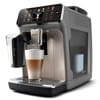
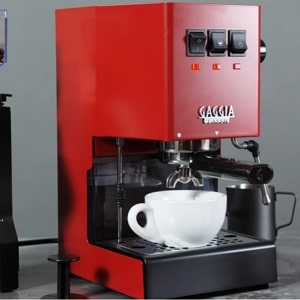
Gaggia Classic Evo Pro E24 (2024)
Iconic single-boiler value with the 2024 brass boiler breakthrough: tighter temps, better steam cadence, and decades of repairable life—if you master the craft.
Overview
The 2024 E24 swaps the Classic’s aluminum boiler for a heavier, lead-free brass unit with ~30% more capacity. Result: tighter extraction temps, steadier steam cadence, and fewer heating cycles. It still demands skill—no PID, manual temperature surfing, and single-boiler sequencing—but rewards you with café-grade shots, real microfoam, and a platform that lasts decades and upgrades well.
Pros
- Brass boiler (E24) brings real thermal stability
- Commercial 58 mm group & portafilter with 3-way solenoid
- Factory 9-bar OPV in North America (no spring mod needed)
- Serviceable, moddable, and built to last
- Great value under $500–$550 when on sale
Cons
- No PID—temperature surfing required for consistency
- Small boiler limits consecutive milk drinks
- Sparse included accessories; plan to buy a proper tamper, basket, and cleaning supplies
- EU/AU units may still need OPV tweak to 9 bar
Features
- Boiler: lead-free brass, ~109 ml (E24); ~100 ml aluminum on earlier Evo Pro
- Group: solid brass, 58 mm commercial standard
- Controls: three rocker switches (power/brew/steam), indicator LEDs
- Pressure: Ulka vibration pump; 9-bar OPV (NA factory calibrated)
- Valves: 3-way solenoid for dry pucks and proper backflush
- Steam: commercial wand with 2-hole tip, 360° rotation
- Tank: 2.1 L removable reservoir
- Power: ~1350–1370 W element
- Dimensions/weight: 8 W × 9.5 D × 14.2 H in; ~20 lb
- Warm-up: ~71–90 s to brew-ready; ~10–15 min for full thermal soak
Pricing
- US: typically $450–$550; sales often $403–$499
- Retail variants: Classic Evo Pro (aluminum boiler) vs Classic Pro E24 (brass boiler)
- Colorways can add ~$50; limited editions vary by market
- Bundles with quality grinders offer 10–15% savings—worth it for first-time buyers
FAQs
- Does it have a PID?
- No. Learn temperature surfing or add a PID kit later.
- Is the OPV set to 9 bar?
- Yes for North America. EU/AU units may need manual adjustment.
- What’s new in E24?
- The brass boiler: higher mass, tighter temps, better steam cadence, and “boilergate” resolved.
- Warm-up time?
- About 1–1.5 minutes to pull; allow 10–15 minutes to heat-soak the group and portafilter.
- Can it steam multiple lattes?
- Fine for 1–2 small cappuccinos; expect recovery time for larger volumes.
Who It Is For
- Enthusiasts who want a durable, repairable 58 mm platform under $600
- Home baristas willing to learn temperature surfing or install a PID
- Users pulling 1–2 drinks at a time with occasional milk
Who Should Avoid It
- Plug-and-play shoppers wanting automation and built-in shot timers
- Households making 3+ milk drinks back-to-back
- Buyers who don’t want to manage water, cleaning, or routine maintenance
Variants & buying notes
- E24 (2024): brass boiler. Recommended.
- Evo Pro (2023): aluminum boiler—verify replacement if affected by coating issue.
- 2019 Classic Pro: great used value; needs 9-bar OPV/PID mods to match E24 experience.
- Confirm regional voltage/plug and OPV setting. Colors and promos rotate by market.
The Gaggia Classic Evo Pro E24 (2024) represents the latest evolution of home espresso's most iconic machine, introducing a brass boiler with 30% more capacity that finally addresses temperature stability concerns that have plagued the Classic line for decades. At $450-550, this Italian-made single boiler machine with commercial-grade 58mm components offers unmatched value for home baristas willing to master manual techniques. The 2024 E24 version achieves temperature variance of just 3°F during extraction—rivaling machines costing three to four times as much—while maintaining the repairability and modding potential that has sustained the Classic's 30-year legacy.
But this isn't a plug-and-play appliance. The Gaggia demands skill development, temperature surfing techniques, and patience. First-time users report frustrating sour shots until mastering proper technique. Yet enthusiasts who invest the time consistently produce café-quality espresso at home for a decade or longer. The question isn't whether the Classic Evo makes excellent coffee—it absolutely does—but whether you're the right user for this demanding, rewarding machine.
The brass boiler breakthrough changes everything
The most significant upgrade in the Classic line's history arrived quietly in October 2024. Gaggia replaced the problematic aluminum boiler with a lead-free brass design weighing 1,330g (versus 523g for aluminum), providing dramatically improved thermal mass and heat retention. This isn't merely incremental—the brass boiler fundamentally transforms the machine's performance.
Temperature testing reveals the impact. The E24 maintains extraction temperatures between 199.6°F and 202°F throughout a 30-second shot, with the heating element cycling just 4 times per 300 seconds compared to 7 cycles in aluminum boiler models. That's 47% better thermal stability, approaching consistency typically found in dual boiler prosumer machines. For a single boiler machine without PID temperature control, this performance is exceptional.
The brass boiler also delivers approximately 25% more steam capacity, though real-world testing shows both aluminum and brass versions steam 5 oz of milk in about 24 seconds. The larger internal volume (109ml versus 100ml operating capacity) means less recovery time between consecutive drinks and more consistent performance when making back-to-back cappuccinos. Users report the E24 handles two to three milk drinks comfortably before requiring recovery time, whereas aluminum boiler versions struggled after two drinks.
This upgrade comes after the "boilergate" scandal that plagued 2023 Evo Pro models. Early 2023 units featured a non-stick coating on aluminum boilers that flaked into water and espresso—a significant manufacturing defect affecting machines from production weeks 19-44. Gaggia responded with free replacements and pivoted to the brass boiler design that resolves the issue permanently while delivering superior performance. If purchasing a used or discounted 2023 model, verify the boiler has been replaced.
What you get for $450-550 depends on version and retailer
The Gaggia Classic Evo exists in multiple configurations with confusing naming. The Classic Evo Pro (2023-2024) features an aluminum boiler at $449-499, while the Classic Pro E24 (2024) adds the brass boiler at $499-549. Both represent evolutions of the Classic Pro 2019, which remains available used for $300-400.
North American models ship with a factory-calibrated 9-bar OPV (over-pressure valve)—the single most impactful upgrade from previous generations that shipped at 12-15 bar. European and Australian models still require manual OPV adjustment or spring replacement. This 9-bar pressure delivers proper extraction; higher pressures cause bitter, over-extracted shots with traditional baskets. The inclusion of proper pressure calibration eliminates a $20 modification that virtually all Classic owners previously performed.
Price varies by retailer and colorway. Amazon lists the brushed stainless steel model at $451-499 with occasional sales dropping to $403. Specialty retailer Whole Latte Love charges $499-549 but includes a 2-year parts and labor warranty (versus 1 year elsewhere), free Barista Assist setup service, and expert technical support—adding roughly $100 in value. Home Coffee Solutions in Canada prices at $649 CAD ($480 USD) across multiple colorways.
Five color options exist beyond brushed stainless: Thunder Black, Polar White, Cherry Red, Industrial Grey, and limited edition colors varying by market. Colors typically command a $50 premium, though Amazon's Gold 85th Anniversary edition anomalously sells for $100 less than standard colors. Best Buy no longer stocks the Classic line, and Williams Sonoma doesn't carry it prominently.
Bundle deals offer 10-15% savings. Home Coffee Solutions packages the E24 with Eureka Mignon grinders ($1,083-1,178 CAD for machine plus grinder) or the DF64 Gen 2 ($1,124 CAD). For new buyers, these bundles make sense—the Classic requires a quality grinder, and pairing decisions matter significantly.
In the box you'll find the machine, a commercial-style 58mm stainless steel portafilter weighing 1 lb, three filter baskets (7g single, 14g double, 14g pressurized), a coffee scoop, and a plastic tamper. What's missing is notable: no backflush disc, no cleaning supplies, no milk pitcher, and the included tamper is universally derided as "painful to use." Budget an additional $50-100 for essential accessories.
Commercial-grade components in a compact package
The Classic Evo measures just 8 inches wide, 14.2 inches tall, and 9.5 inches deep, weighing 20 lbs—a compact footprint that fits small apartment kitchens while maintaining commercial durability. The one-piece 17-gauge brushed stainless steel body feels substantial, though the plastic drip tray and water reservoir contrast with the metal construction.
Inside sits a 100ml aluminum boiler (Evo Pro) or 109ml brass boiler (E24), heated by a 1,350-1,370W embedded heating element. The boiler connects to a solid brass brew group upgraded from chrome-plated brass in earlier models. This commercial-grade group head retains heat better and won't chip or flake like chrome plating. A polished steel dispersion plate (upgraded from aluminum in 2019) further improves thermal stability and water distribution.
The Italian-made Ulka vibratory pump generates the 9 bars of pressure needed for proper extraction. A 3-way solenoid valve immediately relieves pressure after shots, producing dry pucks that knock out cleanly—a feature missing in cheaper single boiler machines. This valve also enables backflushing for maintenance.
The commercial-style stainless steel steam wand features a 2-hole tip, 360-degree rotation, and rubberized grip. It's capable of producing microfoam suitable for latte art, though the stock tip's 2-hole design splits steam flow. Many users upgrade to a single-hole tip ($15-20) for more concentrated steam power.
Water capacity sits at 2.1 liters in a removable BPA-free reservoir—enough for 8-10 double shots before refilling. The reservoir loads from the top/front, and water level visibility through the smoked plastic could be better. Cup clearance under the group measures just 3.25 inches, limiting cup size and preventing scale placement under the portafilter with the drip tray installed.
Control is delightfully simple: three rocker switches for power, brew, and steam, each with LED indicators. No digital displays, no programming menus, no volumetric controls—just tactile mechanical switches that convey a commercial, utilitarian aesthetic. This simplicity aids repairability but eliminates modern conveniences like shot timers or temperature displays.
Temperature surfing transforms mediocre shots into excellent espresso
The Classic Evo's greatest strength and most frustrating weakness is the same feature: no PID temperature control. Instead, a simple bi-metal thermostat cycles the heating element when temperature drifts beyond range. This creates temperature swings of 7-10°F in aluminum boiler models or 3°F in the E24 brass boiler—significant variation that dramatically affects extraction.
Pull a shot at the wrong moment in the heating cycle and you'll extract sour, under-developed espresso at 89°C. Wait for the precise moment when the boiler peaks and you'll achieve balanced, sweet extraction at 95°C. This technique—called temperature surfing—is essential for consistency.
The basic method: Flush water through the group head until the brew light turns off (indicating the boiler has cooled below threshold). Grind, dose, and tamp while the boiler reheats. The moment the brew light turns back on, immediately lock the portafilter and pull your shot. This timing ensures the boiler is at peak temperature when water contacts coffee.
Advanced users employ the steam boost technique: When the brew light turns on after heating, activate the steam switch for 5-7 seconds to superheat the boiler to approximately 105°C, then deactivate and immediately pull the shot. This produces extraction starting at 95°C (204°F) and declining to 91°C (196°F) by shot end—an ideal declining temperature profile.
Without temperature surfing, shots consistently pull sour as the boiler sits at the cool end of its range. User forums overflow with frustrated owners who didn't understand this requirement. "I struggled to get an average tasting shot on the Gaggia," one Home-Barista user reported. "Maybe one in ten was palatable." After learning proper technique, "two out of ten shots are very good, four or five are good."
The E24's brass boiler reduces but doesn't eliminate this requirement. With just 3°F variance versus 7°F, the brass boiler is far more forgiving. Shots pulled randomly throughout the heating cycle still produce acceptable results, though optimal timing still delivers better espresso. This makes the E24 significantly more user-friendly for beginners.
Heat-up time from cold start to brew ready takes 71-90 seconds, though full thermal stabilization requires 10-15 minutes with the portafilter locked in place. The brass group head and portafilter represent significant thermal mass that must reach temperature. Rushing this produces temperature instability. Smart users turn the machine on 15 minutes before brewing.
Transition time from brewing to steaming takes 35-50 seconds—faster than the Rancilio Silvia's 1.5 minutes but slower than thermoblock machines' near-instant transitions. For a single cappuccino, this workflow is manageable. For multiple drinks, the small boiler becomes limiting.
Proper grinder pairing determines success or frustration
The Classic Evo ships with no built-in grinder, and this machine exposes grinder quality brutally. Even at 9 bars, the Classic requires extremely fine espresso grind with precise adjustments. Blade grinders, inadequate burr grinders, or grinders with insufficient adjustment range will produce consistently poor results.
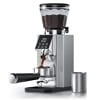
Budget tier ($150-250) grinders like the Baratza Encore ESP or Breville Smart Grinder Pro represent bare minimum capability. They'll work with pressurized baskets for beginners but struggle to achieve proper extraction with traditional baskets. Most users outgrow these within months, making them poor long-term investments for a $500 espresso machine.
Mid-tier ($300-500) is where pairing makes sense. The Eureka Mignon Specialita ($450-500) earns universal recommendation as the best value companion for the Classic. Its 55mm flat burrs, stepless micrometric adjustment, and quiet operation deliver consistent results. The timed dosing requires weighing afterward, but grind quality and adjustment precision enable proper dialing in. The slightly cheaper Mignon Facile ($350-400) offers similar performance without timed dosing.
The DF54 ($350-400) with 54mm flat burrs and single-dose design recently emerged as another excellent value option, while the Baratza Sette 270 ($400-450) with 270 grind settings suits those who prefer conical burrs and faster grinding. All three can achieve the fine, consistent grind the Classic demands.
Premium tier ($600-900) includes the DF64 Gen 2 ($600-700), which many consider the last grinder you'll ever need. Its 64mm flat burrs, zero retention, and stepless adjustment will extract full potential from the Classic and remain capable if you eventually upgrade to a $2,000+ machine. The Niche Zero ($700-800) offers similar future-proofing with 63mm conical burrs and cult-following consistency.
Manual grinders like the Timemore Chestnut X ($200) or Commandante C40 ($250-300) can produce excellent results but require 1-2 minutes of hand-grinding per shot. For single daily shots this works; for multiple drinks it becomes tedious.
The fundamental truth: spending $500 on the Classic Evo with a $150 grinder produces worse espresso than spending $300 on a Breville Bambino Plus with a $350 grinder. Grinder quality matters more than machine quality at this price point. Budget accordingly.
Setup requires patience but operation becomes intuitive
Unboxing reveals sparse instructions—a picture-book style manual with minimal text. The critical 3-way solenoid discharge tube requires manual installation, wedging into a holder under the machine with some force, but the manual doesn't explain this clearly. First-time setup often takes 30+ minutes as users puzzle through the process.
Initial cleaning and priming is essential. Fill the water reservoir to maximum and run the entire tank through the system, alternating between the steam wand and brew head. This purges manufacturing residues and air pockets. Skip this and you'll experience sputtering, inconsistent flow, and off flavors in early shots.
For the first shot, dose 18g of freshly ground coffee into the double basket. Distribute evenly using WDT (Weiss Distribution Technique)—a simple tool with thin needles that breaks up clumps and creates even density. Tamp firmly and level. Lock the portafilter into the group head—this requires significant force and can jar the entire machine. The tight connection is intentional for proper sealing but feels ungainly.
Temperature surf as described earlier, then press the brew button. Target 36g output in 25-30 seconds for a standard 1:2 ratio. Watch as extraction begins with a thin stream, ideally widening to mouse tail consistency. Thick crema with fine bubbles indicates proper extraction. Stop the shot manually when reaching target weight or when the stream blondes excessively.
First attempts often disappoint. Grind too coarse and shots pull in 15 seconds, producing sour, thin espresso. Grind too fine and pressure stalls, yielding bitter, over-extracted results. The Classic offers no shot timer, no pressure gauge, no volumetric dosing—just you, the coffee, and mechanical switches. This forces engagement with the process.
After 2-3 days of dialing in with proper technique, most users achieve consistently good shots. The learning curve is real but surmountable. One Home-Barista user noted that finding the "sweet spot at 16g" (not the commonly assumed 18g) for stock baskets transformed results. Small adjustments matter significantly.
The 3-way solenoid produces satisfyingly dry pucks that knock out cleanly into a knock box. No messy portafilter cleanup, no coffee sludge—just a dry puck that drops out easily. This feature alone elevates the workflow above budget single boiler machines.
Steaming milk reveals both capability and limitations
The commercial-style steam wand produces genuine microfoam suitable for latte art. Proper technique—positioning the tip just below milk surface, creating a rolling whirlpool—generates silky, paint-like texture that pours beautiful rosettas and hearts. Multiple reviewers achieved near-perfect microfoam on first attempts, indicating the wand design works well.
Performance timing depends on technique. The conservative method waits for the steam ready light (40-50 seconds after activating steam mode), then steams 6 oz of milk in 24 seconds from 42°F to 140-150°F. Total brew-to-steamed-milk time approaches 90 seconds for a single cappuccino.
Advanced users cut this dramatically by not waiting for the ready light. Activate steam mode, flush the wand, count 15-20 seconds, then begin steaming. The boiler reaches adequate steam pressure before the light confirms ready status. This technique steams the same 6 oz of milk in roughly 30 seconds total from brew completion—competitive with thermoblock machines.
The limitation emerges with multiple drinks. The small boiler—100ml in aluminum models, 109ml in the E24—runs out of steam quickly when steaming larger volumes. Attempting to steam more than 14 oz of milk depletes the boiler, forcing a recovery wait of 1-2 minutes. For two small cappuccinos this works fine; for two large lattes it struggles. The Rancilio Silvia's 300ml boiler dominates here, steaming continuously for much larger volumes.
Many users upgrade the stock 2-hole steam tip to a single-hole design ($15-20) for more concentrated steam power. This modification is simple (screw-on replacement) and noticeably improves steaming speed and texture control. The stock tip works adequately but splits steam flow less efficiently.
Workflow matters significantly. The Classic's single boiler means you cannot brew and steam simultaneously. Pull espresso first, then wait 35-50 seconds for steam mode. Or steam first, then wait longer as the boiler cools for brewing. The Breville Bambino Plus's thermoblock eliminates these transitions; dual boiler machines operate both functions simultaneously. Single boiler workflow requires planning and patience.
Extraction quality rivals machines costing three times more
When properly dialed in with quality beans and grinder, the Classic Evo produces exceptional espresso. Medium and dark roasts excel, delivering thick crema with fine bubbles, complex chocolate and caramel notes, honeyed aroma, and smooth mouthfeel. The 9-bar pressure and 58mm commercial portafilter enable even extraction and proper channeling resistance.
Light roasts prove more challenging. The temperature range (199-202°F peak in E24) sits at the lower end for optimal light roast extraction. Users report thinner body and muted acidity compared to medium roasts. Compensations help: grind slightly finer, dose higher (19-20g), extend ratios to 1:2.5 or 1:3. Results are good but not exceptional—this machine thrives with medium to medium-dark roasts.
Testing data reveals some performance concerns. Tech Gear Lab measured extraction yields of 16.6-17%, below the industry standard 18-22%. They noted pressure consistency issues during shots and gave the machine below-average ratings for extraction performance. However, these results contrast with user reports of excellent shots, suggesting technique dependency. Skilled users clearly achieve better results than standardized testing protocols.
The E24's temperature stability produces noticeably more consistent shots. CoffeeGeek's testing showed in-puck extraction temperatures of 199.6°F rising to just over 202°F, then settling at 200°F by shot end—just 2.4°F variation during a 30-second extraction. This approaches the Profitec MOVE dual boiler's 2°F variance and exceeds many machines costing $1,000-1,500.
Back-to-back shots reveal limitations. The first shot is typically excellent. The second shot, pulled immediately after, shows declining quality as the small boiler struggles to recover temperature. Wait 45-60 seconds between shots and the second matches the first. This isn't a machine for entertaining crowds; it's ideal for 1-2 drinks at a time.
Maintenance requires commitment but extends lifespan dramatically
The Classic Evo demands regular maintenance for longevity. Daily backflushing with water—inserting a blind basket, running the brew button 5-10 seconds, repeating 4-5 times—flushes residue from the group head and solenoid valve. Weekly backflushing with Urnex Cafiza ($10-15) or Puly Caff cleaner deeply cleans the brewing path.
Steam wand cleaning is essential after every use. Purge steam through the wand, wipe with a damp cloth, purge again. Neglect this and milk residue hardens inside the wand, degrading steam performance and creating hygiene issues. The commercial wand disassembles easily for periodic deep cleaning.
Monthly deep cleaning involves removing the shower screen and dispersion plate, soaking in Cafiza solution, scrubbing thoroughly, and reassembling. This prevents coffee oil buildup that causes stale, rancid flavors to contaminate fresh espresso.
Descaling every 2-3 months prevents scale buildup in the boiler and steam system. Critical: never descale through the brew head. Run descaling solution only through the steam wand. Running it through the group risks clogging the 3-way solenoid valve with loosened scale, requiring disassembly to fix. This warning appears frequently in user forums as a common mistake.
Recommended descalers include official Gaggia Decalcifier ($12-15), Durgol Swiss Espresso ($15-20), or DIY citric acid solution (2 tablespoons per quart, $0.50 per descale). The citric acid concentration is safe for aluminum and brass boilers and receives strong community endorsement for effectiveness.
Water quality dramatically affects maintenance needs. Hard water regions require monthly descaling; soft water or filtered water extends to 3-6 months. BWT Bestsave filters ($25-35, lasting ~50 liters) or Domfilter/CTU water filters (bulk pack $25-40) installed in the water reservoir prevent scale at the source. Many users employ Brita pitcher filtration plus an in-tank filter for maximum protection.
Group gasket replacement at 6-12 month intervals ($8-18) is inevitable. Signs of wear include leaking around the portafilter, difficulty locking, and coffee grounds on the gasket rim after removal. Silicone gaskets ($12-18) outlast standard rubber and stay pliable longer. A complete service kit ($25-35) includes the group gasket, various o-rings, boiler gasket, and steam valve seals—budget one annually for heavy use.
Total annual maintenance costs run $60-90 for recommended supplies and gasket replacement, or as low as $30-50 for minimal maintenance with DIY descaling. This modest investment extends the machine's lifespan to 10-20+ years. Multiple users report machines from the 1990s still operating perfectly, and the simple mechanical design ensures continued parts availability and serviceability.
The modification ecosystem transforms capability
The Classic line's greatest asset may be its 30+ years of community-developed modifications. These machines are among the most moddable prosumer espresso makers, with extensive documentation, readily available parts, and active forums supporting upgrades.
The 9-bar OPV spring modification ($10-20, 15-30 minutes) historically ranked as the highest priority upgrade, reducing factory pressure from 12-15 bars to the optimal 9 bars. North American Evo models ship with this calibration from the factory, but European models and older Classics still benefit enormously. This single change eliminates channeling, reduces bitterness, and improves extraction consistency.
PID temperature controller installation ($120-200, 1.5-3 hours) represents the most impactful upgrade, providing ±1-2°F temperature accuracy versus the stock thermostat's ±7-10°F swings. PIDs eliminate temperature surfing entirely, enable precise temperature adjustment for different roast levels, and often include steam temperature control and pre-infusion capability. Top vendors include Shades of Coffee (UK, £115-140), Coffee Sensor (EU, €110-145), Auber Instruments (USA, $149-190), and various eBay sellers.
Modern PID kits arrive pre-wired with connectors requiring no soldering, mounting in external TopBox enclosures that sit elegantly atop the machine or side-mounted aluminum boxes for clean aesthetics. Installation is reversible (no permanent modifications) but voids warranty. User reports consistently describe PID installation as transformative: "Huge improvement in consistency," "approaches quality of $1,000-2,000 machines."
Flow control/dimmer modifications ($35-50 standalone, often bundled with PIDs) add pump speed control, enabling manual pre-infusion and pressure profiling. This unlocks advanced techniques like long pre-infusion to prevent channeling or pressure ramping for complex flavor development.
Brew pressure gauge installation ($30-60) provides visual feedback during extraction, essential for verifying OPV calibration and learning pressure profiling. Gauges mount on portafilters temporarily or install permanently with adapters.
Precision filter baskets from IMS ($20-30) or VST ($25-35) replace stock baskets with precision-drilled, scientifically designed hole patterns. These baskets deliver dramatically more even extraction, reducing channeling and improving shot consistency. The IMS Competition 18g ridgeless basket ($22-28) earns universal recommendation as the best value upgrade; VST baskets provide even more precision but demand exceptional grinder quality.
IMS precision shower screens ($18-30) improve water distribution across the coffee puck. The GA200NT Nanotech-coated version ($22-30) resists corrosion and cleans more easily than stock screens.
A single-hole steam tip ($15-25) concentrates steam power for faster, more controlled milk steaming. Simple screw-on installation takes 30 seconds.
Complete upgrade packages range from $50-80 for essentials (OPV spring, IMS basket, shower screen, cleaning supplies) to $250-350 for enthusiast builds (PID, pressure gauge, OPV, precision baskets) to $450-550 for ultimate setups (full PID/dimmer/gauge TopBox system, all accessories, bottomless portafilter). At the high end you've invested $500 machine plus $550 modifications—approaching $1,000 total but achieving performance rivaling machines costing $2,000-2,500.
The Gaggiuino project pushes this further, converting the Classic into a pressure profiling machine with smartphone control, shot timers, and advanced features. This Arduino-based modification ($200-300 in parts, significant technical skill required) exemplifies the depth of the modding ecosystem.
Aftermarket support is exceptional. Shades of Coffee (UK), Whole Latte Love (USA), Coffee Sensor (EU), Papel Espresso, and numerous other vendors supply compatible parts. The 30-year history ensures continued parts availability even as models evolve.
How the Classic Evo compares to key competitors
Against the Rancilio Silvia ($850-995), the Gaggia offers 40-50% cost savings but notable compromises. The Silvia's 300ml boiler versus 100-109ml enables much longer steaming sessions and better handles multiple consecutive drinks. Build quality heavily favors the Silvia—50% heavier construction, superior metal drip tray, better portafilter handle, steam wand on ball joint. Both require temperature surfing (neither includes PID), but the Silvia's larger thermal mass provides greater stability once at temperature.
Espresso quality between the two is surprisingly close with quality grinders and precision baskets. Both employ 58mm commercial groups at 9 bars. The Silvia's stock baskets are higher quality, but upgraded baskets on the Gaggia close this gap. The decisive factors: If you regularly make 3+ milk drinks, the Silvia's steaming justifies the premium. For 1-2 drinks at a time, the Gaggia's 35-second brew-to-steam transition versus Silvia's 1.5 minutes actually favors the cheaper machine.
Verdict: Choose the Silvia if budget allows and steaming power matters; choose the Gaggia to invest savings in a better grinder.
Against the Breville Bambino Plus ($499), these machines target different philosophies. The Bambino Plus offers 3-second heat-up via ThermoJet thermoblock, automatic milk frothing with temperature sensing, PID temperature control, and pre-infusion—all features the Gaggia lacks. Operation is dramatically simpler with volumetric shot programming and modern automation.
The Classic Evo counters with a 58mm commercial portafilter versus 54mm (better extraction evenness, far more accessory compatibility), true boiler versus thermoblock (superior thermal stability), commercial-grade durability (expected 20+ year lifespan versus 5-10 years), and extensive modifiability impossible with the Bambino's integrated electronics.
Espresso quality: The Bambino Plus delivers 85% of the Gaggia's potential with 50% of the work. More consistent for beginners, higher ceiling for experts with the Gaggia. Steaming clearly favors the Bambino Plus—automatic frothing produces perfect microfoam consistency without technique.
Verdict: Choose the Bambino Plus as a first machine or for convenience; choose the Gaggia to learn barista craft and build long-term skills with a tool that lasts decades.
Against the Gaggia Classic Pro 2019 ($350-450 used), the Evo represents evolutionary refinement. Changes include 9-bar OPV from factory (North America), stainless steel portafilter replacing chrome-plated brass, solid brass group head versus chrome-plated, improved aesthetics, and quieter operation. The E24 adds the brass boiler breakthrough.
Is it worth upgrading from a 2019 Pro? Not if you've already modded with 9-bar OPV and PID. The improvements are incremental for existing owners. For new buyers, the E24's brass boiler and factory pressure calibration justify the premium over used 2019 models unless saving $150-200.
Real user experiences reveal both devotion and frustration
Owner satisfaction splits distinctly into camps. Experienced enthusiasts rate the machine 8-9/10, praising commercial-grade construction, exceptional value, modding potential, and shot quality achievable with proper technique. "When paired with a good grinder, this is still an almost impossible offering to beat," summarizes the enthusiast consensus.
Beginners and convenience-seekers rate it 5-6/10, frustrated by the learning curve, temperature surfing requirement, and lack of modern features. "I struggled to get an average tasting shot on the Gaggia," one user reported. "Maybe one in ten was palatable." Another noted: "It's almost 2024, and we are used to advanced technology in our kitchens. Many electric kettles have PID technology now."
Common praise themes: Build quality ("built like a tank"), longevity ("machines from the 1990s still working"), steam wand capability ("produces café-quality microfoam"), 58mm compatibility ("huge accessory ecosystem"), repairability ("easy to open up, work on, service"), and value ("best under $500-1000").
Common complaint themes: No PID ("should be standard in 2024"), terrible included accessories ("crappy plastic tamp," "no cleaning tools for $500"), small boiler capacity ("struggles with large milk drinks"), steep learning curve ("temperature surfing workflow too cumbersome"), low cup clearance ("drip tray distance too shallow"), and single boiler workflow ("almost impossible to make drinks for multiple people simultaneously").
The boilergate scandal dominates 2023 reviews. Users reported black flakes in water output from coating delamination, raising legitimate quality control concerns. Gaggia's response—free replacements and redesign—addressed individual units but damaged brand trust. "Proudly made in Italy they said," one frustrated owner commented. The 2024 E24 brass boiler resolves this permanently, but potential buyers should verify any 2023 models have received replacement boilers.
Long-term ownership reports paint a different picture than initial frustrations. Users who invest 2-3 weeks mastering technique consistently report satisfaction scores of 8-9/10 after 6+ months. "God shots are achievable" becomes the refrain. The machine rewards patience and skill development, frustrating those seeking immediate results.
Reliability proves exceptional. "I've seen reports of these things lasting up to 15 years," Tom's Guide notes. Home-Barista forums feature users running original Classics from the 1990s. The simple mechanical design, commercial components, and user-serviceable construction enable decade-long lifespans with proper maintenance. Group gaskets need replacement, but the pump, solenoid, and boiler endure with descaling and care.
Critical questions answered for prospective buyers
Do I need to modify it? Not required—the machine makes excellent espresso stock, especially the E24 brass boiler version with 9-bar OPV. But PID installation ($120-200) dramatically improves consistency by eliminating temperature surfing. Most serious users eventually install PIDs, better baskets, and other upgrades. Budget for at least the essential trio: proper tamper ($20-30), IMS basket ($25), cleaning supplies ($20).
What dose should I use? Despite marketing for 18g, many users find 16-17g works better with stock baskets. Use the "nickel test": tamp, insert portafilter, remove and check for slight screw indentation on the puck. This indicates proper headspace without the puck touching the shower screen.
Why are my shots pulling too fast? Grind finer. Even at fine espresso settings, the Classic requires finer grind than expected. If shots pull in under 20 seconds, you're still too coarse. Target 25-30 seconds for 1:2 ratio.
Why are my shots sour? Temperature surfing is essential. Follow the technique: flush until light off, wait for light on, pull immediately. The brass boiler E24 reduces but doesn't eliminate this requirement. Alternatively, install a PID.
Can I steam large lattes? Not ideal. The 100-109ml boiler handles two small cappuccinos (6 oz milk each) but struggles with jugs over 14 oz. Consider the Rancilio Silvia's 300ml boiler for high milk volume.
How important is water quality? Critical. Hard water causes scale buildup that clogs the solenoid valve and boiler. Use filtered water (Brita pitcher minimum) or install in-tank filters (BWT Bestsave, Domfilter). Descale every 2-3 months religiously.
Which version should I buy? The 2024 Classic Pro E24 with brass boiler ($499-549) is the clear recommendation. The brass boiler's thermal stability and steam capacity justify the premium over aluminum boiler models. Avoid 2023 Evo Pro unless confirmed the boiler has been replaced. The 2019 Classic Pro remains excellent value used if found under $350.
The final calculation: value, capability, and longevity
At $499 for the E24 or $449 for the aluminum boiler Evo Pro, the Gaggia Classic delivers exceptional value—commercial-grade 58mm espresso components at entry prosumer pricing. The brass boiler E24 achieves temperature stability rivaling dual boiler machines costing $1,500-2,000, produces café-quality espresso and microfoam, and will operate reliably for 15-20+ years with maintenance costing $60-90 annually.
But this value proposition requires your contribution. Learn temperature surfing or install a PID. Master puck preparation and distribution. Invest in a quality grinder ($300-600 to match machine capability). Commit to maintenance schedules. The Classic isn't a consumer appliance—it's a prosumer tool that rewards skill development and punishes neglect or unrealistic expectations.
The ideal owner is an enthusiast or aspiring home barista willing to invest time learning proper technique, making 1-2 drinks at a time, interested in modification potential, and valuing equipment longevity and repairability over automation and convenience. This person will achieve extraordinary results at remarkable value, potentially never needing another espresso machine.
The wrong owner wants plug-and-play operation, consistent results immediately without technique mastery, ability to make 3+ drinks back-to-back, or modern features like PID and pressure profiling without modification. This person will find the Classic frustrating and should consider the Breville Bambino Plus for convenience or budget up to dual boiler territory.
For the right user, the Gaggia Classic Evo Pro E24 represents one of home espresso's rare true values—a machine that lasts decades, improves with modest upgrades, and produces espresso that rivals cafés. The community consensus remains accurate: "Even when people double their budget to $1,000, they still generally end up going with this machine."
Conclusion: Buy the brass boiler E24 and budget for grinder upgrades
The Gaggia Classic Evo Pro E24 earns strong recommendation for home baristas willing to master manual espresso technique. The brass boiler's dramatic thermal improvement addresses the Classic line's historical weakness, the 9-bar OPV eliminates a common modification, and Italian commercial-grade construction ensures decades of reliable service.
Purchase through Whole Latte Love ($499-549) for the 2-year warranty and expert support, or watch Amazon for sales dropping to $403-450. Prioritize the E24 brass boiler version for $50 more than aluminum models—the stability and steam improvements justify the premium. Pair with at minimum a Eureka Mignon Specialita grinder ($450) or DF54 ($350-400), and budget $75-150 for essential accessories: proper tamper, IMS precision basket, cleaning supplies, milk pitcher.
Accept the learning curve as part of the journey. Your first shots will likely disappoint. By week two, you'll pull consistently good espresso. After a month, you'll understand why this machine has sustained a cult following for three decades. The Classic Evo doesn't make espresso easy—it makes excellent espresso possible.