

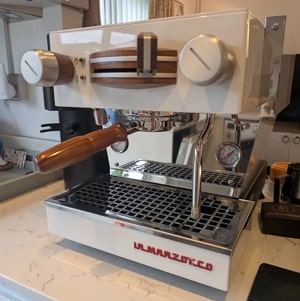
US list ~$4,500. Mini ~$6,600 for more steam headroom.
La Marzocco Linea Micra
Café-level consistency in a compact, fast-heating dual-boiler with rotary-quiet shots and app control. Built for everyday home service and small households.
Overview
The Linea Micra is a compact dual-boiler with a real rotary pump, ~5-minute warm-up, strong steam for its size, and LM Home app control for temperature, scheduling, and pre-brew. It suits one to four milk drinks per session and frequent espresso-only shots. For larger steam demand, plumb-in builds, and maximum resale pull, the Linea Mini remains the step-up.
Pros
- ~5-minute heat-up to espresso temperature
- Dual boilers with quiet internal rotary pump
- LM Home app: scheduling and pre-brew control
- Clean, predictable workflow and recovery
- Tank setup with optional plumb-in kit
Cons
- Tight cup clearance with a scale/bottomless PF
- Smaller steam boiler than the Mini
- Reservoir must be firmly seated to avoid false low-water alerts
- Drip tray can splash if you knock aggressively
- Premium price
Features
- Dual boilers (steam ~1.6 L; responsive brew boiler)
- Internal rotary pump for quiet, smooth pressure
- ~5-minute heat-up to espresso temperature
- LM Home app: temperature, scheduling, pre-brew
- Convertible portafilter; compact footprint
- Reservoir tank with optional plumb-in kit
- Footprint: 34 H × 29 W × 39 D cm • ~19 kg
- Ideal session size: 1–4 milk drinks; frequent espresso-only shots
Pricing
- US list: ~$4,500 (Micra)
- US list: ~$6,600 (Linea Mini for more steam headroom)
- Resale remains strong with documented care and proper water
FAQs
- Is the Micra dual boiler with a rotary pump?
- Yes—dual boilers and an internal rotary pump.
- Warm-up time?
- About five minutes to espresso temperature.
- Plumb-in capable?
- Yes—optional plumb-in kit; tank by default.
- Mini or Micra?
- Micra for compact size and fast heat; Mini for larger steam boiler and more overhead on milk-heavy rounds.
Who It Is For
- Home baristas wanting LM cup quality, quick mornings, and a small footprint
- Sessions of 1–4 milk drinks; frequent espresso-only pulls
- Buyers who value quiet rotary operation and app scheduling
Who Should Avoid It
- Milk-heavy households needing long, back-to-back steam runs (Mini fits better)
- Users sensitive to tight cup clearance under the spouts
- Shoppers seeking lower price over rotary-quiet, compact dual-boiler performance
The Linea Micra delivers café-level consistency in a compact, fast-heating dual boiler package with a real rotary pump and app control. Warm-up is about five minutes. Steam is strong for its size. Workflow is clean and predictable. The machine favors everyday home use and small households. The Linea Mini remains the step-up for larger steam demand, plumb-in builds, and maximum resale pull.
If you want La Marzocco taste and repeatability without committing to the Mini’s size and price, the Micra is the best compact prosumer LM today.
TL;DR: Linea Micra
Who it’s for: home baristas who want La Marzocco cup quality, rock-solid temperature stability, quick morning shots, and a smaller footprint. It suits one to four milk drinks per session and frequent espresso-only shots.
- Boilers: dual. Steam boiler about 1.6 L. Brew boiler small and responsive.
- Pump: internal rotary pump.
- Footprint: 34 cm H × 29 cm W × 39 cm D, 19 kg.
- Heat-up time: about 5 minutes.
- Price band (US): Micra list about $4,500. Mini list about $6,600.
Linea Micra vs Linea: Key Differences
Build & Form Factor - Micra is the smallest Linea form, Mini is larger for steam headroom, Classic is full commercial size.
Micra shrinks the Linea silhouette to a compact 12 × 11.5 × 15.5 in class. It weighs about 42 lb with a 2 L internal reservoir.
Linea Mini is bigger and heavier at roughly 15 × 14.2 × 21.3 in, built for extended steaming.
Linea Classic is a commercial chassis that starts at about 20.5 × 20 × 23 in for the 1-group and scales up from there.
Boiler & Pump System - Micra and Mini use dual boilers and rotary pumps with PID, Classic uses larger dual boilers and a commercial rotary system.
Micra and Mini are both dual-boiler, home-focused machines with PID control. Micra uses an internal rotary vane pump. Mini also ships with a self-contained rotary system. Classic uses a true commercial rotary pump and large dual boilers.
Capacities
- Micra steam boiler about 1.6 L.
- Mini steam boiler about 3 L.
- Classic 1-group about 3.4 L coffee and 7 L steam.
Performance & Workflow - Micra heats in about five minutes, Mini takes longer and out-steams for back-to-back milk, Classic out-steams both.
Micra warms in about five minutes. Mini needs longer to equilibrate, typically around ten minutes.
Micra’s steam is strong for a compact boiler, but the Mini’s larger steam boiler provides higher overhead for back-to-back lattes. Classic is built for service-bar duty and will out-steam both.
Noise profile on Micra is quiet for home thanks to the rotary pump. Mini is similarly quiet. Classic is quiet when installed with proper line isolation.
Controls & Features - Micra and Mini use the LM Home app for temperature, scheduling, and pre-brew; Mini adds BW support, Classic lacks a consumer app.
Micra and Mini both connect to the La Marzocco Home app for scheduling, temperature, and pre-brew control. When plumbed, both support mains-pressure pre-infusion through the app.
Micra ships tank-ready and can be converted to plumb-in with an official kit. Mini has broader app feature support including Brew-by-Weight compatibility on the 2023 refresh. Classic is manual or volumetric depending on configuration, with no consumer app layer.
Price, Warranty & Resale Value - Micra lists near $4,500 and Mini near $6,600, both hold value well; Classic is a commercial purchase with pro install costs.
LM home machines maintain strong resale value because of commercial DNA and parts availability. US list pricing currently sits near $4,500 for Micra and $6,600 for Mini. Classic is a commercial purchase with pro pricing and installation costs.
| Spec | Linea Micra | Linea Mini | Linea Classic (1-group) |
|---|---|---|---|
| Boiler type | Dual | Dual | Dual |
| Steam boiler | ~1.6 L | ~3 L | ~7 L |
| Pump | Internal rotary | Internal rotary | External rotary |
| Warm-up | ~5 min | ~10 min | Always-on commercial workflow |
| Reservoir | 2.0 L tank, optional plumb-in kit | 2.5 L tank, plumb-in kit | Plumb-in only |
| App/IoT | Yes, LM Home app | Yes, LM Home app, BW scales support | No consumer app |
| Footprint | 34 × 29 × 39 cm, 19 kg | ~38 × 36 × 54 cm, ~30 kg | ~52 × 50 × 58 cm, 40+ kg |
| Price (US list) | ~$4,500 | ~$6,600 | Commercial pricing |
| Ideal buyer | Space-limited home barista | Milk-heavy home household | Small café, cart, pop-up |
Is the Linea Micra Good for Home Use?
Here’s the day-to-day reality as it shows up in use, testing, and broad owner feedback. The Micra is a compact, quiet, dual-boiler machine that behaves like a small commercial box in a kitchen body. Most owners run trouble-free for long stretches. The few recurrent themes are predictable and easy to manage once you know where to look.
What typically goes right
- Heat-up and stability: the Micra reaches espresso temperature in about five minutes. Temperature and pressure are repeatable, so dialing in stays consistent from shot to shot.
- Noise and feel: the internal rotary pump keeps brew noise low. Startup fills are the loudest moment, which is normal.
- Cup quality: dual boilers, fast recovery, and a tidy hydraulic path give clean extractions with modern medium to light roasts. The steam circuit is strong for the size.
What owners actually run into
- Cup height and steam-wand ergonomics: clearance under the spouts is tight. Short cups and compact scales fit, tall mugs do not. The steam wand is short, which asks for deliberate pitcher angles on larger jugs. Pulling into a small pitcher and decanting solves both. Independent testing calls out the same cup-height tradeoff.
- Reservoir behavior: the tank is easy to remove and refill. It also needs a firm seat after cleaning. If pickup hoses kink or sit off-axis, the pump can sound harsh or show a false “needs water” behavior. Reseating the tank and hoses fixes it.
- Vacuum-breaker hiss or overnight water loss: a faint hiss during warm-up or cool-down is normal. Persistent hissing or measurable water drop in the reservoir overnight points to a tired anti-vacuum valve. The check is simple. Mark the reservoir at night, leave the machine idle, and compare in the morning. A drop suggests a slow steam leak at the valve that calls for inspection or replacement.
- Steam-boiler headroom: for several milk drinks in a row, pressure and pace are good yet not endless. The Mini has more steam overhead.
- Backflush discipline: if detergent backflushes are skipped, solenoids and passages collect coffee oils. You feel it as slow, sticky behavior after the shot or a lazy three-way vent. Regular cleaning prevents this. The manual’s cleaning order is your friend.
- Water mistakes: water that is too hard or too aggressive causes scale or corrosion. Balanced water protects parts and keeps steam performance crisp. La Marzocco publishes a clear spec that you can follow exactly.
Footprint, Power, and Kitchen Fit
Micra lands well on a standard 24-inch counter. The height plays nicely with most upper cabinets. Real life fit comes down to cup clearance once a scale and a bottomless portafilter join the party. You have roughly four inches under the spouts. That works beautifully for espresso cups on a compact scale. Tall cappuccino mugs will feel cramped. The clean workaround is simple. Pull into a small pitcher and decant, or choose lower profile cups and a slim scale.
The reservoir is generous for espresso-only days. It needs attention during milk-heavy sessions. Steaming several drinks back to back will drain the tank faster than you expect. Keep the reservoir full and seated, and consider the official plumb-in kit if refilling becomes a chore.
Electrical draw is typical for a dual-boiler home machine. The constraint in most kitchens is horizontal space, not amperage. Leave a few inches behind and above the machine so heat and steam have somewhere to go.
Common issues to watch: limited cup height with a scale in place, frequent refills for big latte days, and a drip tray that can splash if you knock the portafilter aggressively.
What you get day to day: the Micra sits comfortably on a standard 24-inch counter. Height is friendly to most upper cabinets. The body feels dense and planted, so it does not skitter when you lock in a portafilter. Cord length suits a typical outlet behind or just to the side.
Great:
- Small footprint that still feels like a real machine, not a toy.
- Under-cabinet installs are straightforward because the cup rail is low.
- The tank is easy to remove and refill. You stay at the counter rather than walking to a sink with the whole machine.
Good with a plan:
- Cup clearance is tight once you add a scale and a bottomless portafilter. Short espresso cups plus a compact scale keep the workflow smooth. Tall mugs belong to a small pitcher and decant routine.
- Depth is friendly, yet leave a couple inches behind and above for steam purges and general ventilation.
Annoyances to expect:
- The drip tray can splash if you knock the portafilter aggressively or purge a lot during dialing. A gentle knock and periodic emptying keeps things civilized.
- The reservoir must sit all the way down with the pickup hoses straight. If those hoses kink after cleaning, the first shot can sound harsh or the machine can think it is out of water. Reseating the tank fixes it.
- Big milk days drain the tank faster than you think. If that becomes your routine, the plumb-in kit earns its keep.
Power:
- A normal household circuit handles the machine without drama. The limiter in most kitchens is space and cup height, not amperage.
Noise & Heat Management
The rotary pump is quiet during shots. Most of the sound you hear happens at startup when the boilers top up. A soft hiss on warm-up or cool-down is the vacuum breaker doing its job. Surface heat rises into the cup tray, which is exactly where you want it. With normal clearance, cabinet temperature stays reasonable.
Potential annoyances: a sharp refill noise the first time the machine primes after cleaning the tank, and a faint rattle if the drip-tray grate is not seated squarely. Both are easy fixes. Reseat the tank until the pickup hoses are straight, and set the grate flat before locking the tray.
What you get day to day: the rotary pump runs quietly during shots. Startup refill is the loudest moment. It is brief and predictable. The chassis warms the cup tray nicely and does not bake your cabinets when you leave reasonable clearance.
Great:
- Brew noise is controlled. Early mornings stay peaceful.
- Panel warmth serves your cups rather than your kitchen air.
Good with a plan:
- A soft hiss at warm-up or cool-down is the vacuum breaker cycling. That is normal. You hear it more in a very quiet kitchen.
Annoyances to expect:
- A short, sharp refill noise the first time the boilers top up after you reseat the reservoir. It settles once the lines are fully primed.
- A faint rattle if the drip-tray grate is not seated square. Set the grate flat before you slide the tray in and it disappears.
Workflow: From Switch-On to First Shot
Plan for five minutes to espresso temperature. Give the group a short purge, heat the portafilter, then grind and prep. That tiny flush equalizes the first pull with the second. For a two-drink routine, ten minutes covers heat-up, two shots, milk, and a tidy cleanup.
Steam is strong for the machine’s size. It favors precise tip placement and deliberate pitcher movement. Small pitchers shine. Larger jugs work, yet you need more angle to keep the roll tight. After several milk drinks, you will feel the smaller steam boiler. Pressure recovers quickly, though not as effortlessly as the Mini.
What can go wrong: first-shot timing runs long without a quick purge, the steam tip can feel aggressive on very fresh milk if you start too close to the surface, and the drip tray can overflow if you forget how much purge water you have sent down during a dialing session.
What you get day to day: power on, wait for ready, purge the group for a couple of seconds, lock in, pull, steam, wipe, purge, done. Espresso temperature arrives in about five minutes. A two-drink routine, including milk and cleanup, easily fits into ten minutes once you know your grinder.
Great:
- Five-minute readiness changes your mornings. You do not need a long idle just to make a flat white and a single espresso.
- The pressure curve is smooth and forgiving. You taste the same profile across back-to-back pulls when your dose and grind are consistent.
- Steam feels lively and precise. Small pitchers shine.
Good with a plan:
- The first shot often behaves better after a tiny purge. Two to three seconds is enough. That warms and clears the path so the first and second shots match.
- Larger milk jugs work, yet you need deliberate tip placement and more pitcher angle to keep the roll tight. Shorter tips reward steady hands.
Annoyances to expect:
- After several milk drinks in a row, the smaller steam boiler shows its size. Pressure recovers fast, just not endlessly fast. If large rounds are common, the Mini gives you more overhead.
- Purge water fills the tray faster than you realize during long dialing sessions. Empty mid-session and you avoid a sloshy mess.
Investment Angle: Does It Hold Value?
La Marzocco home machines hold value when cared for. The Mini still commands the strongest resale gravity in the range. Micra sells well when you can hand the buyer a clean machine, clear water history, and a folder of receipts. Cosmetic condition helps, but documented care moves the price more than color.
Where owners get tripped up: soft water management. Scale or corrosion tells a story to any experienced buyer. Use balanced water, keep a log, and your exit later will be painless.
What you get day to day: the Micra is a premium tool that rewards care. It sits at a price where buyers expect maintenance discipline and clean internals when you resell. Keep records and you meet that expectation.
Great:
- Strong brand recognition and a healthy service network. That helps both uptime and resale.
- Parts and documentation are easy to find. Technicians know the platform.
Good with a plan:
- Condition and proof of care move the second-hand price more than color or accessories. Keep a simple log: water, cleanings, any replaced parts.
Annoyances to expect:
- The Mini still carries the strongest resale pull in the LM home line. If you value maximum exit value above compactness and heat-up speed, the Mini has the edge.
- App features are useful, but any connected feature relies on software support over the long haul. Plan to enjoy the app while the core machine remains a fully manual, serviceable tool without it.
Here is the realistic picture. No brochure speak. This is what living with a Linea Micra looks like on a normal kitchen counter, the good, the great, and the bits that can annoy.
The “not ideal” list in one place
- Cup clearance: tight with a scale and bottomless portafilter. Plan to decant or use shorter cups.
- Reservoir attention: frequent top-ups during milk-heavy sessions. Plumb-in solves it.
- Drip tray behavior: shallow and easy to splash when knocking out pucks or doing many purges.
- Startup sounds: brief refill surge and vacuum-breaker hiss are normal but can surprise the first week.
- Steam nuance: excellent power for its size, yet less overhead than the Mini during long latte runs.
- Fit finishing: tray grate needs to sit square, or you will hear a faint rattle.
This is the honest shape of daily life with the Micra. The cup quality is superb. The workflow is quick and tidy. The quirks are predictable and easy to manage once you know where they live.
Micra Setup & Dial-In: The Ultimate, No-Guesswork Guide
You want café results at home without drama. This guide walks you through every step: prep, setup, warm-up, dialing in, milk work, and maintenance that keeps the Linea Micra feeling brand-new in year four. The advice blends hands-on testing with the lived reality of owners who pull shots daily. The tone is calm and practical. The goal is a workflow you can repeat with your eyes barely open.
Outcome you should expect: a five-minute path to espresso temperature, clean extractions at a 1:2 ratio, quick microfoam for one or two milk drinks, and a tidy counter with minimal splashing.
Before You Start: Space, Water, Tools
Bench setup checklist
- Stable counter, cloth within reach, bin nearby, and a small knock box that does not bounce the drip tray grate.
- Water: balanced water protects taste and hardware. Target roughly 50–100 ppm hardness as CaCO₃ with 30–50 ppm alkalinity. Avoid pure RO without remineralization. If you do not have a filter yet, use a reputable mineralized water recipe or a cartridge system designed for espresso.
- Grinder: micrometric adjustment and stable burrs. Single-dosing is optional. Consistency is not.
- Scale: fast refresh, 0.1 g resolution, cup-height friendly.
- Milk pitchers: 12 oz for one drink, 20 oz for two.
- Cleaning kit: backflush detergent, soft group brush, microfiber cloths, steam-tip pin.
Cup clearance reality
The Micra is compact. Once you add a scale and a bottomless portafilter, tall mugs get tight. The clean workaround is simple. Pull into a small pitcher and decant, or choose shorter cups and a compact scale.
Unboxing & First Fill
1) Place and level
Set the Micra on a level section of counter with a few inches of space behind and above for ventilation. Slip a thin cloth under the feet while you turn the machine to connect anything, then remove it so the machine sits planted.
2) Rinse the reservoir
Remove the tank, rinse with your chosen water, and seat it fully. Confirm the pickup hoses hang straight with no kinks. A mis-seated tank can make the first prime loud or trigger a false low-water alert.
3) Check the wand tip
Confirm the steam-tip holes are clear. Hand-tighten. Do not crank with tools.
4) Prime the path
Fill the reservoir. Power on. Run a brief group purge and a short hot-water draw to push water through lines if needed.
5) App pairing, optional now
You can pair the La Marzocco Home app later. For a clean first session, focus on the machine, not the phone. The app becomes more useful after the basics are set.
Warm-Up & Flush Routine
Timeline
- 0–2 minutes: boilers begin heating, gauges wake up.
- ~5 minutes: espresso temperature is ready. This is the headline advantage of the Micra.
- Beyond 5 minutes: the group and portafilter continue to soak. You do not need to wait if you purge and preheat the metal you are using.
First-shot equalization
- Lock in an empty, dry portafilter for one minute while you prep beans.
- Purge the group for 2–3 seconds into the tray. This heats and clears the path.
- Dry the basket rim, then dose. A wet rim can cause edge channeling and a messy tamp.
Steam readiness
- Purge the wand for one second before steaming to clear condensation.
- After steaming, wipe, then purge again. This protects the valve seats and keeps the tip clean.
Dial-In: From Beans to a Sweet, Balanced Shot
Choose a sensible starting point
- Dose: 18 g in a 58 mm basket.
- Yield: 36 g in the cup, a 1:2 ratio.
- Time: aim for 25–35 seconds from pump on to final weight.
- Temperature: 93–94 °C suits most medium roasts. Use 92–93 °C for darker roasts and 94–95 °C for light. Start conservative. Move in small steps.
Puck prep that prevents channeling
- Grind fresh: a touch finer than you think.
- WDT: use a thin-needle tool to break clumps right to the basket edge.
- Settle: one to two gentle taps to settle, not to compact.
- Level: a quick distribution tool pass or a careful tamp is enough.
- Tamp: flat and firm, about the pressure you would use to seal a jar. Force consistency matters more than the number.
Optional tools, what they actually do
- Puck screen: can smooth early flow and reduce spritzing in a bottomless workflow. Rinse it immediately after the shot.
- Paper at the puck: helps with cleanliness and can tighten clarity on some grinders. Try it later, not on day one.
Shot reading 101
Watch the first five seconds. Drips should bead evenly, then merge to a syrupy column with tiger striping. If you see fast side-wall weeping or violent jets from a bottomless basket, channeling is likely. Fix prep before you fix grind.
Taste-first adjustments
- Sour, thin, sharp finish: grind finer, or increase temperature a notch. Keep the ratio the same for now.
- Bitter, hollow, drying: grind coarser, or decrease temperature a notch. If you are already near 92 °C, shorten the ratio slightly to 1:1.8.
- Flat and bland: increase yield to 1:2.2. If it stays flat, raise temperature.
- Great aroma but weak body: increase dose by 0.5 g and return to 1:2. Re-level carefully.
When to change ratio instead of grind
- Light roasts: try 1:2.2 to 1:2.4 once you have a clean 1:2. The Micra’s pressure curve is smooth. It supports longer yields well when the puck is even.
- Dark roasts: try 1:1.6 to 1:1.8 for more chocolate and less bitterness.
Pre-brew and pre-infusion made simple
- Tank mode: use the app’s pre-brew time to soften the start, for example 2–3 seconds on, 2 seconds off, then the main flow. This helps fragile pucks and lighter roasts.
- Plumbed mode: mains-pressure pre-infusion becomes available. Think of it as a gentle soaking start before pump pressure climbs. Keep it modest at first, then lengthen if you see uniform early wetting.
- Do not overcomplicate day one. Save pre-infusion tuning for week two, after you can hit a clean 1:2 at a stable time on two different coffees.
A reliable three-shot dial-in routine
- Shot 1, coarse guess: find any 1:2 in 25–35 s. Ignore taste, log the time.
- Shot 2, tighten: adjust grind to move toward your ideal time. Fix prep rigor.
- Shot 3, fine tune: adjust grind by a quarter step, then adjust yield by ±2 g if needed. Taste and log. You now have a baseline.
Milk Steaming: Silk Instead of Bubbles
Setup
- Purge the wand for one second. Fill a 12 oz pitcher to the base of the spout for a single drink. Use cold milk and a cold pitcher for more time in the stretching phase.
Technique
- Start with the tip just under the surface near the pitcher’s far side.
- Open the valve fully. Introduce air for two to three seconds. You want a faint paper-tearing whisper, not a roar.
- Bury the tip slightly and find the roll. The surface should spin as one sheet with no large bubbles.
- Finish at 55–60 °C for dairy, a touch lower for oat. The surface should look glossy, not matte.
Common fixes
- Big bubbles: you were too high or too slow to bury the tip. Knock, swirl, try again.
- Thin milk: you stretched for too long. Limit air to the first two to three seconds.
- Turbulence without roll: angle the pitcher more, or move the tip a few millimeters to find the vortex.
- Back-to-back milk: the Micra’s steam recovers quickly for two drinks. For larger rounds, purge between pitchers and give the boiler a few seconds to breathe.
Smooth Daily Workflow Templates
Espresso-only morning, five minutes
- Power on.
- Purge group and wand.
- Grind, WDT, tamp.
- Pull 1:2 in 25–35 s.
- Rinse basket, quick wipe, tray check.
Two milk drinks, ten minutes
- Power on. Prep cups and pitchers.
- Purge group and wand.
- Pull shot 1 to 1:2.
- Steam one pitcher for two drinks.
- Pull shot 2.
- Wipe, purge, quick water-only backflush, empty tray.
Guests, six drinks, calm pace
- Work in pairs: pull two shots, steam a 20 oz pitcher, serve, reset. Purge and give the steam boiler a short window to recover between rounds.
Troubleshooting: Fast Answers That Actually Work
First shot pulls long, second shot is normal
Do a 2–3 s group purge before the first shot. Dry the basket rim before dosing. Preheat the portafilter while the machine warms.
Spritzing from a bottomless portafilter
Fix distribution before grind. Full-depth WDT, level, tamp flat. If spritzing continues, raise temperature by 1 °C and test again.
Sour and thin
Grind finer. If you are already fine, raise temperature by 1 °C. Keep the 1:2 ratio and reassess before changing multiple variables.
Bitter and hollow
Grind coarser. If still harsh, lower temperature by 1 °C or cut the ratio to 1:1.8.
Weak steam or sloppy microfoam
Purge the wand, then limit air to two to three seconds before rolling. Use a smaller pitcher. If power still feels off, give the boiler a brief pause between pitchers.
Loud refill or sudden “needs water” alert
Reseat the reservoir. Confirm hoses are straight, not kinked or pinched. Prime with a brief hot-water draw.
Hiss after warm-up or reservoir level drops overnight
Likely an anti-vacuum valve that is starting to leak. Book service or replace the valve before scale bakes the leak in.
Drip tray splashing
Empty mid-session during heavy purging. Knock pucks gently. Reseat the grate squarely to stop rattles.
App Setup, Scheduling, and Smart Tweaks
Pairing
Connect the machine to Wi-Fi, then the app. Use the app for temperature setpoint, pre-brew timing, and schedules. Keep it simple at first.
Scheduling
If you wake at 7:00, schedule the Micra for 6:55. You get immediate espresso readiness without leaving the machine hot all morning.
Pre-brew timing
Start modest: 2–3 seconds on, 2 seconds off, then the main shot. This softens the ramp and can increase sweetness. If the puck weakens and the shot blondes early, shorten pre-brew.
Shot logging
Note dose, yield, time, and temperature. Add a one-line taste note. After three coffees you will have a personal map the app cannot give you.
Accessory Priorities
Must-haves
A quality grinder, a reliable scale, a WDT tool, and a 12 oz pitcher.
Nice to have
Puck screen, distribution leveler, 20 oz pitcher for two drinks, bottomless portafilter for training.
Only if you need it
Flow-control gadgets and exotic baskets. Get consistent first. Add toys later.
What Daily Life Really Feels Like
- You press power, tidy your cups, and by the time the kettle would have barely warmed for tea, you have espresso temperature.
- You purge, you pull, you steam, and you clean in one rhythm without harsh noise or vibrations.
- The machine asks little. Keep water balanced, keep the group and wand clean, and it responds with the same shot tomorrow as it did today.
- The only real “watch-outs” are cup clearance with a scale, a drip tray that prefers calm knocks, and a reservoir that must sit straight after cleaning. None are deal breakers. All are predictable and easy to manage.
If this is the picture you want, the Micra fits. It is compact, quick, quiet, and consistent. It behaves like a small commercial machine that happens to live on a kitchen counter. Keep your water and cleaning in order, and it will do the same for your espresso.
Lifespan & Reliability
A well-cared-for Micra is a decade machine. With balanced water and steady maintenance, a home-use Micra can run well past ten years. Commercial duty cycles are harsher, so plan service by usage hours and environment rather than calendar years.
Common wear items: group gasket, shower screen, steam-valve seats and o-rings, pump check valves, and the anti-vacuum valve on the steam boiler. Inspect the gasket monthly. Expect annual replacement with daily use. A yearly OPV check keeps brew pressure honest and preserves shot consistency.
How you actually reach that lifespan: stay ahead of oils, fines, and scale, and keep the water within spec. The checklist below is the practical playbook. Follow it and the machine will feel the same in year four as it did in month four.
Preventive Care: A Precise, No-Guesswork Checklist
Follow these steps and your Micra will behave like a happy machine for years. Each item includes what, how, how often, and why. Where the manufacturer has a specific recommendation, it is aligned here.
Every shot
- Purge the group: 2–3 seconds. Open the paddle briefly into the drip tray before locking in. This heats and clears the dispersion path. It helps the first shot behave like the second.
- Purge the steam wand before and after steaming. A short burst clears condensation before steaming and ejects milk residue after. Wipe with a clean damp cloth, then purge again. This protects the valve seats and tip.
Daily, at the end of use
- Empty and rinse the drip tray. Remove the grate, rinse both parts, and dry. Reseat the grate squarely to prevent rattles.
- Brush the group gasket and wipe the screen face. Use a soft group brush or microfiber cloth. Oil on the screen becomes rancid and migrates into the three-way valve if left.
- Top up the reservoir and check the hose lay. Fill with conditioned water and reseat the tank. Verify the pickup hoses hang straight with no kinks.
- Quick exterior wipe-down. A damp cloth on panels and cup tray prevents coffee dust from finding its way into vents.
Two to three times per week
- Water-only backflush: five cycles. Fit the blind basket, run 8–10 seconds, rest 5 seconds, repeat five times. This clears fines and oils from the group exhaust path. If you use the app’s auto backflush, this manual water-only step can be reduced.
Weekly
- Detergent backflush: five cycles, then rinse. Use manufacturer-approved espresso cleaner in the blind basket. Run 8–10 seconds five times. Rinse with 8–10 water-only cycles until the water runs clean. This prevents valve stickiness and funky flavors.
- Soak portafilters, baskets, and screen screw. Use a warm detergent solution. Rinse thoroughly and dry. Do not soak wood handles.
- Steam tip service. With the machine off and the tip cool, remove the tip, inspect O-rings, and clear each orifice with a pin. Hand-tighten on reinstall.
Monthly
- Inspect group gasket and shower screen. Look for hardening, cracks, or a torn lip. Replace if tamp resistance feels spongy or if you see channeling at the basket rim.
- Clean and sanitize the reservoir. Remove, wash with mild dish soap, rinse well, allow to dry, and reinstall. Verify the pickup filters are clean and clamps are snug.
- Vent and intake housekeeping. Vacuum dust around the base and behind the machine. Clear any debris from vents so the cabinet runs cool.
Every 3 months
- Water audit and filter change. Test hardness and alkalinity. Aim for LM’s spec: hardness roughly 70–100 ppm as CaCO₃, alkalinity 40–80 ppm, TDS 90–150 ppm, pH 6.5–8, and low chloride. Replace cartridges or resin packs by usage, not only by calendar time.
- Pressure and flow sense-check. Observe shot behavior with a known coffee. If your standard recipe suddenly takes much longer or shorter at the same grind, investigate. Sticky valves, scale, or a clogged tip can cause this.
Every 6–12 months
- Replace the group gasket and consider a fresh shower screen. Frequency depends on use. Daily milk drinkers typically replace yearly. Light use can stretch further.
- OPV and brew-path check. If you have a portafilter gauge, confirm brew pressure under flow. If you do not, use taste and timing. Sudden shifts suggest OPV drift or debris. Have a technician verify if readings fall out of the expected range.
- Vacuum-breaker inspection. If you hear prolonged hissing beyond warm-up or notice unexplained overnight water loss, the anti-vacuum valve likely needs service. Replacement is straightforward when done safely and with the machine cool.
Descaling stance
Do not descale on a schedule if your water meets spec. Descaling is a corrective action for known scale, not a routine. If you suspect scale, run a proper diagnosis and isolate the circuit before proceeding. Balanced water and filter maintenance prevent the need.
What to keep on hand
- Group gasket and spare shower screen
- Steam-tip o-rings and cleaning pin
- Backflush detergent and a soft group brush
- A drop-kit for hardness and alkalinity, or a meter if you prefer quick checks
Signs you need service soon
- Unstable brew time at the same grind and recipe
- Longer warm-up at the same ambient temperature
- Inconsistent steam power on the same milk volume
- Visible leaks, dampness under the machine, or water drop in the reservoir overnight
- Persistent hissing from the top of the steam boiler area after warm-up
The first three are often maintenance issues. The last two point to parts that need attention, such as the anti-vacuum valve or a loose fitting.
Two practical drills to confirm your setup
- Five-minute warm-up reality check: start cold, power on, wait for ready indicators, then pull a sink shot. Taste the second pull. You should not need long idle time for a flat white and an espresso. Warm-up targets about five minutes for espresso temperature.
- Vacuum-breaker sanity test: at day’s end empty the drip tray, top the reservoir, and mark the level. Leave the machine on, do not pull shots. Check the mark in the morning. A noticeable drop suggests a leaking anti-vacuum valve. Book service or replace the valve before scale bakes the leak in.
Why Is La Marzocco So Expensive?
You are paying for parts quality, build discipline, and a commercial design language translated for the kitchen. The cost is not only steel and boilers. It is the way those parts are assembled, tested, and supported over time.
Materials, Manufacturing, and QA
La Marzocco builds with thick stainless, stable dual boilers, and a proper rotary vane pump. That trio costs more than thin frames, small heaters, and low-cost vibratory pumps. Wiring looms are tidy, welds are consistent, and panels line up correctly. Assembly and end-of-line testing are slow by design, which adds labor. The result is a machine that feels dense and runs quietly, with fewer rattles and fewer loose fasteners in the first year.
Where this can disappoint: panel fit is consistent, yet the drip tray and grate still need a careful seat to avoid a faint buzz. The reservoir design favors quick removal, which also makes it possible to misseat the pickup hoses after cleaning. These are small details, but they are not mythical perfection.
Temperature Stability and Longevity
Dual boilers with tight PID control keep temperatures steady. A stable group and a predictable hydraulic path reduce shot-to-shot variance. Rotary pumps deliver a smoother pressure curve than entry vibratory pumps. Together those traits produce reliable extractions and less guesswork when you tune a lighter roast.
Where this runs into limits: Micra’s steam boiler is compact. It recovers quickly, but not endlessly. Long latte runs will show a pace change. The Mini has more overhead for those sessions.
Service Network and Parts Availability
La Marzocco supports its home machines with clear documentation and a global service network. Parts flow is strong, and the machines are designed to be opened and serviced without heroics. That keeps downtime short and lets used machines keep their value.
Where owners slip: water management. The best network cannot undo heavy scale or aggressive corrosion. Balanced water protects your investment better than any extended warranty.
Brand, Heritage, and Perceived Value
Ownership sits inside a large, well-funded group today. The culture still prizes durability and cup quality. You also pay a brand premium. Some competitors match performance for less money. Few match the full package of finish, service ecosystem, resale gravity, and day-one reliability.
Honest caveats: certain convenience items cost extra. The plumb-in kit is not included. Colorways and limited runs carry a premium. App control is useful, but any connected feature brings a long-term support question that no brand can fully avoid.
Pods vs. Grounds Cost Reality
Look at real ranges rather than a single price. Two drinks per day, three-year window:
- Pods: $0.90 to $1.20 each. Two per day sits near $657 to $876 per year. Three years lands near $1,971 to $2,628.
- Fresh beans: $16 to $22 per 12 oz bag. At 18 g per double you sit around $0.76 to $1.20 per double. Two per day is about $554 to $876 per year. Three years lands near $1,662 to $2,628.
In practice, beans often undercut pods while giving better flavor control. Bulk buying, sensible waste control, and dialing efficiency lean the math toward whole beans. Pods win on mess and speed, not on flexibility or long-term waste.
Bottom line
The price reflects the way Micra is built, the way it extracts, and the way it is supported. You can spend less for similar shots. You do not often get the same mix of polish, quiet rotary operation, fast heat, and service cadence in one small box.
Short Comparison: Sister Products From Other Brands
Compact premium machines that buyers often cross-shop with the Linea Micra. Price bands are editorial and region-dependent.
| Product | Price* | Size meter | Dimensions | Rating | Best for | Avoid if |
|---|---|---|---|---|---|---|
| La Marzocco Linea Micra | $$$$$ | SmallerLarger | 11.5 W × 15.5 D × 13 H in | Café performance in a compact dual-boiler. | You need a lower price or tall cup clearance. | |
| Lelit Bianca V3 | $$$$ |
SmallerLarger
|
15.7 W × 19.1 D × 15.7 H in | Dual-boiler value with stock flow control and plumb-in. | You insist on rotary-quiet shots and very fast warm-up. | |
| ECM Synchronika | $$$$ |
SmallerLarger
|
13 W × 19.5 D × 16.5 H in | Heavy stainless build, classic E61 feel, rotary pump. | You want a truly compact chassis and app features. | |
| Profitec Pro 700 | $$$$ |
SmallerLarger
|
13.3 W × 17.7 D × 15.6 H in | Stable dual-boiler workhorse with simple controls. | You want the smallest depth and the fastest heat. | |
| Rocket R58 Cinquantotto | $$$$ |
SmallerLarger
|
12.25 W × 17.5 D × 16.25 H in | Rotary pump, dual-boiler punch, classic Rocket styling. | You want the smallest footprint and app scheduling. | |
| Victoria Arduino Eagle One Prima | $$$$$ |
SmallerLarger
|
15.1 W × 22.8 D × 15.3 H in | Fast heat, striking design, app control, strong steam. | You need a shallow depth or a lower price band. |
*Price bands are editorial estimates: $ sub-$400, $$ $400–$1,000, $$$ $1,000–$1,800, $$$$ $1,800–$3,000, $$$$$ $3,000+. Actual pricing varies by region and retailer.
Key Accessories You’ll Need
Below are three community-favored options for each accessory you listed, with plain-spoken reasons they pair well with the Linea Micra. I kept choices practical, compact, and proven on real countertops.
Grinder: three excellent pairings
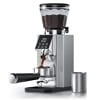
1) Niche Zero, 63 mm conical, single-dose
Low retention, simple workflow, and a small footprint make this an easy daily driver next to the Micra. The 63 mm conical burr set gives syrupy texture and forgiving extractions across roast levels.
2) Eureka Mignon Specialità, 55 mm flat, hopper-on demand
Compact, quiet, and stepless. The 55 mm flat burrs and “Silent Technology” suit apartments and early mornings, and the on-board timer lets you keep a small hopper for fast back-to-back shots.
3) DF64 Gen 2, 64 mm flat, single-dose
Great value for a flat-burr single-doser. It accepts popular 64 mm aftermarket burrs, so you can tune cup profile from chocolate-heavy to high-clarity.
Scale: reliable under-group picks
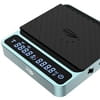
1) Acaia Lunar (2021)
Fast, water-resistant, and purpose-built for espresso. The small footprint fits under the Micra spouts and the app connectivity helps with logging and repeatability.
2) Timemore Black Mirror Nano
A compact, USB-C rechargeable scale with 0.1 g resolution and a built-in timer. The deck height and footprint make it friendly with bottomless portafilters and short cups.
3) Felicita Arc
Quick response and espresso-friendly modes in a slim housing. A solid alternative when you want a durable, budget-sensible under-group scale.
Distribution tools: WDT and levelers that actually help
1) Normcore WDT Tool V2
Fine needles break clumps right to the basket edge with minimal mess. It is inexpensive, effective, and a clear upgrade over finger-tapping.
2) Duomo The Eight
Eight fixed needles at consistent depth give repeatable distribution when you want a quick, one-motion routine. Owners like the “spin and go” feel for reducing channeling.
3) Pullman Chisel (redistribution leveler)
A precision height-adjustable leveler that evens the bed before tamping. It pairs well with or without WDT when you want consistent puck density and a tidy rim.
Milk pitchers: shapes that make better microfoam
1) Motta Europa, 12 oz
A proven spout and classic body help you find the roll quickly. 18/10 stainless gives steady heating and durable finish for daily use.
2) Fellow Eddy, 12 or 18 oz
The sharp front crease and tapered body steer milk forward, which makes fine lines easier. Measurement marks inside are handy when you swap between one drink and two.
3) Rhino Coffee Gear, 12 oz Stealth or Classic
Pointed spout and sturdy walls give extra stretch time for clean texture. Non-stick options simplify cleanup if you steam many pitchers a day.
Cleaning kit: three complete, no-nonsense bundles
Kit A: Urnex Cafiza + Pallo Coffeetool + microfiber set
Cafiza is the standard backflush detergent for oils in the group, valves, and lines. The Pallo brush reaches the gasket and screen safely and includes a steam-tip poker for clogged orifices. Add a few dedicated microfibers and you have a fast nightly routine.
Kit B: Puly Caff Plus + Puly Milk + group brush
Puly Caff cuts coffee residue quickly and includes scale inhibitors. Pair it with a milk-system cleaner for stubborn dairy film and a basic group brush for daily wipe-downs.
Kit C: Cafetto Evo + steam-tip pin set + microfiber set
Cafetto Evo is a free-rinsing, biodegradable cleaner that leaves no odor. A small set of tip needles clears blocked holes instantly. Keep two cloths at the machine, one for steel and one for the wand.
How to choose quickly
- If you want the smoothest, most forgiving shots: Niche Zero + Acaia Lunar + Normcore WDT + Motta 12 oz + Cafiza kit.
- If you want maximum clarity and tinkering headroom: DF64 Gen 2 with burr options + Lunar or Felicita Arc + Duomo The Eight + Eddy 12 oz + Cafetto Evo kit.
- If you want quiet, compact, set-and-forget: Eureka Specialità + Timemore Nano + Normcore WDT + Rhino 12 oz + Puly Caff kit.
Pick one per row and the Micra will feel like a complete, professional station on day one.
Verdict
Buy the Micra if you want a compact, fast, quiet, and truly café-grade La Marzocco with app control and a low-friction workflow.
Do not buy the Micra if you regularly steam four or more milk drinks in a row or you want the broader ecosystem and extra steam headroom of the Mini.
- Micra over Mini: five-minute readiness in a smaller footprint.
- Mini over Micra: larger steam boiler, more overhead for milk-heavy routines, BW-compatible workflows.
FAQs
How do you pronounce “La Marzocco”?
“lah mar-ZOH-koh” is the standard English pronunciation.
What espresso machine does Brad Pitt or Kim Kardashian use?
Brand deals and social posts change. Brad Pitt is a De’Longhi ambassador. Personal daily-driver machines are not reliably published.
Is La Marzocco owned by De’Longhi?
Yes. La Marzocco is part of the De’Longhi Group. Corporate disclosures and reporting confirm majority control.
Do espresso machines break often?
Not when cared for. With balanced water and routine cleaning, failures are infrequent. Wear parts like gaskets, valve seats, and o-rings require periodic replacement.
Which is the best small espresso machine?
It depends on your priorities. For compact dual-boilers, the Micra is a top-tier choice for fast heat-up and premium build. For frequent milk rounds the Mini offers more steam overhead.
Does the Linea Micra have a rotary pump? Is it dual boiler?
Yes to both. The Micra uses an internal rotary vane pump and has dual boilers with PID control.
How long does it take to warm up a Linea Micra?
About five minutes to espresso temperature in typical home conditions.