


USA: $1,568.83
Affiliate link. As an Amazon Associate, Coffeedant may earn from qualifying purchases.
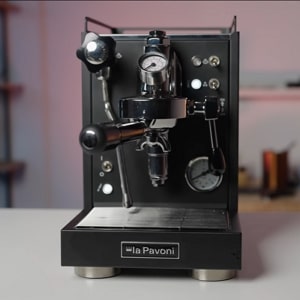
La Pavoni Mini Cellini
The most compact path to a true E61. No PID, no timer—just a stainless single boiler, a full E61 group, and honest, repeatable espresso once you warm up and surf.
Overview
The Mini Cellini is the most compact way to get a true E61 experience without stepping into heat exchangers or dual boilers. It is a single-boiler, dual-use machine with a 0.8 L stainless boiler, a 58 mm E61 group, a cool-touch steam wand, and a proper metal build. There is no PID or shot timer. Once fully heat-soaked and paired with a simple surf routine, it delivers honest, repeatable espresso with enough steam for one or two milk drinks per cycle. If you want plug-and-play temperature control or to brew and steam at the same time, look at a PID single like Profitec Go or an HX like the Lelit Mara X. If you value the E61 lever feel and a tidy footprint, the Mini Cellini earns its keep.
Pros
- True E61 group with classic lever actuation and 58 mm ecosystem.
- Stainless-steel 0.8 L boiler and metal chassis.
- Cool-touch steam wand and separate hot-water outlet.
- Compact footprint for an E61; straightforward controls.
- Clear manufacturer documentation and spare-parts support.
Cons
- No PID or shot timer; temperature surfing required.
- Single-boiler sequencing between brewing and steaming.
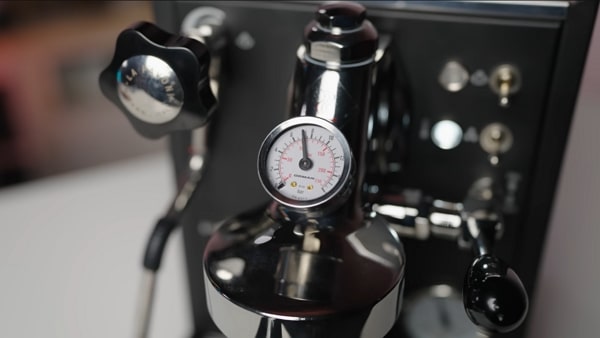
- Front gauge shows boiler pressure, not brew pressure.
- Full heat-soak needed for best results.
- US pricing can run high via importers.
Features
- Single boiler, dual-use layout (brew or steam by mode)
- 0.8 L stainless-steel boiler
- E61 chromed-brass group, 58 mm standard
- Vibration pump
- Boiler manometer with indicator lights for state
- Cool-touch steam wand on ball joint; separate hot-water outlet
- 2.9 L removable reservoir with empty-tank alarm
- Power: 1400 W; EU 220–240 V versions
- Dimensions and weight: 240 W × 420 D × 370 H mm, ~18 kg
- Included: double-spout portafilter, 1-cup, 2-cup, blind basket, ABS tamper, scoop, brush
- Finishes: polished/satin steel, black, white
Pricing
- USA: $1,568.83
- Germany: €802.47
- Netherlands: €1,083.67
- Belgium: €1,259.37
- United Kingdom: £1,155.79
- Spain: €999.99
- Italy: €1,326.07
FAQs
- Is the Mini Cellini a heat-exchanger?
- No. It is a true single-boiler, dual-use machine. Any reseller listing it as HX is in error.
- Does it have PID temperature control?
- No. Temperature is thermostat/pressostat controlled. Use a consistent surfing routine for repeatability.
- How long is warm-up?
- Allow a full heat-soak for the E61 group. Lock in the portafilter during warm-up and start your routine after the machine stabilizes.
- Can I preinfuse?
- The E61 allows a gentle start. On a tank machine you can nudge the lever to start the pump briefly, pause, then finish the lift.
- What about flow profiling?
- La Pavoni offers a “Kit Flow Profile” accessory on several semipro models; it is the clean way to experiment if desired.
Who It Is For
- Home baristas who want the traditional E61 lever workflow in the smallest practical package.
- One-to-three-drink sessions where brew and steam sequencing is acceptable.
- Buyers who prefer metal-heavy construction and mechanical feedback over digital features.
Who Should Avoid It
- Users who need PID, a shot timer, or faster, set-and-forget routines.
- Milk-heavy households that want simultaneous brew and steam (consider Lelit Mara X or a dual boiler).
- Shoppers who need rotary-pump hush or plumb-in options.
Ownership, Colors & Variants
- Stainless model: LPSMCS01EU (~€1,199).
- Black model: LPSMCB01EU (~€1,249).
- White model: LPSMCW01EU (~€1,299).
- Technical feature set is identical across finishes.
Tech Specifications
- Item
- La Pavoni Mini Cellini
- Format
- Single boiler (dual use), E61 lever group, vibration pump
- Boiler
- 0.8 L stainless steel
- Group
- E61, 58 mm chromed brass
- Gauges
- Boiler manometer; indicator lights for state
- Water tank
- 2.9 L removable, empty-tank alarm
- Steam / water
- Cool-touch steam wand; separate hot-water outlet
- Power
- 1400 W; 220–240 V (EU)
- Dimensions & weight
- 240 W × 420 D × 370 H mm; ~18 kg net
- Included
- Double-spout portafilter, 1-cup, 2-cup, blind basket, ABS tamper, scoop, brush
- Colors
- Polished/satin steel, black, white
The Mini Cellini is the most compact way to get a true E61 experience without graduating into heat exchangers or dual boilers. It is a single-boiler, dual-use machine with a 0.8 liter stainless boiler, a 58 mm E61 group, a cool-touch steam wand, and a proper metal build. There is no PID or shot timer. Once the machine is fully heat-soaked and you run a simple surf routine, it produces honest, repeatable espresso with enough steam for one or two milk drinks per cycle.
If you want plug-and-play temperature control or to brew and steam at the same time, choose a PID single boiler like the Profitec Go or a smart HX like the Lelit Mara X.
If you value the feel of an E61 lever and a tidy footprint, the Mini Cellini earns its keep.
Build
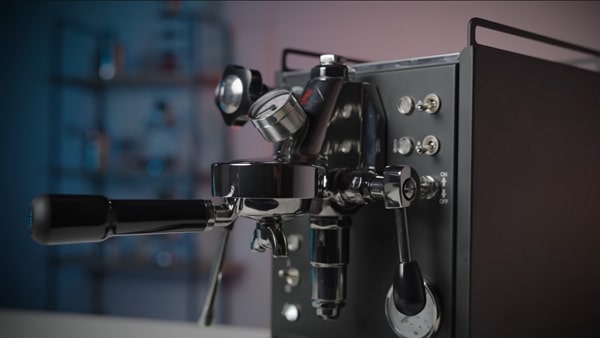
La Pavoni built the Mini Cellini like a classic compact E61 box. The chassis is metal, panels are steel, and the group is a full E61 in chromed brass. The boiler is stainless at 0.8 L. You get a cool-touch wand on a ball joint and a discrete hot-water spout. The front manometer reads boiler pressure rather than pump pressure, so you will dial in by time, yield, and taste rather than watching live brew pressure. The included accessory kit is basic but covers the essentials. Net weight is 18 kg, which reads correctly for a compact E61. All of this is captured on La Pavoni’s spec sheet and product page.
Ergonomics are straightforward. You have a main power switch, a steam switch, the E61 lever for brewing, rotary knob for steam and water, and indicator lights that signal boiler state and steam readiness. The cup rail is sturdy, the drip tray is metal and slides out cleanly, and the top-load reservoir lifts straight up with enough clearance for refills. If you like a machine that tells you what it is doing mechanically, the Mini Cellini is your tempo: listen for the vib pump, feel the cam in the E61, watch the boiler pressure needle rise, and work within that rhythm. The official manual covers the layout of controls and the parts list for these models.
Materials and fit
The machine blends polished and satin finishes in the stainless variant, painted steel on the black and white variants, and cool-touch stainless on the wand assembly. The E61 group head remains the star. Its mass and thermosyphon loop provide in-shot stability and that tactile lever actuation many home baristas enjoy. You are not buying this to hide it under cabinets. You are buying it to live with a solid little tank that behaves like an espresso machine should. The exact materials and finishes are specified on La Pavoni’s pages.
Workflow
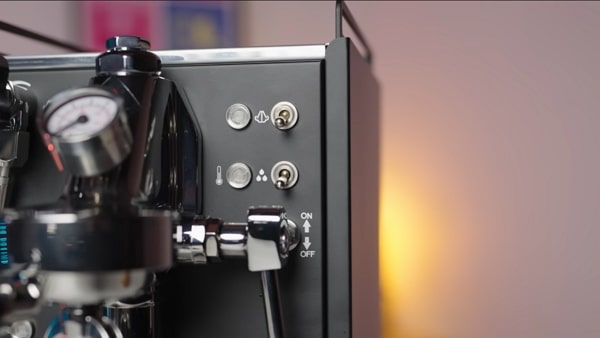
This is a single-boiler dual-use machine, which is a deliberate design choice. You brew at brew temperature. When you want to steam, you raise the boiler to steam temperature. Then you cool it back to brew range before the next shot. On paper that sounds like compromise. In daily use it is calmer than you might think when you adopt a simple routine.
Warm-up
An E61 group wants to be fully heat-soaked. Lock the portafilter in place during heat-up, give the machine proper time to stabilize, and use your first flush to settle temperature at the group. La Pavoni promotes the Mini Cellini as “quick to heat” in marketing copy, but like any E61, meaningful stability comes from giving the group and portafilter time to come up with the boiler. The manufacturer confirms the E61 group and single-boiler design; the rest is standard E61 practice.
Temperature control and surfing
There is no PID on the Mini Cellini. Temperature is controlled by thermostats for brew and a pressostat for steam, with indicator lights for state. That means the brew temperature rides a heating cycle. The fix is simple: surf. Prime the group with a short empty flush to trigger heating, wait for the ready light to behave as you prefer, then pull your shot. Repeatability comes from consistent cadence more than anything else. La Pavoni’s manual explains the brew, hot water, and steam sequences and the indicator logic that you will cue off.
Preinfusion
The E61 group allows a gentle start. On a tank machine like this, there is no line-pressure preinfusion. You can add a soft start by nudging the lever to engage the pump briefly, pausing a second, then finishing the lift. The result is reduced channeling on fragile baskets and a little more lo-fi control over the first seconds of flow. The value of this is greatest with medium and light roasts that benefit from a calmer ramp.
Brew-to-steam and back
Milk drinks require a small dance. Brew first. Flip to steam. Let boiler pressure rise until the steam-ready light confirms you are up to temp. Purge the wand, texture, then cool the boiler back to brew by flushing water through the hot-water spout and group until the brew light cycles in your favor. The manual outlines the brew, hot-water, and steam operations in plain steps that map cleanly to this routine.
Espresso Performance
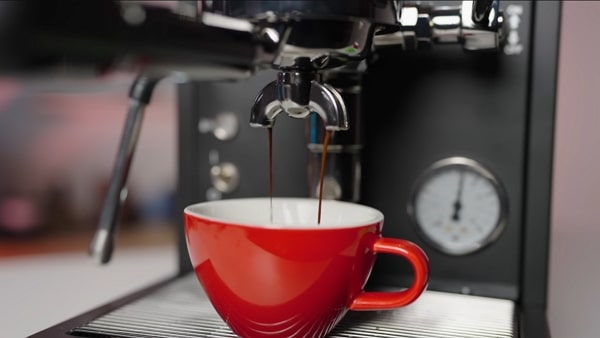
Once the machine and group are heat-soaked and your surfing cadence is consistent, the Mini Cellini pulls steady extractions with classic E61 feel at the lever. The heavy chromed-brass group and thermosyphon loop help with in-shot stability. The 58 mm standard accepts any precision basket you prefer and the included double-spout portafilter is fine for day one, though many users will add a bottomless portafilter for feedback. Because the front gauge is a boiler manometer and not a pump gauge, you will lean on a scale, a timer, and taste during dial-in. This is not a drawback. It is simply the way non-PID E61 singles run. Core dimensions, basket size, and gauge type are all documented by La Pavoni.
What does that look like in the cup? With a standard 18 g to 36 g recipe in 25 to 30 seconds, expect syrupy shots from medium roasts and surprisingly clean extractions from well-developed lights once grind, distribution, and puck prep are tight. Temperature surfing contributes more to consistency here than any other single variable. If you bounce between roasts and recipes frequently, you will notice the value of a PID on rival machines. If you mostly drink one style of espresso and you enjoy the mechanical feedback of the E61, the Mini Cellini will meet you halfway with little drama.
La Pavoni offers an optional “Kit Flow Profile” accessory across several semipro models. If you want to play with flow, that is the tidy path rather than aftermarket hacks. It is listed on the Mini Cellini pages as an accessory.
Milk Steaming
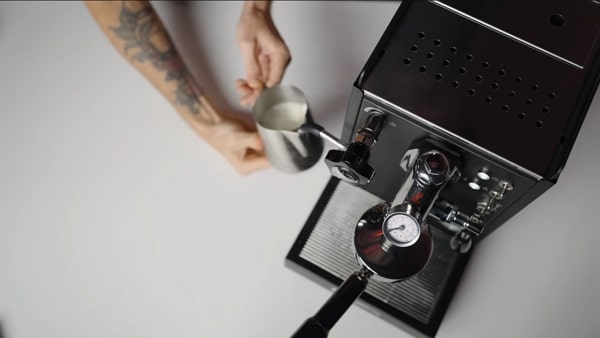
The 0.8 L boiler gives you dry, usable steam with honest recovery. The cool-touch wand keeps hands calm and sleeves clean, so you can focus on texture instead of dodging heat. A 150 to 200 ml pitcher is the sweet spot. Hit that range and silky microfoam comes together quickly once pressure is up. Two milk drinks in a single steam cycle are realistic if your workflow is tight. Push beyond that and you start to feel the limits of a compact single boiler.
Set up for success
- Brew first, then flip to steam. Watch the boiler needle rise into the steam band.
- Purge the wand for a second or two to clear condensate. You want dry steam before the tip touches milk.
- Aim to begin texturing near the top of the cycle and keep pressure healthy with clean, efficient motions. If the gauge sags, pause a moment and let it recover.
Texturing cues that work on this machine
- Start with a 12 oz pitcher filled to the bottom of the spout with cold milk. That is roughly 150 to 200 ml.
- Place the tip just off center and barely kiss the surface to stretch. Listen for a quiet paper-tear sound. Loud hissing means you are too high. Silence means you are too deep.
- Once the milk reaches warm hand temperature, bury the tip slightly and roll a strong whirlpool. The roll repairs small bubbles and polishes the surface.
- Finish around 55 to 60 °C for lattes or 60 to 65 °C for cappuccinos. Go hotter only for “extra hot” requests. Quality falls off past 70 °C.
Two-drink rhythm
- Prep both cups and pull both shots first.
- Switch to steam and purge.
- Texture pitcher one, split as needed, then texture pitcher two while the needle is still healthy.
- If pressure dips, give the boiler a short breather. A quick pause restores momentum better than fighting weak steam.
When you need more power
- Keep batches small. Two quick pitchers beat one big one on a small boiler.
- Pre-chill pitchers and use cold milk to buy a few extra seconds of strong vapor.
- If you want a slower, more forgiving feel, try a tip with fewer or smaller holes. If you want faster ramp, upgrade to a slightly freer tip. Match the tip to your pitcher size and routine.
Troubleshooting cheatsheet
- Big bubbles: lower the tip sooner and reduce stretch time.
- Thin foam that will not paint: roll harder and finish a few degrees cooler.
- Pressure collapses mid-steam: purge less, pause briefly to recover, or downsize the batch.
- Wand spits water at the start: purge longer before entering the milk.
Cleanup that protects performance
Purge immediately after you finish, wipe with a damp cloth, then purge again. Soak the tip in warm water periodically and inspect the orifices for milk stone. The cool-touch wand still gets hot at the tip, so treat it with respect.
This is the right steaming profile for the Mini Cellini: small, controlled batches, disciplined purges, and quick, confident motions. Do that and you get glossy microfoam with time on the clock for latte art, all from a compact single boiler.
Maintenance and Water
The Mini Cellini asks for classic E61 housekeeping. Keep it simple and consistent and the machine will stay sweet for years.
Start with the daily rhythm. After every session purge the wand, wipe it clean, and purge again so milk never dries inside the tip. Pop the portafilter out, run a short water backflush with the blind basket to clear coffee oils from the group, and wipe the shower screen and gasket face with a clean cloth. Empty the tray before it sloshes. These small habits protect taste and keep valves happy.
Give it a weekly deep clean. Run a detergent backflush with a proper espresso cleaner using the blind basket. Cycle a few 10-second pulses with rests in between, then flush thoroughly with clear water until there is no residue. Soak baskets and the steam tip in a warm cleaning solution, rinse well, and reassemble. This is also a good time to inspect the gasket and the screen. If the screen looks clogged or beat up, replace or clean it. If the portafilter starts to creep during a shot or you see weeping around the group, plan a fresh gasket.
Plan periodic TLC on the lever side. The E61 cam likes a tiny touch of food-safe lubricant. A light coat on the cam and pins restores that smooth, positive action and reduces wear. Replace the group gasket and shower screen on a schedule that matches your use, then reset the lever feel. None of this is complicated. It is routine work with a screwdriver and patience.
Water is the big one. Scale is the enemy of small boilers. Keep hardness and alkalinity in a moderate window and the machine stays consistent. For tank users, a simple counter-top filter with a softening cartridge or a drop-in resin filter protects the boiler without turning water chemistry into homework. If your tap water is hard, switch to a low-mineral bottled water or use a proven espresso water kit that adds just enough buffer and hardness for flavor and protection. Avoid pure distilled or reverse osmosis on its own because it can be corrosive and can confuse level sensors. If you do use RO, remineralize to a sensible baseline before it touches the tank.
Descaling should be rare if your water is right. Internal descaling solutions can dislodge debris and move it into valves and jets. If you ever see real scale build-up or performance falls off, fix the water first, then descale with care and follow the manufacturer’s instructions exactly. Clean the reservoir itself with mild detergent, rinse thoroughly, and keep the pickup hoses free of slime. A tidy tank is quiet insurance against weird tastes and slow fills.
Spare parts and documentation are strong. La Pavoni publishes model-specific manuals and spare-parts lists for the Mini Cellini in stainless, black, and white. That support is the difference between a machine you tune up every few years and a machine you give up on. Keep a gasket, a screen, and a set of steam-tip o-rings in a drawer and most surprises become a ten-minute fix.
If you want quick diagnostics, learn the tells. A squeaky lever means the cam needs lube. A slow, wandering flow often points to a dirty screen or dispersion plate. A drippy group during a shot calls for a new gasket. Address the small stuff early and you will rarely face a big job.
Noise and Vibration
A vibration pump has a voice. You hear a brief ramp at the start of a shot and a rhythmic pulse as it settles into flow. The mass of the E61 group tames some of it, but this is not a rotary pump hush. The goal is control, not silence.
Set the machine up to win. Put a dense rubber or cork mat under the feet to decouple the chassis from the counter. Make sure the drip tray is fully seated and does not rattle. Check that cups on the rail are not chattering against each other. Little resonances stack up and make a small pump sound bigger than it is.
Listen during operation. A louder than normal buzz at the start of a shot can be the reservoir not fully seated or the pickup line drawing a bit of air. Reseat the tank and check the intake filter. A new metallic rattle usually means a loose panel screw or a tray that is not home. Tighten, reseat, and move on. If the sound profile changes dramatically overnight, stop and inspect before you pull more shots.
There are a few easy refinements. Keep a modest amount of water in the tray to dampen echo. Avoid pushing the machine hard against a backsplash where vibrations can transfer and amplify. If your counter is a hollow laminate, the mat becomes even more important. These are small changes that add up to a calmer bar.
If you want true quiet, you move to a rotary pump platform like the larger Cellini Evolution, which lives in a different budget and footprint. If you stay with the Mini Cellini, lean into setup and housekeeping and the pump will fade into the background once the shot starts pouring. Cellini family is the Evolution with a rotary pump and HX architecture, but that is a different budget and footprint. La Pavoni’s lineup pages make the model hierarchy clear.
What It Is Not
A few reseller pages mislabel the Mini Cellini as a heat-exchanger machine. It is not. The official La Pavoni pages state clearly that Mini Cellini is a single boiler at 0.8 L with no HX. That matters because an HX changes the entire brew-steam dynamic. If a product page claims HX for the Mini, treat it as copy-paste drift and default to the manufacturer.
Competitive Set
Profitec Go (Full Review)
A compact single boiler with a ring group, full PID control, a shot timer, adjustable OPV, and a published fast heat-up. Boiler volume is about 0.3 to 0.4 L depending on source. This is the convenience king in the entry class. You give up the E61 lever feel and mass, and the vibe is modern rather than classic. If your priority is temperature stability without surfing and quick morning shots, the Go is a smart buy.
Rancilio Silvia V6 (Full Review)
A long-lived single boiler with a brass boiler, ring brew group, and no PID in stock form. It is rugged, it has a huge community, and it usually sells lower than the Mini Cellini. You miss the E61 lever and mass, and you still surf unless you mod or pick a PID trim. If value and a bombproof platform rule, Silvia still makes sense.
ECM Casa V (Full Review)
Another compact single boiler with a ring group, small 0.4 L boiler, and fast heat-up. It is tidy, well built, and very space efficient. Like the Silvia and Go, the Casa skips the E61 feel for a faster, simpler morning. Great for kitchens where height and width are tight.
Lelit Mara X (Full Review)
An E61 heat-exchanger that behaves like a practical daily driver. Brew temperature is managed intelligently and you can brew and steam at once. It costs more and takes more space, but if milk drinks are common in your house, HX is the right move. The Mara X is the most convincing bridge between the E61 vibe and modern control in this price band.
How the Mini slots in: the Mini Cellini is for the buyer who wants E61 mechanics and that classic lever workflow in the smallest possible package. The rivals trade that feel for speed and digital control.
Test Notes and Repeatable Routines
I recommend buyers run three quick checks during the first week to lock in a reliable routine on any non-PID single boiler.
- Group stability check
After a full warm-up with the portafilter locked in, pull three back-to-back 18 g in, 36 g out shots at a fixed grind and puck prep. Keep your cadence constant. Taste for drift rather than chasing numbers. If the second or third shot tastes brighter or thinner, extend your pause between shots, add a small cooling flush before prep, or shorten your flush before the first pull. The aim is consistency in taste rather than a number on a display because the Mini lacks a PID, as La Pavoni’s spec makes clear. - Brew-to-steam timing
Time how long it takes the boiler to reach steam readiness after you flip the steam switch, then texture 150 ml of milk to 60 to 65 C. Note your recovery time back to brew-ready using a cooling flush. This gives you a personal rhythm for one-and-two drink sessions. The steam function, indicator logic, and hot-water tap are documented in the manual. - Surf anchor
Pick one consistent “anchor” for surfing. For many users that is: light cycles off, count ten seconds, pull. For others it is a measured flush volume before every shot. Pick one and stick to it. The goal is repeatability. The machine will follow your rhythm if you give it a rhythm to follow.
Energy Use and Footprint
The Mini Cellini draws 1400 W at peak heating. Like any E61, it rewards a scheduled warm-up if you drink at the same time every morning. A smart plug is an easy upgrade. The footprint is compact for an E61 at 240 by 420 by 370 mm. Net weight is 18 kg. Keep the top clearance generous if you fill from above. The numbers come from La Pavoni’s product page.
Accessories and Upgrades
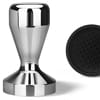
Replace the plastic tamper on day one. Add a 58 mm precision basket to tighten your flow and puck resistance. If you want diagnostic clarity, buy a bottomless portafilter. If you want to experiment with longer preinfusions or slower flow ramps, La Pavoni lists a “Kit Flow Profile” accessory across the semipro line that includes the Mini, which is cleaner than drilling.
Final Verdict
The Mini Cellini is the entry to La Pavoni’s semipro line for people who want an E61 lever in a small footprint and do not need to brew and steam at the same time. The machine rewards discipline. Give it a full warm-up. Keep your surf routine tight. Work a clean puck prep. In return, it gives you classic E61 extractions, a cool-touch wand that is pleasant to live with, and enough steam for one or two milk drinks per cycle.
If you need digital temperature control and a five-minute morning, you should pick a Profitec Go or similar and never look back. If milk drinks rule your house, step to a Mara X. If you want to live with mechanical feedback and you enjoy refining a routine, the Mini Cellini is an easy machine to recommend. The core specification, dimensions, and features used for this judgment are pulled from La Pavoni’s own pages rather than reseller copy.
TL;DR
Small E61 single boiler with a stainless boiler and cool-touch wand. No PID and no shot timer. Learn a simple surf routine and it will produce repeatable espresso and steady steam for one or two milk drinks.