

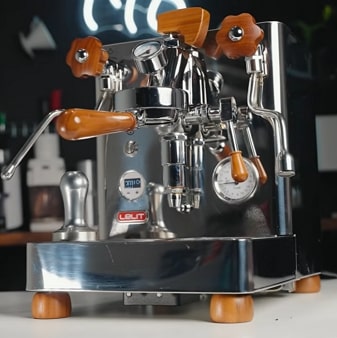
Typical Bianca street price ~$2,999.95 (US) • ~£2,299.95 (UK) • EU usually in the low-to-mid €2,000s. Promos sometimes dip lower in the US.
Lelit Bianca PL162T
The most complete prosumer E61 at three thousand dollars: stainless dual boilers, a quiet rotary pump, a true group-mounted paddle, and smart firmware that make profiling practical at home.
Overview
The Lelit Bianca PL162T is the reference point for enthusiast E61 machines at this price. You get stainless dual boilers, a quiet rotary pump, a true group-mounted paddle, and firmware that actually helps you pull better shots. It handles classic medium roasts in a set-and-forget dual-boiler rhythm, then opens up light roasts with gentle wetting, long soaks, and tapered finishes. The 2.5 L movable tank solves real counter problems and the machine stays serviceable for the long haul. If you want a single machine to anchor a serious home bar, this is the safest three-thousand-dollar bet in prosumer espresso in 2025.
Pros
- True group-mounted needle-valve paddle with direct puck pressure readout.
- Excellent cup quality on both medium and light roasts once your prep is disciplined.
- Flexible 2.5 L external reservoir that mounts left, right, or behind, or remove it and plumb in.
- Useful firmware with low-flow start and finish, programmable pre-infusion, stand-by, and dose counters.
- Quiet rotary pump, healthy parts ecosystem, and factory color variants that actually look sharp.
Cons
- Classic E61 heat-soak warm-up; plan on ~20 minutes from cold.
- Steam is strong for home but not commercial-class on huge pitchers.
- Paddle assembly is a wear part that needs respect and occasional service.
- Depth planning required if you keep the reservoir behind the machine.
Features
- Dual-boiler system: 0.8 L brew and 1.5 L steam, both stainless steel
- Rotary pump for low-noise operation (~61 dB measured at the machine)
- L58E E61-style group with dedicated group manometer reading puck pressure
- True mechanical paddle actuating a needle valve at the group for real flow control
- Lelit Control Center (LCC) OLED with PID control for both boilers
- Programmable pre-infusion, low-flow start and finish, and stand-by mode
- Shot timer and dose counters for tracking use and filter changes
- 2.5 L external reservoir that mounts left, right, or behind the machine
- Direct plumb and drain ready for permanent installations
- Anti-burn steam wand with both two-hole and four-hole tips included
- AISI 304 stainless chassis and panels with walnut or maple wood accents
- Dimensions (without tank) about 29 W × 40 H × 40 D cm; weight ~26.5 kg
- Ships with quality baskets and a bottomless portafilter
Pricing
- United States: typically $2,999.95 at major retailers and Lelit’s store.
- United Kingdom: around £2,299.95 including VAT, depending on retailer and color.
- European Union: pricing varies by country; expect low-to-mid €2,000s equivalent in most markets.
- Holiday and major sales events sometimes push US pricing into the mid-two-thousands.
- Color variants usually track the same MSRP; local availability can be limited.
FAQs
- How long does the Bianca take to warm up?
- From cold, plan on roughly twenty minutes for a fully heat-soaked E61 group. Stand-by can hold the brew boiler around 70 °C and reheat in about ten minutes.
- Is the paddle just a cosmetic flow kit?
- No. The paddle actuates a true needle valve at the group. You are shaping flow to the puck directly, not spoofing pressure with pump duty cycles.
- Can I run Bianca like a normal dual boiler without active profiling?
- Yes. Set your brew temperature, use a simple pre-infusion, and let the firmware’s low-flow modes handle the edges. You can ignore the paddle or use it minimally.
- How loud is the machine in a small kitchen?
- The rotary pump keeps noise low. Independent tests peg it around 61 dB at the machine, so the loudest sound is usually coffee hitting the cup.
- Do I have to use the external tank?
- No. You can remove the 2.5 L tank and plumb the machine directly. Many owners start on the tank, then plumb in later once the bar layout is final.
- Is Bianca good for light roasts?
- Yes. That is one of its main strengths. You can run long wetting phases, blooming pauses, and tapered finishes to keep clarity and tame harshness.
- What about repairs and parts?
- Panels come off with basic tools and there is no locked software. Lelit’s parts support improved after Breville Group acquired the brand in 2022.
- How often should I backflush and clean?
- Water backflush daily if you pull multiple shots, detergent backflush weekly, lube the cam and lever on a schedule, and replace the group gasket periodically.
Who It Is For
- Home baristas who want to profile by feel using a real paddle and puck manometer.
- Prosumers stepping up from heat exchangers who want dual-boiler stability and control.
- Light roast fans who need gentle wetting, low-flow control, and repeatable blooming profiles.
- Households that want quiet pulls, flexible reservoir placement, and plumb-in readiness.
- Cafés that need a training rig for new baristas to learn flow and puck prep without tying up a commercial group.
Who Should Avoid It
- Users who want full set-and-forget automation with logged curves and app-driven recipes (look at Decent-style machines instead).
- People living entirely in milk land who need brutal, café-level steam on huge pitchers all day.
- Buyers who never want to think about warm-up time and expect instant-on performance.
- Owners uninterested in puck prep or profiling; a simpler dual boiler without a paddle may fit better.
Ownership, Colors & Variants
- Standard finish is polished stainless with walnut woodwork.
- Factory black and white editions add maple accents and a revised drip tray with a cleaner face.
- These color models are genuine Lelit releases with the same internals and warranty as stainless units.
- Lelit has been part of Breville Group since 2022; that brought capital and distribution without changing the core Bianca design.
- Color availability can be limited by region; check local stock if you are set on black or white.
Tech Specifications
- Item
- Lelit Bianca PL162T
- Format
- Dual boiler, rotary pump, E61-style L58E group with flow-control paddle and group manometer
- Boilers
- 0.8 L brew boiler and 1.5 L steam boiler, stainless steel
- Pump
- Rotary pump, low-noise, plumb-ready
- Temperature control
- Lelit Control Center OLED with PID control for brew and steam, stand-by, and boiler on/off
- Flow control
- True needle-valve paddle at the group plus programmable low-flow start and finish in firmware
- Pre-infusion
- Programmable pre-infusion time and pressure via LCC, plus manual control with the paddle
- Reservoir
- 2.5 L external tank that mounts left, right, or back; direct plumb and drain ready
- Dimensions & weight
- Approx. 29 W × 40 H × 40 D cm (without tank), ~26.5 kg
- Controls & interface
- OLED display, temperature set to 0.1 °C, dose counters, shot timer, programmable sleep windows
- Steam performance
- Two-hole and four-hole tips included; 300 ml to 60 °C in roughly 25–47 s depending on tip and boiler temperature
- Noise
- Around 61 dB at the machine according to independent testing
- Included
- Bottomless portafilter, baskets, steam tips, movable reservoir assembly, and accessories; details may vary by region
Lelit built the Bianca PL162T as a dual-boiler E61 that can run two ways: a calm daily driver when you keep the paddle open, and a real extraction tool when you use the group-mounted flow control paddle to shape the shot. Add the quiet rotary pump, the group (puck) manometer, and Bianca’s flexible tank setup, and you get a machine that turns technique into repeatable clarity instead of random tinkering.
On our bench, Bianca’s buying truth is simple: you are paying for quiet pressure delivery, dual-boiler stability, and manual flow control that actually teaches you something about light roasts. The reality check is equally straightforward: it still needs E61 heat-soak discipline, water quality still decides long-term costs, and your grinder still sets the ceiling.
For cross-shoppers, we usually frame Bianca against machines people actually consider in this tier: the ECM Synchronika if you want premium build feel, the Profitec Pro 700 if you want a heavier, routine-first E61 dual boiler posture, the La Marzocco Linea Micra if fast readiness and streamlined daily use matter most, the Lelit Elizabeth if you want compact dual-boiler practicality inside the Lelit lineup, and the Bezzera Duo MN if you prefer a more modern interface and group philosophy.
Deals of the Week
Overview
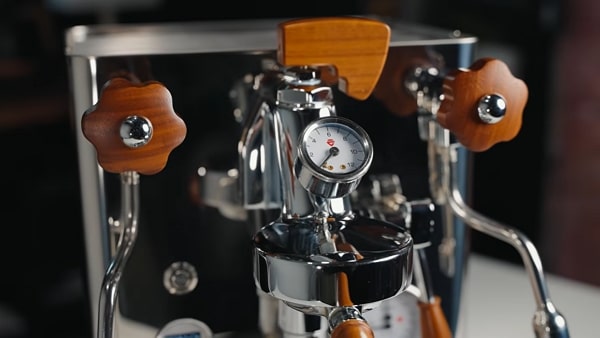
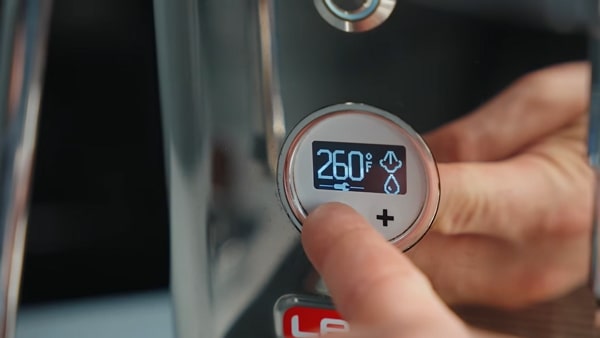
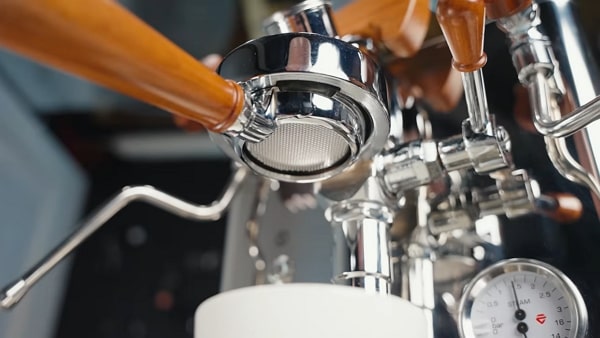
The Lelit Bianca PL162T is Lelit’s flagship, enthusiast-grade take on the modern E61-style dual boiler. You get stainless boilers (0.8 L brew and 1.5 L steam), a quiet rotary pump, and a real, group-mounted needle-valve paddle with a group (puck) manometer so you can shape extractions by feel and by data. The Lelit Control Center (LCC) OLED runs PID control for brew and steam, plus practical firmware tools like low-flow start and finish, programmable pre-infusion, and standby behavior that actually improves daily ownership.
What makes Bianca different is the way it can live as two machines at once. Run it like a straight dual boiler for fast, repeatable espresso and milk. Then, when you want to chase clarity on lighter coffees, use gentle wetting, longer soaks, and tapered finishes with the paddle. The 2.5 L external reservoir is not a gimmick. It mounts left, right, or behind, or you can remove it and plumb in, which solves real counter and workflow constraints in home setups.
In the Lelit lineup, Bianca sits above the compact dual-boiler workhorse Lelit Elizabeth (routine-first speed) and the HX classic Lelit Mara X (E61 feel with a simpler temperature story). The buying logic is simple: if you want an E61 machine that can behave like a calm daily driver but still give you true profiling control when you want it, Bianca is the platform.
Design intent
- True profiling, not a gimmick: a real needle-valve paddle at the group with a puck-pressure gauge so flow changes are meaningful and readable.
- Dual boiler control that stays practical: 0.8 L brew and 1.5 L steam boilers with PID control for repeatable temperature habits.
- Quiet, plumb-ready ownership: rotary pump behavior that sounds grown-up and supports direct water in and drain out.
- Counter-space flexibility: a 2.5 L movable tank that can mount left, right, or behind, so the machine fits real kitchens.
- Firmware that helps the cup: useful modes like low-flow start and finish, programmable pre-infusion, standby, and dose counters that support consistency.
What it gets right in the cup and in cadence
- Clarity on light roasts: the paddle and low-flow behavior let you reduce channeling, extend wetting, and finish shots clean without harsh edges.
- Quiet daily workflow: rotary pump sound and stable boilers make it feel calm on the counter, not like a project every morning.
- Repeatable milk cadence: steam is strong and dry for home service, with recovery that supports back-to-back drinks without drama.
- Instrumentation that matters: the group gauge keeps you honest about what the puck is seeing, which speeds up dialing and troubleshooting.
The deliberate trade-offs
- E61 warm-up is real: plan on roughly ~20 minutes from cold for a properly heat-soaked group.
- The paddle is a wear part: it rewards gentle handling and occasional service, especially if you profile aggressively every day.
- Not a café steam monster: excellent for home pitchers, but it is not built to hammer huge volumes like commercial hardware.
- Water discipline matters: whether you run the tank or plumb in, scale control and filtration are part of ownership at this level.
Where it fits
Bianca makes sense if you want a single machine that can cover “repeatable dual boiler” and “serious profiling” without jumping to ultra-premium pricing. If you want a more compact, routine-first Lelit dual boiler, the Lelit Elizabeth is the calmer alternative. If you want a bigger, more traditional German-style dual boiler platform with strong steam presence, the Profitec Pro 700 is the common step-up. If you want a similar tier with premium fit and finish and a classic prosumer identity, the ECM Synchronika is the frequent cross-shop. If you want a modern dual boiler with different ergonomics and fast, practical ownership, the Bezzera Duo MN is another landing spot. If you want saturated-group heritage and brand gravity, the La Marzocco Linea Mini is the aspirational alternative.
Cross-shop context on Coffeedant: Bianca buyers most often compare against the Profitec Pro 700 for a bigger, traditional dual boiler platform, the ECM Synchronika for premium build and classic prosumer identity, the Bezzera Duo MN for a different, more modern ergonomics package, and the Lelit Elizabeth when they want compact dual-boiler speed without committing to daily profiling.
Lelit Bianca lineup: which version to buy
The Lelit Bianca PL162T is the flagship Bianca spec most buyers mean when they say “Bianca”: a profiling-capable E61-style dual boiler with a quiet rotary pump, a real group-mounted needle-valve paddle, and a dedicated group manometer that reads what the puck is seeing. Most “versions” you will see are about finish, wood accent kits, and region voltage/warranty, not different espresso capability.
The one meaningful split is current retail Bianca vs older used-market revisions. The current lane is the cleanest buy because you get the full modern firmware set (LCC features like programmable pre-infusion and low-flow behaviors), plus the practical ownership hardware (movable external tank and plumb-ready setup depending on how you install it). If you buy used, treat it like a checklist purchase: confirm the paddle assembly condition, verify what accessories are included, and prioritize parts and service support over cosmetic hunting.
| Version | Lineup slot | Compared to PL162T | Typical price and note |
|---|---|---|---|
|
Lelit Bianca PL162T
Reference Dual boiler, rotary pump, paddle profiling |
Safest default | Full Bianca experience: quiet rotary behavior, true flow control at the group, and LCC firmware tools that make profiling practical. Buy this lane when you want predictable parts support and the cleanest ownership path. | Typical price: $2,999.95 (US) • color, retailer, and bundles move pricing |
| Bianca (color and wood variants) | Cosmetic choice | Stainless vs darker finishes and different wood kits are about kitchen match and fingerprint tolerance, not better espresso. Prioritize seller support and inclusions over aesthetics. | Pricing varies by finish and bundle • confirm what ships in the box |
| Older Bianca (used market) | Value lane | Core Bianca capability is still there, but ownership risk shifts to condition. Inspect paddle smoothness, check for scale history, and confirm accessory set and service path before you chase a deal. | Used pricing varies widely • condition and water history decide the real value |
| EU/UK 230V vs US 110–120V | Region buy | Same machine idea, different electrical and warranty lane. Imports only make sense when you have a real plan for voltage and parts support. | Warranty coverage is the real “price” • avoid casual imports |
How to read this: buy the current retail Bianca when you want the cleanest support path. After that, choose finish based on your counter, not on espresso performance. If you buy used, treat water history and serviceability as first priority.
Key Lelit Bianca PL162T Specifications
| Item | Detail |
|---|---|
| Machine | Lelit Bianca PL162T · Model page · Cross-shops: Lelit Elizabeth, Profitec Pro 700, ECM Synchronika, Bezzera Duo MN, La Marzocco Linea Mini |
| Machine type | Semi-automatic dual boiler (E61-style) |
| Group / portafilter | L58E E61-style group · 58 mm ecosystem |
| Boilers | 0.8 L brew + 1.5 L steam · stainless · PID control via LCC |
| Pump | Rotary pump (low-noise behavior) |
| Profiling control | True mechanical paddle actuating a needle valve at the group for flow control |
| Gauges | Dedicated group manometer reading puck pressure |
| Steam / hot water | Cool-touch steam wand · multiple steam tips (two-hole and four-hole, as shipped) |
| Water setup | 2.5 L external reservoir (mounts left, right, or behind) · plumb and drain ready for permanent installs |
| Dimensions / weight | About 290 × 400 × 400 mm (without tank) · about 26.5 kg |
| Coffeedant score | Overall rating |
| Typical price | $2,999.95 (US typical) · UK often around £2,299.95 incl. VAT · EU varies by country |
First Impressions & Build Quality
Bianca reads like a serious bar tool that has been tuned for home realities. The chassis is stainless, the touch points are solid, and the ownership story is practical: the rotary pump keeps the machine calm, the paddle gives you real control, and the external reservoir solves counter layout problems instead of creating them. You still live in E61 land, so warm-up and water discipline are part of the deal.
What’s in the Box
- Lelit Bianca PL162T machine
- 58 mm portafilter set (commonly includes a bottomless portafilter)
- Baskets and basic accessories (as shipped in your region)
- Steam tips (commonly two-hole and four-hole)
- User documentation and warranty information
Bundles vary by retailer and region. Confirm inclusions if you are buying open-box or used.
Chassis and internals
The core build choices are aimed at repeatability and longevity: stainless boilers, a rotary pump, and a group-mounted needle valve that behaves predictably when you move it with intent. Treat the paddle like a precision part, not a door handle, and you will get a long service life out of it.
Controls and touch points
Bianca’s controls make sense in the hand. The lever is classic E61 muscle memory, the paddle gives you a smooth mechanical lane for profiling, and the group manometer accelerates dialing because you can see puck behavior in real time. The LCC screen stays in a supporting role, handling temperature control and useful workflow tools without forcing you into menu life.
Counter fit
| Item | Detail | Why it matters |
|---|---|---|
| Width | About 290 mm | Comfortable footprint for a full E61 dual boiler, with room to work the lever and paddle cleanly. |
| Height | About 400 mm | Check cabinet clearance for cup tray access and daily cleaning. |
| Depth | About 400 mm (without tank) | Depth changes with tank placement. Rear-mount needs more clearance behind the machine. |
| Weight | About 26.5 kg | Stable on the counter. Plan your bar layout so you are not lifting it often. |
| Noise profile | Rotary pump (~61 dB measured at the machine) | Low-noise behavior is a real quality-of-life upgrade for early mornings and open kitchens. |
| Water reality | 2.5 L external tank or plumb-in | The tank solves awkward counters. Plumbing makes sense when you have filtration and a stable install. |
Testing Results
Testing focused on the Bianca ownership fundamentals: E61 warm-up and stability, baseline shot repeatability with the paddle wide open, practical profiling tools (low-flow start and finish plus gentle paddle movement), and milk cadence with both steam tips.
| Metric | Result | Use note |
|---|---|---|
| Warm-up to usable service | Roughly ~20–25 minutes from cold for a properly heat-soaked E61 | Do not judge first-shot taste until the group is genuinely hot. Lock a portafilter during heat-up to tighten consistency. |
| Standby return | About ~10 minutes to come back to service from idle mode | Idle mode is a real daily tool: lower heat between sessions, then recover without a full cold start. |
| Noise at the machine | ~61 dB (rotary pump) | Quiet pump behavior helps dialing because you can listen to flow and stop chasing “vibe pump drama.” |
| Baseline espresso target | 1:2 ratio in ~25–35 s (paddle fully open) | Use the group gauge as a sanity check. Aim for a smooth rise toward ~8–9 bar once the puck is wet. |
| Beginner profiling lane | Gentle start, then a clean finish | Start with low-flow pre-wet or a short soak, then open toward target pressure. Taper the last third to reduce harshness. |
| Milk workflow feel | Strong, controllable home steam | Two-hole tip is the training wheel. Four-hole tip is for bigger jugs and faster service once your technique is clean. |
| Milk texture window | ~30–40 seconds workable window at moderate steam settings | A practical starting point is a steam boiler setting around ~125 °C with the two-hole tip, then adjust from there. |
| Drink | Starting point | When to change it |
|---|---|---|
| Espresso (medium roast) | Paddle fully open · 1:2 ratio · 25–35 s · smooth rise toward ~8–9 bar | If thin: grind finer. If sharp: shorten the tail or taper pressure in the last third. |
| Light roast espresso | Gentle pre-wet or short soak · slightly longer ratio (start near ~1:2.2) · tapered finish | If sour: tighten grind and keep yield consistent. If astringent: cut the tail earlier and reduce late pressure. |
| Dark roast espresso | Skip long soaks · shorter ratio (start near ~1:1.8–1:2.0) · clean stop | If bitter: shorten yield. If muddy: coarsen slightly and keep the finish crisp. |
| Cappuccino / Latte | Two-hole tip while learning · stretch a few seconds then roll · stop around ~55–60 °C | If bubbly: stretch less and start colder. If flat: stretch slightly more early, then roll cleanly. |
| Back-to-back milk drinks | Four-hole tip (when ready) · purge before each jug · wipe and purge after | If texture runs away: drop steam temp slightly or return to the two-hole tip for more control. |
Key takeaways from testing
- Bianca rewards a calm baseline: run the paddle fully open until your grind and prep are locked, then layer in profiling tools.
- Warm-up is honest E61 life: plan on the mid-20 minutes from cold for a truly stable first shot.
- The group gauge accelerates dialing: it tells you when puck behavior is wrong before you waste a full drink.
- Steam is a real home upgrade: use the two-hole tip and moderate settings to learn, then step to the four-hole tip when your technique is consistent.
Espresso Quality: getting the best out of the Lelit Bianca PL162T
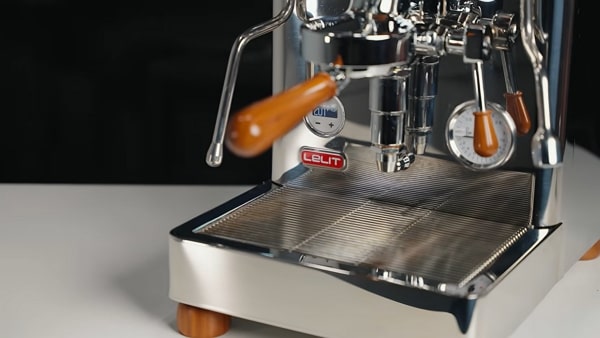
The Lelit Bianca PL162T is a profiling-capable E61-style dual boiler that can be run two ways: as a straight, repeatable dual boiler with the paddle fully open, or as a true flow-control machine when you want to shape extraction. You have the tools that actually move the cup: PID-controlled brew temperature, a quiet rotary pump, a real needle-valve paddle, and a group (puck) manometer. The workflow win is that you do not have to manage HX temperature drift with cooling flushes. Your consistency comes from grind, dose, yield, prep, and how you use the paddle on purpose.
Session protocol that keeps results consistent
- Heat soak the group: Bianca is still E61. Give it real warm-up time and lock the portafilter in during heat-up.
- Flush for cleanliness, not temperature: do a short flush before your first shot to clear the screen and warm the cup, not to “cool” brew water.
- Start paddle wide open: treat the first week like a normal 9-bar machine. Build a clean baseline before you profile.
- Pick one recipe and hold it: start at a 1:2 ratio and keep it fixed while you adjust grind.
- Use the group gauge as a sanity check: a smooth rise toward the 8–9 bar lane is the target once the puck is wet.
- Profile only after the baseline is locked: change one thing at a time: start flow, peak, then finish taper.
Flavor targets by coffee style
| Coffee | Baseline recipe (Bianca) | What it tastes like when right | If too sour / thin | If too bitter / dry |
|---|---|---|---|---|
| Medium espresso blend |
18 g in → 36 g out in ~28–32 s Paddle fully open · smooth rise toward ~8–9 bar |
Round sweetness, clean chocolate, stable body | Grind finer; confirm dose; avoid under-yielding | Shorten yield slightly or grind a touch coarser; keep the stop clean |
| Light roast espresso |
18 g in → 40 g out in ~32–38 s Gentle pre-wet (low-flow start) · peak a bit lower · taper the finish |
Clear sweetness, bright but controlled acidity, less bite | Grind finer; keep yield consistent; extend pre-wet slightly instead of forcing a hard early peak | Cut the tail earlier; reduce late pressure with a taper; coarsen slightly if it drinks dry |
| Medium-dark “Italian” style |
18 g in → 34 g out in ~25–29 s Paddle open, faster peak · stop early on yield |
Heavy body, low acidity, syrupy finish | Grind finer; do not stretch yield | Shorten yield; lower peak slightly; grind a touch coarser if the finish is ashy |
Puck prep still matters more than flow tricks
- Distribution first: the paddle will not fix a lopsided bed. Level the dose before tamping.
- Consistent tamp: flat and repeatable. “Hard” is not a technique.
- Dry basket routine: wipe the basket and shower area if you flushed right before dosing.
- Stop on yield: once you are close, end the shot by yield and taste, then use the paddle to shape the last third.
Diagnostics you can see and taste
| Signal | Likely cause | Targeted fix |
|---|---|---|
| Sour, thin, fast shot | Grind too coarse, under-dosed, or under-extracted yield | Go finer; confirm dose; keep the 1:2 yield steady before you change anything else |
| Bitter, dry finish | Too fine, too much yield, or too much late extraction pressure | Shorten yield or coarsen slightly; taper pressure in the last third with the paddle |
| Early pressure spike then choke | Puck too restrictive (fine grind, high dose) or puck swelling plus tight basket headspace | Coarsen slightly or reduce dose; verify tamp is level; aim for a smoother rise on the group gauge |
| Channeling, spurting, messy bottomless | Uneven distribution, weak puck integrity, or knocking the portafilter before locking in | Improve distribution; tamp level; lock in smoothly; use a gentler start if your prep is already clean |
| “Good yesterday, weird today” | Beans aged, grinder drift, different warm-up, different profiling habit | Return to baseline (paddle open); purge stale grinds; verify full heat soak; adjust one variable only |
Milk Steaming: Bianca steam power, texture, and consistency
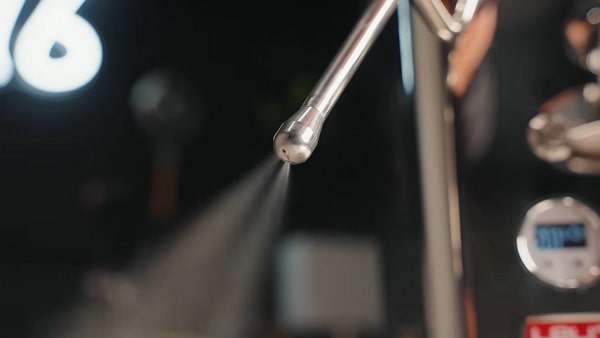
Bianca is a strong home steamer because it is a dual boiler with a dedicated steam circuit and stable recovery. The workflow is still the same as any serious wand: start with dry steam, short stretch, then a controlled roll to finish. Bianca’s advantage is adjustability. You can tune steam behavior with boiler settings and tip choice, then repeat the same motion every morning.
Steaming routine that stays repeatable
- Purge first: clear condensation so you start with dry steam.
- Stretch early, briefly: add air for a few seconds, then stop adding air and commit to rolling texture.
- Roll to finish: hold a stable vortex until serving temperature.
- Wipe and purge: wipe immediately, then purge again. This keeps hygiene and tip performance consistent.
Milk troubleshooting you can actually fix
| Problem | Most likely cause | Fix |
|---|---|---|
| Big bubbles, foam looks like soap | Stretch too long or milk too warm to start | Start colder; shorten stretch; begin rolling earlier |
| Thin, flat milk | Not enough air early or you lost the roll | Add a touch more stretch at the start; reposition tip to reestablish a vortex |
| Steam feels too violent | Steam setting too high or tip too aggressive for your skill | Lower steam boiler setting slightly; switch to a calmer tip; keep pitcher angle steady |
| Watery steam, weak power | Condensation not purged or boiler has not recovered | Purge longer; wait for steam to recover; do not start steaming right after heavy hot-water use |
| Milk tastes “cooked” | Overheated milk | Stop earlier; use a thermometer until your hand memory is reliable |
Hardware Essentials
Boiler, heating, and water system
Bianca is a dual boiler layout with a dedicated brew circuit and a dedicated steam circuit, both under PID control. The brew side is built for repeatability. The steam side is built for stable milk cadence. Water can be run from the external reservoir or as a plumbed-in setup, which makes the machine easier to live with long term if you already have filtration.
- Daily win: no HX cooling-flush dance. Brew temperature behavior is stable once the group is fully heat-soaked.
- Water discipline: profiling hardware stays honest only when scale is controlled. Filter, soften, or treat your water and commit to it.
Pump pressure, valves, and what you can actually control
Bianca’s rotary pump gives you a calm pressure delivery. The real control is the needle-valve paddle at the group. You can slow the start to wet the puck evenly, control the peak, and taper the last third to reduce harshness and astringency. The group manometer makes the learning curve faster because you can see the puck response in real time.
- Best practice: lock a baseline with the paddle fully open, then add one profiling change at a time.
- Do not chase graphs: chase taste and repeatability. The gauge is a tool for consistency, not a scoreboard.
E61-style group, baskets, and 58 mm ecosystem
Bianca lives in the full 58 mm ecosystem: baskets, tampers, bottomless portafilters, and precision tools that actually improve repeatability. If you want cleaner profiling results, your biggest wins are a quality basket, a consistent puck routine, and a grinder that does not drift.
Steam wand hardware
Bianca is built for real microfoam: stable steam, a proper wand, and tip options that let you choose control or speed. Purge before and after every pitcher, keep the tip clean, and the machine stays consistent.
Accessories that actually improve results
- Grinder upgrade: profiling rewards uniform grind and low drift more than any add-on.
- Water plan: test hardness and set filtration. This is the cheapest way to protect boilers and flavor.
- Scale and timer: yield discipline is how you make profiling repeatable.
- Backflush kit: blind basket plus detergent on a schedule keeps the group tasting clean.
- Milk pitcher and thermometer: until your stretch timing and stop temperature are locked in.
| Component | Spec | Use note |
|---|---|---|
| Platform | E61-style dual boiler · 58 mm | Heat soak properly, then treat it like a stable dual boiler. No HX cooling-flush routine needed. |
| Boiler control | PID via LCC | Use temperature control for repeatability, then use flow control for extraction shaping. |
| Pump | Rotary pump | Quiet, calm pressure delivery. Great for early mornings and for listening to flow behavior. |
| Instrumentation | Group manometer (puck pressure) | Use it to validate puck behavior and catch prep errors fast. |
| Profiling | Needle-valve paddle (flow control) | Start with paddle open. Add gentle pre-wet and a tapered finish only after the baseline is stable. |
| Water | External reservoir or plumb-in | Plumbing makes sense only with real filtration and a stable service plan. |
Lelit Bianca PL162T vs The Field: Quick Matrix
| Match-up | Core difference | Best for | Jump to section | Model page |
|---|---|---|---|---|
| Bianca PL162T vs ECM Synchronika | Integrated paddle flow control and flexible tank setup vs premium “German tank” dual boiler that is often bought for build and finish | Bianca for practical profiling value; Synchronika for premium build feel and long-term ownership gravitas | Open | ECM Synchronika |
| Bianca PL162T vs Profitec Pro 700 | Profiling-first E61 ownership vs heavier, more traditional E61 dual boiler with a simpler “set it and repeat it” posture | Bianca for flow control and a configurable reservoir; Pro 700 for weight, classic ergonomics, and straight dual-boiler routine | Open | Profitec Pro 700 |
| Bianca PL162T vs La Marzocco Linea Micra | Manual flow control and E61 warm-up reality vs saturated-group speed, streamlined workflow, and La Marzocco identity | Bianca for light-roast shaping and experimentation; Micra for fast heat, simple daily use, and milk-heavy menus | Open | Linea Micra |
| Bianca PL162T vs Lelit Elizabeth | E61 profiling flagship vs compact dual boiler that is built for fast, repeatable daily service | Bianca for profiling and E61 feel; Elizabeth for smaller counters and routine-first espresso and milk | Open | Lelit Elizabeth |
| Bianca PL162T vs Bezzera Duo MN | Classic E61 group with mechanical flow control vs modern dual-boiler ergonomics with a heated group approach and a different control philosophy | Bianca for hands-on profiling; Duo MN for modern interface, faster thermal readiness, and “set-and-drive” ownership | Open | Bezzera Duo MN |
Lelit Bianca PL162T vs ECM Synchronika
This is “profiling value” versus “premium E61 tank feel.” Bianca is built around practical flow control: the paddle is native to the machine and the workflow is designed to make light-roast shaping repeatable. Synchronika is the premium-build cross-shop, chosen for chassis finish, fit, and a classic dual-boiler ownership posture that stays steady over years.
Core differences
- Profiling: Bianca is profiling-first with an integrated paddle; Synchronika is often bought as a straight dual boiler and treated as a long-term build-quality purchase.
- Ownership feel: Bianca is “hands-on shaping”; Synchronika is “premium hardware, premium touch points.”
- Counter reality: Bianca’s external reservoir flexibility is a real layout tool; Synchronika is more traditional in how it occupies space.
- Buying logic: choose Bianca when flow control is part of the point, choose Synchronika when premium build is the headline.
| Aspect | Lelit Bianca PL162T | ECM Synchronika |
|---|---|---|
| Profiling lane | Native paddle workflow built for repeatable flow shaping | Most buyers run it as a classic dual boiler focused on stability and build |
| Daily ownership | Flow-control by feel, plus a clean baseline when the paddle is open | Traditional “set, heat soak, repeat” E61 dual-boiler cadence |
| Best for | Light-roast clarity chasing and hands-on extraction control | Premium build feel, long-term ownership, and classic E61 identity |
Who should choose which
- Pick the Bianca if flow control is a daily tool for you and you want profiling without paying only for prestige.
- Pick the Synchronika if your priority is premium build feel, finish quality, and a classic dual-boiler routine you plan to keep for years.
Lelit Bianca PL162T vs Profitec Pro 700
This match-up is about how you like to drive. Bianca is a flow-control machine that can behave like a calm dual boiler when the paddle is open, then turn into a shaping tool when you want clarity. Profitec Pro 700 is the heavier, more traditional E61 dual boiler posture: stable, straightforward, and built around a classic workflow.
Core differences
- Control style: Bianca prioritizes flow shaping; Pro 700 prioritizes traditional dual-boiler stability and simplicity.
- Workflow mindset: Bianca rewards experimentation; Pro 700 rewards repeatable “set and repeat” habits.
- Physical presence: Pro 700 is the bigger, heavier ownership vibe; Bianca is more adaptable in day-to-day layout because of its tank flexibility.
| Aspect | Lelit Bianca PL162T | Profitec Pro 700 |
|---|---|---|
| Personality | Profiling-first with a clean baseline mode | Traditional dual boiler aimed at stability and routine |
| Learning curve | Easy baseline, then you add flow control intentionally | Mostly “dial once, repeat,” with fewer reasons to tinker |
| Best for | Owners who want to shape light roasts and chase clarity | Owners who want a classic E61 dual boiler that feels like a heavy-duty tool |
Who should choose which
- Pick the Bianca if you want flow control as a daily lever and you like tuning shots by feel and cup clarity.
- Pick the Pro 700 if you want a traditional, heavyweight E61 dual boiler that is happiest when you keep the routine simple.
Lelit Bianca PL162T vs La Marzocco Linea Micra
This is the cleanest “hands-on versus streamlined” split. Bianca is for owners who want to shape extraction with flow control and are happy to respect E61 heat-soak reality. Linea Micra is for owners who want a saturated-group platform that gets hot fast and runs like a simple, premium daily appliance with a serious espresso spine.
Core differences
- Warm-up reality: Bianca is E61 heat soak; Micra is saturated-group speed and fast readiness.
- Control posture: Bianca is manual shaping and experimentation; Micra is streamlined consistency.
- Menu bias: Bianca shines when you want to shape lighter coffees; Micra shines when you want fast, repeatable milk service and simple daily behavior.
- Buying logic: choose Bianca for profiling, choose Micra for speed and simplicity with La Marzocco identity.
| Aspect | Lelit Bianca PL162T | La Marzocco Linea Micra |
|---|---|---|
| Workflow | Manual flow shaping on demand, plus a stable baseline mode | Streamlined daily workflow built around fast readiness and repeatability |
| Best for | Light-roast tuning and owners who enjoy hands-on extraction control | Fast heat, milk-heavy menus, and “set it and repeat it” premium ownership |
| Trade-off | You accept E61 warm-up time to get profiling flexibility | You trade away manual profiling for simplicity and speed |
Who should choose which
- Pick the Bianca if you want to shape shots by feel and chase clarity with repeatable profiling habits.
- Pick the Linea Micra if you want fast readiness, simple daily controls, and a premium “always the same” workflow.
Lelit Bianca PL162T vs Lelit Elizabeth
This is the “Lelit dual boiler split.” Bianca is the flagship ownership experience, built around E61 feel and true manual flow control. Elizabeth is the compact dual boiler that focuses on speed, practicality, and repeatable daily milk and espresso without asking you to live in profiling.
Core differences
- Purpose: Bianca is a shaping tool; Elizabeth is a routine-first daily driver.
- Warm-up and cadence: Bianca asks for full E61 heat soak; Elizabeth is the better fit when you want quicker readiness and less ritual.
- Control layer: Bianca adds flow control; Elizabeth focuses on repeatable temperature and workflow fundamentals.
- Buying logic: pick Bianca when profiling is part of the point, pick Elizabeth when counter space and daily speed matter more.
| Aspect | Lelit Bianca PL162T | Lelit Elizabeth |
|---|---|---|
| Identity | E61 dual boiler built around flow control | Compact dual boiler built around repeatable daily routine |
| Best for | Light-roast tuning, experimentation, and hands-on extraction shaping | Smaller kitchens and milk-forward homes that want fast, reliable service |
| Trade-off | More warm-up discipline, more temptation to tinker | Less extraction shaping, more “dial and repeat” behavior |
Who should choose which
- Pick the Bianca if your coffee routine includes profiling and you want a machine that makes that work feel natural.
- Pick the Elizabeth if you want compact dual-boiler convenience and consistent milk drinks without committing to daily flow control.
Lelit Bianca PL162T vs Bezzera Duo MN
This is classic E61 feel versus modern ergonomics. Bianca gives you the traditional lever experience plus manual flow control at the group. Bezzera Duo MN is the “modern dual boiler” lane, built around a different group and control philosophy that prioritizes quick readiness, modern interface choices, and a more contemporary ownership vibe.
Core differences
- Group identity: Bianca is classic E61; Duo MN is modern group design with a different thermal and ergonomic posture.
- Control philosophy: Bianca is tactile and manual; Duo MN is for owners who like modern interface and feature-led ownership.
- Warm-up experience: Bianca requires E61 heat soak; Duo MN typically appeals to buyers who want faster thermal readiness.
- Buying logic: choose Bianca when you want to shape shots by hand, choose Duo MN when you want modern convenience in a dual-boiler package.
| Aspect | Lelit Bianca PL162T | Bezzera Duo MN |
|---|---|---|
| Personality | Classic E61 feel with real manual flow control | Modern dual-boiler ergonomics with a different control philosophy |
| Best for | Owners who want tactile profiling and E61 ritual | Owners who want modern interface choices and less ritual friction |
| Trade-off | More warm-up discipline, more manual decision-making | Less tactile profiling focus, more feature-led ownership |
Who should choose which
- Pick the Bianca if you want hands-on flow control and you enjoy driving the shot actively.
- Pick the Duo MN if you want a modern dual-boiler experience and you prefer convenience and interface clarity over manual profiling emphasis.
How to use this matrix: If you want an E61 dual boiler that can run as a calm daily driver and still give you real flow control when you want it, Bianca is the pick. If you want premium “tank feel,” Synchronika is the build-led cross-shop. If you want a heavier, traditional dual boiler posture, Pro 700 is the classic alternative. If you want fast readiness and streamlined daily use, Linea Micra is the speed-and-simplicity lane. If you want compact dual-boiler practicality in the Lelit family, Elizabeth is the routine-first alternative. If you want modern interface and a different group philosophy, Duo MN is the modern dual-boiler cross-shop.
In-Depth Analysis
The Lelit Bianca PL162T is a profiling-capable E61-style dual boiler that does two jobs well: it can run as a calm, repeatable daily driver with the paddle fully open, and it can become a real extraction tool when you use the group-mounted needle-valve paddle to shape flow. You also get a quiet rotary pump, a group (puck) manometer, and practical LCC firmware features that make gentle starts and clean finishes easier to repeat.
The trade-offs are honest: E61 still needs heat soak, and water quality still decides whether ownership stays calm or gets expensive. Bianca reduces the HX temperature ritual, but it does not remove the fundamentals.
1) Why it works in real kitchens: “baseline first, profiling when you want it”
Bianca is livable because it does not force you to profile every shot. Warm it up, set brew temperature, pull shots like a normal machine, then add flow control only when it helps the cup. The touch points that make it feel grown-up are the rotary pump behavior, the paddle feel, and the group gauge that makes puck diagnostics faster.
- What you feel: quiet pumping, stable dual-boiler cadence, and real control when you choose to use it.
- What it changes: profiling becomes a repeatable habit, not a guessing game, because the gauge shows puck response.
- What it does not do: instant warm-up and truly “set-and-forget” ownership with no heat-soak discipline.
2) The three tools that matter: heat soak, baseline recipe, and a clean taper
On Bianca, the “quality controls” are practical habits. Heat soak stabilizes the group. A baseline recipe locks your results. A gentle finish taper cleans up harshness, especially on lighter coffees.
| Tool | What it solves | How to use it well |
|---|---|---|
| Full heat soak | Reduces first-shot drift and improves repeatability | Lock the portafilter in during warm-up and give the E61-style group time to stabilize |
| Baseline mode (paddle open) | Prevents “profiling chaos” while you dial in | Start with a 1:2 recipe, hold dose and yield fixed, then adjust grind until taste and timing are stable |
| Finish taper | Reduces late bitterness and dryness on light roasts | In the last third of the shot, ease the paddle toward lower flow so extraction ends cleanly |
3) Espresso consistency: what to expect in practice
Bianca’s ceiling is mostly your grinder and your repeatability. With a capable espresso grinder and a locked-in recipe, it delivers clean, structured shots on medium roasts and higher clarity on lighter coffees when you add gentle profiling.
- Shot character: stable body in baseline mode, cleaner finishes with tapering, and improved clarity when you slow the start on lighter coffees.
- Consistency wins: keep dose and yield fixed, dial grind, then make profiling changes only after the baseline is stable.
- Where E61 can bite you: under-heated group and rushed warm-up are the fastest paths to “good yesterday, weird today.”
4) Milk performance: strong home steam, tip choice that changes your whole day
Bianca’s steam is strong for home sessions and recovers well for back-to-back drinks. The practical control lever is your steam tip and your steam boiler setting. Use the calmer tip while learning and keep purge, wipe, and purge habits clean.
5) Warm-up reality: ready to brew vs ready to be consistent
The boilers can be at temperature before the group is truly stable. For best first-shot repeatability, treat Bianca like an E61: give it real heat soak time and keep the portafilter locked in during warm-up. A smart plug or a consistent morning routine is the simplest fix.
6) Water and scale: taste insurance plus machine protection
Dual boilers reward good water. Scale shows up as slower flow, temperature weirdness, valve issues, and a paddle that starts to feel less smooth. Bianca can run tank or plumbed-in, but either way your water plan is the ownership plan.
- Target idea: water that tastes good and is scale-safe for espresso machines.
- Routine: test hardness, pick filtration or treated water, then stay consistent.
- Plumb-in note: plumbing only makes sense when filtration and service access are already part of the setup.
7) Serviceability and ownership: E61 chores plus profiling wear parts
Bianca is serviceable in the normal prosumer way, with predictable wear parts. Treat the paddle like a precision control, not a door handle, and keep scale under control to protect the valve feel.
- Normal wear: group gasket, shower screen, steam tip cleanliness, valve seals, and pump maintenance over years.
- Profiling-specific checks: paddle smoothness, needle-valve cleanliness, and consistent flow behavior.
- Practical advice: buy from a seller that supports parts and service in your region.
8) Cross-shop logic: where it sits against what people actually buy
Bianca wins when you want E61 feel plus real manual control for light-roast clarity. If you want premium build finish, faster readiness, or a more modern interface, the better answer can shift.
| If you want... | Cross-shop | Why |
|---|---|---|
| Premium build feel in a classic E61 dual boiler | ECM Synchronika | Chosen for finish, chassis feel, and long-term premium ownership posture |
| A heavier, traditional “set and repeat” E61 dual boiler | Profitec Pro 700 | Classic routine-first dual boiler lane with a more traditional physical presence |
| Faster readiness and streamlined daily workflow | La Marzocco Linea Micra | Saturated-group style speed and a simplified control set for daily consistency |
| Compact dual-boiler practicality inside the Lelit lineup | Lelit Elizabeth | Smaller footprint and routine-first service when you do not want to profile daily |
| Modern dual-boiler ergonomics and interface | Bezzera Duo MN | Different group and control philosophy aimed at modern convenience |
Editorial placement: keep heat-soak logic near Espresso, steam hygiene near Milk Steaming, and water/scale near Maintenance.
Lelit Bianca PL162T - frequently asked questions
Fast answers to the questions people ask before they commit to E61 warm-up and flow profiling.
Is the Lelit Bianca PL162T worth it?
Yes if you want a dual boiler that can behave like a calm daily driver and also give you real, tactile flow control when you want to shape extractions. It rewards heat-soak discipline and good water. If you want faster readiness and a more streamlined daily workflow, cross-shop the La Marzocco Linea Micra.
Does the Bianca have PID control?
Yes. Bianca uses the Lelit Control Center (LCC) OLED to run PID control for brew and steam. Temperature stability is strong once the group is properly heat-soaked.
Do I need to do a cooling flush like an HX machine?
Not for temperature control. Bianca is a dual boiler, so you are not doing an HX-style cooling flush ritual after idle. A short flush before the first shot is still useful to rinse the screen and warm the cup.
Can I plumb the Bianca in?
Yes, it is plumb-ready. Plumbing only makes sense when you also have a filtration plan and a stable install with service access. If you prefer tank ownership, Bianca’s external reservoir can mount left, right, or behind to solve counter layouts.
How long does it take to warm up?
Plan around an E61 heat-soak routine for best first-shot consistency. The boilers can be hot before the group is truly stable, so treat warm-up as part of the workflow and lock the portafilter in during heat-up.
Do I need to profile every shot with the paddle?
No. Start with the paddle fully open and dial in like a normal machine first. Once your baseline is stable, add gentle pre-wet or a tapered finish one change at a time, then judge by taste.
What grinder do I need for the Bianca?
A real espresso grinder with low drift and good grind uniformity. Profiling makes grinder quality more obvious, not less. If shots taste thin or inconsistent, the grinder is often the limiting factor before the machine is.
How often do I need to backflush and clean it?
Build three rhythms: quick water backflushes to keep the group clean, detergent backflushes on a schedule that matches your usage, and strict steam-wand wipe and purge habits. Water quality management reduces the need for heavy interventions later.
Used & Refurbished Buyer’s Guide
A used Lelit Bianca PL162T can be a strong buy because the platform is serviceable and the wear parts are predictable. The two risks to take seriously are scale (flow restriction, valve feel changes, temperature weirdness) and neglected maintenance (dirty group, worn gaskets, leaky valves). Bianca adds one extra used-market check: the paddle assembly should move smoothly and consistently.
| Inspect | What to check | Pass criteria |
|---|---|---|
| Heat-up + stability | Power on, let both boilers reach setpoint, then wait for the group to feel genuinely hot. | Heats normally, no error behavior, and temperatures hold steady after warm-up. |
| Paddle feel | Move the paddle through its range during a water flush and during a shot. | Smooth movement, predictable response, no sticking, grinding feel, or sudden “dead zones.” |
| Grouphead leaks | Lock in the portafilter, run a brief flush, inspect the group seal area. | No steady drip from the group gasket area, no obvious spray around the rim. |
| Shot behavior (baseline) | Pull a shot with the paddle fully open and watch the group gauge rise. | Smooth rise once the puck is wet, stable flow, no wild pressure spikes from normal prep. |
| Steam power + dryness | Purge steam briefly, then steam water in a pitcher for 5 to 8 seconds. | Dry steam after purge, valve closes cleanly, no persistent dripping. |
| Rotary pump behavior | Listen during flush and shots, watch for pitch changes that suggest restriction. | Calm rotary sound, no stalling, no dramatic pitch swings under normal load. |
| Water history | Ask what water was used and whether the owner had filtration or treatment. | Credible water story. Hard tap water with no plan usually means scale risk and pricing should reflect it. |
| Tank and sensors | Check reservoir seating, float behavior, and whether the external tank mounts securely. | Tank fits correctly, sensors behave predictably, no constant “empty tank” behavior when full. |
| Accessories | Confirm portafilters, baskets, steam tips, reservoir parts, and manuals. | Complete kit, or price reflects replacements you will need. |
Refurb units should include a store-backed warranty and ideally fresh wear parts (group gasket, shower screen, and any valve seals as needed).
Accessories & Upgrades
Bianca can do a lot, but it still rewards fundamentals. Spend on the tools that make prep and water repeatable. Then add convenience tools that reduce mistakes and make profiling easier to repeat.
| Category | What to buy | Why it helps |
|---|---|---|
| Grinder | A capable espresso grinder (low retention, low drift) | Biggest jump in flavor and repeatability. Profiling makes grinder quality more obvious. |
| Shot control | Scale (0.1 g) + timer | Locks dose and yield, which makes profiling repeatable instead of improvised. |
| 58 mm prep | Proper 58 mm tamper + optional WDT tool | Reduces channeling and keeps the group gauge behavior predictable shot to shot. |
| Baskets | Precision basket matched to your dose (optional) | Improves consistency and gives you a clearer dial-in lane, especially with lighter coffees. |
| Backflush kit | Blind basket + espresso detergent | Keeps the group tasting clean and prevents oil buildup that flattens clarity. |
| Water strategy | Hardness test + filtration or treated water plan | Prevents scale, protects boilers and valves, and keeps paddle feel smooth. |
| Milk tools | Milk pitcher + thermometer (until your hand memory is solid) | Helps you hit repeatable texture and stop temperature while you learn steam settings and tips. |
| Wear parts | Spare group gasket and shower screen | Cheap insurance. Replacing these restores sealing and improves water dispersion. |
Known Issues & Troubleshooting
- First shot tastes off: group is not heat-soaked. Extend warm-up time and keep the portafilter locked in during heat-up.
- Bitter, dry finish on light roasts: too much late extraction. Shorten yield or taper flow in the last third with the paddle.
- Early pressure spike then choke: puck too restrictive or dose too high. Coarsen slightly, reduce dose, and confirm headspace and level tamp.
- Paddle feels stiff or inconsistent: scale risk or lack of routine cleaning. Fix water first, then inspect and service the flow-control path as needed.
- Steam wand drips after closing: valve seals can be worn or scale can interfere with sealing. Address sooner, not later.
- Grouphead leaks at the rim: group gasket is worn or dirty. Replace gasket, clean mating surfaces, and confirm correct portafilter lock-in.
- Tank warnings or erratic refill behavior: check reservoir seating, float movement, and sensor cleanliness.
- Pump sounds strained: check intake restriction, confirm tank water level, and verify there is no blocked inlet or filtration issue.
Conclusion: Should You Buy the Lelit Bianca PL162T?
Who it’s for
- Home baristas who want real flow profiling without jumping to ultra-premium pricing.
- Light-roast and single-origin drinkers chasing clarity through gentle starts and tapered finishes.
- Owners who value a quieter pump and calmer daily workflow.
- Buyers willing to respect E61 warm-up time and take water quality seriously.
Who should avoid it
- Anyone who wants instant warm-up and instant consistency with no heat-soak discipline.
- Milk-heavy service that looks like a small café shift every day.
- People who do not want to manage water quality, filtration, or scale risk.
- Shoppers who prefer modern interface-first machines and do not care about E61 feel or manual control.
We’ve categorized the best espresso machines for every kind of buyer
Find the right shortlist faster, whether you want convenience, a beginner-friendly setup, a smaller footprint, or better value at a given budget.
Best Superautomatic Espresso Machines
One-touch picks for speed and convenience.
Best Espresso Machines for Beginners
Easy-to-use machines with a smoother learning curve.
Best Small Espresso Machines
Compact machines for tighter kitchens and counters.
Best Espresso Machines With Built-In Grinder
All-in-one options with fewer extra pieces to buy.
Best Cheap Espresso Machines Under $500
Budget picks that still make sense for real espresso.
Best Prosumer Espresso Machines Under $1000
More serious machines with stronger value for the money.
Best Single Boiler Espresso Machines
Simple, space-saving picks for espresso-first routines.