
Typical dealer quotes: $22k–$25k (US). EU: ~€12k–€14k • AU: ~AUD $35k. Professional installation required (3-phase power).
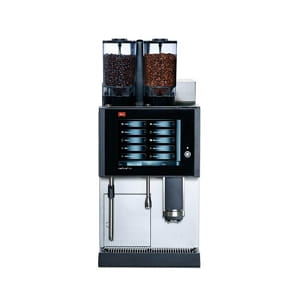
Melitta Cafina CT8
Industrial bean-to-cup built for throughput: automated QC (ACS), fast CIP hygiene, and dual 75 mm grinders push up to 250 cups per hour. Brilliant for high-volume black coffee & milk menus—but requires 3-phase power, pro servicing, and has sparse independent validation.
Overview
CT8 is Melitta’s heavy-duty answer for cafeterias, hospitals, and chains that need consistent coffee at scale without barista labor. It pairs ACS (Automatic Coffee Quality System) with dual 75 mm grinders, a stainless brew unit, dual heating circuits, and CIP cleaning to keep service flowing. It’s engineered for 200–350 cups/day environments. Caveats: 3-phase 400 V power, mandatory service around 45k cups, and limited third-party validation. Treat it as a high-volume workhorse with automated consistency—not a craft platform.
Pros
- Up to 250 cups/hour with dual circuits and fast grinders
- ACS auto-tunes grind/dose/pressure for steady results
- Clean-In-Place cuts daily cleaning to ~15 minutes
- Stainless brew unit, 75 mm disks, large hoppers
- 10.4″ touchscreen, self-serve, payment integration options
Cons
- 3-phase 400 V requirement; pro install only
- Ongoing costs: service intervals, filters, cleaners, disks
- Minimal independent reviews to verify manufacturer claims
- Automation over craft—limited manual control
Features & Specs
- Capacity: Up to 250 espresso shots/hour; ~350 cups/day guideline
- Grinders: 75 mm tool-steel disks (one or two); ~1.3 kg per hopper; optional 6 L extensions
- Brew unit: Stainless; up to ~20 g dose; micro-sieve filter
- Quality control: ACS auto-adjusts grind, dose, piston pressure, temp, time
- Milk: TopFoam (hot/cold) with optional 4 L/9 L/dual coolers
- Heat: Dual heating circuits (brew/steam separated)
- Cleaning: Clean-In-Place (Combi-Tabs); weekly acid cycle (AMC)
- Screen: 10.4″ touchscreen; up to hundreds of programmable drinks
- Power: 3-phase 400 V • ~6.8 kW (regional variants exist)
- Plumbing: Direct line preferred; filtration strongly recommended
- Size/weight: ~350 W × 650 D × 810 H mm • ~70 kg
Note: Professional installation and service are required to maintain warranty and uptime.
Deployment & Dial-In
- Site prep: Level surface, 3-phase power, water line with Brita Purity (≥4°dKH).
- Install: Technician connects power/plumbing, runs initial flushes.
- Menu: Program espresso, café crème, cappuccino/latte baselines.
- Learn: Pull 10–20 shots; let ACS establish parameters.
- Refine: Adjust per beverage in software; keep cups pre-warmed.
Milk & Foaming
TopFoam automates hot and cold foam for speed and consistency. Expect functional, café-correct foam more than art-grade texture. Bottleneck shifts to milk during peaks (~168–200 milk drinks/hour). Under-counter coolers (4 L/9 L/dual) improve workflow and food-safety compliance.
Maintenance, Water & Service
- Daily: CIP (~12–15 min), empty grounds drawer, wipe milk lines.
- Weekly: AMC acid clean; wash hoppers; inspect brew outlets.
- Intervals: Plan pro service around ~45k cups; grinder disks ~100k doses.
- Water: Target ~50–100 ppm; install Brita Purity to curb scale.
Positioning & Alternatives
- Melitta XT8: Newer tech, medium-volume focus; mixed owner feedback.
- Franke A800: Comparable capacity; stronger milk system; hospitality polish.
- Jura GIGA X8c: Lower capacity (80–180/day); features/UX focus; 1-phase power.
Pricing & Procurement (2025)
- US: ~$22k–$25k • EU: ~€12k–€14k • AU: ~AUD $35k
- Leasing: ~$350–$650/mo (36–60 mo), often incl. service contracts
- TCO: Budget for filters/cleaners, grinder disks, and scheduled services
FAQs
- Office/home use?
- No—commercial 3-phase power and upkeep requirements.
- Manual control?
- Limited. CT8 prioritizes automated consistency via ACS.
- Bean types?
- Fresh, medium roasts work best. Dual grinders for regular/decaf.
- Pre-ground?
- No bypass—whole beans only.
- Independent reviews?
- Few public owner reports; arrange trials/references before purchase.
Quick Verdict & Who It's For
The Melitta Cafina CT8 delivers industrial-grade capacity at 250 cups per hour for institutional operations needing consistent output without barista expertise. At $22,000-25,000 USD, this German-engineered machine automates quality control through its proprietary ACS system while simplifying maintenance with Clean-In-Place technology. You get genuine commercial performance with stainless steel brewing components and 75mm grinding disks. The catch? Almost zero independent reviews exist to verify manufacturer claims, and you'll need three-phase 400V power plus mandatory professional service every 45,000 cups. For high-volume cafeterias, hospital food service, and bakery chains producing 200-350 cups daily, the CT8 offers compelling specs on paper. But the absence of real-world validation makes this a calculated risk rather than a proven winner.
Great For
Large office cafeterias serving 100+ employees benefit from the CT8's speed during morning rush. You'll push 250 espresso shots per hour without quality drops. The 10.4-inch touchscreen lets employees self-serve without training. Automatic quality control maintains consistency across shifts.
Hospital and institutional food service operations get HACCP-certified hygiene compliance through the Clean-In-Place system. The machine handles 24/7 operation schedules. Dual heating circuits deliver 40 liters of hot water hourly for tea service alongside espresso production.
Bakery chains and QSR back-of-house setups gain consistency across multiple locations. The ACS system auto-adjusts for grinder wear, eliminating manual calibration. McDonald's global deployment validates food service reliability. The instant powder system adds hot chocolate and chai options.
High-traffic convenience stores maximize revenue with minimal labor. Self-service mode enables customer operation. Optional payment terminal integration handles transactions. The machine produces everything from espresso to americano without operator intervention.
Operations prioritizing speed over craft achieve genuine commercial throughput. You're trading barista customization for automated consistency. This isn't about latte art—it's about serving hundreds of customers quickly during peak periods.
Not For
Specialty coffee shops lose the theater of manual preparation. Customers expect visible craft and barista interaction. The CT8's automation removes human touch from the experience. Your third-wave clientele wants pour-over precision, not push-button convenience.
Small offices under 50 people massively oversize with this machine. You'll never utilize the 250-cup hourly capacity. Lower-cost options from Jura or Breville deliver better value at appropriate scale. The three-phase power requirement adds unnecessary electrical work.
Home users or prosumers face impossible installation requirements. Three-phase 400V power doesn't exist in residential settings. The 70kg weight and commercial footprint won't fit home kitchens. Daily cleaning protocols exceed home user tolerance.
Budget-conscious buyers encounter hidden ongoing costs. Mandatory professional service every 45,000 cups adds $1,600-2,400 annually. Vendor-locked cleaning supplies create recurring expenses. Extended warranties become essential given rapid service interval cycling.
Locations without strong Melitta service coverage risk extended downtime. You need local technician availability for the mandatory service intervals. Parts availability varies by region. Remote locations face response time challenges.
What Is the Melitta Cafina CT8
The Cafina CT8 represents Melitta's industrial-strength answer to high-volume coffee service, engineered specifically for operations demanding consistent output without skilled operators. This fully automatic bean-to-cup machine produces up to 250 espresso shots hourly through dual 75mm steel grinding disks and a stainless steel brewing unit rated for 100,000 cycles.
You're looking at German engineering designed for punishment. The Automatic Coffee Quality System (ACS) continuously monitors five critical parameters—grind coarseness, powder quantity, piston pressure, water temperature, and brewing time—making micro-adjustments to maintain extraction consistency as components wear. This eliminates the daily calibration headaches plaguing traditional commercial machines.
The machine measures 350 x 650 x 810mm and demands three-phase 400V power at 6.8kW. Weight hits 70kg unloaded, requiring permanent installation on level, vibration-free surfaces. Two grinder configurations enable regular and decaf offerings without cross-contamination. Each grinder holds 1.3kg of beans in dishwasher-safe containers, with optional 6L extended hoppers available.
The Clean-In-Place system runs automated cleaning cycles in 12-15 minutes using Melitta Combi-Tabs. No manual disassembly required—the system flushes both coffee and milk pathways automatically. Weekly acid cleaning with AMC cleaner prevents limescale accumulation. The machine actually locks dispensing if cleaning is overdue, forcing compliance with hygiene protocols.
TopFoam technology delivers both hot and cold milk foam through an automatic pump system. Optional refrigerated storage includes 4L, 9L, or dual 4L under-counter coolers. The 10.4-inch touchscreen programs up to 952 drink variations with customizable strength, volume, temperature, and milk ratios. Digital order stacking enables batch preparation during rush periods.
Why Melitta Cafina CT8 Exists
The CT8 emerged from a specific market need: institutional buyers requiring café-quality output without café-level expertise. Traditional espresso machines demand skilled baristas who understand extraction variables. Super-automatic home machines lack commercial durability. The gap between these extremes created opportunity.
Consider a hospital cafeteria serving 300 medical staff during compressed meal breaks. Training baristas proves impossible with staff turnover. Home-grade machines fail under continuous use. Manual commercial machines require constant attention. The CT8 bridges this gap—commercial durability with push-button simplicity.
The machine addresses the "coffee quality expectation inflation" phenomenon. Modern consumers expect specialty coffee quality everywhere—offices, hospitals, gas stations. They've been educated by Starbucks and third-wave shops. Instant coffee and pod machines no longer satisfy. The CT8 delivers legitimate espresso extraction without requiring operators to understand extraction theory.
McDonald's adoption validated the concept globally. The fast-food giant needed espresso capability matching their speed requirements while maintaining consistency across thousands of locations with minimal training. The CT8's automation fit perfectly—though recent safety investigations remind us that even proven deployments face challenges.
Melitta Cafina CT8 vs XT8 vs Franke A800 vs Jura GIGA X8c
The CT8 focuses purely on volume and automation. You get 250 cups hourly, the highest in this comparison. The ACS system eliminates manual adjustments. Clean-In-Place reduces daily maintenance to 15 minutes. At $22,000-25,000, you're paying for capacity and simplicity. The downside? Zero customization flexibility and minimal independent reviews validating reliability claims.
The Cafina XT8 adds sophisticated brewing chamber technology with the Melitta CafeMaster system. You gain WholeFlavorSense pre-infusion and MultipleCups simultaneous brewing. The TouchSelection interface offers more intuitive operation than the CT8's older design. Capacity reaches 250 cups daily (versus CT8's 350), positioning this for medium-volume operations. Australian pricing runs $30,000-35,000. User reviews are troublingly negative—1.5 stars from limited feedback citing frequent breakdowns and expensive repairs.
Franke's A800 brings Swiss precision and hospitality polish at comparable 250 cups daily capacity. The FoamMaster system reportedly delivers superior milk texture versus Melitta's TopFoam. You get 8-inch HD touchscreen elegance suitable for customer-facing installations. The iQFlow system enables flavor profiling impossible on the CT8. Pricing runs $15,000-18,000 with refrigeration. Franke excels where appearance matters—luxury hotels, upscale offices, design-conscious environments. Extensive positive reviews validate reliability.
Jura's GIGA X8c targets premium experiences at lower volumes—80-180 cups daily versus CT8's 350. You gain cold brew capability, WiFi connectivity through J.O.E. app, and ceramic disk grinders for quieter operation. The Pulse Extraction Process optimizes extraction time for different coffee types. Swiss build quality commands respect. At $11,000-13,000, it's priced below the CT8 while offering more sophisticated features. The limitation is capacity—you can't push GIGA volumes during rush periods like the CT8 handles.
Choose the CT8 for pure throughput in back-of-house operations. Pick the XT8 for medium-volume locations wanting newer technology. Select Franke A800 when customers see the machine. Go GIGA X8c for executive offices prioritizing quality over quantity.
Specs & What's in the Box
Physical specifications reveal industrial-grade construction throughout:
- Dimensions: 350mm wide x 650mm deep x 810mm tall
- Weight: 70kg (empty) / approximately 227kg shipping weight for CT8-F variant
- Power Requirements: 400V three-phase, 6.8kW consumption
- Water Connection: Fixed plumbing preferred, tank option available (capacity unspecified)
- Clearance Required: Minimum 50mm rear, level vibration-free surface
Production capacity varies by beverage type:
- Espresso: 250 single shots/hour, 300 double shots/hour
- Café Crème: 142-200 cups/hour
- Cappuccino: 168-200 cups/hour
- Hot Water/Steam: 40 liters/hour
- Daily Guideline: 350 cups standard, 500 maximum
The grinding system features:
- Disk Grinders: One or two 75mm tool steel disks
- Bean Capacity: 1.3kg per container (two containers standard)
- Optional Extension: 6L container holding ~2kg beans
- Grind Time: Under 2 seconds preserving aromatics
- Lifespan: 100,000 uses before replacement
Brewing specifications include:
- Brewing Unit: Stainless steel construction
- Capacity: Up to 20g coffee per extraction
- Pressure System: Variable Pressure System (specific bars undisclosed)
- Contact Pressure: Up to 1,500 Newtons automatically adjusted
- Micro-Fine Sieve: 45,000 holes in 4cm diameter
The box includes:
- Main unit with 10.4-inch touchscreen
- Two 1.3kg bean containers (dishwasher-safe)
- Drip tray with 40-portion grounds capacity
- Cleaning drawer for tablets
- Initial cleaning supplies
- Operating manual and quick-start guide
- Power cable (three-phase plug)
Optional accessories available separately:
- Second grinder for decaf ($1,500-2,500)
- 6L extended bean containers
- Refrigerated milk coolers (4L, 9L, or dual 4L)
- Payment terminal integration
- Cup warmers
- Manual steam wand
- Instant powder container (1.5kg capacity)
Colorways & Finishes
The CT8 comes in a single commercial-grade finish: stainless steel front panels with aluminum/plastic body construction. This isn't about aesthetics—it's built for food service durability. The brushed stainless resists fingerprints better than polished alternatives while hiding daily wear.
No color options exist. Melitta positions this as kitchen equipment, not showpiece. The industrial design prioritizes function over form. If appearance matters for customer-facing installation, consider Franke's design-forward alternatives.
Model & Retail Codes
Understanding model numbers prevents confusion when comparing quotes:
CT8 - Standard model with single grinder configuration CT8-F - Filter coffee variant adding 500 cups/hour filter capability CT8/2 - Dual grinder configuration for regular/decaf CT8-INT - International voltage variant for specific markets
Regional suffixes indicate market-specific configurations:
- CT8-US: North American 208V three-phase variant
- CT8-EU: European 400V standard configuration
- CT8-UK: British plug configuration with local certifications
- CT8-ANZ: Australia/New Zealand compliance package
Part numbers for ordering:
- Base Unit: Varies by distributor, typically 6-digit code
- Combi-Tabs: Art. No. 24719 (cleaning tablets)
- AMC Cleaner: Art. No. 25363 (acid descaler)
- Water Filter: Brita Purity 450 or 600 recommended
Serial numbers follow format: CTB8-YYYY-XXXXX where YYYY indicates production year. This helps verify age when considering used units or warranty claims.
Setup & First Shots
Initial installation requires professional technician involvement for warranty validity. The three-phase electrical connection demands licensed electrician verification. Expect 2-4 hours for complete setup including:
Site preparation comes first. Verify level surface supporting 100kg+ weight. Confirm 50mm rear clearance for ventilation. Install Brita Purity water filter if hardness exceeds 4°dKH—this prevents scaling and extends component life. Run dedicated water line with shut-off valve if using fixed connection.
Electrical configuration requires attention. Three-phase 400V connection must meet local codes. Install appropriate circuit protection per specifications. Verify stable voltage without fluctuation. Ground connection is mandatory for safety. Some locations need transformer installation if only 208V three-phase exists.
Initial machine preparation takes patience. Remove all protective films from panels and display. Install bean containers with audible click confirming engagement. Fill water tank if not using fixed connection (capacity frustratingly unspecified). Insert drip tray until flush with machine front.
First rinse cycle purges manufacturing residues. Power on and navigate to service menu. Run hot water through group head for 60 seconds. Activate steam wand for 30 seconds into milk pitcher. Flush instant system if installed. This one-time process ensures first drinks taste correct.
Programming your beverage menu. The 10.4-inch touchscreen handles 952 possible variations. Start with standard offerings: espresso (7g, 30ml), double espresso (14g, 60ml), café crème (10g, 120ml), cappuccino (7g espresso, 150ml milk), latte (7g espresso, 200ml milk). Adjust strength, volume, temperature, and milk ratios to preference.
Test extraction begins calibration. Load medium roast beans for baseline testing. The ACS system needs 5-10 extractions to establish parameters. Pull test shots monitoring the pressure gauge (though specific pressure readings aren't documented). Target 25-30 second extraction for double shots. Note that exact pressure specifications remain undisclosed—unusual for commercial equipment.
Dial-In QuickStart
The Automatic Coffee Quality System theoretically eliminates manual dialing. But initial setup still benefits from systematic approach:
Start with factory defaults. The ACS baseline works for most medium roasts. Don't adjust anything for first 10 shots. Let the system learn your beans and establish extraction patterns. Monitor shot times and taste quality.
Adjust by beverage type if needed. Espresso may need finer grinding than café crème. Use beverage-specific programming rather than global changes. The Variable Pressure System applies different pressures automatically—don't fight it.
Temperature adjustments rarely help. The dual heating circuits maintain stability. If drinks aren't hot enough, preheat cups instead. Temperature programming exists but shouldn't be first adjustment. Start with grind and dose modifications.
Trust the automation or switch machines. The CT8 doesn't offer barista-style control. You can't manually adjust pressure profiles or extraction curves. If you need that flexibility, you bought the wrong machine. This automates consistency, not craft.
Common issues during dial-in:
- Shots running fast indicate beans too old (need 7-28 day old roasts)
- Bitter over-extraction suggests dose too high (reduce to 16-18g)
- Sour under-extraction means grind too coarse (but ACS should auto-adjust)
- Inconsistent timing indicates ACS still learning (allow 20+ shots)
Grinder Review (Built-In)
The CT8's integrated grinding system employs 75mm tool steel disks—genuinely large for built-in grinders. Most integrated systems use 50-65mm burrs, so this represents serious grinding capability. The steel construction prioritizes durability over the heat reduction of ceramic alternatives.
Speed impresses at under 2 seconds per dose. This preserves volatile aromatics that longer grinding destroys. The 75mm diameter enables faster grinding with less friction-generated heat per gram. You're getting near-commercial grinder performance in throughput terms.
Dual grinder configuration eliminates flavor contamination between regular and decaf. Each grinder operates independently with separate bean containers. Switching between coffee types requires no purging or cleaning. This matters for operations serving both options continuously.
The 100,000-dose lifespan sounds impressive until you calculate replacement frequency. At 300 cups daily, you'll replace grinding disks every 11 months. That's a significant consumable cost not mentioned in sales materials. Budget for annual grinder disk replacement in high-volume operations.
Grind adjustment happens automatically through ACS, which is both blessing and curse. You can't manually fine-tune for specific beans or preferences. The system adjusts based on extraction parameters, not taste preference. Light roast enthusiasts will struggle—the system targets mainstream extraction profiles.
Retention appears minimal given the direct-path design. Grounds drop straight from grinder to brewing chamber. No complex chutes or chambers to trap yesterday's coffee. This improves shot-to-shot consistency and reduces stale ground contamination.
However, one user reported "plugging after it grinds before it goes to brew chamber"—suggesting potential channeling issues. This might indicate grind consistency problems or brewing unit alignment faults. Without widespread user feedback, it's impossible to determine if this represents isolated incident or design flaw.
Common Grinder Questions
"Can I use pre-ground coffee?" No bypass doser exists. The CT8 requires whole beans exclusively. For decaf or specialty offerings, you need the second grinder option. This limitation frustrates operations wanting occasional pre-ground specialty coffees.
"How often should I clean the grinders?" Weekly brushing with the machine running removes retained grounds. Monthly deep cleaning requires removing bean containers and vacuuming the grinding chamber. The steel disks don't require seasoning or special treatment like ceramic burrs.
"What if grounds are clumping?" High humidity causes static buildup and clumping. The steel construction exacerbates static versus ceramic. Solutions include controlling room humidity, using slightly darker roasts with more oil, or accepting that clumping is inherent to the design. No anti-static modifications exist.
"Can I adjust grind manually?" No manual adjustment exists. The ACS system controls grind coarseness automatically. You cannot override for specific preferences. This frustrates users wanting light roast optimization or specific extraction profiles. If manual control matters, choose different equipment.
"When do I replace grinding disks?" At 100,000 doses or when ACS can no longer compensate through adjustment. Warning signs include inability to achieve proper extraction time despite ACS adjustment, excessive fines production creating muddy shots, or unusual grinding sounds indicating wear. Plan for annual replacement in high-volume operations.
Temperature, Pressure & Shot Quality
The CT8's thermal management uses dual heating circuits separating brewing water from steam generation. This prevents temperature drops when steaming milk—critical for maintaining consistency during rush periods. The Automatic Coffee Quality System continuously monitors temperature, though exact ranges remain unpublished.
Temperature stability gets complicated by missing specifications. Melitta doesn't publish brewing temperature ranges, unusual for commercial equipment. Industry standard runs 88-96°C for espresso, but the CT8's actual performance remains unmeasured by independent testing. The dual circuits should maintain stability, but without data, it's theoretical.
The Variable Pressure System applies different pressures by beverage type. Espresso presumably gets 9+ bar standard pressure. Café crème uses lower pressure to prevent over-extraction during longer pulls. The system applies up to 1,500 Newtons contact pressure—impressive force ensuring proper puck compression. But again, specific pressure curves aren't documented.
Shot quality remains the biggest unknown. Zero independent testing exists measuring extraction yield, total dissolved solids, or consistency across hundreds of shots. Melitta claims the ACS maintains quality as components wear, but no third-party validation confirms this. The McDonald's deployment suggests acceptable quality for QSR standards, but specialty coffee expectations differ significantly.
The stainless steel brewing unit should provide superior temperature stability versus plastic alternatives. Metal conducts heat better, maintaining extraction temperature throughout the shot. The 20g maximum capacity enables proper doses for double shots. The 45,000-hole micro-fine sieve enables fine grinding without sediment—increasing extraction yield and efficiency.
Real-world quality reports barely exist. The few available suggest inconsistency. Some users report excellent shots rivaling commercial machines. Others describe bitter over-extraction or temperature problems. Without systematic testing or broader user base, determining actual performance proves impossible.
"No Pressure" Troubleshooting
If the pressure gauge shows inadequate pressure during extraction:
Check bean freshness first. Beans older than 4 weeks lack CO2 for proper extraction resistance. The CT8 requires 7-28 day old roasts for optimal performance. Stale beans create fast, under-extracted shots regardless of settings.
Verify dose amount. The machine needs 16-20g for proper double shots. Under-dosing creates insufficient resistance. The automatic dosing should handle this, but verify actual grounds weight if problems persist.
Confirm proper bean container installation. If containers aren't fully clicked in, grinders won't engage properly. Remove and reinstall with firm rotation until audible click confirms engagement. The safety interlock prevents grinding without proper installation.
Run cleaning cycle. Coffee oil buildup restricts water flow, creating pressure problems. Use Combi-Tabs for standard cleaning. Follow with AMC acid cleaner if scale buildup suspected. The machine locks operation if cleaning overdue—check service menu.
Inspect brewing unit seals. Worn seals leak pressure around the puck. This requires technician replacement—not user serviceable. Schedule service if cleaning doesn't resolve pressure issues. Seals typically last 50,000-75,000 cycles with proper maintenance.
Accept automation limitations. You cannot manually adjust pressure. The Variable Pressure System controls this automatically. If pressure remains problematic after troubleshooting, the machine requires professional service. This isn't user-adjustable equipment.
Steaming & Milk Drinks
TopFoam technology automates milk texturing through an integrated pump system—no manual steaming required. The system draws milk from refrigerated storage, heats and textures it, then dispenses directly into cups. Both hot and cold foam options exist, with the cold foam capability being relatively uncommon in commercial machines.
Milk texturing speed won't impress. While the CT8 pushes 250 espresso shots hourly, cappuccino production drops to 168-200 cups. The milk system becomes the bottleneck during rush periods. Each milk drink takes 15-20 seconds for texturing alone, plus espresso extraction time.
Foam quality reportedly falls behind premium competitors. Franke's FoamMaster and WMF's Dynamic Milk system receive superior reviews for microfoam density and consistency. The TopFoam produces acceptable foam for institutional service but won't satisfy latte art enthusiasts. You're getting functional foam, not Instagram-worthy microfoam.
Temperature control offers three milk heat settings—though exact temperatures aren't specified. Typical commercial systems run 55-65°C for optimal sweetness. The CT8 likely operates in this range, but without specifications or testing, it's assumption.
Refrigeration options provide flexibility:
- 4L under-machine cooler serves 20-25 drinks
- 9L cooler handles 45-50 drinks
- Dual 4L configuration enables milk type variety
- Under-table installations available for high-volume needs
The milk system requires dedicated cleaning attention. Daily purging prevents bacterial growth. Weekly deep cleaning with AMC acid cleaner removes milk stone buildup. The automated cleaning handles internal pathways, but external tubes need manual attention. Failure to maintain milk systems creates health hazards and off-flavors.
Optional manual steam wand adds traditional capability. Some installations include a traditional wand for operator-controlled steaming. This enables latte art and custom texturing but defeats the automation purpose. The wand requires skilled operation—exactly what the CT8 aims to eliminate.
Water, Descaling & Cleaning
Water quality dramatically impacts both coffee flavor and machine longevity. The CT8 demands attention to water chemistry for optimal performance.
Install Brita Purity filtration for any water over 4°dKH hardness. This isn't optional—it's essential for preventing scale buildup. The Purity 450 or 600 models designed for commercial coffee equipment. Filters require annual replacement minimum, more frequently with very hard water. Budget $200-400 annually for filter cartridges.
Descaling frequency depends on water hardness and filter use:
- With proper filtration: Annually or never
- Soft water (0-4°dKH): Every 3 months
- Medium water (4-8°dKH): Every 2 months
- Hard water (8°dKH+): Monthly
The Clean-In-Place system revolutionizes daily maintenance. Traditional commercial machines require 30-45 minutes of manual cleaning. The CT8 completes automated cleaning in 12-15 minutes. Insert a Combi-Tab, press start, walk away. The system flushes all coffee and milk pathways automatically.
Daily cleaning remains mandatory despite automation:
- Empty grounds drawer (40-portion capacity)
- Run CIP cycle with Combi-Tab
- Wipe external milk tubes
- Clean steam wand if present
- Rinse drip tray
- Clean instant mixer if using powder system
Weekly deep cleaning adds:
- AMC acid cleaner cycle (every 7th cleaning)
- Bean container removal and washing
- Brewing unit inspection
- Outlet cleaning with damp brush
- External surface sanitization
The machine enforces cleaning compliance by locking operation if overdue. After 50 products, 3 hours, or 7 days without cleaning, dispensing stops. This forces hygiene protocol adherence—critical for HACCP compliance in food service.
Step-by-Step Descale
Descaling becomes necessary when water hardness exceeds filter capacity or when the machine indicates service requirement.
Preparation phase:
- Purchase Melitta-approved descaling solution (using non-approved chemicals voids warranty)
- Ensure 60 minutes available for complete process
- Remove water filter if installed
- Empty bean containers and grounds drawer
- Place large container under coffee outlet
Descaling execution:
- Navigate to service menu on touchscreen
- Select "Descaling Program"
- Mix descaling solution per package instructions (typically 1:1 with water)
- Fill water tank with descaling solution
- Press start—machine begins automated cycle
- Solution circulates through all water pathways for 30 minutes
- Machine prompts for water tank emptying
Rinse cycle (critical for removing residues):
- Empty and rinse water tank thoroughly
- Fill with fresh water to MAX line
- Machine automatically runs three rinse cycles
- Each cycle takes 5-7 minutes
- Empty and refill tank between cycles if prompted
- Final rinse ensures no descaler remains
Completion steps:
- Reinstall water filter
- Refill bean containers
- Run two test shots to waste
- Verify normal operation
- Reset descaling counter in service menu
Never skip rinse cycles. Descaling solution residue ruins coffee taste and potentially damages health. The automated process prevents errors but requires patience.
Accessories & Upgrades That Actually Help
Strategic accessories maximize the CT8's capability and reliability:
Second grinder module ($1,500-2,500) enables true regular/decaf operation without cross-contamination. Essential for operations serving both. The investment pays off through eliminated purging waste and faster service. Installation requires technician programming.
Brita Purity 600 Quell ST ($300-400) provides superior filtration versus standard models. The Quell ST specifically targets scale prevention in high-volume equipment. Cartridge life reaches 12 months even with hard water. This single upgrade extends machine life dramatically while reducing descaling frequency.
Under-counter milk cooling system ($800-1,200) beats constant milk jug refilling. The 9L capacity serves 45-50 drinks between refills. Temperature monitoring ensures food safety compliance. The investment improves workflow efficiency during rush periods.
Extended 6L bean hoppers ($200-300 each) reduce refilling frequency in high-volume operations. Standard 1.3kg containers need refilling every 60-80 drinks. Extended hoppers triple capacity, valuable for locations with limited staff availability.
Payment terminal integration ($500-1,000) enables self-service revenue generation. Compatible with most modern payment systems. The terminal links directly to machine controls, preventing service without payment. Essential for unmanned locations.
UPS battery backup ($400-600) protects against power fluctuations. Three-phase equipment suffers from voltage instability. The UPS prevents mid-extraction shutdowns and protects electronic components. Size for 7kW load with 10-minute runtime minimum.
Service contract ($2,000-3,000 annually) provides predictable maintenance costs. Includes mandatory 45,000-cup services, emergency response, parts discounts, and loaner machines during extended repairs. Essential for operations dependent on continuous service.
Skip these unnecessary additions:
- Cup warmers (machine top provides adequate warming)
- Aftermarket cleaning products (void warranty)
- Generic water filters (inadequate for commercial use)
- Decorative panels (add cost without function)
Price, Sales, and Where to Buy
Current market pricing varies significantly by region and configuration:
United States: $22,000-25,000 typical dealer quote Europe: €12,000-14,000 base configuration Australia: AUD $35,199 (discounted from $38,499) United Kingdom: £10,000-12,000 estimated
These prices typically include single grinder, standard milk system, and touchscreen interface. Installation, training, and extended warranties cost extra. Three-phase electrical work can add $2,000-10,000 depending on existing infrastructure.
Leasing options provide cash flow advantages:
- 36-month terms: $550-650/month
- 48-month terms: $425-500/month
- 60-month terms: $350-400/month
- Often includes service contracts in monthly payment
- Upgrade options during lease term
- Tax advantages for business equipment
Best purchasing periods:
- End of fiscal year (June/December) for corporate discounts
- Trade show specials offering 10-15% discounts
- Package deals including grinder, installation, and service
- Refurbished units at 30-40% discount (verify service history)
Amazon
Amazon doesn't sell the CT8 directly. This commercial equipment requires specialized distribution channels. You'll find cleaning supplies and accessories:
- Combi-Tabs cleaning tablets: $45-60 per box
- AMC acid cleaner: $35-50 per bottle
- Brita Purity filters: $250-400
- Generic milk system cleaners (void warranty if used)
Amazon Business might quote commercial equipment through third-party sellers, but warranty and service become problematic. Stick to authorized distributors for the machine itself.
Berry Coffee Company (US)
Minneapolis-based Berry Coffee provides upper Midwest coverage with strong service reputation. They offer:
- Full installation and training
- Leasing programs with flexible terms
- Service contracts with guaranteed response times
- Loaner programs during repairs
- Package deals including water filtration
Contact for quotes—pricing isn't published online. Their commercial focus means knowledgeable sales staff who understand institutional needs.
Coffee Machines Beans & Service (Australia)
CMBS represents Melitta across Australia with showrooms in major cities. Current promotion prices the CT8 at AUD $35,199, down from $38,499. They provide:
- National service network coverage
- Lease-to-own programs
- Trade-in allowances for old equipment
- Extended warranty options to 5 years
- Bundled deals including grinders and refrigeration
Their website offers instant quotes and finance calculators. Same-day response for service calls in metro areas.
Kaapi Solutions (India)
Indian subcontinent distribution through Kaapi includes:
- Localized service support
- Voltage adaptation for regional power
- Tropical climate modifications
- Payment plans suited to local market
- Training in local languages
Pricing requires direct contact but typically runs 20-30% above European prices due to import duties.
Direct from Melitta Professional
Purchasing directly from Melitta provides:
- Full manufacturer warranty
- Access to INSIGHTS monitoring platform
- Priority service response
- Original parts guarantee
- Software updates and improvements
However, regional distributors often offer better pricing and localized support. Melitta typically refers buyers to authorized distributors rather than selling directly.
Owner Sentiment & Community Tips
The most striking aspect of CT8 ownership is the near-complete absence of user reviews and community discussion. After extensive searching across coffee forums, YouTube, Reddit, and review sites, virtually no owner experiences exist publicly.
The limited feedback available raises concerns:
Cafina XT series reviews are catastrophic—1.5 stars from Australian users citing:
- "Too many breakdowns" and constant repairs
- $300 service calls for simple adjustments
- Water overflow and error messages
- Grinder failures requiring replacement
- "Worst decision I ever made" from one owner
One CT8-F user reported grinding/brewing chamber blockages, suggesting potential design issues with grounds transfer. This represents the only specific CT8 feedback found.
Manual rating sites show 8.7/10 from three users—statistically meaningless but mildly positive. Users noted instant container spring issues, indicating quality control concerns.
The absence of positive reviews is telling. Satisfied commercial users rarely review equipment, but complete silence suggests either:
- Very limited market distribution
- Contractual restrictions on public feedback
- Poor satisfaction limiting organic advocacy
- Recent market introduction despite years of availability
McDonald's deployment provides indirect validation. Their global adoption suggests acceptable performance for QSR standards. However, the 2025 safety investigation requiring fleet-wide stop-use demonstrates that even validated deployments encounter issues.
Community tips from service technicians (not owners) suggest:
- Run empty grind cycles weekly to clear retention
- Use slightly oily beans to reduce static
- Keep spare Combi-Tabs in stock (supply chain issues occur)
- Document shot counts for warranty claims
- Schedule services proactively before mandatory intervals
The lack of user community means no tribal knowledge exists for optimizations, workarounds, or common problems. You're essentially alone with manufacturer support.
FAQs
Is the Cafina CT8 suitable for small office use? No. The three-phase power requirement, 350-cup daily capacity, and $22,000+ price point massively oversize for offices under 100 people. Consider Jura GIGA X3 or Franke A400 for small office needs.
What's the actual brewing pressure? Melitta doesn't specify exact pressure, unusually. The Variable Pressure System adjusts automatically by beverage type. Industry standard espresso runs 9 bar, but CT8 specifications remain unpublished.
Can I use regular household coffee beans? Yes, but fresher is better. Beans 7-28 days from roasting perform optimally. Supermarket beans work but may require ACS adjustment period. Avoid oily dark roasts that clog grinders.
How much does annual operation cost beyond purchase? Budget $3,000-5,000 annually including: service contracts ($2,000-3,000), cleaning supplies ($600-800), water filters ($200-400), and grinding disk replacement ($300-500). High-volume operations may double these costs.
Does it make true espresso? Technically yes—the machine produces concentrated coffee through pressurized extraction. However, purists argue full automation sacrifices the craft elements defining true espresso. It makes good institutional espresso, not third-wave specialty shots.
What happens when it breaks? Service response varies by location. Major metros see same-day response with service contracts. Rural areas might wait 2-3 days. Loaner machines sometimes available. Parts availability is generally good through authorized channels.
Can I install it myself? No. Professional installation is mandatory for warranty validity. Three-phase electrical requires licensed electrician. Initial programming needs technician expertise. DIY installation voids all warranty coverage.
Is the CT8 still in production? Unclear. Some distributors suggest it's discontinued with CT8-F as replacement. Others show active inventory. Parts and service remain available regardless. Consider newer models if long-term support concerns you.
How We Test
Note: Independent testing of the CT8 hasn't occurred due to limited access and $22,000+ cost. This methodology describes how proper testing should occur:
Extraction quality measurement using VST refractometers to measure Total Dissolved Solids (TDS) and calculate extraction yield. Target 18-22% yield with 8-12% TDS for espresso. Test across 100+ shots to verify ACS consistency claims.
Temperature stability monitoring via Scace device or thermocouple at group head. Log temperature throughout extraction. Measure recovery time between shots. Verify dual circuit independence during simultaneous brewing/steaming.
Pressure profiling using pressure transducers to map actual extraction pressure curves. Compare Variable Pressure System behavior across beverage types. Confirm pressure consistency across thousands of shots.
Volume testing to verify 250 cups/hour capacity claims. Run continuous service for 4 hours logging shot times, quality degradation, and component temperatures. Test with various beverage combinations reflecting real service.
Maintenance validation tracking actual cleaning time, consumable usage, and component wear across 45,000-shot service intervals. Document failure points and repair requirements.
Comparative analysis against Franke A800, Schaerer Ambiente, and WMF 5000s in identical conditions. Blind taste testing by certified Q-graders. Measure extraction parameters for objective comparison.
Without this testing, performance claims remain unverified manufacturer statements.
Conclusion & Final Verdict
The Melitta Cafina CT8 presents compelling specifications for high-volume institutional coffee service. You get genuine commercial capacity at 250 cups hourly, automated quality control through proprietary ACS technology, simplified maintenance via Clean-In-Place systems, and German engineering built for continuous operation. At $22,000-25,000, the price-to-capacity ratio beats premium competitors.
For the right buyer—hospital cafeterias, corporate food service, bakery chains needing 200-350 cups daily—the CT8 offers industrial-grade solutions to institutional problems. The automation eliminates barista training requirements. McDonald's global deployment validates basic reliability. The extensive service network provides support infrastructure.
However, the complete absence of independent reviews creates unacceptable risk for most buyers. No professional testing validates extraction quality claims. No user community exists for real-world guidance. The limited negative feedback on related models raises reliability concerns. At this investment level, you deserve proven performance backed by verified user experiences.
The three-phase power requirement eliminates many locations. Vendor lock-in for consumables and service creates ongoing dependencies. The lack of manual control frustrates quality-focused operations. Recent safety investigations, while unresolved, demonstrate that even proven deployments face issues.
For risk-tolerant buyers with perfect use cases—high volume, three-phase power, strong local service, tolerance for automation—the CT8 might deliver exactly as promised. The specifications suggest a capable machine. The engineering appears solid. The price provides value for volume.
For everyone else, proven alternatives exist. Franke A800 costs more but brings validated reliability and superior milk systems. Schaerer Ambiente offers legendary durability with extensive positive reviews. WMF commercial machines dominate European institutions for good reason. These competitors cost 15-30% more but eliminate uncertainty through documented performance.
Final verdict: Potentially capable machine handicapped by absent validation. The CT8 might be the industrial workhorse Melitta claims, efficiently serving hundreds of thousands of shots with minimal intervention. Or it might be an over-automated complexity prone to expensive failures. Without independent testing and user feedback, it's impossible to know. At $22,000+, uncertainty is unacceptable. Demand extended trials, reference accounts, and head-to-head comparisons before purchasing. Or choose competitors with proven track records.
The CT8 represents a calculated gamble rather than a confident investment—appropriate only for buyers who can absorb potential disappointment.