
Coffeedant buyer’s guide
Best Affordable Espresso Machines Between $600 and $1,000
This is the price band where espresso machines stop feeling like compromises and start feeling like long-term tools. You begin to see real PID control, sturdier groups, better steam, and more honest workflows. The trick is buying the machine that spends the budget in the right place for your routine, not just the one with the longest feature list.
Quick answer
The Profitec GO is the best overall affordable espresso machine between $600 and $1,000 because it gives you the features that matter most in daily use: stable temperature control, a built-in shot timer, adjustable pressure, and a compact footprint that still feels serious. If you want to stay closer to the lower end of the range, the Lelit Anna PL41TEM is the smarter value play. If you want an all-in-one machine with grinder convenience, start with the Breville Barista Pro.
On this page
Comparison table
| Machine | Best for | Price | Why buy |
|---|---|---|---|
| Profitec GO | Best overall | $899.95 | PID control, shot timer, compact footprint |
| Lelit Anna PL41TEM | Best around $700 | $699.00 | Small body, PID, lower entry price |
| Breville Barista Pro | Best all-in-one | $679.00 | Built-in grinder, fast heat-up, easy workflow |
| Gaggia Classic Evo Pro E24 | Best upgrade platform | $899.95 | 58 mm platform, brass boiler, upgrade path |
| Bezzera Hobby (New Hobby) | Best steam for size | $799.00 | Compact metal body with strong steam |
| Rancilio Silvia V6 | Best long-term classic | $995.00 | Serviceable classic with huge parts ecosystem |
| Lelit Victoria PL91T | Best compact premium | $899.95 | PID plus 58 mm workflow in a small chassis |
| La Pavoni New Domus Bar | Best metal all-in-one | $899.95 | Integrated grinder in a compact metal station |
The shortlist
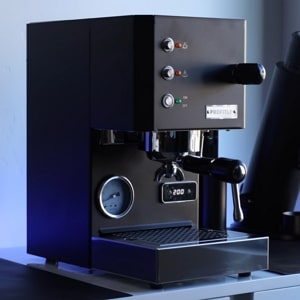
Profitec GO
If you want the clearest step up from entry-level espresso without jumping into prosumer bulk, the Profitec GO is the easy recommendation. It gives you the features that actually change day-to-day consistency: real PID temperature control, a built-in shot timer, and adjustable brew pressure. That combination matters because this price band is where machines stop being judged only on whether they can make espresso at all and start being judged on how repeatably they can do it.
In use, the GO feels thought through. It heats quickly, the controls are direct, and it gives you useful feedback instead of asking you to guess your way through temperature surfing. It is still a single boiler, so milk drinks are not effortless back-to-back, but for one or two morning drinks it is one of the smartest places to spend about nine hundred dollars. Pair it with a capable grinder and it behaves like a serious long-term home setup, not a transitional purchase.
- True PID control with degree-level brew and steam settings
- Built-in shot timer on the PID display
- No hot-water tap
- Single-boiler sequencing for milk drinks

Lelit Anna PL41TEM
The Anna PL41TEM is one of the strongest arguments for spending closer to seven hundred dollars and putting the rest of the budget into the grinder. Its footprint is compact, the brass boiler gives it a more substantial thermal base than many cheap starters, and the PID helps keep the machine predictable once fully warmed. That predictability is what makes the Anna so appealing for newer home baristas who want real control without buying a machine that feels intimidating.
Deals of the Week
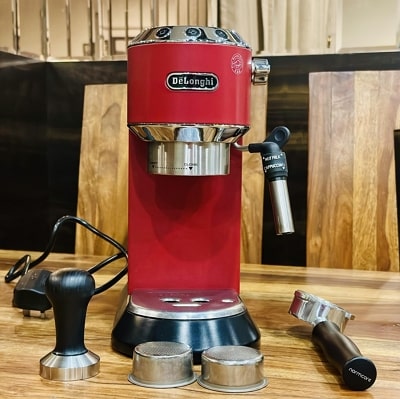
Its compromise is the 57 mm workflow. That is not a problem for most first-time buyers, but it does mean the accessory universe is smaller than the 58 mm world. It is also still a single boiler, so espresso and milk happen in sequence. None of that stops it from being a very good home machine. In fact, it is one of the best ways to buy temperature control and compact size without burning the full thousand-dollar ceiling.
- Brass boiler and PID on PL41TEM keep extractions repeatable once warmed.
- Compact body (23 × 38 × 34 cm, ~7.5 kg) fits under most cabinets.
- Single-boiler juggling for brew and steam slows latte rounds.
- 57 mm ecosystem is smaller than 58 mm, so baskets and PFs take more searching.
Breville Barista Pro
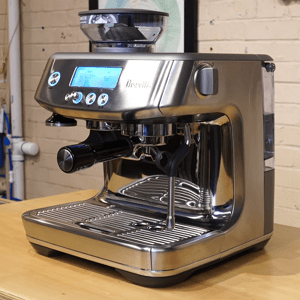
The Barista Pro earns its place because convenience is part of value. A built-in grinder, fast heat-up, clear display, and approachable controls make this one of the least intimidating ways to buy into real espresso. If you know you want a single machine on the counter and you care about quicker mornings more than endlessly swapping baskets and tweaking pressure, the Barista Pro makes a lot of sense.
The tradeoff is that an integrated grinder is still a compromise compared with a strong separate burr grinder. Dose consistency and grind flexibility are good enough for many households, not ideal for obsessive dialing in. That said, the point of the Barista Pro is not to win against a carefully chosen two-piece setup. It is to get you from beans to drink with less friction. For many buyers, that is exactly the kind of affordable that matters.
- 3-second ThermoJet heat-up—brew now, not later
- LCD shot timer and status simplify learning & dialing-in
- $150–$200 premium over Express (speed, not cup quality)
- Integrated grinder shows ±2–3g dose variance; struggles with ultra-light roasts
Gaggia Classic Evo Pro E24
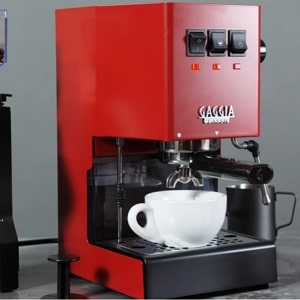
The Gaggia Classic Evo Pro E24 is for shoppers who want a real 58 mm platform and do not mind learning some technique. The brass boiler update gives it a more convincing thermal foundation than the older aluminum-boiler story, and the three-way solenoid keeps puck cleanup tidier than many cheaper machines. This is one of those machines that still makes sense because it teaches proper espresso skills instead of hiding them.
It is not polished in the way a PID machine is polished. You still manage temperature by routine, and the single-boiler design slows milk-heavy sessions. But if your priority is long-term value, repairability, and access to the huge 58 mm accessory ecosystem, the Gaggia stays relevant. With a good grinder and fresh beans, it can make much better sense than a supposedly more convenient machine that runs out of room to grow.
- Brass boiler (E24) brings real thermal stability
- Commercial 58 mm group & portafilter with 3-way solenoid
- No PID—temperature surfing required for consistency
- Small boiler limits consecutive milk drinks
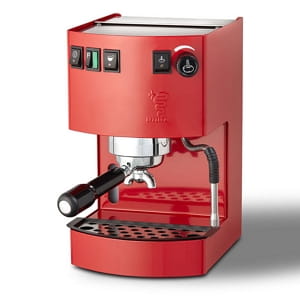
Bezzera Hobby (New Hobby)
The Bezzera Hobby is one of the more appealing compact traditional machines in this band because it feels unapologetically mechanical. You get a solid metal chassis, a 58 mm lane, and stronger steam performance than many small single boilers. That makes it especially attractive for people who want a compact espresso machine that still feels rooted in classic Italian home espresso rather than consumer appliance logic.
What you do not get is hand-holding. There is no PID, no built-in timer, and no gentle on-ramp for experimentation. The Hobby rewards routine, attention, and a willingness to learn its rhythm. For the right buyer, that is exactly the appeal. If you want a small, sturdy machine with better-than-average steam and you would rather trust build quality than extra electronics, the Hobby is a very credible pick.
- Commercial 58 mm group + portafilter ecosystem
- 0.25 L brass boiler heats fast and steams hard for its size
- No PID, no shot timer, no brew pressure gauge
- Single-boiler dual-use means brew/steam switching cadence
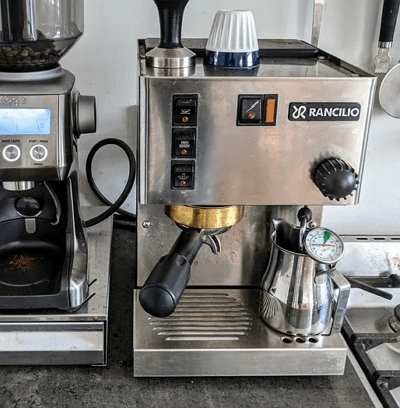
Rancilio Silvia V6
The Silvia V6 is still on lists like this because it solves espresso ownership in a very durable way. The chassis is sturdy, the service ecosystem is strong, and the 58 mm workflow gives you plenty of room to grow. It does not try to flatter the user with shortcuts. Instead, it offers a machine that can stay on the counter for a long time if you are willing to learn it and maintain it.
That is also why it is not the easiest recommendation for everyone. Near the top of this price band, some buyers will want PID control or an easier milk routine. Silvia gives you the classic path instead: strong parts support, honest manual workflow, and the potential for very good espresso once you establish routine. If longevity matters more to you than flashy feature lists, it remains one of the safest buys in the segment.
- Stainless chassis with long parts life and service ecosystem.
- 58 mm portafilter compatibility and 2 L reservoir.
- Single-boiler cadence slows milk rounds.
- Temperature surfing needed without PID.
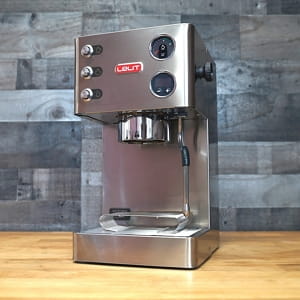
Lelit Victoria PL91T
The Victoria is one of the best examples of a small machine that behaves more expensively than it looks. You get PID control, a 58 mm workflow, and a cleaner user experience than many stripped-back classics, all in a chassis that still fits normal home counters. That makes it a very attractive pick for buyers who want refined daily espresso without stepping into bulky heat exchanger territory.
Because it is still a single boiler, it is not the right answer for heavy entertaining or constant milk rounds. Where it shines is the daily balance of compact size, temperature control, and accessory compatibility. The Victoria feels like a machine you buy because you already know what you value: repeatable espresso, sensible footprint, and enough refinement that the routine stays enjoyable instead of feeling like a chore.
- 58 mm LELIT58 ecosystem (baskets, tampers, bottomless)
- LCC PID for brew + adjustable steam temperature
- OPV adjustment is internal (remove panels)
- Single-boiler sequencing limits multi-drink milk pace
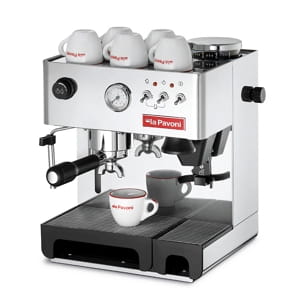
La Pavoni New Domus Bar
The New Domus Bar is an unusual but appealing answer for buyers who want one compact station instead of a separate grinder and machine. It combines an integrated grinder, pressure gauge, and traditional espresso workflow in a tidy stainless package that takes up less counter logic than many two-piece setups. In small kitchens, that can be a real advantage, especially if visual clutter matters as much as raw performance.
Its limits are exactly where you would expect them to be. The grinder does not give you the micrometric precision of a dedicated standalone grinder, and the 57 mm ecosystem is narrower than the usual 58 mm world. But if you want a more serious all-in-one than the typical convenience-first machine, the New Domus Bar stands out. It is not the universal pick. It is the right pick for a specific buyer who values integration and metal build.
- Compact stainless station: grinder + gauge + three-way valve
- Dry pucks and cleaner bench thanks to the solenoid
- 7-position grinder limits micrometric control (light roasts)
- 57 mm baskets/tools narrow accessory choice vs 58 mm
What gets better between $600 and $1,000
At the cheap end of espresso, the machine is usually asking you to work around its weaknesses. In this range, the better machines start helping you instead. You see more stable brew temperatures, stronger steam, sturdier portafilters, and workflows that make repeatability easier rather than harder.
Temperature control starts to matter
This is where PID becomes more common and where boiler design starts to separate good value from fake value. Better temperature control does not replace a capable grinder, but it does make your dial-in more trustworthy and your good shots easier to repeat.
You can buy either convenience or a better platform
Some machines use the budget on integrated grinders and easier workflow. Others use it on stronger internals, better groups, and more room to grow. Neither approach is wrong. The mistake is buying one when you really wanted the other.
Accessories and grinder still decide the cup
A very good $700 machine with a strong burr grinder often beats a fancier machine paired with weak grind control. Unless you are choosing an all-in-one on purpose, protect part of your budget for the grinder, a scale, and good water.
How to choose the right one
Start with your routine, not the machine spec sheet. If you mostly drink straight espresso, prioritize temperature stability and an honest manual workflow. If you make milk drinks most days, pay more attention to steam recovery, warm-up time, and how much friction you are willing to tolerate before the first latte of the morning.
Choose a separate grinder if flavor is the main goal
Machines like the Anna, Profitec GO, Victoria, and Silvia make the most sense when paired with a real espresso grinder. That setup takes more space, but it gives you a higher cup ceiling and a cleaner upgrade path.
Choose an all-in-one if speed and space matter more
The Barista Pro and New Domus Bar work best for buyers who want fewer pieces on the counter and a faster path from beans to drink. The convenience is real. So is the grinder compromise. Buy them because that tradeoff fits your life, not because it looks cleaner on paper.
Do not ignore the long-term ownership question
Some machines are better because they are easier to service, easier to accessorize, and easier to keep relevant for years. If you enjoy the idea of learning espresso properly, that matters as much as the first-week user experience.
FAQ
Is $600 to $1,000 the sweet spot for first serious espresso machines?
For a lot of home users, yes. This is the range where you start seeing better thermal control, sturdier groups, better steaming, and more credible long-term ownership. It is also where spending on the grinder starts to matter even more.
Should I buy an all-in-one or a separate grinder in this range?
A separate grinder usually gives you the better cup ceiling and easier upgrade path. An all-in-one can still be the smarter buy if speed, counter space, and simpler mornings matter more than squeezing out every last bit of grind precision.
Is PID worth paying for under $1,000?
Usually, yes. PID does not make a weak grinder irrelevant, but it does make the machine easier to repeat day after day. In this range, it is one of the most meaningful quality-of-life upgrades.
Which machine here is best for milk drinks?
For a traditional setup, the Profitec GO and Bezzera Hobby are very good picks for one or two milk drinks at a time. If you want the easiest overall milk-drink workflow in this price band, the Breville Barista Pro is the simplest daily choice.
We’ve categorized the best espresso machines for every kind of buyer
Find the right shortlist faster, whether you want convenience, a beginner-friendly setup, a smaller footprint, or better value at a given budget.
Best Superautomatic Espresso Machines
One-touch picks for speed and convenience.
Best Espresso Machines for Beginners
Easy-to-use machines with a smoother learning curve.
Best Small Espresso Machines
Compact machines for tighter kitchens and counters.
Best Espresso Machines With Built-In Grinder
All-in-one options with fewer extra pieces to buy.
Best Cheap Espresso Machines Under $500
Budget picks that still make sense for real espresso.
Best Prosumer Espresso Machines Under $1000
More serious machines with stronger value for the money.
Best Single Boiler Espresso Machines
Simple, space-saving picks for espresso-first routines.