

EU typical: €700–€900 • UK ~£737 • AU ~A$1,450–1,650 (region varies).
Quick Mill Pippa 4100
A compact, stainless single boiler with a brass 0.45 L tank, 58 mm group, and external expansion valve so you can tweak brew pressure without opening the case. Surf it with a steady routine and it pulls clean, classic shots and tidy microfoam for one or two drinks.
Overview
The Pippa keeps it mechanical and transparent: 0.45 L insulated brass boiler, 58 mm ring group, 1.8 L side-access tank, a front gauge, and an external expansion valve for brew-pressure control. No PID, no timer—just a calm warm-up and a simple surf routine that yields classic espresso and clean milk for a couple drinks. (quick-mill.com)
Pros
- Brass single boiler in a compact stainless body
- 58 mm ecosystem for baskets & tampers
- External OPV + live gauge → pressure tuning without tools
- No-burn multidirectional steam wand
- Side-access 1.8 L tank • “1-0-2” safety fill logic
Cons
- No PID or shot timer—cadence matters
- Gauge variant differs by market (pump vs boiler)
- Single-boiler sequencing slows multiple milk drinks
- Power spec varies 1000–1280 W by region
Features & Specs
- Machine type: Single-boiler, dual-use
- Boiler: 0.45 L insulated brass
- Group / PF: Ring brew group • 58 mm portafilter
- Pump & control: Vibration pump (noise-reduced), external expansion valve
- Gauge: Front pressure gauge (0–16 bar pump on many units; some ship with 0–3 bar boiler gauge) *
- Water: 1.8 L side-access reservoir
- Wand: Multidirectional no-burn steam & hot water
- Power: 1000–1280 W (region dependent)
- Size & weight: 246 W × 336 D × 375 H mm • ~14 kg (some retailers list ~11.5 kg)
- Safety: Coffee/steam/safety thermostats • “1-0-2” main lever sequence
* Check your regional listing photos/spec to confirm which gauge your batch includes. (quick-mill.com)
Pricing & Availability
- EU: ~€700–€900 (e.g., Espresso Perfetto ~€749; promos ~€799)
- UK: ~£737 at common sellers
- AU: ~A$1,450–1,650 at authorized retailers
- NA: Distribution is spottier; check stock/warranty locally
Use these bands as anchors; confirm shipping and warranty with your seller. (espressoperfetto.de)
FAQs
- Is there a PID?
- No—thermostats govern temperature. Use a simple surfing cadence.
- Can I adjust brew pressure without opening it?
- Yes—the external expansion valve lets you set pressure with a wrench and the front gauge (on pump-gauge units).
- Which gauge do I get?
- Varies by market/batch: many have a 0–16 bar pump gauge; some list a 0–3 bar boiler gauge. Check the listing photos/spec.
- Portafilter size?
- 58 mm—easy basket/tamper upgrades.
- How do I steam and brew?
- Brew first → switch to steam → texture → cool back to brew with a short flush.
- Power rating?
- Quick Mill states 1280 W; many retailers show 1000 W. Treat 1000–1280 W as the region-realistic band.
Who it’s for / Who should avoid
- For: Home baristas wanting a compact, metal-forward boiler single with 58 mm parts and tactile control; one-to-two drinks per session.
- Avoid if: You need numeric temperature targets, rapid recovery for many milk drinks, or automation—consider a PID single or a heat exchanger instead.
Comparisons
- Gaggia Classic Pro: Cheaper, 58 mm, huge mod scene; milder steam.
- Rancilio Silvia V6: Heavier-duty single boiler; longer warm-up; often pricier.
- Bezzera Hobby: Punchy steam for size; simple controls; no PID.
- Profitec Go: Compact single with full PID & shot timer; pricier for precision.
- Quick Mill Orione 3000: Thermoblock speed; rinse-and-pull cadence.
- Ascaso Steel UNO PID: Thermoblock + PID + preinfusion; different thermal feel.
Setup & daily rhythm
- Fill & safe start: Use the “1-0-2” lever sequence to fill before heating (protects the element).
- Warm-up: Lock PF; give several minutes to heat-soak; run a brief blank flush.
- Surf cadence: Pull when the heater light cycles where you expect; keep timing between shots consistent.
- Set pressure: Use the expansion valve to cap ~9–10 bar on a blind (pump-gauge units); otherwise, tune by taste/time.
- Milk first or second: Brew → steam → cool back to brew with a short flush.
- Clean: Purge/wipe wand; water backflush daily; detergent backflush weekly.
Takeaway
The Quick Mill Pippa 4100 is a compact, stainless machine that sticks to fundamentals. It runs a 0.45 liter brass single boiler, a ring brew group with a 58 mm portafilter, a side-access 1.8 liter tank, and an articulated no-burn steam wand. The front gauge and an externally adjustable expansion valve give you hands-on control without a screen. There is no PID and no shot timer. If you keep a steady warm-up and a simple surfing cadence, the Pippa produces clean, classic espresso and tidy microfoam for one or two drinks at a time. The core configuration, dimensions, wand, and boiler material come straight from the manufacturer
At-a-Glance Specs
- Machine type: Single-boiler, dual-use
- Boiler: 0.45 L insulated brass
- Group and baskets: Ring brew group, 58 mm portafilter
- Pump and controls: Vibration pump with Quick Mill noise-reduction, external expansion valve for brew pressure control, lever switches, indicator lights
- Gauge: Front pressure gauge. Current product page notes a 0–16 bar gauge for monitoring extraction. The same page also lists a 0–3 bar boiler gauge in a separate section, which reflects variance by revision and market.
- Water tank: 1.8 L side-access reservoir
- Wand: Multidirectional no-burn steam and hot water
- Power: 1280 W stated by Quick Mill. Many retailers list 1000 W. Treat 1000–1280 W as the realistic band by region.
- Size and weight: W 246 x D 336 x H 375 mm, 14 kg stated by Quick Mill. Some retailers list about 11.5 kg.
- Notable safety and service items: Coffee, steam, and safety thermostats. “1-0-2” main lever sequence that protects the heater during filling and heat-up.
Price and Availability
The Pippa is widely available in the EU and UK, with less consistent distribution in North America. In the EU, recent listed prices cluster between about €700 and €900 depending on finish and sale cycles. Representative examples include Espresso Perfetto at €749 and DR Trading at €799 during promotions. UK pricing from Caffè Italia sits around £737, with other sellers posting similar numbers. In Australia, the Pippa commonly lands between A$1,450 and A$1,650 at authorized retailers. Use these bands to anchor expectations before shipping and warranty.
Build
Materials and layout
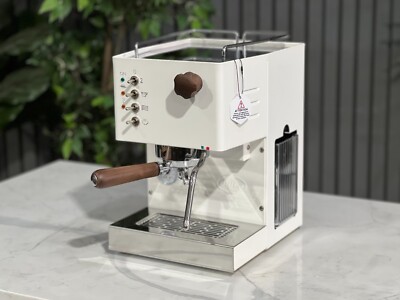
The body is stainless steel, including the polished “super mirror” panels that Quick Mill highlights across the line. Inside you get a compact insulated brass boiler at 0.45 liters, a ring group, and copper plumbing. The front panel carries the pressure gauge and lever switches, and the side houses a removable 1.8 liter tank that slides out without moving the machine. The stock wand is multidirectional and marketed as no-burn. These elements are spelled out on the official product page and echoed by multiple retailers.
The footprint is friendly to normal kitchens. At 246 by 336 by 375 mm, the Pippa leaves room on either side for a grinder and tools. The weight listed by Quick Mill is 14 kg, which feels right once you account for the boiler, frame, and group mass. Alternative retailer specs that show roughly 11.5 kg likely omit water and packaging or reflect earlier trims. The manufacturer numbers are the ones to trust for planning.
Pump, gauge, and pressure control
The machine uses a vibration pump, and Quick Mill notes an in-house noise-reduction feature that it pegs at about 30 percent relative to its baseline. You can adjust brew pressure with the external expansion valve. The combination of a live gauge and an adjustable valve gives you a transparent, mechanical way to tune the hydraulic profile without opening the case. Quick Mill’s page calls out both the pressure gauge and the expansion valve specifically.
There is a wrinkle worth acknowledging. The current product page praises a 0–16 bar gauge “for monitoring pressure during dispensing,” which implies a pump-side gauge. In the technical bullets further down, the page mentions a 0–3 bar boiler gauge. Both claims live on the same page. That mismatch reflects that units ship with different gauges depending on batch and market. Treat the photo gallery and the retailer listing for your region as the tie-breaker at purchase time.
Safety and controls
The “1-0-2” main lever sequence is a Quick Mill tell. Position 1 powers the pump to fill the boiler without energizing the element. Position 2 enables heating only after you have water in the boiler. This protects the heater and is a clear, tactile step during setup and after deep service. The 04100 manual describes the switch logic and shows the indicator lights that confirm each state.
Workflow
Warm-up and heat-soak
A ring group and a 0.45 L boiler come to temperature quickly compared to heavy E61 machines. Do not confuse “hot” with “heat-soaked.” Lock the portafilter in during warm-up, give the machine several minutes to equalize, and run a short blank flush before the first pull. The payoff is shot-to-shot consistency when you keep your pacing steady. Quick Mill’s design notes confirm the group type and boiler size that drive this behavior.
Surfing without stress
There is no PID. Temperature is governed by thermostats. The simplest way to land a predictable brew temperature is to use the heater cycle and a repeatable pre-shot routine.
A reliable routine that works on the Pippa:
- Warm up fully with the portafilter locked in.
- Run a short blank flush to settle the group and wake the thermostat.
- When the heat light flips the way you expect, pull your shot.
- Keep your time between shots consistent.
This cadence produces repeatable results across medium and medium-light roasts without chasing numbers on a display. The absence of a PID is explicit on the product page, and the control stack is simple enough that cadence matters more than instrumentation.
Using the gauge and OPV
If your unit has a pump-side gauge, watch the initial pressure ramp, then the settle once flow begins. Adjust the expansion valve to cap peak pressure in a sensible zone for your grinder and basket. If your unit shipped with a boiler gauge, use the expansion valve by taste and timing. Either way you are aligning resistance at the puck with a target feel at the lever and a target time in the cup. The page that documents the expansion valve applies across both gauge variants.
Brew-to-steam and back
Single-boiler sequencing is straightforward. Brew at brew temperature. Flip to steam. Purge the wand once pressure is up and texture. After steaming, run a cooling flush through the group and hot-water path to bring the system back into brew range. Quick Mill lists the separate coffee and steam thermostats and the no-burn wand that makes this cycle manageable.
Espresso Performance
Puck prep and baskets
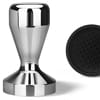
The 58 mm standard is a gift. Upgrade the stock baskets to a precision double early and pair it with a proper 58 mm tamper. The ring group gives you stout mechanical feedback when locking in, and the brass-bodied portafilter carries heat well enough that keeping it parked in the group makes a difference. Retailer specs and the official page confirm the 58 mm ecosystem.
Tuning pressure and flow
On fresh medium roasts, the machine favors a steady nine to ten bar start that relaxes slightly as the puck opens. The external expansion valve lets you set that ceiling once. If you work lighter roasts, experiment with a slightly coarser grind, a longer ratio, and a softer start using a brief pump interruption in the first second or two. The presence of a live gauge on many units and the manufacturer’s callout of the expansion valve are what enable that tuning.
Taste in the cup
With a baseline 18 g in and 36 g out in 25 to 30 seconds, the Pippa pulls syrupy, classic shots on medium roasts with clear chocolate and nut. Shift to medium-light roasts and you can coax citrus and florals once your surfing cadence is locked, your basket is upgraded, and your grinder alignment is honest. The machine’s job is to deliver predictable water at a predictable pressure through a stable 58 mm path. The brass boiler and ring group are up to that job when the operator runs a clean routine. The official page’s confirmation of boiler material, group, and pressure control is the relevant anchor here.
Milk Steaming
The 0.45 liter boiler and no-burn wand produce usable steam for single drinks with a calm ramp and enough dry output to texture a 150 to 200 ml pitcher to 60–65 C in a comfortable window. The wand’s ball joint lets you set a stable vortex, and the wand surface stays touch-safe for cleaner handling. Expect to steam after you brew. If you want multiple milk drinks back-to-back, plan a short pause for pressure recovery between pitchers. Quick Mill documents the no-burn wand, the dual thermostats, and the boiler size that set expectations for steam behavior.
Maintenance and Water
Daily and weekly habits
Purge and wipe the wand after every use. Rinse the group with a short flush after shots. Empty the tray promptly. Do a detergent backflush weekly with a blind basket. The Pippa ships with a three-way valve, which gives you dry pucks and allows proper detergent backflushing. The model manual outlines the service logic and shows the indicator lights that confirm each state.
Descaling and water quality
Scale is the enemy of small boilers. Keep hardness in a friendly range and descale with a schedule that matches your water. The 04100 manual covers first use, filling, and the general cautions around water management and service. Stick to the “1-0-2” start sequence after any deep cleaning or storage so the element never heats dry.
Parts and support
Exploded diagrams and spares are easy to source through authorized retailers and parts houses that specialize in Quick Mill. This matters if you want to keep the machine five to ten years and service it cleanly. Whole Latte Love, for example, lists the 04100 parts diagram and supports common wear items.
Real-World Workflow Tips
- Park the portafilter in the group during warm-up. Keep metal hot and stable.
- Anchor a simple surf. Use a brief blank flush before each shot to settle the group and to cue the heater, then pull on a consistent cadence.
- Set brew pressure once. If your unit has the pump gauge, lock in nine to ten bar against a blind, then leave the expansion valve alone. If you have a boiler gauge variant, tune by taste and time with the same routine. The expansion valve reference applies in both cases.
- Treat steam like a sprint. Purge cleanly, texture a single pitcher, then cool back to brew with a short flush so your next shot does not ride steam heat. The separate thermostats and no-burn wand are built for this cycle.
Competitive Set
Gaggia Classic Pro
Lower price, 58 mm group, small brass boiler, and a huge mod community. It includes a factory OPV and a three-way valve. Heat-up is slower and steam is milder out of the box. Choose it for budget and a thriving aftermarket.
Rancilio Silvia V6
Heavier-duty single boiler with a ring group. No PID in stock trim. Warm-up is longer and the price often sits above lower-cost singles but below PID machines. It remains a long-lived workhorse for disciplined routines.
Bezzera Hobby
Compact single boiler with a nickel-plated brass boiler, strong steam for its size, and a commercial 58 mm group. Controls are simple. No PID in stock trims. A credible alternative if you want a small boiler single with punchy steam and a robust chassis.
Profitec Go
A compact single boiler with a ring group, full PID, shot timer, and adjustable OPV. Heat-up is quick, and number-driven control lowers the learning curve. You trade the Pippa’s price advantage and traditional feel for modern precision.
Quick Mill Orione 3000
Thermoblock machine with fast heat-up, 58 mm group, and a front gauge. Best for buyers who prioritize speed to the first shot and are comfortable with a rinse-and-pull cadence on a thermoblock.
Ascaso Steel UNO PID
Thermoblock with full PID, programmable preinfusion, and an external OPV. It offers modern control with a different thermal profile. Strong for users who value speed and digital setpoints over a brass boiler feel.
The machines above define the cross-shop field for compact home espresso. The Pippa sits in the classic single-boiler lane with real metal parts, a transparent mechanical interface, and enough steam for one or two drinks at a time. The value story is region-dependent. EU and UK pricing is competitive against boiler singles. Australian pricing floats higher, which makes rivals with PID tempting. See the price references earlier for realistic regional anchors.
Scores
- Build and materials: 8.2/10
Stainless shell, insulated brass boiler, 58 mm group, and a proper wand in a compact footprint. The external expansion valve and gauge provide honest control. The gauge variant mismatch by market is the only nit. - Workflow and usability: 7.8/10
Fast warm-up for a boiler single, side-access tank, simple switches, and a routine that is easy to memorize. Lack of PID means you rely on cadence, which many home users prefer once it is learned. - Espresso consistency: 7.9/10
With a fixed routine and a good basket, the Pippa produces steady extractions. The expansion valve helps you land in a pressure window that matches your grinder and coffee. The machine is transparent enough that your puck prep is the main variable. - Milk steaming: 7.6/10
The 0.45 L boiler provides clean steam for single drinks, with recovery that suits one or two beverages per session. The no-burn wand is easy to live with. - Maintenance and serviceability: 8.3/10
Clear manual, common parts, and easy access through authorized sellers. The “1-0-2” lever protects the element during fills and after service. - Value: 7.8/10
In the EU and UK, the Pippa is priced well against non-PID boiler singles. In Australia it is priced higher, which narrows the gap to PID options. Check local support and warranty.
Final Verdict
The Quick Mill Pippa 4100 is a compact single-boiler machine that respects your counter space and your time. It uses real materials where they matter, gives you a 58 mm ecosystem, and offers a live gauge with an external expansion valve so you can tune pressure without a service call. It asks for a steady warm-up and a repeatable surfing routine rather than a PID number. It delivers consistent espresso when you run that routine and gives you enough steam to texture a single pitcher cleanly.
It is not a café battlestation. It is not a dual boiler. It is a tidy, durable, mechanical tool that does the core tasks right. If your household drinks a few espressos and the occasional flat white, the Pippa is easy to recommend. If you want numeric temperature control and baked-in repeatability, a PID single such as Profitec Go will fit better. If milk drinks dominate and you serve many in a row, step to a heat exchanger. The Pippa’s specification and price positioning, taken directly from the manufacturer and regional retailers, back up this conclusion.
TL;DR
Compact stainless single boiler with a 0.45 L brass boiler, 58 mm group, no-burn wand, and a side-access 1.8 L tank. No PID and no shot timer. Set brew pressure with the external expansion valve, run a simple surf routine, and you will get clean espresso and single-drink steam in a small footprint.
Pros
- Brass single boiler at 0.45 L with compact footprint
- 58 mm group and portafilter for easy basket upgrades
- External expansion valve and front pressure gauge for hands-on control
- No-burn multidirectional wand that steams neatly for single drinks
- Side-access 1.8 L tank and straightforward “1-0-2” control logic for safe fills
Cons
- No PID or shot timer
- Gauge variant differs by market. Some units show brew pressure, others show boiler pressure
- Single-boiler sequencing limits speed for multiple milk drinks
- Regional power spec varies between 1000 and 1280 W, which can confuse buyers scanning listings
Who It Is For
Home baristas who want a compact, metal-forward single boiler with a 58 mm ecosystem and a clear, tactile workflow. If you enjoy dialing in by taste, like the idea of setting brew pressure once with a wrench rather than a menu, and mostly make one to two drinks per session, the Pippa fits the brief. If you prefer numeric temperature targets, faster recovery, or multiple milk drinks in a row, look to a PID single or a heat exchanger and treat this class as your baseline.