
Buying Guide
Best Single Boiler Espresso Machines
A good single boiler still makes the most sense for a lot of home baristas. You get real espresso mechanics, a smaller footprint, lower energy use, and a more approachable price than most heat exchangers or dual boilers. The catch is simple: one boiler means brewing and steaming happen in sequence, not at the same time. For espresso-first households and one-or-two-drink routines, that trade-off can be completely worth it.
Why single boilers still make sense
Single boilers reward realistic home habits. If you mostly drink espresso, Americanos, or the occasional flat white, a well-chosen one-boiler machine can be easier to own than a larger prosumer box. They warm up faster, take up less room, and keep your counter simpler. More importantly, the best ones still give you the fundamentals that actually shape the cup: stable enough temperature, predictable pressure behavior, and a workflow that lets a capable grinder do its job.
The important question is not whether a single boiler is “enough.” The real question is whether it matches your routine. If you make four milk drinks in a row every morning, it probably does not. If you want one or two excellent shots and a machine that fits real life, this category still punches well above its size.
In this guide
Quick comparison
| Machine | Best for | What stands out | Workflow note |
|---|---|---|---|
| Profitec GO | Best overall | PID + shot timer + compact body | Great all-rounder for 1–2 drinks |
| Lelit Anna PL41TEM | Best compact beginner PID | Small footprint with real temperature control | 57 mm accessories take more planning |
| Gaggia Classic EVO PRO | Best value 58 mm platform | Durable, mod-friendly, classic workflow | More hands-on temperature management |
| Rancilio Silvia V6 | Best long-haul classic | Stronger steam and huge support ecosystem | Rewards routine more than convenience |
| Lelit Victoria PL91T | Best compact premium | 58 mm group, polished controls, small body | Excellent if you want compact without feeling entry-level |
| Bezzera Unica PID (MN) | Best E61 value | Traditional E61 feel with PID control | Better for espresso-first than milk-heavy homes |
| ECM Puristika | Best espresso-only pick | No steam wand, just focused shot performance | Skip if you make milk drinks |
| ECM Classika PID + Flow Control | Best premium single boiler | Premium E61 build with manual flow control | Best for enthusiasts, not latte rounds |
Our top picks at a glance
- Profitec GO Best single boiler espresso machine overall
- Lelit Anna PL41TEM Best compact PID single boiler for beginners
- Gaggia Classic EVO PRO Best value 58 mm single boiler
- Rancilio Silvia V6 Best long-haul classic single boiler
- Lelit Victoria PL91T Best compact premium single boiler
- Bezzera Unica PID (MN) Best E61 single boiler for value
- ECM Puristika Best espresso-only single boiler
- ECM Classika PID + Flow Control Best premium single boiler
Profitec GO
Best for buyers who want PID control, a shot timer, and a compact chassis without jumping straight into E61 pricing.
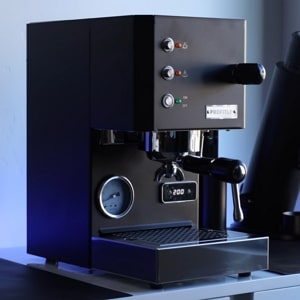
The Profitec GO is the single-boiler I’d point most people to first because it behaves like a serious machine without asking you to adopt a fussy routine. You get real PID temperature control, a built-in shot timer, and a compact body that fits a normal kitchen instead of trying to dominate the counter. That combination matters. Single boilers are at their best when they make repetition easy, and the GO does exactly that. You can look at the display, confirm your temperature, pull the shot, and know where you are without guesswork.
In daily use, the GO feels more modern than many traditional single boilers. It rewards a clean grind, a level puck, and a sensible recipe, but it does not make you temperature-surf your way through every morning. That lowers the learning curve and makes the machine much easier to recommend to people who want real espresso but do not want a hobby project before coffee.
Deals of the Week
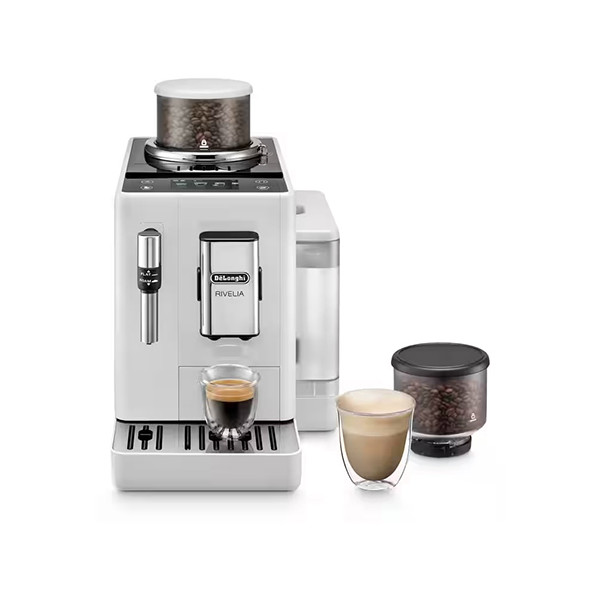
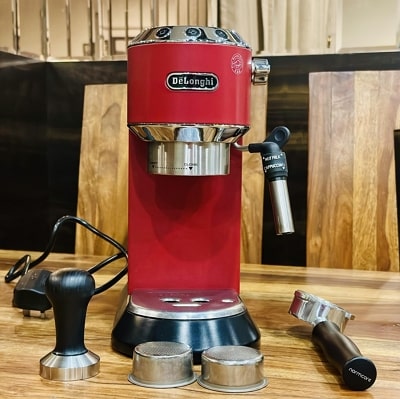
The trade-off is the classic single-boiler one. It still cannot brew and steam at the same time, so milk-heavy households will outgrow it faster than espresso-first homes. But for one or two drinks at a time, the GO lands in the sweet spot: compact, mechanically honest, and easy to trust.
Best for one or two daily drinks, mostly espresso with occasional milk.
Watch out for the missing hot-water tap if you make a lot of Americanos.
Lelit Anna PL41TEM
Best for shoppers who want a small footprint and real temperature control without spending premium money.

The Lelit Anna PL41TEM is one of the most sensible compact single boilers on the market because it gives beginners the part that actually matters most: temperature control you can use. The machine is small enough for apartment counters, but it still feels like a real espresso machine rather than a compromise box made for pressurized baskets and pre-ground coffee. The PID-equipped PL41TEM version is the one to target because it takes a lot of early frustration out of dialing in.
What makes Anna work is balance. It has enough structure to teach real puck prep and extraction habits, yet it does not punish you with the bigger cost or size of heavier prosumer machines. It also has live pressure feedback, which helps beginners connect grind, dose, and yield in a useful way. That learning loop matters more than flashy feature counts.
The obvious compromise is the 57 mm format. It works well, but it is not as universal as a 58 mm accessory ecosystem. That means you may have to be a bit more deliberate when buying baskets and portafilter accessories. If that does not bother you, Anna is one of the smartest compact paths into true espresso.
Best for first-time buyers who want a small, PID-controlled machine that still teaches proper workflow.
Watch out for the smaller 57 mm accessory lane if you like easy aftermarket shopping.
Gaggia Classic EVO PRO
Best for hands-on buyers who want a durable platform and do not mind learning a little technique.
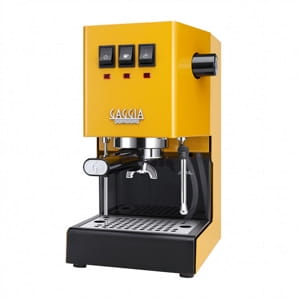
The Gaggia Classic remains one of the best answers for buyers who want a real 58 mm machine without overspending on features they may not need yet. Its appeal is straightforward: metal body, commercial-style workflow, accessible parts, and a huge aftermarket. That last point matters because the Classic is not just a machine you use. It is a platform you can grow with through baskets, steam-wand tweaks, and eventually PID upgrades if you decide you want more temperature precision.
In stock form, the Gaggia asks a bit more from the user than something like the Profitec GO or a PID-equipped Lelit. You need to pay attention to temperature behavior, grind quality, and puck prep. For some buyers that is a downside. For others, it is exactly the point. This machine teaches the core mechanics of espresso in a very direct way, and it does it in a footprint that still works in small kitchens.
I like the Classic most for people who enjoy the idea of learning and refining their setup over time. It is less of a polished appliance and more of a compact workshop bench. Pair it with a capable grinder and non-pressurized basket, and it can produce coffee far beyond what its modest size suggests.
Best for budget-conscious enthusiasts who want 58 mm compatibility and upgrade potential.
Watch out for the more manual temperature management compared with stock-PID rivals.
Rancilio Silvia V6
Best for buyers who want a machine with a deep service ecosystem and a reputation for sticking around.
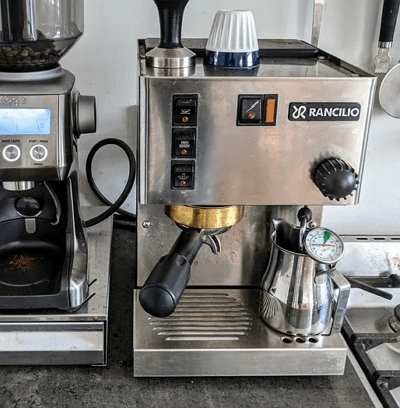
The Rancilio Silvia earns its place on lists like this because it has outlived trend cycles for a reason. It is compact, tough, and built around a workflow that still makes sense for serious home espresso. If the Gaggia Classic is the entry point many people start with, Silvia is the classic step up for buyers who want stronger steam, more metal, and a machine they can keep for years without feeling like they bought a dead end.
Silvia is not the easiest single boiler here. It expects more attention, and without aftermarket PID help it remains a machine that rewards routine rather than screen-based convenience. But that is also why many experienced home baristas still respect it. Once you understand its cadence, it becomes predictable, and predictable machines are the ones that earn long-term trust.
I would choose Silvia if you want a traditional 58 mm single boiler with strong community knowledge behind it. Parts support, accessories, tutorials, and mod paths are all in its favor. It is not the slickest beginner option, but it is one of the clearest examples of a machine you can genuinely grow into instead of replacing six months later.
Best for buyers who want stronger steam and a machine with a deep long-term support network.
Watch out for the steeper learning curve versus newer PID-first machines.
Lelit Victoria PL91T
Best for shoppers who want a small machine that behaves more like a bigger prosumer box.
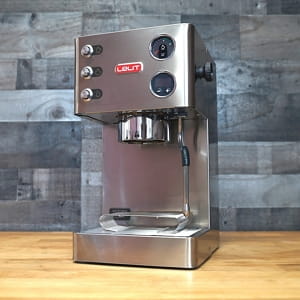
The Lelit Victoria is the compact single boiler for people who want convenience without slipping into the toy category. It keeps the footprint tight, but it adds the details that make daily ownership better: Lelit’s control system, a proper 58 mm ecosystem, and the sort of temperature behavior that lets you focus more on the coffee and less on second-guessing the machine. It feels like a small machine designed by people who understand what frustrates home baristas.
What separates Victoria from many smaller competitors is that it does not feel limited to entry-level use. It is still approachable, but it also has enough thermal and workflow credibility to satisfy buyers who already know what they like in the cup. That makes it a strong bridge machine. You can buy it because your counter is tight, not because your standards are low.
It is still a single boiler, so the usual rule applies: brew, then steam, not both at once. But within that constraint, Victoria is one of the cleanest executions of the format. For compact kitchens and espresso-first households that still want proper milk capability, it makes an unusually strong case for itself.
Best for small kitchens that still want a 58 mm ecosystem and more polished controls.
Watch out for the usual single-boiler pacing if you make several milk drinks back to back.
Bezzera Unica PID (MN)
Best for buyers who want classic E61 feel and real PID control without jumping to dual-boiler money.
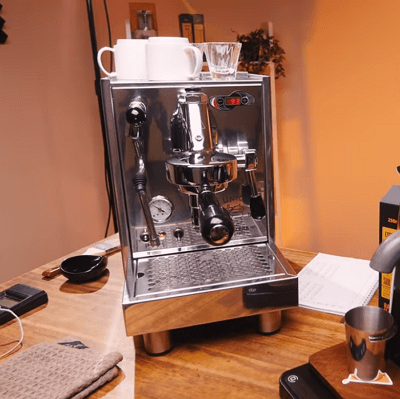
The Bezzera Unica PID is the single boiler for buyers who want an E61 machine without buying into a larger, more expensive heat exchanger or dual boiler just to get there. It gives you the classic lever-start feel, a substantial metal body, and genuine PID control in a package that still keeps the category’s simpler one-boiler logic. That makes it especially attractive to espresso-focused users who care about ritual and shot quality more than pumping out round after round of milk drinks.
Machines like this ask for a different mindset than compact PID boxes with ring groups. The rhythm is slower, and you need to respect warm-up and heat-soak reality. But if that does not bother you, Unica gives you a very satisfying, mechanical style of espresso making. The feedback is tactile, the group feel is familiar to E61 fans, and the machine has enough control to make the experience more precise than old-school thermostat surfing ever was.
I would not buy the Unica for a milk-heavy household. I would buy it for someone who wants a traditional E61 lane in a more approachable single-boiler package. For that buyer, it is one of the best-value ways to get that feel without overspending.
Best for espresso-first buyers who want E61 character and PID control at a more approachable level.
Watch out for the slower warm-up and more traditional routine versus smaller non-E61 machines.
ECM Puristika
Best for straight-espresso drinkers who do not want to pay for steam hardware they rarely use.
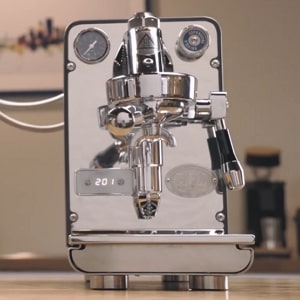
The ECM Puristika is a reminder that not every espresso machine needs to pretend milk drinks are the center of the world. This is an espresso-first machine, full stop. There is no steam wand, which immediately narrows the audience, but for the right buyer that is precisely the appeal. Instead of splitting attention across features you do not use, Puristika focuses the budget and the footprint on better espresso ergonomics: PID control, a front pressure gauge, and a layout that makes sense for people who mostly care about shots and Americanos.
Its external glass reservoir also deserves mention because it changes how the machine fits on a counter. In some kitchens it is a hassle. In others it is brilliant, because it frees up placement and keeps the machine visually lighter. That is the broader Puristika story. It is not trying to be universal. It is trying to be excellent for a specific style of home barista.
If you never steam milk, or you steam it so rarely that a full wand feels like dead weight, the Puristika is a very compelling choice. It is disciplined, attractive, and purpose-built. Just be honest with yourself before buying it. This is a specialist, and that is exactly why the right people love it.
Best for espresso and Americano drinkers who want a focused, no-compromise shot machine.
Watch out for the lack of steam if your drink habits change.
ECM Classika PID + Flow Control
Best for enthusiasts who want a long-term espresso-first machine with tactile control and room to explore.
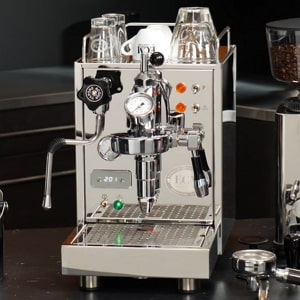
The ECM Classika PID with flow control is the premium single boiler I’d buy for an espresso-first home bar that wants to stay interesting over the long term. It takes the classic E61 formula and gives it the pieces that actually matter in everyday use: PID temperature control, a shot timer, and manual flow capability for people who genuinely want to shape extractions rather than just watch the machine work. It feels deliberate instead of flashy, which is usually a good sign in this category.
What I like most about Classika is that it respects the single-boiler brief rather than apologizing for it. This is not trying to be the cheapest way into espresso or the fastest milk machine on the block. It is a high-quality, espresso-led setup for someone who values repeatability, tactile feedback, and a machine that still has more to teach them a year from now.
Of course, the classic trade-off remains. If you make several cappuccinos every morning, a dual boiler or heat exchanger is usually the smarter buy. But if your center of gravity is straight espresso, occasional milk drinks, and deeper control over the shot itself, the Classika is one of the strongest reasons single boilers still matter.
Best for advanced home baristas who want flow control and premium espresso-first ownership.
Watch out for the cost if your routine is mostly milk drinks rather than straight shots.
Read the full Coffeedant review of ECM Classika PID + Flow Control
How to choose a single boiler espresso machine
Start with your drink pattern. If you are mostly pulling espresso and occasionally steaming milk, a single boiler is often the smartest value in the category. If your mornings revolve around cappuccinos for multiple people, the category’s main weakness shows up quickly. That does not make these machines bad. It just means you need to match the format to the job.
Then look at the control layer. A PID does not magically make coffee taste better on its own, but it usually makes daily use calmer and more repeatable. That is why PID-equipped machines tend to be easier recommendations for buyers who want less guesswork. Next, check the accessory lane. A standard 58 mm setup makes baskets, tampers, and bottomless portafilters easier to source. Smaller group formats can still be great, but they ask for a bit more intentional shopping.
Finally, decide how traditional you want the experience to feel. A compact ring-group machine with a digital display is a very different ownership style from an E61 single boiler that wants warm-up time and rewards ritual. Neither is automatically better. The right answer depends on whether you want fast daily utility or a slower, more tactile espresso routine.
What else you need besides the machine
- A real espresso grinder. This is non-negotiable. Fresh beans and fine, repeatable adjustment matter more than chasing prestige machines with a weak grinder upstream.
- A 0.1 g scale. Dose and yield are the easiest variables to repeat, so measure them every time.
- A good tamper and WDT tool. Consistent puck prep lowers channeling and gives the machine a fair shot at producing even extractions.
- Soft water. Scale ruins small boilers faster than most buyers expect. Build a water plan before the machine lands on your counter.
- Fresh whole beans. Single boilers reward thoughtful inputs. Stale coffee will make even the best machine in this guide feel disappointing.
FAQ
What is a single boiler espresso machine?
A single boiler machine uses one boiler to handle brewing water and steam. That keeps cost, size, and energy use down, but it also means you switch between brew mode and steam mode instead of doing both at once.
Are single boiler machines good enough for milk drinks?
Yes, for one or two drinks at a time. A good single boiler can absolutely make strong cappuccinos and flat whites. The limit shows up when you want back-to-back milk drinks without waiting for temperature changes.
Is PID important on a single boiler?
Very often, yes. A PID gives you more repeatable boiler temperature and removes some of the guesswork from daily use. You can still make great coffee without one, but a PID usually makes the machine easier to live with.
Do I need a grinder for a single boiler espresso machine?
Yes. A real espresso grinder matters at least as much as the machine. Fresh beans and a grinder with fine, repeatable adjustment will do more for shot quality than chasing extra machine features.
Who should skip a single boiler machine?
Skip this category if you regularly make several milk drinks in a row, want brew and steam at the same time, or want the easiest possible workflow for entertaining. In those cases, a heat exchanger, dual boiler, or superautomatic is usually the better fit.
We’ve categorized the best espresso machines for every kind of buyer
Find the right shortlist faster, whether you want convenience, a beginner-friendly setup, a smaller footprint, or better value at a given budget.
Best Superautomatic Espresso Machines
One-touch picks for speed and convenience.
Best Espresso Machines for Beginners
Easy-to-use machines with a smoother learning curve.
Best Small Espresso Machines
Compact machines for tighter kitchens and counters.
Best Espresso Machines With Built-In Grinder
All-in-one options with fewer extra pieces to buy.
Best Cheap Espresso Machines Under $500
Budget picks that still make sense for real espresso.
Best Prosumer Espresso Machines Under $1000
More serious machines with stronger value for the money.
Best Single Boiler Espresso Machines
Simple, space-saving picks for espresso-first routines.