
TL;DR
Main point: Measure width, depth, and height under cabinets, then choose a chassis that fits with clearance for the reservoir, cups, and wand. Prioritize temperature stability, quick heat-up, and repeatable pressure control over cosmetics. Pair the machine with a precise grinder and good water, since those two drive shot quality most.
Top choice: La Marzocco Linea Micra Dual boiler, saturated group, rapid heat, strong steam, compact footprint. Ideal for café-level results in minimal space.
Budget option: Gaggia Classic Pro Compact single boiler with a 58 mm portafilter, quick warm-up, and strong community support. Use a capable grinder and a non-pressurized basket for the best results.
My first small espresso machine search started with a tape measure and a reality check. I had 30 centimeters (12″) of width, low cabinets overhead, and exactly one outlet.
That constraint forced sharp choices.
I learned that a slim body saves the day, yet cup-quality still lives or dies on:
- temperature stability,
- pressure control, and a
- grinder that can hold a consistent burr gap.
Once I matched footprint to fundamentals, I stopped fighting the gear and started dialing in coffees I actually loved.
This guide compresses the market to machines that balance compact dimensions and credible espresso. I prioritize thermal stability, repeatable workflow, and decent steaming in a small chassis.
I also call out where you should invest in accessories to unlock a machine’s best flavor.
The picks range from entry single-boilers to petite dual-boilers and a few clever outliers for travelers and minimalists. Every recommendation favors whole beans. Capsules and pre-ground coffee can be convenient. They will not give you the control or freshness you need for top-tier extractions.
Treat control and freshness as nonnegotiable, then match a machine to your daily drinks and available space.
| Product | Price* | Size meter | Dimensions | Rating | Best for | Avoid if |
|---|---|---|---|---|---|---|
| La Marzocco Linea Micra | $$$$$ |
SmallerLarger
|
11.5 W × 15.5 D × 13 H in | Café performance in a compact dual-boiler. | You need a lower price or tall cup clearance. | |
| Rocket Appartamento TCA | $$$$ |
SmallerLarger
|
270 W × 448 D × 358 H mm | HX speed, narrow body, classic E61 feel. | You want PID setpoint control. | |
| ECM Mechanika Slim PID | $$$$ |
SmallerLarger
|
250 W × 445 D × 395 H mm | E61 workflow with PID info in the slimmest HX. | You dislike HX flush routines. | |
| Profitec Pro 600 | $$$$ |
SmallerLarger
|
12 W × 17.7 D × 15.55 H in | Dual-boiler power for milk drinkers in modest width. | You need a truly light or ultra-shallow machine. | |
| Lelit Elizabeth PL92T | $$$ |
SmallerLarger
|
32 W × 38 D × 38 H cm | Small dual-boiler with smart control. | You want rotary pump silence or app control. | |
| Ascaso Steel Duo PID (V2) | $$$ |
SmallerLarger
|
11.125 W × 12.375 D × 14.75 H in | Fast warm-up, clean water path, compact body. | You want heavy metal boilers or classic E61 styling. | |
| Quick Mill Silvano Evo | $$$ |
SmallerLarger
|
10.5 W × 13 D × 16 H in | Hybrid brew-boiler + steam block efficiency. | You need café-level steam power. | |
| Rancilio Silvia | $$ |
SmallerLarger
|
235 W × 290 D × 340 H mm | Durable single-boiler for skill building. | You want PID convenience or back-to-back milk drinks. | |
| Rancilio Silvia Pro X | $$$$ |
SmallerLarger
|
9.8 W × 16.5 D × 15.3 H in | Narrow dual-boiler with strong steam. | You need a lighter or shallower body. | |
| Gaggia Classic Pro (Evo) | $ |
SmallerLarger
|
8 W × 9.5 D × 14.2 H in | Best taste per dollar in tiny spaces. | You need fast milk steaming or PID out of the box. | |
| Lelit Anna PL41TEM | $$ |
SmallerLarger
|
23 W × 38 D × 34 H cm | Smallest credible PID single-boiler. | You want strong, frequent milk steaming. | |
| Ascaso Steel Uno PID | $$ |
SmallerLarger
|
11.125 W × 12.375 D × 14.75 H in | Fast heat, easy upkeep, narrow chassis. | You want big-boiler steaming or E61 vibes. | |
| La Pavoni Europiccola | $$ |
SmallerLarger
|
200 W × 335 D × 490 H mm | Hands-on lever learning in a tiny footprint. | You want automation or rapid milk rounds. | |
| 9Barista Mk.2 | $$ |
SmallerLarger
|
~7.5 L × 6.3 W × 7.1 H in | True espresso on a stove with no plug. | You need steaming or one-button convenience. | |
| De’Longhi Dedica EC685 | $ |
SmallerLarger
|
5.9 W × 13 D × 12 H in | Ultra-slim starter on a tight budget. | You expect café texture without a grinder upgrade. | |
| De’Longhi ECP3420 | $ |
SmallerLarger
|
9.6 W × 7.25 D × 11.9 H in | Lowest-cost entry with tiny footprint. | You want long-term performance or strong steaming. | |
| Melitta Passione OT | $$ |
SmallerLarger
|
253 W × 380 D × 390 H mm | Hands-off milk drinks in tight spaces. | You want manual control and third-wave shot quality. |
*Price bands are editorial estimates: $ sub-$400, $$ $400–$1,000, $$$ $1,000–$1,800, $$$$ $1,800–$3,000, $$$$$ $3,000+. Actual pricing varies by region and retailer.
Define your actual needs
Decide what you drink most days. Straight espresso asks for tight temperature control, clean water, fresh beans, and a grinder that can move in tiny steps. A daily macchiato or flat white requires enough steam power to texture milk without waiting forever. If iced drinks are your staple, prioritize speed and workflow, since dilution and chilling mask small differences in mouthfeel.
Space matters. Measure width, depth, and height under cabinets. Leave room to remove the reservoir and for steam wand movement. If you brew multiple drinks in a row, look at heat exchangers and dual-boilers that let you brew and steam without cooldown cycles. If you pull a couple of shots a day, a small single-boiler can be perfect and energy-efficient.
Finally, be honest about how hands-on you want to be. Lever machines and bare-bones single-boilers teach you a lot. They demand attention. Compact dual-boilers and refined heat exchangers cost more, yet they simplify life and protect consistency when guests arrive.
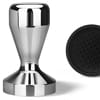
To keep that consistency when guests arrive, assemble a compact kit: a capable grinder, precision baskets, WDT and tamper, a 0.1 g scale, and soft water.
Extra equipment you will need
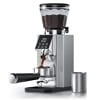
Whole beans and a real grinder are non-negotiable. Choose a burr grinder with stepless or fine stepped adjustment designed for espresso. Aim for low retention and solid alignment.
A precision 58 mm basket or machine-specific precision basket will tighten your extractions and lower channeling.
Use a WDT tool to break up clumps, then a distribution tool or consistent tamp to even the puck.
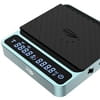
A scale with 0.1 g resolution and a timer will help you repeat recipes. For milk, a 12–20 oz pitcher covers most home drinks.
Small machines often ship with pressurized baskets. Swap to non-pressurized baskets once you have a capable grinder.
Keep a soft-water plan to limit scale. That can be a pitcher filter with bicarbonate recipe water, a machine-safe in-tank resin filter, or bottled water with the right mineral profile.
Maintenance is easier than repairs. Backflush when required, clean the steam wand after every use, and descale only with water compatible with your machine’s materials.
With maintenance handled, you can focus on these compact machines that turn tight footprints into stable, repeatable espresso.
Our top small espresso machine picks
Below you will find compact picks that deliver credible espresso with whole beans. Each product box includes a one-sentence summary, key features, dimensions, who it suits, core specs, scores, and a focused overview.
Scoring rubric: 0–10 for Espresso Quality, Milk/Steam, Workflow & Ergonomics, Build & Reliability, Features, and Value.
La Marzocco Linea Micra
A shrunken dual-boiler with pro-level stability and fast steaming in a true countertop footprint.
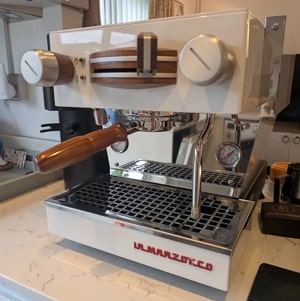
- Dimensions: 11.5 W x 15.5 D x 13 H in, 42 lb
- Machine type: Dual-boiler with rotary pump
- Temperature control: PID with pre-infusion
- Best for: Enthusiasts who want café performance in minimal space
Rocket Appartamento TCA
A slim heat-exchanger with classic E61 charm and upgraded efficiency in a small box.
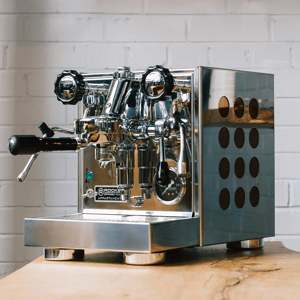
- Dimensions: 270 W x 448 D x 358 H mm, 22 kg
- Machine type: Heat exchanger
- Pump: Vibratory
- Temperature control: Pressurestat, no PID
- Pre-infusion: Mechanical via E61
- Best for: Espresso fans who want HX speed, compact width, and traditional aesthetics
ECM Mechanika Slim PID
A narrow-body heat-exchanger with PID control and refined ergonomics.

- Dimensions: 250 W x 445 D x 395 H mm, 20.2 kg
- Machine type: Heat exchanger
- Pump: Vibratory
- Temperature control: PID with shot timer
- Pre-infusion: Automatic
- Best for: Users who want E61 workflow with PID feedback in the slimmest possible HX chassis
Profitec Pro 600
A compact dual-boiler that balances pro features and a modest footprint.
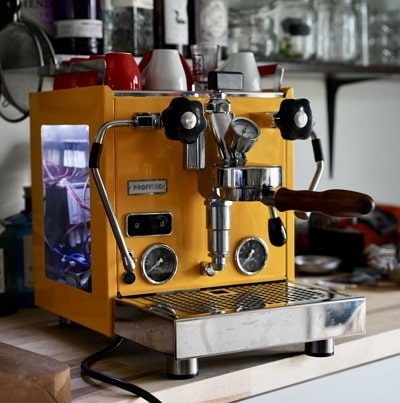
- Dimensions: 12 W x 17.7 D x 15.55 H in, ~53 lb
- Machine type: Dual-boiler
- Pump: Vibratory
- Temperature control: PID with shot timer
- Pre-infusion: Via E61 group
- Best for: Milk drinkers who want simultaneous brew and steam in a compact width
Lelit Elizabeth PL92T
A small dual-boiler with smart controls and excellent price-to-performance.
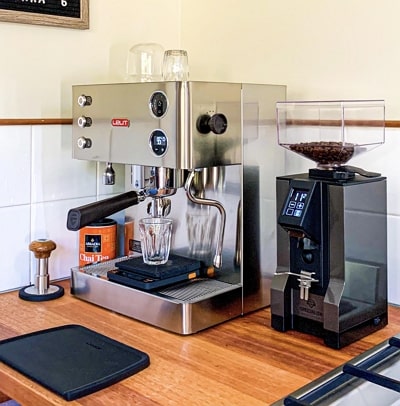
- Dimensions: 32 W x 38 D x 38 H cm, 15.3 kg
- Machine type: Dual-boiler
- Pump: Vibratory
- Temperature control: PID
- Pre-infusion: Programmable
- Steam: Strong for size
- Footprint: Compact cube
- Warranty: Regional
- Best for: Home baristas who want dual-boiler convenience without a big footprint
Ascaso Steel Duo PID V2
A modern dual-thermoblock with fast heat, clean water path, and a compact frame.
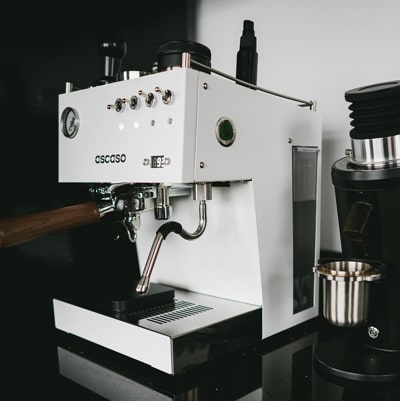
- Dimensions: 11.125 W x 12.375 D x 14.75 H in, ~31.8 lb
- Depth with portafilter: 16.5 in
- Machine type: Dual thermoblock
- Pump: Vibratory
- Temperature control: PID with programmable pre-infusion
- Steam: Continuous, strong for small pitchers
- Footprint: Narrow, compact
- Warranty: Regional
- Best for: Users who want near-instant heat and clean water circuits in a tidy, modern box
Quick Mill Silvano Evo
A clever hybrid that brews on a small boiler and steams on a separate thermoblock.
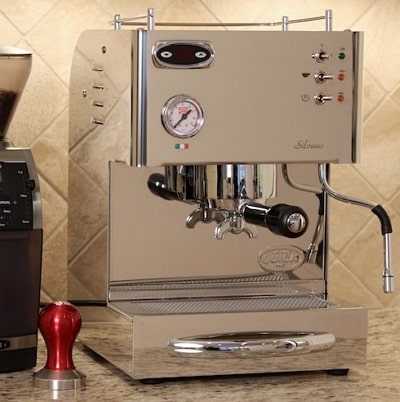
- Dimensions: 10.5 W x 13 D x 16 H in, 35 lb
- Machine type: Single brew boiler plus steam thermoblock
- Pump: Vibratory
- Temperature control: PID on brew boiler
- Pre-infusion: Via puck prep and shot control
- Steam: Moderate, continuous
- Footprint: Narrow
- Warranty: Regional
- Best for: Practical users who want small-machine efficiency with milk drinks without waiting
Rancilio Silvia
The classic compact single-boiler that rewards good puck prep and patience.
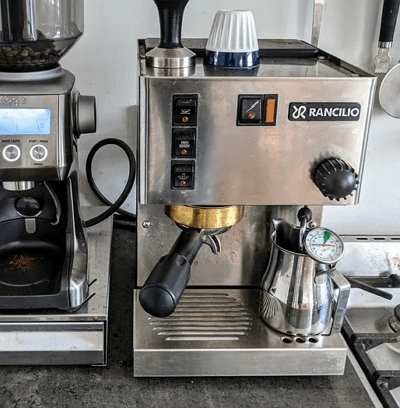
- Dimensions: 235 W x 290 D x 340 H mm, ~14 kg
- Machine type: Single-boiler
- Pump: Vibratory
- Temperature control: Thermostat, no PID
- Pre-infusion: Manual via puck wetting
- Best for: Purists who want a durable machine and accept temperature surfing with one-drink steaming
Rancilio Silvia Pro X
A true dual-boiler Silvia with stronger steam and direct temperature control.
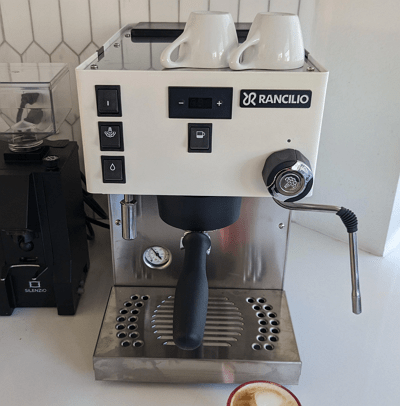
- Dimensions: 9.8 W x 16.5 D x 15.3 H in, 44.1 lb
- Machine type: Dual-boiler
- Pump: Vibratory
- Temperature control: PID
- Pre-infusion: Programmable
- Steam: Strong
- Footprint: Narrow width, deeper body
- Warranty: Regional
- Best for: Silvia fans who want simultaneous brew and steam without giving up a small width
Gaggia Classic Pro (Evo)
An affordable compact single-boiler with big community support and mod potential.
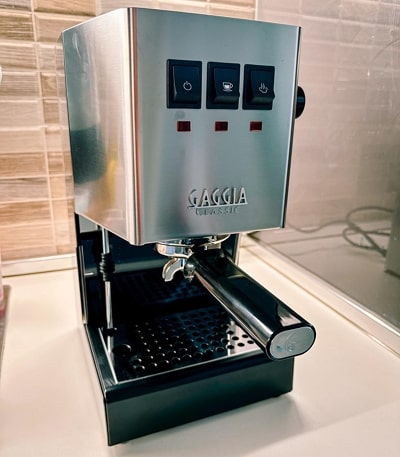
- Dimensions: 8 W x 9.5 D x 14.2 H in, 19 lb
- Machine type: Single-boiler
- Pump: Vibratory
- PID: No in stock form
- Pre-infusion: Manual
- Steam: Adequate for small drinks
- Footprint: Very compact
- Warranty: Regional
- Best for: Beginners and tinkerers who want credible espresso in a small package
Lelit Anna PL41TEM
A very small PID-equipped single-boiler with sensible ergonomics.

- Dimensions: 23 W x 38 D x 34 H cm, 7.5 kg | 9.5 W x 10.5 D x 13.5 H in
- Machine type: Single-boiler
- Pump: Vibratory
- Temperature control: PID
- Pre-infusion: Manual
- Steam: Modest, best for one drink
- Footprint: Extremely compact
- Warranty: Regional
- Best for: Espresso-first users who want PID control in the smallest credible footprint
Ascaso Steel Uno PID
A single-thermoblock sibling to the Duo with speedy heat and a compact body.
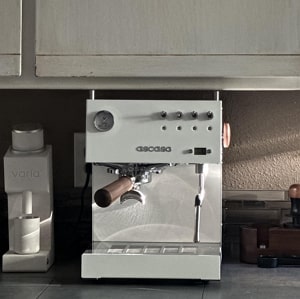
- Dimensions: 11.125 W x 12.375 D x 14.75 H in, depth 16.5 in with portafilter
- Machine type: Single thermoblock
- Pump: Vibratory
- Temperature control: PID, programmable pre-infusion
- Steam: Modest
- Footprint: Narrow
- Warranty: Regional
- Best for: Espresso-forward users who want fast heat and simple maintenance in a narrow chassis
La Pavoni Europiccola
A compact manual lever that trades automation for a tactile, educational workflow.
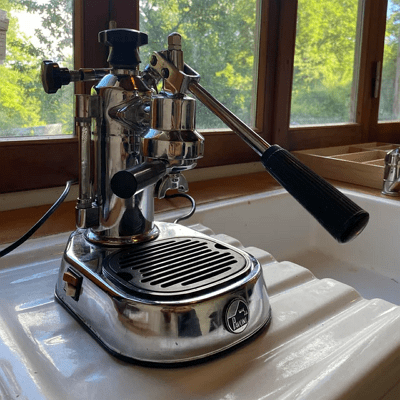
- Dimensions: 200 W x 335 D x 490 H mm, 6.5 kg
- Machine type: Manual lever, single boiler
- Pump: Manual
- Temperature control: Manual heat management, no PID
- Pre-infusion: Manual
- Steam: Adequate for small pitchers
- Footprint: Slim and counter-friendly
- Warranty: Regional
- Best for: Hands-on users who enjoy learning pressure profiling by feel
9Barista Mk.2
A tiny, solid-metal stovetop device that creates true 9-bar espresso on any heat source.
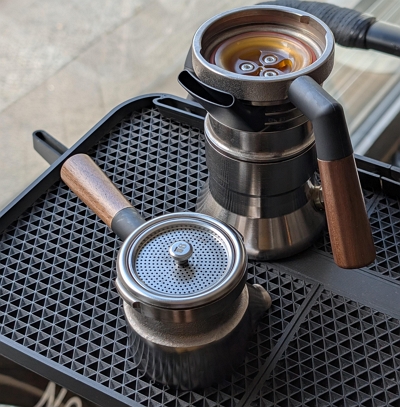
- Dimensions: ~7.1 H x 7.5 L x 6.3 W in, ~18 cm tall, 1.8 kg
- Machine type: Stovetop twin-boiler
- Pump: None, regulated pressure
- Temperature control: Fixed thermal ramp
- Pre-infusion: Thermal profile dependent
- Steam: None
- Footprint: The smallest in this guide
- Warranty: Regional
- Best for: Travelers and minimalists who want real espresso without a countertop machine
De’Longhi Dedica EC685
The slimmest electric machine in this list, best used with a good grinder and non-pressurized baskets.
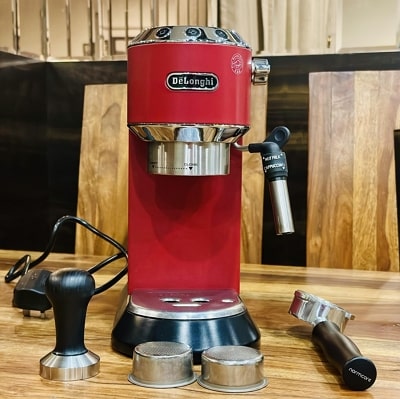
- Dimensions: 5.9 W x 13 D x 12 H in, ~9.3 lb
- Machine type: Thermoblock
- Pump: Vibratory
- PID: No
- Pre-infusion: Brief programmed
- Steam: Modest
- Footprint: Ultra-narrow
- Warranty: Regional
- Best for: Space-pinched beginners who want a starter machine that occupies almost no counter
De’Longhi ECP3420
A compact budget machine that benefits greatly from fresh beans and a basket upgrade.

- Dimensions: 9.6 W x 7.25 D x 11.9 H in, ~10–11 lb
- Machine type: Thermoblock
- Pump: Vibratory
- PID: No
- Pre-infusion: None
- Steam: Modest, manual wand
- Footprint: Compact
- Warranty: Regional
- Best for: New users testing the waters in tight kitchens
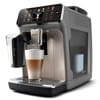
Melitta Passione OT
A compact superautomatic that grinds fresh and delivers push-button milk drinks in tight spaces.
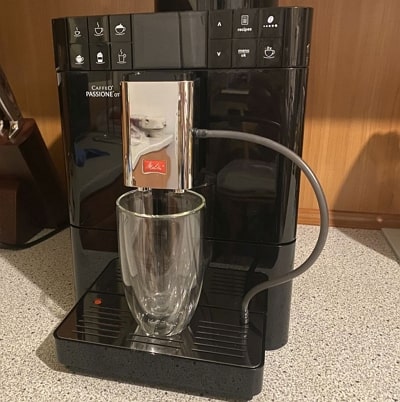
- Dimensions: 253 W x 380 D x 390 H mm, 8.3 kg
- Machine type: Bean-to-cup superautomatic
- Grinder: Built in
- Temperature control: Programmed profiles
- Pre-infusion: Programmed
- Milk: Automatic milk system
- Footprint: Compact
- Warranty: Regional
- Best for: Offices and RVs prioritizing convenience and cleanliness over manual control
Choosing the right “small” machine: quick guidance
- Single-boiler: best for espresso-first drinkers and occasional milk. Smallest bodies and low power draw.
- Heat exchanger: brew and steam in one go. Slightly larger, faster milk, needs a flush routine.
- Dual-boiler and dual-thermoblock: most stable and convenient. Still compact in the right models.
- Stovetop 9Barista: smallest possible true espresso, no steam, ideal for travel and RVs.
- Superautomatic: minimal mess and effort. Use fresh beans and regular cleaning to keep flavor honest.
Maintenance notes
Use soft water to prevent scale. Backflush according to the manufacturer. Purge and wipe the steam wand after every use. Replace group gaskets and shower screens proactively. For superautomatics, run milk system cleaning and descale cycles on schedule. Compact machines benefit from airflow around the case. Give them a few centimeters to breathe.
| Step | Why it matters | Pro tips and hacks | Time |
|---|---|---|---|
| Purge and wipe steam wand | Prevents milk burn-on and sour flavors. | Purge 2–3 seconds before and after steaming. Wipe with a damp microfiber, then a dry one. | 20–30 sec |
| Flush group and wipe screen | Clears fines and oils that cause bitterness. | Run a 3–5 second flush. Use a group brush to sweep the gasket and screen. | 20–30 sec |
| Empty and rinse drip tray | Avoids biofilm and odors. | Add a drop of dish soap, swish, rinse, and dry to slow residue. | 30–45 sec |
| Dry the base and give it air | Heat plus moisture shortens component life. | Leave 2–3 cm of clearance around the chassis. Crack a cabinet door if the machine lives under one. | 10–15 sec |
| Water top-up with soft water | Limits scale and keeps flavor stable. | Use filtered or recipe water. Target hardness 40–70 ppm as CaCO₃. Avoid pure RO without mineral add-back. | 30–60 sec |
| Backflush with water* | Moves oils out of the 3-way path. | For E61 and 3-way machines only. Do 5 cycles of 5 seconds on, 5 seconds off. | 2–3 min |
| Detergent soak: baskets, portafilter | Degreases parts that touch coffee. | Use espresso cleaner. Do not soak wood handles. Rinse until squeak-clean. | 10–15 min passive, ~2 min active |
| Clean grinder chute and collar | Reduces rancid oil taste and clumping. | Brush the burr face. Vacuum the chute. Purge 2–3 g to re-season. | 2–3 min |
| Superautomatic milk path clean** | Keeps milk flavors fresh and flow reliable. | Run the machine’s milk clean program. Rinse hoses with hot water. | 5–7 min |
| Check shower screen and gasket | Prevents channeling and leaks. | If the screen is sticky or the gasket is cracking, schedule a swap. | 1–2 min |
| Detergent backflush* | Deep cleans solenoid and exhaust path. | Run 5 detergent cycles, then 8–10 clear-water cycles until no foam remains. | 5–8 min |
| Descale when needed | Removes mineral buildup that destabilizes temp and flow. | Base timing on water hardness. With 40–70 ppm, descale every 6–12 months. Use manufacturer-approved descaler. | 30–45 min (mostly passive) |
| Replace group gasket and screen | Restores seal and shot clarity. | Typical interval 6–12 months. Keep a spare silicone gasket on hand. | 10–15 min |
| Inspect and clean water tank | Stops biofilm and off flavors. | Wash with mild soap, rinse thoroughly. Replace inline filters on schedule. | 5–7 min |
| Deeper grinder clean | Keeps particle shape and motor load consistent. | Remove upper burr, brush threads, reassemble, recalibrate zero. | 10–20 min |
* Skip simple or detergent backflushing on lever machines and models without a 3-way valve, or on any machine where the manufacturer explicitly forbids it.
** Superautomatics: follow the brand’s milk and brew-path cleaning programs with the correct cleaners.
Quick water plan
- Goal hardness: 40–70 ppm as CaCO₃. Alkalinity in the 40–60 ppm range.
- Use a pitcher filter with bypass control or make a simple espresso recipe water.
- If you must use RO, remineralize to avoid flat flavor and corrosion risk.
Superautomatic-specific cadence
- Daily: Empty dregs bin and drip tray. Rinse milk hoses and run the quick milk rinse.
- Weekly: Full milk system clean. Wipe brew spout and door seals. Vacuum beans from the hopper edge.
- Periodic: Lubricate the brew unit, descale per hardness, replace intake O-rings as needed.
TL;DR
Soft water plus small, frequent cleanups beats infrequent deep cleans. Purge and wipe the wand, flush the group, and keep air around the case every day. Backflush and degrease weekly if your machine supports it. Descale based on water hardness, not the calendar, and refresh gaskets and screens before they fail. This routine keeps compact machines stable, quiet, and tasting clean in tight spaces.
Conclusion
Pick the smallest machine that still matches your drinks, then put your budget into the grinder and water. A narrow heat-exchanger or small dual-boiler will make milk service easier. A petite single-boiler with PID can deliver excellent straight shots with care. The tiniest rigs are very capable when paired with a grinder that holds a consistent burr gap and a puck prep routine that avoids channeling. Measure your space, define your drinks, and buy for repeatability. Your taste buds will thank you every morning.
TL;DR
- Space first, then stability.
- A compact dual-boiler or HX suits milk drinkers.
- A tiny single-boiler with PID suits espresso-first purists.
- 9Barista is the smallest real-espresso solution without power.
- Superautomatics fit offices and RVs, with fresh beans and cleaning discipline.
Who it’s for: This guide targets serious espresso enthusiasts working with limited space who want real flavor from whole beans. Who it’s not for: Anyone who plans to use pre-ground coffee or capsules as a long-term solution.