
Gaggia is one of the few names in coffee that actually earned its legend.
In the late 1930s, Achille Gaggia was chasing one thing behind the bar in Milan: more flavor in the cup. His answer was high-pressure extraction without boiler steam, and the result was the first espresso crowned with natural crema.
Fast forward. That same brand now builds machines that sit on real kitchen counters, not just on café bars. Some demand a bit of barista discipline. Others grind, tamp, pull and steam while you are still half asleep. All of them trace back to that same obsession with what happens in the cup.
This landing page is your map of the Gaggia lineup we cover on Coffeedant. Whether you are shopping your first “real” espresso machine or looking for a super automatic that can keep up with a coffee-drinking household, this is where you figure out which Gaggia actually fits you.
You already have the comparison table. Use this text as the body above it.
How Gaggia Fits In The Espresso World
Gaggia lives in a very specific lane.
On one side you have budget gadgets that shout about 19 or 20 bar on the box, often with more chrome than substance. On the other side you have four-figure prosumer gear that wants a dedicated bench, plumbed-in water and a barista who knows how to treat it.
Gaggia sits in between:
Deals of the Week
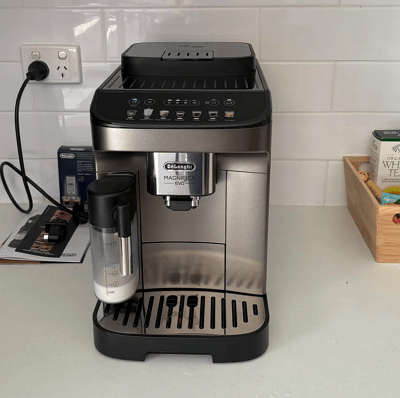
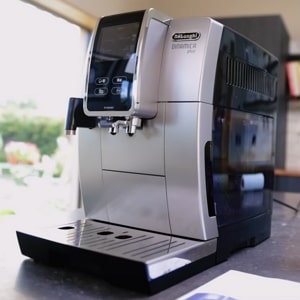
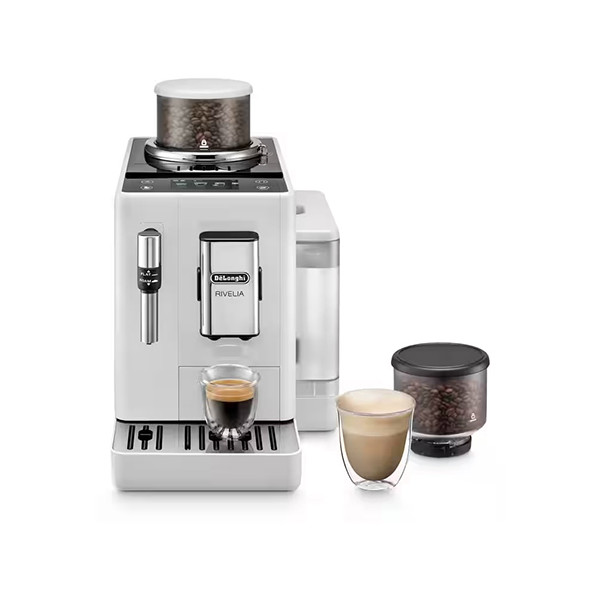
- Machines that are compact and realistic for home, but still mechanically serious.
- Super automatics that start at “press espresso” and climb up to “one-touch flat white with user profiles.”
- A Classic line that is, for a lot of people, the first time they taste what espresso is actually supposed to be.
When you buy into Gaggia you are not buying museum nostalgia. You are buying into a brand that still builds around proper pressure, usable temperature control and removable parts that can actually be serviced.
The Manual Line: Classic Shapes, Serious Shots
If you enjoy the idea of being the barista, these are your machines. You grind, dose and tamp. You steam your own milk. Gaggia gives you the platform and you supply the skill.
Gaggia Classic Evo: The Modern Reference Point
The Gaggia Classic Evo is the “welcome to real espresso” machine for a lot of home baristas.
You get:
- A true 58 mm commercial-style portafilter, so all the serious baskets and tools fit.
- A single boiler layout that is simple to understand and easy to maintain.
- A compact footprint that actually fits under wall cabinets.
What this means in practice:
- You can pull shots at a genuine 9 bar, not the marketing numbers.
- You can move from supermarket pre-ground to freshly roasted beans and feel the machine keep up with you.
- You have a base you can live with stock, then upgrade with things like a PID or OPV tweak when you are ready.
The Classic Evo is not “push button coffee”. It will punish sloppy distribution and reward a clean workflow. If you like the idea of dialing in and you want something affordable that still feels like a tool, this is it.
Gaggia Classic Evo Pro: The Brass-Boiler Workhorse
The Classic Evo Pro is the updated evolution of the Classic concept. Same DNA, better internals.
Key upgrades compared to earlier runs:
- A lead-free brass boiler with better thermal stability.
- Updated shower screen and dispersion plate for more even extraction.
- Quieter pump tuning and revised components aimed at longevity.
In daily use, the Evo Pro behaves like the Classic everyone wished they had from the start. The brass boiler holds temperature better from shot to shot, steaming is a little more confident, and the stock machine feels closer to a lightly modded older Classic.
If you are starting from scratch and you know you want a Classic platform, the Evo Pro is the “buy once, cry once” option. You can still mod if you want. You no longer need to mod just to get it into fighting shape.
Gaggia Classic GT: Dual-Boiler Performance In Classic Clothing
The Classic GT is what happens when Gaggia acknowledges what many Classic owners end up doing: moving to a dual-boiler prosumer machine once they realise how much they enjoy steaming and entertaining.
GT keeps the familiar Classic silhouette but changes the internals completely:
- You get two boilers, one dedicated to brewing and one to steam.
- Both boilers are PID-controlled, so you finally have real control over brew temperature.
- You can pull a shot and steam at the same time, with no waiting and no temperature surfing.
Who this is for:
- Home baristas who have outgrown a single boiler, but do not want a giant E61 box.
- Anyone who makes back-to-back milk drinks and wants consistent steam power without juggling boiler modes.
The Classic GT is no longer “entry level.” It lives firmly in the prosumer price bracket, but it does it while staying compact, familiar and very focused on espresso and milk quality instead of bells and whistles.
Gaggia Espresso: The Gateway Machine
Gaggia Espresso (sold in different trims like Style, Deluxe or Evolution) is the smallest, most approachable manual machine in this group.
It is not a Classic, and it is not trying to be. Instead, it gives you:
- A compact pump machine with pressurized baskets.
- A pannarello wand that makes basic milk froth easy, even if your technique is not there yet.
- A price point that makes sense for a first experiment with manual espresso.
If you are coming from pods or moka pot and you want to dip a toe into manual shots without committing Classic money or counter space, this line is where you start.
If you already know you care about puck prep and dialing in, skip this and go straight to the Classic family.
Super Automatics: From Bean To Cup For Real People
On the automatic side, Gaggia has a deep bench. The basic architecture is similar across most models: a built-in grinder, a removable brew group and a front panel that lets you pick your drink.
The differences are in how they handle milk, how many drinks they can remember, and how much fine-tuning they let you do.
Naviglio Family: Small, Simple, Automatic Milk
The Naviglio platform is built for one job: make decent espresso and milk drinks at a realistic price and size.
You will see two Naviglio models in your table:
- Gaggia Naviglio Milk HD8749-01
- Gaggia Naviglio Deluxe HD8749
Both share:
- A compact body that fits on almost any counter.
- A ceramic burr grinder and removable brew group.
- Straightforward buttons for espresso, lungo and basic drinks.
They split when it comes to milk:
- The Naviglio Milk uses Gaggia’s Capp-in-Cup system. You connect the milk line, hit a button, and it doses milk and espresso into the same cup.
- The Naviglio Deluxe uses a cappuccinatore style auto frother that pulls milk from a container. This is a bit more flexible for different jugs and storage habits.
Think of Naviglio as the “busy household starter.” It is ideal if you want to spend less time messing with settings and more time drinking cappuccinos without reaching for a separate frother.
Gaggia Brera RI9305: Compact Everyday Workhorse
The Brera is one of Gaggia’s longest-running super automatics, and for good reason.
It gives you:
- A stainless face and compact depth that works well on shallow counters.
- A ceramic grinder with simple strength options.
- A pannarello steam wand, so you still get to control your milk texture.
Brera is perfect if:
- You mostly drink espresso, lungo and Americanos.
- You occasionally make a cappuccino and you are happy to steam when you need it.
- You want something easy to live with that does not dominate the kitchen.
If you like the idea of a machine that does the espresso grunt work but you still want to touch the milk, this is the line to look at.
Velasca And Velasca Prestige: Same Heart, Different Milk
Move up one rung and you reach the Velasca series:
- Gaggia Velasca RI8260-3
- Gaggia Velasca Prestige RI8263
Both machines share the same internal platform:
- Ceramic grinder, removable brew group, full front access.
- A more grown-up interface than Naviglio or Brera.
- A footprint that still fits easily in most kitchens.
You choose between them based on how you feel about milk:
- The Velasca uses a pannarello wand. It is for people who like to steam their own milk or simply do not drink many milk drinks.
- The Velasca Prestige trades the wand for an integrated milk carafe and one-touch cappuccino and latte. You fill the carafe, select the drink, and the machine handles the rest.
If you are the only coffee drinker at home and you pull more espresso than flat whites, the plain Velasca makes sense. If the household runs on cappuccinos or if convenience is king, the Prestige earns its keep.
Slimline Super Automatics: Anima Series
The Anima line is built around a taller, slimmer chassis that still packs a serious grinder and brew group inside.
You will see three Anima models:
- Gaggia Anima
- Gaggia Anima Deluxe
- Gaggia Anima Prestige
All three offer:
- Bean-to-cup espresso with programmable strength and volume.
- A narrow body that slides into tighter gaps next to fridges and microwaves.
- A design that reads a little more “modern kitchen” and a little less “appliance showroom.”
Where they differ:
- Anima gives you a pannarello wand and a basic core drink menu.
- Anima Deluxe layers on nicer finishes and comfort touches while still using a wand for milk.
- Anima Prestige moves to an integrated carafe and full one-touch milk drinks.
If counter depth is limited or you want a slim profile but do not want to compromise on cup quality, Anima hits that balance. Pick Prestige if you want automatic milk drinks. Choose Anima or Deluxe if you prefer to steam and pour yourself.
Magenta And Cadorna: Profiles, Color Screens And Control
Magenta and Cadorna are where Gaggia moves from “simple buttons” to proper color displays, profiles and a more modern interface.
Gaggia Magenta Prestige RI8702: Modern, One-Touch Milk
Magenta Prestige sits in the mid-range sweet spot.
You get:
- A color display with clearly labeled drink icons.
- Around a dozen one-touch beverages out of the box.
- An integrated milk carafe that docks cleanly and can go in the fridge between uses.
This machine is a good fit if:
- You want something that feels more like a current-generation appliance rather than a legacy design.
- You mostly drink milk drinks and want those to be one-touch reliable.
- You still care what the espresso tastes like and want the ceramic grinder to do it justice.
If your priority is a modern look, simple operation and good latte output, Magenta Prestige is easier to live with than juggling multiple accessories.
Gaggia Cadorna Milk, Barista Plus And Prestige: Same Brain, Three Personalities
The Cadorna platform is interesting because it gives you multiple milk philosophies on the same brain and body.
Common to all Cadornas:
- A front color display with clear menus.
- User profiles, so each person can save their own drink strengths and volumes.
- A decent selection of preset drinks that you can tweak.
Then you choose the version that matches your milk workflow:
- Cadorna Milk uses Capp-in-Cup. The machine doses milk and espresso into the same cup through a simple automatic milk system. It is easy, compact and quick to rinse.
- Cadorna Barista Plus swaps the automatic milk for a proper steam wand. This is the one for people who want to stretch and texture milk themselves, whether for better latte art or more control over foam.
- Cadorna Prestige climbs to an integrated milk carafe with more presets and a fuller menu of one-touch specialties.
If you like the idea of profiles and a smarter interface, look at Cadorna. Then pick:
- Milk if convenience matters more than aesthetics.
- Barista Plus if you care about milk quality and you do not mind doing the work.
- Prestige if you just want to fill a carafe, press a picture of a cappuccino and get on with your morning.
Babila And Accademia: Flagship Super Automatics
At the top of the Gaggia tree you have two names: Babila and Accademia. These are the machines for people who want to stay in the super-automatic world but refuse to give up control.
Gaggia Babila RI9700: Flow Control For The Lazy Perfectionist
Babila is built around a simple idea: if the machine is doing the grinding and tamping for you, you should still have some say in how the water moves through the puck.
You get:
- A ceramic grinder with the usual strength options.
- Both an integrated milk carafe and a separate manual steam wand.
- A front-mounted flow knob that lets you tweak the brew profile in real time.
In practice, that knob becomes addictive:
- You can run tight, syrupy shots for straight espresso.
- You can open things up for longer, gentler coffees that behave more like a “filter-ish” cup from the same beans.
- You can tune the mouthfeel without touching grind size.
If you like to tinker, but you also like pressing one button and walking away, Babila lives right in that overlap.
Gaggia Accademia RI9781-01: Maximum Convenience, Maximum Tweaking
Accademia is the endgame for Gaggia’s domestic lineup.
It brings:
- A larger touch display and a very deep drink menu.
- Fine control over temperature, strength, milk volume and foam level.
- Both a milk carafe for automatic drinks and a traditional steam wand for when you want to play barista.
Accademia makes sense if:
- You have a coffee-heavy household with different tastes and you want profiles and presets for everyone.
- You want one machine to cover straight espresso, long coffees and milk drinks without compromise.
- You are willing to pay for something that will probably be the last super automatic you buy for a long time.
If the Classic GT is the “prosumer manual” flagship, Accademia is the “prosumer automatic” one. Same intent, different audience.
Which Gaggia Should You Actually Buy?
You already have the sortable table to compare prices, ratings and machine types. Here is the quick logic that ties it all together.
Start With How Much Work You Want To Do
Ask yourself one blunt question:
Do you want to be the one doing the work, or do you want to press a button and drink coffee?
If you want to be the barista:
- Shortlist Gaggia Classic Evo and Gaggia Classic Evo Pro for value and upgrade potential.
- Look at Gaggia Classic GT if you know you will be steaming a lot of milk and you want dual-boiler performance.
- Consider Gaggia Espresso only as a budget gateway, not as your long-term endgame.
If you want the machine to carry the workload:
- Decide whether you are mostly a black-coffee drinker or a milk-drink person.
- Use the table to separate pannarello wand machines (you steam milk) from automatic milk systems and carafes (the machine does it).
Then Match Your Drinking Style
If your coffee is mostly black:
- Brera, Velasca, and Anima with wands are ideal.
- You are paying for grinder quality and brew stability, not for milk systems you rarely use.
If your house runs on cappuccinos and lattes:
- Start with Naviglio Milk / Deluxe if you need to keep cost down.
- Move up to Velasca Prestige, Magenta Prestige, Cadorna Milk or Cadorna Prestige for more drink options and better interfaces.
- Look at Babila or Accademia if you want flagship-level milk control and more profile space.
If you care about profiles and different users:
- Cadorna is built around profiles. It is the easiest way to give each person in the house a “set and forget” drink.
- Accademia takes that idea and stretches it to its logical extreme.
If you want to tinker without giving up convenience:
- Cadorna Barista Plus combines auto espresso with manual steam.
- Babila gives you flow control and a dual milk setup.
- Accademia lets you dive into every parameter without ever touching a portafilter.
Bringing It All Together
Gaggia today is a full ecosystem, not just “that Classic everyone talks about.” There is a pattern to it:
- The Classic line is for people who want to learn and control every step.
- The Brera / Naviglio / Velasca / Anima tier is for people who want trustworthy daily coffee with just enough tuning to keep things interesting.
- The Magenta and Cadorna families are for households that need profiles, better UIs and smarter milk handling.
- The Babila and Accademia tier is for the drink-obsessed who still want to live in the push-button world.
Use your table to compare the hard stats. Use this text to gut-check how each machine actually behaves in a kitchen.
Once you know how much control you want, how often you drink milk, and how much counter space you are willing to sacrifice, there will probably be one Gaggia on that list that feels obvious.
That is the one you should buy.
| Image | Name | Price (USD) | Rating (out of 5) | Type of machine |
|---|---|---|---|---|

|
Gaggia Classic Evo | 499 | 4.6 | Semi automatic, single boiler, 58 mm group |

|
Gaggia Cadorna Prestige | 899 | 4.6 | Super automatic bean to cup, integrated milk carafe |

|
Gaggia Babila RI9700 | 1899 | 4.7 | Flagship super automatic, dual milk (carafe + steam wand) |

|
Gaggia Velasca Prestige RI8263 | 750 | 4.3 | Super automatic bean to cup, integrated milk carafe |

|
Gaggia Velasca RI8260-3 | 600 | 4.2 | Super automatic bean to cup, pannarello steam wand |

|
Gaggia Naviglio Milk HD8749-01 | 599 | 4.1 | Super automatic bean to cup, Capp-in-Cup auto milk system |

|
Gaggia Naviglio Deluxe HD8749 | 699 | 4.0 | Super automatic bean to cup, cappuccinatore auto frother |

|
Gaggia Magenta Prestige RI8702 | 899 | 4.5 | Super automatic bean to cup, integrated milk carafe, 12 drinks |

|
Gaggia Espresso | 250 | 3.6 | Entry-level manual pump, pressurized baskets, pannarello wand |

|
Gaggia Classic GT | 1699 | 4.5 | Prosumer semi automatic, dual boiler with dual PID |

|
Gaggia Classic Evo Pro | 549 | 4.7 | Semi automatic, single brass boiler, 58 mm group |

|
Gaggia Cadorna Milk | 849 | 4.3 | Super automatic bean to cup, Capp-in-Cup auto milk, user profiles |

|
Gaggia Cadorna Barista Plus RI9603-47 | 899 | 4.4 | Super automatic bean to cup, professional steam wand, user profiles |

|
Gaggia Brera RI9305 | 550 | 4.1 | Compact super automatic, pannarello steam wand |

|
Gaggia Anima | 599 | 4.1 | Super automatic bean to cup, pannarello steam wand |

|
Gaggia Anima Prestige | 849 | 4.4 | Super automatic bean to cup, integrated milk carafe |

|
Gaggia Anima Deluxe | 749 | 4.2 | Super automatic bean to cup, pannarello steam wand, upgraded comfort features |

|
Gaggia Accademia RI9781-01 | 1999 | 4.7 | Flagship super automatic, milk carafe + steam wand, 19 customizable drinks |
We’ve categorized the best espresso machines for every kind of buyer
Find the right shortlist faster, whether you want convenience, a beginner-friendly setup, a smaller footprint, or better value at a given budget.
Best Superautomatic Espresso Machines
One-touch picks for speed and convenience.
Best Espresso Machines for Beginners
Easy-to-use machines with a smoother learning curve.
Best Small Espresso Machines
Compact machines for tighter kitchens and counters.
Best Espresso Machines With Built-In Grinder
All-in-one options with fewer extra pieces to buy.
Best Cheap Espresso Machines Under $500
Budget picks that still make sense for real espresso.
Best Prosumer Espresso Machines Under $1000
More serious machines with stronger value for the money.
Best Single Boiler Espresso Machines
Simple, space-saving picks for espresso-first routines.