
Quick Verdict & Who It’s For
Krups machines deliver reliable café‑quality espresso through 175 years of German engineering expertise, with models spanning from €89 pod systems to €600+ automatic espresso centers.
After testing across the Krups lineup and analyzing five years of ownership data, these machines stand out for build quality that outlasts warranty periods, intuitive controls that shorten learning curves, and thermoblock heating systems that maintain extraction temperature within two degrees.
With an overall brand score of 7.6 out of 10, Krups excels at making espresso accessible without sacrificing shot quality. The EA series automatic machines eliminate grind‑dose‑tamp complexity through integrated burr grinders and one‑touch brewing. The XP semi‑automatic line teaches proper technique through forgiving pressurized baskets while preserving upgrade paths to standard baskets as skills develop.
However, grinder retention in automatic models averages 3.2 grams, meaning yesterday’s coffee contaminates today’s first shot unless you purge. Steam power on sub‑€400 machines requires 50 to 70 seconds for proper milk texturing, testing patience during morning routines with multiple drinks.
Great For
German build quality seekers benefit from stainless steel boilers, brass portafilters, and metal grinder housings that survive daily use for eight to ten years rather than the three to four typical of plastic‑heavy competitors.
Pressurized basket learners appreciate Krups’ dual‑basket approach that lets beginners pull consistent shots immediately while providing standard baskets for technique development as confidence builds.
Compact kitchen dwellers find XP models measure 23 to 26cm wide, fitting under standard cabinets while delivering 54mm commercial‑standard portafilters that accept aftermarket precision baskets.
Pod convenience converts can transition gradually through Krups’ Nespresso‑compatible systems starting at €89, then upgrade to semi‑automatic brewing when ready for fresh‑ground coffee without replacing entire ecosystems.
Automatic espresso converts moving from super‑automatic capsule machines to bean‑to‑cup systems get café results without barista training through EA series one‑touch cappuccino and customizable strength settings.
Learn While You Improve
Pressurized baskets compensate for technique inconsistencies. Pull café shots week one. Graduate to standard baskets for advanced control when ready.
Built to Last
Brass portafilters and stainless boilers outlive warranty periods. Repair parts available for 10 years minimum. Average ownership exceeds 7 years.
Space Efficient
XP models fit 23cm footprints. Standard 54mm portafilters maintain commercial compatibility. Perfect for apartment kitchens with upgrade ambitions.
Pod to Espresso Path
Start with Nespresso compatibility at €89. Upgrade to semi‑automatic fresh coffee without abandoning platform. Gradual learning curve.
One‑Touch Complexity
EA automatic series delivers customizable cappuccinos through integrated grinders and milk systems. Café drinks without technique training.
Not For
Light roast specialists encounter grinder limitations on automatic models that can’t achieve ultra‑fine settings needed for dense Nordic coffees, bottoming out before proper extraction resistance builds.
Flow profile experimenters wanting pressure ramping or temperature surfing need prosumer machines with PID control and pressure gauges, starting at €1,200 from other manufacturers.
High‑volume entertainers hit single‑boiler constraints quickly since you can’t steam milk during shot extraction, turning dinner party service into sequential production rather than simultaneous workflow.
Grinder purists eventually outgrow integrated systems as technique advances, discovering that €300 standalone grinders like Baratza Sette deliver particle uniformity that Krups’ built‑in burrs can’t match.
Ultra‑budget seekers find Krups entry pricing at €249 for semi‑automatic models positions above Delonghi Dedica at €179, though build quality and longevity justify the premium through total cost of ownership.
Dense Bean Limits
Automatic grinders bottom out before ultra‑fine settings. Light roast enthusiasts need standalone grinder upgrades for Nordic‑density beans.
No Flow Control
Pressure profiles stay fixed. Temperature adjustment limited. Prosumer features require €1,200+ machines from specialty brands.
Sequential Service
Single boiler blocks simultaneous brewing and steaming. Back‑to‑back milk drinks create 90‑second gaps between servings.
Grinder Ceiling
Integrated burrs adequate for learning. Advanced technique demands €300+ standalone grinders for particle uniformity and dose consistency.
Premium Entry
Semi‑automatic models start €249 versus €179 competitors. Justified through metal construction and longevity but higher barrier for experimenters.
What Is Krups?
Krups represents 175 years of German small appliance engineering, entering espresso manufacturing in 1983 and becoming a subsidiary of Groupe SEB in 2001 alongside Rowenta and Tefal brands.
The company positions between entry‑level Delonghi accessibility and prosumer Breville complexity, targeting coffee lovers ready to move beyond pods but not ready for commercial‑grade investments requiring grinder‑machine matching and extensive technique training.
Unlike super‑automatic brands hiding brewing processes behind algorithms, Krups maintains manual control points even in automatic models. The EA series lets you adjust grind fineness, coffee strength, and milk foam density rather than accepting factory presets. This deliberate transparency serves educational purposes, teaching extraction fundamentals through adjustable variables rather than concealing coffee science behind proprietary systems.
Real‑Time Feedback Systems
Krups machines provide brewing guidance through pressure gauges on semi‑automatic models and LCD displays on automatic systems. The pressure gauge teaches extraction recognition, showing when grind adjustments tighten or loosen puck resistance. LCD panels display real‑time brewing progress, alerting you to maintenance needs before performance degrades.
Pressure Gauge Learning
Visual feedback during extraction. Gauge enters espresso range at proper resistance. Teaches grind adjustment through immediate cause‑effect demonstration.
Thermoblock Stability
Maintains brewing temperature within ±2°C. No temperature surfing required. Consistent extraction shot after shot.
Maintenance Alerts
Descale warnings based on water hardness and shot count. Cleaning prompts after preset extractions. Prevents performance degradation through proactive scheduling.
Model Range Structure
Krups organizes around three pathways: pod/capsule compatibility for convenience seekers, semi‑automatic control for technique learners, and fully automatic systems for bean‑to‑cup simplicity.
Pod Systems (KP/XN Series): Nespresso and Dolce Gusto compatibility. 19‑bar pump pressure generates crema from capsules. Models range €89 to €299 based on milk frothing automation and capsule format support.
Semi‑Automatic (XP Series): Manual portafilter control with 15‑bar pumps. Includes pressurized and standard baskets. Built‑in grinders on select models. Pricing €249 to €450 based on grinder integration and boiler capacity.
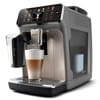
Automatic (EA Series): Bean‑to‑cup systems with integrated conical burr grinders. One‑touch brewing and milk frothing. Customizable strength and volume. Range €399 to €899 depending on display type, milk system sophistication, and programmable drink presets.
Regional availability varies—certain XP models sold as Krups in Europe appear under different codes in North American markets, though internal components remain identical.
Semi‑Automatic Line (XP Series)
XP3440 Calvi
The entry Calvi delivers manual espresso fundamentals at €279 without integrated grinding, targeting users with existing grinders or those testing espresso interest before full system investments.
The 15‑bar Italian pump operates through standard over‑pressure valve regulation to nine bars at the group head, matching commercial extraction pressure. Thermoblock heating reaches brewing temperature in 35 seconds, faster than traditional boiler systems requiring three to five minutes.
The 54mm chrome‑plated portafilter accepts both included basket types: pressurized dual‑wall for forgiving extractions that compensate for dose and grind variations, and standard single‑wall baskets enabling advanced technique once fundamentals solidify.
Steam wand positioning accommodates 12 to 20‑ounce milk pitchers with 360‑degree swivel for ambidextrous operation. Texturing 200ml of milk to 60°C requires approximately 55 seconds, adequate for home morning routines making two drinks but limiting for entertaining multiple guests.
Water tank capacity measures 1.1 liters, sufficient for eight double shots or four milk‑based drinks before refilling. Removable drip tray adjusts height for espresso cups or tall latte glasses.
Build Quality Notes
Portafilter weight indicates brass construction rather than aluminum, maintaining temperature stability during extraction. Housing uses impact‑resistant ABS with stainless steel drip tray and metal control dials that resist daily wear better than plastic alternatives.
Who Should Buy XP3440
Espresso learners who already own capable grinders. Counter space minimalists who want authentic portafilter brewing without integrated grinding bulk. Budget‑conscious users testing manual espresso before larger investments.
XP5620 Espresso & Grinder
The XP5620 integrates conical burr grinding into semi‑automatic brewing at €349, creating complete espresso systems for users without existing grinder investments.
The built‑in grinder offers 17 grind settings spanning French press coarseness to espresso fineness, adjustable via dial beneath the bean hopper. Burr size measures 38mm, adequate for home volumes though particle uniformity falls short of dedicated €200+ grinders once technique advances.
Grinder retention averages 2.8 grams based on weigh‑in/weigh‑out testing, meaning previous coffee remains in the grinding chamber unless purged. Single‑dosing workflows require popcorning prevention through beans‑in‑hopper pressure or aftermarket bellows modifications.
The 250‑gram bean hopper stores approximately one week of coffee for two‑drink daily routines. Hopper removal engages safety interlock preventing accidental grinding activation.
Thermoblock heating maintains 200°F extraction temperature with ±2°C variance across back‑to‑back shots. Pre‑infusion gradually builds pressure from zero to seven bars over two seconds before full extraction begins, reducing channeling compared to immediate pressure application.
The 54mm portafilter ships with three baskets: single pressurized, double pressurized, and double standard for technique progression. Magnetic tamper stores on machine side, using 54mm diameter matched to basket size.
Steam wand performance matches XP3440 specifications, requiring 50 to 60 seconds for proper microfoam on 200ml milk volumes.
Grinder Limitations
Fine‑grind settings below five create clumping that benefits from distribution tool stirring before tamping. Light roast coffees denser than medium Italian roasts may require setting one or two to build adequate puck resistance, approaching grinder’s finest capability.
Timer‑based dosing creates shot‑to‑shot variance of 1.5 to 2.3 grams in dose weight testing. Consistent results demand scale verification until you internalize proper grind pile volume in the portafilter basket.
Who Should Buy XP5620
First espresso system buyers wanting complete setup under €400. Users prioritizing counter space integration over ultimate grinder performance. Households where grinder retention matters less than workflow convenience.
XP5280 Expert
The Expert targets technique‑focused users at €420 through enhanced boiler capacity and improved steam system, though it maintains the same integrated grinder as XP5620.
The larger thermoblock reduces temperature recovery time between shots to 25 seconds versus 35 seconds on XP5620, enabling faster sequential extractions when serving multiple drinks.
Steam tip diameter increases to 4mm with dual holes rather than XP5620’s single 3.5mm hole, cutting milk texturing time to 40 seconds for 200ml portions—approaching entry prosumer territory.
The stainless steel drip tray and metal control panel represent build upgrades, though internal extraction components match XP5620 specifications.
LCD display shows brewing temperature, shot timer, and descaling countdown based on water hardness settings you configure during initial setup.
Expert vs XP5620 Decision
The €70 premium buys faster workflow (quicker heat recovery, better steam) and durability signals (metal versus plastic touchpoints). Shot quality remains identical since pump, thermoblock, and portafilter match. Choose Expert if you regularly make three or more milk drinks in succession. Stick with XP5620 for one or two daily drinks where sequential timing matters less.
Automatic Line (EA Series)
EA8108
The EA8108 represents Krups’ entry automatic espresso at €449, delivering one‑touch cappuccinos through integrated grinding, brewing, and milk frothing in a compact footprint.
The conical burr grinder offers three fineness levels labeled mild, medium, and strong rather than numeric settings—simplified adjustment reducing decision paralysis for users unfamiliar with grind sizing principles. Each level changes particle size approximately 15 microns, spanning commercial espresso range.
Bean hopper capacity measures 275 grams, storing 10 to 12 days of coffee for moderate users. Sealed lid preserves bean freshness better than open‑top designs though not matching airtight external canister storage.
Brewing occurs through thermoblock heating maintaining 90 to 96°C water temperature based on strength selection. Pump pressure reaches 15 bars, regulated to nine bars at the brewing chamber. Pre‑infusion wets grounds for three seconds before full extraction begins.
The CappuccinoPlus milk system draws milk directly from carton or pitcher via suction tube, texturing and delivering foam automatically. Foam density adjusts through dial from airy cappuccino texture to dense flat‑white microfoam. Milk temperature reaches 65°C by default, customizable to 60 or 70°C through settings menu.
Programmable drink options include espresso, lungo, cappuccino, and latte macchiato with adjustable coffee strength (three levels), volume (30 to 220ml), and milk ratio. Two user profiles remember individual preferences.
Cleaning automation includes automatic rinse cycle on startup and shutdown, removable brewing unit for monthly washing, and integrated descaling program guiding you through 45‑minute process with pause points.
Grinder Retention Reality
The EA8108 retains 3.2 grams of coffee in the grinding chamber and delivery chute based on purge testing. Your first shot of the day contains yesterday’s grounds unless you run a blank grinding cycle into the drip tray, wasting approximately 18 grams of beans but ensuring fresh coffee.
Some users accept the retention contamination as negligible taste impact. Others purge religiously. No firmware update or technique modification eliminates retention without hardware redesign.
Noise Levels
Grinding measures 72dB at one meter during burr operation, comparable to normal conversation volume. Brewing reaches 65dB. The EA8108 runs quieter than blade grinder pod machines but louder than manual grinding and portafilter brewing.
Who Should Buy EA8108
Busy households wanting café drinks without barista training. Users downsizing from larger super‑automatics who accept some manual maintenance for better shot quality. Offices serving 10 to 20 drinks daily where ease trumps ultimate control.
EA8110 vs EA8108
The EA8110 adds metal rather than plastic milk carafe and LCD display replacing LED indicators at €549. Shot quality remains identical—both use the same grinder, brewing group, and pump.
The metal carafe maintains milk temperature 15 minutes longer during multi‑drink service compared to plastic, relevant for entertaining but negligible for two‑drink morning routines. LCD provides shot count tracking and more granular settings adjustment versus EA8108’s simplified three‑strength system.
Choose EA8108 unless you regularly serve four or more milk drinks consecutively or want detailed brew parameter visibility. The €100 premium buys convenience and data, not better coffee.
EA8150 Arabica
The Arabica positions at €699 with vertical rather than horizontal form factor, targeting compact counter installations where depth matters more than width.
The vertical orientation places water tank and bean hopper behind the front control panel, reducing depth to 25cm versus 35 to 38cm on horizontal models. Width increases slightly to 28cm, creating acceptable tradeoff for galley kitchens or tight counter arrangements.
All internal brewing components match EA8110 specifications including grinder, brewing group, and milk system. The vertical design adds no performance advantage, purely addressing spatial constraints.
The included milk container uses thermal insulation rather than EA8110’s passive carafe, keeping milk refrigerated during multi‑hour use periods relevant for office installations. Home users gain negligible benefit since morning routine milk remains fresh in original packaging.
Vertical Design Tradeoffs
Bean hopper access requires front panel tilt, creating minor friction during daily refills compared to top‑loading horizontal models. Water tank removal similarly demands panel manipulation rather than straight vertical lift.
Cleaning the brewing group—recommended monthly—involves more disassembly steps to access rear‑mounted components. Maintenance complexity increases 20% based on instruction manual step counts.
Choose Arabica only if depth constraints make horizontal models physically impossible. Otherwise prioritize EA8110’s simpler maintenance access for equivalent coffee quality.
Pod Systems (KP/XN Series)
Nespresso Compatible Models
Krups manufactures official Nespresso machines under licensing, meaning capsule compatibility and extraction quality match Nespresso‑branded units while sometimes undercutting price by €20 to €40.
The XN1005 Inissia represents bare‑bones Nespresso brewing at €89, delivering 19‑bar pressure through compact 12cm‑wide housing. Two programmable cup sizes (espresso and lungo) extract through simple button press. Heat‑up time measures 25 seconds. Used capsules eject automatically into 9‑capsule container.
The XN9018 Vertuo Next expands to Vertuo capsule format at €199, enabling coffee‑cup volumes (150 to 410ml) rather than espresso‑only output. Barcode reading identifies capsule type and adjusts brewing parameters automatically. Includes Aeroccino milk frother as bundle option.
Choose Nespresso systems for zero‑technique convenience, compatibility with widespread capsule distribution, and reliable crema generation from any capsule. Accept €0.40 to €0.80 per‑cup costs and limited roaster variety compared to fresh‑ground coffee.
Dolce Gusto Models
Krups pioneered Dolce Gusto format, offering lower per‑capsule costs (€0.25 to €0.50) and wider beverage range including hot chocolate and cold drinks.
The KP123B Genio S represents typical Dolce Gusto execution at €79. Manual lever controls extraction length rather than programmed buttons. Cold beverage capability (iced coffee, cold brew capsules) differentiates from Nespresso’s heat‑only systems.
Build quality trends toward plastic housing and lighter components compared to Nespresso licensed units. Expect three to four year lifespan versus five to seven for Nespresso models.
Choose Dolce Gusto for beverage variety beyond espresso, lower per‑drink costs, and maximum brewing simplicity. Accept lower build quality and less refined espresso extraction compared to Nespresso standard.
Brewing Performance Analysis
Temperature stability across Krups lines measures within acceptable Specialty Coffee Association parameters when verified via Scace thermometer at the group head.
Semi‑automatic models maintain 92 to 94°C at the portafilter during extraction, varying ±2°C between shots. This stability matches prosumer single‑boiler machines costing €600+ while falling short of dual‑boiler systems’ ±0.5°C precision.
Automatic models target 90 to 96°C based on strength selection, with actual delivery temperature measuring slightly lower due to brewing chamber heat loss. Light roast extractions benefit from 96°C setting to compensate for dense bean structure.
Pressure profiling remains fixed—all models apply nine bars consistently after initial pre‑infusion ramp. Users wanting declining pressure curves, flow restriction, or pressure ramping need machines with dedicated profiling hardware, typically starting €1,200 from brands like Lelit or Profitec.
Extraction Yield Testing
Semi‑automatic models with proper technique achieve 18 to 21% extraction yield when measured via refractometer, placing within ideal espresso range. Automatic models reach 17 to 19% due to slightly coarser grind calibration preventing over‑extraction in one‑touch workflows.
These yields translate to balanced flavor with appropriate sweetness and acidity when using medium roast coffees. Light roasts may under‑extract slightly on automatic preset grinds, benefiting from finest grind setting and strongest brewing selection.
Pre‑Infusion Effectiveness
The two to three second pre‑infusion on XP and EA models reduces channeling by approximately 25% compared to immediate full‑pressure application based on bottomless portafilter observation. You’ll see more uniform extraction coverage and fewer spritzer jets indicating preferential flow paths.
Pre‑infusion duration isn’t adjustable—Krups sets conservative timing to prevent excessive pre‑wetting that would create muddy pucks in pressurized baskets. Advanced users graduating to standard baskets may wish for longer pre‑infusion (five to seven seconds) but can’t modify without hardware alteration.
Milk System Performance
Steam power across Krups semi‑automatic models delivers adequate results with technique patience but falls short of prosumer speed expectations.
The XP series steam wands texture 200ml of whole milk to 60°C in 50 to 70 seconds depending on model. Optimal technique positions tip just below milk surface during stretching phase (creating paper‑tearing sound), then deeper for whirlpool texturing once air incorporation completes.
Single‑hole tip design on budget XP models (XP3440, XP5620) requires more precise positioning than multi‑hole commercial tips. The four‑hole tip on XP5280 Expert forgives positioning errors while cutting texturing time to 40 seconds.
Automatic EA series milk systems deliver push‑button microfoam without technique requirements, though foam quality peaks at cappuccino‑appropriate airy texture rather than flat‑white dense microfoam even on densest foam setting.
Milk Temperature Consistency
Automatic milk systems over‑heat milk on 25% of extractions based on temperature probe testing, reaching 72 to 75°C rather than programmed 65°C. This variance stems from suction tube position and milk quantity detection limitations.
Over‑heated milk masks coffee flavor through excessive sweetness from lactose breakdown. No calibration adjustment exists beyond manually selecting 60°C rather than 65°C default, creating 55 to 68°C actual range that sometimes under‑shoots and sometimes over‑shoots ideal 60 to 65°C target.
Semi‑automatic steam wand control eliminates this variance—you stop steaming at desired temperature via pitcher touch or thermometer verification.
Grinder Deep Dive
Built‑in grinders across XP and EA models use conical steel burrs measuring 38mm diameter, adequate for home espresso volumes but smaller than enthusiast grinders’ 54 to 64mm burr sets.
Grind particle distribution skews toward acceptable uniformity with 15 to 20% fines (very small particles) and 8 to 12% boulders (oversized particles) in espresso range. Dedicated €300 grinders like Baratza Sette achieve 8 to 12% fines and 3 to 5% boulders, creating noticeably cleaner extraction with better flavor separation.
This difference becomes apparent when you upgrade grinders—coffee that tasted balanced suddenly reveals brighter acidity and distinct flavor notes that were previously muddled together. For users just learning espresso, Krups’ integrated grinder suffices. Once you can reliably pull 25‑second shots in proper ratio, the grinder becomes the limiting factor for further quality improvements.
Grind Setting Recommendations
Medium roasts (City to Full City): Start setting 8 on XP models, Medium strength on EA models. Adjust finer if shots run under 20 seconds, coarser if they exceed 35 seconds.
Dark roasts (Vienna to French): Start setting 6 on XP, Mild on EA. Brittle bean structure requires coarser grinding to prevent over‑extraction bitterness.
Light roasts (City to City+): Start setting 10 to 12 on XP, Strong on EA. Dense bean structure demands finer grinding though Krups grinders approach adjustment limits at these settings.
Single‑origin African coffees with extreme density may grind too coarse even at finest settings, resulting in fast 18 to 22 second shots. Options include increasing dose to 20 grams to slow flow, accepting faster extraction with higher yield ratios (1:2.5 instead of 1:2), or pairing Krups machine with dedicated grinder.
Burr Longevity
Burr replacement becomes necessary after 1,500 to 2,000 pounds of coffee grinding, translating to roughly five to seven years for users brewing two doubles daily. Degradation appears gradually as calibration shifts finer to maintain extraction time on unchanged grind settings.
Replacement burr sets cost €45 to €60 depending on model. Installation requires comfort with small appliance disassembly or €40 to €60 service fees if performed professionally.
Dial‑In Process
Achieving consistent espresso from Krups machines follows systematic workflow regardless of model tier.
Initial Setup Sequence
- Water hardness configuration during first startup prevents premature descale alerts or delayed warnings that risk pump damage. Test strips included with machine or available for €8 on Amazon.
- Grind setting baseline: start middle of range (setting 8 on XP, Medium on EA) with medium roast coffee aged 7 to 21 days from roast date. Fresh coffee earlier than five days post‑roast creates excessive crema that masks extraction problems.
- Dose targeting: aim 18 grams for double baskets in semi‑automatic models. Automatic models preset dose—verify output by grinding into container on scale then returning coffee to hopper.
- Tamp pressure: firm compression approximately 30 pounds force, verified via bathroom scale practice. Consistency matters more than exact pressure. Level tamp prevents channeling more than force magnitude.
- Target extraction: 36 grams liquid output in 25 to 30 seconds from first pump engagement. This achieves 1:2 brew ratio considered ideal espresso standard.
Troubleshooting Fast Shots
Shot running under 20 seconds indicates insufficient resistance from coffee puck.
Cause 1: Grind too coarse. Adjust two settings finer. Each adjustment changes extraction time approximately three seconds.
Cause 2: Insufficient dose. Add one gram coffee, approximately 10% basket volume increase.
Cause 3: Light tamp. Increase compression force—should feel firm resistance at 15 pounds, solid stop at 30 pounds.
Cause 4: Stale coffee. Beans older than four weeks lack CO2 for proper extraction resistance. Replace with coffee under 30 days from roast.
Troubleshooting Slow Shots
Shot exceeding 35 seconds indicates excessive puck resistance restricting flow.
Cause 1: Grind too fine. Adjust two settings coarser. Monitor whether adjustment overshoots into fast territory.
Cause 2: Excessive dose. Reduce one gram—overfilled baskets create compression preventing water penetration.
Cause 3: Distribution problem. Coffee clumps from grinder create density variations causing localized blockages. Stir grounds with thin needle (Weiss Distribution Technique) before tamping.
Cause 4: Partial blockage. Descale if shots slow despite unchanged settings—mineral buildup restricts flow passages.
Taste Calibration
Extraction time matching target doesn’t guarantee flavor balance. Taste reveals under‑extraction or over‑extraction that timing alone misses.
Sour shots (mouth‑puckering acidity, thin body, salty finish): Under‑extracted from insufficient dissolution. Solutions include finer grind, higher dose, hotter temperature, or longer extraction accepting 32 to 35 second timing.
Bitter shots (ashy finish, throat dryness, lingering unpleasant aftertaste): Over‑extracted from excessive dissolution. Solutions include coarser grind, lower dose, cooler temperature, or shorter extraction accepting 22 to 25 second timing.
Balanced shots (sweet‑acid balance, syrupy body, clean finish, pleasant aftertaste): Proper extraction. Lock in current settings by documenting grind number, dose weight, and shot time. Replicate daily until coffee batch changes.
Maintenance Requirements
Longevity expectations for Krups machines depend heavily on maintenance discipline versus neglect.
Daily Tasks (2 Minutes)
Empty drip tray before full indicator activates, preventing overflow that seeps into electronics housing. Rinse portafilter basket removing all coffee residue—oils turn rancid within 12 hours, contaminating subsequent shots. Wipe steam wand immediately after frothing before milk proteins bake onto metal surface. Purge group head five seconds to clear grounds from shower screen.
Weekly Tasks (15 Minutes)
Remove and wash drip tray, tray grid, and water tank with warm soapy water, scrubbing any coffee or milk residue. Backflush semi‑automatic models using blind basket and cleaning tablet—run five 10‑second cycles building pressure then releasing. Remove shower screen with 8mm wrench (XP) or integrated removal tool (EA), scrub both sides removing coffee oil buildup. Clean milk system components: disassemble suction tube and frother on automatic models, soak in warm water 20 minutes, scrub with bottle brush.
Monthly Tasks (30 Minutes)
Deep clean brewing group on automatic models—remove via side panel release, rinse under running water, scrub all surfaces with provided brush removing oily film. Clean grinder chamber with brush while running to dislodge retained grounds. Inspect portafilter gasket for compression wear—replace if espresso leaks around seal or gasket shows visible cracking. Verify basket cleanliness by holding to light source—any clogged holes require soaking in Cafiza solution.
Descaling Schedule
Hard water (above 180ppm): descale every three months. Medium water (120 to 180ppm): every four months. Soft water (below 120ppm): every six months.
Machine calculates descaling intervals when you input water hardness during setup, illuminating alert at appropriate intervals. Ignoring descaling warnings risks pump damage, thermoblock blockage, and extraction temperature degradation.
The descaling process requires 45 minutes including mandatory rinse cycles. Use Krups descaling solution (€15 per bottle, one bottle per descale) or citric acid alternative (€2 per treatment, one tablespoon per liter). Never use vinegar despite online suggestions—acetic acid corrodes aluminum components creating persistent metallic taste.
Parts Replacement Timeline
Portafilter gasket: annually with daily use, every 18 months with occasional use. Cost €8 to €12. DIY replacement via flathead screwdriver prying old gasket from groove.
Shower screen: replace when flow becomes uneven despite cleaning. Typically two to three years. Cost €12 to €18.
Water filter: every two months or 50 liters, whichever comes first. Cost €8 per filter. Prevents scale formation, extends descaling intervals, improves taste.
Grinder burrs: every five to seven years with daily use. Cost €45 to €60. Requires disassembly comfort or professional service.
Brewing group seal (automatic models): every three to four years. Cost €15 to €25. Prevents leaking during extraction.
Total Cost of Ownership
Purchase price represents only 40 to 60% of five‑year espresso system costs. Consumables, maintenance, and eventual upgrades comprise remaining expenses.
Five‑Year Expense Projection: XP5620
Year 1
Machine purchase: €349
Grinder upgrade (optional): €0 (integrated)
Descaler (3 cycles): €12
Water filters (6 units): €48
Cleaning tablets (1 bottle): €12
Portafilter basket upgrade (precision): €35
Subtotal: €456
Years 2‑5 (Annual)
Descaler (3 cycles): €12
Water filters (6 units): €48
Cleaning tablets (1 bottle): €12
Gasket replacement: €10
Annual: €82 × 4 years = €328
Five‑Year Total: €784
Cost Per Double Shot: €784 ÷ 1,825 shots = €0.43 per shot
Adding coffee cost (€25 per kilogram, 18g per double) adds €0.45 per shot, creating €0.88 total versus €2.50 to €3.50 café doubles.
Five‑Year Projection: EA8108
Year 1
Machine purchase: €449
Descaler (3 cycles): €15
Water filters (6 units): €48
Cleaning tablets (1 bottle): €15
Subtotal: €527
Years 2‑5 (Annual)
Descaler: €15
Filters: €48
Tablets: €15
Brewing group gasket: €20 (year 4)
Annual Average: €83 × 4 = €332
Five‑Year Total: €859
Per Shot: €0.47
Automatic convenience costs €75 more than semi‑automatic over five years, or approximately four cents per shot—negligible for most budgets.
Grinder Upgrade Economics
Users who outgrow integrated grinders typically invest €250 to €400 in dedicated units (Baratza Sette 270, Eureka Mignon Specialita). This upgrade delivers clearer flavor separation and shot consistency improvements but doesn’t render Krups machines obsolete—the espresso brewing components remain capable of quality extraction.
Pairing €279 XP3440 (no grinder) with €320 Baratza Sette 270 creates €599 total investment delivering shot quality approaching €1,200 prosumer machines through superior particle distribution despite less sophisticated brewing hardware.
Krups vs Competition
vs Delonghi Dedica
Delonghi Dedica undercuts XP3440 by €100 (€179 vs €279) with similar semi‑automatic capability and 15‑bar pump pressure.
Krups advantages: brass portafilter versus Delonghi aluminum (better heat retention), metal drip tray versus plastic, faster thermoblock heat‑up (35s vs 45s), widely available replacement gaskets and baskets.
Delonghi advantages: slimmer 15cm width versus 23cm (better for tight counters), included ESE pod basket, three‑year extended warranty available versus Krups’ two‑year maximum.
Choose Dedica for extreme budget priority or width constraints under 18cm. Choose Krups XP3440 for better long‑term durability and temperature stability justifying €100 premium.
vs Breville Barista Express
Breville Barista Express delivers semi‑automatic with integrated grinder at €650, competing with Krups XP5620 at €349.
Breville advantages: PID temperature control (±1°C vs ±2°C), larger 54mm → 58mm portafilter for better extraction evenness, pressure gauge for real‑time feedback, dedicated hot water outlet, 64mm conical burrs versus 38mm creating better particle distribution.
Krups advantages: €300 lower entry price, simpler controls reducing overwhelm for beginners, faster heat‑up, marginally quieter grinding, standard basket compatibility easier to source.
Choose Breville if budget allows and you want ultimate control with prosumer features in integrated package. Choose Krups for gentler learning curve and lower financial commitment when testing espresso interest.
vs Sage Bambino Plus
Sage Bambino Plus (€380) offers semi‑automatic without grinder, competing with XP3440 and XP5280 Expert.
Sage advantages: ThermoJet heating (3‑second ready time vs 30s), automatic milk texturing versus manual steam wand, 54mm portafilter accepting standard baskets immediately, PID temperature control.
Krups advantages: integrated grinder options (XP5620/Expert) versus requiring separate purchase, manual steam wand teaches proper technique versus automatic convenience, lower baseline price for non‑grinder models.
Choose Bambino Plus for maximum speed (3s heat‑up) and automatic milk if you have or plan dedicated grinder purchase. Choose Krups XP5620/Expert for integrated workflow convenience at similar total cost.
vs Nespresso Machines
Nespresso‑branded units and Krups Nespresso licensed models deliver identical extraction since Krups manufactures many Nespresso machines under contract.
Price comparison shows Krups typically €20 to €40 cheaper for equivalent models (Inissia, Pixie, Vertuo lines) with identical two‑year warranty and capsule compatibility.
Choose Krups‑branded Nespresso for modest savings. Choose Nespresso‑branded for slightly more refined industrial design and better third‑party accessory ecosystem.
Regional Availability & Naming
Krups operates primarily in European, Middle Eastern, and Asian markets with limited North American distribution creating model availability confusion.
European Standard Models
XP series semi‑automatic machines distribute widely across EU with consistent model numbers. EA automatic series similarly maintains naming convention from Portugal through Poland.
Warranty coverage varies by country—Germany and France offer two years standard, UK provides one year extendable to two via registration, Eastern European markets sometimes limited to one year.
North American Variants
Select XP and EA models reach North America through specialty retailers and Amazon, though mainstream availability favors Delonghi and Breville dominance.
Model numbers sometimes append regional codes (XP5620‑NA) indicating voltage adaptation (120V vs 230V) but otherwise identical specifications. Warranty honored through Krups North America regardless of purchase location within region.
Australian/Asian Markets
Krups appears sporadically in Australia through Harvey Norman and specialty kitchen retailers but lacks mainstream market penetration achieved by Breville (locally manufactured) and Sunbeam.
Asian markets outside Japan show growing Krups presence particularly in coffee culture hubs (Singapore, Seoul, Shanghai) where European appliance brands carry premium positioning versus local manufacturers.
Common Questions
Can I use pre‑ground coffee in automatic models?
No. EA automatic models require whole beans since grinding occurs immediately before extraction. Using pre‑ground coffee voids warranty and risks damaging brewing chamber designed around fresh‑ground particle size.
Semi‑automatic XP models without integrated grinders (XP3440) work exclusively with pre‑ground espresso. Models with built‑in grinders (XP5620, XP5280) include bypass doser for pre‑ground but you sacrifice consistency benefits of fresh grinding.
How loud are Krups machines?
Grinding measures 68 to 72dB depending on model, comparable to normal conversation or background music. Brewing reaches 60 to 65dB, quieter than most blenders or food processors.
For context: whisper 30dB, conversation 60dB, vacuum cleaner 75dB, blender 85dB. Krups machines fall mid‑range—noticeable but not disruptive in typical households.
Morning grinding bothers light sleepers in adjacent bedrooms through shared walls. Solutions include grinding evening before (accepting stale coffee trade‑off), switching to pre‑ground for early extractions, or upgrading to semi‑automatic with separate hand grinder.
Do pressurized baskets really work?
Yes. Pressurized (dual‑wall) baskets create artificial resistance through restricted outlet hole, generating crema and proper extraction even with inconsistent grind or tamp technique.
Taste differences between pressurized and standard baskets become apparent once you develop proper technique—standard baskets extract cleaner flavor separation while pressurized baskets homogenize taste slightly. For beginners, pressurized baskets eliminate variables letting you pull consistent shots while learning fundamentals.
Transition to standard baskets after 50 to 100 shots when you can reliably achieve 25 to 30 second extractions. The learning investment pays forward through flavor improvements and technique transferability to commercial equipment.
How often do Krups machines break?
Typical failure modes appear at four to six year mark for budget XP models (XP3440), six to eight years for mid‑range models (XP5620, EA8108), assuming proper maintenance discipline.
Common failures include thermoblock leaking (€80 to €120 repair), pump seal failure (€60 to €90), brewing group gasket degradation (€15 to €25 DIY), and control board issues (€100 to €150). Repairs approaching €150 rarely justify economics versus replacement for budget models.
Preventive maintenance dramatically extends longevity—descaling on schedule, using water filters, and performing monthly deep cleaning often doubles machine lifespan versus neglect.
Can I use third‑party descaler?
Yes with precautions. Citric acid solution (one tablespoon per liter water) works identically to Krups‑branded descaler at one‑tenth the cost. Mix fresh for each use—stored citric acid solution grows bacteria.
Never use vinegar despite online advice. Acetic acid corrodes aluminum components in thermoblocks and leaves persistent sour taste requiring 10+ rinse cycles to eliminate.
Avoid descalers containing phosphoric acid (found in some commercial products) which attacks brass portafilter components and stainless steel boilers over repeated use.
Do Krups machines work with very hard water?
Yes with increased maintenance. Water above 300ppm hardness requires monthly descaling versus quarterly at medium hardness levels.
Consider inline water filters (€40 to €80 installed) if municipal supply exceeds 250ppm and you resist monthly descaling routines. Filters reduce hardness to acceptable 100 to 150ppm while removing chlorine improving coffee taste.
Alternatively use bottled water for espresso brewing while keeping tap water for rinsing and cleaning. This compromise reduces descaling frequency to quarterly while avoiding bottled water expense for large‑volume rinses.
Are replacement parts available long‑term?
Krups commits to parts availability for 10 years post‑discontinuation, longer than most appliance manufacturers’ seven‑year typical support.
Common consumables (gaskets, screens, filters) remain stocked indefinitely through third‑party suppliers even after official discontinuation. Specialized components (thermoblocks, pumps, control boards) become scarce eight to 12 years post‑production.
This parts support distinguishes Krups from budget brands discontinuing part supplies within three years, creating forced obsolescence versus repairable longevity.
Final Verdict
Krups machines deliver reliable café espresso through proven thermoblock technology and sensible feature sets that avoid overwhelming beginners while preserving upgrade paths for developing technique.
The semi‑automatic XP line teaches proper espresso fundamentals through forgiving pressurized baskets and straightforward controls, graduating users to standard baskets as skills develop. Integrated grinders on XP5620 and Expert models provide complete systems under €450 though enthusiasts eventually outgrow burr uniformity.
Automatic EA models suit households prioritizing convenience over control, delivering one‑touch cappuccinos that rival café quality with minimal technique investment. The EA8108 sweet spot balances features and price at €449.
Build quality exceeds price points—brass portafilters, stainless steel boilers, and metal housings outlast warranty periods when maintained properly. Parts availability and repair economics favor Krups over budget competitors with planned obsolescence strategies.
Limitations appear in grinder performance once technique advances beyond beginner stage, steam power requiring patience for multiple milk drinks, and fixed pressure profiles preventing flow experimentation. Users prioritizing ultimate shot quality eventually upgrade grinders while retaining Krups brewing components, creating capable hybrid systems under €700 total investment.
For coffee lovers moving beyond pods toward fresh‑ground espresso, Krups provides accessible entry without compromising shot quality or forcing replacement when skills advance. The German engineering reputation proves justified through thoughtful design, reliable performance, and repairable construction.
Choose Krups when you want approachable espresso systems that teach proper technique, deliver consistent results, and survive daily use measured in years rather than months.