
How to Tamp Espresso: The Complete Guide to Consistent Pressure
Tamping pressure determines whether water flows evenly through your coffee puck or finds the path of least resistance and channels through weak spots. Get it right and you extract balanced espresso with rich crema. Get it wrong and you’ll chase sour, bitter, or weak shots for weeks.
This guide explains what tamping pressure actually does, how to apply 30 pounds consistently without a scale, and how to diagnose extraction problems caused by poor tamping technique.
What Tamping Pressure Actually Does
When you tamp ground coffee in your portafilter, you’re accomplishing three things:
Eliminating air pockets between coffee particles that would allow water to rush through without extracting properly. Untamped grounds create channels where water flows freely, bypassing most of the coffee and producing weak, sour shots.
Creating uniform density across the entire puck surface so water encounters equal resistance everywhere. Uneven density creates fast and slow zones. Water takes the easy path, over-extracting some areas while under-extracting others.
Establishing a consistent baseline for your extractions. Once you dial in grind size and dose for 25 to 30 second shots, changing your tamp pressure forces you to adjust everything again. Consistency matters more than the exact pressure number.
The 30-pound standard emerged from commercial barista training and represents the force needed to compress properly ground espresso without crushing it into an impermeable barrier. Lighter pressure leaves the puck too loose. Heavier pressure risks choking your machine and slowing extraction to a crawl.
Shop the essentials
The small upgrades that make a home coffee setup cleaner, smoother, and more enjoyable to use every day.

Cleaner & Descaler Tablets
Keeps your machine clean, helps prevent buildup, and protects long-term performance.
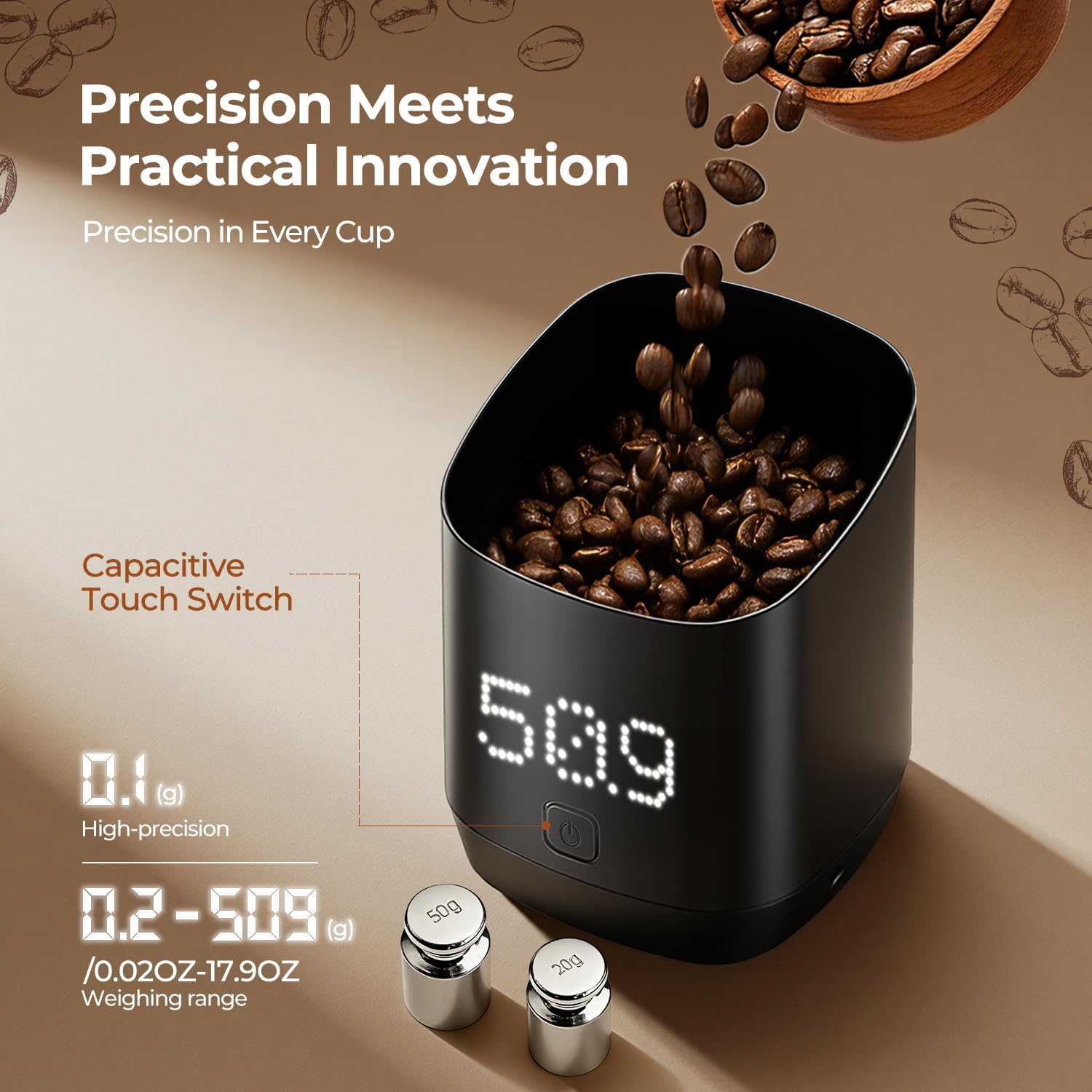
Digital Dosing Cup
Makes weighing beans faster and cleaner, with less mess around the grinder.
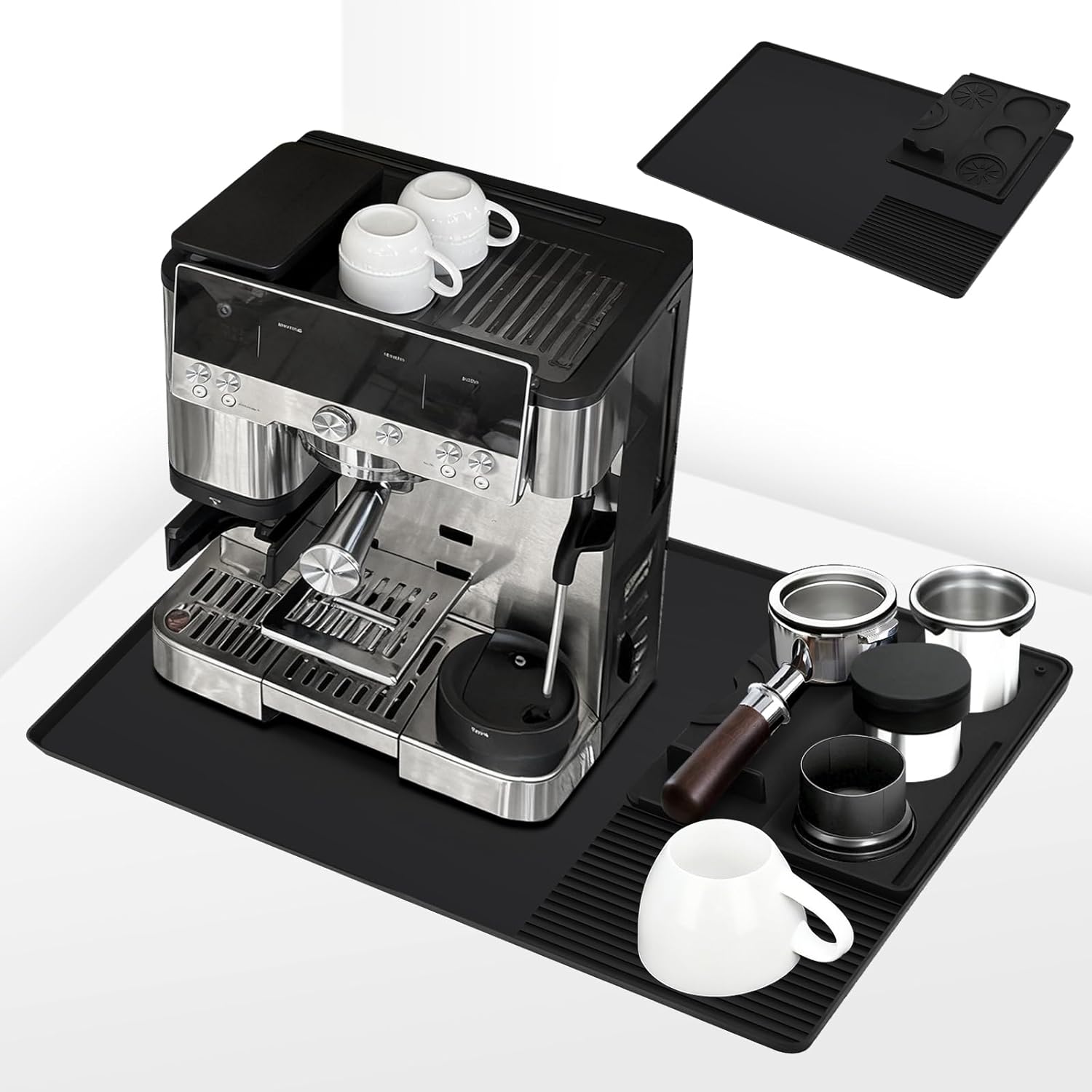
Silicone Mat
Protects your counter, catches spills, and gives your setup a cleaner working surface.

Vacuum Coffee Canister
Helps beans stay fresher longer by limiting air exposure after opening the bag.
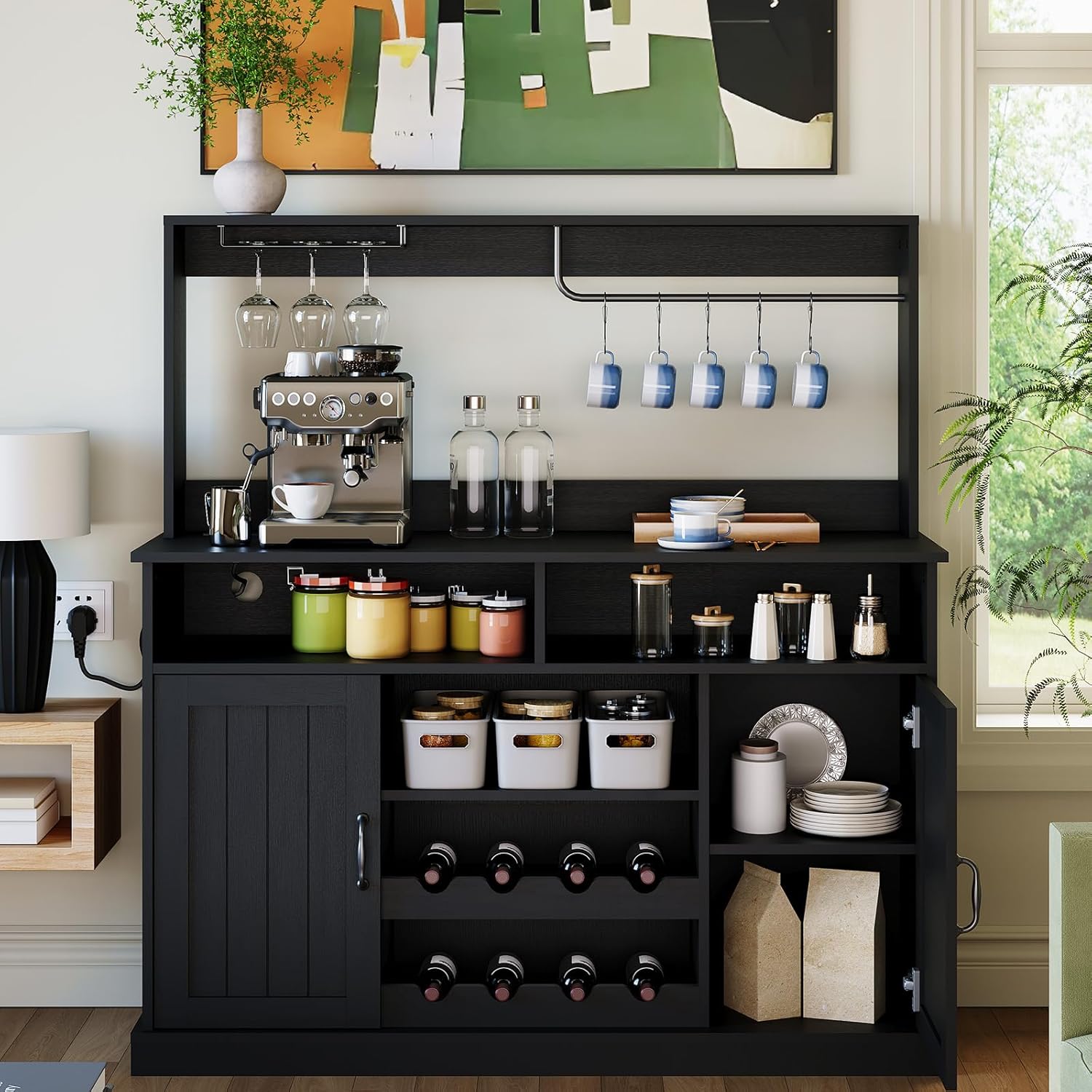
Farmhouse Coffee Bar Cabinet
Gives your machine, cups, beans, and accessories one dedicated home instead of cluttering the kitchen.
The Physics of Flow Rate
Espresso extraction follows Darcy’s law for fluid flow through porous media. Flow rate depends on:
- Pressure differential (your pump’s 9 bars pushing against atmospheric pressure)
- Permeability (determined by particle size and packing density)
- Fluid viscosity (water temperature affects this slightly)
- Path length (your puck thickness)
Your tamp controls permeability. Compress the puck 10% and you might double flow resistance. This explains why even small tamp pressure variations create noticeable shot time changes.
A properly tamped 18-gram dose in a 58-millimeter basket creates approximately 9 millimeters of compressed coffee. This depth, combined with medium-fine grind, produces the resistance needed for 25 to 30 second extractions at 9 bars.
How Much Pressure Is 30 Pounds?
Thirty pounds translates to roughly 13.6 kilograms or 133 Newtons of force. Most people drastically underestimate this amount when they first try.
The bathroom scale test provides immediate feedback. Place your portafilter on a scale, zero it, then press your tamper straight down while watching the display. Thirty pounds requires firm, deliberate pressure—not a gentle press.
After calibrating on a scale five or six times, your muscle memory locks in. You’ll recognize the effort level needed and can replicate it without the scale.
The elbow angle method works as a rough approximation. Stand at counter height, place your tamper on the grounds, and press straight down until your forearm reaches horizontal (90-degree elbow bend). For adults of average build, this generates 25 to 35 pounds depending on arm length and counter height.
The resistance check confirms adequate pressure: after tamping, press the puck surface lightly with your finger. It should feel solid and resist indentation. If your finger leaves a dent, you didn’t apply enough force.
Step-by-Step Tamping Technique
1. Distribute Grounds First
Tamping magnifies existing distribution problems. If grounds pile higher on one side of the basket, tamping preserves that unevenness and creates channeling.
The finger sweep works for casual use. Overfill your basket slightly, then sweep a straight edge (your finger or a distribution tool) across the rim to level the mound. Tap the portafilter sides gently to settle grounds into voids.
Weiss Distribution Technique (WDT) breaks up clumps using a thin needle or purpose-built tool. Stir the grounds in a circular pattern, working from the bottom up. This improves extraction yield by 15 to 20% according to refractometer testing, particularly crucial when grinding fine or using single-dose workflows that create more clumping.
2. Hold the Tamper Correctly
Grip the tamper handle with three fingers wrapped underneath and your thumb and index finger on top, creating a C-shape. Your wrist should remain straight, in line with your forearm. Bent wrists lead to angled tamps.
Keep your elbow directly above the tamper, not off to the side. Your forearm should form a vertical line from elbow to tamper base. This alignment lets you transfer your body weight straight down through the tool.
3. Apply Pressure in One Motion
Position the tamper level on the coffee surface. Press straight down with increasing force until you reach 30 pounds. Hold for one second, then release.
Do not pump or tap. Multiple compressions disturb the settled puck structure and can create horizontal fractures that encourage channeling. One firm press accomplishes everything needed.
Do not twist the tamper while under pressure. Some baristas “polish” by spinning the tamper as they release pressure. This smooths the surface cosmetically but doesn’t affect extraction and risks creating spiral channels if done while pressing down.
4. Check Your Work
Examine the tamped puck surface. It should appear flat and uniform with no tilt. Light should reflect evenly across the surface if you’ve compressed consistently.
Tilt your portafilter sideways. The puck should remain firmly attached to the basket, not slide or crumble. If it moves, you either under-tamped or have grind-related issues.
Calibrated Tampers: The Shortcut to Consistency
Calibrated tampers contain internal springs set to click or stop at a predetermined force, typically 30 pounds. You press until you feel or hear the release, then stop. Every tamp applies identical pressure regardless of technique variations.
Budget option: Normcore V4 ($40) uses a spring mechanism with clear tactile feedback. The base compresses until the spring engages, providing consistent pressure within 2 pounds of variance.
Premium option: Decent tamper ($85) offers adjustable calibration from 10 to 40 pounds and a precision spring rated for 50,000+ compressions. Worth the investment if you pull multiple shots daily.
Calibrated tampers eliminate one variable from your extraction equation. When troubleshooting sour or bitter shots, you can rule out tamp pressure and focus on grind size, dose, or temperature.
Common Tamping Mistakes and Fixes
Tilted Tamps
Problem: The puck surface slopes from one side to the other. Water flows preferentially through the thinner section, creating fast channels and uneven extraction.
Cause: Gripping the portafilter at an angle or positioning your elbow off-center above the tamper. Right-handed people commonly tilt toward their dominant side.
Fix: Rest the portafilter on a stable surface rather than holding it airborne. Keep your elbow directly above the tamper and press straight down. Check the finished puck from the side to verify level compression.
Under-Tamping
Problem: Loose, spongy puck that water blasts through in 15 seconds or less. Produces thin, sour espresso with minimal crema.
Cause: Insufficient pressure application, often from trying to be gentle or using only wrist force instead of body weight.
Fix: Use the bathroom scale test to calibrate your perception of 30 pounds. Shift your stance to lean your body weight into the tamp rather than relying on arm strength alone.
Over-Tamping
Problem: Extraction chokes, dribbling slowly for 45+ seconds or completely stalling. The shot tastes bitter, ashy, or over-extracted.
Cause: Applying 40+ pounds of pressure or combining normal tamping with very fine grinding.
Fix: Over-tamping rarely causes problems on its own. If you’re applying reasonable force (30 to 35 pounds) but getting slow shots, adjust your grind coarser by two or three clicks. The grind setting matters far more than excessive tamp pressure.
Fractured Pucks
Problem: The spent puck shows horizontal cracks or falls apart into layers when knocked out, indicating water found fracture planes during extraction.
Cause: Pumping the tamper multiple times or dropping the portafilter after tamping.
Fix: Single-press technique. After tamping, lock the portafilter into your group head immediately without setting it down. Handle gently to avoid jarring the compressed puck.
Does Tamp Pressure Really Matter?
Testing by espresso researchers shows that tamp pressure variations between 20 and 40 pounds create minimal differences in extraction yield or taste, assuming all other variables remain constant. The key word is constant.
A 2018 study published in Matter used computational modeling and experimental validation to show that very light tamping (under 10 pounds) actually improved extraction consistency by allowing the puck to self-organize during pre-infusion. However, this only worked with specific grind distributions and pre-infusion profiles not available on most home machines.
For practical home use, the 30-pound standard remains valid because:
It establishes repeatability. If you tamp 30 pounds every time, you eliminate one variable. Extraction problems become easier to diagnose and solve.
It prevents obvious under-tamping. Fifteen pounds leaves the puck too loose for consistent flow. Fifty pounds doesn’t hurt anything but wastes effort.
It matches commercial training. If you learn on a Decent, Decent, or other prosumer machine, you’re developing transferable skills that work at any café.
The consistency matters infinitely more than hitting exactly 30.0 pounds. Varying between 28 and 32 pounds shot-to-shot won’t ruin your espresso. Varying between 15 and 45 pounds will.
Tools That Actually Help
Distribution Tools
Decent OCD (Ona Coffee Distributor) ($85) features adjustable depth and evenly distributes grounds before tamping. The spinning motion settles coffee into voids and creates a level surface. Pair this with any flat tamper for excellent results.
DIY WDT tool: Straighten a paperclip or use a dissecting needle. Stir grounds in a zigzag pattern before tamping. Free and nearly as effective as commercial distributors for breaking up clumps.
Tamper Upgrades
Flat base vs convex: Flat tampers suit most baskets and create uniform compression. Convex (slightly curved) bases can reduce edge channeling in some basket designs but add complexity. Stick with flat until you’ve mastered basics.
Diameter matters: Measure your basket’s internal diameter. A 58-millimeter basket needs a 58.4 to 58.5-millimeter tamper for minimal gap. Oversized tampers wedge into the basket; undersized leave a rim of untamped grounds.
Base material: Stainless steel or aluminum work equally well. Avoid cheap plastic bases that flex under pressure and create uneven compression.
Handle ergonomics: Rounded or rippled handles distribute pressure across your palm better than narrow wooden knobs, reducing hand fatigue during high-volume sessions.
Tamping Mats
Rubber or silicone mats protect countertops from portafilter scratches and provide a stable, grippy surface for tamping. Corner cutouts accommodate the portafilter spouts. Basic mats cost $10 to 15. Unnecessary but helpful if you pull shots daily.
Diagnosing Extraction Problems Through Tamping
When your shots taste wrong, systematic diagnosis identifies whether tamping contributed to the problem.
Shot Pulls Too Fast (Under 20 Seconds)
Likely causes in order:
- Grind too coarse
- Insufficient dose (under 17 grams in a double basket)
- Under-tamping (light pressure or tilted tamp)
- Stale coffee (over 4 weeks from roast date)
Test: If increasing tamp pressure from 25 to 35 pounds adds 3 to 5 seconds to your shot time, tamping was part of the problem. If shot time barely changes, focus on grinding finer.
Shot Pulls Too Slow (Over 35 Seconds)
Likely causes in order:
- Grind too fine
- Excessive dose (over 20 grams in a double basket)
- Over-tamping combined with fine grind
- Channeling from poor distribution creating a dense wall
Test: If reducing tamp pressure to 20 pounds speeds your shot to 30 seconds, you were over-tamping. If time remains slow, adjust grind coarser two clicks.
Channeling Visible in Bottomless Portafilter
Symptoms: Spurting, spraying streams from one side of the basket. Shot starts centered then veers off.
Causes:
- Uneven distribution before tamping
- Tilted tamp creating thicker and thinner zones
- Fractured puck from rough handling
Fix: Use WDT or a distribution tool before tamping. Verify level tamp by checking puck surface from the side. Lock portafilter immediately after tamping without setting it down.
Advanced: Pressure Profiling and Tamp
Machines with pressure profiling capability (Decent, Londinium, modified Gaggia Classic) can compensate for tamping variations by controlling pump pressure dynamically during extraction.
Pre-infusion at 2 to 4 bars for 5 to 10 seconds allows the puck to saturate and swell before full pressure application. This self-leveling effect reduces channeling even if your tamp was slightly uneven.
Declining pressure profiles start at 9 bars and ramp down to 6 bars over 30 seconds. The lower finishing pressure extracts delicate flavors without over-extracting, making the shot more forgiving of minor tamp inconsistencies.
If you have a pressure-profiling machine, spend less time obsessing over perfect tamps and more time experimenting with profiles. The pressure control offers more flavor impact than tamp refinement.
What About Lever Machines?
Manual lever espresso machines (La Pavoni, Flair, Cafelat Robot) use spring force or direct arm pressure instead of electric pumps. Your lever pull applies both the pressure and the flow, making tamping behavior slightly different.
Spring lever machines (La Pavoni Europiccola) benefit from firmer tamps (35 to 40 pounds) because the spring generates higher initial pressure—often 10 to 12 bars—before declining as the lever rises. A firmer puck withstands this spike without channeling.
Direct lever machines (Flair 58, Cafelat Robot) give you complete pressure control through arm force. You can compensate for lighter tamps by pulling harder or vice versa. Many direct-lever users tamp lighter (20 to 25 pounds) and control extraction through lever pressure modulation.
Lever workflow emphasizes pre-infusion. You typically apply light pressure for 5 to 10 seconds to saturate the puck, then ramp to full force. This saturate-then-extract approach is more forgiving of tamp variations than the instant 9-bar shock from pump machines.
Building Muscle Memory
Consistent tamping becomes automatic after 50 to 100 repetitions with deliberate practice.
Week 1: Use a scale for every tamp. Place your loaded portafilter on a bathroom scale, zero it, press until the display reads 30 pounds. Note the effort required and the position of your elbow and wrist. Repeat 20 times.
Week 2: Tamp 10 shots with the scale, then 10 shots without. Alternate checking yourself and trusting feel. Your accuracy should stay within ±5 pounds.
Week 3: Tamp without the scale, then verify random shots by checking weight. Once you’re consistently within ±3 pounds, the skill is locked in.
Maintenance: Recheck every few months or if your shots start behaving strangely. Technique can drift over time, especially if you take a break from daily espresso.
Tamping for Different Basket Sizes
Basket diameter and depth change how force translates to pressure.
Standard double basket (18 to 20 grams, 58 millimeter): The 30-pound standard was developed for this configuration. Apply pressure until the tamper stops descending and the puck feels solid.
Triple basket (21 to 24 grams, 58 millimeter): The deeper dose requires slightly firmer tamping (32 to 35 pounds) to achieve similar compression. The extra coffee adds more mass to compress.
Smaller baskets (51 millimeter, 14 to 16 grams): Lighter force (25 to 28 pounds) achieves adequate compression in the smaller diameter. Excessive force can over-compress these shallower pucks.
Precision baskets (IMS, VST): The laser-drilled holes and consistent manufacturing tolerate tighter tolerances. These baskets reward precise, level tamping more than standard stamped baskets with irregular holes.
The Bottom Line
Tamp at 30 pounds, straight down, in one motion. Check that the puck surface appears level and feels solid. Repeat identically for every shot.
Buy a calibrated tamper if you want to eliminate the variable entirely. Use a distribution tool or WDT to improve consistency further.
When troubleshooting bad shots, adjust grind size first. Tamp pressure explains fewer extraction problems than most beginners assume. Once you’ve established consistent technique, tamping becomes invisible—it just works.
The goal is to make tamping so automatic that you stop thinking about it and can focus on the variables that matter more: grind size, dose, water temperature, and coffee freshness.
We’ve categorized the best espresso machines for every kind of buyer
Find the right shortlist faster, whether you want convenience, a beginner-friendly setup, a smaller footprint, or better value at a given budget.
Best Superautomatic Espresso Machines
One-touch picks for speed and convenience.
Best Espresso Machines for Beginners
Easy-to-use machines with a smoother learning curve.
Best Small Espresso Machines
Compact machines for tighter kitchens and counters.
Best Espresso Machines With Built-In Grinder
All-in-one options with fewer extra pieces to buy.
Best Cheap Espresso Machines Under $500
Budget picks that still make sense for real espresso.
Best Prosumer Espresso Machines Under $1000
More serious machines with stronger value for the money.
Best Single Boiler Espresso Machines
Simple, space-saving picks for espresso-first routines.